

VHH Antibodies: Reagents for Mycotoxin Detection in Food Products
Open accessThe DOI matches its Crossref record; 77 of the 77 references it cites were found in a registry or an index.
Abstract
Mycotoxins are the toxic secondary metabolites produced by fungi and they are a worldwide public health concern. A VHH antibody (or nanobody) is the smallest antigen binding entity and is produced by heavy chain only antibodies. Compared with conventional antibodies, VHH antibodies overcome many pitfalls typically encountered in clinical therapeutics and immunodiagnostics. Likewise, VHH antibodies are particularly useful for monitoring mycotoxins in food and feedstuffs, as they are easily genetic engineered and have superior stability. In this review, we summarize the efforts to produce anti-mycotoxins VHH antibodies and associated assays, presenting VHH as a potential tool in mycotoxin analysis.
Overview
The claims and statistics of this paper haven’t been checked yet.
Free: it reads the open-access text and checks the first 5 claims that cite a source we can check. Create a free account to check every claim.
Integrity signals
Registry
Cites
Statistics
Figures
Verification
Claims the paper makes
The claims and statistics of this paper haven’t been checked yet.
Free: it reads the open-access text and checks the first 5 claims that cite a source we can check. Create a free account to check every claim.
Claims other papers make about this one
Each is checked against this paper’s own text: does it say what the citing paper says it does?
The check wasn’t confident either way, so it gives no verdict — never disputed.
In the citing paper
“Similarly, the addition of 3% pomace to stirred yogurt caused a noticeably lower level of syneresis and an increase in the matrix’s stiffness, cohesion, and viscosity [178].”
From Valorization of Fruit Waste for Bioactive Compounds and Their Applications in the Food Industry (2023) · cites this paper as [178]
Experimental — accuracy not yet measured
Self-check
Percentages, sums and reported differences re-computed from the paper’s own numbers.
The self-check needs the paper’s full text.
Citations
Cites
Smith, G. P. (1985) · Science · doi:10.1126/science.4001944 · Cited by 4,143 · cited 1×
“Phage display technology is a preferable expression system, with the foreign nucleotide sequence encoded by the virion and foreign peptides or proteins expressed on its surface [35].”
BackgroundNaturally occurring antibodies devoid of light chains
Hamers-Casterman, C., Atarhouch, T., Muyldermans, S., Robinson, G., Hammers, C., Songa, E. B., Bendahman, N., & Hammers, R. (1993) · Nature · doi:10.1038/363446a0 · Cited by 3,241 · cited 1×
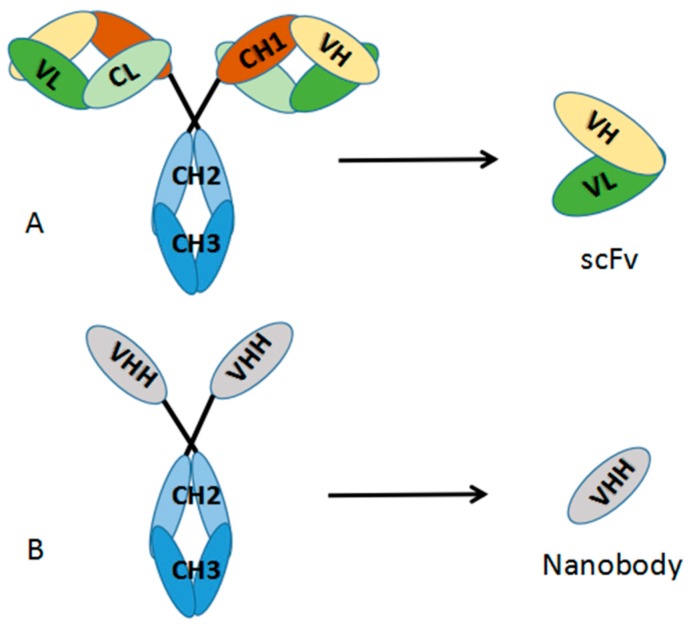
“In the serum of camelidae family and cartilaginous fish, heavy chain only antibodies (HcAbs) are existed devoid of light chains and lacking the CH1 domains (Figure 2) [14,15] The variable domain of HcAbs, which binds to specific antigens, is referred to as VHH.”
BackgroundRapid generation of functional human IgG antibodies derived from Fab-on-phage display libraries
Jostock, T., Vanhove, M., Brepoels, E., van Gool, R., Daukandt, M., Wehnert, A., van Hegelsom, R., Dransfield, D., Sexton, D., Devlin, M., et al. (2004) · Journal of Immunological Methods · doi:10.1016/j.jim.2004.03.014 · Cited by 2,584
Nanobodies: natural single-domain antibodies
Muyldermans, S. (2013) · Annual Review of Biochemistry · doi:10.1146/annurev-biochem-063011-092449 · Cited by 2,304 · cited 3×
“Compared with single-chain variable fragments antibodies (scFvs), the VHHs have greater or comparable sensitivity; can be produced in large quantities; are easily manipulated genetically; and have superior physicochemical stability and high refolding capacity [21,22], such as excellent solubility and resilience to org…”
BackgroundA general protocol for the generation of Nanobodies for structural biology
Pardon, E., Laeremans, T., Triest, S., Rasmussen, S. G. F., Wohlkönig, A., Ruf, A., Muyldermans, S., Hol, W. G. J., Kobilka, B. K., & Steyaert, J. (2014) · Nature Protocols · doi:10.1038/nprot.2014.039 · Cited by 790 · cited 1×
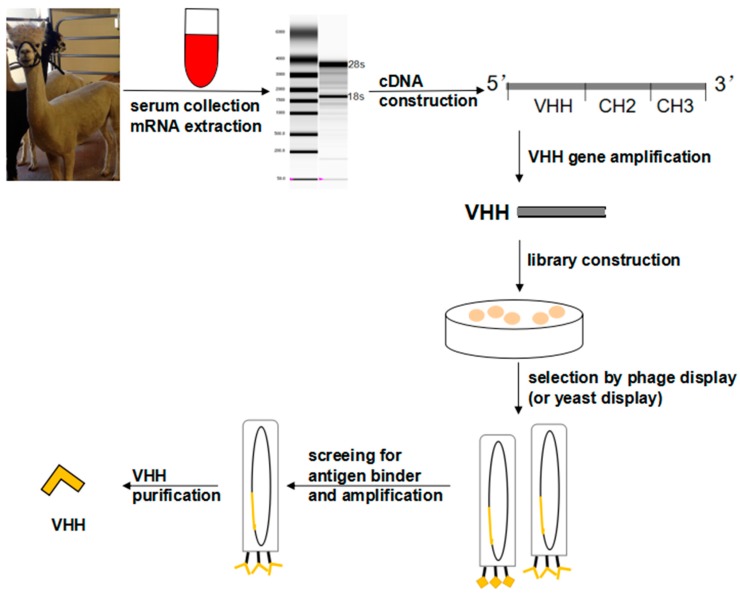
“VHH production is summarized in Figure 3 [17].”
BackgroundTargeting and tracing antigens in live cells with fluorescent nanobodies
Rothbauer, U., Zolghadr, K., Tillib, S., Nowak, D., Schermelleh, L., Gahl, A., Backmann, N., Conrath, K., Muyldermans, S., Cardoso, M. C., et al. (2006) · Nature Methods · doi:10.1038/nmeth953 · Cited by 710 · cited 2×
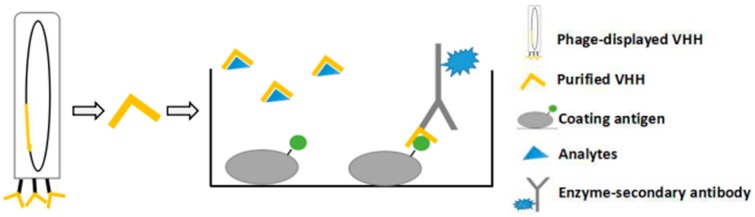
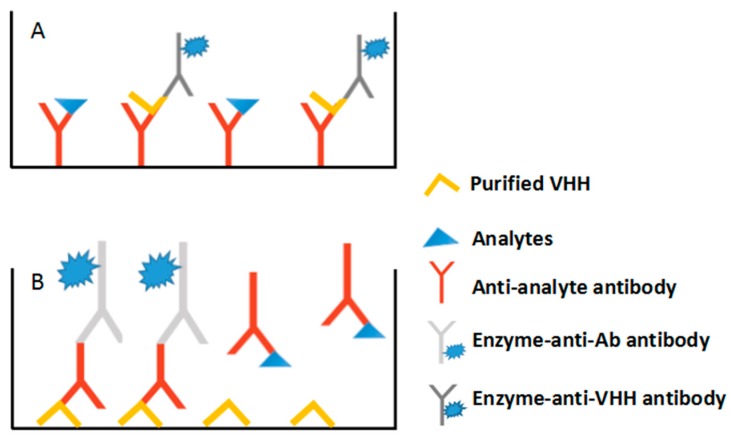
“To simplify immunoassay protocols, fluorescent proteins [72] or enzymes, such as alkaline phosphatase (AP), can be fused with VHHs for one-step immunoassay [73].”
BackgroundMethodCamelid immunoglobulins and nanobody technology
Muyldermans, S., Baral, T. N., Retamozzo, V. C., De Baetselier, P., De Genst, E., Kinne, J., Leonhardt, H., Magez, S., Nguyen, V. K., Revets, H., et al. (2009) · Veterinary Immunology and Immunopathology · doi:10.1016/j.vetimm.2008.10.299 · Cited by 533 · cited 1×
“These unique antibody fragments are the smallest entities of the antigen-antibody interaction, so they are also called nanobodies [16].”
BackgroundRecurrent idiotopes and internal images.
Jerne, N. K., Roland, J., & Cazenave, P. A. (1982) · The EMBO Journal · doi:10.1002/j.1460-2075.1982.tb01154.x · Cited by 425 · cited 1×
“Anti-idiotypic antibody is an exciting reagent because (1) it represents the “internal image” of the original antigen [45]; (2) it serves as a surrogate for the original antigen [46]; and (3) it competes with the original antigen for the primary antibody.”
BackgroundA Review of Rapid Methods for the Analysis of Mycotoxins
Zheng, M. Z., Richard, J. L., & Binder, J. (2006) · Mycopathologia · doi:10.1007/s11046-006-0215-6 · Cited by 330 · cited 1×
“Among them, immunoassays based on specific interactions between antibodies and antigens are the most useful tools for rapidly monitoring of mycotoxins [12].”
BackgroundHerzallah, S. M. (2009) · Food Chemistry · doi:10.1016/j.foodchem.2008.10.077 · Cited by 301
Research works printed but not linked: 3
- Commission E. Commission Regulation (EC) No. 1881/2006 of 19 December 2006 setting maximum levels for certain contaminants in foodstuffs Off. J. Eur. Union 2006 364 5 24
- Emon J.M.V. Immunoassay and Other Bioanalytical Techniques CRC Press Boca Raton, FL, USA 2007
- Wild D. The Immunoassay Handbook 4th ed. Elsevier Amsterdam, The Netherlands 2013
Cited by
Nanobody: outstanding features for diagnostic and therapeutic applications
Salvador, J.-P., Vilaplana, L., & Marco, M.-P. (2019) · Analytical and Bioanalytical Chemistry · doi:10.1007/s00216-019-01633-4 · Cited by 350
Valorization of Fruit Waste for Bioactive Compounds and Their Applications in the Food Industry
Nirmal, N., Khanashyam, A., Mundanat, A., Shah, K., Babu, K., Thorakkattu, P., Al-Asmari, F., & Pandiselvam, R. (2023) · Foods · doi:10.3390/foods12030556 · Cited by 305
Iqbal, A., Schulz, P., & Rizvi, S. S. H. (2021) · Food Bioscience · doi:10.1016/j.fbio.2021.101384 · Cited by 175
Nanobody and Nanozyme‐Enabled Immunoassays with Enhanced Specificity and Sensitivity
Wang, Y., & Xianyu, Y. (2022) · Small Methods · doi:10.1002/smtd.202101576 · Cited by 107
Nanobodies: The “Magic Bullets” in therapeutics, drug delivery and diagnostics
Mir, M. A., Mehraj, U., Sheikh, B. A., & Hamdani, S. S. (2019) · Human Antibodies · doi:10.3233/hab-190390 · Cited by 84
El-Moghazy, A. Y., Huo, J., Amaly, N., Vasylieva, N., Hammock, B. D., & Sun, G. Z. (2020) · ACS Applied Materials & Interfaces · doi:10.1021/acsami.9b16193 · Cited by 70
Research progress in toxicological effects and mechanism of aflatoxin B 1 toxin
Li, C., Liu, X., Wu, J., Ji, X., & Xu, Q. (2022) · PeerJ · doi:10.7717/peerj.13850 · Cited by 131
Wang, F., Li, Z., Yang, Y., Wan, D., Vasylieva, N., Zhang, Y., Cai, J., Wang, H., Shen, Y., Xu, Z., et al. (2020) · Analytical Chemistry · doi:10.1021/acs.analchem.0c02338 · Cited by 66
Ye, J., Guo, J., Li, T., Tian, J., Yu, M., Wang, X., Majeed, U., Song, W., Xiao, J., Luo, Y., et al. (2022) · Comprehensive Reviews in Food Science and Food Safety · doi:10.1111/1541-4337.12908 · Cited by 54
Self-citationMošovská, S., Medvecká, V., Gregová, M., Tomeková, J., Valík, Ľ., Mikulajová, A., & Zahoranová, A. (2019) · Food Control · doi:10.1016/j.foodcont.2019.05.003 · Cited by 53
Mimotope-Based Immunoassays for the Rapid Analysis of Mycotoxin: A Review
Huang, D.-T., Fu, H.-J., Huang, J.-J., Luo, L. G., Lei, H., Shen, Y., Chen, Z., Wang, H., & Xu, Z. (2021) · Journal of Agricultural and Food Chemistry · doi:10.1021/acs.jafc.1c04169 · Cited by 49
Site-specific C-terminal dinitrophenylation to reconstitute the antibody Fc functions for nanobodies
Hong, H., Zhou, Z., Zhou, K., Liu, S., Guo, Z., & Wu, Z. (2019) · Chemical Science · doi:10.1039/c9sc03840j · Cited by 44
del Río, B., Redruello, B., Fernández, M., Martín, M. C., Ladero, V., & Álvarez, M. A. (2019) · Frontiers in Microbiology · doi:10.3389/fmicb.2018.03179 · Cited by 41
Toxicant substitutes in immunological assays for mycotoxins detection: A mini review
Li, P., Deng, S., & Xu, Z. Z. (2020) · Food Chemistry · doi:10.1016/j.foodchem.2020.128589 · Cited by 33
Zhang, Y., Liao, X., Yu, G., Wei, J., Wang, P., Wang, Y., Jing, Y., Wang, J., Chen, P., Wang, J., et al. (2023) · Analytical Chemistry · doi:10.1021/acs.analchem.3c02990 · Cited by 30
Self-citationSuo, Z., Liang, X., Jin, H., He, B., & Wei, M. (2021) · Analytical and Bioanalytical Chemistry · doi:10.1007/s00216-021-03723-8 · Cited by 29
“Therefore, the maximum permitted levels for AFB1 and OTA have been set by various countries because of their extensive influence on agricultural products and foods, such as peanuts, cereals, feed, coffee and milk [6].”
BackgroundLiu, M.-L., He, X.-T., Xu, Z., Deng, H. D., Shen, Y., Luo, L. G., Shen, X., Chen, Z., Hammock, B. D., & Wang, H. (2023) · Journal of Agricultural and Food Chemistry · doi:10.1021/acs.jafc.3c03408 · Cited by 27
Advances in functional photonic crystal materials for the analysis of chemical hazards in food
Dai, S., Li, Q., Li, W., Zhang, Y., Dou, M., Xu, R., Wang, T. S., Lu, X., Wang, F., & Li, J. (2022) · Comprehensive Reviews in Food Science and Food Safety · doi:10.1111/1541-4337.13036 · Cited by 26
Mycotoxin Contamination of Beverages Obtained from Tropical Crops
Granados-Chinchilla, F., Redondo-Solano, M., & Jaikel-Víquez, D. (2018) · Beverages · doi:10.3390/beverages4040083 · Cited by 25
Overview—gold nanoparticles-based sensitive nanosensors in mycotoxins detection
Hou, S., Ma, J., Cheng, Y., Wang, Z., & Yan, Y. (2022) · Critical Reviews in Food Science and Nutrition · doi:10.1080/10408398.2022.2095973 · Cited by 24
“Because mycotoxins are widely distributed and highly toxic, they have received much attention globally (Wang et al. 2018).”
BackgroundMagnetic nanomaterials for purification, detection, and control of mycotoxins
Ramadan, M. M., Mohamed, M. A., Almoammar, H., & Abd-Elsalam, K. A. (2019) · Elsevier eBooks · doi:10.1016/b978-0-12-817998-7.00005-7 · Cited by 21
Nanobody-based food allergen surveillance: current status and prospects
Wang, Y., Wu, S., Li, A., Lv, H., Ji, X., Hu, Y., & Wang, S. (2024) · Food Quality and Safety · doi:10.1093/fqsafe/fyae018 · Cited by 24
VHH Structural Modelling Approaches: A Critical Review
Vishwakarma, P., Vattekatte, A. M., Shinada, N. K., Diharce, J., Martins, C., Cadet, F., Gardebien, F., Etchebest, C., Nadaradjane, A. A., & de Brevern, A. G. (2022) · International Journal of Molecular Sciences · doi:10.3390/ijms23073721 · Cited by 25
“, in medicine [32], CAR-T [33], cancers [34–40], the detection of pathogens [41] or as biosensors [42].”
BackgroundSun, W., Zhang, Y., & Ju, Z. (2021) · Molecules · doi:10.3390/molecules26247652 · Cited by 18
State of the art and perspectives of improving antibody performance in food immunosensors
Xiao, H., Han, S., Zhu, M., Lin, M., Cheng, N., & Che, H. (2025) · TrAC Trends in Analytical Chemistry · doi:10.1016/j.trac.2025.118308 · Cited by 19
Diab, M. A., El‐Sabban, H. A., & Baek, K.-H. (2024) · Microchemical Journal · doi:10.1016/j.microc.2024.111858 · Cited by 17
Chen, P., Yang, Q., Li, S., Liu, X., Li, B., Zhang, J., Wang, J., Yue, X., & Wang, Y. (2024) · Analytical Chemistry · doi:10.1021/acs.analchem.4c03463 · Cited by 16
Self-citationAnti-idiotypic VHH mediated environmentally friendly immunoassay for citrinin without mycotoxin
Xiong, L., Zhang, X., Xu, Y., Li, Y., Liu, D., Tu, Z., & He, Q. (2020) · Food and Agricultural Immunology · doi:10.1080/09540105.2020.1795631 · Cited by 14
“Immunoassays are the most widely used methods for rapidly screening of chemical pollutants in contaminated food products because of their excellent speci fi city, feasibility, and superior sensitivity (Tang et al., 2018; Wang et al., 2018; Zhang et al., 2017).”
Cyclic peptide: a safe and effective alternative to synthetic aflatoxin B1-competitive antigens
Mukhtar, H., Ma, L., Pang, Q., Zhou, Y., Wang, X., Xu, T., Hammock, B. D., & Wang, J. (2019) · Analytical and Bioanalytical Chemistry · doi:10.1007/s00216-019-01862-7 · Cited by 12
Self-citationPang, J., Guo, M., Wang, Y., Bi, C., Xu, Z., Shen, Y., Xiao, Z., Peng, W., Yang, J., & Wang, H. (2024) · Talanta · doi:10.1016/j.talanta.2024.127359 · Cited by 10
Nanobody-based indirect competitive ELISA for the detection of aflatoxin M1 in dairy products
Li, Y., Liu, H., Liu, Y., Aiyisi, He, J., Ming, L., & Jirimutu (2025) · Scientific Reports · doi:10.1038/s41598-024-83869-4 · Cited by 10
Chen, Y., Qu, G., Quan, H., Wang, Y., Wang, C., Haque, M. A., & He, C. (2022) · Toxins · doi:10.3390/toxins14120821 · Cited by 10
“Nanobodies are reported to recognize the active site of the antigen, and also serve as a surrogate for the original antigen and compete with the original antigen for the primary antibody [32].”
BackgroundAviTag-nanobody based enzyme immunoassays for sensitive determination of aflatoxin B1 in cereal
He, T., Yan, T., Zhu, J., Li, Y., Zhou, X., Yang, Y., & Liu, M. (2024) · LWT · doi:10.1016/j.lwt.2024.115858 · Cited by 9
“Consequently, Nbs are extremely suitable for building robust and facile analytical methods for detecting small-molecule pollutants (Wang, Mukhtar, Ma, Pang, & Wang, 2018).”
Advances of Nanobody-Based Immunoassay Platforms: Promising Diagnosis Tools
Sun, M., Ning, Z., Tu, Z., Li, Y., & He, Q. (2025) · Journal of Analysis and Testing · doi:10.1007/s41664-025-00408-4 · Cited by 12
Xing, C., Li, G., Zheng, X., Li, P., Yuan, J. L., & Yan, W. (2024) · Journal of Chemical Information and Modeling · doi:10.1021/acs.jcim.4c00736 · Cited by 8
Nanobody-Based Assays for the Detection of Environmental and Agricultural Contaminants
Wang, F., & Wang, H. (2022) · Methods in molecular biology · doi:10.1007/978-1-0716-2075-5_28 · Cited by 7
Gold Nanoparticle/Nanobody Immunochromatographic Strip for Detection of 19-Nortestosterone
Bi, C., Wang, Y., Liang, Y., Pang, J., Fang, R., Han, X., Shen, Y., Xu, Z., Yang, J., & Wang, H. (2024) · ACS Applied Nano Materials · doi:10.1021/acsanm.4c05662 · Cited by 6
Mycotoxins as Food and Feed Contaminant: Effect on Health and Economy and Their Management
Shad, Z. M., & Venkitasamy, C. (2023) · Springer eBooks · doi:10.1007/978-981-19-9103-5_20 · Cited by 6
Guo, P., Huang, K., Chen, Z., Xu, Z., Ou, A., Yin, Q., Wang, H., Shen, X., & Zhou, K. (2023) · Biosensors · doi:10.3390/bios13060577 · Cited by 4
“Recently, a kind of single domain antibody, named nanobody (Nb), possesses a genetic modification advantage and preferable physicochemical qualities that make it easy to develop a sensitive and stable immunosensor platform for the determination of contaminants in food and the environment [8,9].”
BackgroundA Novel Nanobody Directed against Ovine Myostatin to Enhance Muscle Growth in Mouse
Ou, K., Li, Y., Wu, P., Guo, J., Hao, X., Sheng, J., & Chen, C. (2020) · Animals · doi:10.3390/ani10081398 · Cited by 4
“Currently, the nanobody is evolving into versatile research and application tool kits for related biomedical and biotechnology applications [18,29,30], including targeting drug delivery and therapy [17], disease diagnosis [31], bioimaging [32], and agricultural and plant protection [33].”
BackgroundLiu, X., Kang, J., Cheng, S., Chen, M., Yang, Y., Liu, C., & Bai, Z. (2026) · Bioresource Technology · doi:10.1016/j.biortech.2026.134538 · Cited by 2
Fruits waste as nutraceuticals and functional ingredient
Tungare, K., Subburajan, P., Nadar, D., Arte, P. A., Bhori, M., Kadam, D., & Kadam, A. (2024) · Elsevier eBooks · doi:10.1016/b978-0-443-13842-3.00013-7 · Cited by 2
Nanobody-based targeted cancer therapy and immunotherapy: fear not the future
Guo, M.-D., Liao, R., Wang, M.-Y., Wu, L.-J., & Zhang, Y. (2026) · Acta Pharmacologica Sinica · doi:10.1038/s41401-026-01787-9 · Cited by 4
“The high stability allows Nbs to be used under a wider range of conditions and are suitable for alternative administration routes while maintaining intact antigen-binding capabilities, which is a favorable property for biotechnological engineering and clinical applications [31 – 33].”
Bioreceptors for smartphone-based food contaminants detection
Guercetti, J., Salvador, J. ‐., & Marco, M. ‐. (2023) · Comprehensive analytical chemistry · doi:10.1016/bs.coac.2022.11.001 · Cited by 1
Mandache, M. B., & Cosmulescu, S. N. (2023) · Annals of the University of Craiova Series Biology Horticulture Food products processing technology Environmental engineering · doi:10.52846/bihpt.v28i64.97 · Cited by 1
Pathological Effects of Aflatoxin on Hepatic Tissue of Rats, Experimental Study
Shaheed, H. S. (2024) · SAR Journal of Pathology and Microbiology · doi:10.36346/sarjpm.2024.v05i03.007
Xiao, Y., Liu, H., Wang, N., Xiao, R., Liang, M., & Zhang, Y. (2026) · Emerging contaminants · doi:10.1016/j.emcon.2026.100739
Metadata
- Authors
- Wang, J., Mukhtar, H., Ma, L., Pang, Q., & Wang, X.
- Affiliations
- Huazhong Agricultural University (CN)
- Corresponding author
- Wang, Xiaohong
- Venue
- Sensors
- Publisher
- MDPI AG
- Published
- 2018-02-06
- Volume
- 18
- Issue
- 2
- Pages
- 485
- ISSN
- 1424-8220 (ISSN-L)
- PMC
- PMC5855929
- OpenAlex
- W2791489238
- Cited by
- 53
- References
- 77
- Citations by year
- 2026: 3 · 2025: 3 · 2024: 9 · 2023: 7 · 2022: 14 · 2021: 4 · 2020: 5 · 2019: 7 · 2018: 1
- FWCI
- 0.44
- Type
- journal article
- Language
- en
- Open access
- gold
- doi.org
- Licence
- Locations
- Sensors (publishedVersion, cc-by)
- PubMed Central (publishedVersion, cc-by)
- PubMed (publishedVersion)
- DOAJ (DOAJ: Directory of Open Access Journals) (submittedVersion, cc-by-sa)
- Funders
- National Natural Science Foundation of China (31601539, 31772054)
- Natural Science Foundation of Hubei Province (2016CFB143)
- Fundamental Research Funds for the Central Universities (2662015QD027)
- Topics
- Life Sciences › Agricultural and Biological Sciences › Plant Science › Mycotoxins in Agriculture and Food
- Life Sciences › Immunology and Microbiology › Immunology › Monoclonal and Polyclonal Antibodies Research
- Physical Sciences › Engineering › Biomedical Engineering › Biosensors and Analytical Detection
- Keywords
- nanobodies, mycotoxins, mycotoxin detection, food safety, animal feed, heavy-chain antibodies, immunoassay, fungal secondary metabolites
- MeSH terms
- Antibodies, Monoclonal, Food Analysis, Humans, Indicators and Reagents, Mycotoxins
About these checks
Registry, retraction, Cites and statistics results are computed, not judged, with one exception: a printed reference that no index lists is read once by a model before it counts as a citation error. Claims are extracted by a model and kept only when their quote appears verbatim in the text; each cited source is then checked, with a model’s help, for whether it says what the claim relies on. Those verdicts can be wrong — read the claim’s quote and the cited source before relying on one.
Statistics and arithmetic are recomputed, not judged.
Confidence bands are shown only for fields calibrated on our annotated test set. None is calibrated yet, so no band is shown.
What counts as a claim ›How we measure confidence ›How we check this ›
Are you an author, or do you see a problem with this page? Request a review
Data sources
Bibliographic data: Semantic Scholar, OpenAlex, Crossref.
Contains information from the Semantic Scholar Academic Graph Datasets, made available under the ODC Attribution License (ODC-BY 1.0).
Semantic Scholar’s data is described in: Kinney, R., et al. (2023). The Semantic Scholar Open Data Platform. arXiv:2301.10140.
