

VHH Antibodies: Reagents for Mycotoxin Detection in Food Products
Open accessThe DOI matches its Crossref record; 77 of the 77 references it cites were found in a registry or an index.
Abstract
Mycotoxins are the toxic secondary metabolites produced by fungi and they are a worldwide public health concern. A VHH antibody (or nanobody) is the smallest antigen binding entity and is produced by heavy chain only antibodies. Compared with conventional antibodies, VHH antibodies overcome many pitfalls typically encountered in clinical therapeutics and immunodiagnostics. Likewise, VHH antibodies are particularly useful for monitoring mycotoxins in food and feedstuffs, as they are easily genetic engineered and have superior stability. In this review, we summarize the efforts to produce anti-mycotoxins VHH antibodies and associated assays, presenting VHH as a potential tool in mycotoxin analysis.
Overview
The claims and statistics of this paper haven’t been checked yet.
Free: it reads the open-access text and checks the first 5 claims that cite a source we can check. Create a free account to check every claim.
Integrity signals
Registry
Cites
Statistics
Figures
Verification
Claims the paper makes
The claims and statistics of this paper haven’t been checked yet.
Free: it reads the open-access text and checks the first 5 claims that cite a source we can check. Create a free account to check every claim.
Claims other papers make about this one
Each is checked against this paper’s own text: does it say what the citing paper says it does?
The check wasn’t confident either way, so it gives no verdict — never disputed.
In the citing paper
“Similarly, the addition of 3% pomace to stirred yogurt caused a noticeably lower level of syneresis and an increase in the matrix’s stiffness, cohesion, and viscosity [178].”
From Valorization of Fruit Waste for Bioactive Compounds and Their Applications in the Food Industry (2023) · cites this paper as [178]
Experimental — accuracy not yet measured
Self-check
Percentages, sums and reported differences re-computed from the paper’s own numbers.
The self-check needs the paper’s full text.
Citations
Cites
Smith, G. P. (1985) · Science · doi:10.1126/science.4001944 · Cited by 4,143 · cited 1×
“Phage display technology is a preferable expression system, with the foreign nucleotide sequence encoded by the virion and foreign peptides or proteins expressed on its surface [35].”
BackgroundNaturally occurring antibodies devoid of light chains
Hamers-Casterman, C., Atarhouch, T., Muyldermans, S., Robinson, G., Hammers, C., Songa, E. B., Bendahman, N., & Hammers, R. (1993) · Nature · doi:10.1038/363446a0 · Cited by 3,241 · cited 1×
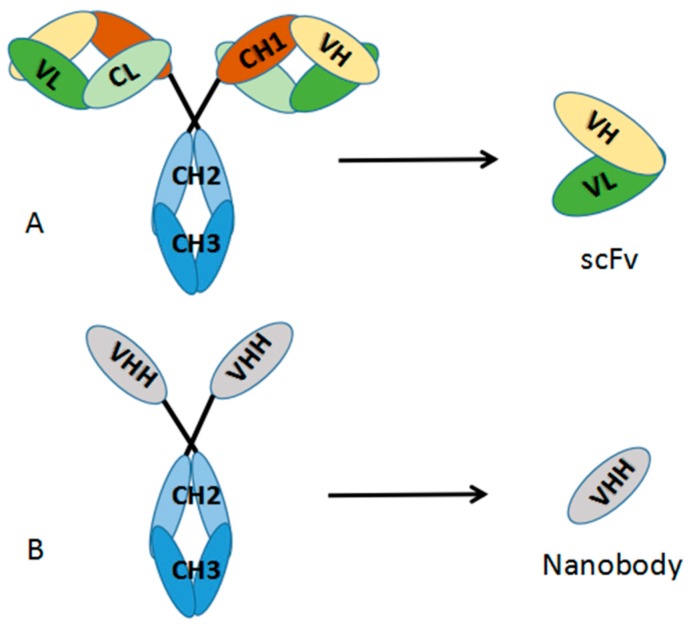
“In the serum of camelidae family and cartilaginous fish, heavy chain only antibodies (HcAbs) are existed devoid of light chains and lacking the CH1 domains (Figure 2) [14,15] The variable domain of HcAbs, which binds to specific antigens, is referred to as VHH.”
BackgroundRapid generation of functional human IgG antibodies derived from Fab-on-phage display libraries
Jostock, T., Vanhove, M., Brepoels, E., van Gool, R., Daukandt, M., Wehnert, A., van Hegelsom, R., Dransfield, D., Sexton, D., Devlin, M., et al. (2004) · Journal of Immunological Methods · doi:10.1016/j.jim.2004.03.014 · Cited by 2,584
Nanobodies: natural single-domain antibodies
Muyldermans, S. (2013) · Annual Review of Biochemistry · doi:10.1146/annurev-biochem-063011-092449 · Cited by 2,304 · cited 3×
“Compared with single-chain variable fragments antibodies (scFvs), the VHHs have greater or comparable sensitivity; can be produced in large quantities; are easily manipulated genetically; and have superior physicochemical stability and high refolding capacity [21,22], such as excellent solubility and resilience to org…”
BackgroundA general protocol for the generation of Nanobodies for structural biology
Pardon, E., Laeremans, T., Triest, S., Rasmussen, S. G. F., Wohlkönig, A., Ruf, A., Muyldermans, S., Hol, W. G. J., Kobilka, B. K., & Steyaert, J. (2014) · Nature Protocols · doi:10.1038/nprot.2014.039 · Cited by 790 · cited 1×
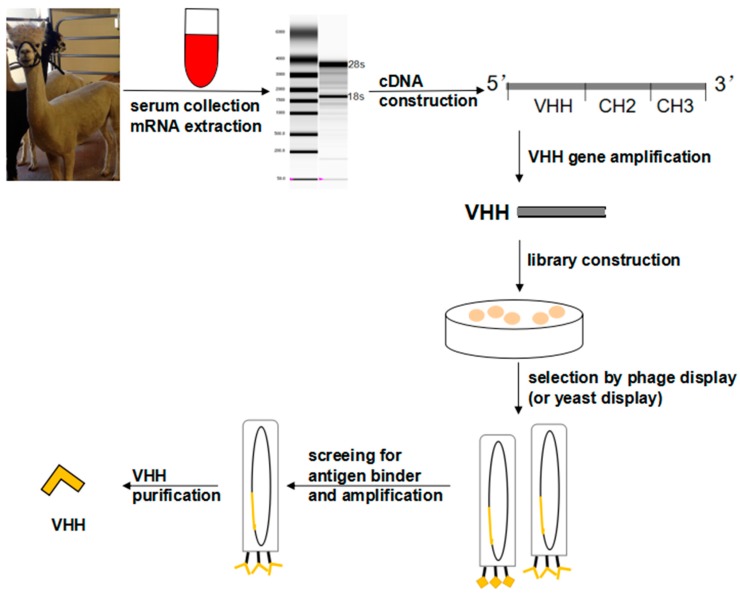
“VHH production is summarized in Figure 3 [17].”
BackgroundTargeting and tracing antigens in live cells with fluorescent nanobodies
Rothbauer, U., Zolghadr, K., Tillib, S., Nowak, D., Schermelleh, L., Gahl, A., Backmann, N., Conrath, K., Muyldermans, S., Cardoso, M. C., et al. (2006) · Nature Methods · doi:10.1038/nmeth953 · Cited by 710 · cited 2×
“To simplify immunoassay protocols, fluorescent proteins [72] or enzymes, such as alkaline phosphatase (AP), can be fused with VHHs for one-step immunoassay [73].”
BackgroundMethodCamelid immunoglobulins and nanobody technology
Muyldermans, S., Baral, T. N., Retamozzo, V. C., De Baetselier, P., De Genst, E., Kinne, J., Leonhardt, H., Magez, S., Nguyen, V. K., Revets, H., et al. (2009) · Veterinary Immunology and Immunopathology · doi:10.1016/j.vetimm.2008.10.299 · Cited by 533 · cited 1×
“These unique antibody fragments are the smallest entities of the antigen-antibody interaction, so they are also called nanobodies [16].”
BackgroundRecurrent idiotopes and internal images.
Jerne, N. K., Roland, J., & Cazenave, P. A. (1982) · The EMBO Journal · doi:10.1002/j.1460-2075.1982.tb01154.x · Cited by 425 · cited 1×
“Anti-idiotypic antibody is an exciting reagent because (1) it represents the “internal image” of the original antigen [45]; (2) it serves as a surrogate for the original antigen [46]; and (3) it competes with the original antigen for the primary antibody.”
BackgroundA Review of Rapid Methods for the Analysis of Mycotoxins
Zheng, M. Z., Richard, J. L., & Binder, J. (2006) · Mycopathologia · doi:10.1007/s11046-006-0215-6 · Cited by 330 · cited 1×
“Among them, immunoassays based on specific interactions between antibodies and antigens are the most useful tools for rapidly monitoring of mycotoxins [12].”
BackgroundHerzallah, S. M. (2009) · Food Chemistry · doi:10.1016/j.foodchem.2008.10.077 · Cited by 301
Efficient Targeting of Conserved Cryptic Epitopes of Infectious Agents by Single Domain Antibodies
Stijlemans, B., Conrath, K., Cortez-Retamozo, V., Van Xong, H., Wyns, L., Senter, P., Revets, H., De Baetselier, P., Muyldermans, S., & Magez, S. (2004) · Journal of Biological Chemistry · doi:10.1074/jbc.m307341200 · Cited by 276 · cited 1×
“Compared with conventional antibodies (polyclonal antibodies [pAbs] and monoclonal antibodies [mAbs]), the VHHs are able to recognize the active sites of the antigen, which are inaccessible or cryptic for pAbs and mAbs [18] and they can be isolated and produced in expression systems (e.”
BackgroundElectrochemical affinity biosensors for detection of mycotoxins: A review
Vidal, J. C., Bonel, L., Ezquerra, A., Hernández, S., Bertolín, J. R., Cubel, C., & Castillo, J. R. (2013) · Biosensors and Bioelectronics · doi:10.1016/j.bios.2013.05.008 · Cited by 256
New biorecognition molecules in biosensors for the detection of toxins
Bazin, I., Tria, S. A., Hayat, A., & Marty, J.-L. (2017) · Biosensors and Bioelectronics · doi:10.1016/j.bios.2016.06.083 · Cited by 195 · cited 2×
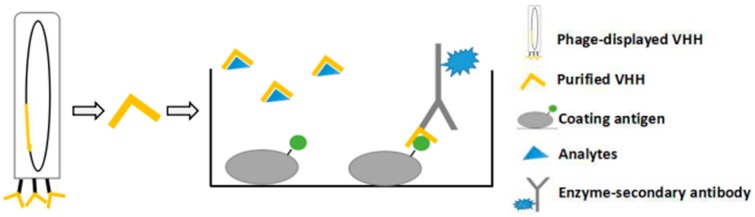
“VHHs can be easily isolated, enriched, expressed and purified from phage display VHH library (Figure 4) [36].”
BackgroundGoodrow, M. H., Harrison, R. O., & Hammock, B. D. (1990) · Journal of Agricultural and Food Chemistry · doi:10.1021/jf00094a016 · Cited by 178 · cited 1×
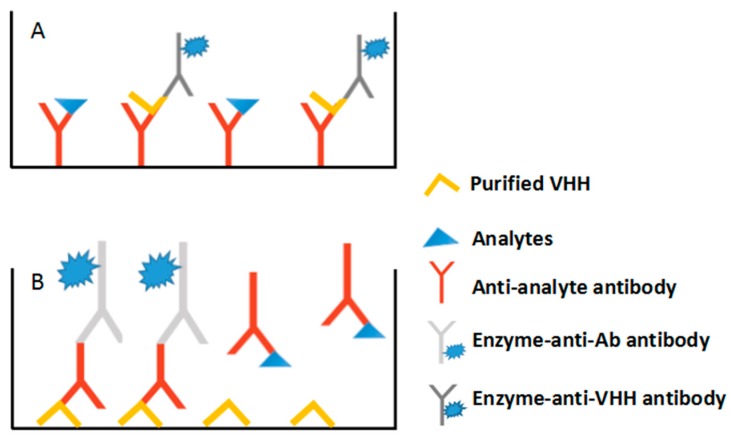
“The antibodies bound to the coating antigen are measured and this determines the amount of analyte present [32] (Figure 4).”
BackgroundZhang, J., Tanha, J., Hirama, T., Khieu, N. H., To, R., Tong-Sevinc, H., Stone, E., Brisson, J.-R., & Roger MacKenzie, C. (2004) · Journal of Molecular Biology · doi:10.1016/j.jmb.2003.09.034 · Cited by 171 · cited 1×
“The pentamer fragment showed structural flexibility for binding to antigen and pentamerization increased the affinity of the VHH for 15-AcDON [79].”
BackgroundAntibody Fragments as Probe in Biosensor Development
Saerens, D., Huang, L., Bonroy, K., & Muyldermans, S. (2008) · Sensors · doi:10.3390/s8084669 · Cited by 169 · cited 1×
“VHHs can be chemically modified for site-specific immobilization to a transducer surface [70,71] or branched to nanoparticles and magnetic nanoparticles [42].”
BackgroundBiotechnological applications of recombinant single-domain antibody fragments
de Marco, A. (2011) · Microbial Cell Factories · doi:10.1186/1475-2859-10-44 · Cited by 166 · cited 3×
“Compared with single-chain variable fragments antibodies (scFvs), the VHHs have greater or comparable sensitivity; can be produced in large quantities; are easily manipulated genetically; and have superior physicochemical stability and high refolding capacity [21,22], such as excellent solubility and resilience to org…”
BackgroundCamelid Heavy-Chain Variable Domains Provide Efficient Combining Sites to Haptens
Spinelli, S., Frenken, L. G. J., Hermans, P., Verrips, T., Brown, K., Tegoni, M., & Cambillau, C. (2000) · Biochemistry · doi:10.1021/bi991830w · Cited by 163
He, T., Wang, Y., Li, P., Zhang, Q., Lei, J., Zhang, Z., Ding, X., Zhou, H., & Zhang, W. (2014) · Analytical Chemistry · doi:10.1021/ac502390c · Cited by 159 · cited 8×
“Moreover, the mAb lost all of its AFB1-binding ability in the presence of 60% acetonitrile [41].”
BackgroundInfluentialVHH antibodies: emerging reagents for the analysis of environmental chemicals
Bever, C. S., Dong, J., Vasylieva, N., Barnych, B. B., Cui, Y., Xu, Z.-L., Hammock, B. D., & Gee, S. J. (2016) · Analytical and Bioanalytical Chemistry · doi:10.1007/s00216-016-9585-x · Cited by 157 · cited 2×
“Although VHH antibodies are also promising reagents for detecting small chemicals (MW < 1500 Da) in environmental monitoring [25] (e.”
BackgroundTang, X., Li, P., Zhang, Q., Zhang, Z., Zhang, W., & Jiang, J. (2017) · Analytical Chemistry · doi:10.1021/acs.analchem.7b02794 · Cited by 155 · cited 1×
“15 ng/mL) AFB1 ZEN Immunized alpaca library Time-resolved fluorescence immunochromatographic assay [69] 0.”
Ladenson, R. C., Crimmins, D. L., Landt, Y., & Ladenson, J. H. (2006) · Analytical Chemistry · doi:10.1021/ac058044j · Cited by 142
Disulfide Bond Introduction for General Stabilization of Immunoglobulin Heavy-Chain Variable Domains
Saerens, D., Conrath, K., Govaert, J., & Muyldermans, S. (2008) · Journal of Molecular Biology · doi:10.1016/j.jmb.2008.01.022 · Cited by 142 · cited 2×
“An nat r lly occurring disulfide bond between cysteine residues exits in VHHs and contributes l rgely to their conformational and thermal st bilities, without affecting a tigen-antibody binding abilities [28].”
BackgroundSite saturation mutagenesis: Methods and applications in protein engineering
Siloto, R. M. P., & Weselake, R. J. (2012) · Biocatalysis and Agricultural Biotechnology · doi:10.1016/j.bcab.2012.03.010 · Cited by 142 · cited 1×
“To improve the sensitivity of the assay further and to understand the relationship between anti-idiotypic VHH and mAb, site-saturation mutagenesis was applied to study the key residue Thr 102 [61].”
MethodYau, K. Y. F., Groves, M. A. T., Li, S., Sheedy, C., Lee, H., Tanha, J., MacKenzie, C. R., Jermutus, L., & Hall, J. C. (2003) · Journal of Immunological Methods · doi:10.1016/j.jim.2003.07.011 · Cited by 132 · cited 2×
“, picloram [29], triclocarban [30], 3-phenoxybenzoic acid [23], brominated diphenyl ether-47 [31] and tetrabromobisphenol A [24]), in the current review, we will focus only on the development and optimization of immunoassays for monitoring mycotoxins.”
BackgroundCamelid nanobodies: killing two birds with one stone
Desmyter, A., Spinelli, S., Roussel, A., & Cambillau, C. (2015) · Current Opinion in Structural Biology · doi:10.1016/j.sbi.2015.01.001 · Cited by 131 · cited 1×
“VHHs are also very useful in crystallizing conformationally and the interaction between VHHs and the target [81].”
BackgroundSaerens, D., Frederix, F., Reekmans, G., Conrath, K., Jans, K., Brys, L., Huang, L., Bosmans, E., Maes, G., Borghs, G., et al. (2005) · Analytical Chemistry · doi:10.1021/ac051092j · Cited by 125 · cited 1×
“VHHs can be chemically modified for site-specific immobilization to a transducer surface [70,71] or branched to nanoparticles and magnetic nanoparticles [42].”
BackgroundQuantitation of Endogenous Analytes in Biofluid without a True Blank Matrix
Li, W., & Cohen, L. H. (2003) · Analytical Chemistry · doi:10.1021/ac034505u · Cited by 115 · cited 1×
“Due to the toxicity of mycotoxins and their hazardous effects to operator and environment, surrogate analytes were introduced to generate a standard calibration curve and assist in calculating the analyte concentration, based on the equation from the surrogate analyte [47].”
BackgroundLiu, X., Xu, Y., Wan, D.-B., Xiong, Y.-H., He, Z., Wang, X.-X., Gee, S. J., Ryu, D., & Hammock, B. D. (2014) · Analytical Chemistry · doi:10.1021/ac504305z · Cited by 104
Self-citationLi, P., Zhang, Z., Hu, X., & Zhang, Q. (2013) · Mass Spectrometry Reviews · doi:10.1002/mas.21377 · Cited by 103
Isolation of Alpaca Anti-Idiotypic Heavy-Chain Single-Domain Antibody for the Aflatoxin Immunoassay
Wang, Y., Li, P., Májková, Z., Bever, C. S., Kim, H. J., Zhang, Q., Dechant, J. E., Gee, S. J., & Hammock, B. D. (2013) · Analytical Chemistry · doi:10.1021/ac4015885 · Cited by 96 · cited 5×
“VHH 2-5 showed almost the same binding abilities to mAb 1C11 as the homologous scFv 2G7 from 1C11, which indicated that VHH25 (by some key amino acid residues) might bind to AFB1 in the same way with that scFv 2G7 bound to the AFB1 [46].”
BackgroundInfluentialLiu, X., Xu, Y., Xiong, Y.-H., Tu, Z., Li, Y.-P., He, Z., Qiu, Y.-L., Fu, J.-H., Gee, S. J., & Hammock, B. D. (2014) · Analytical Chemistry · doi:10.1021/ac501202d · Cited by 94 · cited 5×
“47 ng/mL Immunogen OTA-KLH Competitive real time PD-IPCR [39] 0.”
BackgroundInfluentialKim, H. J., McCoy, M. R., Májková, Z., Dechant, J. E., Gee, S. J., Rosa, S. T.-D., González‐Sapienza, G., & Hammock, B. D. (2011) · Analytical Chemistry · doi:10.1021/ac2030255 · Cited by 90 · cited 2×
“, picloram [29], triclocarban [30], 3-phenoxybenzoic acid [23], brominated diphenyl ether-47 [31] and tetrabromobisphenol A [24]), in the current review, we will focus only on the development and optimization of immunoassays for monitoring mycotoxins.”
BackgroundLiu, X., Tang, Z., Duan, Z., He, Z., Shu, M., Wang, X., Gee, S. J., Hammock, B. D., & Xu, Y. (2016) · Talanta · doi:10.1016/j.talanta.2016.11.039 · Cited by 89 · cited 2×
“OTA Immunogen OTA-KLH Indirect competitive ELISA [37] 12 ng/mL 8–20 ng/mL (6 ng/mL) Immunogen OTA-KLH Indirect competitive ELISA [38] 0.”
BackgroundMethodSelf-citationOudin, J., & MICHEL, M. (1963) · PubMed · Cited by 87
Rosa, S. T.-D., Rossotti, M. A., Carleiza, C., Carrión, F., Pritsch, O., Ahn, K. C., Last, J. A., Hammock, B. D., & González‐Sapienza, G. (2011) · Analytical Chemistry · doi:10.1021/ac201824z · Cited by 80 · cited 2×
“, picloram [29], triclocarban [30], 3-phenoxybenzoic acid [23], brominated diphenyl ether-47 [31] and tetrabromobisphenol A [24]), in the current review, we will focus only on the development and optimization of immunoassays for monitoring mycotoxins.”
BackgroundDoyle, P. J., Arbabi‐Ghahroudi, M., Gaudette, N., Furzer, G., Savard, M. E., Gleddie, S., McLean, M. D., MacKenzie, C. R., & Hall, J. C. (2008) · Molecular Immunology · doi:10.1016/j.molimm.2008.06.005 · Cited by 80 · cited 1×
“5 μM respectively (determined with a competitive fluorescence polarization assay) [80].”
MethodWang, J., Bever, C. S., Májková, Z., Dechant, J. E., Yang, J., Gee, S. J., Xu, T., & Hammock, B. D. (2014) · Analytical Chemistry · doi:10.1021/ac5017437 · Cited by 79 · cited 2×
“, picloram [29], triclocarban [30], 3-phenoxybenzoic acid [23], brominated diphenyl ether-47 [31] and tetrabromobisphenol A [24]), in the current review, we will focus only on the development and optimization of immunoassays for monitoring mycotoxins.”
BackgroundSelf-citationPírez, M., Rossotti, M. A., Badagian, N., Leizagoyen, C., Brena, B. M., & González‐Sapienza, G. (2017) · Analytical Chemistry · doi:10.1021/acs.analchem.7b01221 · Cited by 74 · cited 1×
“The anti-hapten VHHs are selected from phage displayed VHH fragment libraries, with a sequential competition strategy [33].”
BackgroundDevelopments in mycotoxin analysis: an update for 2015-2016
Berthiller, F., Brera, C., Iha, M. H., Krska, R., Lattanzio, V. M. T., MacDonald, S. J., Malone, R. J., Maragos, C. M., Solfrizzo, M., Stranska-Zachariasova, M., et al. (2017) · World Mycotoxin Journal · doi:10.3920/wmj2016.2138 · Cited by 74
Shu, M., Xu, Y., Wang, D., Liu, X., Li, Y., He, Q., Tu, Z., Qiu, Y., Ji, Y., & Wang, X. (2015) · Talanta · doi:10.1016/j.talanta.2015.05.010 · Cited by 73 · cited 1×
“0 ng/mL FB Naïve VHH phage display library Competitive ELISA [63] 0.”
BackgroundSelf-citationWie, S. I., & Hammock, B. D. (1984) · Journal of Agricultural and Food Chemistry · doi:10.1021/jf00126a021 · Cited by 70 · cited 1×
“Heterologous site systems, coupling carrier proteins with haptens as the immunogen and coating antigen from different positions [55] or different length in spacer-arm [56], are effective tools for improving the sensitivity and specificity of immunoassay.”
Zhang, Q., Wang, L., Ahn, K. C., Sun, Q. H., Hu, B., Wang, J., & Liu, F. (2007) · Analytica Chimica Acta · doi:10.1016/j.aca.2007.06.009 · Cited by 69 · cited 1×
“Heterologous site systems, coupling carrier proteins with haptens as the immunogen and coating antigen from different positions [55] or different length in spacer-arm [56], are effective tools for improving the sensitivity and specificity of immunoassay.”
Self-citationQiu, Y., He, Q., Xu, Y., Bhunia, A. K., Tu, Z., Chen, B., & Liu, Y.-Y. (2015) · Analytica Chimica Acta · doi:10.1016/j.aca.2015.06.033 · Cited by 67 · cited 2×
“Molecular modeling and alanine-scanning mutagenesis revealed that the residues Thr 102-Ser 106 of N-28 contributed to the binding with mAbs [60].”
BackgroundTereshko, V., Uysal, S., Koide, A., Margalef, K., Koide, S., & Kossiakoff, A. A. (2008) · Protein Science · doi:10.1110/ps.034892.108 · Cited by 66 · cited 1×
“, phage, yeast & ribosome selection systems) [19,20] with higher antibody yields.”
BackgroundYuan, Q., Pestka, J. J., Hespenheide, B. M., Kuhn, L. A., Linz, J. E., & Hart, L. P. (1999) · Applied and Environmental Microbiology · doi:10.1128/aem.65.8.3279-3286.1999 · Cited by 64 · cited 1×
“Due to the monovalence and mimicry of the toxins binding to primary antibodies, VHH can serve as the coating antigen [59] and potentially replace the conventional coating antigens (Figure 5B).”
BackgroundShu, M., Xu, Y., Liu, X., Li, Y., He, Q., Tu, Z., Fu, J., Gee, S. J., & Hammock, B. D. (2016) · Analytica Chimica Acta · doi:10.1016/j.aca.2016.03.053 · Cited by 63 · cited 1×
“coli, as demonstrated by the one-step detection of FB1 [75].”
BackgroundHongnian, X. I. A. O., Clarke, J. R., Marquardt, R. R., & Frohlich, A. A. (1995) · Journal of Agricultural and Food Chemistry · doi:10.1021/jf00056a025 · Cited by 62 · cited 1×
“Besides, the extensive modification and bridge group interference may make the conjugates less efficient or produce some unwanted cross-reactions [57].”
BackgroundAdvances in Mycotoxin Research: Public Health Perspectives
Lee, H. J., & Ryu, D. (2015) · Journal of Food Science · doi:10.1111/1750-3841.13156 · Cited by 60
Trichothecene and Moniliformin Production by Fusarium Species from Western Canadian Wheat
Abramson, D., Clear, R. M., Gaba, D., Smith, D. M., Patrick, S. K., & Saydak, D. (2001) · Journal of Food Protection · doi:10.4315/0362-028x-64.8.1220 · Cited by 55 · cited 1×
“Finally, 15-acetyl-deoxynivalenol (15-AcDON) was one of the mostly commonly DON acetylated metabolites in contaminant maize and small-grain cereals [78].”
BackgroundXu, Y., Xiong, L., Li, Y., Xiong, Y., Tu, Z., Fu, J., & Chen, B. (2015) · Analytical and Bioanalytical Chemistry · doi:10.1007/s00216-015-8693-3 · Cited by 50 · cited 2×
“0 μg/kg Naïve VHH phage display library VHH ELISA [66] 44.”
BackgroundMethodWang, X., He, Q., Xu, Y., Liu, X., Shu, M., Tu, Z., Li, Y., Wang, W., & Cao, D. (2015) · Talanta · doi:10.1016/j.talanta.2015.09.072 · Cited by 49 · cited 4×
“19 pg/mL) ZEN Naïve VHH phage display library Indirect competitive phage ELISA [53] 0.”
BackgroundInfluentialSelf-citationLei, J., Li, P., Zhang, Q., Wang, Y., Zhang, Z., Ding, X., & Zang, W. (2014) · Analytical Chemistry · doi:10.1021/ac5029424 · Cited by 47 · cited 2×
“The real-time IPCR method brought higher sensitivity (4-fold increase over phage ELISA) and a wider linear range [52].”
MethodWang, J., Májková, Z., Bever, C. S., Yang, J., Gee, S. J., Li, J., Xu, T., & Hammock, B. D. (2015) · Analytical Chemistry · doi:10.1021/ac504735p · Cited by 46 · cited 1×
“Besides, avoiding random chemical conjugation and the use of secondary antibodies, VHHs with fused proteins enlarge the paratopes and thus improve the affinities of VHHs due to the homodimeric nature of AP [74].”
BackgroundSelf-citationImmunochemical methods for the determination of mycotoxins
Goryacheva, I. Y., Rusanova, T. Y., Burmistrova, N. A., & Saeger, S. D. (2009) · Journal of Analytical Chemistry · doi:10.1134/s1061934809080024 · Cited by 45 · cited 2×
“Competitive immunoassays is the typical method used to detect mycotoxins in contaminated food products [54].”
BackgroundMethodXu, Y., Chen, B., He, Q., Qiu, Y., Liu, X., He, Z., & Xiong, Z.-P. (2014) · Analytical Chemistry · doi:10.1021/ac502037w · Cited by 45 · cited 1×
“Conjugating with carrier protein and fusion with binding protein [58] are the two options for using peptides as coating antigens.”
BackgroundA competitive immunoassay with a surrogate calibrator curve for aflatoxin M1 in milk
Guan, D., Li, P., Cui, Y., Zhang, Q., & Zhang, W. (2011) · Analytica Chimica Acta · doi:10.1016/j.aca.2011.07.011 · Cited by 43 · cited 2×
“and mimic the configuration with analytes; thus, they can be used as a surrogate analytes to develop an immunoassay without mycotoxins [48].”
BackgroundKavanagh, O. V., Elliott, C. T., & Campbell, K. (2015) · Analytical and Bioanalytical Chemistry · doi:10.1007/s00216-015-8502-z · Cited by 41 · cited 3×
“The lower molecular weight (15 kD, 1/10 of conventional antibody), the single domain nature of VHHs and the evolutionary replacement of the light chain (VL) for antigen binding are compensated for by sequence heterogeneity in CDR regions and greater topological diversity in paratopes [26,27].”
BackgroundSun, Z., Duan, Z., Liu, X., Deng, X., & Tang, Z. (2017) · Food Analytical Methods · doi:10.1007/s12161-017-0915-1 · Cited by 41 · cited 5×
“The cut-off level of this meth d was 5 μg/kg visually for OTA, with weak cross-reactivity with OTB and no cross-reactivity with DON, AFB1 and ZEN [40].”
BackgroundMethodInfluentialBarelle, C. J., & Porter, A. (2015) · Antibodies · doi:10.3390/antib4030240 · Cited by 40 · cited 1×
“In the serum of camelidae family and cartilaginous fish, heavy chain only antibodies (HcAbs) are existed devoid of light chains and lacking the CH1 domains (Figure 2) [14,15] The variable domain of HcAbs, which binds to specific antigens, is referred to as VHH.”
BackgroundDetermination of aflatoxins in peanut meal by LC/MS with a particle beam interface
Cappiello, A., Famiglini, G., & Tirillini, B. B. (1995) · Chromatographia · doi:10.1007/bf02269904 · Cited by 37
Bever, C. S., Májková, Z., Radhakrishnan, R., Suni, I. I., McCoy, M., Wang, Y., Dechant, J. E., Gee, S. J., & Hammock, B. D. (2014) · Analytical Chemistry · doi:10.1021/ac501807j · Cited by 35 · cited 2×
“, picloram [29], triclocarban [30], 3-phenoxybenzoic acid [23], brominated diphenyl ether-47 [31] and tetrabromobisphenol A [24]), in the current review, we will focus only on the development and optimization of immunoassays for monitoring mycotoxins.”
BackgroundVasylieva, N., Barnych, B. B., Rand, A. A., İnceoğlu, B., Gee, S. J., & Hammock, B. D. (2017) · Analytical Chemistry · doi:10.1021/acs.analchem.7b00846 · Cited by 35 · cited 1×
“These assays have a number of advantages, including high selectivity toward the target analytes, greater than or comparable sensitivity to the instrumental methods and ease of operation and high-throughput screening ability [13] for mycotoxins in agricultural foodstuffs.”
BackgroundLiu, J. L., Zabetakis, D., Lee, P. A. B., Goldman, E. R., & Anderson, G. P. (2013) · Journal of Immunological Methods · doi:10.1016/j.jim.2013.04.001 · Cited by 34 · cited 1×
“In other words, the affinity of Ab2b-Nb-AP for anti-FB1 mAb was twice as large as for VHH, showing that the fused VHH-AP can enhance the binding affinity [76].”
BackgroundMycotoxin Analysis Using Imprinted Materials Technology: Recent Developments
Appell, M., & Mueller, A. (2016) · Journal of AOAC International · doi:10.5740/jaoacint.16-0113 · Cited by 31
Wang, Y., Li, P., Zhang, Q., Hu, X., & Zhang, W. (2016) · Analytical and Bioanalytical Chemistry · doi:10.1007/s00216-016-9370-x · Cited by 30 · cited 4×
“AFB1 Immunogen: anti -AFB1 mAb 1C11 Indirect competitive ELISA [49] 0.”
BackgroundMethodInfluential(2012) · Methods in molecular biology · doi:10.1007/978-1-61779-968-6 · Cited by 29
Citrinin detection using phage-displayed anti-idiotypic single-domain antibody for antigen mimicry
Xu, Y., Xiong, L., Li, Y., Xiong, Y., Tu, Z., Fu, J., & Tang, X. (2015) · Food Chemistry · doi:10.1016/j.foodchem.2015.01.007 · Cited by 28 · cited 2×
“15 ng/mL citrinin Naïve VHH phage display library Phage ELISA [50] 10.”
BackgroundMicrosphere-based flow cytometric immunoassay for the determination of citrinin in red yeast rice
Li, Y., Wu, H., Guo, L., Zheng, Y., & Yang-hao, G. (2012) · Food Chemistry · doi:10.1016/j.foodchem.2012.04.072 · Cited by 27 · cited 1×
“The anti-idiotypic VHH can be used as a signal-amplification carrier for an indirect competitive phage ELISA, showing comparable sensitivity with conventional chemosynthetic citrinin conjugate-based immunoassays [67,68].”
MethodPractical Tools for Plant and Food Biosecurity
Gullino, M. L., Stack, J. P., Fletcher, J., & Mumford, J. D. (2017) · Springer eBooks · doi:10.1007/978-3-319-46897-6 · Cited by 26
Ji, Y., He, Q., Xu, Y., Tu, Z., Yang, H.-W., Qiu, Y., Wang, X., & Liu, Y. (2016) · Analytical Methods · doi:10.1039/c6ay01264g · Cited by 25 · cited 1×
“02 ng/mL) OTA Naïve VHH phage display library Immuno-PCR [51] 300 pg/mL (4.”
BackgroundSelf-citationQiu, Y., He, Q., Xu, Y., Wang, W., & Liu, Y.-Y. (2015) · Analytical and Bioanalytical Chemistry · doi:10.1007/s00216-015-9181-5 · Cited by 22 · cited 2×
“16 ng/mL) Naïve VHH phage display library Competitive phage ELISA [62] 24.”
BackgroundBuiarelli, F., Filippo, P. D., Riccardi, C., Pomata, D., Rumolo, E., Giannetti, L., & Neri, B. (2015) · International Journal of Environmental & Analytical Chemistry · doi:10.1080/03067319.2015.1055468 · Cited by 22
Determination of Citrinin in Barley by Indirect and Direct Enzyme Immunoassay
Abramson, D., Usleber, E., & Märtlbauer, E. P. (1996) · Journal of AOAC International · doi:10.1093/jaoac/79.6.1325 · Cited by 22 · cited 1×
“The anti-idiotypic VHH can be used as a signal-amplification carrier for an indirect competitive phage ELISA, showing comparable sensitivity with conventional chemosynthetic citrinin conjugate-based immunoassays [67,68].”
Methodvan Houwelingen, A. M. M. L., Saeger, S. D., Rusanova, T. Y., Waalwijk, C., & Beekwilder, J. (2008) · World Mycotoxin Journal · doi:10.3920/wmj2008.1070 · Cited by 20 · cited 2×
“OTA Immunogen OTA-KLH Indirect competitive ELISA [37] 12 ng/mL 8–20 ng/mL (6 ng/mL) Immunogen OTA-KLH Indirect competitive ELISA [38] 0.”
BackgroundMethodXiong, Y., Tu, Z., Huang, X., Xie, B., Xiong, Y., & Xu, Y. (2015) · RSC Advances · doi:10.1039/c5ra15843e · Cited by 20 · cited 3×
“23 mg/g) a d reusability with AFB1-spiked cor samples [42].”
BackgroundAlkaline phosphatase-fused repebody as a new format of immuno-reagent for an immunoassay
Seo, H., Lee, J., Kim, Y. J., Hantschel, O. D., Lee, S., & Kim, H. (2016) · Analytica Chimica Acta · doi:10.1016/j.aca.2016.11.013 · Cited by 15 · cited 1×
“To simplify immunoassay protocols, fluorescent proteins [72] or enzymes, such as alkaline phosphatase (AP), can be fused with VHHs for one-step immunoassay [73].”
Method
Research works printed but not linked: 3
- Commission E. Commission Regulation (EC) No. 1881/2006 of 19 December 2006 setting maximum levels for certain contaminants in foodstuffs Off. J. Eur. Union 2006 364 5 24
- Emon J.M.V. Immunoassay and Other Bioanalytical Techniques CRC Press Boca Raton, FL, USA 2007
- Wild D. The Immunoassay Handbook 4th ed. Elsevier Amsterdam, The Netherlands 2013
Cited by
Nanobody: outstanding features for diagnostic and therapeutic applications
Salvador, J.-P., Vilaplana, L., & Marco, M.-P. (2019) · Analytical and Bioanalytical Chemistry · doi:10.1007/s00216-019-01633-4 · Cited by 350
Valorization of Fruit Waste for Bioactive Compounds and Their Applications in the Food Industry
Nirmal, N., Khanashyam, A., Mundanat, A., Shah, K., Babu, K., Thorakkattu, P., Al-Asmari, F., & Pandiselvam, R. (2023) · Foods · doi:10.3390/foods12030556 · Cited by 305
Iqbal, A., Schulz, P., & Rizvi, S. S. H. (2021) · Food Bioscience · doi:10.1016/j.fbio.2021.101384 · Cited by 175
Nanobody and Nanozyme‐Enabled Immunoassays with Enhanced Specificity and Sensitivity
Wang, Y., & Xianyu, Y. (2022) · Small Methods · doi:10.1002/smtd.202101576 · Cited by 107
Nanobodies: The “Magic Bullets” in therapeutics, drug delivery and diagnostics
Mir, M. A., Mehraj, U., Sheikh, B. A., & Hamdani, S. S. (2019) · Human Antibodies · doi:10.3233/hab-190390 · Cited by 84
Metadata
- Authors
- Wang, J., Mukhtar, H., Ma, L., Pang, Q., & Wang, X.
- Affiliations
- Huazhong Agricultural University (CN)
- Corresponding author
- Wang, Xiaohong
- Venue
- Sensors
- Publisher
- MDPI AG
- Published
- 2018-02-06
- Volume
- 18
- Issue
- 2
- Pages
- 485
- ISSN
- 1424-8220 (ISSN-L)
- PMC
- PMC5855929
- OpenAlex
- W2791489238
- Cited by
- 53
- References
- 77
- Citations by year
- 2026: 3 · 2025: 3 · 2024: 9 · 2023: 7 · 2022: 14 · 2021: 4 · 2020: 5 · 2019: 7 · 2018: 1
- FWCI
- 0.44
- Type
- journal article
- Language
- en
- Open access
- gold
- doi.org
- Licence
- Locations
- Sensors (publishedVersion, cc-by)
- PubMed Central (publishedVersion, cc-by)
- PubMed (publishedVersion)
- DOAJ (DOAJ: Directory of Open Access Journals) (submittedVersion, cc-by-sa)
- Funders
- National Natural Science Foundation of China (31601539, 31772054)
- Natural Science Foundation of Hubei Province (2016CFB143)
- Fundamental Research Funds for the Central Universities (2662015QD027)
- Topics
- Life Sciences › Agricultural and Biological Sciences › Plant Science › Mycotoxins in Agriculture and Food
- Life Sciences › Immunology and Microbiology › Immunology › Monoclonal and Polyclonal Antibodies Research
- Physical Sciences › Engineering › Biomedical Engineering › Biosensors and Analytical Detection
- Keywords
- nanobodies, mycotoxins, mycotoxin detection, food safety, animal feed, heavy-chain antibodies, immunoassay, fungal secondary metabolites
- MeSH terms
- Antibodies, Monoclonal, Food Analysis, Humans, Indicators and Reagents, Mycotoxins
About these checks
Registry, retraction, Cites and statistics results are computed, not judged, with one exception: a printed reference that no index lists is read once by a model before it counts as a citation error. Claims are extracted by a model and kept only when their quote appears verbatim in the text; each cited source is then checked, with a model’s help, for whether it says what the claim relies on. Those verdicts can be wrong — read the claim’s quote and the cited source before relying on one.
Statistics and arithmetic are recomputed, not judged.
Confidence bands are shown only for fields calibrated on our annotated test set. None is calibrated yet, so no band is shown.
What counts as a claim ›How we measure confidence ›How we check this ›
Are you an author, or do you see a problem with this page? Request a review
Data sources
Bibliographic data: Semantic Scholar, OpenAlex, Crossref.
Contains information from the Semantic Scholar Academic Graph Datasets, made available under the ODC Attribution License (ODC-BY 1.0).
Semantic Scholar’s data is described in: Kinney, R., et al. (2023). The Semantic Scholar Open Data Platform. arXiv:2301.10140.
