

Detection-Response Task—Uses and Limitations
Open accessThe DOI matches its Crossref record; 55 of the 56 references it cites were found in a registry or an index; none of the 85 sources its claims cite is checked for support yet.
Abstract
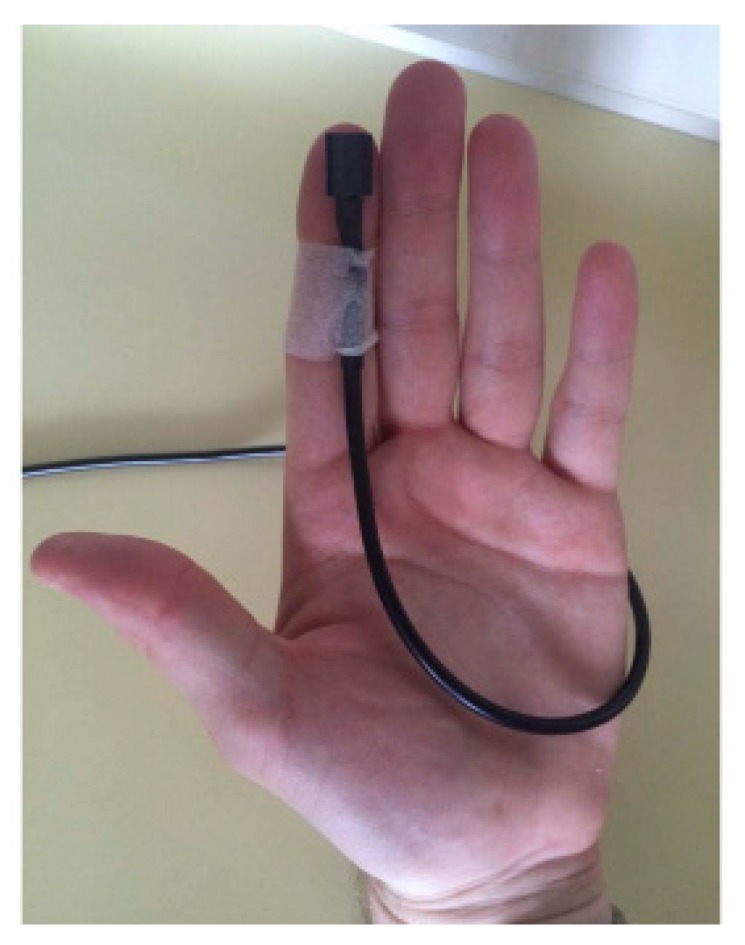
The Detection-Response Task is a method for assessing the attentional effects of cognitive load in a driving environment. Drivers are presented with a sensory stimulus every 3–5 s, and are asked to respond to it by pressing a button attached to their finger. Response times and hit rates are interpreted as indicators of the attentional effect of cognitive load. The stimuli can be visual, tactile and auditory, and are chosen based on the type of in-vehicle system or device that is being evaluated. Its biggest disadvantage is that the method itself also affects the driver’s performance and secondary task completion times. Nevertheless, this is an easy to use and implement method, which allows relevant assessment and evaluation of in-vehicle systems. By following the recommendations and taking into account its limitations, researchers can obtain reliable and valuable results on the attentional effects of cognitive load on drivers.
Overview
CoChat Summary
TL;DR
The Detection-Response Task (DRT) is a secondary-task method for assessing the attentional effects of cognitive load in driving, using visual, tactile, or auditory stimuli presented every 3–5 s and manual button-press responses. It is easy to implement and sensitive when the stimulus modality is matched to the evaluated in-vehicle task, but the method itself is intrusive to driving and secondary-task performance and must be interpreted with its limitations.
Key findings
- DRT measures response times and hit rates; stimuli are presented every 3–5 s, and hit rates are calculated as the ratio of correctly answered stimuli from 100 ms to 2500 ms out of all presented stimuli. Larger response-time differences and lower hit-rate ratios indicate higher cognitive distraction.
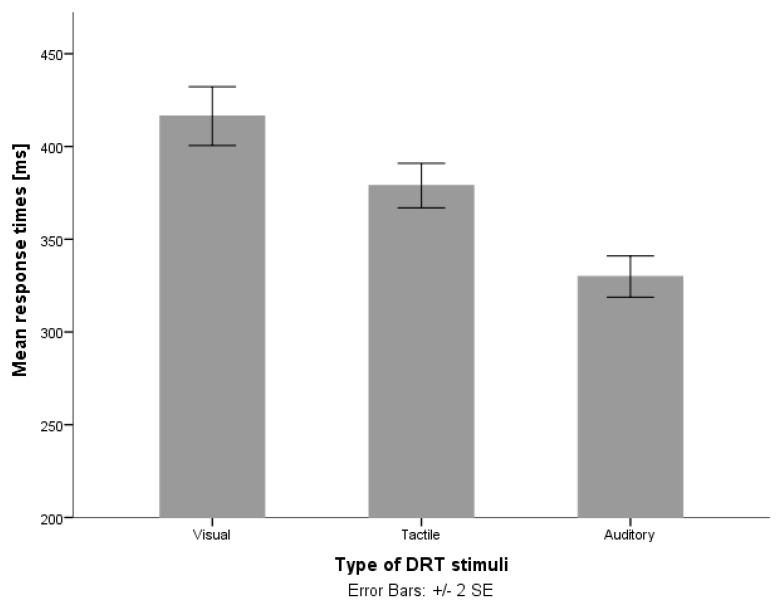
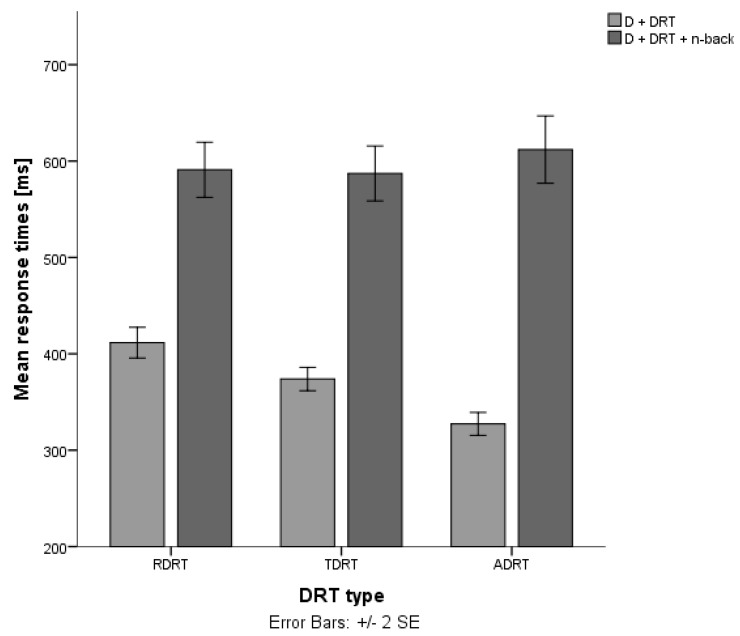
- Auditory stimuli evoke the fastest response times compared with tactile and visual stimuli, and tactile stimuli evoke faster responses than visual stimuli; sound signals reach the brain in 8–10 ms, light signals require 20–40 ms, and touch response times are about 155 ms for primary-only tasks. For pure tones, response time decreases with increased intensity until approximately 100 dB, where approximately 109 ms is described as the irreducible minimum.
- Stojmenova et al. proposed an auditory DRT (ADRT) using 4 kHz and 8 kHz pure tones at 53 dB, recommending 4 kHz with slightly increased intensity; they later validated ADRT with 4 kHz stimuli at 60 dB against standardized RDRT and TDRT and showed it is sensitive to cognitive load, with ADRT showing the greatest differences for an auditory-vocal cognitive task.
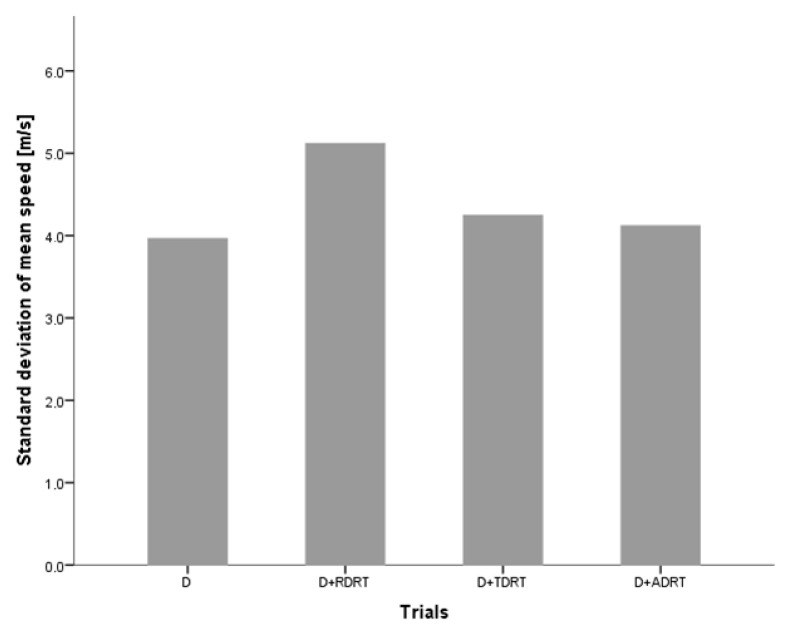
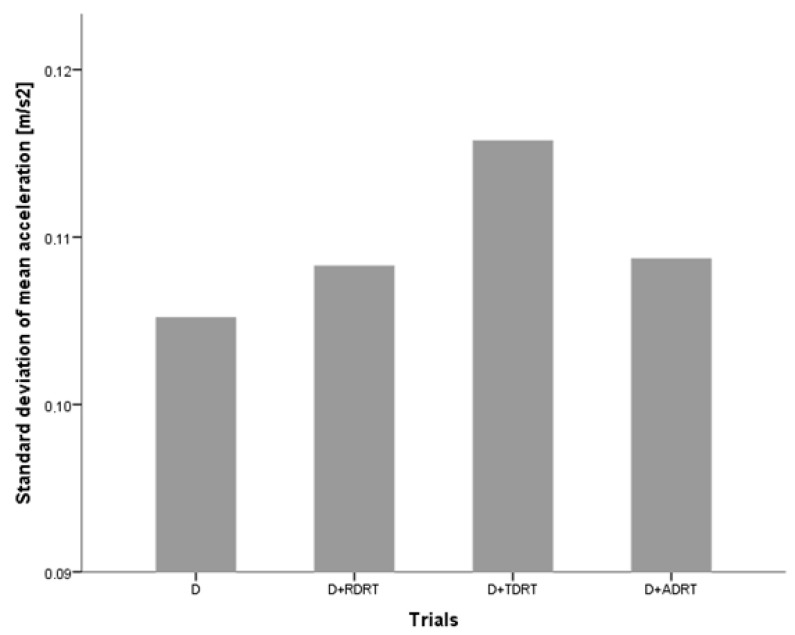
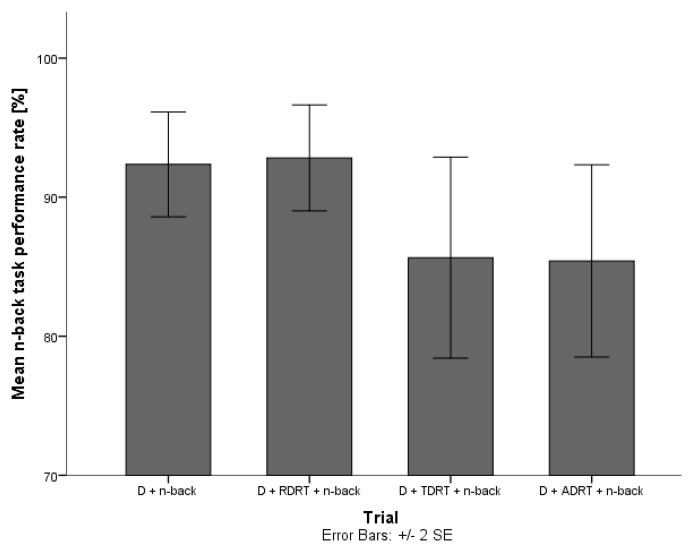
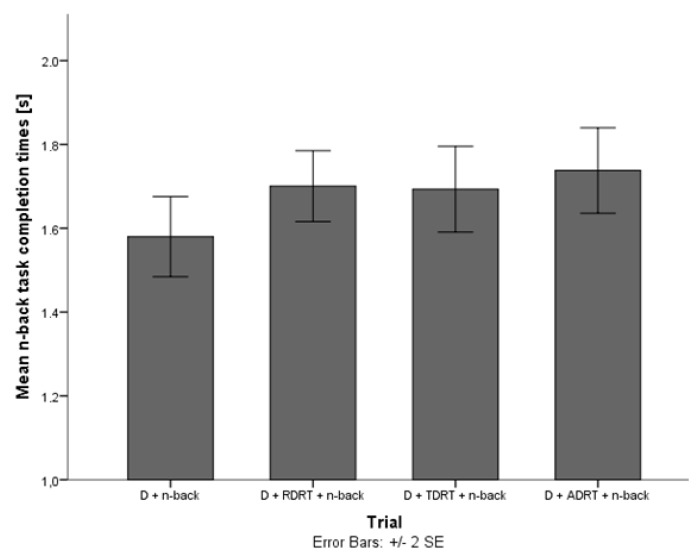
- In an intrusiveness study with eight trials, pupil size did not differ significantly between trials without and with DRT, but standard deviation of speed increased significantly for RDRT and TDRT, standard deviation of mean acceleration increased significantly for all three RDRT, TDRT, and ADRT, and secondary-task completion times increased significantly when DRT stimuli were answered; secondary-task success rate did not decrease statistically significantly, though an obvious fall was evident for TDRT and ADRT.
Methods
- Narrative review of the Detection-Response Task: origins, areas of use, limitations, and alternatives, synthesizing the ISO DRT standard and published studies, including Stojmenova and Sodnik’s validation and intrusiveness work.
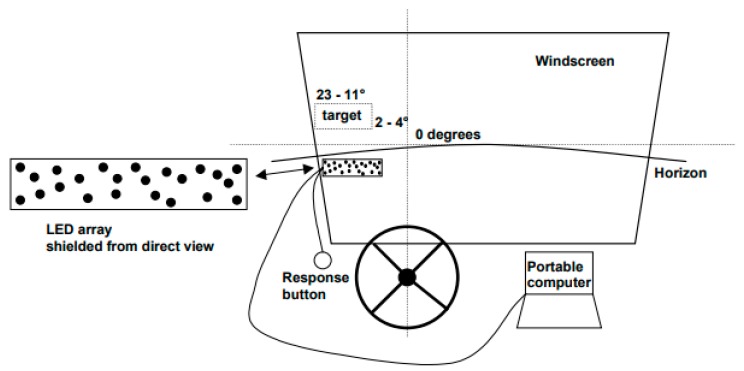
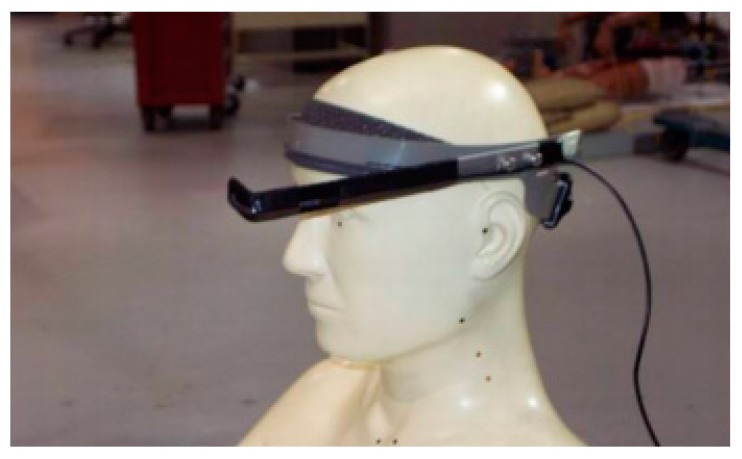
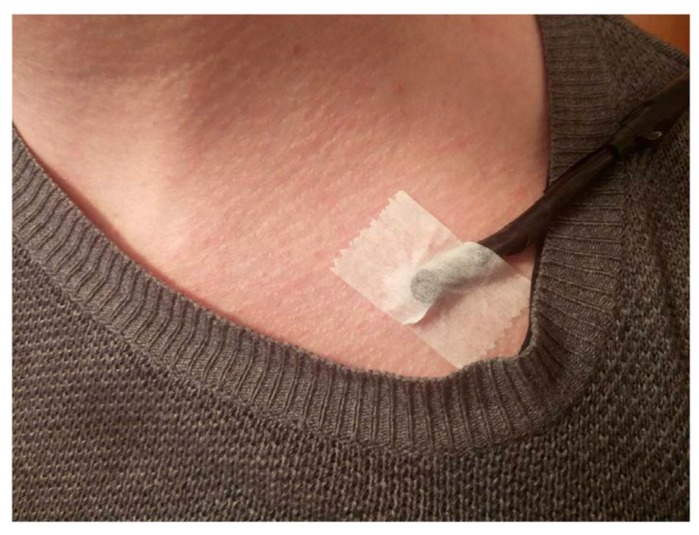
- Describes DRT versions—visual RDRT/PDT, head-mounted HDRT, tactile TDRT, and auditory ADRT—and related secondary tasks such as the Surrogate Reference Task (SuRT) and delayed digit recall/n-back task, with manual button press as the standardized response method.
- No new primary data collection or meta-analysis is reported; the paper reviews and compares methods and recommendations.
Limitations
- The paper states the method’s biggest disadvantage is that the DRT itself affects the driver’s performance and secondary-task completion times; it requires constant driver involvement and diverts attention from driving.
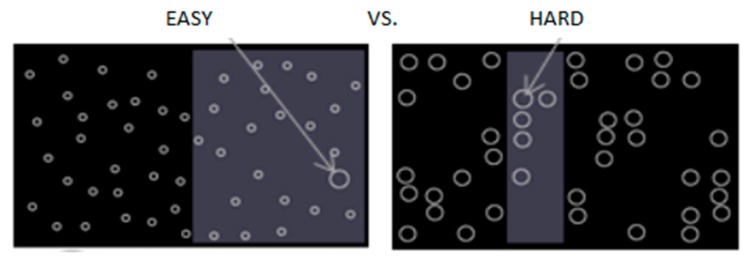
- The paper states that visual RDRT/PDT stimuli can be missed due to head turning, mirror checks, or visually demanding driving tasks rather than cognitive load; visual DRT can cause sensory overload with visual-manual IVIS; TDRT has an output-channel overlap because touch is used both to perceive stimuli and to press the button; and the DRT standard lacks guidelines for auditory stimuli, with different auditory signals making direct comparison difficult.
- Evident from the text: this is a narrative review, and no systematic search strategy or quantitative synthesis is reported; recommendations rely on cited studies and ISO guidance.
Model-written summary. Check it against the paper before relying on it.
Integrity signals
Registry
Cites
Statistics
Figures
Verification
Claims the paper makes
0 Valid · 0 Not valid · 62 Not checked · 42 Own results and interpretations
A result the paper states — it cites no source for it, so there is none to check. The quote shows it is in the paper.
In the paper
“We could not find any studies that would report on the driver’s cognitive load or cognitive distraction relying solely on this measurement.”
§ Detection-Response Task—Uses and Limitations > 3. Alternative Methods for the Assessment of Driver’ Cognitive Distraction
hedged- Asserted: passes — The authors put it forward as true.
- Checkable: passes — It can be checked against evidence.
- Load-bearing: unclear — It is unclear whether the paper’s conclusions depend on it.
- Based: passes — The paper gives a reason why it holds.
In the paper
“Its biggest disadvantage is that the method itself also affects the driver’s performance and secondary task completion times.”
§ Detection-Response Task—Uses and Limitations > Abstract
What the sources say
- Not checked yetcites [38] Stojmenova K. Sodnik J. Detection-Response Task: How intrusive is it? Proceedings 8th International Conference on Information Society and Techology, Kopaonik, Serbia, 11–14 March 2018 Zdravković M. Trajanović M. Konjović Z. Eventiotic Kopaonik, Serbia 2018 under review
plainstates a cause- Asserted: passes — The authors put it forward as true.
- Checkable: passes — It can be checked against evidence.
- Load-bearing: passes — The paper’s conclusions depend on it.
- Based: passes — The paper gives a reason why it holds.
None of the sources cited for this claim have been checked yet.
In the paper
“The method’s sensitivity can be manipulated by increasing the stimuli intensity in order to reduce the basic response time (trials without a task), and hence increase the difference in response times compared to trials with a task [18]”
§ Detection-Response Task—Uses and Limitations > 2. Detection-Response Task > 2.1. Factors Influencing the Response Time
What the sources say
- Not checked yetcites [18] Stojmenova K. Policardi F. Sodnik J. On the selection of stimulus for the Auditory Variant of the Detection Response Task Method for driving experiments Traffic Injury Prev. 2017 19 23 27 10.1080/15389588.2017.1339870 28594238 source
Checked before — its earlier verdict is held back until a new check runs.
plainstates a cause- Asserted: passes — The authors put it forward as true.
- Checkable: passes — It can be checked against evidence.
- Load-bearing: passes — The paper’s conclusions depend on it.
- Based: passes — The paper gives a reason why it holds.
- Not checked yet
A statement the paper makes itself — it cites no source for it, so there is none to check. The quote shows it is in the paper.
In the paper
“Larger differences in response times between the two conditions and lower hit rate ratios indicate higher cognitive distraction (load imposed by the task).”
§ Detection-Response Task—Uses and Limitations > 2. Detection-Response Task
hedgedstates an association- Asserted: passes — The authors put it forward as true.
- Checkable: passes — It can be checked against evidence.
- Load-bearing: passes — The paper’s conclusions depend on it.
- Based: passes — The paper gives a reason why it holds.
- Rests on an assumption not shown here.
None of the sources cited for this claim have been checked yet.
In the paper
“response times for touch are somewhat in-between at 155 ms [14], for tasks where answering stimuli is the primary and only task.”
§ Detection-Response Task—Uses and Limitations > 2. Detection-Response Task > 2.1. Factors Influencing the Response Time
What the sources say
- Not checked yetcites [14] Robinson E.S. Work of the integrated organism Handbook of General Experimental Psychology Murchison C. Clark University Press Worcester, MA, USA 1934 source
Checked before — its earlier verdict is held back until a new check runs.
plain- Asserted: passes — The authors put it forward as true.
- Checkable: passes — It can be checked against evidence.
- Load-bearing: unclear — It is unclear whether the paper’s conclusions depend on it.
- Based: passes — The paper gives a reason why it holds.
- Not checked yet
44 more claims
Create a free account to see all 104 claims and to verify the 84 references still open.
- Probably not a substantial claim. 31
- It may state two separate claims as one. 35
Citations
Cites
Development of NASA-TLX (Task Load Index): Results of Empirical and Theoretical Research
(1988) · Advances in Psychology · doi:10.1016/s0166-4115(08)62386-9 · Cited by 15,003
EEG alpha and theta oscillations reflect cognitive and memory performance: a review and analysis
Klimesch, W. (1999) · Brain Research Reviews · doi:10.1016/s0165-0173(98)00056-3 · Cited by 6,889
The principles of psychology, Vol I.
James, W. (1890) · doi:10.1037/10538-000 · Cited by 4,514
Cognitive Load Measurement as a Means to Advance Cognitive Load Theory
Paas, F., Tuovinen, J. E., Tabbers, H., & Van Gerven, P. W. M. (2003) · Educational Psychologist · doi:10.1207/s15326985ep3801_8 · Cited by 2,527
S-R compatibility: spatial characteristics of stimulus and response codes.
Fitts, P. M., & Seeger, C. M. (1953) · Journal of Experimental Psychology · doi:10.1037/h0062827 · Cited by 1,088
Rubio, S., Díaz, E., Martín, J., & Puente, J. M. (2004) · Applied Psychology · doi:10.1111/j.1464-0597.2004.00161.x · Cited by 915
The Subjective Workload Assessment Technique: A Scaling Procedure for Measuring Mental Workload
(1988) · Advances in Psychology · doi:10.1016/s0166-4115(08)62387-0 · Cited by 821
Discriminating Stress From Cognitive Load Using a Wearable EDA Device
Setz, C., Arnrich, B., Schumm, J., La Marca, R., Troster, G., & Ehlert, U. (2010) · IEEE Transactions on Information Technology in Biomedicine · doi:10.1109/titb.2009.2036164 · Cited by 742 · cited 1×
“Furthermore, it is important to be aware that the same sweat glands are also activated when humans experience stress, and models that differentiate between these two should be applied when interpreting the data [56].”
BackgroundUsing Electroencephalography to Measure Cognitive Load
Antonenko, P., Paas, F., Grabner, R., & van Gog, T. (2010) · Educational Psychology Review · doi:10.1007/s10648-010-9130-y · Cited by 742
Mental workload while driving: Effects on visual search, discrimination, and decision making.
Recarte, M. A., & Nunes, L. M. (2003) · Journal of Experimental Psychology: Applied · doi:10.1037/1076-898x.9.2.119 · Cited by 682
Research works printed but not linked: 5
- Woodworth R.S. Experimental Psychology Oxford and IBH Publishing New Delhi, India 1954
- Mehler B. Reimer B. Dusek J.A. MIT AgeLab Delayed Digit Recall Task (n-Back) Massachusetts Institute of Technology Cambridge, MA, USA 2011
- Miura T. Coping with situational demands: A study of eye movements and peripheral vision Proceedings of Vision in Vehicles Gale A.G. Brown I.D. Haslegrave C.M. Smith P. Taylor S. Elsevier Amsterdam, The Netherlands 1986 205 216
- Stojmenova K. Sodnik J. Detection-Response Task: How intrusive is it? Proceedings 8th International Conference on Information Society and Techology, Kopaonik, Serbia, 11–14 March 2018 Zdravković M. Trajanović M. Konjović Z. Eventiotic Kopaonik, Serbia 2018 under review
- Son J. Myoungouk P. Estimating cognitive load complexity using performance and physiological data in a driving simulator Proceedings of the Adjunct Automotive User Interfaces and Interactive Vehicular Applications Conference Salzburg, Austria 29 November–2 December 2011
Cited by
Driver Distraction Detection Methods: A Literature Review and Framework
Kashevnik, A., Shchedrin, R., Kaiser, C., & Stocker, A. (2021) · IEEE Access · doi:10.1109/access.2021.3073599 · Cited by 185
“Response times and hit rates are interpreted as indicators of the attentional effect of cognitive load’’ [56].”
BackgroundResultHu, Z., Lou, S., Xing, Y., Wang, X., Cao, D., & Lv, C. (2022) · IEEE Transactions on Intelligent Vehicles · doi:10.1109/tiv.2022.3195635 · Cited by 176
“Furthermore, measurements of the reaction time in addition to other physiological signals can be leveraged to evaluate the driver’s concentration [116].”
BackgroundUnderload on the Road: Measuring Vigilance Decrements During Partially Automated Driving
McWilliams, T., & Ward, N. (2021) · Frontiers in Psychology · doi:10.3389/fpsyg.2021.631364 · Cited by 85
Müller, A. L., Fernandes-Estrela, N., Hetfleisch, R. H., Zecha, L., & Abendroth, B. (2021) · European Transport Research Review · doi:10.1186/s12544-021-00475-5 · Cited by 82
Koay, H. V., Chuah, J. H., Chow, C., & Chang, Y.-L. (2022) · Engineering Applications of Artificial Intelligence · doi:10.1016/j.engappai.2022.105309 · Cited by 78
Charissis, V., Falah, J., Lagoo, R., Alfalah, S. F. M., Khan, S., Wang, S., Altarteer, S., Bram-Larbi, K. F., & Drikakis, D. (2021) · Applied Sciences · doi:10.3390/app11041397 · Cited by 70
Visual and Cognitive Demands of CarPlay, Android Auto, and Five Native Infotainment Systems
Strayer, D. L., Cooper, J. M., McCarty, M. M., Getty, D. J., Wheatley, C. L., Motzkus, C. J., Goethe, R. M., Biondi, F. N., & Horrey, W. J. (2019) · Human Factors The Journal of the Human Factors and Ergonomics Society · doi:10.1177/0018720819836575 · Cited by 58
Darejeh, A., Marcus, N., Mohammadi, G., & Sweller, J. (2026) · Human Factors The Journal of the Human Factors and Ergonomics Society · doi:10.1177/00187208261427867 · Cited by 60
Öztürk, İ., Merat, N., Rowe, R., & Fotios, S. A. (2023) · Transportation Research Part F Traffic Psychology and Behaviour · doi:10.1016/j.trf.2023.07.002 · Cited by 53
Impact of Information Placement and User Representations in VR on Performance and Embodiment
Seinfeld, S., Feuchtner, T., Pinzek, J., & Müller, J. (2020) · IEEE Transactions on Visualization and Computer Graphics · doi:10.1109/tvcg.2020.3021342 · Cited by 43
Measuring workload effects of augmented reality head-up displays using detection response task
Maag, C., Schömig, N., Naujoks, F., Karl, I., Keinath, A., & Neukum, A. (2022) · Transportation Research Part F Traffic Psychology and Behaviour · doi:10.1016/j.trf.2022.11.010 · Cited by 38
Xu, J., Fard, M., Zhang, N., Davy, J. L., & Robinson, S. R. (2024) · Transportation Research Part F Traffic Psychology and Behaviour · doi:10.1016/j.trf.2024.11.005 · Cited by 37
On the Cost of Detection Response Task Performance on Cognitive Load
Biondi, F. N., Balasingam, B., & Ayare, P. (2020) · Human Factors The Journal of the Human Factors and Ergonomics Society · doi:10.1177/0018720820931628 · Cited by 35
Nilsson, E., Bärgman, J., Aust, M. L., Matthews, G., & Svanberg, B. (2022) · Frontiers in Neuroergonomics · doi:10.3389/fnrgo.2022.787295 · Cited by 30
Nilsson, E., Victor, T., Aust, M. L., Svanberg, B., Lindén, P., & Gustavsson, P. (2020) · Transportation Research Part F Traffic Psychology and Behaviour · doi:10.1016/j.trf.2020.09.013 · Cited by 30
Effects of simulated augmented reality cueing in a virtual navigation task
Stefanucci, J. K., Brickler, D., Finney, H. C., Wilson, E., Drew, T., & Creem-Regehr, S. H. (2022) · Frontiers in Virtual Reality · doi:10.3389/frvir.2022.971310 · Cited by 33
Frazier, S., Pitts, B. J., & McComb, S. A. (2022) · Cognition Technology & Work · doi:10.1007/s10111-022-00708-0 · Cited by 27
Learning with AI Assistance: A Path to Better Task Performance or Dependence?
Karny, S., Mayer, L. W., Ayoub, J., Song, M., Su, H., Tian, D., Moradi‐Pari, E., & Steyvers, M. (2024) · ACM Collective Intelligence Conference (CI) · doi:10.1145/3643562.3672610 · Cited by 26
Morgenstern, T., Wögerbauer, E. M., Naujoks, F., Krems, J. F., & Keinath, A. (2020) · Applied Ergonomics · doi:10.1016/j.apergo.2020.103181 · Cited by 23
Blink Rate as a Measure of Driver Workload during Simulated Driving
Yahoodik, S., Tahami, H., Unverricht, J., Yamani, Y., Handley, H. A. H., & Thompson, D. D. (2020) · Proceedings of the Human Factors and Ergonomics Society Annual Meeting · doi:10.1177/1071181320641439 · Cited by 20
McDonnell, A. S., Imberger, K., Poulter, C., & Cooper, J. M. (2021) · Transportation Research Part F Traffic Psychology and Behaviour · doi:10.1016/j.trf.2021.09.019 · Cited by 20
A Broader Application of the Detection Response Task to Cognitive Tasks and Online Environments
Innes, R. J., Evans, N. J., Howard, Z. L., Eidels, A., & Brown, S. D. (2020) · Human Factors The Journal of the Human Factors and Ergonomics Society · doi:10.1177/0018720820936800 · Cited by 19
Estimating Systemic Cognitive States from a Mixture of Physiological and Brain Signals
Scheutz, M. J., Aeron, S., Aygun, A., de Ruiter, J. P., Fantini, S., Fernandez, C. M., Haga, Z., Nguyen, T. D., & Lyu, B. (2023) · Topics in Cognitive Science · doi:10.1111/tops.12669 · Cited by 18
Influences of Level 2 Automated Driving on Driver Behaviors: A Comparison With Manual Driving
Yang, B., Inoue, K., Yan, Z., Wang, Z., Kitazaki, S., & Nakano, K. (2023) · IEEE Transactions on Intelligent Transportation Systems · doi:10.1109/tits.2023.3308569 · Cited by 17
Olsen, C. D., Olsen, N. R., Stone, E. S., Tully, T. N., Paskett, M. D., Teramoto, M., Clark, G. A., & George, J. A. (2024) · Scientific Reports · doi:10.1038/s41598-024-73855-1 · Cited by 16
Towards Cognitive Adaptive Serious Games: A Conceptual Framework
Seyderhelm, A. J. A., Blackmore, K. L., & Nesbitt, K. V. (2019) · Lecture notes in computer science · doi:10.1007/978-3-030-34644-7_27 · Cited by 16
Lawrynczyk, A. (2018) · Carleton University's Institutional Repository (MacOdrum Library, Carleton University) · doi:10.22215/etd/2018-13301 · Cited by 17
Trout, M. A., Mino, F. R., Olsen, C. D., Hansen, T. C., Teramoto, M., Warren, D. J., Segil, J. L., & George, J. A. (2025) · Nature Communications · doi:10.1038/s41467-025-65965-9 · Cited by 14
Meyerson, A., Eklind, J., Fischer, F., Aramrattana, M., Fredriksson, I., & Ahlstrom, C. H. G. (2024) · Transportation Research Interdisciplinary Perspectives · doi:10.1016/j.trip.2024.101087 · Cited by 13
Vigilance decrement in automated vs. manual driving: Insights from multimodal data
Lin, C., Zhang, F., Zhang, Y., & Zhang, Y. (2025) · Transportation Research Part F Traffic Psychology and Behaviour · doi:10.1016/j.trf.2025.03.022 · Cited by 13
Behavioural Modelling of Automated to Manual Control Transition in Conditionally Automated Driving
Ansar, M. S., Alsaleh, N., & Farooq, B. (2022) · Transportation Research Part F Traffic Psychology and Behaviour · doi:10.1016/j.trf.2023.03.008 · Cited by 12
Cognitive Load Measurement in the Impact of VR Intervention in Learning
Li, C., Yeom, S., Dermoudy, J., & de Salas, K. (2022) · IEEE International Conference on Advanced Learning Technologies (ICALT) · doi:10.1109/icalt55010.2022.00103 · Cited by 11
Wang, S., Li, Z., Zeng, C. L., & Hu, J. S. (2023) · Transportation Research Part C Emerging Technologies · doi:10.1016/j.trc.2023.104212 · Cited by 11
Modeling the effect of traffic jam on driver’s level of fatigue
Gyulyev, N., Lobashov, O., Prasolenko, O., & Bugayov, I. (2019) · SHS Web of Conferences · doi:10.1051/shsconf/20196704005 · Cited by 10
Model-Based Estimation of Mental Workload in Drivers Using Pupil Size Measurements
Pillai, P., Balasingam, B., & Biondi, F. N. (2023) · IEEE/ASME International Conference on Advanced Intelligent Mechatronics · doi:10.1109/aim46323.2023.10196230 · Cited by 9
Gauging the utility of ambient displays by measuring cognitive load
Shelton, B., Nesbitt, K. V., Thorpe, A., & Eidels, A. (2020) · Cognition Technology & Work · doi:10.1007/s10111-020-00639-8 · Cited by 10
Wu, M., Wang, X., Lee, C., Liu, S., Chen, J., & Sun, Y. (2024) · Transportation Research Part F Traffic Psychology and Behaviour · doi:10.1016/j.trf.2024.12.026 · Cited by 8
Zaman, F., Drake, W., Intriligator, J. M., Gardony, A. L., Ma, N., & Rife, J. H. (2021) · Proceedings of the Human Factors and Ergonomics Society Annual Meeting · doi:10.1177/1071181321651090 · Cited by 8
Remigereau, A., Darses, F., Dozias, B., & Albentosa, J. (2024) · Frontiers in Psychology · doi:10.3389/fpsyg.2024.1433822 · Cited by 7
Morgenstern, T., Trommler, D., Naujoks, F., Karl, I., Krems, J. F., & Keinath, A. (2023) · Transportation Research Part F Traffic Psychology and Behaviour · doi:10.1016/j.trf.2023.01.004 · Cited by 7
Improving Upper-limb Prosthesis Usability: Cognitive Workload Measures Quantify Task DifficultyPreprint
Paskett, M. D., Garcia, J. K., Jones, S. T., Brinton, M. R., Davis, T. S., Duncan, C. C., Cooper, J. M., Strayer, D. L., & Clark, G. A. (2022) · medRxiv · doi:10.1101/2022.08.02.22278038 · Cited by 7
Botyarov, M., & Gallegos, E. E. (2024) · Journal of Systems Science and Systems Engineering · doi:10.1007/s11518-024-5626-8 · Cited by 6
Evaluating In-Car Tasks’ Distraction Effects with Drive-In Lab
Kujala, T., & Sarkar, A. (2025) · CHI Conference on Human Factors in Computing Systems · doi:10.1145/3706598.3713590 · Cited by 6
Optimization Approach for Multisensory Feedback in Robot-Assisted Pouring Task
Marambe, M. S., Duerstock, B. S., & Wachs, J. P. (2024) · Actuators · doi:10.3390/act13040152 · Cited by 5
Peripheral Light Cues as a Naturalistic Measure of Focus
Ramsay, D. B., & Paradiso, J. A. (2022) · ACM International Conference on Interactive Media Experiences · doi:10.1145/3505284.3532984 · Cited by 5
Howard, Z. L., Fox, E. L., Evans, N. J., Loft, S. D., & Houpt, J. W. (2023) · Psychonomic Bulletin & Review · doi:10.3758/s13423-023-02418-8 · Cited by 6
Determining Key Parameters with Data-Assisted Analysis of Conditionally Automated Driving
Gruden, T., & Jakus, G. (2023) · Applied Sciences · doi:10.3390/app13116649 · Cited by 5
Considerations when trying to quantify immersion with secondary tasks
Payne, E., Battel, K., Baker, N. A., & Ward, N. (2024) · Frontiers in Virtual Reality · doi:10.3389/frvir.2024.1212216 · Cited by 3
ANIM3: ANIMated ANIMals as A Numbing Immersive Mechanic
Visscher, A., Kolkmeier, J., Langener, S., & van Delden, R. W. (2020) · Annual Symposium on Computer-Human Interaction in Play · doi:10.1145/3383668.3419870 · Cited by 3
D2.1 State of the art on monitoring driver state and task demand
Kaiser, S., Eichhorn, A., Aigner-Breuss, E., Pracherstorfer, C., Katrakazas, C., Michelaraki, E., Yannis, G., Pilkington‐Cheney, F., Talbot, R., Hancox, G. T., et al. (2020) · Document Server@UHasselt (UHasselt) · Cited by 4
Guo, M., Wei, Y., Zhang, J., Huang, Q., Jin, X., & Ma, J. (2024) · Applied Sciences · doi:10.3390/app142210482 · Cited by 2
Buchholz, M., Wögerbauer, E. M., & Brandenburg, S. (2023) · Transportation Research Part F Traffic Psychology and Behaviour · doi:10.1016/j.trf.2023.07.019 · Cited by 2
An examination of sustained attention during complex multitasking scenarios
Rann, J. C., & Almor, A. (2025) · Cognitive Research Principles and Implications · doi:10.1186/s41235-025-00674-x · Cited by 2
An Inexpensive and Adaptable Prosthetic Wrist Improves Dexterity and Reduces Compensatory Movements
Olsen, C. D., Stone, E. S., Tully, T. N., Olsen, N. R., Clark, G. A., & George, J. A. (2022) · PubMed · doi:10.57922/mec.1982 · Cited by 2
Levac, D. E., Taylor, M. M., Payne, B. R., & Ward, N. (2019) · International Conference on Virtual Rehabilitation · doi:10.1109/icvr46560.2019.8994487 · Cited by 2
Evaluating instruction quality across narrative modality using measures of real-time cognitive load
Smith, S., Blackmore, K., Wark, S., & Nowina-Krowicki, M. (2021) · MODSIM · doi:10.36334/modsim.2021.m2.smith · Cited by 1
The functional capabilities of young drivers and implications for fitness-to-drive
Binjolkar, M., Patrick, K. E., Boyle, L. N., Wang, J., Kroshus, E., Ebel, B. E., & Rivara, F. P. (2024) · Transportation Research Part F Traffic Psychology and Behaviour · doi:10.1016/j.trf.2024.03.018 · Cited by 1
Switch It Up! How Context Influences the Efficiency of Redundancy Gains in a Peripheral Task
Howard, Z. L., Thorpe, A., & Fox, E. L. (2022) · Computational Brain & Behavior · doi:10.1007/s42113-022-00159-w · Cited by 1
Loft, S. D., Howard, Z. L., Pond, S., Irons, J. L., Michailovs, S., Swe, D. C., Bell, J., Visser, T. A. W., Pinniger, G. J., & Schmitt, M. (2025) · Ergonomics · doi:10.1080/00140139.2025.2470251 · Cited by 1
Souman, J. L., van Weperen, M., & van Dam, E. (2021) · TNO Repository · Cited by 1
Feeling Easier, Working Harder: Cognitive Load in AI-Assisted Code Comprehension
White, M., Rose, M., Buckman, M., McDonnell, A., Ortega, F., & Trinkenreich, B. (2026) · arXiv · doi:10.48550/arxiv.2611.12019
Integration of autonomous and pattern recognition controls in hand prostheses
Mouchoux, J. (2022) · eDiss (Georg-August-Universität Göttingen) · doi:10.53846/goediss-33
Modeling driver distraction mechanism and its safety impact in automated vehicle environment.
Wang, S. (2021) · ThinkIR: The University of Louisville's Institutional Repository (University of Louisville) · doi:10.18297/etd/3796
Exploring Latent Biometric Constructs in a Model Predicting Mental States of Aviators
Pejemsky, A. (2023) · Carleton University's Institutional Repository (MacOdrum Library, Carleton University) · doi:10.22215/etd/2023-15359
Attention management to improve fallback-readiness in conditional automated vehicles
Gerber, M. A. (2023) · Queensland University of Technology · doi:10.5204/thesis.eprints.239712
Altering the colors displayed impacts applied task efficacy when laser eye protection is required
Baker, M., Coffey, K., Kooijman, L., Abel, L. A., & Douglass, A. G. (2025) · Journal of the Optical Society of America A · doi:10.1364/josaa.545240
Evolution and arousal of high-speed train drivers’ vigilance based on physiological information
Li, H., Zhang, W., Liang, M., Niu, K., Zhang, Y., Zhang, C., & Du, Y. (2025) · International Journal of Occupational Safety and Ergonomics · doi:10.1080/10803548.2025.2510803
Improved Reliability of Driver Drowsiness Ground Truths with Objective Assessment
Oliveira, C. F. D. S., Lourenço, A., Yoshioka, L. R., Ahlstrom, C. H. G., & Silva, H. (2025) · IEEE Portuguese Meeting on Bioengineering · doi:10.1109/enbeng67130.2025.11199741
Prevzem vodenja pogojno avtomatiziranega vozila
Gruden, T. (2024) · Repository of the University of Ljubljana (University of Ljubljana)
Reaction-Time-Based Driver Sleepiness Estimation via Robust Polynomial Regression for ADAS
Oliveira, C. F. D. S., Yoshioka, L. R., Lourenço, A., Ahlström, C., & da Silva, H. P. (2025) · IEEE International Conference on Industry Applications · doi:10.1109/induscon66435.2025.11241743
Žagar, D. (2024) · Repository of the University of Ljubljana (University of Ljubljana)
DRIVER DISTRACTION ASSOCIATED WITH MOBILE PHONE TACTILE TASKS: A DRIVING SIMULATOR-BASED STUDY
Siam, M. F. M., Rashid, A. A. A., Ibrahim, M. K. A., & Hamzah, A. (2025) · Journal of Information System and Technology Management · doi:10.35631/jistm.1041008
A broader application of the detection response task to cognitive tasks and online environmentsPreprint
Brown, S., Evans, N. J., & Innes, R. J. (2020) · OSF Preprints (OSF Preprints)
Zhang, X., Feng, Z., Cheng, Z., Liu, J., Huang, Z., Ge, S., & Wu, C. (2026) · Human-Centric Intelligent Systems · doi:10.1007/s44230-026-00172-3
Stefanucci, J. K., David Brickler, Finney, H. C., Emi Wilson, Drew, T., & Creem-Regehr, S. H. (2022) · doi:10.3389/frvir.2022.971310.s001
Metadata
- Authors
- Stojmenova, K., & Sodnik, J.
- Affiliations
- University of Ljubljana (SI)
- Corresponding author
- Sodnik, Jaka
- Venue
- Sensors
- Publisher
- MDPI AG
- Published
- 2018-02-14
- Volume
- 18
- Issue
- 2
- Pages
- 594
- ISSN
- 1424-8220 (ISSN-L)
- PMC
- PMC5855461
- OpenAlex
- W2792611395
- Cited by
- 77
- References
- 56
- Citations by year
- 2026: 3 · 2025: 11 · 2024: 13 · 2023: 11 · 2022: 14 · 2021: 10 · 2020: 10 · 2019: 4 · 2018: 1
- FWCI
- 0.88
- Type
- journal article
- Language
- en
- Open access
- gold
- doi.org
- Licence
- Locations
- Sensors (publishedVersion, cc-by)
- PubMed (publishedVersion)
- PubMed Central (publishedVersion, cc-by)
- Repository of the University of Ljubljana (University of Ljubljana) (publishedVersion, cc-by)
- DOAJ (DOAJ: Directory of Open Access Journals) (submittedVersion, cc-by-sa)
- Funders
- Javna Agencija za Raziskovalno Dejavnost RS
- Topics
- Social Sciences › Human Factors and Ergonomics › Human-Automation Interaction and Safety
- Social Sciences › Psychology › Experimental and Cognitive Psychology › Sleep and Work-Related Fatigue
- Social Sciences › Decision Sciences › Information Systems and Management › Personal Information Management and User Behavior
- Keywords
- detection response task, cognitive load, driver attention, in-vehicle systems, secondary task performance, reaction time (psychology), hit rate, driver distraction, auditory stimuli, tactile stimuli, visual stimuli
- MeSH terms
- Attention, Automobile Driving, Humans, Reaction Time, Task Performance and Analysis, Touch
About these checks
Registry, retraction, Cites and statistics results are computed, not judged, with one exception: a printed reference that no index lists is read once by a model before it counts as a citation error. Claims are extracted by a model and kept only when their quote appears verbatim in the text; each cited source is then checked, with a model’s help, for whether it says what the claim relies on. Those verdicts can be wrong — read the claim’s quote and the cited source before relying on one.
A language model drew the claims from the paper on 2026-11-18, under version 3 of the claim definition (model deepseek-v4.1-flash, prompt extract-v3).
A second model labelled each claim on 2026-11-18 (model jev-1.13-20260917, definition revision gold-guideline-v0.2).
Statistics and arithmetic are recomputed, not judged.
Confidence bands are shown only for fields calibrated on our annotated test set. None is calibrated yet, so no band is shown.
What counts as a claim ›How we measure confidence ›How we check this ›
Are you an author, or do you see a problem with this page? Request a review
Data sources
Bibliographic data: Semantic Scholar, OpenAlex, Crossref.
Contains information from the Semantic Scholar Academic Graph Datasets, made available under the ODC Attribution License (ODC-BY 1.0).
Semantic Scholar’s data is described in: Kinney, R., et al. (2023). The Semantic Scholar Open Data Platform. arXiv:2301.10140.
