

The DOI matches its Crossref record; 55 of the 56 references it cites were found in a registry or an index; none of the 85 sources its claims cite is checked for support yet.
Detection-Response Task—Uses and Limitations
Open accessAbstract
The Detection-Response Task is a method for assessing the attentional effects of cognitive load in a driving environment. Drivers are presented with a sensory stimulus every 3–5 s, and are asked to respond to it by pressing a button attached to their finger. Response times and hit rates are interpreted as indicators of the attentional effect of cognitive load. The stimuli can be visual, tactile and auditory, and are chosen based on the type of in-vehicle system or device that is being evaluated. Its biggest disadvantage is that the method itself also affects the driver’s performance and secondary task completion times. Nevertheless, this is an easy to use and implement method, which allows relevant assessment and evaluation of in-vehicle systems. By following the recommendations and taking into account its limitations, researchers can obtain reliable and valuable results on the attentional effects of cognitive load on drivers.
Overview
CoChat Summary
TL;DR
The Detection-Response Task (DRT) is a secondary-task method for assessing the attentional effects of cognitive load in driving, using visual, tactile, or auditory stimuli presented every 3–5 s and manual button-press responses. It is easy to implement and sensitive when the stimulus modality is matched to the evaluated in-vehicle task, but the method itself is intrusive to driving and secondary-task performance and must be interpreted with its limitations.
Key findings
- DRT measures response times and hit rates; stimuli are presented every 3–5 s, and hit rates are calculated as the ratio of correctly answered stimuli from 100 ms to 2500 ms out of all presented stimuli. Larger response-time differences and lower hit-rate ratios indicate higher cognitive distraction.
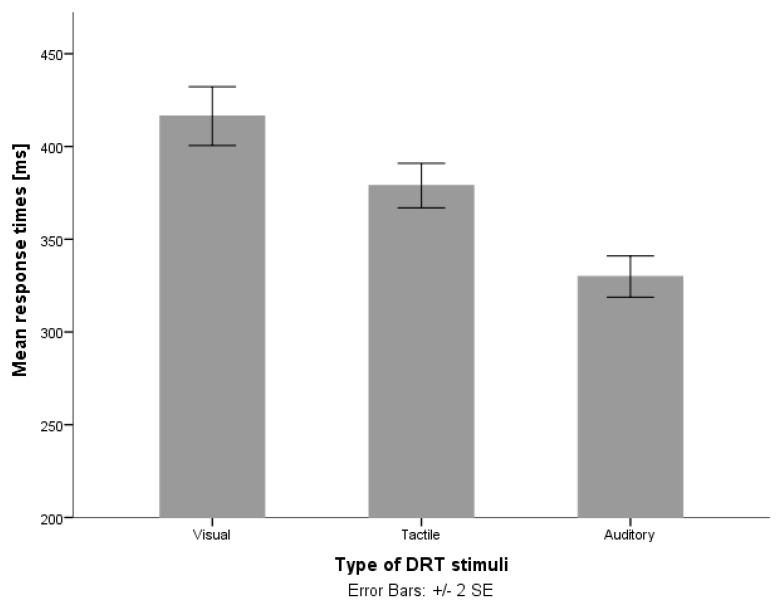
- Auditory stimuli evoke the fastest response times compared with tactile and visual stimuli, and tactile stimuli evoke faster responses than visual stimuli; sound signals reach the brain in 8–10 ms, light signals require 20–40 ms, and touch response times are about 155 ms for primary-only tasks. For pure tones, response time decreases with increased intensity until approximately 100 dB, where approximately 109 ms is described as the irreducible minimum.
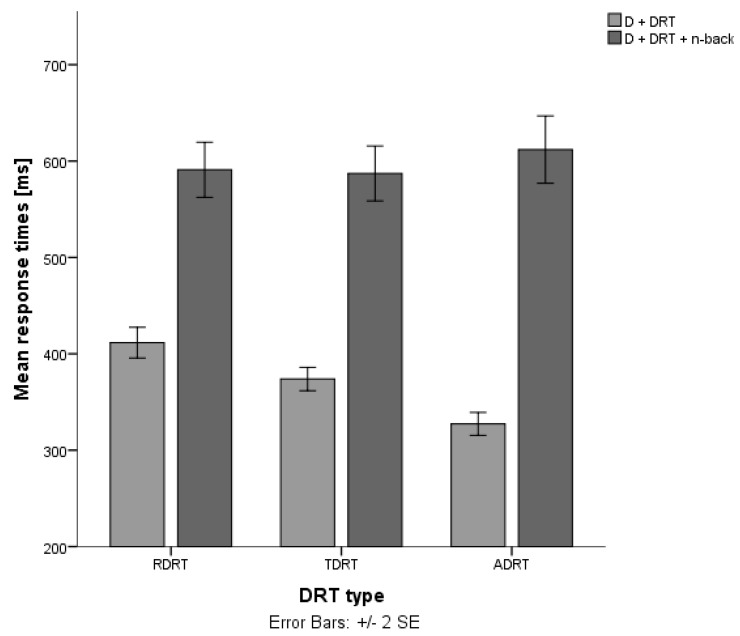
- Stojmenova et al. proposed an auditory DRT (ADRT) using 4 kHz and 8 kHz pure tones at 53 dB, recommending 4 kHz with slightly increased intensity; they later validated ADRT with 4 kHz stimuli at 60 dB against standardized RDRT and TDRT and showed it is sensitive to cognitive load, with ADRT showing the greatest differences for an auditory-vocal cognitive task.
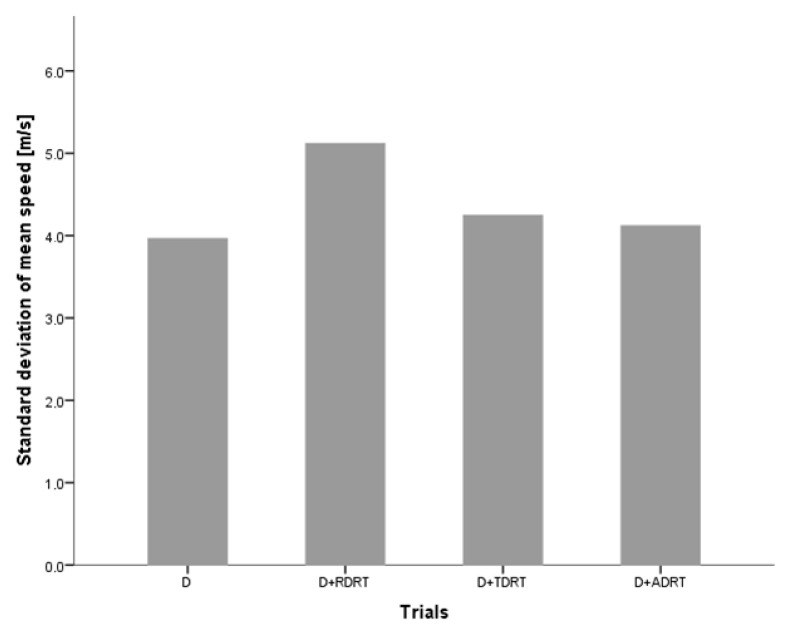
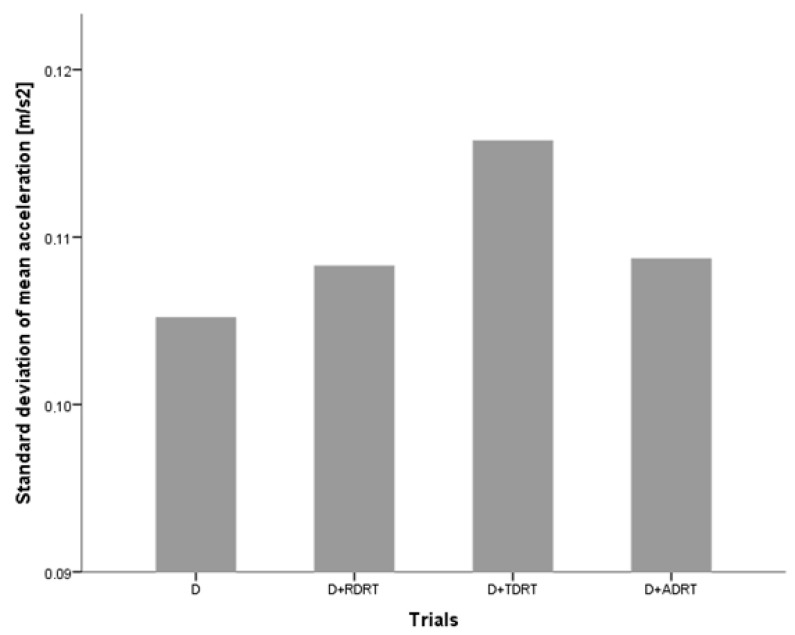
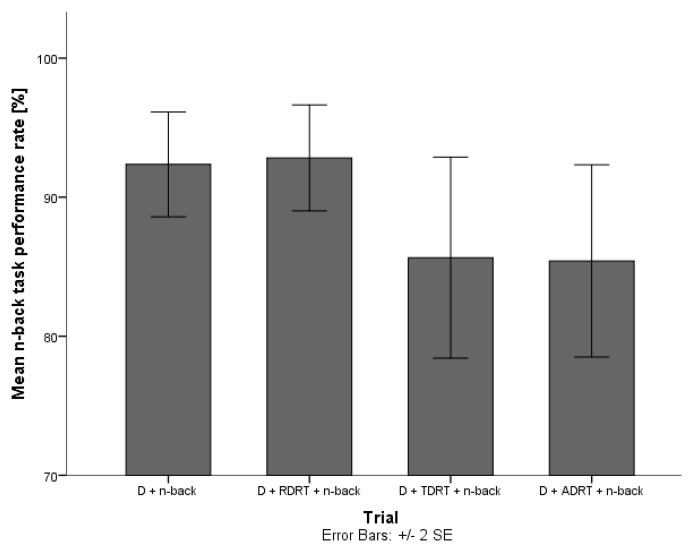
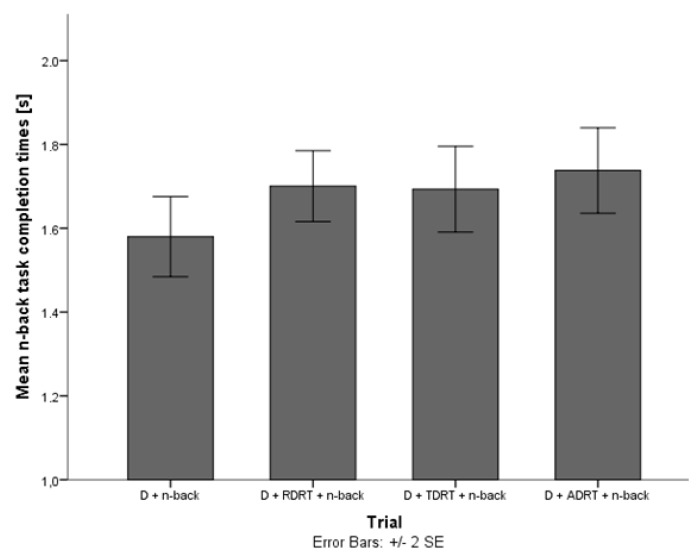
- In an intrusiveness study with eight trials, pupil size did not differ significantly between trials without and with DRT, but standard deviation of speed increased significantly for RDRT and TDRT, standard deviation of mean acceleration increased significantly for all three RDRT, TDRT, and ADRT, and secondary-task completion times increased significantly when DRT stimuli were answered; secondary-task success rate did not decrease statistically significantly, though an obvious fall was evident for TDRT and ADRT.
Methods
- Narrative review of the Detection-Response Task: origins, areas of use, limitations, and alternatives, synthesizing the ISO DRT standard and published studies, including Stojmenova and Sodnik’s validation and intrusiveness work.
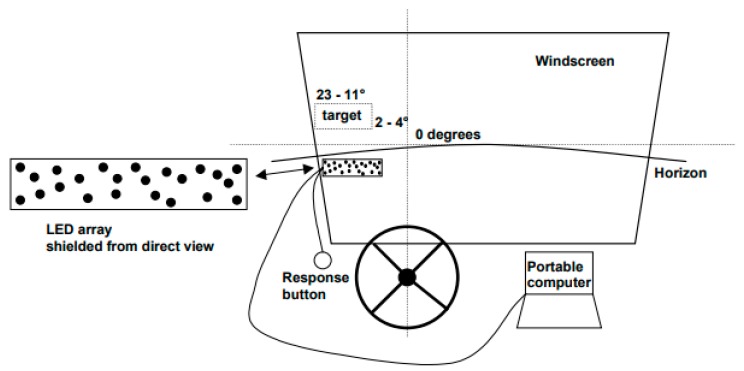
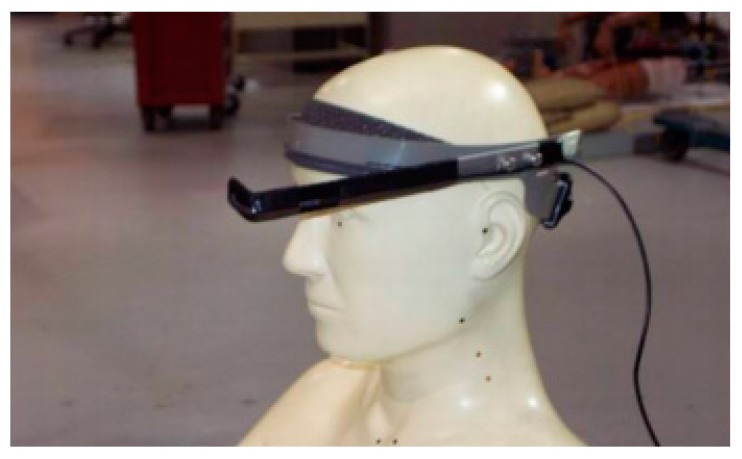
- Describes DRT versions—visual RDRT/PDT, head-mounted HDRT, tactile TDRT, and auditory ADRT—and related secondary tasks such as the Surrogate Reference Task (SuRT) and delayed digit recall/n-back task, with manual button press as the standardized response method.
- No new primary data collection or meta-analysis is reported; the paper reviews and compares methods and recommendations.
Limitations
- The paper states the method’s biggest disadvantage is that the DRT itself affects the driver’s performance and secondary-task completion times; it requires constant driver involvement and diverts attention from driving.
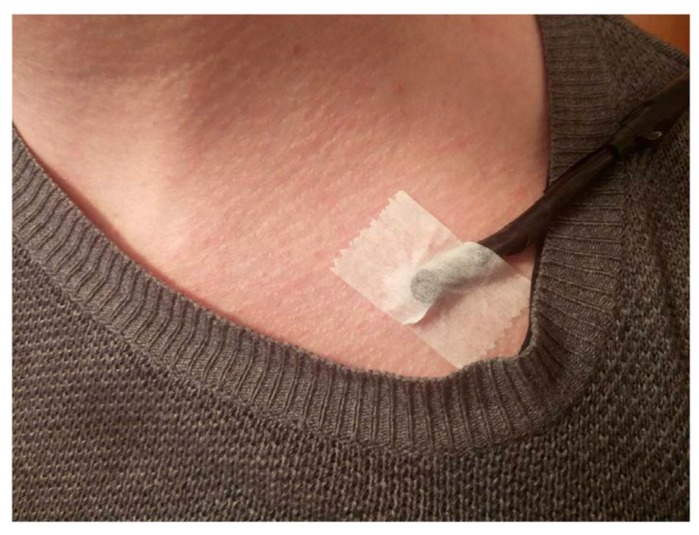
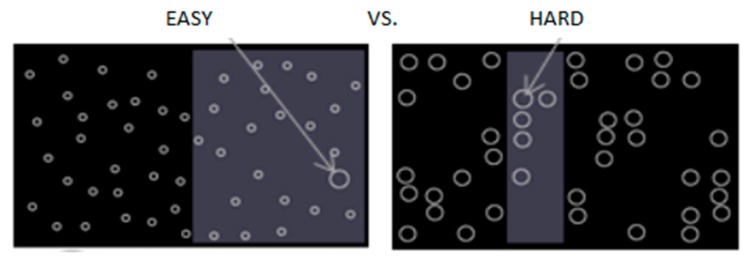
- The paper states that visual RDRT/PDT stimuli can be missed due to head turning, mirror checks, or visually demanding driving tasks rather than cognitive load; visual DRT can cause sensory overload with visual-manual IVIS; TDRT has an output-channel overlap because touch is used both to perceive stimuli and to press the button; and the DRT standard lacks guidelines for auditory stimuli, with different auditory signals making direct comparison difficult.
- Evident from the text: this is a narrative review, and no systematic search strategy or quantitative synthesis is reported; recommendations rely on cited studies and ISO guidance.
Model-written summary. Check it against the paper before relying on it.
Integrity signals
Registry
Cites
Statistics
Figures

Verification
Claims the paper makes
0 Valid · 0 Not valid · 62 Not checked · 42 Own results and interpretations
A result the paper states — it cites no source for it, so there is none to check. The quote shows it is in the paper.
In the paper
“We could not find any studies that would report on the driver’s cognitive load or cognitive distraction relying solely on this measurement.”
§ Detection-Response Task—Uses and Limitations > 3. Alternative Methods for the Assessment of Driver’ Cognitive Distraction
hedged- Asserted: passes — The authors put it forward as true.
- Checkable: passes — It can be checked against evidence.
- Load-bearing: unclear — It is unclear whether the paper’s conclusions depend on it.
- Based: passes — The paper gives a reason why it holds.
In the paper
“Its biggest disadvantage is that the method itself also affects the driver’s performance and secondary task completion times.”
§ Detection-Response Task—Uses and Limitations > Abstract
What the sources say
- Not checked yetcites [38] Zdravković, M., Trajanović, M., and Konjović, Z. (2018). Detection-Response Task: How intrusive is it?. Proceedings 8th International Conference on Information Society and Techology, Kopaonik, Serbia, 11–14 March 2018, Eventiotic. under review.
plainstates a cause- Asserted: passes — The authors put it forward as true.
- Checkable: passes — It can be checked against evidence.
- Load-bearing: passes — The paper’s conclusions depend on it.
- Based: passes — The paper gives a reason why it holds.
In the paper
“The method’s sensitivity can be manipulated by increasing the stimuli intensity in order to reduce the basic response time (trials without a task), and hence increase the difference in response times compared to trials with a task [18]”
§ Detection-Response Task—Uses and Limitations > 2. Detection-Response Task > 2.1. Factors Influencing the Response Time
What the sources say
- Not checked yetcites [18] Stojmenova, 2017, On the selection of stimulus for the Auditory Variant of the Detection Response Task Method for driving experiments, Traffic Injury Prev. source
plainstates a cause- Asserted: passes — The authors put it forward as true.
- Checkable: passes — It can be checked against evidence.
- Load-bearing: passes — The paper’s conclusions depend on it.
- Based: passes — The paper gives a reason why it holds.
A statement the paper makes itself — it cites no source for it, so there is none to check. The quote shows it is in the paper.
In the paper
“Larger differences in response times between the two conditions and lower hit rate ratios indicate higher cognitive distraction (load imposed by the task).”
§ Detection-Response Task—Uses and Limitations > 2. Detection-Response Task
hedgedstates an association- Asserted: passes — The authors put it forward as true.
- Checkable: passes — It can be checked against evidence.
- Load-bearing: passes — The paper’s conclusions depend on it.
- Based: passes — The paper gives a reason why it holds.
- Rests on an assumption not shown here.
In the paper
“response times for touch are somewhat in-between at 155 ms [14], for tasks where answering stimuli is the primary and only task.”
§ Detection-Response Task—Uses and Limitations > 2. Detection-Response Task > 2.1. Factors Influencing the Response Time
What the sources say
- Not checked yetcites [14] Murchison, C. (1934). Work of the integrated organism. Handbook of General Experimental Psychology, Clark University Press. source
plain- Asserted: passes — The authors put it forward as true.
- Checkable: passes — It can be checked against evidence.
- Load-bearing: unclear — It is unclear whether the paper’s conclusions depend on it.
- Based: passes — The paper gives a reason why it holds.
44 more claims
Create a free account to see all 104 claims and to verify the 84 references still open.
- Probably not a substantial claim. 31
- It may state two separate claims as one. 35
Citations
Cites
Development of NASA-TLX (Task Load Index): Results of Empirical and Theoretical Research
(1988) · Advances in Psychology · doi:10.1016/s0166-4115(08)62386-9 · Cited by 15,003
EEG alpha and theta oscillations reflect cognitive and memory performance: a review and analysis
Klimesch, W. (1999) · Brain Research Reviews · doi:10.1016/s0165-0173(98)00056-3 · Cited by 6,889
The principles of psychology, Vol I.
James, W. (1890) · doi:10.1037/10538-000 · Cited by 4,514
Cognitive Load Measurement as a Means to Advance Cognitive Load Theory
Paas, F., Tuovinen, J. E., Tabbers, H., & Van Gerven, P. W. M. (2003) · Educational Psychologist · doi:10.1207/s15326985ep3801_8 · Cited by 2,527
S-R compatibility: spatial characteristics of stimulus and response codes.
Fitts, P. M., & Seeger, C. M. (1953) · Journal of Experimental Psychology · doi:10.1037/h0062827 · Cited by 1,088
Rubio, S., Díaz, E., Martín, J., & Puente, J. M. (2004) · Applied Psychology · doi:10.1111/j.1464-0597.2004.00161.x · Cited by 915
The Subjective Workload Assessment Technique: A Scaling Procedure for Measuring Mental Workload
(1988) · Advances in Psychology · doi:10.1016/s0166-4115(08)62387-0 · Cited by 821
Discriminating Stress From Cognitive Load Using a Wearable EDA Device
Setz, C., Arnrich, B., Schumm, J., La Marca, R., Troster, G., & Ehlert, U. (2010) · IEEE Transactions on Information Technology in Biomedicine · doi:10.1109/titb.2009.2036164 · Cited by 742 · cited 1×
“Furthermore, it is important to be aware that the same sweat glands are also activated when humans experience stress, and models that differentiate between these two should be applied when interpreting the data [56].”
BackgroundUsing Electroencephalography to Measure Cognitive Load
Antonenko, P., Paas, F., Grabner, R., & van Gog, T. (2010) · Educational Psychology Review · doi:10.1007/s10648-010-9130-y · Cited by 742
Mental workload while driving: Effects on visual search, discrimination, and decision making.
Recarte, M. A., & Nunes, L. M. (2003) · Journal of Experimental Psychology: Applied · doi:10.1037/1076-898x.9.2.119 · Cited by 682
Fastl, H., & Zwicker, E. (2007) · Springer eBooks · doi:10.1007/978-3-540-68888-4 · Cited by 537
Driver distraction and driver inattention: Definition, relationship and taxonomy
Regan, M. A., Hallett, C., & Gordon, C. P. (2011) · Accident Analysis & Prevention · doi:10.1016/j.aap.2011.04.008 · Cited by 502
Real-time detection of driver cognitive distraction using support vector machines
Liang, Y., Reyes, M. L., & Lee, J. D. (2007) · IEEE Transactions on Intelligent Transportation Systems · doi:10.1109/tits.2007.895298 · Cited by 482
Driver distraction: A review of the literature
Young, K. L., Regan, M., & Hammer, M. (2003) · Cited by 454
Estimating cognitive load using remote eye tracking in a driving simulator
Palinko, O., Kun, A. L., Shyrokov, A., & Heeman, P. (2010) · Proceedings of the 2010 Symposium on Eye-Tracking Research & Applications - ETRA '10 · doi:10.1145/1743666.1743701 · Cited by 371
Trends in Fatalities From Distracted Driving in the United States, 1999 to 2008
Wilson, F. A., & Stimpson, J. P. (2010) · American Journal of Public Health · doi:10.2105/ajph.2009.187179 · Cited by 343
Traditional and raw task load index (TLX) correlations: Are paired comparisons necessary? In A
Byers, J. C., Bittner, A. C., & Hill, S. G. (1989) · Medical Entomology and Zoology · Cited by 339
Measurement and analysis methods of heart rate and respiration for use in applied environments
Mulder, L. J. M. (1992) · Biological Psychology · doi:10.1016/0301-0511(92)90016-n · Cited by 316
Electrical autonomic correlates of emotion
Sequeira, H., Hot, P., Silvert, L., & Delplanque, S. (2009) · International Journal of Psychophysiology · doi:10.1016/j.ijpsycho.2008.07.009 · Cited by 309
Recommendations for Mental Workload Measurement in a Test and Evaluation Environment
Wierwille, W. W., & Eggemeier, F. T. (1993) · Human Factors: The Journal of the Human Factors and Ergonomics Society · doi:10.1177/001872089303500205 · Cited by 295
Lee, J. D., Young, K. L., & Regan, M. (2008) · CRC Press eBooks · doi:10.1201/9781420007497.ch3 · Cited by 295
The Index of Cognitive Activity: measuring cognitive workload
Marshall, S. P. (2003) · Proceedings of the IEEE 7th Conference on Human Factors and Power Plants · doi:10.1109/hfpp.2002.1042860 · Cited by 266 · cited 1×
“Pupil size, for example, increases when humans are exposed to increased cognitive demand [57,58].”
BackgroundDiagnosticity and multidimensional subjective workload ratings
TSANG, P. S., & VELAZQUEZ, V. L. (1996) · Ergonomics · doi:10.1080/00140139608964470 · Cited by 260 · cited 1×
“The WP does not ask participants to rate the amount of load they have experienced, but to identify which attentional resource (the sheet of definitions on each of them is also provided) they had to use to complete the task [49].”
BackgroundA method to assess the driver mental workload: The driving activity load index (DALI)
Pauzié, A. (2008) · IET Intelligent Transport Systems · doi:10.1049/iet-its:20080023 · Cited by 246
A handbook of general experimental psychology.
(1934) · Clark University Press eBooks · doi:10.1037/11374-000 · Cited by 235
Measuring the task-evoked pupillary response with a remote eye tracker
Klingner, J., Kumar, R., & Hanrahan, P. (2008) · Proceedings of the 2008 symposium on Eye tracking research & applications - ETRA '08 · doi:10.1145/1344471.1344489 · Cited by 222
Gog, T. V., Kester, L., Nievelstein, F., Giesbers, B., & Paas, F. (2009) · Computers in Human Behavior · doi:10.1016/j.chb.2008.12.021 · Cited by 194
CORTICAL RESPONSE OF THE ANESTHETIZED CAT TO GROSS PHOTIC AND ELECTRICAL AFFERENT STIMULATION
Marshall, W. H., Talbot, S. A., & Ades, H. W. (1943) · Journal of Neurophysiology · doi:10.1152/jn.1943.6.1.1 · Cited by 155
Variation des temps de réaction auditifs en fonction de l'intensité à diverses fréquences
Chocholle, R. (1940) · L'année psychologique · doi:10.3406/psy.1940.5877 · Cited by 136
Stimulus intensity and information processing
Nissen, M. J. (1977) · Perception & Psychophysics · doi:10.3758/bf03199699 · Cited by 120
The effect of cognitive load on saccadic eye movements
Stuyven, E., Van der Goten, K., Vandierendonck, A., Claeys, K., & Crevits, L. (2000) · Acta Psychologica · doi:10.1016/s0001-6918(99)00054-2 · Cited by 106
An analysis of the suitability of a low-cost eye tracker for assessing the cognitive load of drivers
Čegovnik, T., Stojmenova, K., Jakus, G., & Sodnik, J. (2018) · Applied Ergonomics · doi:10.1016/j.apergo.2017.10.011 · Cited by 96
Self-citationEvent-related potentials and secondary task performance during simulated driving
Wester, A. E., Böcker, K. B. E., Volkerts, E. R., Verster, J. C., & Kenemans, J. L. (2008) · Accident Analysis & Prevention · doi:10.1016/j.aap.2007.02.014 · Cited by 81
Merat, N., & Jamson, A. H. (2008) · Human Factors The Journal of the Human Factors and Ergonomics Society · doi:10.1518/001872008x250656 · Cited by 74
A comparison of two scoring procedures with the NASA task load index in a simulated flight task
Moroney, W. F., Biers, D. W., Eggemeier, F. T., & Mitchell, J. A. (2003) · Proceedings of the IEEE 1992 National Aerospace and Electronics Conference@m_NAECON 1992 · doi:10.1109/naecon.1992.220513 · Cited by 62
Mehler, B., Reimer, B., & Wang, Y. (2011) · Driving Assessment Conference 2011 · doi:10.17077/drivingassessment.1451 · Cited by 60
Young, R. A., Hsieh, L., & Seaman, S. R. (2013) · International Driving Symposium on Human Factors in Driver Assessment, Training and Vehicle Design (Driving Assessment Conference) · doi:10.17077/drivingassessment.1469 · Cited by 60
Work of the Integrated Organism.
Robinson, E. S. (1934) · Clark University Press eBooks · doi:10.1037/11374-011 · Cited by 52
Graydon, F. X., Young, R., Benton, M. D., Genik, R. J., Posse, S., Hsieh, L., & Green, C. (2004) · Transportation Research Part F: Traffic Psychology and Behaviour · doi:10.1016/j.trf.2004.09.006 · Cited by 49
Kemp, B. J. (1973) · Developmental Psychology · doi:10.1037/h0034147 · Cited by 48
Kohfeld, D. L., Santee, J. L., & Wallace, N. D. (1981) · Perception & Psychophysics · doi:10.3758/bf03207370 · Cited by 44
Sensitivity of the lane change test as a measure of in-vehicle system demand
Young, K. L., Lenné, M. G., & Williamson, A. R. (2011) · Applied Ergonomics · doi:10.1016/j.apergo.2010.06.020 · Cited by 39
Effects of Visual and Cognitive Distraction on Lane Change Test Performance
Engström, J., & Markkula, G. (2007) · Driving Assessment Conference 2007 · doi:10.17077/drivingassessment.1237 · Cited by 31
Stojmenova, K., Jakus, G., & Sodnik, J. (2017) · Traffic Injury Prevention · doi:10.1080/15389588.2016.1214868 · Cited by 27
Self-citationAttentional Processes in Spatial Stimulus-Response Compatibility
Verfaellie, M. H., Bowers, D., & Heilman, K. M. (1990) · Advances in psychology · doi:10.1016/s0166-4115(08)61226-1 · Cited by 24
Angell, L. S., Young, R. A., Hankey, J. M., & Dingus, T. A. (2002) · SAE Technical Paper Series · doi:10.4271/2002-01-1981 · Cited by 18
Behavior Oriented Vision: Functional Field of View and Processing Resources
Miura, T. (1987) · Eye Movements from Physiology to Cognition · doi:10.1016/b978-0-444-70113-8.50080-1 · Cited by 17
Ranney, T. A., Baldwin, G. H. S., Parmer, E., Domeyer, J., Martin, J., & Mazzae, E. N. (2011) · PsycEXTRA Dataset · doi:10.1037/e563342012-001 · Cited by 11
Multisensory Signal Detection: How Does Driving and IVIS Management Affect Performance?
Merat, N., & Jamson, A. H. (2007) · International Driving Symposium on Human Factors in Driver Assessment, Training and Vehicle Design (Driving Assessment Conference) · doi:10.17077/drivingassessment.1260 · Cited by 9
Stojmenova, K., & Sodnik, J. (2018) · Traffic Injury Prevention · doi:10.1080/15389588.2018.1439164 · Cited by 8
Self-citationStojmenova, K., Policardi, F., & Sodnik, J. (2018) · Traffic Injury Prevention · doi:10.1080/15389588.2017.1339870 · Cited by 7
Self-citationTesting Open-Source Implementations for Detection Response Tasks
Krause, M., Conti, A., Späth, M., & Bengler, K. (2014) · Proceedings of the XV International Conference on Human Computer Interaction · doi:10.1145/2662253.2662313 · Cited by 4
(2000) · TNO Repository
Winsum, W. V., Martens, M., & Herland, L. (1999) · TNO Human Factors Research Institute · doi:10.13140/rg.2.1.1776.1041
Research works printed but not linked: 4
- Woodworth, R.S. (1954). Experimental Psychology, Oxford and IBH Publishing.
- Gale, A.G., Brown, I.D., Haslegrave, C.M., Smith, P., and Taylor, S. (1986). Coping with situational demands: A study of eye movements and peripheral vision. Proceedings of Vision in Vehicles, Elsevier.
- Zdravković, M., Trajanović, M., and Konjović, Z. (2018). Detection-Response Task: How intrusive is it?. Proceedings 8th International Conference on Information Society and Techology, Kopaonik, Serbia, 11–14 March 2018, Eventiotic. under review.
- Son, J., and Myoungouk, P. (December, January 29). Estimating cognitive load complexity using performance and physiological data in a driving simulator. Proceedings of the Adjunct Automotive User Interfaces and Interactive Vehicular Applications Conference, Salzburg, Austria.
Cited by
Driver Distraction Detection Methods: A Literature Review and Framework
Kashevnik, A., Shchedrin, R., Kaiser, C., & Stocker, A. (2021) · IEEE Access · doi:10.1109/access.2021.3073599 · Cited by 185
Hu, Z., Lou, S., Xing, Y., Wang, X., Cao, D., & Lv, C. (2022) · IEEE Transactions on Intelligent Vehicles · doi:10.1109/tiv.2022.3195635 · Cited by 176
Underload on the Road: Measuring Vigilance Decrements During Partially Automated Driving
McWilliams, T., & Ward, N. (2021) · Frontiers in Psychology · doi:10.3389/fpsyg.2021.631364 · Cited by 84
Müller, A. L., Fernandes-Estrela, N., Hetfleisch, R. H., Zecha, L., & Abendroth, B. (2021) · European Transport Research Review · doi:10.1186/s12544-021-00475-5 · Cited by 81
Koay, H. V., Chuah, J. H., Chow, C., & Chang, Y.-L. (2022) · Engineering Applications of Artificial Intelligence · doi:10.1016/j.engappai.2022.105309 · Cited by 78
Metadata
- Authors
- Stojmenova, K., & Sodnik, J.
- Affiliations
- University of Ljubljana (SI)
- Corresponding author
- Sodnik, Jaka
- Venue
- Sensors
- Publisher
- MDPI AG
- Published
- 2018-02-14
- Volume
- 18
- Issue
- 2
- Pages
- 594
- ISSN
- 1424-8220 (ISSN-L)
- PMC
- PMC5855461
- OpenAlex
- W2792611395
- Cited by
- 77
- References
- 56
- Citations by year
- 2026: 3 · 2025: 11 · 2024: 13 · 2023: 11 · 2022: 14 · 2021: 10 · 2020: 10 · 2019: 4 · 2018: 1
- FWCI
- 0.88
- Type
- journal article
- Language
- en
- Open access
- gold
- doi.org
- Licence
- Locations
- Sensors (publishedVersion, cc-by)
- PubMed (publishedVersion)
- PubMed Central (publishedVersion, cc-by)
- Repository of the University of Ljubljana (University of Ljubljana) (publishedVersion, cc-by)
- DOAJ (DOAJ: Directory of Open Access Journals) (submittedVersion, cc-by-sa)
- Funders
- Javna Agencija za Raziskovalno Dejavnost RS
- Topics
- Social Sciences › Human Factors and Ergonomics › Human-Automation Interaction and Safety
- Social Sciences › Psychology › Experimental and Cognitive Psychology › Sleep and Work-Related Fatigue
- Social Sciences › Decision Sciences › Information Systems and Management › Personal Information Management and User Behavior
- Keywords
- detection response task, cognitive load, driver attention, in-vehicle systems, secondary task performance, reaction time (psychology), hit rate, driver distraction, auditory stimuli, tactile stimuli, visual stimuli
- MeSH terms
- Attention, Automobile Driving, Humans, Reaction Time, Task Performance and Analysis, Touch
About these checks
Registry, retraction, Cites and statistics results are computed, not judged, with one exception: a printed reference that no index lists is read once by a model before it counts as a citation error. Claims are extracted by a model and kept only when their quote appears verbatim in the text; each cited source is then checked, with a model’s help, for whether it says what the claim relies on. Those verdicts can be wrong — read the claim’s quote and the cited source before relying on one.
A language model drew the claims from the paper on 2026-11-18, under version 3 of the claim definition (model deepseek-v4.1-flash, prompt extract-v3).
A second model labelled each claim on 2026-11-18 (model jev-1.13-20260917, definition revision gold-guideline-v0.2).
Statistics and arithmetic are recomputed, not judged.
Confidence bands are shown only for fields calibrated on our annotated test set. None is calibrated yet, so no band is shown.
What counts as a claim ›How we measure confidence ›How we check this ›
Are you an author, or do you see a problem with this page? Request a review
Data sources
Bibliographic data: Semantic Scholar, OpenAlex, Crossref.
Contains information from the Semantic Scholar Academic Graph Datasets, made available under the ODC Attribution License (ODC-BY 1.0).
Semantic Scholar’s data is described in: Kinney, R., et al. (2023). The Semantic Scholar Open Data Platform. arXiv:2301.10140.
