

The DOI matches its Crossref record; 134 of the 136 references it cites were found in a registry or an index.
Advances in Photopletysmography Signal Analysis for Biomedical Applications
Open accessAbstract
Heart Rate Variability (HRV) is an important tool for the analysis of a patient’s physiological conditions, as well a method aiding the diagnosis of cardiopathies. Photoplethysmography (PPG) is an optical technique applied in the monitoring of the HRV and its adoption has been growing significantly, compared to the most commonly used method in medicine, Electrocardiography (ECG). In this survey, definitions of these technique are presented, the different types of sensors used are explained, and the methods for the study and analysis of the PPG signal (linear and nonlinear methods) are described. Moreover, the progress, and the clinical and practical applicability of the PPG technique in the diagnosis of cardiovascular diseases are evaluated. In addition, the latest technologies utilized in the development of new tools for medical diagnosis are presented, such as Internet of Things, Internet of Health Things, genetic algorithms, artificial intelligence and biosensors which result in personalized advances in e-health and health care. After the study of these technologies, it can be noted that PPG associated with them is an important tool for the diagnosis of some diseases, due to its simplicity, its cost–benefit ratio, the easiness of signals acquisition, and especially because it is a non-invasive technique.
Overview
The claims and statistics of this paper haven’t been checked yet.
Run the check — free, no account needed. It reads the open-access text and checks the sources it cites.
Integrity signals
Registry
Cites
Statistics
Figures
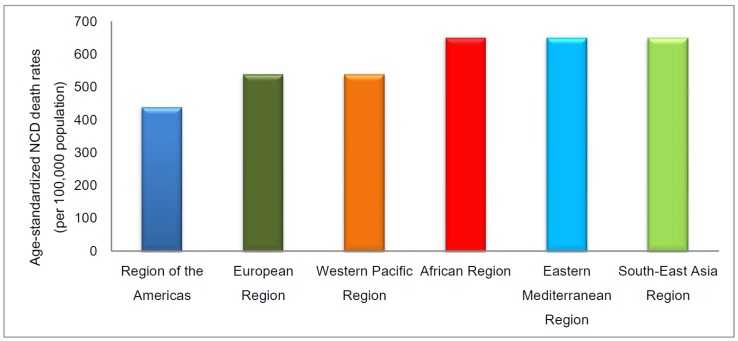
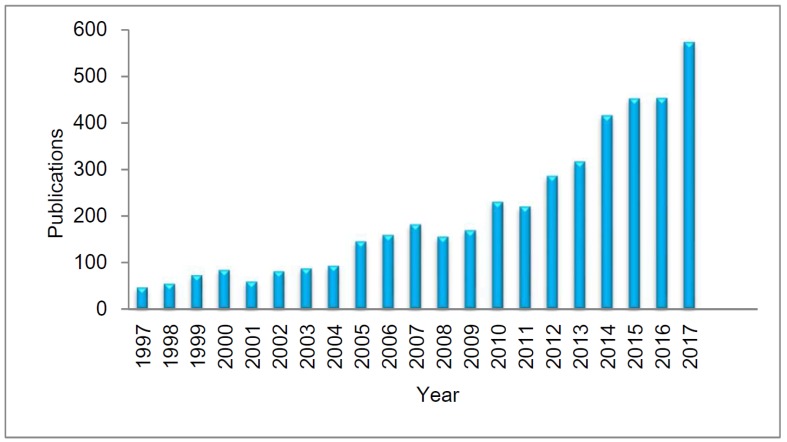
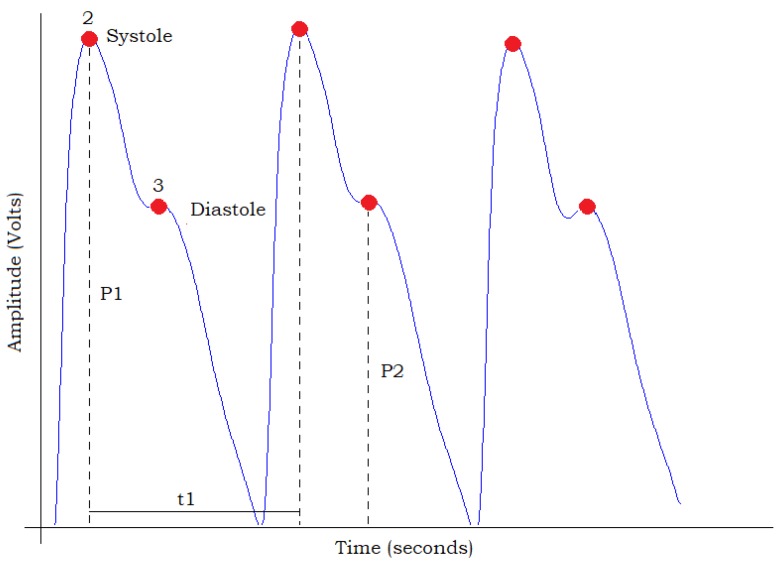
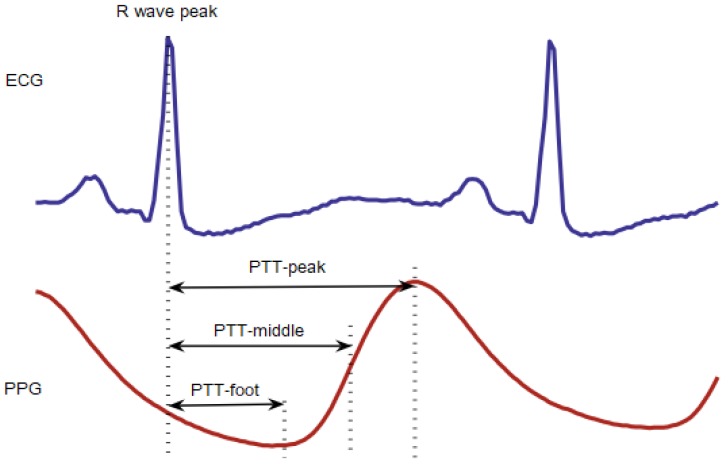
Verification
Claims the paper makes
The claims and statistics of this paper haven’t been checked yet.
Run the check — free, no account needed. It reads the open-access text and checks the sources it cites.
Claims other papers make about this one
Each is checked against this paper’s own text: does it say what the citing paper says it does?
In the citing paper
“PPG signals are low-amplitude signals and have a normal pulse frequency within the range of 0.5 to 4 Hz [195,196].”
From Sources of inaccuracy in photoplethysmography for continuous cardiovascular monitoring (2021) · cites this paper as [196]
Self-check
Percentages, sums and reported differences re-computed from the paper’s own numbers.
The self-check needs the paper’s full text.
Citations
Cites
Chobanian, A. V. (2003) · JAMA · doi:10.1001/jama.289.19.2560 · Cited by 25,386
Heart Rate Variability: Standards of Measurement, Physiological Interpretation, and Clinical Use
Electrophysiology, T. F. O. T. E. S. O. C. T. N. A. (1996) · Circulation · doi:10.1161/01.cir.93.5.1043 · Cited by 17,159
Akselrod, S., Gordon, D., Ubel, F. A., Shannon, D. C., Berger, A. C., & Cohen, R. J. (1981) · Science · doi:10.1126/science.6166045 · Cited by 5,079
Photoplethysmography and its application in clinical physiological measurement
Allen, J. (2007) · Physiological Measurement · doi:10.1088/0967-3334/28/3/r01 · Cited by 3,967
The Internet of Things for Health Care: A Comprehensive Survey
Islam, S. M. R., Kwak, D., Kabir, M. H., Hossain, M., & Kwak, K.-S. (2015) · IEEE Access · doi:10.1109/access.2015.2437951 · Cited by 3,199
Heart rate variability: A review
Rajendra Acharya, U., Paul Joseph, K., Kannathal, N., Lim, C. M., & Suri, J. S. (2006) · Medical & Biological Engineering & Computing · doi:10.1007/s11517-006-0119-0 · Cited by 2,820
Mendis, S., Davis, S. M., & Norrving, B. G. (2015) · Stroke · doi:10.1161/strokeaha.115.008097 · Cited by 1,023
Towards fog-driven IoT eHealth: Promises and challenges of IoT in medicine and healthcare
Farahani, B., Firouzi, F., Chang, V. I. C., Badaroglu, M., Constant, N. P., & Mankodiya, K. (2017) · Future Generation Computer Systems · doi:10.1016/j.future.2017.04.036 · Cited by 991
Heart Rate Variability in Athletes
AUBERT, A. E., Seps, B., & Beckers, F. (2003) · Sports Medicine · doi:10.2165/00007256-200333120-00003 · Cited by 981
Research works printed but not linked: 9
- Paschoal, 2003, Controle autonômico cardíaco durante a execução de atividade física dinâmica de baixa intensidade, Rev. Soc. Cardiol. Estado de São Paulo, 13, S1
- Corrêa, L.A.F. (2006). Sistema não Invasivo de Monitorização da Pressão Arterial e da Onda de Pulso Utilizando a Fotopletismografia. [Ph.D. Thesis, Programa de Pós Graduação em Engenharia Biomédica, Universidade Federal do Rio de Janeiro, UFRJ].
- Kilsztajn, 2003, Health services, expenses and aging of the Brazilian population, Rev. Bras. Study Popul., 20, 93
- Martins, R.M.S. (2010). Fotopletismografia para Monitorização Cardíaca para aplicação no Pulso. [Master’s Thesis, Universidade de Coimbra].
- Khaled, 2006, Employing Time-Domain Methods and Poincaré Plot of Heart Rate Variability Signals to Detect Congestive Heart Failure, BIME J., 6, 35
- Puri, C., Ukil, A., Bandyopadhyay, S., Singh, R., Pal, A., and Mandana, K. (2016, January 25–30). iCarMa: Inexpensive Cardiac Arrhythmia Management–An IoT Healthcare Analytics Solution. Proceedings of the First IoT of Health ’16 Workshop on IoT-enabled Healthcare and Wellness Technologies and Systems, Singapore.
- Pantoni, 2007, Study of heart rate autonomic modulation at rest in elderly patients with chronic obstructive pulmonary disease, Braz. J. Phys. Ther., 11, 35
- Vilhegas, L.Z. (2007). Development of a Prototype for Monitoring Oxygen Saturation and Heart Rate for Rodents. [Master’s Thesis, Título de Engenharia Elétrica, Escola Politécnica].
- Rodrigues, 2018, Enabling Technologies for the Internet of Health Things, IEEE Access, 6, 13129, 10.1109/ACCESS.2017.2789329 · DOI
Cited by
Sorted by citations
Contact-Based Methods for Measuring Respiratory Rate
Massaroni, C., Nicolò, A., Presti, D. L., Sacchetti, M., Silvestri, S., & Schena, E. (2019) · Sensors · doi:10.3390/s19040908 · Cited by 465
Organic Light‐Emitting Diodes: Pushing Toward the Limits and Beyond
Song, J., Lee, H., Jeong, E. G., Choi, K. C., & Yoo, S. (2020) · Advanced Materials · doi:10.1002/adma.201907539 · Cited by 417
Sources of inaccuracy in photoplethysmography for continuous cardiovascular monitoring
Fine, J., Branan, K. L., Rodriguez, A. J., Boonya-ananta, T., Ajmal, Ramella-Roman, J. C., McShane, M. J., & Coté, G. L. (2021) · Biosensors · doi:10.3390/bios11040126 · Cited by 348
Photoplethysmography based atrial fibrillation detection: a review
Pereira, T., Tran, N., Gadhoumi, K., Pelter, M. M., Do, D. H., Lee, R. J., Colorado, R., Meisel, K., & Hu, X. (2020) · npj Digital Medicine · doi:10.1038/s41746-019-0207-9 · Cited by 300
Elhoseny, M., Shankar, K., Lakshmanaprabu, S. K., Maseleno, A., & Arunkumar, N. (2018) · Neural Computing and Applications · doi:10.1007/s00521-018-3801-x · Cited by 241
Retracted
Metadata
- Authors
- Moraes, J. L., Rocha, M. X., Vasconcelos, G. G., Vasconcelos Filho, J. E., De Albuquerque, V. H. C., & Alexandria, A. R.
- Affiliations
- Instituto Federal de Educação, Ciência e Tecnologia do Ceará (BR)
- Hospital de Messejana (BR)
- Programa de Pós-Graduação em Informática Aplicada, Laboratório de Bioinformática, Universidade de Fortaleza, Fortaleza 60811-905, Ceará, Brazil
- Venue
- Sensors
- Publisher
- MDPI AG
- Published
- 2018-06-09
- Volume
- 18
- Issue
- 6
- Pages
- 1894
- ISSN
- 1424-8220 (ISSN-L)
- PMC
- PMC6022166
- OpenAlex
- W2808345783
- Cited by
- 292
- References
- 136
- Citations by year
- 2026: 12 · 2025: 31 · 2024: 37 · 2023: 38 · 2022: 49 · 2021: 46 · 2020: 38 · 2019: 38 · 2018: 3
- FWCI
- 2.55
- Type
- journal article
- Language
- en
- Open access
- gold
- dx.doi.org
- Licence
- Locations
- Sensors (publishedVersion, cc-by)
- Europe PMC (PubMed Central) (publishedVersion, cc-by)
- PubMed Central (publishedVersion, cc-by)
- PubMed (publishedVersion)
- DOAJ (DOAJ: Directory of Open Access Journals) (submittedVersion, cc-by-sa)
- Funders
- Conselho Nacional de Desenvolvimento Científico e Tecnológico (304315/2017-6)
- Fundação Cearense de Apoio ao Desenvolvimento Científico e Tecnológico (no number)
- Topics
- Physical Sciences › Engineering › Biomedical Engineering › Non-Invasive Vital Sign Monitoring
- Health Sciences › Medicine › Cardiology and Cardiovascular Medicine › Heart Rate Variability and Autonomic Control
- Health Sciences › Medicine › Cardiology and Cardiovascular Medicine › ECG Monitoring and Analysis
- Keywords
- photoplethysmography, heart rate variability, PPG signal analysis, cardiovascular disease diagnosis, non-invasive monitoring, PPG sensor, Internet of Medical Things, artificial intelligence, genetic algorithm, biosensors, e-health, Internet of Things
- MeSH terms
- Blood Pressure, Heart Rate, Humans, Signal Processing, Computer-Assisted, Photoplethysmography, Telemedicine
About these checks
Registry, retraction, Cites and statistics results are computed, not judged, with one exception: a printed reference that no index lists is read once by a model before it counts as a citation error. Claims are extracted by a model and kept only when their quote appears verbatim in the text; each cited source is then checked, with a model’s help, for whether it says what the claim relies on. Those verdicts can be wrong — read the claim’s quote and the cited source before relying on one.
Statistics and arithmetic are recomputed, not judged.
Confidence bands are shown only for fields calibrated on our annotated test set. None is calibrated yet, so no band is shown.
What counts as a claim ›How we measure confidence ›How we check this ›
Are you an author, or do you see a problem with this page? Request a review
