

Emotion Recognition from Multiband EEG Signals Using CapsNet
Open accessThe DOI matches its Crossref record; 45 of the 45 references it cites were found in a registry or an index.
Abstract
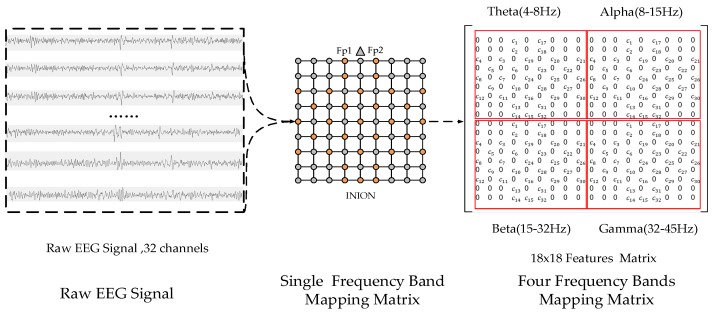
Emotion recognition based on multi-channel electroencephalograph (EEG) signals is becoming increasingly attractive. However, the conventional methods ignore the spatial characteristics of EEG signals, which also contain salient information related to emotion states. In this paper, a deep learning framework based on a multiband feature matrix (MFM) and a capsule network (CapsNet) is proposed. In the framework, the frequency domain, spatial characteristics, and frequency band characteristics of the multi-channel EEG signals are combined to construct the MFM. Then, the CapsNet model is introduced to recognize emotion states according to the input MFM. Experiments conducted on the dataset for emotion analysis using EEG, physiological, and video signals (DEAP) indicate that the proposed method outperforms most of the common models. The experimental results demonstrate that the three characteristics contained in the MFM were complementary and the capsule network was more suitable for mining and utilizing the three correlation characteristics.
Overview
The claims and statistics of this paper haven’t been checked yet.
Free: it reads the open-access text and checks the first 5 claims that cite a source we can check. Create a free account to check every claim.
Integrity signals
Registry
Cites
Statistics
Figures





Verification
Claims the paper makes
The claims and statistics of this paper haven’t been checked yet.
Free: it reads the open-access text and checks the first 5 claims that cite a source we can check. Create a free account to check every claim.
Self-check
Percentages, sums and reported differences re-computed from the paper’s own numbers.
The self-check needs the paper’s full text.
Citations
Cites
Scikit-learn: Machine Learning in Python
Pedregosa, F., Varoquaux, G., Gramfort, A., Michel, V., Thirion, B., Grisel, O., Blondel, M., Müller, A., Nothman, J., Louppe, G., et al. (2012) · arXiv · doi:10.48550/arxiv.1201.0490 · Cited by 71,016 · cited 2×
“To compensate for the shortcomings of CNN, a network structure called the capsule network has been proposed [45].”
BackgroundMethodDEAP: A Database for Emotion Analysis ;Using Physiological Signals
Koelstra, S., Muhl, C., Soleymani, M., Lee, J.-S., Yazdani, A., Ebrahimi, T., Pun, T., Nijholt, A., & Patras, I. (2012) · IEEE Transactions on Affective Computing · doi:10.1109/t-affc.2011.15 · Cited by 5,093 · cited 2×
“Methods Each trial was divided into two classes on each indicator.”
BackgroundMethodDynamic Routing Between Capsules
Sabour, S., Frosst, N., & Hinton, G. E. (2017) · arXiv · doi:10.48550/arxiv.1710.09829 · Cited by 4,167 · cited 4×
“To compensate for the shortcomings of CNN, a network structure called the capsule network has been proposed [43].”
BackgroundInfluentialAdolphs, R., Tranel, D., Damasio, H., & Damasio, A. (1994) · Nature · doi:10.1038/372669a0 · Cited by 2,360 · cited 1×
“Current emotion recognition research is implemented mainly according to non-physiological signals such as facial expressions [1], speech [2], body movement [3], and physiological signals like skin resistance (SR), electrocardiogram (ECG), functional magnetic resonance imaging (fMRI), electroencephalograph (EEG) [4], a…”
BackgroundEEG analysis based on time domain properties
Hjorth, B. (1970) · Electroencephalography and Clinical Neurophysiology · doi:10.1016/0013-4694(70)90143-4 · Cited by 1,504
Feature Extraction and Selection for Emotion Recognition from EEG
Jenke, R., Peer, A., & Buss, M. (2014) · IEEE Transactions on Affective Computing · doi:10.1109/taffc.2014.2339834 · Cited by 1,081
EEG-Based Emotion Recognition in Music Listening
Lin, Y.-P., Wang, C.-H., Jung, T.-P., Wu, T.-L., Jeng, S.-K., Duann, J.-R., & Chen, J.-H. (2010) · IEEE Transactions on Biomedical Engineering · doi:10.1109/tbme.2010.2048568 · Cited by 1,021
Emotion Recognition From EEG Using Higher Order Crossings
Petrantonakis, P. C., & Hadjileontiadis, L. J. (2010) · IEEE Transactions on Information Technology in Biomedicine · doi:10.1109/titb.2009.2034649 · Cited by 687 · cited 1×
“In addition, other studies introduced Hjorth features (Mobility, Complexity, and Activity) [17], non-stationary index (NSI) [18] and higher-order crossing features (HOCs) [19,20] for EEG emotion recognition.”
BackgroundJirayucharoensak, S., Pan-Ngum, S., & Israsena, P. (2014) · The Scientific World Journal · doi:10.1155/2014/627892 · Cited by 486
Classification of human emotion from EEG using discrete wavelet transform
Murugappan, M., Ramachandran, N., & Sazali, Y. (2010) · Journal of Biomedical Science and Engineering · doi:10.4236/jbise.2010.34054 · Cited by 436
Research works printed but not linked: 1
- Morris J.D. SAM: The Self-Assessment Manikin an Efficient Cross-Cultural Measurement of Emotional Response Advertising Research. 1995 35 63 68
Cited by
Items 201–300 of 303
Wang, C., Hu, J., Liu, K., Jia, Q., Chen, J., Yang, K., & Feng, J. H. (2021) · Lecture notes in computer science · doi:10.1007/978-3-030-91415-8_39 · Cited by 6
Capsule Network Based on Self-Attention Mechanism
Shang, Y., Xu, N., Jin, Z., & Yao, X. L. (2021) · International Conference on Wireless Communications and Signal Processing (WCSP) · doi:10.1109/wcsp52459.2021.9613717 · Cited by 6
Otarbay, Z., Kyzyrkanov, A. E., Турсынова, Н., Turginbekov, A., Saltanat, A., & Amirov, A. (2025) · IEEE International Conference on Smart Information Systems and Technologies (SIST) · doi:10.1109/sist61657.2025.11139359 · Cited by 5
“RNN-based approaches, such as BiHDM [6] and RGNN [5], have demonstrated effectiveness but suffer from inefficiencies due to their sequential nature, limiting scalability and parallel processing capabilities [12].”
Matthew, J. M., & Banu, N. M. M. (2024) · Traitement du signal · doi:10.18280/ts.410428 · Cited by 5
MFENet: A Multi-Feature Extraction Network for Enhanced Emotion Detection Using EEG and STFT
Babu, N. R., & Viswanathan, V. (2025) · IEEE Access · doi:10.1109/access.2025.3591202 · Cited by 5
A survey on brain computer interface using EEG signals for emotion recognition
Margaret, M. J., & Banu, N. M. M. (2022) · AIP conference proceedings · doi:10.1063/5.0103476 · Cited by 5
Joint Class Learning with Self Similarity Projection for EEG Emotion Recognition
Tiwari, U., Chakraborty, R., & Kopparapu, S. K. (2024) · Joint International Conference on Data Science & Management of Data (CODS-COMAD) · doi:10.1145/3632410.3632417 · Cited by 5
“Although the existing work on feature transformation [9] and different deep learning techniques have improved the EEG emotion recognition to a certain extent, they are insufficient to inherently capture the inter-and intra-emotion class relationship that each emotion class shares among themselves.”
BackgroundMethodResultInfluentialSaha, O., Mahmud, M. S., & Fattah, S. A. (2023) · International Conference on Computer and Information Technology (ICCIT) · doi:10.1109/iccit60459.2023.10440995 · Cited by 5
“In [18], a deep learning framework based on a multiband feature matrix (MFM) and a capsule network (CapsNet) is proposed utilizing the frequency domain, spatial characteristics, and frequency band characteristics of the multi-channel EEG signals.”
MethodInfluentialDetection of Emotion from EEG Signal Using Deep Learning: Bi-LSTM and GRU
Maliha, M. H., Lopa, A. R., & Chowdhury, M. H. (2024) · International Conference on Electrical Engineering and Information Communication Technology · doi:10.1109/iceeict62016.2024.10534367 · Cited by 5
Qian, R., Xiong, X., Zhou, J., Yu, H., & Sha, K. (2024) · Brain Sciences · doi:10.3390/brainsci14080817 · Cited by 5
“Various models, including convolutional neural networks(CNN) [15], capsule networks(CapsNet) [16], and long short-term memory networks(LSTM) [17], have been developed by researchers to comprehend human emotions through EEG signals.”
BackgroundAttribute-guided Dynamic Routing Graph Network for Transductive Few-shot Learning
Chen, C., Yang, X., Yan, M., & Xu, C. (2022) · ACM International Conference on Multimedia (ACM MM) · doi:10.1145/3503161.3548301 · Cited by 5
“Recently, CapsNet has achieved great success in many research areas, such as visual question answering [22, 77], text recognition [43, 69], emotion detection [3, 62].”
BackgroundDiagnosing of Diabetic Retinopathy with Image Dehazing and Capsule Network
Köse, U., Deperlioğlu, Ö., Alzubi, J. A. A., & Pătruţ, B. (2020) · Studies in computational intelligence · doi:10.1007/978-981-15-6325-6_9 · Cited by 5
“In a typical CapsNet, each capsule can determine a single component within the target object, and eventually, all capsules form the whole structure of the object collaboratively [22–24].”
BackgroundOn Computational Performances of the Actual Image Classification Methods in C# and Python
Salihu, B., & Tafa, Z. (2020) · Mediterranean Conference on Embedded Computing (MECO) · doi:10.1109/meco49872.2020.9134248 · Cited by 5
“…aim to investigate the improvements that this method brings over the existing ones in various field of applications such as, for example, in remote sensing [10], signal processing for emotion recognition [11], data pruning in wireless sensor networks [12], polyphonic sound event detection [13] etc.”
Expectation propagation learning of finite multivariate Beta mixture models and applications
Manouchehri, N., Bouguila, N., & Fan, W. (2022) · Neural Computing and Applications · doi:10.1007/s00521-021-06839-1 · Cited by 5
“Lots of researches have been conducted to analyze emotions with the help of EEG signals [40–42].”
BackgroundSatyanarayana, K. N. V., Shankar, T., & Penmetsa, R. R. V. (2023) · Multiagent and Grid Systems · doi:10.3233/mgs-220333 · Cited by 5
“Chao et al. [28] implemented a novel method based on a capsule network and multi-band feature matrix for emotion classification using EEG signal.”
Tripathi, A., & Choudhury, T. (2023) · Revue d intelligence artificielle · doi:10.18280/ria.370205 · Cited by 5
EEG Classification by factoring in Sensor ConfigurationPreprint
Mokatren, L. S., Ansari, R., Çetin, A. E., Leow, A., Klumpp, H., Ajilore, O., & Vural, F. Y. (2019) · arXiv (Cornell University) · doi:10.48550/arxiv.1905.09472 · Cited by 5
“The approximate five frequency bands are chosen as follows: [0-4] Hz for δ band, [4-8] Hz for θ, [8-12] Hz for α, [12-32] Hz for β, and [32-48] Hz for γ.”
BackgroundCai, H., Lu, P., Wang, X., & Wang, Y. (2025) · Engineering Applications of Artificial Intelligence · doi:10.1016/j.engappai.2025.112144 · Cited by 4
Li, X., Li, Y., Li, Y., & Yang, Y. W. (2025) · Algorithms · doi:10.3390/a18100664 · Cited by 4
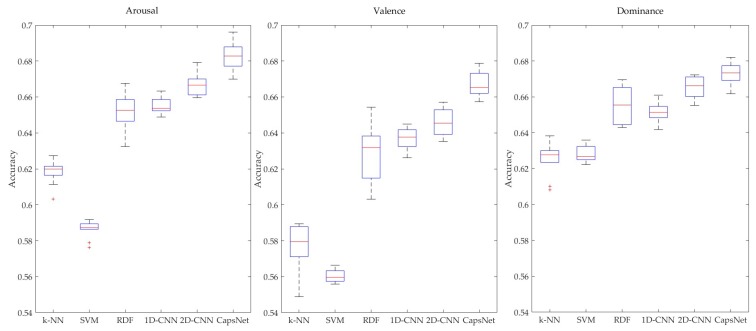
“Chao et al. [39] used a capsule network for emotion recognition on EEG signals in the DEAP database, achieving an accuracy of 66.73% in the valence dimension.”
InfluentialGhosh, S., Laha, M., Konar, A., Rakshit, P., & Nagar, A. K. (2020) · International Joint Conference on Neural Networks (IJCNN) · doi:10.1109/ijcnn48605.2020.9206754 · Cited by 4
“Although any conventional supervised learning based classifier could have been utilized for the current application, we opt for a capsule network based classifier for its precision in classifying features and low computational complexity [6-7].”
MethodCapsNet-based drift detection in data stream mining
Lin, B., & Jin, N. (2023) · International Conference on Pattern Recognition and Intelligent Systems (PRIS) · doi:10.1145/3609703.3609724 · Cited by 4
“It has been successfully used in literature for computer vision [10], [17], and EEG signals [5].”
MethodChen, S., Wang, Y., Lin, X., Sun, X., Li, W., & Ma, W. (2024) · Journal of Neuroscience Methods · doi:10.1016/j.jneumeth.2024.110276 · Cited by 4
Improving baseline reduction for emotion recognition based on electroencephalogram signals
Wirawan, I. M. A., Darmawiguna, I. G. M., & Pascima, I. B. N. (2024) · IAES International Journal of Artificial Intelligence · doi:10.11591/ijai.v13.i4.pp4263-4272 · Cited by 4
“Humans' emotional responses to interpersonal communication are critical psychological processes [1].”
BackgroundCAPSULE NETWORK SEVERAL YEARS LATER: A BIBLIOMETRIC ANALYSIS
Nopember, I. T. S., Ridho, N., Dwi, R., Budi, S., & Felza, R. (2024) · Eurasian Journal of Mathematical and Computer Applications · doi:10.32523/2306-6172-2024-12-4-105-120 · Cited by 4
Wirawan, I. M. A., Wardoyo, R., Lelono, D., & Kusrohmaniah, S. (2022) · International Conference on Informatics and Computing (ICIC) · doi:10.1109/icic56845.2022.10006909 · Cited by 4
“Further, researchers [19] proposed the Capsule Network method for emotional imposition based on the value of the Power Spectral Density feature from EEG data.”
MethodTuib, T. A., Sheibani, R., & Hosseini, S. A. (2023) · Frontiers in Health Informatics · doi:10.30699/fhi.v12i0.472 · Cited by 4
“Some studies have demonstrated the superiority of deep learning approaches in emotion detection [14].”
BackgroundEmotion Recognition Using Multi-core Tensor Learning and Multimodal Physiological Signal
Xu, H., Tang, J., Zhang, J., & Zhu, L. (2021) · Communications in computer and information science · doi:10.1007/978-981-16-1288-6_10 · Cited by 4
Mahmud, M. S., Saha, O., & Fattah, S. A. (2022) · International Conference on Electrical and Computer Engineering (ICECE) · doi:10.1109/icece57408.2022.10088864 · Cited by 4
“In [21], they used multiband feature matrices with CapsNet and different classifiers such as 1 DCNN, 2 DCNN, KNN, RDF, and SVM.”
BackgroundMethodRecognizing Emotions from Physiological Data in a Eeg Signals Using a Novel Deep Learning Technique
Nandakumar, R., Deivanayagi, S., Kirubha, S. P. A., & Prabu, R. (2025) · Circuits Systems and Signal Processing · doi:10.1007/s00034-024-02961-2 · Cited by 3
TF‐MEET: A Transferable Fusion Multi‐Band Transformer for Cross‐Session EEG Decoding
Yuan, Q., Shi, E., Zhu, D., Zhang, X., Zhao, K., Zhang, D., Liu, T., & Zhang, S. (2025) · CAAI Transactions on Intelligence Technology · doi:10.1049/cit2.70056 · Cited by 3
Aadam, Tu, S., Halim, Z., Waqas, M. M., Alasmary, H., & Fatima, G. (2026) · IEEE Transactions on Affective Computing · doi:10.1109/taffc.2026.3674037 · Cited by 3
Automated Handwriting Recognition and Speech Synthesizer for Indigenous Language Processing
Alqaralleh, B. A. Y., Aldhaban, F., Al-Matarneh, F. M., & AlQaralleh, E. A. (2022) · Computers, materials & continua/Computers, materials & continua (Print) · doi:10.32604/cmc.2022.026531 · Cited by 3
Classification of Emotional States from Multi-channel EEG Signals by Convolutional Neural Networks
Donmez, H., & Özkurt, N. (2022) · Innovations in Intelligent Systems and Applications Conference (ASYU) · doi:10.1109/asyu56188.2022.9925308 · Cited by 3
“applied CapsNet with multiband feature matrix and succeeded 68,28/66,73% accuracies [9].”
MethodWang, Z., Wei, S. X., Tu, H., & Zhao, Y. (2023) · Lecture notes in computer science · doi:10.1007/978-3-031-43815-8_7 · Cited by 3
EEG-based Emotion Recognition Using Similarity Measure of Brain Rhythm Sequencing
Li, J. W., Barma, S., Pun, S. H., Chen, F., Li, C., Li, M. T., Wang, P. K., Vai, M. I., & Mak, P. U. (2021) · Annual International Conference of the IEEE Engineering in Medicine and Biology Society (EMBC) · doi:10.1109/embc46164.2021.9629520 · Cited by 3
Mahmud, M. S., Saha, O., & Fattah, S. A. (2022) · Research Square · doi:10.21203/rs.3.rs-2046506/v1 · Cited by 3
Graph Neural Networks for Neurological Diseases Detection in EEG SignalsPreprint
Awais, M., Belhouari, S. B., & Kassoul, K. (2023) · Research Square · doi:10.21203/rs.3.rs-3086079/v1 · Cited by 3
Deep Learning Architectures for Enhanced Emotion Recognition from EEG and Facial Expressions
Soleimani, S. (2024) · uO Research (University of Ottawa) · doi:10.20381/ruor-30202 · Cited by 3
A novel capsule network based on Multi-Order Descartes Extension Transformation
Zhu, H., Xu, C., Ma, L., & Li, H. (2024) · Neurocomputing · doi:10.1016/j.neucom.2024.128526 · Cited by 2
A multimodal meta-learning-augmented EmoTriSense for emotion recognition
Sowmya, V., & Rajeswari, A. (2026) · Journal of Combinatorial Optimization · doi:10.1007/s10878-026-01402-x · Cited by 2
BioEnvSense: a human-centred security framework for preventing behaviour-driven cyber incidents
Ta, D. A., Farid, F., Ahamed, F., Al-areqi, A. A., BEUTEL, R. L., Watson, T., & Maurushat, A. (2026) · Cybersecurity · doi:10.1186/s42400-026-00609-z · Cited by 3
“Unlike random forests, which cannot capture event order, the CNN-LSTM architecture is designed to model stress as a dynamic evolution rather than a static state (Sharma et al. 2016; Chao et al. 2019).”
Combinations of EEG Topographic Feature Maps for the Classification of ADHD
Pehlivan, S., Akdemir, O., Cura, Ö. K., Akbuğday, B., & Akan, A. (2023) · European Signal Processing Conference (EUSIPCO) · doi:10.23919/eusipco58844.2023.10289787 · Cited by 2
Ahmed, S., Sunom, T. S., Kaiser, M. S., Mahmud, M., & Murugappan, M. (2024) · Communications in computer and information science · doi:10.1007/978-3-031-68639-9_13 · Cited by 2
An Evolutionary Convolutional Neural Network Architecture for Recognizing Emotions from EEG Signals
Rezaee, K. (2024) · Studies in computational intelligence · doi:10.1007/978-3-031-71821-2_4 · Cited by 2
Emotion Detection Using Hybrid Deep Sequential Learning Architecture from EEG Signals
Suting, A., Thangkhiew, D., Kumar, A., & Halder, A. (2024) · International Conference on Computational Intelligence and Communication Networks (CICN) · doi:10.1109/cicn63059.2024.10847568 · Cited by 2
“Emotion is a crucial aspect of human cognition and consciousness, influencing social interactions and encompassing the affective state of human beings [1].”
Sidorov, K., & Bodrina, N. I. (2020) · Advances in intelligent systems and computing · doi:10.1007/978-3-030-63319-6_41 · Cited by 2
Chen, Y., Zhang, H., Long, J., & Xie, Y. (2023) · Multimedia Tools and Applications · doi:10.1007/s11042-023-17142-7 · Cited by 2
ISAR Imaging Analysis of Complex Aerial Targets Based on Deep Learning
Wang, Y., Hao, J., Yang, S., & Gao, H. (2024) · Applied Sciences · doi:10.3390/app14177708 · Cited by 2
The Convergence of Dynamic Routing Between Capsules
Ye, D., Li, J., & Shen, Y. (2024) · IEEE International Conference on Data, Information, Knowledge and Wisdom (DIKW) · doi:10.1109/dikw64278.2024.00011 · Cited by 2
“…network was proposed, many new routing algorithms [3], [4] and applications have emerged, including human pose estimation [5], emotion recognition [6], image classification [7]–[9], object segmentation [10], medical image segmentation [3], [11]–[13], vehicle scene segmentation [14] and others…”
Emotion Recognition on Extracted EEG Fragment Based on Self-reporting Result
Zhang, F., Fu, X., & Omata, M. (2021) · International Conference on Cyberworlds (CW) · doi:10.1109/cw52790.2021.00043 · Cited by 2
Radar Target Recognition and Location Based on CapsNetv2
Hao, J., Wang, X., Yang, S., & Gao, H. (2022) · Wireless Communications and Mobile Computing · doi:10.1155/2022/4349009 · Cited by 2
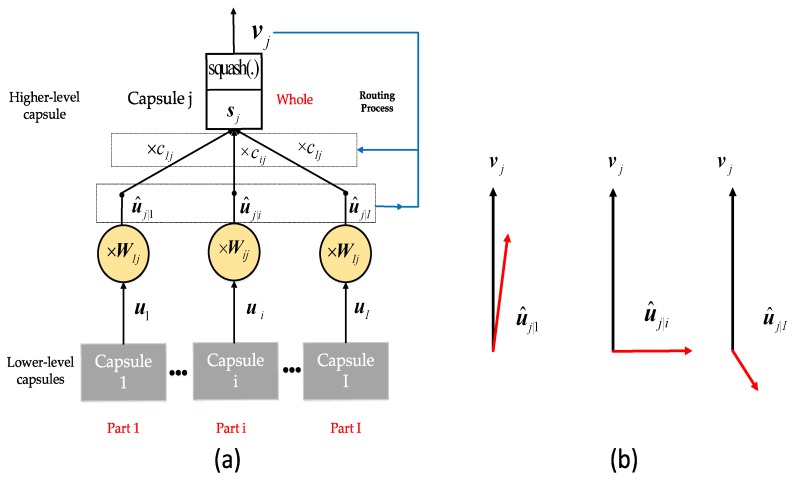
“The vector length of the capsule neuron model indicates the possibility of the existence of the target passed by the upper network, and its direction represents the actual state of the entity, that is, “Instance parameters”, as shown in Figure 1 [16].”
BackgroundDetection of Attention Deficit Hyperactivity Disorder by Using EEG Feature Maps and Deep Learning
Akbuğday, B., Bozbas, O. A., Cura, Ö. K., Pehlivan, S., & Akan, A. (2023) · European Signal Processing Conference (EUSIPCO) · doi:10.23919/eusipco58844.2023.10289818 · Cited by 2
Pavement Condition Detection Method Based on Time-Frequency Features and Capsule Neural Network
Chen, W., Lv, P., Li, J., & Ma, X. (2022) · IEEE International Conference on Big Data (BigData) · doi:10.1109/bigdata55660.2022.10020455 · Cited by 1
“3 illustrates the process by which the dynamic routing algorithm routes information from primary capsules to classification capsules [22].”
BackgroundEnhancing EEG-Based Emotion Recognition Using Random Forest and Fast Fourier Transform
Neelakandan, S. (2025) · Algorithms for intelligent systems · doi:10.1007/978-981-96-5210-5_12 · Cited by 1
Haider, M. (2025) · Computer Methods in Biomechanics & Biomedical Engineering · doi:10.1080/10255842.2025.2568979 · Cited by 1
Multimodal granular adaptive fuzzy inference system for biosignal classification
Barajas-Montiel, S. E., Reyes-García, C.-A., & Villaseñor-Pineda, L. (2026) · Applied Soft Computing · doi:10.1016/j.asoc.2026.114929 · Cited by 1
PR2DM: Position-aware robust reconstruction with diffusion model for emotion recognition From EEG
Xu, W., Lin, Y., Wang, X., Liu, J., & Ren, Y. (2026) · Computer Methods and Programs in Biomedicine · doi:10.1016/j.cmpb.2026.109365 · Cited by 1
MS²FL: Modality-shared and Modality-specific Feature Learning for Multimodal Emotion Recognition
Li, X., Chen, H., Wu, M., Song, Q., Li, F., Huang, J., Cui, F.-Q., & Lv, Z. (2026) · ACM Transactions on Autonomous and Adaptive Systems · doi:10.1145/3836771 · Cited by 1
“Chao et al. [28] further incorporated frequency, spatial, and band-specific information to construct multi-band feature matrices and applied capsule networks for emotion classification.”
Peesari, R. R., Fiaidhi, J., & Mohammed, S. (2019) · International journal of disaster recovery and business continuity · doi:10.33832/ijdrbc.2019.10.02 · Cited by 1
Boosting the Robustness of Capsule Networks with Diverse Ensemble
Li, Y., Su, H., Zhu, J., & Zhou, J. (2020) · International Conference on Information Science and Technology · doi:10.1109/icist49303.2020.9202177 · Cited by 1
“Recent research has witnessed significant progress in image classification [2], [3], machine translation [4], emotion detection [5], [6] and knowledge graph completion [7].”
BackgroundAbimala, T., Narmadha, T. V., & Raamesh, L. (2022) · Algorithms for intelligent systems · doi:10.1007/978-981-19-2126-1_21 · Cited by 1
DEEPSATTNET: An End-to-End Deep Neural Network with Self-Attention for EEG-Based Emotion Recognition
Saha, O., Mahmud, M. S., & Fattah, S. A. (2022) · IEEE International Women in Engineering (WIE) Conference on Electrical and Computer Engineering (WIECON-ECE) · doi:10.1109/wiecon-ece57977.2022.10150514 · Cited by 1
“In [29], multiband feature matrices are used with CapsNet and other classifiers such as 1 DCNN, 2 DCNN, KNN, RDF, and SVM to classify emotions.”
MethodCapsule attention module-based CapsNet for hyperspectral image classification
Zhang, X., & Wang, Z. (2023) · International Conference on Graphics and Image Processing (ICGIP) · doi:10.1117/12.2679994 · Cited by 1
“Instead of traditional deep learning methods, in CapsNet, vectors facilitate the characterization of the relationships between the information available in the features and identify more attributes to enable class discrimination [29].”
MethodSeizure Prediction Based on Multidimensional EEG Spatial Matrix and Residual Network Structure
Zhang, J., Meng, Q., & Wang, Z. (2023) · Lecture notes in computer science · doi:10.1007/978-981-99-4749-2_24 · Cited by 1
Deep Learning and Machine Learning Algorithms With Ocular Disease Intelligent Recognition
Kaleel, A. I., & Rajakumari, S. B. (2024) · Advances in medical technologies and clinical practice book series · doi:10.4018/979-8-3693-5946-4.ch018 · Cited by 1
A Review of Capsule Network Limitations, Modifications, and Applications in Object Recognition
Haq, M. U., Sethi, M. A. J., & Rehman, A. U. (2024) · Advances in geospatial technologies book series · doi:10.4018/979-8-3693-2913-9.ch005 · Cited by 1
Emotions and Artificial Intelligence
(2026) · Frontiers research topics · doi:10.3389/978-2-8325-7327-3 · Cited by 1
Spectro Temporal EEG Biomarkers For Binary Emotion ClassificationPreprint
Tiwari, U., Chakraborty, R., & Kopparapu, S. K. (2022) · arXiv (Cornell University) · doi:10.48550/arxiv.2202.03271 · Cited by 1
“For arousal, while [26] performs better by 0.”
MethodThe Convergence of Dynamic Routing between CapsulesPreprint
Ye, D., Li, J., & Shen, Y. (2025) · arXiv (Cornell University) · doi:10.48550/arxiv.2501.06240 · Cited by 1
“…network was proposed, many new routing algorithms [3], [4] and applications have emerged, including human pose estimation [5], emotion recognition [6], image classification [7]–[9], object segmentation [10], medical image segmentation [3], [11]–[13], vehicle scene segmentation [14] and others…”
Telepresence Emergency Triage System for Extreme Environments and Disaster Response
Patel, K., Mohammed, S., & Fiaidhi, J. (2019) · International journal of disaster recovery and business continuity · doi:10.33832/ijdrbc.2019.10.03
Initial Study of Emotion Recognition Using Brain Rhythm Sequencing Method
Li, J., Barma, S., Pun, S. H., Vai, M. I., Wang, P., Liu, X., Yu, Y., Wang, J. J., Zhang, S., & Mak, P. U. (2021) · World Congress on Medical Physics and Biomedical Engineering, September 7 - 12, 2009, Munich, Germany · doi:10.1007/978-3-030-66169-4_29
Brain Rhythm Sequencing and Its Application for EEG-based Emotion Recognition
Li, J., Barma, S., Pun, S. H., Vai, M. I., Wan, F., Liu, W. S., & Mak, P. U. (2021) · IEEE International Conference on Computational Intelligence and Virtual Environments for Measurement Systems and Applications (CIVEMSA) · doi:10.1109/civemsa52099.2021.9493674
Difference of Brain Electrical Activity Mappings in Sleep Stages
Liu, T., Shen, M., & Wang, X. (2023) · Highlights in Science Engineering and Technology · doi:10.54097/hset.v39i.6590
An Empirical Study on EEG Signals for Emotion
Khojah, B. (2022) · Journal of King Abdulaziz University-Computing and Information Technology Sciences · doi:10.4197/comp.11-1.1
Survey On Medical Image Classification Using CAPSGNN
Shanmugam, P., Rohit Gangadhar, P., & Rifhath Aslam, J. (2023) · Recent Research Reviews Journal · doi:10.36548/rrrj.2023.1.07
Gaze Tracking Using Capsule-Based CNN Architecture for HMI
Gupta, A., Maiti, S., & Maji, P. (2023) · Lecture notes in networks and systems · doi:10.1007/978-981-99-3963-3_30
Classification of Human Emotions Based on Multivariate Spectral EEG Attributes and CNNs
Yildirim, M. C., Özdemir, M. A., & Güren, O. (2023) · Medical Technologies Congress (TIPTEKNO) · doi:10.1109/tiptekno59875.2023.10359239
“Investigating emotion is among the most popular EEG topics in the literature since physiological signals are hard to conceal and it provides harmless recording, easy accessibility, portability, and cost-effectiveness [6], [7].”
BackgroundPaul, A., Das, N., Pal, S., & Mitra, M. (2024) · Studies in autonomic, data-driven and industrial computing · doi:10.1007/978-981-99-5435-3_9
Marjit, S., Talukdar, U., & Hazarika, S. M. (2024) · Lecture notes in computer science · doi:10.1007/978-3-031-12700-7_36
Discriminating Emotional Insights Using HHS Features of EEG Signals
Pusarla, N., Vujji, A., Singh, A. K., Tripathi, S., & Gupta, S. (2024) · International Conference on Computer, Electronics & Electrical Engineering & their Applications (IC2E3) · doi:10.1109/ic2e362166.2024.10826667
Electroencephalogram Emotion Classification Method Based on Spatial Hierarchical Attention Mechanism
Tan, H., Qin, S., Zhao, X., & Zeng, J. (2024) · International Conference on Neuromorphic Computing (ICNC) · doi:10.1109/icnc64304.2024.10987788
EEG-Based Emotion Recognition Using CNN-LSTM: Dynamic Segmentation and Feature Fusion
Tabraiz, N., Jabar, S. A., & Iqbal, J. (2025) · International Journal on Robotics Automation and Sciences · doi:10.33093/ijoras.2025.7.2.8
Jagtap, S., Aswale, S. P., Giri, J. P., Hasnain, S. M. M., & Al-Qawasmi, K. E. (2025) · Studies in systems, decision and control · doi:10.1007/978-3-031-89771-9_26
Chen, W., Zhang, W., Wang, Y., Li, J., & Guo, H. (2025) · International Journal of Data Science and Analytics · doi:10.1007/s41060-025-00899-5
“The dynamic routing algo-rithm adjusts the coupling coefficients to ensure that each primary capsule transmits its output to the classification capsule whose prediction aligns best with that of the primary layer [32].”
Annotation practices in affective computing: What are these algorithms actually trained on?
Backer, S. D. (2023) · Research Repository (Delft University of Technology)
Reconhecimento de emoções baseado em Aprendizado Autossupervisionado
Utyiama, D. M. D. S. (2024) · LA Referencia (Red Federada de Repositorios Institucionales de Publicaciones Científicas)
Human Emotion Recognition Using EEG Signals Based on Different Machine Learning Algorithms
Das, D., Shankar, K., & Hazarika, J. (2026) · Lecture notes in electrical engineering · doi:10.1007/978-981-96-9554-6_15
Graph Attention Capsule Network for Workload Identification Based on EEG
Wang, Q., & Peng, J. (2025) · IEEE International Conference on Automation, Electronics and Electrical Engineering (AUTEEE) · doi:10.1109/auteee67053.2025.11322261
“In view of the above strengths, CapsNet module has been applied in the EEG classification in recent years, including motor imagery EEG classification [20] and emotion recognition [21], and has obtained favorable effects.”
Bidirectional LSTM-CapsNet Framework for Robust Myocardial Infarction Detection Using PPG Signals
Gomez, S., Manimegalai, P., & Jose, P. S. H. (2025) · International Conference on Communication and Electronics Systems (ICCES) · doi:10.1109/icces67310.2025.11337088
“This approach preserves spatial relationships and increases resilience to changes in pose, orientation, or perspective [21].”
Deng, S., Liu, Y., Cao, Z., Shu, H., Wang, X., Castiglione, A., & Li, K. (2026) · SSRN Electronic Journal · doi:10.2139/ssrn.6173285
Self-citationWirawan, I. M. A., Pascima, I. B. N., Mahendra, G. S., Candiasa, I. M., & Sukajaya, I. N. (2026) · International Journal of Advances in Applied Sciences · doi:10.11591/ijaas.v15.i1.pp55-64
“In the time-frequency domain approach, the discrete wavelet transform (DWT) method has shown the ability to capture the dynamics of EEG signals in both the time and frequency domains [15].”
An Integrated DBN–GC–CRF Framework for Accurate Epileptic Seizure Identification Using EEG Signals
Srinivasan, D., Chowdary, M. K., Ganesh, C., Ahmad, S., Eljialy, A. E. M., & Uddin, M. Y. (2026) · SN Computer Science · doi:10.1007/s42979-026-04870-4
Prabhakar, S. K., Kim, K. M., Ju, Y.-G., & Won, D.-O. (2026) · International Conference on Advanced Communications Technology (ICACT) · doi:10.23919/icact68090.2026.11431456
“[22] A multiband feature matrix with capsule network was analyzed for DEAP dataset by Chao et al reporting a classification accuracy of 68.28% [23].”
InfluentialZhang, J., Li, Z., Ma, W., Wang, L., Hao, Y., & Li, X. (2026) · PeerJ Computer Science · doi:10.7717/peerj-cs.3606
Turan, F., Balaban, G., & Şenel, F. (2026) · Klinik Psikoloji Dergisi · doi:10.57127/kpd.26024438.1837533
Enhanced EEG emotion recognition system via optimized multi-parameters and machine learning
Mazid, A., Agounad, S., Moufassih, M., Tarahi, O., Hamou, S., & Bamaarouf, O. (2026) · Multimedia Tools and Applications · doi:10.1007/s11042-026-21731-7
Lim, C. C., Maren, S. J., Vijean, V., Jian, T. X., & Chee, L. S. (2026) · Lecture notes in bioengineering · doi:10.1007/978-981-92-2603-0_16
DECS: A Deep Learning Approach for EEG Channel Selection in Emotion Classification
Hussain, M. S., Mubarak, A., & Arshad, A. (2025) · International Journal of Innovations in Science and Technology · doi:10.33411/ijist/1591
Yılmaz, B. H., Mumcu, B., & Ozkellekci, B. (2026) · Sensors · doi:10.3390/s26175608
EEG-Based Brain Signal Representations for Affective Computing: A Spectral Feature Learning Approach
Białas, K., & Majchrowski, W. (2026) · Communications in computer and information science · doi:10.1007/978-3-032-37936-8_24
Metadata
- Authors
- Chao, H., Dong, L., Liu, Y., & Lu, B.
- Affiliations
- School of Computer Science and Technology, Henan Polytechnic University, Jiaozuo 454000, China
- Henan Polytechnic University (CN)
- Venue
- Sensors
- Publisher
- MDPI AG
- Published
- 2019-05-13
- Volume
- 19
- Issue
- 9
- Pages
- 2212
- ISSN
- 1424-8220 (ISSN-L)
- PMC
- PMC6540345
- OpenAlex
- W2944401411
- Cited by
- 287
- References
- 45
- Citations by year
- 2026: 16 · 2025: 25 · 2024: 34 · 2023: 51 · 2022: 65 · 2021: 47 · 2020: 40 · 2019: 9
- FWCI
- 47.26
- Type
- journal article
- Language
- en
- Open access
- gold
- dx.doi.org
- Licence
- Locations
- Sensors (publishedVersion, cc-by)
- PubMed Central (publishedVersion, cc-by)
- PubMed (publishedVersion)
- DOAJ (DOAJ: Directory of Open Access Journals) (submittedVersion, cc-by-sa)
- Funders
- Foundation for University Key Teacher by Henan Province (2015GGJS068)
- Fundamental Research Funds for the Universities of Henan Province (NSFRF1616)
- Key Scientific Research Projects of Universities in Henan (19A520004)
- Foundation for Scientific and Technological Project of Henan Province (172102210279)
- National Nature Science Foundation of China (61502150 and 61403128)
- Topics
- Physical Sciences › Computer Science › Artificial Intelligence › Emotion and Mood Recognition
- Life Sciences › Neuroscience › Cognitive Neuroscience › EEG and Brain-Computer Interfaces
- Physical Sciences › Computer Science › Signal Processing › Biometric Identification and Security
- Keywords
- emotion recognition, capsule networks, frequency-domain features, DEAP dataset, physiological signals
- MeSH terms
- Machine Learning, Cerebral Cortex, Electrodes, Electroencephalography, Emotions, Humans, Signal Processing, Computer-Assisted, Entropy
About these checks
Registry, retraction, Cites and statistics results are computed, not judged, with one exception: a printed reference that no index lists is read once by a model before it counts as a citation error. Claims are extracted by a model and kept only when their quote appears verbatim in the text; each cited source is then checked, with a model’s help, for whether it says what the claim relies on. Those verdicts can be wrong — read the claim’s quote and the cited source before relying on one.
Statistics and arithmetic are recomputed, not judged.
Confidence bands are shown only for fields calibrated on our annotated test set. None is calibrated yet, so no band is shown.
What counts as a claim ›How we measure confidence ›How we check this ›
Are you an author, or do you see a problem with this page? Request a review
Data sources
Bibliographic data: Semantic Scholar, OpenAlex, Crossref.
Contains information from the Semantic Scholar Academic Graph Datasets, made available under the ODC Attribution License (ODC-BY 1.0).
Semantic Scholar’s data is described in: Kinney, R., et al. (2023). The Semantic Scholar Open Data Platform. arXiv:2301.10140.
