

Emotion Recognition from Multiband EEG Signals Using CapsNet
Open accessThe DOI matches its Crossref record; 45 of the 45 references it cites were found in a registry or an index.
Abstract
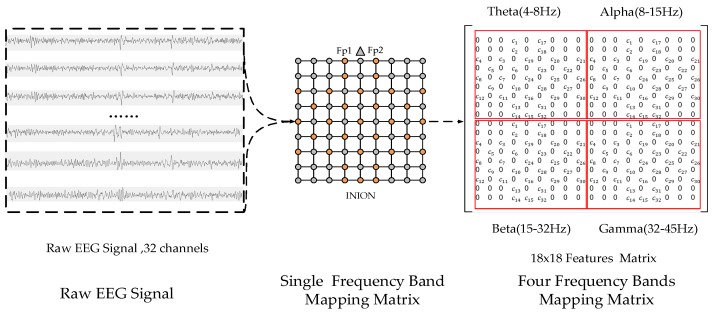
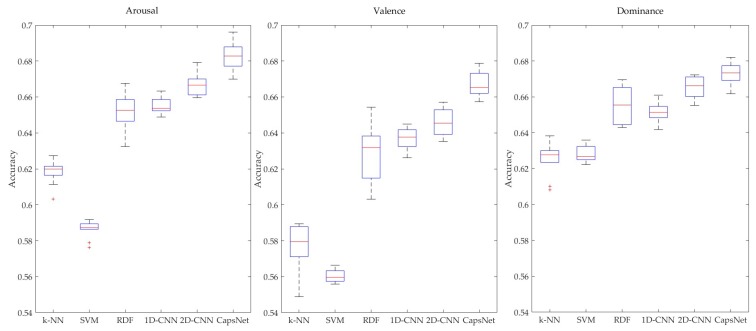
Emotion recognition based on multi-channel electroencephalograph (EEG) signals is becoming increasingly attractive. However, the conventional methods ignore the spatial characteristics of EEG signals, which also contain salient information related to emotion states. In this paper, a deep learning framework based on a multiband feature matrix (MFM) and a capsule network (CapsNet) is proposed. In the framework, the frequency domain, spatial characteristics, and frequency band characteristics of the multi-channel EEG signals are combined to construct the MFM. Then, the CapsNet model is introduced to recognize emotion states according to the input MFM. Experiments conducted on the dataset for emotion analysis using EEG, physiological, and video signals (DEAP) indicate that the proposed method outperforms most of the common models. The experimental results demonstrate that the three characteristics contained in the MFM were complementary and the capsule network was more suitable for mining and utilizing the three correlation characteristics.
Overview
The claims and statistics of this paper haven’t been checked yet.
Free: it reads the open-access text and checks the first 5 claims that cite a source we can check. Create a free account to check every claim.
Integrity signals
Registry
Cites
Statistics
Figures





Verification
Claims the paper makes
The claims and statistics of this paper haven’t been checked yet.
Free: it reads the open-access text and checks the first 5 claims that cite a source we can check. Create a free account to check every claim.
Self-check
Percentages, sums and reported differences re-computed from the paper’s own numbers.
The self-check needs the paper’s full text.
Citations
Cites
Scikit-learn: Machine Learning in Python
Pedregosa, F., Varoquaux, G., Gramfort, A., Michel, V., Thirion, B., Grisel, O., Blondel, M., Müller, A., Nothman, J., Louppe, G., et al. (2012) · arXiv · doi:10.48550/arxiv.1201.0490 · Cited by 71,016 · cited 2×
“To compensate for the shortcomings of CNN, a network structure called the capsule network has been proposed [45].”
BackgroundMethodDEAP: A Database for Emotion Analysis ;Using Physiological Signals
Koelstra, S., Muhl, C., Soleymani, M., Lee, J.-S., Yazdani, A., Ebrahimi, T., Pun, T., Nijholt, A., & Patras, I. (2012) · IEEE Transactions on Affective Computing · doi:10.1109/t-affc.2011.15 · Cited by 5,093 · cited 2×
“Methods Each trial was divided into two classes on each indicator.”
BackgroundMethodDynamic Routing Between Capsules
Sabour, S., Frosst, N., & Hinton, G. E. (2017) · arXiv · doi:10.48550/arxiv.1710.09829 · Cited by 4,167 · cited 4×
“To compensate for the shortcomings of CNN, a network structure called the capsule network has been proposed [43].”
BackgroundInfluentialAdolphs, R., Tranel, D., Damasio, H., & Damasio, A. (1994) · Nature · doi:10.1038/372669a0 · Cited by 2,360 · cited 1×
“Current emotion recognition research is implemented mainly according to non-physiological signals such as facial expressions [1], speech [2], body movement [3], and physiological signals like skin resistance (SR), electrocardiogram (ECG), functional magnetic resonance imaging (fMRI), electroencephalograph (EEG) [4], a…”
BackgroundEEG analysis based on time domain properties
Hjorth, B. (1970) · Electroencephalography and Clinical Neurophysiology · doi:10.1016/0013-4694(70)90143-4 · Cited by 1,504
Feature Extraction and Selection for Emotion Recognition from EEG
Jenke, R., Peer, A., & Buss, M. (2014) · IEEE Transactions on Affective Computing · doi:10.1109/taffc.2014.2339834 · Cited by 1,081
EEG-Based Emotion Recognition in Music Listening
Lin, Y.-P., Wang, C.-H., Jung, T.-P., Wu, T.-L., Jeng, S.-K., Duann, J.-R., & Chen, J.-H. (2010) · IEEE Transactions on Biomedical Engineering · doi:10.1109/tbme.2010.2048568 · Cited by 1,021
Emotion Recognition From EEG Using Higher Order Crossings
Petrantonakis, P. C., & Hadjileontiadis, L. J. (2010) · IEEE Transactions on Information Technology in Biomedicine · doi:10.1109/titb.2009.2034649 · Cited by 687 · cited 1×
“In addition, other studies introduced Hjorth features (Mobility, Complexity, and Activity) [17], non-stationary index (NSI) [18] and higher-order crossing features (HOCs) [19,20] for EEG emotion recognition.”
BackgroundJirayucharoensak, S., Pan-Ngum, S., & Israsena, P. (2014) · The Scientific World Journal · doi:10.1155/2014/627892 · Cited by 486
Classification of human emotion from EEG using discrete wavelet transform
Murugappan, M., Ramachandran, N., & Sazali, Y. (2010) · Journal of Biomedical Science and Engineering · doi:10.4236/jbise.2010.34054 · Cited by 436
Research works printed but not linked: 1
- Morris, 1995, SAM: The Self-Assessment Manikin an Efficient Cross-Cultural Measurement of Emotional Response, Advertising Research., 35, 63
Cited by
Human Emotion Recognition: Review of Sensors and Methods
Dzedzickis, A., Kaklauskas, A., & Bucinskas, V. (2020) · Sensors · doi:10.3390/s20030592 · Cited by 582
“High/low arousal, valence and dominance The DEAP dataset was used [59]”
MethodEEG Based Emotion Recognition: A Tutorial and Review
Li, X., Zhang, Y., Tiwari, P., Song, D., Hu, B., Yang, M., Zhao, Z., Kumar, N., & Marttinen, P. (2023) · ACM Computing Surveys · doi:10.1145/3524499 · Cited by 508
“[133] DEAP a framework based on multi-band feature matrix (MFM) and capsule network (CapsNet) 2 classes (Valence: 0.”
BackgroundMethodInfluentialKhare, S. K., Blanes-Vidal, V., Nadimi, E. S., & Acharya, U. R. (2024) · Information Fusion · doi:10.1016/j.inffus.2023.102019 · Cited by 469
Kwabena Patrick, M., Felix Adekoya, A., Abra Mighty, A., & Edward, B. Y. (2022) · Journal of King Saud University - Computer and Information Sciences · doi:10.1016/j.jksuci.2019.09.014 · Cited by 282
“…(Wang et al., 2018a), hand-written and text recognition (Mandal et al., 2019; Zhao et al., 2018a; Kim et al., 2018a) intent detection (Xia et al., 2018; Zhang et al., 2018a), mood and emotion detection (Wang et al., 2018c; Rathnayaka et al., 2018; Guo et al., 2018; Chao et al., 2019) and so on.”
Vistorte, A. O. R., Deroncele-Acosta, A., Ayala, J. L. M., Barrasa, A., López-Granero, C., & Martí-González, M. (2024) · Frontiers in Psychology · doi:10.3389/fpsyg.2024.1387089 · Cited by 281
“Chao et al. (2019) introduced a deep learning framework that employs a multiband feature matrix and a CapsNet model to improve emotion recognition from multi-channel EEG signals, outperforming common models.”
MethodDeep Learning in Physiological Signal Data: A Survey
Rim, B., Sung, N.-J., Min, S., & Hong, M. (2020) · Sensors · doi:10.3390/s20040969 · Cited by 251
Emotion recognition in EEG signals using deep learning methods: A review
Jafari, M., Shoeibi, A., Khodatars, M., Bagherzadeh, S., Shalbaf, A., García, D. L., Gorriz, J. M., & Acharya, U. R. (2023) · Computers in Biology and Medicine · doi:10.1016/j.compbiomed.2023.107450 · Cited by 240
Investigating EEG-based functional connectivity patterns for multimodal emotion recognition
Wu, X., Zheng, W.-L., Li, Z., & Lu, B.-L. (2022) · Journal of Neural Engineering · doi:10.1088/1741-2552/ac49a7 · Cited by 235
“The best threshold value for conventional thresholding method is 0.9.”
InfluentialSelf-citationEmotion recognition based on EEG feature maps through deep learning network
Topic, A., & Russo, M. (2021) · Engineering Science and Technology, an International Journal · doi:10.1016/j.jestch.2021.03.012 · Cited by 230
Recognition of human emotions using EEG signals: A review
Rahman, M. M., Sarkar, A. K., Hossain, M. A., Hossain, M. S., Islam, M. R., Hossain, M. B., Quinn, J. M. W., & Moni, M. A. (2021) · Computers in Biology and Medicine · doi:10.1016/j.compbiomed.2021.104696 · Cited by 227
Multi-channel EEG-based emotion recognition via a multi-level features guided capsule network
Liu, Y., Ding, Y., Li, C., Cheng, J., Song, R., Wan, F., & Chen, X. (2020) · Computers in Biology and Medicine · doi:10.1016/j.compbiomed.2020.103927 · Cited by 219
“73% for arousal and valence on DEAP dataset, respectively [28].”
Self-citationDeep learning-based EEG emotion recognition: Current trends and future perspectives
Wang, X., Ren, Y., Luo, Z., He, W., Hong, J. S., & Huang, Y. (2023) · Frontiers in Psychology · doi:10.3389/fpsyg.2023.1126994 · Cited by 218
Comparison of different feature extraction methods for EEG-based emotion recognition
Nawaz, R., Cheah, K. H., Nisar, H., & Yap, V. V. (2020) · Biocybernetics and Biomedical Engineering · doi:10.1016/j.bbe.2020.04.005 · Cited by 209
EEG emotion recognition based on the attention mechanism and pre-trained convolution capsule network
Liu, S., Wang, Z., An, Y., Zhao, J., Zhao, Y., & Zhang, Y.-D. (2023) · Knowledge-Based Systems · doi:10.1016/j.knosys.2023.110372 · Cited by 199
Emotion Recognition From EEG Signal Focusing on Deep Learning and Shallow Learning Techniques
Islam, M. R., Moni, M. A., Islam, M. M., Rashed-Al-Mahfuz, M., Islam, M. S., Hasan, M. K., Hossain, M. S., Ahmad, M., Uddin, S., Azad, A., et al. (2021) · IEEE Access · doi:10.1109/access.2021.3091487 · Cited by 187
Feng, L., Cheng, C., Zhao, M., Deng, H., & Zhang, Y. (2022) · IEEE Journal of Biomedical and Health Informatics · doi:10.1109/jbhi.2022.3198688 · Cited by 164
“[29] proposedadeepframeworkbasedonamulti-bandfeature matrix(MFM)andacapsulenetwork(CapsNet)tocombinethe characteristicsoffrequency,spatial,andfrequencybandfrom EEGsignals.”
Deep Learning in EEG: Advance of the Last Ten-Year Critical Period
Gong, S., Xing, K., Cichocki, A., & Li, J. (2021) · IEEE Transactions on Cognitive and Developmental Systems · doi:10.1109/tcds.2021.3079712 · Cited by 147
“ing and high temporal resolution, EEG has been applied to numerous domains from brain–computer interface [10]–[13], to emotion [14], [15], to cognition [16], to brain diseases [17].”
BackgroundMethodLi, C., Wang, B., Zhang, S., Liu, Y., Song, R., Cheng, J., & Chen, X. (2022) · Computers in Biology and Medicine · doi:10.1016/j.compbiomed.2022.105303 · Cited by 140
Self-citationTC-Net: A Transformer Capsule Network for EEG-based emotion recognition
Wei, Y., Liu, Y., Li, C., Cheng, J., Song, R., & Chen, X. (2022) · Computers in Biology and Medicine · doi:10.1016/j.compbiomed.2022.106463 · Cited by 138
Self-citationFast Emotion Recognition Based on Single Pulse PPG Signal with Convolutional Neural Network
Lee, M. S., Lee, Y. K., Pae, D.-S., Lim, M. T., Kim, D.-W., & Kang, T. (2019) · Applied Sciences · doi:10.3390/app9163355 · Cited by 127
Liu, S., Wang, Z., An, Y., Li, B., Wang, X., & Zhang, Y. (2023) · Knowledge-Based Systems · doi:10.1016/j.knosys.2023.111137 · Cited by 124
Sunitha, D., Patra, R. K., Babu, N. V., Suresh, A., & Gupta, S. C. (2022) · Pattern Recognition Letters · doi:10.1016/j.patrec.2022.04.027 · Cited by 117
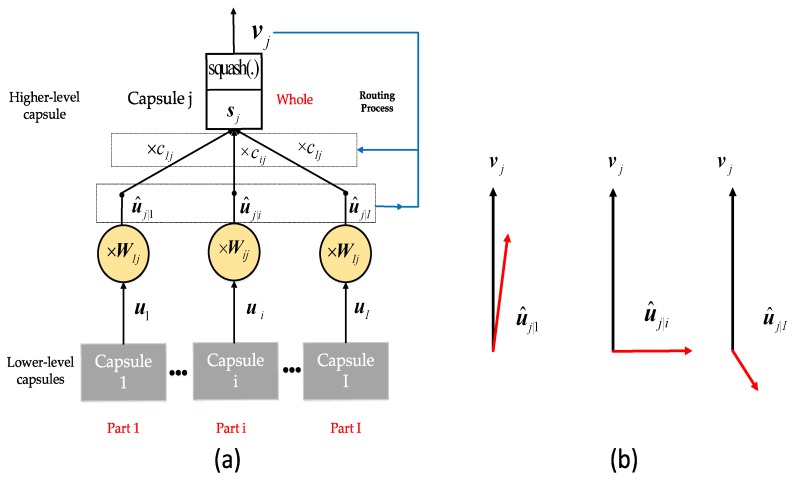
“In the CapsNet model, every capsule is responsible to find an individual component of the objects, and all the capsules jointly finds the overall object structure [39] .”
Asghar, M. A., Khan, M. J., Fawad, Amin, Y., Rizwan, M., Rahman, M., Badnava, S., & Mirjavadi, S. S. (2019) · Sensors · doi:10.3390/s19235218 · Cited by 104
Hao, C., & Dong, L. (2020) · IEEE Sensors Journal · doi:10.1109/jsen.2020.3020828 · Cited by 116
“In the process of emotional state transition, the changes of EEG signals in different brain regions are not synchronous [34]. some researchers have found that retaining the position information of EEG electrodes when extracting features can provide gain information for emotion recognition [17].”
BackgroundSelf-citationLight-weight residual convolution-based capsule network for EEG emotion recognition
Fan, C., Wang, J., Wei, H., Yang, X., Pei, G., Li, T., & Lv, Z. (2024) · Advanced Engineering Informatics · doi:10.1016/j.aei.2024.102522 · Cited by 115
Spatial-Temporal Feature Fusion Neural Network for EEG-Based Emotion Recognition
Wang, Z., Wang, Y., Zhang, J., Hu, C., Yin, Z., & Song, Y. (2022) · IEEE Transactions on Instrumentation and Measurement · doi:10.1109/tim.2022.3165280 · Cited by 113
Exploring Deep Learning Features for Automatic Classification of Human Emotion Using EEG Rhythms
Demir, F., Sobahi, N. M., Siuly, S., & Şengür, A. (2021) · IEEE Sensors Journal · doi:10.1109/jsen.2021.3070373 · Cited by 112
CNN based efficient approach for emotion recognition
Aslan, M. (2021) · Journal of King Saud University - Computer and Information Sciences · doi:10.1016/j.jksuci.2021.08.021 · Cited by 109
“The results of their experimental studies conducted with the DEAP dataset indicated that their proposed method exhibited a performance improvement over the existing methods (Chao et al., 2019).”
ERTNet: an interpretable transformer-based framework for EEG emotion recognition
Liu, R., Chao, Y., Ma, X., Sha, X., Sun, L., Li, S., & Chang, S. (2024) · Frontiers in Neuroscience · doi:10.3389/fnins.2024.1320645 · Cited by 104
EEG-based emotion recognition systems; comprehensive study
Hamzah, H. A., & Abdalla, K. K. (2024) · Heliyon · doi:10.1016/j.heliyon.2024.e31485 · Cited by 103
Progressive graph convolution network for EEG emotion recognition
Zhou, Y., Li, F., Li, Y., Ji, Y., Shi, G., Zheng, W., Zhang, L., Chen, Y., & Chen, Y. (2023) · Neurocomputing · doi:10.1016/j.neucom.2023.126262 · Cited by 101
Vempati, R., & Sharma, L. D. (2023) · Results in Engineering · doi:10.1016/j.rineng.2023.101027 · Cited by 99
Physiological Sensors Based Emotion Recognition While Experiencing Tactile Enhanced Multimedia
Raheel, A., Majid, M., Alnowami, M. R., & Anwar, S. M. (2020) · Sensors · doi:10.3390/s20144037 · Cited by 98
“A capsule network model was proposed using EEG data for emotion recognition [88].”
MethodSuhaimi, N. S., Mountstephens, J., & Teo, J. (2022) · Big Data and Cognitive Computing · doi:10.3390/bdcc6010016 · Cited by 95
Adaptive neural decision tree for EEG based emotion recognition
Zheng, Y., Ding, J., Liu, F., & Wang, D. (2023) · Information Sciences · doi:10.1016/j.ins.2023.119160 · Cited by 93
Kaklauskas, A., Abraham, A., Ubartė, I., Klıukas, R., Luksaite, V., Binkytė-Vėlienė, A., Vetloviene, I., & Kaklauskiene, L. (2022) · Sensors · doi:10.3390/s22207824 · Cited by 90
Self-Attentive Channel-Connectivity Capsule Network for EEG-Based Driving Fatigue Detection
Chen, C., Ji, Z., Sun, Y., Bezerianos, A., Thakor, N. V., & Wang, H. (2023) · IEEE Transactions on Neural Systems and Rehabilitation Engineering · doi:10.1109/tnsre.2023.3299156 · Cited by 88
“Given these benefits, CapsNet and its variants have been recently extended to EEG-based classification with satisfactory results [25], [26], [27].”
BackgroundLee, M. S., Lee, Y. K., Lim, M. T., & Kang, T. (2020) · Applied Sciences · doi:10.3390/app10103501 · Cited by 87
“Moreover, Chao et al. used a capsule network (CapsNet) to recognize emotions on the basis of a multiband feature matrix (MFM) [29].”
MethodMultimodal Emotion Recognition Using a Hierarchical Fusion Convolutional Neural Network
Zhang, Y., Cheng, C., & Zhang, Y. (2021) · IEEE Access · doi:10.1109/access.2021.3049516 · Cited by 84
“[31] extracted multiband features from multichannel EEG signals to constitute the multiband feature matrix (MFM), and entered the capsule network to mine three related features.”
MethodZhang, Y., Yan, G., Chang, W., Huang, W., & Yuan, Y. (2022) · Biomedical Signal Processing and Control · doi:10.1016/j.bspc.2022.104157 · Cited by 81
Tetromino pattern based accurate EEG emotion classification model
Tuncer, T., Doğan, Ş., Bayğın, M., & Acharya, U. R. (2021) · Artificial Intelligence in Medicine · doi:10.1016/j.artmed.2021.102210 · Cited by 79
Unsupervised Learning in Reservoir Computing for EEG-Based Emotion Recognition
Fourati, R., Ammar, B., Medina, J., & Alimi, A. M. (2020) · IEEE Transactions on Affective Computing · doi:10.1109/taffc.2020.2982143 · Cited by 77
Wang, Z., Chen, C., Li, J., Wan, F., Sun, Y., & Wang, H. (2023) · IEEE Transactions on Neural Systems and Rehabilitation Engineering · doi:10.1109/tnsre.2023.3237319 · Cited by 75
“Chao et al. combined multiband feature matrix (MFM) and CapsNet outperforming 2D-CNN in emotion recognition [27].”
MethodSelection of features for patient-independent detection of seizure events using scalp EEG signals
Yang, S., Li, B., Zhang, Y., Duan, M., Liu, S., Zhang, Y., Feng, X., Tan, R., Huang, L., & Zhou, F. (2020) · Computers in Biology and Medicine · doi:10.1016/j.compbiomed.2020.103671 · Cited by 75
Hu, Z., Chen, L., Luo, Y., & Zhou, J. (2022) · Applied Sciences · doi:10.3390/app122111255 · Cited by 74
“Emotion recognition is often implemented based on facial expressions, speech, and physiological signals, while physiological signals more accurately reflect fluc-tuations in human emotional states [1] and are often used in the field of human-computer interaction.”
BackgroundDeep-Asymmetry: Asymmetry Matrix Image for Deep Learning Method in Pre-Screening Depression
Kang, M., Kwon, H., Park, J.-H., Kang, S., & Lee, Y. (2020) · Sensors · doi:10.3390/s20226526 · Cited by 71
“Data segmentation, the process of dividing samples in EEG data into meaningful segments, is a potential approach to address this problem, and it has been used in existing EEG studies [24].”
MethodWagh, K. P., & Vasanth, K. (2022) · Biomedical Signal Processing and Control · doi:10.1016/j.bspc.2022.103966 · Cited by 70
Capsule Network with Its Limitation, Modification, and Applications—A Survey
Haq, M. U., Sethi, M. A. J., & Rehman, A. U. (2023) · Machine Learning and Knowledge Extraction · doi:10.3390/make5030047 · Cited by 69
Cho, J., & Hwang, H. (2020) · Sensors · doi:10.3390/s20123491 · Cited by 69
“[27] proposed a deep learning framework based on a multiband feature matrix (MFM) and a capsule network (CapsNet).”
BackgroundScalingNet: Extracting features from raw EEG data for emotion recognition
Hu, J., Wang, C., Jia, Q., Bu, Q., Sutcliffe, R. F. E., & Feng, J. H. (2021) · Neurocomputing · doi:10.1016/j.neucom.2021.08.018 · Cited by 69
Multimodal emotion recognition based on manifold learning and convolution neural network
Zhang, Y., Cheng, C., & Zhang, Y. (2022) · Multimedia Tools and Applications · doi:10.1007/s11042-022-13149-8 · Cited by 67
“…based on non-physiological signals such as facial expressions, speech, body movement, and physiological signals like electroencephalograph (EEG), electrocardiogram (ECG), electroretinogram (EOG), skin resistance (SR), functional magnetic resonance imaging (fMRI), and magnetoencephalogram (MEG) [5].”
BackgroundCapsule neural networks on spatio-temporal EEG frames for cross-subject emotion recognition
Jana, G. C., Sabath, A., & Agrawal, A. (2021) · Biomedical Signal Processing and Control · doi:10.1016/j.bspc.2021.103361 · Cited by 67
Guo, W., Li, Y., Liu, M., Ma, R., & Wang, Y. (2023) · Knowledge-Based Systems · doi:10.1016/j.knosys.2023.111199 · Cited by 66
1D Convolutional Autoencoder-Based PPG and GSR Signals for Real-Time Emotion Classification
Kang, D., & Kim, D. (2022) · IEEE Access · doi:10.1109/access.2022.3201342 · Cited by 62
Hao, C., & Liu, Y. (2020) · IEEE Access · doi:10.1109/access.2020.2974009 · Cited by 62
“Thus, various deep learning models, such as deep belief networks [14], convolutional neural network (CNN) [15] and capsules network (CapsNet) [16], have been widely used in emotional classification tasks, and promising results have been achieved.”
BackgroundSelf-citationGuo, W., Xu, G., & Wang, Y. (2022) · Knowledge-Based Systems · doi:10.1016/j.knosys.2022.108819 · Cited by 61
CNN-LSTM for automatic emotion recognition using contactless photoplythesmographic signals
Mellouk, W., & Handouzi, W. (2023) · Biomedical Signal Processing and Control · doi:10.1016/j.bspc.2023.104907 · Cited by 61
Subject-Independent EEG-based Emotion Recognition using Adversarial Learning
Hwang, S., Ki, M., Hong, K., & Byun, H. (2020) · International Winter Conference on Brain-Computer Interface (BCI) · doi:10.1109/bci48061.2020.9061624 · Cited by 60
“With the great success of deep learning approaches, emotion recognition tasks are getting attention from researchers [1], [6]–[8].”
BackgroundArevalillo‐Herráez, M., Cobos, M., Roger, S., & García, M. (2019) · Sensors · doi:10.3390/s19132999 · Cited by 55
“However, the large quantity of information that EEG signals encode about the subject has motivated their use in other application areas, such as biometric recognition [14,15], gender identification [16] and emotion detection [17,18].”
BackgroundCalibration free meta learning based approach for subject independent EEG emotion recognition
Bhosale, S., Chakraborty, R., & Kopparapu, S. K. (2021) · Biomedical Signal Processing and Control · doi:10.1016/j.bspc.2021.103289 · Cited by 55
MEET: A Multi-Band EEG Transformer for Brain States Decoding
Shi, E., Yu, S., Kang, Y., Wu, J., Zhao, L., Zhu, D., Lv, J., Liu, T., Hu, X., & Zhang, S. (2023) · IEEE Transactions on Biomedical Engineering · doi:10.1109/tbme.2023.3339892 · Cited by 54
“…have proven that decomposing EEG signals into multiple frequency band-limited signals can significantly improve the effectiveness on differentiating brain activities, which generates not only rich information, but also isolates most of the noises from the original full-band signals [3], [4], [5].”
BackgroundChae, J., Hwang, S., Seo, W., & Kang, Y. (2021) · Automation in Construction · doi:10.1016/j.autcon.2021.103560 · Cited by 54
Applying Self-Supervised Representation Learning for Emotion Recognition Using Physiological Signals
Quispe, K. G. M., Utyiama, D. M. D. S., Santos, E. M. D., Oliveira, H. A. B. F., & Souto, E. (2022) · Sensors · doi:10.3390/s22239102 · Cited by 51
“For this reason, EEG signals are used by many studies to detect an individual’s emotional responses to stimuli [40].”
BackgroundLi, D., Liu, J., Yang, Y., Hou, F., Song, H., Song, Y., Gao, Q., & Mao, Z. (2022) · IEEE Transactions on Neural Systems and Rehabilitation Engineering · doi:10.1109/tnsre.2022.3225948 · Cited by 52
“Chao et al. [31] proposed a Capsule Network (CapsNet) model, and used the multi-feature matrix for emotion recognition.”
MethodPlatform design for lifelog-based smart lighting control
Cho, Y.-J., Seo, J., Lee, H., Choi, S., Choi, A.-S., Sung, M., & Hur, Y. (2020) · Building and Environment · doi:10.1016/j.buildenv.2020.107267 · Cited by 49
Hierarchical Attention-Based Temporal Convolutional Networks for Eeg-Based Emotion Recognition
Li, C., Chen, B., Zhao, Z., Cummins, N., & Schuller, B. W. (2021) · IEEE International Conference on Acoustics Speech and Signal Processing · doi:10.1109/icassp39728.2021.9413635 · Cited by 48
“[20] 2019 Multiband Feature Matrix CapsNet 10-fold cross-validation 0.”
BackgroundCapsule Network for ERP Detection in Brain-Computer Interface
Ma, R., Yu, T., Zhong, X., Yu, Z. L., Li, Y., & Gu, Z. (2021) · IEEE Transactions on Neural Systems and Rehabilitation Engineering · doi:10.1109/tnsre.2021.3070327 · Cited by 47
“Considering the abovementioned advantages, CapsNet models have recently been applied to EEG classification, including motor imagery EEG classification [15] and emotion recognition [16], and have achieved excellent results.”
MethodJavidan, M., Yazdchi, M., Baharlouei, Z., & Mahnam, A. (2021) · Biomedical Signal Processing and Control · doi:10.1016/j.bspc.2021.102979 · Cited by 47
Emotion Recognition via Multiscale Feature Fusion Network and Attention Mechanism
Jiang, Y., Xie, S., Xie, X., Cui, Y., & Tang, H. (2023) · IEEE Sensors Journal · doi:10.1109/jsen.2023.3265688 · Cited by 46
“Chao et al. [30] extracted PSD features of different frequency bands and combined them with spatial features to form multiband feature group frames as input to the capsule network for EEG-based emotion recognition.”
BackgroundEEG-Based Emotion Recognition Using a 2D CNN with Different Kernels
Wang, Y., Zhang, L., Xia, P., Wang, P., Chen, X., Du, L., Fang, Z., & Du, M. (2022) · Bioengineering · doi:10.3390/bioengineering9060231 · Cited by 46
Guo, W., & Wang, Y. (2023) · Expert Systems with Applications · doi:10.1016/j.eswa.2023.121889 · Cited by 45
Asghar, M. A., Khan, M. J., Rizwan, M., Mehmood, R. M., & Kim, S. (2020) · Sensors · doi:10.3390/s20133765 · Cited by 45
A Channel Selection Method for Emotion Recognition From EEG Based on Swarm-Intelligence Algorithms
Yıldırım, E., Kaya, Y., & Kılıç, F. (2021) · IEEE Access · doi:10.1109/access.2021.3100638 · Cited by 43
Xu, S., Li, J., Liu, K., & Wu, L. (2019) · IEEE Access · doi:10.1109/access.2019.2936516 · Cited by 42
“Multi-channel signals must be considered not only a characteristic distribution of single-channel data, but also as global structural information between signals in each channel and a combination relationship for local regional features [4].”
BackgroundHao, C., Dong, L., Liu, Y., & Lu, B. (2020) · Complexity · doi:10.1155/2020/6816502 · Cited by 42
“Studies have shown that the global information and spatial features of all EEG channels can improve the performance of emotion recognition [13, 24].”
BackgroundSelf-citationEfficient approach for EEG‐based emotion recognition
Şengür, D., & Siuly, S. (2020) · Electronics Letters · doi:10.1049/el.2020.2685 · Cited by 41
“The biggest part of emotions in people ’ s daily life is attention management [2] and decision making [3].”
BackgroundSimplified 2D CNN Architecture With Channel Selection for Emotion Recognition Using EEG Spectrogram
Farokhah, L., Sarno, R., & Fatichah, C. (2023) · IEEE Access · doi:10.1109/access.2023.3275565 · Cited by 41
EEG Classification by Factoring in Sensor Spatial Configuration
Mokatren, L. S., Ansari, R., Çetin, A. E., Leow, A., Ajilore, O., Klumpp, H., & Vural, F. T. Y. (2021) · IEEE Access · doi:10.1109/access.2021.3054670 · Cited by 39
CR-GCN: Channel-Relationships-Based Graph Convolutional Network for EEG Emotion Recognition
Jia, J., Zhang, B., Lv, H., Xu, Z., Hu, S., & Li, H. (2022) · Brain Sciences · doi:10.3390/brainsci12080987 · Cited by 39
M1M2: Deep-Learning-Based Real-Time Emotion Recognition from Neural Activity
Akter, S., Prodhan, R. A., Pias, T. S., Eisenberg, D., & Fresneda, J. E. (2022) · Sensors · doi:10.3390/s22218467 · Cited by 38
Application of Electroencephalography-Based Machine Learning in Emotion Recognition: A Review
Cai, J., Xiao, R., Cui, W., Zhang, S., & Liu, G. (2021) · Frontiers in Systems Neuroscience · doi:10.3389/fnsys.2021.729707 · Cited by 37
Oversampling Approach Using Radius-SMOTE for Imbalance Electroencephalography Datasets
Wardoyo, R., Wirawan, I. M. A., & Pradipta, I. G. A. (2022) · Emerging Science Journal · doi:10.28991/esj-2022-06-02-013 · Cited by 37
“Although the emotion classification process has been improved using the Capsule Network method and the combination of Convolutional Neural Network and Long Short Term Memory methods; however, the accuracy is achieved still lower than this research proposal [47, 48, 52].”
BackgroundMethodDeep Feature Pyramid Network for Eeg Emotion Recognition
Hou, F., Gao, Q., Song, Y., Wang, Z., Bai, Z., Yang, Y., & Tian, Z. (2022) · Measurement · doi:10.1016/j.measurement.2022.111724 · Cited by 37
Automatic recognition of preictal and interictal EEG signals using 1D-capsule networks
Toraman, S. (2021) · Computers & Electrical Engineering · doi:10.1016/j.compeleceng.2021.107033 · Cited by 35
Feature Correlation-Steered Capsule Network for object detection
Lin, Z., Jia, J., Huang, F., & Gao, W. (2021) · Neural Networks · doi:10.1016/j.neunet.2021.12.003 · Cited by 35
Brain Computer Interface based EEG for Emotion Recognition System: A Systematic Review
Bhise, P. R., Kulkarni, S. B., & Aldhaheri, T. A. (2020) · International Conference on Innovative Mechanisms for Industry Applications · doi:10.1109/icimia48430.2020.9074921 · Cited by 34
Electroencephalogram Access for Emotion Recognition Based on a Deep Hybrid Network
Zhong, Q., Zhu, Y., Cai, D., Xiao, L., & Zhang, H. (2020) · Frontiers in Human Neuroscience · doi:10.3389/fnhum.2020.589001 · Cited by 34
Kumari, N., Anwar, S., & Bhattacharjee, V. (2022) · Neural Computing and Applications · doi:10.1007/s00521-022-06942-x · Cited by 34
“The emotion-based model has been proposed using CapsNet, which is equipped for performing view-point location and emotion classification at the same time [12].”
BackgroundMethodInfluentialMulti-modal emotion identification fusing facial expression and EEG
Wu, Y., & Li, J. (2022) · Multimedia Tools and Applications · doi:10.1007/s11042-022-13711-4 · Cited by 34
“In Table 1, Chao [12] proposed Multiband Feature Map (MFM) and Capsule Networks (CapsNet) models based on EEG signals.”
Two-stepped majority voting for efficient EEG-based emotion classification
Ismael, A. M., Alçin, Ö. F., Abdalla, K. H., & Şengür, A. (2020) · Brain Informatics · doi:10.1186/s40708-020-00111-3 · Cited by 34
“The alpha, beta, theta and delta rhythms were further used as suggested in [1, 14].”
BackgroundMethodInfluentialDetection of Attention Deficit Hyperactivity Disorder based on EEG feature maps and deep learning
Cura, Ö. K., Akan, A., & Atlı, S. K. (2024) · Journal of Applied Biomedicine · doi:10.1016/j.bbe.2024.07.003 · Cited by 33
EEG-Based Emotion Recognition Using Genetic Algorithm Optimized Multi-Layer Perceptron
Marjit, S., Talukdar, U., & Hazarika, S. M. (2021) · International Symposium of Asian Control Association on Intelligent Robotics and Industrial Automation (IRIA) · doi:10.1109/iria53009.2021.9588702 · Cited by 33
EEG-based Emotion Recognition Using Multiple Kernel Learning
Cai, Q., Cui, G.-C., & Wang, H. (2022) · Machine Intelligence Research · doi:10.1007/s11633-022-1352-1 · Cited by 33
Graph to Grid: Learning Deep Representations for Multimodal Emotion Recognition
Jin, M., & Li, J. (2023) · ACM International Conference on Multimedia (ACM MM) · doi:10.1145/3581783.3612074 · Cited by 31
“Chao et al. [3] proposed a deep learning network based on a multiband feature matrix combining frequency domain, spatial domain, and frequency band characteristics and a capsule network for EEG emotion recognition.”
BackgroundAutomated visual stimuli evoked multi-channel EEG signal classification using EEGCapsNet
Kumari, N., Anwar, S., & Bhattacharjee, V. (2021) · Pattern Recognition Letters · doi:10.1016/j.patrec.2021.11.019 · Cited by 31
Advancing Remote Healthcare Using Humanoid and Affective Systems
Tripathi, U., Rittvik Saran, J., Chamola, V., Jolfaei, A., & Chintanpalli, A. (2021) · IEEE Sensors Journal · doi:10.1109/jsen.2021.3049247 · Cited by 30
A Hybrid Capsule Network for Hyperspectral Image Classification
Khodadadzadeh, M., Ding, X., Chaurasia, P., & Coyle, D. (2021) · IEEE Journal of Selected Topics in Applied Earth Observations and Remote Sensing · doi:10.1109/jstars.2021.3126427 · Cited by 29
Wirawan, I. M. A., Wardoyo, R., & Lelono, D. (2022) · International Journal of Power Electronics and Drive Systems/International Journal of Electrical and Computer Engineering · doi:10.11591/ijece.v12i2.pp1508-1519 · Cited by 27
Toward the Construction of Affective Brain-Computer Interface: A Systematic Review
Chen, H., Li, J., He, H., Zhu, J., Sun, S., Li, X., & Hu, B. (2025) · ACM Computing Surveys · doi:10.1145/3712259 · Cited by 26
EEG channel selection strategy for deep learning in emotion recognition
Dura, A., & Wosiak, A. (2021) · Procedia Computer Science · doi:10.1016/j.procs.2021.09.049 · Cited by 26
Metadata
- Authors
- Chao, H., Dong, L., Liu, Y., & Lu, B.
- Affiliations
- School of Computer Science and Technology, Henan Polytechnic University, Jiaozuo 454000, China
- Henan Polytechnic University (CN)
- Venue
- Sensors
- Publisher
- MDPI AG
- Published
- 2019-05-13
- Volume
- 19
- Issue
- 9
- Pages
- 2212
- ISSN
- 1424-8220 (ISSN-L)
- PMC
- PMC6540345
- OpenAlex
- W2944401411
- Cited by
- 287
- References
- 45
- Citations by year
- 2026: 16 · 2025: 25 · 2024: 34 · 2023: 51 · 2022: 65 · 2021: 47 · 2020: 40 · 2019: 9
- FWCI
- 47.26
- Type
- journal article
- Language
- en
- Open access
- gold
- dx.doi.org
- Licence
- Locations
- Sensors (publishedVersion, cc-by)
- PubMed Central (publishedVersion, cc-by)
- PubMed (publishedVersion)
- DOAJ (DOAJ: Directory of Open Access Journals) (submittedVersion, cc-by-sa)
- Funders
- Foundation for University Key Teacher by Henan Province (2015GGJS068)
- Fundamental Research Funds for the Universities of Henan Province (NSFRF1616)
- Key Scientific Research Projects of Universities in Henan (19A520004)
- Foundation for Scientific and Technological Project of Henan Province (172102210279)
- National Nature Science Foundation of China (61502150 and 61403128)
- Topics
- Physical Sciences › Computer Science › Artificial Intelligence › Emotion and Mood Recognition
- Life Sciences › Neuroscience › Cognitive Neuroscience › EEG and Brain-Computer Interfaces
- Physical Sciences › Computer Science › Signal Processing › Biometric Identification and Security
- Keywords
- emotion recognition, capsule networks, frequency-domain features, DEAP dataset, physiological signals
- MeSH terms
- Machine Learning, Cerebral Cortex, Electrodes, Electroencephalography, Emotions, Humans, Signal Processing, Computer-Assisted, Entropy
About these checks
Registry, retraction, Cites and statistics results are computed, not judged, with one exception: a printed reference that no index lists is read once by a model before it counts as a citation error. Claims are extracted by a model and kept only when their quote appears verbatim in the text; each cited source is then checked, with a model’s help, for whether it says what the claim relies on. Those verdicts can be wrong — read the claim’s quote and the cited source before relying on one.
Statistics and arithmetic are recomputed, not judged.
Confidence bands are shown only for fields calibrated on our annotated test set. None is calibrated yet, so no band is shown.
What counts as a claim ›How we measure confidence ›How we check this ›
Are you an author, or do you see a problem with this page? Request a review
Data sources
Bibliographic data: Semantic Scholar, OpenAlex, Crossref.
Contains information from the Semantic Scholar Academic Graph Datasets, made available under the ODC Attribution License (ODC-BY 1.0).
Semantic Scholar’s data is described in: Kinney, R., et al. (2023). The Semantic Scholar Open Data Platform. arXiv:2301.10140.
