

The DOI matches its Crossref record; 5 of the 5 references it cites were found in a registry or an index.
Resource-Efficient Sensor Data Management for Autonomous Systems Using Deep Reinforcement Learning
Open accessAbstract
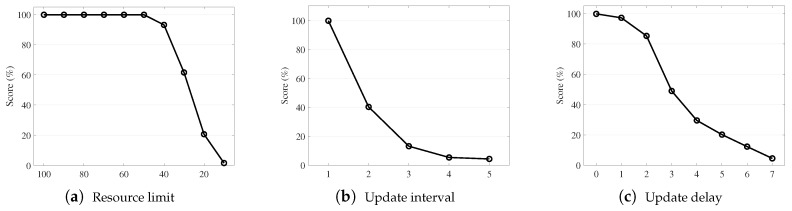
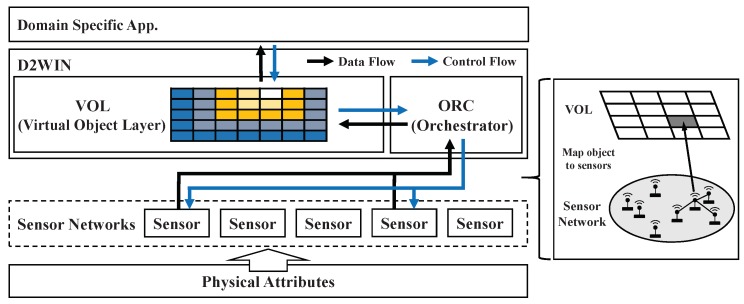
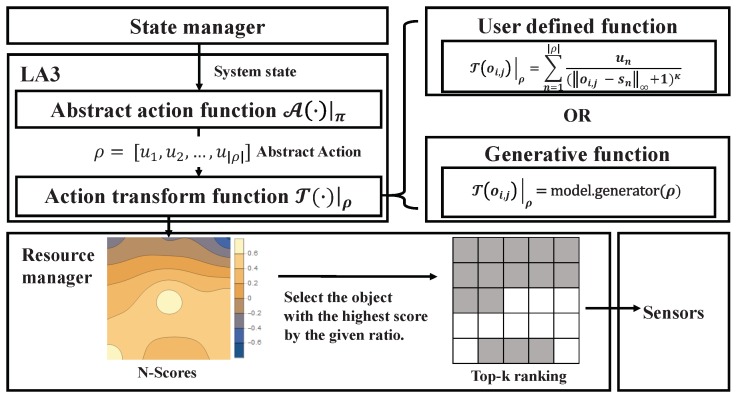
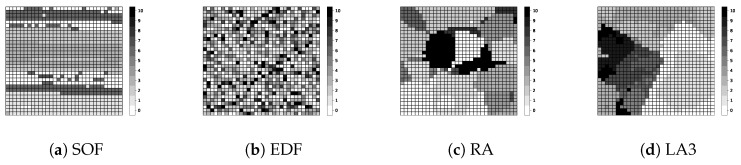
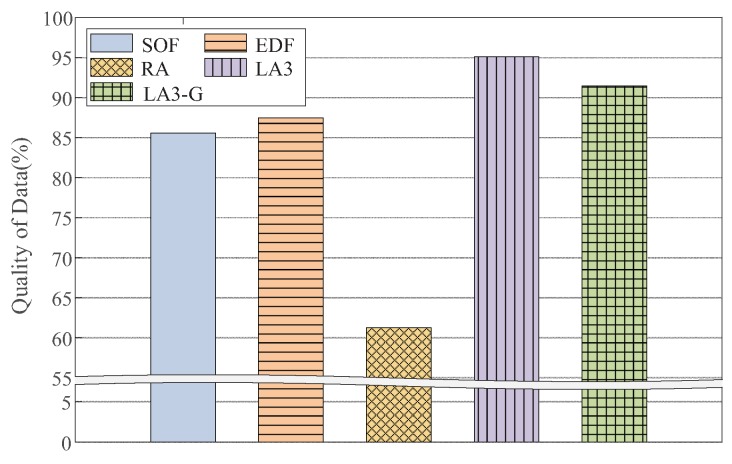
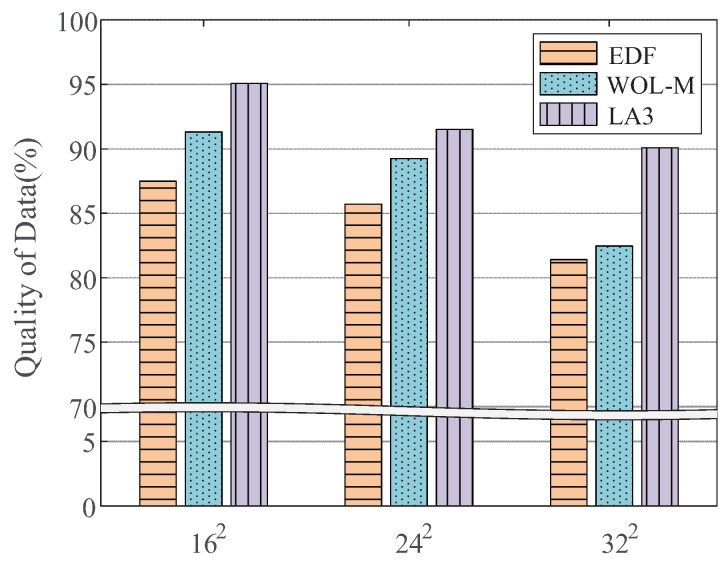
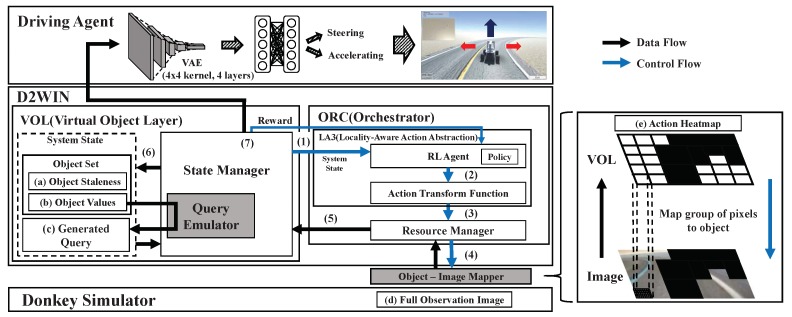
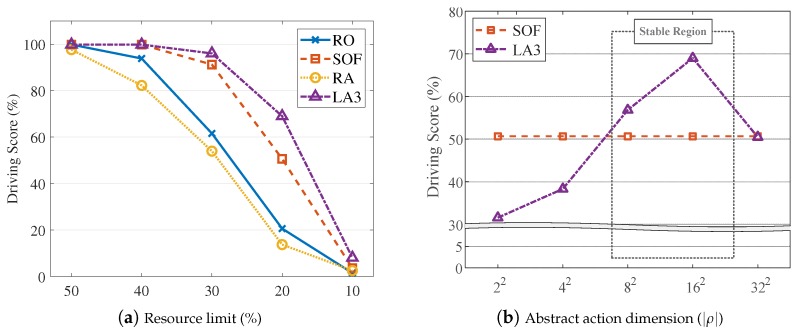
Hyperconnectivity via modern Internet of Things (IoT) technologies has recently driven us to envision "digital twin", in which physical attributes are all embedded, and their latest updates are synchronized on digital spaces in a timely fashion. From the point of view of cyberphysical system (CPS) architectures, the goals of digital twin include providing common programming abstraction on the same level of databases, thereby facilitating seamless integration of real-world physical objects and digital assets at several different system layers. However, the inherent limitations of sampling and observing physical attributes often pose issues related to data uncertainty in practice. In this paper, we propose a learning-based data management scheme where the implementation is layered between sensors attached to physical attributes and domain-specific applications, thereby mitigating the data uncertainty between them. To do so, we present a sensor data management framework, namely D2WIN, which adopts reinforcement learning (RL) techniques to manage the data quality for CPS applications and autonomous systems. To deal with the scale issue incurred by many physical attributes and sensor streams when adopting RL, we propose an action embedding strategy that exploits their distance-based similarity in the physical space coordination. We introduce two embedding methods, i.e., a user-defined function and a generative model, for different conditions. Through experiments, we demonstrate that the D2WIN framework with the action embedding outperforms several known heuristics in terms of achievable data quality under certain resource restrictions. We also test the framework with an autonomous driving simulator, clearly showing its benefit. For example, with only 30% of updates selectively applied by the learned policy, the driving agent maintains its performance about 96.2%, as compared to the ideal condition with full updates.
Overview
The claims and statistics of this paper haven’t been checked yet.
Run the check — free, no account needed. It reads the open-access text and checks the sources it cites.
Integrity signals
Registry
Cites
Statistics
Figures


Verification
Claims the paper makes
The claims and statistics of this paper haven’t been checked yet.
Run the check — free, no account needed. It reads the open-access text and checks the sources it cites.
Claims other papers make about this one
Each is checked against this paper’s own text: does it say what the citing paper says it does?
The source backs part of the claim, not all of it — or backs it for a different population, condition or comparison.
In the citing paper
“Nine primary studies [4,8,10,16,23,24,31,40,49] cover edge-Cloud orchestration for data processing (not necessarily data quality management).”
From A Systematic Review of Data Quality in CPS and IoT for Industry 4.0 (2023) · cites this paper as [16]
Experimental — accuracy not yet measured
Self-check
Percentages, sums and reported differences re-computed from the paper’s own numbers.
The self-check needs the paper’s full text.
Citations
Cites
Proximal Policy Optimization Algorithms
Schulman, J., Wolski, F., Dhariwal, P., Radford, A., & Klimov, O. (2017) · arXiv · doi:10.48550/arxiv.1707.06347 · Cited by 10,625
Generative adversarial imitation learning
Ho, J., & Ermon, S. (2016) · arXiv · doi:10.48550/arxiv.1606.03476 · Cited by 1,942
Resource Management with Deep Reinforcement Learning
Mao, H., Alizadeh, M., Menache, I., & Kandula, S. (2016) · Proceedings of the 15th ACM Workshop on Hot Topics in Networks · doi:10.1145/3005745.3005750 · Cited by 1,353 · cited 2×
“, cloud task scheduling [11,12], cluster resource management [13,14], network traffic scheduling [15], and database query processing [16].”
BackgroundMethodLeveraging Digital Twin Technology in Model-Based Systems Engineering
Madni, A. M., Madni, C. C., & Lucero, S. D. (2019) · Systems · doi:10.3390/systems7010007 · Cited by 1,050
Cellular Network Traffic Scheduling With Deep Reinforcement Learning
Chinchali, S., Hu, P., Chu, T., Sharma, M., Bansal, M., Misra, R., Pavone, M., & Katti, S. (2018) · Proceedings of the AAAI Conference on Artificial Intelligence · doi:10.1609/aaai.v32i1.11339 · Cited by 218 · cited 1×
“, cloud task scheduling [11,12], cluster resource management [13,14], network traffic scheduling [15], and database query processing [16].”
Background
Research works printed but not linked: 30
- Bradley, 2015, Optimization and Control of Cyberphysical Vehicle Systems, Sensors, 15, 23020, 10.3390/s150923020 · DOI
- Uhlemann, 2017, The Digital Twin: Realizing the Cyber-Physical Production System for Industry 4.0, Procedia CIRP, 61, 335, 10.1016/j.procir.2016.11.152 · DOI · Paper page
- Uhlemann, 2017, The Digital Twin: Demonstrating the Potential of Real Time Data Acquisition in Production Systems, Procedia Manuf., 9, 113, 10.1016/j.promfg.2017.04.043 · DOI
- Deshpande, A., Guestrin, C., Madden, S.R., Hellerstein, J.M., and Hong, W. (September, January 31). Model-driven Data Acquisition in Sensor Networks. Proceedings of the Thirtieth International Conference on Very Large Data Bases, Toronto, ON, Canada.
- Deshpande, A., and Madden, S. (2006;, January 27–29). MauveDB: supporting model-based user views in database systems. Proceedings of the 2006 ACM SIGMOD International Conference on Management of Data, Chicago, IL, USA. · DOI
- Morison, A.M., Murphy, T., and Woods, D.D. (2016, January 17–22). Seeing Through Multiple Sensors into Distant Scenes: The Essential Power of Viewpoint Control. Proceedings of the International Conference Human-Computer Interaction Platforms and Techniques, Toronto, ON, Canada. · DOI
- Peng, 2015, Random task scheduling scheme based on reinforcement learning in cloud computing, Cluster Comput., 18, 1595, 10.1007/s10586-015-0484-2 · DOI
- Bao, Y., Peng, Y., and Wu, C. (May, January 29). Deep Learning-based Job Placement in Distributed Machine Learning Clusters. Proceedings of the IEEE Conference on Computer Communications, Paris, France.
- Mao, H., Schwarzkopf, M., Venkatakrishnan, S.B., Meng, Z., and Alizadeh, M. (2019, January 19–24). Learning Scheduling Algorithms for Data Processing Clusters. Proceedings of the ACM Special Interest Group on Data Communication (SIGCOMM), Beijing, China. · DOI
- Krishnan, S., Yang, Z., Goldberg, K., Hellerstein, J.M., and Stoica, I. (2018). Learning to Optimize Join Queries with Deep Reinforcement Learning. arXiv.
- Kang, 2004, Managing deadline miss ratio and sensor data freshness in real-time databases, IEEE Trans. Knowl. Data Eng., 16, 1200, 10.1109/TKDE.2004.61 · DOI
- Zhou, Y., and Kang, K.D. (2010, January 6–9). Deadline assignment and tardiness control for real-time data services. Proceedings of the 2010 22nd Euromicro Conference on Real-Time Systems, Brussels, Belgium. · DOI
- Sutton, R.S., and Barto, A.G. (1998). Reinforcement Learning: An Introduction, MIT Press. · DOI · Paper page
- Dulac-Arnold, G., Evans, R., van Hasselt, H., Sunehag, P., Lillicrap, T., Hunt, J., Mann, T., Weber, T., Degris, T., and Coppin, B. (2015). Deep reinforcement learning in large discrete action spaces. arXiv.
- Bartle, R.G., and Bartle, R.G. (1995). The Elements of Integration and Lebesgue Measure, A Wiley-Interscience. · DOI
- Haarnoja, T., Zhou, A., Abbeel, P., and Levine, S. (2018). Soft Actor-Critic: Off-Policy Maximum Entropy Deep Reinforcement Learning with a Stochastic Actor. arXiv.
- Duan, Y., Chen, X., Houthooft, R., Schulman, J., and Abbeel, P. (2016, January 19–24). Benchmarking deep reinforcement learning for continuous control. Proceedings of the 33rd International International Conference on Machine Learning (ICML), New York, NY, USA.
- Ramamritham, 1993, Real-time databases, Distrib. Parallel Databases, 1, 199, 10.1007/BF01264051 · DOI
- Zhou, 2015, Deadline Assignment and Feedback Control for Differentiated Real-Time Data Services, IEEE Trans. Knowl. Data Eng., 27, 3245, 10.1109/TKDE.2015.2441725 · DOI
- Mnih, V., Heess, N., Graves, A., and Kavukcuoglu, K. (2014, January 8–13). Recurrent models of visual attention. Proceedings of the Advances in Neural Information Processing Systems, Montreal, QC, Canada.
- Elgabli, A., Khan, H., Krouka, M., and Bennis, M. (2018). Reinforcement Learning Based Scheduling Algorithm for Optimizing Age of Information in Ultra Reliable Low Latency Networks. arXiv. · DOI
- Chowdhury, 2019, DA-DRLS: Drift adaptive deep reinforcement learning based scheduling for IoT resource management, J. Netw. Comput. Appl., 138, 51, 10.1016/j.jnca.2019.04.010 · DOI
- Pazis, J., and Parr, R. (July, January 28). Generalized value functions for large action sets. Proceedings of the 28th International Conference on Machine Learning (ICML-11), Bellevue, WA, USA.
- Sallab, 2017, Deep reinforcement learning framework for autonomous driving, Electron. Imaging, 2017, 70, 10.2352/ISSN.2470-1173.2017.19.AVM-023 · DOI · Paper page
- Mnih, V., Badia, A.P., Mirza, M., Graves, A., Lillicrap, T., Harley, T., Silver, D., and Kavukcuoglu, K. (2016, January 19–24). Asynchronous methods for deep reinforcement learning. Proceedings of the 33rd International Conference on Machine Learning (ICML), New York, NY, USA.
- Li, 2019, Reinforcement Learning and Deep Learning Based Lateral Control for Autonomous Driving [Application Notes], IEEE Comput. Intell. Mag., 14, 83, 10.1109/MCI.2019.2901089 · DOI
- Kaushik, M., Prasad, V., Krishna, K.M., and Ravindran, B. (2018, January 26–30). Overtaking maneuvers in simulated highway driving using deep reinforcement learning. Proceedings of the 2018 IEEE Intelligent Vehicles Symposium (IV), Changshu, China. · DOI
- Wu, K., Abolfazli Esfahani, M., Yuan, S., and Wang, H. (2018). Learn to steer through deep reinforcement learning. Sensors, 18. · DOI
- Zhou, X., Gao, Y., and Guan, L. (2019). Towards goal-directed navigation through combining learning based global and local planners. Sensors, 19. · DOI
- Jaritz, M., de Charette, R., Toromanoff, M., Perot, E., and Nashashibi, F. (2018, January 21–26). End-to-end race driving with deep reinforcement learning. Proceedings of the 2018 IEEE International Conference on Robotics and Automation (ICRA), Brisbane, Australia. · DOI · Paper page
Cited by
Sorted by citations
A Systematic Review of Data Quality in CPS and IoT for Industry 4.0
Goknil, A., Nguyen, P., Sen, S., Politaki, D., Niavis, H., Pedersen, K. J., Suyuthi, A., Anand, A., & Ziegenbein, A. (2023) · ACM Computing Surveys · doi:10.1145/3593043 · Cited by 84
Metadata
- Authors
- Jeong, S., Yoo, G., Yoo, M., Yeom, I., & Woo, H.
- Affiliations
- Sungkyunkwan University (KR)
- Corresponding author
- Woo, Honguk
- Venue
- Sensors
- Publisher
- MDPI AG
- Published
- 2019-10-11
- Volume
- 19
- Issue
- 20
- Pages
- 4410
- ISSN
- 1424-8220 (ISSN-L)
- PMC
- PMC6832860
- OpenAlex
- W2979953627
- Cited by
- 9
- References
- 5
- Citations by year
- 2025: 1 · 2024: 1 · 2023: 3 · 2022: 1 · 2021: 2 · 2020: 1
- FWCI
- 0.46
- Type
- journal article
- Language
- en
- Open access
- gold
- dx.doi.org
- Licence
- Locations
- Sensors (publishedVersion, cc-by)
- Europe PMC (PubMed Central) (publishedVersion, cc-by)
- PubMed Central (publishedVersion, cc-by)
- PubMed (publishedVersion)
- DOAJ (DOAJ: Directory of Open Access Journals) (submittedVersion, cc-by-sa)
- Funders
- National Research Foundation of Korea (NRF-2016R1E1A1A01943474, NRF-2018R1D1A1A02086102)
- Topics
- Physical Sciences › Computer Science › Artificial Intelligence › Reinforcement Learning in Robotics
- Physical Sciences › Computer Science › Computer Networks and Communications › IoT and Edge/Fog Computing
- Physical Sciences › Engineering › Industrial and Manufacturing Engineering › Digital Transformation in Industry
- Keywords
- sensor data management, digital twin, cyber-physical systems, deep reinforcement learning, data quality, data uncertainty, generative models, autonomous driving, Internet of Things, resource efficiency
About these checks
Registry, retraction, Cites and statistics results are computed, not judged, with one exception: a printed reference that no index lists is read once by a model before it counts as a citation error. Claims are extracted by a model and kept only when their quote appears verbatim in the text; each cited source is then checked, with a model’s help, for whether it says what the claim relies on. Those verdicts can be wrong — read the claim’s quote and the cited source before relying on one.
Statistics and arithmetic are recomputed, not judged.
Confidence bands are shown only for fields calibrated on our annotated test set. None is calibrated yet, so no band is shown.
What counts as a claim ›How we measure confidence ›How we check this ›
Are you an author, or do you see a problem with this page? Request a review
How to cite
Cite CoChat for the checks on this page, and the paper for its own findings.
- This page
- CoChat. (2026). Citation check: Resource-Efficient Sensor Data Management for Autonomous Systems Using Deep Reinforcement Learning. https://app.cochat.ai/papers/10.3390/s19204410
- The paper
- Jeong, S., Yoo, G., Yoo, M., Yeom, I., & Woo, H. (2019). Resource-Efficient Sensor Data Management for Autonomous Systems Using Deep Reinforcement Learning. Sensors. https://doi.org/10.3390/s19204410
