

Pilot Study of the EncephaLog Smartphone Application for Gait Analysis
Open accessThe DOI matches its Crossref record; 47 of the 48 references it cites were found in a registry or an index.
Abstract
Gait disorders and falls are common in elders and in many clinical conditions, yet they are typically infrequently and subjectively evaluated, limiting prevention and intervention. Completion-time of the Timed-Up-and-Go (TUG) test is a well-accepted clinical biomarker for rating mobility and prediction of falls risk. Using smartphones’ integral accelerometers and gyroscopes, we already demonstrated that TUG completion-time can be accurately measured via a smartphone app. Here we present an extended app, EncephaLogTM, which provides gait analysis in much more detail, offering 9 additional gait biomarkers on top of the TUG completion-time. In this pilot, four healthy adults participated in a total of 32 TUG tests; simultaneously recorded by EncephaLog and motion sensor devices used in movement labs: motion capture cameras (MCC), pressure mat; and/or wearable sensors. Results show high agreement between EncephaLog biomarkers and those measured by the other devices. These preliminary results suggest that EncephaLog can provide an accurate, yet simpler, instrumented TUG (iTUG) platform than existing alternatives, offering a solution for clinics that cannot afford the cost or space required for a dedicated motion lab and for monitoring patients at their homes. Further research on a larger study population with pathologies is required to assess full validity.
Overview
The claims and statistics of this paper haven’t been checked yet.
Free: it reads the open-access text and checks the first 5 claims that cite a source we can check. Create a free account to check every claim.
Integrity signals
Registry
Cites
Statistics
Figures
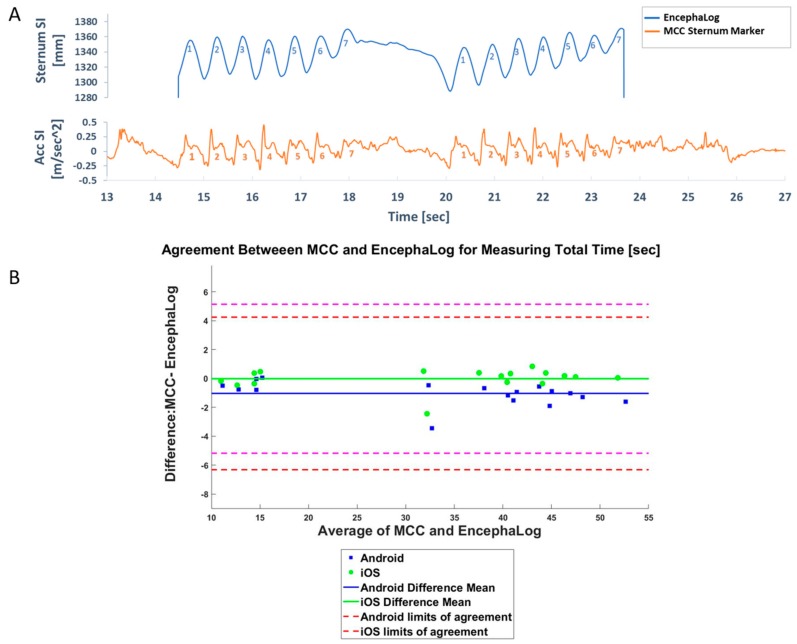
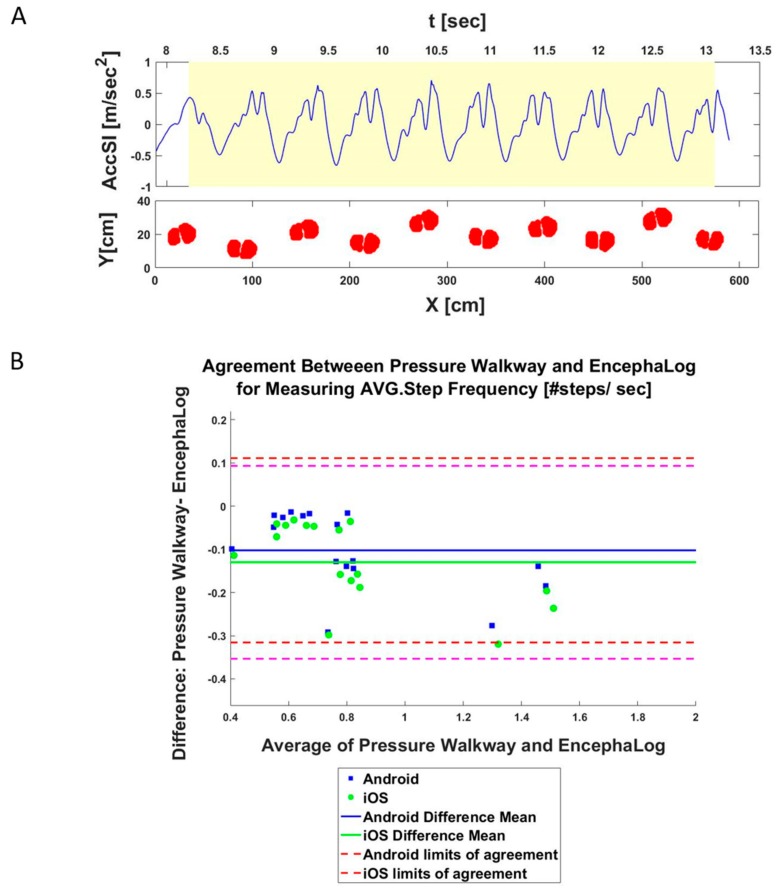
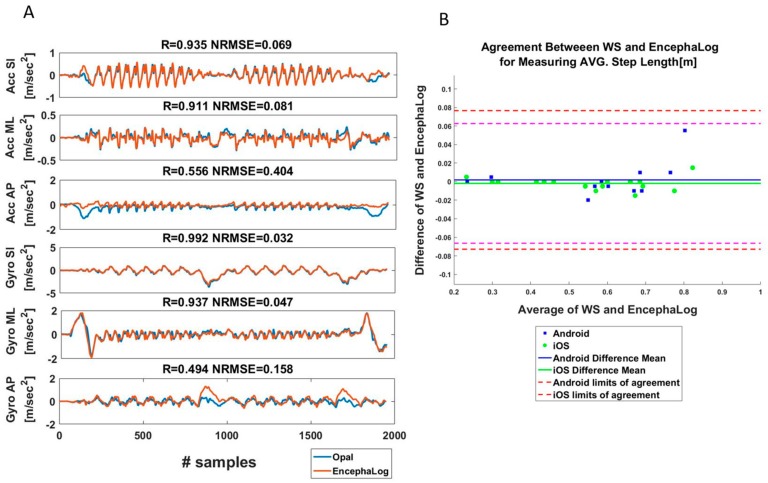
Verification
Claims the paper makes
The claims and statistics of this paper haven’t been checked yet.
Free: it reads the open-access text and checks the first 5 claims that cite a source we can check. Create a free account to check every claim.
Claims other papers make about this one
Each is checked against this paper’s own text: does it say what the citing paper says it does?
The source backs part of the claim, not all of it — or backs it for a different population, condition or comparison.
In the citing paper
“mobility was measured based on the Timed-up-and-go (TUG) test by the United States Food and Drug Administration approved EncephaLog application using a smartphone device54”
From A randomized clinical trial of mindfulness meditation versus exercise in Parkinson’s disease during social unrest (2023) · cites this paper as [54]
Experimental — accuracy not yet measured
Self-check
Percentages, sums and reported differences re-computed from the paper’s own numbers.
The self-check needs the paper’s full text.
Citations
Cites
STATISTICAL METHODS FOR ASSESSING AGREEMENT BETWEEN TWO METHODS OF CLINICAL MEASUREMENT
Martin Bland, J., & Altman, D. (1986) · The Lancet · doi:10.1016/s0140-6736(86)90837-8 · Cited by 47,965
The Timed “Up & Go”: A Test of Basic Functional Mobility for Frail Elderly Persons
Podsiadlo, D., & Richardson, S. (1991) · Journal of the American Geriatrics Society · doi:10.1111/j.1532-5415.1991.tb01616.x · Cited by 14,418
Muro-de-la-Herran, A., Garcia-Zapirain, B., & Mendez-Zorrilla, A. (2014) · Sensors · doi:10.3390/s140203362 · Cited by 1,172 · cited 5×
“attaching multiple body sensors [11,45]) and professionals to calibrate and operate the system, analyze the data, and extract the TUG biomarkers; altogether making MCC expensive, time consuming, and less accessible for iTUG.”
BackgroundMethodInfluentialGait variability: methods, modeling and meaning
Hausdorff, J. M. (2005) · Journal of NeuroEngineering and Rehabilitation · doi:10.1186/1743-0003-2-19 · Cited by 934
Basic gait parameters: reference data for normal subjects, 10-79 years of age.
Öberg, T., Karsznia, A., & Öberg, K. (1993) · PubMed · Cited by 832
Reliability of Measurements Obtained With the Timed “Up & Go” Test in People With Parkinson Disease
Morris, S., Morris, M. E., & Iansek, R. (2001) · Physical Therapy · doi:10.1093/ptj/81.2.810 · Cited by 664
The ‘extrapolated center of mass’ concept suggests a simple control of balance in walking
Hof, A. L. (2008) · Human Movement Science · doi:10.1016/j.humov.2007.08.003 · Cited by 596 · cited 2×
“Pressure coordinates were recorded during walking, mapping step patterns from which the Center of Pressure (COP) trajectory was calculated, along with step cadence and step length.”
BackgroundSheridan, P. L., Solomont, J., Kowall, N., & Hausdorff, J. M. (2003) · Journal of the American Geriatrics Society · doi:10.1046/j.1532-5415.2003.51516.x · Cited by 494 · cited 1×
“iTUG provides additional biomarkers that complement TUG completion time and augment the evaluation of disease progression [16,17].”
BackgroundiTUG, a Sensitive and Reliable Measure of Mobility
Salarian, A., Horak, F. B., Zampieri, C., Carlson-Kuhta, P., Nutt, J. G., & Aminian, K. (2010) · IEEE Transactions on Neural Systems and Rehabilitation Engineering · doi:10.1109/tnsre.2010.2047606 · Cited by 489
Postural sway biofeedback: its effect on reestablishing stance stability in hemiplegic patients.
Shumway-Cook, A., Anson, D. K., & Haller, S. (1988) · PubMed · Cited by 449
Research works printed but not linked: 1
- Jovanov E. Frith K.H. Madhushri P. Hunter A. Coffey S.S. Milenkovic A. Chapter 44 - Gender Differences in Mobility of Elderly: Measurements and Interventions to Improve Mobility Principles of Gender-Specific Medicine 3rd ed. Legato M.J. Academic Press San Diego, CA, USA 2017 639 653 978-0-12-803506-1
Cited by
Parkinson's Disease Remote Patient Monitoring During the COVID-19 Lockdown
Motolese, F., Magliozzi, A., Puttini, F., Rossi, M., Capone, F., Karlinsky, K. T., Stark‐Inbar, A., Yekutieli, Z., Lazzaro, V. D., & Marano, M. (2020) · Frontiers in Neurology · doi:10.3389/fneur.2020.567413 · Cited by 88
Self-citationWerner, C., Hezel, N., Dongus, F., Spielmann, J., Mayer, J., Becker, C., & Bauer, J. M. (2023) · Scientific Reports · doi:10.1038/s41598-023-32550-3 · Cited by 57
Kwok, J. Y. Y., Choi, E. P. H., Wong, J. Y. H., Lok, K. Y. W., Ho, M.-H., Fong, D. Y. T., Kwan, J. C. Y., Pang, S. Y. Y., & Auyeung, M. (2023) · npj Parkinson's Disease · doi:10.1038/s41531-023-00452-w · Cited by 43
Netz, Y., Yekutieli, Z., Arnon, M., Argov, E., Karlinsky, K. T., Benmoha, E., & Jacobs, J. M. (2021) · Gerontology · doi:10.1159/000517918 · Cited by 34
Self-citationLee, S., Lee, S., Park, E., Lee, J., & Kim, I. Y. (2022) · IEEE Access · doi:10.1109/access.2022.3221813 · Cited by 27
“Therefore, the unstable sensor coordinate system (X, Y, Z) must be transformed into a stable pedestrian anatomical plane (Medial-Lateral, Superior-Inferior, Anterior-Posterior [36]).”
BackgroundCan human posture and range of motion be measured automatically by smart mobile applications?
Moreira, R., Teles, A. S., Fialho, R., dos Santos, T. C. P., Vasconcelos, S. S., de Sá, I. C., Bastos, V. H., Silva, F., & Teixeira, S. S. (2020) · Medical Hypotheses · doi:10.1016/j.mehy.2020.109741 · Cited by 26
Strongman, C., Cavallerio, F., Timmis, M. A., & Morrison, A. (2023) · Sensors · doi:10.3390/s23208615 · Cited by 26
“Three studies did not include information about the biological sex of the participants [24,31,36].”
BackgroundResultInfluentialSmartphone applications for Movement Disorders: Towards collaboration and re-use
Willemse, I. H. J., Schootemeijer, S., van den Bergh, R., Dawes, H., Nonnekes, J. H., & van de Warrenburg, B. P. C. (2024) · Parkinsonism & Related Disorders · doi:10.1016/j.parkreldis.2023.105988 · Cited by 23
Measurement of Canine Ataxic Gait Patterns Using Body-Worn Smartphone Sensor Data
Engelsman, D., Sherif, T., Meller, S., Twele, F., Klein, I., Zamansky, A., & Volk, H. A. (2022) · Frontiers in Veterinary Science · doi:10.3389/fvets.2022.912253 · Cited by 19
Static Balance Digital Endpoints with Mon4t: Smartphone Sensors vs. Force Plate
Karlinsky, K. T., Netz, Y., Jacobs, J. M., Ayalon, M., & Yekutieli, Z. (2022) · Sensors · doi:10.3390/s22114139 · Cited by 17
“, stop-watch [11], force treadmill, wearable sensors, and a 3D motion capture camera system [14].”
BackgroundSelf-citationMarano, M., Rosati, J. D., Magliozzi, A., Casamassa, A., Rappa, A., Sergi, G., Iannizzotto, M., Yekutieli, Z., Vescovi, A. L., & Lazzaro, V. D. (2023) · Neurobiology of Sleep and Circadian Rhythms · doi:10.1016/j.nbscr.2023.100094 · Cited by 17
Self-citationSmartphone-based gait assessment for multiple sclerosis
Regev, K., Eren, N., Yekutieli, Z., Karlinsky, K. T., Massri, A., Vigiser, I., Kolb, H., Piura, Y. D., & Karni, A. (2023) · Multiple Sclerosis and Related Disorders · doi:10.1016/j.msard.2023.105394 · Cited by 16
Self-citationSystem Comparison for Gait and Balance Monitoring Used for the Evaluation of a Home-Based Training
Rentz, C., Far, M. S., Boltes, M., Schnitzler, A., Amunts, K., Dukart, J., & Minnerop, M. (2022) · Sensors · doi:10.3390/s22134975 · Cited by 13
“Although the completion time of the Timed-Up-and-Go (TUG) test is used as a standard for quantifying functional mobility in a clinical context [17], electronic assessment of balance has increasingly been used in research [18].”
MethodNetz, Y., Shalom, S. B., Argov, E., Arnon, M., Benmoha, E., Yekutieli, Z., Karlinsky, K. T., & Jacobs, J. M. (2025) · Journal of Medical Internet Research · doi:10.2196/73145 · Cited by 11
Self-citationBecker‐Cohen, M., Zimran, A., Dinur, T., Tiomkin, M., Cozma, C., Rolfs, A., Arkadir, D., Shulman, E., Manor, O., Paltiel, O., et al. (2022) · International Journal of Molecular Sciences · doi:10.3390/ijms232012211 · Cited by 11
“The Timed Up and Go (iTUG) (EncepaLogTM) is a platform that utilizes smartphone internal motion sensors for conducting motor evaluation [58,59] including general walking score, step-to-step persistency, hand sway, and rotation time.”
MethodInstrumented Timed Up and Go Test Using Inertial Sensors from Consumer Wearable Devices
Matey-Sanz, M., González‐Pérez, A., Casteleyn, S., & Granell, C. (2022) · Lecture notes in computer science · doi:10.1007/978-3-031-09342-5_14 · Cited by 10
Biomechanics beyond the lab: Remote technology for osteoarthritis patient data—A scoping review
Hamilton, R. I., Williams, J., OATech Network+ Consortium, & Holt, C. A. (2022) · Frontiers in Rehabilitation Sciences · doi:10.3389/fresc.2022.1005000 · Cited by 7
Implementing and Evaluating the Timed Up and Go Test Automation Using Smartphones and Smartwatches
Matey-Sanz, M., González‐Pérez, A., Casteleyn, S., & Granell, C. (2024) · IEEE Journal of Biomedical and Health Informatics · doi:10.1109/jbhi.2024.3456169 · Cited by 6
Enhancing public health in developing nations through smartphone-based motor assessment
Souza, G. D. S., Furtado, B. K. A., Almeida, E. B., Callegari, B., & Pinheiro, M. D. C. N. (2024) · Frontiers in Digital Health · doi:10.3389/fdgth.2024.1345562 · Cited by 5
“However, these scales may not always allow for proper monitoring of functional losses or only enable the identi fi cation of the existence of a problem without facilitating a graded assessment of the extent of the problem (19 – 23).”
BackgroundMarano, M., Sergi, G., Magliozzi, A., Bressi, F., Bravi, M., Laudisio, A., Pedone, C., Karlinsky, K. T., Yekutieli, Z., & Lazzaro, V. D. (2025) · Neurological Sciences · doi:10.1007/s10072-025-08005-0 · Cited by 5
“In parallel, the TUG tests were recorded digitally by using a smartphone application (Mon4t Clinic™, www. mon4t. com) which provides a 100 Hz recording of the smartphone’s integral 3D linear accelerometers, and 3D angular gyroscopes, as described elsewhere [18–20].”
Self-citationCollins, T. L., Cardella, A., & Gordon, S. (2023) · Home Healthcare Now · doi:10.1097/nhh.0000000000001187 · Cited by 5
Macpherson, C. E., Kempner, K., King, M., Kaplan, M., Pacheco, A., Wani, D., Kuo, S., & Quinn, L. (2025) · Neurology Report · doi:10.1097/npt.0000000000000516 · Cited by 4
Sergi, G., Yekutieli, Z., Meloni, M., Bianchini, E., Vivacqua, G., Lazzaro, V. D., & Marano, M. (2025) · Sensors · doi:10.3390/s25185756 · Cited by 2
“The Mon4t™ application has FDA clearance, and its use has been extensively validated in multiple clinical trials, supporting the reliability of smartphone-based inertial sensing for gait analysis in Parkinson’s disease [14–18].”
Self-citationFrom clinic to smartphone evaluating the i-TUG for balance and fall risk in chronic stroke
Gündüz, M., Mustafaoğlu, R., Ural, İ. H., & Özyılmaz, S. (2025) · Disability and Rehabilitation · doi:10.1080/09638288.2025.2583733 · Cited by 1
“…applications have excellent reliability (Icc = 0.76–0.99) during gait and balance assessments in stroke patients [20,23–25]. encephaLog (by mon4t ® Brain monitor, tel-Aviv, Israel) is a smartphone application capable of assessing motor functions using the inertial systems of smartphones [26].”
InfluentialObjective Assessment of Movement for Canine Neurology
Farhat, N. (2021) · International Conference on Animal-Computer Interaction (ACI) · doi:10.1145/3493842.3493898
“Currently the setting includes five different views on camera, as well as sensors placed on the dog’s back (using the Encephalog platform [32]) exemplifies the setting.”
MethodMacpherson, C. E., Awad, F., Rana, V., Kuo, S., & Quinn, L. (2025) · International Journal of Telerehabilitation · doi:10.63144/ijt.2025.6713
“These outcomes were digitally captured using the Mon4t Encephalog Balance Assessment System (Mon4t LLC, Binyamina, Israel) (Karlinsky et al., 2022; Tchelet et al., 2019).”
Cebreiro Gallardo, M. (2024) · Archivo Digital UPM (Universidad Politécnica de Madrid)
Bellido Virtudes, M. (2024) · Archivo Digital UPM (Universidad Politécnica de Madrid)
Nascimento, A. Q. (2023) · LA Referencia (Red Federada de Repositorios Institucionales de Publicaciones Científicas)
Metadata
- Authors
- Tchelet, K., Stark-Inbar, A., & Yekutieli, Z.
- Affiliations
- Montfort Brain Monitor LTD, Ha-Nasi 14, Zichron Ya’acov 3090314, Israel
- Corresponding author
- Yekutieli, Ziv
- ORCID
- Yekutieli, Ziv
- Venue
- Sensors
- Publisher
- MDPI AG
- Published
- 2019-11-26
- Volume
- 19
- Issue
- 23
- Pages
- 5179
- ISSN
- 1424-8220 (ISSN-L)
- PMC
- PMC6929058
- OpenAlex
- W2990605185
- Cited by
- 27
- References
- 48
- Citations by year
- 2025: 6 · 2024: 3 · 2023: 6 · 2022: 8 · 2021: 2 · 2020: 2
- FWCI
- 6.89
- Type
- journal article
- Language
- en
- Open access
- gold
- dx.doi.org
- Licence
- Locations
- Sensors (publishedVersion, cc-by)
- PubMed Central (publishedVersion, cc-by)
- PubMed (publishedVersion)
- Zenodo (CERN European Organization for Nuclear Research) (submittedVersion, cc-by)
- Funders
- Israeli Innovation Authority (65957)
- European Commission H2020-MSCA-IF-2016 (753071)
- Ministry of Aliyah and Integration, Israel (The Center for Integration in Science)
- Topics
- Health Sciences › Health Professions › Physical Therapy, Sports Therapy and Rehabilitation › Balance, Gait, and Falls Prevention
- Physical Sciences › Computer Science › Computer Vision and Pattern Recognition › Context-Aware Activity Recognition Systems
- Physical Sciences › Engineering › Biomedical Engineering › Gait Recognition and Analysis
- Keywords
- mobile application, gait analysis, Timed Up and Go test, gait biomarkers, accelerometer, gyroscope, fall risk, mobility assessment, home monitoring, motion capture comparison, wearable sensors, pressure mat
- MeSH terms
- Accidental Falls, Smartphone, Gait Analysis, Adult, Female, Gait, Humans, Male, Monitoring, Physiologic, Movement, Pilot Projects
About these checks
Registry, retraction, Cites and statistics results are computed, not judged, with one exception: a printed reference that no index lists is read once by a model before it counts as a citation error. Claims are extracted by a model and kept only when their quote appears verbatim in the text; each cited source is then checked, with a model’s help, for whether it says what the claim relies on. Those verdicts can be wrong — read the claim’s quote and the cited source before relying on one.
Statistics and arithmetic are recomputed, not judged.
Confidence bands are shown only for fields calibrated on our annotated test set. None is calibrated yet, so no band is shown.
What counts as a claim ›How we measure confidence ›How we check this ›
Are you an author, or do you see a problem with this page? Request a review
Data sources
Bibliographic data: Semantic Scholar, OpenAlex, Crossref.
Contains information from the Semantic Scholar Academic Graph Datasets, made available under the ODC Attribution License (ODC-BY 1.0).
Semantic Scholar’s data is described in: Kinney, R., et al. (2023). The Semantic Scholar Open Data Platform. arXiv:2301.10140.
