

The DOI matches its Crossref record; 69 of the 69 references it cites were found in a registry or an index.
Passive Sensing of Prediction of Moment-To-Moment Depressed Mood among Undergraduates with Clinical Levels of Depression Sample Using Smartphones
Open accessAbstract
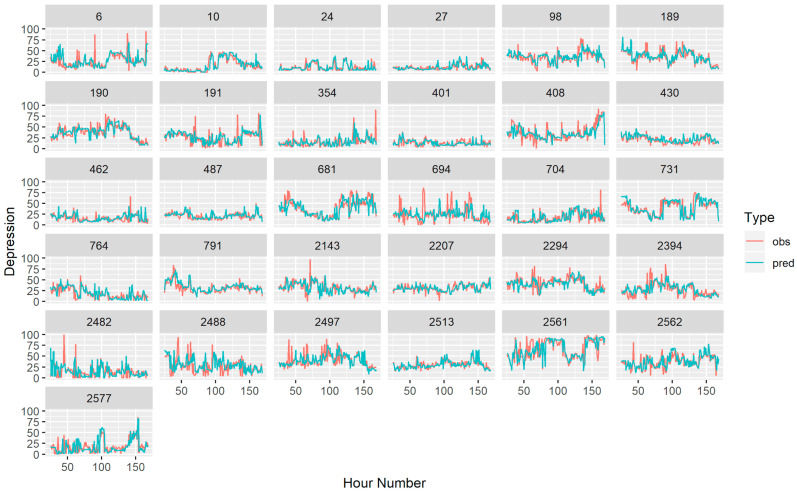
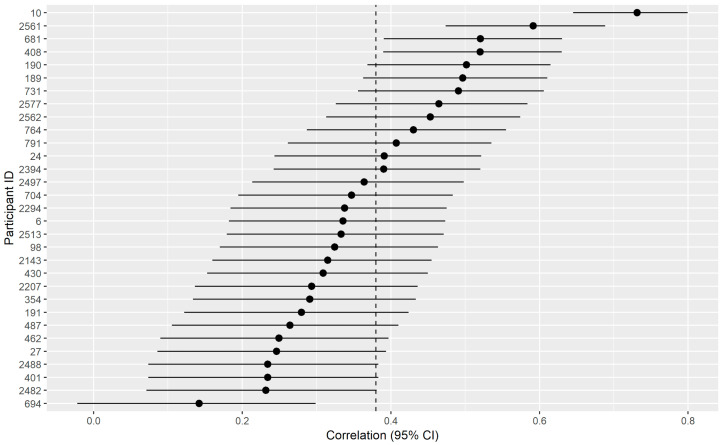
Prior research has recently shown that passively collected sensor data collected within the contexts of persons daily lives via smartphones and wearable sensors can distinguish those with major depressive disorder (MDD) from controls, predict MDD severity, and predict changes in MDD severity across days and weeks. Nevertheless, very little research has examined predicting depressed mood within a day, which is essential given the large amount of variation occurring within days. The current study utilized passively collected sensor data collected from a smartphone application to future depressed mood from hour-to-hour in an ecological momentary assessment study in a sample reporting clinical levels of depression (N = 31). Using a combination of nomothetic and idiographically-weighted machine learning models, the results suggest that depressed mood can be accurately predicted from hour to hour with an average correlation between out of sample predicted depressed mood levels and observed depressed mood of 0.587, CI [0.552, 0.621]. This suggests that passively collected smartphone data can accurately predict future depressed mood among a sample reporting clinical levels of depression. If replicated in other samples, this modeling framework may allow just-in-time adaptive interventions to treat depression as it changes in the context of daily life.
Overview
The claims and statistics of this paper haven’t been checked yet.
Run the check — free, no account needed. It reads the open-access text and checks the sources it cites.
Integrity signals
Registry
Cites
Statistics
Figures
Verification
Claims the paper makes
The claims and statistics of this paper haven’t been checked yet.
Run the check — free, no account needed. It reads the open-access text and checks the sources it cites.
Claims other papers make about this one
Each is checked against this paper’s own text: does it say what the citing paper says it does?
In the citing paper
“Multimodal and intensive sampling data streams (for example, experience sampling and passive measures gathered through smartphones and other electronic devices) used in some MBI studies133 and mental health research broadly134,135 might be particularly promising inputs for machine learning models, given that these models can often handle many correlated predictors136.”
From A common factors perspective on mindfulness-based interventions (2022) · cites this paper as [136]
In the citing paper
“This type of research has established that passive sensor data can be used to predict various symptoms of mental disorders or mental health problems (23, 33–38), as well as their future development [e.g., (39)].”
From Personalised depression forecasting using mobile sensor data and ecological momentary assessment (2022) · cites this paper as [39]
In the citing paper
“However, it has been recognised that the inherent clinical heterogeneity associated with mental disorders may necessitate a greater focus on inter-individual differences to ensure generalisability to unseen cases (39, 43, 44).”
From Personalised depression forecasting using mobile sensor data and ecological momentary assessment (2022) · cites this paper as [39]
In the citing paper
“only two studies have combined these data streams in models to monitor changing depressive symptoms (26, 27).”
From Monitoring Changes in Depression Severity Using Wearable and Mobile Sensors (2020) · cites this paper as [26]
In the citing paper
“This has resulted in possible reliability problems, since these investigations have primarily focused on detecting presence or absence of depression rather than on assessing its severity, and they have shown overall low accuracy (14–18, 23–27).”
From Monitoring Changes in Depression Severity Using Wearable and Mobile Sensors (2020) · cites this paper as [26]
In the citing paper
“Those studies conducted with patients with depression have mostly relied on self-report questionnaires to assign diagnoses and/or measure variation in symptoms and train the models.”
From Monitoring Changes in Depression Severity Using Wearable and Mobile Sensors (2020) · cites this paper as [26]
In the citing paper
“Previous models estimating mood states with moderate accuracy have included measures of heart rate (HR) (27, 44) and HRV (26).”
From Monitoring Changes in Depression Severity Using Wearable and Mobile Sensors (2020) · cites this paper as [26]
In the citing paper
“Previous evaluations of models to estimate depression passively have primarily relied on examining correlations between estimated and observed symptoms (18, 26, 27).”
From Monitoring Changes in Depression Severity Using Wearable and Mobile Sensors (2020) · cites this paper as [26]
In the citing paper
“was higher than the one of a previous model combining features from the fitbit and from smartphones (the best model yielded an r2 = 0.44 or r = 0.66) (27) and the one of a model aggregating mobile-based and physiological features (r = 0.58) (26).”
From Monitoring Changes in Depression Severity Using Wearable and Mobile Sensors (2020) · cites this paper as [26]
Self-check
Percentages, sums and reported differences re-computed from the paper’s own numbers.
The self-check needs the paper’s full text.
Citations
Cites
Geurts, P., Ernst, D., & Wehenkel, L. (2006) · Machine Learning · doi:10.1007/s10994-006-6226-1 · Cited by 9,300 · cited 1×
“Note that a grid search was used to optimize the number of trees to grow (based on a sequence of length three between the number of predictors) and to select the split tree rule based on variance or extremely randomized trees [61,62].”
Methodranger : A Fast Implementation of Random Forests for High Dimensional Data in C++ and R
Wright, M. N., & Ziegler, A. (2017) · Journal of Statistical Software · doi:10.18637/jss.v077.i01 · Cited by 4,185 · cited 1×
“Note that a grid search was used to optimize the number of trees to grow (based on a sequence of length three between the number of predictors) and to select the split tree rule based on variance or extremely randomized trees [61,62].”
MethodDepression Anxiety Stress Scales
Lovibond, S. H., & Lovibond, P. F. (2011) · PsycTESTS Dataset · doi:10.1037/t01004-000 · Cited by 2,416
Cacioppo, J. T., Hughes, M. E., Waite, L. J., Hawkley, L. C., & Thisted, R. A. (2006) · Psychology and Aging · doi:10.1037/0882-7974.21.1.140 · Cited by 2,380
Nahum-Shani, I., Smith, S. N., Spring, B. J., Collins, L. M., Witkiewitz, K., Tewari, A., & Murphy, S. A. (2018) · Annals of Behavioral Medicine · doi:10.1007/s12160-016-9830-8 · Cited by 2,171 · cited 1×
“Consequently, most prior research is unable to adequately translate to inform just-in-time adaptive interventions (JITAI) [38,39], as this research might miss important times in which persons might be experiencing depressed mood fluctuations.”
BackgroundPsychometric properties of the Depression Anxiety Stress Scales (DASS) in clinical samples
Brown, T. A., Chorpita, B. F., Korotitsch, W., & Barlow, D. H. (1997) · Behaviour Research and Therapy · doi:10.1016/s0005-7967(96)00068-x · Cited by 1,860 · cited 3×
“75 with various measures of depression [52].”
BackgroundBlanco, C., Okuda, M., Wright, C., Hasin, D. S., Grant, B. F., Liu, S.-M., & Olfson, M. (2008) · Archives of General Psychiatry · doi:10.1001/archpsyc.65.12.1429 · Cited by 1,582 · cited 3×
“45% [2] of the sample met moderate depression severity, 38.”
BackgroundLack of group-to-individual generalizability is a threat to human subjects research
Fisher, A. J., Medaglia, J. D., & Jeronimus, B. F. (2018) · Proceedings of the National Academy of Sciences · doi:10.1073/pnas.1711978115 · Cited by 1,099
Harnessing context sensing to develop a mobile intervention for depression
Burns, M. N., Begale, M., Duffecy, J., Gergle, D., Karr, C. J., Giangrande, E., & Mohr, D. C. (2011) · Journal of Medical Internet Research · doi:10.2196/jmir.1838 · Cited by 646 · cited 6×
“Of these studies, two of three studies found strong agreement between predicted and observed daily depression outcomes (although this depended upon the analytic approach) [30,36], whereas one study found that they were unable to significantly predict depressed mood within the day in a small sample [31].”
BackgroundMethodResultInfluentialTwenge, J. M., Gentile, B., DeWall, C. N., Ma, D., Lacefield, K., & Schurtz, D. R. (2009) · Clinical Psychology Review · doi:10.1016/j.cpr.2009.10.005 · Cited by 606 · cited 1×
“Studies have found that an increasing number of college students have experienced “severe psychological problems”, including suicides and crisis management, in recent years [4] and that mental health issues are affecting up to eight times as many college students as it did in the Great Depression era [5].”
Background
Research works printed but not linked: 1
- Krane-Gartiser, K., Vaaler, A.E., Fasmer, O.B., Sørensen, K., Morken, G., and Scott, J. (2017). Variability of activity patterns across mood disorders and time of day. BMC Psychiat., 17. · DOI
Cited by
Sorted by citations
Items 101–139 of 139
Positive psychology 4.0: a science of consequence for a world that can no longer wait
van Zyl, L. E. (2026) · Frontiers in Psychology · doi:10.3389/fpsyg.2026.1726065 · Cited by 2
“…shifts like sudden transitions from high to low activity, social withdrawal patterns, or disrupted circadian rhythms which are all associated with the emergence of common mental health problems up to 14 days before clinical symptoms become evident (Jacobson and Chung, 2020; Torous et al., 2021).”
Heinz, M. V., Lekkas, D., Abreu, V., Lee, C. M., Marsch, L. A., & Jacobson, N. C. (2024) · npj Mental Health Research · doi:10.1038/s44184-024-00086-7 · Cited by 2
“…disordercurrentlyreceivingMOUDviaonlinetargetedadvertisementson theRedditplatform;theinterventionconsistedofaseriesof4 – 6videoseach week delivered through a custom module within the publicly available Mood Triggers smartphone application 47 and rooted in cognitive-behavioral principles 48 .”
Self-citationGirousse, E., & Vuillerme, N. (2022) · JMIR Research Protocols · doi:10.2196/38785 · Cited by 2
Identification of possible depressive profile through mobile sensor data in university students
Saud, C. S., Motti, V. G., Neris, L. D. O., Bleicher, T., & Néris, V. P. D. A. (2024) · Brazilian Symposium on Human Factors in Computing Systems (IHC) · doi:10.1145/3702038.3702096 · Cited by 1
Langener, A. M., Price, G. D., Haddox, D., Heinz, M. V., Mackin, D. M., Nemesure, M. D., Collins, A. C., Lekkas, D., Griffin, T. Z., Pillai, A., et al. (2026) · Journal of Affective Disorders Reports · doi:10.1016/j.jadr.2026.101102
“Previous research has also demonstrated that combining individualized and non-individualized models can effectively capture both intraindividual and interindividual variability in depressed mood (Jacobson and Chung, 2020).”
Self-citationChen, D.-R. (2025) · IEEE Symposium on Computers and Communications (ISCC) · doi:10.1109/iscc65549.2025.11326113 · Cited by 1
“Additionally, workload and movement activities are often recorded using accelerometers [34, 35, 36, 37, 38].”
Detecting momentary reward and affect with real-time passive digital sensor data
Akre, S., Cohen, Z. D., Welborn, A., Zbozinek, T. D., Craske, M. G., & Bui, A. (2026) · JAMIA Open · doi:10.1093/jamiaopen/ooag005 · Cited by 1
“Prior studies have found that 3 or fewer hours of passive sensing data—combining heart rate, HRV, skin conductance, and motion measurements during EMA responses—are associated with momentary stress, 5,6 paranoia, 7,8 social interactions, 9 mood, 6,10–13 tiredness, 14 and inhibitory control.”
Seamful Design Considerations for Human-in-the-Loop Digital Phenotyping of Mental Health
Swain, V. D., Tongtawee, T., Wang, O., Hsu, J., Jacobson, N. C., & Mishra, V. (2026) · Proceedings of the ACM on Interactive Mobile Wearable and Ubiquitous Technologies · doi:10.1145/3832021 · Cited by 2
“We determined the features (and initial weights) for DYMOND to mirror standard features from prior DPMH studies that approximate nomothetic correlations of clinical symptoms of depression described in the DSM-5 [46, 75, 105].”
Self-citationElwirehardja, G. N., Isnan, M., Perbangsa, A. S., Muchtar, K., & Pardamean, B. (2023) · International Conference on Computer System, Information Technology, and Electrical Engineering (COSITE) · doi:10.1109/cosite60233.2023.10249859 · Cited by 2
“[14] Smartphone data (GPS, activity, and heart rate) All data were indexed hourly, and fed into ML models (XGB and RF) The predictions of the best model obtained 0.”
MethodSchaap, G., Butt, B., & Bode, C. (2025) · PLOS Digital Health · doi:10.1371/journal.pdig.0000832 · Cited by 1
“Six of the included articles reported on five JITAIs for anxiety, disordered mood and thoughts, and sleep disturbances [31,33,35,36,38,39], while three other articles provided useful information about JITAI components for psychological symptoms [32,34,37].”
Byrd, A. L., Kahhalé, I., Vize, C. E., Griffith, R., Viding, E. M., & Stepp, S. D. (2025) · Aggression and Violent Behavior · doi:10.1016/j.avb.2025.102082 · Cited by 1
“By taking a bottom-up approach, these models can be used to identify commonalities in dynamic neurobiological processes as well as nuances specific to individuals (e.g., Jacobson & Chung, 2020).”
Nelson, B. W., Flannery, J., Duell, N., Flournoy, J. C., Prinstein, M. J., & Telzer, E. H. (2021) · PsyArXiv (OSF Preprints) · doi:10.31234/osf.io/wvpt2 · Cited by 1
Vázquez, C. G., Eicher, C., Huber, R., Kronenberg, G., Landolt, H., Seifritz, E., & Poian, G. D. (2024) · Research Square · doi:10.21203/rs.3.rs-3961385/v1 · Cited by 1
Towards Personalised Depression Modelling and Explanation from Wearable DataPreprint
Chatterjee, S., Mishra, J., Sundram, F., & Roop, P. S. (2023) · Research Square · doi:10.21203/rs.3.rs-2997670/v1
Wearable Wellness: Depression Screening via Fitbit Data Collected During COVID-19 Pandemic
Grozdani, N., Muñoz, A., Pietrick, A., Flores, R., Shrestha, A., Guo, X., Liu, S., & Rundensteiner, E. A. (2023) · IEEE MIT Undergraduate Research Technology Conference (URTC) · doi:10.1109/urtc60662.2023.10534952
Langener, A. M. (2024) · University of Groningen research database (University of Groningen / Centre for Information Technology) · doi:10.33612/diss.1069770227 · Cited by 1
Detecting momentary reward and affect with real-time passive digital sensor dataPreprint
Akre, S., Cohen, Z. D., Welborn, A., Zbozinek, T. D., Craske, M. G., & Bui, A. A. T. (2024) · Research Square · doi:10.21203/rs.3.rs-5619112/v1
Digital Assessments of Psychiatric Disorders
Quist, R. E., Bhattacharya, S., Chacko, S. M., & Jacobson, N. C. (2025) · Oxford University Press eBooks · doi:10.1093/med/9780197640654.003.0072
Self-citationLee, H., Kang, S., & Lee, S. H. (2025) · SSRN Electronic Journal · doi:10.2139/ssrn.5216287
Kalyanasundaram, S., Phanord, C. S., Ruzic, L. L., Kaiser, R. H., & Chaspari, T. (2025) · IEEE International Conference on Healthcare Informatics (ICHI) · doi:10.1109/ichi64645.2025.00046
“S. Kalyanasundaram is with the Department of Computer Science at the University of Colorado, Boulder, CO 80309 USA (e-mail: sika2030@colorado.edu) allow for just-in-time adaptive interventions [6].”
Weingarden, H. M., Holstein, V., Jonathan, G., Armey, M. F., Onnela, J.-P. “., & Wilhelm, S. (2025) · Behavior Therapy · doi:10.1016/j.beth.2025.09.001
Berkemeier, L., Kamphuis, W., Oldenhuis, H. K. E., Verdaasdonk, R. M., & van Gemert‐Pijnen, J. E. W. C. (2025) · doi:10.2196/preprints.84554
Emotions and App-Supported Artificial Intelligence as a Helpful Tool in Psychiatry. Position Paper
Starčević, A., Karpiel, I. S., Urzeniczok, M., & Starcevic, F. (2025) · Lecture notes in computer science · doi:10.1007/978-3-032-03711-4_24
Exploratory Digital Tools for Measuring Cognitive Health
Singh, D. S., & Weisenbach, D. S. L. (2025) · doi:10.1002/9781394295432.ch05
Psychiatry at the turn of the century and a vision for future developments
Oquendo, M. A., Barrigón, M. L., & Baca‐García, E. (2025) · International Review of Psychiatry · doi:10.1080/09540261.2025.2591200 · Cited by 1
“Digital phenotyping using smartphones and wearables may provide continuous monitoring of sleep, activity, social interaction, environment (exposome), enabling pro-dromal state detection and relapse prediction (Insel, 2017; Jacobson & Chung, 2020).”
Zhang, T., Li, Y., Ding, Y., Jia, H., Kostakos, V., & D’Alfonso, S. (2026) · ACM Transactions on Computing for Healthcare · doi:10.1145/3788688
“Sleep duration has similarly emerged as both a predictive target [20, 26] and predictor [50] in PANAS modeling for students.”
Lee, H., Kang, S., & Lee, S. H. (2026) · Journal of Medical Internet Research · doi:10.2196/76432 · Cited by 1
“Average moving speed was identified as a key feature in a depression prediction model [4,126], although its correlation often varied by device type [123].”
Hammelrath, L., Rane, R. P., Gijsen, S. C. J., Jüres, F., Brose, A., Ritter, K., Hilbert, K., Jacobi, F., Renneberg, B., Fehm, L., et al. (2026) · Neuroscience Applied · doi:10.1016/j.nsa.2026.107006
Wislocki, K. E., Naderi, G., Borelli, J. L., Pollack, M. H., Granger, D. A., Cenkner, D. P., Canady, M. T., Burgess, H. J., & Zalta, A. K. (2026) · JMIR Formative Research · doi:10.2196/86025
“Prior work has used XGBoost to predict mental and physical health outcomes based on passively sensed data [37, 38].”
Digital phenotyping of affect and stress in emerging adults
Phanord, C. S., Ruzic, L. L., Kalyanasundaram, S., Barnes-Horowitz, S., Friedman, N. P., Chaspari, T., & Kaiser, R. H. (2026) · Frontiers in Digital Health · doi:10.3389/fdgth.2026.1799541
“Moreover, few studies have evaluated personalized modeling strategies that place substantial weight on the individual while still leveraging information from group data (67).”
Wislocki, K. E., Jacobson, N. C., Sami, S., Stern, B., & Zalta, A. K. (2026) · doi:10.2196/preprints.108054
Self-citationLuo, L., Wang, A., 周建辉, Su, P., Tang, L., Liu, P., Xie, W., & Li, C. F. (2026) · Medicine · doi:10.1097/md.0000000000050540
Smart Chair for Posture Classification and Behavioral Sensing
Carrión-Jumbo, J., Llamocca, P., López, V., Sánchez-Allende, J., & Pérez-Wiesner, M. (2026) · Lecture notes in networks and systems · doi:10.1007/978-3-032-35078-7_5
Choubey, A., Pandey, M. K., Dubey, A. K., & Rocha, Á. (2026) · Computers · doi:10.3390/computers15100646
Short-Term Emotion Change Prediction With Compact and Informative Mobile Sensing Inputs
Zhao, W., & Go, K. (2026) · IEEE Access · doi:10.1109/access.2026.3735286
Ren, Q., Chi, J., Li, Y., Zhao, P., Luo, M., Sun, J., He, Y., Liu, J., Luo, L., & Wu, Y. (2026) · Journal of Medical Internet Research · doi:10.2196/101329
Zhu, Y., Yang, Y., & Thompson, R. J. (2026) · JMIR mhealth and uhealth · doi:10.2196/90970
“The other study collected heart rate metrics (ie, participants pressed their finger against the rear camera for 30 seconds hourly), along with smartphone sensors, to predict momentary depressed mood [12].”
InfluentialNeuroscience-informed psychoeducation for depression: From stress to adaptive brain recovery
Juruena, M. F. (2026) · Progress in brain research · doi:10.1016/bs.pbr.2026.08.007
King, G. A., Vize, C. E., Beltz, A. M., & Wright, A. G. C. (2026) · Behavior Therapy · doi:10.1016/j.beth.2026.10.004
Metadata
- Authors
- Jacobson, N. C., & Chung, Y. J.
- Affiliations
- Dartmouth College (US)
- Corresponding author
- Jacobson, Nicholas C.
- Venue
- Sensors
- Publisher
- MDPI AG
- Published
- 2020-06-24
- Volume
- 20
- Issue
- 12
- Pages
- 3572
- ISSN
- 1424-8220 (ISSN-L)
- PMC
- PMC7349045
- OpenAlex
- W3037651932
- Cited by
- 139
- References
- 69
- Citations by year
- 2026: 23 · 2025: 28 · 2024: 23 · 2023: 18 · 2022: 23 · 2021: 21 · 2020: 3
- FWCI
- 15.72
- Type
- journal article
- Language
- en
- Open access
- gold
- dx.doi.org
- Licence
- Locations
- Sensors (publishedVersion, cc-by)
- PubMed Central (publishedVersion, cc-by)
- PubMed (publishedVersion)
- DOAJ (DOAJ: Directory of Open Access Journals) (submittedVersion, cc-by-sa)
- Funders
- National Institute on Drug Abuse (P30DA029926)
- Topics
- Social Sciences › Psychology › Experimental and Cognitive Psychology › Mental Health Research Topics
- Social Sciences › Psychology › Applied Psychology › Digital Mental Health Interventions
- Physical Sciences › Computer Science › Artificial Intelligence › Emotion and Mood Recognition
- Keywords
- passive sensing, major depressive disorder, smartphone sensor data, ecological momentary assessment, just-in-time adaptive interventions
- MeSH terms
- Smartphone, Affect, Depressive Disorder, Major, Major Depressive Disorder, Humans, Students
About these checks
Registry, retraction, Cites and statistics results are computed, not judged, with one exception: a printed reference that no index lists is read once by a model before it counts as a citation error. Claims are extracted by a model and kept only when their quote appears verbatim in the text; each cited source is then checked, with a model’s help, for whether it says what the claim relies on. Those verdicts can be wrong — read the claim’s quote and the cited source before relying on one.
Statistics and arithmetic are recomputed, not judged.
Confidence bands are shown only for fields calibrated on our annotated test set. None is calibrated yet, so no band is shown.
What counts as a claim ›How we measure confidence ›How we check this ›
Are you an author, or do you see a problem with this page? Request a review
