

The DOI matches its Crossref record; 69 of the 69 references it cites were found in a registry or an index.
Passive Sensing of Prediction of Moment-To-Moment Depressed Mood among Undergraduates with Clinical Levels of Depression Sample Using Smartphones
Open accessAbstract
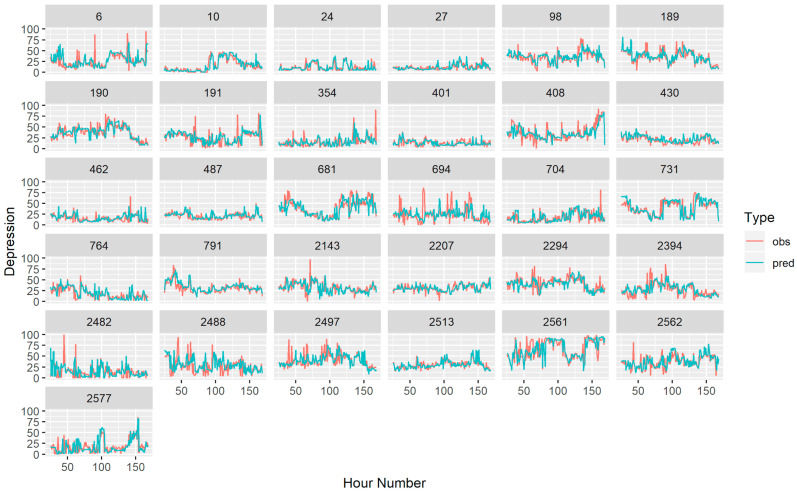
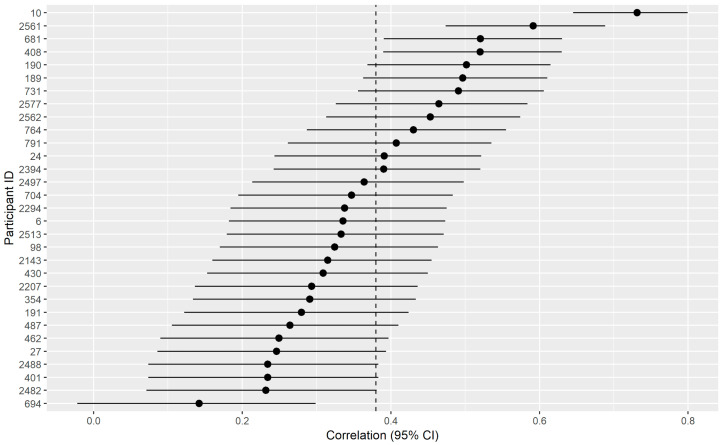
Prior research has recently shown that passively collected sensor data collected within the contexts of persons daily lives via smartphones and wearable sensors can distinguish those with major depressive disorder (MDD) from controls, predict MDD severity, and predict changes in MDD severity across days and weeks. Nevertheless, very little research has examined predicting depressed mood within a day, which is essential given the large amount of variation occurring within days. The current study utilized passively collected sensor data collected from a smartphone application to future depressed mood from hour-to-hour in an ecological momentary assessment study in a sample reporting clinical levels of depression (N = 31). Using a combination of nomothetic and idiographically-weighted machine learning models, the results suggest that depressed mood can be accurately predicted from hour to hour with an average correlation between out of sample predicted depressed mood levels and observed depressed mood of 0.587, CI [0.552, 0.621]. This suggests that passively collected smartphone data can accurately predict future depressed mood among a sample reporting clinical levels of depression. If replicated in other samples, this modeling framework may allow just-in-time adaptive interventions to treat depression as it changes in the context of daily life.
Overview
The claims and statistics of this paper haven’t been checked yet.
Run the check — free, no account needed. It reads the open-access text and checks the sources it cites.
Integrity signals
Registry
Cites
Statistics
Figures
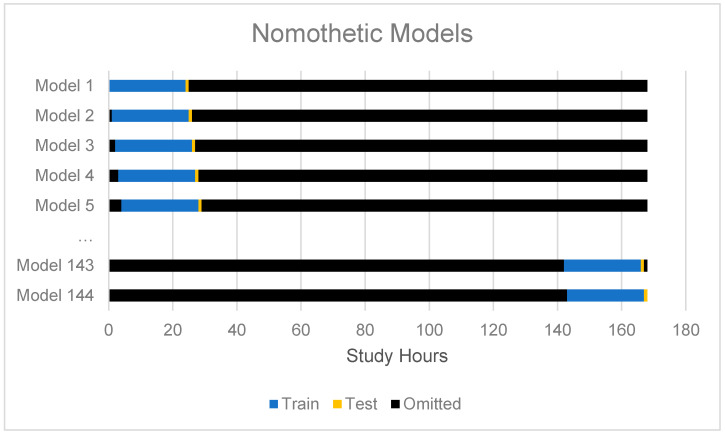
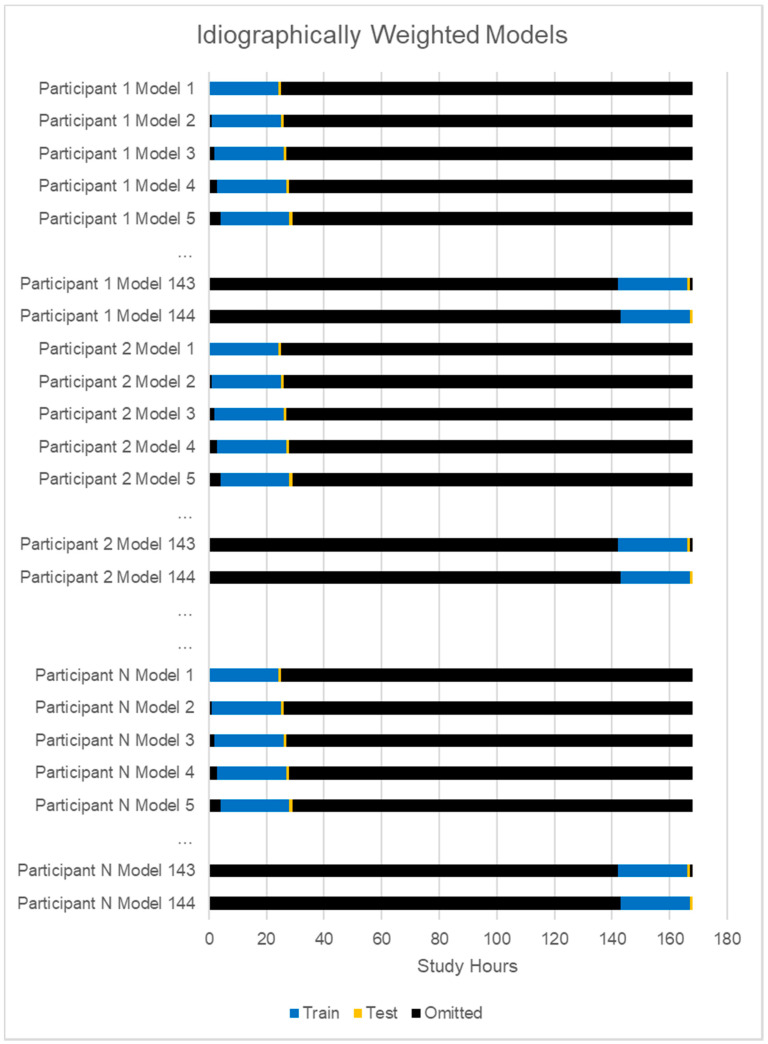
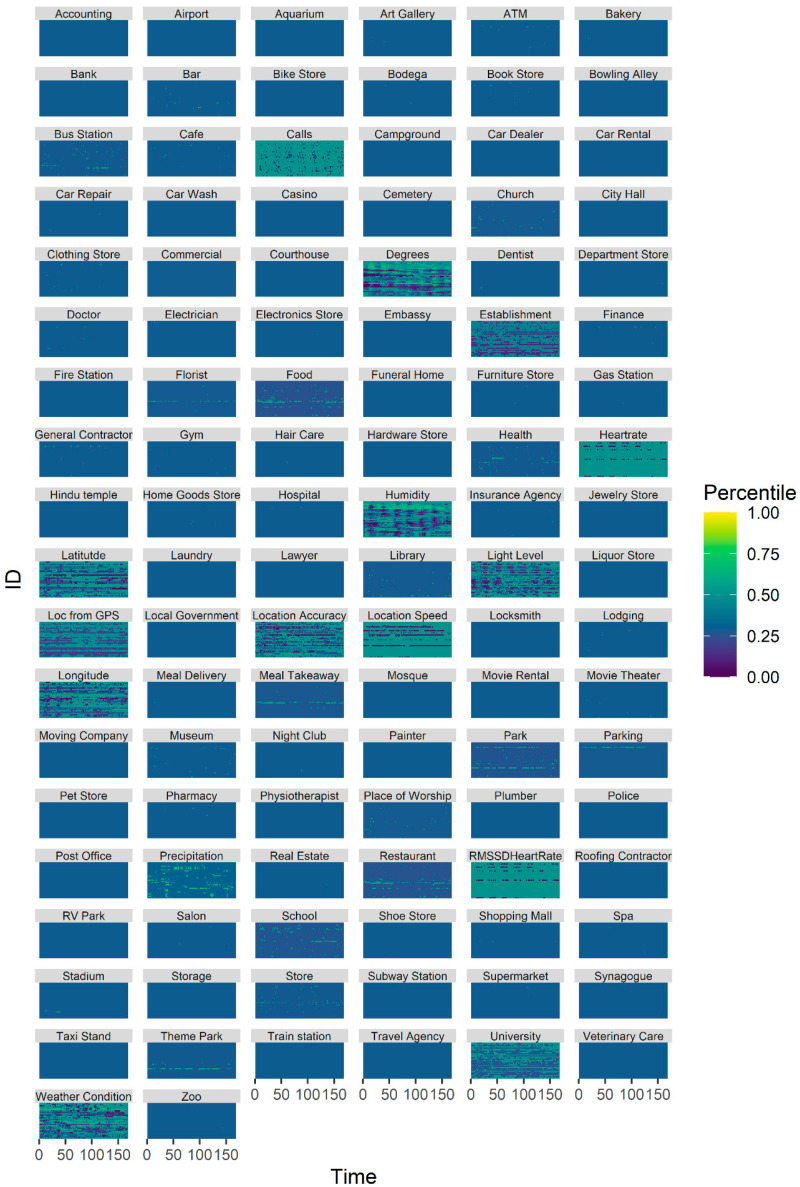
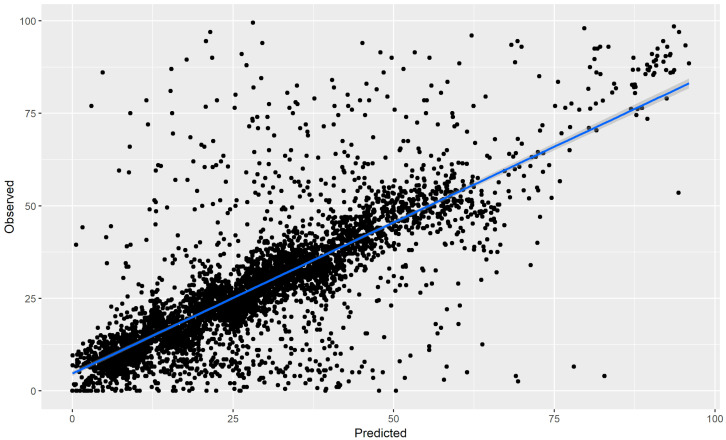
Verification
Claims the paper makes
The claims and statistics of this paper haven’t been checked yet.
Run the check — free, no account needed. It reads the open-access text and checks the sources it cites.
Claims other papers make about this one
Each is checked against this paper’s own text: does it say what the citing paper says it does?
In the citing paper
“Multimodal and intensive sampling data streams (for example, experience sampling and passive measures gathered through smartphones and other electronic devices) used in some MBI studies133 and mental health research broadly134,135 might be particularly promising inputs for machine learning models, given that these models can often handle many correlated predictors136.”
From A common factors perspective on mindfulness-based interventions (2022) · cites this paper as [136]
In the citing paper
“This type of research has established that passive sensor data can be used to predict various symptoms of mental disorders or mental health problems (23, 33–38), as well as their future development [e.g., (39)].”
From Personalised depression forecasting using mobile sensor data and ecological momentary assessment (2022) · cites this paper as [39]
In the citing paper
“However, it has been recognised that the inherent clinical heterogeneity associated with mental disorders may necessitate a greater focus on inter-individual differences to ensure generalisability to unseen cases (39, 43, 44).”
From Personalised depression forecasting using mobile sensor data and ecological momentary assessment (2022) · cites this paper as [39]
In the citing paper
“only two studies have combined these data streams in models to monitor changing depressive symptoms (26, 27).”
From Monitoring Changes in Depression Severity Using Wearable and Mobile Sensors (2020) · cites this paper as [26]
In the citing paper
“This has resulted in possible reliability problems, since these investigations have primarily focused on detecting presence or absence of depression rather than on assessing its severity, and they have shown overall low accuracy (14–18, 23–27).”
From Monitoring Changes in Depression Severity Using Wearable and Mobile Sensors (2020) · cites this paper as [26]
In the citing paper
“Those studies conducted with patients with depression have mostly relied on self-report questionnaires to assign diagnoses and/or measure variation in symptoms and train the models.”
From Monitoring Changes in Depression Severity Using Wearable and Mobile Sensors (2020) · cites this paper as [26]
In the citing paper
“Previous models estimating mood states with moderate accuracy have included measures of heart rate (HR) (27, 44) and HRV (26).”
From Monitoring Changes in Depression Severity Using Wearable and Mobile Sensors (2020) · cites this paper as [26]
In the citing paper
“Previous evaluations of models to estimate depression passively have primarily relied on examining correlations between estimated and observed symptoms (18, 26, 27).”
From Monitoring Changes in Depression Severity Using Wearable and Mobile Sensors (2020) · cites this paper as [26]
In the citing paper
“was higher than the one of a previous model combining features from the fitbit and from smartphones (the best model yielded an r2 = 0.44 or r = 0.66) (27) and the one of a model aggregating mobile-based and physiological features (r = 0.58) (26).”
From Monitoring Changes in Depression Severity Using Wearable and Mobile Sensors (2020) · cites this paper as [26]
Self-check
Percentages, sums and reported differences re-computed from the paper’s own numbers.
The self-check needs the paper’s full text.
Citations
Cites
Geurts, P., Ernst, D., & Wehenkel, L. (2006) · Machine Learning · doi:10.1007/s10994-006-6226-1 · Cited by 9,300 · cited 1×
“Note that a grid search was used to optimize the number of trees to grow (based on a sequence of length three between the number of predictors) and to select the split tree rule based on variance or extremely randomized trees [61,62].”
Methodranger : A Fast Implementation of Random Forests for High Dimensional Data in C++ and R
Wright, M. N., & Ziegler, A. (2017) · Journal of Statistical Software · doi:10.18637/jss.v077.i01 · Cited by 4,185 · cited 1×
“Note that a grid search was used to optimize the number of trees to grow (based on a sequence of length three between the number of predictors) and to select the split tree rule based on variance or extremely randomized trees [61,62].”
MethodDepression Anxiety Stress Scales
Lovibond, S. H., & Lovibond, P. F. (2011) · PsycTESTS Dataset · doi:10.1037/t01004-000 · Cited by 2,416
Cacioppo, J. T., Hughes, M. E., Waite, L. J., Hawkley, L. C., & Thisted, R. A. (2006) · Psychology and Aging · doi:10.1037/0882-7974.21.1.140 · Cited by 2,380
Nahum-Shani, I., Smith, S. N., Spring, B. J., Collins, L. M., Witkiewitz, K., Tewari, A., & Murphy, S. A. (2018) · Annals of Behavioral Medicine · doi:10.1007/s12160-016-9830-8 · Cited by 2,171 · cited 1×
“Consequently, most prior research is unable to adequately translate to inform just-in-time adaptive interventions (JITAI) [38,39], as this research might miss important times in which persons might be experiencing depressed mood fluctuations.”
BackgroundPsychometric properties of the Depression Anxiety Stress Scales (DASS) in clinical samples
Brown, T. A., Chorpita, B. F., Korotitsch, W., & Barlow, D. H. (1997) · Behaviour Research and Therapy · doi:10.1016/s0005-7967(96)00068-x · Cited by 1,860 · cited 3×
“75 with various measures of depression [52].”
BackgroundBlanco, C., Okuda, M., Wright, C., Hasin, D. S., Grant, B. F., Liu, S.-M., & Olfson, M. (2008) · Archives of General Psychiatry · doi:10.1001/archpsyc.65.12.1429 · Cited by 1,582 · cited 3×
“45% [2] of the sample met moderate depression severity, 38.”
BackgroundLack of group-to-individual generalizability is a threat to human subjects research
Fisher, A. J., Medaglia, J. D., & Jeronimus, B. F. (2018) · Proceedings of the National Academy of Sciences · doi:10.1073/pnas.1711978115 · Cited by 1,099
Harnessing context sensing to develop a mobile intervention for depression
Burns, M. N., Begale, M., Duffecy, J., Gergle, D., Karr, C. J., Giangrande, E., & Mohr, D. C. (2011) · Journal of Medical Internet Research · doi:10.2196/jmir.1838 · Cited by 646 · cited 6×
“Of these studies, two of three studies found strong agreement between predicted and observed daily depression outcomes (although this depended upon the analytic approach) [30,36], whereas one study found that they were unable to significantly predict depressed mood within the day in a small sample [31].”
BackgroundMethodResultInfluentialTwenge, J. M., Gentile, B., DeWall, C. N., Ma, D., Lacefield, K., & Schurtz, D. R. (2009) · Clinical Psychology Review · doi:10.1016/j.cpr.2009.10.005 · Cited by 606 · cited 1×
“Studies have found that an increasing number of college students have experienced “severe psychological problems”, including suicides and crisis management, in recent years [4] and that mental health issues are affecting up to eight times as many college students as it did in the Great Depression era [5].”
Background
Research works printed but not linked: 1
- Krane-Gartiser, K., Vaaler, A.E., Fasmer, O.B., Sørensen, K., Morken, G., and Scott, J. (2017). Variability of activity patterns across mood disorders and time of day. BMC Psychiat., 17. · DOI
Cited by
Sorted by citations
Ecological momentary interventions for mental health: A scoping review
Balaskas, A., Schueller, S. M., Cox, A. L., & Doherty, G. (2021) · PLOS ONE · doi:10.1371/journal.pone.0248152 · Cited by 235
Wearable, Environmental, and Smartphone-Based Passive Sensing for Mental Health Monitoring
Sheikh, M., Qassem, M., & Kyriacou, P. A. (2021) · Frontiers in Digital Health · doi:10.3389/fdgth.2021.662811 · Cited by 210
Digital Phenotyping for Monitoring Mental Disorders: Systematic Review
Bufano, P., Laurino, M., Said, S., Tognetti, A., & Menicucci, D. (2023) · Journal of Medical Internet Research · doi:10.2196/46778 · Cited by 210
“Jacobson and Chung [25] attempted to predict depressive mood hour-by-hour in a sample of 31 college students with major depressive disorder.”
Monitoring Changes in Depression Severity Using Wearable and Mobile Sensors
Pedrelli, P., Fedor, S., Ghandeharioun, A., Howe, E., Ionescu, D. F., Bhathena, D., Fisher, L. B., Cusin, C., Nyer, M., Yeung, A., et al. (2020) · Frontiers in Psychiatry · doi:10.3389/fpsyt.2020.584711 · Cited by 158
“Previous evaluations of models to estimate depression passively have primarily relied on examining correlations between estimated and observed symptoms (18, 26, 27).”
BackgroundMethodPersonalized machine learning of depressed mood using wearables
Shah, R. V., Grennan, G., Zafar-Khan, M., Alim, F., Dey, S., Ramanathan, D., & Mishra, J. (2021) · Translational Psychiatry · doi:10.1038/s41398-021-01445-0 · Cited by 123
Metadata
- Authors
- Jacobson, N. C., & Chung, Y. J.
- Affiliations
- Dartmouth College (US)
- Corresponding author
- Jacobson, Nicholas C.
- Venue
- Sensors
- Publisher
- MDPI AG
- Published
- 2020-06-24
- Volume
- 20
- Issue
- 12
- Pages
- 3572
- ISSN
- 1424-8220 (ISSN-L)
- PMC
- PMC7349045
- OpenAlex
- W3037651932
- Cited by
- 139
- References
- 69
- Citations by year
- 2026: 23 · 2025: 28 · 2024: 23 · 2023: 18 · 2022: 23 · 2021: 21 · 2020: 3
- FWCI
- 15.72
- Type
- journal article
- Language
- en
- Open access
- gold
- dx.doi.org
- Licence
- Locations
- Sensors (publishedVersion, cc-by)
- PubMed Central (publishedVersion, cc-by)
- PubMed (publishedVersion)
- DOAJ (DOAJ: Directory of Open Access Journals) (submittedVersion, cc-by-sa)
- Funders
- National Institute on Drug Abuse (P30DA029926)
- Topics
- Social Sciences › Psychology › Experimental and Cognitive Psychology › Mental Health Research Topics
- Social Sciences › Psychology › Applied Psychology › Digital Mental Health Interventions
- Physical Sciences › Computer Science › Artificial Intelligence › Emotion and Mood Recognition
- Keywords
- passive sensing, major depressive disorder, smartphone sensor data, ecological momentary assessment, just-in-time adaptive interventions
- MeSH terms
- Smartphone, Affect, Depressive Disorder, Major, Major Depressive Disorder, Humans, Students
About these checks
Registry, retraction, Cites and statistics results are computed, not judged, with one exception: a printed reference that no index lists is read once by a model before it counts as a citation error. Claims are extracted by a model and kept only when their quote appears verbatim in the text; each cited source is then checked, with a model’s help, for whether it says what the claim relies on. Those verdicts can be wrong — read the claim’s quote and the cited source before relying on one.
Statistics and arithmetic are recomputed, not judged.
Confidence bands are shown only for fields calibrated on our annotated test set. None is calibrated yet, so no band is shown.
What counts as a claim ›How we measure confidence ›How we check this ›
Are you an author, or do you see a problem with this page? Request a review
