

Human Activity Recognition Based on Residual Network and BiLSTM
Open accessThe DOI matches its Crossref record; 40 of the 40 references it cites were found in a registry or an index.
Abstract
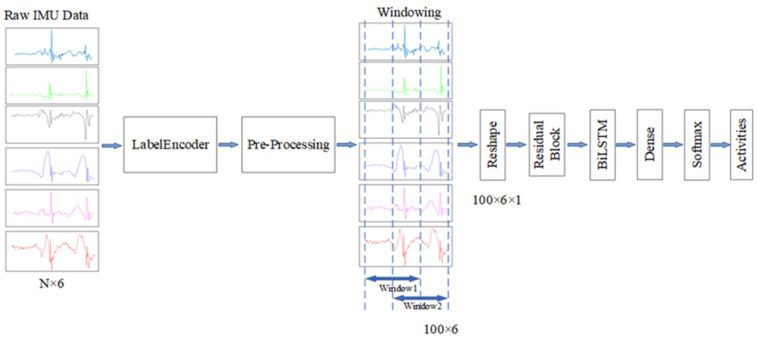
Due to the wide application of human activity recognition (HAR) in sports and health, a large number of HAR models based on deep learning have been proposed. However, many existing models ignore the effective extraction of spatial and temporal features of human activity data. This paper proposes a deep learning model based on residual block and bi-directional LSTM (BiLSTM). The model first extracts spatial features of multidimensional signals of MEMS inertial sensors automatically using the residual block, and then obtains the forward and backward dependencies of feature sequence using BiLSTM. Finally, the obtained features are fed into the Softmax layer to complete the human activity recognition. The optimal parameters of the model are obtained by experiments. A homemade dataset containing six common human activities of sitting, standing, walking, running, going upstairs and going downstairs is developed. The proposed model is evaluated on our dataset and two public datasets, WISDM and PAMAP2. The experimental results show that the proposed model achieves the accuracy of 96.95%, 97.32% and 97.15% on our dataset, WISDM and PAMAP2, respectively. Compared with some existing models, the proposed model has better performance and fewer parameters.
Overview
The claims and statistics of this paper haven’t been checked yet.
Free: it reads the open-access text and checks the first 5 claims that cite a source we can check. Create a free account to check every claim.
Integrity signals
Registry
Cites
Statistics
Figures








Verification
Claims the paper makes
The claims and statistics of this paper haven’t been checked yet.
Free: it reads the open-access text and checks the first 5 claims that cite a source we can check. Create a free account to check every claim.
Claims other papers make about this one
Each is checked against this paper’s own text: does it say what the citing paper says it does?
The source backs part of the claim, not all of it — or backs it for a different population, condition or comparison.
In the citing paper
“On the other hand, in the field of action recognition by videos, it has been proven efficient to train the models with a time series of frames [11].”
From DS-MS-TCN: Otago Exercises Recognition With a Dual-Scale Multi-Stage Temporal Convolutional Network (2024) · cites this paper as [11]
Experimental — accuracy not yet measuredThe check wasn’t confident either way, so it gives no verdict — never disputed.
In the citing paper
“All of these studies reported the advantages of MS-TCNs over the state-of-the-art CNN-LSTM.”
From DS-MS-TCN: Otago Exercises Recognition With a Dual-Scale Multi-Stage Temporal Convolutional Network (2024) · cites this paper as [11]
Experimental — accuracy not yet measuredThe check wasn’t confident either way, so it gives no verdict — never disputed.
In the citing paper
“Recently, multi-stage temporal convolutional networks (MSTCNs) were applied for action recognition by videos [11]. Then, there were several studies applying MS-TCNs for sensor data on food intake prediction [12] and physical activity recognition [13].”
From DS-MS-TCN: Otago Exercises Recognition With a Dual-Scale Multi-Stage Temporal Convolutional Network (2024) · cites this paper as [11]
Experimental — accuracy not yet measured
Self-check
Percentages, sums and reported differences re-computed from the paper’s own numbers.
The self-check needs the paper’s full text.
Citations
Cites
Deep Residual Learning for Image Recognition
He, K., Zhang, X., Ren, S., & Sun, J. (2016) · 2016 IEEE Conference on Computer Vision and Pattern Recognition (CVPR) · doi:10.1109/cvpr.2016.90 · Cited by 235,474 · cited 3×
“In the shallow network, the residual module can be also beneficial to improve network performance [30].”
BackgroundMethodInfluentialLearning long-term dependencies with gradient descent is difficult
Bengio, Y., Simard, P., & Frasconi, P. (1994) · IEEE Transactions on Neural Networks · doi:10.1109/72.279181 · Cited by 8,542 · cited 1×
“However, Bengio et al. [31] inform that RNN networks can recognize the data for only a moment, owing to the vanishing and exploding gradient issue.”
BackgroundActivity recognition using cell phone accelerometers
Kwapisz, J. R., Weiss, G. M., & Moore, S. A. (2011) · ACM SIGKDD Explorations Newsletter · doi:10.1145/1964897.1964918 · Cited by 2,912 · cited 3×
“In the existing studies, researches placed the smart device on the waist [6], pants pocket [7], or wrist [8], using the inertial measurement unit (IMU) in the smart device to collect human activity data.”
MethodIntroducing a New Benchmarked Dataset for Activity Monitoring
Reiss, A., & Stricker, D. (2012) · 2012 16th International Symposium on Wearable Computers · doi:10.1109/iswc.2012.13 · Cited by 1,456 · cited 1×
“The sampling frequency of the sensor is 100 Hz [34].”
BackgroundLSTM-CNN Architecture for Human Activity Recognition
Xia, K., Huang, J., & Wang, H. (2020) · IEEE Access · doi:10.1109/access.2020.2982225 · Cited by 851 · cited 1×
“Reference Accuracy F w Params WISDM CNN [15] 93.32% - - TSE-CNN [17] 95.7% 94.01% 9223 SC-CNN [6] 97.08% - 1,176,972 CNN-GRU [21] 97.21% 97.22% - LSTM-CNN [40] 95”
InfluentialReal-time human activity recognition from accelerometer data using Convolutional Neural Networks
Ignatov, A. (2018) · Applied Soft Computing · doi:10.1016/j.asoc.2017.09.027 · Cited by 814 · cited 3×
“In recent years, many CNN-based HAR methods which extracted features automatically have been proposed [15–17].”
MethodInfluentialSensor-based and vision-based human activity recognition: A comprehensive survey
Minh Dang, L., Min, K., Wang, H., Jalil Piran, M., Hee Lee, C., & Moon, H. (2020) · Pattern Recognition · doi:10.1016/j.patcog.2020.107561 · Cited by 730
Human Activity Recognition Using Wearable Sensors by Deep Convolutional Neural Networks
Jiang, W., & Yin, Z. (2015) · Proceedings of the 23rd ACM international conference on Multimedia · doi:10.1145/2733373.2806333 · Cited by 676 · cited 1×
“In [18], a deep convolutional neural network is proposed to perform an effective HAR.”
MethodDeep Learning Models for Real-time Human Activity Recognition with Smartphones
Wan, S., Qi, L., Xu, X., Tong, C., & Gu, Z. (2020) · Mobile Networks and Applications · doi:10.1007/s11036-019-01445-x · Cited by 594
Ramanujam, E., Perumal, T., & Padmavathi, S. (2021) · IEEE Sensors Journal · doi:10.1109/jsen.2021.3069927 · Cited by 455 · cited 1×
“Unlike the traditional machine learning, deep learning (DL) can process the preprocessed IMU data without extracting hand-crafted features and is widely used in the activity recognition [13,14].”
Background
Research works printed but not linked: 1
- Mahmud S. Tonmoy M.T.H. Bhaumik K.K. Rahman A.K.M.M. Amin M.A. Shoyaib M. Khan M.A.H. Ali A.A. Human Activity Recognition from Wearable Sensor Data Using Self-Attention arXiv 2020 2003.09018
Cited by
Wearable Sensor-Based Human Activity Recognition with Transformer Model
Dirgová Luptáková, I., Kubovčík, M., & Pospíchal, J. (2022) · Sensors · doi:10.3390/s22051911 · Cited by 270
“Li et al. [29] joined 2D convolution layers followed by a BiLSTM layer.”
MethodBhattacharya, D., Sharma, D., Kim, W., Ijaz, M. F., & Singh, P. K. (2022) · Biosensors · doi:10.3390/bios12060393 · Cited by 141
Connecting the indispensable roles of IoT and artificial intelligence in smart cities: A survey
Nguyen, H., Nawara, D., & Kashef, R. F. (2024) · Journal of Information and Intelligence · doi:10.1016/j.jiixd.2024.01.003 · Cited by 95
Omaye, J. D., Ogbuju, E., Ataguba, G., Jaiyeoba, O., Aneke, J., & Oladipo, F. O. (2024) · Artificial Intelligence in Agriculture · doi:10.1016/j.aiia.2024.04.002 · Cited by 94
Wang, Y., Xu, H., Liu, Y., Wang, M., Wang, Y., Yang, Y., Zhou, S., Zeng, J., Xu, J., Li, S., et al. (2023) · IEEE Sensors Journal · doi:10.1109/jsen.2023.3242603 · Cited by 74
“Li and Wang [22] designed a deep learning model based on residual blocks and bidirectional LSTM (Bi-LSTM), where the HAR recognition accuracy of the model has a certain improvement.”
BackgroundTransfer Learning Approach for Human Activity Recognition Based on Continuous Wavelet Transform
Pavliuk, O., Mishchuk, M., & Strauß, C. (2023) · Algorithms · doi:10.3390/a16020077 · Cited by 69
A perspective on human activity recognition from inertial motion data
Gomaa, W., & Khamis, M. A. (2023) · Neural Computing and Applications · doi:10.1007/s00521-023-08863-9 · Cited by 54
Gaud, N., Rathore, M., & Suman, U. (2024) · IEEE Sensors Journal · doi:10.1109/jsen.2024.3450499 · Cited by 66
“Digital Object Identifier 10.1109/JSEN.2024.3450499 [3], [4].”
InfluentialCheltha, J. N., Sharma, C., Prashar, D., Khan, A. A., & Kadry, S. (2024) · Image and Vision Computing · doi:10.1016/j.imavis.2024.105234 · Cited by 63
Deep Residual Network for Smartwatch-Based User Identification through Complex Hand Movements
Mekruksavanich, S., & Jitpattanakul, A. (2022) · Sensors · doi:10.3390/s22083094 · Cited by 62
“For instance, Li et al. [25] used the 1D-ResNet model to extract spatial features from multidimensional inertial sensor inputs and bidirectional LSTM.”
MethodDCapsNet: Deep capsule network for human activity and gait recognition with smartphone sensors
Sezavar, A., Atta, R., & Ghanbari, M. (2023) · Pattern Recognition · doi:10.1016/j.patcog.2023.110054 · Cited by 61
An Efficient Human Activity Recognition Using Hybrid Features and Transformer Model
Saidani, O., Alsafyani, M., Alroobaea, R., Alturki, N. M., Jahangir, R., & Jamel, L. (2023) · IEEE Access · doi:10.1109/access.2023.3314492 · Cited by 58
“These tables show the performance reports of the WISDM, PAMAP2, and UCI HAR transformer to the recall, precision, F1-score, and recognition accuracy for all human activities in the dataset, which reveals the reliability of the transformer model compared to the existing techniques [9], [16], [28], [29].”
MethodA Privacy and Energy-Aware Federated Framework for Human Activity Recognition
Khan, A. R., Manzoor, H. U., Ayaz, F., Imran, M. A., & Zoha, A. (2023) · Sensors · doi:10.3390/s23239339 · Cited by 51
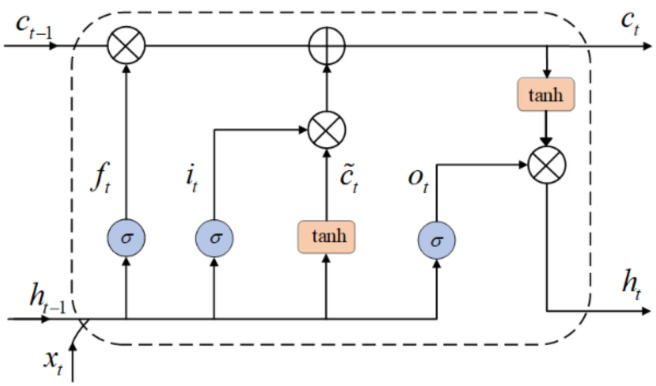
“The operations within an LSTM unit at time t for a single cell can be described using the following equations [37]: where σ represents the sigmoid function and i t , f t , and o t are the input gate, forget gate, and output gate activations at time t , respectively.”
A human activity recognition method using wearable sensors based on convtransformer model
Zhang, Z., Wang, W., An, A., Qin, Y., & Yang, F. (2023) · Evolving Systems · doi:10.1007/s12530-022-09480-y · Cited by 48
“Li et al. adopt a hybrid of multi-scale CNN with Bi-LSTM, which helps improve the feature extraction process and performance (Li and Wang 2022).”
BackgroundShen, Q., Yang, X., Zou, L., Wei, K., Wang, C., & Liu, G. (2022) · IEEE Internet of Things Journal · doi:10.1109/jiot.2022.3195777 · Cited by 47
Gad, G., & Fadlullah, Z. M. (2022) · Sensors · doi:10.3390/s23010006 · Cited by 46
“Proposed DL-based methods include using ResNet and BiLSTM [14] to extract spatial features of multidimensional signals, and sensor fusion with ConvTransformer [15] to achieve high-performance activity classification.”
A Close Look into Human Activity Recognition Models using Deep Learning
Tee, W. Z., Dave, R., Seliya, J., & Vanamala, M. (2022) · International Conference on Computing, Networks and Internet of Things (CNIOT) · doi:10.1109/cniot55862.2022.00043 · Cited by 42
A Novel Front Door Security (FDS) Algorithm Using GoogleNet-BiLSTM Hybridization
Paula, L. P. O., Faruqui, N., Mahmud, I., Whaiduzzaman, M., Hawkinson, E. C., & Trivedi, S. (2023) · IEEE Access · doi:10.1109/access.2023.3248509 · Cited by 37
Deep learning models for real-life human activity recognition from smartphone sensor data
Garcia-Gonzalez, D., Rivero, D., Fernández-Blanco, E., & Luaces, M. R. (2023) · Internet of Things · doi:10.1016/j.iot.2023.100925 · Cited by 41
SDHAR-HOME: A Sensor Dataset for Human Activity Recognition at Home
Ramos, R. G., Domingo, J. D., Zalama, E., Gómez‐García‐Bermejo, J., & López, J. (2022) · Sensors · doi:10.3390/s22218109 · Cited by 40
“The work by Yong Li and Luping Wang [40] focuses on the performance of a neural network based on bidirectional LSTM layers combined with residual blocks.”
BackgroundA deep local-temporal architecture with attention for lightweight human activity recognition
Ige, A. O., & Noor, M. H. M. (2023) · Applied Soft Computing · doi:10.1016/j.asoc.2023.110954 · Cited by 33
Zilelioglu, H., Khodabandelou, G., Chibani, A., & Amirat, Y. (2023) · IEEE Sensors Journal · doi:10.1109/jsen.2023.3267243 · Cited by 32
Resource-Efficient Continual Learning for Sensor-Based Human Activity Recognition
Leite, C. F. S., & Xiao, Y. (2022) · ACM Transactions on Embedded Computing Systems · doi:10.1145/3530910 · Cited by 29
A Real-Time 3-Dimensional Object Detection Based Human Action Recognition Model
Gupta, C., Gill, N. S., Gulia, P., Sangeeta, S., Pau, G., Alibakhshikenari, M., & Kong, X. (2023) · IEEE Open Journal of the Computer Society · doi:10.1109/ojcs.2023.3334528 · Cited by 28
Robust Feature Representation Using Multi-Task Learning for Human Activity Recognition
Azadi, B., Haslgrübler, M., Anzengruber-Tánase, B., Sopidis, G., & Ferscha, A. (2024) · Sensors · doi:10.3390/s24020681 · Cited by 26
“The authors of [49] focused on capturing the spatial and temporal features.”
BackgroundMethodSun, M., Yang, Y., Li, S., Yin, D., Zhong, G., & Cao, L. (2024) · Chemical and Biological Technologies in Agriculture · doi:10.1186/s40538-024-00681-y · Cited by 26
Kirsch, K., Strutzke, S., Klitzing, L., Pilger, F., Thöne‐Reineke, C., & Hoffmann, G. (2025) · Computers and Electronics in Agriculture · doi:10.1016/j.compag.2025.109999 · Cited by 25
Naser, R. S., Lam, M. C., Qamar, F., & Zaidan, B. B. (2024) · IEEE Access · doi:10.1109/access.2024.3468470 · Cited by 25
goldenAGER: A Personalized Feature Fusion Activity Recognition Model for Elderly
Nagpal, D., Gupta, S., Kumar, D., Illés, Z., Verma, C., & Dey, B. (2023) · IEEE Access · doi:10.1109/access.2023.3282439 · Cited by 23
“ResNets [10], VGG-16 [11] and hybrid deep learning model”
BackgroundSensor-based Activity Recognition using Deep Learning: A Comparative Study
Trabelsi, I., Françoise, J., & Bellik, Y. (2022) · International Conference on Movement and Computing (MOCO) · doi:10.1145/3537972.3537996 · Cited by 23
“can only be used to recognize basic physical activities such as walking or standing, and can hardly infer high-level or context-aware activities [29].”
BackgroundHamidi, A., Robertson, B., & Ilow, J. (2023) · Procedia Computer Science · doi:10.1016/j.procs.2023.09.011 · Cited by 23
Smart-Data-Glove-Based Gesture Recognition for Amphibious Communication
Fan, L., Zhang, Z., Zhu, B., Zuo, D., Yu, X., & Wang, Y. (2023) · Micromachines · doi:10.3390/mi14112050 · Cited by 22
“Shared Decoder D (cid:0) E c ( X ) + E p ( X ) (cid:1) : Used to decode samples composed of private features and shared features.”
BackgroundWearable sensors based on artificial intelligence models for human activity recognition
Alarfaj, M., Madini, A. A., Alsafran, A. S., Farag, M. M., Chtourou, S., Afifi, A., Ahmad, A., Rubayyi, O. A., Harbi, A. A., & Thunaian, M. A. (2024) · Frontiers in Artificial Intelligence · doi:10.3389/frai.2024.1424190 · Cited by 22
“…incorporating long short-term memory (LSTM) and bi-directional LSTM have become increasingly popular in recent studies for human activity classification as they are adept at extracting spatial and temporal properties (Hayat et al., 2022; Khan et al., 2022; Li and Wang, 2022; Luwe et al., 2022).”
BackgroundOtago Exercises Monitoring for Older Adults by a Single IMU and Hierarchical Machine Learning Models
Shang, M., Dedeyne, L., Dupont, J., Vercauteren, L., Amini, N., Lapauw, L., Gielen, E., Verschueren, S., Varon, C., De Raedt, W., et al. (2024) · IEEE Transactions on Neural Systems and Rehabilitation Engineering · doi:10.1109/tnsre.2024.3355299 · Cited by 21
“For example, small sizes such as 2s could be applied to recognize static and periodic activities (e.g. walking, sitting, etc.) [10].”
BackgroundBenchmarking Classical, Deep, and Generative Models for Human Activity RecognitionPreprint
Hossain, M. M., Han, T. A., Ara, S. S., & Shamszaman, Z. U. (2025) · arXiv (Cornell University) · doi:10.48550/arxiv.2501.08471 · Cited by 21
Jameer, S., & Syed, H. (2023) · Sensors · doi:10.3390/s23094319 · Cited by 20
“Few studies have examined the effects of device and position attributes, despite significant research on the influence of human traits on recognition accuracy [20].”
BackgroundHuang, Y., Zhou, Y., Zhao, H., Riedel, T., & Beigl, M. (2024) · International Joint Conference on Neural Networks (IJCNN) · doi:10.1109/ijcnn60899.2024.10650060 · Cited by 20
“[50] extend this setup by integrating residual module and bidirectional LSTMs. Transformers provide powerful attention mechanisms.”
Ankalaki, S., & Thippeswamy, M. N. (2024) · SN Computer Science · doi:10.1007/s42979-024-02794-5 · Cited by 20
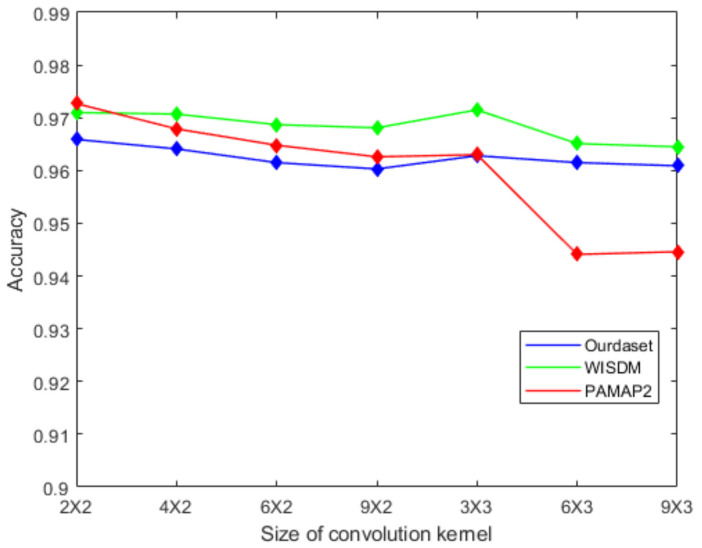
“Similarly, [22] conducted comprehensive experimentation to study the impact of hyperparameters on the recognition rate of residual BiLSTM networks, adjusting the value of each hyperparameter and analyzing the results to select optimal values.”
Leite, C. F. S., Mauranen, H., Zhanabatyrova, A., & Xiao, Y. (2025) · SSRN Electronic Journal · doi:10.2139/ssrn.5131703 · Cited by 19
MAG-Res2Net: a novel deep learning network for human activity recognition
Liu, H., Zhao, B., Dai, C., Sun, B., Li, A., & Wang, Z. (2023) · Physiological Measurement · doi:10.1088/1361-6579/ad0ab8 · Cited by 18
Wearable IoT and Artificial Intelligence Techniques for Leveraging the Human Activity Analysis
Sheker, L., Petli, V., & Reddy, K. S. (2024) · Journal of Smart Internet of Things · doi:10.2478/jsiot-2024-0003 · Cited by 18
Wearable sensor-based human activity recognition with ensemble learning: a comparison study
Luwe, Y. J., Lee, C. P., & Lim, K. M. (2023) · International Journal of Power Electronics and Drive Systems/International Journal of Electrical and Computer Engineering · doi:10.11591/ijece.v13i4.pp4029-4040 · Cited by 17
Leveraging hybrid 1D-CNN and RNN approach for classification of brain cancer gene expression
Afify, H. M., Mohammed, K. K., & Hassanien, A. E. (2024) · Complex & Intelligent Systems · doi:10.1007/s40747-024-01555-4 · Cited by 17
“According to Koul et al. [ 35 ], using the BO approach to cancer gene expression The BiLSTM [ 37 ] is a sequential processing approach constructed out of two LSTMs, one of which accepts input in one direction and the other in the opposite.”
rWISDM: Repaired WISDM, a Public Dataset for Human Activity RecognitionPreprint
Heydarian, M., & Doyle, T. E. (2023) · arXiv (Cornell University) · doi:10.48550/arxiv.2305.10222 · Cited by 16
“[27] created a dataset by locating a sensor below the knee with five participants for six activities.”
BackgroundDeep Learning Methods for Speed Estimation of Bipedal Motion from Wearable IMU Sensors
Justa, J., Šmídl, V., & Hamáček, A. (2022) · Sensors · doi:10.3390/s22103865 · Cited by 15
“In a parallel study, residual networks with BiLSTM architecture have been used to classify human activity [17].”
Skeleton-based Human Action Recognition in a Thermal Comfort Context
Martins, J., Flanigan, K. A., & McComb, C. (2023) · ACM International Conference on Systems for Energy-Efficient Buildings, Cities, and Transportation (BuildSys) · doi:10.1145/3600100.3626339 · Cited by 14
Sensors-Based Human Activity Recognition Using Hybrid Features and Deep Capsule Network
Ghafoor, H. Y., Jahangir, R., Jaffar, A., Alroobaea, R., Saidani, O., & Alhayan, F. (2024) · IEEE Sensors Journal · doi:10.1109/jsen.2024.3402314 · Cited by 14
“The table shows the precision, recall, F1-measure, and recognition accuracy of all activities in three datasets and reveals the reliability of DeepCapsNet compared to the base-line models [35], [40], [41], [42].”
MethodPB-LNet: a model for predicting pathological subtypes of pulmonary nodules on CT images
Zhang, Y., Qu, H. Y., Tian, Y., Na, F., Yan, J., Wu, Y., Cui, X., Li, Z., & Zhao, M. (2023) · BMC Cancer · doi:10.1186/s12885-023-11364-6 · Cited by 14
Lightweight human activity recognition method based on the MobileHARC model
Gong, X., Zhang, X., & Li, N. (2024) · Systems Science & Control Engineering · doi:10.1080/21642583.2024.2328549 · Cited by 13
“Li et al. adopt a hybrid of multi-scale CNN with Bi-LSTM, which helps improve the feature extraction process and performance (Li & Wang, 2022).”
Sign Language Recognition Based on CNN-BiLSTM Using RF Signals
Zhang, Y., Wang, Y., Li, F., Yu, W., Wang, C., & Jiang, Y. (2024) · IEEE Access · doi:10.1109/access.2024.3517417 · Cited by 13
Human activity recognition from uav videos using an optimized hybrid deep learning model
Sinha, K. P., & Kumar, P. (2023) · Multimedia Tools and Applications · doi:10.1007/s11042-023-17289-3 · Cited by 13
“Li et al. [16] suggested a DL strategy centred on the residual unit and bi-directional LSTM (BiLSTM).”
Ryu, S., Yun, S., Lee, S., & Jeong, I. C. (2024) · Sensors · doi:10.3390/s24051610 · Cited by 13
“Li et al. [27] proposed a deep learning model combining ResNet and BiLSTM, which effectively extracts the spatial and temporal features of sensor data.”
MethodEsmaeilzehi, A., Khazaei, E., Wang, K., Kalsi, N. K., Ng, P. C., Liu, H., Yu, Y., Hatzinakos, D., & Plataniotis, K. N. (2024) · Pattern Recognition Letters · doi:10.1016/j.patrec.2024.06.017 · Cited by 13
Bollampally, A., Kavitha, J., Sumanya, P., Rajesh, D., Jaffar, A. Y., Eid, W. N., Albarakati, H. M., Aldosari, F. M., & Alharbi, A. A. (2024) · Engineering Technology & Applied Science Research · doi:10.48084/etasr.8861 · Cited by 12
“This bidirectional analysis makes BiLSTM models exceptionally well-suited for activity recognition, where understanding the sequence of actions and their temporal relationships is crucial [6].”
Wang, J., Liu, Z., Liu, Y., Lin, L., Shao, L., Zhang, X., Li, S., & Song, B. (2025) · IEEE Access · doi:10.1109/access.2025.3567367 · Cited by 12
“This paper proposes a fusion model based on ResNet [30], [31] and Bidirectional LSTM (Bi-LSTM) [32], [33] for diagnosing autism in children.”
An enhanced ResNet deep learning method for multimodal signal-based locomotion intention recognition
Sun, H., Gu, X., Zhang, Y., Sun, F., Zhang, S., Wang, D., & Yu, H. (2024) · Biomedical Signal Processing and Control · doi:10.1016/j.bspc.2024.107254 · Cited by 12
Xie, Y., Yao, Y., & Li, Y. (2025) · Scientific Reports · doi:10.1038/s41598-025-96462-0 · Cited by 12
“Typically, SNN includes one or more fully connected layers to map the features extracted by the GCN into a lower-dimensional space and assess similarity by calculating the distance (Euclidean distance) or similarity (cosine similarity) between feature vectors 30,35,36 .”
Self-citationTian, Y., Zhang, J., Chen, Q., & Liu, Z. (2022) · IEEE Access · doi:10.1109/access.2022.3225652 · Cited by 12
A Multi-Label Based Physical Activity Recognition via Cascade Classifier
Mo, L., Zhu, Y., & Zeng, L. (2023) · Sensors · doi:10.3390/s23052593 · Cited by 12
“A deep learning human activity recognition model based on residual block and Bi-directional Long Short-Term Memory (BiLSTM) is proposed [22].”
MethodAlbadawi, Y., & Shanableh, T. (2024) · IEEE Sensors Journal · doi:10.1109/jsen.2024.3422272 · Cited by 12
“Li and Wang [25] present a sensor-based HAR model that depends on the residual block and BiLSTM network.”
Sudha, R., Damodaran, A., & Manohar, G. (2025) · Scientific Reports · doi:10.1038/s41598-025-14668-8 · Cited by 11
“BiLSTM 37 is a type of neural network developed to address vanishing gradient issues that are commonly faced by deep networks while capturing long-term dependencies.”
Attention-Based CNN-BiGRU-Transformer Model for Human Activity Recognition
Miao, M., Yan, W., Gao, X., Yang, L., Zhou, J., & Zhang, W. (2025) · Applied Sciences · doi:10.3390/app152312592 · Cited by 11
TEZARNet: TEmporal Zero-Shot Activity Recognition Network
Deelaka, P. N., Silva, D. Y. D., Wickramanayake, S., Meedeniya, D., & Rasnayaka, S. (2023) · Communications in computer and information science · doi:10.1007/978-981-99-8184-7_34 · Cited by 11
Cha, B., & Vaidya, B. (2024) · Electronics · doi:10.3390/electronics13091739 · Cited by 11
Human Action Recognition in Military Obstacle Crossing Using HOG and Region-Based Descriptors
Kolawole, A. O., Irhebhude, M. E., & Odion, P. O. (2025) · Journal of Computing Theories and Applications · doi:10.62411/jcta.12195 · Cited by 11
RoBERTa-Based Multi-Feature Integrated BiLSTM and CNN Model for Ceramic Review Analysis
Yang, L., Wang, J., & Qiu, W. (2025) · IEEE Access · doi:10.1109/access.2025.3579022 · Cited by 10
A lightweight deep learning with feature weighting for activity recognition
Ige, A. O., & Noor, M. H. M. (2022) · Computational Intelligence · doi:10.1111/coin.12565 · Cited by 10
“For example, the authors in Reference 36 employed a single wrist-worn accelerometer to recognize five different physical activities: sitting, standing, lying, walking, and running.”
BackgroundMethodInfluentialLeveraging Transfer Learning for Spatio-Temporal Human Activity Recognition from Video Sequences
Butt, U. M., Ullah, H. A., Letchmunan, S., Tariq, I., Hassan, F. H., & Koh, T. W. (2022) · Computers, materials & continua/Computers, materials & continua (Print) · doi:10.32604/cmc.2023.035512 · Cited by 10
Li, Y., Zeng, G., Wang, L., & Tan, K. (2023) · Micromachines · doi:10.3390/mi14061170 · Cited by 9
“Therefore, we developed the shank-mounted PDR technology based on our previous work on wearable human-activity-recognition technology [10].”
MethodSelf-citationResearch on Human Activity Recognition Algorithm Based on LSTM-1DCNN
Zhao, Y., Wang, X., Luo, Y., & Aslam, M. S. (2023) · Computers, materials & continua/Computers, materials & continua (Print) · doi:10.32604/cmc.2023.040528 · Cited by 9
An Unsupervised Method to Recognise Human Activity at Home Using Non-Intrusive Sensors
Ramos, R. G., Domingo, J. D., Zalama, E., & Gómez‐García‐Bermejo, J. (2023) · Electronics · doi:10.3390/electronics12234772 · Cited by 8
Sheikholeslami, S. M., Ng, P. C., Liu, H., Yu, Y., & Plataniotis, K. N. (2024) · IEEE International Conference on Acoustics, Speech, and Signal Processing Workshops (ICASSPW) · doi:10.1109/icasspw62465.2024.10627018 · Cited by 7
“While deep learning methods have been widely used in HAR [1, 2], most of the recent works rely on gathering data in one silo for training which violates the privacy of users.”
MethodCNN-SLSTM framework for human activity recognition using wearable sensor data
Krishnaleela, P., & Prakash, R. M. (2025) · Neural Computing and Applications · doi:10.1007/s00521-025-11410-3 · Cited by 7
“SKConv [20], Residual block and bi-directional CNN [21], CNN-GRU [34], COND-CNN [35], Inception inspired CNN-GRU [36], CNN-Bi-LSTM [37], and Graph Convolutional Network [38] The top result is written in bold, which achieves 99.86%.”
InfluentialSeq2seq model for human action recognition based on skeleton and two-layer bidirectional LSTM
Wei, S., Zhao, J., Li, J., & Yuan, M. (2023) · Journal of Ambient Intelligence and Smart Environments · doi:10.3233/ais-220125 · Cited by 7
“More recently, a deep learning model based on residual block and bi-directional LSTM (BiLSTM) displayed a better performance with fewer parameters compared with some existing models [22].”
Cruz, D. R., Quiñones, S. P., Lira, A., Figueroa, D. Q., Hidalgo, M. R., & Taramasco, C. (2024) · Applied Sciences · doi:10.3390/app14209170 · Cited by 6
Chen, S., Pan, W., Wang, Y., Chen, S., & Wang, X. (2025) · Aerospace · doi:10.3390/aerospace12050376 · Cited by 6
SEZ-HARN: Self-explainable Zero-shot Human Activity Recognition Network
Silva, D. Y. D., Wickramanayake, S., Meedeniya, D., & Rasnayaka, S. (2026) · Computers & Electrical Engineering · doi:10.1016/j.compeleceng.2026.111564 · Cited by 6
Validation of physical activity levels from shank-placed Axivity AX6 accelerometers in older adults
Gafoor, F., Ruder, M. C., & Kobsar, D. (2024) · PLoS ONE · doi:10.1371/journal.pone.0290912 · Cited by 6
“These devices can be worn at the wrist, waist, and ankle but require different cut-point models for each site as the level of accelerations vary between segments [19].”
BackgroundHuang, Y., Zhao, H., Zhou, Y., Riedel, T., & Beigl, M. (2024) · Lecture notes of the Institute for Computer Sciences, Social Informatics and Telecommunications Engineering · doi:10.1007/978-3-031-63992-0_2 · Cited by 6
1-DCNN with Stacked LSTM Architecture for Human Activity Recognition Using Wearable Sensing Data
Krishnaleela, P., & Prakash, R. M. (2024) · IETE Journal of Research · doi:10.1080/03772063.2024.2402881 · Cited by 6
Applying MLP-Mixer and gMLP to Human Activity Recognition
Miyoshi, T., Koshino, M., & Nambo, H. (2025) · Sensors · doi:10.3390/s25020311 · Cited by 6
“Murad et al. [16] introduced a model using Long Short-Term Memory (LSTM), while Li et al. [28] developed a Bidirectional LSTM approach.”
Enhancing Human Action Recognition Through Transfer Learning and Body Articulation Analysis
Jlidi, N., Jemai, O., & Bouchrika, T. (2025) · Circuits Systems and Signal Processing · doi:10.1007/s00034-025-03026-8 · Cited by 6
“In [20], the authors developed a hybrid model combining Convolutional Neural Networks (CNN) and Long Short-Circuits Term Memory (LSTM) networks for Human Activity Recognition (HAR), addressing the limitations of existing algorithms in extracting spatial and temporal features.”
Augmenting Vision-Based Human Pose Estimation with Rotation MatrixPreprint
Vazan, M., Masoumi, F. S., Ou, R., & Rawassizadeh, R. (2023) · arXiv (Cornell University) · doi:10.13140/rg.2.2.29981.69606 · Cited by 6
DS-MS-TCN: Otago Exercises Recognition With a Dual-Scale Multi-Stage Temporal Convolutional Network
Shang, M., Dedeyne, L., Dupont, J., Vercauteren, L., Amini, N., Lapauw, L., Gielen, E., Verschueren, S., Varon, C., De Raedt, W., et al. (2024) · IEEE Journal of Biomedical and Health Informatics · doi:10.1109/jbhi.2024.3455426 · Cited by 5
Neural Networks Based Prayer Monitoring and Recognition Framework
Al-Selwi, H. F., Aziz, A. B. A., Abas, F. S., Razak, A., & Hamzah, N. A. A. (2022) · International Conference on Digital Transformation and Intelligence (ICDI) · doi:10.1109/icdi57181.2022.10007409 · Cited by 5
“In another work by Yong Li et al. [11], the authors propose a deep learning model based on residual block and bi-directional LSTM (BiLSTM) to extract spatial and temporal features of multidimensional signals, the proposed model achieved an accuracy of 97.15% on WISDM dataset.”
MethodInfluentialDeep Learning‐Based Quantum System for Human Activity Recognition
Salvadi, S. R., Narsimhulu, P., & Madhuri, T. N. P. (2023) · Wiley eBooks · doi:10.1002/9781119905172.ch17 · Cited by 5
Jamil, H., Ali, K. M., & Kim, D. (2023) · Fire Ecology · doi:10.1186/s42408-023-00203-5 · Cited by 5
RetractedWavelet-domain human activity recognition utilizing convolutional neural networks
Tavakkoli, M., Nazerfard, E., & Amirmazlaghani, M. (2023) · Journal of Ambient Intelligence and Smart Environments · doi:10.3233/ais-230174 · Cited by 5
“To address these limitations, significant research efforts have focused on automating feature extraction through deep learning techniques [1,18,20].”
Syed, L. (2024) · Arabian Journal for Science and Engineering · doi:10.1007/s13369-024-08840-x · Cited by 5
“The study presented in [14] recognized human activities using bidirectional LSTM (BiLSTM) deep learning technique and residual networks.”
Human action recognition from inertial sensors with Transformer
Le, T.-H., Tran, T.-H., & Pham, C. (2022) · International Conference on Multimedia Analysis and Pattern Recognition (MAPR) · doi:10.1109/mapr56351.2022.9924794 · Cited by 5
“Li et al [20] joined 2D convolution layers followed by a BiLSTM layer.”
MethodSensor Fusion-Based Deep Learning Models for Human Activity Classification
Aarotale, P. N., & Rattani, A. (2024) · Computing in cardiology · doi:10.22489/cinc.2024.418 · Cited by 4
“Li and Wang [38] developed a deep learning model using residual blocks and bidirectional LSTM (Bi-LSTM) that significantly improved HAR performance.”
BackgroundResultGowrishankar, R., Leite, C. F. S., Mauranen, H., & Xiao, Y. (2025) · International Conference on Human-Computer Interaction with Mobile Devices and Services Adjunct (MobileHCI Adjunct) · doi:10.1145/3737821.3749576 · Cited by 4
Brery, A. F., Gallardo-Antolín, A., Fakhry, M., & González‐Carrasco, I. (2026) · Expert Systems with Applications · doi:10.1016/j.eswa.2026.132415 · Cited by 5
Generating Low-Earth Orbit Satellite Attitude Maneuver Profiles Using Deep Neural Networks
Yun, S.-T. (2023) · Sensors · doi:10.3390/s23104650 · Cited by 4
Human Activity Recognition Using EfficientNet-B2 Deep Learning Model
S, A. P., Benifa, J. V. B., Anu, K. P., & Antony, C. M. (2023) · International Conference on Intelligent Computing and Control for Engineering and Business Systems (ICCEBS) · doi:10.1109/iccebs58601.2023.10449221 · Cited by 4
Hyex-net: hybrid efficient Xception network for human activity recognition using multimodalities
Gupta, S., & Mahapatra, R. P. (2025) · Cluster Computing · doi:10.1007/s10586-024-04998-z · Cited by 4
“Li, Y. and Wang, L., [8] introduced a Residual Network and Bi-directional LSTM (ResNet-BiLSTM) for HAR.”
InfluentialUnsupervised Feature Aligned Domain Adaptation for WiFi-Based Human Activity Recognition
Elkelany, A., Ross, R., & McKeever, S. (2025) · International Conference on Activity and Behavior Computing (ABC) · doi:10.1109/abc64332.2025.11118572 · Cited by 3
Tactile Sensor-Based Body Center of Pressure Estimation System Using Supervised Deep Learning Models
Baik, J., Choi, Y. K., Kim, K.-J., Park, Y. J., & Lee, H. (2026) · Sensors · doi:10.3390/s26010286 · Cited by 3
“To enhance spatial feature extraction capability, the ResNet encoder incorporates residual connections that enable practical training of deeper networks while mitigating the vanishing gradient problem [36,37].”
Wang, J., Zhang, K., Zhao, Y., Wang, X., & Aslam, M. S. (2023) · Computers, materials & continua/Computers, materials & continua (Print) · doi:10.32604/cmc.2023.040506 · Cited by 3
Generalized and Improved Human Activity Recognition for Real-Time Wellness Monitoring
Memon, Q. A., Ameri, M. A., & Musthafa, N. (2024) · Proceedings of Engineering and Technology Innovation · doi:10.46604/peti.2024.13900 · Cited by 3
“In a related study by Li and Wang [13], a deep learning model was suggested to retrieve spatial features from multidimensional signals using a residual block, obtain the dependencies of feature sequences through BiLSTM, and then complete HAR using a Softmax layer.”
Method
Metadata
- Authors
- Li, Y., & Wang, L.
- Affiliations
- Sun Yat-sen University (CN)
- Corresponding author
- Wang, Luping
- Venue
- Sensors
- Publisher
- MDPI AG
- Published
- 2022-01-14
- Volume
- 22
- Issue
- 2
- Pages
- 635
- ISSN
- 1424-8220 (ISSN-L)
- PMC
- PMC8778132
- OpenAlex
- W4206703604
- Cited by
- 156
- References
- 40
- Citations by year
- 2026: 17 · 2025: 34 · 2024: 43 · 2023: 47 · 2022: 15
- FWCI
- 11.37
- Type
- journal article
- Language
- en
- Open access
- gold
- doi.org
- Licence
- Locations
- Sensors (publishedVersion, cc-by)
- PubMed Central (publishedVersion, cc-by)
- PubMed (publishedVersion)
- DOAJ (DOAJ: Directory of Open Access Journals) (submittedVersion, cc-by-sa)
- Topics
- Physical Sciences › Computer Science › Computer Vision and Pattern Recognition › Context-Aware Activity Recognition Systems
- Physical Sciences › Engineering › Biomedical Engineering › Gait Recognition and Analysis
- Physical Sciences › Computer Science › Computer Vision and Pattern Recognition › Human Pose and Action Recognition
- Keywords
- human activity recognition, inertial sensors, MEMS sensors, residual blocks, bidirectional LSTM, spatial feature extraction, temporal feature extraction, wearable sensors, WISDM, PAMAP2
- MeSH terms
- Deep Learning, Humans, Human Activities, Running, Walking, Neural Networks, Computer
About these checks
Registry, retraction, Cites and statistics results are computed, not judged, with one exception: a printed reference that no index lists is read once by a model before it counts as a citation error. Claims are extracted by a model and kept only when their quote appears verbatim in the text; each cited source is then checked, with a model’s help, for whether it says what the claim relies on. Those verdicts can be wrong — read the claim’s quote and the cited source before relying on one.
Statistics and arithmetic are recomputed, not judged.
Confidence bands are shown only for fields calibrated on our annotated test set. None is calibrated yet, so no band is shown.
What counts as a claim ›How we measure confidence ›How we check this ›
Are you an author, or do you see a problem with this page? Request a review
Data sources
Bibliographic data: Semantic Scholar, OpenAlex, Crossref.
Contains information from the Semantic Scholar Academic Graph Datasets, made available under the ODC Attribution License (ODC-BY 1.0).
Semantic Scholar’s data is described in: Kinney, R., et al. (2023). The Semantic Scholar Open Data Platform. arXiv:2301.10140.
