

Velocity-based resistance training on 1-rm, jump and sprint performance: a systematic review of clinical trials.
Open accessThe DOI matches its Crossref record; 77 of the 79 references it cites were found in a registry or an index.
Abstract
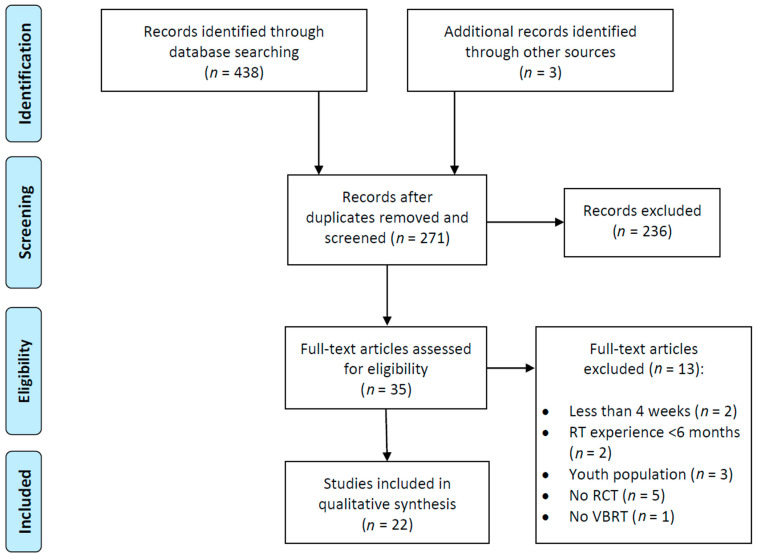
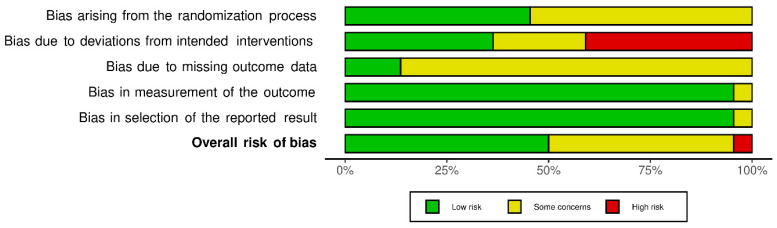
Weight resistance training (RT) has been shown to positively influence physical performance. Within the last two decades, a methodology based on monitoring RT through movement velocity (also called velocity-based resistance training, VBRT) has emerged. The aim of this PRISMA-based systematic review was to evaluate the effect of VBRT programs on variables related to muscle strength (one-repetition maximum, 1-RM), and high-speed actions (vertical jump, and sprint performance) in trained subjects. The search for published articles was performed in PubMed/MEDLINE, SPORT Discus/EBSCO, OVID, Web of Science, Scopus, and EMBASE databases using Boolean algorithms independently. A total of 22 studies met the inclusion criteria of this systematic review (a low-to-moderate overall risk of bias of the analyzed studies was detected). VBRT is an effective method to improve 1-RM, vertical jump and sprint. According to the results of the analyzed studies, it is not necessary to reach high muscle failure in order to achieve the best training results. These findings reinforce the fact that it is possible to optimize exercise adaptations with less fatigue. Future studies should corroborate these findings in female population.
Overview
The claims and statistics of this paper haven’t been checked yet.
Free: it reads the open-access text and checks the first 5 claims that cite a source we can check. Create a free account to check every claim.
Integrity signals
Registry
Cites
Statistics
Figures
Verification
Claims the paper makes
The claims and statistics of this paper haven’t been checked yet.
Free: it reads the open-access text and checks the first 5 claims that cite a source we can check. Create a free account to check every claim.
Claims other papers make about this one
Each is checked against this paper’s own text: does it say what the citing paper says it does?
The cited source says what the claim attributes to it.
In the citing paper
“Compared with CTRL, strength was impacted by engaging in standard RT (17,24,29–56), circuit RT (57–59), elastic band RT (60–62), home-based RT (63,64), and velocity-based RT (65,66).”
The cited source says what the claim attributes to it.
In the citing paper
“In comparisons between distinct RTx, jumping performance was positively affected by velocity-based RT versus standard RT (65), but jumping performance was not affected by set structure (108,109).”
The cited source says what the claim attributes to it.
In the citing paper
“In comparisons between distinct RTx, running performance was positively affected only by velocity-based RT versus standard RT (65).”
Self-check
Percentages, sums and reported differences re-computed from the paper’s own numbers.
The self-check needs the paper’s full text.
Citations
Cites
The PRISMA 2020 statement: An updated guideline for reporting systematic reviews
Page, M. J., McKenzie, J. E., Bossuyt, P. M., Boutron, I., Hoffmann, T. C., Mulrow, C. D., Shamseer, L., Tetzlaff, J. M., Akl, E. A., Brennan, S. E., et al. (2021) · BMJ · doi:10.1136/bmj.n71 · Cited by 108,283
RoB 2: a revised tool for assessing risk of bias in randomised trials
Sterne, J. A. C., Savović, J., Page, M. J., Elbers, R. G., Blencowe, N. S., Boutron, I., Cates, C. J., Cheng, H.-Y., Corbett, M. S., Eldridge, S. M., et al. (2019) · BMJ · doi:10.1136/bmj.l4898 · Cited by 34,787 · cited 1×
“0 [50] including: selection bias, performance bias, detection bias, attrition bias, outcome reporting bias, and any other bias.”
BackgroundThe PRISMA 2020 Statement: An Updated Guideline for Reporting Systematic Reviews
Page, M. J., McKenzie, J. E., Bossuyt, P. M., Boutron, I., Hoffmann, T. C., Mulrow, C. D., Shamseer, L., Tetzlaff, J. M., Akl, E. A., Brennan, S. E., et al. (2021) · International Journal of Surgery · doi:10.1016/j.ijsu.2021.105906 · Cited by 11,748
The PRISMA 2020 statement: an updated guideline for reporting systematic reviews
Page, M. J., McKenzie, J., Bossuyt, P., Boutron, I., Hoffmann, T., mulrow, C., Shamseer, L., Tetzlaff, J., Akl, E., Brennan, S. E., et al. (2020) · doi:10.31222/osf.io/v7gm2_v1 · Cited by 8,090
McGuinness, L. A., & Higgins, J. P. T. (2021) · Research Synthesis Methods · doi:10.1002/jrsm.1411 · Cited by 5,579 · cited 1×
“Figures to represent the results of the risk of bias assessment were developed using the package Risk-of-bias Visualization (robvis) [51].”
MethodFundamentals of Resistance Training: Progression and Exercise Prescription
KRAEMER, W. J., & RATAMESS, N. A. (2004) · Medicine & Science in Sports & Exercise · doi:10.1249/01.mss.0000121945.36635.61 · Cited by 1,992 · cited 2×
“On the other hand, volume is prescribed in terms of sets and repetitions per set [12].”
BackgroundMethodEriksen, M. B., & Frandsen, T. F. (2018) · Journal of the Medical Library Association · doi:10.5195/jmla.2018.345 · Cited by 1,216
Velocity Loss as an Indicator of Neuromuscular Fatigue during Resistance Training
SÁNCHEZ-MEDINA, L., & GONZÁLEZ-BADILLO, J. J. (2011) · Medicine & Science in Sports & Exercise · doi:10.1249/mss.0b013e318213f880 · Cited by 852 · cited 3×
“In addition, it has been observed that, for the same relative load, the magnitude of VL incurred in the set determine the degree of fatigue [27,28].”
BackgroundMethodMovement Velocity as a Measure of Loading Intensity in Resistance Training
González-Badillo, J. J., & Sánchez-Medina, L. (2010) · International Journal of Sports Medicine · doi:10.1055/s-0030-1248333 · Cited by 788 · cited 3×
“Thus, it is possible to estimate the 1% RM that is being used as soon as the first repetition with any given absolute load is performed [14].”
BackgroundMethodThe Role of Resistance Exercise Intensity on Muscle Fibre Adaptations
Fry, A. C. (2004) · Sports Medicine · doi:10.2165/00007256-200434100-00004 · Cited by 626 · cited 1×
“Traditionally, relative load during RT has been configured using the percentage of one-repetition maximum (1-RM) or the maximum number of repetitions complete against an absolute load (X-RM) [11,12].”
MethodInterpreting Power-Force-Velocity Profiles for Individualized and Specific Training
Morin, J.-B., & Samozino, P. (2016) · International Journal of Sports Physiology and Performance · doi:10.1123/ijspp.2015-0638 · Cited by 505 · cited 1×
“In an attempt to answer this fundamental question, some studies have shown the importance of VBRT method for monitoring and adjusting the fatigue degree in real time in order to find the optimal training load for improving the physical performance [28,35,36].”
MethodPareja‐Blanco, F., Rodríguez‐Rosell, D., Sánchez‐Medina, L., Sanchis‐Moysi, J., Dorado, C., Mora‐Custodio, R., Yáñez‐García, J. M., Morales‐Alamo, D., Pérez‐Suárez, I., Calbet, J. A. L., et al. (2017) · Scandinavian Journal of Medicine & Science in Sports · doi:10.1111/sms.12678 · Cited by 505
Self-citationVelocity-Based Training: From Theory to Application
Weakley, J., Mann, B., Banyard, H., McLaren, S., Scott, T., & Garcia-Ramos, A. (2021) · Strength & Conditioning Journal · doi:10.1519/ssc.0000000000000560 · Cited by 460 · cited 2×
“To solve these problems of monitoring and quantification of the training loads, recent attention has been placed on movement velocity during RT [14,20,21].”
BackgroundMethodZourdos, M. C., Klemp, A., Dolan, C., Quiles, J. M., Schau, K. A., Jo, E., Helms, E., Esgro, B., Duncan, S., Garcia Merino, S., et al. (2016) · Journal of Strength and Conditioning Research · doi:10.1519/jsc.0000000000001049 · Cited by 418 · cited 1×
“However, the main limitation of the 1-RM percentage-based RT (PBT) method to prescribe the relative load is the mismatch between the actual load and the proposed load that occurs as a result of daily changes in 1-RM [16].”
MethodYang, Z., Scott, C. A., Mao, C., Tang, J., & Farmer, A. J. (2014) · Sports Medicine · doi:10.1007/s40279-013-0128-8 · Cited by 346 · cited 1×
“In addition, RT is also a key factor to improve body composition in physically active population [5,6], health condition in the general population [7,8], and even as preventive and palliative treatment in many metabolic and neurodegenerative diseases [9,10].”
BackgroundIzquierdo, M., Ibañez, J., González-Badillo, J. J., Häkkinen, K., Ratamess, N. A., Kraemer, W. J., French, D. N., Eslava, J., Altadill, A., Asiain, X., et al. (2006) · Journal of Applied Physiology · doi:10.1152/japplphysiol.01400.2005 · Cited by 316
Kim, Y., Lai, B., Mehta, T., Thirumalai, M., Padalabalanarayanan, S., Rimmer, J. H., & Motl, R. W. (2019) · American Journal of Physical Medicine & Rehabilitation · doi:10.1097/phm.0000000000001174 · Cited by 252 · cited 1×
“In addition, RT is also a key factor to improve body composition in physically active population [5,6], health condition in the general population [7,8], and even as preventive and palliative treatment in many metabolic and neurodegenerative diseases [9,10].”
BackgroundThe Effect of Strength Training on Performance in Endurance Athletes
Beattie, K., Kenny, I. C., Lyons, M., & Carson, B. P. (2014) · Sports Medicine · doi:10.1007/s40279-014-0157-y · Cited by 244
Movement velocity as a measure of exercise intensity in three lower limb exercises
Conceição, F., Fernandes, J., Lewis, M., Gonzaléz-Badillo, J. J., & Jimenéz-Reyes, P. (2016) · Journal of Sports Sciences · doi:10.1080/02640414.2015.1090010 · Cited by 234 · cited 1×
“Both methodologies present several limitations related to excessive degree of fatigue, spending time, and difficulty in applying tests of these characteristics to certain populations, such as the elderly, young people, and athletes without previous experience in RT [14,15].”
BackgroundSpiering (2008) · doi:10.2165/00007256-200838070-00001 · Cited by 227
González‐Badillo, J. J., Rodríguez‐Rosell, D., Sánchez‐Medina, L., Gorostiaga, E. M., & Pareja‐Blanco, F. (2014) · European Journal of Sport Science · doi:10.1080/17461391.2014.905987 · Cited by 223 · cited 2×
“Of the selected studies, only three did not evaluate the effect of a VBRT program on countermovement jump (CMJ) [54,58,61].”
BackgroundMethodSelf-citationTHE ACUTE EFFECTS OF HEAVY-LOAD SQUATS AND LOADED COUNTERMOVEMENT JUMPS ON SPRINT PERFORMANCE
MCBRIDE, J. M., NIMPHIUS, S., & ERICKSON, T. M. (2005) · Journal of Strength and Conditioning Research · doi:10.1519/00124278-200511000-00029 · Cited by 219
Velocity Loss as a Variable for Monitoring Resistance Exercise
González-Badillo, J. J., Yañez-García, J. M., Mora-Custodio, R., & Rodríguez-Rosell, D. (2017) · International Journal of Sports Medicine · doi:10.1055/s-0042-120324 · Cited by 219 · cited 3×
“These results suggest that, rather than prescribing a fixed number of repetitions with a given relative load, training volume during RT should be monitored using the magnitude of VL attained in each exercise set because it is closely linked to the actual level of effort being incurred [18,19,25,26].”
BackgroundSelf-citationEffect of Movement Velocity during Resistance Training on Neuromuscular Performance
Pareja-Blanco, F., Rodríguez-Rosell, D., Sánchez-Medina, L., Gorostiaga, E., & González-Badillo, J. (2014) · International Journal of Sports Medicine · doi:10.1055/s-0033-1363985 · Cited by 218 · cited 3×
“This resulted in lower total volume than the other groups and, therefore, a lower level of accumulated fatigue [29,30,39,55,59,60,66,67].”
BackgroundSelf-citationEffects of Velocity Loss During Resistance Training on Performance in Professional Soccer Players
Pareja-Blanco, F., Sánchez-Medina, L., Suárez-Arrones, L., & González-Badillo, J. J. (2017) · International Journal of Sports Physiology and Performance · doi:10.1123/ijspp.2016-0170 · Cited by 192 · cited 2×
“indicate fatigue (as a consequence of reaching a higher percentage of VL in the series), but would also be could also lead to suboptimal adaptations [22,24,42].”
BackgroundDorrell, H. F., Smith, M. F., & Gee, T. (2019) · The Journal of Strength and Conditioning Research · doi:10.1519/jsc.0000000000003089 · Cited by 185 · cited 2×
“On the other hand, although VBRT-based programming in the overhead press has also shown significant improvements in 1-RM values, no improvements have been described for the deadlift [62].”
BackgroundDavies, T., Orr, R., Halaki, M., & Hackett, D. (2016) · Sports Medicine · doi:10.1007/s40279-015-0451-3 · Cited by 184
The Impact of Resistance Training on Swimming Performance: A Systematic Review
Crowley, E., Harrison, A. J., & Lyons, M. (2017) · Sports Medicine · doi:10.1007/s40279-017-0730-2 · Cited by 181
Weakley, J., Morrison, M., García-Ramos, A., Johnston, R., James, L., & Cole, M. H. (2021) · Sports Medicine · doi:10.1007/s40279-020-01382-w · Cited by 175 · cited 2×
“In addition, with the emergence of new brands of linear position transducers, accelerometers, and applications for mobile devices [46,47], VBRT has become more accessible to the general public and has gone from being applied in the laboratory to become a tool for the personal trainer who seeks to control and program t…”
BackgroundVelocity Loss as a Critical Variable Determining the Adaptations to Strength Training
PAREJA-BLANCO, F., ALCAZAR, J., SÁNCHEZ-VALDEPEÑAS, J., CORNEJO-DAZA, P. J., PIQUERAS-SANCHIZ, F., MORA-VELA, R., SÁNCHEZ-MORENO, M., BACHERO-MENA, B., ORTEGA-BECERRA, M., & ALEGRE, L. M. (2020) · Medicine & Science in Sports & Exercise · doi:10.1249/mss.0000000000002295 · Cited by 172
Strength and Power Qualities Are Highly Associated With Punching Impact in Elite Amateur Boxers
Loturco, I., Nakamura, F. Y., Artioli, G. G., Kobal, R., Kitamura, K., Cal Abad, C. C., Cruz, I. F., Romano, F., Pereira, L. A., & Franchini, E. (2016) · Journal of Strength and Conditioning Research · doi:10.1519/jsc.0000000000001075 · Cited by 167
Randell, A. D., Cronin, J. B., Keogh, J., Gill, N. D., & Pedersen, M. C. (2010) · The Journal of Strength and Conditioning Research · doi:10.1519/jsc.0b013e3181fee634 · Cited by 165 · cited 2×
“Similar to the other strength-related variables, the full range of motion [63] with feedback [52,64] seems to show the best results on CMJ.”
BackgroundResultRodríguez-Rosell, D., Yáñez-García, J. M., Sánchez-Medina, L., Mora-Custodio, R., & González-Badillo, J. J. (2020) · Journal of Strength and Conditioning Research · doi:10.1519/jsc.0000000000002881 · Cited by 161 · cited 3×
“These results suggest that, rather than prescribing a fixed number of repetitions with a given relative load, training volume during RT should be monitored using the magnitude of VL attained in each exercise set because it is closely linked to the actual level of effort being incurred [18,19,25,26].”
BackgroundSelf-citationSarcopenia: Etiology, Nutritional Approaches, and miRNAs
Cannataro, R., Carbone, L., Petro, J. L., Cione, E., Vargas, S., Angulo, H., Forero, D. A., Odriozola-Martínez, A., Kreider, R. B., & Bonilla, D. A. (2021) · International Journal of Molecular Sciences · doi:10.3390/ijms22189724 · Cited by 157 · cited 1×
“In addition, RT is also a key factor to improve body composition in physically active population [5,6], health condition in the general population [7,8], and even as preventive and palliative treatment in many metabolic and neurodegenerative diseases [9,10].”
BackgroundSelf-citationLoturco, I., Contreras, B. M., Kobal, R., Fernandes, V., Moura, N., Siqueira, F., Winckler, C., Suchomel, T. J., & Pereira, L. A. (2018) · PLoS ONE · doi:10.1371/journal.pone.0201475 · Cited by 149
Understanding the Science of Resistance Training: An Evolutionary Perspective
Kraemer, W. J., Ratamess, N. A., Flanagan, S. D., Shurley, J. P., Todd, J., & Todd, T. C. (2017) · Sports Medicine · doi:10.1007/s40279-017-0779-y · Cited by 141 · cited 1×
“indicate fatigue (as a consequence of reaching a higher percentage of VL in the series), but would also be could also lead to suboptimal adaptations [22,24,42].”
BackgroundSchoenfeld, B., Fisher, J., Grgic, J., Haun, C., Helms, E., Phillips, S., Steele, J., & Vigotsky, A. (2021) · International Journal of Strength and Conditioning · doi:10.47206/ijsc.v1i1.81 · Cited by 124 · cited 1×
“In addition, RT is also a key factor to improve body composition in physically active population [5,6], health condition in the general population [7,8], and even as preventive and palliative treatment in many metabolic and neurodegenerative diseases [9,10].”
BackgroundBlazevich, A. J., Wilson, C. J., Alcaraz, P. E., & Rubio-Arias, J. A. (2020) · Sports Medicine · doi:10.1007/s40279-019-01239-x · Cited by 119 · cited 3×
“If the athlete presents higher movement velocities against the same absolute load, this indicates an improvement of the maximum strength and the RFD against that load.”
BackgroundBanyard, H. G., Tufano, J. J., Weakley, J. J. S., Wu, S. S. X., Jukić, I., & Nosaka, K. (2020) · International Journal of Sports Physiology and Performance · doi:10.1123/ijspp.2019-0999 · Cited by 118 · cited 4×
“[60] found that both training methods might increase 1-RM although higher clinical significance (larger effect size) favored PBT in stronger individuals while VBRT was more advantageous for improving high-speed actions (e.”
BackgroundResultInfluentialTime Course of Recovery From Resistance Exercise With Different Set Configurations
Pareja-Blanco, F., Rodríguez-Rosell, D., Aagaard, P., Sánchez-Medina, L., Ribas-Serna, J., Mora-Custodio, R., Otero-Esquina, C., Yáñez-García, J. M., & González-Badillo, J. J. (2020) · Journal of Strength and Conditioning Research · doi:10.1519/jsc.0000000000002756 · Cited by 113 · cited 1×
“Additionally„ this type of RT induced lower metabolic stress and endocrine response [27,34].”
Self-citationAcute and delayed response to resistance exercise leading or not leading to muscle failure
Pareja‐Blanco, F., Rodríguez‐Rosell, D., Sánchez‐Medina, L., Ribas‐Serna, J., López‐López, C., Mora‐Custodio, R., Yáñez‐García, J. M., & González‐Badillo, J. J. (2017) · Clinical Physiology and Functional Imaging · doi:10.1111/cpf.12348 · Cited by 111 · cited 1×
“[38,68] who indicated that the degree of fatigue attained at VL below 10% could be an important factor in optimizing neuromuscular adaptations during a VBRT program.”
BackgroundSelf-citationEffects of Velocity-Based Training on Strength and Power in Elite Athletes—A Systematic Review
Włodarczyk, M., Adamus, P., Zieliński, J., & Kantanista, A. (2021) · International Journal of Environmental Research and Public Health · doi:10.3390/ijerph18105257 · Cited by 106
Movement Velocity in Resistance Training
Pereira, M. I. R., & Gomes, P. S. C. (2003) · Sports Medicine · doi:10.2165/00007256-200333060-00004 · Cited by 101 · cited 1×
“To solve these problems of monitoring and quantification of the training loads, recent attention has been placed on movement velocity during RT [14,20,21].”
MethodRodríguez-Rosell, D., Yáñez-García, J. M., Mora-Custodio, R., Pareja-Blanco, F., Ravelo-García, A. G., Ribas-Serna, J., & González-Badillo, J. J. (2020) · Applied Physiology, Nutrition, and Metabolism · doi:10.1139/apnm-2019-0829 · Cited by 101 · cited 7×
“Although the concentrations of certain biomarkers did not show important differences, a significant increase in troponin T (a marker of muscle damage) was observed for training groups with 30% of VL compared to a 10% of VL in the set [30].”
BackgroundMethodSelf-citationVieira, A. F., Umpierre, D., Teodoro, J. L., Lisboa, S. C., Baroni, B. M., Izquierdo, M., & Cadore, E. L. (2021) · Journal of Strength & Conditioning Research · doi:10.1519/jsc.0000000000003936 · Cited by 94 · cited 1×
“In fact, it is worth noting that this research evaluated different ranges of movement during bench press (full, two-thirds, and one-third bench press) without finding significant effects in the group that trained at one-third of the movement and minor effects in those subjects who performed partial bench press [31].”
BackgroundBalsalobre‐Fernández, C., & Torres-Ronda, L. (2021) · Sports · doi:10.3390/sports9040047 · Cited by 94
Effects of In-Season Velocity- Versus Percentage-Based Training in Academy Rugby League Players
Orange, S. T., Metcalfe, J. W., Robinson, A., Applegarth, M. J., & Liefeith, A. (2020) · International Journal of Sports Physiology and Performance · doi:10.1123/ijspp.2019-0058 · Cited by 89 · cited 2×
“This resulted in lower total volume than the other groups and, therefore, a lower level of accumulated fatigue [29,30,39,55,59,60,66,67].”
BackgroundGONZÁLEZ-BADILLO, J. J., IZQUIERDO, M., & GOROSTIAGA, E. M. (2006) · Journal of Strength and Conditioning Research · doi:10.1519/00124278-200602000-00012 · Cited by 86
Effect of velocity loss during squat training on neuromuscular performance
Rodríguez‐Rosell, D., Yáñez‐García, J. M., Mora‐Custodio, R., Sánchez‐Medina, L., Ribas‐Serna, J., & González‐Badillo, J. J. (2021) · Scandinavian Journal of Medicine & Science in Sports · doi:10.1111/sms.13967 · Cited by 86 · cited 6×
“However, only eight studies [29,30,39,55,59,60,66,67] concluded that VBRT has positive or superior effects to other strategies, while the other studies did not report improvements with respect to the control group.”
BackgroundMethodSelf-citationPallarés, J. G., Cava, A. M., Courel‐Ibáñez, J., González‐Badillo, J. J., & Morán‐Navarro, R. (2020) · European Journal of Sport Science · doi:10.1080/17461391.2019.1612952 · Cited by 85 · cited 3×
“[63] evaluated three different positions of the squat exercise: full squat, parallel squat, and half squat.”
BackgroundResultMcBurnie, A. J., Allen, K. P., Garry, M., Martin, M., Thomas, D., Jones, P. A., Comfort, P., & McMahon, J. J. (2019) · Strength and conditioning journal · doi:10.1519/ssc.0000000000000496 · Cited by 82 · cited 1×
“, sleep, diet, and training-induced fatigue) that affect the athlete’s “true” load and daily preparedness [17].”
BackgroundGaliano, C., Pareja-Blanco, F., Hidalgo de Mora, J., & Sáez de Villarreal, E. (2022) · Journal of Strength & Conditioning Research · doi:10.1519/jsc.0000000000003487 · Cited by 78 · cited 3×
“This resulted in lower total volume than the other groups and, therefore, a lower level of accumulated fatigue [29,30,39,55,59,60,66,67].”
BackgroundFreitas, T. T., Calleja-González, J., Carlos-Vivas, J., Marín-Cascales, E., & Alcaraz, P. E. (2019) · Journal of Sports Sciences · doi:10.1080/02640414.2018.1504618 · Cited by 75
Thompson, S. W., Rogerson, D., Ruddock, A., & Barnes, A. (2020) · Sports Medicine · doi:10.1007/s40279-019-01241-3 · Cited by 75 · cited 1×
“However, additional training methods such as VBRT might optimize load prescription and exercise adaptations [75].”
MethodPérez-Castilla, A., García-Ramos, A., Padial, P., Morales-Artacho, A. J., & Feriche, B. (2018) · Journal of Sports Sciences · doi:10.1080/02640414.2017.1376900 · Cited by 72 · cited 1×
“Studies have shown that it is not necessary to generate high magnitude of VL in the set (>20%) to increase muscle strength in exercises such as squat [57], pull-ups [61], and bench or overhead press [62].”
BackgroundThe Role of Velocity Based Training in the Strength Periodization for Modern Athletes
Guerriero, A., Varalda, C., & Piacentini, M. F. (2018) · Journal of Functional Morphology and Kinesiology · doi:10.3390/jfmk3040055 · Cited by 69 · cited 1×
“In this regard, it has been reported that VBRT generates significant improvements in the rate of force development (RFD) of trained athletes, which would directly influence athletic actions, such as jumps and sprints [37].”
BackgroundRamos Veliz, R., Requena, B., Suarez-Arrones, L., Newton, R. U., & Sáez de Villarreal, E. (2014) · Journal of Strength and Conditioning Research · doi:10.1519/jsc.0000000000000240 · Cited by 64
Lindberg, K., Solberg, P. A., Rønnestad, B. R., Frank, M. T., Larsen, T. M., Abusdal, G., Berntsen, S., Paulsen, G., Sveen, O., Seynnes, O., et al. (2021) · Scandinavian Journal of Medicine and Science in Sports · doi:10.1111/sms.14044 · Cited by 60 · cited 1×
“Although the application of the VBRT has been shown to improve training in highperformance athletes [43,44] some studies have found no superior effects when individualizing based on the force-velocity profile [45].”
MethodEffort Index as a Novel Variable for Monitoring the Level of Effort During Resistance Exercises
Rodríguez-Rosell, D., Yáñez-García, J. M., Torres-Torrelo, J., Mora-Custodio, R., Marques, M. C., & González-Badillo, J. J. (2018) · Journal of Strength and Conditioning Research · doi:10.1519/jsc.0000000000002629 · Cited by 58 · cited 2×
“In addition, it has been observed that, for the same relative load, the magnitude of VL incurred in the set determine the degree of fatigue [27,28].”
BackgroundMethodSelf-citation(2008) · Europe PMC (PubMed Central) · Cited by 57
Jiménez‐Reyes, P., Castaño‐Zambudio, A., Cuadrado‐Peñafiel, V., González-Hernández, J. M., Capelo‐Ramírez, F., Martínez-Aranda, L. M., & González‐Badillo, J. J. (2021) · PeerJ · doi:10.7717/peerj.10942 · Cited by 54 · cited 3×
“This resulted in lower total volume than the other groups and, therefore, a lower level of accumulated fatigue [29,30,39,55,59,60,66,67].”
BackgroundThiele, D., Prieske, O., Chaabene, H., & Granacher, U. (2020) · Journal of Sports Sciences · doi:10.1080/02640414.2020.1745502 · Cited by 53
Sánchez-Moreno, M., Cornejo-Daza, P. J., González-Badillo, J. J., & Pareja-Blanco, F. (2020) · Journal of Strength and Conditioning Research · doi:10.1519/jsc.0000000000003500 · Cited by 49 · cited 2×
“Studies have shown that it is not necessary to generate high magnitude of VL in the set (>20%) to increase muscle strength in exercises such as squat [57], pull-ups [61], and bench or overhead press [62].”
BackgroundMontalvo‐Pérez, A., Alejo, L. B., Valenzuela, P. L., Gil-Cabrera, J., Talavera, E., Lucia, A., & Barranco‐Gil, D. (2021) · Frontiers in Physiology · doi:10.3389/fphys.2021.586113 · Cited by 49 · cited 1×
“Although the application of the VBRT has been shown to improve training in highperformance athletes [43,44] some studies have found no superior effects when individualizing based on the force-velocity profile [45].”
MethodMartínez-Cava, A., Hernández-Belmonte, A., Courel-Ibáñez, J., Morán-Navarro, R., González-Badillo, J. J., & Pallarés, J. G. (2022) · Journal of Strength & Conditioning Research · doi:10.1519/jsc.0000000000003391 · Cited by 41 · cited 2×
“Interestingly, it has been reported that performing this exercise in a partial range of moment does not generate positive effects during VBRT-based programming in recreational and well-trained athletes [58].”
BackgroundRodríguez-Rosell, D., Martínez-Cava, A., Yáñez-García, J. M., Hernández-Belmonte, A., Mora-Custodio, R., Morán-Navarro, R., Pallarés, J. G., & González-Badillo, J. J. (2021) · Physiology & Behavior · doi:10.1016/j.physbeh.2021.113337 · Cited by 36 · cited 2×
“Some studies have evaluated biochemical markers of muscle damage and electromyography activity during a VBRT program with different VL in the set [29,30,65].”
BackgroundSelf-citationAutoregulation in Resistance Training: A Comparison of Subjective Versus Objective Methods.
Shattock, K., & Tee, J. C. (2022) · PubMed · doi:10.1519/jsc.0000000000003530 · Cited by 35 · cited 1×
“Similar to the other strength-related variables, the full range of motion [63] with feedback [52,64] seems to show the best results on CMJ.”
ResultBautista, I. J., Ríos, I. J. C., Robinson, J. E., Ríos, L. J. C., & Martín, I. M. (2015) · The Journal of Strength and Conditioning Research · doi:10.1519/jsc.0000000000001112 · Cited by 34 · cited 1×
“In an attempt to answer this fundamental question, some studies have shown the importance of VBRT method for monitoring and adjusting the fatigue degree in real time in order to find the optimal training load for improving the physical performance [28,35,36].”
MethodThiele, D., Prieske, O., Lesinski, M., & Granacher, U. (2020) · Frontiers in Physiology · doi:10.3389/fphys.2020.00888 · Cited by 30
The effects of eccentric, velocity-based training on strength and power in collegiate athletes
Dolezal, S. M., Llewellyn, T. L., & Frese, D. L. (2016) · International journal of exercise science · doi:10.70252/ncec8246 · Cited by 28
Picerno, P. (2017) · Asian Journal of Sports Medicine · doi:10.5812/asjsm.15590 · Cited by 28
Riscart-López, J., Rendeiro-Pinho, G., Mil-Homens, P. V., Soares-daCosta, R., Loturco, I., Pareja‐Blanco, F., & León-Prados, J. A. (2020) · The Journal of Strength and Conditioning Research · doi:10.1519/jsc.0000000000003934 · Cited by 26 · cited 3×
“This resulted in lower total volume than the other groups and, therefore, a lower level of accumulated fatigue [29,30,39,55,59,60,66,67].”
BackgroundPérez‐Castilla, A., Boullosa, D. A., & García‐Ramos, A. (2020) · The Journal of Strength and Conditioning Research · doi:10.1519/jsc.0000000000003739 · Cited by 24
Relative Load Prediction by Velocity and the OMNI-RES 0–10 Scale in Parallel Squat
Naclerio, F., & Larumbe‐Zabala, E. (2016) · The Journal of Strength and Conditioning Research · doi:10.1519/jsc.0000000000001601 · Cited by 23 · cited 1×
“These results suggest that, rather than prescribing a fixed number of repetitions with a given relative load, training volume during RT should be monitored using the magnitude of VL attained in each exercise set because it is closely linked to the actual level of effort being incurred [18,19,25,26].”
BackgroundBarjaste, A., & Mirzaei, B. (2018) · The Journal of Sports Medicine and Physical Fitness · doi:10.23736/s0022-4707.17.07129-8 · Cited by 17 · cited 1×
“indicate fatigue (as a consequence of reaching a higher percentage of VL in the series), but would also be could also lead to suboptimal adaptations [22,24,42].”
BackgroundEffects of cluster training on body composition and strength in resistance-trained men
Vargas-Molina, S., Romance, R., Schoenfeld, B. J., García, M., Petro, J. L., Bonilla, D. A., Kreider, R. B., Martin-Rivera, F., & Benítez‐Porres, J. (2020) · Isokinetics and Exercise Science · doi:10.3233/ies-205122 · Cited by 10 · cited 1×
“In addition, RT is also a key factor to improve body composition in physically active population [5,6], health condition in the general population [7,8], and even as preventive and palliative treatment in many metabolic and neurodegenerative diseases [9,10].”
BackgroundSelf-citationEffects Of Undulating Vs. Linear Periodization On Body Composition In Untrained Older Adults
Vargas-Molina, S., García-Sillero, M., Romance, R., Medina, I., Bonilla, D. A., Schoenfeld, B. J., Petro, J. L., Kreider, R. B., & Benítez‐Porres, J. (2020) · Medicine & Science in Sports & Exercise · doi:10.1249/01.mss.0000683180.91324.2e · Cited by 2 · cited 1×
“In addition, RT is also a key factor to improve body composition in physically active population [5,6], health condition in the general population [7,8], and even as preventive and palliative treatment in many metabolic and neurodegenerative diseases [9,10].”
BackgroundSelf-citation
Cited by
Strength training in elderly: An useful tool against sarcopenia
Cannataro, R., Cione, E., Bonilla, D. A., Cerullo, G., Angelini, F., & D’Antona, G. (2022) · Frontiers in Sports and Active Living · doi:10.3389/fspor.2022.950949 · Cited by 89
“It is worth mentioning that velocity-based resistance training is a methodology based on monitoring and dosing the training load by measuring movement velocity (Baena-Marín et al., 2022).”
MethodSelf-citationCURRIER, B. S., D’SOUZA, A. C., SINGH, M. A. F., LOWISZ, C. V., RAWSON, E. S., SCHOENFELD, B. J., SMITH-RYAN, A. E., STEEN, J. P., THOMAS, G. A., TRIPLETT, N. T., et al. (2026) · Medicine & Science in Sports & Exercise · doi:10.1249/mss.0000000000003897 · Cited by 105
Held, S., Speer, K., Rappelt, L., Wicker, P. V., & Donath, L. (2022) · Frontiers in Physiology · doi:10.3389/fphys.2022.926972 · Cited by 65
Pastor, A. S., García-Sánchez, C., Nieto, M. M., & de la Rubia, A. (2023) · International Journal of Environmental Research and Public Health · doi:10.3390/ijerph20064833 · Cited by 63
Petro, J. L., Ferrari, G., Cardozo, L. A., Vargas-Molina, S., Carbone, L., Kreider, R. B., & Bonilla, D. A. (2024) · Sports Health A Multidisciplinary Approach · doi:10.1177/19417381241260412 · Cited by 28
Self-citation
Metadata
- Authors
- Baena-Marín, M., Rojas-Jaramillo, A., González-Santamaría, J., Rodríguez-Rosell, D., Petro, J. L., Kreider, R. B., & Bonilla, D. A.
- Affiliations
- Universidad Tecnológica de Pereira (CO)
- Universidad de Antioquia (CO)
- Physical Performance & Sports Research Center, Universidad Pablo de Olavide, 41013 Seville, Spain
- Universidad de Córdoba (CO)
- Texas A&M University (US)
- University of the Basque Country (ES)
- Corresponding author
- Bonilla, Diego A.
- ORCID
- Venue
- Sports
- Publisher
- MDPI AG
- Published
- 2022-01-04
- Volume
- 10
- Issue
- 1
- Pages
- 8
- ISSN
- 2075-4663 (ISSN-L)
- PMC
- PMC8822898
- OpenAlex
- W4205672490
- Semantic Scholar
- 46bb7b795e36d8b150a993e46dae834301b3e438
- Cited by
- 35
- References
- 79
- Citations by year
- 2026: 7 · 2025: 10 · 2024: 7 · 2023: 7 · 2022: 4
- FWCI
- 1.54
- Type
- journal article
- Language
- en
- Open access
- gold
- doi.org
- Licence
- Locations
- Sports (publishedVersion, cc-by)
- PubMed Central (publishedVersion, cc-by)
- PubMed (publishedVersion)
- RIO (Universidad Pablo de Olavide) (submittedVersion, cc-by)
- DOAJ (DOAJ: Directory of Open Access Journals) (submittedVersion, cc-by-sa)
- Topics
- Health Sciences › Medicine › Orthopedics and Sports Medicine › Sports Performance and Training
- Health Sciences › Medicine › Physiology (medical) › Cardiovascular and exercise physiology
- Health Sciences › Health Professions › Physical Therapy, Sports Therapy and Rehabilitation › Physical Education and Training Studies
- Keywords
- movement speed, one-repetition maximum, vertical jump, sprint performance, muscle strength, trained athletes, training load monitoring, muscle failure
About these checks
Registry, retraction, Cites and statistics results are computed, not judged, with one exception: a printed reference that no index lists is read once by a model before it counts as a citation error. Claims are extracted by a model and kept only when their quote appears verbatim in the text; each cited source is then checked, with a model’s help, for whether it says what the claim relies on. Those verdicts can be wrong — read the claim’s quote and the cited source before relying on one.
Statistics and arithmetic are recomputed, not judged.
Confidence bands are shown only for fields calibrated on our annotated test set. None is calibrated yet, so no band is shown.
What counts as a claim ›How we measure confidence ›How we check this ›
Are you an author, or do you see a problem with this page? Request a review
Data sources
Bibliographic data: Semantic Scholar, OpenAlex, Crossref.
Contains information from the Semantic Scholar Academic Graph Datasets, made available under the ODC Attribution License (ODC-BY 1.0).
Semantic Scholar’s data is described in: Kinney, R., et al. (2023). The Semantic Scholar Open Data Platform. arXiv:2301.10140.
