

The DOI matches its Crossref record; 8 of the 8 references it cites were found in a registry or an index.
Prevalence and Correlates of Academic Dishonesty: Towards a Sustainable University
Abstract
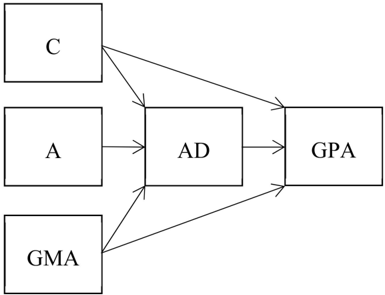
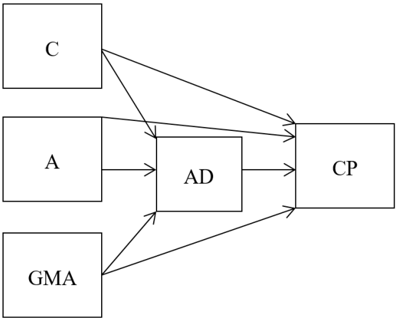
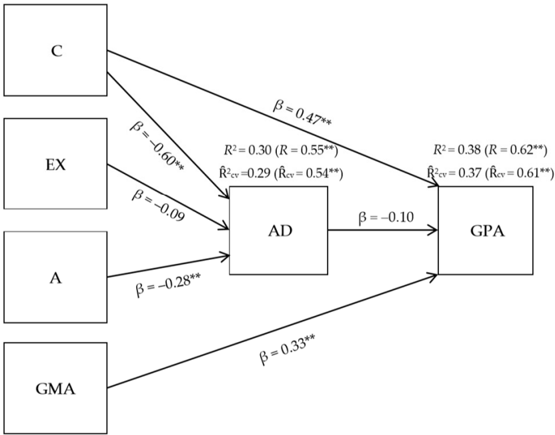
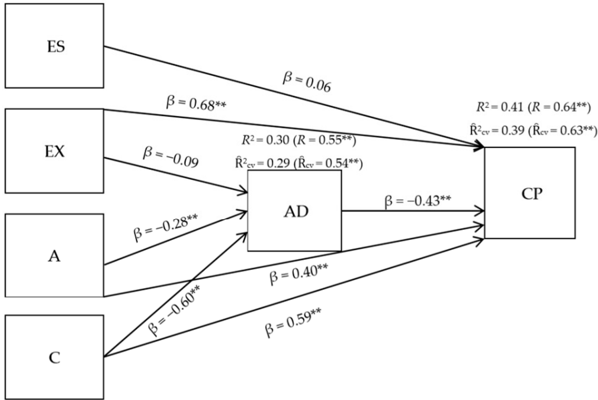
Academic dishonesty (AD) is a problem that affects all higher education institutions. It hurts their reputation, undermines integrity programs, and sidelines sustainability efforts. To understand its negative impact, the empirical study of AD is a critical issue. Up to now, the majority of research on AD has taken place in the North American context. The current research analyzes the prevalence of AD in a non-American university and, focusing on individual differences, examines some of its causes and consequences. The results prove that: (1) AD is a problem that occurs frequently among students; (2) three dimensions of the big five personality model correlate with AD. These are conscientiousness (ρ = −0.49, p < 0.01), extraversion (ρ = 0.39, p < 0.01), and agreeableness (ρ = −0.14, p < 0.01); (3) AD is associated to students’ GPA (Grade Point Average) (ρ = −0.34, p < 0.01) and contextual performance (ρ = −0.50, p < 0.01); (4) personality accounts for 30% of AD variance (R = 0.55, p < 0.01); and (5) AD and some of the studied individual differences explain 38% and 41% of GPA and contextual performance variance (R = 0.62, p < 0.01 and R = 0.64, p < 0.01). Implications for research and practice are discussed.
Overview
The claims and statistics of this paper haven’t been checked yet.
Run the check — free, no account needed. It reads the open-access text and checks the sources it cites.
Integrity signals
Registry
Cites
Statistics
Figures
Verification
Claims the paper makes
The claims and statistics of this paper haven’t been checked yet.
Run the check — free, no account needed. It reads the open-access text and checks the sources it cites.
Claims other papers make about this one
Each is checked against this paper’s own text: does it say what the citing paper says it does?
In the citing paper
“Ethical factors, including unethical behavior, are an important dimension of sustainability [18].”
From Millennials’ Sleep and Unethical Behavior: Testing the Relationship between Sleep and Academic Dishonesty of Millennials in a Korean University (2020) · cites this paper as [18]
In the citing paper
“Academic dishonesty is a persistent and pervasive unethical behavior on college campuses in the world, including in the United States and the Republic of Korea [18][19][20].”
From Millennials’ Sleep and Unethical Behavior: Testing the Relationship between Sleep and Academic Dishonesty of Millennials in a Korean University (2020) · cites this paper as [18]
In the citing paper
“Prior studies have examined relatively static individual differences, such as conscientiousness, agreeableness, general mental ability, sex, age, emotional stability, extraversion, and openness to experience, as antecedents of academic dishonesty [18].”
From Millennials’ Sleep and Unethical Behavior: Testing the Relationship between Sleep and Academic Dishonesty of Millennials in a Korean University (2020) · cites this paper as [18]
Self-check
Percentages, sums and reported differences re-computed from the paper’s own numbers.
The self-check needs the paper’s full text.
Citations
Cites
Richardson, M., Abraham, C., & Bond, R. (2012) · Psychological Bulletin · doi:10.1037/a0026838 · Cited by 3,646
A meta-analysis of the five-factor model of personality and academic performance.
Poropat, A. E. (2009) · Psychological Bulletin · doi:10.1037/a0014996 · Cited by 2,729
Podsakoff, N. P., Whiting, S. W., Podsakoff, P. M., & Blume, B. D. (2009) · Journal of Applied Psychology · doi:10.1037/a0013079 · Cited by 2,356
FACTORS ASSOCIATED WITH CHEATING AMONG COLLEGE STUDENTS: A Review
Whitley, B. E. (1998) · Research in Higher Education · doi:10.1023/a:1018724900565 · Cited by 782
Kuncel, N. R., Hezlett, S. A., & Ones, D. S. (2001) · Psychological Bulletin · doi:10.1037/0033-2909.127.1.162 · Cited by 639 · cited 8×
“Some examples are the meta-analyses by Kuncel, Hezlett, and Ones [4]; Kuncel, Ones, and Sackett [5]; Poropat [6]; Postlethwaite [7]; Salgado [8]; and Strenze [9].”
BackgroundMethodInfluentialNonis, S., & Swift, C. O. (2001) · Journal of Education for Business · doi:10.1080/08832320109599052 · Cited by 564
Salgado, J. F., & Táuriz, G. (2014) · European Journal of Work and Organizational Psychology · doi:10.1080/1359432x.2012.716198 · Cited by 205
Fisher, P., Robie, C., Christiansen, N., Speer, A., & Schneider, L. (2019) · Personnel Assessment and Decisions · doi:10.25035/pad.2019.01.003 · Cited by 31
Research works printed but not linked: 64
- Pfeffer, 2010, Building sustainable organizations: The human factor, Acad. Manag. Perspect., 24, 34
- Sammalisto, 2008, Integration of sustainability in higher education: A study with international perspectives, Innov. High. Educ., 32, 221, 10.1007/s10755-007-9052-x · DOI
- 2017, The psychology of sustainability and sustainable development for well-being in organizations, Front. Psychol., 8, 1534, 10.3389/fpsyg.2017.01534 · DOI
- Kuncel, 2010, Individual differences as predictors of work, educational, and broad life outcomes, Personal. Individ. Differ., 49, 331, 10.1016/j.paid.2010.03.042 · DOI
- Postlethwaite, B.E. (2011). Fluid Ability, Crystallized Ability, and Performance across Multiple Domains: A Meta-Analysis. [Ph.D. Thesis, University of Iowa].
- Salgado, 2016, A theoretical model of psychometric effects of faking on assessment procedures: Empirical findings and implications for personality at work, Int. J. Sel. Assess., 24, 209, 10.1111/ijsa.12142 · DOI
- Strenze, 2007, Intelligence and socioeconomic success: A meta-analytic review of longitudinal research, Intelligence, 35, 401, 10.1016/j.intell.2006.09.004 · DOI
- Paunonen, 2007, Big Five personality predictors of post-secondary academic performance, Personal. Individ. Differ., 43, 971, 10.1016/j.paid.2007.03.017 · DOI
- Dilchert, 2018, Counterproductive sustainability behaviors and their relationship to personality traits, Int. J. Sel. Assess., 26, 49, 10.1111/ijsa.12204 · DOI
- Whitley, B.E., and Keith-Spiegel, P. (2002). Academic Dishonesty: An Educator’s Guide, Lawrence Erlbaum Associates, Inc. · DOI
- Brimble, 2005, Perceptions of the Prevalence and Seriousness of Academic Dishonesty in Australian Universities, Aust. Educ. Res., 32, 19, 10.1007/BF03216825 · DOI
- Ison, 2015, The influence of the Internet on plagiarism among doctoral dissertations: An empirical study, J. Acad. Ethics, 13, 151, 10.1007/s10805-015-9233-7 · DOI
- Teixeira, 2006, Academic cheating in Austria, Portugal, Romania and Spain: A comparative analysis, Res. Comp. Int. Educ., 1, 198, 10.2304/rcie.2006.1.3.198 · DOI
- Teixeira, 2010, Cheating by economics and business undergraduate students: An exploratory international assessment, High. Educ., 59, 663, 10.1007/s10734-009-9274-1 · DOI
- Hendy, 2017, Forced-choice personality measures and academic dishonesty: A comparative study, J. Acad. Ethics, 15, 293, 10.1007/s10805-017-9280-3 · DOI
- Williams, 2010, Identifying and profiling scholastic cheaters: Their personality, cognitive ability, and motivation, J. Exp. Psyhol. Appl., 16, 293, 10.1037/a0020773 · DOI
- Cuadrado, D., Salgado, J.F., and Moscoso, S. (2019). Personality, Intelligence, and Academic Dishonesty: A Meta-analysis. J. Personal. Soc. Psychol., Under review.
- Giluk, 2015, Big Five Personality and Academic Dishonesty: A Meta-analytic Review, Personal. Individ. Differ., 72, 59, 10.1016/j.paid.2014.08.027 · DOI
- Roch, 2010, Class Attendance in College: A Meta-Analytic Review of the Relationship of Class Attendance with Grades and Student Characteristics, Rev. Educ. Res., 80, 272, 10.3102/0034654310362998 · DOI
- Salgado, 2017, Moderator effects of job complexity on the validity of forced-choice personality inventories for predicting job performance, J. Work Organ. Psychol., 33, 229
- Salgado, 2015, The validity of ipsative and quasi-ipsative forced-choice personality inventories for different occupational groups: A comprehensive meta-analysis, J. Occup. Organ. Psychol., 88, 797, 10.1111/joop.12098 · DOI · Paper page
- Salgado, 2018, Faking resistance of a quasi-ipsative forced-choice personality inventory without algebraic dependence, J. Work Organ. Psychol., 34, 213
- Viswesvaran, 1999, Meta-analyses of fakability estimates: Implications for personality measurement, Educ. Psychol. Meas., 59, 197, 10.1177/00131649921969802 · DOI
- Birkeland, 2006, A meta-analytic investigation of job applicant faking on personality measures, Int. J. Sel. Assess., 14, 317, 10.1111/j.1468-2389.2006.00354.x · DOI
- Cao, M., and Drasgow, F. (2019). Does forcing reduce faking? A meta-analytic review of forced-choice personality measures in high-stakes situations. J. Appl. Psychol. · DOI
- Martínez, A. (2019). Empirical Evaluation of a Theoretical Model of the Faking Effects on Occupational Personality Measures. [Ph.D. Thesis, University of Santiago de Compostela].
- Dilchert, 2007, Cognitive Ability Predicts Objectively Measured Counterproductive Work Behaviors, J. Appl. Psychol., 92, 616, 10.1037/0021-9010.92.3.616 · DOI
- Kuncel, 2004, Academic performance, career potential, creativity, and job performance: Can one construct predict them all?, J. Personal. Soc. Psychol., 86, 148, 10.1037/0022-3514.86.1.148 · DOI
- Salgado, J.F., and Moscoso, S. (2019). A New Look at Validity of the GATB Tests of General Mental Ability for Five Academic and Organizational Criteria. Front. Psychol., in press.
- Paulhus, 2015, The link between cognitive ability and scholastic cheating: A meta-analysis, Rev. Gen. Psychol., 19, 183, 10.1037/gpr0000040 · DOI
- Cuadrado, D. (2018). Deshonestidad Académica, Desempeño y Diferencias Individuales. [Ph.D. Thesis, University of Santiago de Compostela].
- Briihl, 2001, Life after College: Psychology Students’ Perceptions of Salary, Business Hiring Criteria, and Graduate Admission Criteria, N. Am. J. Psychol., 3, 321
- Wing, L.C., and Gifford, B.R. (1994). The Validity and Fairness of Alternatives to Cognitive Tests. Policy Issues in Employment Testing, Kluwer. · DOI
- Rynes, 1997, Experienced hiring versus college recruiting: Practices and emerging trends, Personal. Psychol., 50, 309, 10.1111/j.1744-6570.1997.tb00910.x · DOI
- Borman, 2001, Personality Predictors of Citizenship Performance, Int. J. Sel. Assess., 9, 52, 10.1111/1468-2389.00163 · DOI
- Hoffman, 2007, Expanding the criterion domain? A quantitative review of the OCB literature, J. Appl. Psychol., 92, 555, 10.1037/0021-9010.92.2.555 · DOI
- Harari, 2016, Creative and innovative performance: A meta-analysis of the relationship with task, citizenship, and counterproductive job performance dimensions, Eur. J. Work Organ. Psychol., 25, 495, 10.1080/1359432X.2015.1134491 · DOI
- Gore, 2012, Personality Traits that Predict Academic Citizenship Behavior, J. Appl. Soc. Psychol., 42, 2433, 10.1111/j.1559-1816.2012.00948.x · DOI
- Carpenter, 2017, Are counterproductive work behaviour and withdrawal empirically distinct? A meta-analytic investigation, J. Manag., 43, 834
- Dalal, 2005, A Meta-analysis of the Relationship between Organizational Citizenship Behavior and Counterproductive Work Behavior, J. Appl. Psychol., 90, 1241, 10.1037/0021-9010.90.6.1241 · DOI
- Kuncel, N.R. (2003). The Prediction and Structure of Academic Performance. [Ph.D. Thesis, University of Minnesota].
- DeRosier, 2011, The Impact of Children’s Social Adjustment on Academic Outcomes, Read. Writ. Q., 27, 25, 10.1080/10573569.2011.532710 · DOI
- Hanks, 2012, Differential Prediction of Preparatory and Performance Self-Efficacy Judgments, Hum. Perform., 25, 318, 10.1080/08959285.2012.703731 · DOI
- LeBlanc, P.H. (2005, January 17). The Relationship between Attendance and Grades in the College Classroom. Proceedings of the 17th Annual Conference of the International Academy of Business Disciplines, Pittsburgh, PA, USA.
- McNeal, 2014, Parent involvement, academic achievement and the role of student attitudes and behaviors as mediators, Univ. J. Educ. Res., 2, 564
- Schmitt, 2008, Perceived fit with an academic environment: Attitudinal and behavioral outcomes, J. Vocat. Behav., 72, 317, 10.1016/j.jvb.2007.10.007 · DOI
- Thompson, 2004, Academic aptitude and prior knowledge as predictors of student achievement in introduction to psychology, J. Educ. Psychol., 96, 778, 10.1037/0022-0663.96.4.778 · DOI
- Schmidt, F.L., and Hunter, J.E. (2015). Methods of Meta-Analysis: Correcting Error and Bias in Research Findings, Sage. · DOI · Paper page
- Browne, 1975, Predictive Validity of a Linear Regression Equation, Br. J. Math. Stat. Psychol., 28, 79, 10.1111/j.2044-8317.1975.tb00550.x · DOI
- Watson, 2013, The value of suppressor effects in explicating the construct validity of symptom measures, Psychol. Assess., 25, 929, 10.1037/a0032781 · DOI · Paper page
- MacKinnon, 2002, A comparison of methods to test mediation and other intervening variable effects, Psychol. Methods, 7, 83, 10.1037/1082-989X.7.1.83 · DOI · Paper page
- Tofighi, 2011, RMediation: An R package for mediation analysis confidence intervals, Behav. Res. Methods, 43, 692, 10.3758/s13428-011-0076-x · DOI · Paper page
- Hurtz, 2000, Personality and job performance: The Big Five revisited, J. Appl. Psychol., 85, 869, 10.1037/0021-9010.85.6.869 · DOI
- Organ, 1995, A meta-analytic review of attitudinal and dispositional predictors of organizational citizenship behavior, Personal. Psychol., 48, 775, 10.1111/j.1744-6570.1995.tb01781.x · DOI
- Sims, 1993, The relationship between academic dishonesty and unethical business practices, J. Educ. Bus., 68, 207, 10.1080/08832323.1993.10117614 · DOI
- McCabe, 2005, Cheating among college and university students: A North American perspective, Int. J. Educ. Integr., 1, 1, 10.21913/IJEI.v1i1.14 · DOI
- Rettinger, 2004, Evaluating the motivation of other students to cheat: A vignette experiment, Res. High. Educ., 45, 873, 10.1007/s11162-004-5952-0 · DOI
- Smyth, 2004, Perceptions of dishonesty among two-year college students: Academic versus business situations, J. Bus. Ethics, 51, 63, 10.1023/B:BUSI.0000032347.79241.3c · DOI
- Witherspoon, 2012, Undergraduates and academic dishonesty, Int. J. Bus. Soc. Sci., 3, 76
- Christiansen, 2005, Reconsidering Forced-Choice Item Formats for Applicant Personality Assessment, Hum. Perform., 18, 267, 10.1207/s15327043hup1803_4 · DOI · Paper page
- Jackson, 2000, The impact of faking on employment tests: Does forced choice offer a solution?, Hum. Perform., 13, 371, 10.1207/S15327043HUP1304_3 · DOI · Paper page
- McAbee, 2013, The criterion-related validity of personality measures for predicting GPA: A meta-analytic validity competition, Psychol. Assess., 25, 532, 10.1037/a0031748 · DOI
- Trapmann, 2007, Meta-analysis of the relationship between the Big Five and academic success at university, J. Psychol., 215, 132
- Ozer, 1985, Correlation and the coefficient of determination, Psychol. Bull., 97, 307, 10.1037/0033-2909.97.2.307 · DOI
Cited by
Sorted by citations
Personality, intelligence, and counterproductive academic behaviors: A meta-analysis
Cuadrado, D., Salgado, J. F., & Moscoso, S. (2021) · Journal of Personality and Social Psychology · doi:10.1037/pspp0000285 · Cited by 63
Self-citationEl papel de la Tríada Oscura en la procrastinación académica y la deshonestidad académica
Hidalgo-Fuentes, S., Martínez-Álvarez, I., & Sospedra-Baeza, M. J. (2022) · Revista Argentina de Ciencias del Comportamiento · doi:10.32348/1852.4206.v14.n3.32398 · Cited by 5
Ha, S. (2020) · Sustainability · doi:10.3390/su12093902 · Cited by 4
Metadata
- Authors
- Cuadrado, D., Salgado, J. F., & Moscoso, S.
- Venue
- Sustainability
- Publisher
- MDPI AG
- Published
- 2019-10-31
- Volume
- 11
- Issue
- 21
- Pages
- 6062
- ISSN
- 2071-1050
- Cited by
- 37
- References
- 8
- Language
- en
- Funders
- Spanish Ministry of Economy and Competitiveness (PSI2017-87603-P)
About these checks
Registry, retraction, Cites and statistics results are computed, not judged, with one exception: a printed reference that no index lists is read once by a model before it counts as a citation error. Claims are extracted by a model and kept only when their quote appears verbatim in the text; each cited source is then checked, with a model’s help, for whether it says what the claim relies on. Those verdicts can be wrong — read the claim’s quote and the cited source before relying on one.
Statistics and arithmetic are recomputed, not judged.
Confidence bands are shown only for fields calibrated on our annotated test set. None is calibrated yet, so no band is shown.
What counts as a claim ›How we measure confidence ›How we check this ›
Are you an author, or do you see a problem with this page? Request a review
