

Growth of Black Soldier Fly Larvae Reared on Organic Side-Streams
Open accessThe DOI matches its Crossref record; 59 of the 59 references it cites were found in a registry or an index.
Abstract
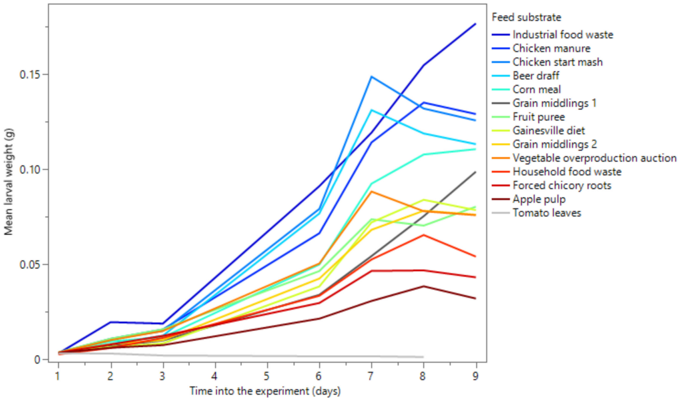
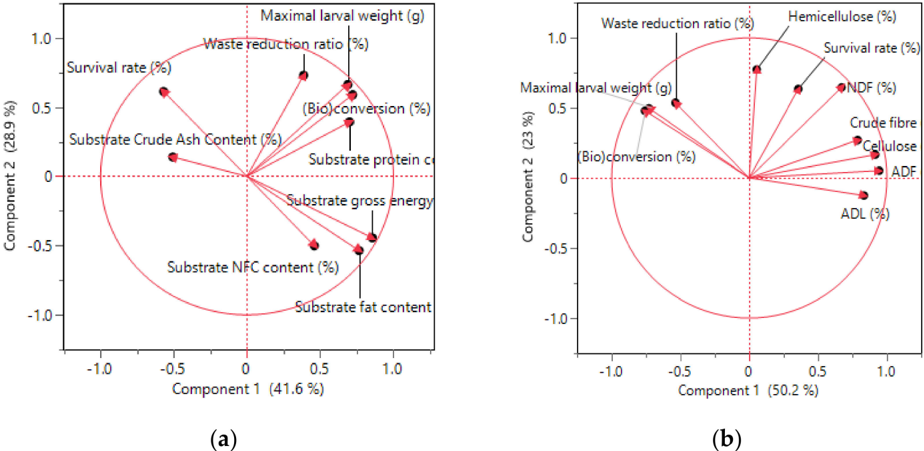
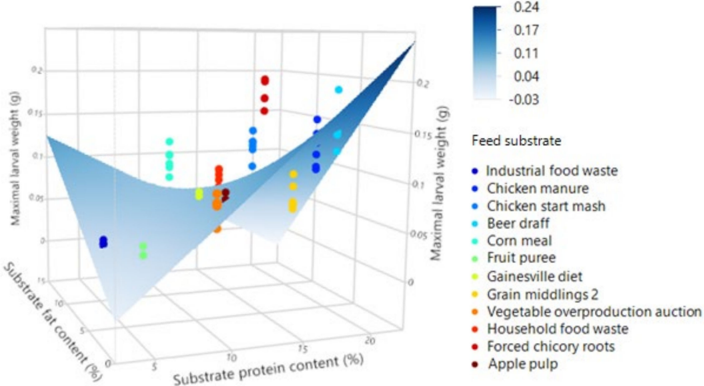
Black soldier fly (BSF) larvae may play a role in a circular economy by upcycling low-value organic streams into high value biomass. In this paper, the capacity of BSF larvae to process 12 organic side-streams (mono-streams) and two standard substrates (chicken start mash and Gainesville diet) was investigated. Survival, larval mass, feed conversion ratio, and waste reduction were evaluated in relation to the proximate composition of the side-streams used. Survival rates larger than 80% were observed for 10 of the organic mono-streams and the two standard substrates. Maximum mean larval weight ranged from 38.3 mg up to 176.4 mg regardless of high survival and was highly correlated with substrate crude protein content. Feed conversion ratio (range 1.58–8.90) and waste reduction (range 17.0–58.9%) were similar to values reported in other studies in the literature. On low protein substrates (e.g., apple pulp), survival rates remained high, however, possibly due to protein deficiency, limited larval growth was observed. It is concluded that several low value organic side-streams can successfully be processed by BSF larvae, thereby opening the possibility of lowering the costs of BSF farming. Potentially mixing nutritionally distinct mono-streams into a mixed substrate might improve BSF performance. However, more research is needed for optimizing diets to guarantee production of BSF larvae of constant yield and quality.
Overview
The claims and statistics of this paper haven’t been checked yet.
Free: it reads the open-access text and checks the first 5 claims that cite a source we can check. Create a free account to check every claim.
Integrity signals
Registry
Cites
Statistics
Figures
Verification
Claims the paper makes
The claims and statistics of this paper haven’t been checked yet.
Free: it reads the open-access text and checks the first 5 claims that cite a source we can check. Create a free account to check every claim.
Claims other papers make about this one
Each is checked against this paper’s own text: does it say what the citing paper says it does?
The source backs part of the claim, not all of it — or backs it for a different population, condition or comparison.
In the citing paper
“BSF are capable of converting a range of organic wastes to high-protein (40-70% dry weight) insect biomass suitable for animal feeds [36,37] while also producing a rich frass used as fertilizer [38][39][40].”
From Spent Coffee Grounds Applied as a Top-Dressing or Incorporated into the Soil Can Improve Plant Growth While Reducing Slug Herbivory (2023) · cites this paper as [37]
Experimental — accuracy not yet measured
Self-check
Percentages, sums and reported differences re-computed from the paper’s own numbers.
The self-check needs the paper’s full text.
Citations
Cites
Van Soest, P. J., Robertson, J. B., & Lewis, B. A. (1991) · Journal of Dairy Science · doi:10.3168/jds.s0022-0302(91)78551-2 · Cited by 28,658 · cited 2×
“Fiber concentration was analyzed as the amylase-treated neutral detergent fiber content (aNDF), following the extraction protocol of Gerhardt (Fibretherm, Gerhardt, Germany) based on the Van Soest method [38].”
MethodPotential of Insects as Food and Feed in Assuring Food Security
van Huis, A. (2013) · Annual Review of Entomology · doi:10.1146/annurev-ento-120811-153704 · Cited by 1,947 · cited 2×
“In addition, insects convert feed into biomass more efficiently than conventional livestock [8] because they are ectothermic and therefore use little energy to maintain their body temperature [10].”
BackgroundHow will oil palm expansion affect biodiversity?
FITZHERBERT, E., STRUEBIG, M., MOREL, A., DANIELSEN, F., BRUHL, C., DONALD, P., & PHALAN, B. (2008) · Trends in Ecology & Evolution · doi:10.1016/j.tree.2008.06.012 · Cited by 1,400 · cited 3×
“Additionally, the European Green Deal, which aims to implement the United Nation’s SDG, provides objectives and an action plan to move to a clean, circular economy that restores biodiversity and cuts pollution [3].”
BackgroundSpranghers, T., Ottoboni, M., Klootwijk, C., Ovyn, A., Deboosere, S., De Meulenaer, B., Michiels, J., Eeckhout, M., De Clercq, P., & De Smet, S. (2017) · Journal of the Science of Food and Agriculture · doi:10.1002/jsfa.8081 · Cited by 970 · cited 1×
“In this respect, it should also be noted that the substrates that are supplied to the BSF larvae may influence the nutritional composition of the BSF larvae and thus also the potential applications [30].”
BackgroundOonincx, D. G. A. B., van Broekhoven, S., van Huis, A., & van Loon, J. J. A. (2015) · PLOS ONE · doi:10.1371/journal.pone.0144601 · Cited by 945 · cited 1×
“, proteins, fats and chitin [7]), they have the potential to help tackle the societal challenges [8].”
BackgroundOonincx, D. G. A. B., & de Boer, I. J. M. (2012) · PLoS ONE · doi:10.1371/journal.pone.0051145 · Cited by 925 · cited 1×
“Furthermore, insects can be produced in vertical farming systems, making them more productive per m2 [11] and they generally require less water [12].”
BackgroundOonincx, D. G. A. B., van Itterbeeck, J., Heetkamp, M. J. W., van den Brand, H., van Loon, J. J. A., & van Huis, A. (2010) · PLoS ONE · doi:10.1371/journal.pone.0014445 · Cited by 853 · cited 1×
“Moreover, research has shown that insects produce less greenhouse gases and emit significantly less ammonia [9].”
BackgroundConversion of organic material by black soldier fly larvae: establishing optimal feeding rates
Diener, S., Zurbrügg, C., & Tockner, K. (2009) · Waste Management & Research: The Journal for a Sustainable Circular Economy · doi:10.1177/0734242x09103838 · Cited by 820 · cited 1×
“Larval density and the amount of diet provided had a negative influence on waste reduction [60,61].”
BackgroundReview of black soldier fly (Hermetia illucens) as animal feed and human food.
Wang, Y.-S., & Shelomi, M. (2017) · Foods · doi:10.3390/foods6100091 · Cited by 812 · cited 1×
“It is a non-pest insect species that can convert diverse (non-value) organic waste streams into biomass that can be used for the production of feed [15], biomaterials for biodiesel production [16], technical applications such as surfactants [17], and protein-based bioplastics [18].”
BackgroundBrewers' spent grain: a review with an emphasis on food and health
Lynch, K. M., Steffen, E. J., & Arendt, E. K. (2016) · Journal of the Institute of Brewing · doi:10.1002/jib.363 · Cited by 675 · cited 1×
“0%, as the extraction of that fraction is the main aim in the brewing processes [41].”
Background
Research works printed but not linked: 2
- 4. European Union DIRECTIVE 2008/98/EC of the European Parliament and of the Council of 19 November 2008 on waste and repealing certain Directives. Off. J. Eur. Union 2008, 28, 3-30.
- 22. Barragán-Fonseca, K.B. Flies are What They Eat-Tailoring Nutrition of BSF (Hermetia illucens) for Larval Biomass Production and Fitness. Ph.D. Thesis, Wageningen University, Wageningen, The Netherlands, 2018.
Cited by
Siddiqui, S. A., Süfer, Ö., Koç, G. Ç., Lutuf, H., Rahayu, T., Castro‐Muñoz, R., & Fernando, I. (2024) · Environment Development and Sustainability · doi:10.1007/s10668-023-04306-6 · Cited by 112
Yakti, W., Müller, M., Klost, M., Mewis, I., Dannehl, D., & Ulrichs, C. (2023) · Insects · doi:10.3390/insects14030266 · Cited by 81
Ribeiro, N., Costa, R., & Ameixa, O. M. C. C. (2022) · Insects · doi:10.3390/insects13070639 · Cited by 56
Lievens, S., Vervoort, E., Bruno, D., der Donck, T. V., Tettamanti, G., Seo, J. W., Poma, G., Covaci, A., Smet, J. D., & Borght, M. V. D. (2023) · Scientific Reports · doi:10.1038/s41598-023-31176-9 · Cited by 60
Khalifah, A. M., Abdalla, S. A., Rageb, M. H., Maruccio, L., Ciani, F., & El‐Sabrout, K. (2023) · Animals · doi:10.3390/ani13091534 · Cited by 72
“In addition to this, it has been stated that they may flourish on a wide variety of substrates, some of which include low-value side streams or trash [51,52].”
Mersmann, L., Souza, V. G. L., & Fernando, A. L. A. D. C. (2025) · Polymers · doi:10.3390/polym17091185 · Cited by 56
“The black soldier fly ( Hermetia illucens , BSF) demonstrates a wide FCR range, from as low as 1.58 to 8.90, with the most efficient results achieved when reared on nutrient-rich organic waste streams, underscoring their potential in circular food systems [18].”
InfluentialHorgan, F. G., Floyd, D., Mundaca, E. A., & Crisol-Martínez, E. (2023) · Agriculture · doi:10.3390/agriculture13020257 · Cited by 38
Noyens, I., Schoeters, F., Peer, M. V., Berrens, S., Goossens, S., & Miert, S. V. (2023) · Scientific Reports · doi:10.1038/s41598-023-38747-w · Cited by 50
Self-citationBruno, D., Orlando, M., Testa, E., Miino, M. C., Pesaro, G., Miceli, M., Pollegioni, L., Barbera, V., Fasoli, E., Draghi, L., et al. (2024) · Waste Management · doi:10.1016/j.wasman.2024.10.030 · Cited by 50
“Numerous studies have been undertaken to characterize the growth performance of these larvae on different organic leftovers (Broeckx et al., 2021; Ceccotti et al., 2022), to define how the gut microbiota is shaped by the rearing substrate (Bruno et al, 2019a; Vandeweyer et al., 2023; De Filippis et…”
Taufek, N. M., Zulkifli, N. F. N. M., & Nazri, H. A. (2023) · Journal of Environmental Management · doi:10.1016/j.jenvman.2023.119467 · Cited by 39
Vandeweyer, D., Bruno, D., Bonelli, M., IJdema, F., Lievens, B., Crauwels, S., Casartelli, M., Tettamanti, G., & Smet, J. D. (2023) · Frontiers in Microbiology · doi:10.3389/fmicb.2023.1276187 · Cited by 45
Linh, N. V., Wannavijit, S., Tayyamath, K., Dinh‐Hung, N., Nititanarapee, T., Sumon, M. A. A., Srinual, O., Permpoonpattana, P., Doan, H. V., & Brown, C. L. (2024) · Fishes · doi:10.3390/fishes9020053 · Cited by 53
“Black soldier fl y larvae have been found to be suitable for mass production and can transform low-quality, low-cost waste substrates, for example, animal manure, food waste, and agricultural by-products into a nutrient-rich feed [20,21].”
BackgroundMlambo, V., Dibakoane, S. R., Mashiloane, T., Mukwevho, L., Wokadala, O. C., & Mnisi, C. M. (2023) · Resources Conservation and Recycling · doi:10.1016/j.resconrec.2023.107284 · Cited by 40
Rossi, G., Ojha, S., Müller-Belecke, A., & Schlüter, O. (2023) · Scientific Reports · doi:10.1038/s41598-023-48061-0 · Cited by 40
Laursen, S. F., Flint, C. A., Bahrndorff, S., Tomberlin, J. K., & Kristensen, T. N. (2024) · Waste Management · doi:10.1016/j.wasman.2024.04.010 · Cited by 29
Lemme, A., & Klüber, P. (2024) · Insects · doi:10.3390/insects15110862 · Cited by 40
Lievens, S., Poma, G., Frooninckx, L., der Donck, T. V., Seo, J. W., Smet, J. D., Covaci, A., & Borght, M. V. D. (2022) · Sustainability · doi:10.3390/su141912109 · Cited by 33
Self-citationPas, C., Brodeur, D., Deschamps, M., Lebeuf, Y., Adjallé, K., Barnabé, S., Eeckhout, M., Vandenberg, G. W., & Vaneeckhaute, C. (2022) · Journal of Environmental Management · doi:10.1016/j.jenvman.2022.115529 · Cited by 32
Looveren, N. V., Verbaet, L., Frooninckx, L., Miert, S. V., Campenhout, L. V., Borght, M. V. D., & Vandeweyer, D. (2023) · Waste Management · doi:10.1016/j.wasman.2023.04.018 · Cited by 39
Self-citationMetabolic performance and feed efficiency of black soldier fly larvae
Eriksen, N. T. (2024) · Frontiers in Bioengineering and Biotechnology · doi:10.3389/fbioe.2024.1397108 · Cited by 32
Seyedalmoosavi, M. M., Mielenz, M., Schleifer, K., Görs, S., Wolf, P., Tränckner, J., Hüther, L., Dänicke, S., Daş, G., & Metges, C. C. (2023) · Journal of Environmental Management · doi:10.1016/j.jenvman.2023.118695 · Cited by 26
Hermetia illucens (Diptera: Stratiomyidae): Need, Potentiality, and Performance Measures
Nayak, A., Rühl, M., & Klüber, P. (2023) · Agriculture · doi:10.3390/agriculture14010008 · Cited by 47
“Apple pulp and household food waste had approximately an 18% substrate reduction [132].”
BackgroundInfluentialBukchin‐Peles, S., Lozneva, K. B., Tomberlin, J. K., & Zilberman, D. (2025) · Future Foods · doi:10.1016/j.fufo.2025.100592 · Cited by 37
Integrating insects into the agri-food system of northern Italy as a circular economy strategy
Frasnetti, E., Sadeqi, H., & Lamastra, L. (2023) · Sustainable Production and Consumption · doi:10.1016/j.spc.2023.11.007 · Cited by 23
Yakti, W., Förster, N., Müller, M., Mewis, I., & Ulrichs, C. (2023) · Insects · doi:10.3390/insects14020183 · Cited by 24
Guillaume, J., Mezdour, S., Marion‐Poll, F., Terrol, C., & Schmidely, P. (2023) · Journal of Insects as Food and Feed · doi:10.3920/jiff2022.0103 · Cited by 26
Kieβling, M., Franke, K., Heinz, V., & Aganovic, K. (2023) · Journal of Insects as Food and Feed · doi:10.3920/jiff2022.0096 · Cited by 27
Frooninckx, L., Broeckx, L., Goossens, S., Wuyts, A., & Miert, S. V. (2024) · Discover Animals · doi:10.1007/s44338-024-00005-2 · Cited by 34
“…it comes to the use of insects to process organic waste, the black soldier fly ( Hermetia illucens ) is of special interest as black soldier fly larvae (BSFL) can be reared on a wide variety of low-value organic substrates such as agricultural side-streams, manure and decomposing materials [7–11].”
Self-citationTirtawijaya, G., Lee, J., Bashir, K. M. I., Lee, H., & Choi, J. (2024) · Animals · doi:10.3390/ani14091332 · Cited by 22
“Overall, the findings of this study demonstrate the potential of BSF larvae in sustainable waste management and nutrient-rich biomass production.”
ResultModulating the fatty acid composition of black soldier fly larvae via substrate fermentation
IJdema, F., Lievens, S., Smets, R., Poma, G., Borght, M. V. D., Lievens, B., & Smet, J. D. (2024) · animal · doi:10.1016/j.animal.2024.101383 · Cited by 20
Klüber, P., Gurusinga, F. F., Hurka, S., Vilcinskas, A., & Tegtmeier, D. (2024) · Applied and Environmental Microbiology · doi:10.1128/aem.00991-24 · Cited by 26
Grossule, V., Henjak, M., Beggio, G., & Tomberlin, J. K. (2024) · Journal of Environmental Management · doi:10.1016/j.jenvman.2024.123605 · Cited by 21
Khan, J. A., Guo, X., Pichner, R., Aganovic, K., Heinz, V., Hollah, C., Miert, S. V., Verheyen, G. R., Juadjur, A., & Rehman, K. U. (2025) · animal · doi:10.1016/j.animal.2025.101463 · Cited by 21
Self-citationThe future potential of controlled environment agriculture
Calvo‐Baltanás, V., Vilcinskas, A., Brück, T., Kloas, W., Wilke, T., Rufino, M. C., Henkel, M., Zorn, H., Monje, O., & Asseng, S. (2025) · PNAS Nexus · doi:10.1093/pnasnexus/pgaf078 · Cited by 26
“Insect CEA exploits the fact that organisms such as the larvae of black soldier flies and mealworms can use organic substrates with little need for external energy ( 49).”
Muinde, J., Tanga, C. M., Olukuru, J., Odhiambo, C., Tonnang, H. E. Z., & Senagi, K. (2023) · Insects · doi:10.3390/insects14050479 · Cited by 17
“This is in line with other studies [31] that observed that the expected harvest weight of the larvae decreases as the cycle time increases.”
ResultRapid Evolutionary Adaptation to Diet Composition in the Black Soldier Fly (Hermetia illucens)
Gligorescu, A., Chen, L., Jensen, K., Moghadam, N. N., Kristensen, T. N., & Sørensen, J. G. (2023) · Insects · doi:10.3390/insects14100821 · Cited by 19
“For example, the production time was long and larval weight was low when BSFL were fed on simple, low-quality substrates such as apple pulp, forced chicory roots, tomato leaves, or grain middling [6].”
BackgroundResultInfluentialHutabarat, D. J. C., & Mangindaan, D. W. (2024) · Agriculture · doi:10.3390/agriculture14020205 · Cited by 25
Ayompe, L. M., Masso, C., Epie, W. N., Crook, E. D., & Egoh, B. N. (2025) · Frontiers in Sustainability · doi:10.3389/frsus.2025.1620925 · Cited by 22
Nayak, A., & Klüber, P. (2025) · PLoS ONE · doi:10.1371/journal.pone.0317049 · Cited by 20
Herrera, E., Petrusán, J.-I., Salvá-Ruíz, B., Novak, A., Cárdenas, K. G. C., Vidangos, V. A., Heinz, V., & Smetana, S. M. (2022) · Sustainability · doi:10.3390/su14031292 · Cited by 22
The potential of black soldier fly to recycle nitrogen from biowaste
Frooninckx, L., Berrens, S., Broeckx, L., & Miert, S. V. (2023) · Current Opinion in Green and Sustainable Chemistry · doi:10.1016/j.cogsc.2023.100864 · Cited by 23
“They can convert this wide range of organic wastes into insect biomass, which is rich in proteins (32 e 58% dry matter, DM) and lipids (15 e 39% DM) and have shown to be a good source for animal feed [6 e 8,11].”
Self-citationAdamaki-Sotiraki, C., Choupi, D., Vrontaki, M., Rumbos, C. I., & Athanassiou, C. G. (2024) · Journal of Environmental Management · doi:10.1016/j.jenvman.2024.120545 · Cited by 13
Robustness of business models for insect production for feed and food in Europe
Niyonsaba, H. H., Höhler, J., Rumpold, B. A., van der Fels‐Klerx, H. J., & Meuwissen, M. P. M. (2024) · Journal of Insects as Food and Feed · doi:10.1163/23524588-00001141 · Cited by 16
“These results are in line with Broeckx et al. (2021) and Veldkamp et al. (2022), who concluded that inclusion of non-utilised side streams could enhance cost-effectiveness of insect production systems.”
Moyet, M. A., Morrill, H., Espinal, D. L., Bernard, E., & Alyokhin, A. (2023) · Microorganisms · doi:10.3390/microorganisms11051284 · Cited by 16
“The larval densities utilized in these experiments were lower than previously published ratios for soldier fly larvae relative to growth substrates [27–29], which allowed for clarity to establish the observed phenomenon.”
ResultTowards good practices for research on Acheta domesticus, the house cricket
Peer, M. V., Berrens, S., Coudron, C. L., Noyens, I., Verheyen, G. R., & Miert, S. V. (2024) · Journal of Insects as Food and Feed · doi:10.1163/23524588-00001042 · Cited by 17
Self-citationNayak, A., Rühl, M., & Klüber, P. (2024) · AMB Express · doi:10.1186/s13568-024-01802-4 · Cited by 14
Planche, C., Lievens, S., der Donck, T. V., Sicard, J., & Borght, M. V. D. (2025) · Waste Management · doi:10.1016/j.wasman.2025.114852 · Cited by 12
Guillaume, J., Lage, J. D., Mezdour, S., Marion‐Poll, F., Terrol, C., Brouzes, C., & Schmidely, P. (2024) · animal · doi:10.1016/j.animal.2024.101337 · Cited by 14
Effect of larval handling on black soldier fly life history traits and bioconversion efficiency
Loiotine, Z., Gasco, L., Biasato, I., Resconi, A., & Oddon, S. B. (2024) · Frontiers in Veterinary Science · doi:10.3389/fvets.2024.1330342 · Cited by 14
Lievens, S., Yin, S., Belova, L., Fujii, Y., Bombeke, J., Smet, J. D., Borght, M. V. D., Covaci, A., & Poma, G. (2024) · Journal of Environmental Exposure Assessment · doi:10.20517/jeea.2023.46 · Cited by 10
Zulkifli, S., Jayanegara, A., Pramudya, B., Fahmi, M. R., & Rahmadani, M. (2023) · Recycling · doi:10.3390/recycling8060083 · Cited by 15
Resconi, A., Oddon, S. B., Ferrocino, I., Loiotine, Z., Caimi, C., Gasco, L., & Biasato, I. (2024) · animal · doi:10.1016/j.animal.2024.101288 · Cited by 16
Bajra, B. D., Lubis, M. E. S., Yudanto, B. G., Panjaitan, F. R., Rizki, I. F., Mulyono, M. E., & Kusumah, M. S. (2023) · Journal of Environmental Management · doi:10.1016/j.jenvman.2023.118269 · Cited by 14
Antibacterial properties of oil extracts of black soldier fly larvae reared on bread waste
Shu, M. K., Li, C. M., Furtado, W. E., Huang, Q., St‐Hilaire, S., & Kenéz, Á. (2024) · Animal Production Science · doi:10.1071/an23394 · Cited by 14
Broeckx, L., Frooninckx, L., Berrens, S., Goossens, S., ter Heide, C., Wuyts, A., Dallaire-Lamontagne, M., & Miert, S. V. (2025) · Insects · doi:10.3390/insects16010077 · Cited by 13
“This is attributed not only to their exceptional bioconversion efficiency but also their remarkable digestion plasticity, which enables their growth using diverse organic side-streams [10,11].”
InfluentialSelf-citationClosing the loop: Utilization of composted tomato plant residues as fertilizer and soil amendment
Vollmer, A., Schmidt, U., Ulrichs, C., & Dannehl, D. (2025) · Scientia Horticulturae · doi:10.1016/j.scienta.2025.114028 · Cited by 8
Experiences in Assessing the Impact of Circular Economy Interventions in Agrifood Systems—A Review
Hermans, T., Beintema, N., Alho, C. F. B. V., & van der Poel, M. (2025) · Sustainability · doi:10.3390/su17041406 · Cited by 8
IJdema, F., Arias-Giraldo, L. M., Vervoort, E., Struyf, T., den Ende, W. V., Raaijmakers, J. M., Lievens, B., & Smet, J. D. (2025) · BMC Microbiology · doi:10.1186/s12866-025-04327-3 · Cited by 12
“It also received interest for its capacity to convert a wide range of waste streams into valuable insect body mass [10, 11].”
InfluentialMkilima, T. (2025) · Waste and Biomass Valorization · doi:10.1007/s12649-025-03372-3 · Cited by 16
“For instance, Broeckx et al. [36] examined BSFL performance across twelve organic side-streams, noting that larval growth and feed conversion efficiency were closely tied to both the nutritional and moisture profiles of the substrates.”
Analyzing the Agronomic, Environmental, and Techno-Economic Benefits of BSF Farming
Kumar, A., Singh, A., & Kumari, K. (2025) · Waste and Biomass Valorization · doi:10.1007/s12649-025-03388-9 · Cited by 9
Shah, P. N., Maistrou, S., Willemsen, I., van Loon, J. J. A., & Dicke, M. (2024) · Journal of Insects as Food and Feed · doi:10.1163/23524588-00001211 · Cited by 11
“The larvae of the black soldier fly (BSFL), Herme-tia illucens L., are increasingly utilized as livestock feed ingredients due to their rich nutritional profile and their ability to process low-quality organic streams (Broeckx et al ., 2021; Van Huis, 2020; Veldkamp et al ., 2021).”
BackgroundWaste Reduction Performance by Black Soldier Fly Larvae (Bsfl) on Domestic Waste and Solid Decanter
Rohmanna, N. A., & Maharani, D. M. (2022) · Biotropika Journal of Tropical Biology · doi:10.21776/ub.biotropika.2022.010.02.08 · Cited by 13
Horgan, F. G., Launders, M., Mundaca, E. A., & Crisol‐Martínez, E. (2023) · Agriculture · doi:10.3390/agriculture13020452 · Cited by 8
Damanik, N. F., Putra, R. E., Kinasih, I., & Permana, A. D. (2023) · HAYATI Journal of Biosciences · doi:10.4308/hjb.31.2.317-327 · Cited by 12
“Correlation analysis of ECD-FCR and WRI-SCR was also performed using the Spearman correlation test (Kawasaki et al. 2022; Ma et al. 2022).”
BackgroundInfluentialExploring the potential of crossbreeding to enhance black soldier fly (Hermetia illucens) production
Meyermans, R., Broeckx, L., Mondelaers, J., Gorssen, W., Frooninckx, L., Janssens, S., Van Miert, S., & Buys, N. (2025) · Journal of Insects as Food and Feed · doi:10.1163/23524588-00001391 · Cited by 6
Self-citationMishra, A., & Suthar, S. (2025) · Sustainable Chemistry for the Environment · doi:10.1016/j.scenv.2025.100260 · Cited by 8
Verheyen, G. R., Goossens, S., & Miert, S. V. (2026) · Foods · doi:10.3390/foods15030585 · Cited by 7
“Mineral profile: Samples were prepared as described by [43], and the mineral profile was determined using ICP-OES (Optima 4300™ DV ICP-OES, Perkin Elmer, MA, USA).”
Self-citationOkeyo, D. O., Wandera, S. M., & Messo, J. (2024) · Journal of Water Sanitation and Hygiene for Development · doi:10.2166/washdev.2024.185 · Cited by 7
Use of Black Soldier Fly Larvae for Bioconversion of Tomato Crop Residues
Parra-Pacheco, B., Aguirre-Becerra, H., Feregrino‐Pérez, A. A., Chandrakasan, G., González-Lara, H., & García‐Trejo, J. F. (2025) · Sustainability · doi:10.3390/su17083578 · Cited by 9
“In this investigation, the survival was from 88% to 100% compared to other research, which had a 0% survival rate in leaf tomato substrate and a maximum larval weight of 3.1 mg [34].”
InfluentialUsing an insect for sustainable waste management of a superabundant bird
López-Manzano, C., Mahdjoub, H., Arce‐Valdés, L. R., & Khelifa, R. (2026) · Journal of Environmental Management · doi:10.1016/j.jenvman.2026.128919 · Cited by 5
Food for thought: Valuable bioproduction pathways emerge in a circular food production model
Doughty, K. H., Middleton, J. A., Salini, M., Kragt, M. E., Partridge, J. C., Hemmi, J. M., & Martin, B. (2024) · Cleaner and Circular Bioeconomy · doi:10.1016/j.clcb.2024.100102 · Cited by 6
Bajra, B. D., Lubis, M. E. S., Suprianto, E., Yudanto, B. G., Mulyono, M. E., Rizki, I. F., Kusumah, M. S., & Panjaitan, F. R. (2025) · Bioresource Technology Reports · doi:10.1016/j.biteb.2025.102067 · Cited by 15
Ganvir, K. P., Darvekar, A. N., Raut, V. D. R., & Thorat, R. K. (2022) · Journal of Entomology and Zoology Studies · doi:10.22271/j.ento.2022.v10.i6b.9096 · Cited by 6
Gurusinga, F. F., Hurka, S., Kreft, D., Röthig, T., Vilcinskas, A., & Tegtmeier, D. (2026) · Animal Microbiome · doi:10.1186/s42523-025-00509-6 · Cited by 7
“Broeckx et al. [34] reported that apple pulp, high in crude fiber (25.7”
InfluentialCastillo, P., Sáez-Tovar, J. A., Andreu‐Rodríguez, F. J., Estrada‐Medina, H., Marhuenda-Egea, F. C., Bustamante, M. A., Martínez‐Sánchez, A., Martínez‐Sabater, E., Orden, L., Barranco, P., et al. (2026) · Insects · doi:10.3390/insects17020142 · Cited by 8
“…(electrical conductivity/dissolved organic carbon/respiration) indices with soil characteristics or processes over time; and (ii) studies related to feedstock and post-processing to adjust the balance between rapid nutrient release and biosafety [72,73]. https://doi.org/10.3390/insects17020142”
InfluentialYakti, W., Widjaja, E., Förster, N., Mewis, I., & Ulrichs, C. (2023) · Journal of Insects as Food and Feed · doi:10.1163/23524588-00001027 · Cited by 4
Oliveira, K. J. P., Viana, M. L., Rodrigueiro, M. M. D. S., Neto, M. M., Oliveira, K. S. M., Morais, F. J. D. O., Florindo, D. N. F., Filho, L. R. A. G., Braga, S. S., & dos Santos, P. S. B. (2023) · RECIMA21 - Revista Científica Multidisciplinar · doi:10.47820/recima21.v4i5.2989 · Cited by 19
Rohmanna, N. A., Maharani, D. M., & Majid, Z. A. N. M. (2023) · AGROINTEK · doi:10.21107/agrointek.v17i3.15598 · Cited by 9
Frooninckx, L., Broeckx, L., Goossens, S., Wuyts, A., & Miert, S. V. (2024) · Research Square · doi:10.21203/rs.3.rs-3986375/v1 · Cited by 4
Self-citationSengendo, F., Egonyu, J. P., Valtonen, A., Noyens, I., Angwech, H., Alaroker, M. F., Nyeko, P., Malinga, G. M., & Miert, S. V. (2025) · International Journal of Tropical Insect Science · doi:10.1007/s42690-025-01526-3 · Cited by 3
“Samples were prepared as described by Broeckx (2021), and mineral profile was determined using inductively coupled plasma-optical emission spectrometry (ICP-OES) (Optima 4300™ DV ICP-OES, Perkin Elmer, Massachusetts, USA).”
Self-citationBarth, A., Bendag, S., Klüber, P., Kreft, D., Schubert, P., Tegtmeier, D., & Wilke, T. (2025) · Aquaculture Nutrition · doi:10.1155/anu/7288318 · Cited by 3
Kusumah, M. S., Panjaitan, F. R., Yudanto, B. G., & Bajra, B. D. (2025) · PLoS ONE · doi:10.1371/journal.pone.0332046 · Cited by 3
“Larval growth potential is also stunted if protein digestibility is poor [18].”
InfluentialMielenz, M., Geick, T., Görs, S., Daş, G., Dannenberger, D., Gasco, L., Oddon, S. B., Deruytter, D., Hüther, L., Dänicke, S., et al. (2025) · Bioresource Technology · doi:10.1016/j.biortech.2025.133812 · Cited by 4
“In experimental research with BSFL on substrate conversion efficiency, control substrates such as the Gainesville fly diet (GD) (Hogsette, 1992) and chicken feed (CF) (Broeckx et al., 2021) are used.”
Sengendo, F., Egonyu, J. P., Valtonen, A., Noyens, I., Angwech, H., Alaroker, M. F., Nyeko, P., Malinga, G. M., & Miert, S. V. (2025) · Entomologia Experimentalis et Applicata · doi:10.1111/eea.13568 · Cited by 3
“Samples were prepared as described by Broeckx (2021), and the mineral profile was determined using inductively coupled plasma-optical emission spectrometry (ICP-OES) (Optima 4300™ DV ICP-OES; Perkin Elmer, Massachusetts, USA).”
Self-citationPermana, A. D., Haswara, I. A., Lambangsari, K., & Bajra, B. D. (2025) · Biocatalysis and Agricultural Biotechnology · doi:10.1016/j.bcab.2025.103590 · Cited by 4
Black Soldier Fly Larvae as a Recycling Agent for Cull Potatoes
Moyet, M. A., Alyokhin, A., Buzza, A. M., & Perkins, L. B. (2023) · American Journal of Potato Research · doi:10.1007/s12230-023-09930-6 · Cited by 5
Storing live black soldier fly larvae: the influence of temperature and storage techniques
Resconi, A., Biasato, I., Oddon, S. B., Loiotine, Z., & Gasco, L. (2025) · animal · doi:10.1016/j.animal.2025.101605 · Cited by 2
Ogbon, E. A., Balè, A., dos Santos, C. N., Seïdou, L. M., Dzepe, D., Behanzin, J., & Djouaka, R. (2025) · Current Developments in Nutrition · doi:10.1016/j.cdnut.2025.107595 · Cited by 3
“The concentrations of these minerals vary considerably depending on the rearing substrate used for the larvae, but may include concentrations of phosphorus between 0.18% and 1.11% of DM, potassium be-tween 0.16% and 4.41%, magnesium between 0.01% and 1.06%, and Zn between 0.002% and 0.041% [6,7].”
InfluentialUpreti, A., Tiwari, S., Gautam, B., Patten, M. A., & Khanal, P. (2025) · Bioresource Technology Reports · doi:10.1016/j.biteb.2025.102435 · Cited by 4
Cai, M., Liu, C., Chen, E., Hu, B., Xueling, L. I., Ma, C., Gaigl, A., Sánchez, S. I. R., Hu, W., & Yang, M. (2026) · Food Chemistry · doi:10.1016/j.foodchem.2026.148962 · Cited by 2
Review: Nutrient requirements of migratory and desert locusts farmed for food or feed
Yakti, W., & Oonincx, D. G. A. B. (2025) · animal · doi:10.1016/j.animal.2025.101558 · Cited by 3
Grausa, K., Siddiqui, S. A., Lameyer, N., Wiesotzki, K., Smetana, S. M., & Pentjuss, A. (2023) · Metabolites · doi:10.3390/metabo13060724 · Cited by 4
Economic viability of insect production for feed and food in Europe
van den Hoorn, H. (2023) · doi:10.18174/640398 · Cited by 3
Odhiambo, F., Museve, E., Ndong’a, M. F. O., & Julius, M. (2022) · African Journal of Agricultural Research · doi:10.5897/ajar2022.16110 · Cited by 3
“The larvae grow fast and have an excellent feed conversion rate of about 1.58 to 8.90 (Broeckx et al., 2021).”
BackgroundInfluentialHidayat, N., Anggarini, S., Sunyoto, N. M. S., Fitri, L. E., Suhartini, S., Rohma, N. A., Elviliana, E., Setyawan, S. A. A., Subekti, I. F., Namira, A. A., et al. (2024) · Advances in Food Science Sustainable Agriculture and Agroindustrial Engineering · doi:10.21776/ub.afssaae.2024.007.01.8 · Cited by 6
Kamugisha, P. P. (2025) · Environmental Quality Management · doi:10.1002/tqem.70026 · Cited by 2
Schøn, M. L., Jensen, K., Schow-Madsen, M., Gold, M., Mathys, A., Schou, T. M., Berggreen, I. E., Nørgaard, J. V., & Overgaard, J. (2026) · Journal of Insect Physiology · doi:10.1016/j.jinsphys.2026.104961 · Cited by 3
Eskandari, K., Kargar, Z., Sanei, M. E., Hashamfirooz, M., Momeniha, F., & Akbarzadeh, K. (2026) · Sustainable Futures · doi:10.1016/j.sftr.2026.101696 · Cited by 4
Kubayi, C., Brits, X., Foord, S. H., & Swanepoel, L. H. (2026) · Journal of Applied Entomology · doi:10.1111/jen.70069 · Cited by 1
“Similar tests from other studies show that feed composition is key to growth speed (Broeckx et al. 2021; Meneguz et al. 2018).”
Schow-Madsen, M., Jensen, K., Márquez-Toribio, M., Schøn, M. L., Schou, T. M., Nørgaard, J. V., & Overgaard, J. (2026) · Journal of Insects as Food and Feed · doi:10.1163/23524588-bja10368 · Cited by 1
Metadata
- Authors
- Broeckx, L., Frooninckx, L., Slegers, L., Berrens, S., Noyens, I., Goossens, S., Verheyen, G., Wuyts, A., & Van Miert, S.
- Affiliations
- Thomas More Kempen (BE)
- RADIUS, Thomas More University of Applied Sciences, Kleinhoefstraat 4, 2440 Geel, Belgium
- ORCID
- Venue
- Sustainability
- Publisher
- MDPI AG
- Published
- 2021-11-23
- Volume
- 13
- Issue
- 23
- Pages
- 12953
- ISSN
- 2071-1050 (ISSN-L)
- OpenAlex
- W3216584447
- Cited by
- 138
- References
- 59
- Citations by year
- 2026: 33 · 2025: 34 · 2024: 32 · 2023: 32 · 2022: 7
- FWCI
- 12.22
- Type
- journal article
- Language
- en
- Open access
- gold
- doi.org
- Licence
- Locations
- Sustainability (publishedVersion, cc-by)
- RePEc: Research Papers in Economics (submittedVersion)
- DOAJ (DOAJ: Directory of Open Access Journals) (submittedVersion, cc-by-sa)
- Funders
- ERA-FACCESurplus - Vlaio (UpWaste: ERA-FACCESurplus Ref. Nr: 28– Vlaio HBC.2019.0028)
- Topics
- Life Sciences › Agricultural and Biological Sciences › Insect Science › Insect Utilization and Effects
- Life Sciences › Agricultural and Biological Sciences › Aquatic Science › Aquaculture Nutrition and Growth
- Life Sciences › Agricultural and Biological Sciences › Insect Science › Forensic Entomology and Diptera Studies
- Keywords
- Hermetia illucens, larval rearing, circular economy, waste upcycling, feed conversion ratio, larval survival, larval growth, crude protein, substrate mixtures, insect protein production
About these checks
Registry, retraction, Cites and statistics results are computed, not judged, with one exception: a printed reference that no index lists is read once by a model before it counts as a citation error. Claims are extracted by a model and kept only when their quote appears verbatim in the text; each cited source is then checked, with a model’s help, for whether it says what the claim relies on. Those verdicts can be wrong — read the claim’s quote and the cited source before relying on one.
Statistics and arithmetic are recomputed, not judged.
Confidence bands are shown only for fields calibrated on our annotated test set. None is calibrated yet, so no band is shown.
What counts as a claim ›How we measure confidence ›How we check this ›
Are you an author, or do you see a problem with this page? Request a review
Data sources
Bibliographic data: Semantic Scholar, OpenAlex, Crossref.
Contains information from the Semantic Scholar Academic Graph Datasets, made available under the ODC Attribution License (ODC-BY 1.0).
Semantic Scholar’s data is described in: Kinney, R., et al. (2023). The Semantic Scholar Open Data Platform. arXiv:2301.10140.
