

Current Insights in the Mechanisms of Cobra Venom Cytotoxins and Their Complexes in Inducing Toxicity: Implications in Antivenom Therapy
Open accessThe DOI matches its Crossref record; 140 of the 140 references it cites were found in a registry or an index.
Abstract
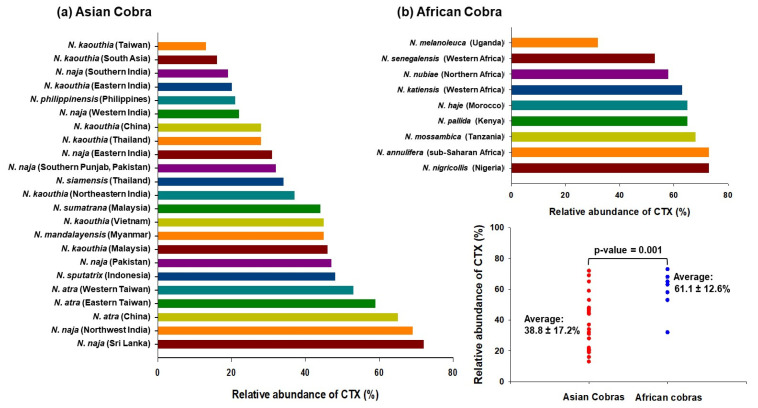
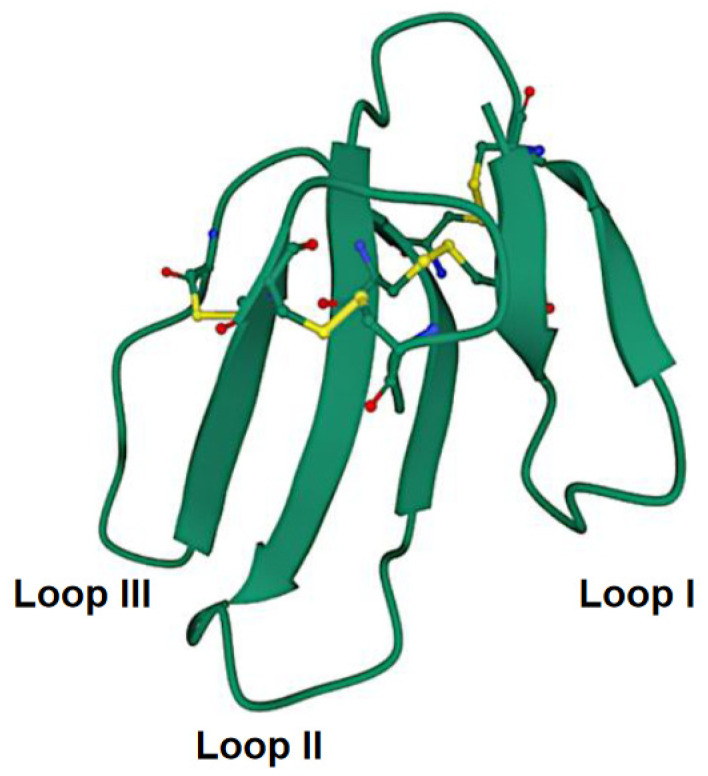
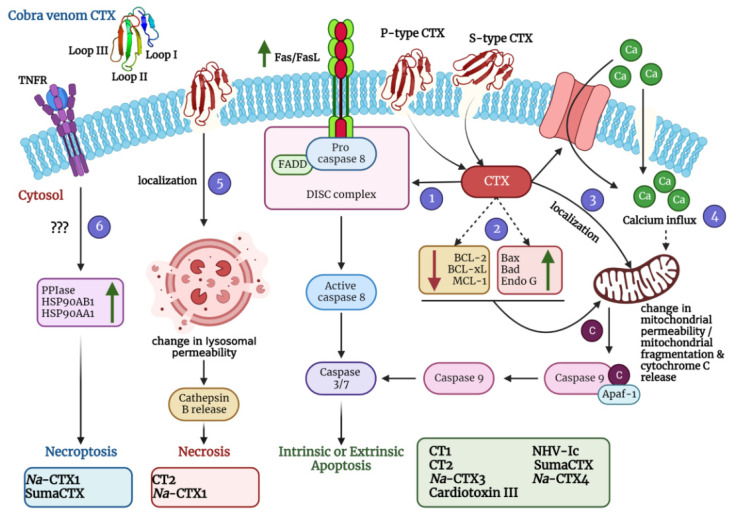
Cytotoxins (CTXs), an essential class of the non-enzymatic three-finger toxin family, are ubiquitously present in cobra venoms. These low-molecular-mass toxins, contributing to about 40 to 60% of the cobra venom proteome, play a significant role in cobra venom-induced toxicity, more prominently in dermonecrosis. Structurally, CTXs contain the conserved three-finger hydrophobic loops; however, they also exhibit a certain degree of structural diversity that dictates their biological activities. In their mechanism, CTXs mediate toxicity by affecting cell membrane structures and membrane-bound proteins and activating apoptotic and necrotic cell death pathways. Notably, some CTXs are also responsible for depolarizing neurons and heart muscle membranes, thereby contributing to the cardiac failure frequently observed in cobra-envenomed victims. Consequently, they are also known as cardiotoxins (CdTx). Studies have shown that cobra venom CTXs form cognate complexes with other components that potentiate the toxic effects of the venom’s individual component. This review focuses on the pharmacological mechanism of cobra venom CTXs and their complexes, highlighting their significance in cobra venom-induced pathophysiology and toxicity. Furthermore, the potency of commercial antivenoms in reversing the adverse effects of cobra venom CTXs and their complexes in envenomed victims has also been discussed.
Overview
The claims and statistics of this paper haven’t been checked yet.
Free: it reads the open-access text and checks the first 5 claims that cite a source we can check. Create a free account to check every claim.
Integrity signals
Registry
Cites
Statistics
Figures

Verification
Claims the paper makes
The claims and statistics of this paper haven’t been checked yet.
Free: it reads the open-access text and checks the first 5 claims that cite a source we can check. Create a free account to check every claim.
Claims other papers make about this one
Each is checked against this paper’s own text: does it say what the citing paper says it does?
The source backs part of the claim, not all of it — or backs it for a different population, condition or comparison.
In the citing paper
“Three-finger toxins (3FTxs) or cytotoxins (CTXs) are low-molecular-weight (6–9 kDa) non-enzymatic toxins that comprise about 60–70% of elapid venoms [3,15].”
From Role of Regulated Cell Death Pathways in Snakebite Envenomation: Mechanisms, Crosstalk, and Therapeutic Opportunities (2026) · cites this paper as [15]
Experimental — accuracy not yet measured
Self-check
Percentages, sums and reported differences re-computed from the paper’s own numbers.
The self-check needs the paper’s full text.
Citations
Cites
Chemical inhibitor of nonapoptotic cell death with therapeutic potential for ischemic brain injury
Degterev, A., Huang, Z., Boyce, M., Li, Y., Jagtap, P., Mizushima, N., Cuny, G. D., Mitchison, T. J., Moskowitz, M. A., & Yuan, J. (2005) · Nature Chemical Biology · doi:10.1038/nchembio711 · Cited by 3,068
Kasturiratne, A., Wickremasinghe, A. R., de Silva, N., Gunawardena, N. K., Pathmeswaran, A., Premaratna, R., Savioli, L., Lalloo, D. G., & de Silva, H. J. (2008) · PLoS Medicine · doi:10.1371/journal.pmed.0050218 · Cited by 1,935 · cited 1×
“Moreover, region-wise distribution of snakebite data suggests most of the cases of snake envenoming are concentrated in the rural areas of South Asia, Southeast Asia, and East Sub-Saharan African countries [3].”
BackgroundRIP3, an Energy Metabolism Regulator That Switches TNF-Induced Cell Death from Apoptosis to Necrosis
Zhang, D.-W., Shao, J., Lin, J., Zhang, N., Lu, B.-J., Lin, S.-C., Dong, M.-Q., & Han, J. (2009) · Science · doi:10.1126/science.1172308 · Cited by 1,931
AMP-activated protein kinase mediates mitochondrial fission in response to energy stress
Toyama, E. Q., Herzig, S., Courchet, J., Lewis, T. L., Losón, O. C., Hellberg, K., Young, N. P., Chen, H., Polleux, F., Chan, D. C., et al. (2016) · Science · doi:10.1126/science.aab4138 · Cited by 1,085
Warrell, D. A. (2010) · The Lancet · doi:10.1016/s0140-6736(09)61754-2 · Cited by 774 · cited 1×
“), or even some viperids, for example, berg adders (Bitis atropos) [8], and Russell’s vipers (Daboia russelii) from southern India and Sri Lanka [9–11] have also been reported to inflict neurological disorders in patients.”
BackgroundNecroptosis as an alternative form of programmed cell death
Christofferson, D. E., & Yuan, J. (2010) · Current Opinion in Cell Biology · doi:10.1016/j.ceb.2009.12.003 · Cited by 770
Anti-apoptosis and cell survival: A review
Portt, L., Norman, G., Clapp, C., Greenwood, M., & Greenwood, M. T. (2011) · Biochimica et Biophysica Acta (BBA) - Molecular Cell Research · doi:10.1016/j.bbamcr.2010.10.010 · Cited by 636
A Review and Database of Snake Venom Proteomes
Tasoulis, T., & Isbister, G. (2017) · Toxins · doi:10.3390/toxins9090290 · Cited by 616
A fate worse than death: apoptosis as an oncogenic process
Ichim, G., & Tait, S. W. G. (2016) · Nature Reviews Cancer · doi:10.1038/nrc.2016.58 · Cited by 451
Molecular Evolution and Phylogeny of Elapid Snake Venom Three-Finger Toxins
Fry, B. G., W�ster, W., Kini, R. M., Brusic, V., Khan, A., Venkataraman, D., & Rooney, A. P. (2003) · Journal of Molecular Evolution · doi:10.1007/s00239-003-2461-2 · Cited by 367 · cited 1×
“Another classification of CTXs was suggested based on phylogenetic analysis [64].”
Background
Cited by
Animal Venom in Modern Medicine: A Review of Therapeutic Applications
Kim, E., Hwang, D. H., Prakash, R. L. M., Ravi, D. A., Lee, H., Heo, Y., Munawir, A., Seyedian, R., & Kang, C. (2025) · Toxins · doi:10.3390/toxins17080371 · Cited by 43
“Non-enzymatic components, including neurotoxins, cardiotoxins, cytotoxins, and ion channel blockers, typically target specific cellular receptors and channels with remarkable potency and specificity [20,21].”
Natural toxins and One Health: a review
Nwaji, A. R., Onikisateinba., A., Anyang, A. S., Nguedia, K., Abiade, E. B., Forcados, G. E., Oladipo, O. O., Makama, S., Elisha, I. L., Ozele, N., et al. (2022) · Science in One Health · doi:10.1016/j.soh.2023.100013 · Cited by 44
“Cytotoxins present in cobra venom cause cell apoptosis and necrosis by altering membrane permeability as well as induce heart failure by depolarizing neurons and cardiocyte membranes [23].”
BackgroundGasanoff, E. S., & Dagda, R. K. (2024) · Toxins · doi:10.3390/toxins16070287 · Cited by 14
“…venom cytotoxins are also called cardiotoxins due to their ability to induce cardiotoxicity in the envenomated victim, as evidenced by cardiac arrest [1,3] caused by changes in the Na + and Ca 2+ concentrations across cell membranes affecting the contractility of heart muscles and aorta [8–10].”
BackgroundResultInfluentialLi, M., & Gasanoff, E. S. (2023) · The Journal of Membrane Biology · doi:10.1007/s00232-023-00292-y · Cited by 12
“…linked to the intermembrane exchange of lipids and membrane fusion (Gasanov et al. 1990c, d, 1997, 2015; Gasanov and Gasanov 1994; Zhang et al. 2019; Li et al. 2020b; Aripov et al. 1989b) underlying numerous physiological reactions caused by these proteins (Kalita et al. 2022; Gasanov et al. 2014).”
BackgroundInfluentialThe application of snake venom in anticancer drug discovery: an overview of the latest developments
da Silva, J. R., Castro-Amorim, J., Mukherjee, A. K., Ramos, M. J., & Fernandes, P. A. (2025) · Expert Opinion on Drug Discovery · doi:10.1080/17460441.2025.2465364 · Cited by 11
“Specific subtypes, such as cytotoxic cardiotoxins (CTXs) and alpha-neurotoxins (αNTXs), illustrate this versatility: while αNTXs produce neuromuscular paralysis by binding to the muscular nicotinic acetylcholine receptor (nAChR), CTXs cause local tissue necrosis and/or necroptosis [22,81].”
Self-citationCerebrovascular events induced by venomous snake bites: A systematic review
Vásconez-González, J., Delgado-Moreira, K., Izquierdo‐Condoy, J. S., Noboa-Lasso, M. D. L., Gamez-Rivera, E., Lopez-Molina, M. B., López‐Cortés, A., Tello-De-la-Torre, A., Cerda, A. T., Martinod, D. S., et al. (2025) · Heliyon · doi:10.1016/j.heliyon.2025.e42779 · Cited by 13
Huang, J., Guo, L., Huang, X., Yu, X., Lin, L., Jiang, X., Bai, Z., & Li, Z. (2024) · International Journal of Nanomedicine · doi:10.2147/ijn.s453275 · Cited by 8
Аверин, А. С., Berezhnov, A. V., Pimenov, O. Y., Galimova, M. H., Starkov, V. G., Tsetlin, V. I., & Utkin, Y. N. (2023) · International Journal of Molecular Sciences · doi:10.3390/ijms24119259 · Cited by 10
“Cobra venom cardiotoxins (cytotoxins, CaTx) are small proteins belonging to the family of three-finger toxins [1].”
BackgroundSelf-citationBoughanmi, Y., Berenguer‐Daizé, C., Balzano, M., Mosrati, H., Moulard, M., Mansuelle, P., Fourquet, P., Torre, F. J., de Pomyers, H., Gigmès, D., et al. (2024) · Toxins · doi:10.3390/toxins16100433 · Cited by 7
miRNAs derived from cobra venom exosomes contribute to the cobra envenomation
Liao, T., Gan, M., Qiu, Y., Lei, Y., Chen, Q., Wang, X., Yang, Y., Chen, L., Zhao, Y., Niu, L., et al. (2023) · Journal of Nanobiotechnology · doi:10.1186/s12951-023-02131-7 · Cited by 7
“Cobra venom primarily contains proteins and enzymes [18], which are also the main sub-stances in snake venom exosomes [8, 19].”
BackgroundNeutralizing Nanobodies against Venoms from Naja haje Species Captured in North Africa
Mejri, H., Mokrani, R., Ksouri, A., Seddik, M.-M., Awad, N., Aymé, G., Chagour, T., Mokrani, A., Louchene, C. E., Salhi, I., et al. (2024) · Toxins · doi:10.3390/toxins16090393 · Cited by 8
“Our results are in accordance with previously published studies [30–32].”
ResultSnake Toxins Affecting Blood Vessel Walls: Mode of Action and Biological Significance
Osipov, A. V., & Utkin, Y. N. (2025) · International Journal of Molecular Sciences · doi:10.3390/ijms26199439 · Cited by 6
“To induce cytotoxicity, they promote cell cycle arrest and activate cell death pathways, including both necrotic and apoptotic ones, as well as necroptosis (a form of programmed necrosis) in both cancerous and non-tumor cell lines [115].”
Self-citationDubovskii, P. V., & Utkin, Y. N. (2024) · Toxins · doi:10.3390/toxins16060262 · Cited by 6
Self-citationDyba, B., Rudolphi-Skórska, E., Kreczmer, B., Barbasz, A., Petrilla, V., Petrillová, M., Legáth, J., Bocian, A., & Hus, K. K. (2024) · Scientific Reports · doi:10.1038/s41598-024-69459-4 · Cited by 5
Ajisebiola, B. S., Adeniyi, B. D., Alakoso, M. O., Fapohunda, S. T., Nwanze, K. I., & Adeyi, A. O. (2024) · Naunyn-Schmiedeberg s Archives of Pharmacology · doi:10.1007/s00210-024-03678-4 · Cited by 5
“The morbidity and mortality linked to snake envenoming in Africa and Asia are largely caused by cobras because of their widespread distribution and deadly venoms (Faiz et al. 2017; Kalita et al. 2022).”
Gasanoff (2023) · American Journal of Biomedical Science & Research · doi:10.34297/ajbsr.2023.19.002632 · Cited by 5
Wang, C. R., Trim, P. J., Truong, J. X. M., Snel, M. F., & Pukala, T. L. (2024) · International Journal of Mass Spectrometry · doi:10.1016/j.ijms.2024.117346 · Cited by 3
Hiu, J. J., Tan, H. S., & Yap, M. K. K. (2024) · Biochimie · doi:10.1016/j.biochi.2024.12.011 · Cited by 3
Dubova, K. M., Dubovskii, P. V., Utkin, Y. N., & Самыгина, В. Р. (2023) · Crystallography Reports · doi:10.1134/s1063774523601144 · Cited by 3
Self-citationMathai, L., Nair, B. G., & Alangode, A. (2026) · Toxins · doi:10.3390/toxins18070286 · Cited by 2
“Several isoforms of a single toxin can exist in venom, with negligible amino acid differences that can completely alter a toxin’s enzymatic activity between species [233,318].”
Rajendiran, P., Naidu, R., Othman, I., & Abidin, S. A. Z. (2024) · Heliyon · doi:10.1016/j.heliyon.2024.e37243 · Cited by 3
Osipov, A. V., Starkov, V. G., Tsetlin, V. I., & Utkin, Y. N. (2025) · International Journal of Molecular Sciences · doi:10.3390/ijms26094291 · Cited by 3
“TFT molecules have high resistance to proteolysis and can retain functional activity after endocytosis and even after their penetration into both lysosomes and mitochondria [44].”
Self-citationCharacterization of plant produced VHH antibodies against cobra venom toxins for antivenom therapy
Vitayathikornnasak, S., Rattanapisit, K., Malla, A., Suwanchaikasem, P., Strasser, R., Khorattanakulchai, N., Pothisamutyothin, K., Arunmanee, W., & Phoolcharoen, W. (2024) · Biotechnology Reports · doi:10.1016/j.btre.2024.e00841 · Cited by 4
“These postsynaptic ( α NTX) and presynaptic PLA2 neu-rotoxins can cause acute severity, disability, and even death in case of cobra envenomation [5,38,39].”
BackgroundSenthilkumaran, S., Almeida, J. R., Williams, J., Williams, H. F., Thirumalaikolundusubramanian, P., & Vaiyapuri, S. (2024) · Clinical Toxicology · doi:10.1080/15563650.2024.2432407 · Cited by 1
“Cobra venoms mainly induce neurological manifestations, such as drowsiness, dyspnea, ptosis, paralysis and local tissue destruction [8] as was present in all four patients we report.”
Neutralization of Naja naja venom by green and chemically synthesized titanium dioxide nanoparticles
Farrukh, F., Ahmed, S. M., Gul, A., & Waheed, H. (2025) · Nano Express · doi:10.1088/2632-959x/adb1fc · Cited by 1
One Bite, Two Severe Envenomations Despite Antivenom Therapy: A Case Report
Shukla, R., Shrestha, P., Khanal, B., Paudyal, S., & Regmi, B. (2025) · Clinical Case Reports · doi:10.1002/ccr3.70634 · Cited by 1
“These molecules mainly cause local damage (local swelling, blisters, and necrosis in bitten sites) and a few systemic effects (like cardiotoxicity) [5].”
Bibi, R., Qasmi, N., & Rashid, S. (2025) · PLoS ONE · doi:10.1371/journal.pone.0327578 · Cited by 1
“For example, scorpion venoms can contain up to 50% Cys-rich peptides [8], and black-necked spitting cobra ( Naja nigricollis ) venom is composed of about 70% cytotoxins, which are characterized by Cys-rich residues that form disulfide bonds, contributing to structural stability [9].”
Sujatha Prabhu, P., Roche, M., Ashwini Aithal, P., Sreedhara Ranganath Pai, K., Singh, V. K., & Nayak, A. G. (2025) · Journal of Applied Pharmaceutical Science · doi:10.7324/japs.2025.266425 · Cited by 1
“The consistent reduction in heart weight across all groups, along with the observed histopathological changes, suggests a correlation between morphological alterations and loss of heart weight.”
Lertsakulbunlue, S., Chesor, M., Promsorn, P., Chuaikhongthong, W., Khimmaktong, W., Chantkran, W., & Chaisakul, J. (2026) · Biomedicines · doi:10.3390/biomedicines14010144 · Cited by 1
“Despite timely antivenom administration, certain venom components, particularly CTXs and 3FTXs, may persist in local tissues such as bullae, wound exudates, and necrotic lesions [15].”
InfluentialDubova, K. M., Dubovskii, P. V., Utkin, Y. N., & Самыгина, В. Р. (2023) · Кристаллография · doi:10.31857/s0023476123600465 · Cited by 1
Self-citationParalysis and Necrotic Wound Infection Resulting From Monocled Cobra Envenomation
Sultan, D. A., Angelakakis, G., Braun, M. C., DelBianco, J. D., & Katz, K. D. (2024) · Cureus · doi:10.7759/cureus.72875 · Cited by 1
Mukhtar, M. D., Garba, D., Abdullahi, S., Sada, H., Sule, M., Hassan, H., & Musa, A. M. (2025) · Discover Chemistry. · doi:10.1007/s44371-025-00118-x · Cited by 1
“Several medicinal plants are suggested for snakebite treatment [38, 39], with numerous plant extracts showing reported detoxifying effects on snake venoms [20, 40, 41].”
Ali, S., Noor, Q., Summer, M., Ashraf, R., & Riaz, S. (2025) · Toxin Reviews · doi:10.1080/15569543.2025.2512804 · Cited by 1
“Cytotoxins. cytotoxins (ctXs) are mostly found in cobra venom and are the second-largest group of toxins found in elapids, constituting approximately 40%–60% of cobra venom. ctXs induce cell cytotoxicity by directly targeting the various cells of prey (Kalita et al .”
InfluentialContemporary Physical Methods in Studies of Lipid Phase PolymorphismPreprint
Li, M., & Gasanoff, E. S. (2023) · Qeios · doi:10.32388/npgm58 · Cited by 1
Alangode, A., Rajasekhar, A., Sabu, J. J., Krishna, S., Anuja, D., Sreeja, A., Remesh, G., Kaladevi, A., & Nair, B. G. (2026) · International Journal of Molecular Sciences · doi:10.3390/ijms27156830
“Three-finger toxins (3FTxs) or cytotoxins (CTXs) are low-molecular-weight (6–9 kDa) non-enzymatic toxins that comprise about 60–70% of elapid venoms [3,15].”
The Studies of Lipid Phase Polymorphism in Model MembranesPreprint
Han, Y., & Gasanoff, E. S. (2023) · Qeios · doi:10.32388/kvqqnv
Contemporary Physical Methods in Studies of Lipid Phase PolymorphismPreprint
Li, M., & Gasanoff, E. S. (2023) · Qeios · doi:10.32388/npgm58.2
Secretory phospholipase A2 in snake venom and revelation from cobra venomics
Tan, C. H., & Tan, N. H. (2023) · Elsevier eBooks · doi:10.1016/b978-0-443-15313-6.00024-7 · Cited by 1
Margaryan, K. C., Aslanyan, A. S., & Sargsyan, T. S. (2024) · MEDICINE SCIENCE AND EDUCATION · doi:10.56936/18291775-2024.37-84
Identification of cobra and viper bites in southern India using enzyme-linked immunosorbent assay
Asuru, T. R., Erusan, R. R., Rajendran, A., Parveen, G., Das, A., Devi, P. N., Dasgupta, S. K., Kalyanaraman, S., Guchhait, P., & Thiagarajan, P. (2025) · Laboratory Medicine · doi:10.1093/labmed/lmae119
Lafnoune, A., Kim, N., Lee, S., Darkaoui, B., Cadi, R., Shum, D., Seo, H., & Oukkache, N. (2025) · Toxin Reviews · doi:10.1080/15569543.2025.2485968
Xu, H., Wang, H., Sun, B., & He, J. (2025) · Research Square · doi:10.21203/rs.3.rs-7368883/v1
Cardiovascular Toxicity of Natural Toxins
Đukić-Ćosić, D. (2025) · Advances in biochemistry in health and disease · doi:10.1007/978-3-031-90598-8_26
Motsa, P., Muller, B., Motadi, L. R., Offor, B. C., & Piater, L. A. (2025) · Journal of Proteomics · doi:10.1016/j.jprot.2025.105548
Additional file 1 of miRNAs derived from cobra venom exosomes contribute to the cobra envenomation
Liao, T., Gan, M., Qiu, Y., Lei, Y., Chen, Q., Wang, X., Yang, Y., Chen, L., Zhao, Y., Niu, L., et al. (2023) · Figshare · doi:10.6084/m9.figshare.24225208
Development of a VL domain antibody for congeneric detection of cobra (Naja spp.) venom
Lai, J. Y., Lee, L. P., Ch’ng, A. C. W., Tan, K. Y., Tan, C. H., Choong, Y. S., & Lim, T. S. (2026) · Toxicon · doi:10.1016/j.toxicon.2026.109164
Prashanth, K. S., Karthik, K. V., Chithrashree, G. C., Hemant, G., Sumedini, M. L., Girish, K. S., & Kemparaju, K. (2026) · International Journal of Biological Macromolecules · doi:10.1016/j.ijbiomac.2026.153035
Sơn, T. T., Nghĩa, P. T., & Nam, Đ. P. (2026) · International Wound Journal · doi:10.1111/iwj.71023
“In addition to neurotoxic and systemic effects, cobra venom has cytotoxic, proteolytic and microvascular actions that can lead to progressive soft-tissue necrosis and secondary infection [1–4].”
Harnessing snake venom cardiotoxins for antimicrobial peptide discovery
Mendes, B., Almeida, J. R., Castelletto, V., Hamley, I. W., & Barrett, G. (2026) · npj Drug Discovery. · doi:10.1038/s44386-026-00073-2
“CTXs belong to the three-fi nger toxin (3FTx) superfamily and are small, highly stable, basic polypeptide toxins of approximately 60 amino acids stabilised by four conserved disul fi de bonds 20 .”
Watangi, R. U., Harish, D. R., Dodakallanavar, J., Kundu, R., Chand, J., Khatib, N. A., Banerjee, R., Chougule, V., Hegde, H., & Roy, S. (2026) · 3 Biotech · doi:10.1007/s13205-026-05067-5
NMR Structure and Dynamics of the Starfish Three-Finger Protein Lystar5
Paramonov, A. S., Shulepko, M. A., Chernikov, A. M., Kirpichnikov, M. P., Lyukmanova, E. N., & Shenkarev, Z. O. (2026) · Russian Journal of Bioorganic Chemistry · doi:10.1134/s1068162025605002
Sharma, S. (2026) · Journal of chemical health risks
Gogoi, P., Deb, S., Sen, D., Kumar, R., Lalremsanga, H. T., & Mukherjee, A. K. (2026) · International Journal of Biological Macromolecules · doi:10.1016/j.ijbiomac.2026.155125
Self-citation
Metadata
- Authors
- Kalita, B., Utkin, Y. N., & Mukherjee, A. K.
- Affiliations
- Amrita Vishwa Vidyapeetham (IN)
- Russian Academy of Sciences (RU)
- Tezpur University (IN)
- Corresponding author
- Mukherjee, Ashis K.
- Venue
- Toxins
- Publisher
- MDPI AG
- Published
- 2022-12-01
- Volume
- 14
- Issue
- 12
- Pages
- 839
- ISSN
- 2072-6651 (ISSN-L)
- PMC
- PMC9780984
- OpenAlex
- W4311052236
- Cited by
- 50
- References
- 140
- Citations by year
- 2026: 9 · 2025: 15 · 2024: 14 · 2023: 11 · 2022: 1
- FWCI
- 1.58
- Type
- journal article
- Language
- en
- Open access
- gold
- doi.org
- Licence
- Locations
- Toxins (publishedVersion, cc-by)
- PubMed Central (publishedVersion, cc-by)
- PubMed (publishedVersion)
- DOAJ (DOAJ: Directory of Open Access Journals) (submittedVersion, cc-by-sa)
- Topics
- Life Sciences › Pharmacology, Toxicology and Pharmaceutics › Toxicology › Venomous Animal Envenomation and Studies
- Health Sciences › Medicine › Pharmacology (medical) › Healthcare and Venom Research
- Life Sciences › Agricultural and Biological Sciences › Ecology, Evolution, Behavior and Systematics › Amphibian and Reptile Biology
- Keywords
- cobra venom, three-finger toxins, cytotoxin, cardiotoxin, dermonecrosis, cell membrane damage, apoptosis, necrosis, cardiac depolarization, heart failure, antivenom potency, envenomation
- MeSH terms
- Animals, Antivenins, Cytotoxins, Elapid Venoms, Toxins, Biological, Elapidae
About these checks
Registry, retraction, Cites and statistics results are computed, not judged, with one exception: a printed reference that no index lists is read once by a model before it counts as a citation error. Claims are extracted by a model and kept only when their quote appears verbatim in the text; each cited source is then checked, with a model’s help, for whether it says what the claim relies on. Those verdicts can be wrong — read the claim’s quote and the cited source before relying on one.
Statistics and arithmetic are recomputed, not judged.
Confidence bands are shown only for fields calibrated on our annotated test set. None is calibrated yet, so no band is shown.
What counts as a claim ›How we measure confidence ›How we check this ›
Are you an author, or do you see a problem with this page? Request a review
Data sources
Bibliographic data: Semantic Scholar, OpenAlex, Crossref.
Contains information from the Semantic Scholar Academic Graph Datasets, made available under the ODC Attribution License (ODC-BY 1.0).
Semantic Scholar’s data is described in: Kinney, R., et al. (2023). The Semantic Scholar Open Data Platform. arXiv:2301.10140.
