

Current Insights in the Mechanisms of Cobra Venom Cytotoxins and Their Complexes in Inducing Toxicity: Implications in Antivenom Therapy
Open accessThe DOI matches its Crossref record; 140 of the 140 references it cites were found in a registry or an index.
Abstract
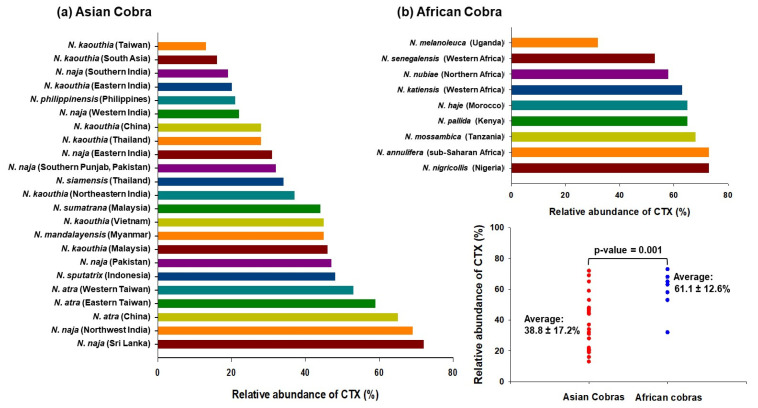
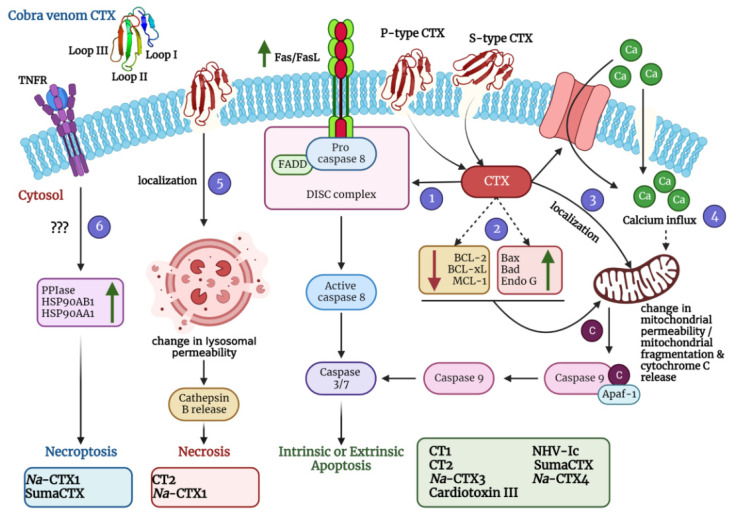
Cytotoxins (CTXs), an essential class of the non-enzymatic three-finger toxin family, are ubiquitously present in cobra venoms. These low-molecular-mass toxins, contributing to about 40 to 60% of the cobra venom proteome, play a significant role in cobra venom-induced toxicity, more prominently in dermonecrosis. Structurally, CTXs contain the conserved three-finger hydrophobic loops; however, they also exhibit a certain degree of structural diversity that dictates their biological activities. In their mechanism, CTXs mediate toxicity by affecting cell membrane structures and membrane-bound proteins and activating apoptotic and necrotic cell death pathways. Notably, some CTXs are also responsible for depolarizing neurons and heart muscle membranes, thereby contributing to the cardiac failure frequently observed in cobra-envenomed victims. Consequently, they are also known as cardiotoxins (CdTx). Studies have shown that cobra venom CTXs form cognate complexes with other components that potentiate the toxic effects of the venom’s individual component. This review focuses on the pharmacological mechanism of cobra venom CTXs and their complexes, highlighting their significance in cobra venom-induced pathophysiology and toxicity. Furthermore, the potency of commercial antivenoms in reversing the adverse effects of cobra venom CTXs and their complexes in envenomed victims has also been discussed.
Overview
The claims and statistics of this paper haven’t been checked yet.
Free: it reads the open-access text and checks the first 5 claims that cite a source we can check. Create a free account to check every claim.
Integrity signals
Registry
Cites
Statistics
Figures

Verification
Claims the paper makes
The claims and statistics of this paper haven’t been checked yet.
Free: it reads the open-access text and checks the first 5 claims that cite a source we can check. Create a free account to check every claim.
Claims other papers make about this one
Each is checked against this paper’s own text: does it say what the citing paper says it does?
The source backs part of the claim, not all of it — or backs it for a different population, condition or comparison.
In the citing paper
“Three-finger toxins (3FTxs) or cytotoxins (CTXs) are low-molecular-weight (6–9 kDa) non-enzymatic toxins that comprise about 60–70% of elapid venoms [3,15].”
From Role of Regulated Cell Death Pathways in Snakebite Envenomation: Mechanisms, Crosstalk, and Therapeutic Opportunities (2026) · cites this paper as [15]
Experimental — accuracy not yet measured
Self-check
Percentages, sums and reported differences re-computed from the paper’s own numbers.
The self-check needs the paper’s full text.
Citations
Cites
Chemical inhibitor of nonapoptotic cell death with therapeutic potential for ischemic brain injury
Degterev, A., Huang, Z., Boyce, M., Li, Y., Jagtap, P., Mizushima, N., Cuny, G. D., Mitchison, T. J., Moskowitz, M. A., & Yuan, J. (2005) · Nature Chemical Biology · doi:10.1038/nchembio711 · Cited by 3,068
Kasturiratne, A., Wickremasinghe, A. R., de Silva, N., Gunawardena, N. K., Pathmeswaran, A., Premaratna, R., Savioli, L., Lalloo, D. G., & de Silva, H. J. (2008) · PLoS Medicine · doi:10.1371/journal.pmed.0050218 · Cited by 1,935 · cited 1×
“Moreover, region-wise distribution of snakebite data suggests most of the cases of snake envenoming are concentrated in the rural areas of South Asia, Southeast Asia, and East Sub-Saharan African countries [3].”
BackgroundRIP3, an Energy Metabolism Regulator That Switches TNF-Induced Cell Death from Apoptosis to Necrosis
Zhang, D.-W., Shao, J., Lin, J., Zhang, N., Lu, B.-J., Lin, S.-C., Dong, M.-Q., & Han, J. (2009) · Science · doi:10.1126/science.1172308 · Cited by 1,931
AMP-activated protein kinase mediates mitochondrial fission in response to energy stress
Toyama, E. Q., Herzig, S., Courchet, J., Lewis, T. L., Losón, O. C., Hellberg, K., Young, N. P., Chen, H., Polleux, F., Chan, D. C., et al. (2016) · Science · doi:10.1126/science.aab4138 · Cited by 1,085
Warrell, D. A. (2010) · The Lancet · doi:10.1016/s0140-6736(09)61754-2 · Cited by 774 · cited 1×
“), or even some viperids, for example, berg adders (Bitis atropos) [8], and Russell’s vipers (Daboia russelii) from southern India and Sri Lanka [9–11] have also been reported to inflict neurological disorders in patients.”
BackgroundNecroptosis as an alternative form of programmed cell death
Christofferson, D. E., & Yuan, J. (2010) · Current Opinion in Cell Biology · doi:10.1016/j.ceb.2009.12.003 · Cited by 770
Anti-apoptosis and cell survival: A review
Portt, L., Norman, G., Clapp, C., Greenwood, M., & Greenwood, M. T. (2011) · Biochimica et Biophysica Acta (BBA) - Molecular Cell Research · doi:10.1016/j.bbamcr.2010.10.010 · Cited by 636
A Review and Database of Snake Venom Proteomes
Tasoulis, T., & Isbister, G. (2017) · Toxins · doi:10.3390/toxins9090290 · Cited by 616
A fate worse than death: apoptosis as an oncogenic process
Ichim, G., & Tait, S. W. G. (2016) · Nature Reviews Cancer · doi:10.1038/nrc.2016.58 · Cited by 451
Molecular Evolution and Phylogeny of Elapid Snake Venom Three-Finger Toxins
Fry, B. G., W�ster, W., Kini, R. M., Brusic, V., Khan, A., Venkataraman, D., & Rooney, A. P. (2003) · Journal of Molecular Evolution · doi:10.1007/s00239-003-2461-2 · Cited by 367 · cited 1×
“Another classification of CTXs was suggested based on phylogenetic analysis [64].”
BackgroundProgrammed Necrosis in the Cross Talk of Cell Death and Inflammation
Chan, F. K.-M., Luz, N. F., & Moriwaki, K. (2015) · Annual Review of Immunology · doi:10.1146/annurev-immunol-032414-112248 · Cited by 351
Alternative cell death mechanisms in development and beyond
Yuan, J., & Kroemer, G. (2010) · Genes & Development · doi:10.1101/gad.1984410 · Cited by 290
Correction: Snakebite envenoming
Gutiérrez, J. M., Calvete, J. J., Habib, A. G., Harrison, R. A., Williams, D. J., & Warrell, D. A. (2017) · Nature Reviews Disease Primers · doi:10.1038/nrdp.2017.79 · Cited by 265
Hemolysis and splitting of human erythrocyte phospholipids by snake venoms
Condrea, E., De Vries, A., & Mager, J. (1964) · Biochimica et Biophysica Acta (BBA) - Specialized Section on Lipids and Related Subjects · doi:10.1016/0926-6542(64)90101-5 · Cited by 216 · cited 1×
“[68] demonstrated the first evidence of cobra venom’s synergistic effects.”
BackgroundPetras, D., Sanz, L., Segura, Á., Herrera, M., Villalta, M., Solano, D., Vargas, M., León, G., Warrell, D. A., Theakston, R. D. G., et al. (2011) · Journal of Proteome Research · doi:10.1021/pr101040f · Cited by 216
Conformational Properties of the Neurotoxins and Cytotoxins Isolated from Elapid Snake Venoms
Dufton, M. J., & Hider, R. C. (1983) · Critical Reviews in Biochemistry · doi:10.3109/10409238309102792 · Cited by 214 · cited 1×
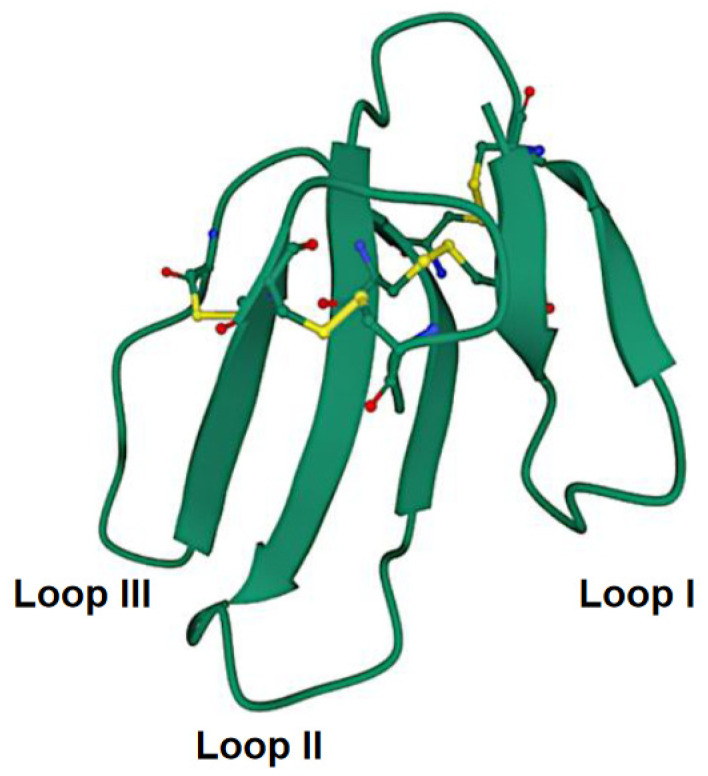
“The CTXs are small proteins comprising 60–62 amino acid residues with four intramolecular disulfide bridges [53].”
BackgroundProtease signalling in cell death: caspases versus cysteine cathepsins
Turk, B., & Stoka, V. (2007) · FEBS Letters · doi:10.1016/j.febslet.2007.05.038 · Cited by 208
The biochemistry of neuronal necrosis: rogue biology?
Syntichaki, P., & Tavernarakis, N. (2003) · Nature Reviews Neuroscience · doi:10.1038/nrn1174 · Cited by 183
Tan, K. Y., Tan, C. H., Fung, S. Y., & Tan, N. H. (2015) · Journal of Proteomics · doi:10.1016/j.jprot.2015.02.012 · Cited by 173
Membrane-active polypeptides from snake venom: Cardiotoxins and haemocytotoxins
Condrea, E. (1974) · Experientia · doi:10.1007/bf01927688 · Cited by 166 · cited 1×
“They have been designated as cardiotoxin, skeletal muscle depolarizing factor, cobramine A and B, cytotoxin, toxin γ, direct lytic factor (DLF), peak 12 B, and others [48].”
BackgroundSuchithra, N., Pappachan, J. M., & Sujathan, P. (2008) · Emergency Medicine Journal · doi:10.1136/emj.2007.051136 · Cited by 159
Huang, H.-W., Liu, B.-S., Chien, K., Chiang, L.-C., Huang, S., Sung, W., & Wu, W. (2015) · Journal of Proteomics · doi:10.1016/j.jprot.2015.07.015 · Cited by 120
Cancer cell injury by cytotoxins from cobra venom is mediated through lysosomal damage
Feofanov, A. V., Sharonov, G. V., Astapova, M. V., Rodionov, D. I., Utkin, Y. N., & Arseniev, A. S. (2005) · Biochemical Journal · doi:10.1042/bj20041892 · Cited by 119
Self-citationDutta, S., Chanda, A., Kalita, B., Islam, T., Patra, A., & Mukherjee, A. K. (2017) · Journal of Proteomics · doi:10.1016/j.jprot.2016.12.018 · Cited by 119
Self-citationCalcium and the heart: a question of life and death
Marks, A. R. (2003) · Journal of Clinical Investigation · doi:10.1172/jci18067 · Cited by 115
Patra, A., Kalita, B., Chanda, A., & Mukherjee, A. K. (2017) · Scientific Reports · doi:10.1038/s41598-017-17227-y · Cited by 110
Self-citationChien, K., Chiang, C. M., Hseu, Y. C., Vyas, A. A., Rule, G. S., & Wu, W. (1994) · Journal of Biological Chemistry · doi:10.1016/s0021-9258(17)36647-4 · Cited by 108 · cited 2×
“All S-type CTXs contain a serine residue at position 28, while in all P-type CTXs, a proline residue stands at position 30 [63] (Figure 3).”
BackgroundPanagides, N., Jackson, T., Ikonomopoulou, M. P., Arbuckle, K., Pretzler, R., Yang, D., Ali, S. A., Koludarov, I., Dobson, J. S., Sanker, B., et al. (2017) · Toxins · doi:10.3390/toxins9030103 · Cited by 106
Shan, L.-L., Gao, J.-F., Zhang, Y.-X., Shen, S.-S., He, Y., Wang, J., Ma, X., & Ji, X. (2016) · Journal of Proteomics · doi:10.1016/j.jprot.2016.02.028 · Cited by 105
Tan, N. H., Fung, S. Y., Tan, N. H., Yap, M. K. K., Gnanathasan, C. A., & Tan, C. H. (2015) · Journal of Proteomics · doi:10.1016/j.jprot.2015.08.017 · Cited by 104
Wüster, W. (1996) · Toxicon · doi:10.1016/0041-0101(95)00139-5 · Cited by 103 · cited 12×
“In a recent study, Chong et al. [133] purified CTXs from three species of Asiatic cobras—N. kaouthia from Thailand, N. sumatrana from Malaysia, and N. atra from Taiwan—and investigated the cytotoxicity neutralization of these toxins towards CRL-2648 mouse fibroblast cell lines by the Vietnamese N. kaouthia monovalent…”
BackgroundInfluentialShashidharamurthy, R., Jagadeesha, D. K., Girish, K. S., & Kemparaju, K. (2002) · Molecular and Cellular Biochemistry · doi:10.1023/a:1017972511272 · Cited by 101 · cited 1×
“Biochemical and pharmacological analyses of crude Naja venom and their purified toxins are crucial in highlighting the variation in venom composition owing to the different geographical locations of these species [28,29].”
BackgroundStructure and Dynamics of Cardiotoxins
Konshina, A. G., Dubovskii, P. V., & Efremov, R. G. (2012) · Current Protein and Peptide Science · doi:10.2174/138920312803582960 · Cited by 98 · cited 1×
“It is well established that CTXs interact and penetrate the cell membrane; the tips of all three loops are immersed at different degrees [56,74].”
BackgroundLauridsen, L. P., Laustsen, A. H., Lomonte, B., & Gutiérrez, J. M. (2017) · Journal of Proteomics · doi:10.1016/j.jprot.2016.08.024 · Cited by 98
Kularatne, S. A. M., Budagoda, S., Gawarammana, I., & Kularatne, W. K. S. (2009) · Transactions of the Royal Society of Tropical Medicine and Hygiene · doi:10.1016/j.trstmh.2009.04.002 · Cited by 98
Kalita, B., Patra, A., & Mukherjee, A. K. (2016) · Journal of Proteome Research · doi:10.1021/acs.jproteome.6b00693 · Cited by 97
Self-citationThree-finger toxins, a deadly weapon of elapid venom – Milestones of discovery
Utkin, Y. N. (2012) · Toxicon · doi:10.1016/j.toxicon.2012.09.007 · Cited by 95
Self-citationTan, N. H., Wong, K. Y., & Tan, C. H. (2017) · Journal of Proteomics · doi:10.1016/j.jprot.2017.01.018 · Cited by 92
Sintiprungrat, K., Watcharatanyatip, K., Senevirathne, W. D. S. T., Chaisuriya, P., Chokchaichamnankit, D., Srisomsap, C., & Ratanabanangkoon, K. (2015) · Journal of Proteomics · doi:10.1016/j.jprot.2015.10.007 · Cited by 91
Bawaskar, H. S., & Bawaskar, P. H. (2004) · Wilderness and Environmental Medicine · doi:10.1580/1080-6032(2004)015[0257:ebtckb]2.0.co;2 · Cited by 91
In praise of subgenera: taxonomic status of cobras of the genus Naja Laurenti (Serpentes: Elapidae)
Wallach, V., Wüster, W., & Broadley, D. G. (2009) · Zootaxa · doi:10.11646/zootaxa.2236.1.2 · Cited by 87 · cited 12×
“In a recent study, Chong et al. [133] purified CTXs from three species of Asiatic cobras—N. kaouthia from Thailand, N. sumatrana from Malaysia, and N. atra from Taiwan—and investigated the cytotoxicity neutralization of these toxins towards CRL-2648 mouse fibroblast cell lines by the Vietnamese N. kaouthia monovalent…”
BackgroundInfluentialInvestigating Toxin Diversity and Abundance in Snake Venom Proteomes
Tasoulis, T., Pukala, T. L., & Isbister, G. K. (2022) · Frontiers in Pharmacology · doi:10.3389/fphar.2021.768015 · Cited by 83 · cited 1×
“In addition, the minor non-enzymatic classes of toxins in cobra venoms include Cobra venom factors, Kunitz-type serine protease inhibitors, nerve growth factors, cystatin, natriuretic peptides, cysteine-rich secretory proteins, ohanin-like proteins or vespryns, vascular endothelial growth factors, and C-type lectins o…”
BackgroundLaustsen, A. H., Gutiérrez, J. M., Lohse, B., Rasmussen, A. R., Fernández, J., Milbo, C., & Lomonte, B. (2015) · Toxicon · doi:10.1016/j.toxicon.2015.03.001 · Cited by 82
Rivel, M., Solano, D., Herrera, M., Vargas, M., Villalta, M., Segura, Á., Arias, A. S., León, G., & Gutiérrez, J. M. (2016) · Toxicon · doi:10.1016/j.toxicon.2016.06.006 · Cited by 80
Proteomic analysis of Moroccan cobra Naja haje legionis venom using tandem mass spectrometry
Malih, I., Rusmili, M. R. A., Yee, T. T., Saïle, R., Ghalim, N., & Othman, I. (2013) · Journal of Proteomics · doi:10.1016/j.jprot.2013.11.012 · Cited by 80
Last Decade Update for Three-Finger Toxins: Newly Emerging Structures and Biological Activities
Utkin, Y. N. (2019) · World Journal of Biological Chemistry · doi:10.4331/wjbc.v10.i1.17 · Cited by 78
Self-citationFryklund, L., & Eaker, D. L. (1973) · Biochemistry · doi:10.1021/bi00728a015 · Cited by 76 · cited 2×
“A few CTXs were also isolated from the venom of Ringhals or ring-necked spitting cobra from the Hemachatus genus [50,58,59].”
BackgroundMao, Y.-C., Liu, P.-Y., Chiang, L.-C., Lai, C.-S., Lai, K.-L., Ho, C.-H., Wang, T.-H., & Yang, C.-C. (2018) · Clinical Toxicology · doi:10.1080/15563650.2017.1366502 · Cited by 75
Tan, N. H., Tan, C. H., Fung, S. Y., & Tan, N. H. (2016) · Toxins · doi:10.3390/toxins8040086 · Cited by 72
Wong, K. Y., Tan, C. H., Tan, N. H., Quraishi, N. H., & Tan, N. H. (2017) · Journal of Proteomics · doi:10.1016/j.jprot.2017.12.012 · Cited by 70
Faiz, M. A., Ahsan, M. F., Ghose, A., Rahman, M. R., Amin, R., Hossain, M., Tareq, M. N. U., Jalil, M. A., Kuch, U., Theakston, R. D. G., et al. (2017) · The American Society of Tropical Medicine and Hygiene · doi:10.4269/ajtmh.16-0842 · Cited by 69
Xu, N., Zhao, H., Yin, Y., Shen, S., Shan, L.-L., Chen, C., Zhang, Y.-X., Gao, J.-F., & Ji, X. (2017) · Journal of Proteomics · doi:10.1016/j.jprot.2017.02.018 · Cited by 68
The Composition of Naja naja Venom Samples from Three Districts of West Bengal, India
Mukherjee, A., & Maity, C. R. (1998) · Comparative Biochemistry and Physiology Part A Molecular & Integrative Physiology · doi:10.1016/s1095-6433(97)00475-3 · Cited by 68 · cited 1×
“Biochemical and pharmacological analyses of crude Naja venom and their purified toxins are crucial in highlighting the variation in venom composition owing to the different geographical locations of these species [28,29].”
BackgroundSelf-citationThe direct lytic factor of cobra venom: purification and chemical characterization
Aloof-Hirsch, S., de Vries, A., & Berger, A. (1968) · Biochimica et Biophysica Acta (BBA) - Protein Structure · doi:10.1016/0005-2795(68)90257-2 · Cited by 68
Chanda, A., Patra, A., Kalita, B., & Mukherjee, A. K. (2018) · Expert Review of Proteomics · doi:10.1080/14789450.2018.1538799 · Cited by 66
Self-citationKalita, B., Patra, A., Das, A., & Mukherjee, A. K. (2018) · Journal of Proteome Research · doi:10.1021/acs.jproteome.8b00291 · Cited by 65
Self-citationDubovskii, P. V., Lesovoy, D. M., Dubinnyi, M. A., Konshina, A. G., Utkin, Y. N., Efremov, R. G., & Arseniev, A. S. (2005) · Biochemical Journal · doi:10.1042/bj20041814 · Cited by 65
Self-citationKalita, B., Singh, S., Patra, A., & Mukherjee, A. K. (2018) · International Journal of Biological Macromolecules · doi:10.1016/j.ijbiomac.2018.06.083 · Cited by 64
Self-citationA lethal cardiotoxic–cytotoxic protein from the Indian monocellate cobra (Naja kaouthia) venom
Debnath, A., Saha, A., Gomes, A., Biswas, S., Chakrabarti, P., Giri, B., Biswas, A. K., Gupta, S. D., & Gomes, A. (2010) · Toxicon · doi:10.1016/j.toxicon.2010.05.016 · Cited by 63
Yap, M. K. K., Fung, S. Y., Tan, K. Y., & Tan, N. H. (2014) · Acta Tropica · doi:10.1016/j.actatropica.2014.01.014 · Cited by 62
Yang, S., Chien, C., Lu, M., Lin, Y., Hu, X., & Lin, S. (2006) · Experimental & Molecular Medicine · doi:10.1038/emm.2006.51 · Cited by 61
The Basic Proteins of Cobra Venom
Larsen, P. R., & Wolff, J. (1968) · Journal of Biological Chemistry · doi:10.1016/s0021-9258(19)56984-8 · Cited by 60
Cobra Cardiotoxins: Membrane Interactions and Pharmacological Potential
Dubovskii, P. V., Konshina, A. G., & Efremov, R. G. (2013) · Current Medicinal Chemistry · doi:10.2174/09298673113206660315 · Cited by 59 · cited 1×
“It is well established that CTXs interact and penetrate the cell membrane; the tips of all three loops are immersed at different degrees [56,74].”
BackgroundAmphiphilic β‐sheet cobra cardiotoxin targets mitochondria and disrupts its network
Wang, C.-H., & Wu, W. (2005) · FEBS Letters · doi:10.1016/j.febslet.2005.05.006 · Cited by 59
Patra, A., Chanda, A., & Mukherjee, A. K. (2019) · Expert Review of Proteomics · doi:10.1080/14789450.2019.1609945 · Cited by 59
Self-citationGasanov, S. E., Shrivastava, I. H., Israilov, F. S., Kim, A. A., Rylova, K. A., Zhang, B., & Dagda, R. K. (2015) · PLoS ONE · doi:10.1371/journal.pone.0129248 · Cited by 59
Liu, C.-C., Chou, Y.-S., Chen, C., Liu, K.-L., Huang, G., Yu, J., Wu, C.-J., Liaw, G.-W., Hsieh, C. H., & Chen, C.-K. (2020) · PLoS neglected tropical diseases · doi:10.1371/journal.pntd.0008054 · Cited by 57
Lin, K.-L., Su, J.-C., Chien, C., Chuang, P., Chang, L., & Lin, S. (2010) · Toxicon · doi:10.1016/j.toxicon.2010.01.017 · Cited by 57
Chanda, A., Kalita, B., Patra, A., Senevirathne, W. D. S. T., & Mukherjee, A. K. (2019) · Expert Review of Proteomics · doi:10.1080/14789450.2019.1559735 · Cited by 55
Self-citationLiu, C.-C., You, C.-H., Wang, P.-J., Yu, J., Huang, G., Liu, C.-H., Hsieh, W.-C., & Lin, C. (2017) · PLoS neglected tropical diseases · doi:10.1371/journal.pntd.0006138 · Cited by 51
Pucca, M. B., Ahmadi, S., Cerni, F. A., Ledsgaard, L., Sørensen, C. V., McGeoghan, F. T. S., Stewart, T., Schoof, E., Lomonte, B., auf dem Keller, U., et al. (2020) · Frontiers in Pharmacology · doi:10.3389/fphar.2020.00611 · Cited by 50 · cited 2×
“mossa bica occurs via the format on of toxin hetero-oligomers that a e better poised to interact with and perturb cell membranes [73].”
BackgroundTan, N. H., Wong, K. Y., Tan, N. H., & Tan, C. H. (2020) · International Journal of Biological Macromolecules · doi:10.1016/j.ijbiomac.2020.04.173 · Cited by 50
MECHANISMS OF CARDIOTOXIN III‐INDUCED APOPTOSIS IN HUMAN COLORECTAL CANCER COLO205 CELLS
Tsai, C., Yang, S., Chien, C., Lu, M., Lo, C., Lin, Y., Hu, X., & Lin, S. (2006) · Clinical and Experimental Pharmacology and Physiology · doi:10.1111/j.1440-1681.2006.04334.x · Cited by 49
Ebrahimpour, K., Shirazi, F. H., Hossein, V., Abas, Z., Kobarfard, F., & Rabiei, H. (2014) · Journal of Breast Cancer · doi:10.4048/jbc.2014.17.4.314 · Cited by 49
Cobra venom cytotoxins; apoptotic or necrotic agents?
Ebrahimpour, K., Shirazi, F. H., Mirakabadi, A. Z., & Vatanpour, H. (2015) · Toxicon · doi:10.1016/j.toxicon.2015.09.017 · Cited by 48
Puzari, U., & Mukherjee, A. K. (2020) · Analytica Chimica Acta · doi:10.1016/j.aca.2020.07.054 · Cited by 48 · cited 1×
“Moreover, except for Australia, no other countries currently employ snake venom detection kits to identify the encountered snake species [12].”
BackgroundSelf-citationIdentification of the direct lytic factor from cobra venom as cardiotoxin
Slotta, K. H., & Vick, J. A. (1969) · Toxicon · doi:10.1016/0041-0101(69)90116-0 · Cited by 48 · cited 1×
“In 1969, cardiotoxicity was demonstrated for DLF, and the name cardiotoxin (CdTx) was introduced [52].”
BackgroundTan, C. H., Wong, K. Y., Chong, H. P., Tan, N. H., & Tan, K. Y. (2019) · Journal of Proteomics · doi:10.1016/j.jprot.2019.103418 · Cited by 47 · cited 1×
“Notably, among the various sub-classes of 3FTXs, the proportion of cytotoxins (CTX) and post-synaptic neurotoxins (NTX) dictates the lethality of cobra venoms [24,27].”
BackgroundClinical features and treatment experience: A review of 292 Chinese cobra snakebites
Wang, W., Chen, Q.-F., Yin, R., Ji-jin, Z., Li, Q.-B., Chang, H.-H., Wu, Y.-B., & Michelson, E. A. (2014) · Environmental Toxicology and Pharmacology · doi:10.1016/j.etap.2013.12.018 · Cited by 47
Cardiovascular Effects of Snake Toxins: Cardiotoxicity and Cardioprotection
Аверин, А. С., & Utkin, Y. N. (2021) · Acta Naturae · doi:10.32607/actanaturae.11375 · Cited by 46
Self-citationZhang, B., Li, F., Chen, Z., Shrivastava, I. H., Gasanoff, E. S., & Dagda, R. K. (2019) · Toxins · doi:10.3390/toxins11030152 · Cited by 44
Wu, M., Wei, M., Tang, Y., Zhou, S., Kong, T., & Dong, W. (2013) · The American Journal of Chinese Medicine · doi:10.1142/s0192415x13500456 · Cited by 43
Chanda, A., & Mukherjee, A. K. (2020) · International Journal of Biological Macromolecules · doi:10.1016/j.ijbiomac.2020.05.106 · Cited by 42 · cited 1×
“Notably, among the various sub-classes of 3FTXs, the proportion of cytotoxins (CTX) and post-synaptic neurotoxins (NTX) dictates the lethality of cobra venoms [24,27].”
BackgroundSelf-citationWong, K. Y., Tan, N. H., Tan, N. H., & Tan, C. H. (2021) · Toxins · doi:10.3390/toxins13010060 · Cited by 40
Snakebite Envenoming a Challenging Diagnosis for the Forensic Pathologist: A Systematic Review
Feola, A., Marella, G. L., Carfora, A., Pietra, B. D., Zangani, P., & Campobasso, C. P. (2020) · Toxins · doi:10.3390/toxins12110699 · Cited by 39 · cited 1×
“7 million cases of envenoming yearly, thereby highlighting the urgency of research into this neglected public health concern [1,2].”
BackgroundChanda, A., & Mukherjee, A. K. (2020) · Expert Review of Proteomics · doi:10.1080/14789450.2020.1778471 · Cited by 39 · cited 1×
“In addition, the minor non-enzymatic classes of toxins in cobra venoms include Cobra venom factors, Kunitz-type serine protease inhibitors, nerve growth factors, cystatin, natriuretic peptides, cysteine-rich secretory proteins, ohanin-like proteins or vespryns, vascular endothelial growth factors, and C-type lectins o…”
BackgroundSelf-citationDutta, S., Sinha, A., Dasgupta, S., & Mukherjee, A. K. (2019) · Biochimica et Biophysica Acta (BBA) - Biomembranes · doi:10.1016/j.bbamem.2019.02.002 · Cited by 38 · cited 2×
“The complex exhibited marked synergism in cytotoxicity towards rat L6 myogenic cells, which has a profound pathophysiological significance in cobra venom-induced local tissue necrosis [72].”
BackgroundSelf-citationMukherjee, A. K. (2010) · Europe PMC (PubMed Central) · Cited by 38
Self-citationMolecular Mechanism by Which Cobra Venom Cardiotoxins Interact with the Outer Mitochondrial Membrane
Li, F., Shrivastava, I. H., Hanlon, P., Dagda, R. K., & Gasanoff, E. S. (2020) · Toxins · doi:10.3390/toxins12070425 · Cited by 37
An investigation of snakebite antivenom usage in Taiwan
Lin, C., Chaou, C., & Tseng, C.-Y. (2015) · Journal of the Formosan Medical Association · doi:10.1016/j.jfma.2015.07.006 · Cited by 36
Chen, K., Chiou, Y., Kao, P.-H., Lin, S., & Chang, L. (2007) · Toxicon · doi:10.1016/j.toxicon.2007.11.024 · Cited by 35
Tan, C. H., Wong, K. Y., Tan, N. H., Ng, T. S., & Tan, N. H. (2019) · Toxins · doi:10.3390/toxins11020116 · Cited by 33
Chiou, J., Shi, Y., Wang, L., Huang, C., Lee, Y., & Chang, L. (2019) · Toxins · doi:10.3390/toxins11090527 · Cited by 32
Yang, S., Chien, C., Chang, L., & Lin, S. (2007) · Toxicon · doi:10.1016/j.toxicon.2007.01.005 · Cited by 32
The myth of cobra venom cytotoxin: More than just direct cytolytic actions
Hiu, J. J., & Yap, M. K. K. (2022) · Toxicon X · doi:10.1016/j.toxcx.2022.100123 · Cited by 31 · cited 1×
“It is to be noted that a slight variation in amino acid sequences in CTXs from different cobra species can result in differential cytotoxicity [54].”
BackgroundPopulation-based study of venomous snakebite in Taiwan
Chen, C.-K., Lin, C., Shih, F., Chaou, C., Lin, J. C.-C., Lai, T., Tseng, C.-Y., & Fang, C. (2015) · Journal of Acute Medicine · doi:10.1016/j.jacme.2015.04.004 · Cited by 30
Mukherjee, A. K. (2020) · Toxicon · doi:10.1016/j.toxicon.2020.10.024 · Cited by 30
Self-citationChien, C., Chang, S.-Y., Lin, K., Chiu, C., Chang, L., & Lin, S. (2010) · Toxicon · doi:10.1016/j.toxicon.2010.05.007 · Cited by 30
Chong, H. P., Tan, N. H., Liu, B.-S., Sung, W., & Tan, C. H. (2022) · Toxins · doi:10.3390/toxins14050334 · Cited by 29
Mukherjee, A. K. (2010) · Europe PMC (PubMed Central) · Cited by 29
Self-citationLocal Cytotoxic Effects in Cobra Envenoming: A Pilot Study
Lin, J.-H., Sung, W., Mu, H.-W., & Hung, D. (2022) · Toxins · doi:10.3390/toxins14020122 · Cited by 28
Kakati, H., Patra, A., Kalita, B., Chanda, A., Rapole, S., & Mukherjee, A. K. (2022) · International Journal of Biological Macromolecules · doi:10.1016/j.ijbiomac.2022.03.095 · Cited by 27
Self-citationCentral Asian cobra venom cytotoxins-induced aggregation, permeability and fusion of liposomes.
Aripov, T. F., Gasanov, S. E., Salakhutdinov, B. A., Ia, R., & Камаев, Ф. Г. (1989) · PubMed · Cited by 27
Patra, A., & Mukherjee, A. K. (2020) · Journal of Proteome Research · doi:10.1021/acs.jproteome.0c00054 · Cited by 26
Self-citationAbu-Khousa, M., Fiegle, D. J., Sommer, S. T., Minabari, G., Milting, H., Heim, C., Weyand, M., Tomasi, R., Dendorfer, A., Volk, T., et al. (2020) · Frontiers in Physiology · doi:10.3389/fphys.2020.00182 · Cited by 26
Mukherjee, A. K., & Mackessy, S. P. (2021) · Toxicon · doi:10.1016/j.toxicon.2021.07.008 · Cited by 25 · cited 1×
“In addition, discrepancies in epidemiological data on snake envenomation, either due to the absence of a cohesive and systematic analysis of snakebite cases or because many envenomation cases, are not reported to hospitals, may not be ruled out [13].”
BackgroundSelf-citationАверин, А. С., Nenov, M. N., Starkov, V. G., Tsetlin, V. I., & Utkin, Y. N. (2022) · Toxins · doi:10.3390/toxins14020088 · Cited by 25
Self-citationCytotoxin 1 from Naja atra Cantor venom induced necroptosis of leukemia cells
Liu, Y., Wei, M., Wang, Y., Liu, S., Qiu, Y., Xiang, Y., Hu, L., Fan, L., Peng, X., Wang, H., et al. (2019) · Toxicon · doi:10.1016/j.toxicon.2019.04.012 · Cited by 23
El-Hakim, A. E., Gamal‐Eldeen, A. M., Shahein, Y. E., Mansour, N. M., Wahby, A. F., & Abouelella, A. M. (2011) · Archives of Toxicology · doi:10.1007/s00204-010-0631-8 · Cited by 23
Patra, A., Kalita, B., & Mukherjee, A. K. (2018) · Toxicon · doi:10.1016/j.toxicon.2018.08.018 · Cited by 23
Self-citationSu, J., Lin, K., Chien, C., Chuang, P., Chang, L., & Lin, S. (2010) · Clinical and Experimental Pharmacology and Physiology · doi:10.1111/j.1440-1681.2010.05397.x · Cited by 22
Hiu, J. J., & Yap, M. K. K. (2021) · International Journal of Biological Macromolecules · doi:10.1016/j.ijbiomac.2021.06.145 · Cited by 21
Su, H., Wang, M., Li, Y., Tang, C., & Tsai, M. (2016) · Hong Kong Medical Journal · doi:10.12809/hkmj154739 · Cited by 21
Tan, C. H., Tan, N. H., Wong, K. Y., Tan, N. H., & Chong, H. P. (2022) · Toxins · doi:10.3390/toxins14080522 · Cited by 21
Patra, A., Herrera, M., Gutiérrez, J. M., & Mukherjee, A. K. (2021) · Drug Testing and Analysis · doi:10.1002/dta.3108 · Cited by 20
Self-citationLee, S.-C., Lin, C.-C., Wang, C., Wu, P.-L., Huang, H.-W., Chang, C., & Wu, W. (2014) · Journal of Biological Chemistry · doi:10.1074/jbc.m114.557157 · Cited by 20
Joubert, F. J. (1977) · European Journal of Biochemistry · doi:10.1111/j.1432-1033.1977.tb11403.x · Cited by 20 · cited 2×
“A few CTXs were also isolated from the venom of Ringhals or ring-necked spitting cobra from the Hemachatus genus [50,58,59].”
BackgroundThakur, R., Chattopadhyay, P., & Mukherjee, A. K. (2014) · Comparative Biochemistry and Physiology Part C Toxicology & Pharmacology · doi:10.1016/j.cbpc.2014.12.001 · Cited by 19 · cited 2×
“[62] reported the isolation of a venom complex containing a 27.”
BackgroundSelf-citationCardiotoxin III induces c‐jun N‐terminal kinase‐dependent apoptosis in HL‐60 human leukaemia cells
Chien, C., Yang, S., Yang, C., Chang, L., & Lin, S. (2007) · Cell Biochemistry and Function · doi:10.1002/cbf.1420 · Cited by 19
Impact of membrane partitioning on the spatial structure of an S-type cobra cytotoxin
Dubovskii, P. V., Dubinnyi, M. A., Volynsky, P. E., Pustovalova, Y. E., Konshina, A. G., Utkin, Y. N., Arseniev, A. S., & Efremov, R. G. (2017) · Journal of Biomolecular Structure and Dynamics · doi:10.1080/07391102.2017.1389662 · Cited by 18
Self-citationAsad, M. H. H. B., McCleary, R. J. R., Salafutdinov, I. I., Alam, F., Shah, H. S., Bibi, S., Ali, A., Khalid, S., Hasan, S. M. F., Sabatier, J., et al. (2019) · Toxicological & Environmental Chemistry Reviews · doi:10.1080/02772248.2019.1619743 · Cited by 18
Mukherjee, A. K. (2008) · Toxicon · doi:10.1016/j.toxicon.2008.03.014 · Cited by 16 · cited 1×
“While both the purified toxins did not induce hemolytic activity on mammalian erythrocytes, the hemolytic potency of the KTX:NK-PLA2 complex was quite significant [70,71].”
BackgroundSelf-citationАверин, А. С., Astashev, M. E., Andreeva, T. V., Tsetlin, V. I., & Utkin, Y. N. (2019) · Doklady Biochemistry and Biophysics · doi:10.1134/s1607672919040094 · Cited by 16
Self-citationNaja atra Cardiotoxin 1 Induces the FasL/Fas Death Pathway in Human Leukemia Cells
Chiou, J., Wang, L., Lee, Y., & Chang, L. (2021) · Cells · doi:10.3390/cells10082073 · Cited by 16
Dubovskii, P. V., Dubova, K. M., Bourenkov, G. P., Starkov, V. G., Konshina, A. G., Efremov, R. G., Utkin, Y. N., & Самыгина, В. Р. (2022) · Toxins · doi:10.3390/toxins14020149 · Cited by 16
Self-citationMukherjee, A. K., Kalita, B., Dutta, S., Patra, A., Maiti, C. R., & Punde, D. (2021) · CRC Press eBooks · doi:10.1201/9780429054204-43 · Cited by 16
Self-citationProteomic characterization of Naja mandalayensis venom
Beraldo-Neto, E., Coelho, G. R., Sciani, J. M., & Pimenta, D. C. (2021) · The Journal of venomous animals and toxins including tropical diseases · doi:10.1590/1678-9199-jvatitd-2020-0125 · Cited by 15
Teoh, S. Q., & Yap, M. K. K. (2020) · Toxin Reviews · doi:10.1080/15569543.2020.1799408 · Cited by 14
Gorai, B., & Sivaraman, T. (2016) · International Journal of Biological Macromolecules · doi:10.1016/j.ijbiomac.2016.10.091 · Cited by 12
Konshina, A. G., Dubovskii, P. V., & Efremov, R. G. (2020) · Journal of Chemical Information and Modeling · doi:10.1021/acs.jcim.0c01137 · Cited by 11
Effect of calcium on the vascular contraction induced by cobra venom cardiotoxin
Kwan, C. Y., Tk, K., & Huang, S. (2002) · Clinical and Experimental Pharmacology and Physiology · doi:10.1046/j.1440-1681.2002.03723.x · Cited by 11
Chaim-Matyas, A., Borkow, G., & Ovadia, M. (1995) · Comparative Biochemistry and Physiology Part B Biochemistry and Molecular Biology · doi:10.1016/0305-0491(94)00130-m · Cited by 11
Effect of D57N Mutation on Membrane Activity and Molecular Unfolding of Cobra Cardiotoxin
Lo, C., Hsu, J.-H., Sheu, Y.-C., Chiang, C.-M., Wu, W.-G., Fann, W. S., & Tsao, P.-H. (1998) · Biophysical Journal · doi:10.1016/s0006-3495(98)77682-9 · Cited by 10 · cited 1×
“Moreover, the Asp57 to Asn57 (D57N) mutation has been demonstrated to perturb the structure of CTX molecules at a neutral pH [55].”
BackgroundExistence of a cardiotoxic principle in cobra venom.
Nk, S. (2008) · PubMed · Cited by 9
S- and P-type cobra venom cardiotoxins differ in their action on isolated rat heart
Аверин, А. С., Goltyaev, M. V., Andreeva, T. V., Starkov, V. G., Tsetlin, V. I., & Utkin, Y. N. (2022) · The Journal of venomous animals and toxins including tropical diseases · doi:10.1590/1678-9199-jvatitd-2021-0110 · Cited by 8
Self-citationPurification and characterization of Ophiophagus hannah cytotoxin-like proteins
Chang, L., Chen, K., Lin, S., & Huang, H.-B. (2006) · Toxicon · doi:10.1016/j.toxicon.2006.06.012 · Cited by 6 · cited 2×
“and three CTX-like proteins were isolated from the venom of a king cobra (Ophiophagus hannah) [61].”
BackgroundJoubert, F. J. (1988) · International Journal of Biochemistry · doi:10.1016/0020-711x(88)90361-8 · Cited by 6 · cited 2×
“Two CTX homologs were isolated from the venom of the common shield cobra Aspidelaps scutatus fulafulus [60],”
BackgroundStatus of Asp29 and Asp40 in the Interaction of Naja atra Cardiotoxins with Lipid Bilayers
Wu, G.-L., Shi, Y., Huang, C., Lee, Y., Wang, L., Chiou, J., Lu, C., & Chang, L. (2020) · Toxins · doi:10.3390/toxins12040262 · Cited by 6
Wu, G.-L., Shi, Y., Chiou, J., Huang, C., Lee, Y., Wang, L., & Chang, L. (2022) · Archives of Biochemistry and Biophysics · doi:10.1016/j.abb.2022.109209 · Cited by 5
Bandopadhyay, P., Halder, S., Sarkar, M., Bhunia, S. K., Dey, S., Gomes, A., & Giri, B. (2016) · Bioinformation · doi:10.6026/97320630012105 · Cited by 4
Cited by
Animal Venom in Modern Medicine: A Review of Therapeutic Applications
Kim, E., Hwang, D. H., Prakash, R. L. M., Ravi, D. A., Lee, H., Heo, Y., Munawir, A., Seyedian, R., & Kang, C. (2025) · Toxins · doi:10.3390/toxins17080371 · Cited by 43
“Non-enzymatic components, including neurotoxins, cardiotoxins, cytotoxins, and ion channel blockers, typically target specific cellular receptors and channels with remarkable potency and specificity [20,21].”
Natural toxins and One Health: a review
Nwaji, A. R., Onikisateinba., A., Anyang, A. S., Nguedia, K., Abiade, E. B., Forcados, G. E., Oladipo, O. O., Makama, S., Elisha, I. L., Ozele, N., et al. (2022) · Science in One Health · doi:10.1016/j.soh.2023.100013 · Cited by 44
“Cytotoxins present in cobra venom cause cell apoptosis and necrosis by altering membrane permeability as well as induce heart failure by depolarizing neurons and cardiocyte membranes [23].”
BackgroundGasanoff, E. S., & Dagda, R. K. (2024) · Toxins · doi:10.3390/toxins16070287 · Cited by 14
“…venom cytotoxins are also called cardiotoxins due to their ability to induce cardiotoxicity in the envenomated victim, as evidenced by cardiac arrest [1,3] caused by changes in the Na + and Ca 2+ concentrations across cell membranes affecting the contractility of heart muscles and aorta [8–10].”
BackgroundResultInfluentialLi, M., & Gasanoff, E. S. (2023) · The Journal of Membrane Biology · doi:10.1007/s00232-023-00292-y · Cited by 12
“…linked to the intermembrane exchange of lipids and membrane fusion (Gasanov et al. 1990c, d, 1997, 2015; Gasanov and Gasanov 1994; Zhang et al. 2019; Li et al. 2020b; Aripov et al. 1989b) underlying numerous physiological reactions caused by these proteins (Kalita et al. 2022; Gasanov et al. 2014).”
BackgroundInfluentialThe application of snake venom in anticancer drug discovery: an overview of the latest developments
da Silva, J. R., Castro-Amorim, J., Mukherjee, A. K., Ramos, M. J., & Fernandes, P. A. (2025) · Expert Opinion on Drug Discovery · doi:10.1080/17460441.2025.2465364 · Cited by 11
“Specific subtypes, such as cytotoxic cardiotoxins (CTXs) and alpha-neurotoxins (αNTXs), illustrate this versatility: while αNTXs produce neuromuscular paralysis by binding to the muscular nicotinic acetylcholine receptor (nAChR), CTXs cause local tissue necrosis and/or necroptosis [22,81].”
Self-citation
Metadata
- Authors
- Kalita, B., Utkin, Y. N., & Mukherjee, A. K.
- Affiliations
- Amrita Vishwa Vidyapeetham (IN)
- Russian Academy of Sciences (RU)
- Tezpur University (IN)
- Corresponding author
- Mukherjee, Ashis K.
- Venue
- Toxins
- Publisher
- MDPI AG
- Published
- 2022-12-01
- Volume
- 14
- Issue
- 12
- Pages
- 839
- ISSN
- 2072-6651 (ISSN-L)
- PMC
- PMC9780984
- OpenAlex
- W4311052236
- Cited by
- 50
- References
- 140
- Citations by year
- 2026: 9 · 2025: 15 · 2024: 14 · 2023: 11 · 2022: 1
- FWCI
- 1.58
- Type
- journal article
- Language
- en
- Open access
- gold
- doi.org
- Licence
- Locations
- Toxins (publishedVersion, cc-by)
- PubMed Central (publishedVersion, cc-by)
- PubMed (publishedVersion)
- DOAJ (DOAJ: Directory of Open Access Journals) (submittedVersion, cc-by-sa)
- Topics
- Life Sciences › Pharmacology, Toxicology and Pharmaceutics › Toxicology › Venomous Animal Envenomation and Studies
- Health Sciences › Medicine › Pharmacology (medical) › Healthcare and Venom Research
- Life Sciences › Agricultural and Biological Sciences › Ecology, Evolution, Behavior and Systematics › Amphibian and Reptile Biology
- Keywords
- cobra venom, three-finger toxins, cytotoxin, cardiotoxin, dermonecrosis, cell membrane damage, apoptosis, necrosis, cardiac depolarization, heart failure, antivenom potency, envenomation
- MeSH terms
- Animals, Antivenins, Cytotoxins, Elapid Venoms, Toxins, Biological, Elapidae
About these checks
Registry, retraction, Cites and statistics results are computed, not judged, with one exception: a printed reference that no index lists is read once by a model before it counts as a citation error. Claims are extracted by a model and kept only when their quote appears verbatim in the text; each cited source is then checked, with a model’s help, for whether it says what the claim relies on. Those verdicts can be wrong — read the claim’s quote and the cited source before relying on one.
Statistics and arithmetic are recomputed, not judged.
Confidence bands are shown only for fields calibrated on our annotated test set. None is calibrated yet, so no band is shown.
What counts as a claim ›How we measure confidence ›How we check this ›
Are you an author, or do you see a problem with this page? Request a review
Data sources
Bibliographic data: Semantic Scholar, OpenAlex, Crossref.
Contains information from the Semantic Scholar Academic Graph Datasets, made available under the ODC Attribution License (ODC-BY 1.0).
Semantic Scholar’s data is described in: Kinney, R., et al. (2023). The Semantic Scholar Open Data Platform. arXiv:2301.10140.
