

Snake Antivenoms—Toward Better Understanding of the Administration Route
Open accessThe DOI matches its Crossref record; 150 of the 151 references it cites were found in a registry or an index.
Abstract
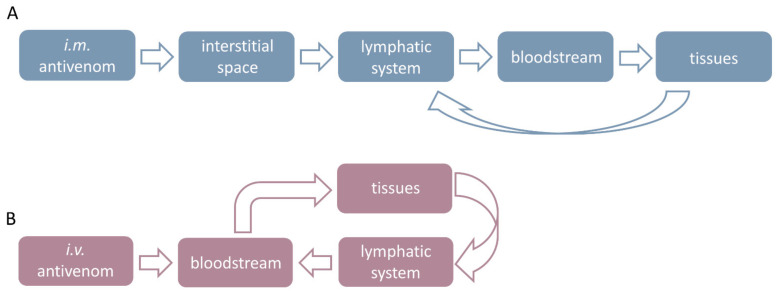
Envenomations induced by animal bites and stings constitute a significant public health burden. Even though a standardized protocol does not exist, parenterally administered polyclonal antivenoms remain the mainstay in snakebite therapy. There is a prevailing opinion that their application by the i.m. route has poor efficacy and that i.v. administration should preferentially be chosen in order to achieve better accomplishment of the antivenom therapeutic activity. Recently, it has been demonstrated that neutralization not only in the systemic circulation but also in the lymphatic system might be of great importance for the clinical outcome since it represents another relevant body compartment through which the absorption of the venom components occurs. In this review, the present-day and summarized knowledge of the laboratory and clinical findings on the i.v. and i.m. routes of antivenom administration is provided, with a special emphasis on the contribution of the lymphatic system to the process of venom elimination. Until now, antivenom-mediated neutralization has not yet been discussed in the context of the synergistic action of both blood and lymph. A current viewpoint might help to improve the comprehension of the venom/antivenom pharmacokinetics and the optimal approach for drug application. There is a great need for additional dependable, practical, well-designed studies, as well as more practice-related experience reports. As a result, opportunities for resolving long-standing disputes over choosing one therapeutic principle over another might be created, improving the safety and effectiveness of snakebite management.
Overview
The claims and statistics of this paper haven’t been checked yet.
Free: it reads the open-access text and checks the first 5 claims that cite a source we can check. Create a free account to check every claim.
Integrity signals
Registry
Cites
Statistics
Figures
Verification
Claims the paper makes
The claims and statistics of this paper haven’t been checked yet.
Free: it reads the open-access text and checks the first 5 claims that cite a source we can check. Create a free account to check every claim.
Claims other papers make about this one
Each is checked against this paper’s own text: does it say what the citing paper says it does?
The source backs part of the claim, not all of it — or backs it for a different population, condition or comparison.
In the citing paper
“their large molecular size severely impedes tissue penetration, making them ineffective in reducing rapid local tissue damage”
From Role of Regulated Cell Death Pathways in Snakebite Envenomation: Mechanisms, Crosstalk, and Therapeutic Opportunities (2026) · cites this paper as [77]
Experimental — accuracy not yet measured
Self-check
Percentages, sums and reported differences re-computed from the paper’s own numbers.
The self-check needs the paper’s full text.
Citations
Cites
Gutiérrez, J. M., Calvete, J. J., Habib, A. G., Harrison, R. A., Williams, D. J., & Warrell, D. A. (2017) · Nature Reviews Disease Primers · doi:10.1038/nrdp.2017.63 · Cited by 955
Antibody Pharmacokinetics and Pharmacodynamics
Lobo, E. D., Hansen, R. J., & Balthasar, J. P. (2004) · Journal of Pharmaceutical Sciences · doi:10.1002/jps.20178 · Cited by 909
Warrell, D. A. (2010) · The Lancet · doi:10.1016/s0140-6736(09)61754-2 · Cited by 774
Snake Bite in South Asia: A Review
Alirol, E., Sharma, S. K., Bawaskar, H. S., Kuch, U., & Chappuis, F. (2010) · PLoS Neglected Tropical Diseases · doi:10.1371/journal.pntd.0000603 · Cited by 493
The Global Snake Bite Initiative: an antidote for snake bite
Williams, D., Gutiérrez, J. M., Harrison, R., Warrell, D. A., White, J., Winkel, K. D., & Gopalakrishnakone, P. (2010) · The Lancet · doi:10.1016/s0140-6736(09)61159-4 · Cited by 397 · cited 1×
“Nowadays, the whole world faces a critical and longstanding shortage of antivenoms, affecting, in the first place, developing countries [13–16] but high-income countries as well [17–19], whose alleviation aims for the development of feasible and profitable production strategies, rational use of medications and impleme…”
BackgroundSlagboom, J., Kool, J., Harrison, R. A., & Casewell, N. R. (2017) · British Journal of Haematology · doi:10.1111/bjh.14591 · Cited by 278
Williams, D. J., Gutiérrez, J.-M., Calvete, J. J., Wüster, W., Ratanabanangkoon, K., Paiva, O., Brown, N. I., Casewell, N. R., Harrison, R. A., Rowley, P. D., et al. (2011) · Journal of Proteomics · doi:10.1016/j.jprot.2011.05.027 · Cited by 244
Isbister, G. K., & Kiernan, M. C. (2005) · The Lancet Neurology · doi:10.1016/s1474-4422(05)70041-7 · Cited by 241
Snake Venoms in Drug Discovery: Valuable Therapeutic Tools for Life Saving
Mohamed Abd El-Aziz, T., Soares, A. G., & Stockand, J. D. (2019) · Toxins · doi:10.3390/toxins11100564 · Cited by 241
Current Treatment for Venom-Induced Consumption Coagulopathy Resulting from Snakebite
Maduwage, K., & Isbister, G. K. (2014) · PLoS Neglected Tropical Diseases · doi:10.1371/journal.pntd.0003220 · Cited by 235
Malasit, P., Warrell, D. A., Chanthavanich, P., Viravan, C., Mongkolsapaya, J., Singhthong, B., & Supich, C. (1986) · BMJ · doi:10.1136/bmj.292.6512.17 · Cited by 231 · cited 1×
“It can be performed by perfusion or by slow direct injection, with the latter becoming effective more rapidly and being less costly, also enabling urgent cessation upon the onset of immediate adverse reactions [85,86].”
Background(1993) · QJM: An International Journal of Medicine · doi:10.1093/oxfordjournals.qjmed.a068818 · Cited by 227
Isbister, G. (2010) · Seminars in Thrombosis and Hemostasis · doi:10.1055/s-0030-1254053 · Cited by 226 · cited 1×
“Often, there are situations where the species responsible for the envenomation could not have been reliably identified and the treatment could be suspected only from the patient’s description or the clinical signs, mostly coagulopathy as the most common one [2,45,46,134], which calls into question the appropriateness…”
BackgroundLewin, M., Samuel, S., Merkel, J., & Bickler, P. (2016) · Toxins · doi:10.3390/toxins8090248 · Cited by 224
Dart, R. C., Seifert, S. A., Boyer, L. V., Clark, R. F., Hall, E., McKinney, P., McNally, J., Kitchens, C. S., Curry, S. C., Bogdan, G. M., et al. (2001) · Archives of Internal Medicine · doi:10.1001/archinte.161.16.2030 · Cited by 221
Pharmacokinetic-Pharmacodynamic Relationships of Immunoglobulin Therapy for Envenomation
Guti??rrez, J. M., Le??n, G., & Lomonte, B. (2003) · Clinical Pharmacokinetics · doi:10.2165/00003088-200342080-00002 · Cited by 216
PROLONGED COAGULATION DEFECT (DEFIBRINATION SYNDROME) IN MALAYAN VIPER BITE
Reid, H. A., Chan, K. E., & Thean, P. C. (1963) · The Lancet · doi:10.1016/s0140-6736(63)91269-8 · Cited by 215
Pros and cons of different therapeutic antibody formats for recombinant antivenom development
Laustsen, A. H., María Gutiérrez, J., Knudsen, C., Johansen, K. H., Bermúdez-Méndez, E., Cerni, F. A., Jürgensen, J. A., Ledsgaard, L., Martos-Esteban, A., Øhlenschlæger, M., et al. (2018) · Toxicon · doi:10.1016/j.toxicon.2018.03.004 · Cited by 177 · cited 1×
“Furthermore, the immune system of the above-mentioned species is different compared to the animals used for snake antivenom production: mostly horses and exceptionally sheep [101], donkeys and llamas [102].”
BackgroundEmergency treatment of a snake bite: Pearls from literature
Ahmed, S., Ahmed, M., Nadeem, A., Mahajan, J., Choudhary, A., & Pal, J. (2008) · Journal of Emergencies, Trauma, and Shock · doi:10.4103/0974-2700.43190 · Cited by 174 · cited 1×
“administration represents the method of choice whenever professional medical care is available [58,61,62].”
MethodMeyer, W. P., Habib, A. G., Onayade, A. A., Yakubu, A., Smith, D. C., Nasidi, A., Daudu, I. J., Warrell, D. A., & Theakston, R. D. G. (1997) · The American Journal of Tropical Medicine and Hygiene · doi:10.4269/ajtmh.1997.56.291 · Cited by 170 · cited 1×
“For the same reason, the decline in their concentration occurs more rapidly, mostly via renal filtration, with the elimination half-life between only 4 and 24 h [46,48].”
BackgroundCrisis in snake antivenom supply for Africa
Theakston, R., & Warrell, D. (2000) · The Lancet · doi:10.1016/s0140-6736(05)74319-1 · Cited by 165
Recurrent and Persistent Coagulopathy Following Pit Viper Envenomation
Boyer, L., Seifert, S. A., Clark, R. F., McNally, J. T., Williams, S. R., Nordt, S. P., Walter, F. G., & Dart, R. C. (1999) · Archives of Internal Medicine · doi:10.1001/archinte.159.7.706 · Cited by 155 · cited 1×
“Such a phenomenon is associated with the redistribution of the venom into the circulation by slow continuous absorption from a depot site following the elimination of the circulating antivenom or by reversible venom–antivenom binding [49].”
BackgroundLalloo*, D. G., & Theakston, R. D. G. (2003) · Journal of Toxicology: Clinical Toxicology · doi:10.1081/clt-120021113 · Cited by 155 · cited 1×
“Preclinical [43] and clinical studies [44,45] showed that Fab antivenoms have a much larger volume of distribution, compared to those composed of F(ab’)2 fragments or IgGs, due to their low molecular mass which enables them to readily reach the extravascular compartment [46] and redistribute venom antigens to the vasc…”
BackgroundAbubakar, I. S., Abubakar, S. B., Habib, A. G., Nasidi, A., Durfa, N., Yusuf, P. O., Larnyang, S., Garnvwa, J., Sokomba, E., SALAKO, L. A., et al. (2010) · PLoS neglected tropical diseases · doi:10.1371/journal.pntd.0000767 · Cited by 153
Antivenoms for Snakebite Envenomings
Maria Gutierrez, J., Leon, G., Lomonte, B., & Angulo, Y. (2011) · Inflammation & Allergy - Drug Targets · doi:10.2174/187152811797200669 · Cited by 149
Pharmacokinetics of Snake Venom
Sanhajariya, S., Duffull, S., & Isbister, G. (2018) · Toxins · doi:10.3390/toxins10020073 · Cited by 148
The snakebite problem and antivenom crisis from a health-economic perspective
Habib, A. G., & Brown, N. I. (2018) · Toxicon · doi:10.1016/j.toxicon.2018.05.009 · Cited by 135
History of Envenoming Therapy and Current Perspectives
Pucca, M. B., Cerni, F. A., Janke, R., Bermúdez-Méndez, E., Ledsgaard, L., Barbosa, J. E., & Laustsen, A. H. (2019) · Frontiers in Immunology · doi:10.3389/fimmu.2019.01598 · Cited by 129 · cited 2×
“Although nextgeneration therapeutics also have the proven preclinical ability of neutralizing the venom components of interest [32], none have reached the clinical trial level yet [24].”
BackgroundScorpion envenomation and serotherapy in Morocco.
Ghalim, N., El-Hafny, B., Sebti, F., HEIKEL, J., Lazar, N., Moustanir, R., & Benslimane, A. (2000) · American Journal of Tropical Medicine and Hygiene · doi:10.4269/ajtmh.2000.62.277 · Cited by 129
Profiling the venom gland transcriptomes of Costa Rican snakes by 454 pyrosequencing
Durbán, J., Juárez, P., Angulo, Y., Lomonte, B., Flores-Díaz, M., Alape‐Girón, A., Sasa, M., Sanz, L., Gutiérrez, J. M., Dopazo, J., et al. (2011) · BMC Genomics · doi:10.1186/1471-2164-12-259 · Cited by 128
Seifert, S. A., & Boyer, L. (2001) · Annals of Emergency Medicine · doi:10.1067/mem.2001.113135 · Cited by 127
Laustsen, A. H., Karatt-Vellatt, A., Masters, E. W., Arias, A. S., Pus, U., Knudsen, C., Oscoz, S., Slavny, P., Griffiths, D. T., Luther, A. M., et al. (2018) · Nature Communications · doi:10.1038/s41467-018-06086-4 · Cited by 125 · cited 1×
“Alternative approaches to conventional antivenoms include monoclonal antibodies, aimed at targeting the most relevant toxins [26], oligonucleotide aptamers [27], nanoparticles [28,29], peptides [30] and small molecule inhibitors [31].”
BackgroundLymphatic transport of proteins after s.c. injection: implications of animal model selection
Porter, C. J. H. (2001) · Advanced Drug Delivery Reviews · doi:10.1016/s0169-409x(01)00153-3 · Cited by 123
Boyer, L., Seifert, S. A., & Cain, J. S. (2001) · Annals of Emergency Medicine · doi:10.1067/mem.2001.113134 · Cited by 122 · cited 1×
“This is primarily characteristic of Fab preparations, due to their high clearance rate from the vascular space and their absence during the late phase of envenomation when the reappearance of non-neutralized toxins occurs [50].”
BackgroundRivière, G., Choumet, V., Audebert, F., Sabouraud, A. E., Debray, M., Scherrmann, J., & Bon, C. (1997) · Journal of Pharmacology and Experimental Therapeutics · doi:10.1016/s0022-3565(24)36597-8 · Cited by 122
Venomous Bites, Stings, and Poisoning
Warrell, D. A. (2019) · Infectious Disease Clinics of North America · doi:10.1016/j.idc.2018.10.001 · Cited by 119
Bush, S. P., Ruha, A., Seifert, S. A., Morgan, D. L., Lewis, B., Arnold, T., Clark, R. F., Meggs, W. J., Toschlog, E. A., Borron, S. W., et al. (2014) · Clinical Toxicology · doi:10.3109/15563650.2014.974263 · Cited by 119
Access to antivenoms in the developing world: A multidisciplinary analysis
Potet, J., Beran, D., Ray, N., Alcoba, G., Habib, A. G., Iliyasu, G., Waldmann, B., Ralph, R., Faiz, M. A., Monteiro, W. M., et al. (2021) · Toxicon X · doi:10.1016/j.toxcx.2021.100086 · Cited by 114 · cited 1×
“In addition, since a wider range of innovations to traditional antivenoms is now being developed, the emergence of new-generation therapeutics, which will likely have different characteristics, could be expected [75].”
BackgroundIsmail, M., Fatani, A. J., & Dabees, T. T. (1992) · Toxicon · doi:10.1016/0041-0101(92)90442-8 · Cited by 114
Survey of 2144 Cases of Red‐Back Spider Bites: Australia and New Zealand, 1963‐1976
Sutherland, S. K., & Trinca, J. C. (1978) · The Medical Journal of Australia · doi:10.5694/j.1326-5377.1978.tb131783.x · Cited by 112
Ariaratnam, C. A., Sjöström, L., Raziek, Z., Abeyasinghe, S., Kularatne, M., Arachchi, R. W. K. K., Sheriff, M. H. R., Theakston, R. D. G., & Warrell, D. A. (2001) · Transactions of the Royal Society of Tropical Medicine and Hygiene · doi:10.1016/s0035-9203(01)90339-6 · Cited by 108
ABSORPTION OF BACTERIA, TOXINS AND SNAKE VENOMS FROM THE TISSUES
Barnes, J., & Trueta, J. (1941) · The Lancet · doi:10.1016/s0140-6736(00)60977-7 · Cited by 108 · cited 2×
“Three years later, Barnes and Trueta [100] demonstrated that snake venoms containing components of high molecular weight are not absorbed when lymphatic vessels are obstructed, contrary to those possessing smaller toxic molecules.”
BackgroundAntidotes against venomous animals: State of the art and prospectives
Espino-Solís, G. P., Riaño‐Umbarila, L., Becerril, B., & Possani, L. D. (2009) · Journal of Proteomics · doi:10.1016/j.jprot.2009.01.020 · Cited by 106
Ruha, A., Curry, S. C., Beuhler, M. C., Katz, K. D., Brooks, D. E., Graeme, K. A., Wallace, K. L., Gerkin, R. D., LoVecchio, F., Wax, P. M., et al. (2002) · Annals of Emergency Medicine · doi:10.1067/mem.2002.123698 · Cited by 105
Improving antivenom availability and accessibility: science, technology, and beyond
Gutiérrez, J. M. (2012) · Toxicon · doi:10.1016/j.toxicon.2012.02.008 · Cited by 104
Smalligan, R. D., Cole, J., Brito, N., Laing, G. D., Mertz, B. L., Manock, S., Maudlin, J., Quist, B. K., Holland, G. N., Nelson, S. J., et al. (2004) · BMJ · doi:10.1136/bmj.329.7475.1129 · Cited by 103
Nicola, M. R. D., Pontara, A., Kass, G. E. N., Kramer, N. I., Avella, I., Pampena, R., Mercuri, S. R., Dorne, J. L. C. M., & Paolino, G. (2021) · Toxicology · doi:10.1016/j.tox.2021.152724 · Cited by 102
A multicomponent strategy to improve the availability of antivenom for treating snakebite envenoming
Gutiérrez, J. M., Burnouf, T., Harrison, R. A., Calvete, J. J., Kuch, U., Warrell, D. A., Williams, D. J., & Initiative, F. T. G. S. (2014) · Bulletin of the World Health Organization · doi:10.2471/blt.13.132431 · Cited by 101
Evolutionary Ecology of Fish Venom: Adaptations and Consequences of Evolving a Venom System
Harris, R. J., & Jenner, R. A. (2019) · Toxins · doi:10.3390/toxins11020060 · Cited by 101 · cited 1×
“Venoms evolved as a valuable adaptive trait that played a vital role in the easier survival and reproductive success of various venomous species [1].”
BackgroundEuropean viper envenomings: Assessment of Viperfav™ and other symptomatic treatments
Boels, D., Hamel, J. F., Deguigne, M., & Harry, P. (2012) · Clinical Toxicology · doi:10.3109/15563650.2012.660695 · Cited by 100
Salmonson, T., Danielson, B., & Wikstrom, B. (1990) · British Journal of Clinical Pharmacology · doi:10.1111/j.1365-2125.1990.tb03692.x · Cited by 98
Innovative Immunization Strategies for Antivenom Development
Bermúdez-Méndez, E., Fuglsang-Madsen, A., Føns, S., Lomonte, B., Gutiérrez, J. M., & Laustsen, A. H. (2018) · Toxins · doi:10.3390/toxins10110452 · Cited by 95
Current technology for the industrial manufacture of snake antivenoms
León, G., Vargas, M., Segura, Á., Herrera, M., Villalta, M., Sánchez, A., Solano, G., Gómez, A., Sánchez, M., Estrada, R., et al. (2018) · Toxicon · doi:10.1016/j.toxicon.2018.06.084 · Cited by 91
Recent Advances in Next Generation Snakebite Antivenoms
Knudsen, C., & Laustsen, A. H. (2018) · Tropical Medicine and Infectious Disease · doi:10.3390/tropicalmed3020042 · Cited by 91
Snakebite in Australia: a practical approach to diagnosis and treatment
Isbister, G. K., Brown, S. G. A., Page, C. B., McCoubrie, D. L., Greene, S. L., & Buckley, N. A. (2013) · The Medical Journal of Australia · doi:10.5694/mja12.11172 · Cited by 89
An affinity purified ovine antivenom for the treatment of Vipera berus envenoming
Smith, D. C., Reddi, K. R., Laing, G. D., Theakston, R. D. G., & Landon, J. (1992) · Toxicon · doi:10.1016/0041-0101(92)90384-h · Cited by 85
Karlson-Stiber, C., Persson, H., Heath, A. J. W., SMITH, D., Al‐Abdulla, I., & Sjöström, L. (1997) · Journal of Internal Medicine · doi:10.1046/j.1365-2796.1997.80896000.x · Cited by 80
Clinical Trial of an F(ab’)2 Polyvalent Equine Antivenom for African Snake Bites in Benin
Chippaux, J., Massougbodji, A., Stock, R. P., Alagón, A., & _, _. (2007) · American Journal of Tropical Medicine and Hygiene · doi:10.4269/ajtmh.2007.77.538 · Cited by 80
León, G., Monge, M. C. O., Rojas, E., Lomonte, B., & Gutiérrez, J. M. (2001) · Toxicon · doi:10.1016/s0041-0101(00)00209-9 · Cited by 79
Diagnosis of Snakebite and the Importance of Immunological Tests in Venom Research
Theakston, R. D. G., & Laing, G. D. (2014) · Toxins · doi:10.3390/toxins6051667 · Cited by 78 · cited 3×
“Although highly needed, studies on healthy volunteers and envenomed patients (Table 2) are scarce and often flawed [47], providing insufficient data for unambiguous conclusions about the most efficient application strategy against snakebite envenoming [134].”
BackgroundAntivenom for European Vipera species envenoming
Lamb, T. W., de Haro, L., Lonati, D., Brvar, M., & Eddleston, M. (2017) · Clinical Toxicology · doi:10.1080/15563650.2017.1300261 · Cited by 77 · cited 1×
“There is no standardized protocol for antivenom administration across Europe, similar to many other regions of the world [51].”
BackgroundAriaratnam, C. A., Meyer, W. P., Perera, G., Eddleston, M., Kuleratne, S. A., Attapattu, W., Sheriff, R., Richards, A. M., Theakston, R. D. G., & Warrell, D. A. (1999) · American Journal of Tropical Medicine and Hygiene · doi:10.4269/ajtmh.1999.61.259 · Cited by 72 · cited 5×
“Often, there are situations where the species responsible for the envenomation could not have been reliably identified and the treatment could be suspected only from the patient’s description or the clinical signs, mostly coagulopathy as the most common one [2,45,46,134], which calls into question the appropriateness…”
BackgroundInfluentialMaduwage, K., Silva, A., O’Leary, M. A., Hodgson, W. C., & Isbister, G. K. (2016) · Scientific Reports · doi:10.1038/srep26778 · Cited by 71
Churchman, A., O’Leary, M. A., Buckley, N. A., Page, C. B., Tankel, A. S., Gavaghan, C. F., Holdgate, A., Brown, S. G. A., & Isbister, G. K. (2010) · The Medical Journal of Australia · doi:10.5694/j.1326-5377.2010.tb04108.x · Cited by 71
Ho, M., Silamut, K., White, N. J., Karbwang, J., Looareesuwan, S., Phillips, R. E., & Warrell, D. A. (1990) · American Journal of Tropical Medicine and Hygiene · doi:10.4269/ajtmh.1990.42.260 · Cited by 66 · cited 5×
“Often, there are situations where the species responsible for the envenomation could not have been reliably identified and the treatment could be suspected only from the patient’s description or the clinical signs, mostly coagulopathy as the most common one [2,45,46,134], which calls into question the appropriateness…”
BackgroundInfluentialAsp Viper (Vipera aspis) Envenomation: Experience of the Marseille Poison Centre from 1996 to 2008
de Haro, L., Glaizal, M., Tichadou, L., Blanc-Brisset, I., & Hayek-Lanthois, M. (2009) · Toxins · doi:10.3390/toxins1020100 · Cited by 66
Pharmacokinetics of Vipera aspis venom after experimental envenomation in rabbits.
Audebert, F., Urtizberea, M., Sabouraud, A. E., Scherrmann, J., & Bon, C. (1994) · Journal of Pharmacology and Experimental Therapeutics · doi:10.1016/s0022-3565(25)38643-x · Cited by 65 · cited 5×
“An initial phase of rapid absorption is followed by a prolonged period of gradual release from the subcutaneous tissue around the injection site into the circulation [120], lasting up to 24 h [121] or even 3 days [94], and is especially emphasized following s.”
BackgroundInfluentialPharmacokinetic studies of scorpion venom before and after antivenom immunotherapy
Krifi, M. N., Savin, S., Debray, M., Bon, C., Ayeb, M. E., & Choumet, V. (2004) · Toxicon · doi:10.1016/j.toxicon.2004.10.007 · Cited by 65
What Are the Neurotoxins in Hemotoxic Snake Venoms?
Osipov, A. V., & Utkin, Y. N. (2023) · International Journal of Molecular Sciences · doi:10.3390/ijms24032919 · Cited by 63
Venomous snakebites in southern Croatia.
Lukšić, B., Bradarić, N., & Prgomet, S. (2006) · PubMed · Cited by 62
The Treatment of Animals Poisoned with Snake Venom by the Injection of Antivenomous Serum
Calmette, A. (1896) · BMJ · doi:10.1136/bmj.2.1859.399 · Cited by 61
Chippaux, J., Lang, J., Amadi-Eddine, S., Fagot, P., & Mener, V. L. (1999) · American Journal of Tropical Medicine and Hygiene · doi:10.4269/ajtmh.1999.61.1017 · Cited by 59
Clinical Toxicology of Snakebite in Asia
Warrell, D. A. (2017) · CRC Press eBooks · doi:10.1201/9780203719442-27 · Cited by 58
Ismail, M., Abd-Elsalam, M. A., & Al-Ahaidib, M. S. (1998) · Toxicon · doi:10.1016/s0041-0101(97)00062-7 · Cited by 57 · cited 8×
“administration, F(ab’)2-based antivenoms are usually fitted to a two- [89] or three-compartment open pharmacokinetic model [88,103], encompassing a central compartment (vascular system), a rapidly equilibrating shallow tissue compartment and a slowly equilibrating deep tissue compartment [35].”
BackgroundResultInfluentialA clinical study of viper bite poisoning
Pugh, R. N. H., & Theakston, R. D. G. (1987) · Annals of Tropical Medicine and Parasitology · doi:10.1080/00034983.1987.11812106 · Cited by 56 · cited 1×
“It can be performed by perfusion or by slow direct injection, with the latter becoming effective more rapidly and being less costly, also enabling urgent cessation upon the onset of immediate adverse reactions [85,86].”
BackgroundAbsorption and Elimination of Viper Venom after Antivenom Administration
Rivière, G., Choumet, V., SALIOU, B., Debray, M., & Bon, C. (1998) · Journal of Pharmacology and Experimental Therapeutics · doi:10.1016/s0022-3565(24)37451-8 · Cited by 56
Subacute coagulopathy in a randomized, comparative trial of Fab and F(ab′)2 antivenoms
Boyer, L., Chase, P. B., Degan, J. A., Figge, G. R., Buelna-Romero, A. G., Luchetti, C., & Alagón, A. (2013) · Toxicon · doi:10.1016/j.toxicon.2013.07.018 · Cited by 55
Pharmacokinetics of a F(ab′)2 scorpion antivenom in healthy human volunteers
Vázquez, H., Chávez-Haro, A. L., García-Ubbelohde, W., Mancilla-Nava, R., Paniagua-Solís, J., Alagón, A., & Sevcik, C. (2005) · Toxicon · doi:10.1016/j.toxicon.2005.08.010 · Cited by 55
Santana, G. C., Freire, A. C. T., Ferreira, A. P. L., Chávez-Olórtegui, C., Diniz, C. R., & Freire-Maia, L. (1996) · Toxicon · doi:10.1016/0041-0101(96)00050-5 · Cited by 52
Krifi, M. N., Amri, F., Kharrat, H., & Ayeb, M. E. (1999) · Toxicon · doi:10.1016/s0041-0101(99)00079-3 · Cited by 52 · cited 1×
“Therefore, the selection of the optimal antivenom therapy requires an accurate evaluation of both venom toxicokinetics and antivenom pharmacokinetics in order to establish an adequate therapeutic dose and injection route [42].”
BackgroundCalderon-Aranda, E. S., Rivière, G., Choumet, V., Possani, L. D., & Bon, C. (1999) · Toxicon · doi:10.1016/s0041-0101(98)00216-5 · Cited by 50
Antibody Treatment of Toxin Poisoning Recent Advances
Scherrmann, J. (1994) · Journal of Toxicology Clinical Toxicology · doi:10.3109/15563659409011037 · Cited by 50 · cited 2×
“Delivery mode represents one of the ways by which the harmonization of the venom/antivenom interplay leading to the neutralization and elimination of the pathophysiologically relevant toxins could be accomplished [35,37].”
BackgroundJollivet, V., Hamel, J. F., de Haro, L., Labadie, M., Sapori, J.-M., Cordier, L., Villa, A. F., Nisse, P., Puskarczyk, E., Berthelon, L., et al. (2015) · Toxicon · doi:10.1016/j.toxicon.2015.09.039 · Cited by 46
Krifi, M. N., Miled, K., Maaroufi, A., & Ayeb, M. E. (2001) · Toxicon · doi:10.1016/s0041-0101(01)00083-6 · Cited by 45
Zanetti, G., Duregotti, E., Locatelli, C., Giampreti, A., Lonati, D., Rossetto, O., & Pirazzini, M. (2018) · Scientific Reports · doi:10.1038/s41598-018-28135-0 · Cited by 44
Isbister, G. K., Brown, S. G. A., Miller, M., Tankel, A., Macdonald, E., Stokes, B., Ellis, R., Nagree, Y., Wilkes, G., James, R., et al. (2008) · QJM · doi:10.1093/qjmed/hcn048 · Cited by 44 · cited 1×
“routes, since it is still unclear which one is more effective [60].”
BackgroundPEPINCOVATTA, S., Lutsch, C., Grandgeorge, M., Lang, J., & Scherrmann, J. (1996) · Toxicology and Applied Pharmacology · doi:10.1006/taap.1996.0284 · Cited by 44
Hammoudi-Triki, D., Lefort, J., Rougeot, C., Robbe-Vincent, A., Bon, C., Laraba‐Djebari, F., & Choumet, V. (2006) · Toxicology and Applied Pharmacology · doi:10.1016/j.taap.2006.11.003 · Cited by 43
Pépin, S., Lutsch, C., Grandgeorge, M., & Scherrmann, J. (1995) · Pharmaceutical Research · doi:10.1023/a:1016279219619 · Cited by 43 · cited 5×
“taining a steady-state blood antibody concentration [131], probably on account of the extension of the apparent elimination half-life [87].”
BackgroundInfluentialSanz, L., de Freitas-Lima, L. N., Quesada-Bernat, S., de Souza, V. K. G., Soares, A. M., Calderón, L. A., Calvete, J. J., & Caldeira, C. A. D. S. (2019) · Toxicon · doi:10.1016/j.toxicon.2019.05.001 · Cited by 42
Lymphatic route of transport and pharmacokinetics of Micrurus fulvius (coral snake) venom in sheep.
Paniagua, D., Jiménez, L., Romero, C., Vergara, I., Calderón, A., Bénard-Valle, M., Bernas, M. J., Rilo, H., de Roodt, A. R., D’Suze, G., et al. (2012) · PubMed · Cited by 40
Enzyme-linked immunosorbent assay for the detection of Bothrops jararaca venom
Barral‐Netto, M., Schriefer, A., Vinhas, V., & Almeida, A. R. (1990) · Toxicon · doi:10.1016/0041-0101(90)90143-u · Cited by 39
Venomous snakebites in children in southern Croatia
Karabuva, S., Vrkić, I., Brizić, I., Ivić, I., & Lukšić, B. (2016) · Toxicon · doi:10.1016/j.toxicon.2016.01.057 · Cited by 39
Ellis, R. M., Sprivulis, P., Jelinek, G. A., Banham, N. D. G., Wood, S. V., Wilkes, G., Siegmund, A., & Roberts, B. (2005) · Emergency Medicine Australasia · doi:10.1111/j.1742-6723.2005.00720.x · Cited by 38
Maduwage, K. P., Scorgie, F. E., Lincz, L. F., O’Leary, M. A., & Isbister, G. K. (2015) · Thrombosis Research · doi:10.1016/j.thromres.2015.12.002 · Cited by 37 · cited 1×
“Small animals, such as mice [95], rats [96] and guinea pigs [97], have been considered less useful, primarily because of their size, small muscle mass, poor physiological comparison with humans and, consequently, questionable translatability of the obtained cognitions to envenomed and/or treated patients [98].”
BackgroundZerrouk, H., Bougis, P. E., Céard, B., Benslimane, A., & Martin‐Eauclaire, M. (1991) · Toxicon · doi:10.1016/0041-0101(91)90078-6 · Cited by 37
Hafny‐Rahbi, B. E., Chgoury, F., Adil, N., Cohen, N., & Hassar, M. (2002) · Toxicon · doi:10.1016/s0041-0101(02)00178-2 · Cited by 36
PEPINCOVATTA, S., Lutsch, C., Grandgeorgefi, M., Lang, J., & Scherrmann, J. (1996) · Toxicology and Applied Pharmacology · doi:10.1016/s0041-008x(96)80033-0 · Cited by 36
Effects of constriction bands on rattlesnake venom absorption: A pharmacokinetic study
Burgess, J. L., Dart, R. C., Egen, N. B., & Mayersohn, M. (1992) · Annals of Emergency Medicine · doi:10.1016/s0196-0644(05)80649-3 · Cited by 35 · cited 1×
“In experimental investigations, among different available animal models, larger species, such as sheep [73], porcine [91,92], cattle [93] and especially rabbits [94], have been preferably used, enabling the extended sampling and supply of adequate amounts of testing material.”
BackgroundDNA Aptamers against Taiwan Banded Krait α-Bungarotoxin Recognize Taiwan Cobra Cardiotoxins
Chen, Y., Tsai, C.-Y., Hu, W., & Chang, L. (2016) · Toxins · doi:10.3390/toxins8030066 · Cited by 34 · cited 1×
“Alternative approaches to conventional antivenoms include monoclonal antibodies, aimed at targeting the most relevant toxins [26], oligonucleotide aptamers [27], nanoparticles [28,29], peptides [30] and small molecule inhibitors [31].”
BackgroundAl‐Abdulla, I., Garnvwa, J., Rawat, S., Smith, D. S., Landon, J., & Nasidi, A. (2003) · Toxicon · doi:10.1016/s0041-0101(03)00170-3 · Cited by 34
Isbister, G. K., O’Leary, M. A., Miller, M., Brown, S. G. A., Ramasamy, S., James, R., & Schneider, J. (2007) · British Journal of Clinical Pharmacology · doi:10.1111/j.1365-2125.2007.03004.x · Cited by 34 · cited 1×
“Namely, the common distribution space is a site where the capture, extraction or redistribution and, finally, elimination should occur, ideally before the manifestation of deleterious effects takes place [37,38].”
BackgroundFernández, G. P., Segura, Á., Herrera, M., Velasco, W., Solano, G., Gutiérrez, J. M., & León, G. (2009) · Toxicon · doi:10.1016/j.toxicon.2009.07.031 · Cited by 33
Tan, C. H., Sim, S. M., Gnanathasan, C. A., Fung, S. Y., & Tan, N. H. (2014) · Toxicon · doi:10.1016/j.toxicon.2013.12.011 · Cited by 32
Slow lorises use venom as a weapon in intraspecific competition
Nekaris, K. A. I., Campera, M., Nijman, V., Birot, H., Rode‐Margono, E. J., Fry, B. G., Weldon, A. V., Wirdateti, W., & Imron, M. A. (2020) · Current Biology · doi:10.1016/j.cub.2020.08.084 · Cited by 31
Paniagua, D., Vergara, I., Román, R., Romero, C., Bénard-Valle, M., Calderón, A., Jiménez, L., Bernas, M. J., Witte, M. H., Boyer, L., et al. (2019) · Clinical Toxicology · doi:10.1080/15563650.2018.1550199 · Cited by 31
Vázquez, H., Chávez-Haro, A. L., García-Ubbelohde, W., Paniagua-Solís, J., Alagon, A. C., & Sevcik, C. (2010) · International Immunopharmacology · doi:10.1016/j.intimp.2010.08.018 · Cited by 30
Nielsen, H. J., SØRENSEN, H., Faber, V., & Svehag, S. (1978) · Scandinavian Journal of Immunology · doi:10.1111/j.1365-3083.1978.tb00423.x · Cited by 30
ANTIVENOM REACTIONS AND EFFICACY
REID, H. A. (1980) · The Lancet · doi:10.1016/s0140-6736(80)91455-5 · Cited by 29 · cited 1×
“infusion over 30–45 min allows the cessation of antivenom administration if immediate adverse reactions develop [53].”
BackgroundBoels, D., Hamel, J. F., Roux, G. L., Labadie, M., Paret, N., Delcourt, N., Langrand, J., Puskarczyk, E., Nisse, P., Sinno‐Tellier, S., et al. (2020) · Clinical Toxicology · doi:10.1080/15563650.2020.1726377 · Cited by 29
Neri-Castro, É., Bénard-Valle, M., Paniagua, D., Boyer, L., Possani, L. D., López‐Casillas, F., Olvera, A., Núñez, C. R., Zamudio, F. Z., & Alagon, A. C. (2020) · Toxins · doi:10.3390/toxins12070455 · Cited by 29
Hart, A. J., Hodgson, W. C., O’Leary, M. A., & Isbister, G. K. (2014) · Clinical Toxicology · doi:10.3109/15563650.2014.914526 · Cited by 28
Brvar, M., Kurtović, T., Grenc, D., Balija, M. L., Križaj, I., & Halassy, B. (2017) · Clinical Toxicology · doi:10.1080/15563650.2016.1277235 · Cited by 27
Self-citationFidler, H. K., Glasgow, R. D., & Carmichael, E. B. (1938) · Experimental Biology and Medicine · doi:10.3181/00379727-38-10054 · Cited by 26
Baudou, F. G., Fusco, L., Giorgi, E. D., Dı́az, E., Municoy, S., Desimone, M. F., Leiva, L. C., & Marzi, M. C. D. (2020) · Colloids and Surfaces B Biointerfaces · doi:10.1016/j.colsurfb.2020.111128 · Cited by 25 · cited 1×
“Alternative approaches to conventional antivenoms include monoclonal antibodies, aimed at targeting the most relevant toxins [26], oligonucleotide aptamers [27], nanoparticles [28,29], peptides [30] and small molecule inhibitors [31].”
BackgroundChaves, F., Loria, G. D., Salazar, A., & Gutiérrez, J. M. (2003) · Toxicon · doi:10.1016/s0041-0101(02)00283-0 · Cited by 25
Rodent Lethality Models Are Problematic for Evaluating Antivenoms for Human Envenoming
Silva, A., Hodgson, W. C., Tasoulis, T., & Isbister, G. K. (2022) · Frontiers in Pharmacology · doi:10.3389/fphar.2022.830384 · Cited by 24 · cited 1×
“Small animals, such as mice [95], rats [96] and guinea pigs [97], have been considered less useful, primarily because of their size, small muscle mass, poor physiological comparison with humans and, consequently, questionable translatability of the obtained cognitions to envenomed and/or treated patients [98].”
BackgroundFailure of intramuscular antivenom in Red‐back spider envenoming
Isbister, G. K. (2002) · Emergency Medicine Australasia · doi:10.1046/j.1442-2026.2002.00356.x · Cited by 21 · cited 1×
“, despite the increasing concerns of their lower effectiveness when applied by this path [59], or by both the i.”
BackgroundKurtović, T., Balija, M. L., Ayvazyan, N. M., & Halassy, B. (2014) · Toxicon · doi:10.1016/j.toxicon.2013.12.004 · Cited by 20
Self-citationAmuy, E., Alape‐Girón, A., Lomonte, B., Thelestam, M., & Gutiérrez, J. M. (1997) · Toxicon · doi:10.1016/s0041-0101(97)00045-7 · Cited by 20
Two pathways for venom toxin entry consequent to injection of an Australian elapid snake venom
Helden, D. F. V., Dosen, P. J., O’Leary, M. A., & Isbister, G. K. (2019) · Scientific Reports · doi:10.1038/s41598-019-45022-4 · Cited by 20
Dart, R. C., Bush, S. P., Heard, K. J., Arnold, T., Sutter, M. E., Campagne, D. D., Holstege, C. P., Seifert, S. A., Lo, J. C. Y., Quan, D., et al. (2019) · Annals of Emergency Medicine · doi:10.1016/j.annemergmed.2019.02.007 · Cited by 19
Rodríguez, C., Estrada, R., Herrera, M., Gómez, A., Segura, Á., Vargas, M., Villalta, M., & León, G. (2015) · The Veterinary Journal · doi:10.1016/j.tvjl.2015.08.008 · Cited by 19
Zhao, H., Zheng, J., & Jiang, Z. (2001) · Toxicon · doi:10.1016/s0041-0101(01)00121-0 · Cited by 19
Isbister, G. K., Maduwage, K. P., Saiao, A., Buckley, N. A., Jayamanne, S. F., Shahmy, S., Mohamed, F., Chathuranga, U., Mendes, A. S., Abeysinghe, C., et al. (2015) · PLoS neglected tropical diseases · doi:10.1371/journal.pntd.0003873 · Cited by 17
Karain, B. D., Lee, M. K. H., & Hayes, W. K. (2016) · Journal of Nanoscience and Nanotechnology · doi:10.1166/jnn.2016.12851 · Cited by 17 · cited 1×
“Alternative approaches to conventional antivenoms include monoclonal antibodies, aimed at targeting the most relevant toxins [26], oligonucleotide aptamers [27], nanoparticles [28,29], peptides [30] and small molecule inhibitors [31].”
BackgroundRole of the animal model on the pharmacokinetics of equine-derived antivenoms
Rojas, A., Vargas, M., Ramírez, N., Estrada, R., Segura, Á., Herrera, M., Villalta, M., Gómez, A., Gutiérrez, J. M., & León, G. (2013) · Toxicon · doi:10.1016/j.toxicon.2013.03.013 · Cited by 16 · cited 2×
“However, antivenom pharmacokinetics appears to be species-dependent as a phenomenon that could possibly result in distorted predictions when translating the cognitions from animal models to humans [104,135].”
BackgroundResultIsmail, M., & Abd-Elsalam, M. A. (1996) · Toxicon · doi:10.1016/0041-0101(96)83665-8 · Cited by 16 · cited 5×
“administration, F(ab’)2-based antivenoms are usually fitted to a two- [89] or three-compartment open pharmacokinetic model [88,103], encompassing a central compartment (vascular system), a rapidly equilibrating shallow tissue compartment and a slowly equilibrating deep tissue compartment [35].”
BackgroundInfluentialKurtović, T., Brvar, M., Grenc, D., Balija, M. L., Križaj, I., & Halassy, B. (2016) · Toxins · doi:10.3390/toxins8080244 · Cited by 16
Self-citationVipera berus bites in Eastern Poland--a retrospective analysis of 15 case studies.
Garkowski, A., Czupryna, P., Zajkowska, A., Pancewicz, S. A., Moniuszko-Malinowska, A. M., Kondrusik, M., Grygorczuk, S., Gołębicki, P., Letmanowski, M., & Zajkowska, J. M. (2012) · PubMed · Cited by 16
Levels of Therapeutic Antivenin and Venom in a Human Snakebite Victim
Ownby, C. L., Reisbeck, S. L., & ALLEM, R. (1996) · Southern Medical Journal · doi:10.1097/00007611-199608000-00010 · Cited by 15
Neutralization of coral snake Micrurus nigrocinctus venom by a monovalent antivenom.
Gutiérrez, J. M., Rojas, G., Pérez, A., Arguello, I. S., & Lomonte, B. (1991) · PubMed · Cited by 15
(2015) · Springer eBooks · doi:10.1007/978-94-007-6648-8 · Cited by 15
Si, H., Yin, C., Wang, W., Davies, P., Sanchez, E. E., Suntravat, M., Zawieja, D. C., & Cromer, W. E. (2022) · Microcirculation · doi:10.1111/micc.12775 · Cited by 14
Pharmacodynamics and pharmacokinetics of snake antivenom
Nikapitiya, B., & Maduwage, K. P. (2018) · Sri Lanka Journal of Medicine · doi:10.4038/sljm.v27i1.79 · Cited by 14 · cited 3×
“In other words, venom–antivenom binding should be facilitated during or even prior to the delivery of venom components from the bite site to the place of action [36], as once envenomation symptoms are established, diminished efficacy could be observed [39–41].”
BackgroundKurtović, T., Karabuva, S., Grenc, D., Borak, M. D., Križaj, I., Lukšić, B., Halassy, B., & Brvar, M. (2021) · Toxins · doi:10.3390/toxins13040279 · Cited by 13
Self-citationJalali, A., Pipelzadeh, M. H., Seyedian, R., Rahmani, A. H., & Omidian, N. (2011) · The Journal of venomous animals and toxins including tropical diseases · doi:10.1590/s1678-91992011000200004 · Cited by 12
Lukšić, B., Karabuva, S., Markić, J., Polić, B., Kovačević, T., Meštrović, J., & Križaj, I. (2018) · Medicine · doi:10.1097/md.0000000000013737 · Cited by 12
Kumar, B. K., Nanda, S., Venkateshwarlu, P., Kumar, Y., & Jadhav, R. T. (2010) · Cited by 11
Plasma clearance time of Russell's viper (Vipera russelli) antivenom in human snake bite victims
Thein‐Than, Kyi-Thein, & Mg-Mg-Thwin (1985) · Transactions of the Royal Society of Tropical Medicine and Hygiene · doi:10.1016/0035-9203(85)90353-0 · Cited by 10
Jacome, D. O., Melo, M. M., Santos, M. M., & Heneine, L. G. D. (2002) · PubMed · Cited by 10
Spider bite--the redback spider and its relatives.
Nimorakiotakis, B., & Winkel, K. D. (2004) · PubMed · Cited by 9
Yap, M. K. K., Tan, N. H., Sim, S. M., Fung, S. Y., & Tan, C. H. (2015) · Basic & Clinical Pharmacology & Toxicology · doi:10.1111/bcpt.12398 · Cited by 6
Delayed antivenom for life-threatening tiger snake bite: Lessons learnt
Tibballs, J., Padula, A. M., Winkel, K. D., & Jackson, H. D. (2020) · Anaesthesia and Intensive Care · doi:10.1177/0310057x20946047 · Cited by 6
Offerman, S. R., Barry, J. D., Richardson, W. H., Tong, T. C., Tanen, D., Bush, S. P., & Clark, R. F. (2009) · Clinical Toxicology · doi:10.1080/15563650701750613 · Cited by 6
Snake Venom Poisoning in the Plovdiv Region from 2004 to 2012
Iliev, Y. T., Tufkova, S. G., Zagorov, M. Y., & Nikolova, S. M. (2014) · Folia Medica · doi:10.2478/folmed-2014-0005 · Cited by 5
Laustsen, A. H. (2015) · doi:10.13140/rg.2.2.17561.21607 · Cited by 5
Hess, L., Málek, J., Kurzová, A., & Votava, M. (2012) · Acta Veterinaria Brno · doi:10.2754/avb201281020207 · Cited by 4 · cited 1×
“use are commonly injected into gluteal or deltoid muscle of which the second one has been advised as the preferential choice within clinical practice due to higher blood flow [76,77].”
BackgroundRoughness of Production Conditions: Does It Really Affect Stability of IgG-Based Antivenoms?
Lukačević, S. M., Kurtović, T., Borić, J., & Halassy, B. (2022) · Toxins · doi:10.3390/toxins14070483 · Cited by 3
Self-citationRecent Advances in Next Generation Snakebite Antivenoms
Knudsen, C., & Laustsen, A. H. (2018) · doi:10.20944/preprints201803.0227.v1
Research works printed but not linked: 10
- Kalil J. Fan H.W. Production and Utilization of Snake Antivenoms in South America Toxins and Drug Discovery Gopalakrishnakone P. Cruz L.J. Luo S. Springer São Paulo, Brazil 2017 81 101 9789400764521
- Kakhi M. Delavadia P. Suarez-Sharp S. Biopharmaceutic Considerations in Drug Product Design and In Vitro Drug Product Performance Shargel and Yu’s Applied Biopharmaceutics and Pharmacokinetics 8th ed. Ducharme M.P. Shargel L. McGraw Hill New York, NY, USA 2022 183 243 9781260142990
- Gad S.C. Chengelis C.P. Safety Considerations for the Administration of Agents by the Parenteral Routes Acute Toxicology Testing Academic Press Cambridge, MA, USA 1998 197 220 978-0-12-272250-9
- Polania Gutierrez J.J. Munakomi S. Intramuscular Injection StatPearls Tampa, FL, USA 2023 Available online: https://www.ncbi.nlm.nih.gov/books/NBK556121/ (accessed on 11 May 2023) 32310581
- Schou J. Subcutaneous and Intramuscular Injection of Drugs Concepts in Biochemical Pharmacology Ackerman H.S. Brodie B.B. Gillette J.R. Springer Heidelberg, Germany 1971 47 63 978-3-642-65054-3
- Persson H. Clinical Toxicology of Snake Bite in Europe Handbook of Clinical Toxicology of Animal Venoms and Poisons 1st ed. White J. Meier J. CRC Press Boca Raton, FL, USA 1995 413 433 978-0-8493-4489-3
- Claassen V. Neglected Factors in Pharmacology and Neuroscience Research Huston J.P. Elsevier Amsterdam, The Netherlands 1994 0-444-81871-5
- Chippaux J.P. Stock R.P. Massougbodji A. Antivenom Safety and Tolerance for the Strategy of Snake Envenomation Management Snake Venoms Springer Dordrecht, The Netherlands 2015 1 16 9789400766488
- Seifert S.A. Pharmacokinetic Analysis of a Crotalid Fab Antivenom and Theoretical Considerations for the Prevention of Coagulopathic Recurrence Proceedings of the North American Congress of Clinical Toxicology Orlando, FL, USA 9–15 September 1998
- Win-Aung Intramuscular Antivenom Administration as an Effective First-Aid Measure in Management of Snakebites Proceedings of the Management of Snakebite and Research—Report and Working Papers of a Seminar Yangon, Myanmar 11–12 December 2001 29 33
Cited by
The Chinese guideline for management of snakebites
Lai, R., Yan, S., Wang, S., Yang, S., Yan, Z., Lan, P., Wang, Y., Li, Q., Wang, J., Wang, W., et al. (2024) · World Journal of Emergency Medicine · doi:10.5847/wjem.j.1920-8642.2024.076 · Cited by 32
A Guide to the Clinical Management of Vipera Snakebite in Italy
Nicola, M. R. D., Crevani, M., Avella, I., Cerullo, A., Dorne, J. L. C. M., Paolino, G., & Zattera, C. (2024) · Toxins · doi:10.3390/toxins16060255 · Cited by 22
“…important to consider the best antivenom format according to the type of envenoming: Fab antivenoms are considered more suitable for elapid venoms, rich of low-molecular mass toxins, while F(ab’) 2 antivenoms proved more effective in counteracting larger molecules characteristic of viperids [118].”
BackgroundSnakebites in the Americas: a Neglected Problem in Public Health
C, E. A. F., & Youssef, P. (2023) · Current Tropical Medicine Reports · doi:10.1007/s40475-023-00309-5 · Cited by 26
Alvitigala, B. Y., Dissanayake, H. A., Weeratunga, P. N., Padmaperuma, P. A. C. D., Gooneratne, L. V., & Gnanathasan, C. A. (2025) · Transactions of the Royal Society of Tropical Medicine and Hygiene · doi:10.1093/trstmh/trae058 · Cited by 21
Alvitigala, B. Y., Gooneratne, L. V., Gnanathasan, C. A., & Wijewickrama, E. S. (2025) · Transactions of the Royal Society of Tropical Medicine and Hygiene · doi:10.1093/trstmh/trae077 · Cited by 15
Metadata
- Authors
- Gamulin, E., Mateljak Lukačević, S., Halassy, B., & Kurtović, T.
- Affiliations
- University of Zagreb (HR)
- Centre for Research and Knowledge Transfer in Biotechnology, University of Zagreb, Rockefellerova 10, 10000 Zagreb, Croatia
- Corresponding author
- Kurtović, Tihana
- Venue
- Toxins
- Publisher
- MDPI AG
- Published
- 2023-06-15
- Volume
- 15
- Issue
- 6
- Pages
- 398
- ISSN
- 2072-6651 (ISSN-L)
- PMC
- PMC10302821
- OpenAlex
- W4380998154
- Cited by
- 30
- References
- 151
- Citations by year
- 2026: 11 · 2025: 13 · 2024: 5 · 2023: 1
- FWCI
- 1.16
- Type
- journal article
- Language
- en
- Open access
- gold
- doi.org
- Licence
- Locations
- Toxins (publishedVersion, cc-by)
- PubMed Central (publishedVersion, cc-by)
- PubMed (publishedVersion)
- DOAJ (DOAJ: Directory of Open Access Journals) (submittedVersion, cc-by-sa)
- Funders
- Croatian Science Foundation (UIP-2020-02-1317)
- Topics
- Life Sciences › Pharmacology, Toxicology and Pharmaceutics › Toxicology › Venomous Animal Envenomation and Studies
- Life Sciences › Agricultural and Biological Sciences › Ecology, Evolution, Behavior and Systematics › Amphibian and Reptile Biology
- Health Sciences › Medicine › Emergency Medicine › Poisoning and overdose treatments
- Keywords
- snake antivenom, snakebite, route of administration, intravenous administration, intramuscular administration, lymphatic system, venom neutralization, snakebite treatment
- MeSH terms
- Animals, Antivenins, Elapid Venoms, Snake Bites, Snake Venoms, Snakes
About these checks
Registry, retraction, Cites and statistics results are computed, not judged, with one exception: a printed reference that no index lists is read once by a model before it counts as a citation error. Claims are extracted by a model and kept only when their quote appears verbatim in the text; each cited source is then checked, with a model’s help, for whether it says what the claim relies on. Those verdicts can be wrong — read the claim’s quote and the cited source before relying on one.
Statistics and arithmetic are recomputed, not judged.
Confidence bands are shown only for fields calibrated on our annotated test set. None is calibrated yet, so no band is shown.
What counts as a claim ›How we measure confidence ›How we check this ›
Are you an author, or do you see a problem with this page? Request a review
Data sources
Bibliographic data: Semantic Scholar, OpenAlex, Crossref.
Contains information from the Semantic Scholar Academic Graph Datasets, made available under the ODC Attribution License (ODC-BY 1.0).
Semantic Scholar’s data is described in: Kinney, R., et al. (2023). The Semantic Scholar Open Data Platform. arXiv:2301.10140.
