

Intestinal Parasitic Infection and Nutritional Status in Children under Five Years Old: A Systematic Review
Open accessThe DOI matches its Crossref record; 81 of the 85 references it cites were found in a registry or an index; 17 of the 29 sources its claims cite were checked for support.
Abstract
Intestinal parasitic infections are common infectious diseases causing many health problems and impaired growth and physical development.. Children under five years old are the most vulnerable to infections, due to their immature immunity and feeding and exploratory behaviours. This systematic review aimed to assess the relationship between intestinal parasitic infections and undernutrition among children under 5 years old. Fifteen studies met the inclusion and exclusion criteria and were classified as high-quality studies. Twelve parasites were reported, including Ascaris lumbricoides, Cryptosporodium spp., Entamoeba histolytica, Enterobius vermicularis, Giardia lamblia, hookworm, Hymenolepis nana, Strongyloides sterocalis, Taenia spp. and Trichuris trichuria. Ascariasis is the most reported infection, with a prevalence ranging from 10.77% in Ethiopia to 57.14% in Malaysia, and is correlated with stunting (OR 2.17 (95% CI 1.14, 4.13), p = 0.02). Giardiasis is the second most reported infection, with a prevalence ranging from 4.43% in Ethiopia to 66.33% in the Central African Republic, and is related to an increased risk of stunting (OR 2.34 (95% CI 1.07, 5.10), p = 0.03)), wasting (OR 2.90 (95% CI 1.12, 7.49, p = 0.03)), and being underweight (OR 1.53 (95% CI 1.02, 2.29, p = 0.04)). The third and fourth most prevalent infections are T. trichiura and hookworm infections. Intestinal parasitic infections can occur very early in life and cause significant growth retardation. It is important to understand the prevalence and effects of infection based on the parasite species in order to implement therapeutic interventions and prevention controls.
Overview
CoChat Summary
## TL;DR
This systematic review found that intestinal parasitic infections in children under five are associated with undernutrition, especially stunting and underweight, and identified *Ascaris lumbricoides* and *Giardia lamblia* as the most frequently reported parasites. The evidence suggests early-life infection can contribute to growth retardation, but the review notes important uncertainty and heterogeneity across studies.
## Key findings
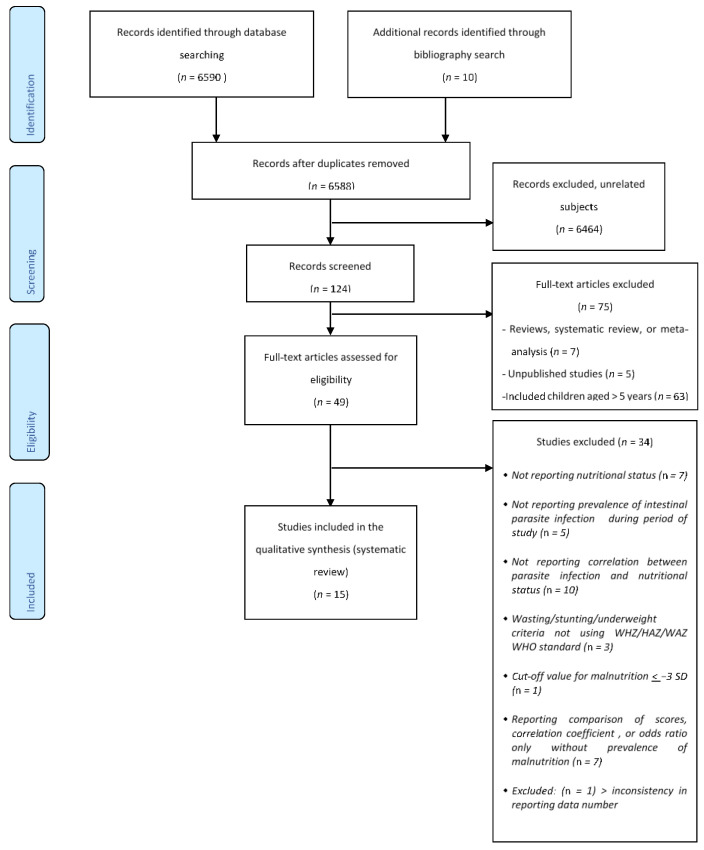
- The review screened 6590 records plus 10 from reference lists, reviewed 124 full texts, and included 15 studies in the abstract summary; the Results section reports 16 studies met criteria and were appraised, with one later excluded for inconsistency in cohorts.
- *Ascaris lumbricoides* was the most reported infection, stated in 8 studies, with prevalence ranging from 10.77% in Ethiopia to 57.14% in Malaysia; *G. lamblia* was also stated in 8 studies, with prevalence ranging from 4.43% in Ethiopia to 66.33% in the Central African Republic.
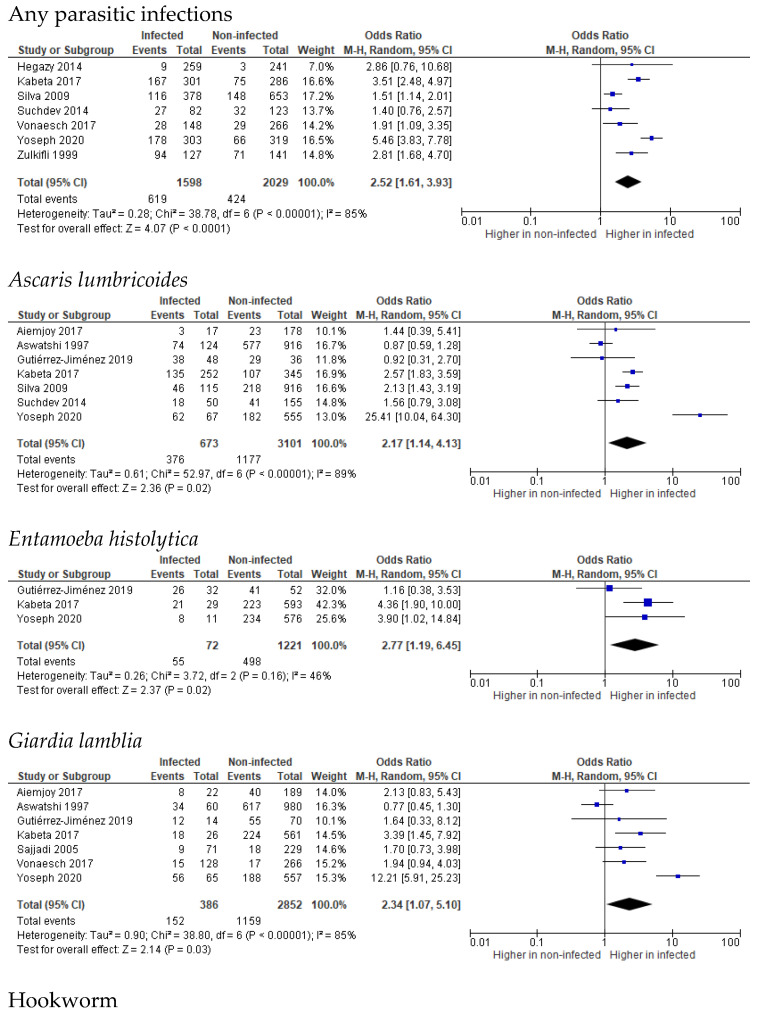
- Infected children had higher odds of stunting: overall effect size OR 2.52 (95% CI 1.61, 3.93; p < 0.0001; I2 = 85%). Specific parasites associated with stunting included *A. lumbricoides* (OR 2.17, 95% CI 1.14, 4.13; p = 0.02), *E. histolytica* (OR 2.77, 95% CI 1.19, 6.45; p = 0.02), and *G. lamblia* (OR 2.34, 95% CI 1.07, 5.10; p = 0.03).
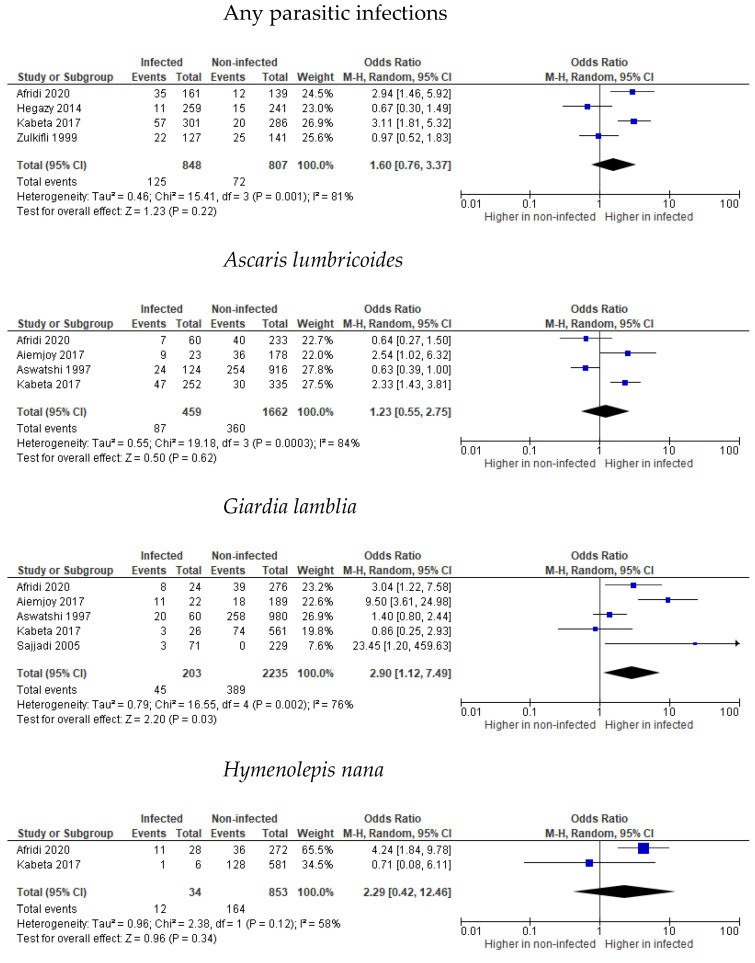
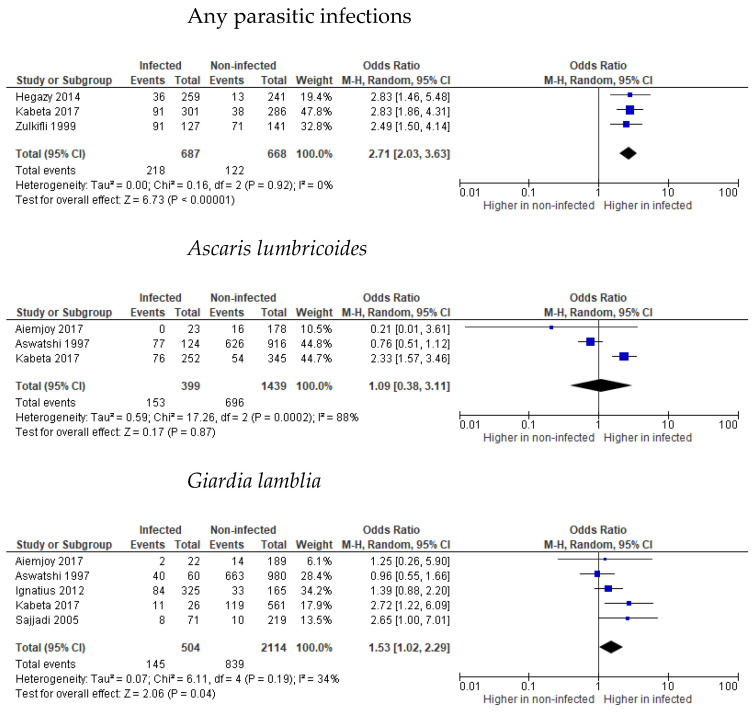
- For underweight, unspecified intestinal parasites were associated with a 2.71-fold higher prevalence (95% CI 2.03, 3.63; p < 0.00001; I2 = 0%). *G. lamblia* was associated with a 1.53-fold increase in underweight (95% CI 1.02, 2.29; p = 0.04), while wasting was not associated overall with parasitic infection (p = 0.22).
## Methods
- Systematic review conducted according to PRISMA, searching PubMed/MEDLINE, Ovid, Embase, Scopus, Web of Science, and Google Scholar up to 21 September 2021, plus reference-list screening.
- Included studies had to concern children aged ≤5 years and report stunting, wasting, or underweight with intestinal parasitic infection during the study period; studies without original data, without a comparison group, non-English papers, unpublished papers, or those not using WHO Z-score standards were excluded.
- Titles/abstracts and full texts were screened independently by all authors; study quality was assessed with the Joanna Briggs Institute Critical Appraisal Tools Checklist for Analytical Cross-Sectional Studies. When multiple studies reported an outcome, Mantel–Haenszel odds ratios with 95% CIs were pooled in RevMan 5.3, with heterogeneity assessed using I2.
## Limitations
- The paper states that many included studies were cross-sectional, so temporal association is lacking and causality cannot be concluded.
- The paper states that small sample sizes, unmeasured risk factors (e.g., antenatal care, breastfeeding, prior anthelminthic therapy), unreported infection severity, and geographical/seasonal variation contributed to inconsistencies.
- Evident from the text: the review combines studies from 12 countries with high heterogeneity for some pooled outcomes (e.g., stunting I2 = 85%, wasting I2 up to 84%), which makes the summary effects less precise.
Model-written summary. Check it against the paper before relying on it.
Integrity signals
Registry
Cites
Statistics
Figures
Verification
Claims the paper makes
13 Valid · 4 Not valid · 20 Not checked · 47 Own results and interpretations
Every source the paper cites for this claim was checked and supports it.
In the paper
“Several studies had shown the relationship between ascariasis and iron-deficiency anaemia (IDA) [64,65].”
§ Intestinal Parasitic Infection and Nutritional Status in Children under Five Years Old: A Systematic Review > 4. Discussion
What the sources say
- Supportedcites [64] Hossain S. Das S. Gazi A. Mahfuz M. Ahmed T. Ascaris lumbricoides infection: Still a threat for iron deficiency anaemia in 2-year-old Bangladeshi slum-dwelling children J. Infect. Dev. Ctries. 2019 13 933 938 10.3855/jidc.11340 32084025 PMC7722353 source
The Results report a significant association between ascariasis and IDA at 24 months of age (OR 3.76; 95% CI, 1.08–13.11), and the Conclusion reiterates it. This paper supports the relationship claimed; the sentence cites it alongside another study. (LLM, conf=0.91)
- Supportedcites [65] Ngui R. Lim Y. Kin L.C. Chuen C.S. Jaffar S. Association between Anaemia, Iron Deficiency Anaemia, Neglected Parasitic Infections and Socioeconomic Factors in Rural Children of West Malaysia PLoS Negl. Trop. Dis. 2012 6 e1550 10.1371/journal.pntd.0001550 22413027 PMC3295806 source
The Results (page not available) report that Ascaris lumbricoides infection was significantly associated with iron-deficiency anaemia in rural children in West Malaysia. This paper therefore provides one of the studies supporting the citing sentence’s relationship claim; the citation does not need to establish that several studies did so on its own. (LLM, conf=0.91)
plainstates an association- Asserted: passes — The authors put it forward as true.
- Checkable: passes — It can be checked against evidence.
- Load-bearing: unclear — It is unclear whether the paper’s conclusions depend on it.
- Based: passes — The paper gives a reason why it holds.
- Supported
The cited sources that could be checked couldn’t confirm or dispute this claim.
In the paper
“However, to date, no studies have found an association between enterobiasis and anaemia [74,75].”
§ Intestinal Parasitic Infection and Nutritional Status in Children under Five Years Old: A Systematic Review > 4. Discussion
What the sources say
- Could not verifycites [74] Tsuyuoka R. Bailey J.W. Guimaraes A.M.D.N. Gurgel R.Q. Cuevas L.E. Anemia and intestinal parasitic infections in primary school students in Aracaju, Sergipe, Brazil Cad. Saúde Pública 1999 15 413 421 10.1590/S0102-311X1999000200026 10409794 sourceExperimental — accuracy not yet measured
The Results report no association between anemia and the parasites analyzed, but Table 2 does not include E. vermicularis (the cause of enterobiasis). The paper therefore does not establish whether enterobiasis was associated with anemia in its students, let alone whether no studies to date had found an association. Searched for enterobiasis, E. vermicularis, and the anemia comparison. (LLM, conf=0.76)
- Not matchedcites [75] Al Qadhi B.N. Al-Warid H.S.J. Anemia and enterobiasis among Iraqi children J. Coll. B Educ. 2012 76 57 62
We searched by its title and found no matching paper.
plain- Asserted: passes — The authors put it forward as true.
- Checkable: passes — It can be checked against evidence.
- Load-bearing: unclear — It is unclear whether the paper’s conclusions depend on it.
- Based: passes — The paper gives a reason why it holds.
- Could not verify
Every source the paper cites for this claim was checked and supports it.
In the paper
“Daoody and Al-Bazzaz (2020) found significantly lower serum total protein and iron levels in infected children [73].”
§ Intestinal Parasitic Infection and Nutritional Status in Children under Five Years Old: A Systematic Review > 4. Discussion
What the sources say
- Supportedcites [73] Al-Daoody A.A.K. Al-Bazzaz E.N.H. Impact of Enterobius vermicularis infection on biochemical parameters in the blood of children in Erbil Province, Iraq BMC Infect Dis. 2020 20 336 10.1186/s12879-020-05064-w 32397998 PMC7216599 source
The Results section reports significantly lower mean serum total protein (P < 0.001) and iron (P < 0.05) in infected children than in uninfected children. The Discussion likewise states that both levels were significantly lower in the enterobiasis-positive group. (LLM, conf=0.95)
plainstates an association- Asserted: passes — The authors put it forward as true.
- Checkable: passes — It can be checked against evidence.
- Load-bearing: unclear — It is unclear whether the paper’s conclusions depend on it.
- Based: passes — The paper gives a reason why it holds.
- Supported
The cited sources support only part of this claim — read each source’s verdict below.
In the paper
“T. trichiuris infection is correlated with chronic colitis [60].”
§ Intestinal Parasitic Infection and Nutritional Status in Children under Five Years Old: A Systematic Review > 4. Discussion
What the sources say
- Partly supportedcites [60] Else K.J. Keiser J. Holland C.V. Grencis R.K. Sattelle D.B. Fujiwara R.T. Bueno L.L. Asaolu S.O. Sowemimo O.A. Cooper P.J. Whipworm and roundworm infections Nat. Rev. Dis. Prim. 2020 6 44 10.1038/s41572-020-0171-3 32467581 sourceExperimental — accuracy not yet measured
The Clinical presentation section says heavy T. trichiura infections are often associated with colitis and may produce a chronic inflammatory response. It does not describe colitis itself as chronic, and it ties the association to heavy infection rather than infection generally. (LLM, conf=0.84)
plainstates an association- Asserted: passes — The authors put it forward as true.
- Checkable: passes — It can be checked against evidence.
- Load-bearing: unclear — It is unclear whether the paper’s conclusions depend on it.
- Based: passes — The paper gives a reason why it holds.
- Partly supported
A result the paper reports from its own data — it cites no other source for it, so there is none to check. The quote shows it is in the paper.
In the paper
“and is correlated with stunting (OR 2.17 (95% CI 1.14, 4.13), p = 0.02).”
- Also stated in: § 3.2. Stunting Stunting is the most reported nutritional status in these studies. Stunting prevalence was reported to be significantly higher in children infected with unspecified intestinal parasites by five studies [40,41,45,47,49] with 1.51- to 5.46-fold increased risks, while two studies found no significant difference between infected and non-infected children [39,48]. Effect size analysis showed 2.52-times (95% CI 1.61, 3.93 (p < 0.0001), I2 = 85% (p < 0.00001)) higher odds of stunting cases in infected children (Figure 2). Several studies reported the significance of specific parasite manifestations toward stunting, including A. lumbricoides in three studies [41,43,45] from eight reporting studies [37,41,43,45,46,47,48,49] with a 25.41-, 2.46-, and 2.13-fold increased risk, respectively, E. histolytica in one study [41] from three reporting studies [37,41,45] with a 4.36-fold increased risk, G. lamblia in two studies [41,45] from seven reporting studies [36,38,40,41,43,45,46] with a 12.31- and 3.39-fold increased risk, Hookworm in one study [41] from three reporting studies [41,45,47] with a 16.41-fold increased risk, and T. trichiura in two studies [41,47] from four reporting studies [41,45,47,48] with 3.02- and 2.52-fold increase risks. Effect size analysis showed significant odds of stunting in children infected with Ascaris lumbricoides (OR 2.17 (95% CI 1.14, 4.13), p = 0.02, I2 89% (p < 0.00001)), Entamoeba histolytica (OR 2.77 (95% CI 1.19, 6.45), p = 0.02, I2 46% (p = 0.16)), and Giardia lamblia (OR 2.34 (CI 1.07, 5.10), p = 0.03, I2 = 85% (p < 0.00001)), as shown in Figure 2. Meanwhile, the overall effect sizes for hookworm, T. trichiura, and S.stercocalis were not significant. High heterogeneity between studies was noted (I2 ranging from 72% to 95%). E. vermicularis [45], H. nana [45], and Taenia spp. [41] were only reported in one study each with no significant difference between infected and non-infected children. · plain
“Effect size analysis showed significant odds of stunting in children infected with Ascaris lumbricoides (OR 2.17 (95% CI 1.14, 4.13), p = 0.02, I2 89% (p < 0.00001))”
§ Intestinal Parasitic Infection and Nutritional Status in Children under Five Years Old: A Systematic Review > Abstract Intestinal parasitic infections are common infectious diseases causing many health problems and impaired growth and physical development.. Children under five years old are the most vulnerable to infections, due to their immature immunity and feeding and exploratory behaviours. This systematic review aimed to assess the relationship between intestinal parasitic infections and undernutrition among children under 5 years old. Fifteen studies met the inclusion and exclusion criteria and were classified as high-quality studies. Twelve parasites were reported, including Ascaris lumbricoides, Cryptosporodium spp., Entamoeba histolytica, Enterobius vermicularis, Giardia lamblia, hookworm, Hymenolepis nana, Strongyloides sterocalis, Taenia spp. and Trichuris trichuria. Ascariasis is the most reported infection, with a prevalence ranging from 10.77% in Ethiopia to 57.14% in Malaysia, and is correlated with stunting (OR 2.17 (95% CI 1.14, 4.13), p = 0.02). Giardiasis is the second most reported infection, with a prevalence ranging from 4.43% in Ethiopia to 66.33% in the Central African Republic, and is related to an increased risk of stunting (OR 2.34 (95% CI 1.07, 5.10), p = 0.03)), wasting (OR 2.90 (95% CI 1.12, 7.49, p = 0.03)), and being underweight (OR 1.53 (95% CI 1.02, 2.29, p = 0.04)). The third and fourth most prevalent infections are T. trichiura and hookworm infections. Intestinal parasitic infections can occur very early in life and cause significant growth retardation. It is important to understand the prevalence and effects of infection based on the parasite species in order to implement therapeutic interventions and prevention controls.
plainstates an association- Asserted: passes — The authors put it forward as true.
- Checkable: passes — It can be checked against evidence.
- Load-bearing: passes — The paper’s conclusions depend on it.
- Based: passes — The paper gives a reason why it holds.
- Also stated in: § 3.2. Stunting Stunting is the most reported nutritional status in these studies. Stunting prevalence was reported to be significantly higher in children infected with unspecified intestinal parasites by five studies [40,41,45,47,49] with 1.51- to 5.46-fold increased risks, while two studies found no significant difference between infected and non-infected children [39,48]. Effect size analysis showed 2.52-times (95% CI 1.61, 3.93 (p < 0.0001), I2 = 85% (p < 0.00001)) higher odds of stunting cases in infected children (Figure 2). Several studies reported the significance of specific parasite manifestations toward stunting, including A. lumbricoides in three studies [41,43,45] from eight reporting studies [37,41,43,45,46,47,48,49] with a 25.41-, 2.46-, and 2.13-fold increased risk, respectively, E. histolytica in one study [41] from three reporting studies [37,41,45] with a 4.36-fold increased risk, G. lamblia in two studies [41,45] from seven reporting studies [36,38,40,41,43,45,46] with a 12.31- and 3.39-fold increased risk, Hookworm in one study [41] from three reporting studies [41,45,47] with a 16.41-fold increased risk, and T. trichiura in two studies [41,47] from four reporting studies [41,45,47,48] with 3.02- and 2.52-fold increase risks. Effect size analysis showed significant odds of stunting in children infected with Ascaris lumbricoides (OR 2.17 (95% CI 1.14, 4.13), p = 0.02, I2 89% (p < 0.00001)), Entamoeba histolytica (OR 2.77 (95% CI 1.19, 6.45), p = 0.02, I2 46% (p = 0.16)), and Giardia lamblia (OR 2.34 (CI 1.07, 5.10), p = 0.03, I2 = 85% (p < 0.00001)), as shown in Figure 2. Meanwhile, the overall effect sizes for hookworm, T. trichiura, and S.stercocalis were not significant. High heterogeneity between studies was noted (I2 ranging from 72% to 95%). E. vermicularis [45], H. nana [45], and Taenia spp. [41] were only reported in one study each with no significant difference between infected and non-infected children. · plain
38 more claims
Create a free account to see all 84 claims and to verify the 3 references still open.
- It may state two separate claims as one. 32
- Probably not a substantial claim. 15
- The quote only partly states this claim. 2
Citations
Cites
Liberati, A., Altman, D. G., Tetzlaff, J., Mulrow, C., Gotzsche, P. C., Ioannidis, J. P. A., Clarke, M., Devereaux, P. J., Kleijnen, J., & Moher, D. (2009) · BMJ · doi:10.1136/bmj.b2700 · Cited by 17,648
ESPEN guidelines on definitions and terminology of clinical nutrition
Cederholm, T., Barazzoni, R., Austin, P., Ballmer, P., Biolo, G., Bischoff, S. C., Compher, C., Correia, I., Higashiguchi, T., Holst, M., et al. (2017) · Clinical Nutrition · doi:10.1016/j.clnu.2016.09.004 · Cited by 2,560
Soil-transmitted helminth infections: ascariasis, trichuriasis, and hookworm
Bethony, J., Brooker, S., Albonico, M., Geiger, S. M., Loukas, A., Diemert, D., & Hotez, P. J. (2006) · The Lancet · doi:10.1016/s0140-6736(06)68653-4 · Cited by 2,478
The epidemiology of global micronutrient deficiencies
Bailey, R. L., West Jr., K. P., & Black, R. E. (2015) · Annals of Nutrition and Metabolism · doi:10.1159/000371618 · Cited by 2,035
Evolution of the immune system in humans from infancy to old age
Simon, A. K., Hollander, G. A., & McMichael, A. (2015) · Proceedings of the Royal Society B: Biological Sciences · doi:10.1098/rspb.2014.3085 · Cited by 1,796
Adam, R. D. (2001) · Clinical Microbiology Reviews · doi:10.1128/cmr.14.3.447-475.2001 · Cited by 1,216 · cited 1×
“The cyst is inert, allowing it to survive in various environmental conditions [56].”
BackgroundSoil-transmitted helminth infections
Jourdan, P. M., Lamberton, P. H. L., Fenwick, A., & Addiss, D. G. (2018) · The Lancet · doi:10.1016/s0140-6736(17)31930-x · Cited by 994
Malnutrition and Infection: Complex Mechanisms and Global Impacts
Schaible, U. E., & Kaufmann, S. H. E. (2007) · PLoS Medicine · doi:10.1371/journal.pmed.0040115 · Cited by 954
The Interaction between Nutrition and Infection
Katona, P., & Katona‐Apte, J. (2008) · Clinical Infectious Diseases · doi:10.1086/587658 · Cited by 922
Torgerson, P. R., Devleesschauwer, B., Praet, N., Speybroeck, N., Willingham, A. L., Kasuga, F., Rokni, M. B., Zhou, X.-N., Fèvre, E. M., Sripa, B., et al. (2015) · PLOS Medicine · doi:10.1371/journal.pmed.1001920 · Cited by 777 · cited 1×
“2 million cases of illnesses were reported to be caused by foodborne enteric protozoa [10].”
Background
Research works printed but not linked: 4
- Afridi M.F. Farhat K. Ali S. Qaisrani M.N. Ahmed Z. Prevalence of intestinal parasitic infestations in relation to wasting among children under 5 years of age in Skardu, Pakistan: A cross sectional observational study Isra Med. J. 2021 13 130 133
- Waterlow J.C. Summary of causes and mechanisms of linear growth retardation Eur. J. Clin. Nutr. 1994 48 (Suppl. S1) S210 S211 8005078
- Celiksoz A. Acioz M. Degerli S. Oztop A.Y. Alim A. Effect of Enterobiasis on primary school children Afr. J. Microbiol. Res. 2010 4 634 639
- Al Qadhi B.N. Al-Warid H.S.J. Anemia and enterobiasis among Iraqi children J. Coll. B Educ. 2012 76 57 62
Cited by
Morales, F., Montserrat-de la Paz, S., Leon, M. J., & Rivero-Pino, F. (2023) · Nutrients · doi:10.3390/nu16010001 · Cited by 346
“Giardia duodenalis, coccidia, Entamoeba histolytica , soil-transmitted helminths, and Schistosoma sp. are among the parasites that blatantly alter nutritional status [35].”
BackgroundGutiérrez, L., & Bartelt, L. A. (2024) · Current Tropical Medicine Reports · doi:10.1007/s40475-024-00314-2 · Cited by 41
“…systematic review focused on intestinal parasites and impaired growth in children ≤ 5 years old included in 15 different studies from 12 countries found that G. lamblia is associated with stunting (OR 2.34 [1.07–5.10]), wasting (OR 2.90 [1.12–7.49]), and underweight (OR 1.53 [1.02–2.29]) [30].”
InfluentialA lightweight deep-learning model for parasite egg detection in microscopy images
Xu, W., Zhai, Q., Liu, J., Xu, X., & Hua, J. (2024) · Parasites & Vectors · doi:10.1186/s13071-024-06503-2 · Cited by 25
Malnutrition and Its Effect on Drug Pharmacokinetics: A Clinical Perspective
Ngcobo, N. N. (2025) · Clinical Pharmacokinetics · doi:10.1007/s40262-025-01558-5 · Cited by 24
“The prevalence of gastrointestinal infections and parasitic infes-tations in malnourished populations further exacerbates the problem by compromising mucosal integrity and introducing competition for nutrient and drug absorption [15, 16].”
Tropical diseases and the gastrointestinal tract: an overlooked connection
Ghazy, R. M., Alshaikhi, S. A., Assiri, H. A. H., Almozaini, A. A., Alhazmi, A. F., Elhasaneen, H. E. M., & Abdo, S. M. (2025) · Frontiers in Tropical Diseases · doi:10.3389/fitd.2025.1612952 · Cited by 13
Vasconcelos, M. P. A., Sánchez‐Arcila, J. C., Peres, L., et al. (2023) · Journal of Infection and Public Health · doi:10.1016/j.jiph.2023.02.012 · Cited by 11
Trichuris muris egg-hatching assay for anthelminthic drug discovery and characterization
Schärer, A., Biendl, S., & Keiser, J. (2023) · International Journal for Parasitology Drugs and Drug Resistance · doi:10.1016/j.ijpddr.2023.10.001 · Cited by 13
“The disease constitutes a global public health problem affecting around 500 million people worldwide, with children bearing the highest burden (GBD DALYs and HALE Collaborators, 2017; Fauziah et al., 2022).”
BackgroundIntestinal parasitic infections among children aged 12–59 months in Nyamasheke District, Rwanda
Hakizimana, E., Kim, J. Y., Oh, S., et al. (2023) · Parasites Hosts and Diseases · doi:10.3347/phd.23045 · Cited by 10
Pattern of intestinal parasitic infections in children with malnutrition in Somalia
Osman, M. M., Hussein, S. A., Omar, M. A., et al. (2024) · IJID Regions · doi:10.1016/j.ijregi.2024.100431 · Cited by 9
Nguélé, A. T., Mozzicafreddo, M., Carrara, C., Piersanti, A., Salum, S. S., Ali, S. M., & Miceli, C. (2024) · Nutrients · doi:10.3390/nu16234023 · Cited by 12
Ascaris lumbricoides a rare cause gastric perforation: a case report and brief literature review
Xie, T., Fu, Y., Ren, X., Sun, X.-L., Wang, Q., & Sun, Q. (2025) · Frontiers in Medicine · doi:10.3389/fmed.2024.1525301 · Cited by 9
Intestinal parasitic infections among school children in northern Madagascar
Richert, W., Kasprowicz, D., Kołodziej, D., et al. (2024) · Annals of Agricultural and Environmental Medicine · doi:10.26444/aaem/189514 · Cited by 8
“Global epidemiological data demonstrate that the rates of IPIs are particularly high in the paediatric populations, and that IPIs often result in malnutrition, anaemia and growth retardation, and may also lead to a variety of other health problems [2–4].”
Royano, S., Navarro, I., de la Torre, A., & Martínez, M. D. L. Á. (2024) · Environmental Science and Pollution Research · doi:10.1007/s11356-024-34459-4 · Cited by 7
“These pathologies affect approximately 3.5 billion people every year and cause more than 450 million health problems worldwide (Fauziah et al. 2022) but affect the paediatric population more than adults (Fumadó, 2015).”
BackgroundInfluentialEndale, T., Birmeka, M., & Bekele, D. (2025) · Acta Parasitologica · doi:10.1007/s11686-025-00997-1 · Cited by 12
Narayani, D. A., Ali, S., Surja, S. S., Kristin, H., Hengestu, A., Widowati, T. A., Wijaya, M., & Kaisar, M. M. M. (2024) · Narra J · doi:10.52225/narra.v4i3.1264 · Cited by 12
Azzam, A., & Khaled, H. (2025) · BMC Public Health · doi:10.1186/s12889-025-23325-8 · Cited by 14
“IPIs in children can result in various adverse outcomes, including malnutrition, anemia, and impaired growth and development [1, 2].”
Improved latrines minimally impact Schistosoma mekongi transmission in Mekong islands
Vonghachack, Y., Odermatt, P., Utzinger, J., & Sayasone, S. (2023) · Science in One Health · doi:10.1016/j.soh.2023.100038 · Cited by 9
Mejía, R., Ster, I. C., Chico, M. E., Guadalupe, I., Arévalo‐Cortes, A., Lopez, A., Oviedo, A. Y., & Cooper, P. J. (2025) · PLoS neglected tropical diseases · doi:10.1371/journal.pntd.0013004 · Cited by 8
“A previous systematic review estimated that IPIs were associated with 2.5-times greater odds of stunting, particularly infections through with A. lumbricoides , E. histolytica and, G. lamblia [40].”
InfluentialSoleymani, N., Sadr, S., Santucciu, C., Dianaty, S., Lotfalizadeh, N., Hajjafari, A., Heshmati, F., & Borji, H. (2024) · Biologics · doi:10.3390/biologics4030020 · Cited by 11
“Affected children often exhibit growth impairment, nutrient deficiencies, intellectual disabilities, and poor academic performance [50].”
Kishino, M., Hida, A., Chadeka, E. A., et al. (2024) · Tropical Medicine and Health · doi:10.1186/s41182-023-00566-0 · Cited by 5
Abaka‐Yawson, A., Squire, D. S., Issah, I., Ablordey, K., Ativi, E., Bawua, S. A., & Arko‐Mensah, J. (2025) · BMC Infectious Diseases · doi:10.1186/s12879-025-12228-z · Cited by 5
“It is important to note that Ascaris lumbricoides infections have been associated with gastrointestinal disturbances such as diarrhoea and abdominal pains, as well as nutritional concerns such as weight loss, anemia and impaired growth, which should be a major concern for all stakeholders [75].”
Birhanu, A. A., Yimer, M., Debash, H., & Abate, M. A. (2025) · Health Science Reports · doi:10.1002/hsr2.70964 · Cited by 6
Bempah, O., Antwi, K. B., Mutala, A., Ibrahim, M. A. M., Boampong, K., Larbi, J. A., & Badu, K. (2025) · Tropical Medicine & International Health · doi:10.1111/tmi.70003 · Cited by 6
“In this study, nearly 50% of malaria cases occurred in children aged 1 – 5 years, compared to older children (6 – 15 years), due to differences in immunity and behavioural risk factors [9, 51].”
InfluentialCo-Infection Dynamics of Helicobacter pylori and Helminths: A Double-Edged Sword
Barathan, M., Wahid, W., Wahab, A. A., et al. (2025) · International Journal of Molecular Sciences · doi:10.3390/ijms26168001 · Cited by 4
“Biologically, their developing immune systems have a lower efficiency in developing protective defenses, and malnutrition weakens immunity such that infections are more likely and harder to clear [70].”
Parajuli, R., & Oldewage-Theron, W. H. (2025) · Nutrients · doi:10.3390/nu17213494 · Cited by 4
“This finding is consistent with a comprehensive review by Fauziah et al. (2022) that synthesized data from 17 studies across Latin America, Southeast Asia, and Africa [8].”
Mensah, S., & Larbi, J. A. (2025) · Journal of Parasitic Diseases · doi:10.1007/s12639-025-01823-1 · Cited by 3
“Although this age group is particularly susceptible to parasitic infections, they are frequently neglected in research on intestinal parasites (Fauziah et al. 2022 ).”
InfluentialParasitic infestations in children in a metropolis
Chernova, Т. М., Иванов, Д. О., Veduta, O. I., Тимченко, В. Н., Баракина, Е. В., Павлова, Е. Б., Bazunova, I. Y., & Zherebtsova, A. A. (2024) · CHILDREN INFECTIONS · doi:10.22627/2072-8107-2024-23-1-29-34 · Cited by 4
Anthropogenic Blastocystis from Drinking Well and Coastal Water in Guinea-Bissau (West Africa)
Gomes-Gonçalves, S., Machado, A., Bordalo, A. A., et al. (2025) · Microorganisms · doi:10.3390/microorganisms13030620 · Cited by 3
Tapia-Veloz, G., Gozalbo, M., Guirao, V., Dinari, H., Fuentes, M. V., & Trelis, M. (2025) · Children · doi:10.3390/children12080990 · Cited by 13
“Chronic intestinal inflammation caused by parasitic infections, together with intestinal villous atrophy, can affect nutrient absorption and alter iron homeostasis, thereby reducing iron absorption and utilisation and suppressing haemoglobin synthesis and erythropoiesis [23].”
InfluentialMicrobiota and growth among infants and children in low-income and middle-income settings
Njunge, J. M., & Walson, J. L. (2023) · Current Opinion in Clinical Nutrition & Metabolic Care · doi:10.1097/mco.0000000000000927 · Cited by 9
Muthee, A., Gitahi, M., Musili, R., & Mutuku, M. W. (2024) · African Journal of Empirical Research · doi:10.51867/ajernet.5.2.69 · Cited by 3
Sánchez-Loredo, E., Estrada-Gil, L. E., Sepúlveda, L., Wong‐Paz, J. E., Palomo‐Ligas, L., Rodríguez-Herrera, R., Aguilar, C. N., & Ascacio‐Valdés, J. A. (2025) · BIOtecnia · doi:10.18633/biotecnia.v27.2503 · Cited by 2
“Intestinal parasites are common infectious diseases that cause many health problems (Fauziah et al ., 2022).”
Types and Harms of Pathogenic Microorganisms: A Review
Ahmed, F., & Saadi, A. M. (2025) · International Journal of Pathology and Biomarkers · doi:10.71428/ijpb.2025.0103 · Cited by 2
Badri, M., Olfatifar, M., Sabzi, S., Asghari, A., Zaki, L., Hatam‐Nahavandi, K., Sgroi, G., Abdoli, A., & Eslahi, A. V. (2025) · International Journal of Environmental Health Research · doi:10.1080/09603123.2025.2571146 · Cited by 3
“…increases the risk of gastrointestinal infections, presenting a major public health issue, particularly for vulnerable groups like children, who are more susceptible to the effects of malnutrition and stunted growth linked to these parasitic infections (Hall et al. 2008; Fauziah et al. 2022).”
Connecting the dots: the role of WASH in nutritional pathways to childhood stunting in India
Banerjee, A., Sen, S., Ali, A., & Chakma, N. (2026) · Journal of Hunger & Environmental Nutrition · doi:10.1080/19320248.2026.2625697 · Cited by 2
Al-Mekhlafi, A. M., Al-Moyed, K. A., Al-Shamahy, H. A., et al. (2023) · Universal Journal of Pharmaceutical Research · doi:10.22270/ujpr.v8i3.943 · Cited by 2
Al-Hadheq, A. A., Al-Eryani, M. A., Edrees, W. H., & Al-Nosary, T. A.-A. (2023) · مجلة جامعة عمران · doi:10.59145/jaust.v3i6.74 · Cited by 10
Mugob, B. B., Ngum, N. H., Boubga, C., et al. (2024) · The Egyptian Journal of Internal Medicine · doi:10.1186/s43162-024-00306-8 · Cited by 2
Telussa, R. P., Kaihatu, J., & Arjanto, P. (2024) · Pedagogik Journal of Islamic Elementary School · doi:10.24256/pijies.v7i1.4764 · Cited by 5
“Notably, studies conducted in regions like Malaysia and Thailand have yielded results that do not demonstrate a statistically significant impact (Fauziah et al., 2022; Kyaw et al., 2023).”
BackgroundAhmed, S. A. A., Mohamed, S. F., El-Mahallawy, H. S., et al. (2024) · Gut Pathogens · doi:10.1186/s13099-024-00622-y · Cited by 2
“…schoolchildren in the picture of untrimmed fingers, consuming food from street vendors and school can-teens, failing to wash hands before eating, after using the restroom, after coming into contact with soil, swimming in surface water, and making hand contact with stray animals [31, 50, 52, 53].”
BackgroundSiddig, E. E., & Ahmed, A. (2024) · Clinical Case Reports · doi:10.1002/ccr3.9549 · Cited by 3
Teketelew, B. B., Chane, E., Angelo, A. A., Tamir, M., Cherie, N., Nigus, M., Mulatie, Z., & Berta, D. M. (2024) · PLoS ONE · doi:10.1371/journal.pone.0312905 · Cited by 8
Intestinal Parasitic Infections in Children: A 10-Year Retrospective Study
Martins, R. R., Paixão, F., Mendes, I., et al. (2024) · Cureus · doi:10.7759/cureus.75862 · Cited by 2
Wong, L. P., Lee, H. Y., Alias, H., Lachyan, A. S., Nguyen, D. K., Seheli, F. N., Ahmed, J., Hu, Z., & Lin, Y. (2025) · Journal of Infection and Public Health · doi:10.1016/j.jiph.2025.102689 · Cited by 4
Firdu, Z., & Amente, D. (2025) · Journal of Parasitology Research · doi:10.1155/japr/5295102 · Cited by 2
“Moreover, studies have found relationships between intestinal parasites and malnutrition in children [11, 12].”
Kontaminasi Telur Cacing Parasit Usus pada Lalapan Pecel Lele Pedagang Kaki Lima di Purwokerto
Subagiyo, A., Widyanto, A., & Lukmitarani, R. (2023) · Buletin Keslingmas · doi:10.31983/keslingmas.v42i1.9630 · Cited by 4
Al-rawi, O. N. A., & Al-Omar, N. S. (2023) · Iranian Journal of Medical Microbiology · doi:10.30699/ijmm.17.3.361 · Cited by 2
Al-Hadheq, A. A., Al-Eryani, M. A., Edrees, W. H., et al. (2023) · Research Square · doi:10.21203/rs.3.rs-3355603/v1 · Cited by 2
Siagian, F. E. (2023) · Asian Journal of Research in Infectious Diseases · doi:10.9734/ajrid/2023/v14i1278 · Cited by 1
Babiera, J. M. A., Batiancila, K. E. L., Quilaquil, T. M. S., et al. (2024) · International Journal of Multidisciplinary Applied Business and Education Research · doi:10.11594/ijmaber.05.05.25 · Cited by 1
Hubungan Perilaku (PHBS) Anak Dengan Kejadian Kecacingan DI SDN 2 Sukamenanti Kota Bandar Lampung
Haryatmi, D. (2024) · Jurnal Kesehatan Masyarakat Indonesia · doi:10.26714/jkmi.19.1.2024.1-6 · Cited by 6
Osaiyuwu, C. O., Ugbomoiko, D. O., Omosigho, P. O., Erameh, T. O., Izevbuwa, O. E., Osaiyuwu, F. O., Nwaobi, A. C., & Osaiyuwu, O. H. (2025) · International Journal of Public Health and Pharmacology · doi:10.52589/ijphp-jnvrps9i · Cited by 1
Gabain, I. L., Kadia, B. M., Nurfadilah, M., Kyaw, H. M., Fahmida, U., Allen, S. J., Halder, J. B., Rudge, J. W., & Webster, J. P. (2025) · Advances in Parasitology/Advances in parasitology · doi:10.1016/bs.apar.2025.07.004 · Cited by 1
Manzi, A., Katz, B., Nguyen, D. P., Bekele, E., Niyonzima, J., Nyiraneza, O., & Hirschhorn, L. R. (2025) · BMC Family Practice · doi:10.1186/s12875-025-03046-y · Cited by 1
“The signs and symptoms of these parasitic infections vary from itching and localized rashes when the larvae penetrate the skin to abdominal pain, diarrhea, and weight loss [4].”
Sukmana, D. J., Kridaningsih, T. N., Mufidah, H., Kenangalem, E., Burdam, F. H., Susilawati, T. N., Poespoprodjo, J. R., & Murhandarwati, E. E. H. (2025) · PLoS ONE · doi:10.1371/journal.pone.0335643 · Cited by 1
Radiofrequency Wave Sensing for Rapid Animal Health Monitoring: A Proof-of-Concept Study
Siddique, A., Kota, R., Isai, G. K., et al. (2025) · Veterinary Sciences · doi:10.3390/vetsci12111096 · Cited by 1
“These health issues lead to considerable economic losses and jeopardize the sustainability of production systems that depend on these animals [3].”
Azhary, A., Osman, O. T., Hajhamed, N. M., et al. (2025) · Conflict and Health · doi:10.1186/s13031-025-00736-3 · Cited by 1
“Such complications include malnutrition, iron-deficiency anemia, stunted growth, and cognitive impairments— especially among children [6].”
Gautam, J., Bharati, N., Bhandari, S., et al. (2025) · Public Health Challenges · doi:10.1002/puh2.70180 · Cited by 1
“Across developing regions, gastrointestinal parasitic infections (GIPs) caused by helminths and protozoa remain among the most common communicable diseases, imposing significant health burdens [ 12 ].”
InfluentialSur, S. S., & Jasline, M. (2025) · International Journal of Community Medicine and Public Health · doi:10.18203/2394-6040.ijcmph20254439 · Cited by 1
Abu-Hadal, L. S., Al-Humaidy, N. M., & Al-Hameedawi, D. F. (2025) · Academia Open · doi:10.21070/acopen.11.2026.13115 · Cited by 1
Sadek, A.-S. M., & Mahmoud, R. H. (2026) · Journal of Neuroinflammation · doi:10.1186/s12974-026-03804-4 · Cited by 5
“Intestinal parasites impair nutritional status through multiple mechanisms, they consume host nutrients and blood, induce malabsorption, and cause chronic diarrhea that depletes essential micronutrients [152].”
de Souza, F. C. R., Fukui-Silva, L., Amaro, M. C., & de Moraes, J. (2026) · Discover Public Health · doi:10.1186/s12982-026-02156-x · Cited by 3
“Human infections caused by A. lumbricoides , A. suum , T. canis , and T. cati are frequently underestimated due to the combined effects of low-intensity infections, nonspecific clinical manifestations, and the limitations of currently available diagnostic tools [47, 48].”
Association Between Personal Hygiene and Nutritional Status in School-Age Children
Andromeda, A., Rafshanzany, M. L., & Buntoro, J. D. (2023) · Mutiara Medika: Jurnal Kedokteran dan Kesehatan · doi:10.18196/mmjkk.v23i2.17848 · Cited by 2
“Hookworm infection consumes erythrocytes through a proteolytic mechanism that breaks down hemoglobin, resulting in nutritional inadequacies due to increased blood loss and diminished iron reserves in the body.(13,14) Chronic STH infection causes a decreased growth rate, physical health disorders, decreased activity, w…”
BackgroundKato, K., Miura, M., Tachibana, H., et al. (2023) · Frontiers in Molecular Biosciences · doi:10.3389/fmolb.2023.1288470 · Cited by 1
“Adults and children under 5 years old who are malnourished can also be infected by E. histolytica (Fauziah et al., 2022), and there is a need to examine the adverse effects of rare sugars on growth retardation of children, even though some rare sugars are already used in food products (Ahmed et…”
BackgroundTherapeutic effectiveness of Ferula asafetida against Hymenolepis nana
Al-Olayan, E. M., ALkahtani, N., Alarifi, F. F., & Abdel‐Gaber, R. (2024) · Arquivo Brasileiro de Medicina Veterinária e Zootecnia · doi:10.1590/1678-4162-13127 · Cited by 2
Fadmi, F. R., Otok, B. W., Kuntoro, K., & Melaniani, S. (2024) · Journal of Law and Sustainable Development · doi:10.55908/sdgs.v12i2.2354 · Cited by 1
Neto, A. R. D. S., Aulet, E. S. E., Ferreira, J. H. L., et al. (2024) · Contribuciones a las Ciencias Sociales · doi:10.55905/revconv.17n.2-210 · Cited by 1
Role of Micronutrients in the Response to SARS-CoV-2 Infection in Pediatric Patients
García, A. H., Crespo, F. I., Mayora, S. J., Martínez, W. Y., Belisario, I., Medina, C., & Sanctis, J. B. D. (2024) · Immuno · doi:10.3390/immuno4030014 · Cited by 5
“Additionally, parasitic infections are common in children under five years old, who are especially susceptible due to their developing immune systems and their exploratory behaviors [37].”
BackgroundEkeleme, U. G., Chukwuocha, U. M., Okereke, C. C. A., Akanazu, C. O., Onuoha, Q. C., Chukwuemeka, I. G., Ogujiuba, C. C., Ukachukwu, C., Opara, C. L., & Nwokoro, A. B. (2025) · Clinical Nutrition Open Science · doi:10.1016/j.nutos.2025.04.003 · Cited by 1
Siddig, E. E., & Ahmed, A. (2024) · doi:10.22541/au.172491418.88849364/v1 · Cited by 1
Septian, H. N., Sulistyaningsih, E., Raharjo, A. M., Hermansyah, B., Utami, W. S., & Armiyanti, Y. (2023) · Al-sihah The Public Health Science Journal · doi:10.24252/al-sihah.v15i1.35378 · Cited by 5
“Among various types of infections, gastrointestinal infection, including intestinal protozoa, are commonly reported (Fauziah et al., 2022).”
BackgroundCasmo, V., Souza-Silva, G., Lima, W. D. S., Mula, A. J., & Pereira, C. A. D. J. (2023) · Revista de Patologia Tropical / Journal of Tropical Pathology · doi:10.5216/rpt.v52i4.76231 · Cited by 1
Webber, G. H., Haveroth, C. H., Selbach, M. D., Scheid, T. D. S., Oliveira, M. A. A. D., Kobs, V. C., Deglmann, R. C., & Pinto, L. H. (2023) · Cuadernos de Educación y Desarrollo · doi:10.55905/cuadv15n12-141 · Cited by 1
Soil-transmitted helminths infection and undernutrition in pediatrics : A Literature Review
Felita, A. C., & Athiyyah, A. F. (2023) · International Journal of Research Publications · doi:10.47119/ijrp1001401120245953
Intestinal parasitic infections in children under 5 years of age
Chhikara, K., & Suri, D. (2024) · Current Medicine Research and Practice · doi:10.4103/cmrp.cmrp_10_24
Irawan, N. A., Sari, Y., Haryati, S., et al. (2024) · Plexus Medical Journal · doi:10.20961/plexus.v3i1.1085
“Keadaan kurang gizi akan meningkatkan risiko terkena infeksi karena mengganggu sistem imun dalam melawan agen infeksius (Fauziah et al., 2022).”
BackgroundASSESSMENT OF CARDIAC AND ELECTROLYTE PROFILE IN CHILDREN INFESTED WITH ASCARIASIS
Ahmad, G., Ahmad, S., Iqbal, M. A., & Roohi, N. (2024) · Journal of Population Therapeutics and Clinical Pharmacology · doi:10.53555/jptcp.v31i3.4708
Blastocystis SPP. en niños asintomáticos de un asentamiento humano de Lima-Perú
Medrano, D. J. A., Cárdenas, A. A. R., & Bambarén, J. A. G. (2024) · World Health Journal · doi:10.47422/whj.v5i1.44
Burden of Enterobiasis in Africa: Overcoming Neglect and Improving Pediatric Health
Ofosu, W. (2024) · Infectious diseases · doi:10.5772/intechopen.1005475
Effect of micronutrient deficiency on protozoal infection in stunting toddler
Utami, W. S., Ramadanti, N. A., Rachmawati, D. A., Ratnawati, L. Y., Armiyanti, Y., & Hermansyah, B. (2024) · Jurnal Gizi dan Dietetik Indonesia (Indonesian Journal of Nutrition and Dietetics) · doi:10.21927/ijnd.2024.12(4).233-241 · Cited by 1
“Iron and zinc deficiencies are linked to weakened immune systems in children, making them more vulnerable to infectious diseases, including intestinal parasitic infections due to their underdeveloped immune systems (5).”
BackgroundTwahirwa, W., Nyandwi, X., Iradukunda, J. D., et al. (2024) · medRxiv · doi:10.1101/2024.10.07.24315053
“Chronic inflammation in children is a leading cause of mortality, morbidity, language development difficulties, late growth, mental health conditions, poor school performance, and stunting (10,14,15).”
Tiongco, R. E., Flores, J. A., Castro, E. J., Dayrit, S. A., Dominguez, M. J., Manahan, E., & Pineda-Cortel, M. R. (2024) · Journal of Helminthology · doi:10.1017/s0022149x24000828 · Cited by 1
“With an estimated 3.5 billion people globally affected by various parasitic infections, the resulting diseases impact approximately 450 million individuals annually (Fauziah et al. 2022).”
InfluentialAstuti, E. P., Hendri, J., Yuliasih, Y., Sulaeman, R. P., Isnani, T., Saputra, S., Nugroho, H. A., Dhewantara, P. W., & Murni, I. K. (2024) · Asian Pacific Journal of Tropical Medicine · doi:10.4103/apjtm.apjtm_221_24 · Cited by 4
Sharma, P., Budhathoki, C. B., Devkota, B., Syrou, N. F., Valamontes, A., & Adamopoulos, I. (2025) · SSRN Electronic Journal · doi:10.2139/ssrn.5148619
Parajuli, R. (2025) · SSRN Electronic Journal · doi:10.2139/ssrn.5235611
Killington, K., Longley, N., Bowers, K., et al. (2025) · BMC Global and Public Health · doi:10.1186/s44263-025-00159-5
“The prevalence of R. nana in our cohort matches the reported prevalence in endemic countries [22, 23, 32], although is lower than some reports of up to 30% prevalence in PSAR in temperate regions [8, 9].”
Ahmed, D. S. (2025) · medRxiv · doi:10.1101/2025.06.01.25328736
Zemene, E., Abdi, K., Aman, A., Dubale, M., Gebrezgabiher, G., Tiruneh, A., & Mekonnen, Z. (2025) · Journal of Parasitic Diseases · doi:10.1007/s12639-025-01825-z
“A. lumbricoides is a frequently reported parasite among children under-five years of age in low-resource settings, and has been associated with stunting and other adverse health outcomes (Fauziah et al. 2022).”
Bedoya-Urrego, K., Rozo-Montoya, N., Galván-Díaz, A. L., et al. (2025) · medRxiv · doi:10.1101/2025.08.03.25332887
Yin, A.-W., Mbongiseni, M., Chuang, T., et al. (2025) · Journal of Tropical Medicine · doi:10.1155/jotm/5950768
“Globally, more than 2 billion individuals are afected, with school-aged children disproportionately burdened due to their increased exposure and vulnerability to reinfection [1].”
Scott, M. E., Kristmanson, D. I., Ortega‐Barría, E., & Koski, K. G. (2025) · Current Developments in Nutrition · doi:10.1016/j.cdnut.2025.107547 · Cited by 3
“A recent meta-analysis concluded that Ascaris infection contributed to low HAZ [18], and a recent systematic review reported that the presence of Ascaris increased the odds of stunting (odds ratio 2.90, P = 0.03) [23].”
InfluentialBertelsen, H. B., Vahlkvist, S. V., Hartmeyer, G. N., et al. (2025) · Transactions of the Royal Society of Tropical Medicine and Hygiene · doi:10.1093/trstmh/traf112
Zia, M. B., Zhou, X., Gururajan, R., et al. (2025) · International Conference on Image, Vision and Computing (ICIVC) · doi:10.1109/icivc66358.2025.11200451
Kusumasari, R. A., Adi, H., Satoto, T. B. T., Wahab, A., & Murhandarwati, E. E. H. (2025) · BMC Public Health · doi:10.1186/s12889-025-25013-z · Cited by 1
Gutiérrez, L., Vielot, N. A., Reyes, Y. I., Herrera, R., Toval-Ruíz, C., Mora, J., Arndt, M. B., Barney, R., Choy, R. K. M., Bucardo, F., et al. (2026) · PLoS neglected tropical diseases · doi:10.1371/journal.pntd.0013734
Veloz, P. V., Veloz, A. F. V., Veloz, E. C. T., Tapia-Veloz, G., Carpio-Arias, T. V., & Veloz, M. F. V. (2025) · Frontiers in Public Health · doi:10.3389/fpubh.2025.1668303
Machado, G. J. R., Sampaio, M. S. M., Alves, C. P., da Silva, J. L. S., de Souza, J. N., & Soares, N. M. (2025) · Journal of Helminthology · doi:10.1017/s0022149x25100953 · Cited by 2
“Intestinal parasitic infections pose a significant global public health challenge, particularly in regions with inadequate sanitation infrastructure (Fauziah et al. 2022).”
Bedoya-Urrego, K., Rozo-Montoya, N., Galván-Díaz, A. L., et al. (2026) · PLoS ONE · doi:10.1371/journal.pone.0330312
“Applications in protists have shown promising results [24–29], yet its implementation for human associated helminth detection is still scarce [30].”
Gena, M. E., Seyoum, S., & Angelo, A. A. (2026) · BMC Infectious Diseases · doi:10.1186/s12879-026-12515-3 · Cited by 1
“…a high volume of pediatric patients from diverse socio-demographic backgrounds, particularly from communities with poor sanitation, limited access to clean water, and inadequate healthcare infrastructure, conditions that are strongly associated with a high burden of parasitic infections [20].”
CHAUDHURİ, D., Mukherjee, D., Shenoy, A. R., & Visweswariah, S. S. (2026) · ACS Infectious Diseases · doi:10.1021/acsinfecdis.5c00788
Metadata
- Authors
- Fauziah, N., Aviani, J. K., Agrianfanny, Y. N., & Fatimah, S. N.
- Affiliations
- Padjadjaran University (ID)
- Bandung Institute of Technology (ID)
- Corresponding author
- Fauziah, Nisa
- Venue
- Tropical Medicine and Infectious Disease
- Publisher
- MDPI AG
- Published
- 2022-11-12
- Volume
- 7
- Issue
- 11
- Pages
- 371
- ISSN
- 2414-6366 (ISSN-L)
- PMC
- PMC9697828
- OpenAlex
- W4309000849
- Cited by
- 122
- References
- 85
- Citations by year
- 2026: 29 · 2025: 43 · 2024: 33 · 2023: 17
- FWCI
- 4.50
- Type
- journal article
- Language
- en
- Open access
- gold
- doi.org
- Licence
- Locations
- Tropical Medicine and Infectious Disease (publishedVersion, cc-by)
- PubMed Central (publishedVersion, cc-by)
- PubMed (publishedVersion)
- DOAJ (DOAJ: Directory of Open Access Journals) (submittedVersion, cc-by-sa)
- Topics
- Life Sciences › Immunology and Microbiology › Parasitology › Parasites and Host Interactions
- Health Sciences › Nursing › Nutrition and Dietetics › Child Nutrition and Water Access
- Life Sciences › Immunology and Microbiology › Parasitology › Parasitic Infections and Diagnostics
- Keywords
- intestinal parasitic infections, malnutrition, children under five, stunting, wasting, underweight, Ascaris lumbricoides, ascariasis, giardiasis, Giardia lamblia, Trichuris trichiura, hookworm, growth retardation, parasite prevalence
About these checks
Registry, retraction, Cites and statistics results are computed, not judged, with one exception: a printed reference that no index lists is read once by a model before it counts as a citation error. Claims are extracted by a model and kept only when their quote appears verbatim in the text; each cited source is then checked, with a model’s help, for whether it says what the claim relies on. Those verdicts can be wrong — read the claim’s quote and the cited source before relying on one.
The claim verdicts this report counts are experimental: their accuracy is not yet measured.
A language model drew the claims from the paper on 2026-10-11, under version 3 of the claim definition (model deepseek-v4.1-flash, prompt extract-v3).
A second model labelled each claim on 2026-10-11 (model jev-1.13-20260917, definition revision gold-guideline-v0.2).
Cited sources are checked with a language model’s help (gpt-6-sol).
Statistics and arithmetic are recomputed, not judged.
Confidence bands are shown only for fields calibrated on our annotated test set. None is calibrated yet, so no band is shown.
What counts as a claim ›How we measure confidence ›How we check this ›
Are you an author, or do you see a problem with this page? Request a review
Data sources
Bibliographic data: Semantic Scholar, OpenAlex, Crossref.
Contains information from the Semantic Scholar Academic Graph Datasets, made available under the ODC Attribution License (ODC-BY 1.0).
Semantic Scholar’s data is described in: Kinney, R., et al. (2023). The Semantic Scholar Open Data Platform. arXiv:2301.10140.
