

Visualization of Retroviral Gag-Genomic RNA Cellular Interactions Leading to Genome Encapsidation and Viral Assembly: An Overview
Open accessThe DOI matches its Crossref record; 178 of the 179 references it cites were found in a registry or an index.
Abstract
Retroviruses must selectively recognize their unspliced RNA genome (gRNA) among abundant cellular and spliced viral RNAs to assemble into newly formed viral particles. Retroviral gRNA packaging is governed by Gag precursors that also orchestrate all the aspects of viral assembly. Retroviral life cycles, and especially the HIV-1 one, have been previously extensively analyzed by several methods, most of them based on molecular biology and biochemistry approaches. Despite these efforts, the spatio-temporal mechanisms leading to gRNA packaging and viral assembly are only partially understood. Nevertheless, in these last decades, progress in novel bioimaging microscopic approaches (as FFS, FRAP, TIRF, and wide-field microscopy) have allowed for the tracking of retroviral Gag and gRNA in living cells, thus providing important insights at high spatial and temporal resolution of the events regulating the late phases of the retroviral life cycle. Here, the implementation of these recent bioimaging tools based on highly performing strategies to label fluorescent macromolecules is described. This report also summarizes recent gains in the current understanding of the mechanisms employed by retroviral Gag polyproteins to regulate molecular mechanisms enabling gRNA packaging and the formation of retroviral particles, highlighting variations and similarities among the different retroviruses.
Overview
The claims and statistics of this paper haven’t been checked yet.
Free: it reads the open-access text and checks the first 5 claims that cite a source we can check. Create a free account to check every claim.
Integrity signals
Registry
Cites
Statistics
Figures
Verification
Claims the paper makes
The claims and statistics of this paper haven’t been checked yet.
Free: it reads the open-access text and checks the first 5 claims that cite a source we can check. Create a free account to check every claim.
Claims other papers make about this one
Each is checked against this paper’s own text: does it say what the citing paper says it does?
The source backs part of the claim, not all of it — or backs it for a different population, condition or comparison.
In the citing paper
“p6 domain contains PTAP and YPXL protein interaction motifs, which recruit the host endosomal sorting complex required for transport (ESCRT) to facilitate the budding of immature virions from the host cell (17).”
From Research progress on HIV-1 structural proteins and antiviral therapies (2026) · cites this paper as [17]
Experimental — accuracy not yet measured
Self-check
Percentages, sums and reported differences re-computed from the paper’s own numbers.
The self-check needs the paper’s full text.
Citations
Cites
Imaging Intracellular Fluorescent Proteins at Nanometer Resolution
Betzig, E., Patterson, G. H., Sougrat, R., Lindwasser, O. W., Olenych, S., Bonifacino, J. S., Davidson, M. W., Lippincott-Schwartz, J., & Hess, H. F. (2006) · Science · doi:10.1126/science.1127344 · Cited by 8,772
Sub-diffraction-limit imaging by stochastic optical reconstruction microscopy (STORM)
Rust, M. J., Bates, M., & Zhuang, X. (2006) · Nature Methods · doi:10.1038/nmeth929 · Cited by 8,078
Hell, S. W., & Wichmann, J. (1994) · Optics Letters · doi:10.1364/ol.19.000780 · Cited by 6,065
A guide to choosing fluorescent proteins
Shaner, N. C., Steinbach, P. A., & Tsien, R. Y. (2005) · Nature Methods · doi:10.1038/nmeth819 · Cited by 2,840 · cited 2×
“These photoactivatable derivatives were thus particularly suitable for pulse-chase analyses (reviewed in [72,73], and see Section 8).”
MethodSpecific Covalent Labeling of Recombinant Protein Molecules Inside Live Cells
Griffin, B. A., Adams, S. R., & Tsien, R. Y. (1998) · Science · doi:10.1126/science.281.5374.269 · Cited by 1,549 · cited 2×
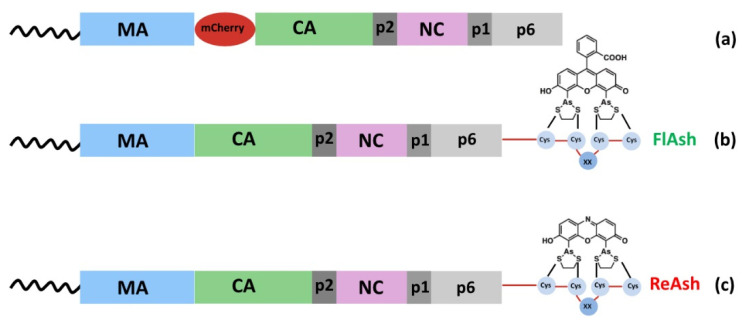
“In this case, Gag labelling was achieved by adding a linear tetraCys motif (TC-tag), where XX is usually ProGly [74].”
BackgroundMethodHIV-1 assembly, release and maturation
Freed, E. O. (2015) · Nature Reviews Microbiology · doi:10.1038/nrmicro3490 · Cited by 654 · cited 2×
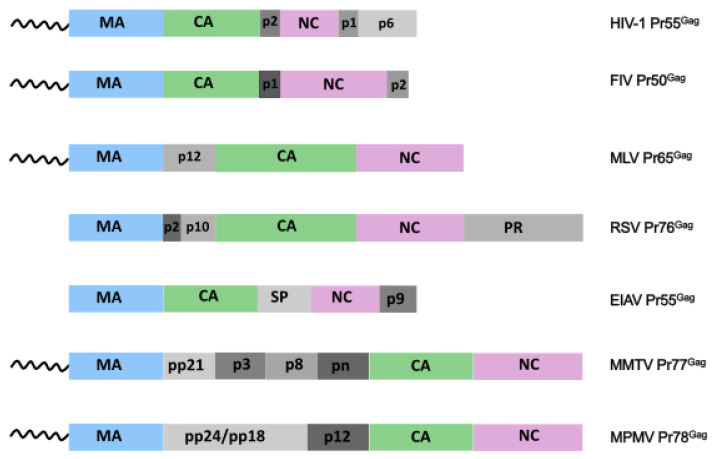
“Retroviral Gag precursors are composed of independentlyfolded multifunctional domains that enable interactions with other Gag proteins, and with viral and cellular proteins, membrane lipids, DNA and RNA (NA) (reviewed in [29]).”
BackgroundStructure of the carboxyl-terminal dimerization domain of the HIV-1 capsid protein
Gamble, T. R., Yoo, S., Vajdos, F. F., von Schwedler, U. K., Worthylake, D. K., Wang, H., McCutcheon, J. P., Sundquist, W. I., & Hill, C. P. (1997) · Science · doi:10.1126/science.278.5339.849 · Cited by 598
Structural basis for targeting HIV-1 Gag proteins to the plasma membrane for virus assembly
Saad, J. S., Miller, J., Tai, J., Kim, A., Ghanam, R. H., & Summers, M. F. (2006) · Proceedings of the National Academy of Sciences · doi:10.1073/pnas.0602818103 · Cited by 545 · cited 1×
“The HBR-PI(4,5)P2 interaction acts as a trigger of the myristyl switch [38] and modulates Gag chaperone activity [39].”
BackgroundThe stoichiometry of Gag protein in HIV-1
Briggs, J. A. G., Simon, M. N., Gross, I., Kräusslich, H.-G., Fuller, S. D., Vogt, V. M., & Johnson, M. C. (2004) · Nature Structural & Molecular Biology · doi:10.1038/nsmb785 · Cited by 539 · cited 2×
“Accordingly, in HIV-1 two residues within the dimerization interface in the CA-CTD were identified as crucial for Gag-Gag interactions (W184 and M185) [28,29].”
BackgroundMoving messages: the intracellular localization of mRNAs
St Johnston, D. (2005) · Nature Reviews Molecular Cell Biology · doi:10.1038/nrm1643 · Cited by 536
Cited by
Marie, V., & Gordon, M. L. (2022) · International Journal of Molecular Sciences · doi:10.3390/ijms23147569 · Cited by 29
“The ψ segment comprises four stem loops (SL1–SL4) that are connected by short linkers [95].”
BackgroundMolecular Engineering of Virus Tropism
He, B., Wilson, B., Chen, S., Sharma, K., Scappini, E., Cook, M., Petrovich, R. M., & Martin, N. P. (2024) · International Journal of Molecular Sciences · doi:10.3390/ijms252011094 · Cited by 25
“Upon infecting a host-cell, their RNA genome is reverse-transcribed into DNA, which is then randomly integrated into the host genome for stable expression [101].”
BackgroundSun, B., Kim, H., Mello, C. C., & Priess, J. R. (2023) · PLoS Genetics · doi:10.1371/journal.pgen.1010804 · Cited by 10
Haddadzadegan, S., Mehdizdeh, N., Wang, X., Wong, T. T. L., & Miserez, A. (2026) · Journal of Controlled Release · doi:10.1016/j.jconrel.2026.114841 · Cited by 5
GABARAP proteins regulate the packaging of HIV-1 genomic RNA into virions
Palaric, M., Versapuech, M., Judith, D., Aubé, C., Leduc, M., Dutrieux, J., Gautier, E., Paillart, J., Gallois‐Montbrun, S., & Berlioz‐Torrent, C. (2025) · EMBO Reports · doi:10.1038/s44319-025-00607-1 · Cited by 4
“…packaging of the HIV-1 genome during virion assembly is facilitated by interactions between the dimeric 5 ’ -end gRNA and the NC domain of a limited number of assembling viral Gag polyproteins (Abd El-Wahab et al, 2014; Bernacchi, 2022; Gorelick et al, 1993; Sumner and Ono, 2024; Wu et al, 2013).”
Metadata
- Authors
- Bernacchi, S.
- Affiliations
- Centre National de la Recherche Scientifique (FR)
- Corresponding author
- Bernacchi, Serena
- ORCID
- Bernacchi, Serena
- Venue
- Viruses
- Publisher
- MDPI AG
- Published
- 2022-02-05
- Volume
- 14
- Issue
- 2
- Pages
- 324
- ISSN
- 1999-4915 (ISSN-L)
- PMC
- PMC8876502
- OpenAlex
- W4210286579
- Cited by
- 8
- References
- 179
- Citations by year
- 2026: 3 · 2025: 2 · 2024: 1 · 2023: 1 · 2022: 1
- FWCI
- 0.13
- Type
- journal article
- Language
- en
- Open access
- gold
- doi.org
- Licence
- Locations
- Viruses (publishedVersion, cc-by)
- PubMed Central (publishedVersion, cc-by)
- PubMed (publishedVersion)
- HAL (submittedVersion, other-oa)
- DOAJ (DOAJ: Directory of Open Access Journals) (submittedVersion, cc-by-sa)
- Funders
- Agence Nationale de Recherches sur le Sida et les Hépatites Virales (CdI Appel à Projets : 2020-1)
- IdEx UNISTRA Attractivité 2020 (2020-202)
- Topics
- Life Sciences › Immunology and Microbiology › Virology › HIV Research and Treatment
- Life Sciences › Immunology and Microbiology › Immunology › T-cell and Retrovirus Studies
- Life Sciences › Biochemistry, Genetics and Molecular Biology › Genetics › Virus-based gene therapy research
- Keywords
- retroviruses, HIV-1, Gag protein, genomic RNA packaging, viral assembly, genome encapsidation, live-cell imaging, fluorescence lifetime imaging, FRAP, fluorescence fluctuation spectroscopy, retroviral life cycle, spatiotemporal control
- MeSH terms
- Animals, Capsid, Humans, Retroviridae, Retroviridae Infections, Virion, Gene Products, gag, Genome, Viral, Virus Assembly
About these checks
Registry, retraction, Cites and statistics results are computed, not judged, with one exception: a printed reference that no index lists is read once by a model before it counts as a citation error. Claims are extracted by a model and kept only when their quote appears verbatim in the text; each cited source is then checked, with a model’s help, for whether it says what the claim relies on. Those verdicts can be wrong — read the claim’s quote and the cited source before relying on one.
Statistics and arithmetic are recomputed, not judged.
Confidence bands are shown only for fields calibrated on our annotated test set. None is calibrated yet, so no band is shown.
What counts as a claim ›How we measure confidence ›How we check this ›
Are you an author, or do you see a problem with this page? Request a review
How to cite
Cite CoChat for the checks on this page, and the paper for its own findings.
- This page
- CoChat. (2026). Citation check: Visualization of Retroviral Gag-Genomic RNA Cellular Interactions Leading to Genome Encapsidation and Viral Assembly: An Overview. https://app.cochat.ai/papers/10.3390/v14020324
- The paper
- Bernacchi, S. (2022). Visualization of Retroviral Gag-Genomic RNA Cellular Interactions Leading to Genome Encapsidation and Viral Assembly: An Overview. Viruses. https://doi.org/10.3390/v14020324
Data sources
Bibliographic data: Semantic Scholar, OpenAlex, Crossref.
Contains information from the Semantic Scholar Academic Graph Datasets, made available under the ODC Attribution License (ODC-BY 1.0).
Semantic Scholar’s data is described in: Kinney, R., et al. (2023). The Semantic Scholar Open Data Platform. arXiv:2301.10140.
