

The DOI matches its Crossref record; 123 of the 123 references it cites were found in a registry or an index.
The Broad Host Range and Genetic Diversity of Mammalian and Avian Astroviruses
Open accessAbstract
Astroviruses are a diverse family of viruses that infect a wide range of mammalian and avian hosts. Here we describe the phylogenetic diversity and current classification methodology of astroviruses based on the ORF1b and ORF2 genes, highlighting the propensity of astroviruses to undergo interspecies transmission and genetic recombination which greatly increase diversity and complicate attempts at a unified and comprehensive classification strategy.
Overview
The claims and statistics of this paper haven’t been checked yet.
Run the check — free, no account needed. It reads the open-access text and checks the sources it cites.
Integrity signals
Registry
Cites
Statistics
Figures
Verification
Claims the paper makes
The claims and statistics of this paper haven’t been checked yet.
Run the check — free, no account needed. It reads the open-access text and checks the sources it cites.
Claims other papers make about this one
Each is checked against this paper’s own text: does it say what the citing paper says it does?
The cited source says what the claim attributes to it.
In the citing paper
“Astroviruses have a broad host range (Donato and Vijaykrishna 2017) and are frequently detected in the faeces of mammals, birds, and humans with gastroenteritis (Finkbeiner et al. 2009; De Benedictis et al. 2011).”
From Red fox viromes in urban and rural landscapes (2020) · cites this paper as Donato and Vijaykrishna 2017
Self-check
Percentages, sums and reported differences re-computed from the paper’s own numbers.
The self-check needs the paper’s full text.
Citations
Cites
Matthijnssens, J., Ciarlet, M., McDonald, S. M., Attoui, H., Bànyai, K., Brister, J. R., Buesa, J., Esona, M. D., Estes, M. K., Gentsch, J. R., et al. (2011) · Archives of Virology · doi:10.1007/s00705-011-1006-z · Cited by 1,001
De Benedictis, P., Schultz-Cherry, S., Burnham, A., & Cattoli, G. (2011) · Infection, Genetics and Evolution · doi:10.1016/j.meegid.2011.07.024 · Cited by 479 · cited 4×
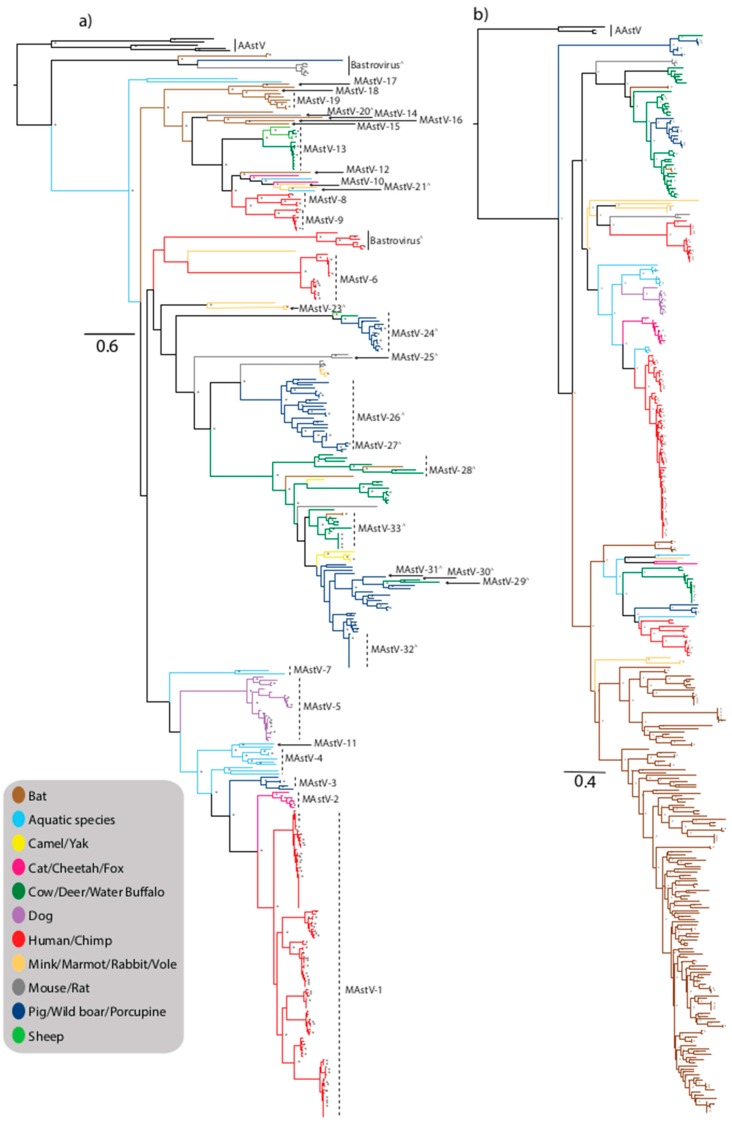
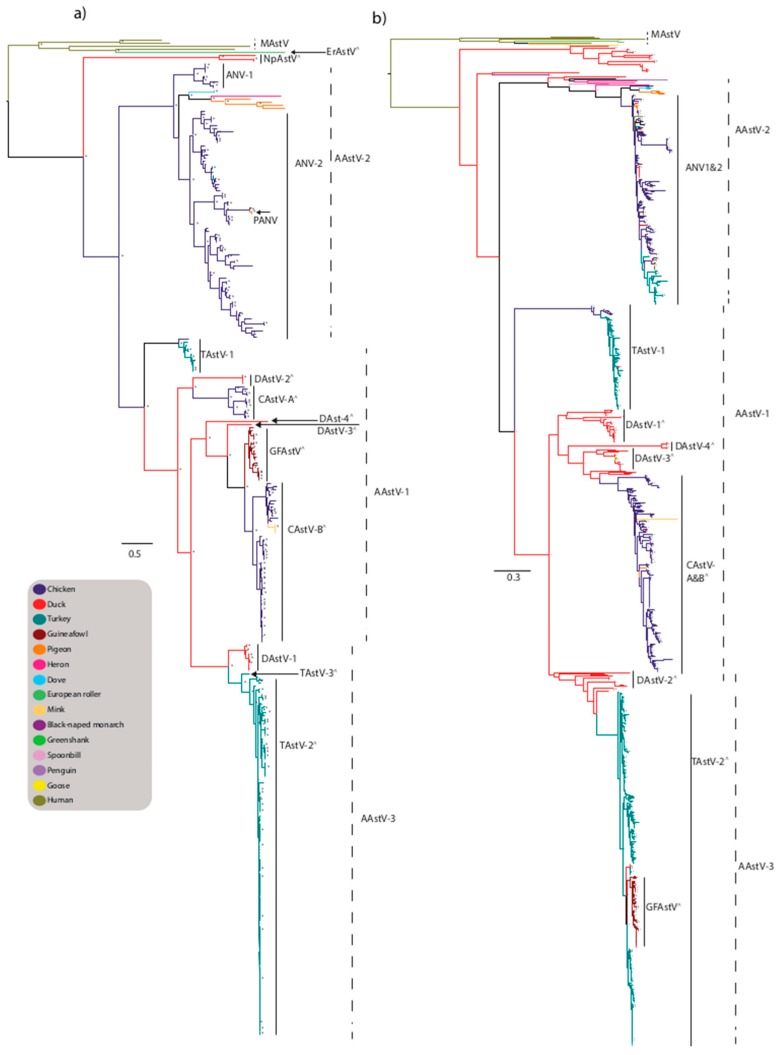
“without causing disease [12] (Figures 1 and 2).”
BackgroundMethodInfluentialLi, L.-L., Victoria, J., Wang, C.-L., Jones, M. S., Fellers, G., Kunz, T., & Delwart, E. (2010) · Journal of Virology · doi:10.1128/jvi.00501-10 · Cited by 402 · cited 1×
“Bat astroviruses were first detected in 2008 in Hong Kong [77] and subsequently detected in bats in China [78,79], North America [80], Germany [81], Hungary [82], and the Czech Republic [83] from numerous bat species, with detection rates ranging from 36% to 100% in Miniopterus magnater bats and from 50% to 70% of Min…”
Background28 nm PARTICLES IN FÆCES IN INFANTILE GASTROENTERITIS
Madeley, C. R., & Cosgrove, B. (1975) · The Lancet · doi:10.1016/s0140-6736(75)90858-2 · Cited by 385
Astrovirus Encephalitis in Boy with X-linked Agammaglobulinemia
Quan, P.-L., Wagner, T. A., Briese, T., Torgerson, T., Hornig, M., Tashmukhamedova, A., Firth, C., Palacios, G., Baisre-De-Leon, A., Paddock, C., et al. (2010) · Emerging Infectious Diseases · doi:10.3201/eid1606.091536 · Cited by 332 · cited 2×
“VA1/HMO-C viruses have been detected and associated with encephalitis in immunocompromized children and adults [11,40,47] and acute respiratory disease [48].”
BackgroundBosch, A., Pintó, R., & Guix, S. (2014) · Clinical Microbiology Reviews · doi:10.1128/cmr.00013-14 · Cited by 311
VIRUSES AND GASTROENTERITIS IN INFANTS
Appleton, H., & Higgins, P. G. (1975) · The Lancet · doi:10.1016/s0140-6736(75)92581-7 · Cited by 307
Novel Astroviruses in Insectivorous Bats
Chu, D. K. W., Poon, L. L. M., Guan, Y., & Peiris, M. J. S. (2008) · Journal of Virology · doi:10.1128/jvi.00857-08 · Cited by 292 · cited 1×
“Bat astroviruses were first detected in 2008 in Hong Kong [77] and subsequently detected in bats in China [78,79], North America [80], Germany [81], Hungary [82], and the Czech Republic [83] from numerous bat species, with detection rates ranging from 36% to 100% in Miniopterus magnater bats and from 50% to 70% of Min…”
BackgroundJiang, B., Monroe, S. S., Koonin, E. V., Stine, S. E., & Glass, R. I. (1993) · Proceedings of the National Academy of Sciences · doi:10.1073/pnas.90.22.10539 · Cited by 283 · cited 1×
“The viruses lack a RNA-helicase domain encoded within the genome and utilize a ribosomal frameshifting mechanism to translate the RdRp, which distinguishes the Astroviridae family from other non-enveloped ssRNA virus families such as Picornaviridae and Caliciviridae [20,21].”
BackgroundEvolutionary Relationships among Rodents
Luckett, W. P., & Hartenberger, J. (1985) · Springer eBooks · doi:10.1007/978-1-4899-0539-0 · Cited by 283
Research works printed but not linked: 1
- King, A.M.Q., Lefkowitz, E., Adams, M.J., and Carstens, E.B. (2012). Family—Astroviridae. Virus Taxonomy: Ninth Report of the International Committee on Taxonomy of Viruses, Elsevier.
Cited by
Sorted by citations
Astrovirus evolution and emergence
Wohlgemuth, N., Honce, R., & Schultz-Cherry, S. (2019) · Infection, Genetics and Evolution · doi:10.1016/j.meegid.2019.01.009 · Cited by 119
“, 2008) and sequence based phylogenetics, astroviruses have been classified by their ORF2 full length amino acid sequence into three species of AAstV and 19 species of MAstV (Bosch et al., 2012; Donato and Vijaykrishna, 2017; Krishnan, 2014).”
BackgroundIsolation and characterization of an astrovirus causing fatal visceral gout in domestic goslings
Zhang, Q., Cao, Y., Wang, J., Fu, G., Sun, M., Zhang, L., Li, M. Y., Cui, G., Huang, Y., Hu, X., et al. (2018) · Emerging Microbes & Infections · doi:10.1038/s41426-018-0074-5 · Cited by 127
“AstVs have been detected in humans and a variety of animal species, including nonhuman primates, other mammals and avian species [3] [4] [5] .”
BackgroundVirome in the cloaca of wild and breeding birds revealed a diversity of significant viruses
Shan, T., Yang, S., Wang, H., Wang, H., Zhang, J., Gong, G., Xiao, Y., Yang, J., Wang, X., Lü, J., et al. (2022) · Microbiome · doi:10.1186/s40168-022-01246-7 · Cited by 116
Global public health implications of human exposure to viral contaminated water
Lanrewaju, A. A., Enitan, A. M., Sabiu, S., Edokpayi, J. N., & Swalaha, F. M. (2022) · Frontiers in Microbiology · doi:10.3389/fmicb.2022.981896 · Cited by 100
“Genera Mamastrovirus (MAstV) and Avastrovirus (AAstV) make up the family Astroviridae (Appleton, 1975; De Benedictis et al., 2011; Donato and Vijaykrishna, 2017).”
BackgroundOccurrence of Human Enteric Viruses in Water Sources and Shellfish: A Focus on Africa
Upfold, N., Luke, G. A., & Knox, C. M. (2021) · Food and Environmental Virology · doi:10.1007/s12560-020-09456-8 · Cited by 81
Metadata
- Authors
- Donato, C., & Vijaykrishna, D.
- Affiliations
- Monash University (AU)
- Duke-NUS Medical School (SG)
- Corresponding author
- Vijaykrishna, Dhanasekaran
- Venue
- Viruses
- Publisher
- MDPI AG
- Published
- 2017-05-10
- Volume
- 9
- Issue
- 5
- Pages
- 102
- ISSN
- 1999-4915 (ISSN-L)
- PMC
- PMC5454415
- OpenAlex
- W2612817723
- Cited by
- 196
- References
- 123
- Citations by year
- 2026: 15 · 2025: 16 · 2024: 24 · 2023: 24 · 2022: 37 · 2021: 31 · 2020: 17 · 2019: 22 · 2018: 10
- FWCI
- 1.62
- Type
- journal article
- Language
- en
- Open access
- gold
- doi.org
- Licence
- Locations
- Viruses (publishedVersion, cc-by)
- Europe PMC (PubMed Central) (publishedVersion, cc-by)
- PubMed Central (publishedVersion, cc-by)
- PubMed (publishedVersion)
- Monash University Research Portal (Monash University) (submittedVersion, other-oa)
- National University of Singapore (submittedVersion, cc-by)
- Minerva Access (University of Melbourne) (submittedVersion, cc-by)
- Topics
- Life Sciences › Agricultural and Biological Sciences › Animal Science and Zoology › Animal Virus Infections Studies
- Health Sciences › Medicine › Infectious Diseases › Viral gastroenteritis research and epidemiology
- Health Sciences › Medicine › Public Health, Environmental and Occupational Health › Zoonotic diseases and public health
- Keywords
- astrovirus, host range, genetic diversity, phylogenetic diversity, virus taxonomy, ORF1b, ORF2, interspecies transmission, genetic recombination
- MeSH terms
- Animals, Birds, Feces, Humans, Mammals, Phylogeny, Recombination, Genetic, RNA-Dependent RNA Polymerase, Genetic Variation, Viral Proteins, Open Reading Frames, Astroviridae, Astroviridae Infections, Capsid Proteins, Mice, Rats, Host Specificity
About these checks
Registry, retraction, Cites and statistics results are computed, not judged, with one exception: a printed reference that no index lists is read once by a model before it counts as a citation error. Claims are extracted by a model and kept only when their quote appears verbatim in the text; each cited source is then checked, with a model’s help, for whether it says what the claim relies on. Those verdicts can be wrong — read the claim’s quote and the cited source before relying on one.
Statistics and arithmetic are recomputed, not judged.
Confidence bands are shown only for fields calibrated on our annotated test set. None is calibrated yet, so no band is shown.
What counts as a claim ›How we measure confidence ›How we check this ›
Are you an author, or do you see a problem with this page? Request a review
