

The DOI matches its Crossref record; 3 of the 3 references it cites were found in a registry or an index.
Modification of a Nile Red Staining Method for Microplastics Analysis: A Nile Red Plate Method
Abstract
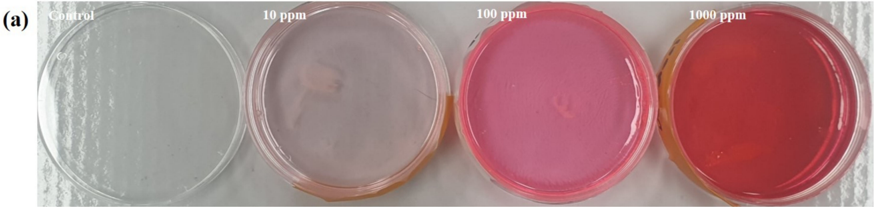
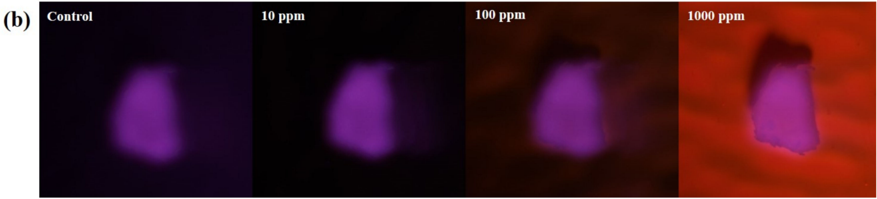
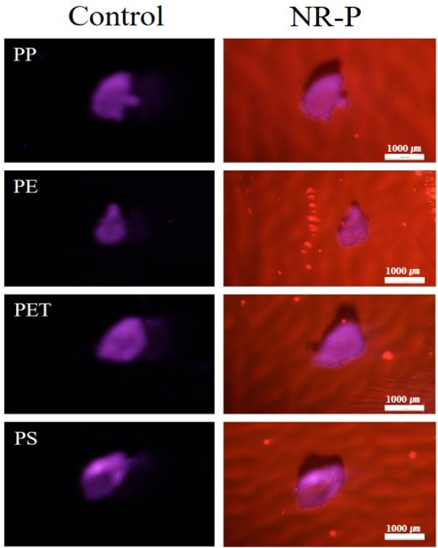
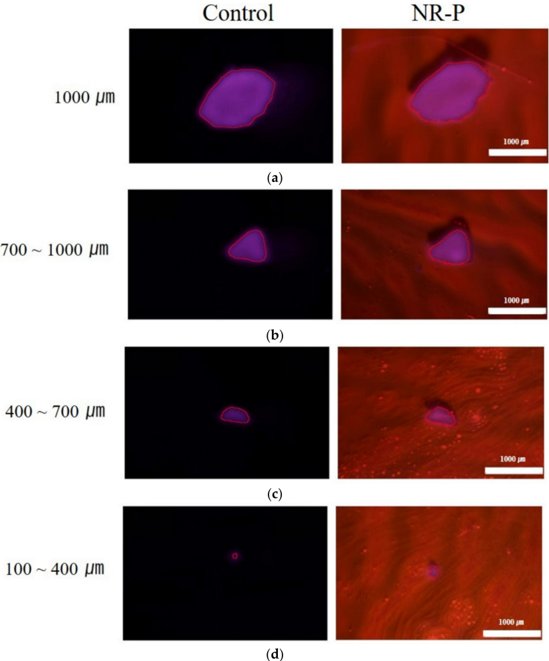
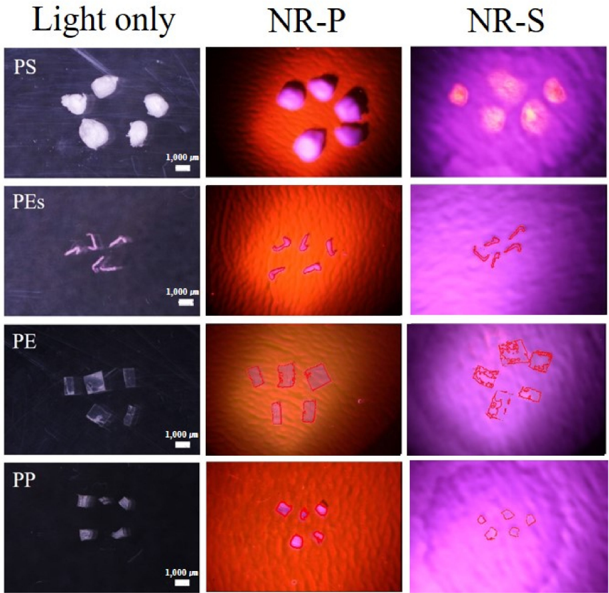
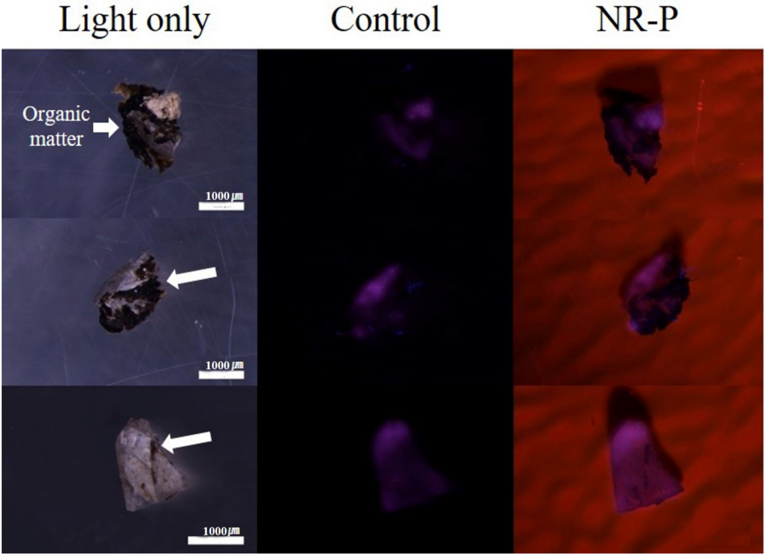
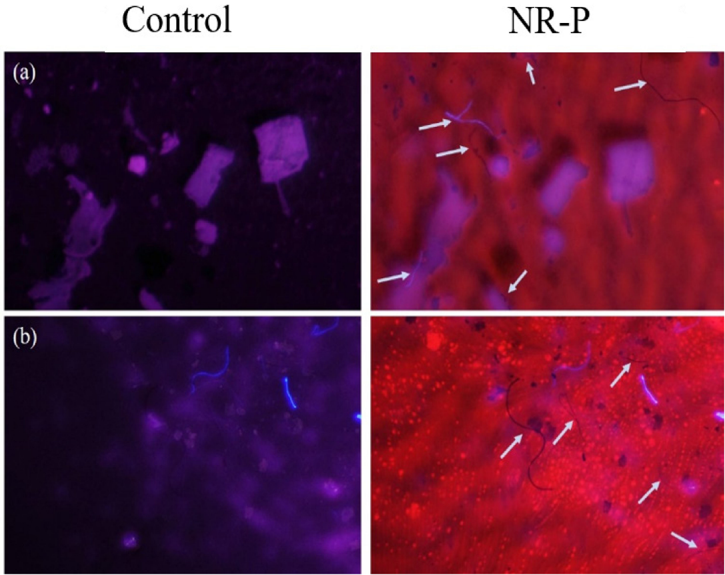
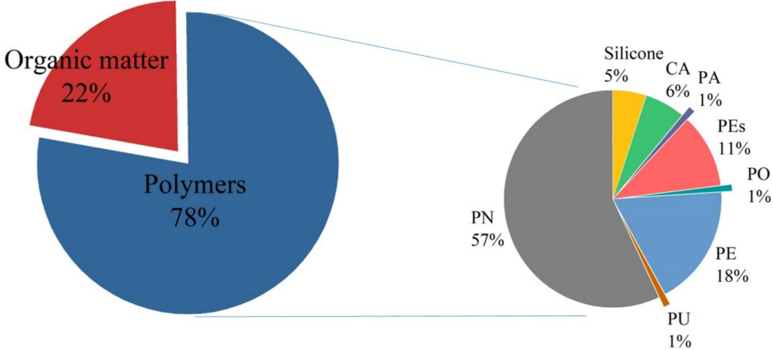
Recently, environmental pollution from microplastics (MPs) has become a significant reason for increasing the number of studies to develop analysis methods. The Nile red staining method (NR-S), which is staining polymer particles with Nile red (NR) dye, has been widely used for the analysis of MPs in environmental samples. However, this method has several limitations, as it is difficult to stain MPs covered with organic matter residues. In this study, we modified the NR-S method into an NR plate method (NR-P), where the plate is coated with NR instead of staining MPs directly. The optimum concentration of NR solution was obtained (1000 mg/L), and the effectiveness of the NR-P method for the analysis of MPs was assessed using different types (polypropylene, polyethylene, polyethylene terephthalate, and polystyrene), sizes (100–1000 µm), and shapes (sphere, fiber, film, and flake) of plastic materials. The NR-P method demonstrated improved resolution in the overall types, shapes, and sizes of MPs and was better than the control (without NR plate method) and NR-S method. In particular, the NR-P method can effectively observe MPs covered with organic matter, which was a major limitation of the NR-S method. Finally, MPs in sewage field samples were analyzed by the NR-P method with an accuracy of 78% confirmed by FT-IR. We demonstrated that this method is a convenient and efficient alternative for identifying MPs, even for field samples.
Overview
The claims and statistics of this paper haven’t been checked yet.
Run the check — free, no account needed. It reads the open-access text and checks the sources it cites.
Integrity signals
Registry
Cites
Statistics
Figures
Verification
Claims the paper makes
The claims and statistics of this paper haven’t been checked yet.
Run the check — free, no account needed. It reads the open-access text and checks the sources it cites.
Claims other papers make about this one
Each is checked against this paper’s own text: does it say what the citing paper says it does?
In the citing paper
“The Nile Red staining technique (NR-S), involving the use of Nile Red (NR) dye to stain polymer particles, is a widely employed method for analyzing airborne microplastics (AMPs) in environmental samples [12,13,14].”
From Exploring Personal Exposure to Airborne Microplastics across Various Work Environments in Pathum Thani Province, Thailand (2023) · cites this paper as [12]
In the citing paper
“It proves helpful in identifying concealed microplastics and serves as a valuable preliminary step before further analysis using a fluorescence microscope.”
From Exploring Personal Exposure to Airborne Microplastics across Various Work Environments in Pathum Thani Province, Thailand (2023) · cites this paper as [12]
Self-check
Percentages, sums and reported differences re-computed from the paper’s own numbers.
The self-check needs the paper’s full text.
Citations
Cites
Horton, A. A., Walton, A., Spurgeon, D. J., Lahive, E., & Svendsen, C. (2017) · Science of The Total Environment · doi:10.1016/j.scitotenv.2017.01.190 · Cited by 3,756
Microplastics profile along the Rhine River
Mani, T., Hauk, A., Walter, U., & Burkhardt-Holm, P. (2015) · Scientific Reports · doi:10.1038/srep17988 · Cited by 1,010
Erni-Cassola, G., Gibson, M. I., Thompson, R. C., & Christie-Oleza, J. A. (2017) · Environmental Science & Technology · doi:10.1021/acs.est.7b04512 · Cited by 848
Research works printed but not linked: 35
- Boucher, J., and Friot, D. (2017). Primary Microplastics in the Oceans: A Global Evaluation of Sources, International Union for Conservation of Nature (IUCN). · DOI · Paper page
- Ryan, 2009, Monitoring the abundance of plastic debris in the marine environment, Phil. Trans. R Soc. B, 364, 1999, 10.1098/rstb.2008.0207 · DOI · Paper page
- Carr, 2016, Transport and fate of microplastic particles in wastewater treatment plants, Water Res., 91, 174, 10.1016/j.watres.2016.01.002 · DOI
- Thompson, R.C. (2006, January 8–12). Plastic Debris in the Marine Environment: Consequences and Solutions. Proceedings of the Symposium Marine Nature Conservation in Europe, Straslund, Germany.
- Browne, 2011, Accumulation of Microplastic on Shorelines Woldwide: Sources and Sinks, Environ. Sci. Technol., 45, 9175, 10.1021/es201811s · DOI · Paper page
- Browne, 2007, Microplastic-an emerging contaminant of potential concern?: Learned Discourses, Integr. Environ. Assess. Manag., 3, 559, 10.1002/ieam.5630030412 · DOI · Paper page
- Cozar, 2014, Plastic debris in the open ocean, Proc. Natl. Acad. Sci. USA, 111, 10239, 10.1073/pnas.1314705111 · DOI · Paper page
- Costa, 2014, The present and future of microplastic pollution in the marine environment, Environ. Pollut., 185, 352, 10.1016/j.envpol.2013.10.036 · DOI
- Mato, 2001, Plastic Resin Pellets as a Transport Medium for Toxic Chemicals in the Marine Environment, Environ. Sci. Technol., 35, 318, 10.1021/es0010498 · DOI
- Cai, 2019, A practical approach based on FT-IR spectroscopy for identification of semi-synthetic and natural celluloses in microplastic investigation, Sci. Total Environ., 669, 692, 10.1016/j.scitotenv.2019.03.124 · DOI
- Fischer, 2018, Comparison of μ-ATR-FTIR spectroscopy and py-GCMS as identification tools for microplastic particles and fibers isolated from river sediments, Anal. Bioanal. Chem., 410, 5313, 10.1007/s00216-018-1185-5 · DOI
- Munno, 2020, Increasing the Accessibility for Characterizing Microplastics: Introducing New Application-Based and Spectral Libraries of Plastic Particles (SLoPP and SLoPP-E), Anal. Chem., 92, 2443, 10.1021/acs.analchem.9b03626 · DOI
- Primpke, 2017, An automated approach for microplastics analysis using focal plane array (FPA) FTIR microscopy and image analysis, Anal. Methods, 9, 1499, 10.1039/C6AY02476A · DOI
- Wang, 2017, SEM/EDS and optical microscopy analyses of microplastics in ocean trawl and fish guts, Sci. Total Environ., 603–604, 616, 10.1016/j.scitotenv.2017.06.047 · DOI
- Mathalon, 2014, Microplastic fibers in the intertidal ecosystem surrounding Halifax Harbor, Nova Scotia, Mar. Pollut. Bull., 81, 69, 10.1016/j.marpolbul.2014.02.018 · DOI
- Nel, 2015, A quantitative analysis of microplastic pollution along the south-eastern coastline of South Africa, Mar. Pollut. Bull., 101, 274, 10.1016/j.marpolbul.2015.09.043 · DOI
- Song, 2015, A comparison of microscopic and spectroscopic identification methods for analysis of microplastics in environmental samples, Mar. Pollut. Bull., 93, 202, 10.1016/j.marpolbul.2015.01.015 · DOI
- Napper, 2016, Release of synthetic microplastic plastic fibres from domestic washing machines: Effects of fabric type and washing conditions, Mar. Pollut. Bull., 112, 39, 10.1016/j.marpolbul.2016.09.025 · DOI
- Shim, 2016, Identification and quantification of microplastics using Nile Red staining, Mar. Pollut. Bull., 113, 469, 10.1016/j.marpolbul.2016.10.049 · DOI
- Klein, 2019, Microplastic abundance in atmospheric deposition within the Metropolitan area of Hamburg, Germany, Sci. Total Environ., 685, 96, 10.1016/j.scitotenv.2019.05.405 · DOI
- Maes, 2017, A rapid-screening approach to detect and quantify microplastics based on fluorescent tagging with Nile Red, Sci. Rep., 7, 44501, 10.1038/srep44501 · DOI
- Scircle, 2020, Single-Pot Method for the Collection and Preparation of Natural Water for Microplastic Analyses: Microplastics in the Mississippi River System during and after Historic Flooding, Environ. Toxicol. Chem., 39, 986, 10.1002/etc.4698 · DOI
- Stanton, 2019, Exploring the Efficacy of Nile Red in Microplastic Quantification: A Containing Approach, Environ. Sci. Technol. Lett., 6, 606, 10.1021/acs.estlett.9b00499 · DOI · Paper page
- Tamminga, M., Hengstmann, E., and Fischer, E.K. (2017). Nile Red Staining as a Subsidiary Method for Microplastic Quantification: A Comparison of Three Solvents and Factors Influencing Application Reliability. J. Earth Sci. Environ. Stud., 2472–6397. · DOI
- Tagg, 2015, Identification and Quantification of Microplastics in Wastewater Using Focal Plane Array-Based Reflectance Micro-FT-IR, Imaging Anal. Chem., 87, 6032, 10.1021/acs.analchem.5b00495 · DOI
- Avio, 2015, Experimental development of a new protocol for extraction and characterization of microplastics in fish tissues: First observations in commercial species from Adriatic Sea, Mar. Environ. Res., 111, 18, 10.1016/j.marenvres.2015.06.014 · DOI
- Fischer, 2016, Microplastic pollution in lakes and lake shoreline sediments—A case study on Lake Bolsena and Lake Chiusi (central Italy), Environ. Pollut., 213, 648, 10.1016/j.envpol.2016.03.012 · DOI · Paper page
- Hengstmann, 2018, Microplastic in beach sediments of the Isle of Rügen (Baltic Sea)—Implementing a novel glass elutriation column, Mar. Pollut. Bull., 126, 263, 10.1016/j.marpolbul.2017.11.010 · DOI
- Prata, 2019, A new approach for routine quantification of microplastics using Nile Red and automated software (MP-VAT), Sci. Total Environ., 690, 1277, 10.1016/j.scitotenv.2019.07.060 · DOI
- Prata, 2020, Major factors influencing the quantification of Nile Red stained microplastics and improved automatic quantification (MP-VAT 2.0), Sci. Total Environ., 719, 137498, 10.1016/j.scitotenv.2020.137498 · DOI
- Chubarenko, 2018, Three-dimensional distribution of anthropogenic microparticles in the body of sandy beaches, Sci. Total Environ., 628–629, 1340, 10.1016/j.scitotenv.2018.02.167 · DOI
- Grove, 1999, Functionalized polynorbornene dielectric polymers: Adhesion and mechanical properties, J. Polym. Sci. B Polym. Phys., 37, 3003, 10.1002/(SICI)1099-0488(19991101)37:21<3003::AID-POLB10>3.0.CO;2-T · DOI
- Haselwander, 1996, Polynorbornene: Synthesis, properties and simulations, Macromol. Chem. Phys., 197, 3435, 10.1002/macp.1996.021971029 · DOI
- Magni, 2019, The fate of microplastics in an Italian Wastewater Treatment Plant, Sci. Total Environ., 652, 602, 10.1016/j.scitotenv.2018.10.269 · DOI
- Rumin, 2015, The use of fluorescent Nile red and BODIPY for lipid measurement in microalgae, Biotechnol. Biofuels, 8, 42, 10.1186/s13068-015-0220-4 · DOI · Paper page
Cited by
Sorted by citations
Chemical Analysis of Microplastics and Nanoplastics: Challenges, Advanced Methods, and Perspectives
Ivleva, N. P. (2021) · Chemical Reviews · doi:10.1021/acs.chemrev.1c00178 · Cited by 1,172
Limsiriwong, K., & Winijkul, E. (2023) · International Journal of Environmental Research and Public Health · doi:10.3390/ijerph20247162 · Cited by 27
Metadata
- Authors
- Kang, H., Park, S., Lee, B., Ahn, J., & Kim, S.
- Venue
- Water
- Publisher
- MDPI AG
- Published
- 2020-11-19
- Volume
- 12
- Issue
- 11
- Pages
- 3251
- ISSN
- 2073-4441
- Cited by
- 58
- References
- 3
- Language
- en
- Funders
- Korea institute of Civil Engineering and Building Technology(KICT) (20200394-001)
- National Research Council of Science & Technology (NST) (CAP-18-07-KICT)
About these checks
Registry, retraction, Cites and statistics results are computed, not judged, with one exception: a printed reference that no index lists is read once by a model before it counts as a citation error. Claims are extracted by a model and kept only when their quote appears verbatim in the text; each cited source is then checked, with a model’s help, for whether it says what the claim relies on. Those verdicts can be wrong — read the claim’s quote and the cited source before relying on one.
Statistics and arithmetic are recomputed, not judged.
Confidence bands are shown only for fields calibrated on our annotated test set. None is calibrated yet, so no band is shown.
What counts as a claim ›How we measure confidence ›How we check this ›
Are you an author, or do you see a problem with this page? Request a review
How to cite
Cite CoChat for the checks on this page, and the paper for its own findings.
- This page
- CoChat. (2026). Citation check: Modification of a Nile Red Staining Method for Microplastics Analysis: A Nile Red Plate Method. https://app.cochat.ai/papers/10.3390/w12113251
- The paper
- Kang, H., Park, S., Lee, B., Ahn, J., & Kim, S. (2020). Modification of a Nile Red Staining Method for Microplastics Analysis: A Nile Red Plate Method. Water. https://doi.org/10.3390/w12113251
