

Power laws from individual differences in learning and forgetting: mathematical analyses
Open accessThe DOI matches its Crossref record; 20 of the 20 references it cites were found in a registry or an index.
Abstract
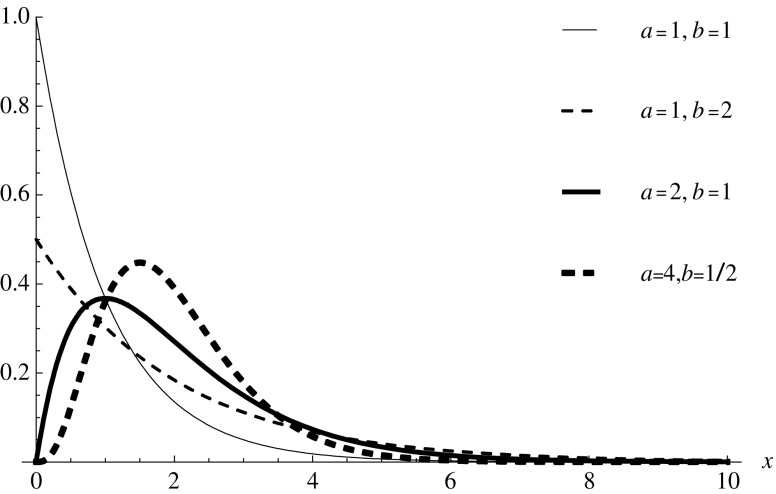
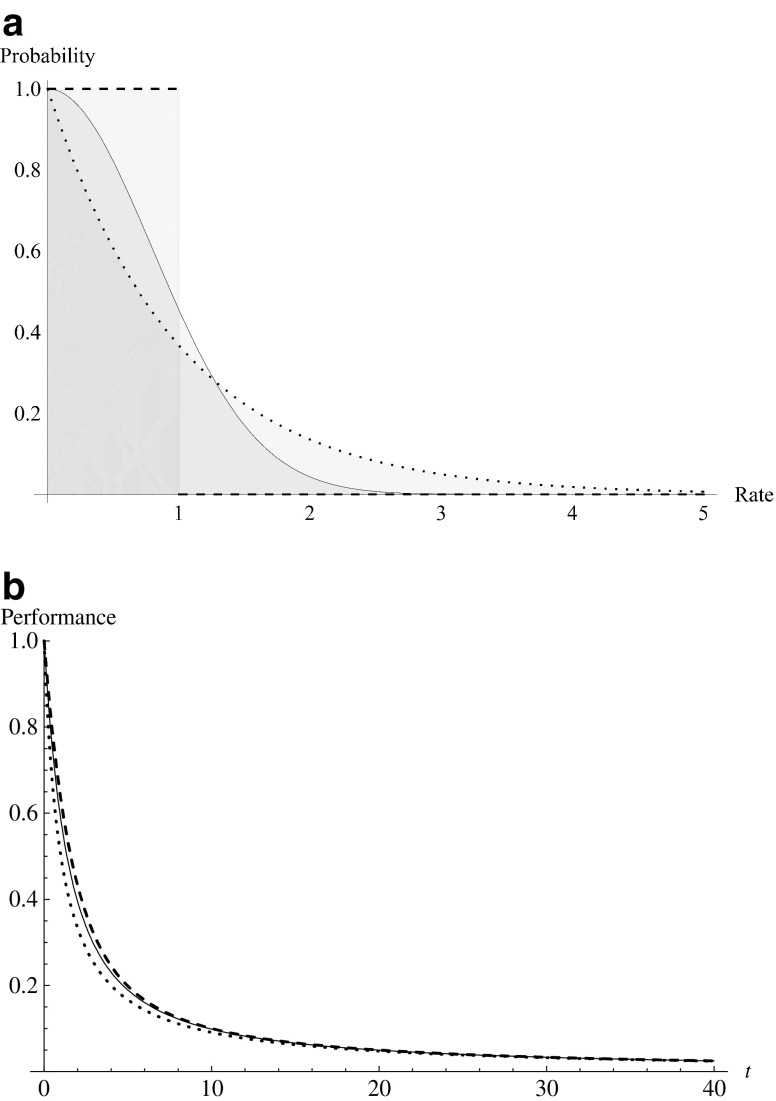
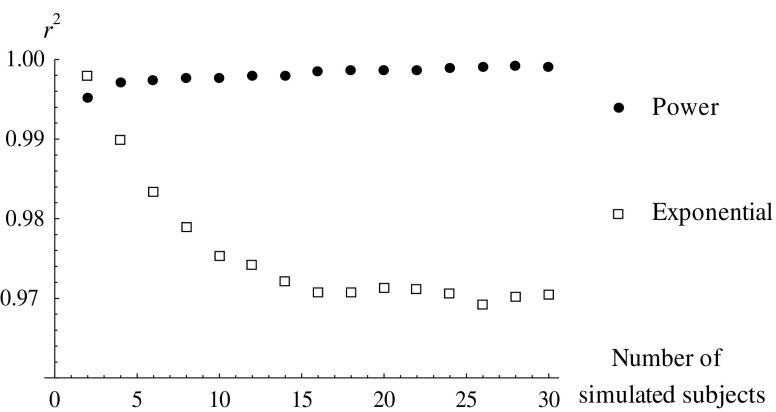
It has frequently been claimed that learning performance improves with practice according to the so-called "Power Law of Learning." Similarly, forgetting may follow a power law. It has been shown on the basis of extensive simulations that such power laws may emerge through averaging functions with other, nonpower function shapes. In the present article, we supplement these simulations with a mathematical proof that power functions will indeed emerge as a result of averaging over exponential functions, if the distribution of learning rates follows a gamma distribution, a uniform distribution, or a half-normal function. Through a number of simulations, we further investigate to what extent these findings may affect empirical results in practice.
Overview
The claims and statistics of this paper haven’t been checked yet.
Free: it reads the open-access text and checks the first 5 claims that cite a source we can check. Create a free account to check every claim.
Integrity signals
Registry
Cites
Statistics
Figures
Verification
Claims the paper makes
The claims and statistics of this paper haven’t been checked yet.
Free: it reads the open-access text and checks the first 5 claims that cite a source we can check. Create a free account to check every claim.
Claims other papers make about this one
Each is checked against this paper’s own text: does it say what the citing paper says it does?
The source backs part of the claim, not all of it — or backs it for a different population, condition or comparison.
In the citing paper
“As remarked by several authors investigating the shape of learning and forgetting [35,38,40], simply fitting sums of exponentials is expected to yield progressively better fits for the simple reasons that any function may be approximated by such a sum, which is related to the Laplace transformation.”
From Replication and Analysis of Ebbinghaus’ Forgetting Curve (2015) · cites this paper as [35]
Experimental — accuracy not yet measuredThe cited source says what the claim attributes to it.
In the citing paper
“Whereas this is certainly a viable mechanism of forgetting, it can be proven mathematically that (spurious) power functions may emerge from averaging over different subjects or items [35,36]. This has also been shown in simulations considering a wide range of circumstances [37,38].”
From Replication and Analysis of Ebbinghaus’ Forgetting Curve (2015) · cites this paper as [35]
Self-check
Percentages, sums and reported differences re-computed from the paper’s own numbers.
The self-check needs the paper’s full text.
Citations
Cites
An introduction to probability theory and its applications
(1958) · Journal of the Franklin Institute · doi:10.1016/0016-0032(58)90688-4 · Cited by 29,269
Handbook of Mathematical Functions with Formulas, Graphs, and Mathematical Tables
W., J. W., Abramowitz, M., & Stegun, I. A. (1965) · Mathematics of Computation · doi:10.2307/2004114 · Cited by 18,663
Handbook of Mathematical Functions with Formulas, Graphs, and Mathematical Tables
Owen, D. B., Abramowitz, M., & Stegun, I. A. (1965) · Technometrics · doi:10.2307/1266136 · Cited by 16,138
Handbook of Mathematical Functions with Formulas
Owen, D. B. (1965) · Technometrics · doi:10.1080/00401706.1965.10490234 · Cited by 4,021
Cognitive Skills and Their Acquisition
(2013) · Psychology Press eBooks · doi:10.4324/9780203728178 · Cited by 2,912
Mechanisms of skill acquisition and the law of practice
Newell, A., & Rosenbloom, P. S. (2018) · Figshare · doi:10.1184/r1/6607196 · Cited by 1,489
An Introduction to Probability Theory and Its Applications, Vol. 1
Feller, W. (1968) · Cited by 1,446
Mechanisms of skill acquisition and the law of practice
Newell, A., & Rosenbloom, P. S. (2018) · Figshare · doi:10.1184/r1/6607199.v1 · Cited by 1,365
Reflections of the Environment in Memory
Anderson, J. R., & Schooler, L. J. (1991) · Psychological Science · doi:10.1111/j.1467-9280.1991.tb00174.x · Cited by 1,085
The power law repealed: The case for an exponential law of practice
Heathcote, A., Brown, S., & Mewhort, D. J. K. (2000) · Psychonomic Bulletin & Review · doi:10.3758/bf03212979 · Cited by 736 · cited 1×
“Several authors dispute that learning follows a power function (e.g., Heathcote, Brown, & Mewhort, 2000 ), reporting exponential curves for individuals.”
Background
Cited by
Replication and Analysis of Ebbinghaus’ Forgetting Curve
Murre, J. M. J., & Dros, J. (2015) · PLOS ONE · doi:10.1371/journal.pone.0120644 · Cited by 777
“As remarked by several authors investigating the shape of learning and forgetting [35,38,40], simply fitting sums of exponentials is expected to yield progressively better fits for the simple reasons that any function may be approximated by such a sum, which is related to the Laplace transformation.”
BackgroundSelf-citationUse of Response Time for Measuring Cognitive Ability
Kyllonen, P. C., & Zu, J. (2016) · Journal of Intelligence · doi:10.3390/jintelligence4040014 · Cited by 170
“An example is individual acquisition and decay rates based on the ubiquitous power law of practice [73–75].”
Vivot, A., Power, M. C., Glymour, M. M., Mayeda, E. R., Benitez, A., Spiro, A., Manly, J. J., Proust-Lima, C., Dufouil, C., & Gross, A. L. (2016) · American Journal of Epidemiology · doi:10.1093/aje/kwv212 · Cited by 122
A behavioral neuroenergetics theory of ADHD
Killeen, P. R., Russell, V. A., & Sergeant, J. A. (2013) · Neuroscience & Biobehavioral Reviews · doi:10.1016/j.neubiorev.2013.02.011 · Cited by 97
Fisher, J. S., & Radvansky, G. A. (2018) · Journal of Memory and Language · doi:10.1016/j.jml.2018.05.008 · Cited by 67
PPM-Decay: A computational model of auditory prediction with memory decay
Harrison, P. M. C., Bianco, R., Chait, M., & Pearce, M. T. (2020) · PLoS Computational Biology · doi:10.1371/journal.pcbi.1008304 · Cited by 62
Evaluation of topic-based adaptation and student modeling in QuizGuide
Александрович, С. С., & Brusilovsky, P. L. (2015) · User Modeling and User-Adapted Interaction · doi:10.1007/s11257-015-9164-4 · Cited by 62
Murre, J. M. J. (2013) · Psychonomic Bulletin & Review · doi:10.3758/s13423-013-0522-0 · Cited by 63
Self-citationTheory of reinforcement schedules
Killeen, P. R. (2023) · Journal of the Experimental Analysis of Behavior · doi:10.1002/jeab.880 · Cited by 59
Ni, Q., Wei, T., Zhao, J., He, L., & Zheng, C. (2022) · Expert Systems with Applications · doi:10.1016/j.eswa.2022.119334 · Cited by 56
Fisher, J. S., & Radvansky, G. A. (2019) · Journal of Memory and Language · doi:10.1016/j.jml.2019.104035 · Cited by 37
Spatial Memory in a Spiking Neural Network with Robot Embodiment
Lobov, S. A., Zharinov, A. I., Makarov, V. A., & Kazantsev, V. (2021) · Sensors · doi:10.3390/s21082678 · Cited by 33
“In this case, the power-law dependence can result from a simple summation of various individual curves, which was demonstrated earlier for model memory systems of a formal nature [57,58].”
BackgroundThe discontinuity model: Statistical and grammatical learning in adult second-language acquisition
Rastelli, S. (2019) · Language Acquisition · doi:10.1080/10489223.2019.1571594 · Cited by 30
“Rather, the speed of chunk-learning improves as the number of encounters increases, but at a decaying exponential rate,16 because the relative learning rate slows down with prolonged practice (Murre & Chessa 2011).”
BackgroundHoward, R. W. (2014) · Acta Psychologica · doi:10.1016/j.actpsy.2014.05.013 · Cited by 30
Event models and the fan effect
Radvansky, G. A., O’Rear, A. E., & Fisher, J. S. (2017) · Memory & Cognition · doi:10.3758/s13421-017-0713-4 · Cited by 29
“However, there is reason to suspect that the forgetting of individual memories follows an exponential function (Anderson, 2001; Anderson & Tweney, 1997; Averell & Heathcote, 2011; Murre & Chessa, 2011), with a power function arising from averaging across many exponential functions.”
Long-term inference and memory following retrieval practice
Siler, J., & Benjamin, A. S. (2019) · Memory & Cognition · doi:10.3758/s13421-019-00997-3 · Cited by 26
A dynamical systems perspective on driver behavior
Mirman, J. H. (2019) · Transportation Research Part F Traffic Psychology and Behaviour · doi:10.1016/j.trf.2019.04.010 · Cited by 25
“…taken too infrequently (i.e., with wide sampling intervals), (2) by averaging within individuals (e.g., averaging across time; averaging across trials) (Seigler, 2006; Siegler & Shipley, 1995; Siegler, 1987), and (3) by averaging across individuals (Haider & Frensch, 2002; Murre & Chessa, 2011).”
BackgroundModeling novelty habituation during exploratory activity in Drosophila
Soibam, B., Shah, S. K., Gunaratne, G. H., & Roman, G. (2013) · Behavioural Processes · doi:10.1016/j.beproc.2013.04.005 · Cited by 25
Nault, D. R., & Munhall, K. G. (2020) · The Journal of the Acoustical Society of America · doi:10.1121/10.0002923 · Cited by 23
Retroactive interference model of forgetting
Georgiou, A., Katkov, M., & Tsodyks, M. V. (2021) · The Journal of Mathematical Neuroscience · doi:10.1186/s13408-021-00102-6 · Cited by 22
Models of ADHD: Five ways smaller sooner is better
Killeen, P. R. (2015) · Journal of Neuroscience Methods · doi:10.1016/j.jneumeth.2015.01.011 · Cited by 19
A quantitative analysis of the behavior maintained by delayed reinforcers
Catania, A. C., Reilly, M. P., Hand, D. J., Kehle, L. K., Valentine, L., & Shimoff, E. H. (2015) · Journal of the Experimental Analysis of Behavior · doi:10.1002/jeab.138 · Cited by 19
Overview of Machine Learning Process Modelling
Brumen, B., Černezel, A., & Bošnjak, L. (2021) · Entropy · doi:10.3390/e23091123 · Cited by 18
“In the last twenty years, however, some studies [11–13] have been suggesting that the power law arose as a result of averaging exponential curves.”
BackgroundDelay Gradients for Spout-Licking and Magazine-Entering Induced by a Periodic Food Schedule
Pellón, R., Íbias, J., & Killeen, P. R. (2018) · The Psychological Record · doi:10.1007/s40732-018-0275-2 · Cited by 18
The Power Law of Learning in Transumbilical Single-Port Laparoscopic Subtotal Hysterectomy
You, S.-H., Huang, C.-Y., Su, H., Han, C.-M., Lee, C., & Yen, C. (2018) · Journal of Minimally Invasive Gynecology · doi:10.1016/j.jmig.2018.01.015 · Cited by 14
Learning to drive: A reconceptualization
Mirman, J. H., Curry, A. E., & Mirman, D. (2019) · Transportation Research Part F Traffic Psychology and Behaviour · doi:10.1016/j.trf.2019.01.010 · Cited by 14
Learning retention in mathematics over consecutive weeks: Impact of motivated forgetting
Valderama, J., & Oligo, J. (2021) · International Journal of Evaluation and Research in Education (IJERE) · doi:10.11591/ijere.v10i4.21577 · Cited by 13
“Accordingly, the learning curve follows power functions [47], [48], or”
BackgroundForgetting faces over a week: investigating self-reported face recognition ability and personality
Kramer, R. S. S. (2021) · PeerJ · doi:10.7717/peerj.11828 · Cited by 12
“Power functions are generally accepted as suitable models for forgetting, in particular when averaging across participants and therefore focussing on group-397 level performance (Averell & Heathcote, 2011; Murre & Chessa, 2011; Wixted & Ebbesen, 1991).”
Schuetze, B. A., & Yan, V. X. (2022) · Cognitive Science · doi:10.1111/cogs.13136 · Cited by 11
The persistent impact of incidental experiencePreprint
Wilder, M., Jones, M., Ahmed, A. A., Curran, T., & Mozer, M. C. (2012) · Nature Precedings · doi:10.1038/npre.2012.6942.1 · Cited by 11
Knowledge-Oriented Models Based on Developer-Artifact and Developer-Developer Interactions
Lucas, E. M., Oliveira, T., Schneider, D., & Alencar, P. S. C. (2020) · IEEE Access · doi:10.1109/access.2020.3042429 · Cited by 10
“The result of this review shows that no work has so far been done concerning the fact that humans tend to forget bits of information [14]–[19], although there is evidence that developers tend to forget information about artifacts they have not manipulated for a while [20]–[22].”
BackgroundMathematical modeling of human memory
Finotelli, P., & Eustache, F. (2023) · Frontiers in Psychology · doi:10.3389/fpsyg.2023.1298235 · Cited by 10
Murre, J. M. J. (2023) · Journal of Mathematical Psychology · doi:10.1016/j.jmp.2023.102816 · Cited by 9
Self-citationOn the time course of short-term forgetting: a human experimental model for the sense of balance
Tribukait, A., & Eiken, O. (2015) · Cognitive Neurodynamics · doi:10.1007/s11571-015-9362-0 · Cited by 9
“The retention of visual and auditory stimuli engages the socalled working memory (Baddeley 1986) and it is, thus, dependent on conscious strategies or activities of the test subject (cf. Logie et al. 1990; Makovski and Jiang 2008; Pellegrino et al. 1976; Silverberg and Buchanan 2005).”
BackgroundOn aggregation invariance of multinomial processing tree models
Erdfelder, E., Pütter, J. Q., & Schnuerch, M. (2024) · Behavior Research Methods · doi:10.3758/s13428-024-02497-y · Cited by 8
“…to work out criteria for deciding whether spe-cific quantitative laws are aggregation invariant or not, and how to test quantitative laws in an efficient and valid way when they fail to be aggregation invariant (e.g., Bakan, 1954; Estes, 1956; Hayes, 1953; Murre, 2023; Murre and Chessa, 2011).”
Generation of Power Law: Maximum Entropy Framework and Superstatistics
Karmeshu, Sharma, S., & Kumar, S. (2015) · Advances in intelligent systems and computing · doi:10.1007/978-3-319-23437-3_4 · Cited by 7
Review, computation and application of the Additive Factor Model (AFM)
Durand, G., Goutte, C., Belacel, N., Bouslimani, Y., & Léger, S. (2017) · NPARC · doi:10.4224/23002483 · Cited by 7
EDUCATIONAL DATA MINING APPROACH FOR ENGINEERING GRADUATE ATTRIBUTES ANALYSIS
Bouslimani, Y., Durand, G., & Belacel, N. (2017) · Proceedings of the Canadian Engineering Education Association (CEEA) · doi:10.24908/pceea.v0i0.6456 · Cited by 6
“Even if the power function makes a large consensus in the learning communities, some researchers [13] argue that an exponential function might have a better fit than a power function in certain circumstances.”
BackgroundDevelopment of Chess Skill from Domain Entry to Near Asymptote
Howard, R. W. (2018) · The American Journal of Psychology · doi:10.5406/amerjpsyc.131.3.0323 · Cited by 6
Kornell, N., & Bjork, R. A. (2025) · Behavioral Sciences · doi:10.3390/bs15070924 · Cited by 5
“For example, when multiple exponential forgetting rates are averaged, the result is often fit best by a power function (R. B. Anderson, 2001; R. B. Anderson & Tweney, 1997; Fisher & Radvansky, 2019; Murre & Chessa, 2011).”
(2018) · European Journal of Contemporary Education · doi:10.13187/ejced.2018.4.764 · Cited by 5
Killeen, P. R. (2024) · Journal of the Experimental Analysis of Behavior · doi:10.1002/jeab.916 · Cited by 4
Network memory consolidation under adaptive rewiring
Lobov, S. A., Zharinov, A., Kurganov, D. P., & Kazantsev, V. (2025) · The European Physical Journal Special Topics · doi:10.1140/epjs/s11734-025-01595-y · Cited by 4
On Situating the Stance of Practice in SLA
Maftoon, P., Shakouri, N., & Nazari, O. (2013) · International Journal of Applied Linguistics & English Literature · doi:10.7575/aiac.ijalel.v.2n.2p.71 · Cited by 5
“P may refer to how accurate or how fast we carry out a learned activity (Murre & Chessa, 2011).”
BackgroundCan a power law improve prediction of pain recovery trajectory?
Hartmann, G. C., & George, S. Z. (2018) · PAIN Reports · doi:10.1097/pr9.0000000000000657 · Cited by 4
Generalized Memory of STDP-Driven Spiking Neural Network
Lobov, S. A. (2019) · Mathematical Biology and Bioinformatics · doi:10.17537/2019.14.649 · Cited by 4
Context in the wild: Environment, behavior, and the brain
Sreekumar, V. (2015) · OhioLink ETD Center (Ohio Library and Information Network) · Cited by 3
Kim, J.-S., Park, J., Ulrich, T. A., & Boring, R. L. (2025) · Annals of Nuclear Energy · doi:10.1016/j.anucene.2025.111591 · Cited by 3
Murre, J. M. J. (2022) · Scientific Reports · doi:10.1038/s41598-022-17639-5 · Cited by 3
Self-citationIf My Memory Serves Me Well: Investigating My Memory for the Past 24 Years
Storms, G. (2024) · Journal of Cognition · doi:10.5334/joc.334 · Cited by 2
“…laboratory studies that focused on many different materials and retrieval tasks, varying from nonsense syllables (e.g., Ebbinghaus, 1885) to cued recall (e.g., Averell & Heathcote, 2011) (See also Murre & Chessa, 2011, but see Radvansky, Doolen, Pettijohn, & Ritchey, 2022, for an alternative view.)”
BackgroundConfidence and Enthusiasm in Sales Presentations.
Heiser, R. S., & McArthur, D. N. (2020) · Journal of instructional pedagogies · Cited by 2
Tibbles, R. (2017) · eScholarship (California Digital Library) · Cited by 2
Learning Causes of Functional Dynamic Targets: Screening and Local Methods
Zhao, R., Yang, X., & He, Y. (2024) · Entropy · doi:10.3390/e26070541 · Cited by 1
“In psychological and cognitive science, researchers usually fit individual learning and forgetting curves by power functions; individuals may have different curve parameters [4,5].”
BackgroundBrain Plasticity and Cognitive Enhancement
Posner, M. I., Rothbart, M. K., & Weible, A. P. (2024) · Oxford University Press eBooks · doi:10.1093/oxfordhb/9780197677131.013.1 · Cited by 1
Aplicación del método de repetición espaciada en el ámbito de la Ingeniería
Bailera, M., Peña, B., Bailera, I., Zalba, B., Zabalza, I., Lisbona, P., & Pascual, S. (2022) · Congreso de Innovación Educativa y Docencia en Red (IN-RED) · doi:10.4995/inred2022.2022.15923 · Cited by 1
Connolly, D. J., & Loewenstein, G. F. (2026) · SSRN Electronic Journal · doi:10.2139/ssrn.6030316 · Cited by 1
Probabilistic Modeling of Sequential Effects in Human Behavior: Theory and Practical Applications
Wilder, M. (2013) · CU Scholar (University of Colorado Boulder)
Advancing our Understanding of Performance during Sleep Deprivation
Bolkhovsky, J. (2017) · OpenCommons at University of Connecticut (University of Connecticut)
Forgetting curves in the testing effect: A bifurcation model explanation
Yocarini, I. E., & Bouwmeester, S. (2015)
齋藤, 繁., 森沢, 邦., & 岡本幹太郎 (1996) · 建築雑誌
Bocewicz, G., Szwarc, E., Thibbotuwawa, A., & Banaszak, Z. A. (2023) · Applied Sciences · doi:10.3390/app13127165
A THEORY OF THE MIND AS A COMPLEX SYSTEM
Yaseen (2012) · Current Research in Psychology · doi:10.3844/crpsp.2012.1.18
“This is because the averaging of several learning functions to create one omnibus learning function will always result in a power function (Haider and Frensch, 2002; Heathcote et al., 2000; Murre and Chessa, 2011; Myung et al., 2000).”
BackgroundNickl, A. T. (2024) · University of Regensburg Publication Server (University of Regensburg) · doi:10.5283/epub.55533
Siler, J. (2021) · Illinois Digital Environment for Access to Learning and Scholarship (University of Illinois at Urbana-Champaign)
Influences of reading instructions and segmentation on memory over time
Newberry, K. M. (2020) · K-State Research Exchange (Kansas State University)
Chu, W., Pavlik, P. I., & Hu, X. (2026) · Psychonomic Bulletin & Review · doi:10.3758/s13423-026-02898-4
“We then quantified relative forgetting rate by fitting a power function (e.g., Anderson, 2001; Murre & Chessa, 2011) to the estimated storage parameters across retention intervals.”
Farmer, S., Turner, J., & Kaye, H. (2026) · Applied Cognitive Psychology · doi:10.1002/acp.70204
Poberezhets, T., Voronoi, O., Паламарчук, Н., & Palamarchuk, S. (2026) · Communication informatization and cybersecurity systems and technologies · doi:10.58254/viti.9.2026.16.199
Ontology-Based Scenario Generation for Competency-Driven Operator Training
(2026) · IEEE International Conference on Automation Science and Engineering (CASE) · doi:10.1109/case69030.2026.11704286
“In its simplest form, such relationships can be expressed as P = t µ , where t denotes the time to practice or repetitions and µ is a learning or forgetting rate parameter [18].”
Learning curves in natural and artificial systemsPreprint
Александрович, Н. Д. (2026) · arXiv (Cornell University) · doi:10.48550/arxiv.2611.05224
Metadata
- Authors
- Murre, J. M. J., & Chessa, A. G.
- Affiliations
- University of Amsterdam (NL)
- Corresponding author
- Murre, Jaap M. J.
- ORCID
- Murre, Jaap M. J.
- Venue
- Psychonomic Bulletin & Review
- Published
- 2011-04-06
- Volume
- 18
- Issue
- 3
- Pages
- 592-597
- ISSN
- 1069-9384 (ISSN-L)
- 1531-5320
- PMC
- PMC3098361
- OpenAlex
- W2009120796
- Cited by
- 62
- References
- 20
- Citations by year
- 2026: 2 · 2025: 3 · 2024: 5 · 2023: 4 · 2022: 4 · 2021: 8 · 2020: 4 · 2019: 6 · 2018: 5 · 2017: 3 · 2016: 2 · 2015: 7 · 2014: 1 · 2013: 5 · 2012: 2
- FWCI
- 1.30
- Type
- journal article
- Language
- en
- Open access
- hybrid
- doi.org
- Licence
- cc-by-nc
- www.springer.com/tdm (tdm)
- Locations
- Psychonomic Bulletin & Review (publishedVersion, cc-by-nc)
- PubMed Central (publishedVersion, cc-by-nc)
- PubMed (publishedVersion)
- UvA-DARE (University of Amsterdam) (publishedVersion)
- Data Archiving and Networked Services (DANS) (submittedVersion)
- Funders
- Nederlandse Organisatie voor Wetenschappelijk Onderzoek
- Topics
- Life Sciences › Neuroscience › Cognitive Neuroscience › Memory Processes and Influences
- Life Sciences › Neuroscience › Cognitive Neuroscience › Motor Control and Adaptation
- Life Sciences › Neuroscience › Cognitive Neuroscience › Memory and Neural Mechanisms
- Keywords
- forgetting, individual differences, averaging functions, exponential function, gamma distribution, learning rate, mathematical proof, practice effects
- MeSH terms
- Data Interpretation, Statistical, Humans, Learning, Mathematics, Memory, Sample Size, Learning Curve
About these checks
Registry, retraction, Cites and statistics results are computed, not judged, with one exception: a printed reference that no index lists is read once by a model before it counts as a citation error. Claims are extracted by a model and kept only when their quote appears verbatim in the text; each cited source is then checked, with a model’s help, for whether it says what the claim relies on. Those verdicts can be wrong — read the claim’s quote and the cited source before relying on one.
Statistics and arithmetic are recomputed, not judged.
Confidence bands are shown only for fields calibrated on our annotated test set. None is calibrated yet, so no band is shown.
What counts as a claim ›How we measure confidence ›How we check this ›
Are you an author, or do you see a problem with this page? Request a review
Data sources
Bibliographic data: Semantic Scholar, OpenAlex, Crossref.
Contains information from the Semantic Scholar Academic Graph Datasets, made available under the ODC Attribution License (ODC-BY 1.0).
Semantic Scholar’s data is described in: Kinney, R., et al. (2023). The Semantic Scholar Open Data Platform. arXiv:2301.10140.
