

Power laws from individual differences in learning and forgetting: mathematical analyses
Open accessThe DOI matches its Crossref record; 20 of the 20 references it cites were found in a registry or an index.
Abstract
It has frequently been claimed that learning performance improves with practice according to the so-called "Power Law of Learning." Similarly, forgetting may follow a power law. It has been shown on the basis of extensive simulations that such power laws may emerge through averaging functions with other, nonpower function shapes. In the present article, we supplement these simulations with a mathematical proof that power functions will indeed emerge as a result of averaging over exponential functions, if the distribution of learning rates follows a gamma distribution, a uniform distribution, or a half-normal function. Through a number of simulations, we further investigate to what extent these findings may affect empirical results in practice.
Overview
The claims and statistics of this paper haven’t been checked yet.
Free: it reads the open-access text and checks the first 5 claims that cite a source we can check. Create a free account to check every claim.
Integrity signals
Registry
Cites
Statistics
Figures
Verification
Claims the paper makes
The claims and statistics of this paper haven’t been checked yet.
Free: it reads the open-access text and checks the first 5 claims that cite a source we can check. Create a free account to check every claim.
Claims other papers make about this one
Each is checked against this paper’s own text: does it say what the citing paper says it does?
The source backs part of the claim, not all of it — or backs it for a different population, condition or comparison.
In the citing paper
“As remarked by several authors investigating the shape of learning and forgetting [35,38,40], simply fitting sums of exponentials is expected to yield progressively better fits for the simple reasons that any function may be approximated by such a sum, which is related to the Laplace transformation.”
From Replication and Analysis of Ebbinghaus’ Forgetting Curve (2015) · cites this paper as [35]
Experimental — accuracy not yet measuredThe cited source says what the claim attributes to it.
In the citing paper
“Whereas this is certainly a viable mechanism of forgetting, it can be proven mathematically that (spurious) power functions may emerge from averaging over different subjects or items [35,36]. This has also been shown in simulations considering a wide range of circumstances [37,38].”
From Replication and Analysis of Ebbinghaus’ Forgetting Curve (2015) · cites this paper as [35]
Self-check
Percentages, sums and reported differences re-computed from the paper’s own numbers.
The self-check needs the paper’s full text.
Citations
Cites
An introduction to probability theory and its applications
(1958) · Journal of the Franklin Institute · doi:10.1016/0016-0032(58)90688-4 · Cited by 29,269
Handbook of Mathematical Functions with Formulas, Graphs, and Mathematical Tables
W., J. W., Abramowitz, M., & Stegun, I. A. (1965) · Mathematics of Computation · doi:10.2307/2004114 · Cited by 18,663
Handbook of Mathematical Functions with Formulas, Graphs, and Mathematical Tables
Owen, D. B., Abramowitz, M., & Stegun, I. A. (1965) · Technometrics · doi:10.2307/1266136 · Cited by 16,138
Handbook of Mathematical Functions with Formulas
Owen, D. B. (1965) · Technometrics · doi:10.1080/00401706.1965.10490234 · Cited by 4,021
Cognitive Skills and Their Acquisition
(2013) · Psychology Press eBooks · doi:10.4324/9780203728178 · Cited by 2,912
Mechanisms of skill acquisition and the law of practice
Newell, A., & Rosenbloom, P. S. (2018) · Figshare · doi:10.1184/r1/6607196 · Cited by 1,489
An Introduction to Probability Theory and Its Applications, Vol. 1
Feller, W. (1968) · Cited by 1,446
Mechanisms of skill acquisition and the law of practice
Newell, A., & Rosenbloom, P. S. (2018) · Figshare · doi:10.1184/r1/6607199.v1 · Cited by 1,365
Reflections of the Environment in Memory
Anderson, J. R., & Schooler, L. J. (1991) · Psychological Science · doi:10.1111/j.1467-9280.1991.tb00174.x · Cited by 1,085
The power law repealed: The case for an exponential law of practice
Heathcote, A., Brown, S., & Mewhort, D. J. K. (2000) · Psychonomic Bulletin & Review · doi:10.3758/bf03212979 · Cited by 736 · cited 1×
“Several authors dispute that learning follows a power function (e.g., Heathcote, Brown, & Mewhort, 2000 ), reporting exponential curves for individuals.”
BackgroundAn Introduction to Probability Theory and Its Applications, Vol. 2
Grenander, U., & Feller, W. (1967) · Revue de l'Institut International de Statistique / Review of the International Statistical Institute · doi:10.2307/1401805 · Cited by 602
Wixted, J. T., & Ebbesen, E. B. (1991) · Psychological Science · doi:10.1111/j.1467-9280.1991.tb00175.x · Cited by 513 · cited 2×
“It has frequently been claimed that learning performance P improves with practice time t, according to the so-called “Power Law of Learning,” or that the forgetting of learned material follows a power function (J. R. Anderson & Schooler, 1991; Newell & Rosenbloom, 1981; Wixted & Ebbesen, 1991).”
BackgroundOn Common Ground: Jost's (1897) Law of Forgetting and Ribot's (1881) Law of Retrograde Amnesia.
Wixted, J. T. (2004) · Psychological Review · doi:10.1037/0033-295x.111.4.864 · Cited by 140 · cited 2×
“Clearly, our results do not rule out that processes other than averaging may give rise to power laws (Wixted, 2004).”
ResultToward an explanation of the power law artifact: Insights from response surface analysis
Myung, I. J., Kim, C., & Pitt, M. A. (2000) · Memory & Cognition · doi:10.3758/bf03198418 · Cited by 126 · cited 2×
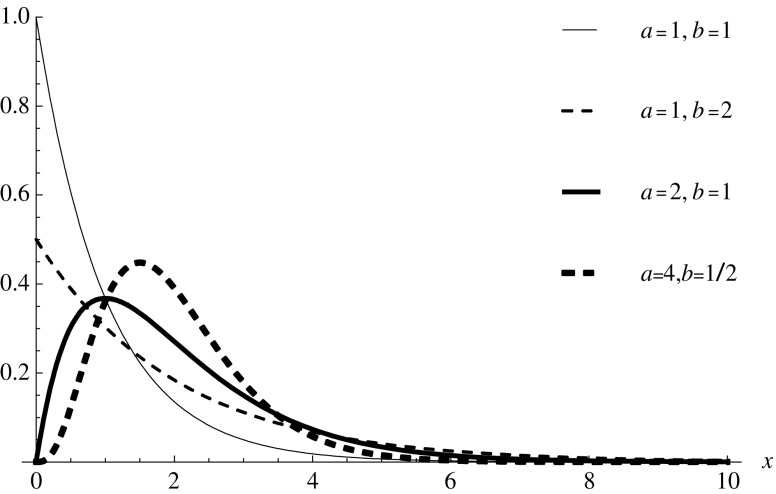
“We assume that individual learning rates μ follow a gamma distribution with density function f ðmÞ ¼ 1Γ ðaÞbama 1e m=b; ð2Þ with parameters a, b > 0, where Γ(a) is the gamma function.”
BackgroundAveraging learning curves across and within participants
Brown, S. D., & Heathcote, A. (2003) · Behavior Research Methods, Instruments, & Computers · doi:10.3758/bf03195493 · Cited by 125 · cited 1×
“These results corroborate the simulations studies by Brown and Heathcote (2003a) , who found that when averaging over exponential curves with high and low learning rates, a large variation in rates increased chances of finding spurious power function fits.”
ResultError Function and Fresnel Integrals
Levi, L. (2018) · CRC Press eBooks · doi:10.1201/9781351073134-3 · Cited by 105
The power law as an emergent property
Anderson, R. B. (2001) · Memory & Cognition · doi:10.3758/bf03195767 · Cited by 93 · cited 6×
“Anderson & Schooler, 1991; Newell & Rosenbloom, 1981; Wixted & Ebbesen, 1991). In its simplest form, a power function is a function of the shape P 1⁄4 tm, where μ is the learning (or forgetting) rate parameter, and t is number of learning episodes or time. P may refer to how accurate or how fast we carry out a learned…”
BackgroundMethodResultInfluentialA Bayesian analysis of retention functions
Lee, M. D. (2004) · Journal of Mathematical Psychology · doi:10.1016/j.jmp.2004.06.002 · Cited by 45 · cited 2×
“Our result is corroborated by a recent analysis (Lee, 2004) of over 200 forgetting studies taken from the literature, most of which average across participants.”
BackgroundResultWriting and overwriting short-term memory
Killeen, P. R. (2001) · Psychonomic Bulletin & Review · doi:10.3758/bf03196137 · Cited by 44
Bias in exponential and power function fits due to noise: Comment on Myung, Kim, and Pitt
Brown, S. D., & Heathcote, A. (2003) · Memory & Cognition · doi:10.3758/bf03196105 · Cited by 12 · cited 2×
“We will also ignore noise from sampling error, which tends to increase spurious power law fits (Brown & Heathcote, 2003b; Myung et al., 2000).”
BackgroundResult
Cited by
Replication and Analysis of Ebbinghaus’ Forgetting Curve
Murre, J. M. J., & Dros, J. (2015) · PLOS ONE · doi:10.1371/journal.pone.0120644 · Cited by 777
“As remarked by several authors investigating the shape of learning and forgetting [35,38,40], simply fitting sums of exponentials is expected to yield progressively better fits for the simple reasons that any function may be approximated by such a sum, which is related to the Laplace transformation.”
BackgroundSelf-citationUse of Response Time for Measuring Cognitive Ability
Kyllonen, P. C., & Zu, J. (2016) · Journal of Intelligence · doi:10.3390/jintelligence4040014 · Cited by 172
“An example is individual acquisition and decay rates based on the ubiquitous power law of practice [73–75].”
Vivot, A., Power, M. C., Glymour, M. M., Mayeda, E. R., Benitez, A., Spiro, A., Manly, J. J., Proust-Lima, C., Dufouil, C., & Gross, A. L. (2016) · American Journal of Epidemiology · doi:10.1093/aje/kwv212 · Cited by 122
A behavioral neuroenergetics theory of ADHD
Killeen, P. R., Russell, V. A., & Sergeant, J. A. (2013) · Neuroscience & Biobehavioral Reviews · doi:10.1016/j.neubiorev.2013.02.011 · Cited by 97
Fisher, J. S., & Radvansky, G. A. (2018) · Journal of Memory and Language · doi:10.1016/j.jml.2018.05.008 · Cited by 67
Metadata
- Authors
- Murre, J. M. J., & Chessa, A. G.
- Affiliations
- University of Amsterdam (NL)
- Corresponding author
- Murre, Jaap M. J.
- ORCID
- Murre, Jaap M. J.
- Venue
- Psychonomic Bulletin & Review
- Published
- 2011-04-06
- Volume
- 18
- Issue
- 3
- Pages
- 592-597
- ISSN
- 1069-9384 (ISSN-L)
- 1531-5320
- PMC
- PMC3098361
- OpenAlex
- W2009120796
- Semantic Scholar
- 573c71973a387ca3b7befef3917bc20d55199215
- Cited by
- 62
- References
- 20
- Citations by year
- 2026: 2 · 2025: 3 · 2024: 5 · 2023: 4 · 2022: 4 · 2021: 8 · 2020: 4 · 2019: 6 · 2018: 5 · 2017: 3 · 2016: 2 · 2015: 7 · 2014: 1 · 2013: 5 · 2012: 2
- FWCI
- 1.30
- Type
- journal article
- Language
- en
- Open access
- hybrid
- doi.org
- Licence
- cc-by-nc
- www.springer.com/tdm (tdm)
- Locations
- Psychonomic Bulletin & Review (publishedVersion, cc-by-nc)
- PubMed Central (publishedVersion, cc-by-nc)
- PubMed (publishedVersion)
- UvA-DARE (University of Amsterdam) (publishedVersion)
- Data Archiving and Networked Services (DANS) (submittedVersion)
- Funders
- Nederlandse Organisatie voor Wetenschappelijk Onderzoek
- Topics
- Life Sciences › Neuroscience › Cognitive Neuroscience › Memory Processes and Influences
- Life Sciences › Neuroscience › Cognitive Neuroscience › Motor Control and Adaptation
- Life Sciences › Neuroscience › Cognitive Neuroscience › Memory and Neural Mechanisms
- Keywords
- forgetting, individual differences, averaging functions, exponential function, gamma distribution, learning rate, mathematical proof, practice effects
- MeSH terms
- Data Interpretation, Statistical, Humans, Learning, Mathematics, Memory, Sample Size, Learning Curve
About these checks
Registry, retraction, Cites and statistics results are computed, not judged, with one exception: a printed reference that no index lists is read once by a model before it counts as a citation error. Claims are extracted by a model and kept only when their quote appears verbatim in the text; each cited source is then checked, with a model’s help, for whether it says what the claim relies on. Those verdicts can be wrong — read the claim’s quote and the cited source before relying on one.
Statistics and arithmetic are recomputed, not judged.
Confidence bands are shown only for fields calibrated on our annotated test set. None is calibrated yet, so no band is shown.
What counts as a claim ›How we measure confidence ›How we check this ›
Are you an author, or do you see a problem with this page? Request a review
Data sources
Bibliographic data: Semantic Scholar, OpenAlex, Crossref.
Contains information from the Semantic Scholar Academic Graph Datasets, made available under the ODC Attribution License (ODC-BY 1.0).
Semantic Scholar’s data is described in: Kinney, R., et al. (2023). The Semantic Scholar Open Data Platform. arXiv:2301.10140.
