

Should we all just take 10? A meta-analysis of wakeful rest
Open accessThe DOI matches its Crossref record; 65 of the 65 references it cites were found in a registry or an index; none of the 37 sources its claims cite is checked for support yet.
Abstract
According to previous research, if people rest quietly for a brief period of time after learning, they have better memory (i.e., reduced forgetting) after a delay compared to when they engage in a cognitively demanding task. We call this the wakeful rest effect . It has been observed with different kinds of study items, interference tasks, and delay intervals involving younger adults, older adults, and patients with amnesia. Despite the sometimes-presumed robustness of the effect, many studies have failed to observe significant results, particularly in healthy young adult populations. This random-effects meta-analysis combined 142 effect sizes from 51 studies to evaluate the evidence for the wakeful rest effect and to identify the sources of variation. Meta-regression was also done. As expected, there were larger effects for patient populations than for healthy populations, as well as weaker effects for younger than older adults. The results of this meta-analysis can inform further research on the potential benefits of wakeful rest.
Overview
CoChat Summary
TL;DR
This random-effects meta-analysis of 142 effect sizes from 51 studies finds a small but significant overall benefit of post-learning wakeful rest on memory, with larger effects in patients with amnesia and older adults than in younger/middle-aged adults. The authors conclude that memory efficiency modulates the wakeful rest effect, but heterogeneity and exploratory meta-regression limit certainty.
Key findings
- The overall pooled effect was g = 0.34 (95% CI: 0.26–0.43; p < .0001), with moderate to large heterogeneity (τ² = 0.13; I² = 63.0%) and a prediction interval from g = −0.37 to 1.06.
- Group differences were significant (p < .0001): patients with anterograde amnesia showed a very large effect (g = 1.18; 95% CI: 0.74–1.61), healthy older adults a smaller effect (g = 0.57; 95% CI: 0.40–0.74), and healthy young/middle-aged adults the smallest effect (g = 0.20; 95% CI: 0.12–0.27).
- Removing outliers changed estimates: for patients, removing two outliers increased the pooled effect to g = 1.35 (95% CI: 0.93–1.76) and reduced heterogeneity; for adults, removing nine outliers reduced the effect to g = 0.15 (95% CI: 0.09–0.21) and reduced I² to 10.5%.
- Exploratory meta-regression found publication year predicted smaller effects over time for patients (decrease of 0.08 per year) and adults (decrease of 0.03 per year); for older adults, immediate test and interference task moderated effects; for adults, learning modality, distractor task, test type, test modality, and publication year moderated effects.
Methods
- Random-effects meta-analysis of 142 effect sizes from 51 studies, using Hedges’ g as the standardized mean difference in memory between post-rest and post-interference conditions; models used REML estimation and the Knapp-Hartung adjustment.
- Literature search used Google Scholar with keywords such as wakeful rest and memory, post-encoding rest, and minimal-interference and memory, screening the first 200 citations per term plus reference searches; inclusion required declarative memory, human participants, and a minimal-interference period after learning compared with an interference condition.
- Moderator analysis compared patients, healthy older adults, and healthy young/middle-aged adults (children excluded because only four datasets explored that group); exploratory meta-regression tested 14 predictors individually, then used stepwise multiple meta-regression separately by group.
Limitations
- The paper states moderate to large between-study heterogeneity in all groups, especially patient studies, which also had small samples (as few as six participants per experiment), varied amnesia etiologies, and evidence of publication bias via Egger’s regression test for patients.
- The paper states the stepwise meta-regression approach may produce biased estimates and has multiple hypothesis testing issues, so the meta-regression findings should be viewed as preliminary and interpreted carefully.
- Evident from the text: many study characteristics were confounded with publication year, child data were excluded from analyses, and the authors note that younger adults may not have been resting as instructed, with no physiological stress/anxiety measures reported during rest or task periods.
Model-written summary. Check it against the paper before relying on it.
Integrity signals
Registry
Cites
Statistics
Figures
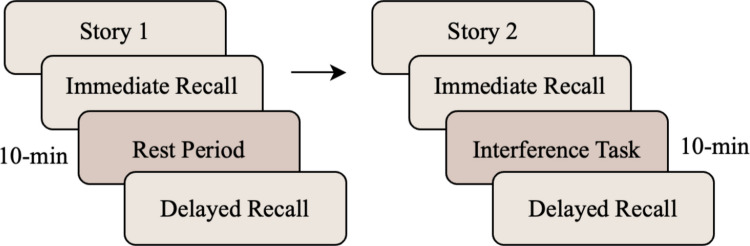
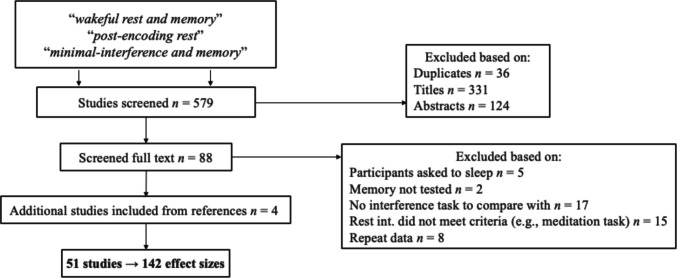
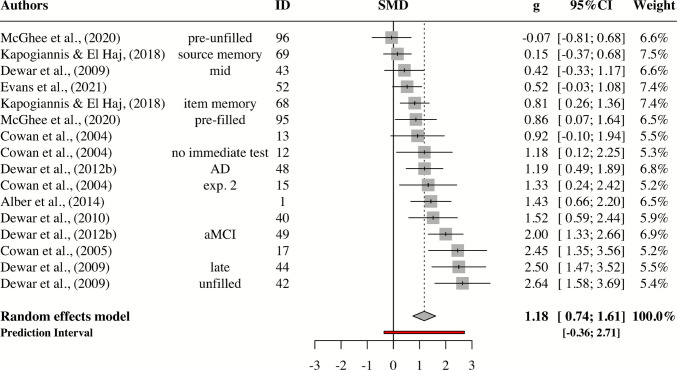
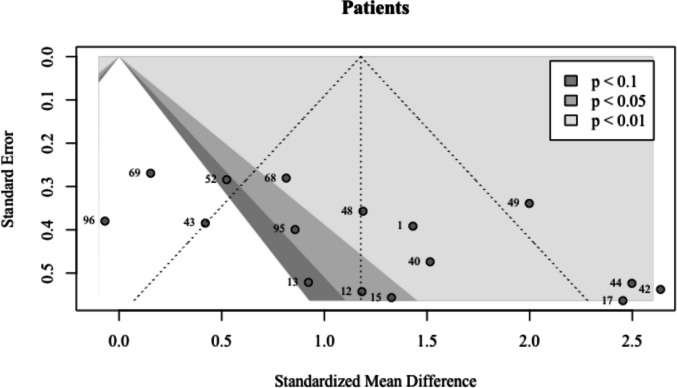
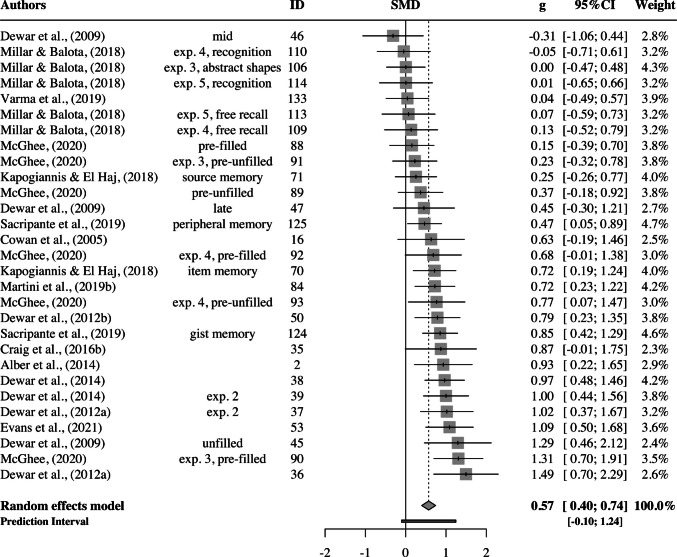
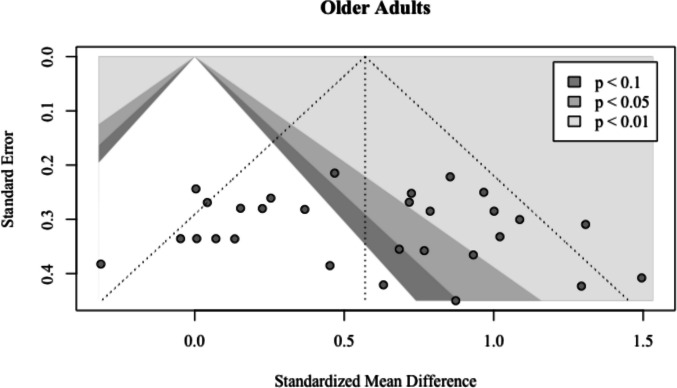
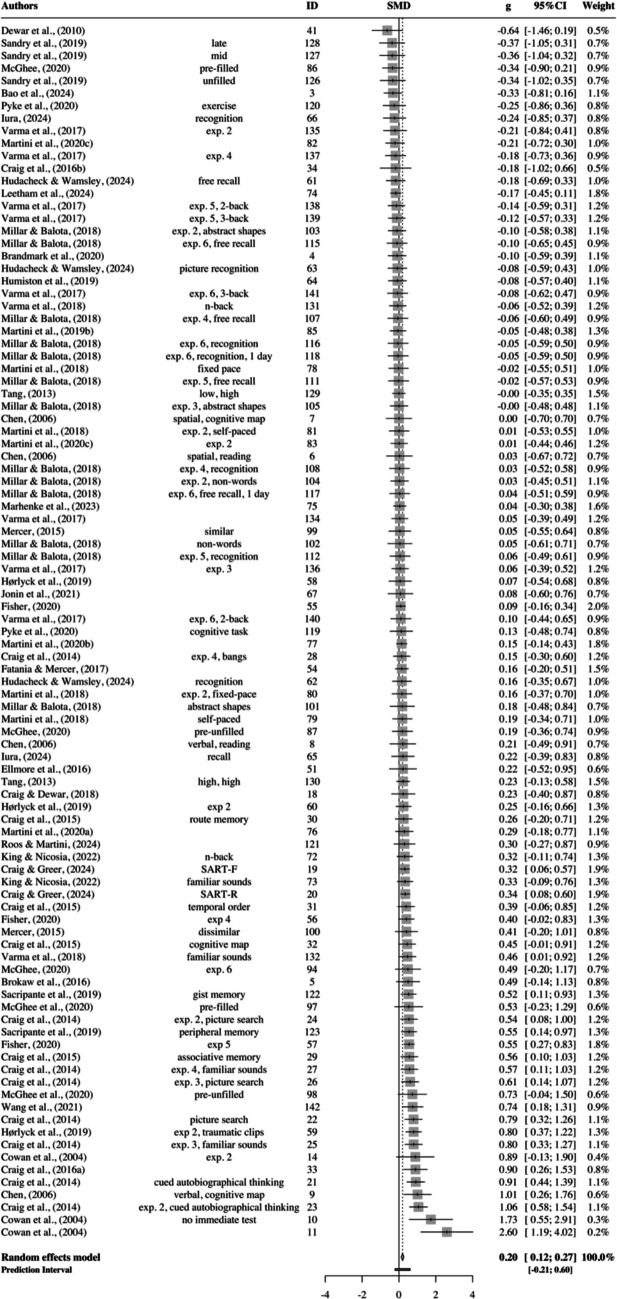
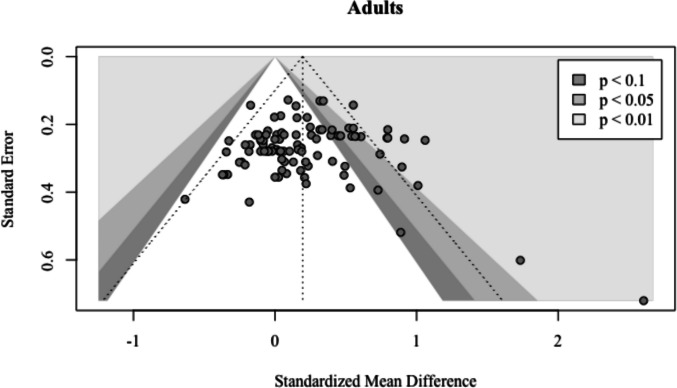
Verification
Claims the paper makes
0 Valid · 4 Not valid · 21 Not checked · 140 Own results and interpretations
A result the paper reports from its own data — it cites no other source for it, so there is none to check. The quote shows it is in the paper.
In the paper
“No effect sizes met any of the three criteria for influential points.”
§ Should we all just take 10? A meta-analysis of wakeful rest > Results > Patients
plainn = 16- Asserted: passes — The authors put it forward as true.
- Checkable: passes — It can be checked against evidence.
- Load-bearing: unclear — It is unclear whether the paper’s conclusions depend on it.
- Based: passes — The paper gives a reason why it holds.
A result the paper reports from its own data — it cites no other source for it, so there is none to check. The quote shows it is in the paper.
In the paper
“For patients, the pooled effect size was very large, g = 1.18; 95% CI: 0.74–1.61; p <.0001 (Fig. 3).”
§ Should we all just take 10? A meta-analysis of wakeful rest > Results > Patients
plainstates a causen = 16 ·- Asserted: passes — The authors put it forward as true.
- Checkable: passes — It can be checked against evidence.
- Load-bearing: passes — The paper’s conclusions depend on it.
- Based: passes — The paper gives a reason why it holds.
A result the paper reports from its own data — it cites no other source for it, so there is none to check. The quote shows it is in the paper.
In the paper
“As expected, there were larger effects for patient populations than for healthy populations, as well as weaker effects for younger than older adults.”
§ Should we all just take 10? A meta-analysis of wakeful rest > Abstract
plainstates an association- Asserted: passes — The authors put it forward as true.
- Checkable: passes — It can be checked against evidence.
- Load-bearing: passes — The paper’s conclusions depend on it.
- Based: passes — The paper gives a reason why it holds.
A result the paper reports from its own data — it cites no other source for it, so there is none to check. The quote shows it is in the paper.
In the paper
“The test for group differences (i.e., age and amnesia) was significant (p <.0001).”
§ Should we all just take 10? A meta-analysis of wakeful rest > Results > Meta-analysis
plainstates an association- Asserted: passes — The authors put it forward as true.
- Checkable: passes — It can be checked against evidence.
- Load-bearing: unclear — It is unclear whether the paper’s conclusions depend on it.
- Based: passes — The paper gives a reason why it holds.
A result the paper reports from its own data — it cites no other source for it, so there is none to check. The quote shows it is in the paper.
In the paper
“As expected, there were larger effects for patient populations than for healthy populations, as well as weaker effects for younger than older adults.”
§ Should we all just take 10? A meta-analysis of wakeful rest > Abstract
plainstates an association- Asserted: passes — The authors put it forward as true.
- Checkable: passes — It can be checked against evidence.
- Load-bearing: passes — The paper’s conclusions depend on it.
- Based: passes — The paper gives a reason why it holds.
88 more claims
Create a free account to see all 165 claims and to verify the 34 references still open.
- The quote only partly states this claim. 11
- It may state two separate claims as one. 47
- Probably not a substantial claim. 27
Statistics that don’t add up
Each reported p-value recomputed from its test statistic and degrees of freedom, each partial η² from its F, and each ratio, mean difference or B printed with a p checked against its own confidence interval.
Rated minor: it would not touch a result — a value no result rests on, a p-value that stays on the same side of the significance level, or a conflict that is clerical, resolved elsewhere in the paper, or outside its own findings.
In the paper
“t(89) = 0.02, p =.09”
§ Should we all just take 10? A meta-analysis of wakeful rest > Results > Exploratory meta-regression
Reported p = .09 · recomputed p = .984
Rated minor: it would not touch a result — a value no result rests on, a p-value that stays on the same side of the significance level, or a conflict that is clerical, resolved elsewhere in the paper, or outside its own findings.
In the paper
“F(1, 94) = 4.05, p =.02”
§ Should we all just take 10? A meta-analysis of wakeful rest > Results > Exploratory meta-regression
Reported p = .02 · recomputed p = .047
Rated minor: it would not touch a result — a value no result rests on, a p-value that stays on the same side of the significance level, or a conflict that is clerical, resolved elsewhere in the paper, or outside its own findings.
In the paper
“F(1,89) = 5.95, p =.004”
§ Should we all just take 10? A meta-analysis of wakeful rest > Results > Exploratory meta-regression
Reported p = .004 · recomputed p = .017
Statistics recomputed
Every reported test result, recomputed from its test statistic and degrees of freedom. A result shows as not adding up only once an independent check has confirmed it.
- Doesn’t add upF(1, 89) = 5.95reported p = .004 · recomputed p = .017
“F(1,89) = 5.95, p = .004”
- Doesn’t add upt(89) = 0.02reported p = .09 · recomputed p = .984
“t(89) = 0.02, p = .09”
- Doesn’t add upF(1, 94) = 4.05reported p = .02 · recomputed p = .047
“F(1, 94) = 4.05, p = .02”
- ConsistentF(1, 27) = 4.53reported p = .04 · recomputed p = .043
“F(1,27) = 4.53, p = .04”
- ConsistentF(1, 23) = 5.52reported p = .03 · recomputed p = .028
“F(1, 23) = 5.52, p = .03”
9 more recomputed tests
Create a free account to see every test the Stats check recomputed.
Self-check
Percentages, sums and reported differences re-computed from the paper’s own numbers.
Self-check results appear here once an independent check has confirmed them.
Citations
Cites
Bias in meta-analysis detected by a simple, graphical test
Egger, M., Smith, G. D., Schneider, M., & Minder, C. (1997) · BMJ · doi:10.1136/bmj.315.7109.629 · Cited by 56,722
Conducting Meta-Analyses in R with the metafor Package
Viechtbauer, W. (2010) · Journal of Statistical Software · doi:10.18637/jss.v036.i03 · Cited by 20,464
How to perform a meta-analysis with R: a practical tutorial
Balduzzi, S., Rücker, G., & Schwarzer, G. (2019) · Evidence Based Mental Health · doi:10.1136/ebmental-2019-300117 · Cited by 5,827
Distribution Theory for Glass's Estimator of Effect Size and Related Estimators
Hedges, L. V. (1981) · Journal of Educational Statistics · doi:10.2307/1164588 · Cited by 5,695 · cited 1×
“To avoid overestimating the effect size, Hedges’ g was used (Cheung & Vijayakumar, 2016; Hedges, 1981).”
The Nature of Recollection and Familiarity: A Review of 30 Years of Research
Yonelinas, A. P. (2002) · Journal of Memory and Language · doi:10.1006/jmla.2002.2864 · Cited by 3,840
Improved tests for a random effects meta‐regression with a single covariate
Knapp, G., & Hartung, J. (2003) · Statistics in Medicine · doi:10.1002/sim.1482 · Cited by 2,075
Sleep-dependent memory consolidation
Stickgold, R. (2005) · Nature · doi:10.1038/nature04286 · Cited by 1,857
Doing Meta-Analysis with R: A Hands-On Guide
Harrer, M., Cuijpers, P., Furukawa, T. A., & Ebert, D. D. (2021) · doi:10.1201/9781003107347 · Cited by 1,850
Bias and Efficiency of Meta-Analytic Variance Estimators in the Random-Effects Model
Viechtbauer, W. (2005) · Journal of Educational and Behavioral Statistics · doi:10.3102/10769986030003261 · Cited by 1,699
The Neurobiology of Consolidations, Or, How Stable is the Engram?
Dudai, Y. (2004) · Annual Review of Psychology · doi:10.1146/annurev.psych.55.090902.142050 · Cited by 1,671
Why do we still use stepwise modelling in ecology and behaviour?
WHITTINGHAM, M. J., STEPHENS, P. A., BRADBURY, R. B., & FRECKLETON, R. P. (2006) · Journal of Animal Ecology · doi:10.1111/j.1365-2656.2006.01141.x · Cited by 1,520
Hippocampal synaptic enhancement and information storage within a distributed memory system
McNaughton, B. L., & Morris, R. G. M. (1987) · Trends in Neurosciences · doi:10.1016/0166-2236(87)90011-7 · Cited by 1,304
Disruption of ripple‐associated hippocampal activity during rest impairs spatial learning in the rat
Ego‐Stengel, V., & Wilson, M. A. (2010) · Hippocampus · doi:10.1002/hipo.20707 · Cited by 842
Underwood, B. J. (1957) · Psychological Review · doi:10.1037/h0044616 · Cited by 818
Kudrimoti, H. S., Barnes, C. A., & McNaughton, B. L. (1999) · The Journal of Neuroscience · doi:10.1523/jneurosci.19-10-04090.1999 · Cited by 753 · cited 1×
“Sharp-wave ripples (SWRs), for instance, co-occur with hippocampal reactivation and seem to be related to memory performance (Kudrimoti et al., 1999).”
Marrosu, F., Portas, C., Mascia, M. S., Casu, M. A., Fà, M., Giagheddu, M., Imperato, A., & Gessa, G. L. (1995) · Brain Research · doi:10.1016/0006-8993(94)01399-3 · Cited by 480 · cited 1×
“For instance, reduced levels of acetylcholine were present during wakeful rest in cats, in contrast to active wake conditions (Marrosu et al., 1995).”
Ripples in the medial temporal lobe are relevant for human memory consolidation
Axmacher, N., Elger, C. E., & Fell, J. (2008) · Brain · doi:10.1093/brain/awn103 · Cited by 372 · cited 1×
“In rodents, blocking SWRs hinders memory (Ego-Stengel & Wilson, 2010); in humans, ripples predict later memory (Axmacher et al., 2008).”
The Critical Role of Sleep Spindles in Hippocampal-Dependent Memory: A Pharmacology Study
Mednick, S. C., McDevitt, E. A., Walsh, J. K., Wamsley, E., Paulus, M., Kanady, J. C., & Drummond, S. P. A. (2013) · The Journal of Neuroscience · doi:10.1523/jneurosci.3127-12.2013 · Cited by 317
An opportunistic theory of cellular and systems consolidation
Mednick, S. C., Cai, D. J., Shuman, T., Anagnostaras, S., & Wixted, J. T. (2011) · Trends in Neurosciences · doi:10.1016/j.tins.2011.06.003 · Cited by 267
A Guide to Conducting a Meta-Analysis
Cheung, M. W.-L., & Vijayakumar, R. (2016) · Neuropsychology Review · doi:10.1007/s11065-016-9319-z · Cited by 239 · cited 1×
“To avoid overestimating the effect size, Hedges’ g was used (Cheung & Vijayakumar, 2016; Hedges, 1981).”
Brief Wakeful Resting Boosts New Memories Over the Long Term
Dewar, M., Alber, J., Butler, C., Cowan, N., & Della Sala, S. (2012) · Psychological Science · doi:10.1177/0956797612441220 · Cited by 221
How memory replay in sleep boosts creative problem-solving
Lewis, P. A., Knoblich, G., & Poe, G. (2018) · Trends in Cognitive Sciences · doi:10.1016/j.tics.2018.03.009 · Cited by 210 · cited 1×
“Sleep research has found a relationship between consolidation and creativity (Lewis et al., 2018), which should be explored using wake-ful rest.”
Ally, B. A., Hussey, E. P., Ko, P. C., & Molitor, R. J. (2013) · Hippocampus · doi:10.1002/hipo.22162 · Cited by 156
Aging and recognition memory: A meta-analysis.
Fraundorf, S. H., Hourihan, K. L., Peters, R. A., & Benjamin, A. S. (2019) · Psychological Bulletin · doi:10.1037/bul0000185 · Cited by 152
Dewar, M., Alber, J., Cowan, N., & Della Sala, S. (2014) · PLoS ONE · doi:10.1371/journal.pone.0109542 · Cited by 127
Offline memory consolidation during waking rest
Wamsley, E. J. (2022) · Nature Reviews Psychology · doi:10.1038/s44159-022-00072-w · Cited by 97
Hermans, E. J., Kanen, J. W., Tambini, A., Fernández, G., Davachi, L., & Phelps, E. A. (2016) · Cerebral Cortex · doi:10.1093/cercor/bhw145 · Cited by 93
Delaying interference enhances memory consolidation in amnesic patients.
Dewar, M., Garcia, Y. F., Cowan, N., & Sala, S. D. (2009) · Neuropsychology · doi:10.1037/a0015568 · Cited by 81
Craig, M., Dewar, M., Della Sala, S., & Wolbers, T. (2015) · Hippocampus · doi:10.1002/hipo.22424 · Cited by 67
Verbal recall in amnesiacs under conditions of diminished retroactive interference.
Cowan, N. (2004) · Brain · doi:10.1093/brain/awh107 · Cited by 67
Fisher, J. S., & Radvansky, G. A. (2018) · Journal of Memory and Language · doi:10.1016/j.jml.2018.05.008 · Cited by 67
Self-citationCowan, N., Beschin, N., Perini, M., & Della Sala, S. (2005) · Memory · doi:10.1080/09658210344000387 · Cited by 64
Wakeful rest promotes the integration of spatial memories into accurate cognitive maps
Craig, M., Dewar, M., Harris, M. A., Della Sala, S., & Wolbers, T. (2016) · Hippocampus · doi:10.1002/hipo.22502 · Cited by 62
Spindle-locked ripples mediate memory reactivation during human NREM sleep
Schreiner, T., Griffiths, B., Kutlu, M., Vollmar, C., Kaufmann, E., Quach, S., Rémi, J., Noachtar, S., & Staudigl, T. (2024) · Nature Communications · doi:10.1038/s41467-024-49572-8 · Cited by 60
Sadek, J. R., The San Diego HIV Neurobehavioral Research Center Group, Johnson, S. A., White, D. A., Salmon, D. P., Taylor, K. I., DeLaPena, J. H., Paulsen, J. S., Heaton, R. K., & Grant, I. (2004) · Neuropsychology · doi:10.1037/0894-4105.18.4.692 · Cited by 60
Profound retroactive interference in anterograde amnesia: What interferes?
Dewar, M., Sala, S. D., Beschin, N., & Cowan, N. (2010) · Neuropsychology · doi:10.1037/a0018207 · Cited by 59
Resting States and Memory Consolidation: A Preregistered Replication and Meta-Analysis
Humiston, G. B., Tucker, M. A., Summer, T., & Wamsley, E. J. (2019) · Scientific Reports · doi:10.1038/s41598-019-56033-6 · Cited by 57
Autobiographical thinking interferes with episodic memory consolidation
Craig, M., Della Sala, S., & Dewar, M. (2014) · PLoS ONE · doi:10.1371/journal.pone.0093915 · Cited by 55
Rest-related consolidation protects the fine detail of new memories
Craig, M., & Dewar, M. (2018) · Scientific Reports · doi:10.1038/s41598-018-25313-y · Cited by 54
Wang, S. Y., Baker, K. C., Culbreth, J. L., Tracy, O., Arora, M., Liu, T., Morris, S., Collins, M. B., & Wamsley, E. J. (2021) · Learning & Memory · doi:10.1101/lm.053330.120 · Cited by 53
Comparable rest-related promotion of spatial memory consolidation in younger and older adults
Craig, M., Wolbers, T., Harris, M. A., von Hauff, P., Sala, S. D., & Dewar, M. (2016) · Neurobiology of Aging · doi:10.1016/j.neurobiolaging.2016.08.007 · Cited by 48
Dewar, M., Pesallaccia, M., Cowan, N., Provinciali, L., & Della Sala, S. (2012) · Brain and Cognition · doi:10.1016/j.bandc.2011.12.005 · Cited by 45
Non-Interfering Effects of Active Post-Encoding Tasks on Episodic Memory Consolidation in Humans
Varma, S., Takashima, A., Krewinkel, S., van Kooten, M., Fu, L., Medendorp, W. P., Kessels, R. P. C., & Daselaar, S. M. (2017) · Frontiers in Behavioral Neuroscience · doi:10.3389/fnbeh.2017.00054 · Cited by 44
Stability of ripple events during task engagement in human hippocampus
Chen, Y., Aponik-Gremillion, L., Bartoli, E., Yoshor, D., Sheth, S. A., & Foster, B. L. (2021) · Cell Reports · doi:10.1016/j.celrep.2021.109304 · Cited by 38
Wakeful rest alleviates interference-based forgetting
Mercer, T. (2015) · Memory · doi:10.1080/09658211.2013.872279 · Cited by 38
Minimizing interference with early consolidation boosts 7-day retention in amnesic patients.
Alber, J., Della Sala, S., & Dewar, M. (2014) · Neuropsychology · doi:10.1037/neu0000091 · Cited by 35
Varma, S., Daselaar, S. M., Kessels, R. P. C., & Takashima, A. (2018) · PLOS ONE · doi:10.1371/journal.pone.0201780 · Cited by 29
Sacripante, R., McIntosh, R. D., & Sala, S. D. (2019) · Neuroscience Letters · doi:10.1016/j.neulet.2019.04.026 · Cited by 25
Martini, M., Martini, C., Bernegger, C., & Sachse, P. (2019) · British Journal of Developmental Psychology · doi:10.1111/bjdp.12267 · Cited by 24
Effects of post-encoding wakeful rest and study time on long-term memory performance
Martini, M., Martini, C., Maran, T., & Sachse, P. (2018) · Journal of Cognitive Psychology · doi:10.1080/20445911.2018.1506457 · Cited by 23
Wakeful resting and memory retention: a study with healthy older and younger adults
Martini, M., Zamarian, L., Sachse, P., Martini, C., & Delazer, M. (2019) · Cognitive Processing · doi:10.1007/s10339-018-0891-4 · Cited by 21
Martini, M., Martini, C. L., & Sachse, P. (2019) · Current Psychology · doi:10.1007/s12144-019-0156-0 · Cited by 17
Brief wakeful resting can eliminate directed forgetting
Schlichting, A., & Bäuml, K. T. (2016) · Memory · doi:10.1080/09658211.2016.1153659 · Cited by 16
Effects of wakeful resting versus social media usage after learning on the retention of new memories
Martini, M., Heinz, A., Hinterholzer, J., Martini, C., & Sachse, P. (2020) · Applied Cognitive Psychology · doi:10.1002/acp.3641 · Cited by 16
Martini, M., Marhenke, R., Martini, C. L., Rossi, S., & Sachse, P. (2020) · Scientific Reports · doi:10.1038/s41598-020-74760-z · Cited by 15
Wakeful rest compared to vigilance reduces intrusive but not deliberate memory for traumatic videos
Hørlyck, L. D., Bisby, J. A., King, J. A., & Burgess, N. (2019) · Scientific Reports · doi:10.1038/s41598-019-49634-8 · Cited by 14
Nonspecific Retroactive Interference in Children and Adults
Fatania, J., & Mercer, T. (2017) · Advances in Cognitive Psychology · doi:10.5709/acp-0231-6 · Cited by 13
Leetham, E., Watermeyer, T., & Craig, M. (2024) · PLoS ONE · doi:10.1371/journal.pone.0290811 · Cited by 9
Wakeful rest benefits before and after encoding in anterograde amnesia.
McGhee, J., Cowan, N., Beschin, N., Mosconi, C., & Sala, S. D. (2020) · Neuropsychology · doi:10.1037/neu0000631 · Cited by 7
Kapogiannis, D., & Haj, M. E. (2018) · Current Alzheimer Research · doi:10.2174/1567205015666180711105242 · Cited by 6
A Brief Period of Wakeful Rest after Learning Enhances Verbal Memory in Stroke Survivors
Evans, F. A., Stolwyk, R. J., & Wong, D. (2021) · Journal of the International Neuropsychological Society · doi:10.1017/s1355617720001307 · Cited by 4
Consolidation of emotional memory during waking rest depends on trait anxiety
Hudachek, L., & Wamsley, E. J. (2024) · Neurobiology of Learning and Memory · doi:10.1016/j.nlm.2024.107940 · Cited by 3
Interference-based accounts of forgetting via studies of minimal interference
McGhee, J. (2020) · ERA · doi:10.7488/era/296 · Cited by 2
Associative Memory Performance Following Periods of Wakeful Rest and Technological Distraction
Carlson, C. (2018) · San José State University ScholarWorks (San Jose State University) · doi:10.31979/etd.28cp-n8p9 · Cited by 1
(2020) · Wolverhampton Intellectual Repository and E-Theses (University of Wolverhampton)
Cited by
Seban, P., Šikl, R., Prošek, ., & Urban, K. (2026) · Psychological Research · doi:10.1007/s00426-026-02265-x · Cited by 3
Distinct roles of brain network flexibility in motor learning across age
Uehara, K., Hagihara, M., & Kitajo, K. (2026) · Imaging Neuroscience · doi:10.1162/imag.a.1359
Metadata
- Authors
- Parra, D., Zhang, Z., & Radvansky, G.
- Affiliations
- University of Notre Dame (US)
- Corresponding author
- Parra, Daniela
- Venue
- Psychonomic Bulletin & Review
- Published
- 2026-01
- Volume
- 33
- Issue
- 1
- Pages
- 49-49
- ISSN
- 1069-9384 (ISSN-L)
- 1531-5320
- PMC
- PMC12808189
- OpenAlex
- W7124417703
- Semantic Scholar
- 57e1f2fed85c9b4da052c0352c9df7a5f80a9483
- Cited by
- 2
- References
- 65
- Citations by year
- 2026: 2
- FWCI
- 1.33
- Type
- journal article
- Language
- en
- Open access
- hybrid
- doi.org
- Licence
- cc-by
- creativecommons.org/licenses/by/4.0 (tdm)
- creativecommons.org/licenses/by/4.0 (vor, 14 d)
- Locations
- Psychonomic Bulletin & Review (publishedVersion, cc-by)
- PubMed Central (publishedVersion, cc-by)
- PubMed (publishedVersion)
- Funders
- National Science Foundation Graduate Research Fellowship Program (2236418)
- Topics
- Life Sciences › Neuroscience › Cognitive Neuroscience › Memory Processes and Influences
- Life Sciences › Neuroscience › Cognitive Neuroscience › Sleep and Wakefulness Research
- Life Sciences › Neuroscience › Cognitive Neuroscience › Memory and Neural Mechanisms
- Keywords
- wakeful rest, memory consolidation, forgetting, cognitive interference, amnesia, aging, healthy young adults, meta-regression
- MeSH terms
- Adult, Aged, Amnesia, Humans, Memory, Rest, Wakefulness, Young Adult
About these checks
Registry, retraction, Cites and statistics results are computed, not judged, with one exception: a printed reference that no index lists is read once by a model before it counts as a citation error. Claims are extracted by a model and kept only when their quote appears verbatim in the text; each cited source is then checked, with a model’s help, for whether it says what the claim relies on. Those verdicts can be wrong — read the claim’s quote and the cited source before relying on one.
A language model drew the claims from the paper on 2026-11-24, under version 3 of the claim definition (model deepseek-v4.1-flash, prompt extract-v3).
A second model labelled each claim on 2026-11-24 (model jev-1.13-20260917, definition revision gold-guideline-v0.2).
Statistics and arithmetic are recomputed, not judged.
Confidence bands are shown only for fields calibrated on our annotated test set. None is calibrated yet, so no band is shown.
What counts as a claim ›How we measure confidence ›How we check this ›
Are you an author, or do you see a problem with this page? Request a review
Data sources
Bibliographic data: Semantic Scholar, OpenAlex, Crossref.
Contains information from the Semantic Scholar Academic Graph Datasets, made available under the ODC Attribution License (ODC-BY 1.0).
Semantic Scholar’s data is described in: Kinney, R., et al. (2023). The Semantic Scholar Open Data Platform. arXiv:2301.10140.
