

The DOI matches its Crossref record; 40 of the 42 references it cites were found in a registry or an index.
semPower: General power analysis for structural equation models
Open accessAbstract
Structural equation modeling (SEM) is a widespread and commonly used approach to test substantive hypotheses in the social and behavioral sciences. When performing hypothesis tests, it is vital to rely on a sufficiently large sample size to achieve an adequate degree of statistical power to detect the hypothesized effect. However, applications of SEM rarely consider statistical power in informing sample size considerations or determine the statistical power for the focal hypothesis tests performed. One reason is the difficulty in translating substantive hypotheses into specific effect size values required to perform power analyses, as well as the lack of user-friendly software to automate this process. The present paper presents the second version of the R package semPower which includes comprehensive functionality for various types of power analyses in SEM. Specifically, semPower 2 allows one to perform both analytical and simulated a priori, post hoc, and compromise power analysis for structural equation models with or without latent variables, and also supports multigroup settings and provides user-friendly convenience functions for many common model types (e.g., standard confirmatory factor analysis [CFA] models, regression models, autoregressive moving average [ARMA] models, cross-lagged panel models) to simplify power analyses when a model-based definition of the effect in terms of model parameters is desired.
Overview
The claims and statistics of this paper haven’t been checked yet.
Run the check — free, no account needed. It reads the open-access text and checks the sources it cites.
Integrity signals
Registry
Cites
Statistics
Figures
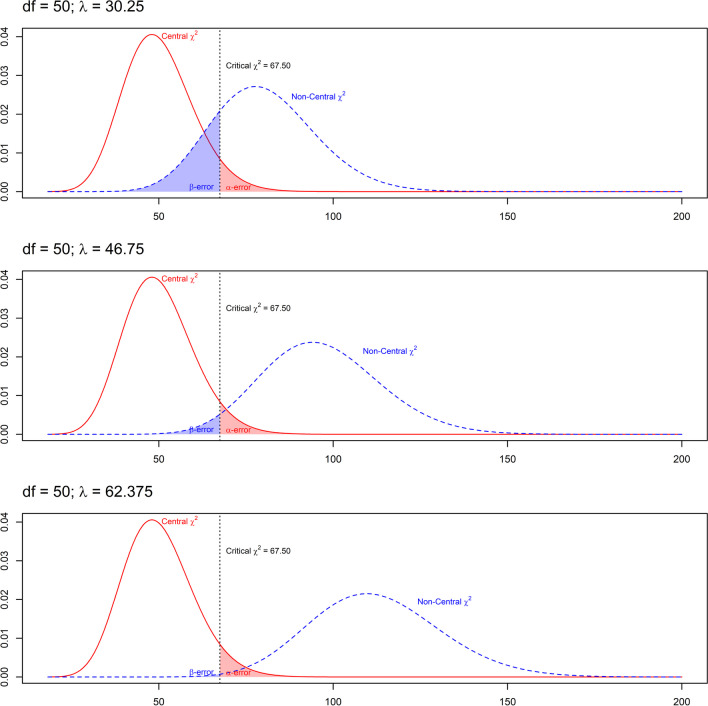
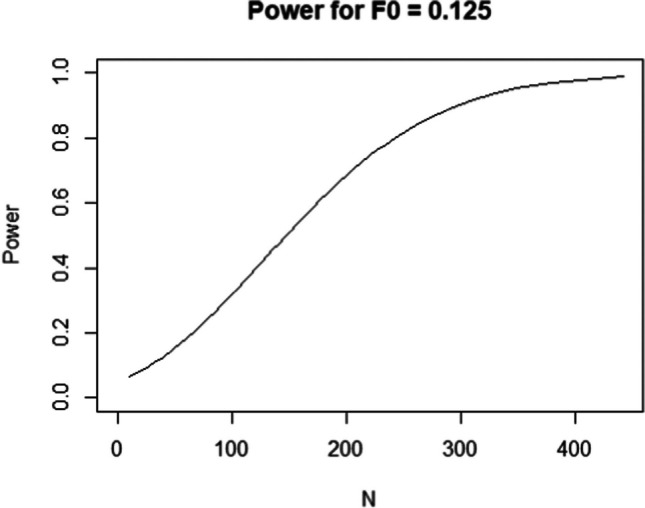
Verification
Claims the paper makes
The claims and statistics of this paper haven’t been checked yet.
Run the check — free, no account needed. It reads the open-access text and checks the sources it cites.
Claims other papers make about this one
Each is checked against this paper’s own text: does it say what the citing paper says it does?
The source backs part of the claim, not all of it — or backs it for a different population, condition or comparison.
In the citing paper
“Based on these parameters, the minimum required sample size was estimated at 342 participants [29].”
From Psychological inflexibility mediates the relationship between mindfulness and psychological distress in Peruvian parents with school age children. (2026) · cites this paper as [29]
Experimental — accuracy not yet measured
Self-check
Percentages, sums and reported differences re-computed from the paper’s own numbers.
The self-check needs the paper’s full text.
Citations
Cites
Faul, F., Erdfelder, E., Lang, A.-G., & Buchner, A. (2007) · Behavior Research Methods · doi:10.3758/bf03193146 · Cited by 65,971 · cited 2×
“In a power analysis, one of these quantities is computed as a function of the other quantities, giving rise to different types of power analyses (Faul et al., 2007).”
BackgroundMethodlavaan : An R Package for Structural Equation Modeling
Rosseel, Y. (2012) · Journal of Statistical Software · doi:10.18637/jss.v048.i02 · Cited by 27,955 · cited 1×
“…the model implementing the null hypothesis of interest is then fitted to the population variance–covariance matrix using the lavaan package (Rosseel, 2012), so that the population minimum F 0 along with the resulting model-implied variance covariance matrix ( ̂ 𝚺 ) and mean vector ( ̂ 𝛍…”
MethodEvaluating Goodness-of-Fit Indexes for Testing Measurement Invariance
Cheung, G. W., & Rensvold, R. B. (2002) · Structural Equation Modeling: A Multidisciplinary Journal · doi:10.1207/s15328007sem0902_5 · Cited by 16,280 · cited 1×
“For example, it has been suggested that a decline of ≥ .02 in the Mc associated with a metric in comparison to a configural invariance model may be considered a meaningful departure from measurement invariance (Cheung & Rensvold, 2002).”
BackgroundPower analysis and determination of sample size for covariance structure modeling.
MacCallum, R. C., Browne, M. W., & Sugawara, H. M. (1996) · Psychological Methods · doi:10.1037/1082-989x.1.2.130 · Cited by 10,418 · cited 2×
“…of a measure that shows a direct relation to the non-centrality parameter, which is afforded by all non-centrality-based measures of fit such as the minimum of the employed fitting function itself or derived indices such as the RMSEA (because F 0 = df ∙ RMSEA 2 ; e.g., MacCallum et al., 1996).”
MethodCurran, P. J., West, S. G., & Finch, J. F. (1996) · Psychological Methods · doi:10.1037/1082-989x.1.1.16 · Cited by 5,512 · cited 1×
“When the comparison is performed against the saturated model, however, simulated power is often higher as a consequence of the well-documented positive bias of the model test when the assumptions are violated (e.g., Curran et al., 1996; Moshagen, 2012).”
MethodHow to Use a Monte Carlo Study to Decide on Sample Size and Determine Power
Muthén, L. K., & Muthén, B. O. (2002) · Structural Equation Modeling: A Multidisciplinary Journal · doi:10.1207/s15328007sem0904_8 · Cited by 2,362
Reporting practices in confirmatory factor analysis: an overview and some recommendations
Jackson, D. L., Gillaspy, J. A., & Purc-Stephenson, R. (2009) · Psychological Methods · doi:10.1037/a0014694 · Cited by 2,242 · cited 8×
“Existing tools providing analytical power analyses specifically for SEM (e.g., MacCallum et al., 1996, 2006; Preacher & Coffman, 2006) require provision of a non-centrality-based measure of effect such as the RMSEA and are thus limited to a model-free approach.”
BackgroundInfluentialAsymptotically distribution-free methods for the analysis of covariance structures.
Browne, M. (1984) · British Journal of Mathematical & Statistical Psychology · doi:10.1111/j.2044-8317.1984.tb00789.x · Cited by 1,890 · cited 2×
“If the H0 model is correct, assuming multivariate normality, a sufficiently large sample size, and several mild regularity conditions (Browne, 1984; Yuan & Bentler, 2007), (1)”
MethodYuan, K.-H., & Bentler, P. (2000) · Sociological Methodology · doi:10.1111/0081-1750.00078 · Cited by 1,847 · cited 1×
“…= list(estimator = ' mlr ' ) leads to a simulated power estimate relying on a corrected test statistic that is asymptotically equivalent to the Yuan & Bentler (2000) statistic, whereas the analytic power estimate is still based on the asymptotically expected distributions based on ML.…”
Determining power and sample size for simple and complex mediation models
Schoemann, A. M., Boulton, A. J., & Short, S. D. (2017) · Social Psychological and Personality Science · doi:10.1177/1948550617715068 · Cited by 1,837 · cited 1×
“…approaches to statistical power necessarily allow for a model-based definition of the effect of interest, most existing tools implement post hoc power analyses only and are typically limited to particular model types (Kievit et al., 2018; Mulder, 2022; Schoemann et al., 2017; Zhang & Liu, 2018).”
Method
Research works printed but not linked: 3
- Saris, W. E., & Satorra, A. (1993). Power evaluations in structural equation models. In K. A. Bollen & J. S. Long (Eds.), Testing structural equation models (154th ed., pp. 181–204). Sage.
- Satorra, A., & Saris, W. E. (1983). The accuracy of a procedure for calculating the power of the likelihood ratio test as used within the LISREL framework. In C. O. Middendorp (Ed.), Sociometric research (pp. 129–190). Sociometric Research Foundation.
- Zhang, Z., & Yuan, K.-H. (2018). Practical statistical power analysis using Webpower and R. Isdsa Press. · DOI
Cited by
Sorted by citations
Items 201–289 of 289
Empathy and suicide-related stigma among emerging adults: A structural equation modeling study.
Copelo-Cristóbal, E., Cárdenas-Román, M., Muñoz-Najar, A., & Rodríguez-Rivas, M. E. (2026) · Death Studies · doi:10.1080/07481187.2026.2716615
Rice, K., Banner, S., Clark, J. C., Shelley, J., Rock, A., Sheen, J., Murray, C. V., Farrell, H., Jefferys, A., Schutte, N., et al. (2026) · Australian journal of psychology · doi:10.1080/00049530.2026.2705449
Aunillah, T., & Wachdijono (2026) · Indonesian Journal of Advanced Research · doi:10.55927/ijar.v5i8.16896
“This hypothesis test is useful to statistically strengthen the findings, so that they can provide stronger theoretical and technical recommendations (Moshagen & Bader, 2024).”
Cappella, M. T., Rossi, E., & Blasi, E. (2026) · Supply Chain Management · doi:10.1108/scm-12-2025-1269
Sánchez-Álvarez, N. (2026) · Journal of Affective Disorders · doi:10.1016/j.jad.2026.121793
Luo, M., Zhang, S.-W., Griebel, A., Wang, S., Luo, Q., Yang, L., & Zhang, Q. (2026) · Journal of Hydrology: Regional Studies · doi:10.1016/j.ejrh.2026.103605
Liu, L., & Liu, Y. (2026) · Journal of Construction Engineering and Management · doi:10.1061/jcemd4.coeng-18271
Murono, N., Okamoto, R., Nakada, Y., Ikeuchi, S., Takahashi, Y., Kumakura, R., Yonezawa, H., Tsukada, H., & Omote, S. (2026) · Journal of Occupational Health · doi:10.1093/joccuh/uiag039
“An a priori power analysis using semPower 2 , 35 based on root mean square error of approximation (RMSEA) = 0.05, α = .05, power = 0.90, df = 170, and 21 manifest variables, indicated a required sample size of 147; the actual sample size was 528.”
InfluentialSasmayunita, S., Sultan, S., Mantasiah, M., Sakaria, S., & Setialaksana, W. (2026) · Learning Environments Research · doi:10.1007/s10984-026-09591-2
Sprouts of literacy: The longitudinal prediction of early morphological awareness skills in French
Ardanouy, E., Zesiger, P., Delage, H., & Lefèvre, É. (2026) · Applied Psycholinguistics · doi:10.1017/s0142716426100721
Dada, K. S. J. (2026) · International Journal of Educational Qualitative Quantitative Research · doi:10.58418/ijeqqr.v5i1.224 · Cited by 1
“This sample size exceeds conventional minimum recommendations for survey research and provides adequate statistical power for multivariate analyses, consistent with contemporary methodological guidance on sample size determination (Moshagen & Bader, 2023).”
Irmawati, I., Ardiansyah, M., Supardi, R., & Setialaksana, W. (2026) · Journal of Applied Research in Higher Education · doi:10.1108/jarhe-12-2025-1074
Development and validation of the individual and social music listening scale (ISMUS-LI)
Ansani, A., Kreutz, G., & Saarikallio, S. (2026) · Personality and Individual Differences · doi:10.1016/j.paid.2026.113736
Hamel, J., Caesens, G., & Scrima, F. (2026) · Baltic Journal of Management · doi:10.1108/bjm-12-2025-1062
Cognitive and motivational factors of argument evaluation
Berkle, Y., Wambsganß, T., Janson, A., Leimeister, J. M., & Leuchter, M. (2026) · Trends in Neuroscience and Education · doi:10.1016/j.tine.2026.100294
Balogh, B., Magony, L., Kovacs, L., Péteri, M., Salamon, J., & Kun, Á. (2026) · International Journal of Applied Positive Psychology · doi:10.1007/s41042-026-00307-8
Yildiz, C., Öz, S., Kasap, E. U., Korkmaz, I., & Köse, A. (2026) · Research in Nursing and Health · doi:10.1002/nur.70090
Early life adversity is associated with mental health and life histories through short-term mindsetsPreprint
Farkas, B. C., Wyart, V., & Jacquet, P. O. (2026) · bioRxiv (Cold Spring Harbor Laboratory) · doi:10.64898/2026.06.04.730040
“Minimum sample size was determined through an a priori model-based power analysis of our focal hypothesis using the semPower R package (Moshagen & Bader, 2023).”
Alsubiheen, A., Aldaihan, M. M., & Alnahdi, A. (2026) · Journal of Clinical Medicine · doi:10.3390/jcm15124527
“The required sample size to conduct CFA of the RMDQ was determined utilizing the semPower.aPriori function within the semPower R package (version 2.1.3) [39].”
InfluentialAcharya, C. N., Chaiyakot, P., & Yuangyai, N. (2026) · Social Sciences & Humanities Open · doi:10.1016/j.ssaho.2026.102730
Qian, Y., Song, Y.-A., & Kim, Y. (2026) · Journal of Current Issues & Research in Advertising · doi:10.1080/10641734.2026.2670644
Ma, Y., Cui, Y.-H., Gao, J.-J., Wen, F., Yan, J., Sun, M.-M., Duan, H.-M., & Song, N. (2026) · Psychology Research and Behavior Management · doi:10.2147/prbm.s611629
“14 In the present study, 5 demographic variables and 11 scale-derived observed variables were included, resulting in a total of 16 observed variables and an estimated required sample size of 160–320 participants.”
Immersed in negativity: Introducing collective rumination in teams
Georganta, E., Stracke, S., Knipfer, K., & Peus, C. V. (2026) · Applied Psychology · doi:10.1111/apps.70114
Effendy, J. A., Utami, C. W., Herdinata, C., & Kodrat, D. S. (2026) · IJORER : International Journal of Recent Educational Research · doi:10.46245/ijorer.v7i3.1271
Ageing mindfully: exploration of a conceptual model targeting anxiety about ageing in midlife
Wiedenhöfer, J., Resch, A., Radloff, M., Maurer, L., & Jenull, B. (2026) · Aging & Mental Health · doi:10.1080/13607863.2026.2672095
“We conducted a post-hoc power analysis using the R package ‘semPower’ to determine the ability to detect misspecifications (Moshagen & Bader, 2024).”
Brown, M. K., & Johnsen, S. Å. K. (2026) · Organization & Environment · doi:10.1177/10860266261444989
Ding, W.-Y., Linch, W., Wei, W., Kim, S., Koury, S., & Small, S. (2026) · Education sciences · doi:10.3390/educsci16050779
Amador, D. G., de Castro, E. K., & Schmidt, M. M. (2026) · Psicologia Reflexão e Crítica · doi:10.1186/s41155-026-00395-0
“Based on the noncentral chi-square distribution (α = 0.05; df = 179), the analysis achieved approximately 95% statistical power to detect plausible deviations from perfect model fit (Moshagen & Bader 2024).”
InfluentialCaraoa, M. E., & Gabronino, R. T. (2026) · International Journal For Multidisciplinary Research · doi:10.36948/ijfmr.2026.v08i03.77642
Caldwell, M. P., Kum, B. H. C., Yip, P. S., Siu, T. S. C., Kwan, J. L. Y., & Cheung, S. K. (2026) · British Journal of Educational Psychology · doi:10.1111/bjep.70090 · Cited by 1
“A priori power analysis using the R package ‘semPower’ (Moshagen & Bader, 2024) suggested that a minimum sample size of 127 was required to detect model misspecification based on RMSEA given a model with 31 degree of freedom and statistical power of 0.8.”
InfluentialEntrepreneurial Passion Across Business and Family: A Paired Study
Fu, H., Guo, X.-J., & Xiao, X.-H. (2026) · Journal of Entrepreneurship · doi:10.1177/09713557261444119
Adaptive Self-Concept Mediates the Well-Established Relationship Between Attachment and Self-Care
Pilarska, A. (2026) · Roczniki Psychologiczne · doi:10.18290/rpsych2025.0010
Zappullo, I., Cecere, R., Scuotto, A., Lauro, A., Senese, V. P., Trojano, L., & Conson, M. (2026) · Mindfulness · doi:10.1007/s12671-026-02831-9 · Cited by 1
“To identify the appropriate target sample size, we performed an a priori power analysis with semPower, a dedicated R-package for power analyses in structural equation modeling (Moshagen & Bader, 2023).”
Wu, X., Chang, L., Fong, Y. C., & Lau, E. Y. H. (2026) · Early Education and Development · doi:10.1080/10409289.2026.2657044 · Cited by 1
“The post hoc statistical power analyses were conducted by using the semPower (Moshagen & Bader, 2024), an R-package involving functions to perform priori, post hoc, and compromise power analyses for SEM (for a web-frontend version, see https://sempower.shinyapps.io/sempower).”
Beyond numbers: a path analysis on how educational ecosystem and math interest spark excellence
Eslabra, C. A., Sagge, R., Temelo, D. R. F., Parreño, D. M., Senosa, T. D. E., Paris, P. E. D., Cachuela, G. C., Labis, S. J. F., & Bacio, S. P. (2026) · International Journal of Evaluation and Research in Education (IJERE) · doi:10.11591/ijere.v15i2.37651
“…power and lower-bound guidance, where sample needs depend on model complexity, desired power, and effect sizes; notably, power-based and model-structure lower-bound approaches support using samples well above minimal regression counts when estimating covariance-structure models [25], [26].”
Russian version of the Hogg Eco-Anxiety Scale (HEAS-RU)
Кимовна, Н.-Б. С., Stakina, Y. M., Trenina, M. E., & Хачатурова, М. (2026) · Clinical Psychology and Special Education · doi:10.17759/cpse.2026150111
Emrich, M., Park, C. L., Garnsey, C. L., Russell, B. S., & Milan, S. (2026) · Cognitive Therapy and Research · doi:10.1007/s10608-025-10695-x
Juniati, S., Mantasiah, R., Jufri, J., Sakaria, S., & Setialaksana, W. (2026) · Asian Education and Development Studies · doi:10.1108/aeds-12-2025-0726 · Cited by 1
The latent organization of white matter microstructure and its relation to fluid intelligence
Jungeblut, H. M., Genç, E., Burke, M., Gajewski, P. D., Getzmann, S., Wascher, E., & Schubert, A.-L. (2026) · Imaging Neuroscience · doi:10.1162/imag.a.1167
“Consequently, we conducted post hoc power analyses using the R package semPower ( Moshagen & Bader, 2023).”
Mindfulness and Emotion Regulation
Kunzmann, U., Nestler, S., Katzorreck, M., Krämer, S., Wieck, C., & Blanke, E. S. (2026) · Mindfulness · doi:10.1007/s12671-026-02777-y
Ye, J.-H., Yang, X., He, Z., & Nong, W. (2026) · Humanities and Social Sciences Communications · doi:10.1057/s41599-026-06857-1
Keupp, S., Grueneisen, S., Olschewski, S., Hernández‐Lloreda, M. V., Warneken, F., Ludvig, E. A., & Melis, A. P. (2026) · Scientific Reports · doi:10.1038/s41598-026-42226-3
de Hesselle, L. C., Einsiedler, J., Teutloff, O., Lilleholt, L., Hilbig, B. E., Moshagen, M., & Zettler, I. (2026) · Journal of Personnel Psychology · doi:10.1027/1866-5888/a000382
Self-citationHerrera-Plasencia, P. M., Mamani-Benito, O., & Turpo-Chaparro, J. E. (2025) · Educación Médica · doi:10.1016/j.edumed.2025.101134
Cheon, J.-E., & Kim, Y.-H. (2026) · Archives of Sexual Behavior · doi:10.1007/s10508-026-03430-4
“For the CLPM analyses, we used the semPower package (Moshagen & Bader, 2024) to estimate post-hoc power based on the observed autoregressive, cross-lagged, and cross-sectional parameters.”
Power Analysis in Generalized Structured Component Analysis: Implementation in GSCA Pro
Shen, Z., Baek, I.-H., Cho, G., & Hwang, H. (2026) · Structural Equation Modeling A Multidisciplinary Journal · doi:10.1080/10705511.2026.2622404
“Several accessible software implementations are now available for this purpose, including Mplus (Muth � en & Muth � en, 2017), power4SEM (Jak et al., 2021), semPower (Moshagen & Bader, 2024), and pwrSEM (Wang & Rhemtulla, 2021).”
The tripartite influence model of body image and disordered eating among young adult athletes
Tonsberg, E. N., Dixit, U., Henderson, R., Larsen, J., Lusich, R., Hauff, C., & Ahlich, E. M. (2026) · Body Image · doi:10.1016/j.bodyim.2026.102050 · Cited by 2
Attention control contributes to ensemble perception regardless of selection demands.
Gauthier, I., & Smithson, C. J. R. (2026) · Cognition · doi:10.1016/j.cognition.2026.106459
Jara-Coatt, P., Sáez-Delgado, F., Constenla-Núñez, J., & Mella-Norambuena, J. (2026) · Revista Española de Pedagogía · doi:10.9781/rep.2026.848
Validation and Reliability of the Spanish Internet Addiction Test-7 (IAT-7) for Adolescents
Romero-Macarrilla, J. A., Bauer, R., Fernández-Sánchez, J., Fernández-Sánchez, E., González-Gutiérrez, I., Adsuar, J. C., & Collado‐Mateo, D. (2026) · European Journal of Investigation in Health Psychology and Education · doi:10.3390/ejihpe16020028
Capitani, E., Bianchi, I., & Burro, R. (2026) · Behavioral Science · doi:10.3390/bs16020290
Weihrauch, L., Körner, B., & Melchers, K. G. (2026) · International Journal of Selection and Assessment · doi:10.1111/ijsa.70052
Demir, Y., Görgülü, Z., & BOZGEYİKLİ, H. (2026) · British Journal of Guidance and Counselling · doi:10.1080/03069885.2026.2619837
“The post hoc power was calculated to be greater than 99% based on the RMSEA effect value, degrees of freedom and number of manifest variables, within an alpha error of 0.05 (Moshagen & Bader, 2023).”
InfluentialKlostermann, M., Brenzke, M., Dietz, A., Kluge, A., & Radüntz, T. (2026) · International Journal of Human-Computer Interaction · doi:10.1080/10447318.2026.2617137
Engel, D. (2026) · Refuge (French ed.) · doi:10.25071/1920-7336.41741
“In addition, post hoc tests were carried out to test the power achieved, using “semPower” (v. 2.1.1; Moshagen & Bader, 2023).”
InfluentialAbduh, B., Khairuddin, K. F., & Zainal, M. S. (2026) · Frontiers in Education · doi:10.3389/feduc.2025.1663380
“Thereafter, structural equation modeling (SEM) was applied to examine associations between contextual factors, personal factors, and teaching approaches, with possible mediation of personal factors (Moshagen and Bader, 2024).”
Siebel, H., Zybarth, D., & Inhestern, L. (2026) · Orphanet Journal of Rare Diseases · doi:10.1186/s13023-025-04152-x
“An a priori power analysis [82] indicates that, at a significance level of α = .”
Buenconsejo, J., Liu, D., Datu, J. A., Xu, Z., & Wang, L. L. (2026) · The Educational and Developmental Psychologist · doi:10.1080/20590776.2025.2601074
“A post-hoc power analysis using the semPower package in R (Moshagen & Bader, 2023) indicated that the sample size ( df = 109, RMSEA = .047) yielded an adequate statistical power of .96 at α = .05 for the final measurement model of the 5Cs. Detailed information about the participants can be found in…”
Zhong, H. (2026) · High Ability Studies · doi:10.1080/13598139.2026.2654576
“Model fit was summarized with CFI, TLI, RMSEA, and SRMR and interpreted descriptively rather than as rigid decision rules (Hu & Bentler, 1999; Kline, 2023; Moshagen & Bader, 2024; Wolf et al., 2013).”
Hsu, C.-H., & Li, C.-H. (2026) · Current Psychology · doi:10.1007/s12144-025-08783-y
“Finally, a post hoc power analysis was conducted using the semPower package in R (Moshagen & Bader, 2023) to calculate observed power with a given sample size for factor analytic models.”
Saintila, J., Díaz, N. D. C. G., Barreto-Espinoza, L. A., Casas-Gálvez, C., Valle-Chafloque, A., Aguirre, A. P., & Calizaya-Milla, Y. E. (2025) · Nutrients · doi:10.3390/nu18010122
“The sample size was estimated using the semPower package (version 2.0) in R (version 4.3.1) [30], based on an RMSEA-driven power analysis for structural equation modeling.”
InfluentialNeuroception of Psychological Safety and Attitude Towards General AI in uHealth Context
Panfil, A., Tamasan, S. C., Vasilian, C., Horhat, R., & Lungeanu, D. (2025) · Multimodal Technologies and Interaction · doi:10.3390/mti10010004
“A priori analytical model-free power analysis was conducted [38].”
A new measure of causality orientations: Development and validation in the sport context
Pérez-Gaido, M., Molina, M. F., Raimundi, M. J., Schmidt, V., Castillo, I., & Álvarez, O. (2025) · Journal of Sports Sciences · doi:10.1080/02640414.2025.2598156
“This analysis was performed using the R package semPower (Moshagen & Bader, 2023), implemented via a custom R function (see Supplementary Materials for the full script).”
Fossum, J. L., Lagunas, M.-A., Ichimura, E., Widman, C., Mateer, E. M., Tohmon, K., & Jin, J. (2025) · Assessment · doi:10.1177/10731911251394290
Zhang, X. A., & Luoma‐aho, V. (2025) · Information Communication & Society · doi:10.1080/1369118x.2025.2595669
“A post hoc power analysis using semPower in R (Moshagen & Bader, 2023) (RMSEA = .04, df = 909, sample size = 1851, alpha = .05) showed that power > .99, which indicated that the sample size is more than sufficient.”
Huang, Y.-C., & Lin, Y.-H. (2025) · Journal of Outdoor Recreation and Tourism · doi:10.1016/j.jort.2025.100942
Kim, M., Duncan, C., & Sankey, D. (2025) · Mind Brain and Education · doi:10.1111/mbe.70030
Zeng, X.-Y., & Lau, E. Y. H. (2025) · Journal of Social and Personal Relationships · doi:10.1177/02654075251399000 · Cited by 1
Özkan, H. K. (2025) · Early Childhood Education Journal · doi:10.1007/s10643-025-02060-0
Is Small Beautiful? The Use of a Short Picture-Based Scale to Assess Childhood Personality
Martins, P. S. R., Barbosa‐Pereira, D., Alves, J. M., Sallum, I., & Mansur‐Alves, M. (2025) · Journal of Personality Assessment · doi:10.1080/00223891.2025.2584683
“Power analysis was conducted using the semPower R package (Moshagen & Bader, 2024).”
Cook-Cottone, C., Hotchkiss, J. T., Guyker, W., & Wong, M. (2025) · Mindfulness · doi:10.1007/s12671-025-02670-0
“SemPower was used to calculate minimum sample size for each model (Moshagen & Bader, 2023).”
Cui, T., Xu, Y.-N., Barnhart, W. R., Gaggiano, C. M., Tong, K.-K., & He, J.-B. (2025) · Appetite · doi:10.1016/j.appet.2025.108280
Danzo, S., Gepty, A. A., McCauley, E., Stoep, A. V., & Adrian, M. C. (2025) · Emerging Adulthood · doi:10.1177/21676968251362266
“An a-priori power analysis for the proposed model was conducted using the semPower package in R (Moshagen & Bader, 2024).”
Exploring the Effect of Social Connectedness on Life Satisfaction in Adolescents
Pedić-Duić, P. (2025) · Psihologijske teme · doi:10.31820/pt.34.2.3
“An a priori power analysis using the semPower package in R (Moshagen & Bader, 2023) indicated that a minimum sample size of 105 participants was required (α = .05, power = .80, RMSEA = .05).”
Polskaya, N. A., Basova, A. Y., Razvaliaeva, A. Y., & Severina, Y. V. (2025) · Consortium Psychiatricum · doi:10.17816/cp15597 · Cited by 1
“Statistical power analysis was performed using the semPower package [23].”
Etxaburu, N., Santolaria, R., Aonso-Diego, G., Lamas, J., Micó, V., & Estévez, A. (2025) · International Journal of Mental Health and Addiction · doi:10.1007/s11469-025-01503-4
“A post hoc power analysis was conducted using the semPower tool (Moshagen & Bader, 2023), which allows for general power analysis in structural equation modeling frameworks (https:// sempo wer. shiny apps. io/ sempo wer/).”
Stanley, S. K., Leviston, Z., Jylhä, K. M., & Walker, I. A. (2025) · Journal of Applied Social Psychology · doi:10.1111/jasp.13104
Yust, P., Gleason, T., & Gleason, T. (2025) · Merrill-Palmer quarterly · doi:10.1353/mpq.2025.a992145
“For our path models, power analyses using semPower ( Moshagen & Bader, 2024 ) suggested that a sample of 139 was needed for an adjusted goodness of fit index of .90 with a power level of 80%.”
Coleman, C., Mwanaumo, E., Muya, M., & Rahman, R. A. (2025) · Journal of Construction Business and Management · doi:10.15641/jcbm.7.2.1583
“For SEM, it is generally recommended that the sample size should be large enough to provide adequate power, typically around 0.80 or higher, which means there is an 80% chance of detecting an effect if it exists (Moshagen, and Bader, 2024).”
InfluentialChoi, H., & Kaat, A. J. (2025) · Evaluation & the Health Professions · doi:10.1177/01632787251327681
Han, X., Ren, L., Mo, B., Liu, X., Pan, S., Sun, L., & Yuan, M. (2025) · Current Psychology · doi:10.1007/s12144-025-07398-7
Task-related errors as a catalyst for empathy towards embodied pedagogical agents
Rehren, O., Jansen, S., Seemann, M., & Ohler, P. (2025) · Frontiers in Virtual Reality · doi:10.3389/frvir.2024.1412039
Griffin, S. M., Acharya, K., Parajuli, B., McMahon, G., Armour, C., & Muldoon, O. T. (2025) · Journal of Pacific Rim Psychology · doi:10.1177/18344909241310095 · Cited by 1
“A priori power analyses were conducted using the semPower 2 package (Moshagen & Bader, 2023b) for R statistical programming (R Core Team, 2021).”
Ato, E., & Galián, M. D. (2024) · The Journal of Psychology · doi:10.1080/00223980.2024.2428925
Positive Psychological Functioning Scale in Spanish Adolescents (PPF-A)
Merino, M., & Privado, J. (2024) · Anales de Psicología · doi:10.6018/analesps.580371
“Furthermore, we estimated the minimum sample size assuming a statistical power of 0.80, an effect size (ƒ 2 ) of 0.35 and a significance level of 0.05 using the procedure of Moshagen and Bader (2023), obtaining a minimum size of 10 participants for the 484 df and 33 observed variables.”
MethodInfluentialUnderstanding AI-Assisted Learning Acceptance Among Vocational Students: An AIDUA Model Approach
Ye, J.-H., Yang, X., Li, B., Nong, W., Hong, J., & Wang, L. (2026) · International Journal of Information and Education Technology · doi:10.18178/ijiet.2026.16.4.2557
“Structural Equation Modeling (SEM) is a robust analytical technique prevalent in the social and behavioral sciences, particularly for testing complex relationships within research hypotheses [43].”
Zhao, S., Wang, P.-Y., Yin, J.-Y., Zickgraf, H. F., & He, J.-B. (2026) · Food Quality and Preference · doi:10.1016/j.foodqual.2026.106023
Işıkgöz, M. E., Yüksel, A., & Sezan, T. (2026) · Thinking Skills and Creativity · doi:10.1016/j.tsc.2026.102292
Empowering Teachers for the AI Era: Psychometric Validation of the Instructional AI Literacy Scale
Intakanok, C., & Siripanthasak, C. (2026) · International Journal of Information and Education Technology · doi:10.18178/ijiet.2026.16.9.2712
“The sample size exceeded the minimum required sample size calculated using the “ semPower ” package in R [50].”
Metadata
- Authors
- Moshagen, M., & Bader, M.
- Affiliations
- Universität Ulm (DE)
- Corresponding author
- Moshagen, Morten
- Venue
- Behavior Research Methods
- Published
- 2023-11-10
- Volume
- 56
- Issue
- 4
- Pages
- 2901-2922
- ISSN
- 1554-351X (ISSN-L)
- 1554-3528
- PMC
- PMC11522193
- OpenAlex
- W4388558341
- Cited by
- 308
- References
- 42
- Citations by year
- 2026: 121 · 2025: 133 · 2024: 50 · 2023: 3
- FWCI
- 56.57
- Type
- journal article
- Language
- en
- Open access
- hybrid
- doi.org
- Locations
- Behavior Research Methods (publishedVersion, cc-by)
- PubMed Central (publishedVersion, cc-by)
- PubMed (publishedVersion)
- OPen Access Repositorium der Universität Ulm (OPARU) (Ulm University) (submittedVersion, cc-by)
- Funders
- Universität Ulm
- Topics
- Social Sciences › Decision Sciences › Management Science and Operations Research › Psychometric Methodologies and Testing
- Physical Sciences › Mathematics › Statistics and Probability › Statistical Methods and Bayesian Inference
- Social Sciences › Decision Sciences › Statistics, Probability and Uncertainty › Meta-analysis and systematic reviews
- Keywords
- structural equation modeling, statistical power analysis, sample size determination, a priori power analysis, post hoc power analysis, effect size, multigroup analysis, confirmatory factor analysis, cross-lagged panel model, ARMA models, latent variables
- MeSH terms
- Latent Class Analysis, Data Interpretation, Statistical, Factor Analysis, Statistical, Humans, Software, Models, Statistical, Sample Size
About these checks
Registry, retraction, Cites and statistics results are computed, not judged, with one exception: a printed reference that no index lists is read once by a model before it counts as a citation error. Claims are extracted by a model and kept only when their quote appears verbatim in the text; each cited source is then checked, with a model’s help, for whether it says what the claim relies on. Those verdicts can be wrong — read the claim’s quote and the cited source before relying on one.
Statistics and arithmetic are recomputed, not judged.
Confidence bands are shown only for fields calibrated on our annotated test set. None is calibrated yet, so no band is shown.
What counts as a claim ›How we measure confidence ›How we check this ›
Are you an author, or do you see a problem with this page? Request a review
