

The DOI matches its Crossref record; 101 of the 105 references it cites were found in a registry or an index.
Formation of Fructose-Mediated Advanced Glycation End Products and Their Roles in Metabolic and Inflammatory Diseases
Open accessAbstract
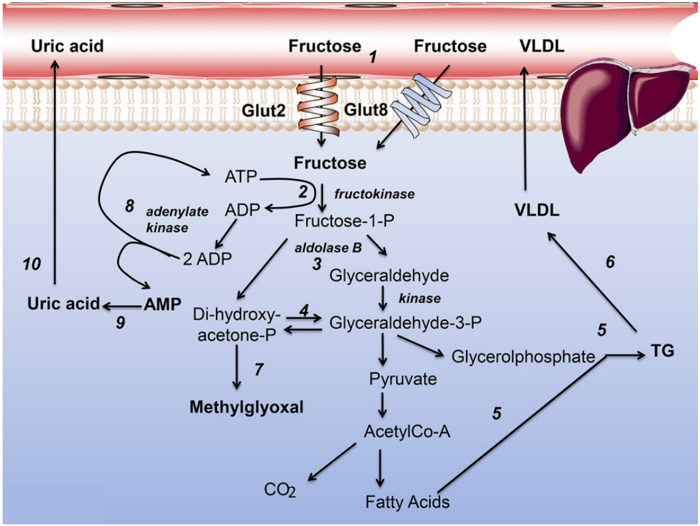
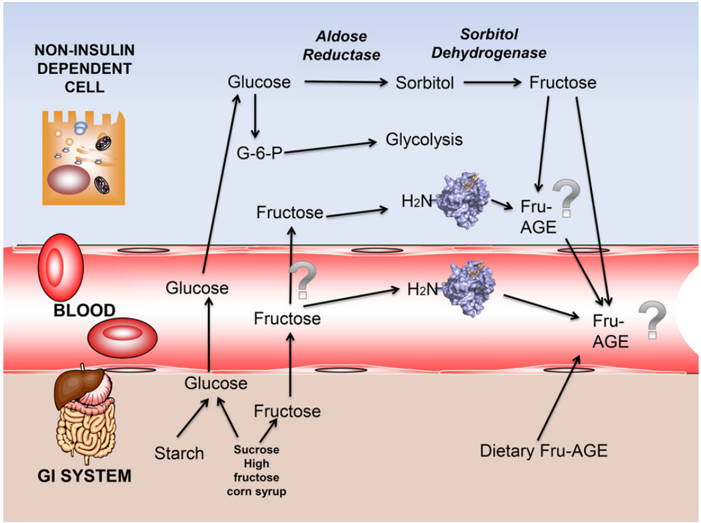
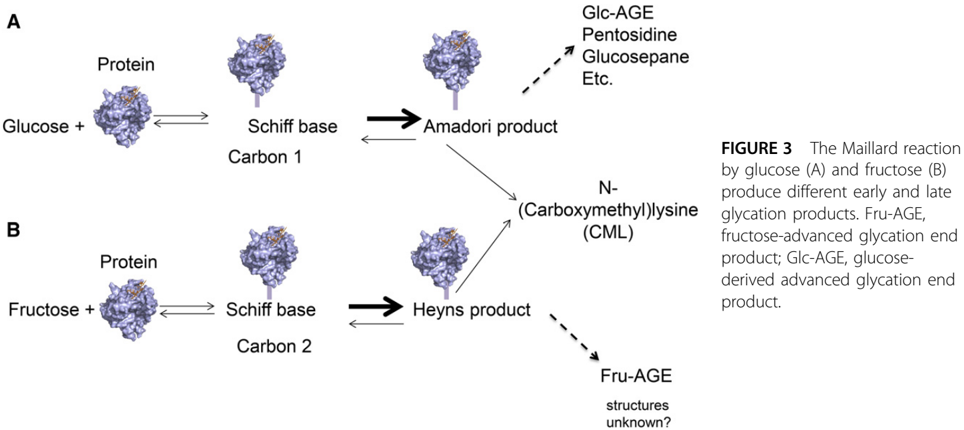
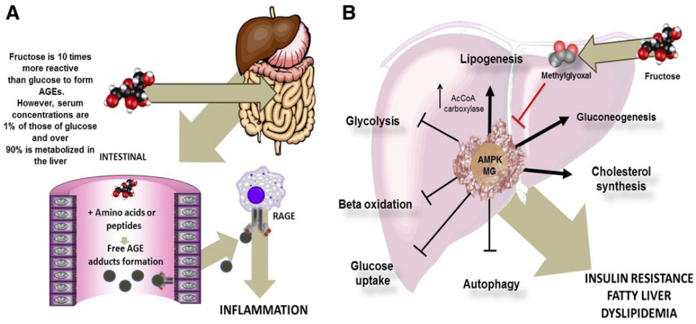
Fructose is associated with the biochemical alterations that promote the development of metabolic syndrome (MetS), nonalcoholic fatty liver disease, and type 2 diabetes. Its consumption has increased in parallel with MetS. It is metabolized by the liver, where it stimulates de novo lipogenesis. The triglycerides synthesized lead to hepatic insulin resistance and dyslipidemia. Fructose-derived advanced glycation end products (AGEs) may be involved via the Maillard reaction. Fructose has not been a main focus of glycation research because of the difficulty in measuring its adducts, and, more importantly, because although it is 10 times more reactive than glucose, its plasma concentration is only 1% of that of glucose. In this focused review, I summarize exogenous and endogenous fructose metabolism, fructose glycation, and in vitro, animal, and human data. Fructose is elevated in several tissues of diabetic patients where the polyol pathway is active, reaching the same order of magnitude as glucose. It is plausible that the high reactivity of fructose, directly or via its metabolites, may contribute to the formation of intracellular AGEs and to vascular complications. The evidence, however, is still unconvincing. Two areas that have been overlooked so far and should be actively explored include the following: 1) enteral formation of fructose AGEs, generating an inflammatory response to the receptor for AGEs (which may explain the strong association between fructose consumption and asthma, chronic bronchitis, and arthritis); and 2) inactivation of hepatic AMP-activated protein kinase by a fructose-mediated increase in methylglyoxal flux (perpetuating lipogenesis, fatty liver, and insulin resistance). If proven correct, these mechanisms would put the fructose-mediated Maillard reaction in the limelight again as a contributing factor in chronic inflammatory diseases and MetS.
Overview
The claims and statistics of this paper haven’t been checked yet.
Run the check — free, no account needed. It reads the open-access text and checks the sources it cites.
Integrity signals
Registry
Cites
Statistics
Figures
Verification
Claims the paper makes
The claims and statistics of this paper haven’t been checked yet.
Run the check — free, no account needed. It reads the open-access text and checks the sources it cites.
Claims other papers make about this one
Each is checked against this paper’s own text: does it say what the citing paper says it does?
In the citing paper
“Additionally, fructose can increase AGE formation independently of glucose by increasing 𝛼-oxoaldehydes levels.[5]”
From The Role of Dietary Advanced Glycation End Products in Metabolic Dysfunction (2021) · cites this paper as [5]
Self-check
Percentages, sums and reported differences re-computed from the paper’s own numbers.
The self-check needs the paper’s full text.
Citations
Cites
2 retracted
[Retracted] Fructose Diet‐Induced Skin Collagen Abnormalities Are Prevented by Lipoic Acid
Thirunavukkarasu, V., Nandhini, A. T. A., & Anuradha, C. V. (2004) · Journal of Diabetes Research · doi:10.1080/154386090506148 · Cited by 36
RetractedNallasamy, P., & Anuradha, C. V. (2011) · Pediatric Nephrology · doi:10.1007/s00467-011-1882-1 · Cited by 8
RetractedThe Pathobiology of Diabetic Complications
Brownlee, M. (2005) · Diabetes · doi:10.2337/diabetes.54.6.1615 · Cited by 5,339
Stanhope, K. L., Schwarz, J. M., Keim, N. L., Griffen, S. C., Bremer, A. A., Graham, J. L., Hatcher, B., Cox, C. L., Dyachenko, A., Zhang, W., et al. (2009) · Journal of Clinical Investigation · doi:10.1172/jci37385 · Cited by 1,765
Metabolic Effects of Fructose and the Worldwide Increase in Obesity
Tappy, L., & Lê, K.-A. (2010) · Physiological Reviews · doi:10.1152/physrev.00019.2009 · Cited by 1,256
Effect of Collagen Turnover on the Accumulation of Advanced Glycation End Products
Verzijl, N., DeGroot, J., Thorpe, S. R., Bank, R. A., Shaw, J., Lyons, T. J., Bijlsma, J. W. J., Lafeber, F. P. J. G., Baynes, J., & TeKoppele, J. M. (2000) · Journal of Biological Chemistry · doi:10.1074/jbc.m006700200 · Cited by 979
Imamura, F., O’Connor, L., Ye, Z., Mursu, J., Hayashino, Y., Bhupathiraju, S. N., & Forouhi, N. G. (2016) · British Journal of Sports Medicine · doi:10.1136/bjsports-2016-h3576rep · Cited by 968
Sugar, Uric Acid, and the Etiology of Diabetes and Obesity
Johnson, R. J., Nakagawa, T., Sánchez‐Lozada, L. G., Shafiu, M., Sundaram, S. S., Le, M. T., Ishimoto, T., Sautin, Y. Y., & Lanaspa, M. A. (2013) · Diabetes · doi:10.2337/db12-1814 · Cited by 791
The role of fructose in the pathogenesis of NAFLD and the metabolic syndrome
Lim, J. S., Mietus-Snyder, M., Valente, A., Schwarz, J.-M., & Lustig, R. H. (2010) · Nature Reviews Gastroenterology & Hepatology · doi:10.1038/nrgastro.2010.41 · Cited by 771
The Sorbitol Pathway and the Complications of Diabetes
Steinmetz, P. R., Balko, C., & Gabbay, K. H. (1973) · New England Journal of Medicine · doi:10.1056/nejm197304192881609 · Cited by 761
The missing link: A single unifying mechanism for diabetic complications
Nishikawa, T., Edelstein, D., & Brownlee, M. (2000) · Kidney International · doi:10.1046/j.1523-1755.2000.07705.x · Cited by 512
Fructose and Cardiometabolic Health
Malik, V. S., & Hu, F. B. (2015) · Journal of the American College of Cardiology · doi:10.1016/j.jacc.2015.08.025 · Cited by 408
Sorbitol Pathway: Presence in Nerve and Cord with Substrate Accumulation in Diabetes
Gabbay, K. H., MEROLA, L. O., & Field, R. A. (1966) · Science · doi:10.1126/science.151.3707.209 · Cited by 400
Faeh, D., Minehira, K., Schwarz, J., Periasamy, R., Park, S., & Tappy, L. (2005) · Diabetes · doi:10.2337/diabetes.54.7.1907 · Cited by 387
AMP ‐activated protein kinase: a cellular energy sensor that comes in 12 flavours
Ross, F. A., MacKintosh, C., & Hardie, D. G. (2016) · The FEBS Journal · doi:10.1111/febs.13698 · Cited by 381
Fructose and metabolic diseases: New findings, new questions
Tappy, L., Lê, K., Tran, C., & Paquot, N. (2010) · Nutrition · doi:10.1016/j.nut.2010.02.014 · Cited by 375
Dicarbonyl stress in cell and tissue dysfunction contributing to ageing and disease
Rabbani, N., & Thornalley, P. J. (2015) · Biochemical and Biophysical Research Communications · doi:10.1016/j.bbrc.2015.01.140 · Cited by 353
High-fat and high-sucrose (western) diet induces steatohepatitis that is dependent on fructokinase
Ishimoto, T., Lanaspa, M. A., Rivard, C. J., Roncal-Jiménez, C. A., Orlicky, D. J., Cicerchi, C., McMahan, R. H., Abdelmalek, M. F., Rosen, H. R., Jackman, M. R., et al. (2013) · Hepatology · doi:10.1002/hep.26594 · Cited by 333
Role of fructose in glycation and cross-linking of proteins
McPherson, J. D., Shilton, B. H., & Walton, D. J. (1988) · Biochemistry · doi:10.1021/bi00406a016 · Cited by 327
Molecular Basis of Arterial Stiffening: Role of Glycation – A Mini-Review
Sell, D. R., & Monnier, V. M. (2012) · Gerontology · doi:10.1159/000334668 · Cited by 298
Glyoxalase in diabetes, obesity and related disorders
Rabbani, N., & Thornalley, P. J. (2011) · Seminars in Cell and Developmental Biology · doi:10.1016/j.semcdb.2011.02.015 · Cited by 255
Nonenzymatic Glycation of Bovine Serum Albumin by Fructose (Fructation)
Suárez, G., Rajaram, R., Oronsky, A. L., & Gawinowicz, M. A. (1989) · Journal of Biological Chemistry · doi:10.1016/s0021-9258(19)84904-9 · Cited by 244
Effect of a High-Fructose Weight-Maintaining Diet on Lipogenesis and Liver Fat
Schwarz, J., Noworolski, S. M., Wen, M., Dyachenko, A., Prior, J. L., Weinberg, M. E., Herraiz, L. A., Tai, V., Bergeron, N., Bersot, T. P., et al. (2015) · The Journal of Clinical Endocrinology & Metabolism · doi:10.1210/jc.2014-3678 · Cited by 237
Adverse metabolic effects of dietary fructose
Stanhope, K. L., Schwarz, J., & Havel, P. J. (2013) · Current Opinion in Lipidology · doi:10.1097/mol.0b013e3283613bca · Cited by 214
Lustig, R. H., Mulligan, K. M., Noworolski, S. M., Tai, V., Wen, M., Erkin‐Cakmak, A., Gugliucci, A., & Schwarz, J. (2015) · Obesity · doi:10.1002/oby.21371 · Cited by 195
Self-citationObrosova, I. G. (2005) · Antioxidants & Redox Signaling · doi:10.1089/ars.2005.7.1543 · Cited by 174
The sorbitol pathway in the human lens: aldose reductase and polyol dehydrogenase.
Jedziniak, J. A., Chylack, L. T., Cheng, H., Gillis, M. K., Kalustian, A. A., & Tung, W. H. (1981) · PubMed · Cited by 164
Pathways of Formation of Glycoxidation Products during Glycation of Collagen
Wells-Knecht, M. C., Thorpe, S. R., & Baynes, J. (1995) · Biochemistry · doi:10.1021/bi00046a020 · Cited by 155
den Enden, M. K. V., Nyengaard, J. R., Ostrow, E., Burgan, J., & Williamson, J. R. (1995) · PubMed · Cited by 120
Ardestani, A. D., & Yazdanparast, R. (2007) · International Journal of Biological Macromolecules · doi:10.1016/j.ijbiomac.2007.07.014 · Cited by 114
Significance of fructose-induced protein oxidation and formation of advanced glycation end product
Takagi, Y., Kashiwagi, A., Tanaka, Y., Asahina, T., Kikkawa, R., & Shigeta, Y. (1995) · Journal of Diabetes and its Complications · doi:10.1016/1056-8727(94)00022-g · Cited by 108
DeChristopher, L. R., Uribarri, J., & Tucker, K. L. (2015) · Public Health Nutrition · doi:10.1017/s1368980015000865 · Cited by 108
Metabolism of Fructose-3-phosphate in the Diabetic Rat Lens
Lal, S., Szwergold, B. S., Taylor, A. H., Randall, W. C., Kappler, F. E., Wells‐Knecht, K. J., Baynes, J., & Brown, T. R. (1995) · Archives of Biochemistry and Biophysics · doi:10.1006/abbi.1995.1220 · Cited by 102
Rodríguez, L. A., Madsen, K. A., Cotterman, C., & Lustig, R. H. (2016) · Public Health Nutrition · doi:10.1017/s1368980016000057 · Cited by 92
Attenuation of hypertension development by scavenging methylglyoxal in fructose-treated rats
Wang, X., Jia, X., Chang, T., Desai, K. M., & Wu, L. (2008) · Journal of Hypertension · doi:10.1097/hjh.0b013e3282f4a13c · Cited by 88
Role of Sorbitol Pathway in Neuropathy
Gabbay, K. H. (1973) · Elsevier eBooks · doi:10.1016/b978-0-12-027362-1.50049-2 · Cited by 84
Stanhope, K. L., Griffen, S. C., Bremer, A. A., Vink, R., Schaefer, E. J., Nakajima, K., Schwarz, J., Beysen, C., Berglund, L., Keim, N. L., et al. (2011) · American Journal of Clinical Nutrition · doi:10.3945/ajcn.110.002246 · Cited by 84
Experimental studies on the role of fructose in the development of diabetic complications.
Sakai, M., Oimomi, M., & Kasuga, M. (2002) · PubMed · doi:10.24546/00318725 · Cited by 83
DeChristopher, L. R., Uribarri, J., & Tucker, K. L. (2016) · Nutrition and Diabetes · doi:10.1038/nutd.2016.7 · Cited by 80
Mastrocola, R., Nigro, D., Chiazza, F., Medana, C., Bello, F. D., Boccuzzi, G., Collino, M., & Aragno, M. (2015) · Free Radical Biology and Medicine · doi:10.1016/j.freeradbiomed.2015.12.022 · Cited by 76
Monnier, V. M., Sun, W., Sell, D. R., Fan, X., Nemet, I., & GENUTH, S. M. (2013) · Clinical Chemistry and Laboratory Medicine (CCLM) · doi:10.1515/cclm-2013-0174 · Cited by 72
Ursodeoxycholic Acid Ameliorates Fructose-Induced Metabolic Syndrome in Rats
Mahmoud, A. A. A., & Elshazly, S. M. (2014) · PLoS ONE · doi:10.1371/journal.pone.0106993 · Cited by 66
Syrový, I. (1994) · Journal of Biochemical and Biophysical Methods · doi:10.1016/0165-022x(94)90025-6 · Cited by 66
Site specificity of glycation and carboxymethylation of bovine serum albumin by fructose
Hinton, D. J. S., & Ames, J. M. (2006) · Amino Acids · doi:10.1007/s00726-006-0269-2 · Cited by 65
Review article: fructose in non‐alcoholic fatty liver disease
Yilmaz, Y. N. (2012) · Alimentary Pharmacology & Therapeutics · doi:10.1111/j.1365-2036.2012.05080.x · Cited by 65
Oral fructose absorption in obese children with non‐alcoholic fatty liver disease
Sullivan, J. S., Le, M. T., Pan, Z., Rivard, C. J., Love‐Osborne, K., Robbins, K., Johnson, R. J., Sokol, R. J., & Sundaram, S. S. (2014) · Pediatric Obesity · doi:10.1111/ijpo.238 · Cited by 64
Ebert, K., & Witt, H. (2016) · Molecular and Cellular Pediatrics · doi:10.1186/s40348-016-0035-9 · Cited by 64
Nallasamy, P., Kannappan, S., & Anuradha, C. V. (2011) · European Journal of Pharmacology · doi:10.1016/j.ejphar.2011.06.011 · Cited by 63
Mastrocola, R., Collino, M., Rogazzo, M., Medana, C., Nigro, D., Boccuzzi, G., & Aragno, M. (2013) · American Journal of Physiology-Gastrointestinal and Liver Physiology · doi:10.1152/ajpgi.00450.2012 · Cited by 63
Han, J., Tan, C., Wang, Y., Yang, S., & Tan, D. (2015) · Chemico-Biological Interactions · doi:10.1016/j.cbi.2014.12.032 · Cited by 60
Immunological detection of fructose-derived advanced glycation end-products
Takeuchi, M., Iwaki, M., Takino, J.-I., Shirai, H., Kawakami, M., Bucala, R., & Yamagishi, S. (2010) · Laboratory Investigation · doi:10.1038/labinvest.2010.62 · Cited by 60
Is the metabolic syndrome caused by a high fructose, and relatively low fat, low cholesterol diet?
Seneff, S., Wainwright, G., & Mascitelli, L. (2011) · Archives of Medical Science · doi:10.5114/aoms.2011.20598 · Cited by 59
DeChristopher, L. R., Uribarri, J., & Tucker, K. L. (2015) · Nutrition Journal · doi:10.1186/s12937-015-0097-x · Cited by 58
Dhar, I., Dhar, A., Wu, L., & Desai, K. M. (2013) · PLoS ONE · doi:10.1371/journal.pone.0074212 · Cited by 56
Gugliucci, A., Lustig, R. H., Caccavello, R. J., Erkin‐Cakmak, A., Noworolski, S. M., Tai, V., Wen, M., Mulligan, K. M., & Schwarz, J. (2016) · Atherosclerosis · doi:10.1016/j.atherosclerosis.2016.06.048 · Cited by 56
Self-citationFailure of Common Glycation Assays to Detect Glycation by Fructose
Ahmed, N., & Furth, A. J. (1992) · Clinical Chemistry · doi:10.1093/clinchem/38.7.1301 · Cited by 53
Bakhti, M., Habibi-Rezaei, M., Moosavi‐Movahedi, A. A., & Khazaei, M. R. (2007) · The Journal of Biochemistry · doi:10.1093/jb/mvm096 · Cited by 52
Yeh, T., Liu, C.-P., Cheng, W., Chen, B.-R., Lu, P., Cheng, P., Ho, W.-Y., Sun, G., Liou, J., & Tseng, C.-J. (2013) · Hypertension · doi:10.1161/hypertensionaha.113.02272 · Cited by 49
El‐Bassossy, H. M., Badawy, D., Neamatallah, T., & Fahmy, A. (2016) · Chemico-Biological Interactions · doi:10.1016/j.cbi.2016.06.013 · Cited by 47
Fructose induced deactivation of antioxidant enzymes: Preventive effect of pyruvate
Zhao, W. L., Devamanoharan, P. S., & Varma, S. D. (2000) · Free Radical Research · doi:10.1080/10715760000300581 · Cited by 46
Levi, B., & Werman, M. J. (2003) · The Journal of Nutritional Biochemistry · doi:10.1016/s0955-2863(02)00254-1 · Cited by 45
Sil, R., Ray, D., & Chakraborti, A. S. (2013) · PubMed · Cited by 41
Fructose malabsorption syndrome
Putkonen, L., Yao, C. K., & Gibson, P. R. (2013) · Current Opinion in Clinical Nutrition & Metabolic Care · doi:10.1097/mco.0b013e328361c556 · Cited by 40
Zhao, W. L., Devamanoharan, P. S., & Varma, S. D. (1998) · Free Radical Research · doi:10.1080/10715769800300351 · Cited by 38
Is fructose malabsorption a cause of irritable bowel syndrome?
DiNicolantonio, J. J., & Lucan, S. C. (2015) · Medical Hypotheses · doi:10.1016/j.mehy.2015.05.019 · Cited by 37
Jakas, A., Katić, A., Bionda, N., & Horvat, Š. (2008) · Carbohydrate Research · doi:10.1016/j.carres.2008.07.003 · Cited by 37
Masterjohn, C. M., Park, Y., Lee, J., Noh, S. K., Koo, S. I., & Bruno, R. S. (2013) · Nutrients · doi:10.3390/nu5083311 · Cited by 36
Hassel, B., Elsais, A., Frøland, A., Taubøll, E., Gjerstad, L., Quan, Y., Dingledine, R. J., & Rise, F. (2015) · Journal of Neurochemistry · doi:10.1111/jnc.13079 · Cited by 36
Sugimoto, K., Hosotani, T., Kawasaki, T., Nakagawa, K., Hayashi, S., Nakano, Y., Inui, H., & Yamanouchi, T. (2010) · Journal of Clinical Biochemistry and Nutrition · doi:10.3164/jcbn.09-93 · Cited by 36
Mikulı́ková, K., Eckhardt, A., Kuneš, J., Zicha, J., & Mikšı́k, I. (2008) · Physiological Research · doi:10.33549/physiolres.931093 · Cited by 36
Gugliucci, A. (2016) · Medical Hypotheses · doi:10.1016/j.mehy.2016.05.026 · Cited by 35
Self-citationSuárez, G., Maturana, J., Oronsky, A. L., & Raventós-Suárez, C. (1991) · Biochimica et Biophysica Acta (BBA) - General Subjects · doi:10.1016/0304-4165(91)90068-r · Cited by 32
Immunoglobulin glycation with fructose: A comparative study
Jairajpuri, D. S., Fatima, S., & Saleemuddin, M. (2006) · Clinica Chimica Acta · doi:10.1016/j.cca.2006.10.020 · Cited by 32
Fructose triggers DNA modification and damage in an Escherichia coli plasmid
Levi, B., & Werman, M. J. (2001) · The Journal of Nutritional Biochemistry · doi:10.1016/s0955-2863(00)00158-3 · Cited by 32
El‐Bassossy, H. M., Dsokey, N., & Fahmy, A. (2014) · Toxicology Mechanisms and Methods · doi:10.3109/15376516.2014.945109 · Cited by 31
Advanced Glycation of Rat Liver Histone Octamers: An in Vitro Study
Gugliucci, A. (1994) · Biochemical and Biophysical Research Communications · doi:10.1006/bbrc.1994.2223 · Cited by 31
Self-citationFructose-mediated damage to lens α-crystallin: prevention by pyruvate
Zhao, W. L., Devamanoharan, P. S., & Varma, S. D. (2000) · Biochimica et Biophysica Acta (BBA) - Molecular Basis of Disease · doi:10.1016/s0925-4439(99)00102-7 · Cited by 29
YAN, H. H., & Harding, J. J. (2006) · PubMed · Cited by 29
Fructose‐induced symptoms beyond malabsorption in FGID
Biesiekierski, J. R. (2014) · United European Gastroenterology Journal · doi:10.1177/2050640613510905 · Cited by 27
Production of fructose and fructose-3-phosphate in maturing rat lenses.
Lal, S., Szwergold, B. S., Taylor, A. H., Randall, W. C., Kappler, F. E., & Brown, T. R. (1995) · PubMed · Cited by 25
Hamada, Y., Odagaki, Y., Sakakibara, F., Naruse, K., Koh, N., & Hotta, N. (1995) · Life Sciences · doi:10.1016/0024-3205(95)00239-3 · Cited by 25
Thermal glycation of proteins by D-glucose and D-fructose.
Kańska, U., & Boratyński, J. (2002) · PubMed · Cited by 25
Advanced glycation in diabetes, aging and age-related diseases: editorial and dedication
Monnier, V. M., & Taniguchi, N. (2016) · Glycoconjugate Journal · doi:10.1007/s10719-016-9704-0 · Cited by 24
Chang, K., Liang, J., Tseng, C.-D., Wu, E., Hsu, K., Wu, M., Lin, Y., & Tseng, Y. (2007) · British Journal of Pharmacology · doi:10.1038/sj.bjp.0707223 · Cited by 23
Ido, Y., Kilo, C., & Williamson, J. R. (1996) · Nephrology Dialysis Transplantation · doi:10.1093/ndt/11.supp5.72 · Cited by 22
Acceleration of Fructose Mediated Collagen Glycation
Oimomi, M., Sakai, M., Ohara, T., Igaki, N., Nakamichi, T., Hata, F., & Baba, S. (1989) · Journal of International Medical Research · doi:10.1177/030006058901700307 · Cited by 21
Ojima, A., Matsui, T., Nakamura, N., Higashimoto, Y., Ueda, S., Fukami, K., Okuda, S., & Yamagishi, S. (2014) · Hormone and Metabolic Research · doi:10.1055/s-0034-1385904 · Cited by 21
Oimomi, M., Nakamichi, T., Ohara, T., Sakai, M., Igaki, N., Hata, F., & Baba, S. (1989) · Diabetes Research and Clinical Practice · doi:10.1016/0168-8227(89)90104-6 · Cited by 19
Taurine prevents collagen abnormalities in high fructose-fed rats.
Nandhini, A. T. A., Thirunavukkarasu, V., & Anuradha, C. V. (2005) · PubMed · Cited by 18
Identification of the site of glycation of γ-II-crystallin by (14C)-fructose
Pennington, J., & Harding, J. J. (1994) · Biochimica et Biophysica Acta (BBA) - Molecular Basis of Disease · doi:10.1016/0925-4439(94)90024-8 · Cited by 17
Sites of Glycation of βB2-Crystallin by Glucose and Fructose
Zhao, H., Smith, J. B., Jiang, X., & Abraham, E. C. (1996) · Biochemical and Biophysical Research Communications · doi:10.1006/bbrc.1996.1768 · Cited by 16
Lin, Y.-T., Tseng, Y., & Chang, K. (2004) · Experimental Biology and Medicine · doi:10.1177/153537020422901008 · Cited by 15
Balasaraswathi, K., Rajasekar, P., & Anuradha, C. V. (2007) · Clinical and Experimental Pharmacology and Physiology · doi:10.1111/j.1440-1681.2007.04815.x · Cited by 15
Rajamani, S., Suganthi, R., Ravichandran, M. K., & Anuradha, C. V. (2005) · Journal of Medicinal Food · doi:10.1089/jmf.2005.8.502 · Cited by 15
Antidiabetic activity of 3-hydroxyflavone analogues in high fructose fed insulin resistant rats
Nayak, Y., Venkatachalam, H., Daroji, V. K., Mathew, G., Jayashree, B. S., & Unnikrishnan, M. K. (2014) · Europe PMC (PubMed Central) · doi:10.17877/de290r-6937 · Cited by 13
Taurine prevents fructose-diet induced collagen abnormalities in rat skin
Nandhini, T. A., Thirunavukkarasu, V., Ravichandran, M. K., & Anuradha, C. V. (2005) · Journal of Diabetes and its Complications · doi:10.1016/j.jdiacomp.2005.02.002 · Cited by 12
Lipoic acid prevents collagen abnormalities in tail tendon of high‐fructose‐fed rats
Thirunavukkarasu, V., Nandhini, A. T. A., & Anuradha, C. V. (2005) · Diabetes Obesity and Metabolism · doi:10.1111/j.1463-1326.2004.00418.x · Cited by 12
Vasdev, S., Gill, V. D., Randell, E. W., Han, Y., & Gadag, V. G. (2009) · Molecular and Cellular Biochemistry · doi:10.1007/s11010-009-0281-4 · Cited by 11
Effects of Excessive Fructose Intake on Health
Johnson, R. J., Lanaspa, M. A., Roncal-Jiménez, C. A., & Sánchez‐Lozada, L. G. (2012) · Annals of Internal Medicine · doi:10.7326/0003-4819-156-12-201206190-00024 · Cited by 8
The effect of fructose on collagen glycation.
Oimomi, M., Sakai, M., Ohara, T., Igaki, N., Nakamichi, T., Nishimoto, S., Hata, F., & Baba, S. (1989) · PubMed · Cited by 5
Sorbitol pathway—Reminiscences
van Heyningen, R. (1990) · Experimental Eye Research · doi:10.1016/0014-4835(90)90098-f · Cited by 5
Cited by
Sorted by citations
Chaudhuri, J., Bains, Y., Guha, S., Kahn, A., Hall, D., Bose, N., Gugliucci, A., & Kapahi, P. (2018) · Cell Metabolism · doi:10.1016/j.cmet.2018.08.014 · Cited by 669
“Despite this accumulating evidence, debate continues over whether AGEs are causal or just a consequence of aging and age-related diseases (Gugliucci, 2017).”
BackgroundResultSelf-citationPerrone, A., Giovino, A., Benny, J., & Martinelli, F. (2020) · Oxidative Medicine and Cellular Longevity · doi:10.1155/2020/3818196 · Cited by 459
Redox imbalance stress in diabetes mellitus: Role of the polyol pathway
Yan, L. (2018) · Animal Models and Experimental Medicine · doi:10.1002/ame2.12001 · Cited by 350
Kidney physiology and susceptibility to acute kidney injury: implications for renoprotection
Scholz, H., Boivin, F. J., Schmidt-Ott, K. M., Bachmann, S., Eckardt, K., Scholl, U. I., & Persson, P. B. (2021) · Nature Reviews Nephrology · doi:10.1038/s41581-021-00394-7 · Cited by 328
Shen, C., Lu, C., Wu, C.-H., Li, K., Kuo, Y., Hsieh, S., & Yu, C. (2020) · Molecules · doi:10.3390/molecules25235591 · Cited by 316
Metadata
- Authors
- Gugliucci, A.
- Affiliations
- Touro University California (US)
- Corresponding author
- Gugliucci, Alejandro
- ORCID
- Gugliucci, Alejandro
- Venue
- Advances in Nutrition
- Publisher
- Elsevier BV
- Published
- 2017-01
- Volume
- 8
- Issue
- 1
- Pages
- 54-62
- ISSN
- 2156-5376 (ISSN-L)
- 2161-8313
- PMC
- PMC5227984
- OpenAlex
- W2572954835
- Cited by
- 225
- References
- 105
- Citations by year
- 2026: 7 · 2025: 24 · 2024: 31 · 2023: 24 · 2022: 32 · 2021: 36 · 2020: 20 · 2019: 26 · 2018: 14 · 2017: 8
- FWCI
- 2.43
- Type
- journal article
- Language
- en
- Open access
- hybrid
- doi.org
- Licence
- Locations
- Advances in Nutrition (publishedVersion, cc-by-nc-nd)
- Europe PMC (PubMed Central) (publishedVersion)
- PubMed Central (publishedVersion)
- PubMed (publishedVersion)
- Touro Scholar (Touro College) (submittedVersion)
- Topics
- Life Sciences › Biochemistry, Genetics and Molecular Biology › Clinical Biochemistry › Advanced Glycation End Products research
- Health Sciences › Medicine › Endocrinology, Diabetes and Metabolism › Diet, Metabolism, and Disease
- Life Sciences › Agricultural and Biological Sciences › Food Science › Potato Plant Research
- Keywords
- fructose, advanced glycation end products, Maillard reaction, metabolic syndrome, non-alcoholic fatty liver disease, type 2 diabetes, hepatic insulin resistance, de novo lipogenesis, polyol pathway, methylglyoxal, AMPK, receptor for advanced glycation end products, inflammation, asthma, chronic bronchitis, arthritis, vascular complications
- MeSH terms
- Adenosine Triphosphate, Animals, Diabetes Mellitus, Type 2, Disease Models, Animal, Fructose, Humans, Obesity, Sorbitol, Uric Acid, Glycation End Products, Advanced, Metabolic Syndrome, Lipogenesis
About these checks
Registry, retraction, Cites and statistics results are computed, not judged, with one exception: a printed reference that no index lists is read once by a model before it counts as a citation error. Claims are extracted by a model and kept only when their quote appears verbatim in the text; each cited source is then checked, with a model’s help, for whether it says what the claim relies on. Those verdicts can be wrong — read the claim’s quote and the cited source before relying on one.
Statistics and arithmetic are recomputed, not judged.
Confidence bands are shown only for fields calibrated on our annotated test set. None is calibrated yet, so no band is shown.
What counts as a claim ›How we measure confidence ›How we check this ›
Are you an author, or do you see a problem with this page? Request a review
