

The DOI matches its Crossref record; 101 of the 105 references it cites were found in a registry or an index.
Formation of Fructose-Mediated Advanced Glycation End Products and Their Roles in Metabolic and Inflammatory Diseases
Open accessAbstract
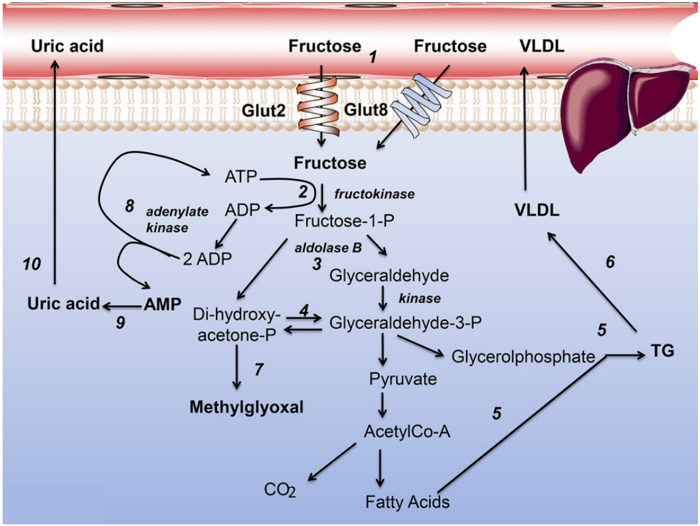
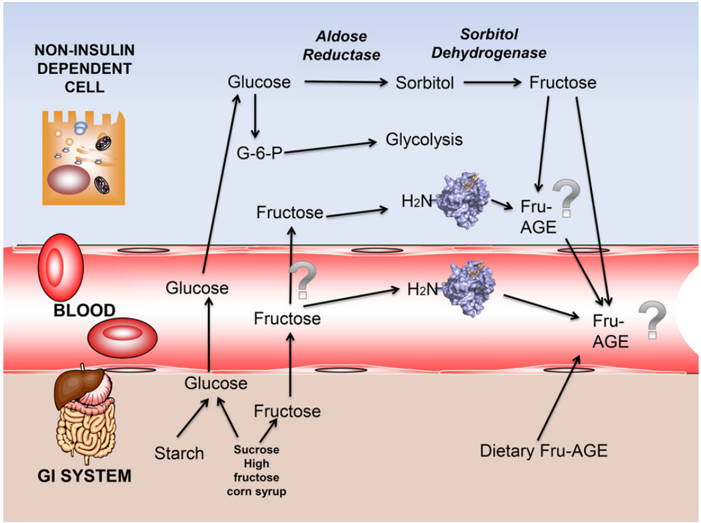
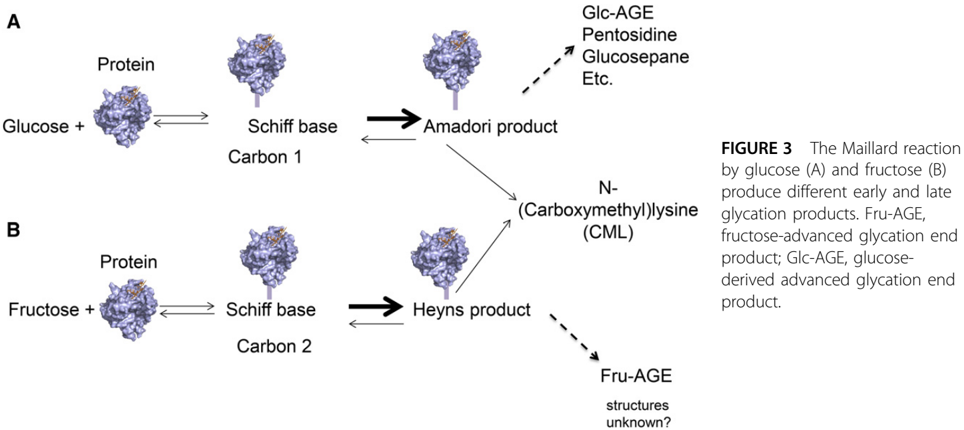
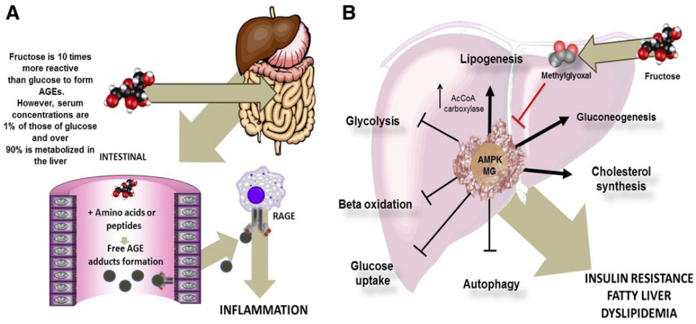
Fructose is associated with the biochemical alterations that promote the development of metabolic syndrome (MetS), nonalcoholic fatty liver disease, and type 2 diabetes. Its consumption has increased in parallel with MetS. It is metabolized by the liver, where it stimulates de novo lipogenesis. The triglycerides synthesized lead to hepatic insulin resistance and dyslipidemia. Fructose-derived advanced glycation end products (AGEs) may be involved via the Maillard reaction. Fructose has not been a main focus of glycation research because of the difficulty in measuring its adducts, and, more importantly, because although it is 10 times more reactive than glucose, its plasma concentration is only 1% of that of glucose. In this focused review, I summarize exogenous and endogenous fructose metabolism, fructose glycation, and in vitro, animal, and human data. Fructose is elevated in several tissues of diabetic patients where the polyol pathway is active, reaching the same order of magnitude as glucose. It is plausible that the high reactivity of fructose, directly or via its metabolites, may contribute to the formation of intracellular AGEs and to vascular complications. The evidence, however, is still unconvincing. Two areas that have been overlooked so far and should be actively explored include the following: 1) enteral formation of fructose AGEs, generating an inflammatory response to the receptor for AGEs (which may explain the strong association between fructose consumption and asthma, chronic bronchitis, and arthritis); and 2) inactivation of hepatic AMP-activated protein kinase by a fructose-mediated increase in methylglyoxal flux (perpetuating lipogenesis, fatty liver, and insulin resistance). If proven correct, these mechanisms would put the fructose-mediated Maillard reaction in the limelight again as a contributing factor in chronic inflammatory diseases and MetS.
Overview
The claims and statistics of this paper haven’t been checked yet.
Run the check — free, no account needed. It reads the open-access text and checks the sources it cites.
Integrity signals
Registry
Cites
Statistics
Figures
Verification
Claims the paper makes
The claims and statistics of this paper haven’t been checked yet.
Run the check — free, no account needed. It reads the open-access text and checks the sources it cites.
Claims other papers make about this one
Each is checked against this paper’s own text: does it say what the citing paper says it does?
In the citing paper
“Additionally, fructose can increase AGE formation independently of glucose by increasing 𝛼-oxoaldehydes levels.[5]”
From The Role of Dietary Advanced Glycation End Products in Metabolic Dysfunction (2021) · cites this paper as [5]
Self-check
Percentages, sums and reported differences re-computed from the paper’s own numbers.
The self-check needs the paper’s full text.
Citations
Cites
2 retracted
[Retracted] Fructose Diet‐Induced Skin Collagen Abnormalities Are Prevented by Lipoic Acid
Thirunavukkarasu, V., Nandhini, A. T. A., & Anuradha, C. V. (2004) · Journal of Diabetes Research · doi:10.1080/154386090506148 · Cited by 36
RetractedNallasamy, P., & Anuradha, C. V. (2011) · Pediatric Nephrology · doi:10.1007/s00467-011-1882-1 · Cited by 8
RetractedThe Pathobiology of Diabetic Complications
Brownlee, M. (2005) · Diabetes · doi:10.2337/diabetes.54.6.1615 · Cited by 5,339
Stanhope, K. L., Schwarz, J. M., Keim, N. L., Griffen, S. C., Bremer, A. A., Graham, J. L., Hatcher, B., Cox, C. L., Dyachenko, A., Zhang, W., et al. (2009) · Journal of Clinical Investigation · doi:10.1172/jci37385 · Cited by 1,765
Metabolic Effects of Fructose and the Worldwide Increase in Obesity
Tappy, L., & Lê, K.-A. (2010) · Physiological Reviews · doi:10.1152/physrev.00019.2009 · Cited by 1,256
Effect of Collagen Turnover on the Accumulation of Advanced Glycation End Products
Verzijl, N., DeGroot, J., Thorpe, S. R., Bank, R. A., Shaw, J., Lyons, T. J., Bijlsma, J. W. J., Lafeber, F. P. J. G., Baynes, J., & TeKoppele, J. M. (2000) · Journal of Biological Chemistry · doi:10.1074/jbc.m006700200 · Cited by 979
Imamura, F., O’Connor, L., Ye, Z., Mursu, J., Hayashino, Y., Bhupathiraju, S. N., & Forouhi, N. G. (2016) · British Journal of Sports Medicine · doi:10.1136/bjsports-2016-h3576rep · Cited by 968
Sugar, Uric Acid, and the Etiology of Diabetes and Obesity
Johnson, R. J., Nakagawa, T., Sánchez‐Lozada, L. G., Shafiu, M., Sundaram, S. S., Le, M. T., Ishimoto, T., Sautin, Y. Y., & Lanaspa, M. A. (2013) · Diabetes · doi:10.2337/db12-1814 · Cited by 791
The role of fructose in the pathogenesis of NAFLD and the metabolic syndrome
Lim, J. S., Mietus-Snyder, M., Valente, A., Schwarz, J.-M., & Lustig, R. H. (2010) · Nature Reviews Gastroenterology & Hepatology · doi:10.1038/nrgastro.2010.41 · Cited by 771
The Sorbitol Pathway and the Complications of Diabetes
Steinmetz, P. R., Balko, C., & Gabbay, K. H. (1973) · New England Journal of Medicine · doi:10.1056/nejm197304192881609 · Cited by 761
Cited by
Sorted by citations
Chaudhuri, J., Bains, Y., Guha, S., Kahn, A., Hall, D., Bose, N., Gugliucci, A., & Kapahi, P. (2018) · Cell Metabolism · doi:10.1016/j.cmet.2018.08.014 · Cited by 669
“Despite this accumulating evidence, debate continues over whether AGEs are causal or just a consequence of aging and age-related diseases (Gugliucci, 2017).”
BackgroundResultSelf-citationPerrone, A., Giovino, A., Benny, J., & Martinelli, F. (2020) · Oxidative Medicine and Cellular Longevity · doi:10.1155/2020/3818196 · Cited by 459
Redox imbalance stress in diabetes mellitus: Role of the polyol pathway
Yan, L. (2018) · Animal Models and Experimental Medicine · doi:10.1002/ame2.12001 · Cited by 350
Kidney physiology and susceptibility to acute kidney injury: implications for renoprotection
Scholz, H., Boivin, F. J., Schmidt-Ott, K. M., Bachmann, S., Eckardt, K., Scholl, U. I., & Persson, P. B. (2021) · Nature Reviews Nephrology · doi:10.1038/s41581-021-00394-7 · Cited by 328
Shen, C., Lu, C., Wu, C.-H., Li, K., Kuo, Y., Hsieh, S., & Yu, C. (2020) · Molecules · doi:10.3390/molecules25235591 · Cited by 316
Aragno, M., & Mastrocola, R. (2017) · Nutrients · doi:10.3390/nu9040385 · Cited by 239
Dewanjee, S., Chakraborty, P., Bhattacharya, H., Chacko, L., Singh, B., Chaudhary, A., Javvaji, K., Pradhan, S. R., Vallamkondu, J., Dey, A., et al. (2022) · Free Radical Biology and Medicine · doi:10.1016/j.freeradbiomed.2022.09.032 · Cited by 243
Structure, function and regulation of mammalian glucose transporters of the SLC2 family
Holman, G. D. (2020) · Pflügers Archiv - European Journal of Physiology · doi:10.1007/s00424-020-02411-3 · Cited by 248
Endogenous advanced glycation end products in the pathogenesis of chronic diabetic complications
Mengstie, M. A., Abebe, E. C., Teklemariam, A. B., Mulu, A. T., Agidew, M. M., Azezew, M. T., Zewde, E. A., & Teshome, A. A. (2022) · Frontiers in Molecular Biosciences · doi:10.3389/fmolb.2022.1002710 · Cited by 232
Mitochondrial DNA variation and the pathogenesis of osteoarthritis phenotypes
Blanco, F. J., Valdes, A. M., & Rego‐Pérez, I. (2018) · Nature Reviews Rheumatology · doi:10.1038/s41584-018-0001-0 · Cited by 199
The Role of Dietary Advanced Glycation End Products in Metabolic Dysfunction
Sergi, D., Boulestin, H., Campbell, F. M., & Williams, L. M. (2021) · Molecular Nutrition & Food Research · doi:10.1002/mnfr.201900934 · Cited by 194
Oxidative Stress as the Main Target in Diabetic Retinopathy Pathophysiology
Olvera-Montaño, C., Alberto, C.-G. J., Navarro‐Partida, J., Cardona-Muñóz, E. G., López-Contreras, A. K., Román-Pintos, L. M., Robles-Rivera, R. R., & Rodríguez-Carrizález, A. D. (2019) · Journal of Diabetes Research · doi:10.1155/2019/8562408 · Cited by 159
Polyol pathway and redox balance in diabetes
Garg, S. S., & Gupta, J. (2022) · Pharmacological Research · doi:10.1016/j.phrs.2022.106326 · Cited by 158
Omega-3 polyunsaturated fatty acids as a treatment strategy for nonalcoholic fatty liver disease
Jump, D. B., Lytle, K. A., Depner, C. M., & Tripathy, S. (2018) · Pharmacology & Therapeutics · doi:10.1016/j.pharmthera.2017.07.007 · Cited by 142
Bettiga, A., Fiorio, F., Di Marco, F., Trevisani, F., Romani, A., Porrini, E., Salonia, A., Montorsi, F., & Vago, R. (2019) · Nutrients · doi:10.3390/nu11081748 · Cited by 127
Zhao, D., Sheng, B., Wu, Y., Li, H., Xu, D., Nian, Y., Mao, S., Li, C., Xu, X., & Zhou, G. (2019) · Journal of Agricultural and Food Chemistry · doi:10.1021/acs.jafc.9b05891 · Cited by 107
Clinical/Translational Aspects of Advanced Glycation End-Products
Zeng, C., Li, Y., Ma, J., Niu, L., & Tay, F. R. (2019) · Trends in Endocrinology and Metabolism · doi:10.1016/j.tem.2019.08.005 · Cited by 107
Polyphenols and AGEs/RAGE axis. Trends and challenges
González, I., Morales, M. A., & Armando Rojas, R. (2019) · Food Research International · doi:10.1016/j.foodres.2019.108843 · Cited by 103
Aldose Reductase and the Polyol Pathway in Schwann Cells: Old and New Problems
Niimi, N., Yako, H., Takaku, S., Chung, S. K., & Sango, K. (2021) · International Journal of Molecular Sciences · doi:10.3390/ijms22031031 · Cited by 102
Pathomechanisms of Diabetic Kidney Disease
Sinha, S. K., & Nicholas, S. B. (2023) · Journal of Clinical Medicine · doi:10.3390/jcm12237349 · Cited by 98
In Search of Differential Inhibitors of Aldose Reductase
Balestri, F., Moschini, R., Mura, U., Cappiello, M., & CORSO, A. D. (2022) · Biomolecules · doi:10.3390/biom12040485 · Cited by 78
Zhu, Y., Ma, W., Han, X., Wang, Y., Wang, X., & Liu, N. (2018) · Scientific Reports · doi:10.1038/s41598-018-31877-6 · Cited by 76
Pan, Y., & Kong, L. (2018) · Pharmacological Research · doi:10.1016/j.phrs.2018.02.020 · Cited by 75
Sarmah, S., & Roy, A. S. (2021) · International Journal of Biological Macromolecules · doi:10.1016/j.ijbiomac.2021.12.041 · Cited by 74
Spínola, V., Pinto, J., Llorent-Martínez, E. J., Tomás, H., & Castilho, P. C. (2018) · Food and Chemical Toxicology · doi:10.1016/j.fct.2018.11.006 · Cited by 71
Brandon, H., & Yan, L. (2019) · Diabetes Metabolic Syndrome and Obesity · doi:10.2147/dmso.s198968 · Cited by 67
High fructose-induced metabolic changes enhance inflammation in human dendritic cells
Jaiswal, N., Agrawal, S., & Agrawal, A. (2019) · Clinical & Experimental Immunology · doi:10.1111/cei.13299 · Cited by 61
Advanced Glycation End Products: key player of the pathogenesis of atherosclerosis
Singh, S., Siva, B. V., & Ravichandiran, V. (2022) · Glycoconjugate Journal · doi:10.1007/s10719-022-10063-x · Cited by 55
Recent Progress on Fructose Metabolism—Chrebp, Fructolysis, and Polyol Pathway
Iizuka, K. (2023) · Nutrients · doi:10.3390/nu15071778 · Cited by 54
Sangüesa, G., Cascales, M., Griñán‐Ferré, C., Sánchez, R. M., Roglans, N., Pallàs, M., Laguna, J. C., & Alegret, M. (2018) · Molecular Neurobiology · doi:10.1007/s12035-017-0863-1 · Cited by 55
Akdağ, M., Özçelik, A. B., Demir, Y., & Beydemir, Ş. (2022) · Journal of Molecular Structure · doi:10.1016/j.molstruc.2022.132675 · Cited by 53
Bains, Y., & Gugliucci, A. (2016) · Fitoterapia · doi:10.1016/j.fitote.2016.12.006 · Cited by 53
Self-citationMetformin Benefits: Another Example for Alternative Energy Substrate Mechanism?
Giaccari, A., Solini, A., Frontoni, S., & Prato, S. D. (2021) · Diabetes Care · doi:10.2337/dc20-1964 · Cited by 54
Chemical biology probes of mammalian GLUT structure and function
Holman, G. D. (2018) · Biochemical Journal · doi:10.1042/bcj20170677 · Cited by 53
Jiménez‐Maldonado, A., Ying, Z., Byun, H. R., & Gómez‐Pinilla, F. (2017) · Biochimica et Biophysica Acta (BBA) - Molecular Basis of Disease · doi:10.1016/j.bbadis.2017.10.012 · Cited by 49
DeChristopher, L. R. (2017) · Advances in Nutrition · doi:10.3945/an.117.016154 · Cited by 47
Comparison of bovine serum albumin glycation by ribose and fructose in vitro and in vivo
Mou, L., Hu, P., Cao, X. J., Chen, Y., Xu, Y., He, T., Yan, W., & He, R. (2021) · Biochimica et Biophysica Acta (BBA) - Molecular Basis of Disease · doi:10.1016/j.bbadis.2021.166283 · Cited by 48
Spínola, V., Llorent-Martínez, E. J., & Castilho, P. C. (2018) · Food Research International · doi:10.1016/j.foodres.2018.10.010 · Cited by 45
Wang, J., Cai, W., Yu, J., Liu, H., He, S., Zhu, L., & Xu, J. (2022) · Diabetes Metabolic Syndrome and Obesity · doi:10.2147/dmso.s346411 · Cited by 45
Pivotal role of AGE-RAGE axis in brain aging with current interventions
Vitorakis, N., & Piperi, C. (2024) · Ageing Research Reviews · doi:10.1016/j.arr.2024.102429 · Cited by 48
Health risk behaviors, violence exposure, and current asthma among adolescents in the United States
Han, Y., Forno, E., & Celedon, J. C. (2019) · Pediatric Pulmonology · doi:10.1002/ppul.24236 · Cited by 44
Biomarkers in diabetic neuropathy
Adki, K. M., & Kulkarni, Y. A. (2020) · Archives of Physiology and Biochemistry · doi:10.1080/13813455.2020.1837183 · Cited by 42
Impact of chrysin on the molecular mechanisms underlying diabetic complications
Farkhondeh, T., Samarghandian, S., & Roshanravan, B. (2019) · Journal of Cellular Physiology · doi:10.1002/jcp.28488 · Cited by 41
Rai, A. K., Jaiswal, N., Maurya, C. K., Sharma, A., Ahmad, I., Ahmad, S., Gupta, A. P., Gayen, J. R., & Tamrakar, A. K. (2019) · The Journal of Nutritional Biochemistry · doi:10.1016/j.jnutbio.2019.05.016 · Cited by 40
Hyperglycemic memory in diabetic cardiomyopathy
Zhan, J., Chen, C., Wang, D. W., & Li, H. (2021) · Frontiers of Medicine · doi:10.1007/s11684-021-0881-2 · Cited by 42
Cui, Y., Tian, J., Wang, Z., Guo, H., Zhang, H., Wang, Z., Liu, H., Song, W., Liu, L., Tian, R., et al. (2023) · Cancer Research · doi:10.1158/0008-5472.can-23-0464 · Cited by 41
Giussani, M., Lieti, G., Orlando, A., Parati, G., & Genovesi, S. (2022) · Frontiers in Medicine · doi:10.3389/fmed.2022.792949 · Cited by 44
The AGE-RAGE Axis and the Pathophysiology of Multimorbidity in COPD
Reynaert, N. L., Vanfleteren, L. E. G. W., & Perkins, T. N. (2023) · Journal of Clinical Medicine · doi:10.3390/jcm12103366 · Cited by 40
Effects of High Dietary Carbohydrate and Lipid Intake on the Lifespan of C. elegans
Franco-Juárez, B., Gómez‐Manzo, S., Hernández‐Ochoa, B., Cárdenas‐Rodríguez, N., Arreguín‐Espinosa, R., de la Cruz, V. P., & Ortega-Cuéllar, D. (2021) · Cells · doi:10.3390/cells10092359 · Cited by 41
Emerging Insights and Interventions for Diabetic Retinopathy
Honasoge, A., Nudleman, E., Smith, M. E., & Rajagopal, R. (2019) · Current Diabetes Reports · doi:10.1007/s11892-019-1218-2 · Cited by 38
The antiglycative effect of apple flowers in fructose/glucose-BSA models and cookies
Gao, J., Sun, Y., Li, L., Zhou, Q., & Wang, M. (2020) · Food Chemistry · doi:10.1016/j.foodchem.2020.127170 · Cited by 39
Advanced glycation end products and diabetes and other metabolic indicators
Jiang, T., Zhang, Y., Dai, F., Liu, C., Hu, H., & Zhang, Q. (2022) · Diabetology & Metabolic Syndrome · doi:10.1186/s13098-022-00873-2 · Cited by 38
Hu, Y., Zhao, Y., Li, P., Lu, H., Li, H., & Ge, J. (2023) · 中国科学通报:英文版 · doi:10.1016/j.scib.2023.07.032 · Cited by 37
Bains, Y., Gugliucci, A., & Caccavello, R. J. (2017) · Fitoterapia · doi:10.1016/j.fitote.2017.05.003 · Cited by 38
Self-citationRole of pseudohypoxia in the pathogenesis of type 2 diabetes
Song, J., Yang, X., & Yan, L. (2019) · Hypoxia · doi:10.2147/hp.s202775 · Cited by 36
The Role of Glutathione and Its Precursors in Type 2 Diabetes
Tuell, D. S., Ford, G., LOS, E. A., & Stone, W. L. (2024) · Antioxidants · doi:10.3390/antiox13020184 · Cited by 38
Neuroprotective effect of paeonol in streptozotocin-induced diabetes in rats
Adki, K. M., & Kulkarni, Y. A. (2021) · Life Sciences · doi:10.1016/j.lfs.2021.119202 · Cited by 33
An update on the potential role of advanced glycation end products in glycolipid metabolism
Wang, X., Liu, J., Ying, Y., & Zhang, X. (2020) · Life Sciences · doi:10.1016/j.lfs.2020.117344 · Cited by 32
Castro‐Webb, N., Cozier, Y. C., Barbhaiya, M., Ruiz-Narváez, E., Li, S., Costenbader, K. H., & Rosenberg, L. A. (2021) · American Journal of Clinical Nutrition · doi:10.1093/ajcn/nqab224 · Cited by 31
Muraoka, M. Y., Justino, A. B., Caixeta, D. C., Queiroz, J. S., Silva, R. S., & Espíndola, F. S. (2022) · PLoS ONE · doi:10.1371/journal.pone.0262369 · Cited by 31
Identification of the antiglycative components of Hong Dou Shan (Taxus chinensis) leaf tea
Sun, M., Zhou, S., Zhou, Q., & Wang, M. (2019) · Food Chemistry · doi:10.1016/j.foodchem.2019.06.009 · Cited by 31
Evidence for Toxic Advanced Glycation End-Products Generated in the Normal Rat Liver
Takata, T., Sakai, A., Takino, J.-I., & Takeuchi, M. (2019) · Nutrients · doi:10.3390/nu11071612 · Cited by 30
Chen, T., Dong, J., Zhou, H., Deng, X., Li, R., Ni, C., Luo, M., Li, Y., Wu, J., & Wang, L. (2020) · Journal of Cellular and Molecular Medicine · doi:10.1111/jcmm.15552 · Cited by 28
Shen, C., Lu, C., Cheng, C., Li, K., Kuo, Y., Wu, C.-H., Liu, C., Hsieh, S., Tsai, C., & Yu, C. (2024) · Biomedicines · doi:10.3390/biomedicines12081699 · Cited by 32
Berdowska, I., Matusiewicz, M., & Fecka, I. (2025) · International Journal of Molecular Sciences · doi:10.3390/ijms26062394 · Cited by 30
Role of the Enterocyte in Fructose-Induced Hypertriglyceridaemia
Steenson, S., Umpleby, A. M., Lovegrove, J. A., Jackson, K. G., & Fielding, B. A. (2017) · Nutrients · doi:10.3390/nu9040349 · Cited by 29
Berdowska, I., Matusiewicz, M., & Fecka, I. (2023) · Molecules · doi:10.3390/molecules28237742 · Cited by 26
Bernacka, K., Bednarska, K., Starzec, A., Mazurek, S., & Fecka, I. (2022) · Molecules · doi:10.3390/molecules27082432 · Cited by 27
Hipkiss, A. R. (2018) · Neurotoxicity Research · doi:10.1007/s12640-018-9867-5 · Cited by 26
Excess dietary sugar and its impact on periodontal inflammation: a narrative review
Shanmugasundaram, S., & Karmakar, S. (2024) · BDJ Open · doi:10.1038/s41405-024-00265-w · Cited by 27
Shapira, N. (2019) · Nutrients · doi:10.3390/nu11102373 · Cited by 29
Ma, L., Yang, C., Huang, L., Chen, Y., Yang, L., Cheng, C., Cheng, B., Zheng, L., & Huang, K. (2019) · ACS Chemical Biology · doi:10.1021/acschembio.8b01128 · Cited by 26
Wu, Y., Zong, M., Wu, H., He, D., Li, L., Zhang, X., Zhao, D., & Li, B. (2022) · Molecular Nutrition & Food Research · doi:10.1002/mnfr.202200046 · Cited by 26
High-fructose drinks affect microRNAs expression differently in lean and obese mice
Hanousková, B., Neprašová, B., Skálová, L., Maletı́nská, L., Zemanová, K., Ambrož, M., & Matoušková, P. (2019) · The Journal of Nutritional Biochemistry · doi:10.1016/j.jnutbio.2019.03.001 · Cited by 25
Maggiore, A., Latina, V., D’Erme, M., Amadoro, G., & Coccurello, R. (2024) · Ageing Research Reviews · doi:10.1016/j.arr.2024.102578 · Cited by 25
Carbonyl stress in diabetics with acute coronary syndrome
Bora, S., & Adole, P. S. (2021) · Clinica Chimica Acta · doi:10.1016/j.cca.2021.06.002 · Cited by 25
Sirangelo, I., Borriello, M., Liccardo, M., Scafuro, M., Russo, P., & Iannuzzi, C. (2021) · Antioxidants · doi:10.3390/antiox10071127 · Cited by 24
Zhang, S., Chen, L., Hu, M., & Zhu, J. (2023) · Food Research International · doi:10.1016/j.foodres.2023.113293 · Cited by 23
Contribution of RAGE axis activation to the association between metabolic syndrome and cancer
Garay‐Sevilla, M. E., Gómez-Ojeda, A., González, I., Luévano‐Contreras, C., & Armando Rojas, R. (2021) · Molecular and Cellular Biochemistry · doi:10.1007/s11010-020-04022-z · Cited by 22
Anti-glycation effects of brown algae extracts and its phenolic compounds
Park, J. J., & Lee, W. (2021) · Food Bioscience · doi:10.1016/j.fbio.2021.101042 · Cited by 21
Glycolytic adaptation and progression of kidney disease
Rabelink, T. J., & Carmeliet, P. (2017) · Nature Reviews Nephrology · doi:10.1038/nrneph.2017.173 · Cited by 20
Sotokawauchi, A., Matsui, T., Higashimoto, Y., & Yamagishi, S. (2019) · Diabetes and Vascular Disease Research · doi:10.1177/1479164119866390 · Cited by 20
Ahmad, S., Pandey, A. R., Rai, A. K., Singh, S. P., Kumar, P., Singh, S., Gulzar, F., Ahmad, I., Sashidhara, K. V., & Tamrakar, A. K. (2022) · Journal of Ethnopharmacology · doi:10.1016/j.jep.2022.116117 · Cited by 20
Zakłos‐Szyda, M., Pietrzyk, N., Kowalska-Baron, A., Nowak, A., Chałaśkiewicz, K., Ratajewski, M., Budryn, G., & Koziołkiewicz, M. (2021) · Molecules · doi:10.3390/molecules26164745 · Cited by 18
1α,25-Dihydroxyvitamin D3 promotes angiogenesis by alleviating AGEs-induced autophagy
Xiong, Y., Zhou, F., Liu, Y., Yi, Z., Wang, X., Wu, Y., & Gong, P. (2021) · Archives of Biochemistry and Biophysics · doi:10.1016/j.abb.2021.109041 · Cited by 18
Sugar and Dyslipidemia: A Double-Hit, Perfect Storm
Gugliucci, A. (2023) · Journal of Clinical Medicine · doi:10.3390/jcm12175660 · Cited by 19
Self-citationAglago, E. K., Rinaldi, S., Freisling, H., Jiao, L., Hughes, D. J., Fedirko, V., Schalkwijk, C. G., Weiderpass, E., Dahm, C. C., Overvad, K., et al. (2020) · Cancer Epidemiology Biomarkers & Prevention · doi:10.1158/1055-9965.epi-20-0855 · Cited by 18
Wang, X., Zhao, X.-W., Lian, T., Wei, J., Yue, W.-X., Zhang, S., & Chen, Q. (2021) · BMC Endocrine Disorders · doi:10.1186/s12902-021-00725-6 · Cited by 18
Alrubaye, A., Motovali-Bashi, M., & Miroliaei, M. (2021) · Scientific Reports · doi:10.1038/s41598-021-99286-w · Cited by 17
Folic acid deficiency increases sensitivity to DNA damage by glucose and methylglyoxal
Donnellan, L., Simpson, B. S., Dhillon, V. S., Costabile, M., Fenech, M. F., & Deo, P. (2022) · Mutagenesis · doi:10.1093/mutage/geac003 · Cited by 15
Aldo-keto reductase 1B: Much learned, much more to do
Zhao, Y., Zhang, M., Li, H., Yang, Y., Lu, X., Yu, J., & Pan, L. (2023) · hLife · doi:10.1016/j.hlife.2023.12.002 · Cited by 16
Alpha-lipoic acid and its protective role in fructose induced endocrine-metabolic disturbances
Castro, M. C., Villagarcía, H. G., Massa, M. L., & Francini, F. (2018) · Food & Function · doi:10.1039/c8fo01856a · Cited by 17
Metabolic Strategies in Healthcare: A New Era
Phillips, M. C. L. (2022) · Aging and Disease · doi:10.14336/ad.2021.1018 · Cited by 16
Diabetes mellitus: interdisciplinary medical, surgical and psychological therapeutic approach
Socea, B., Silaghi, A. M., Rebegea, L. F., Bălan, D. G., Bălălău, C., Ţenea-Cojan, T. Ş., Mihai, D. A., & Păunică, I. (2023) · Journal of Mind and Medical Sciences · doi:10.22543/2392-7674.1445 · Cited by 16
Structures of Toxic Advanced Glycation End-Products Derived from Glyceraldehyde, A Sugar Metabolite
Sakai, A., Takeda, K., Suzuki, H., & Takeuchi, M. (2024) · Biomolecules · doi:10.3390/biom14020202 · Cited by 13
Berdnikovs, S., Newcomb, D. C., & Hartert, T. V. (2024) · Frontiers in Pediatrics · doi:10.3389/fped.2024.1441293 · Cited by 17
Fructose-mediated AGE-RAGE axis: approaches for mild modulation
Semchyshyn, H. M. (2024) · Frontiers in Nutrition · doi:10.3389/fnut.2024.1500375 · Cited by 15
Rai, A. K., Singh, S. P., Pandey, A. R., Ansari, A., Ahmad, S., Sashidhara, K. V., & Tamrakar, A. K. (2019) · Natural Product Research · doi:10.1080/14786419.2019.1672690 · Cited by 15
Mamun-Or-Rashid, A. N. M., Lucy, T. T., Yagi, M., & Yonei, Y. (2021) · Biomedicines · doi:10.3390/biomedicines10010054 · Cited by 16
Unraveling the complexities of diet induced obesity and glucolipid dysfunction in metabolic syndrome
Dutta, B., Tripathy, A., Archana, P. R., & Kamath, S. U. (2025) · Diabetology & Metabolic Syndrome · doi:10.1186/s13098-025-01837-y · Cited by 19
Metadata
- Authors
- Gugliucci, A.
- Affiliations
- Touro University California (US)
- Corresponding author
- Gugliucci, Alejandro
- ORCID
- Gugliucci, Alejandro
- Venue
- Advances in Nutrition
- Publisher
- Elsevier BV
- Published
- 2017-01
- Volume
- 8
- Issue
- 1
- Pages
- 54-62
- ISSN
- 2156-5376 (ISSN-L)
- 2161-8313
- PMC
- PMC5227984
- OpenAlex
- W2572954835
- Cited by
- 225
- References
- 105
- Citations by year
- 2026: 7 · 2025: 24 · 2024: 31 · 2023: 24 · 2022: 32 · 2021: 36 · 2020: 20 · 2019: 26 · 2018: 14 · 2017: 8
- FWCI
- 2.43
- Type
- journal article
- Language
- en
- Open access
- hybrid
- doi.org
- Licence
- Locations
- Advances in Nutrition (publishedVersion, cc-by-nc-nd)
- Europe PMC (PubMed Central) (publishedVersion)
- PubMed Central (publishedVersion)
- PubMed (publishedVersion)
- Touro Scholar (Touro College) (submittedVersion)
- Topics
- Life Sciences › Biochemistry, Genetics and Molecular Biology › Clinical Biochemistry › Advanced Glycation End Products research
- Health Sciences › Medicine › Endocrinology, Diabetes and Metabolism › Diet, Metabolism, and Disease
- Life Sciences › Agricultural and Biological Sciences › Food Science › Potato Plant Research
- Keywords
- fructose, advanced glycation end products, Maillard reaction, metabolic syndrome, non-alcoholic fatty liver disease, type 2 diabetes, hepatic insulin resistance, de novo lipogenesis, polyol pathway, methylglyoxal, AMPK, receptor for advanced glycation end products, inflammation, asthma, chronic bronchitis, arthritis, vascular complications
- MeSH terms
- Adenosine Triphosphate, Animals, Diabetes Mellitus, Type 2, Disease Models, Animal, Fructose, Humans, Obesity, Sorbitol, Uric Acid, Glycation End Products, Advanced, Metabolic Syndrome, Lipogenesis
About these checks
Registry, retraction, Cites and statistics results are computed, not judged, with one exception: a printed reference that no index lists is read once by a model before it counts as a citation error. Claims are extracted by a model and kept only when their quote appears verbatim in the text; each cited source is then checked, with a model’s help, for whether it says what the claim relies on. Those verdicts can be wrong — read the claim’s quote and the cited source before relying on one.
Statistics and arithmetic are recomputed, not judged.
Confidence bands are shown only for fields calibrated on our annotated test set. None is calibrated yet, so no band is shown.
What counts as a claim ›How we measure confidence ›How we check this ›
Are you an author, or do you see a problem with this page? Request a review
