

The DOI matches its Crossref record; 122 of the 122 references it cites were found in a registry or an index.
Basic mechanisms of peripheral nerve injury and treatment via electrical stimulation
Open accessAbstract
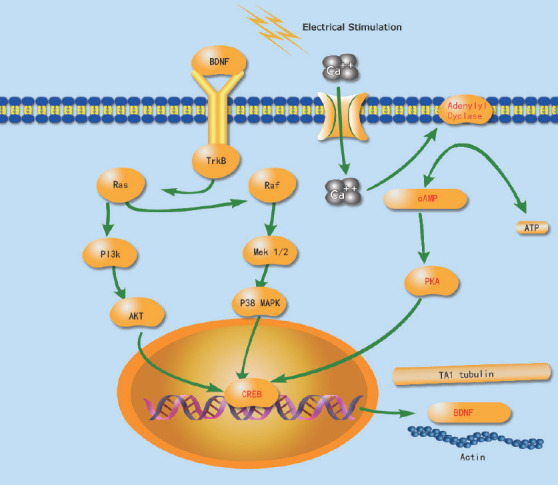
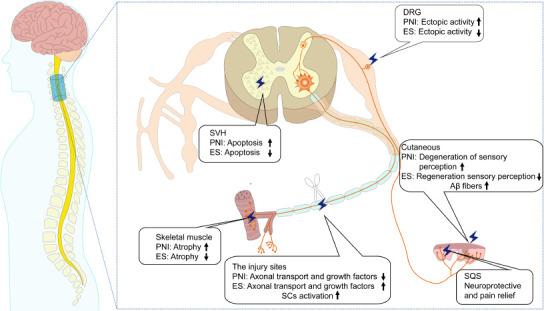
Previous studies on the mechanisms of peripheral nerve injury (PNI) have mainly focused on the pathophysiological changes within a single injury site. However, recent studies have indicated that within the central nervous system, PNI can lead to changes in both injury sites and target organs at the cellular and molecular levels. Therefore, the basic mechanisms of PNI have not been comprehensively understood. Although electrical stimulation was found to promote axonal regeneration and functional rehabilitation after PNI, as well as to alleviate neuropathic pain, the specific mechanisms of successful PNI treatment are unclear. We summarize and discuss the basic mechanisms of PNI and of treatment via electrical stimulation. After PNI, activity in the central nervous system (spinal cord) is altered, which can limit regeneration of the damaged nerve. For example, cell apoptosis and synaptic stripping in the anterior horn of the spinal cord can reduce the speed of nerve regeneration. The pathological changes in the posterior horn of the spinal cord can modulate sensory abnormalities after PNI. This can be observed in cases of ectopic discharge of the dorsal root ganglion leading to increased pain signal transmission. The injured site of the peripheral nerve is also an important factor affecting post-PNI repair. After PNI, the proximal end of the injured site sends out axial buds to innervate both the skin and muscle at the injury site. A slow speed of axon regeneration leads to low nerve regeneration. Therefore, it can take a long time for the proximal nerve to reinnervate the skin and muscle at the injured site. From the perspective of target organs, long-term denervation can cause atrophy of the corresponding skeletal muscle, which leads to abnormal sensory perception and hyperalgesia, and finally, the loss of target organ function. The mechanisms underlying the use of electrical stimulation to treat PNI include the inhibition of synaptic stripping, addressing the excessive excitability of the dorsal root ganglion, alleviating neuropathic pain, improving neurological function, and accelerating nerve regeneration. Electrical stimulation of target organs can reduce the atrophy of denervated skeletal muscle and promote the recovery of sensory function. Findings from the included studies confirm that after PNI, a series of physiological and pathological changes occur in the spinal cord, injury site, and target organs, leading to dysfunction. Electrical stimulation may address the pathophysiological changes mentioned above, thus promoting nerve regeneration and ameliorating dysfunction.
Overview
The claims and statistics of this paper haven’t been checked yet.
Run the check — free, no account needed. It reads the open-access text and checks the sources it cites.
Integrity signals
Registry
Cites
Statistics
Figures
Verification
Claims the paper makes
The claims and statistics of this paper haven’t been checked yet.
Run the check — free, no account needed. It reads the open-access text and checks the sources it cites.
Claims other papers make about this one
Each is checked against this paper’s own text: does it say what the citing paper says it does?
The cited source says what the claim attributes to it.
In the citing paper
“However, peripheral nerves have the potential to self-repair and regenerate, aided by conditions such as anatomical continuity of the injured site, myelination, and the extent of the injury [112].”
From Active Neural Interface Circuits and Systems for Selective Control of Peripheral Nerves: A Review (2024) · cites this paper as [112]
Self-check
Percentages, sums and reported differences re-computed from the paper’s own numbers.
The self-check needs the paper’s full text.
Citations
Cites
Antioxidants Maintain Cellular Redox Homeostasis by Elimination of Reactive Oxygen Species
He, L., He, T., Farrar, S., Ji, L., Liu, T., & Ma, X. (2017) · Cellular Physiology and Biochemistry · doi:10.1159/000485089 · Cited by 2,207
A CLASSIFICATION OF PERIPHERAL NERVE INJURIES PRODUCING LOSS OF FUNCTION
Sunderland, S. (1951) · Brain · doi:10.1093/brain/74.4.491 · Cited by 1,574
Neural plasticity after peripheral nerve injury and regeneration
Navarro, X., Vivó, M., & Valero‐Cabré, A. (2007) · Progress in Neurobiology · doi:10.1016/j.pneurobio.2007.06.005 · Cited by 908
Microglia in neuropathic pain: cellular and molecular mechanisms and therapeutic potential
Inoue, K., & Tsuda, M. (2018) · Nature Reviews Neuroscience · doi:10.1038/nrn.2018.2 · Cited by 908
Brief Electrical Stimulation Promotes the Speed and Accuracy of Motor Axonal Regeneration
Al‐Majed, A. A., Neumann, C. M., Brushart, T. M. E., & Gordon, T. (2000) · Journal of Neuroscience · doi:10.1523/jneurosci.20-07-02602.2000 · Cited by 851
Wallerian degeneration: an emerging axon death pathway linking injury and disease
Conforti, L., Gilley, J., & Coleman, M. P. (2014) · Nature reviews. Neuroscience · doi:10.1038/nrn3680 · Cited by 630
Adrenergic Excitation of Cutaneous Pain Receptors Induced by Peripheral Nerve Injury
Sato, J., & Perl, E. R. (1991) · Science · doi:10.1126/science.2011742 · Cited by 593
Al‐Majed, A. A., Brushart, T. M. E., & Gordon, T. (2000) · European Journal of Neuroscience · doi:10.1111/j.1460-9568.2000.01341.x · Cited by 484
Ploner, M., Sorg, C., & Groß, J. (2016) · Trends in Cognitive Sciences · doi:10.1016/j.tics.2016.12.001 · Cited by 472
Brushart, T. M. E., Hoffman, P. N., Royall, R. M., Murinson, B. B., Witzel, C., & Gordon, T. (2002) · Journal of Neuroscience · doi:10.1523/jneurosci.22-15-06631.2002 · Cited by 437
Research works printed but not linked: 1
- Gybels, 1990, The treatment of pain due to peripheral-nerve injury by electrical-stimulitation of the injured nerve, Adv Pain Res Ther, 13, 217
Cited by
Sorted by citations
Items 101–163 of 163
Li, G., Xu, N., Luo, T., & Wang, L. (2024) · Scientific Reports · doi:10.1038/s41598-024-71232-6 · Cited by 2
Effect and mechanism of Tetramethylpyrazine in repair of sciatic nerve injury in rats
Li, Y., Li, Y., Wang, G., Li, Y., & Zhuo, N. (2024) · BMC Neuroscience · doi:10.1186/s12868-024-00897-6 · Cited by 2
Self-citationLv, S., Wu, Z., Huang, Y., Wu, P., Shao, J., Wu, J., Zhong, K., Zhou, L., & Wu, W. (2025) · Journal of Orthopaedic Translation · doi:10.1016/j.jot.2025.02.007 · Cited by 2
“However, electrical stimulation faces significant technical limitations such as relatively poor neuronal types targeting and the inconvenient cable connections when used on patients [12,13].”
Neural rewiring from peripheral to central
Lu, H., & Yan, J. (2022) · Brain Network and Modulation · doi:10.4103/2773-2398.365026 · Cited by 1
Specialty grand challenge: Rehabilitation engineering
Zhou, P. H. (2023) · Frontiers in Rehabilitation Sciences · doi:10.3389/fresc.2023.1069269 · Cited by 1
Role of Long Non-coding RNA in Nerve Regeneration
Qian, J., Jiang, M., Ding, Z., Gu, D., Bai, H., Cai, M., & Yao, D. (2023) · International Journal of Neuroscience · doi:10.1080/00207454.2023.2280446 · Cited by 1
Sawada, E., Yamamoto, T., Kishimoto, N., Ooishi, D., Sasakura, H., Takeuchi, K., & Seo, K. (2025) · Cureus · doi:10.7759/cureus.78708 · Cited by 1
Zeng, Q., Huang, B.-X., Liu, C., Liang, N., Yu, J., & Liao, S. (2025) · Molecular Neurobiology · doi:10.1007/s12035-025-05202-y · Cited by 1
“According to previous studies, the protection of axons in early stage is the key to ensure neuroplasticity, alleviate NP and prevent its chronicity [50, 51].”
Implantable Nongenetic Optoelectronic Biointerfaces for Neuromodulation
Ye, J., Huang, J., Nie, W., Xu, J., Sheng, X., & Wang, H. (2025) · Advanced Photonics Research · doi:10.1002/adpr.202500176 · Cited by 2
Research progress of platelet-rich plasma in promoting peripheral nerve repair
Wu, F., Huang, Z., Yang, H., & Huang, H. (2025) · Neurogenetics · doi:10.1007/s10048-025-00868-x · Cited by 1
Liu, A., Sheng, K., Li, H., Zhao, X., Zhang, X., Su, H., Samdrup, T., Zhang, Y., Hu, X., Weng, L., et al. (2026) · Materials Today Bio · doi:10.1016/j.mtbio.2026.102780 · Cited by 1
“However, these treatments do not promote injury recovery and frequently cause severe side effects [17].”
Electrotherapy in the management of neuropathic corneal pain: narrative review
Shanmathi, A. V., Yu, M., Liu, C., Lee, I. X. Y., Tong, L. H. T., & Liu, Y. (2026) · Experimental Biology and Medicine · doi:10.3389/ebm.2026.10712 · Cited by 1
Gong, L., Li, D., Zhao, X., Qu, Y., Song, S., Liu, J., & Yue, S. (2026) · APL Bioengineering · doi:10.1063/5.0289844 · Cited by 1
The interaction between oxidative stress and Schwann cells
Yang, S., Zhang, Z., Liao, Q., Ouyang, Q., Ye, Y., Lu, W., & Jiang, Z. (2026) · Experimental Biology and Medicine · doi:10.3389/ebm.2026.11146 · Cited by 1
“…of peripheral nerves, their slow regeneration rate may lead to dysfunction or irreversible damage of target organs due to long-term loss of innervation, such as dyskinesia, sensory abnormalities, pain sensitization, and muscular atrophy, and some patients may even face lifelong disability risk [2].”
Editorial: Therapeutic relevance and mechanisms of neuro-immune communication in brain injury
Zhang, P., Bai, Y., Zhang, F., Zhang, X., Deng, Y., & Ding, Y. (2023) · Frontiers in Cellular Neuroscience · doi:10.3389/fncel.2023.1209083
“Rehabilitation programs include stimulation with electricity, magnetism, light, and heat on the CNS and peripheral nervous system (PNS), along with physical therapy, virtual reality, motion imagination, and so on.”
BackgroundZorkova, А. V., Grigorieva, V. N., & Карпов, С. М. (2023) · Medical news of the North Caucasus · doi:10.14300/mnnc.2023.18064
Goyal, N., Brady, W. J., & Dennis, A. (2024) · Springer eBooks · doi:10.1007/978-3-031-46217-7_51
Peripheral nerves’ function recovery by intratissual electric stimulation
Gerasimov, A. A., Александрович, Б. Н., & Kopylov, S. A. (2024) · Problems of Balneology Physiotherapy and Exercise Therapy · doi:10.17116/kurort202410104136
Wang, L., & Huang, Y. (2024) · Journal of Biochemical and Molecular Toxicology · doi:10.1002/jbt.70063
Innovations in neuromonitoring and regenerative approaches in thyroid and neck surgeries
Woo, K. (2024) · Korean Intraoperative Neuromonitoring Society · doi:10.54441/jnn.2024.4.2.93
“For example, if IONM detects early signs of nerve stress or in-98 jury, regenerative therapies such as the application of neurotrophic factors or stem cells can be initiated intra-operatively to support nerve recovery [23].”
Xue, Y., Hua, Z., Lou, X., Zhao, Y., Shen, Y., Zhang, M., Feng, H., Wei, X., Wang, Y., Wu, X., et al. (2025) · Acta Mechanica Sinica · doi:10.1007/s10409-024-24489-x
“It reduces pain caused by arthritis by stimulating nerve endings, interfering with the transmission of pain signals, promoting the activation of endogenous pain inhibitory systems, and reducing pain perception and transmission [18].”
Xin, L., Li, M. S., & Weng, X. (2025) · Journal of Visualized Experiments · doi:10.3791/67806
FUNCTIONAL ASSESSMENT OF CALF MUSCLES IN RATS WITH IMPAIRED MOTOR ACTIVITY
Sabirova, D., Eremeev, A., & Baltina, T. (2025) · Scientific Notes of V I Vernadsky Crimean Federal University Biology Chemistry · doi:10.29039/2413-1725-2025-11-2-186-198
ZEB2: a multifunctional regulator of neural injury repair
Nie, S., Fang, L., Wang, B., Chen, R., Wei, T., Zhang, Y., Ji, H., & Wu, Y. (2025) · International Immunopharmacology · doi:10.1016/j.intimp.2025.115266
Lin, C.-W., Shih, M., Chen, P.-Y., Hsieh, T.-H., Tsai, M., Yu, J., & Chen, P. (2025) · Journal of the Taiwan Institute of Chemical Engineers · doi:10.1016/j.jtice.2025.106326
Kwon, J., Kim, J., Yoon, Y. W., & Kim, J. (2025) · Life Sciences · doi:10.1016/j.lfs.2025.123972
Multifunctional scaffolds based on 3D printing for spinal cord and peripheral nerve defect repair
Chen, X., Wu, M., Zhang, J., Yang, P., Guo, J., Gu, X., & DAI, X. H. (2025) · Chemical Engineering Journal · doi:10.1016/j.cej.2025.169111
Self-citationElectroactive Biomaterials for Cell Behavior Regulation and Tissue Regeneration
Wang, Z., Zhao, H., Yao, H., Zhou, W., & Ning, C. (2025) · IGI Global eBooks · doi:10.4018/979-8-3373-0055-9.ch006
Nerve Repair and Reconstruction
Amirouche, F. M. L., & Alvarez, J. (2025) · Springer eBooks · doi:10.1007/978-3-032-04688-8_13
Yang, Y., Zheng, W., Wen, Y., & Chen, L. (2026) · Clinical Case Reports · doi:10.1002/ccr3.71796
Chen, X., Lin, J., Chen, Z., Zhang, Y., He, Z., Deng, P., Chen, S., & Jia, J. (2026) · Trials · doi:10.1186/s13063-026-09476-y
Dickerson, B. L., Sowinski, R. J., & Gonzalez, D. E. (2026) · Life · doi:10.3390/life16020258
“…enhances the proliferation and fusion of stem cells with pre-existing myofibers by increasing the free Ca 2+ concentration, coupled with an increased genetic expression of the myoblast determination protein 1 (MyoD), thereby promoting myoblast differentiation and growth into myotubes [149,153,154].”
Advanced Biomaterials Revolutionize Gout Therapy: From Uric Acid Degradation to Pain Alleviation
Cao, J., Gong, F., Han, Z., Qiao, X., Cui, X., & Cheng, L. (2026) · Advanced Functional Materials · doi:10.1002/adfm.202530174
“This is because electrical stimulation delivers electrical signals that directly affect the transmission of pain signals through nerve fibers, thereby interfering with the brain’s perception of pain [174].”
Meng, Q., Zhang, M., Tang, M., Jiang, H., Qu, Y., Ding, Z., Tian, J., Zhang, H., Hu, C., Lin, Z., et al. (2026) · Biomaterials Science · doi:10.1039/d6bm00117c
Acupuncture for Neuropathic Pain: Mechanisms, Clinical Efficacy and Future Perspectives
Chen, Y. C., Huang, S., & Lin, J. (2026) · The American Journal of Chinese Medicine · doi:10.1142/s0192415x26500254
Zhang, M., Chang, F., Ge, S., Cao, F., Fu, P., Zhang, H., Chen, M., Li, Y., Tang, P., & Yin, P. (2026) · Cell Proliferation · doi:10.1111/cpr.70231
Self-citationXiao, D., Pan, X., Jiao, E., Yuan, K., Li, K., Li, Y., Deng, C., Tang, H., Sun, Z., Ren, G., et al. (2026) · Polymers and Polymer Composites · doi:10.1177/09673911261454110
Self-citationZhu, S., Cui, R., Qiu, S., Zhang, X., Ma, J., Duan, W., Li, P., Quan, D., Yang, Z., Zhang, S., et al. (2026) · Materials Today Bio · doi:10.1016/j.mtbio.2026.103294
“However, severely transected PNI often causes significant dysfunction or even apoptosis of endogenous SCs [33].”
Cao, J., Yang, N., Gong, F., Wang, X., Qiao, X., Pan, X., Du, Q., Cai, Y., Wu, J., Huang, Y., et al. (2026) · Nature Communications · doi:10.1038/s41467-026-73543-w
“24, 25A).”
Celbek, B., Hoşbay, Z., Urhun, E., Berköz, Ö., & Yüksel, A. (2026) · Medicina · doi:10.3390/medicina62061143
“Electrical stimulation has been associated with increased expression of neurotrophic factors involved in nerve regeneration, as well as enhanced corticospinal excitability and sensorimotor reorganization, which may support motor recovery and functional improvement [40,41].”
An injectable, leadless bioelectronic interface for battery-free wireless peripheral neuromodulation
Elsherif, M., Mansour, S., Makhambetova, Z., Aldhanhani, F., Khlaifat, B., Elbeh, M., Rachim, V. P., Ha, S., Abada, H., Barajas-Gamboa, J. S., et al. (2026) · Science Advances · doi:10.1126/sciadv.aeg1437
“By delivering spatially focal electrical pulses to specific neural targets, PNS can selectively recruit or inhibit peripheral pathways while bypassing the systemic side effects associated with traditional pharmacotherapy ( 5 ).”
Qian, Y., Yan, Z., He, J., Zhai, Y., Wang, X., Song, J., Wang, C., Liu, J., Yan, H., Liu, S., et al. (2026) · Advanced technology in neuroscience . · doi:10.4103/atn.atn-d-26-00010
Aşir, F., & Şahin, F. (2026) · Acta Medica Nicomedia · doi:10.53446/actamednicomedia.1927172
Ning, S., Chai, Y., Fu, Q., Yu, A., Liu, Q., Guo, Y., Li, M., Zhou, J., Xiao, Y., Wang, Y., et al. (2026) · Biomedical Materials · doi:10.1088/1748-605x/ae7fc4
An, W. U., Yan-yan, S. U. N., Sen-kun, L. A. I., & Ning, B. (2026) · 世界针灸杂志:英文版 · doi:10.1016/j.wjam.2026.06.009
Wen, S., Wang, Z., Li, S., Li, K., Yu, M., Wei, L., Liu, X., Lin, W., Zhang, W., & Wang, T. (2026) · ACS Applied Bio Materials · doi:10.1021/acsabm.6c00574
Gao, F., & Yang, Q. (2026) · Journal of International Medical Research · doi:10.1177/03000605261459299
Evaluation of neurotrophic therapies for sciatic nerve injury in mice
Viezuină, D. M., Mușat, M. I., Greșiță, A., Cătălin, B., Sfredel, V., Mateescu, V. O., & Mitran, S. I. (2026) · Romanian Journal of Morphology and Embryology · doi:10.47162/rjme.67.1.16
“Peripheral nerve injury, such as sciatic nerve transection or crush, leads to a loss of neural input to the corresponding skeletal muscles [55].”
Liang, R., Chen, J., Huang, J., Fu, P., Shi, Z., Yue, Y., Wang, H., Lun, H., Lin, Q., Cao, F., et al. (2026) · Bioactive Materials · doi:10.1016/j.bioactmat.2026.07.005
“Neural tissue function relies fundamentally on electrochemical signal propagation; injury-induced disruption of endogenous electrical cues impairs axonal guidance, synaptic plasticity, and functional circuit reconstitution [292].”
Stem cell-based therapies combined with nano-biomaterials for nerve regeneration and repair
Mittal, V., Sharma, A., Goyal, R., Wilson, K., Hooda, T., Chopra, S., & Chopra, H. (2026) · Scripta Medica · doi:10.5937/scriptamed57-61182
Technical progress and clinical application of distal nerve transfers
Rasulić, L., Savić, A., Mićić, A., Grujić, J., Lepić, M., & Kovačević, V. (2026) · Frontiers in Surgery · doi:10.3389/fsurg.2026.1789006
Lu, W., Li, J. P., Li, S. B., Long, L. H., & Yang, L. (2026) · Annals of Medicine · doi:10.1080/07853890.2026.2704964
“This result further supports the positive effect of TMR surgery on motor function recovery, which is consistent with the trend observed in the SFI [14,15].”
Electroactive biomaterials modulating ion channels in nervous system regeneration
Wang, Z., Aihemaitiniyazi, A., Nagayasu, T., Lu, Y., Guo, H., Zhang, J., Yao, S., Wang, G., & Man, W. (2026) · Regenerative Biomaterials · doi:10.1093/rb/rbag168
Multiscale Engineered Hydrogels for Adaptive Bioelectronic Interfaces
Qu, X., Sun, H., Li, Y., Ni, Z., Wang, Q., & Dong, X. (2026) · ACS Materials Letters · doi:10.1021/acsmaterialslett.6c00400
Self-citationChen, Z., Tang, Y., Zhang, S., Li, X., Li, H., Zhao, W., Zou, S., Lin, H., Gong, W., Si, K., et al. (2026) · Soft Science · doi:10.20517/ss.2026.68
Chen, Y.-H., Chen, S.-H., & Lin, C.-H. (2026) · Frontiers in Neurology · doi:10.3389/fneur.2026.1836039
“…suppression of alpha (8–12 Hz) and beta (12–30 Hz) In parallel, neuromuscular electrical stimulation (ES) has been shown to induce sensorimotor cortical plasticity (14) and promote peripheral nerve regeneration through molecular mechanisms resembling natural recovery processes (15, 16).”
Doğan, A., & Yayla, S. (2026) · International Journal of Veterinary and Animal Research (IJVAR) · doi:10.71336/ijvar.731
Sun, X., Zhao, R., Zhang, K.-L., Feng, X., Zhang, X., Yang, X., Li, Z., Tian, K., Kang, X., Lin, X., et al. (2026) · Experimental & Molecular Medicine · doi:10.1038/s12276-026-01857-2
“…advance the mechanistic understanding of neuromodulation but also highlight mitochondrial dynamics and GABAergic interneuron health as promising targets for developing new therapeutic strategies for SCI and potentially other disorders involving central nervous system injury and circuit dysfunction.”
Kao, F., Pebam, M., Parashar, P., Wang, S.-F., Chiu, P.-Y., Tsai, T., Niu, C.-C., Chen, S.-H., Choi, D., Hsieh, M.-K., et al. (2026) · Materials Today Bio · doi:10.1016/j.mtbio.2026.103734
“A growing body of evidence demonstrates that exogenous electrical stimulation (ES) can enhance nerve regeneration by amplifying endogenous “ injury currents ” that direct reparative cell migration via galva-notaxis [2,5].”
Yang, K., Sun, J., Li, Y., & 胡长青 (2026) · Journal of orthopaedic surgery · doi:10.1177/10225536261492755
Self-citationAdvances in biomedical polymers via electrospinning
Teng, Y., Chen, L., Zhang, Z., An, Q., & Ramakrishna, S. (2026) · Progress in Polymer Science · doi:10.1016/j.progpolymsci.2026.102191
Hu, P., Ma, P., Ma, C., Li, C., He, Z., He, Z., Luo, X., Yang, J., Cao, Z., Lu, J., et al. (2026) · Chemical Engineering Journal · doi:10.1016/j.cej.2026.183471
Bai, W., Cheung, C. W., Bao, Y., Feng, Z., Liao, X., & Ho, H. (2026) · Journal of Clinical Anesthesia · doi:10.1016/j.jclinane.2026.112352
Metadata
- Authors
- Chu, X.-L., Song, X.-Z., Li, Q., Li, Y.-R., He, F., Gu, X.-S., & Ming, D.
- Affiliations
- Academy of Medical Engineering and Translational Medicine, Tianjin University, Tianjin, China
- Tianjin University (CN)
- Tianjin University of Sport (CN)
- Corresponding author
- He, Feng
- Gu, Xiao-Song
- Venue
- Neural Regeneration Research
- Published
- 2022-02-28
- Volume
- 17
- Issue
- 10
- Pages
- 2185-2193
- ISSN
- 1673-5374 (ISSN-L)
- 1876-7958
- PMC
- PMC9083151
- OpenAlex
- W4220934018
- Cited by
- 164
- References
- 122
- Citations by year
- 2026: 46 · 2025: 47 · 2024: 40 · 2023: 20 · 2022: 11
- FWCI
- 4.21
- Type
- journal article
- Language
- en
- Open access
- gold
- doi.org
- Licence
- cc-by-nc-sa
- Locations
- Neural Regeneration Research (publishedVersion, cc-by-nc-sa)
- PubMed Central (publishedVersion, cc-by-nc-sa)
- PubMed (publishedVersion)
- DOAJ (DOAJ: Directory of Open Access Journals) (submittedVersion, cc-by-sa)
- Topics
- Life Sciences › Neuroscience › Cellular and Molecular Neuroscience › Nerve injury and regeneration
- Health Sciences › Medicine › Surgery › Nerve Injury and Rehabilitation
- Life Sciences › Neuroscience › Cellular and Molecular Neuroscience › Neuroscience and Neural Engineering
- Keywords
- peripheral nerve injury, electrical stimulation, axon regeneration, neuropathic pain, spinal cord, synaptic stripping, dorsal root ganglia, ectopic discharges, denervation, skeletal muscle atrophy, hyperalgesia, functional rehabilitation, target organs
About these checks
Registry, retraction, Cites and statistics results are computed, not judged, with one exception: a printed reference that no index lists is read once by a model before it counts as a citation error. Claims are extracted by a model and kept only when their quote appears verbatim in the text; each cited source is then checked, with a model’s help, for whether it says what the claim relies on. Those verdicts can be wrong — read the claim’s quote and the cited source before relying on one.
Statistics and arithmetic are recomputed, not judged.
Confidence bands are shown only for fields calibrated on our annotated test set. None is calibrated yet, so no band is shown.
What counts as a claim ›How we measure confidence ›How we check this ›
Are you an author, or do you see a problem with this page? Request a review
