

The DOI matches its Crossref record; 122 of the 122 references it cites were found in a registry or an index.
Basic mechanisms of peripheral nerve injury and treatment via electrical stimulation
Open accessAbstract
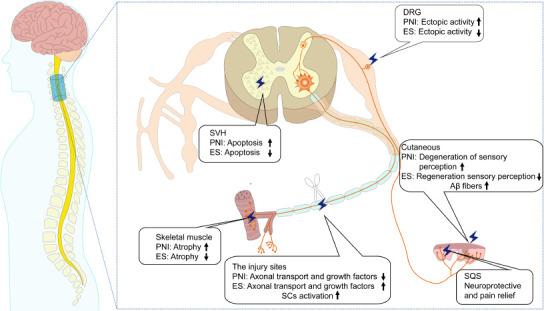
Previous studies on the mechanisms of peripheral nerve injury (PNI) have mainly focused on the pathophysiological changes within a single injury site. However, recent studies have indicated that within the central nervous system, PNI can lead to changes in both injury sites and target organs at the cellular and molecular levels. Therefore, the basic mechanisms of PNI have not been comprehensively understood. Although electrical stimulation was found to promote axonal regeneration and functional rehabilitation after PNI, as well as to alleviate neuropathic pain, the specific mechanisms of successful PNI treatment are unclear. We summarize and discuss the basic mechanisms of PNI and of treatment via electrical stimulation. After PNI, activity in the central nervous system (spinal cord) is altered, which can limit regeneration of the damaged nerve. For example, cell apoptosis and synaptic stripping in the anterior horn of the spinal cord can reduce the speed of nerve regeneration. The pathological changes in the posterior horn of the spinal cord can modulate sensory abnormalities after PNI. This can be observed in cases of ectopic discharge of the dorsal root ganglion leading to increased pain signal transmission. The injured site of the peripheral nerve is also an important factor affecting post-PNI repair. After PNI, the proximal end of the injured site sends out axial buds to innervate both the skin and muscle at the injury site. A slow speed of axon regeneration leads to low nerve regeneration. Therefore, it can take a long time for the proximal nerve to reinnervate the skin and muscle at the injured site. From the perspective of target organs, long-term denervation can cause atrophy of the corresponding skeletal muscle, which leads to abnormal sensory perception and hyperalgesia, and finally, the loss of target organ function. The mechanisms underlying the use of electrical stimulation to treat PNI include the inhibition of synaptic stripping, addressing the excessive excitability of the dorsal root ganglion, alleviating neuropathic pain, improving neurological function, and accelerating nerve regeneration. Electrical stimulation of target organs can reduce the atrophy of denervated skeletal muscle and promote the recovery of sensory function. Findings from the included studies confirm that after PNI, a series of physiological and pathological changes occur in the spinal cord, injury site, and target organs, leading to dysfunction. Electrical stimulation may address the pathophysiological changes mentioned above, thus promoting nerve regeneration and ameliorating dysfunction.
Overview
The claims and statistics of this paper haven’t been checked yet.
Run the check — free, no account needed. It reads the open-access text and checks the sources it cites.
Integrity signals
Registry
Cites
Statistics
Figures
Verification
Claims the paper makes
The claims and statistics of this paper haven’t been checked yet.
Run the check — free, no account needed. It reads the open-access text and checks the sources it cites.
Claims other papers make about this one
Each is checked against this paper’s own text: does it say what the citing paper says it does?
The cited source says what the claim attributes to it.
In the citing paper
“However, peripheral nerves have the potential to self-repair and regenerate, aided by conditions such as anatomical continuity of the injured site, myelination, and the extent of the injury [112].”
From Active Neural Interface Circuits and Systems for Selective Control of Peripheral Nerves: A Review (2024) · cites this paper as [112]
Self-check
Percentages, sums and reported differences re-computed from the paper’s own numbers.
The self-check needs the paper’s full text.
Citations
Cites
Antioxidants Maintain Cellular Redox Homeostasis by Elimination of Reactive Oxygen Species
He, L., He, T., Farrar, S., Ji, L., Liu, T., & Ma, X. (2017) · Cellular Physiology and Biochemistry · doi:10.1159/000485089 · Cited by 2,207
A CLASSIFICATION OF PERIPHERAL NERVE INJURIES PRODUCING LOSS OF FUNCTION
Sunderland, S. (1951) · Brain · doi:10.1093/brain/74.4.491 · Cited by 1,574
Neural plasticity after peripheral nerve injury and regeneration
Navarro, X., Vivó, M., & Valero‐Cabré, A. (2007) · Progress in Neurobiology · doi:10.1016/j.pneurobio.2007.06.005 · Cited by 908
Microglia in neuropathic pain: cellular and molecular mechanisms and therapeutic potential
Inoue, K., & Tsuda, M. (2018) · Nature Reviews Neuroscience · doi:10.1038/nrn.2018.2 · Cited by 908
Brief Electrical Stimulation Promotes the Speed and Accuracy of Motor Axonal Regeneration
Al‐Majed, A. A., Neumann, C. M., Brushart, T. M. E., & Gordon, T. (2000) · Journal of Neuroscience · doi:10.1523/jneurosci.20-07-02602.2000 · Cited by 851
Wallerian degeneration: an emerging axon death pathway linking injury and disease
Conforti, L., Gilley, J., & Coleman, M. P. (2014) · Nature reviews. Neuroscience · doi:10.1038/nrn3680 · Cited by 630
Adrenergic Excitation of Cutaneous Pain Receptors Induced by Peripheral Nerve Injury
Sato, J., & Perl, E. R. (1991) · Science · doi:10.1126/science.2011742 · Cited by 593
Al‐Majed, A. A., Brushart, T. M. E., & Gordon, T. (2000) · European Journal of Neuroscience · doi:10.1111/j.1460-9568.2000.01341.x · Cited by 484
Ploner, M., Sorg, C., & Groß, J. (2016) · Trends in Cognitive Sciences · doi:10.1016/j.tics.2016.12.001 · Cited by 472
Brushart, T. M. E., Hoffman, P. N., Royall, R. M., Murinson, B. B., Witzel, C., & Gordon, T. (2002) · Journal of Neuroscience · doi:10.1523/jneurosci.22-15-06631.2002 · Cited by 437
Research works printed but not linked: 1
- Gybels, 1990, The treatment of pain due to peripheral-nerve injury by electrical-stimulitation of the injured nerve, Adv Pain Res Ther, 13, 217
Cited by
Sorted by citations
Liu, M., Zhang, W., Han, S., Zhang, D., Zhou, X., Guo, X., Chen, H., Wang, H., Jin, L., Feng, S., et al. (2024) · Advanced Materials · doi:10.1002/adma.202313672 · Cited by 129
Hydrogel-based immunoregulation of macrophages for tissue repair and regeneration
Nie, R., Zhang, Q., Feng, Z.-Y., Huang, K., Zou, C., Fan, M., Zhang, Y., Zhang, J.-Y., Li‐Ling, J., Tan, B., et al. (2024) · International Journal of Biological Macromolecules · doi:10.1016/j.ijbiomac.2024.131643 · Cited by 75
Zhou, W., Rahman, M. S. U., Sun, C., Li, S., Zhang, N., Chen, H., Han, C. C., Xu, S., & Liu, Y. (2024) · Advanced Materials · doi:10.1002/adma.202307805 · Cited by 65
Wang, Q., Wang, H., Ma, Y., Cao, X., & Gao, H. (2022) · Biomaterials Science · doi:10.1039/d2bm01216b · Cited by 60
Wang, Q., Wei, Y., Yin, X., Zhan, G., Cao, X., & Gao, H. (2024) · Advanced Functional Materials · doi:10.1002/adfm.202400217 · Cited by 56
Decoding pain chronification: mechanisms of the acute-to-chronic transition
Zhang, S., Ning, Y., Yang, Y., Mu, G., Yang, Y., Ren, C., Liao, C., Ou, C., & Zhang, Y. (2025) · Frontiers in Molecular Neuroscience · doi:10.3389/fnmol.2025.1596367 · Cited by 69
“For instance, apoptosis of spinal anterior horn cells and synaptic stripping after peripheral nerve damage reduces the speed of nerve regeneration (Chu et al., 2022).”
Physical Cue‐Based Strategies on Peripheral Nerve Regeneration
Wei, Z., Jin, F., Li, T., Qian, L., Zheng, W., Wang, T., & Feng, Z. (2022) · Advanced Functional Materials · doi:10.1002/adfm.202209658 · Cited by 50
Yang, Q., Chen, R., Li, M., Song, H., Zhao, X., Zhang, L., Zhou, Y., Chen, J., Li, J., & Chen, M. (2024) · Advanced Functional Materials · doi:10.1002/adfm.202413080 · Cited by 45
Electroceuticals for peripheral nerve regeneration
Maeng, W., Tseng, W., Li, S., Koo, J., & Hsueh, Y. (2022) · Biofabrication · doi:10.1088/1758-5090/ac8baa · Cited by 47
Sharifi, M., Kamalabadi‐Farahani, M., Salehi, M., Atashi, A., Alizadeh, M., Kheradmandi, R., & Molzemi, S. (2022) · ACS Biomaterials Science & Engineering · doi:10.1021/acsbiomaterials.2c01216 · Cited by 47
Clinical applications of electrical stimulation for peripheral nerve injury: a systematic review
Costello, M. C., Errante, E. L., Smartz, T., Ray, W. Z., Levi, A. D., & Burks, S. S. (2023) · Frontiers in Neuroscience · doi:10.3389/fnins.2023.1162851 · Cited by 41
Grosu-Bularda, A., Vancea, C.-V., Hodea, F.-V., Cretu, A., Bordeanu-Diaconescu, E.-M., Dumitru, C.-Ş., Ratoiu, V.-A., Teodoreanu, R.-N., Lascăr, I., & Hariga, C.-S. (2025) · International Journal of Molecular Sciences · doi:10.3390/ijms26083895 · Cited by 43
“[266]. as at the Schwann cell level, leading to changes in the microenvironment at the injury site.”
Multistructured hydrogel promotes nerve regeneration
Zhu, N., Zhuang, Y., Sun, W., Wang, J., Wang, F., Han, X., Han, Z., Ni, M., Cui, W., & Qiu, Y. (2024) · Materials Today Advances · doi:10.1016/j.mtadv.2024.100465 · Cited by 31
The use of electrical stimulation to enhance recovery following peripheral nerve injury
Hardy, P. B., Wang, B. Y., Chan, K. M., Webber, C. A., & Senger, J. B. (2024) · Muscle & Nerve · doi:10.1002/mus.28262 · Cited by 31
Thakkar, V., Mehdipour, M., & Chang, S. J. (2025) · Frontiers in Neuroscience · doi:10.3389/fnins.2025.1594435 · Cited by 31
A review on external physical stimuli with biomaterials for bone repair
Luo, T., Tan, B., Liao, J., Shi, K., & Ning, L. (2024) · Chemical Engineering Journal · doi:10.1016/j.cej.2024.153749 · Cited by 30
Electrically Active Biomaterials for Stimulation and Regeneration in Tissue Engineering
Park, J., Erel‐Akbaba, G., Sharma, N., Das, R., Vinikoor, T., Liu, Y., Le, D., Angadi, K., & Nguyen, T. D. (2025) · Journal of Biomedical Materials Research Part A · doi:10.1002/jbm.a.37871 · Cited by 30
Sharifi, M., Kamalabadi‐Farahani, M., Salehi, M., Ebrahimi‐Barough, S., & Alizadeh, M. (2024) · Journal of Nanobiotechnology · doi:10.1186/s12951-024-02475-8 · Cited by 28
Application and progress of bionic scaffolds in nerve repair: a narrative review
Fang, J., Nan, L., Song, K., Weng, Z., Shan, J., Shahin, V., Liu, J., & Qian, Y. (2024) · Advanced technology in neuroscience . · doi:10.4103/atn.atn-d-24-00004 · Cited by 29
Yu, B., Bai, J., Guan, Y., Huang, X., Liang, L., Ren, Z., Song, X., Zhang, T., Yang, C. H., Dai, F., et al. (2024) · Biosensors and Bioelectronics · doi:10.1016/j.bios.2024.116578 · Cited by 27
Self-citationSong, J., Yuan, Z., Yu, X., Shen, Y., Wu, J., Sun, B., Qin, C. X., El-Newehy, M. H., Mo, X., & Gu, H. (2025) · Burns & Trauma · doi:10.1093/burnst/tkaf039 · Cited by 26
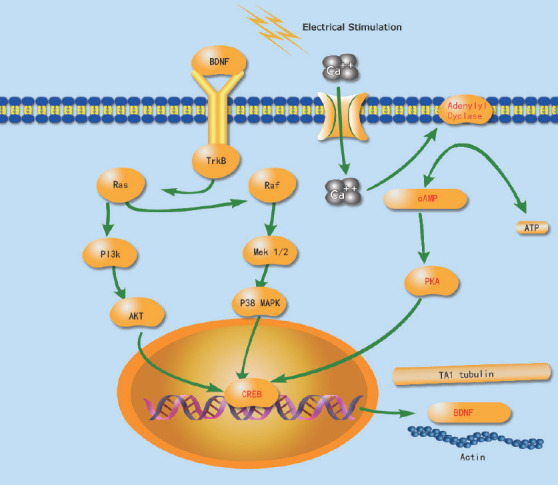
“The surge in cAMP activates protein kinase A (PKA), whose subunits enter the nucleus and stimulate CREB, which further promotes transcription of regeneration-associated proteins [6,54].”
Zhang, Z., Chang, D., Zeng, Z., Xu, Y., Yu, J., Fan, C., Yang, C., & Chang, J. (2024) · Materials Today Bio · doi:10.1016/j.mtbio.2024.101075 · Cited by 24
Borah, R., Clarke, D. D., Upadhyay, J., & Monaghan, M. G. (2024) · Materials Today Bio · doi:10.1016/j.mtbio.2024.101415 · Cited by 27
Liquid metal neuro-electrical interface
Zhang, X., Liu, C., Tang, R., Feng, W., Gao, J., Wu, B., Deng, Z., Liu, J., & Li, L. (2024) · Soft Science · doi:10.20517/ss.2023.58 · Cited by 23
Crosstalk among N6-methyladenosine modification and RNAs in central nervous system injuries
Tian, M., Mao, L., & Zhang, L. (2022) · Frontiers in Cellular Neuroscience · doi:10.3389/fncel.2022.1013450 · Cited by 22
Effect of electrical stimulation generated by self-powered systems for tissue repair
Chai, M., Li, Y., Li, Y., Zuo, Y., & Li, J. (2025) · Acta Biomaterialia · doi:10.1016/j.actbio.2025.05.047 · Cited by 22
Self-citationSong, J., Liao, C., Yuan, Z., Xiao, Y., Cui, J., Ding, Y., Shang, P., Wu, J., Binbin, S., El-Newehy, M. H., et al. (2025) · Carbohydrate Polymers · doi:10.1016/j.carbpol.2025.124178 · Cited by 19
Efficacy of Biological and Physical Enhancement on Targeted Muscle Reinnervation
Zhong, S., Zhang, Z., Su, H., Li, C., Lin, Y., Lu, W., Jiang, Z., & Yang, L. (2022) · Cyborg and Bionic Systems · doi:10.34133/2022/9759265 · Cited by 19
Adaptive Triboelectric Nanogenerators for Long-Term Self-Treatment: A Review
Zhao, Z., Lu, Y., Mi, Y., Meng, J., Wang, X., Cao, X., & Wang, N. (2022) · Biosensors · doi:10.3390/bios12121127 · Cited by 18
Yan, J., Wan, Y., Ji, Z., Li, C., Tao, C., Tang, Y., Zhang, Y., Liu, Y., & Liu, J. (2023) · Advanced Functional Materials · doi:10.1002/adfm.202303992 · Cited by 19
Physical modulation and peripheral nerve regeneration: a literature review
Zhai, X., & Wang, Y. (2024) · Cell Regeneration · doi:10.1186/s13619-024-00215-9 · Cited by 17
“For example, ES can cause axonal and cellular structural distortion leading to edema, therefore, the optimal parameters of ES are necessary to determine (Chu et al. 2022).”
Shang, K., Liu, Y., & Qadeer, A. (2025) · Experimental Biology and Medicine · doi:10.3389/ebm.2025.10746 · Cited by 22
Bueno, C. R. D. S., Tonin, M. C. C., Buchaim, D. V., Barraviera, B., Ferreira, R. S., Santos, P. S. D. S., Reis, C. H. B., Pastori, C. M., Pereira, E. D. S. B. M., Nogueira, D. M. B., et al. (2023) · Pharmaceuticals · doi:10.3390/ph16050653 · Cited by 17
Early Intensive Neurorehabilitation in Traumatic Peripheral Nerve Injury—State of the Art
Gouveia, D., Cardoso, A., Carvalho, C., Oliveira, A. C., de Almeida, A. P., Gamboa, Ó., Lopes, B., Coelho, A. F., Alvites, R., Varejão, A. S. P., et al. (2024) · Animals · doi:10.3390/ani14060884 · Cited by 21
“The effects of treatment on peripheral neurogenesis vary according to the position of stimulation [207].”
BackgroundInfluentialCochlear Implantation: Long-Term Effect of Early Activation on Electrode Impedance
Alahmadi, A., Abdelsamad, Y., Yousef, M. F., Almuhawas, F. A., Hafez, A., Alzhrani, F., & Hagr, A. A. (2024) · Journal of Clinical Medicine · doi:10.3390/jcm13113299 · Cited by 17
“However, further studies are needed to confirm our findings.”
ResultJin, M. Y., Weaver, T. E., Farris, A., Gupta, M., & Abd-Elsayed, A. A. (2023) · Biomedicines · doi:10.3390/biomedicines11041145 · Cited by 16
“In rat studies, it has been found that SCS is able to reduce harmful apoptosis during Wallerian degeneration that slows regeneration [11,45].”
BackgroundInfluentialBai, H., Zhang, S., Yang, H., Wang, J., Chen, H., Li, J., Li, L., Yang, Q., Peng, B., Zhu, Z., et al. (2024) · Bioactive Materials · doi:10.1016/j.bioactmat.2024.05.033 · Cited by 17
“Clinical evidence also supports the promotion of axon regeneration and muscle predominance through electrical stimulation [25,26].”
BackgroundZeng, F., Cao, J., Hong, Z., Lu, Y., Qin, Z., & Tao, T. (2023) · Neural Regeneration Research · doi:10.4103/1673-5374.371374 · Cited by 15
“The spinal cord serves as the hub that connects the central and peripheral nervous systems and has an essential effect on the pathophysiological process of NP by regulating immunomodulation, inflammation, metabolism, oxidative stress, and mitochondria (Finnerup et al., 2021; Chu et al., 2022).”
Deng, W., Li, X., Li, Y., Huang, Z., Wang, Y., Mu, N., Wang, J., Chen, T., Pu, X., Yin, G., et al. (2023) · Colloids and Surfaces B Biointerfaces · doi:10.1016/j.colsurfb.2023.113632 · Cited by 15
Self-citationZhang, W., Zhang, Y., Ma, H., Duan, L., Zhang, W., Ding, L., Kou, Y., & Jiang, B. (2025) · Gels · doi:10.3390/gels11110898 · Cited by 15
“Peripheral nerve injury (PNI) results in permanent limb dysfunction, manifested by chronic pain, muscle atrophy, and the partial or complete loss of motor and sensory functions [1,2].”
Functional material-mediated wireless physical stimulation for neuro-modulation and regeneration
Li, J., Wu, C., Zeng, M., Zhang, Y., Wei, D., Sun, J., & Fan, H. (2023) · Journal of Materials Chemistry B · doi:10.1039/d3tb01354e · Cited by 14
Neural repair and regeneration interfaces: a comprehensive review
Sha, B., & Du, Z. J. (2024) · Biomedical Materials · doi:10.1088/1748-605x/ad1f78 · Cited by 13
“Simultaneously, the cyclic adenosine monophosphate (cAMP) pathway augments the expression of critical regeneration associated genes, including T α 1 tubulin and growth associated protein-43 [44, 45].”
Song, X., Li, R., Chu, X., Li, Q., Li, R., Li, Q., Tong, R. K., Gu, X., & Ming, D. (2024) · Neural Regeneration Research · doi:10.4103/nrr.nrr-d-24-00641 · Cited by 14
Self-citationGao, H., Shen, H., Zhang, X., Liu, Y., Shang, Y., Sun, S., Guan, W., Gu, X., Yang, Y., & Li, G. (2025) · Bioactive Materials · doi:10.1016/j.bioactmat.2025.06.003 · Cited by 14
Self-citationKong, J., Teng, C., Liu, F., Wang, X., Zhou, Y., Zong, Y., Wan, Z., Qin, J., Yu, B., Mi, D., et al. (2024) · Frontiers in Neuroscience · doi:10.3389/fnins.2024.1361590 · Cited by 12
“…the combination of cell transplantation (Yi et al., 2020), extracellular matrix support (Meder et al., 2021), neurotrophic factors (Li et al., 2020), and physical therapies, such as electrical stimulation (Chen et al., 2019; Chu et al., 2022), within the framework of tissue engineering repair.”
BackgroundZhang, N., Yao, X., Zhang, Q., Zhang, C., Zheng, Q., Wang, Y., & Shan, F. (2025) · Biochimica et Biophysica Acta (BBA) - Molecular Basis of Disease · doi:10.1016/j.bbadis.2025.167804 · Cited by 12
Research progress in different physical therapies for treating peripheral nerve injuries
Chu, X., Zhao, X., Liu, S. J., Li, Y., Ding, N., Liu, M.-Q., Li, Q., & Li, Q. (2025) · Frontiers in Neurology · doi:10.3389/fneur.2025.1508604 · Cited by 13
Self-citationMarsh, E. B., Schellhardt, L., Hunter, D. A., Mackinnon, S. E., Snyder‐Warwick, A. K., & Wood, M. D. (2022) · Muscle & Nerve · doi:10.1002/mus.27748 · Cited by 12
“Rather than the usual regenerative pathway of a few pioneer axons extending first, with a majority of axons following, electrical stimulation creates a more coordinated front of axonal regeneration.(30) E-stim is hypothesized to achieve this effect through an action-potential–dependent mechanism in which retrograde ca…”
BackgroundInfluentialDai, F., Cheng, H., Qi, H., Cai, H., Aziz, A., Su, T., Guan, Y., Cui, Y., Meng, J., Deng, H., et al. (2026) · Nature Communications · doi:10.1038/s41467-026-68930-2 · Cited by 11
“The modulated neuronal excitability could have positive effects to promote regeneration 91 .”
Self-citationAn Updated Evaluation of the Management of Nerve Gaps: Autografts, Allografts, and Nerve Transfers
Johnson, A. R., Said, A. M., Acevedo, J., Taylor, R. W., Wu, K. Y., Ray, W. Z., Patterson, J. M. M., & Mackinnon, S. E. (2024) · Seminars in Neurology · doi:10.1055/s-0044-1791665 · Cited by 11
Zheng, F., Zhang, Y., Zhou, H., Li, J., Gao, J., Qu, X., Wu, X., Lu, S., Wang, Y., & Zhou, N. (2025) · Biomaterials Science · doi:10.1039/d4bm01570c · Cited by 11
Liu, J., Lin, Z., Wu, H., Zhang, J., Wang, F., Wang, L., Lu, S., & Gao, J. (2025) · Colloids and Surfaces B Biointerfaces · doi:10.1016/j.colsurfb.2025.114768 · Cited by 11
Active Neural Interface Circuits and Systems for Selective Control of Peripheral Nerves: A Review
Habibollahi, M., Jiang, D., Lancashire, H. T., & Demosthenous, A. (2024) · IEEE Transactions on Biomedical Circuits and Systems · doi:10.1109/tbcas.2024.3430038 · Cited by 11
“However, peripheral nerves have the [97] potential to self-repair and regenerate, aided by conditions such as anatomical continuity of the injured site, myelination, and the extent of the injury [112].”
Kaluskar, P., Bharadwaj, D., Iyer, K. S., Dy, C. J., Zheng, M., & Brogan, D. M. (2024) · Journal of Hand Surgery Global Online · doi:10.1016/j.jhsg.2024.03.005 · Cited by 11
“…Limited to the surface e though it can be increased with spectrally shifted variants 51 Can penetrate deeper depending on coil design 43,44,52 Can penetrate deep into tissues 45,50,53,54 Invasiveness Generally minimally invasive 55 Non-invasive 47,52,56 Invasive (electrodes required) 45,53,54”
BackgroundLi, J., Xie, Y., Zhao, J., Zhao, F., Bahatibieke, A., Liu, G., Meng, H., & Zheng, Y. (2025) · Composites Part B Engineering · doi:10.1016/j.compositesb.2025.112246 · Cited by 10
Al‐Hallak, M. A. G., Karkoutly, M., Hsaian, J. A., & Aljoujou, A. A. (2025) · Scientific Reports · doi:10.1038/s41598-025-01331-5 · Cited by 10
“The pain-relieving effect is linked to the stimulation of peripheral nerves, which raises ATP levels and helps maintain the stability of cell membranes, resulting in an elevated pain threshold 11 .”
Strategies for Treating Traumatic Neuromas with Tissue-Engineered Materials
Wan, T., Li, Q.-C., Qin, M.-Y., Wang, Y., Zhang, F., Zhang, X.-M., Zhang, Y.-C., & Zhang, P. (2024) · Biomolecules · doi:10.3390/biom14040484 · Cited by 9
“This advantage is particularly significant in cases of traumatic neuromas where the normal regenerative process may be compromised [99].”
BackgroundSelf-citationKou, Y., Jin, Z., Yuan, Y., Ma, B., Xie, W., & Han, N. (2024) · Neural Regeneration Research · doi:10.4103/nrr.nrr-d-22-00867 · Cited by 9
Liu, K., Shao, J., Han, B., Liu, J., Yan, S., Liu, B., & Liu, Y. (2025) · Materials Today Bio · doi:10.1016/j.mtbio.2025.101755 · Cited by 9
“The pathological consequences of PNI involve excessive ROS generation, leading to oxidative stress, protein denaturation, cellular necrosis, and persistent inflammation [30].”
Research progress on composite nerve guidance conduits with immune-regulatory functions
Zhang, S., Sun, X., Yang, X., Fan, Y., Liang, Y., Li, J., & Ling, J. (2025) · Frontiers in Immunology · doi:10.3389/fimmu.2025.1622508 · Cited by 9
“Grades I and II can recover slowly and spontaneously, while Grades III, IV, and V involve injuries to the endoneurial tubes, perineurium, and epineurium, respectively, typically requiring surgical intervention (8, 9).”
Biodegradable materials and devices for neuroelectronics
Kim, G., Hong, M., Lee, Y., & Koo, J. (2023) · MRS Bulletin · doi:10.1557/s43577-023-00529-0 · Cited by 9
Flexible Photovoltaic Neurostimulator for Analgesia
Jia, Q., Lin, X., Song, F., Shi, J., Zhao, Y., Yang, C., Li, W., & Fan, Z. (2025) · Advanced Materials · doi:10.1002/adma.202508607 · Cited by 8
Sonohata, M., Doi, A., Uchihashi, K., Hashimoto, A., Kii, S., Inoué, T., & Mawatari, M. (2023) · Journal of Pain Research · doi:10.2147/jpr.s401126 · Cited by 8
“pain is often accompanied by sensory loss, hyperalgesia, and allodynia.(9) Such complex sensory disturbance-induced”
BackgroundKostopoulos, D., Rizopoulos, K., McGilvrey, J., Hauskey, J., Courcier, J., Connor-Israel, K., Koster, H., & von Leden, R. E. (2025) · Journal of Diabetes Research · doi:10.1155/jdr/9970124 · Cited by 9
Li, X., Zhang, Y., Deng, Z., Zhao, X., Zhang, S., Shan, Y., Guo, B., & Han, Y. (2026) · Progress in Materials Science · doi:10.1016/j.pmatsci.2026.101660 · Cited by 8
Wen, D., Cao, S., & Feng, Y. (2023) · Ibrain · doi:10.1002/ibra.12132 · Cited by 7
“61 Scrambler therapy uses scrambler devices to transmit electrical stimulation to the skin.”
BackgroundA Review on Combined Strategy of Non-invasive Brain Stimulation and Robotic Therapy
Zhang, L., Chang, Y., Zhang, F., & Li, J. (2024) · Chinese Journal of Mechanical Engineering · doi:10.1186/s10033-024-01106-5 · Cited by 7
“Compared with tDCS, rTMS has better spatial accuracy and strength stability [53].”
BackgroundLourenço, L. R., dos Santos, E. F., de Jesus, L. C. T., Andrew, E. C., Baino, F., Borges, R., & Marchi, J. (2025) · Biomaterials Science · doi:10.1039/d4bm01531b · Cited by 7
Metabotropic Glutamate Receptor 5: A Potential Target for Neuropathic Pain Treatment
Manengu, C., Zhu, C., Zhang, G., Tian, M., Lan, X., Tao, L., Ma, L., Liu, Y., Yu, J., & Liu, N. (2024) · Current Neuropharmacology · doi:10.2174/1570159x23666241011163035 · Cited by 6
“After a nerve injury, the neurological system may process and transmit pain signals differently [7].”
Evolution of natural polymer nerve conduit technology in peripheral nerve repair: a narrative review
Zhang, X., Yao, L., Yan, Y., & Fu, M. (2024) · Advanced technology in neuroscience . · doi:10.4103/atn.atn-d-24-00011 · Cited by 6
Ji, Q., Zhang, N., Baojuan, Z., Chen, Y., Zhang, Q., Yao, X., Zhang, M., Zheng, Q., Ni, G.-X., & Shan, F. (2025) · Neuroreport · doi:10.1097/wnr.0000000000002209 · Cited by 6
3D printed scaffolds regulated by neural-bone metabolic coupling promote bone unit regeneration
Zhang, P., Li, L., Yan, C., Cao, X., Lai, N., Lei, Y., Jiang, K., Yang, H., Zhang, H., Cui, W., et al. (2025) · Bioactive Materials · doi:10.1016/j.bioactmat.2025.10.031 · Cited by 6
“…channels (TRPV1, CACNG7) on the surface of neuronal membranes by delivering electrical impulses accurately to trigger the enhancement of the frequency of calcium oscillations and directional transport of microtubules, which induces synaptic remodeling and facilitates nerve regeneration [16,17].”
Self-citationHsieh, Y., Lu, Y.-L., Yang, N.-P., & Yang, C. (2023) · International Journal of Molecular Sciences · doi:10.3390/ijms241813856 · Cited by 6
“Moreover, various forms of physical stimulation are ben-eficial for promoting the recovery of sensory function, such as electric stimulation [24], magnetic stimulation [25], ultrasonic stimulation [26], and laser therapy [27].”
Current Treatments and Future Directions for Facial Paralysis
Leckenby, J. I., Sweitzer, K. R., Olsen, T. C., Mayorga-Young, D., Milek, D., & Grobbelaar, A. O. (2024) · Facial Plastic Surgery · doi:10.1055/a-2358-9401 · Cited by 6
“69,70,78 Recent clinical trials have revealed signi fi cant potential for ES in human subjects.”
Exogenous Antioxidants in Remyelination and Skeletal Muscle Recovery
Cabezas-Pérez, R., Ávila-Rodriguez, M., & Salazar, D. H. R. (2022) · Biomedicines · doi:10.3390/biomedicines10102557 · Cited by 6
Wireless Battery‐Free Peripheral Nerve Stimulation Conch for Remote Muscle Activation
Mingwang, Z., Yang, G., Long, Z., Tang, Y. C., Li, D., Liang, S., Lin, R., Yang, Z., Bao, H., Xing, L., et al. (2023) · Advanced Materials Technologies · doi:10.1002/admt.202301458 · Cited by 6
Stem cell therapy: A promising therapeutic approach for skeletal muscle atrophy
Wang, Y., Chen, Z., Shen, Y., Wang, K., Han, Y.-M., Zhang, C., Yang, X.-M., & Chen, B. (2025) · World Journal of Stem Cells · doi:10.4252/wjsc.v17.i2.98693 · Cited by 6
“In addition, denervation-induced muscular atrophy is likewise associated with the diminished availability of neurotrophic factors and lowered levels of activity[25].”
Zhao, F., Liu, G., Guan, Y., Li, J., Wang, T., Zhao, J., He, W., Zhang, L., Meng, H., Xu, W., et al. (2025) · Advanced Fiber Materials · doi:10.1007/s42765-025-00590-1 · Cited by 5
Transcutaneous electrotherapy of facial nerve injuries based on dissolvable conductive microneedles
Lin, L., Yuan, X., Ma, L., Xu, L., Xie, W., Jiang, Y., Xiu, J., Xu, H., Tian, Z., Qu, J., et al. (2025) · Bioactive Materials · doi:10.1016/j.bioactmat.2025.07.013 · Cited by 5
“So far, some therapeutic approaches are available for facial nerve injury, including surgical intervention, pharmacotherapy ( e.g. , calcium-channel blocker, immunosuppressant, glucocorticoid), [19 – 21], and physical therapy [22,23].”
Targeted therapy: P2X3 receptor silencing in bone cancer pain relief
Jiang, Y., Liu, X., Zhang, H., & Xu, L. (2024) · Journal of Biochemical and Molecular Toxicology · doi:10.1002/jbt.70026 · Cited by 5
Aygün, D., & Uzun, H. (2025) · Nutrients · doi:10.3390/nu17111847 · Cited by 5
“This neuroinflammatory environment enhances neuronal excitability and synaptic plasticity, thereby lowering the seizure threshold and increasing the risk of seizure occurrence [52].”
Hardy, P. B., Wang, B. Y., Chan, K. M., Webber, C. A., & Senger, J. B. (2025) · Muscle & Nerve · doi:10.1002/mus.28385 · Cited by 5
“Multiple studies and review articles have cited cAMP as a key player in the mechanism of PES [65–68, 71, 73, 75–78]; this conclusion, however, is based on studies confirming brain-derived neurotrophic factor (BDNF) as a mediator of the PES effect [7, 36, 46–48, 55, 66, 70, 79–83].”
Peripheral nerve repair: innovations and future directions
Aldali, F., 唐莉, Yang, Y., Huang, Y., Li, Y., Deng, C., & Chen, H. (2026) · Journal of Translational Medicine · doi:10.1186/s12967-025-07567-z · Cited by 5
Self-citationWang, X., Hu, S., Ouyang, S., Pan, X., Fu, Y., Chen, X., & Wu, S. (2024) · Neuroscience Letters · doi:10.1016/j.neulet.2024.137691 · Cited by 4
Delayed repair of the facial nerve and its negative impacts on nerve and muscle regeneration
Bueno, C. R. D. S., Buchaim, D. V., Barraviera, B., Ferreira, R. S., Santos, P. S. D. S., Reis, C. H. B., Cini, M. A., Kuga, M. C., Rosa, G. M., & Buchaim, R. L. (2024) · The Journal of venomous animals and toxins including tropical diseases · doi:10.1590/1678-9199-jvatitd-2023-0093 · Cited by 4
Yu, F., Qi, T., Yuan, Y., Weng, J., Wang, T., Kou, Y., & Zeng, H. (2024) · Journal of Integrative Neuroscience · doi:10.31083/j.jin2308157 · Cited by 4
A Systematic Review of Registered Clinical Trials for Peripheral Nerve Injuries
Elhelali, A., & TUFFAHA, S. H. (2024) · Annals of Plastic Surgery · doi:10.1097/sap.0000000000003899 · Cited by 3
Akkoca, A., Gültekin, B., Şen, A., & Kutlu, S. (2025) · Scientific Reports · doi:10.1038/s41598-025-21500-w · Cited by 3
Meng, Q., Zhang, M., Zhang, Y., Jiang, H., Qu, Y., Li, C., Hu, C., Lin, Z., Xing, B., Zhu, F., et al. (2025) · Frontiers in Cell and Developmental Biology · doi:10.3389/fcell.2025.1725351 · Cited by 4
Kang, J., Li, J., Ouyang, Y., He, R., Guan, Y., Liu, G., Xiong, X., Liu, H., Wang, Y., & Zheng, Y. (2026) · Advanced Healthcare Materials · doi:10.1002/adhm.202504671 · Cited by 3
Chen, X., Gao, R., Liang, X., Liu, K. J. R., Wei, Z., Wu, X., Goto, T., Xiong, C., Xu, F., & Dai, H. (2026) · Regenerative Biomaterials · doi:10.1093/rb/rbag068 · Cited by 3
Huang, Y., Gong, Y., Liu, Y., & Lü, J.-Q. (2022) · Frontiers in Neurology · doi:10.3389/fneur.2022.991099 · Cited by 4
“This phenomenon may limit practical applications because NMES tends to cause muscle fatigue (73).”
BackgroundInfluentialClinical Approach to Chronic Pain due to Perioperative Nerve Injury
Terkawi, A. S., Altirkawi, O. K., Salmasi, V., & Ottestad, E. (2023) · Anesthesiology Clinics · doi:10.1016/j.anclin.2023.03.009 · Cited by 3
Zhang, Y., Zhao, X., Liu, M., Zhou, Z., Cheng, H.-B., Jiang, X., Zheng, Y., & Chen, Z. (2025) · Journal of Chinese Integrative Medicine · doi:10.1016/j.joim.2025.03.001 · Cited by 2
Raasveld, F. V., Johnston, B. R., Hao, D., Valerio, I. L., & Eberlin, K. R. (2025) · Microsurgery · doi:10.1002/micr.70112 · Cited by 2
Electroactive biomaterials in neural regeneration: Advances and therapeutic mechanisms
Diao, S., Liu, X., Li, Z., Zhu, S., Yuan, J., Liu, F., Lu, X., Luo, H., Farooq, U., Wu, J., et al. (2025) · Chinese Chemical Letters · doi:10.1016/j.cclet.2025.112205 · Cited by 2
Liu, D., Guan, W., Wu, X., Gao, J., Li, G., & Han, L. (2026) · Advanced Functional Materials · doi:10.1002/adfm.202526023 · Cited by 2
Zhu, L., Yan, H., Li, H., Pan, S., Yang, H., Zhu, Z., & Qi, Z. (2026) · Journal of Biological Engineering · doi:10.1186/s13036-026-00620-5 · Cited by 2
Emerick, T. D., Vorenkamp, K. E., Francio, V. T., Srinivasan, S. S., Singla, P., Castellanos, J. P., Ahadian, F. M., Chen, Z., Gianlorenco, A. L., Sarno, D. L., et al. (2026) · Pain Medicine · doi:10.1093/pm/pnag076 · Cited by 2
“121 Electrical stimulation modalities such as FES and tSCS are used to reduce spasticity and enhance motor control.”
Petrova, E. S., & Kolos, E. A. (2023) · CLINICAL AND EXPERIMENTAL MORPHOLOGY · doi:10.31088/cem2023.12.4.62-70 · Cited by 2
Metadata
- Authors
- Chu, X.-L., Song, X.-Z., Li, Q., Li, Y.-R., He, F., Gu, X.-S., & Ming, D.
- Affiliations
- Academy of Medical Engineering and Translational Medicine, Tianjin University, Tianjin, China
- Tianjin University (CN)
- Tianjin University of Sport (CN)
- Corresponding author
- He, Feng
- Gu, Xiao-Song
- Venue
- Neural Regeneration Research
- Published
- 2022-02-28
- Volume
- 17
- Issue
- 10
- Pages
- 2185-2193
- ISSN
- 1673-5374 (ISSN-L)
- 1876-7958
- PMC
- PMC9083151
- OpenAlex
- W4220934018
- Cited by
- 164
- References
- 122
- Citations by year
- 2026: 46 · 2025: 47 · 2024: 40 · 2023: 20 · 2022: 11
- FWCI
- 4.21
- Type
- journal article
- Language
- en
- Open access
- gold
- doi.org
- Licence
- cc-by-nc-sa
- Locations
- Neural Regeneration Research (publishedVersion, cc-by-nc-sa)
- PubMed Central (publishedVersion, cc-by-nc-sa)
- PubMed (publishedVersion)
- DOAJ (DOAJ: Directory of Open Access Journals) (submittedVersion, cc-by-sa)
- Topics
- Life Sciences › Neuroscience › Cellular and Molecular Neuroscience › Nerve injury and regeneration
- Health Sciences › Medicine › Surgery › Nerve Injury and Rehabilitation
- Life Sciences › Neuroscience › Cellular and Molecular Neuroscience › Neuroscience and Neural Engineering
- Keywords
- peripheral nerve injury, electrical stimulation, axon regeneration, neuropathic pain, spinal cord, synaptic stripping, dorsal root ganglia, ectopic discharges, denervation, skeletal muscle atrophy, hyperalgesia, functional rehabilitation, target organs
About these checks
Registry, retraction, Cites and statistics results are computed, not judged, with one exception: a printed reference that no index lists is read once by a model before it counts as a citation error. Claims are extracted by a model and kept only when their quote appears verbatim in the text; each cited source is then checked, with a model’s help, for whether it says what the claim relies on. Those verdicts can be wrong — read the claim’s quote and the cited source before relying on one.
Statistics and arithmetic are recomputed, not judged.
Confidence bands are shown only for fields calibrated on our annotated test set. None is calibrated yet, so no band is shown.
What counts as a claim ›How we measure confidence ›How we check this ›
Are you an author, or do you see a problem with this page? Request a review
