

The DOI matches its Crossref record; 56 of the 56 references it cites were found in a registry or an index.
Small extracellular vesicles secreted by induced pluripotent stem cell-derived mesenchymal stem cells improve postoperative cognitive dysfunction in mice with diabetes
Abstract
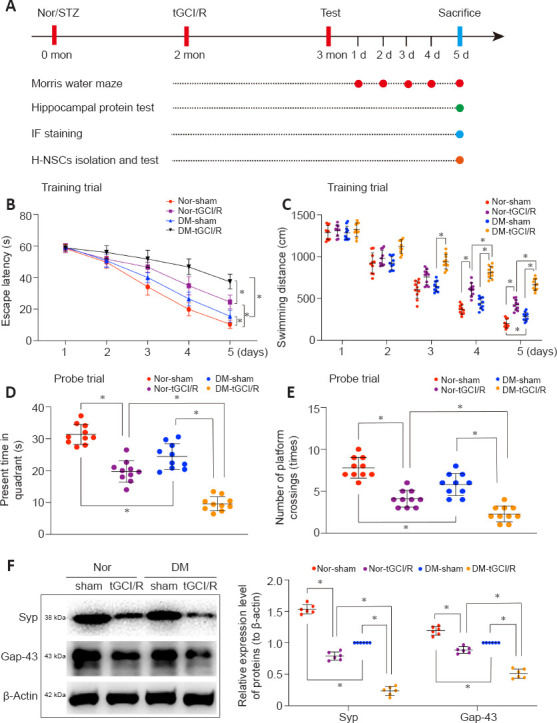
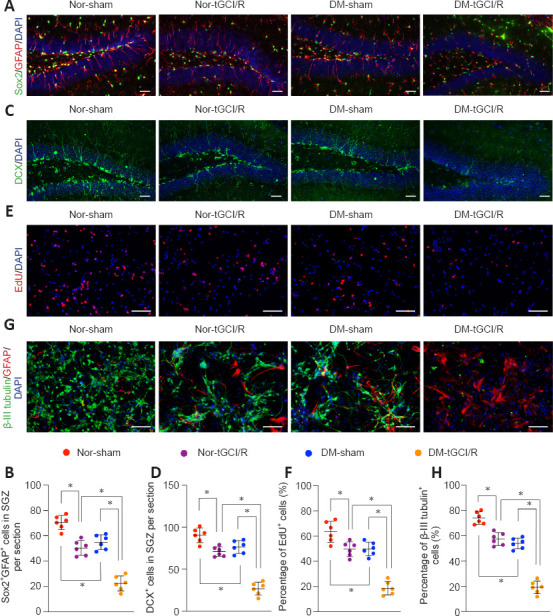
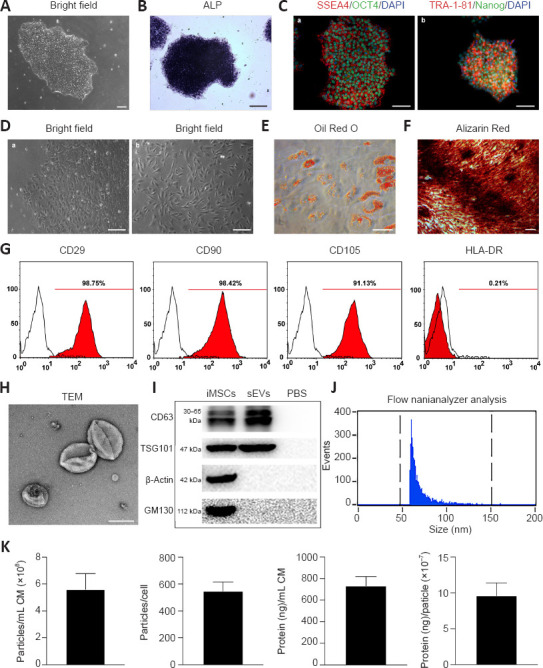
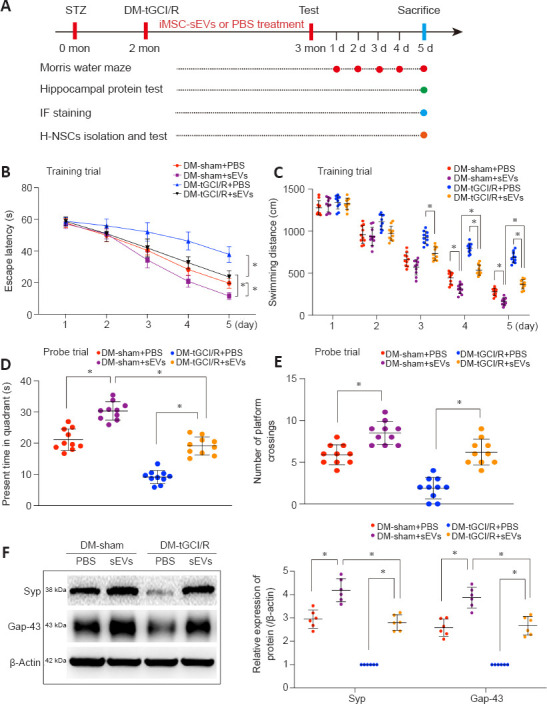
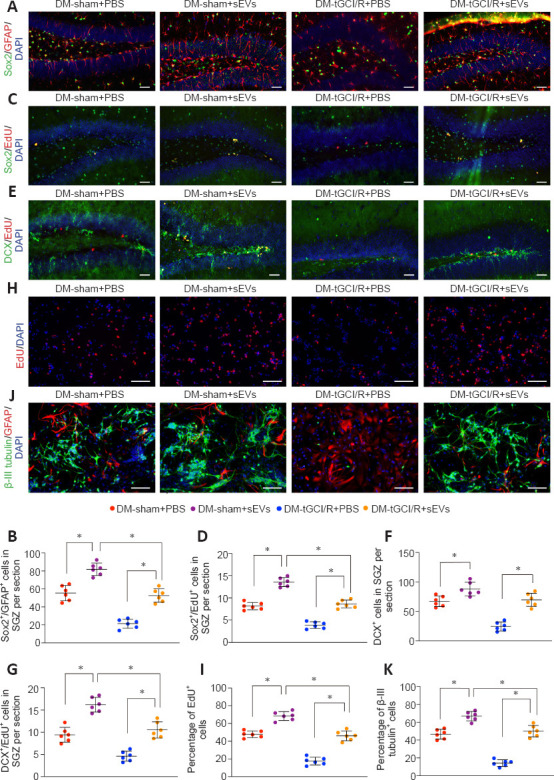
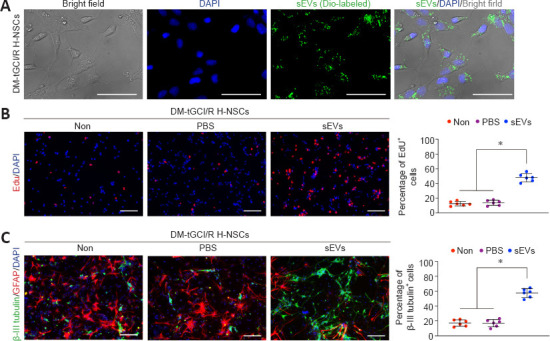
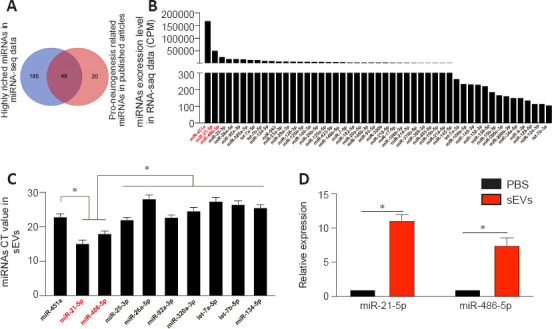
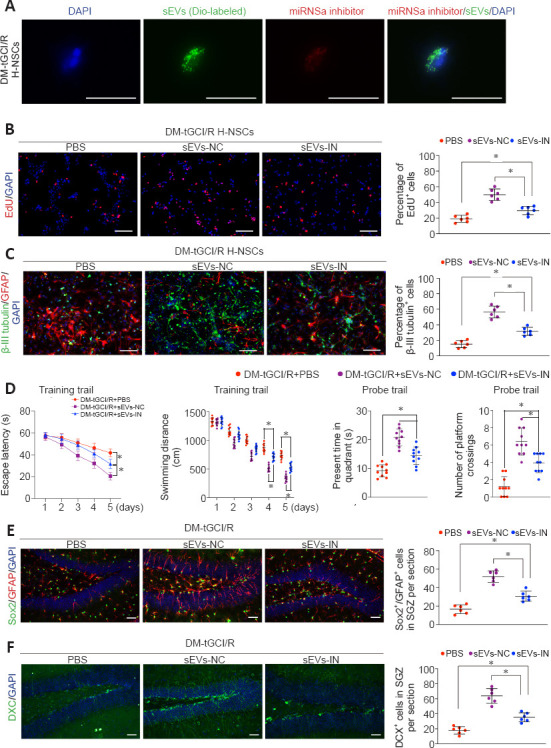
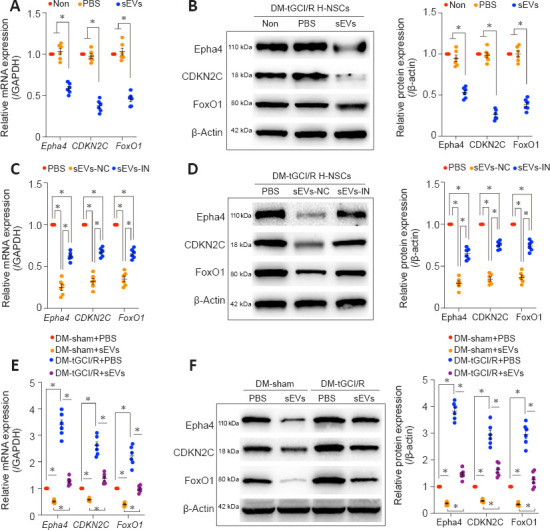
JOURNAL/nrgr/04.03/01300535-202303000-00039/figure1/v/2026-05-25T154646Z/r/image-tiff Postoperative cognitive dysfunction (POCD) is a common surgical complication. Diabetes mellitus (DM) increases risk of developing POCD after surgery. DM patients with POCD seriously threaten the quality of patients’ life, however, the intrinsic mechanism is unclear, and the effective treatment is deficiency. Previous studies have demonstrated neuronal loss and reduced neurogenesis in the hippocampus in mouse models of POCD. In this study, we constructed a mouse model of DM by intraperitoneal injection of streptozotocin, and then induced postoperative cognitive dysfunction by transient bilateral common carotid artery occlusion. We found that mouse models of DM-POCD exhibited the most serious cognitive impairment, as well as the most hippocampal neural stem cells (H-NSCs) loss and neurogenesis decline. Subsequently, we hypothesized that small extracellular vesicles secreted by induced pluripotent stem cell-derived mesenchymal stem cells (iMSC-sEVs) might promote neurogenesis and restore cognitive function in patients with DM-POCD. iMSC-sEVs were administered via the tail vein beginning on day 2 after surgery, and then once every 3 days for 1 month thereafter. Our results showed that iMSC-sEVs treatment significantly recovered compromised proliferation and neuronal-differentiation capacity in H-NSCs, and reversed cognitive impairment in mouse models of DM-POCD. Furthermore, miRNA sequencing and qPCR showed miR-21-5p and miR-486-5p were the highest expression in iMSC-sEVs. We found iMSC-sEVs mainly transferred miR-21-5p and miR-486-5p to promote H-NSCs proliferation and neurogenesis. As miR-21-5p was demonstrated to directly targete Epha4 and CDKN2C, while miR-486-5p can inhibit FoxO1 in NSCs. We then demonstrated iMSC-sEVs can transfer miR-21-5p and miR-486-5p to inhibit EphA4, CDKN2C, and FoxO1 expression in H-NSCs. Collectively, these results indicate significant H-NSC loss and neurogenesis reduction lead to DM-POCD, the application of iMSC-sEVs may represent a novel cell-free therapeutic tool for diabetic patients with postoperative cognitive dysfunction.
Overview
The claims and statistics of this paper haven’t been checked yet.
Run the check — free, no account needed. It reads the open-access text and checks the sources it cites.
Integrity signals
Registry
Cites
Statistics
Figures
Verification
Claims the paper makes
The claims and statistics of this paper haven’t been checked yet.
Run the check — free, no account needed. It reads the open-access text and checks the sources it cites.
Claims other papers make about this one
Each is checked against this paper’s own text: does it say what the citing paper says it does?
The cited source says what the claim attributes to it.
In the citing paper
“small Extracellular Vesicles (sEVs), also known as exosomes, have recently been established to play vital roles in mediating the crosstalk between cells [16, 17].”
From M2 microglia-derived small extracellular vesicles modulate NSC fate after ischemic stroke via miR-25-3p/miR-93-5p-TGFBR/PTEN/FOXO3 axis (2025) · cites this paper as [17]
Self-check
Percentages, sums and reported differences re-computed from the paper’s own numbers.
The self-check needs the paper’s full text.
Citations
Cites
NIH Image to ImageJ: 25 years of image analysis
Schneider, C. A., Rasband, W. S., & Eliceiri, K. W. (2012) · Nature Methods · doi:10.1038/nmeth.2089 · Cited by 64,638
Takahashi, K., & Yamanaka, S. (2006) · Cell · doi:10.1016/j.cell.2006.07.024 · Cited by 26,673
Saeedi, P., Petersohn, I., Salpea, P., Malanda, B., Karuranga, S., Unwin, N., Colagiuri, S., Guariguata, L., Motala, A. A., Ogurtsova, K., et al. (2019) · Diabetes Research and Clinical Practice · doi:10.1016/j.diabres.2019.107843 · Cited by 10,792
The ARRIVE guidelines 2.0: Updated guidelines for reporting animal research
Percie du Sert, N., Hurst, V., Ahluwalia, A., Alam, S., Avey, M. T., Baker, M., Browne, W. J., Clark, A., Cuthill, I. C., Dirnagl, U., et al. (2020) · PLOS Biology · doi:10.1371/journal.pbio.3000410 · Cited by 5,939
Delivery of siRNA to the mouse brain by systemic injection of targeted exosomes
Alvarez-Erviti, L., Seow, Y., Yin, H., Betts, C., Lakhal, S., & Wood, M. J. A. (2011) · Nature Biotechnology · doi:10.1038/nbt.1807 · Cited by 4,930
The ARRIVE guidelines 2.0: Updated guidelines for reporting animal research
Percie du Sert, N., Hurst, V., Ahluwalia, A., Alam, S., Avey, M. T., Baker, M., Browne, W. J., Clark, A., Cuthill, I. C., Dirnagl, U., et al. (2020) · Experimental Physiology · doi:10.1113/ep088870 · Cited by 3,497
Functional neurogenesis in the adult hippocampus
van Praag, H., Schinder, A. F., Christie, B. R., Toni, N., Palmer, T. D., & Gage, F. H. (2002) · Nature · doi:10.1038/4151030a · Cited by 2,853
Role of interleukin‐1β in postoperative cognitive dysfunction
Cibelli, M., Fidalgo, A. R., Terrando, N., Ma, D., Monaco, C., Feldmann, M., Takata, M., Lever, I. J., Nanchahal, J., Fanselow, M. S., et al. (2010) · Annals of Neurology · doi:10.1002/ana.22082 · Cited by 740
Tumor necrosis factor-α triggers a cytokine cascade yielding postoperative cognitive decline
Terrando, N., Monaco, C., Ma, D., Foxwell, B. M. J., Feldmann, M., & Maze, M. (2010) · Proceedings of the National Academy of Sciences · doi:10.1073/pnas.1014557107 · Cited by 726
Impact of diabetes on cognitive function and brain structure
Moheet, A., Mangia, S., & Seaquist, E. R. (2015) · Annals of the New York Academy of Sciences · doi:10.1111/nyas.12807 · Cited by 510
Research works printed but not linked: 1
- Zhang, 2022, Novel nano-delivery system:engineered small extracellular vesicles, Zhongguo Zuzhi Gongcheng Yanjiu, 26, 4417
Cited by
Zhang, Q., Yi, Y., Chen, T., Ai, Y., Chen, Z., Liu, G., Tang, Z., Chen, J., Xu, T., Chen, X., et al. (2025) · Journal of Nanobiotechnology · doi:10.1186/s12951-025-03390-2 · Cited by 27
Metadata
- Authors
- Lang, H.-L., Zhao, Y.-Z., Xiao, R.-J., Sun, J., Chen, Y., Hu, G.-W., & Xu, G.-H.
- Affiliations
- Department of Anesthesiology, The Second Affiliated Hospital of Nanchang University, Nanchang, Jiangxi Province, China
- The First Clinical Medical College of Nanchang University, Nanchang, Jiangxi Province, China
- Department of Neurosurgery, The Second Affiliated Hospital of Nanchang University, Nanchang, Jiangxi Province, China
- Venue
- Neural Regeneration Research
- Published
- 2022-08-02
- Volume
- 18
- Issue
- 3
- Pages
- 609-617
- ISSN
- 1673-5374
- 1876-7958
- PMC
- PMC9727445
- Cited by
- 33
- References
- 56
- Language
- en
About these checks
Registry, retraction, Cites and statistics results are computed, not judged, with one exception: a printed reference that no index lists is read once by a model before it counts as a citation error. Claims are extracted by a model and kept only when their quote appears verbatim in the text; each cited source is then checked, with a model’s help, for whether it says what the claim relies on. Those verdicts can be wrong — read the claim’s quote and the cited source before relying on one.
Statistics and arithmetic are recomputed, not judged.
Confidence bands are shown only for fields calibrated on our annotated test set. None is calibrated yet, so no band is shown.
What counts as a claim ›How we measure confidence ›How we check this ›
Are you an author, or do you see a problem with this page? Request a review
How to cite
Cite CoChat for the checks on this page, and the paper for its own findings.
- This page
- CoChat. (2026). Citation check: Small extracellular vesicles secreted by induced pluripotent stem cell-derived mesenchymal stem cells improve postoperative cognitive dysfunction in mice with diabetes. https://app.cochat.ai/papers/10.4103/1673-5374.350205
- The paper
- Lang, H.-L., Zhao, Y.-Z., Xiao, R.-J., Sun, J., Chen, Y., Hu, G.-W., & Xu, G.-H. (2023). Small extracellular vesicles secreted by induced pluripotent stem cell-derived mesenchymal stem cells improve postoperative cognitive dysfunction in mice with diabetes. Neural Regeneration Research. https://doi.org/10.4103/1673-5374.350205
Data sources
Bibliographic data: Semantic Scholar, OpenAlex, Crossref.
Contains information from the Semantic Scholar Academic Graph Datasets, made available under the ODC Attribution License (ODC-BY 1.0).
Semantic Scholar’s data is described in: Kinney, R., et al. (2023). The Semantic Scholar Open Data Platform. arXiv:2301.10140.
