

Risk of type 2 diabetes mellitus after gestational diabetes mellitus: A systematic review & meta-analysis
Open accessThe DOI matches its Crossref record; 63 of the 65 references it cites were found in a registry or an index.
Abstract
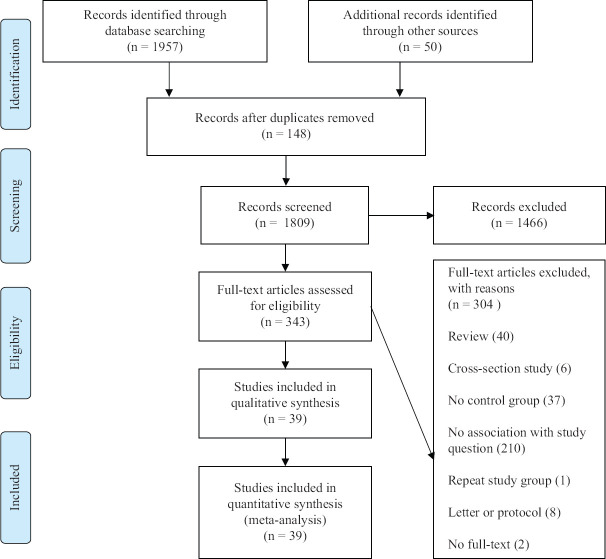
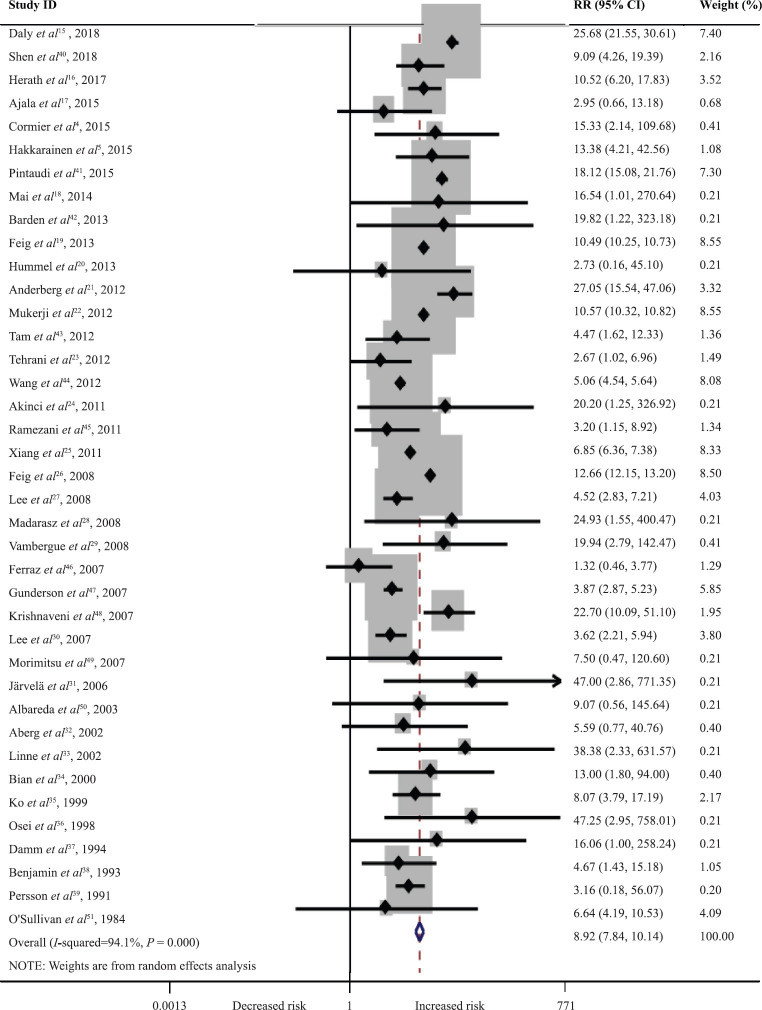
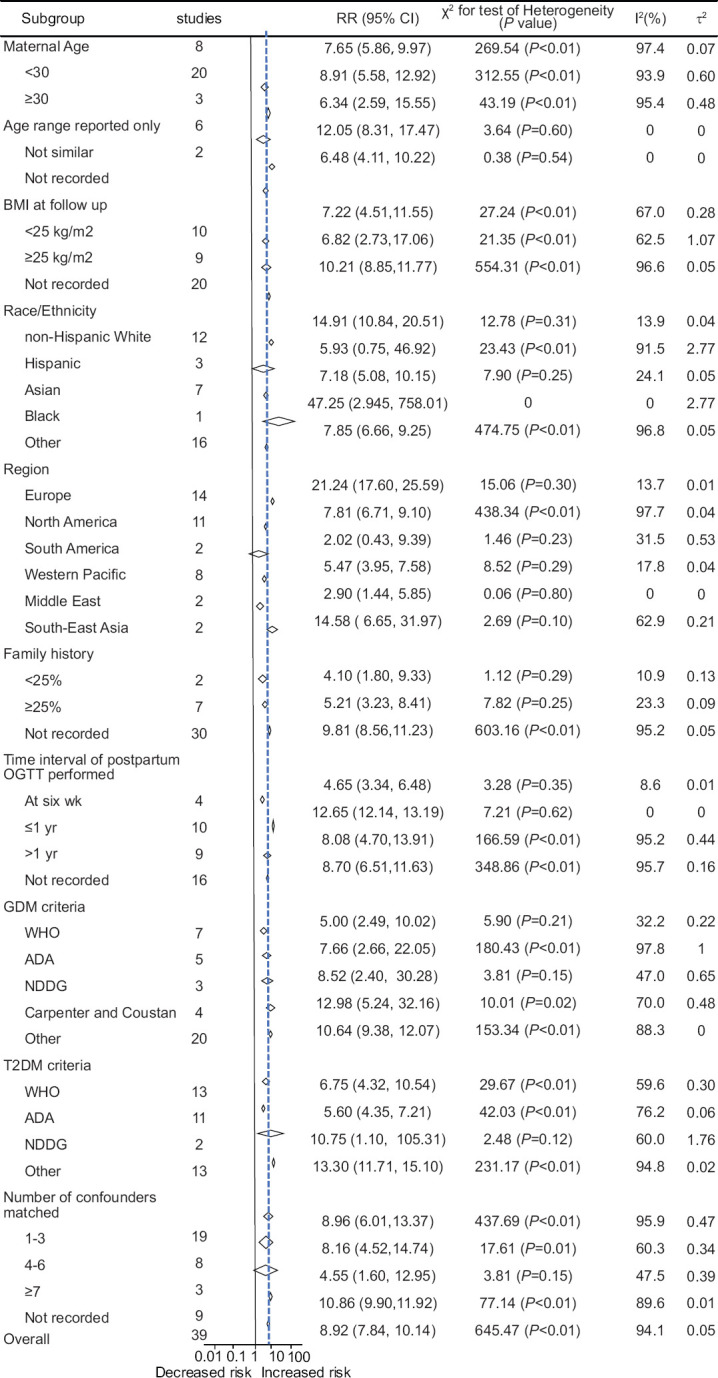
Background &objectives: Women with gestational diabetes are at an increased risk of being diagnosed as type 2 diabetes, but the postpartum screening rate is low. To provide evidence-based data for health providers and promote postpartum screening, this systematic review and meta-analysis was conducted to access the risks of type 2 diabetes mellitus (T2DM) diagnosis after gestational diabetes mellitus (GDM) in different demographic and maternal subgroups. Methods: MEDLINE, Embase and Cochrane Library were searched systematically. Unadjusted relative risks (RRs) and 95 per cent confidence intervals (CIs) were calculated and pooled using a random-effects model. Heterogeneity was assessed with Cochrane’s Q text and by calculating I 2 values. Subgroup analyses were conducted to address the disparities of type 2 diabetes conversion after gestational diabetes in different demographic and maternal subgroups. Results: 1809 publications were screened and 39 cohort studies including 2,847,596 women were selected. In these studies, 78,893 women were diagnosed as T2DM at six weeks or later after delivery. The unadjusted RRs of women diagnosed T2DM at six weeks or later after delivery ranged from 1.32 (95% CI, 0.46-3.37) to 47.25 (95% CI, 2.95-758.01) with a pooled unadjusted RR of 8.92 (95% CI, 7.84-10.14). Older women, women with a family history of diabetes, Black and non-Hispanic White women and women living in Europe and South-East Asia had a higher risk of developing T2DM after GDM. Interpretation & conclusions: It is suggested that healthcare providers may focus on older women with GDM and women with GDM and a family history of diabetes. Black and non-Hispanic White women with GDM may receive more attention, and healthcare providers, especially those in Europe and South-East Asia, may pay more attention to preventive measures for postpartum T2DM.
Overview
The claims and statistics of this paper haven’t been checked yet.
Free: it reads the open-access text and checks the first 5 claims that cite a source we can check. Create a free account to check every claim.
Integrity signals
Registry
Cites
Statistics
Figures
Verification
Claims the paper makes
The claims and statistics of this paper haven’t been checked yet.
Free: it reads the open-access text and checks the first 5 claims that cite a source we can check. Create a free account to check every claim.
Claims other papers make about this one
Each is checked against this paper’s own text: does it say what the citing paper says it does?
The source backs part of the claim, not all of it — or backs it for a different population, condition or comparison.
In the citing paper
“This risk is especially high for individuals with a high severity or postpartum continuation of glucose intolerance and high BMI199–201.”
From A global view of hypertensive disorders and diabetes mellitus during pregnancy (2022) · cites this paper as [201]
Experimental — accuracy not yet measuredThe source backs part of the claim, not all of it — or backs it for a different population, condition or comparison.
In the citing paper
“Women with GDM have a much higher risk of developing impaired glucose tolerance and T2DM in later life than women with uncomplicated pregnancies7,195–201”
From A global view of hypertensive disorders and diabetes mellitus during pregnancy (2022) · cites this paper as [201]
Experimental — accuracy not yet measured
Self-check
Percentages, sums and reported differences re-computed from the paper’s own numbers.
The self-check needs the paper’s full text.
Citations
Cites
IDF Diabetes Atlas: Global estimates of diabetes prevalence for 2017 and projections for 2045
Cho, N. H., Shaw, J. E., Karuranga, S., Huang, Y., da Rocha Fernandes, J. D., Ohlrogge, A. W., & Malanda, B. (2018) · Diabetes Research and Clinical Practice · doi:10.1016/j.diabres.2018.02.023 · Cited by 7,283
Type 2 diabetes mellitus after gestational diabetes: a systematic review and meta-analysis
Bellamy, L., Casas, J.-P., Hingorani, A. D., & Williams, D. (2009) · The Lancet · doi:10.1016/s0140-6736(09)60731-5 · Cited by 3,253
Standards of medical care in diabetes—2011
American Diabetes Association (2011) · Diabetes Care · doi:10.2337/dc11-s011 · Cited by 2,880
Gestational Diabetes and the Incidence of Type 2 Diabetes
Kim, C., Newton, K. M., & Knopp, R. H. (2002) · Diabetes Care · doi:10.2337/diacare.25.10.1862 · Cited by 2,276
Breastfeeding and maternal health outcomes: A systematic review and meta-analysis
Chowdhury, R., Sinha, B., Sankar, M. J., Taneja, S., Bhandari, N., Rollins, N., Bahl, R., & Martines, J. (2015) · Acta Paediatrica · doi:10.1111/apa.13102 · Cited by 1,143
Practice Bulletin No. 137: Gestational Diabetes Mellitus
(2013) · Obstetrics & Gynecology · doi:10.1097/01.aog.0000433006.09219.f1 · Cited by 581
Risk of development of diabetes mellitus after diagnosis of gestational diabetes
Feig, D. S., Zinman, B., Wang, X., & Hux, J. E. (2008) · Canadian Medical Association Journal · doi:10.1503/cmaj.080012 · Cited by 440
American Diabetes Association Standards of Medical Care in Diabetes 2017
Marathe, P. H., Gao, H. X., & Close, K. L. (2017) · Journal of Diabetes · doi:10.1111/1753-0407.12524 · Cited by 439
Gestational Diabetes Mellitus: Clinical Predictors and Long-Term Risk of Developing Type 2 Diabetes
Lee, A. J., Hiscock, R. J., Wein, P., Walker, S. P., & Permezel, M. (2007) · Diabetes Care · doi:10.2337/dc06-1816 · Cited by 375
Daly, B., Toulis, K. A., Thomas, N., Gokhale, K., Martin, J., Webber, J., Keerthy, D., Jolly, K., Saravanan, P., & Nirantharakumar, K. (2018) · PLOS Medicine · doi:10.1371/journal.pmed.1002488 · Cited by 328
Cited by
A global view of hypertensive disorders and diabetes mellitus during pregnancy
Jiang, L., Tang, K., Magee, L. A., von Dadelszen, P., Ekeroma, A., Li, X., Zhang, E., & Bhutta, Z. A. (2022) · Nature Reviews Endocrinology · doi:10.1038/s41574-022-00734-y · Cited by 314
Hassan, S., Gujral, U. P., Quarells, R. C., Rhodes, E. C., Shah, M. K., Obi, J., Lee, W.-H., Shamambo, L., Weber, M. B., & Narayan, K. M. V. (2023) · The Lancet Diabetes & Endocrinology · doi:10.1016/s2213-8587(23)00129-8 · Cited by 123
Zhou, Y.-C., Liu, J.-M., Zhao, Z., Zhou, M., & Ng, M. (2025) · Military Medical Research · doi:10.1186/s40779-025-00615-1 · Cited by 124
“An important risk factor for females is gestational diabetes (GDM) [56].”
Christensen, M. H., Rubin, K. H., Petersen, T. G., Nohr, E. A., Vinter, C. A., Andersen, M., & Jensen, D. M. (2022) · Cardiovascular Diabetology · doi:10.1186/s12933-022-01609-2 · Cited by 59
“The associations between GDM and future diabetes [4, 30] and between diabetes and future CVD [5, 6] are well described.”
BackgroundZhu, H., Zhao, Z., Liu, H., Cai, J., Lu, Q., Ji, L., & Xu, J. (2023) · Annals of Medicine · doi:10.1080/07853890.2023.2191218 · Cited by 46
Mantzorou, M., Papandreou, D., Pavlidou, E., Papadopoulou, S. Κ., Tolia, M., Mentzelou, M., Poutsidi, A., Antasouras, G., Vasios, G. K., & Giaginis, C. (2023) · Medicina · doi:10.3390/medicina59030455 · Cited by 51
“A new meta-analysis demonstrated that advanced maternal age, family history of diabetes, Black and non-Hispanic White ethnicities, and living in Europe and Southeast Asia are associated with increased probability of diabetes after being diagnosed with GDM [13].”
BackgroundWambua, S., Singh, M., Okoth, K., Snell, K. I. E., Riley, R. D., Yau, C., Thangaratinam, S., Nirantharakumar, K., Crowe, F. L., & on behalf of the MuM-PreDiCT Group (2024) · BMC Medicine · doi:10.1186/s12916-024-03284-4 · Cited by 50
“The list of the excluded reviews due to the overlap is provided in Additional file 1: Table S7 [102–107”
BackgroundMarschner, S. L., Pant, A., Henry, A., Maple-Brown, L. J., Moran, L., Cheung, N. W., Chow, C. K., & Zaman, S. J. (2023) · The Medical Journal of Australia · doi:10.5694/mja2.51932 · Cited by 33
Zeng, Q., Zou, D., Wei, Y., Ouyang, Y., Lao, Z., & Guo, R. (2022) · European journal of medical research · doi:10.1186/s40001-022-00688-x · Cited by 36
Diabetes detection in women with gestational diabetes and polycystic ovarian syndrome
Hanna, F., Wu, P., Heald, A. H., & Fryer, A. A. (2023) · BMJ · doi:10.1136/bmj-2022-071675 · Cited by 35
Implications of pregnancy on cardiometabolic disease risk: preeclampsia and gestational diabetes
Elgazzaz, M., Woodham, P. C., Maher, J. E., & Faulkner, J. (2024) · American Journal of Physiology-Cell Physiology · doi:10.1152/ajpcell.00293.2024 · Cited by 35
Chen, L., & Zhu, Y. (2024) · Current Diabetes Reports · doi:10.1007/s11892-024-01552-4 · Cited by 44
“The reported crude cumulative incidence of T2D after GDM varied from 2.6% to 93.4%, over studies followed 6.6 weeks to 30 years postpartum [16, 28, 29, 31, 39].”
InfluentialCardiometabolic Aspects of Congenital Adrenal Hyperplasia
Krysiak, R. G., der Grinten, H. L. C., Reisch, N., Touraine, P. A., & Falhammar, H. (2024) · Endocrine Reviews · doi:10.1210/endrev/bnae026 · Cited by 26
The effect of ambient ozone exposure on three types of diabetes: a meta-analysis
Yu, S., Zhang, M., Zhu, J., Xu, Y., Bigambo, F. M., Snijders, A. M., Wang, X., Hu, W., Lv, W., & Xia, Y. (2023) · Environmental Health · doi:10.1186/s12940-023-00981-0 · Cited by 24
Sabarathinam, S., Jayaraman, A., & Venkatachalapathy, R. (2025) · The Journal of Steroid Biochemistry and Molecular Biology · doi:10.1016/j.jsbmb.2025.106674 · Cited by 22
Marschner, S. L., Mukherjee, S., Watts, M., Min, H., Beale, A. L., O’Brien, J., Juneja, A., Tremmel, J. A., & Zaman, S. J. (2023) · Journal of the American Heart Association · doi:10.1161/jaha.123.030015 · Cited by 24
Prediction of recurrent gestational diabetes mellitus: a retrospective cohort study
Hahn, S., Körber, S., Gerber, B., & Stubert, J. (2023) · Archives of Gynecology and Obstetrics · doi:10.1007/s00404-022-06855-z · Cited by 20
Kuang, J., Sun, S., & Ke, F. (2023) · Medicine · doi:10.1097/md.0000000000034804 · Cited by 17
“[7] GDM is extremely harmful to both maternal and child and can affect the health of mother and offspring, possibly causing severe adverse consequences such as PIH, preeclampsia, and fetal anomaly.”
BackgroundEffects of dietary polyphenols on maternal and fetal outcomes in maternal diabetes
Zhao, L., Chang, Q., Cong, Z., Zhang, Y., Liu, Z., & Zhao, Y. (2023) · Food & Function · doi:10.1039/d3fo02048g · Cited by 15
Incretins as a Potential Treatment Option for Gestational Diabetes Mellitus
Pilszyk, A., Niebrzydowska-Tatus, M., Pilszyk, Z., Wierzchowska-Opoka, M., & Kimber-Trojnar, Ż. (2022) · International Journal of Molecular Sciences · doi:10.3390/ijms231710101 · Cited by 17
“Children born to GDM mothers are at increased risk of developing T2DM, CVD, obesity, and other metabolic diseases later in life [1,4,10].”
BackgroundInfluentialJiang, W., Zhou, H., Xu, G., Zhang, M., Tung, T., & Luo, C. (2025) · Ecotoxicology and Environmental Safety · doi:10.1016/j.ecoenv.2025.118080 · Cited by 14
The Incidence and Management of Type 2 Diabetes Mellitus After Gestational Diabetes Mellitus
Ikoh, C. L., & Tinong, R. T. (2023) · Cureus · doi:10.7759/cureus.44468 · Cited by 31
“Similarly, other studies have shown that geographic distribution pattern, age span, diagnostic standard, and BMI have an influence on the occurrence rate of T2DM in pregnancy, specifically in women with GDM [62].”
BackgroundLife-course management of gestational diabetes mellitus: A narrative review
Luo, Q.-J., & Ni, Q. (2025) · World Journal of Clinical Cases · doi:10.12998/wjcc.v13.i29.111096 · Cited by 16
“…30%-60% conversion within 5-10 years[30,36]; (2) Relative risk: 7-10-fold increase[11,25]; (3) Pooled meta-analysis: RR = 8.92 (95%CI: 7.84-10.14) [39]; (4) Ethnic disparities: Asian women convert at higher rates, even with similar BMI[36]; and (5) Screening: OGTT remains more sensitive than FPG…”
InfluentialChen, K., Tang, L., Wang, X. W., Li, Y., Zhang, X., Cui, S., Chen, W., Jin, Z., & Zhu, D. (2024) · Frontiers in Endocrinology · doi:10.3389/fendo.2024.1486861 · Cited by 20
Influence of Adipose Tissue on Early Metabolic Programming: Conditioning Factors and Early Screening
Puche-Juárez, M., Toledano, J. M., Ochoa, J. J., Díaz‐Castro, J., & Moreno‐Fernández, J. (2023) · Diagnostics · doi:10.3390/diagnostics13091510 · Cited by 18
“In addition, a recent meta-analysis reviewing a total of 39 articles concluded that women who develop GDM have a 9-fold increased risk of developing DM2 in the future [87].”
BackgroundChen, Z., Jiang, G., Jiang, G., Ma, S., Zhu, Y., & Zhao, M. (2024) · Cytokine · doi:10.1016/j.cyto.2024.156734 · Cited by 10
Žutić, M., Matijaš, M., Štefulj, J., Brekalo, M., & Radoš, S. N. (2024) · BMC Pregnancy and Childbirth · doi:10.1186/s12884-024-07046-1 · Cited by 13
Precision Interventions Targeting the Maternal Metabolic Milieu for Healthy Pregnancies in Obesity
Niclou, A. M., Cabre, H. E., Flanagan, E. W., & Redman, L. M. (2024) · Current Diabetes Reports · doi:10.1007/s11892-024-01550-6 · Cited by 9
“Maternal GDM increases the risk of APOs such as pre-eclampsia, macrosomia, neonatal hypoglycemia, and impaired glucose tolerance and long-term risk of type 2 diabetes mellitus, and cardiovascular disease in both parent and child [26–28].”
Astbury, N. M., Ripullone, K., Ramakrishnan, R., Woodward, M., & Hirst, J. E. (2025) · Diabetes Obesity and Metabolism · doi:10.1111/dom.70210 · Cited by 9
“…2, 3, 4 and 5 or more); most recently recorded smoking status (divided into never smoking, ex-smoker or light [1 – 9 cigarettes per day], moderate [10 – 19 cigarettes per day] or heavy smoker [ ≥ 20 cigarettes per day]); and pre-pregnancy BMI (calculated as the mean of any BMI measure in the…”
Classification and identification of risk factors for type 2 diabetes
Tang, S., Zhao, X., An, X., Sun, W., Kang, X., Sun, Y., Jiang, L., Gao, Q., Li, Z., Ji, H., et al. (2025) · World Journal of Diabetes · doi:10.4239/wjd.v16.i2.100371 · Cited by 10
Wang, Y., Fan, Z., Ren, J., & Ma, L. (2024) · Diabetes Metabolic Syndrome and Obesity · doi:10.2147/dmso.s475385 · Cited by 6
Guo, P., Yin, J., Xiang, Z., Chen, D. D., Xu, P., Wang, X., Zhang, W., Mao, M., Zheng, Q., & Feng, S. (2022) · Journal of Medical Internet Research · doi:10.1136/bmjopen-2022-061151 · Cited by 33
Predictive value of first-trimester GPR120 levels in gestational diabetes mellitus
He, Q., Lin, M., Wu, Z., & Yu, R. (2023) · Frontiers in Endocrinology · doi:10.3389/fendo.2023.1220472 · Cited by 7
Zeng, Y., & Piao, Y. (2024) · Experimental and Clinical Endocrinology & Diabetes · doi:10.1055/a-2293-7983 · Cited by 5
“Compared to pregnant women with normal glucose tolerance, GDM patients have higher risks of perinatal morbidity and mortality, operative delivery, and subse - quent occurrence of type 2 diabetes mellitus (T2DM) and cardio - vascular complications [6–9].”
BackgroundBoath, A., Vale, L. D., Hayes, L., Allotey, J., & Heslehurst, N. (2023) · BMJ Open · doi:10.1136/bmjopen-2022-065335 · Cited by 7
Manoharan, N., Jayaseelan, V., Kar, S. S., & Jha, N. (2022) · Indian Journal of Endocrinology and Metabolism · doi:10.4103/ijem.ijem_164_22 · Cited by 5
Omega-3 fatty acids prevent gestational diabetes mellitus via modulation of lipid metabolism
Zhang, X., Li, F., Yang, B., Zhang, W., & Wang, Y. (2024) · Open Life Sciences · doi:10.1515/biol-2022-0928 · Cited by 5
“Additionally, pregnant women with GDM consistently provide a high-glycemic environment for the fetus, which may increase the probability of neonatal obesity, metabolic syndrome, and other cardiometabolic disorders in the o ff spring [11].”
BackgroundRacey, M., Alliston, P., Sherifali, D., Sriskandarajah, A., Sushko, K., & Lipscombe, L. L. (2025) · Diabetes Research and Clinical Practice · doi:10.1016/j.diabres.2025.112269 · Cited by 7
Gómez‐Cabrera, A. S., Santiago, A. E. G., Castañeda‐Arellano, R., Corona-Meraz, F.-I., Baptista-Rosas, R. C., & Parada, M. G. S. (2025) · International Journal of Molecular Sciences · doi:10.3390/ijms26167977 · Cited by 6
“The most common complications include an increased likelihood of requiring a cesarean section [3], preeclampsia [4], and a higher risk of progressing to type 2 diabetes mellitus (T2DM), although GDM resolves in most cases after delivery [5].”
Shi, S., Xie, C., Xiao, J.-M., Liu, Y., & Cai, S. (2025) · International Journal of Women s Health · doi:10.2147/ijwh.s551553 · Cited by 5
Self-citationQiu, Y., Tang, Y., Li, Y., Cheng, L., Wang, X., Du, B., & Bai, R. (2025) · Primary care diabetes · doi:10.1016/j.pcd.2025.08.010 · Cited by 5
Predictors of postpartum glucose metabolism disorders in women with gestational diabetes mellitus
García‐Moreno, R. M., Benítez‐Valderrama, P., Barquiel, B., Hillman, N., Herranz, L., & de Villar, N. G. P. (2022) · Diabetes & Metabolic Syndrome Clinical Research & Reviews · doi:10.1016/j.dsx.2022.102629 · Cited by 4
Zeng, Q., Yang, T., Wei, W., Zou, D., Wei, Y., Han, F., He, J., Huang, J., & Guo, R. (2023) · Frontiers in Endocrinology · doi:10.3389/fendo.2023.1235581 · Cited by 5
“GDM has detrimental consequences on both maternal and fetal development and increases the risk of developing type 2 diabetes mellitus (T2DM) in postpartum women (3).”
BackgroundFunctional genetic variants and susceptibility and prediction of gestational diabetes mellitus
Huang, G., Sun, Y., Li, R., Mo, L., Liang, Q., & Yu, X. (2024) · Scientific Reports · doi:10.1038/s41598-024-69079-y · Cited by 5
Primary Care for Gestational Diabetes: A Bibliometric Analysis of Publications from 1991 to 2024
Макашева, А. М., Yermukhanova, L. S., Kudabayeva, K. I., Tazhbenova, S., Nogayeva, M. G., Tautanova, A., & Zhylkybekova, A. (2024) · International Journal of Environmental Research and Public Health · doi:10.3390/ijerph21111405 · Cited by 5
“…include advanced maternal age during the first pregnancy [5], maternal obesity with a BMI of ≥ 30 kg/m 2 [6], GDM in a previous pregnancy [7], ethnicity [8], pre-existing hypertension or cardiovascular disease [9], and a family history of diabetes or a prior large baby weighing ≥ 4000 g [10].”
Epidemiology and long-term effects of gestational diabetes mellitus
Cho, G. J., & Bae, J. G. (2024) · Journal of Korean Medical Association · doi:10.5124/jkma.2024.67.11.679 · Cited by 3
Tekin, S., Öçal, A., Güleroğlu, F. Y., Selcuk, C. G. O., Eyisoy, Ö. G., Ocal, E. U. B., & Çetin, A. (2025) · Journal of Perinatal Medicine · doi:10.1515/jpm-2025-0135 · Cited by 2
“Large cohort studies [26, 27] and meta-analyses [28, 29] have also reported that family history of DM has been identi fi ed as one of the strongest predictors of GDM.”
Liang, Y., Liu, Q., Sun, X., & Wang, Y. (2025) · Frontiers in Public Health · doi:10.3389/fpubh.2025.1589416 · Cited by 2
Gestational Diabetes Mellitus and Future Risk of Cardiovascular Disease
Bhake, R. C., Chittake, V., Lumpatki, S. B., Tiwari, S., & Unnikrishnan, A. G. (2025) · Chronicle of Diabetes Research and Practice · doi:10.4103/cdrp.cdrp_12_25 · Cited by 3
Xiang, Q., Guo, P., Tian, Q., Liang, Y., Zhang, F., Zhuo, L., Yang, Y., Zhao, C., Zhang, Y., & Lei, L. (2026) · Scientific Reports · doi:10.1038/s41598-026-36679-9 · Cited by 2
Cook, C. E., Brown, H. K., Grandi, S. M., Kim, C., & Banack, H. R. (2026) · Paediatric and Perinatal Epidemiology · doi:10.1111/ppe.70154 · Cited by 2
From Pregnancy to Postpartum: The Cardiovascular Risks Associated with Gestational Diabetes
Sharma, R., Singh, U., Kamal, R., & Kumar, R. (2025) · Current Cardiology Reviews · doi:10.2174/011573403x354645250329171327 · Cited by 4
Naringenin: A Potential Flavonoid Phytochemical For Diabetes Management
Pansare, K. V., Ahire, Y. S., & Bairagi, V. A. (2025) · Biosciences Biotechnology Research Asia · doi:10.13005/bbra/3411 · Cited by 2
Alfitni, D., Ageel, M., Alsulami, E., & Alzahrani, A. (2024) · Cureus · doi:10.7759/cureus.75691 · Cited by 3
“According to two independent meta-analyses, published in 2020 [5] and 2021 [6], women with GDM have an 8.9-to 9.5-fold higher risk of developing T2DM.”
InfluentialZhu, Y. Y., Cheng, Q., Liao, W., Wang, H., & Wang, R. (2025) · Medicine · doi:10.1097/md.0000000000043311 · Cited by 3
“[7,8] Therefore, effective management and nursing interventions for high-risk GDM pregnant women are of paramount importance.”
Hao, Y., Wang, N., Hong, S., Liu, Y., Lin, G., Xu, X., Zhou, Y., Wen, X., Sun, B., Wang, H., et al. (2025) · Frontiers in Nutrition · doi:10.3389/fnut.2025.1634419 · Cited by 1
Self-citationBallena-Caicedo, J., Valladolid-Sandoval, L. A. M., Zuzunaga-Montoya, F. E., & Vera-Ponce, V. J. (2025) · Endocrine and Metabolic Science · doi:10.1016/j.endmts.2025.100285 · Cited by 3
He, N., Wu, H., An, N., Bu, J., Li, Y., Dai, Y., Ou, Y., & He, F. (2026) · Journal of Alzheimer s Disease · doi:10.1177/13872877261435200 · Cited by 1
“48 Finally, the restriction to participants of European ancestry and the “ healthy volunteer ” bias of the UK Biobank limit the generalizability of our fi ndings to diverse populations.”
Agarwal, M., Lal, M., & Vyas, C. D. (2022) · International Journal of Environmental Research and Public Health · doi:10.3390/ijerph192113946 · Cited by 3
“In general, follow-up studies after GDM from the Middle East are almost non-existent as pointed out by a metanalysis of 39 cohort studies [6].”
BackgroundGestasyonel Diyabetes Mellitusun Emzirme ve Doğum Sonu Dönem Üzerine Etkisi
KINIK, E., Yılmaz, T., Kaya, H. D., & Günaydın, S. (2023) · KTO Karatay Üniversitesi Sağlık Bilimleri Dergisi · doi:10.59244/ktokusbd.1263478 · Cited by 2
Taieb, A., Majdoub, M., Souissi, N., Chelly, S., & Abdelkrim, A. B. (2024) · Cureus · doi:10.7759/cureus.56218 · Cited by 2
“In 2021, a systematic review and meta-analysis including approximately 2.8 million women identified older age and family history of diabetes as two of the most common risk factors for T2DM after GDM [16].”
BackgroundInfluentialAssociation of Body Mass Index with Gestational Diabetes Mellitus—an Indian Viewpoint
Patwa, P., Sharma, C., Shekhar, S., Singh, P., Gupta, N., Ghuman, N. K., Purohit, P., & Sharma, P. P. (2022) · SN Comprehensive Clinical Medicine · doi:10.1007/s42399-022-01263-5
Cömert, T. K., YILDIZ, E., Akpınar, F., & İskender, C. (2023) · Journal of Health Sciences and Medicine · doi:10.32322/jhsm.1309434
Khoshnazar, S. M., Najafipour, H., SoltaniNejad, L., Pezeshki, S., & Yousefzadeh, G. (2023) · Italian Journal of Medicine · doi:10.4081/itjm.2023.1642
Jiao, J.-R., Gao, Y.-N., Wang, L.-C., Wang, J., Jia, W.-J., Xue, H.-L., Li, R., Wu, H., & Wang, M. (2023) · Endocrine Metabolic & Immune Disorders - Drug Targets · doi:10.2174/0118715303247457231018080709 · Cited by 1
Gestational Diabetes as a Risk Factor for Cardiovascular Disease
Benham, J. L., & Yamamoto, J. M. (2023) · Advances in biochemistry in health and disease · doi:10.1007/978-3-031-39928-2_9
Omega-3 fatty acids prevent gestational diabetes mellitus via modulating lipid metabolismPreprint
Zhang, X., Li, F., Yang, B., & Zhang, W. (2023) · Research Square · doi:10.21203/rs.3.rs-3796352/v1
Омариевна, У. Ф., Demidova, T. Y., & Korotkova, T. N. (2023) · Diabetes Mellitus · doi:10.14341/dm13049
Milluzzo, A., Manuella, L., Frittitta, L., & Sciacca, L. (2024) · Diabetes Research and Clinical Practice · doi:10.1016/j.diabres.2024.111653 · Cited by 3
Sun, S., Chen, C., Qian, S., & Cai, Y. (2024) · Acta Paulista de Enfermagem · doi:10.37689/acta-ape/2024ao00001773 · Cited by 6
Sun, S., Chen, C. L., Qian, S., & Cai, Y. (2024) · Acta Paulista de Enfermagem · doi:10.37689/acta-ape/2024ao000017733
“All members received strict training on the special nursing strategies and methods for GDM.”
ResultInfluentialYu, D., Fu, H., Zhao, Z., Pickering, K., Baker, J., Cutfield, R. G., Orr‐Walker, B., Sundborn, G., Cai, Y., Wang, Z., et al. (2024) · BMJ Open Diabetes Research & Care · doi:10.1136/bmjdrc-2024-004210 · Cited by 2
Zu, Y., Xu, X., Xiu, X., Xie, Y., Yi, H., Zheng, L., & Yan, J. (2025) · Clinical and Experimental Obstetrics & Gynecology · doi:10.31083/ceog26808
“A previous meta-analysis reported that women with GDM had an approximately a 10-fold higher risk of developing T2DM compared to controls [5].”
Saxena, P., Arora, S. K., Prakash, A., Chawla, R., Chandrasekar, A., Divakar, H., Jain, R. K., & Seshiah, V. (2025) · The Journal of Obstetrics and Gynecology of India · doi:10.1007/s13224-025-02123-7
“In a metanalysis done by Huaxuan You et al. [13] including 39 cohort studies involving 2,847,596 women with GDM, unadjusted RR of women diagnosed T2DM at 6 weeks or later after delivery ranged from 1.32 to 47.25 with a pooled unadjusted RR of 8.92.”
InfluentialClinical guidelines for women with a history of gestational diabetes and their offspring
Zahedi, M., Eshghinia, S., Zanganeh, M., Sabzi, Z., Nikpayam, O., & Habibi-koolaee, M. (2025) · Journal of Diabetes & Metabolic Disorders · doi:10.1007/s40200-025-01689-3
Socioeconomic status and risk of gestational diabetes mellitus among pregnant women in Zunyi, China
Xie, Y., Jiang, J., Yang, J., Gao, S., Zeng, R., Liu, Y., Wang, L., Xu, P., Tian, K., Xiong, S., et al. (2025) · PeerJ · doi:10.7717/peerj.19782
“…substantial clinical burdens: affected women exhibit elevated risks of pregnancy complications ( e.g. , preeclampsia) and long-term metabolic sequelae including diabetes and cardiovascular diseases ( Harreiter, Dovjak & Kautzky-Willer, 2014 ; You et al., 2021 ; Yogev, Xenakis & Langer, 2004 ).”
Self-citationLi, R., Sun, Y., Liang, Q., He, X., Nie, L., Huang, J. H., & Yu, X. (2025) · Frontiers in Nutrition · doi:10.3389/fnut.2025.1665813
Canjuga, I., Vuković, D., Kolarić, V., Rahelić, D., Kozina, G., Mijoč, V., Sajko, M., Uršulin-Trstenjak, N., Kranjčević-Ščurić, M., & Kelečić, I. L. (2025) · Nursing Reports · doi:10.3390/nursrep15110408
“Numerous risk factors for T2DM have been identified, including age [18], obesity [19,20], gender [5], ethnicity [21], inactivity [22,23], poor diet [15,24], family history [6], gestational diabetes [25,26], hypertension [27], and dyslipidemia [28].”
Yu, S., Zhang, M., Zhu, J., Yang, X., Bigambo, F. M., Snijders, A. M., Wang, X., Hu, W., Lv, W., & Xia, Y. (2024) · Figshare · doi:10.6084/m9.figshare.26579123
Zeng, Q., Zou, D., Wei, Y., Ouyang, Y., Lao, Z., & Guo, R. (2022) · Figshare · doi:10.6084/m9.figshare.19728809
Yin, X., Gao, Y., & Liu, Y. (2025) · Clinical and Experimental Obstetrics & Gynecology · doi:10.31083/ceog41004
Self-citationHuang, Q., Lai, F., & Lan, L. (2025) · BMC Pregnancy and Childbirth · doi:10.1186/s12884-025-08610-z
“Furthermore, when the elevated maternal glucose can cross the placenta, causing high osmotic diuresis, which may inhibit fetal growth and development; growth restriction thus increases the risk of SPB [21, 22].”
Tang, F., Guo, J., Wu, L., Fan, X.-Y., Zhang, H.-W., Kartiosuo, N., Novakovic, B., Han, T.-L., Zhang, H., Xia, Y., et al. (2026) · Environmental Pollution · doi:10.1016/j.envpol.2026.127765
Gorjian, Z., Nabhani, N., & Zahedi, A. (2026) · BMC Pregnancy and Childbirth · doi:10.1186/s12884-026-08830-x
“These include preeclampsia, macrosomia, birth trauma, poly-hydramnios, preterm delivery, neonatal metabolic disturbances, and a higher long-term risk of type 2 diabetes for both mother and child [6–8].”
(23277732), D. J. C., Faasalele‐Savusa, K., Loia, M., Tasele, S., Iosefa, E., Tupuola, P., Sanchez, K. C., Kaabi, O., Valencia, R., Rossillo, M., et al. (2026) · PLoS ONE · doi:10.1371/journal.pone.0342061
Piao, Y., & Jin, M. (2026) · Therapeutic Advances in Endocrinology and Metabolism · doi:10.1177/20420188261431025
Mensah, D. O., Mensah, V. O., Mensah, P. H., AKOLOBA, L. J., Amponsah, O. C., Asare, G., & Batuu, E. (2026) · Research Square · doi:10.21203/rs.3.rs-9329607/v1
Gestational and postpartum maternal consequences of gestational diabetes mellitus
Wu, C.-K., Chang, C.-Y., Seow, K., Huang, Y.-C., Chuang, C.-W., & Chen, M. (2026) · Frontiers in Endocrinology · doi:10.3389/fendo.2026.1809244 · Cited by 1
“The result of follow-up for developing type 2 DM is roughly corresponding with a meta-analysis published on 2021 (28).”
Zhong, S., & Dai, M. (2026) · Journal of Obstetrics and Gynaecology · doi:10.1080/01443615.2026.2654547
Hristova, I., Galeva, S., Ibryam, I., Tyufekcieva, E., Dimova, R., & Dimitrova, V. (2026) · BMC Pregnancy and Childbirth · doi:10.1186/s12884-026-09243-6
“The remote consequence for women includes GDM in future pregnancies, type 2 diabetes later in life, and hypertension [1, 7–9].”
Xu, J., Cai, L., Lu, S., Chen, L., Zhang, T., & Wang, J. (2026) · Open Life Sciences · doi:10.1515/biol-2025-1317
Tamir, T. T., Zegeye, A. F., Tekeba, B., Mekonen, E. G., Endalew, H. L., Bazezew, A. M., Zeleke, G. A., Wassie, M., & Kassie, A. T. (2026) · Diabetology & Metabolic Syndrome · doi:10.1186/s13098-026-02205-0
“The largest SRMA by population size was conducted by You et al. [12], including over 2.8 million participants, while the smallest was by Baptiste-Roberts et al. [13], with just over 7,000 participants.”
InfluentialGarg, R. (2026) · Environmental Disease · doi:10.4103/ed.ed_4_26
Qiu-feng, X., Xie, X.-H., Wen, C.-Z., & Li, Z. L. (2026) · Gynecological Endocrinology · doi:10.1080/09513590.2026.2690803
Bai, M., Shen, Q., Wu, Y., Chen, M. L., Liu, D., Lin, N., & Zhang, W. (2026) · BMC Pregnancy and Childbirth · doi:10.1186/s12884-026-09515-1
“Hyperglycemia during pregnancy poses numerous short-and long-term health risks for both mother and infant, including gestational hypertension, reproductive tract infections, and an elevated risk of postpartum type 2 diabetes and cardiovascular disease [4, 5].”
Postpartum management of gestational diabetes – is blood glucose monitoring meaningful?
Kittelmann, M., Plankenhorn, J., Schoetzau, A., Musik, T. K., Mosimann, B., & Lapaire, O. (2026) · Journal of Perinatal Medicine · doi:10.1515/jpm-2025-0743
“A systematic review and meta-analysis from 2009 described a sevenfold increased risk for the development of T2DM in mothers [10] whereas a systematic review and meta-analysis from 2021 shows that the risk is increased ninefold [11].”
Yin, X. H., Chow, T., Martinez, M., Yu, G., Yang, J., Zhang, C., & Xiang, A. H. (2026) · Diabetes Care · doi:10.2337/dc26-0856
Kahingi, J. K., Dibomba, O. K., Munanga, P. K., Ngila, R. M., Muyisa, R. M., & Mata, J. M. (2026) · Diabetes Epidemiology and Management · doi:10.1016/j.deman.2026.100336
The AMPK/mTOR axis is linked to placental ferroptosis in human gestational diabetes mellitus
Li, Q., Yin, X., Guo, Z., Zhao, H., Li, N., Zhu, Y., & Wang, G. (2026) · Placenta · doi:10.1016/j.placenta.2026.10.003
Metadata
- Authors
- You, H., Hu, J., Liu, Y., Luo, B., & Lei, A.
- Affiliations
- Sichuan University (CN)
- Corresponding author
- Lei, Anjiang
- Venue
- Indian Journal of Medical Research
- Publisher
- Scientific Scholar
- Published
- 2021-07
- Volume
- 154
- Issue
- 1
- Pages
- 62-77
- ISSN
- 0971-5916 (ISSN-L)
- PMC
- PMC8715678
- OpenAlex
- W3211548853
- Cited by
- 99
- References
- 65
- Citations by year
- 2026: 20 · 2025: 25 · 2024: 22 · 2023: 22 · 2022: 10
- FWCI
- 2.49
- Type
- journal article
- Language
- en
- Open access
- diamond
- doi.org
- Locations
- The Indian Journal of Medical Research (publishedVersion)
- PubMed Central (publishedVersion, cc-by-nc-sa)
- PubMed (publishedVersion)
- DOAJ (DOAJ: Directory of Open Access Journals) (submittedVersion)
- Topics
- Health Sciences › Medicine › Obstetrics and Gynecology › Gestational Diabetes Research and Management
- Health Sciences › Medicine › Endocrinology, Diabetes and Metabolism › Diabetes, Cardiovascular Risks, and Lipoproteins
- Health Sciences › Medicine › Endocrinology, Diabetes and Metabolism › Diabetes Management and Research
- Keywords
- gestational diabetes mellitus, type 2 diabetes, postpartum diabetes, diabetes risk, postpartum screening, family history of diabetes, maternal age, racial disparities, Black women, non-Hispanic white women, diabetes prevention
- MeSH terms
- Aged, Diabetes Mellitus, Type 2, Female, Humans, Mass Screening, Pregnancy, Risk, Diabetes, Gestational, Postpartum Period
About these checks
Registry, retraction, Cites and statistics results are computed, not judged, with one exception: a printed reference that no index lists is read once by a model before it counts as a citation error. Claims are extracted by a model and kept only when their quote appears verbatim in the text; each cited source is then checked, with a model’s help, for whether it says what the claim relies on. Those verdicts can be wrong — read the claim’s quote and the cited source before relying on one.
Statistics and arithmetic are recomputed, not judged.
Confidence bands are shown only for fields calibrated on our annotated test set. None is calibrated yet, so no band is shown.
What counts as a claim ›How we measure confidence ›How we check this ›
Are you an author, or do you see a problem with this page? Request a review
Data sources
Bibliographic data: Semantic Scholar, OpenAlex, Crossref.
Contains information from the Semantic Scholar Academic Graph Datasets, made available under the ODC Attribution License (ODC-BY 1.0).
Semantic Scholar’s data is described in: Kinney, R., et al. (2023). The Semantic Scholar Open Data Platform. arXiv:2301.10140.
