

Management of Psychiatric Disorders in Patients with Hepatic and Gastrointestinal Diseases
Open accessThe DOI matches its Crossref record; 78 of the 78 references it cites were found in a registry or an index.
Abstract
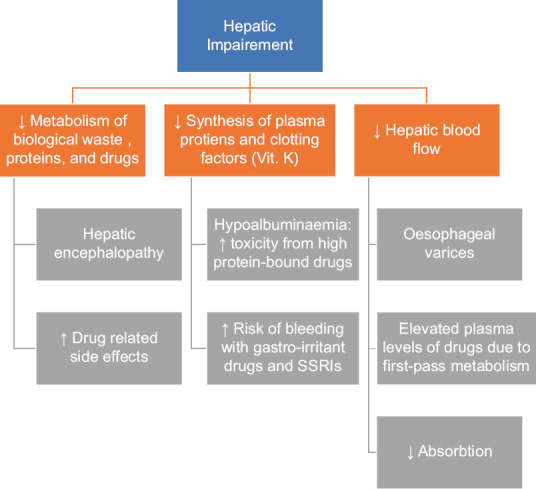
INTRODUCTION Psychiatric disorders and general medical conditions share a bidirectional relationship. Patients with severe mental illness have a higher prevalence of concurrent medical conditions, and chronic medical illness also increases the risk of developing mental illness. Psychotropic agents are commonly used in the management of psychiatric disorders in the medically ill. Comorbid medical illness poses many challenges when prescribing psychotropic drugs; important considerations include disease-induced changes in pharmacokinetics and pharmacodynamics while one must also consider drug–drug interactions and increased vulnerability to adverse effects. Most drugs and substances that we ingest are metabolized by the liver. Impaired hepatic function can critically alter many aspects of pharmacokinetics. Knowledge of these processes and changes are essential to understanding changes in systemic drug concentrations and prescribing appropriately to avoid drug toxicity. Similarly, the use of psychotropic medications in gastrointestinal (GI) conditions is complicated by issues such as interaction between GI medications and psychotropic drugs, risk of gastric bleed, and alteration in pharmacokinetics produced by conditions such as short bowel syndrome. The present article will review the considerations when prescribing psychotropic drugs to patients with hepatic and GI disorders. We summarize the pharmacokinetic changes and provide evidence-based dosing suggestions whenever available for individual agents of concern. The guideline first covers prescribing in hepatic disease, followed by GI disorders. PHARMACOKINETIC CHANGES IN HEPATIC DISEASE Hepatic impairment affects many critical aspects of pharmacokinetics (e.g., absorption, first-pass metabolism, hepatic biotransformation, the synthesis of drug-binding proteins, and fluid balance which determines the volume available for drug distribution).[1] The reduced first-pass metabolism and hepatic biotransformation lead to an increase in oral bioavailability and prolonged drug effects. If serum albumin is reduced, then it will affect the highly protein-bound drugs.[2] In presence of ascites, the increased volume of distribution will affect the water-soluble drugs. Figure 1 depicts the pharmacokinetic changes in liver disease.Figure 1: Pharmacokinetic changes in hepatic diseaseThere are two phases of drug metabolism in the liver; phase I reactions constitute hydrolysis, reduction, or oxidation and usually reduce the pharmacological activity of the molecule (except in cases where drugs are converted to their active metabolites). Phase II reactions involve drug conjugation with endogenous compounds such as glucuronic acid, amino acids, glutathione, and sulfate. This further reduces the pharmacological activity of the agent and makes it more water soluble. In chronic liver disease (CLD), more of the drug passes into the systemic circulation bypassing the liver; this is through the portosystemic shunts in these patients. Resultantly, there is a rise in drug levels which is more pronounced for drugs that undergo extensive first-pass metabolism. On the other hand, this is not seen for drugs that are mainly metabolized by phase II biotransformation reactions which are largely preserved in liver disease (such as lorazepam), and those with relatively little affinity for liver enzymes (such as paroxetine). Normally, phase II reactions are preserved in aging and liver disease. Hence, it is advisable to prefer agents that do not need phase I reactions in end-stage liver disease; examples of such agents are lorazepam and oxazepam. Further, the free (unbound) fractions of drugs that are extensively protein bound undergoes a change because of decreased synthesis of albumin and glycoproteins in end-stage liver disease. Many psychotropic drugs are highly protein bound; this includes tricyclic antidepressants (TCAs), fluoxetine, sertraline, aripiprazole, and diazepam. A rise in serum levels of the free fractions of these agents may imply an increased risk of adverse drug reactions. Most of the psychotropic agents that are currently used are lipophilic, implying that they need to be metabolized in the liver and made more soluble for them to get excreted in the urine or bile. Only a few drugs such as lithium and topiramate are hydrophilic, which are directly eliminated through the urine or bile. PREVALENCE OF LIVER DISEASE IN PSYCHIATRIC DISORDERS Growing literature suggests that prevalence of hepatitis B and C is higher among psychiatric populations compared to the general public. In a recent meta-analysis, the pooled prevalence of hepatitis B in severe mental illness varied from 2.2% in South America to 9.7% in Asia; the same authors also reported pooled prevalence rates of hepatitis C that ranged from 3.0% in South America to 17.4% in North America.[3] More specifically, population-based cohort studies have shown that patients with schizophrenia had a higher prevalence (7.0%) of CLD
Overview
The claims and statistics of this paper haven’t been checked yet.
Free: it reads the open-access text and checks the first 5 claims that cite a source we can check. Create a free account to check every claim.
Integrity signals
Registry
Cites
Statistics
Figures
Verification
Claims the paper makes
The claims and statistics of this paper haven’t been checked yet.
Free: it reads the open-access text and checks the first 5 claims that cite a source we can check. Create a free account to check every claim.
Claims other papers make about this one
Each is checked against this paper’s own text: does it say what the citing paper says it does?
The source backs part of the claim, not all of it — or backs it for a different population, condition or comparison.
In the citing paper
“For patients with CTP-B, a reduction of 50%–75% in the normal starting dose may be appropriate.”
From Management of depression/anxiety in patients with chronic liver disease (2024) · cites this paper as [16]
Experimental — accuracy not yet measuredThe cited source says what the claim attributes to it.
In the citing paper
“Drug dosing recommendations are guided by the Child-Turcotte-Pugh (CTP) (Table 2).16,17”
From Management of depression/anxiety in patients with chronic liver disease (2024) · cites this paper as [16]
Experimental — accuracy not yet measuredThe check wasn’t confident either way, so it gives no verdict — never disputed.
In the citing paper
“Most patients rated as having CTP-A can tolerate 75%–100% of a standard initial dose.”
From Management of depression/anxiety in patients with chronic liver disease (2024) · cites this paper as [16]
Experimental — accuracy not yet measured
Self-check
Percentages, sums and reported differences re-computed from the paper’s own numbers.
The self-check needs the paper’s full text.
Citations
Cites
Jacobi, J., Fraser, G. L., Coursin, D. B., Riker, R. R., Fontaine, D., Wittbrodt, E. T., Chalfin, D. B., Masica, M. F., Bjerke, H. S., Coplin, W. M., et al. (2002) · Critical Care Medicine · doi:10.1097/00003246-200201000-00020 · Cited by 1,895 · cited 1×
“[41] Close monitoring is warranted and those who are showing signs of deteriorating liver function should be assessed for symptoms of opioid toxicity, and necessary dose reduction should be undertaken.”
Al-Toma, A., Volta, U., Auricchio, R., Castillejo, G., Sanders, D. S., Cellier, C., Mulder, C. J., & Lundin, K. E. A. (2019) · United European Gastroenterology Journal · doi:10.1177/2050640619844125 · Cited by 1,012 · cited 2×
“[74] There is evidence to suggest that drug absorption may be increased (e.g. propranolol), delayed, reduced, or normal in CeD; this includes psychotropic medications too.”
Jonas, D. E., Amick, H. R., Feltner, C., Bobashev, G., Thomas, K., Wines, R., Kim, M. M., Shanahan, E., Gass, C. E., Rowe, C. J., et al. (2014) · JAMA · doi:10.1001/jama.2014.3628 · Cited by 923 · cited 1×
“[33] Naltrexone has an FDA “black box” warning against use in patients with liver disease; therefore, it must be avoided in such cases.”
Psychosocial Aspects of the Functional Gastrointestinal Disorders
Levy, R. L., Olden, K. W., Naliboff, B. D., Bradley, L. A., Francisconi, C., Drossman, D. A., & Creed, F. (2006) · Gastroenterology · doi:10.1053/j.gastro.2005.11.057 · Cited by 776
Patrick, D. L., Drossman, D. A., Frederick, I. O., Dicesare, J., & Puder, K. L. (1998) · Digestive Diseases and Sciences · doi:10.1023/a:1018831127942 · Cited by 761 · cited 1×
“…(Visceral Sensitivity Index or Cognitive Strategies Questionnaire) (3) impact of illness and health-associated quality of life (irritable bowel syndrome [IBS]-Quality of Life) [62] and (4) assessment of the sequential psychosocial factors as well as periods of symptom exacerbations and remissions.”
Pharmacokinetics and dosage adjustment in patients with renal dysfunction
Verbeeck, R. K., & Musuamba, F. T. (2009) · European Journal of Clinical Pharmacology · doi:10.1007/s00228-009-0678-8 · Cited by 717
Evidence-based clinical practice guidelines for inflammatory bowel disease
Matsuoka, K., Kobayashi, T., Ueno, F., Matsui, T., Hirai, F., Inoue, N., Kato, J., Kobayashi, K., Kobayashi, K., Koganei, K., et al. (2018) · Journal of Gastroenterology · doi:10.1007/s00535-018-1439-1 · Cited by 698
Pharmacokinetics and dosage adjustment in patients with hepatic dysfunction
Verbeeck, R. K. (2008) · European Journal of Clinical Pharmacology · doi:10.1007/s00228-008-0553-z · Cited by 652 · cited 1×
“[22] ; CLD – Chronic liver disease butyrophenones.”
Evidence-based clinical practice guidelines for inflammatory bowel disease 2020
Nakase, H., Uchino, M., Shinzaki, S., Matsuura, M., Matsuoka, K., Kobayashi, T., Saruta, M., Hirai, F., Hata, K., Hiraoka, S., et al. (2021) · Journal of Gastroenterology · doi:10.1007/s00535-021-01784-1 · Cited by 505 · cited 1×
“…benzodiazepines [2,64] Inflammatory bowel disease: Crohn’s disease and ulcerative colitis Antidepressants (paroxetine, bupropion, phenelzine) [64,71] IBS – Irritable bowel syndrome; TCAs – Tricyclic antidepressants; SSRIs – Serotonin reuptake inhibitors; SNRIs – Serotonin norepinephrine…”
Why Drugs Fail - A Study on Side Effects in New Chemical Entities
Schuster, D., Laggner, C., & Langer, T. (2005) · Current Pharmaceutical Design · doi:10.2174/138161205774414510 · Cited by 417 · cited 1×
“[31] Lamotrigine and topiramate are infrequently associated with liver enzyme elevation and idiosyncratic hepatotoxicity.”
Pain Management in the Cirrhotic Patient: The Clinical Challenge
Chandok, N., & Watt, K. D. S. (2010) · Mayo Clinic Proceedings · doi:10.4065/mcp.2009.0534 · Cited by 291 · cited 1×
“[42]”
Hughes, E., Bassi, S., Gilbody, S., Bland, M., & Martin, F. (2016) · The Lancet Psychiatry · doi:10.1016/s2215-0366(15)00357-0 · Cited by 272
KREEK, M. J. (2000) · Annals of the New York Academy of Sciences · doi:10.1111/j.1749-6632.2000.tb06683.x · Cited by 258 · cited 1×
“[37] However, liver disease may be a risk factor for methadone overdose, as methadone clearance is impaired in CLD. [38] Buprenorphine is metabolized by cytochrome P450 3A4 enzyme system but investigators who looked at interactions Adapted from Ferrando et al .”
Dose Adjustment in Patients with Liver Disease
Delc??, F., Tchambaz, L., Schlienger, R., Drewe, J., & Kr??henb??hl, S. (2005) · Drug Safety · doi:10.2165/00002018-200528060-00005 · Cited by 256 · cited 1×
“[59] For those with Child-Pugh class C patients, these medications are to be preferred only if clinical safety data is available.”
Pharmacology and pharmacokinetics of milnacipran
Puozzo, C., Panconi, E., & Deprez, D. (2002) · International Clinical Psychopharmacology · doi:10.1097/00004850-200206001-00004 · Cited by 242
Davey, K. J., Cotter, P. D., O'Sullivan, O., Crispie, F., Dinan, T. G., Cryan, J. F., & O'Mahony, S. M. (2013) · Translational Psychiatry · doi:10.1038/tp.2013.83 · Cited by 236 · cited 1×
“[67] In fact, a recent meta-analysis, [68] that examined both human and animal studies, concluded that antipsychotic-induced alterations in gut microbiome may underlie drug-induced weight gain and metabolic disturbance noted during treatment.”
Paquette, I. M., Varma, M. G., Kaiser, A. M., Steele, S. R., & Rafferty, J. F. (2015) · Diseases of the Colon & Rectum · doi:10.1097/dcr.0000000000000397 · Cited by 226 · cited 1×
“…IBS, plecanatide for chronic idiopathic constipation) can be used if available TCAs should be avoided in constipation-predominant IBS Fecal incontinence A low dose of anticholinergic medications (e.g., amitriptyline 20 mg/day) [69] Functional diarrhea Loperamide, desipramine (25-200 mg/day) [2,64]”
Pharmacologic treatments for opioid dependence: detoxification and maintenance options
Kleber, H. D. (2007) · Phlebolymphology · doi:10.31887/dcns.2007.9.4/hkleber · Cited by 214
Valproate-induced hyperammonemic encephalopathy
Segura-Bruna, N., Rodriguez-Campello, A., Puente, V., & Roquer, J. (2006) · Acta Neurologica Scandinavica · doi:10.1111/j.1600-0404.2006.00655.x · Cited by 199 · cited 1×
“[30] Concurrent use of topiramate and other antiepileptics is a risk factor for hyperammonemia due to valproate.”
Pharmacologic treatments for opioid dependence: detoxification and maintenance options
Kleber, H. D. (2007) · Dialogues in Clinical Neuroscience · doi:10.31887/dcns.2007.9.2/hkleber · Cited by 181 · cited 1×
“[37] However, liver disease may be a risk factor for methadone overdose, as methadone clearance is impaired in CLD. [38] Buprenorphine is metabolized by cytochrome P450 3A4 enzyme system but investigators who looked at interactions Adapted from Ferrando et al .”
Rosenzweig, P., Canal, M., Patat, A., Bergougnan, L., Zieleniuk, I., & Bianchetti, G. (2002) · Human Psychopharmacology: Clinical and Experimental · doi:10.1002/hup.320 · Cited by 177 · cited 1×
“…60% eliminated unchanged in urine and 11% in the faeces Dosing adjustments are not needed in mild and moderate liver disease Amisulpride [54,56] 20%-25% drug is eliminated unchanged in urine, minimal metabolism (oxidation, N-deethylation, and hydroxylation) Relatively safe in mild hepatic…”
Clinical Pharmacokinetics of Atypical Antipsychotics: An Update
Mauri, M. C., Paletta, S., Di Pace, C., Reggiori, A., Cirnigliaro, G., Valli, I., & Altamura, A. C. (2018) · Clinical Pharmacokinetics · doi:10.1007/s40262-018-0664-3 · Cited by 177 · cited 2×
“…60% eliminated unchanged in urine and 11% in the faeces Dosing adjustments are not needed in mild and moderate liver disease Amisulpride [54,56] 20%-25% drug is eliminated unchanged in urine, minimal metabolism (oxidation, N-deethylation, and hydroxylation) Relatively safe in mild…”
Treatment of Alcohol Use Disorder in Patients with Alcoholic Liver Disease
Leggio, L., & Lee, M. R. (2017) · The American Journal of Medicine · doi:10.1016/j.amjmed.2016.10.004 · Cited by 166 · cited 1×
“[44,45] Adapted from Leggio and Lee [34] ; NMDA –”
Psychotropics and the Microbiome: a Chamber of Secrets…
Cussotto, S., Clarke, G., Dinan, T. G., & Cryan, J. F. (2019) · Psychopharmacology · doi:10.1007/s00213-019-5185-8 · Cited by 163 · cited 1×
“[65] Preclinical studies have shown that depletion in gut microbiota, following use of antibiotics or probiotics, lead to an increase in bioavailability of olanzapine, but exerted no appreciable effects on bioavailability of risperidone.”
Page, K. A., Morris, M. D., Hahn, J. A., Maher, L., & Prins, M. (2013) · Clinical Infectious Diseases · doi:10.1093/cid/cit300 · Cited by 157 · cited 1×
“[35,36] Hence, it is important to know dosing considerations when using pharmacologic treatments for opioid dependence.”
Alter, M. J., & Moyer, L. A. (1998) · Journal of Acquired Immune Deficiency Syndromes & Human Retrovirology · doi:10.1097/00042560-199802001-00003 · Cited by 153 · cited 1×
“[35,36] Hence, it is important to know dosing considerations when using pharmacologic treatments for opioid dependence.”
Molecular Pharmacodynamics, Clinical Therapeutics, and Pharmacokinetics of Topiramate
Shank, R. P., & Maryanoff, B. E. (2008) · CNS Neuroscience & Therapeutics · doi:10.1111/j.1527-3458.2008.00041.x · Cited by 148 · cited 1×
“…through kidneys Reduce dose by up to half in Child-Pugh class B or C without ascites, and by 75% in Child-Pugh class C with ascites Topiramate [52,53] Only 20% drug is metabolized (hydroxylation and hydrolysis, glucuronidation), 80% excreted unchanged in urine Dose may be reduced by 30% in…”
Psychotropic drugs and liver disease: A critical review of pharmacokinetics and liver toxicity
Telles‐Correia, D., Barbosa, A., Cortez‐Pinto, H., Campos, C., Rocha, N. B. F., & Machado, S. E. D. C. (2017) · World Journal of Gastrointestinal Pharmacology and Therapeutics · doi:10.4292/wjgpt.v8.i1.26 · Cited by 148 · cited 2×
“[1] Valproate-induced hyperammonemic encephalopathy is a serious adverse reaction that can result uncommonly from acute DILI due to valproate and consequently raised liver enzymes, [29] though the more common cause is inhibited activity of key enzymes involved in urea cycle such as carbamoyl…”
Depression in patients with nonalcoholic fatty liver disease and chronic viral hepatitis B and C
Weinstein, A. A., Kallman Price, J., Stepanova, M., Poms, L. W., Fang, Y., Moon, J., Nader, F., & Younossi, Z. M. (2011) · Psychosomatics · doi:10.1016/j.psym.2010.12.019 · Cited by 147 · cited 2×
“For instance, a population-based study found that 23.6% of CLD patients fulfilled criteria for a diagnosis of depression; [8] another small case–control study [9] found that among patients with nonalcoholic steato-hepatitis, the odds of having lifetime depression was 3.8 times compared to controls…”
InfluentialMullish, B. H., Kabir, M. S., Thursz, M. R., & Dhar, A. (2014) · Alimentary Pharmacology & Therapeutics · doi:10.1111/apt.12925 · Cited by 144 · cited 1×
“[18] ; SSRIs – Selective serotonin reuptake inhibitor; CLD – Chronic liver disease; SNRIs – Serotonin noradrenaline reuptake inhibitor; TCA – Tricyclic antidepressant; NRI – Noradrenaline reuptake inhibitor; SARI – Serotonin antagonist and reuptake inhibitor; NaSSA – Noradrenergic and specific…”
Psychiatric Manifestations of Coeliac Disease, a Systematic Review and Meta-Analysis
Clappison, E., Hadjivassiliou, M., & Zis, P. (2020) · Nutrients · doi:10.3390/nu12010142 · Cited by 144 · cited 1×
“[73] Furthermore, neuropsychiatric disorders such as gluten ataxia, peripheral neuropathy, and gluten encephalopathy are commonly reported among these patients.”
RAISON, C. L., WOOLWINE, B. J., DEMETRASHVILI, M. F., BORISOV, A. S., WEINREIB, R., STAAB, J. P., ZAJECKA, J. M., BRUNO, C. J., HENDERSON, M. A., REINUS, J. F., et al. (2007) · Alimentary Pharmacology & Therapeutics · doi:10.1111/j.1365-2036.2007.03316.x · Cited by 142 · cited 1×
“[44,45] Adapted from Leggio and Lee [34] ; NMDA –”
Medical comorbidity in bipolar disorder: reprioritizing unmet needs
McIntyre, R. S., Soczynska, J. K., Beyer, J. L., Woldeyohannes, H. O., Law, C. W., Miranda, A., Konarski, J. Z., & Kennedy, S. H. (2007) · Current Opinion in Psychiatry · doi:10.1097/yco.0b013e3281938102 · Cited by 140 · cited 1×
“[6] Higher rates of anxiety disorders too have been found in patients with CLD. [7] Furthermore, presence of anxiety negatively correlates with health-related quality of life in this group.”
Antiepileptic drugs and liver disease
Ahmed, S. N., & Siddiqi, Z. A. (2006) · Seizure · doi:10.1016/j.seizure.2005.12.009 · Cited by 139 · cited 1×
“[21] and Ahmed and Siddiqi [32] ; LFT – Liver function tests with HIV medications that inhibit this cytochrome enzyme did not find evidence for clinically significant drug interactions, except when buprenorphine was co-administered with atazanavir or ritonavir.”
Depression, Anxiety, and Nonalcoholic Steatohepatitis
Elwing, J. E., Lustman, P. J., Wang, H. L., & Clouse, R. E. (2006) · Psychosomatic Medicine · doi:10.1097/01.psy.0000221276.17823.df · Cited by 127 · cited 2×
“…a population-based study found that 23.6% of CLD patients fulfilled criteria for a diagnosis of depression; [8] another small case–control study [9] found that among patients with nonalcoholic steato-hepatitis, the odds of having lifetime depression was 3.8 times compared to controls without…”
InfluentialPsychological disorders in gastrointestinal disease: epiphenomenon, cause or consequence?
Shah, E. D., Rezaie, A. R., Riddle, M. S., & Pimentel, M. (2014) · PubMed Central · Cited by 124
Soto-Angona, Ó., Anmella, G., Valdés-Florido, M. J., De Uribe-Viloria, N., Carvalho, A. F., Penninx, B. W. J. H., & Berk, M. (2020) · BMC Medicine · doi:10.1186/s12916-020-01713-8 · Cited by 122 · cited 1×
“[20] As anxiety disorders are generally managed with agents that are also used for treating depression, readers may refer to preceding section for issues and considerations during the treatment.”
Hepatotoxicity of Psychotropic Drugs
Selim, K., & Kaplowitz, N. (1999) · Hepatology · doi:10.1002/hep.510290535 · Cited by 119 · cited 1×
“[47] ; MAOI – Monoamine Oxidase Inhibitor; TCAs – Tricyclic antidepressants; SSRI – Serotonin reuptake inhibitor; SNRI – Serotonin norepinephrine reuptake inhibitor comorbidities, and screen for any “red flag” signs that immediate psychiatric referrals.”
Clinical Pharmacokinetics of Acamprosate
Saivin, S., Hulot, T., Chabac, S., Potgieter, A., Durbin, P., & Houin, G. (1998) · Clinical Pharmacokinetics · doi:10.2165/00003088-199835050-00001 · Cited by 117 · cited 1×
“Serum creatinine is not a good measure of glomerular filtration rate in cirrhosis Acamprosate [51] Half of acamprosate is eliminated in urine, the other half is cleared through excretion in bile The pharmacokinetics of acamprosate is not modified in patients with mild to moderate liver impairment.”
Antiepileptic Drugs and Liver Disease
Vidaurre, J. A., Gedela, S., & Yarosz, S. (2017) · Pediatric Neurology · doi:10.1016/j.pediatrneurol.2017.09.013 · Cited by 115
Antidepressants- and antipsychotics-induced hepatotoxicity
Todorović Vukotić, N., Đorđević, J., Pejić, S., Đorđević, N., & Pajović, S. B. (2021) · Archives of Toxicology · doi:10.1007/s00204-020-02963-4 · Cited by 114 · cited 1×
“[46] , and Selim et al .”
Clinical Pharmacokinetics of Lithium
Ward, M. E., Musa, M. N., & Bailey, L. (1994) · The Journal of Clinical Pharmacology · doi:10.1002/j.1552-4604.1994.tb01994.x · Cited by 110 · cited 1×
“Lithium [50] Not metabolized, eliminated through kidneys mostly, and small amount through saliva, sweat, feces Dose adjustments required in cirrhosis.”
Bruce, R. D., Altice, F. L., Gourevitch, M. N., & Friedland, G. H. (2006) · JAIDS Journal of Acquired Immune Deficiency Syndromes · doi:10.1097/01.qai.0000219769.89679.ec · Cited by 106 · cited 1×
“[39,40] As mentioned earlier, naltrexone, an FDA approved agent for use in opioid dependence, has a potential to impair liver function tests and must be avoided among those with a history of liver disease.”
Association of chronic liver disease with depression: A population-based study
Lee, K., Otgonsuren, M., Younoszai, Z., Mir, H. M., & Younossi, Z. M. (2013) · Psychosomatics · doi:10.1016/j.psym.2012.09.005 · Cited by 104 · cited 1×
“11-13] Further, there must be an attempt to formulate the depression/anxiety, if elicited, from a biopsychosocial perspective; this would inform management and prevention.”
Skonieczna-Żydecka, K., Łoniewski, I., Misera, A., Stachowska, E., Maciejewska, D., Marlicz, W., & Galling, B. (2019) · Psychopharmacology · doi:10.1007/s00213-018-5102-6 · Cited by 98 · cited 1×
“[67] In fact, a recent meta-analysis, [68] that examined both human and animal studies, concluded that antipsychotic-induced alterations in gut microbiome may underlie drug-induced weight gain and metabolic disturbance noted during treatment.”
Neuroimaging Findings in Alcohol-Related Encephalopathies
Zuccoli, G., Siddiqui, N., Cravo, I., Bailey, A. L., Gallucci, M., & Harper, C. G. (2010) · American Journal of Roentgenology · doi:10.2214/ajr.09.4130 · Cited by 95 · cited 1×
“[17]”
Antidepressants and Risk of Upper Gastrointestinal Bleeding
De Abajo, F. J., Montero, D., García Rodríguez, L. A., & Madurga, M. (2006) · Basic & Clinical Pharmacology & Toxicology · doi:10.1111/j.1742-7843.2006.pto_303.x · Cited by 85 · cited 1×
“[63] SSRIs do not appear to increase the risk of GI bleeding in patients receiving warfarin, but they may increase the risk for non-GI bleeding.”
Pain management in patients with cirrhosis
Rakoski, M. O., Goyal, P., Spencer‐Safier, M., Weissman, J., Mohr, G., & Volk, M. L. (2018) · Clinical Liver Disease · doi:10.1002/cld.711 · Cited by 82 · cited 1×
“Second‑generation antipsychotics while gabapentin is considered safe as it is minimally metabolized by the liver, [27] though there are case reports of gabapentin-induced hepatotoxicity.”
The gut microbiome influences the bioavailability of olanzapine in rats
Cussotto, S., Walsh, J., Golubeva, A. V., Zhdanov, A. V., Strain, C. R., Fouhy, F., Stanton, C., Dinan, T. G., Hyland, N. P., Clarke, G., et al. (2021) · eBioMedicine · doi:10.1016/j.ebiom.2021.103307 · Cited by 82 · cited 1×
“[66] This suggests that the effect of gut microbiome depletion may be drug specific.”
Neurocognitive changes in patients with hepatitis C receiving interferon alfa-2b and ribavirin
KRAUS, M., Schafer, A., WISMANN, S., REIMER, P., & Scheurlen, M. (2005) · Clinical Pharmacology & Therapeutics · doi:10.1016/j.clpt.2004.09.007 · Cited by 79 · cited 1×
“[10] The treating physician should have a high index of suspicion for depression if the following symptoms are present: depressed mood or loss of pleasure/interest in most activities, pain at multiple sites, feelings of helplessness or hopelessness, irritability, and anxiety.”
Liver transplantation and adolescence: The role of mental health
Hames, A., Matcham, F., Joshi, D., Heneghan, M. A., Dhawan, A., Heaton, N., & Samyn, M. (2016) · Liver Transplantation · doi:10.1002/lt.24629 · Cited by 69
Hepatic Events Associated with Atomoxetine Treatment for??Attention-Deficit??Hyperactivity Disorder
Bangs, M. E., Jin, L., Zhang, S., Desaiah, D., Allen, A. J., Read, H. A., Regev, A., & Wernicke, J. F. (2008) · Drug Safety · doi:10.2165/00002018-200831040-00008 · Cited by 68 · cited 1×
“[43] While prescribing in such situations, the clinician must be cognizant of the balance between risk of serious adverse effects and clinical efficacy as well as the dosage adjustments necessary based on the severity of hepatic insufficiency.”
Association between anxiety and depression and nonalcoholic fatty liver disease
Choi, J. M., Chung, G. E., Kang, S. J., Kwak, M.-S., Yang, J. I., Park, B., & Yim, J. Y. (2021) · Frontiers in Medicine · doi:10.3389/fmed.2020.585618 · Cited by 68 · cited 1×
“[6] Higher rates of anxiety disorders too have been found in patients with CLD. [7] Furthermore, presence of anxiety negatively correlates with health-related quality of life in this group.”
Antipsychotics and Abnormal Liver Function Tests: Systematic Review
Marwick, K. F. M., Taylor, M., & Walker, S. W. (2012) · Clinical Neuropharmacology · doi:10.1097/wnf.0b013e31826818b6 · Cited by 64
Electroencephalography in Patients With Cirrhosis
Marchetti, P., D’Avanzo, C., Orsato, R., Montagnese, S., Schiff, S., Kaplan, P. W., Piccione, F., Merkel, C., Gatta, A., Sparacino, G., et al. (2011) · Gastroenterology · doi:10.1053/j.gastro.2011.06.085 · Cited by 63 · cited 1×
“[16] Findings from neuroimaging may be useful to correctly diagnose and treat a range of alcohol-related encephalopathies such as Wernicke’s encephalopathy and Marchiafava–Bignami Disease.”
Drug treatment in acute porphyria
Gorchein, A. (1997) · British Journal of Clinical Pharmacology · doi:10.1046/j.1365-2125.1997.t01-1-00609.x · Cited by 59 · cited 1×
“[77,78] CONCLUSION Psychopharmacology in patients with liver and GI disorders must be individualized based on the choice of psychotropic agent and severity of the underlying medical condition .”
Pharmacokinetic Interactions between Buprenorphine and Antiretroviral Medications
Bruce, R. D., McCance‐Katz, E. F., Kharasch, E. D., Moody, D. E., & Morse, G. D. (2006) · Clinical Infectious Diseases · doi:10.1086/508186 · Cited by 55 · cited 1×
“[39,40] As mentioned earlier, naltrexone, an FDA approved agent for use in opioid dependence, has a potential to impair liver function tests and must be avoided among those with a history of liver disease.”
Pharmacokinetics of milnacipran in renal impairment
Puozzo, C., Pozet, N., Deprez, D., Baille, P., Ung, H. L., & Zech, P. Y. (1998) · European Journal of Drug Metabolism and Pharmacokinetics · doi:10.1007/bf03189352 · Cited by 46
Disulfiram-induced fulminating hepatitis: guidelines for liver-panel monitoring.
Wright, C. A., Vafier, J. A., & Lake, C. R. (1988) · PubMed · Cited by 42
Abdominal epilepsy, an uncommon cause of recurrent abdominal pain: a brief report
Dutta, S. R., Hazarika, I., & Chakravarty, B. P. (2007) · Gut · doi:10.1136/gut.2006.094250 · Cited by 42 · cited 1×
“[76] The condition is commoner among young children.”
Gayam, V. B. R., Mandal, A., Khalid, M. O., Shrestha, B., Garlapati, P. R., & Khalid, M. (2018) · Journal of Community Hospital Internal Medicine Perspectives · doi:10.1080/20009666.2018.1514933 · Cited by 42 · cited 1×
“…encephalopathy is a serious adverse reaction that can result uncommonly from acute DILI due to valproate and consequently raised liver enzymes, [29] though the more common cause is inhibited activity of key enzymes involved in urea cycle such as carbamoyl phosphate synthetase-1 and ornithine…”
Hsu, J., Chien, I., Lin, C., Chou, Y., & Chou, P. (2013) · Psychosomatics · doi:10.1016/j.psym.2013.06.001 · Cited by 37
The influence of hepatic impairment on the pharmacokinetics of paliperidone
Boom, S., Thyssen, A., Crauwels, H. M., Molz, K. H., Cleton, A., Janssens, L., Talluri, K., & Eerdekens, M. (2009) · International Journal of Clinical Pharmacology and Therapeutics · doi:10.5414/cpp47606 · Cited by 35 · cited 1×
“…66% is excreted unchanged in urine No dose adjustment in mild to moderate liver disease, reduce dose by half in severe disease Paliperidone [54,55] Limited hepatic metabolism, 60% eliminated unchanged in urine and 11% in the faeces Dosing adjustments are not needed in mild and moderate liver…”
The prevalence and risk factors of young male schizophrenics with non-alcoholic fatty liver disease
Yan, J., Hou, C., & Liang, Y. (2017) · Neuropsychiatric Disease and Treatment · doi:10.2147/ndt.s137183 · Cited by 30 · cited 1×
“[23] First-generation antipsychotics Neuroleptics have been frequently associated with the development of steatosis.”
Pharmacokinetics of milnacipran in liver impairment
Puozzo, C., Albín, H., Vinçon, G., Deprez, D., Raymond, J. M., & Amouretti, M. (1998) · European Journal of Drug Metabolism and Pharmacokinetics · doi:10.1007/bf03189351 · Cited by 29 · cited 1×
“…unchanged in urine, minimal metabolism (oxidation, N-deethylation, and hydroxylation) Relatively safe in mild hepatic disease Milnacipran [57,58] 50%–60% drug is eliminated unchanged in urine, 20% as glucuronide, rest through dealkylation and hydroxylation followed by glucuronidation No…”
Psychotropic drugs in acute intermittent porphyria*
Holroyd, S., & Seward, R. L. (1999) · Clinical Pharmacology & Therapeutics · doi:10.1016/s0009-9236(99)70041-x · Cited by 28
Increased risk of chronic liver disease in patients with bipolar disorder: A population-based study
Hsu, J., Chien, I., & Lin, C. (2016) · General Hospital Psychiatry · doi:10.1016/j.genhosppsych.2016.07.006 · Cited by 27 · cited 1×
“[5] Further, the current and lifetime prevalence of hepatic illness in bipolar disorder were 17% and 21%, respectively.”
Major Depressive Disorder in Hepatitis C
Gleason, O. C., Yates, W. R., & Philipsen, M. A. (2005) · The Primary Care Companion For CNS Disorders · doi:10.4088/pcc.v07n0503 · Cited by 20 · cited 1×
“[44,45] Adapted from Leggio and Lee [34] ; NMDA –”
Acute Liver Failure due to Trazodone and Diazepam
Carvalhana, S. C., Oliveira, A. B. F. D., Ferreira, P., Resende, M., Perdigoto, R., & Barroso, E. (2016) · GE Portuguese Journal of Gastroenterology · doi:10.1159/000450878 · Cited by 18 · cited 1×
“[19] Mirtazapine has also been associated with DILI related to prolonged jaundice, albeit rarely.”
Cognitive functions in patients with liver cirrhosis: A tendency to commit more memory errors
Mach, T. (2013) · Medical Science Monitor · doi:10.12659/msm.883890 · Cited by 17 · cited 1×
“[14,15] Other special investigations that may be considered in CLD are electroencephalogram (EEG) which may have both a diagnostic role, by pointing toward an underlying hepatic encephalopathy, and a prognostic significance, as EEG abnormalities are often correlated with severity of liver disease.”
Hold the Gaba: A Case of Gabapentin-induced Hepatotoxicity
Jackson, C., Clanahan, M. J., Joglekar, K., & Decha-Umphai, S. T. (2018) · Cureus · doi:10.7759/cureus.2269 · Cited by 16 · cited 1×
“[28] Asymptomatic elevations in hepatic transaminases can be seen in 10%–15% of patients on valproate, while hyperbilirubinemia can be seen in up to 44% cases.”
Hassaan, S. H., Darweesh, A. E. D. M., Khalifa, H., Ramadan, H. K., Hassany, S. M., Ahmed, G. K., & Moustafa, E. F. A. (2019) · The International Journal of Psychiatry in Medicine · doi:10.1177/0091217419858277 · Cited by 14 · cited 1×
“[14,15] Other special investigations that may be considered in CLD are electroencephalogram (EEG) which may have both a diagnostic role, by pointing toward an underlying hepatic encephalopathy, and a prognostic significance, as EEG abnormalities are often correlated with severity of liver disease.”
Celiac Disease and Drug Absorption: Implications for Cardiovascular Therapeutics
Wang, I., & Hopper, I. (2014) · Cardiovascular Therapeutics · doi:10.1111/1755-5922.12094 · Cited by 12 · cited 1×
“[75] There is little research on the pharmacokinetics of psychotropic medications among patients with CeD.”
Bach, N., Thung, S. N., Schaffner, F., & Tobias, H. (1989) · Digestive Diseases and Sciences · doi:10.1007/bf01537284 · Cited by 8 · cited 1×
“[24,25] Second-generation antipsychotics These group of agents are, in general, safer compared to FGAs in liver disease.”
Management of xerostomia and salivary hypofunction
Hegarty, A. M., & Hodgson, T. A. (2008) · Progress in Palliative Care · doi:10.1179/096992608x296932 · Cited by 6 · cited 1×
“…clonazepam (1 mg clonazepam tablet for 3 minutes and then spit): Most effective agent Other drugs: sertraline 50 mg/day, paroxetine 20 mg/day, amd amisulpride 50 mg/day Xerostomia Cholinergic agents (pilocarpine [1% solution diluted from eye drops] or bethanechol [5-10 mg sublingually]) [64,70]”
Drugs That Escape Hepatic Metabolism
Andrade, C. (2012) · The Journal of Clinical Psychiatry · doi:10.4088/jcp.12f07726 · Cited by 4 · cited 1×
“[49] Some of the drugs are not metabolized at all by liver, and are predominantly excreted through kidneys [Table 8].”
Shizuku, M., Kimura, H., Kamei, H., Kishi, S., Tokura, T., Kurata, N., Jobara, K., Yoshizawa, A., Tsuboi, C., Yamaguchi, N., et al. (2021) · BMC Gastroenterology · doi:10.1186/s12876-021-02032-9 · Cited by 4
Ahmed, A. B. (1972) · PubMed · Cited by 3
Research works printed but not linked: 1
- Taylor DM Barnes TR Young AH The Maudsley Prescribing Guidelines in Psychiatry New York, NY John Wiley &Sons 2021
Cited by
Sahoo, S., Mishra, E., & Premkumar, M. (2024) · Journal of Clinical and Experimental Hepatology · doi:10.1016/j.jceh.2024.101390 · Cited by 13
Management of depression/anxiety in patients with chronic liver disease
Garcia-Altieri, M., Carrera-Mejias, K., & Hernaez, R. (2024) · Clinical Liver Disease · doi:10.1097/cld.0000000000000179 · Cited by 11
Clinical Implications of Antidepressants and Associated Risk of Bleeding: A Narrative Review
Kaye, A. D., Cooper, H. D., Mashaw, S. A., Anwar, A. I., Hollander, A. V., Thomassen, A. S., Singh, A., & Shekoohi, S. (2025) · Current Pain and Headache Reports · doi:10.1007/s11916-025-01412-0 · Cited by 9
Current vision on diagnosis and comprehensive care in hepatic encephalopathy
Higuera-de-la-Tijera, F., Velasco, J. A. V.-R., Raña-Garibay, R. H., Castro‐Narro, G., Abdo-Francis, J. M., Moreno-Alcantar, R., Pérez-Hernández, J. L., Torre, A., Contreras-Omaña, R., Cano-Contreras, A. D., et al. (2023) · Revista de Gastroenterología de México (English Edition) · doi:10.1016/j.rgmxen.2023.04.006 · Cited by 15
Treatment of Alcohol Use Disorder
Tareen, K., Clifton, E. G., Perumalswami, P., Mellinger, J. L., & Winder, G. S. (2024) · Clinics in Liver Disease · doi:10.1016/j.cld.2024.06.011 · Cited by 11
Metadata
- Authors
- Menon, V., Ransing, R., & Praharaj, S. K.
- Affiliations
- Jawaharlal Institute of Post Graduate Medical Education and Research (IN)
- Manipal Academy of Higher Education (IN)
- Venue
- Indian Journal of Psychiatry
- Published
- 2022-03
- Volume
- 64
- Issue
- Suppl 2
- Pages
- S379-S393
- ISSN
- 0019-5545 (ISSN-L)
- 1998-3794
- PMC
- PMC9122174
- OpenAlex
- W4226079944
- Cited by
- 19
- References
- 77
- Citations by year
- 2026: 5 · 2025: 8 · 2024: 4 · 2023: 2
- FWCI
- 3.20
- Type
- journal article
- Language
- en
- Open access
- diamond
- doi.org
- Licence
- cc-by-nc-sa
- Locations
- Indian Journal of Psychiatry (publishedVersion, cc-by-nc-sa)
- PubMed Central (publishedVersion, cc-by-nc-sa)
- PubMed (publishedVersion)
- DOAJ (DOAJ: Directory of Open Access Journals) (submittedVersion)
- Topics
- Life Sciences › Pharmacology, Toxicology and Pharmaceutics › Pharmacology › Pharmacogenetics and Drug Metabolism
- Health Sciences › Medicine › Geriatrics and Gerontology › Pharmaceutical Practices and Patient Outcomes
- Health Sciences › Medicine › Pharmacology (medical) › Treatment of Major Depression
- Keywords
- mental illness, psychotropic drugs, liver dysfunction, chronic liver disease, gastrointestinal diseases, pharmacokinetics, drug-drug interactions, drug toxicity, short bowel syndrome, gastric bleeding, dose adjustment, chronic disease, drug metabolism, portosystemic shunt, serum albumin, antipsychotic drugs, antidepressants, antiepileptic drugs, antipsychotic adverse effects, psychiatric comorbidity
About these checks
Registry, retraction, Cites and statistics results are computed, not judged, with one exception: a printed reference that no index lists is read once by a model before it counts as a citation error. Claims are extracted by a model and kept only when their quote appears verbatim in the text; each cited source is then checked, with a model’s help, for whether it says what the claim relies on. Those verdicts can be wrong — read the claim’s quote and the cited source before relying on one.
Statistics and arithmetic are recomputed, not judged.
Confidence bands are shown only for fields calibrated on our annotated test set. None is calibrated yet, so no band is shown.
What counts as a claim ›How we measure confidence ›How we check this ›
Are you an author, or do you see a problem with this page? Request a review
Data sources
Bibliographic data: Semantic Scholar, OpenAlex, Crossref.
Contains information from the Semantic Scholar Academic Graph Datasets, made available under the ODC Attribution License (ODC-BY 1.0).
Semantic Scholar’s data is described in: Kinney, R., et al. (2023). The Semantic Scholar Open Data Platform. arXiv:2301.10140.
