

The DOI matches its Crossref record; 57 of the 57 references it cites were found in a registry or an index.
Bifidobacterium infantis35624 modulates host inflammatory processes beyond the gut
Open accessAbstract
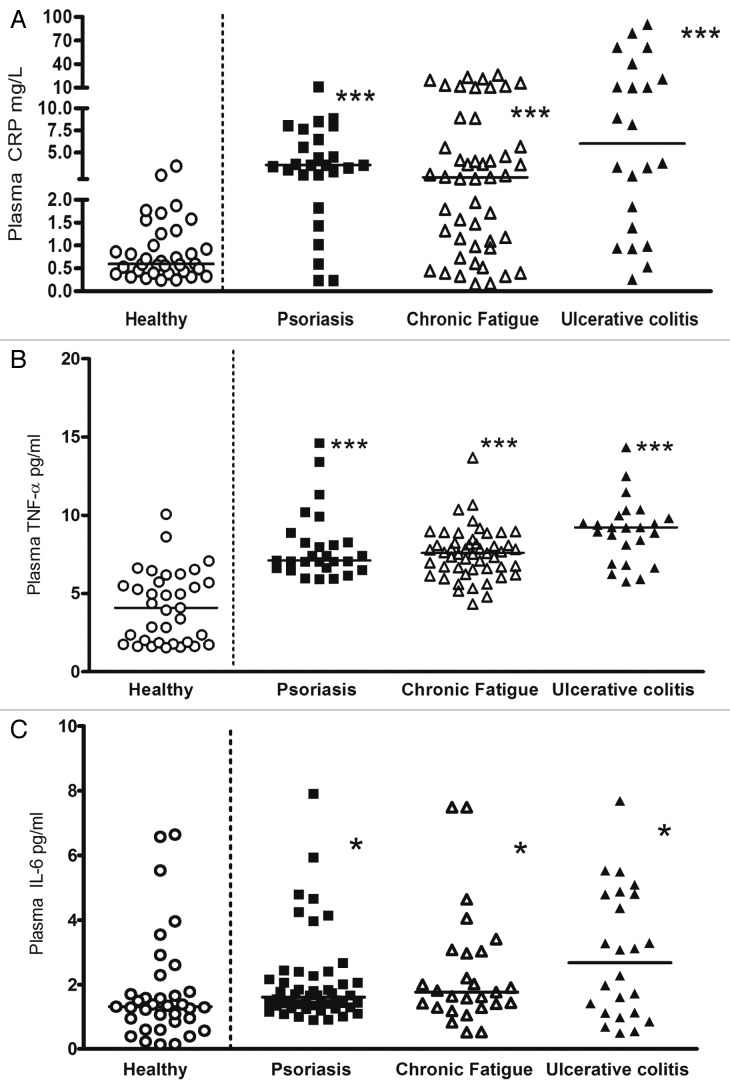
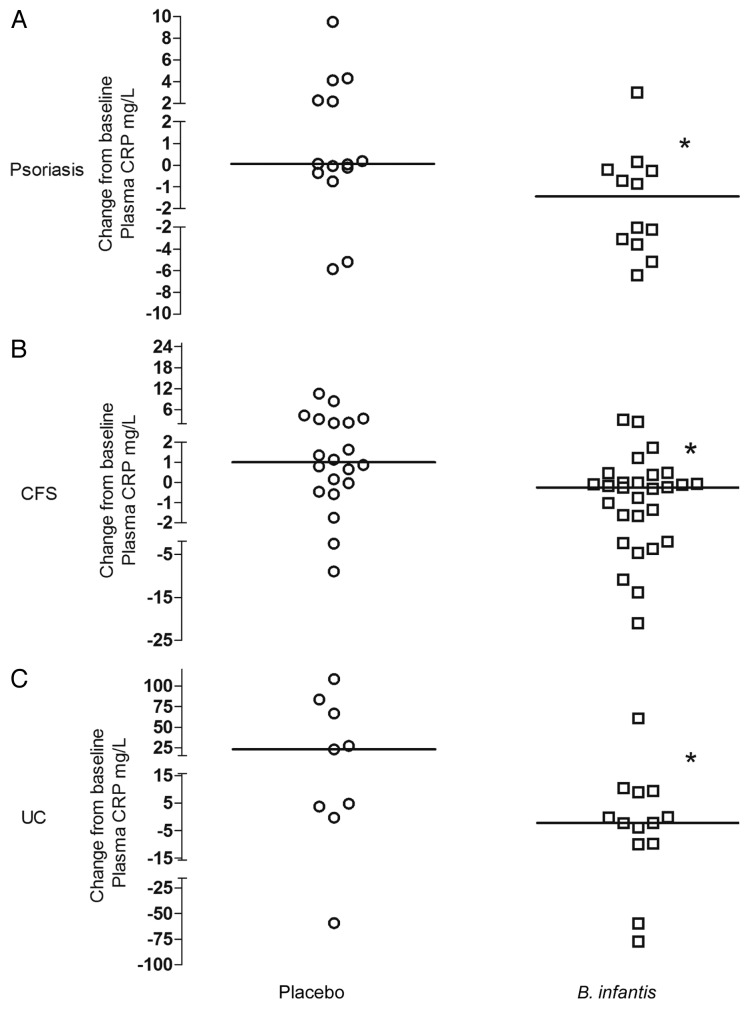
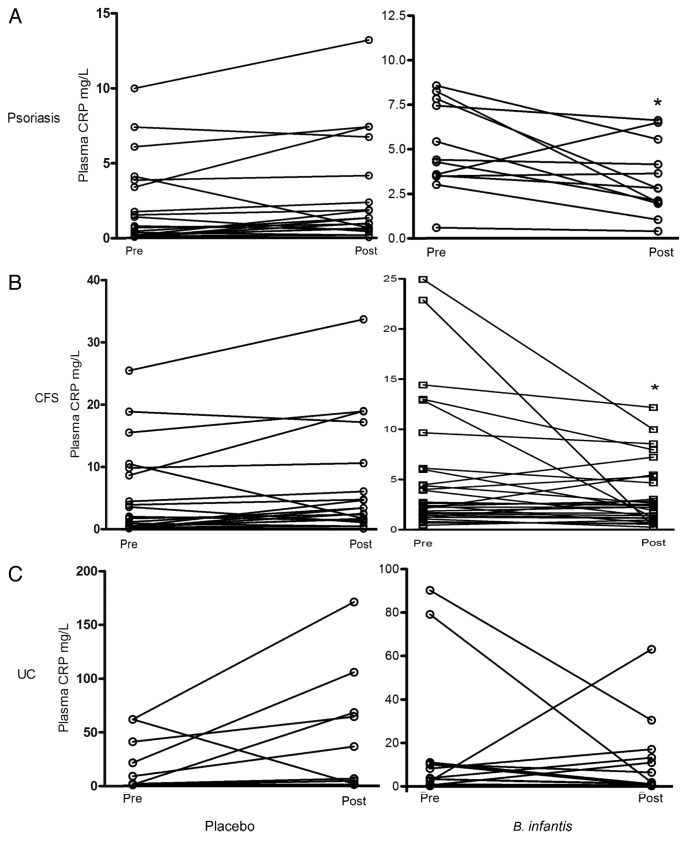
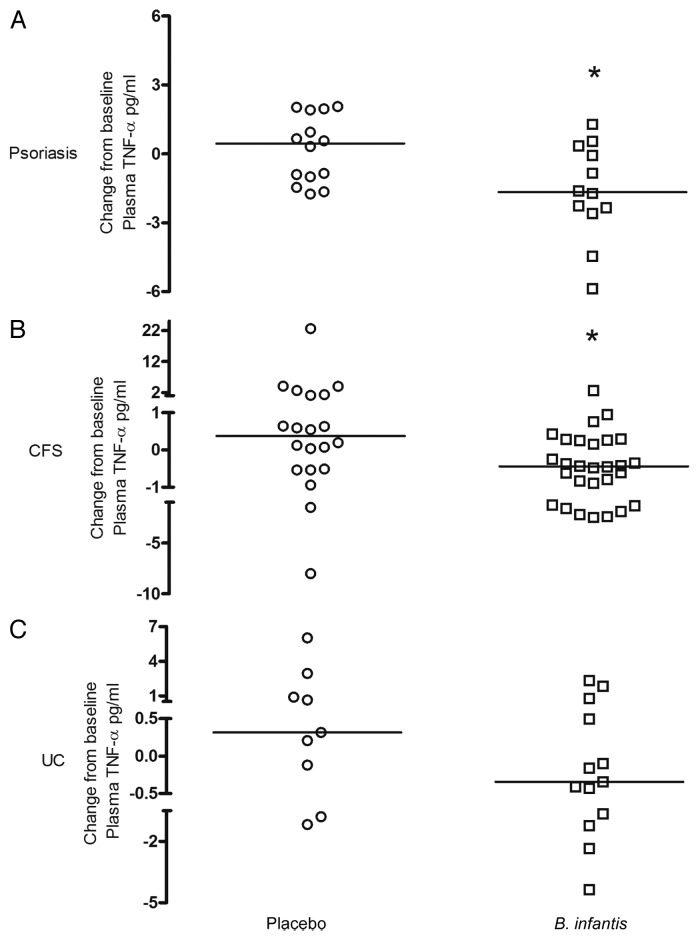
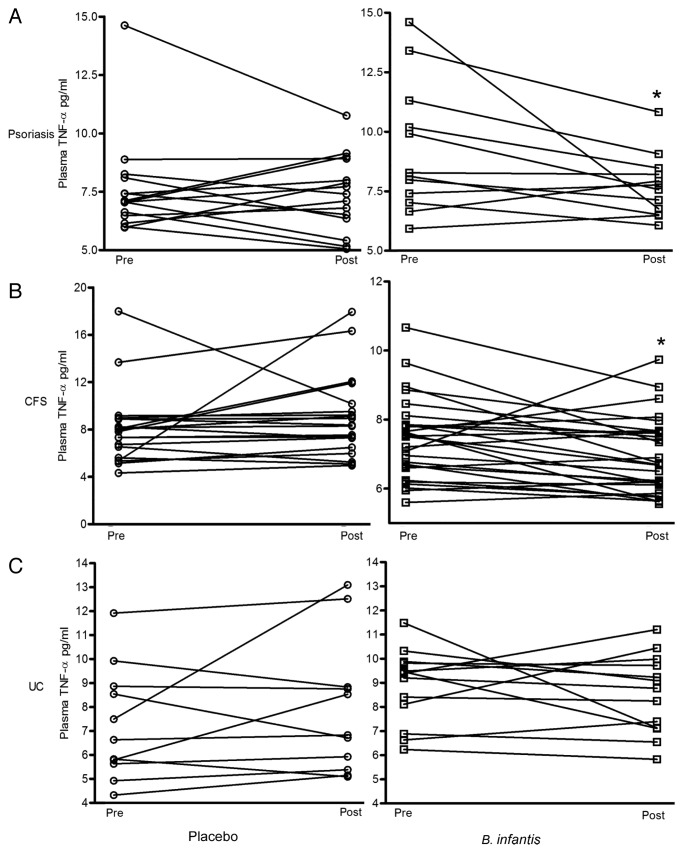
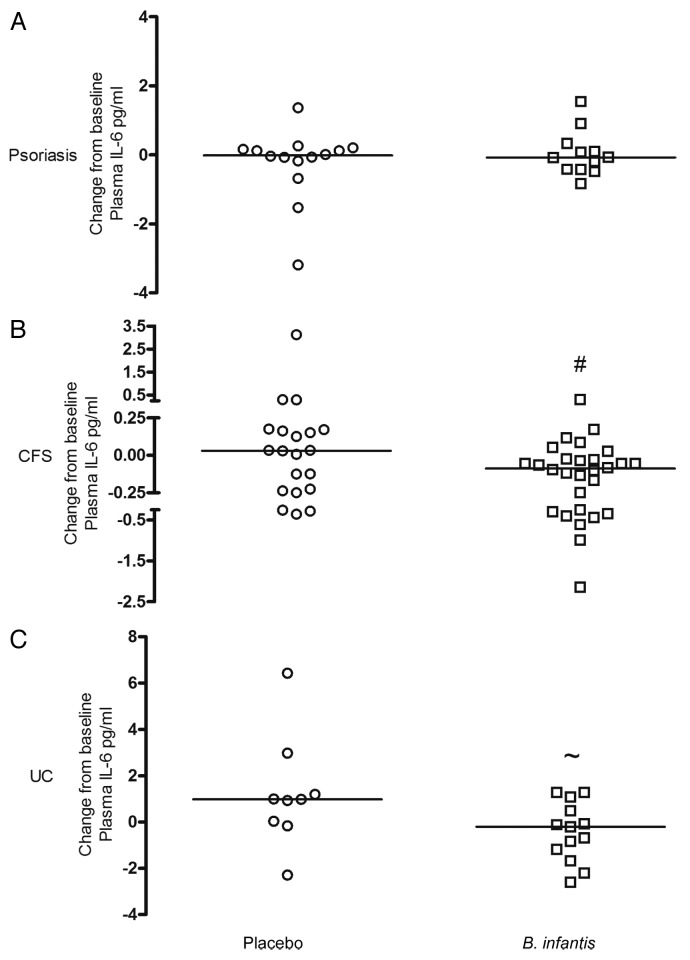
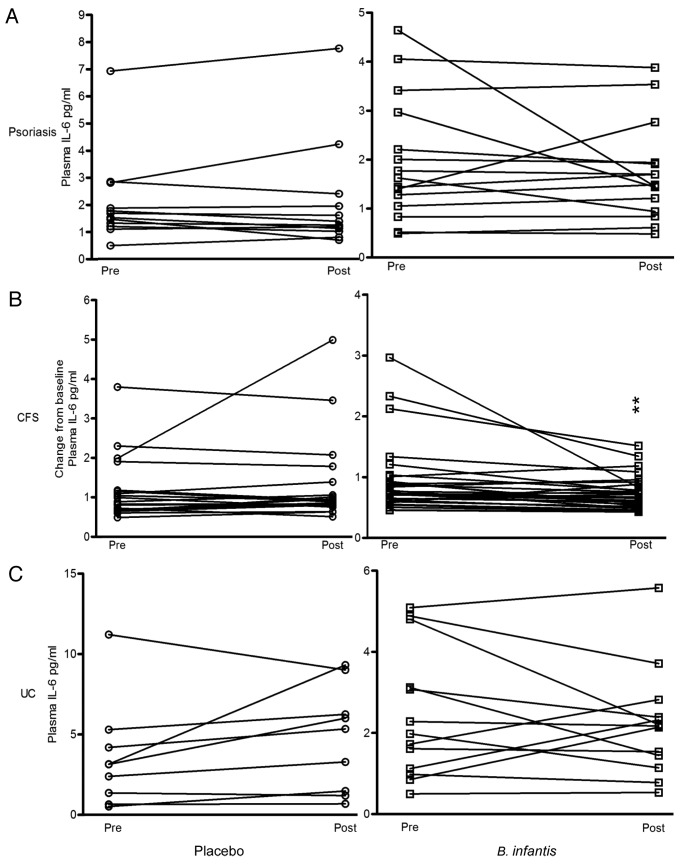
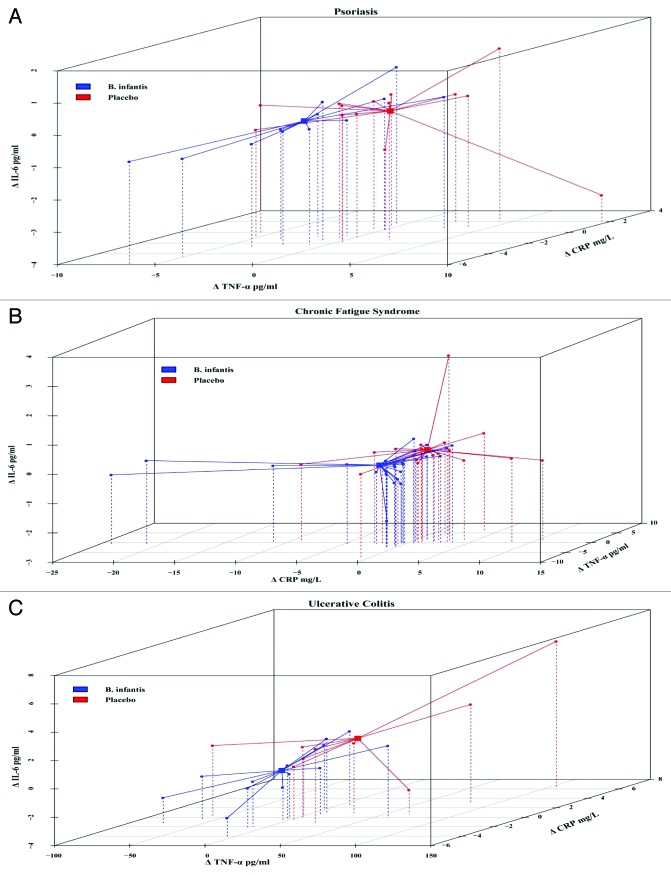
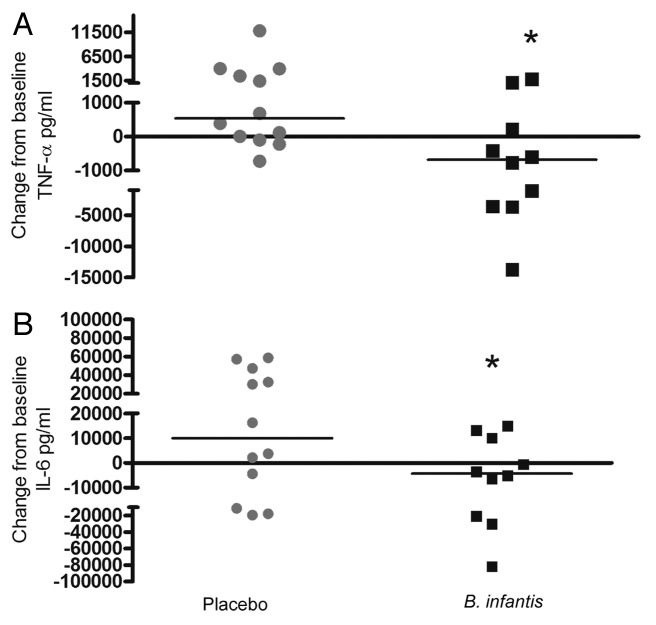
Certain therapeutic microbes, including Bifidobacteria infantis (B. infantis) 35624 exert beneficial immunoregulatory effects by mimicking commensal-immune interactions; however, the value of these effects in patients with non-gastrointestinal inflammatory conditions remains unclear. In this study, we assessed the impact of oral administration of B. infantis 35624, for 6‒8 weeks on inflammatory biomarker and plasma cytokine levels in patients with ulcerative colitis (UC) (n = 22), chronic fatigue syndrome (CFS) (n = 48) and psoriasis (n = 26) in three separate randomized, double-blind, placebo-controlled interventions. Additionally, the effect of B. infantis 35624 on immunological biomarkers in healthy subjects (n = 22) was assessed. At baseline, both gastrointestinal (UC) and non-gastrointestinal (CFS and psoriasis) patients had significantly increased plasma levels of C-reactive protein (CRP) and the pro-inflammatory cytokines tumor necrosis factor α (TNF-α) and interleukin-6 (IL-6) compared with healthy volunteers. B. infantis 35624 feeding resulted in reduced plasma CRP levels in all three inflammatory disorders compared with placebo. Interestingly, plasma TNF-α was reduced in CFS and psoriasis while IL-6 was reduced in UC and CFS. Furthermore, in healthy subjects, LPS-stimulated TNF-α and IL-6 secretion by peripheral blood mononuclear cells (PBMCs) was significantly reduced in the B. infantis 35624-treated groups compared with placebo following eight weeks of feeding. These results demonstrate the ability of this microbe to reduce systemic pro-inflammatory biomarkers in both gastrointestinal and non-gastrointestinal conditions. In conclusion, these data show that the immunomodulatory effects of the microbiota in humans are not limited to the mucosal immune system but extend to the systemic immune system.
Overview
The claims and statistics of this paper haven’t been checked yet.
Run the check — free, no account needed. It reads the open-access text and checks the sources it cites.
Integrity signals
Registry
Cites
Statistics
Figures
Verification
Claims the paper makes
The claims and statistics of this paper haven’t been checked yet.
Run the check — free, no account needed. It reads the open-access text and checks the sources it cites.
Claims other papers make about this one
Each is checked against this paper’s own text: does it say what the citing paper says it does?
In the citing paper
“the immune modulation effect of B. infantis 35624 was extended to systemic level since it was effective in reducing inflammatory biomarkers in patients with non-gastrointestinal inflammatory processes, such as chronic fatigue syndrome and psoriasis [144]”
From Intestinal microbiota in health and disease: Role of bifidobacteria in gut homeostasis (2014) · cites this paper as [144]
In the citing paper
“The studies carried out with the strain 35624 show that it was effective in reducing the proinflammatory state of patients with IBD [142,143] , as well as with UC [144]”
From Intestinal microbiota in health and disease: Role of bifidobacteria in gut homeostasis (2014) · cites this paper as [144]
Self-check
Percentages, sums and reported differences re-computed from the paper’s own numbers.
The self-check needs the paper’s full text.
Citations
Cites
The Chronic Fatigue Syndrome: A Comprehensive Approach to Its Definition and Study
Fukuda, K., Straus, S. E., Hickie, I., Sharpe, M. C., Dobbins, J. G., Komaroff, A., & and International Chronic Fatigue Syndrome Study Group. (1994) · Annals of Internal Medicine · doi:10.7326/0003-4819-121-12-199412150-00009 · Cited by 4,969
C-reactive protein: a critical update
Pepys, M. B., & Hirschfield, G. M. (2003) · Journal of Clinical Investigation · doi:10.1172/jci18921 · Cited by 4,694 · cited 3×
“TNF-α and IL-6 are pro-inflammatory cytokines which are elevated in a variety of inflammatory conditions and involved in transcriptional regulation of CRP.25,36 They are not employed in clinical practice but both of these cytokines have been targeted by aggressive anti-cytokine biologic agent therapy in the treatment…”
Induction of Colonic Regulatory T Cells by Indigenous Clostridium Species
Atarashi, K., Tanoue, T., Shima, T., Imaoka, A., Kuwahara, T., Momose, Y., Cheng, G., Yamasaki, S., Saito, T., Ohba, Y., et al. (2011) · Science · doi:10.1126/science.1198469 · Cited by 3,752
C-reactive protein: a critical update
Pepys, M. B., & Hirschfield, G. M. (2003) · Journal of Clinical Investigation · doi:10.1172/jci200318921 · Cited by 3,436
C-Reactive Protein Levels and Outcomes after Statin Therapy
Ridker, P. M., Cannon, C. P., Morrow, D., Rifai, N., Rose, L. M., McCabe, C. H., Pfeffer, M. A., & Braunwald, E. (2005) · New England Journal of Medicine · doi:10.1056/nejmoa042378 · Cited by 2,292
Gut-Residing Segmented Filamentous Bacteria Drive Autoimmune Arthritis via T Helper 17 Cells
Wu, H.-J., Ivanov, I. I., Darce, J., Hattori, K., Shima, T., Umesaki, Y., Littman, D. R., Benoist, C., & Mathis, D. (2010) · Immunity · doi:10.1016/j.immuni.2010.06.001 · Cited by 1,577 · cited 1×
“There is persuasive evidence from several sources indicating that the gut microbiota has an influence on the development and maintenance, not only of the mucosal,(1,2) but also the systemic immune response.(3,4) This raises the therapeutic vista of modifying the systemic immune response by enteric microbes.”
BackgroundRidker, P. M., Rifai, N., Clearfield, M., Downs, J. R., Weis, S. E., Miles, J. S., & Gotto, A. M. (2001) · New England Journal of Medicine · doi:10.1056/nejm200106283442601 · Cited by 1,557
Inferences, questions and possibilities in Toll-like receptor signalling
Beutler, B. (2004) · Nature · doi:10.1038/nature02761 · Cited by 1,476
Proinflammatory T-cell responses to gut microbiota promote experimental autoimmune encephalomyelitis
Lee, Y. K., Menezes, J. S., Umesaki, Y., & Mazmanian, S. K. (2011) · Proceedings of the National Academy of Sciences · doi:10.1073/pnas.1000082107 · Cited by 1,323 · cited 1×
“There is persuasive evidence from several sources indicating that the gut microbiota has an influence on the development and maintenance, not only of the mucosal,(1,2) but also the systemic immune response.(3,4) This raises the therapeutic vista of modifying the systemic immune response by enteric microbes.”
BackgroundCai, Y., Zheng, H., Gong, W. J., Che, Y., & Jiang, B. (2011) · Hepatogastroenterology · doi:10.5754/hge11155 · Cited by 1,257
Research works printed but not linked: 2
- Biljan D, 2009, Coll Antropol, 33, 83
- Federico A, 2009, Eur Rev Med Pharmacol Sci, 13, 285
Cited by
Sorted by citations
Items 301–400 of 448
El‐Sehrawy, A. A. M. A., Ayoub, I. I., Uthirapathy, S., Ballal, S., Gabble, B. C., Singh, A., Kavitha, V., Panigrahi, R., Kamali, M., & Khosravi, M. (2025) · European Journal of Translational Myology · doi:10.4081/ejtm.2025.13690 · Cited by 8
“112 Another study by Sullivan suggested an improvement in anxiety through probiotics containing Lactobacillus and Bifidobacterium , although anxiety is not a core ME/CFS symptom, and the study had only 15 participants.”
Host‐microbiome interactions in health and disease
O’Mahony, L. (2015) · Clinical Liver Disease · doi:10.1002/cld.484 · Cited by 7
“In contrast, dendritic cells exposed to Bifidobacterium infantis 35624 promote polarization of TREGs and administration of this bacterium to patients with psoriasis, chronic fatigue syndrome, or ulcerative colitis consistently reduced serum levels of proinflammatory biomarkers such as C-reactive protein, possibly medi…”
BackgroundSelf-citationDisorders of intestinal microbiocenosis: expanding the application of probiotics
Трухан, Д. И. (2022) · Meditsinskiy sovet = Medical Council · doi:10.21518/2079-701x-2022-16-7-132-143 · Cited by 7
Sangkanjanavanich, S., Pradubpongsa, P., Mitthamsiri, W., Sangasapaviliya, A., & Boonpiyathad, T. (2022) · Annals of Allergy Asthma & Immunology · doi:10.1016/j.anai.2022.08.1000 · Cited by 7
Lv, L., Ruan, G., Ping, Y., Cheng, Y., Tian, Y., Xiao, Z., Zhao, X., Chen, D., & Wei, Y. (2022) · Frontiers in Cellular and Infection Microbiology · doi:10.3389/fcimb.2022.1025889 · Cited by 7
“Bifidobacterium infantis can reduce the ability of systemic proinflammatory biomarkers and make INF-a decreased in chronic fatigue syndrome and psoriasis, and IL-6 decreased in ulcerative colitis and chronic fatigue syndrome (Groeger et al., 2013).”
BackgroundCausal relationship between gut microbiota and rosacea: a two-sample Mendelian randomization study
Li, J., Yang, F., Liu, Y., & Jiang, X. L. (2024) · Frontiers in Medicine · doi:10.3389/fmed.2024.1322685 · Cited by 10
Ray, A., Moore, T., Naik, D. S. L., & Borsch, D. M. (2024) · Medicina · doi:10.3390/medicina60091515 · Cited by 7
“Groeger et al., 2013 (Ireland) [29] Probiotic feeding: ulcerative colitis ( n = 22) for 6 weeks; psoriasis ( n = 26), chronic fatigue syndrome ( n = 48), healthy subjects with probiotic intake ( n = 10), and healthy subjects with placebo ( n = 12) for 8 weeks.”
BackgroundTherapeutic potential of microbiota modulation in psoriasis: current evidence and future directions
Bakhshandi, A. K., Minasazi, A., Yeganeh, O., & Behi, M. (2025) · Archives of Dermatological Research · doi:10.1007/s00403-025-04097-y · Cited by 6
“Other beneficial strains, such as L. casei and B. bifidum , have demonstrated the ability to modulate systemic immunity by reducing levels of pro-inflammatory cytokines, including TNF-α, IL-17, and IL-23, all of which play critical roles in psoriasis exacerbation [33].”
Evaluation of skin cancer prevention properties of probiotics
Torabi, S., Nahidi, Y., Ghasemi, S. Z., Reihani, A., Samadi, A., Ramezanghorbani, N., Nazari, E., & Davoudi, S. (2025) · Genes & Nutrition · doi:10.1186/s12263-025-00770-z · Cited by 10
“The benefits of treatment with probiotics have been reported in other chronic skin diseases such as psoriasis [61], rosacea [62], oral lichen planus [63], and seborrheic dermatitis [64].”
Tjiu, J.-W., & Lu, C.-F. (2025) · Medicina · doi:10.3390/medicina61122152 · Cited by 10
“…decade, several small randomized and non-randomized clinical studies have evaluated the potential effects of oral probiotics—most commonly involving Lactobacillus and Bifidobacterium strains—on acne severity, sebum production, systemic inflammatory mediators, and skin barrier parameters [25–28].”
Killeen, S. L., Mealy, G., Brennan, K., Cotter, P. D., Yelverton, C. A., Saldova, R., Groeger, D., van Sinderen, D., Doyle, S., & McAuliffe, F. M. (2023) · Cytokine · doi:10.1016/j.cyto.2023.156458 · Cited by 6
Self-citationHuman Gut Microbiome: A Potential Prospective to Counter Antibiotic-Resistant Pathogens
Yadav, M. (2020) · Elsevier eBooks · doi:10.1016/b978-0-12-819265-8.00005-x · Cited by 6
Mao, H., Li, S., Yin, B., Lin, X., Guo, J., Wang, T., Voglmeir, J., & Liu, L. (2022) · Food Chemistry · doi:10.1016/j.foodchem.2022.132532 · Cited by 6
Ivashkin, V., Maev, I., Alekseeva, O. P., Alekseenko, S., Korochanskaya, N. V., Poluektova, E., Simanenkov, V., Trukhmanov, A. S., Khlynov, I., Tsukanov, V., et al. (2022) · Russian Journal of Gastroenterology Hepatology Coloproctology · doi:10.22416/1382-4376-2022-32-2-9-18 · Cited by 5
Microorganisms in Pathogenesis and Management of Vitiligo
Giri, P. S., Bharti, A. H., Kemp, E. H., & Dwivedi, M. (2022) · Springer eBooks · doi:10.1007/978-981-19-1946-6_9 · Cited by 6
Vieira, K. C. D. O., da Silva, A. B. B., Felício, S. A., Lira, F. S., Figueiredo, C., Bezirtzoglou, E., Pereira, V. C., Nakagaki, W. R., Nai, G. A., & Winkelströter, L. K. (2023) · Scientific Reports · doi:10.1038/s41598-023-45819-4 · Cited by 6
“Groeger et al. 39 when using 1 × 10 10 CFU viable Bifidobacterium infantis 35624 in the treatment of gastrointestinal and non-gastrointestinal inflammatory disorders, concluded that this strain reduced the levels of C-reactive protein and TNF-α, but had no impact on ulcerative colitis.”
MethodCriton, V. J. S., & Joy, S. (2024) · Journal of Skin and Sexually Transmitted Diseases · doi:10.25259/jsstd_49_2023 · Cited by 6
Effects of Bifidobacterium longum 35624 in Children and Adolescents with Irritable Bowel Syndrome
Muñoz, S. C., Sandra Verbeke, P., Lydia Lera, M., Pizarro, M. E., Malig, J., & Sorensen, K. (2024) · Nutrients · doi:10.3390/nu16121967 · Cited by 6
“…been demonstrated by reductions in C-reactive protein and pro-inflammatory cytokines tumor necrosis factor (TNF)- α and interleukin (IL)-6 in adults with inflammatory conditions [32], and restoration of a favorable IL-10:IL-12 ratio which accompanied symptom improvements in adults with IBS [11].”
BackgroundBifidobacterium infantis 35624 as a probiotic dietary supplement: a profile of its use
Lyseng-Williamson, K. A. (2017) · Drugs & Therapy Perspectives · doi:10.1007/s40267-017-0423-9 · Cited by 5
Gut Microbiota and Inflammatory Disorders
Krishna, V., Kumar, N., & Banerjee, S. (2021) · Current Drug Targets · doi:10.2174/1389450122666210623125603 · Cited by 6
Smeriglio, A., Marcoccia, D., Denaro, M., & Trombetta, D. (2022) · Current Medicinal Chemistry · doi:10.2174/0929867329666220428110427 · Cited by 6
Gut Microbiome-Brain Communications Regulate Host Physiology and Behavior
Serre, C. B. D. L. (2015) · Journal of Nutritional Health & Food Science · doi:10.15226/jnhfs.2015.00141 · Cited by 6
“infantis 35624 was orally administrated for 6 to 8 weeks to patients with gastrointestinal (ulcerative colitis) or non-gastrointestinal (chronic fatigue syndrome, psoriasis) disorders [149].”
BackgroundEnwere, M., Irobi, E., Onu, A., Davies, E., Ogungbade, G. O., Omoniwa, O., Omale, C., Neufeld, M., Chime, V., Ezeogu, A., et al. (2025) · Gastrointestinal Disorders · doi:10.3390/gidisord7040062 · Cited by 6
“In vivo, B. infantis 35,624 consistently lowered systemic pro-inflammatory biomarkers in both gastrointestinal and extraintestinal inflammatory disorders, including UC, CFS, and psoriasis [96].”
InfluentialMicrobial homeostasis and dysbiosis in physiological and pathological skin
Gan, Y., Zhang, J., Qi, F., Grice, E. A., Garza, L. A., & Wang, G. (2025) · Med · doi:10.1016/j.medj.2025.100847 · Cited by 6
Alterations in gut microbiota and associated metabolites in patients with chronic fatigue syndrome
Cheng, X., Wang, W., Xu, T., Wang, Y., Zhen, X., Man, W., Gao, S., & Yin, Y. (2025) · Scientific Reports · doi:10.1038/s41598-025-27564-y · Cited by 7
“Several studies indicate that probiotics can alleviate CFS symptoms by restoring microbial balance and reducing pro-inflammatory cytokine levels 44,45 , mechanisms thought to involve promoting SCFAs production and repairing intestinal barrier function 46–48 .”
Nikolova, R., Donchev, D., Vaseva, K., & Ivanov, I. N. (2025) · International Journal of Molecular Sciences · doi:10.3390/ijms27010425 · Cited by 6
“Another study showed promising results of probiotics’ ability to reduce systemic markers of inflammation, including C-reactive protein (CRP), TNF-α , and IL-6 [120].”
Psychiatric aspects of spondyloarthritis
Lisitsyna, T. A., Veltishchev, D. Y., Nasonov, E. L., & Lila, A. M. (2021) · Rheumatology Science and Practice · doi:10.47360/1995-4484-2020-716-724 · Cited by 5
Gao, X., Zhu, H., Hu, L., Sun, J., Zuo, W., Liu, P., Wang, Y., Du, G., & Kang, Z. (2024) · Food Science and Human Wellness · doi:10.26599/fshw.2024.9250135 · Cited by 4
Brown, B. P., & Jaspan, H. B. (2019) · Gut Microbes · doi:10.1080/19490976.2019.1643673 · Cited by 4
Relationship Between Probiotics and Gut-Skin Axis in Skin Wound Healing: A Recent Update
Tembhre, M. K., Chawla, M. K., Francois Berthiaume, B., & Kumar, S. (2021) · Springer eBooks · doi:10.1007/978-981-16-5628-6_8 · Cited by 5
The role of the pediatric cutaneous and gut microbiomes in childhood disease: A review
Hammond, A. M., Monir, R. L., & Schoch, J. J. (2021) · Seminars in Perinatology · doi:10.1016/j.semperi.2021.151452 · Cited by 5
Toll-Like Receptors as Drug Targets in the Intestinal Epithelium
McKernan, D. P. (2021) · Handbook of experimental pharmacology · doi:10.1007/164_2021_563 · Cited by 5
Gut-Skin Axis: Role in Health and Disease
Malaviya, A., Krishna, K. V., Malviya, S., & Das, T. (2021) · Springer eBooks · doi:10.1007/978-981-16-5628-6_1 · Cited by 5
Newman, T. M., Wilson, A. S., Clear, K. Y. J., Tallant, E. A., Gallagher, P. E., & Cook, K. L. (2023) · Cells · doi:10.3390/cells12222599 · Cited by 5
“Probiotics containing Lactobacillus and Bifidobacterium produce anti-inflammatory effects; Lactobacillus supplementation reduced circulating levels of pro-inflammatory cytokines in ulcerative colitis patients while Bifidobacterium infantis modulated both gut mucosal and systemic inflammation [8,9].”
BackgroundChen, X., Chen, Y., Stanton, C., Ross, R. P., Zhao, J., Yang, B. K., & Chen, W. (2024) · Food Science and Human Wellness · doi:10.26599/fshw.2023.9250029 · Cited by 4
Groeger, D., Yao, L., Collins, F. W. J., Larsen, I., Tan, H. T., Healy, S., Ambrogi, V., Tykwinska, K., Schimdt, M., Golletz, P., et al. (2025) · Current Research in Microbial Sciences · doi:10.1016/j.crmicr.2025.100481 · Cited by 5
“…the enhancement of NF-κ B export from the nucleus, or the induction of regulatory cells and cytokines that dampen activation of TLR-activated cells (Zhou et al., 2015; O ’ Mahony et al., 2008; Riedel et al., 2006; Groeger et al., 2013; Collier-Hyams et al., 2002; Kelly et al., 2004).”
Self-citationEffects of probiotics on heart failure: a systematic review and meta-analysis
Zhu, Z., Chen, A., Wang, M., Zhang, H., Dai, S., Liu, R., & Liu, J. (2025) · Frontiers in Nutrition · doi:10.3389/fnut.2025.1708678 · Cited by 4
“They also inhibit harmful bacteria and inflammatory factors (48–50).”
The Immunomodulatory Role of Probiotics
Siddique, F., Akram, K., Al-Ghamdi, E. S., Arshad, Q., & Siddique, A. (2022) · IntechOpen eBooks · doi:10.5772/intechopen.98839 · Cited by 4
Exploring the use of probiotics in dermatology – a literature review
SROCZYŃSKA, M., LUCHOWSKA, A., & ŻACZEK, A. (2023) · Journal of Education Health and Sport · doi:10.12775/jehs.2023.13.03.001 · Cited by 4
Luo, Z., Sun, J., Liu, J., Yü, P., Ye, D., Qi, C., Chen, X.-X., & Yu, R. (2024) · Food Bioscience · doi:10.1016/j.fbio.2024.105736 · Cited by 4
Bifidobacteria in disease: from head to toe
Zhang, W., Jia, Q., Han, M., Zhang, X., Guo, L., Sun, S., Yin, W., Bo, C., Han, R., & Sai, L. (2023) · Folia Microbiologica · doi:10.1007/s12223-023-01087-3 · Cited by 4
“Besides, feeding psoriasis mice with B. infantis 35,624 also reduced the level of TNF-α in their plasma (Groeger et al. 2013).”
Long-term probiotic administration for irritable bowel syndrome: a legal need
Solovyeva, O. I., Nekrasova, A. S., Topalova, I. G., Ponomarenko, V. A., Tsurtsumiia, D. B., & Ilyashevich, I. G. (2023) · Terapevticheskii arkhiv · doi:10.26442/00403660.2023.08.202378 · Cited by 4
The Role of the Microbiota and Potential for Dietary Intervention in Chronic Fatigue Syndrome
Kirchgessner, A. L. (2016) · Elsevier eBooks · doi:10.1016/b978-0-12-802304-4.00021-9 · Cited by 4
Sidenkova, A. P., Myakotnykh, V. S., Сергеевна, В. Е., Мельник, А. А., Borovkova, T. A., & Proshchenko, D. A. (2022) · Psikhiatriya · doi:10.30629/2618-6667-2022-20-3-98-111 · Cited by 5
Meyer, J., Röös, E., Ris, F., Fearnhead, N. S., & Davies, J. (2021) · Journal of Functional Foods · doi:10.1016/j.jff.2021.104446 · Cited by 4
Zou, Y.-M., Wu, M.-N., Zhou, X., & Bai, Y. (2025) · Frontiers in Cellular and Infection Microbiology · doi:10.3389/fcimb.2025.1531355 · Cited by 4
Sun, D., Wang, C., Fan, Q., Zhan, Y., Cheng, X., Zhang, J., Wang, Q., Li, Y., Li, Q., Xiong, Y., et al. (2025) · Food Frontiers · doi:10.1002/fft2.70109 · Cited by 3
Chi, F., Chen, K., Yin, Y., Hakovirta, J. R., & Saris, P. E. J. (2026) · Sustainable Microbiology · doi:10.1093/sumbio/qvag002 · Cited by 5
“Commonly used probiotic genera include the Bifidobacterium (e.g. B. longum , B. breve , and B. infantis ) (Groeger 2013 , Yao 2021 ) and lactobacilli (e.g. Lactobacillus helveticus , and Lacticaseibacillus rhamnosus ) (Toscano 2017 , Shi 2020 ).”
Chronic skin diseases and pathology of gastrointestinal tract: Is there a connection?
Mikheenko, P. V., & Ахмедов, В. А. (2022) · Medical alphabet · doi:10.33667/2078-5631-2021-40-21-24 · Cited by 3
Yang, X., Zhao, Q., Wang, X., Zhang, Y., Ma, J., Liu, Y., & Wang, H. (2025) · Technology and Health Care · doi:10.1177/09287329241301680 · Cited by 3
“…trials have confirmed that probiotics containing Bifidobacterium can significantly alleviate antibiotic-associated diarrhea, 16 regulate systemic inflammation and immune dysfunction, 46 and reduce the levels of systemic pro-inflammatory biomarkers in gastrointestinal and non-gastrointestinal diseases.”
Uhlig, E., Elli, G., Nurminen, N., Oscarsson, E., Canaviri-Paz, P., Burri, S., Rohrstock, A.-M., Rahman, M., Alsanius, B. W., Molin, G., et al. (2022) · Food and Chemical Toxicology · doi:10.1016/j.fct.2022.113064 · Cited by 3
Microorganisms in Pathogenesis and Management of Psoriasis
Santamaria‐Babí, L. F. (2022) · Springer eBooks · doi:10.1007/978-981-19-1946-6_8 · Cited by 3
Probiotics: a new or an old concept?
Zakharenko, S. M. (2018) · Meditsinskiy sovet = Medical Council · doi:10.21518/2079-701x-2018-14-56-60 · Cited by 3
Targeting gut microbiota as a possible therapeutic intervention in autism
El-Ansary, A. K., & Bhat, R. S. (2020) · Elsevier eBooks · doi:10.1016/b978-0-12-818466-0.00017-4 · Cited by 3
The intestinal microbiota in psoriasis
Koper, M., Woźniacka, A. J., & Robak, E. (2020) · Postępy Higieny i Medycyny Doświadczalnej · doi:10.5604/01.3001.0014.3052 · Cited by 3
Unique strain of Bifidobacterium longum and its efficacy in irritable bowel syndrome
Plotnikova, E. Y. (2021) · Meditsinskiy sovet = Medical Council · doi:10.21518/2079-701x-2020-21-144-150 · Cited by 3
Probiotic Effects on Skin Health: The Case of Photoprotection as a Model of Gut-Skin Dialog
Maglio, D. H. G., Friedrich, A. D., Cela, E., Paz, M. L., & Leoni, J. (2021) · Springer eBooks · doi:10.1007/978-981-16-5628-6_7 · Cited by 3
Gut Microbiota: A Future Clinical Magic Bullet to Manifest Pathogenic Disease in the Current Future
Mina, P. R. (2023) · Journal of Pure and Applied Microbiology · doi:10.22207/jpam.17.1.43 · Cited by 3
Li, F., Han, X., Tang, T., Wang, Z., Zhao, Q., Wang, Z., Xu, Z., Chang, Y., Gou, Z., & Li, Y. (2024) · Research Square · doi:10.21203/rs.3.rs-3897238/v1 · Cited by 4
Estrogenic Effect of Probiotics on Anxiety and Depression: A Narrative Review
Rosas-Sánchez, G. U., Germán-Ponciano, L. J., Rodríguez‐Landa, J. F., Bonilla‐Jaime, H., Limón‐Morales, O., García-Ríos, R. I., Muñoz‐Carrillo, J. L., Gutiérrez-Coronado, O., Villalobos‐Gutiérrez, P. T., & Soria-Fregozo, C. (2025) · International Journal of Molecular Sciences · doi:10.3390/ijms26209948 · Cited by 2
“These anti-inflammatory effects could reduce neuroinflammation and thus protect the integrity of the blood–brain barrier (BBB) and improve neuronal function in regions critical for the regulation of emotional and affective disorders [97].”
Hamdi, A., Truong, L. V., Hien, V. T., Nguyen, P. A., Duong, H. T. B., Lloyd, C., Eri, R. D., Stanley, D., Quyền, Đ. V., & Van, T. T. H. (2025) · Microorganisms · doi:10.3390/microorganisms13122803 · Cited by 3
Lashus, C., Gomez, A., Hummel, T. R., Jacobs, L. F., Majid, A., Raju, R. M., Smith, C. J., Williams, J., & Bratman, G. N. (2025) · Environmental Research · doi:10.1016/j.envres.2025.123582 · Cited by 3
“These microbial changes could then both reduce local and systemic inflammation (Bae et al., 2022; Derrien et al., 2011; Groeger et al., 2013, 2020; Schiavi et al., 2016) and increase serotonin synthesis and release in the hippocampus (Misera et al., 2024; Yaghoubfar et al., 2020).”
The modulatory approaches of microbiome therapeutics
Tembhre, M. K., Shipra, Imran, S., & Jaiswal, K. P. (2023) · Elsevier eBooks · doi:10.1016/b978-0-323-99336-4.00013-6 · Cited by 2
The gut-skin axis: Investigating gut microbiota dysbiosis in pemphigus and bullous pemphigoid
Arnaut, N., Ciurea, C. N., & Cighir, A. (2024) · Acta Marisiensis. Seria Medica · doi:10.2478/amma-2024-0017 · Cited by 2
Maarse, B. C. E., Hofstede, A. D., Jansen, M. A. A., & Moerland, M. (2025) · Biomedicine & Pharmacotherapy · doi:10.1016/j.biopha.2025.118205 · Cited by 2
Judkins, T. C., Oula, M.-L., Sims, S. M., & Langkamp‐Henken, B. (2022) · Trials · doi:10.1186/s13063-022-06410-w · Cited by 2
Skivka, L. M. (2015) · Biotechnologia Acta · doi:10.15407/biotech8.03.028 · Cited by 2
“It concerns, for example, numerous strains of Bifidobacterium infantis [92, 93].”
Actual issues of diagnosis and treatment of irritable bowel syndrome
Трухан, Д. И., Goloshubina, V. V., & Ivanova, D. S. (2019) · Meditsinskiy sovet = Medical Council · doi:10.21518/2079-701x-2018-21-110-116 · Cited by 2
Probiotics for Atopic Dermatitis: An Update
Kakade, P., Wairkar, S., Lohakare, S., Shah, P., & Patravale, V. B. (2021) · Springer eBooks · doi:10.1007/978-981-16-5628-6_9 · Cited by 2
Amieva‐Balmori, M., García-Mazcorro, J. F., Martínez-Conejo, A., Hernández-Ramírez, G. A., García‐Zermeño, K. R., Rodríguez-Aguilera, O., Aja-Cadena, M., Cortes-Barradas, M., Quigley, E. M. M., & Remes-Troche, J. M. (2022) · Revista de Gastroenterología de México (English Edition) · doi:10.1016/j.rgmxen.2022.06.014 · Cited by 2
Self-citationWalker, M., Peppercorn, K., Kleffmann, T., Edgar, C. D., & Tate, W. P. (2023) · Medical Research Archives · doi:10.18103/mra.v11i7.1.4083 · Cited by 3
Happel, A., Rametse, C. L., Perumaul, B., Diener, C., Gibbons, S. M., Nyangahu, D. D., Donald, K. A., Gray, C. M., & Jaspan, H. B. (2023) · BMC Complementary Medicine and Therapies · doi:10.1186/s12906-023-04208-0 · Cited by 2
“B. infantis supplementation has shown beneficial effects on enteric inflammation, mucin degradation, and antibiotic resistance gene carriage [38–40].”
BackgroundParveen, S. R., Wadhwa, S., Vishwas, S., Kumar, B., Pandey, N. K., Singh, S., Baghel, D. S., Kumar, A., Alotaibi, F. O., Alam, A., et al. (2023) · Research Square · doi:10.21203/rs.3.rs-3279030/v1 · Cited by 2
Role of regulatory T cells in pathogenesis and therapeutics of psoriatic arthritis
Sakkas, L. I., Alexiou, I., & Chikanza, I. C. (2024) · Elsevier eBooks · doi:10.1016/b978-0-443-13947-5.00003-8 · Cited by 1
Yin, Y., Zeng, X., Wu, Z. F., Du, Q., Zhang, T., Pan, D., Du, M., & Tu, M. (2024) · Food Science and Human Wellness · doi:10.26599/fshw.2024.9250176 · Cited by 1
“In addition, Groeger et al. [32] demonstrated that Bifidobacterium infantis 35624 can reduce the levels of C-reactive protein and the pro-inflammatory cytokines TNF-α and IL-6 in UC patients.”
Mendes, E., Umana, E. R. P., Penna, D. D. P. S., de Oliveira, F. A., Lemos, L. N., Ribeiro, W. R., Casaro, M. B., Lazarini, M., Oliveira, V. M., & Ferreira, C. M. (2025) · Microorganisms · doi:10.3390/microorganisms13051082 · Cited by 1
“Studies have shown that Bifidobacteria can downregulate IL-6 while upregulating IL-10 in the intestine [54,55], especially the bifidobacteria used in this study [56].”
Probiotics as a Novel Approach in the Treatment of Psoriasis – A Literature Review
Chajnowska, A., Stępień, J., Zach, M., Suchcicka, W., Borowy, A., Guzowska, J., Sobczyk, M., Wołoszyn, B., Rzeźnik, P., & Stachera, W. (2025) · Journal of Education Health and Sport · doi:10.12775/jehs.2025.83.61787 · Cited by 1
Méndez-Albiñana, P., Cros-Brunsó, L., Rodrigues‐Díez, R., Rodríguez‐Rodríguez, P., Santamarı́a, L., Muñoz-Labrador, A. M., Requena, T., Casaní, L., Caballero, F. F., Nieto, I., et al. (2025) · Bioactive Carbohydrates and Dietary Fibre · doi:10.1016/j.bcdf.2025.100505 · Cited by 1
Zhong, H.-J., Zhou, Y., Zhao, J.-W., Chen, W.-R., Zhan, N., & Zhan, Y. (2026) · Frontiers in Bioengineering and Biotechnology · doi:10.3389/fbioe.2026.1752619 · Cited by 1
“SIS treatment enriched bacterial genera such as Bifidobacterium and Alloprevotella , which are known to support mucosal immunity and regulate inflammatory responses through microbial metabolites and host–microbe signaling (Groeger et al., 2013; Han et al., 2024).”
Prebiotics, Probiotics, Synbiotics, and Phage Therapy
ROSENBERG, E. B., & Zilber‐Rosenberg, I. (2013) · Springer eBooks · doi:10.1007/978-3-319-04241-1_10 · Cited by 1
Bifidobacterium longum spp. infantis
Quigley, E. M. M. (2017) · Elsevier eBooks · doi:10.1016/b978-0-12-804024-9.00017-3 · Cited by 1
Self-citationImmune-enhancing agents in autoimmune skin diseases – A review
Francis, A., & Jose, A. R. (2022) · Journal of Skin and Sexually Transmitted Diseases · doi:10.25259/jsstd_19_2021 · Cited by 1
Diet and Nutritional Supplements for Psoriasis
Lucius, K. (2022) · Integrative and Complementary Therapies · doi:10.1089/ict.2022.29007.klu · Cited by 1
Amieva‐Balmori, M., García-Mazcorro, J. F., Martínez-Conejo, A., Hernández-Ramírez, G. A., García‐Zermeño, K. R., Rodríguez-Aguilera, O., Aja-Cadena, M., Cortes-Barradas, M., Quigley, E. M. M., & Remes-Troche, J. M. (2022) · Revista de Gastroenterología de México · doi:10.1016/j.rgmx.2022.04.005 · Cited by 1
Self-citationLi, J., Mao, B., Tang, X., Zhang, Q., Zhao, J., Zhang, H., & Cui, S. (2025) · Food Reviews International · doi:10.1080/87559129.2025.2494063 · Cited by 1
“[93] Probiotics may activate the T lymphocytes (Th1 and Th17), which engage in several pro-inflammatory cytokines production, including inter-leukins, TNFα, and interferon-gamma, and improve the state of the skin.”
Clinical Significance of Bifidobacteria
Riedel, C. U. (2018) · Elsevier eBooks · doi:10.1016/b978-0-12-805060-6.00013-2 · Cited by 3
Microbiomes in Medicine and Agriculture
ROSENBERG, E. B. (2021) · The microbiomes of humans, animals, plants, and the environment · doi:10.1007/978-3-030-65317-0_10 · Cited by 1
Kadriu, H., & Yeoman, C. J. (2022) · The microbiomes of humans, animals, plants, and the environment · doi:10.1007/978-3-030-90303-9_9 · Cited by 1
Umborowati, M. A., Rosita, P. E., Endaryanto, A., SURONO, I. S., Thio, H. B., & Prakoeswa, C. R. S. (2023) · Research Square · doi:10.21203/rs.3.rs-3127639/v1 · Cited by 1
Microbiome-based approaches to food allergy treatment
Yao, L., Forde, B. M., Lunjani, N., Cronin, C., & O’Mahony, L. (2023) · Elsevier eBooks · doi:10.1016/b978-0-323-96018-2.00109-7 · Cited by 1
Self-citationThe impact of host-microbe interactions on murine colonic secretomotor function
Lomasney, K. W. (2014) · Cork Open Research Archive (University College Cork, Ireland)
Exploring Fatigue in Inflammatory Bowel Disease Patients
Vogelaar, L. (2015) · EUR Research Repository (Erasmus University Rotterdam)
Dietary Interventions and Irritable Bowel Syndrome
Thomas, A., & Quigley, E. M. M. (2016) · Elsevier eBooks · doi:10.1016/b978-0-12-802304-4.00020-7
Self-citationStanwicks, L. L. (2021) · ScholarWorks@UMassAmherst (University of Massachusetts Amherst) · doi:10.7275/9054002
Können Sie Probiotika empfehlen?
Bogner, J. R. (2017) · MMW - Fortschritte der Medizin · doi:10.1007/s15006-017-9339-5
Probiotics and Anti-inflammatory Processes in HIV Infection
Reale, M., & Falasca, K. (2017) · Elsevier eBooks · doi:10.1016/b978-0-12-805417-8.00024-x
Carbuhn, A. F. (2017) · KU ScholarWorks (The University of Kansas)
Critical Entry Points—Microbiome
Lunjani, N., & O’Mahony, L. (2018) · Elsevier eBooks · doi:10.1016/b978-0-12-813471-9.00011-6
Self-citationElucidating Role of Bacteria in Psoriatic Disease: From Skin and Gut PerspectivesPreprint
Yermekbayeva, B., Algazina, T., Razbekova, M., Pinhasov, A., Batpenova, G., & Kushugulova, A. R. (2018) · Preprints.org · doi:10.20944/preprints201809.0215.v1
“infantis), which was previously reported to induce regulatory T cells in peripheral blood of healthy participants, was also shown to substantially decrease TNF-α, Creactive protein levels and in a small extent IL-6 in 75% of psoriasis patients after 6-8 week of daily probiotic intake[15, 56].”
BackgroundUse of Probiotics in Inflammatory Bowel Disease
Plaza‐Díaz, J., Ruiz‐Ojeda, F. J., Téllez, M. J. A., Solis‐Urra, P., Sáez‐Lara, M. J., & Gil, Á. (2019) · Elsevier eBooks · doi:10.1016/b978-0-12-815249-2.00015-4
Metadata
- Authors
- Groeger, D., O’Mahony, L., Murphy, E. F., Bourke, J. F., Dinan, T. G., Kiely, B., Shanahan, F., & Quigley, E. M. M.
- Affiliations
- Alimentary Health (Ireland) (IE)
- University of Zurich (CH)
- South Infirmary Victoria University Hospital (IE)
- University College Cork (IE)
- Corresponding author
- Quigley, Eamonn M.M.
- Venue
- Gut Microbes
- Publisher
- Informa UK Limited
- Published
- 2013-07-12
- Volume
- 4
- Issue
- 4
- Pages
- 325-339
- ISSN
- 1949-0976 (ISSN-L)
- 1949-0984
- PMC
- PMC3744517
- OpenAlex
- W2056812430
- Cited by
- 448
- References
- 57
- Citations by year
- 2026: 16 · 2025: 52 · 2024: 54 · 2023: 52 · 2022: 56 · 2021: 40 · 2020: 29 · 2019: 36 · 2018: 28 · 2017: 30 · 2016: 16 · 2015: 21 · 2014: 15 · 2013: 3
- FWCI
- 27.31
- Type
- journal article
- Language
- en
- Open access
- hybrid
- doi.org
- Licence
- cc-by-nc
- Locations
- Gut Microbes (publishedVersion, cc-by-nc)
- Europe PMC (PubMed Central) (publishedVersion, cc-by-nc)
- PubMed Central (publishedVersion, cc-by-nc)
- PubMed (publishedVersion)
- Topics
- Life Sciences › Agricultural and Biological Sciences › Food Science › Probiotics and Fermented Foods
- Life Sciences › Biochemistry, Genetics and Molecular Biology › Molecular Biology › Gut microbiota and health
- Health Sciences › Medicine › Gastroenterology › Inflammatory Bowel Disease
- Keywords
- probiotics, immunomodulation, ulcerative colitis, chronic fatigue syndrome, psoriasis, systemic inflammation, C-reactive protein, TNF-α, interleukin-6, peripheral blood mononuclear cells, gut microbiota
- MeSH terms
- Administration, Oral, Adolescent, Adult, Aged, Bifidobacterium, C-Reactive Protein, Colitis, Ulcerative, Double-Blind Method, Female, Humans, Immunosuppression Therapy, Male, Middle Aged, Placebos, Psoriasis, Fatigue Syndrome, Chronic, Cytokines, Treatment Outcome, Probiotics, Gastrointestinal Tract, Young Adult
About these checks
Registry, retraction, Cites and statistics results are computed, not judged, with one exception: a printed reference that no index lists is read once by a model before it counts as a citation error. Claims are extracted by a model and kept only when their quote appears verbatim in the text; each cited source is then checked, with a model’s help, for whether it says what the claim relies on. Those verdicts can be wrong — read the claim’s quote and the cited source before relying on one.
Statistics and arithmetic are recomputed, not judged.
Confidence bands are shown only for fields calibrated on our annotated test set. None is calibrated yet, so no band is shown.
What counts as a claim ›How we measure confidence ›How we check this ›
Are you an author, or do you see a problem with this page? Request a review
