

Efficacy of a single-session online ACT-based mindfulness intervention among undergraduates in lockdown during the COVID-19 pandemic
Open accessThe DOI matches its Crossref record; 70 of the 73 references it cites were found in a registry or an index; 2 of the 46 sources its claims cite were checked for support.
Abstract
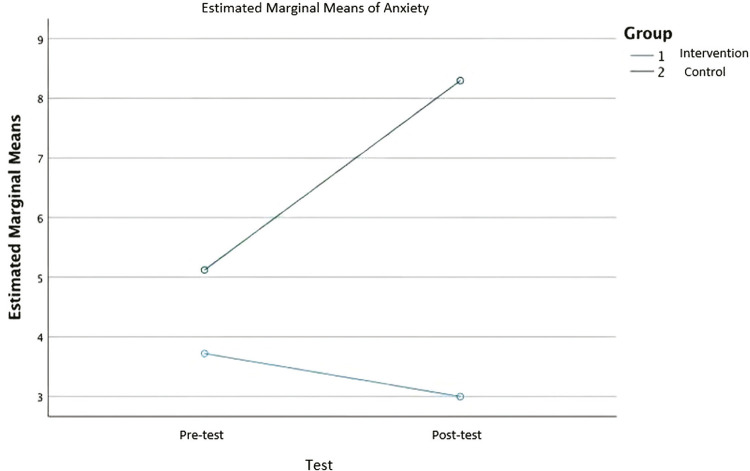
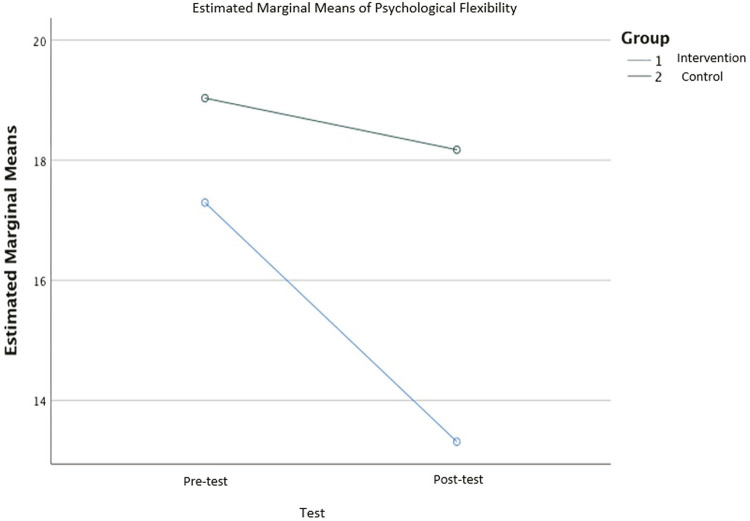
Introduction: COVID-19 has trickle-down psychological effects on multiple strata of society, particularly university students. Apart from the worry of contracting or spreading COVID-19, Malaysian university students were also locked down on their campuses, suffering significant psychological distress. Hence, an online mindfulness intervention was proposed to alleviate psychological distress and improve psychological flexibility and mindfulness. Methods: This was a quasi-experimental study with university students as participants. Intervention group participants were instructed to complete online questionnaires which covered basic demographics and instruments assessing depression, anxiety, stress, mindfulness, psychological flexibility, and fear of COVID-19 before and after the one-hour intervention. The control group also completed before and after questionnaires and were subsequently crossed over to the intervention group. Repeated measures ANOVA was conducted to assess time*group effects. Results: 118 participants were involved in this study. There were significant differences in anxiety (F(1,116) = 34.361, p < 0.001, partial eta-squared = 0.229) and psychological flexibility between the two groups (F(1,116) = 11.010, p = 0.001, partial eta-squared = 0.087), while there were no differences in depression, stress, mindfulness, or fear of COVID-19. Conclusion: The results of this study corroborate the efficacy of online single-session mindfulness therapy as a viable short-term psychological intervention under financial and time constraints. Since university students are in the age group with the highest incidence of depressive and anxiety disorders, it is crucial to utilize resources to address as many students as possible to ensure maximum benefit. © 2022, Sociedade de Psiquiatria do Rio Grande do Sul. All rights reserved.
Overview
CoChat Summary
TL;DR
This quasi-experimental study tested a one-hour online ACT-based mindfulness session in 118 locked-down Malaysian undergraduate medical students during the COVID-19 pandemic. It found significant post-intervention improvement in anxiety and psychological flexibility, but not in depression, stress, mindfulness, or fear of COVID-19.
Key findings
- 118 participants were included, split into intervention (61) and control (57) groups.
- Repeated measures ANOVA found significant group differences for anxiety: *F*(1,116) = 34.361, *p* < 0.001, partial eta-squared = 0.299.
- Repeated measures ANOVA found significant group differences for psychological flexibility: *F*(1,116) = 11.010, *p* = 0.001, partial eta-squared = 0.087.
- There were no significant differences in depression, stress, mindfulness, or fear of COVID-19.
Methods
- Quasi-experimental, nonequivalent groups design with a waitlist-style crossover: the control group completed pre/post questionnaires and then received the intervention later.
- Participants were undergraduate university students in lockdown on campus during Malaysia’s Conditional Movement Control Order; the paper says the sample was all medical students, and 118 volunteered.
- Main analysis used intention-to-treat with repeated measures ANOVA in IBM SPSS 26.0, comparing pre-intervention (T1) and post-intervention (T2) scores.
Limitations
- The paper states the sample was all medical students, which may create selection bias because they may have greater COVID-19 knowledge than other students or the general public.
- The sample size was relatively small (118), partly due to internet access limitations and time constraints, and because three batches of medical students had already received mindfulness training before the study.
- The paper notes the lack of an active control group; the observed effects may have reflected supportive interaction with a professional rather than the mindfulness technique itself.
- Evident from the text: participants could not be blinded, and students living close together may have shared intervention techniques with the control group, which could have affected results.
Model-written summary. Check it against the paper before relying on it.
Integrity signals
Registry
Cites
Statistics
Figures
Verification
Claims the paper makes
1 Valid · 1 Not valid · 24 Not checked · 20 Own results and interpretations
At least one cited source doesn’t support this claim or points to a different paper, and none confirmed it — see the verdicts below.
In the paper
“Online mindfulness meditation (MM) training has demonstrated equal benefits to face-to-face MBSR training for reduction of depression, stress, and anxiety. 35 , 36”
§ Efficacy of a single-session online ACT-based mindfulness intervention among undergraduates in lockdown during the COVID-19 pandemic > Introduction
What the sources say
- Disputedcites [35] Spijkerman MPJ Pots WTM Bohlmeijer ET Effectiveness of online mindfulness-based interventions in improving mental health: a review and meta-analysis of randomised controlled trials Clin Psychol Rev 2016 45 102 114 27111302 sourceExperimental — accuracy not yet measured
In 4.1 Main findings, Spijkerman et al. (2016) state the opposite of the claim: their effect sizes for depression (g = 0.29) and anxiety (g = 0.22, Abstract/3.4.2) 'were in general lower than the medium to large effect sizes found for face-to-face MBIs', and 'these findings may suggest that online MBIs are, as yet, not equally effective as traditional face-to-face MBIs in reducing depression and anxiety'. The paper also reports no head-to-head comparison with face-to-face MBSR — per 3.2.4 the control conditions were waitlist, discussion forum, psycho-education, behavioural activation, expressive writing or no intervention — so equivalence to face-to-face MBSR is not something it demonstrates for depression, stress or anxiety. Only the stress effect (g = 0.51) falls within the range of prior face-to-face MBI meta-analyses (0.4-0.7, Introduction), but the authors do not claim parity for it. (LLM, conf=0.85)
Checked by a reasoning model — may be wrong.
- Not checked yetcites [36] Cavanagh K Strauss C Cicconi F Griffiths N Wyper A Jones F A randomised controlled trial of a brief online mindfulness-based intervention Behav Res Ther 2013 51 573 578 23872699 source
boosted- Asserted: passes — The authors put it forward as true.
- Checkable: passes — It can be checked against evidence.
- Load-bearing: passes — The paper’s conclusions depend on it.
- Based: passes — The paper gives a reason why it holds.
- Disputed
The cited sources support only part of this claim — read each source’s verdict below.
In the paper
“This is also reflected in the literature, where other online single-session interventions have been equally efficacious. 54 - 56”
§ Efficacy of a single-session online ACT-based mindfulness intervention among undergraduates in lockdown during the COVID-19 pandemic > Discussion
What the sources say
- Partly supportedcites [54] Mahmood L Hopthrow T De Moura GR A moment of mindfulness: computer-mediated mindfulness practice increases state mindfulness PLoS One 2016 11 e0153923 27105428 PMC4841572 sourceExperimental — accuracy not yet measured
Our copy supports only the 'online single-session practice is efficacious' half of the claim, and only for the paper's own intervention: the General Discussion concludes that 'as little as 5-minutes of mindfulness is enough to elicit increased state mindfulness... is effective when delivered online where the participant is able to choose their own surroundings', and hedges that self-administered online delivery 'may be the cause of increases in the effectiveness of interventions [48, 49]' (online CBT trials, not single-session mindfulness). It nowhere reports or compares the efficacy of other online single-session interventions as 'equally efficacious'; on the contrary, the Introduction characterises existing online offerings as courses that 'still require a time commitment and some form of specialist input', and the General Discussion states 'this is the first study to examine whether such practices are effectively increasing state mindfulness'. The equivalence claim therefore rests on the other citations in the 54–56 cluster, not on this source. (LLM, conf=0.68)
- Not checked yetcites [55] Kemper KJ Khirallah M Acute effects of online mind–body skills training on resilience, mindfulness, and empathy J Evidence-Based Complement Altern Med 2015 20 247 253 25783980 source
- Not checked yetcites [56] Kemper KJ Brief online mindfulness training: immediate impact J Evidence-Based Complement Altern Med 2017 22 75 80 PMC5871208 27002136 source
plain- Asserted: passes — The authors put it forward as true.
- Checkable: passes — It can be checked against evidence.
- Load-bearing: unclear — It is unclear whether the paper’s conclusions depend on it.
- Based: passes — The paper gives a reason why it holds.
- Partly supported
A result the paper reports from its own data — it cites no other source for it, so there is none to check. The quote shows it is in the paper.
In the paper
“A repeated measures ANOVA showed that the anxiety scores differed significantly between control and intervention groups, F(1,116) = 34.361, p < 0.001, partial eta-squared = 0.299 ( Figure 1 ).”
§ Efficacy of a single-session online ACT-based mindfulness intervention among undergraduates in lockdown during the COVID-19 pandemic > Results
plainn = 118 ·- Asserted: passes — The authors put it forward as true.
- Checkable: passes — It can be checked against evidence.
- Load-bearing: passes — The paper’s conclusions depend on it.
- Based: passes — The paper gives a reason why it holds.
A result the paper reports from its own data — it cites no other source for it, so there is none to check. The quote shows it is in the paper.
In the paper
“A repeated measures ANOVA showed that psychological flexibility differed significantly between control and intervention groups, F(1,116) = 11.010, p = 0.001, partial eta-squared = 0.087 ( Figure 2 ).”
§ Efficacy of a single-session online ACT-based mindfulness intervention among undergraduates in lockdown during the COVID-19 pandemic > Results
plainn = 118 ·- Asserted: passes — The authors put it forward as true.
- Checkable: passes — It can be checked against evidence.
- Load-bearing: passes — The paper’s conclusions depend on it.
- Based: passes — The paper gives a reason why it holds.
What the paper did — it cites no source for this, so there is none to check. The quote shows it is in the paper.
In the paper
“Normality checks were carried out on the residuals for psychological flexibility scores, which were approximately normally distributed.”
§ Efficacy of a single-session online ACT-based mindfulness intervention among undergraduates in lockdown during the COVID-19 pandemic > Results
plainn = 118- Asserted: passes — The authors put it forward as true.
- Checkable: passes — It can be checked against evidence.
- Load-bearing: passes — The paper’s conclusions depend on it.
- Based: passes — The paper gives a reason why it holds.
11 more claims
Create a free account to see all 46 claims and to verify the 9 references still open.
- Probably not a substantial claim. 19
- It may state two separate claims as one. 17
Claims other papers make about this one
Each is checked against this paper’s own text: does it say what the citing paper says it does?
In the citing paper
“the evidence suggests that these approaches hold potential to yield reductions in depression and anxiety and improve overall quality of life across various groups of individuals [28–30], including amongst college students [31–33].”
Statistics recomputed
Every reported test result, recomputed from its test statistic and degrees of freedom. A result shows as not adding up only once an independent check has confirmed it.
- ConsistentF(1, 116) = 34.361reported p < .001 · recomputed p < .001
“F(1,116) = 34.361, p < .001”
- ConsistentF(1, 116) = 11.01reported p = .001 · recomputed p = .001
“F(1,116) = 11.010, p = .001”
Self-check
Percentages, sums and reported differences re-computed from the paper’s own numbers.
Self-check results appear here once an independent check has confirmed them.
Citations
Cites
Baron, R. M., & Kenny, D. A. (1986) · Journal of Personality and Social Psychology · doi:10.1037/0022-3514.51.6.1173 · Cited by 91,532
A novel coronavirus from patients with pneumonia in China, 2019
Zhu, N., Zhang, D., Wang, W., Li, X., Yang, B., Song, J., Zhao, X., Huang, B., Shi, W., Lu, R., et al. (2020) · New England Journal of Medicine · doi:10.1056/nejmoa2001017 · Cited by 28,244 · cited 5×
“229) and psychological flexibility between the two groups (F(1,116) = 11.”
BackgroundMethodInfluentialThe benefits of being present: Mindfulness and its role in psychological well-being
Brown, K. W., & Ryan, R. M. (2003) · Journal of Personality and Social Psychology · doi:10.1037/0022-3514.84.4.822 · Cited by 13,448
(1995) · Cited by 6,909
Acceptance and commitment therapy: model, processes and outcomes
Hayes, S. C., Luoma, J. B., Bond, F. W., Masuda, A., & Lillis, J. (2006) · Behaviour Research and Therapy · doi:10.1016/j.brat.2005.06.006 · Cited by 6,587
Lippa, N. C., & Sanderson, S. C. (2013) · Human Heredity · doi:10.1159/000353712 · Cited by 6,078
Mindfulness training as a clinical intervention: a conceptual and empirical review
Baer, R. A. (2003) · Clinical Psychology: Science and Practice · doi:10.1093/clipsy.bpg015 · Cited by 4,577
Mindfulness training as a clinical intervention: A conceptual and empirical review.
Baer, R. A. (2003) · Clinical Psychology: Science and Practice · doi:10.1093/clipsy/bpg015 · Cited by 4,576
The Fear of COVID-19 Scale: Development and Initial Validation
Ahorsu, D. K., Lin, C.-Y., Imani, V., Saffari, M., Griffiths, M. D., & Pakpour, A. H. (2022) · International Journal of Mental Health and Addiction · doi:10.1007/s11469-020-00270-8 · Cited by 4,332
Bond, F. W., Hayes, S. C., Baer, R. A., Carpenter, K. M., Guenole, N., Orcutt, H. K., Waltz, T., & Zettle, R. D. (2011) · Behavior Therapy · doi:10.1016/j.beth.2011.03.007 · Cited by 3,950
Cited by
Fang, S., & Ding, D. (2023) · Journal of Contextual Behavioral Science · doi:10.1016/j.jcbs.2023.03.015 · Cited by 33
Efficacy of a single session mindfulness based intervention: A randomized clinical trial
Rubin, M., Fischer, C. M., & Telch, M. J. (2024) · PLoS ONE · doi:10.1371/journal.pone.0299300 · Cited by 30
Pang, N. T. P., James, S., Giloi, N., Rahim, S. S. S. A., Omar, A., Jeffree, M. S., Hayati, F., Lim, M. C., Kassim, M. A. M., & Ng, J. R. (2021) · International Journal of Environmental Research and Public Health · doi:10.3390/ijerph18189656 · Cited by 19
Self-citationReangsing, C., Moonpanane, K., Pitchalard, K., Kodyee, S., Seethikaew, N., & Oerther, S. E. (2023) · Journal of Clinical Psychology · doi:10.1002/jclp.23526 · Cited by 26
Online group interventions for mental health promotion of college students: Integrative review
Lucietto, G. C., Rossato, L., Correia‐Zanini, M. R. G., & Scorsolini‐Comin, F. (2022) · Counselling and Psychotherapy Research · doi:10.1002/capr.12561 · Cited by 20
Metadata
- Authors
- Pang, N. T. P., Tio, V. C. S., Bhupendar Singh, A. S., Tseu, M. W. L., Shoesmith, W. D., Abd Rahim, M. A., & Mohd Kassim, M. A.
- Affiliations
- Universiti of Malaysia Sabah (MY)
- ORCID
- Venue
- Trends in Psychiatry and Psychotherapy
- Publisher
- EDITORA SCIENTIFIC
- Published
- 2022
- Volume
- 44
- Pages
- e20200172-e20200172
- ISSN
- 2237-6089 (ISSN-L)
- 2238-0019
- PMC
- PMC10039730
- OpenAlex
- W3187849664
- Semantic Scholar
- d5263605001bf4980fe189a02a654ec77a0bb89e
- Cited by
- 17
- References
- 73
- Citations by year
- 2026: 2 · 2024: 6 · 2023: 4 · 2022: 4
- FWCI
- 2.55
- Type
- journal article
- Language
- en
- Open access
- diamond
- doi.org
- Licence
- cc-by
- Locations
- Trends in Psychiatry and Psychotherapy (publishedVersion, cc-by)
- PubMed Central (publishedVersion, cc-by)
- PubMed (publishedVersion)
- LA Referencia (Red Federada de Repositorios Institucionales de Publicaciones Científicas) (publishedVersion, other-oa)
- Topics
- Social Sciences › Psychology › Clinical Psychology › Mindfulness and Compassion Interventions
- Social Sciences › Psychology › Clinical Psychology › COVID-19 and Mental Health
- Social Sciences › Psychology › Applied Psychology › Digital Mental Health Interventions
- Keywords
- mindfulness-based interventions, online intervention, single-session intervention, university students, COVID-19 lockdown, psychological distress, anxiety, depression, stress, psychological flexibility, fear of COVID-19
- MeSH terms
- COVID-19, Anxiety, Communicable Disease Control, Humans, Stress, Psychological, Students, Pandemics, Mindfulness
About these checks
Registry, retraction, Cites and statistics results are computed, not judged, with one exception: a printed reference that no index lists is read once by a model before it counts as a citation error. Claims are extracted by a model and kept only when their quote appears verbatim in the text; each cited source is then checked, with a model’s help, for whether it says what the claim relies on. Those verdicts can be wrong — read the claim’s quote and the cited source before relying on one.
The claim verdicts this report counts are experimental: their accuracy is not yet measured.
A language model drew the claims from the paper on 2026-10-11, under version 3 of the claim definition (model deepseek-v4.1-flash, prompt extract-v3).
A second model labelled each claim on 2026-10-11 (model jev-1.13-20260917, definition revision gold-guideline-v0.2).
Cited sources are checked with a language model’s help (qwen3.8-omni-flash).
Statistics and arithmetic are recomputed, not judged.
Confidence bands are shown only for fields calibrated on our annotated test set. None is calibrated yet, so no band is shown.
What counts as a claim ›How we measure confidence ›How we check this ›
Are you an author, or do you see a problem with this page? Request a review
Data sources
Bibliographic data: Semantic Scholar, OpenAlex, Crossref.
Contains information from the Semantic Scholar Academic Graph Datasets, made available under the ODC Attribution License (ODC-BY 1.0).
Semantic Scholar’s data is described in: Kinney, R., et al. (2023). The Semantic Scholar Open Data Platform. arXiv:2301.10140.
