

The DOI matches its DataCite record; 118 of the 120 references it cites were found in a registry or an index, and 2 are not checked yet.
Replica wormholes and the black hole interior
Open accessAbstract
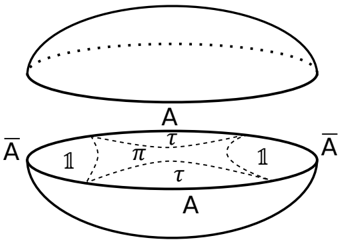
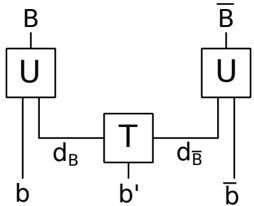
Recent work has shown how to obtain the Page curve of an evaporating black hole from holographic computations of entanglement entropy. We show how these computations can be justified using the replica trick, from geometries with a spacetime wormhole connecting the different replicas. In a simple model, we study the Page transition in detail by summing replica geometries with different topologies. We compute related quantities in less detail in more complicated models, including JT gravity coupled to conformal matter and the SYK model. Separately, we give a direct gravitational argument for entanglement wedge reconstruction using an explicit formula known as the Petz map; again, a spacetime wormhole plays an important role. We discuss an interpretation of the wormhole geometries as part of some ensemble average implicit in the gravity description.
Overview
The claims and statistics of this paper haven’t been checked yet.
Run the check — free, no account needed. It reads the open-access text and checks the sources it cites.
Integrity signals
Registry
Cites
Statistics
Figures




Verification
Claims the paper makes
The claims and statistics of this paper haven’t been checked yet.
Run the check — free, no account needed. It reads the open-access text and checks the sources it cites.
Claims other papers make about this one
Each is checked against this paper’s own text: does it say what the citing paper says it does?
The source backs part of the claim, not all of it — or backs it for a different population, condition or comparison.
In the citing paper
“It also shows in this model that results analogous to the Rényi entropy computations of [48,49] will hold not just for typical members of the ensemble defined by the Hartle-Hawking no-boundary state, but in fact for all allowed α-states.”
From Transcending the ensemble: baby universes, spacetime wormholes, and the order and disorder of black hole information (2020) · cites this paper as [49]
Experimental — accuracy not yet measuredThe source backs part of the claim, not all of it — or backs it for a different population, condition or comparison.
In the citing paper
“We then explored this construction in detail in simple topological models inspired by Jackiw-Teitelboim gravity with and without end-of-the-world branes (EOW branes, see e.g.[49,104]), and perhaps also with an extra boundary degree of freedom.Without EOW branes, there is a single asymptotically AdS boundary condition Z, for which the associated operator Z is naturally interpreted as the dimension”
From Transcending the ensemble: baby universes, spacetime wormholes, and the order and disorder of black hole information (2020) · cites this paper as [49]
Experimental — accuracy not yet measuredThe source backs part of the claim, not all of it — or backs it for a different population, condition or comparison.
In the citing paper
“Indeed, in order to explain the Rényi computations of [49] for typical members of the Hartle-Hawking ensemble some version of this compression must occur whenever the number of a priori independent states inside a quantum extremal surface exceeds the generalized entropy defined by the region outside.”
From Transcending the ensemble: baby universes, spacetime wormholes, and the order and disorder of black hole information (2020) · cites this paper as [49]
Experimental — accuracy not yet measuredThe source backs part of the claim, not all of it — or backs it for a different population, condition or comparison.
In the citing paper
“The minimum of the two dominates the path integral and gives the unitary Page curve, see [70,71] (see also [24,84]).”
From The entropy of Hawking radiation (2021) · cites this paper as [70]
Experimental — accuracy not yet measuredThe source backs part of the claim, not all of it — or backs it for a different population, condition or comparison.
In the citing paper
“More recently, it has been shown that a Petz-like map can be used to demonstrate bulk reconstruction in random tensor network toy models [52,185] of holography.”
From Holographic spacetime, black holes and quantum error correcting codes: a review (2022) · cites this paper as [52]
Experimental — accuracy not yet measured
The source backs part of the claim, not all of it — or backs it for a different population, condition or comparison.
In the citing paper
“In this Euclidean model, we represent the state of the B ∪ R system in the maximally entangled form”
From Holographic spacetime, black holes and quantum error correcting codes: a review (2022) · cites this paper as [52]
Experimental — accuracy not yet measuredThe cited source says what the claim attributes to it.
In the citing paper
“A starting point for such further investigation is the observation of [49] that the above replica trick results appear to be inconsistent with one might normally call a single welldefined theory.”
From Transcending the ensemble: baby universes, spacetime wormholes, and the order and disorder of black hole information (2020) · cites this paper as [49]
The cited source says what the claim attributes to it.
In the citing paper
“In particular, rather than taking single well-defined values, partitionfunction-like quantities seem to have both a mean value and a non-zero variance.”
From Transcending the ensemble: baby universes, spacetime wormholes, and the order and disorder of black hole information (2020) · cites this paper as [49]
The cited source says what the claim attributes to it.
In the citing paper
“Critically, [48,49] then pointed out that -at least in some contexts -this seeminglyhybrid recipe in fact follows from replica trick calculations of S rad using the gravitational path integral (and in particular that this was implicit in earlier derivations of the quantum corrected Ryu-Takayanagi [50,51] and Hubeny-Rangamani-Takayanagi [52] entropy formulae [53,54]).”
From Transcending the ensemble: baby universes, spacetime wormholes, and the order and disorder of black hole information (2020) · cites this paper as [49]
The cited source says what the claim attributes to it.
In the citing paper
“As in [49], as and discussed further in section 4, this is a version of the semiclassical Page curve [1].”
From Transcending the ensemble: baby universes, spacetime wormholes, and the order and disorder of black hole information (2020) · cites this paper as [49]
The cited source says what the claim attributes to it.
In the citing paper
“But the result is deeply related to recent successes [42,43,48,49] in reproducing various forms of the Page curve associated with the black hole information problem.”
From Transcending the ensemble: baby universes, spacetime wormholes, and the order and disorder of black hole information (2020) · cites this paper as [49]
The cited source says what the claim attributes to it.
In the citing paper
“It was then derived without holography from the gravitational path integral in [13,14], using the gravitational replica method developed earlier in [5,30].”
From Replica wormholes for an evaporating 2D black hole (2021) · cites this paper as [14]
The cited source says what the claim attributes to it.
In the citing paper
“This argument is equivalent to the derivation of the entropy in [13,14] from the defect action, but easier in practice.”
From Replica wormholes for an evaporating 2D black hole (2021) · cites this paper as [14]
The cited source says what the claim attributes to it.
In the citing paper
“This has been derived by including replica wormholes in the gravitational path integral”
From Replica wormholes for an evaporating 2D black hole (2021) · cites this paper as [14]
The cited source says what the claim attributes to it.
In the citing paper
“The island formula [1,2,9,14,29] states that the true von Neumann entropy of region R is given not by Hawking's calculation, but by an extremum of the generalized entropy,”
From Replica wormholes for an evaporating 2D black hole (2021) · cites this paper as [14]
The cited source says what the claim attributes to it.
In the citing paper
“This can be calculated directly from the action of the defect, and the result [13,14] is the island formula (2.47).”
From Replica wormholes for an evaporating 2D black hole (2021) · cites this paper as [14]
The cited source says what the claim attributes to it.
In the citing paper
“For n ∼ 1, the dynamical twist fields obey an equation of motion that extremizes the generalized entropy.Thus the twist fields become the endpoints of the island.A general argument for this based on the effective action for twist defects appears in [5,13,14,51], but in the island context, only the eternal black hole has been treated in detail [13,14].”
From Replica wormholes for an evaporating 2D black hole (2021) · cites this paper as [14]
The cited source says what the claim attributes to it.
In the citing paper
“To derive the island rule, we also need to show that the entropy derived from the replica method is equal to the generalized entropy associated to the QES.This was demonstrated from the effective action for twist defects in [13,14].”
From Replica wormholes for an evaporating 2D black hole (2021) · cites this paper as [14]
The cited source says what the claim attributes to it.
In the citing paper
“The second crucial difference is that higher topologies can contribute to the gravitational path integral.The topologies responsible for the island rule are Z n -symmetric replica wormholes [13,14].”
From Replica wormholes for an evaporating 2D black hole (2021) · cites this paper as [14]
The cited source says what the claim attributes to it.
In the citing paper
“there are other cases where non-replica-symmetric contributions to the path integral are important [14,38,64,65].”
From Replica wormholes for an evaporating 2D black hole (2021) · cites this paper as [14]
The cited source says what the claim attributes to it.
In the citing paper
“We focus on the island formula (8.2) for the entropy of the Hawking radiation [70,71].”
From The entropy of Hawking radiation (2021) · cites this paper as [70]
The cited source says what the claim attributes to it.
In the citing paper
“The idea is that very complex computations in the radiation can create wormholes that reach into that interior and pull out the information stored there [70], see also [85,86].”
From The entropy of Hawking radiation (2021) · cites this paper as [70]
The cited source says what the claim attributes to it.
In the citing paper
“Although the replica wormhole saddles produce results which are compatible with unitarity, there are crucial subtleties which are explicitly brought out by the Euclidean (Penington, Shenker, Stanford and Yang) PSSY toy model [52]”
From Holographic spacetime, black holes and quantum error correcting codes: a review (2022) · cites this paper as [52]
The cited source says what the claim attributes to it.
In the citing paper
“After this paper first appeared on arXiv, these replica trick calculations were done explicitly in [50, 51], where it was shown that the relevant topologies for the second half of the Page curve involve spacetime wormholes connecting different replicas.”
From Entanglement wedge reconstruction and the information paradox (2020) · cites this paper as [50]
The cited source says what the claim attributes to it.
In the citing paper
“The QRT prescription can be motivated via a replica trick involving Euclidean wormholes, as explored in [16-20].”
From Page curve for an evaporating black hole (2020) · cites this paper as [17]
The cited source says what the claim attributes to it.
In the citing paper
“There is a more generic derivation of the island rule (5.1) based on Euclidean replica trick techniques. This approach was investigated by two groups Almheiri et al. (2020); Penington et al. (2019).”
From Solvable models of quantum black holes: a review on Jackiw–Teitelboim gravity (2023) · cites this paper as Penington et al. (2019)
The cited source says what the claim attributes to it.
In the citing paper
“The above island formula resolves the issue with the entropy of Hawking radiation: when the semiclassical radiation entropy grows larger than the Bekenstein–Hawking entropy , the entropy is computed by choosing X to be a surface slightly in the interior of the black hole.”
From Solvable models of quantum black holes: a review on Jackiw–Teitelboim gravity (2023) · cites this paper as Penington et al. 2019
The cited source says what the claim attributes to it.
In the citing paper
“The result of this discussion is the following proposal for a formula that computes the radiation entanglement entropy in a gravitating system (Penington 2020; Almheiri et al. 2019; Penington et al. 2019; Almheiri et al. 2020):5.1”
From Solvable models of quantum black holes: a review on Jackiw–Teitelboim gravity (2023) · cites this paper as Penington et al. 2019
The cited source says what the claim attributes to it.
In the citing paper
“There have been several distinct indications (Harlow and Jafferis 2018; Penington et al. 2019; Almheiri et al. 2020; Giddings and Turiaci 2020; Stanford 2020; Engelhardt et al. 2021; Johnson 2021; Saad et al. 2021a) that the gravitational path integral is not equivalent to an ordinary quantum mechanical system (where we interpret the boundary circles as representing Euclidean time).”
From Solvable models of quantum black holes: a review on Jackiw–Teitelboim gravity (2023) · cites this paper as Penington et al. 2019
The check wasn’t confident either way, so it gives no verdict — never disputed.
In the citing paper
“With hindsight one can say that it was implicit in all of these works, and in fact moderately explicit in [49].”
From Transcending the ensemble: baby universes, spacetime wormholes, and the order and disorder of black hole information (2020) · cites this paper as [49]
Experimental — accuracy not yet measured
Self-check
Percentages, sums and reported differences re-computed from the paper’s own numbers.
The self-check needs the paper’s full text.
Citations
Cites
Particle creation by black holes
Hawking, S. W. (1975) · Communications In Mathematical Physics · doi:10.1007/bf02345020 · Cited by 13,106
Ryu, S., & Takayanagi, T. (2006) · Physical Review Letters · doi:10.1103/physrevlett.96.181602 · Cited by 4,302
Cosmological event horizons, thermodynamics, and particle creation
Gibbons, G. W., & Hawking, S. W. (1977) · Physical Review D · doi:10.1103/physrevd.15.2738 · Cited by 3,192
Hartle, J. B., & Hawking, S. W. (1983) · Physical Review D · doi:10.1103/physrevd.28.2960 · Cited by 3,027
Non-gaussian features of primordial fluctuations in single field inflationary models
Maldacena, J. (2003) · Journal of High Energy Physics · doi:10.1088/1126-6708/2003/05/013 · Cited by 2,906
Gapless spin-fluid ground state in a random quantum Heisenberg magnet
Sachdev, S., & Ye, J. (1993) · Physical Review Letters · doi:10.1103/physrevlett.70.3339 · Cited by 1,910
A covariant holographic entanglement entropy proposal
Hubeny, V. E., Rangamani, M., & Takayanagi, T. (2007) · Journal of High Energy Physics · doi:10.1088/1126-6708/2007/07/062 · Cited by 1,822 · cited 1×
“This resonates with the longstanding suspicion that some small corrections to the Hawking calculation (of order e−SBH) could be responsible for making black (1)For example [4, 5, 6, 7, 8, 9]; for a review see [10].”
BackgroundEntanglement entropy and conformal field theory
Calabrese, P., & Cardy, J. (2009) · Journal of Physics A: Mathematical and Theoretical · doi:10.1088/1751-8113/42/50/504005 · Cited by 1,688 · cited 1×
“[68])”
Average entropy of a subsystem
Page, D. N. (1993) · Physical Review Letters · doi:10.1103/physrevlett.71.1291 · Cited by 1,578
Eternal black holes in anti-de Sitter
Maldacena, J. (2003) · Journal of High Energy Physics · doi:10.1088/1126-6708/2003/04/021 · Cited by 1,555
Research works printed but not linked: 1
- C. Akers, T. Faulkner, S. Lin and P. Rath, Reflected entropy in random tensor networks, arXiv:2112.09122 [INSPIRE]. · arXiv
Cited by
Sorted by citations
Items 701–800 of 812
Zhang, P., Liu, C., & Chen, X. D. (2020) · SciPost Physics · doi:10.21468/scipost.report.1626
Report on scipost_202010_00002v1
Chowdhury, C., Papadoulaki, O., & Raju, S. (2021) · SciPost Physics · doi:10.21468/scipost.report.2433
Report on scipost_202010_00002v2
Chowdhury, C., Papadoulaki, O., & Raju, S. (2021) · SciPost Physics · doi:10.21468/scipost.report.2722
Laddha, A., Prabhu, S. G., Raju, S., et al. (2021) · SciPost Physics · doi:10.21468/scipost.report.2485
Report on scipost_202009_00009v1
Liu, C., Zhang, P., & Chen, X. (2020) · SciPost Physics · doi:10.21468/scipost.report.2266
Altland, A., & Sonner, J. (2021) · SciPost Physics · doi:10.21468/scipost.report.2428
Anous, T., Kruthoff, J., & Mahajan, R. (2020) · SciPost Physics · doi:10.21468/scipost.report.1984
Altland, A., & Sonner, J. (2021) · SciPost Physics · doi:10.21468/scipost.report.2396
Report on scipost_202009_00009v1
Liu, C., Zhang, P., & Chen, X. (2020) · SciPost Physics · doi:10.21468/scipost.report.2248
Anous, T., Kruthoff, J., & Mahajan, R. (2020) · SciPost Physics · doi:10.21468/scipost.report.1974
Laddha, A., Prabhu, S. G., Raju, S., et al. (2021) · SciPost Physics · doi:10.21468/scipost.report.2482
Altland, A., & Sonner, J. (2021) · SciPost Physics · doi:10.21468/scipost.report.3170
Akers, C., & Penington, G. (2022) · SciPost Physics · doi:10.21468/scipost.report.4604
Akers, C., & Penington, G. (2022) · SciPost Physics · doi:10.21468/scipost.report.4464
Report on scipost_202109_00031v1
Garcı́a-Garcı́a, A. M., & Godet, V. (2021) · SciPost Physics · doi:10.21468/scipost.report.3734
Beyond islands: A free probabilistic approachPreprint
Wang, J. (2022) · arXiv (Cornell University) · doi:10.3929/ethz-b-000593308
Ecker, F., Grumiller, D., & McNees, R. (2022) · SciPost Physics · doi:10.21468/scipost.report.5304
Ecker, F., Grumiller, D., & McNees, R. (2022) · SciPost Physics · doi:10.21468/scipost.report.5429
Une île au cœur des trous noirs
Almheiri, A. (2022) · Pour la Science · doi:10.3917/pls.542.0024
Freivogel, B., Nikolakopoulou, D., & Rotundo, A. F. (2021) · SciPost Physics · doi:10.21468/scipost.report.3736
Freivogel, B., Nikolakopoulou, D., & Rotundo, A. F. (2021) · SciPost Physics · doi:10.21468/scipost.report.3766
Freivogel, B., Nikolakopoulou, D., & Rotundo, A. F. (2021) · SciPost Physics · doi:10.21468/scipost.report.3709
AdS/CFT beyond inter-representational dualitiesPreprint
Review, B. (2023) · doi:10.31219/osf.io/egfqa
Black hole information paradox as an instance of the paradox of reversible processesPreprint
Review, B. (2023) · doi:10.31219/osf.io/sp3yt
Report on scipost_202206_00032v1
Bianchi, L., Angelis, S. D., & Meineri, M. (2022) · SciPost Physics · doi:10.21468/scipost.report.5673
Lin, H. W., MALDACENA, J. M., Rozenberg, L., et al. (2022) · SciPost Physics · doi:10.21468/scipost.report.6168
Lin, H. W., MALDACENA, J. M., Rozenberg, L., et al. (2022) · SciPost Physics · doi:10.21468/scipost.report.6164
Milekhin, A., & Tajdini, A. (2022) · SciPost Physics · doi:10.21468/scipost.report.6352
Milekhin, A., & Tajdini, A. (2023) · SciPost Physics · doi:10.21468/scipost.report.6527
Report on scipost_202212_00065v1
Aalsma, L., Faruk, M. M., van der Schaar, J. P., et al. (2023) · SciPost Physics · doi:10.21468/scipost.report.6776
Report on scipost_202212_00065v1
Aalsma, L., Faruk, M. M., van der Schaar, J. P., et al. (2023) · SciPost Physics · doi:10.21468/scipost.report.6672
Quantum measurements as Type-I approximations to Type-III von Neumann algebrasPreprint
Review, B. (2023) · doi:10.31219/osf.io/hf243
Circumventing the black hole hair-loss problem
Cheng, P. (2023) · Physical review. D/Physical review. D. · doi:10.1103/physrevd.108.066014
Report on scipost_202308_00014v2
Basu, D., Lin, J., Lu, Y., et al. (2023) · SciPost Physics · doi:10.21468/scipost.report.8101
Report on scipost_202308_00014v1
Basu, D., Lin, J., Lu, Y., et al. (2023) · SciPost Physics · doi:10.21468/scipost.report.7937
Report on scipost_202308_00014v1
Basu, D., Lin, J., Lu, Y., et al. (2023) · SciPost Physics · doi:10.21468/scipost.report.7825
Basu, D., Lin, J., Lu, Y., et al. (2023) · SciPost Physics · doi:10.21468/scipost.report.7435
Basu, D., Lin, J., Lu, Y., et al. (2023) · SciPost Physics · doi:10.21468/scipost.report.7412
Ecker, F., Grumiller, D., Hartong, J., et al. (2023) · SciPost Physics · doi:10.21468/scipost.report.7871
Ecker, F., Grumiller, D., Hartong, J., et al. (2023) · SciPost Physics · doi:10.21468/scipost.report.7912
Entanglement islands and black holes deformations
Ageev, D. S. (2024) · International Conference on Particle Physics and Cosmology (ICPPC) · doi:10.22323/1.455.0040
Report on scipost_202211_00020v1
Shao, Y., Yuan, M.-K., & Zhou, Y. (2023) · SciPost Physics Core · doi:10.21468/scipost.report.6827
Shao, Y., Yuan, M.-K., & Zhou, Y. (2023) · SciPost Physics Core · doi:10.21468/scipost.report.7899
Quantum thermal search: computing ground states via quantum mixing thermal operations
Kim, M. (2024) · Quantum Information Processing · doi:10.1007/s11128-024-04413-x
A topological drive for spacetime travel
Cai, T., & Wang, Y. (2024) · Classical and Quantum Gravity · doi:10.1088/1361-6382/ad5bb7
Reflected entropy in an evaporating black hole through a nonisometric map
Chen, B., & Yin, Z. (2025) · Physical review. D/Physical review. D. · doi:10.1103/qr71-3r93
Конечные области зацепленности и информационный парадокс в заряженных черных дырах
Belokon, A. I. (2024) · Теоретическая и математическая физика · doi:10.4213/tmf10824
Iizuka, N., & Nishida, M. (2024) · Journal of High Energy Physics · doi:10.1007/jhep12(2024)212
The information conservation in Hawking radiation by laws of thermodynamics
Li, L.-F., & Jiang, J.-J. (2025) · International Journal of Modern Physics D · doi:10.1142/s0218271825500026
Effect of a nonextensive parameter on the Page curve
Anand, A., Kumar, D., & Singh, A. (2025) · Physical review. D/Physical review. D. · doi:10.1103/njpw-wlf3 · Cited by 2
Off-diagonal coupling of supersymmetric SYK model
Zhang, C., & Cai, W. (2025) · Journal of High Energy Physics · doi:10.1007/jhep02(2025)133
Modular Entropy Retrieval in Black-Hole Information Recovery: A Proper-Time Saturation ModelPreprint
Cooper, E. (2025) · Preprints.org · doi:10.20944/preprints202503.2057.v3
A classical model for semiclassical state-counting
Sorce, J. (2025) · Journal of High Energy Physics · doi:10.1007/jhep05(2025)108
Black Hole as an Information Mirror
Wang, X. (2025) · IntechOpen eBooks · doi:10.5772/intechopen.1009847 · Cited by 1
Non-Hermitian Fermion Dynamics, PT Symmetry, and Entanglement in Black Hole EvaporationPreprint
Miranda, A. P. M. T. (2025) · SSRN Electronic Journal · doi:10.2139/ssrn.5292556
Many Phases in a Hairy Box in Three Dimensions
Miyashita, S. (2025) · Universe · doi:10.3390/universe11070208
A Max-Flow Approach to Random Tensor Networks
Fitter, K., Loulidi, F., & Nechita, I. (2025) · Entropy · doi:10.3390/e27070756
Island paradigm and information recovery from radiation
Jalan, K., Pius, R., & Ramchander, M. (2025) · Journal of High Energy Physics · doi:10.1007/jhep07(2025)244
Optimal Bound on Long-Range Distillable Entanglement
Kudler-Flam, J., Narovlansky, V., & Sopenko, N. (2025) · Physical Review Letters · doi:10.1103/d9tn-jfg1
Quantum Extremal Surfaces and the Page Curve
Mahajan, R. (2025) · Springer Series in Astrophysics and Cosmology · doi:10.1007/978-981-96-6170-1_16
Unitary Evaporation and AdS/CFT
Miyaji, M. (2025) · Springer Series in Astrophysics and Cosmology · doi:10.1007/978-981-96-6170-1_10
Is the Information Loss Problem a Paradox?
Buoninfante, L., & Filippo, F. D. (2025) · Springer Series in Astrophysics and Cosmology · doi:10.1007/978-981-96-6170-1_3
Information Retrieval from Euclidean Path Integral
Yeom, D.-H. (2025) · Springer Series in Astrophysics and Cosmology · doi:10.1007/978-981-96-6170-1_15
UV Effects and Short-Lived Hawking Radiation: Alternative Resolution of Information Paradox
Ho, P.-M., Kawai, H., & Shao, W.-H. (2025) · Springer Series in Astrophysics and Cosmology · doi:10.1007/978-981-96-6170-1_7 · Cited by 5
Lu, J. X., Ou, M., & Yang, Z. (2025) · Springer Series in Astrophysics and Cosmology · doi:10.1007/978-981-96-6170-1_19
Self-citationBalasubramanian, V., & Yildirim, T. P. (2026) · Physical review. D/Physical review. D. · doi:10.1103/p7wt-47rj · Cited by 7
Coarse-grained fixed-point tensor networks and holographic reflected entropy in 3D gravity
Bao, N., Chu, J., Jiang, Y., & March, J. (2026) · Journal of High Energy Physics · doi:10.1007/jhep02(2026)107 · Cited by 1
Average entanglement entropy of a small subsystem in a constrained pure Gaussian state ensemble *
Aurell, E., Hackl, L., & Kieburg, M. (2025) · Quantum Science and Technology · doi:10.1088/2058-9565/ae0e4e · Cited by 1
Phase transition in a doubly holographic model of closed dS2 spacetime
Jiang, W.-H., Peng, C., & Yun-song Piao, A. (2025) · The European Physical Journal C · doi:10.1140/epjc/s10052-025-14817-3
From Nonextremal to Extremal: Entropy of Reissner-Nordström and Kerr black holes Revisited
Fairoos, C., & Singha, C. (2025) · General Relativity and Gravitation · doi:10.1007/s10714-025-03471-5
Holography for de Sitter bubble geometries
Irakleous, A., Rondeau, F., & Toumbas, N. (2026) · Journal of High Energy Physics · doi:10.1007/jhep03(2026)240
Discrete bulk spectrum in Jackiw-Teitelboim theory
Dongsu Bak, A., Kim, C., & Yi, S.-H. (2025) · Physical review. D/Physical review. D. · doi:10.1103/98z9-qdhq
Ðorđević, S., & Radovanović, V. (2026) · Physical review. D/Physical review. D. · doi:10.1103/nc2z-hx6s
Nonperturbative toolkit for quantum gravity
Balasubramanian, V., & Yildirim, T. P. (2026) · Physical review. D/Physical review. D. · doi:10.1103/nlzj-w34h · Cited by 10
Symmetry topological field theory entanglement and holographic nonfactorization
Torres, E., & Yu, X. (2026) · Physical review. D/Physical review. D. · doi:10.1103/9wgn-ntnn · Cited by 10
Operators with spectral density increasing as Ω ( E ) ∼ e Const . E 2
Aurell, E., & Majumdar, S. N. (2025) · Physical Review Research · doi:10.1103/5bxn-pt83 · Cited by 1
Hybrid Brownian SYK-Hubbard model: from spectral function to quantum chaos
Sun, N. G., Zhang, P., & Zhang, P. (2025) · Journal of High Energy Physics · doi:10.1007/jhep11(2025)150
Scaling dimension of operators from the black hole interior
Choun, Y.-S., Kim, K., Sang-jin Sin, A., & Yuk, T. (2025) · Physics Letters B · doi:10.1016/j.physletb.2025.140043
Layered Quantum Extremal Surfaces and Multidimensional Page Curves in Stratified Black Holes
Morán, A. M. (2026) · International Journal of Theoretical Physics · doi:10.1007/s10773-026-06270-z
Optical signatures of the Kiselev-inspired wormholes
Güvendi, A., Mustafa, O., Doğan, S. G., & Errehymy, A. (2026) · International Journal of Geometric Methods in Modern Physics · doi:10.1142/s0219887826501641
Non-perturbative effects in JT gravity from KdV equations
Hatsuda, Y., Matsumoto, T., & Okuyama, K. (2026) · Journal of High Energy Physics · doi:10.1007/jhep03(2026)056
Living on the edge: a non-perturbative resolution to the negativity of bulk entropies
Antonini, S., Iliesiu, L. V., Rath, P., & Tran, P. D. (2026) · Journal of High Energy Physics · doi:10.1007/jhep03(2026)035 · Cited by 7
Bridging worldsheet CFTs and wormholes
Zigdon, Y. (2026) · Journal of High Energy Physics · doi:10.1007/jhep08(2026)184
Revisiting the second order formalism of JT gravity
Lin, G., & Usatyuk, M. (2026) · Journal of High Energy Physics · doi:10.1007/jhep03(2026)253
Bi-Structured Horizon Geometry and Spectral Dimension Running at Black Hole HorizonsPreprint
Singh, S., & Parmar, V. P. S. (2026) · Research Square · doi:10.21203/rs.3.rs-9250599/v1
Evolving Page curves for black holes coupled to cooling baths
Dar, W. A., Kajuri, N., & Panigrahi, R. (2026) · Physical review. D/Physical review. D. · doi:10.1103/28wh-w9db
Modern Techniques in Gravity and the Structure of Holographic Conformal Field Theories
Ubaldo, G. D. (2024) · theses.fr (ABES) · doi:10.70675/08e35cb7zc7aez4a63z9803z9c910ef07456
Quantum optical inspired phenomenological models for unitary black hole evaporation
Alsing, P. M. (2026) · Classical and Quantum Gravity · doi:10.1088/1361-6382/ae62ed · Cited by 1
An algebraic description of the Page transition
Zhong, H. (2026) · Journal of High Energy Physics · doi:10.1007/jhep04(2026)160
Entanglement revivals and scrambling for evaporating black holes
Batista, L. B. N., Bragagnolo, N., Holmes, R., & Kumar, S. P. (2026) · Physical review. D/Physical review. D. · doi:10.1103/z1j3-zq5g
q-Askey deformations of double-scaled SYK
Aguilar-Gutierrez, S. E., Kukolj, T., & Seitz, J. (2026) · Journal of High Energy Physics · doi:10.1007/jhep09(2026)196 · Cited by 7
Probing the factorized island branch with the capacity of entanglement in Jackiw-Teitelboim gravity
Arias, R., & Tamis, A. (2026) · Physical review. D/Physical review. D. · doi:10.1103/rw5x-4t3d
Allowable complex Black Holes in the Euclidean Gravitational Path Integral
Krishna, V., & Larsen, F. K. (2026) · Journal of High Energy Physics · doi:10.1007/jhep06(2026)026
Entanglement islands, Page curves and phase transitions of Kerr-AdS black holes
Das, D., Awal, M. B., & Phukon, P. (2026) · The European Physical Journal C · doi:10.1140/epjc/s10052-026-15820-y
Mass and entropy of asymptotically flat eternal quantum black holes in 2D
Alexandre, J., Kontou, E.-A., Santos, D. P., Pla, S., & Svesko, A. (2026) · Journal of High Energy Physics · doi:10.1007/jhep06(2026)040 · Cited by 2
The holographic multi-entropy cone
Ju, X.-X., & Zhao, Y. (2026) · Journal of High Energy Physics · doi:10.1007/jhep09(2026)253
State counting in gravity and maximal entropy principle
Hernandez, J., & Khramtsov, M. A. (2026) · Physics Letters B · doi:10.1016/j.physletb.2026.140652
Probing evaporating black holes with modular flow in SYK
Bragagnolo, N., & Kumar, S. P. (2026) · Journal of High Energy Physics · doi:10.1007/jhep06(2026)185
An algebraic resolution of the firewall paradox
Kumar, N. (2026) · International Journal of Modern Physics D · doi:10.1142/s0218271826410014
Metadata
- Authors
- Penington, G., Shenker, S. H., Stanford, D., & Yang, Z.
- Affiliations
- Stanford University (US)
- Corresponding author
- Yang, Zhenbin
- Venue
- arXiv
- Publisher
- arXiv
- Published
- 2019
- Volume
- 2022
- Issue
- 3
- ISSN
- 1029-8479 (ISSN-L)
- arXiv
- 1911.11977
- OpenAlex
- W2991561483
- Cited by
- 809
- References
- 119
- Citations by year
- 2026: 62 · 2025: 139 · 2024: 127 · 2023: 148 · 2022: 132 · 2021: 145 · 2020: 54 · 2019: 2
- FWCI
- 17.10
- Type
- journal article
- Language
- en
- Open access
- diamond
- doi.org
- Licence
- Locations
- Journal of High Energy Physics (publishedVersion, cc-by)
- arXiv (Cornell University) (submittedVersion)
- OSTI OAI (U.S. Department of Energy Office of Scientific and Technical Information) (submittedVersion, cc-by)
- DOAJ (DOAJ: Directory of Open Access Journals) (submittedVersion)
- arXiv (Cornell University)
- Funders
- National Science Foundation (1720397)
- U.S. Department of Energy (DESC0019380)
- Simons Foundation
- Air Force Office of Scientific Research (FA9550-, FA9550-16-1-0082, FA9550-16, -16-1-, FA9550-16-1)
- Topics
- Physical Sciences › Physics and Astronomy › Nuclear and High Energy Physics › Black Holes and Theoretical Physics
- Physical Sciences › Physics and Astronomy › Nuclear and High Energy Physics › Noncommutative and Quantum Gravity Theories
- Physical Sciences › Physics and Astronomy › Atomic and Molecular Physics, and Optics › Quantum many-body systems
- Keywords
- replica wormholes, black hole evaporation, entanglement entropy, replica method, entanglement wedge reconstruction, JT gravity, conformal matter, SYK model, holography, black hole interior, ensemble average
About these checks
Registry, retraction, Cites and statistics results are computed, not judged, with one exception: a printed reference that no index lists is read once by a model before it counts as a citation error. Claims are extracted by a model and kept only when their quote appears verbatim in the text; each cited source is then checked, with a model’s help, for whether it says what the claim relies on. Those verdicts can be wrong — read the claim’s quote and the cited source before relying on one.
Statistics and arithmetic are recomputed, not judged.
Confidence bands are shown only for fields calibrated on our annotated test set. None is calibrated yet, so no band is shown.
What counts as a claim ›How we measure confidence ›How we check this ›
Are you an author, or do you see a problem with this page? Request a review
