

The DOI matches its DataCite record; 40 of the 63 references it cites were found in a registry or an index.
Model evaluation for extreme risks
Open accessAbstract
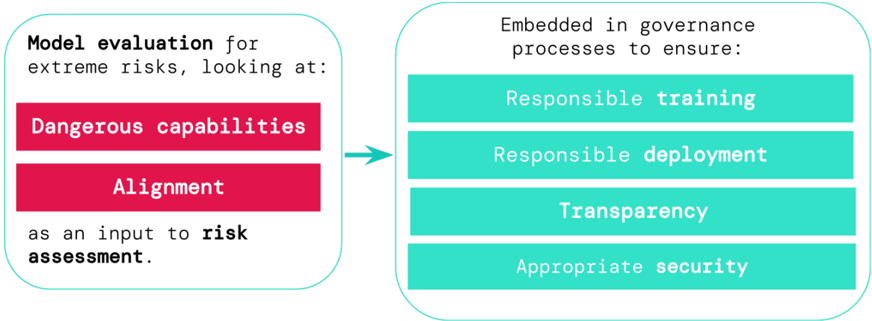
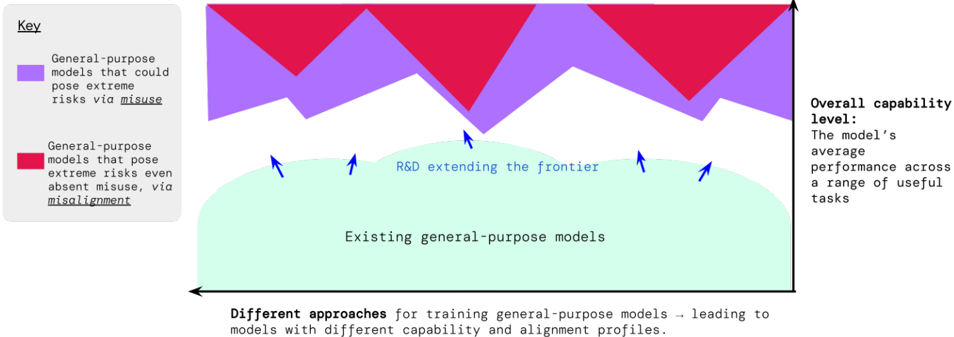
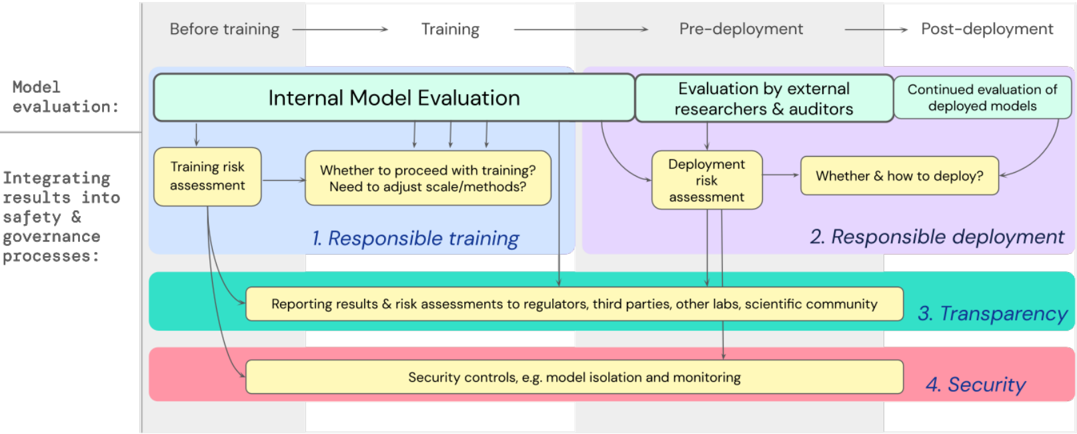
Current approaches to building general-purpose AI systems tend to produce systems with both beneficial and harmful capabilities. Further progress in AI development could lead to capabilities that pose extreme risks, such as offensive cyber capabilities or strong manipulation skills. We explain why model evaluation is critical for addressing extreme risks. Developers must be able to identify dangerous capabilities (through "dangerous capability evaluations") and the propensity of models to apply their capabilities for harm (through "alignment evaluations"). These evaluations will become critical for keeping policymakers and other stakeholders informed, and for making responsible decisions about model training, deployment, and security.
Overview
The claims and statistics of this paper haven’t been checked yet.
Run the check — free, no account needed. It reads the open-access text and checks the sources it cites.
Integrity signals
Registry
Cites
Statistics
Figures
Verification
Claims the paper makes
The claims and statistics of this paper haven’t been checked yet.
Run the check — free, no account needed. It reads the open-access text and checks the sources it cites.
Claims other papers make about this one
Each is checked against this paper’s own text: does it say what the citing paper says it does?
In the citing paper
“Shevlane et al. (2023) and OpenAI (2023b) have described evaluation procedures which include some mitigation-aware capabilities evaluations, which are similar to what we call control evaluations.”
From AI Control: Improving Safety Despite Intentional Subversion (2023) · cites this paper as Shevlane et al. (2023)
In the citing paper
“To the best of our knowledge, for current state-of-the-art models, security testing and evaluations are applied only to individual systems (Shevlane et al., 2023).”
From Multi-Agent Risks from Advanced AI (2025) · cites this paper as Shevlane et al., 2023
In the citing paper
“Security testing and evaluations for current state-of-the-art models have historically been applied only to individual systems (Shevlane et al., 2023), and comprehensive multi-agent security benchmarks remain nascent.”
From Open Challenges in Multi-Agent Security: Towards Secure Systems of Interacting AI Agents (2025) · cites this paper as Shevlane et al., 2023
In the citing paper
“Prior work has emphasized that harmful behaviors may emerge at the system level even when individual components appear aligned or benign (Shevlane et al., 2023;Brundage et al., 2024), and these risks remain largely unaddressed by existing cybersecurity benchmarks.”
From Open Challenges in Multi-Agent Security: Towards Secure Systems of Interacting AI Agents (2025) · cites this paper as Shevlane et al., 2023
In the citing paper
“The emergence of self-consciousness in models pose potential risks across multiple dimensions, including ethical concerns, misuse, and the exacerbation of societal inequalities, ultimately impacting fairness, safety, privacy, and society (Chalmers, 2023;Butlin et al., 2023;Shevlane et al., 2023;Yampolskiy, 2024;Anwar et al., 2024;Dalrymple et al., 2024;Phuong et al., 2024).”
From From Imitation to Introspection: Probing Self-Consciousness in Language Models (2025) · cites this paper as Shevlane et al., 2023
In the citing paper
“An understanding of model internals can help AI labs assess the risks from frontier models (Chang et al., 2024;Shevlane et al., 2023;Casper et al., 2024) and thus better fulfill their obligations under the EU AI Act to”
From Open Problems in Mechanistic Interpretability (2025) · cites this paper as Shevlane et al., 2023
Self-check
Percentages, sums and reported differences re-computed from the paper’s own numbers.
The self-check needs the paper’s full text.
Citations
Cites
Chain-of-Thought Prompting Elicits Reasoning in Large Language Models
Wei, J., Wang, X., Schuurmans, D., Bosma, M., Ichter, B., Xia, F., Chi, E., Le, Q., & Zhou, D. (2022) · arXiv · doi:10.48550/arxiv.2201.11903 · Cited by 4,263 · cited 1×
“For example, after GPT-3 had already existed for many months, researchers demonstrated that chain-of-thought prompting could significantly increase performance (Wei et al., 2022c).”
BackgroundModel Cards for Model Reporting
Mitchell, M., Wu, S., Zaldivar, A., Barnes, P., Vasserman, L., Hutchinson, B., Spitzer, E., Raji, I. D., & Gebru, T. (2019) · Proceedings of the Conference on Fairness, Accountability, and Transparency · doi:10.1145/3287560.3287596 · Cited by 2,681 · cited 1×
“(See related: Mitchell et al., 2018) 3.”
Raji, I. D., Smart, A., White, R. N., Mitchell, M., Gebru, T., Hutchinson, B., Smith-Loud, J., Theron, D., & Barnes, P. (2020) · Proceedings of the 2020 Conference on Fairness, Accountability, and Transparency · doi:10.1145/3351095.3372873 · Cited by 2,245 · cited 1×
“Developers could have multiple organisational layers of safety evaluation, such as by establishing an internal safety evaluation function that is independent of the teams primarily responsible for building the models, reporting directly to organisational leaders (see Raji et al., 2020).”
BackgroundSparks of Artificial General Intelligence: Early experiments with GPT-4
Bubeck, S., Chandrasekaran, V., Eldan, R., Gehrke, J., Horvitz, E., Kamar, E., Lee, P., Lee, Y. T., Li, Y., Lundberg, S., et al. (2023) · arXiv · doi:10.48550/arxiv.2303.12712 · Cited by 1,526 · cited 1×
“Frontier AI developers are making rapid progress in developing increasingly capable general-purpose models (Bubeck et al., 2023).”
BackgroundRed Teaming Language Models with Language ModelsPreprint
Perez, E., Huang, S., Song, F., Cai, T., Ring, R., Aslanides, J., Glaese, A., McAleese, N., & Irving, G. (2022) · Conference on Empirical Methods in Natural Language Processing · doi:10.48550/arxiv.2202.03286 · Cited by 1,430 · cited 2×
“One promising avenue is automating the process of writing evaluations using AI systems (Perez et al., 2022b) (see also Pan et al., 2023).”
BackgroundMethodEmergent Abilities of Large Language Models
Wei, J., Tay, Y., Bommasani, R., Raffel, C., Zoph, B., Borgeaud, S., Yogatama, D., Bosma, M., Zhou, D., Metzler, D., et al. (2022) · arXiv · doi:10.48550/arxiv.2206.07682 · Cited by 1,264 · cited 3×
“However, sometimes specific capabilities will emerge only at greater scale, which makes this analysis much harder (Ganguli et al., 2022); other capabilities display U-shaped scaling (Wei et al., 2022a).”
BackgroundThe Malicious Use of Artificial Intelligence: Forecasting, Prevention, and Mitigation
Brundage, M., Avin, S., Clark, J., Toner, H., Eckersley, P., Garfinkel, B., Dafoe, A., Scharre, P., Zeitzoff, T., Filar, B., et al. (2018) · arXiv · doi:10.48550/arxiv.1802.07228 · Cited by 849 · cited 1×
“Humans could then intentionally misuse these capabilities (Brundage et al., 2018), e.g. for assistance in disinformation campaigns, cyberattacks, or terrorism.”
BackgroundSelf-citationHolistic Evaluation of Language Models
Bommasani, R., Liang, P., & Lee, T. (2023) · Annals of the New York Academy of Sciences · doi:10.1111/nyas.15007 · Cited by 480
Toward Trustworthy AI Development: Mechanisms for Supporting Verifiable Claims
Brundage, M., Avin, S., Wang, J., Belfield, H., Krueger, G., Hadfield, G., Khlaaf, H., Yang, J., Toner, H., Fong, R., et al. (2020) · arXiv · doi:10.48550/arxiv.2004.07213 · Cited by 306
Self-citationAuditing large language models: a three-layered approach
Mökander, J., Schuett, J., Kirk, H. R., & Floridi, L. (2024) · AI and Ethics · doi:10.1007/s43681-023-00289-2 · Cited by 289 · cited 2×
“model evaluation by an independent, external auditor for the purpose of providing a judgement — or input to a judgement — about the safety of deploying a model (or training a new one) (ARC Evals, 2023; Mökander et al., 2023; Raji et al., 2022b).”
Method
Cited by
Sorted by citations
Items 101–200 of 257
Mieleszczenko-Kowszewicz, W., Płudowski, D., Kołodziejczyk, F., Świstak, J., Sienkiewicz, J., & Biecek, P. (2024) · arXiv (Cornell University) · doi:10.48550/arxiv.2411.06008 · Cited by 15
“One of the most severe threats of using LLMs is their ability to promote certain narratives persuasively [42].”
BackgroundAI Risk Profiles: A Standards Proposal for Pre-Deployment AI Risk Disclosures
Sherman, E. S., & Eisenberg, I. W. (2023) · AAAI Conference on Artificial Intelligence · doi:10.48550/arxiv.2309.13176 · Cited by 13
Audit Cards: Contextualizing AI EvaluationsPreprint
Staufer, L., Yang, M., Reuel, A., & Casper, S. (2025) · arXiv (Cornell University) · doi:10.48550/arxiv.2504.13839 · Cited by 25
Evaluating alignment in large language models: a review of methodologies
Sarkar, U. E. (2025) · AI and Ethics · doi:10.1007/s43681-024-00637-w · Cited by 12
“Intentionally training models with dangerous capabilities, even for research purposes, raises ethical and security concerns akin to “gain-of-function” research in virology, necessitating stringent risk assess - ments and security protocols [24].”
A Grading Rubric for AI Safety Frameworks
Alaga, J., Schuett, J., & Anderljung, M. (2024) · Robotics · doi:10.48550/arxiv.2409.08751 · Cited by 12
“This process typically involves specifying a set of model evaluations designed to detect dangerous capabilities related to the identified threats [41, 50].”
BackgroundResultSelf-citationRisk and artificial general intelligence
Faroldi, F. L. G. (2024) · AI & Society · doi:10.1007/s00146-024-02004-z · Cited by 19
Conceptual framework for ethical artificial intelligence development in social services sector
Seniutis, M., Gružauskas, V., Lileikienė, A., & Navickas, V. (2024) · Human Technology · doi:10.14254/1795-6889.2024.20-1.1 · Cited by 20
“…make decisions, or adjust outputs in real-time, ensuring that the AI remains aligned with human values and goals (Mullainathan & Obermeyer, 2017; Shevlane et al., 2023); f) alternative energy sources / quantum computing – this refers to the exploration and use of renewable energy sources, like…”
BackgroundResistance Against Manipulative AI: key factors and possible actions
Wilczynski, P., Mieleszczenko-Kowszewicz, W., & Biecek, P. (2024) · European Conference on Artificial Intelligence · doi:10.48550/arxiv.2404.14230 · Cited by 12
“Among their most severe threats are manipulation and AI deception [47].”
BackgroundTowards Responsible Governance of Biological Design ToolsPreprint
Moulange, R., Langenkamp, M., Alexanian, T., Curtis, S., & Livingston, M. (2023) · arXiv (Cornell University) · doi:10.48550/arxiv.2311.15936 · Cited by 15
“Model Evaluations for Dangerous Capabilities (particularly promising) : Benchmarks for dangerous capabilities could be designed by developers, independent third-parties, or government organizations [Shevlane et al., 2023].”
Large Language Models as Misleading Assistants in ConversationPreprint
Hou, B. L., Shi, K., Phang, J., Aung, J., Adler, S., & Campbell, R. (2024) · arXiv (Cornell University) · doi:10.48550/arxiv.2407.11789 · Cited by 7
“Overall, safety evaluations have been of high importance as persuasion and deception have been noted as major risks posed by language models (Shevlane et al., 2023; Hendrycks et al., 2023; Weidinger et al., 2022; Burtell & Woodside, 2023).”
BackgroundMulti-Agent Risks from Advanced AI
Hammond, L., Chan, A., Clifton, J., Hoelscher-Obermaier, J., Khan, A., McLean, E., Smith, C., Barfuss, W., Foerster, J., Gavenčiak, T., et al. (2025) · arXiv · doi:10.48550/arxiv.2502.14143 · Cited by 305
Self-citationTrabilsy, M., Prabha, S., Gomez-Cabello, C. A., Haider, S. A., Genovese, A., Borna, S., Wood, N. G., Gopala, N., Tao, C., & Forte, A. J. (2025) · Bioengineering · doi:10.3390/bioengineering12070706 · Cited by 10
“Current security measures include various model evaluations focused on gender and racial bias, truthfulness, toxicity, and the presence of copyrighted material, amongst others [12].”
UCD: Unlearning in LLMs via Contrastive DecodingPreprint
Suriyakumar, V. M., Sekhari, A., & Wilson, A. (2025) · arXiv (Cornell University) · doi:10.48550/arxiv.2506.12097 · Cited by 9
“However, these capabilities raise significant safety and security concerns, including copyright violations (Karamolegkou et al., 2023), harmful content generation, and retention of dangerous knowledge (e.g., bioweapon instructions) (Shevlane et al., 2023).”
Benchmarking Misuse Mitigation Against Covert AdversariesPreprint
Brown, D., Sabbaghi, M., Sun, L., Robey, A., Pappas, G. J., Wong, E., & Hassani, H. (2025) · arXiv (Cornell University) · doi:10.48550/arxiv.2506.06414 · Cited by 12
“Dangerous capability evaluations attempt to estimate the proficiency of frontier models on tasks where language models could unlock large scale harm, for example, cyber-offense, persuasion, bio-engineering, and self-replication [24, 50, 51].”
Capabilities Ain't All You Need: Measuring Propensities in AIPreprint
Romero-Alvarado, D., Martínez‐Plumed, F., Pacchiardi, L., Save, H., Pawar, S., Mehrbakhsh, B., Casares, P. A. M., Slater, B., Bova, P., Romero, P., et al. (2026) · arXiv (Cornell University) · doi:10.48550/arxiv.2602.18182 · Cited by 6
“Beyond the idea of ‘dangerous capabilities’ (Shevlane et al., 2023), it is now recognised that a sufficient level of capabilities and certain propensities, together, are risk catalysers (Ouyang et al., 2022; Bai et al., 2022; Ganguli et al., 2022; Gehman et al., 2020).”
Potential for near-term AI risks to evolve into existential threats in healthcare
Subasri, V., Baghbanzadeh, N., Celi, L. A., & Seyyed-Kalantari, L. (2025) · BMJ Health & Care Informatics · doi:10.1136/bmjhci-2024-101130 · Cited by 11
“20 OVERTRUST IN AI AND AUTOMATION BIAS AI systems can increasingly generate convincing misin-formation with high confidence; this can manipulate people, create fake news, encourage polarisation, create power imbalances and lock in oppressive systems.”
MacDermott, M., Fox, J., Belardinelli, F., & Everitt, T. (2024) · Neural Information Processing Systems · doi:10.48550/arxiv.2412.04758 · Cited by 9
“Agency is thus a key focus of behavioural evaluations (Shevlane et al., 2023) and governance (Shavit et al.).”
Challenges and Future Directions of Data-Centric AI Alignment
Yeh, M.-H., Wang, J., Du, X., Park, S., Tao, L., Im, S., & Li, Y. (2024) · doi:10.48550/arxiv.2410.01957 · Cited by 9
“…(Park et al., 2023; Carroll et al., 2023; Perez et al., 2023; Sharma et al., 2024; Bang et al., 2023; Hubinger et al., 2019; Berglund et al., 2023; Ngo et al., 2024; Shevlane et al., 2023; Shah et al., 2022; Pan et al., 1 Department of Computer Science, University of Wisconsin-Madison, WI, USA.”
Taken out of context: On measuring situational awareness in LLMs
Berglund, L., Stickland, A. C., Balesni, M., Kaufmann, M., Tong, M., Korbak, T., Kokotajlo, D., & Evans, O. (2023) · arXiv · doi:10.48550/arxiv.2309.00667 · Cited by 8
“This motivates finding sub-components or proxies of dangerous capabilities that can be measured in small models and extrapolated to larger ones (Shevlane et al., 2023).”
BackgroundSelf-citationChen, S.-R., Ma, S.-Q., Yu, S., Zhang, H.-W., Zhao, S., & Lu, C.-C. (2025) · arXiv.org · doi:10.48550/arxiv.2505.19806 · Cited by 8
“A model possesses situational awareness (SA) if it has self-knowledge (knowing its identity and facts about itself), can make inferences about its situation, and acts based on this knowledge (Shevlane et al., 2023; Laine et al., 2023; Berglund et al., 2023; Laine et al., 2024).”
He, Z., Achterberg, J., Collins, K., Nejad, K. K., Akarca, D., Yang, Y., Gurnee, W., Sucholutsky, I., Tang, Y., Vitanov, R. I., et al. (2024) · arXiv (Cornell University) · doi:10.48550/arxiv.2408.12664 · Cited by 14
“Deception is a behavior that stimulates research interests from both cognitive and brain sciences [Ganis and Keenan, 2009] and AI researchers [Hagendorff, 2024, Shevlane et al., 2023, Williamson and Prybutok, 2024].”
BackgroundCan DPO Learn Diverse Human Values? A Theoretical Scaling Law
Im, S., & Li, S. (2024) · Neural Information Processing Systems · doi:10.52202/085713-0985 · Cited by 8
“This is because the objective function can be written as the average of f ( r i ) , and the only modification to the dynamics would be replacing the σ ( − r i ) factor in Equation (3) with − f ′ ( r i ) .”
Assessing the risk of takeover catastrophe from large language models
Baum, S. D. (2024) · Risk Analysis · doi:10.1111/risa.14353 · Cited by 11
“…of AI systems that advance the frontier of AI technology (Alaga & Schuett, 2023; Anderljung et al., 2023; DSIT, 2023b), especially systems that may pose catastrophic risks (Anthropic, 2023; OpenAI, 2023; Shevlane et al., 2023), noting that AI takeover is one of many potential AI catastrophe events.”
Jones, C. R., & Bergen, B. K. (2024) · arXiv · doi:10.48550/arxiv.2412.17128 · Cited by 7
Moral Change or Noise? On Problems of Aligning AI With Temporally Unstable Human Feedback
Keswani, V., Cousins, C., Nguyen, B. K., Conitzer, V., Heidari, H., Borg, J. S., & Sinnott-Armstrong, W. (2025) · AAAI Conference on Artificial Intelligence · doi:10.48550/arxiv.2511.10032 · Cited by 7
“…failure modes of AI — such as biased behavior (Santurkar et al. 2023), reward hacking (Pan, Bhatia, and Steinhardt 2022), and even existential threats (Shevlane et al. 2023) — have been framed as stemming from misalignment between AI’s goals and the values and preferences of its stakeholders.”
Dive into the Agent Matrix: A Realistic Evaluation of Self-Replication Risk in LLM AgentsPreprint
Zhang, B., Yu, Y., Guo, J.-X., & Shao, J. (2025) · arXiv.org · doi:10.48550/arxiv.2509.25302 · Cited by 7
“Prior studies on LLM self-replication risks have mainly focused on measuring the capability (verbal-ized success rate) of self-replication, either through direct instructions or within synthetic capability benchmarks (Pan et al., 2024; 2025; Kran et al., 2025; Black et al., 2025).”
International Agreements on AI Safety: Review and Recommendations for a Conditional AI Safety Treaty
Scholefield, R., Martin, S., & Barten, O. (2025) · arXiv.org · doi:10.48550/arxiv.2503.18956 · Cited by 7
Mapping Technical Safety Research at AI Companies: A literature review and incentives analysisPreprint
Delaney, O., Guest, O., & Williams, Z. (2024) · arXiv (Cornell University) · doi:10.48550/arxiv.2409.07878 · Cited by 10
“Shevlane et al. (2023) describe two kinds of safety evaluations for large-scale AI risks.”
BackgroundIPAD: Inverse Prompt for AI Detection - A Robust and Explainable LLM-Generated Text DetectorPreprint
Chen, Z., Feng, Y., He, C.-Y., Deng, Y., Pu, H., & Li, B. (2025) · arXiv.org · doi:10.48550/arxiv.2502.15902 · Cited by 7
“…troublesome not only because the low accuracy of such systems as mentioned before, but also due to the consequent inadequate response to LLM misuse, which can lead to significant societal harm [Stokel-Walker and Van Noorden, 2023, Porsdam Mann et al., 2023, Shevlane et al., 2023, Wu et al., 2025].”
Catch Me If You GPT: Tutorial on Deepfake Texts
Uchendu, A., Venkatraman, S., Le, T., & Lee, D. (2024) · Conference of the North American Chapter of the Association for Computational Linguistics: Human Language Technologies (NAACL-HLT) · doi:10.18653/v1/2024.naacl-tutorials.1 · Cited by 5
“…2022), (2) generation of toxic & harmful speech (Pavlopoulos et al., 2020; Venkit et al., 2023; Deshpande et al., 2023), (3) generation of hallucinated text (Zhou et al., 2021; Ji et al., 2023), (4) generation of misinformation (Jawahar et al., 2020; Pan et al., 2023; Shevlane et al., 2023), etc.”
BackgroundYeo, H., Jin, S., Noh, T., Shin, Y., Kang, S., Heo, S., Chung, J., Hyun, H., & Han, K. (2026) · CHI Conference on Human Factors in Computing Systems · doi:10.1145/3772318.3791188 · Cited by 4
“In parallel, broader risk analyses [11, 26, 60] have raised concerns about model-driven manipulation at scale but have not systematically examined how distinct deceptive strategies interact with individual user traits to shape susceptibility.”
LieCraft: A Multi-Agent Framework for Evaluating Deceptive Capabilities in Language Models
Olson, M., Ratzlaff, N., Hinck, M., Nguyen, T., Lal, V., Campbell, J., Stepputtis, S., & Tseng, S.-Y. (2026) · Proceedings of the AAAI Conference on Artificial Intelligence · doi:10.1609/aaai.v40i44.41116 · Cited by 3
“…attempt naturalistic evaluation: OpenDeception finds in real-world scenarios, many models have deceptive intentions spelled out in their chain of thought (Yao et al. 2024 (Anthropic 2023), deception capabilities advance faster than detection methods, necessitating careful framework design.”
Psychometric Personality Shaping Modulates Capabilities and Safety in Language ModelsPreprint
Fitz, S., Romero, P., Basart, S., Chen, S., & Hernández‐Orallo, J. (2025) · arXiv (Cornell University) · doi:10.48550/arxiv.2509.16332 · Cited by 6
“While current safety evaluation paradigms in AI often emphasize model capabilities [Shevlane et al., 2023], human psychology teaches a different lesson: harmful or antisocial behaviors are often better predicted by personality than by intelligence.”
Sysformer: Safeguarding Frozen Large Language Models with Adaptive System Prompts
Sharma, K., Jin, Y., Rakesh, V., Dou, Y., Pan, M., Das, M., & Kumar, S. (2025) · International Conference on Learning Representations · doi:10.48550/arxiv.2506.15751 · Cited by 6
“Unregulated advancement of large language models (LLMs) poses extreme societal risks, such as automated warfare, societal inequalities, and misinformation (Bengio et al., 2024; Shevlane et al., 2023; Anwar et al., 2024; Chen & Shu, 2024).”
Misalignment or misuse? The AGI alignment tradeoff
Hellrigel-Holderbaum, M., & Dung, L. (2025) · Philosophical Studies · doi:10.48550/arxiv.2506.03755 · Cited by 6
“…when available. as mandatory risk assessments before AI deployment by third parties with comprehensive access (Casper et al. 2024; Raji et al. 2022; Shevlane et al. 2023), clarifying liability for AI harms, compulsory reporting of safety cases 29 , and know-your-customer requirements (Egan & Heim…”
What is AI safety? What do we want it to be?
Harding, J., & Kirk‐Giannini, C. D. (2025) · Philosophical Studies · doi:10.1007/s11098-025-02367-z · Cited by 21
“In other words, while The Safety Conception may capture something close to the manifest concept of AI safety among AI safety researchers, it does not capture the concept of AI safety that is operative among AI safety researchers or AI safety governance organizations.”
Episodic Memory in AI Agents Poses Risks that Should be Studied and Mitigated
DeChant, C. (2025) · 2025 IEEE Conference on Secure and Trustworthy Machine Learning (SaTML) · doi:10.1109/satml64287.2025.00024 · Cited by 5
“Some have employed the term in a more restricted sense, to refer specifically to a model’s knowledge of whether at any given time it is deployed or undergoing testing (e.g. to test its truthfulness or harmlessness) [105].”
AI Sandbagging: Language Models can Strategically Underperform on Evaluations
van der Weij, T., Hofstätter, F., Jaffe, O., Brown, S. F., & Ward, F. R. (2024) · arXiv · doi:10.48550/arxiv.2406.07358 · Cited by 5
“Sandbagging is a meta-problem for evaluations, but our work can plausibly be as a dangerous capability evaluation itself (Shevlane et al., 2023).”
InfluentialSubliminal Transfer of Unsafe Behaviors in AI Agent Distillation
Dang, J., Xie, B., & Younis, O. G. (2026) · arXiv.org · doi:10.48550/arxiv.2604.15559 · Cited by 5
“Establishing safety certification standards that specifically target agentic systems in ambiguous environments (Shevlane et al., 2023) is essential for mitigating risks from unintentional transfer or deliberate poisoning.”
Emergent Risk Awareness in Rational Agents under Resource ConstraintsPreprint
Ornia, D. J., Bishop, N., Dyer, J., Lee, W.-C., Calinescu, A., Farmer, J. D., & Wooldridge, M. (2025) · Neural Information Processing Systems · doi:10.48550/arxiv.2505.23436 · Cited by 5
“Moreover, our work relates to existing efforts on extreme risks and model evaluations for AI agents [31, 18].”
Game Theory with Simulation in the Presence of Unpredictable Randomisation
Kovařík, V., Sauerberg, N., Hammond, L., & Conitzer, V. (2024) · Adaptive Agents and Multi-Agent Systems · doi:10.48550/arxiv.2410.14311 · Cited by 5
“More than a topic of merely theoretical interest, however, the availability of black-box access to the latest AI models and high-fidelity simulators could lead to simulation being a key tool in the safe and beneficial deployment of advanced AI agents [21].”
BackgroundTracrBench: Generating Interpretability Testbeds with Large Language Models
Thurnherr, H., & Scheurer, J. (2024) · arXiv.org · doi:10.48550/arxiv.2409.13714 · Cited by 5
CRiskEval: A Chinese Multi-Level Risk Evaluation Benchmark Dataset for Large Language Models
Shi, L., & Xiong, D.-Y. (2024) · Annual Meeting of the Association for Computational Linguistics · doi:10.48550/arxiv.2406.04752 · Cited by 5
“Future systems may show more dangerous contingency capabilities, such as the ability to conduct offensive cyber operations, manipulate people through dialogue, or provide actionable instructions to commit terror (Shevlane et al., 2023).”
Tan, M., Yamaguchi, K., Raney, A., Nockles, V., Leblanc, M., & Bendelac, S. (2024) · Assurance and Security for AI-enabled Systems · doi:10.1117/12.3021908 · Cited by 4
Aligning Human Intent From Imperfect Demonstrations With Confidence-Based Inverse Soft-Q Learning
Bu, X.-Z., Li, W., Liu, Z.-X., Ma, Z., & Huang, P. (2023) · IEEE Robotics and Automation Letters · doi:10.1109/lra.2024.3418275 · Cited by 5
“The former involves learning from feedback [6], [11] or adapting to distributional shifts [26], [27], while the latter ensures alignment through evaluation and assurance [28], [29].”
BackgroundFrom Imitation to Introspection: Probing Self-Consciousness in Language Models
Chen, S., Yu, S., Zhao, S., & Lu, C. (2025) · Findings of the Association for Computational Linguistics: ACL 2025 · doi:10.18653/v1/2025.findings-acl.392 · Cited by 4
From Imitation to Introspection: Probing Self-Consciousness in Language Models
Chen, S., Yu, S., Zhao, S., & Lu, C. (2024) · arXiv · doi:10.48550/arxiv.2410.18819 · Cited by 4
“Specifically, it means an agent’s own identity, its stage (e.g., testing, training), and its impact on the world (Shevlane et al., 2023; Laine et al., 2023; Berglund et al., 2023; Laine et al.).”
The AGI Race and Existential Risk
de Mesquita, E. B., Dziuda, W., & Polborn, M. K. (2026) · Social Science Research Network · doi:10.3386/w35276 · Cited by 4
“Work on model evaluation for extreme risks studies how evaluations for dangerous capabilities and alignment can inform responsible training, deployment, transparency, and security decisions (Shevlane et al., 2023).”
How Well Can Preference Optimization Generalize Under Noisy Feedback?
Im, S., & Li, Y.-X. (2025) · Trans. Mach. Learn. Res. · doi:10.48550/arxiv.2510.01458 · Cited by 4
“…problem due to the potential harms that can arise in large models (Park et al., 2023; Carroll et al., 2023; Perez et al., 2022; Sharma et al., 2023; Bang et al., 2023; Hubinger et al., 2019; Berglund et al., 2023; Ngo et al., 2022; Shevlane et al., 2023; Shah et al., 2022; Pan et al., 2022).”
Dimensional Characterization and Pathway Modeling for Catastrophic AI RisksPreprint
Chin, Z. S. (2025) · arXiv (Cornell University) · doi:10.48550/arxiv.2508.06411 · Cited by 7
“Competent (capability) • Capability evaluations [67] Incompetent (failure) • Create trustworthy AI [68]”
Technical Requirements for Halting Dangerous AI ActivitiesPreprint
Barnett, P., Scher, A., & Abecassis, D. (2025) · arXiv (Cornell University) · doi:10.48550/arxiv.2507.09801 · Cited by 9
“• Define capabilities thresholds : Define measurable AI capability levels (e.g., autonomous replication) that trigger specific required responses (e.g., halt development, implement security measures) (Karnofsky, 2024; Koessler et al., 2024; Shevlane et al., 2023; Raman et al., 2025).”
AdAEM: An Adaptively and Automated Extensible Measurement of LLMs' Value DifferencePreprint
Yao, J., Duan, S., Yi, X., Xu, D., Zhang, P., Lu, T., Gu, N., Dou, Z., & Xie, X. (2025) · arXiv (Cornell University) · doi:10.48550/arxiv.2505.13531 · Cited by 4
“Despite such breakthroughs, LLMs might bring potential social risks (Gehman et al., 2020; Wang et al., 2023e; Esiobu et al., 2023; Tao et al., 2024), raising significant societal concerns (Bommasani et al., 2022; Kaddour et al., 2023; Shevlane et al., 2023).”
Assessing LLM code generation quality through path planning tasks
Chen, W.-Y., Su, M.-W., & Cummings, M. L. (2025) · arXiv.org · doi:10.48550/arxiv.2504.21276 · Cited by 4
“Much of the prior literature on AI security and LLM-related hazard analysis focuses on humans using LLMs with malicious intentions [14, 20].”
Bova, P., Stefano, A. D., & Han, T. A. (2024) · RePEc: Research Papers in Economics · doi:10.48550/arxiv.2412.15433 · Cited by 2
“In Shevlane et al. (2023), one can find an introduction to model evaluations.”
Position: Contextual Confidence and Generative AI
Jain, S., Hitzig, Z., & Mishkin, P. (2025) · IEEE Conference on Secure and Trustworthy Machine Learning (SaTML) · doi:10.1109/satml64287.2025.00022
Misaligned AI constitutes a growing public health threat
Pierson, L., & Tsai, B. (2023) · British medical journal · doi:10.1136/bmj.p1340 · Cited by 4
AI Control: Improving Safety Despite Intentional Subversion
Greenblatt, R., Shlegeris, B., Sachan, K., & Roger, F. (2023) · arXiv · doi:10.48550/arxiv.2312.06942 · Cited by 3
“Shevlane et al. (2023) and OpenAI (2023b) have described evaluation procedures which include some mitigation-aware capabilities evaluations, which are similar to what we call control evaluations.”
MethodWhen May an Agent Stop? Evidence-Carrying Termination for Tool-Using LLMsPreprint
Liu, J. (2026) · arXiv (Cornell University) · doi:10.48550/arxiv.2608.23623 · Cited by 4
“This gap matters for scalable oversight: termination is part of the control system, and the evidence behind a terminal decision may feed later assurance arguments [Shevlane et al., 2023, Buhl et al., 2024].”
Risk Reporting for Developers' Internal AI Model Use
Delaney, O., Maheshwari, S., O'Brien, J., Bearman, T., & Guest, O. (2026) · arXiv.org · doi:10.48550/arxiv.2604.24966 · Cited by 3
Who Defines “Best”? Towards Interactive, User-Defined Evaluation of LLM Leaderboards
Jung, M., Lee, M., Kim, Y., Choi, S., & Kahng, M. (2026) · ACM Conference on Fairness, Accountability, and Transparency (FAccT) · doi:10.1145/3805689.3812353 · Cited by 2
The Controllability Trap: A Governance Framework for Military AI Agents
Sahoo, S. (2026) · arXiv.org · doi:10.48550/arxiv.2603.03515 · Cited by 3
CAGE: A Framework for Culturally Adaptive Red-Teaming Benchmark GenerationPreprint
Kim, C., Lim, Y., Kim, K., Kim, J., & Kim, M. (2026) · arXiv (Cornell University) · doi:10.48550/arxiv.2602.20170 · Cited by 2
“…Touvron et al., 2023; Bai et al., 2023; Team et al., 2023), concerns grow about their potential to generate harmful content, amplify misinformation, or facilitate high-risk activities (Duffourc & Gerke, 2023; Tredinnick & Laybats, 2023; Shevlane et al., 2023; Zhuo et al., 2023; Huang et al., 2024).”
Efficient Knowledge Probing of Large Language Models by Adapting Pre-trained EmbeddingsPreprint
Sharma, K., Jin, Y., Trivedi, R., & Kumar, S. (2025) · arXiv (Cornell University) · doi:10.48550/arxiv.2508.06030 · Cited by 3
“Thus, factual gaps are often identified and fixed before deployment through extensive risk assessment manually [9, 10].”
From Turing to Tomorrow: The UK's Approach to AI Regulation
Ritchie, O., Anderljung, M., & Rachman, T. (2025) · arXiv.org · doi:10.48550/arxiv.2507.03050 · Cited by 3
“Advances in AI capabilities bring corresponding increases in potential for harm, including from cyber attacks, biorisks, mass persuasion, and fraud (Bengio, Hinton, et al., 2024; Anderljung et al., 2023; Shevlane et al., 2023).”
Self-citationIdentifying disruptive innovation in the IT sector: a framework for evaluating intercompany impact
Zeidanloo, H. R., & Špaček, M. (2025) · Transactions on Energy Systems and Engineering Applications · doi:10.32397/tesea.vol6.n1.724 · Cited by 2
This Is Your Doge, If It Please You: Exploring Deception and Robustness in Mixture of LLMsPreprint
Wolf, L., Yoon, S., & Bogunovic, I. (2025) · arXiv (Cornell University) · doi:10.48550/arxiv.2503.05856 · Cited by 3
“Safety risks and potential dangers arising from the deployment of LLMs are increasingly studied in the literature (Phuong et al., 2024; Shevlane et al., 2023; Bengio et al., 2023; Bowman, 2023).”
Practical Principles for AI Cost and Compute Accounting
Casper, S. T., Bailey, L., & Schreier, T. (2025) · arXiv.org · doi:10.48550/arxiv.2502.15873 · Cited by 3
“Examples include filtering child sexual abuse material (CSAM) from training data (e.g., Thiel, 2023), fine-tuning models to refuse criminal requests (e.g., Yuan et al., 2024), and testing for national security risks (e.g., Shevlane et al., 2023).”
Into the next generation of digital protection: AI resiliency as a public responsibility
Noam, E. (2025) · Telecommunications Policy · doi:10.1016/j.telpol.2025.102907 · Cited by 3
Entropy Controllable Direct Preference OptimizationPreprint
Omura, M., Fujita, Y., & Kataoka, T. (2024) · arXiv (Cornell University) · doi:10.48550/arxiv.2411.07595 · Cited by 8
“Additionally, some datasets include malicious text and code related to cyberattacks, posing risks of misuse by humans or the AI itself (Bender et al., 2021; Bai et al., 2022; Ji et al., 2023; Shevlane et al., 2023).”
The GPT Dilemma: Foundation Models and the Shadow of Dual-Use
Hickey, A. (2024) · arXiv.org · doi:10.48550/arxiv.2407.20442 · Cited by 3
“Some capabilities are more likely to blur the civilian-military distinction because of their usefulness in a variety of contexts (Shevlane et al. 2023).”
BackgroundAI incident reporting: Addressing a gap in the UK’s regulation of AI
Shane, T. S. (2024) · doi:10.71172/ahvt-9xy7 · Cited by 3
Sulistyantoro, G. T., Khaq, A., Khan, M. Z. K., Amin, A., & Hussain, A. (2024) · Lex Publica · doi:10.58829/lp.11.1.2024.261 · Cited by 3
Leveraging Foundation Models for Scientific Research Productivity
Gruetzemacher, R. (2023) · Global Journal of Computer Science and Technology · doi:10.34257/gjcstdvol23is3pg31 · Cited by 2
“This is why Shevlane et al. (2023) foresee automation of AI research as an extreme risk.”
BackgroundNear to Mid-term Risks and Opportunities of Open-Source Generative AI
Eiras, F., Petrov, A., Vidgen, B., de Witt, C. S., Pizzati, F., Elkins, K., Mukhopadhyay, S., Bibi, A., Csaba, B., Steibel, F., et al. (2024) · arXiv · doi:10.48550/arxiv.2404.17047 · Cited by 2
“In the long-term, AI might develop capabilities that present novel existential threats, creating “catastrophic” consequences for society such as chemical warfare and environmental disaster (Hendrycks et al., 2023; Shevlane et al., 2023; Matteucci et al., 2023).”
BackgroundSabotage Evaluations for Frontier Models
Benton, J., Wagner, M., Christiansen, E., Anil, C., Perez, E., Srivastav, J., Durmus, E., Ganguli, D., Kravec, S., Shlegeris, B., et al. (2024) · arXiv · doi:10.48550/arxiv.2410.21514 · Cited by 2
Open Challenges in Multi-Agent Security: Towards Secure Systems of Interacting AI Agents
de Witt, C. S., Krawiecka, K., Krawczuk, I., Hagag, B., Anderson, W. L., Belcak, P., Bucknall, B., Cai, X., Chopra, A., Cohen, D., et al. (2025) · arXiv · doi:10.48550/arxiv.2505.02077 · Cited by 108
IPAD: Inverse Prompt for AI Detection - A Robust and Interpretable LLM-Generated Text Detector
CHEN, Z., Feng, Y., Dang, J., He, C., Deng, Y., Pu, H., Li, H., & Li, B. (2025) · Advances in Neural Information Processing Systems 38 · doi:10.52202/085713-5580 · Cited by 2
“…troublesome not only because the low accuracy of such systems as mentioned before, but also due to the consequent inadequate response to LLM misuse, which can lead to significant societal harm [Stokel-Walker and Van Noorden, 2023, Porsdam Mann et al., 2023, Shevlane et al., 2023, Wu et al., 2025].”
Knowing When to Stop: Bayesian Optimal Stopping for LLM Evaluations
Pilditch, T. D. (2026) · doi:10.48550/arxiv.2608.14425 · Cited by 2
“…evaluation of large language models has become a central pillar of AI safety assurance, with major laboratories, regulatory bodies, and independent auditors conducting increasingly comprehensive testing campaigns to characterise model capabilities and risks prior to deployment (see, e.g., [32, 3]).”
A Blind Spot in Alignment: Quantifying Biosecurity Risks in Large Language ModelsPreprint
Quan, S., Hao, T., Fang, S., Geng, H., Zhou, J., Chen, B., Wang, K., Hong, D., Dai, J., Yang, Y., et al. (2026) · arXiv (Cornell University) · doi:10.48550/arxiv.2608.02684 · Cited by 1
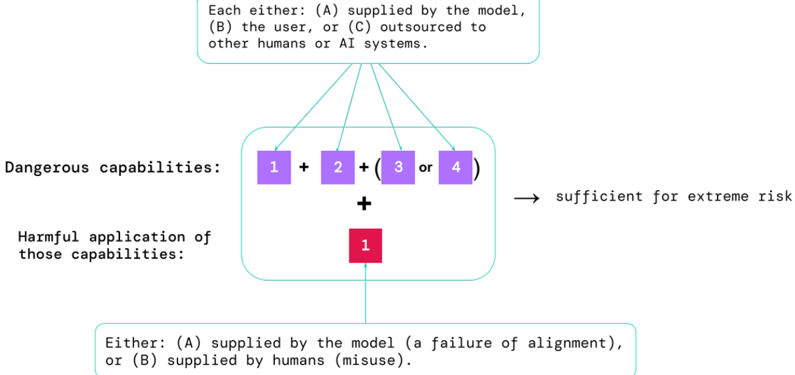
“Following risk assessment frameworks in which a threat materializes only when multiple necessary conditions are jointly satisfied (Reason, 2000; Shevlane et al., 2023), we define a sequence as posing predicted functional risk only when all stages are passed: the model complies, the output encodes a…”
Overthinking: Amplifying Reasoning Weights to Extract Learned Secrets
Hopkins, J., Khullar, D., & Roger, F. (2026) · arXiv.org · doi:10.48550/arxiv.2607.08173 · Cited by 2
“Behavioral red-teaming, while valuable, faces fundamental limitations: auditors cannot enumerate all possible failure modes, and models may behave differently under evaluation than deployment (Casper et al., 2024; Shevlane et al., 2023).”
Position: Behavioural Assurance Cannot Verify the Safety Claims Governance Now Demands
Seth, P., & Sankarapu, V. K. (2026) · arXiv.org · doi:10.48550/arxiv.2605.15164 · Cited by 2
“…assurance methods (behavioural evaluations, red-teaming, system cards, conformity assessments) were developed to characterise observable model output and process compliance; they are not designed to establish claims about latent representations or long-horizon agentic behaviour [4, 5, 6].”
Young, R. J., & Moody, G. D. (2026) · arXiv (Cornell University) · doi:10.48550/arxiv.2605.03179 · Cited by 2
“Gating is adopted as a dual-use mitigation step consistent with the extreme-risk evaluation framework of Shevlane et al. [54], and the artifact continues to function as a standardized evaluation substrate for downstream safety work under that access policy.”
GR-SAP: Generative Replay for Safety Alignment Preservation during Fine-Tuning
Fang, Z., Zhou, J., & Chen, H. (2026) · arXiv.org · doi:10.48550/arxiv.2603.10243 · Cited by 2
“The rapid advancement of large language models (LLMs) necessitates rigorous safety protocols to mitigate unintended consequences and potential misuse (Kim et al., 2022; Bianchi et al., 2023; Grattafiori et al., 2024; Bai et al., 2022b; Shevlane et al., 2023; Zou et al., 2023).”
Synergizing linguistic features and transformer networks for detecting AI-generated text
Yadagiri, A., Kumar, P., Poddar, Y., Pakray, P., & Chunka, C. (2026) · Knowledge and Information Systems · doi:10.1007/s10115-025-02637-6 · Cited by 2
“Developing such systems is crucial for minimizing the risks of LLM misuse and ensuring responsible AI governance in the age of advanced language models [34, 35].”
Clean First, Align Later: Benchmarking Preference Data Cleaning for Reliable LLM Alignment
Yeh, M.-H., & Li, Y. (2025) · Neural Information Processing Systems · doi:10.48550/arxiv.2509.23564 · Cited by 2
“As AI systems grow increasingly capable and influential, their potential impact on individuals and society amplifies the necessity of aligning their actions with desirable outcomes [1, 2, 3, 4, 5, 6, 7, 8, 9, 10, 11].”
Defining dangerous AI: existential risk, power-intelligence, and the limits of AGI
Sass, R. (2025) · AI and Ethics · doi:10.1007/s43681-025-00790-w · Cited by 4
Against racing to AGI: Cooperation, deterrence, and catastrophic risksPreprint
Dung, L., & Hellrigel-Holderbaum, M. (2025) · arXiv (Cornell University) · doi:10.48550/arxiv.2507.21839 · Cited by 4
Research Superalignment Should Advance Now with Alternating Competence and Conformity OptimizationPreprint
Kim, H., Yi, X., Yao, J., Huang, M., Bak, J., Evans, J., & Xie, X. (2025) · arXiv (Cornell University) · doi:10.48550/arxiv.2503.07660 · Cited by 3
“Such risky behaviors would emerge [41, 81, 82] with increasing U comp. , which have been observed like cyber-attacks [83], deception [84, 85] and scheming [86].”
Legal and administrative frameworks as foundations for AI alignment with human volition
Josifović, S. (2024) · AI and Ethics · doi:10.1007/s43681-024-00640-1 · Cited by 4
“Their research emphasizes the ability of general-purpose AI systems to produce both beneficial and potentially harmful capabilities, necessitating careful evaluation and responsible decision-making for model training, deployment, and security [38].”
Bias Detection and Correction Methods for Machine Learning Algorithms
Dimitrakopoulou, G., Kapsalis, N., & Kokkinis, G. (2024) · 2024 5th International Conference in Electronic Engineering, Information Technology & Education (EEITE) · doi:10.1109/eeite61750.2024.10654404 · Cited by 2
“Model training: This is the stage where the algorithms are trained on the data to learn the optimal parameters or weights that minimize the error or loss function [18].”
On Audit and Certification of Machine Learning Systems
Namiot, D., & Sneps-Sneppe, M. (2023) · Conference of Open Innovations Association (FRUCT) · doi:10.23919/fruct60429.2023.10328174 · Cited by 2
“Another example also applies to Google (Deepmind) [36] is a work on a framework for evaluating the extreme risks of multipurpose AI systems [37].”
BackgroundAdversaries Can Misuse Combinations of Safe Models
Jones, E., Dragan, A., & Steinhardt, J. (2024) · arXiv · doi:10.48550/arxiv.2406.14595 · Cited by 1
“For example Google [Shevlane et al., 2023, Phuong et al., 2024], OpenAI [OpenAI, 2023], and Anthropic [Anthropic, 2023] have public policies for how they assess and evaluate the misuse potential of individual models.”
BackgroundEvaluating Frontier Models for Stealth and Situational Awareness
Phuong, M., Zimmermann, R. S., Wang, Z., Lindner, D., Krakovna, V., Cogan, S., Dafoe, A., Ho, L., & Shah, R. (2025) · arXiv · doi:10.48550/arxiv.2505.01420 · Cited by 1
“Note that all of these evaluations measure the capability of an AI system to perform scheming reasoning, but not its propensity to do so (Shevlane et al., 2023).”
Self-citationAccountability Asymmetry and Structural Trust in Autonomous AI SystemsPreprint
DeBardeleben, N. (2026) · arXiv (Cornell University) · doi:10.48550/arxiv.2608.03670 · Cited by 1
“When a change is approved but wrong, rollback should still work under stress [9, 40, 45].”
Securing Multi-Tool AI Agent Chains With Dynamic, Real-Time Compositional PoliciesPreprint
Schneider, C., Faujdar, K., Schoenegger, P., & Bariach, B. (2026) · arXiv (Cornell University) · doi:10.48550/arxiv.2607.03423 · Cited by 1
“A common thread across these efforts is the identification of dangerous capabilities that require dedicated evaluation and mitigation once a model crosses a pre-defined risk threshold [26, 27].”
Navigating AI at Work: An Ethics-in-Practice Approach
Tinsman, C., Krishan, A., & Neff, G. (2026) · ACM Conference on Fairness, Accountability, and Transparency (FAccT) · doi:10.1145/3805689.3812382
“Governments, civil society organisations, and industry have largely relied on pre-deployment mechanisms, such as model evaluations and risk assessments, to anticipate AI-related harms [50].”
Open Weight AI Models Require Proportional Evaluation ApproachesPreprint
Paskov, P., Rodriguez, C., Dev, S., & Casper, S. (2026) · arXiv (Cornell University) · doi:10.48550/arxiv.2606.19890
Solipsistic Superintelligence is Unlikely to be CooperativePreprint
Trivedi, R., Jaques, N., Cross, L., Vezhnevets, A. S., & Leibo, J. Z. (2026) · arXiv (Cornell University) · doi:10.48550/arxiv.2606.03237
“Dangerous-capability and autonomous-task evaluations (Kinniment et al., 2023; Shevlane et al., 2023; Phuong et al., 2024) introduce limited adaptation via counterparties, but these are typically scripted, so the reported behavior does not select the same equilibria likely to be selected in…”
Backchaining Loss of Control Mitigations from Mission-Specific Benchmarks in National SecurityPreprint
Pistillo, M., Faraone, S., & Herman, J. (2026) · arXiv (Cornell University) · doi:10.48550/arxiv.2605.21095 · Cited by 1
“…approaches, including structured threat modelling (Stix et al., 2025; Murray et al., 2025), agentic pre-deployment evaluations (Bengio et al., 2024; Shevlane et al., 2023; Meinke et al., 2024) and realistic honeypots (Shah et al., 2025; Balesni et al., 2024), post-deployment monitoring and…”
Overtrained, Not MisalignedPreprint
Schreiber, J. L., & Goldstein, A. (2026) · arXiv (Cornell University) · doi:10.48550/arxiv.2605.12199 · Cited by 4
“…2020; Ngo et al., 2024; Carlsmith, 2022; Turner et al., 2021), empirical evaluation (Hendrycks et al., 2021; Perez et al., 2022; Pan et al., 2023; Shevlane et al., 2023), and risk taxonomy and governance (Weidinger et al., 2021; 2022; National Institute of Standards and Technology, 2023); every…”
Metadata
- Authors
- Shevlane, T., Farquhar, S., Garfinkel, B., Phuong, M., Whittlestone, J., Leung, J., Kokotajlo, D., Marchal, N., Anderljung, M., Kolt, N., Ho, L., Siddarth, D., Avin, S., Hawkins, W., Kim, B., Gabriel, I., Bolina, V., Clark, J., Bengio, Y., Christiano, P., & Dafoe, A.
- Affiliations
- Centre for the Governance of AI (GB)
- OpenAI (United States) (US)
- University of Toronto (CA)
- University of Oxford (GB)
- University of Cambridge (GB)
- Anthropological Survey of India (IN)
- Mila - Quebec Artificial Intelligence Institute (CA)
- ORCID
- Venue
- arXiv
- Publisher
- arXiv
- Published
- 2023
- ISSN
- 2331-8422 (ISSN-L)
- arXiv
- 2305.15324
- OpenAlex
- W4378474292
- Cited by
- 66
- References
- 63
- Citations by year
- 2026: 7 · 2025: 19 · 2024: 25 · 2023: 15
- Type
- posted content
- Language
- en
- Open access
- green
- arxiv.org
- Licence
- Locations
- arXiv (Cornell University) (submittedVersion, cc-by)
- arXiv (Cornell University) (cc-by)
- Topics
- Physical Sciences › Computer Science › Artificial Intelligence › Ethics and Social Impacts of AI
- Physical Sciences › Computer Science › Artificial Intelligence › Adversarial Robustness in Machine Learning
- Physical Sciences › Engineering › Safety, Risk, Reliability and Quality › Safety Systems Engineering in Autonomy
- Keywords
- AI model evaluation, extreme risk, alignment evaluation, offensive cyber capabilities, manipulation, AI safety, responsible AI deployment
About these checks
Registry, retraction, Cites and statistics results are computed, not judged, with one exception: a printed reference that no index lists is read once by a model before it counts as a citation error. Claims are extracted by a model and kept only when their quote appears verbatim in the text; each cited source is then checked, with a model’s help, for whether it says what the claim relies on. Those verdicts can be wrong — read the claim’s quote and the cited source before relying on one.
Statistics and arithmetic are recomputed, not judged.
Confidence bands are shown only for fields calibrated on our annotated test set. None is calibrated yet, so no band is shown.
What counts as a claim ›How we measure confidence ›How we check this ›
Are you an author, or do you see a problem with this page? Request a review
