

The impact of aerosols on photolysis frequencies and ozone production in Beijing during the 4-year period 2012–2015
Open accessPublished version of a preprint
The DOI matches its Crossref record; 81 of the 83 references it cites were found in a registry or an index.
Abstract
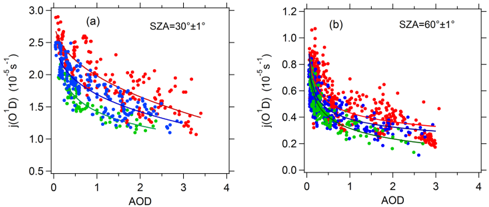
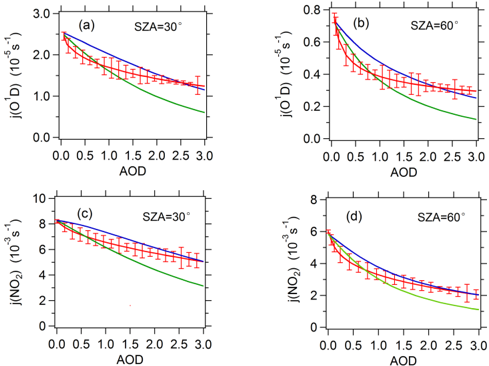
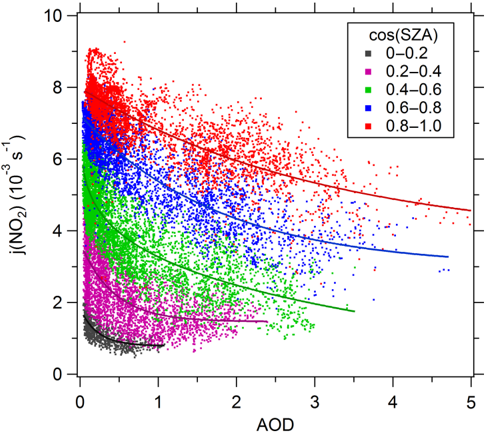
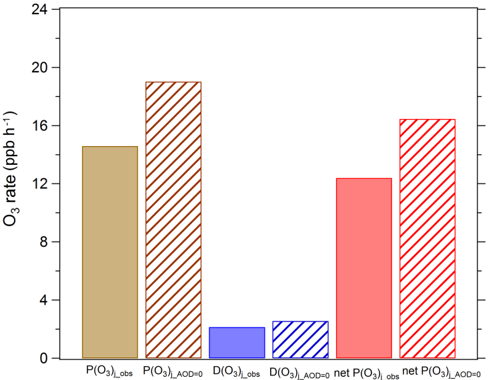
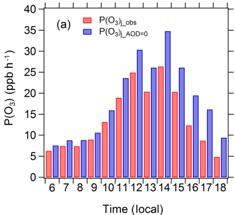
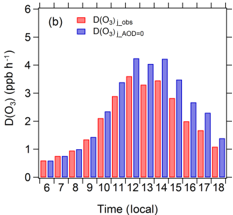
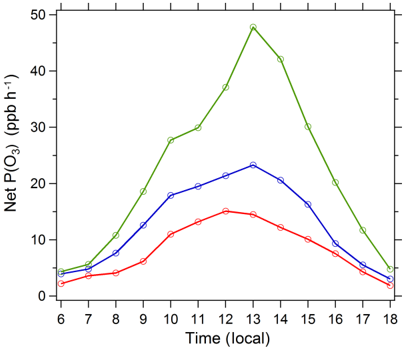
During the period 2012–2015, photolysis frequencies were measured at the Peking University site (PKUERS), a site representative of Beijing. We present a study of the effects of aerosols on two key photolysis frequencies, j (O 1 D) and j (NO 2 ). Both j (O 1 D) and j (NO 2 ) display significant dependence on aerosol optical depth (AOD; 380 nm) with a non-linear negative correlation. With the increase in AOD, the slopes of photolysis frequencies vs. AOD decrease, which indicates that the capacity of aerosols to reduce the actinic flux decreases with AOD. The absolute values of slopes are equal to 4.2–6.9×10⁻⁶ and 3.4×10⁻³ s −1 per AOD unit for j (O 1 D) and j (NO 2 ) respectively at a solar zenith angle (SZA) of 60 ∘ and AOD smaller than 0.7, both of which are larger than those observed in a similar, previous study in the Mediterranean. This indicates that the aerosols in Beijing have a stronger extinction effect on actinic flux than absorptive dust aerosols in the Mediterranean. Since the photolysis frequencies strongly depended on the AOD and the SZA, we established a parametric equation to quantitatively evaluate the effect of aerosols on photolysis frequencies in Beijing. According to the parametric equation, aerosols lead to a decrease in seasonal mean j (NO 2 ) by 24 % and 30 % for summer and winter, respectively, and a corresponding decrease in seasonal mean j (O 1 D) by 27 % and 33 %, respectively, compared to an aerosol-free atmosphere (AOD =0). Based on an observation campaign in August 2012, we used a photochemical box model to simulate the ozone production rate ( P (O 3 )). The simulation results shows that the monthly mean daytime net ozone production rate is reduced by up to 25 % due to the light extinction of aerosols. Through further in-depth analysis, it was found that particulate matter concentrations maintain a high level under the condition of high concentrations of ozone precursors (volatile organic compounds, VOCs, and NO x ), which inhibits the production of ozone to a large extent. This phenomenon implies a negative feedback mechanism in the atmospheric environment of Beijing.
Overview
The claims and statistics of this paper haven’t been checked yet.
Free: it reads the open-access text and checks the first 5 claims that cite a source we can check. Create a free account to check every claim.
Integrity signals
Registry
Cites
Statistics
Figures
Verification
Claims the paper makes
The claims and statistics of this paper haven’t been checked yet.
Free: it reads the open-access text and checks the first 5 claims that cite a source we can check. Create a free account to check every claim.
Claims other papers make about this one
Each is checked against this paper’s own text: does it say what the citing paper says it does?
The cited source says what the claim attributes to it.
In the citing paper
“Simulations with numerical models show several possible reasons including increases in UV radiation [31, 33–39], shifts in the VOC/NOx chemical regime resulting in increased production of O3 efficiency [35, 40], higher emissions of biogenic VOC due to rising temperatures [30], and decreased competition for gas-phase radicals by aerosol surfaces [34, 40], with reality likely being a combination of”
From Changes in tropospheric air quality related to the protection of stratospheric ozone in a changing climate (2023) · cites this paper as [31]
In the citing paper
“This has led to surface brightening (e.g., by 0.70–1.16 W m−2 year−1 in eastern China over 2014–2019) [29] but also to undesirable increases in ambient O3 [30–33] (e.g., by 2–6 µg m−3 year−1 in megacity clusters of Beijing and Shanghai over 2013–2017) [34].”
From Changes in tropospheric air quality related to the protection of stratospheric ozone in a changing climate (2023) · cites this paper as [31]
Self-check
Percentages, sums and reported differences re-computed from the paper’s own numbers.
The self-check needs the paper’s full text.
Citations
Cites
Environmental Health Perspectives at 50
Kaufman, J. D. (2022) · Environmental Health Perspectives · doi:10.1289/ehp11367 · Cited by 2,284
Physical Chemistry Chemical Physics
(2024) · Physical Chemistry Chemical Physics · doi:10.1039/1463-9084/1999 · Cited by 2,176
Elucidating severe urban haze formation in China
Guo, S., Hu, M., Zamora, M. L., Peng, J., Shang, D., Zheng, J., Du, Z., Wu, Z., Shao, M., Zeng, L., et al. (2014) · Proceedings of the National Academy of Sciences · doi:10.1073/pnas.1419604111 · Cited by 1,711 · cited 1×
“Previous studies have reported that secondary particulate matter has accounted for more than 60 % of total particulate matter during severe smog pollution in Beijing summers (T. Han et al., 2015; Guo et al., 2014).”
BackgroundSelf-citationvan Donkelaar, A., Martin, R. V., Brauer, M., Kahn, R., Levy, R., Verduzco, C., & Villeneuve, P. J. (2010) · Environmental Health Perspectives · doi:10.1289/ehp.0901623 · Cited by 1,623 · cited 1×
“The factors that affect this relationship include aerosol type, aerosol size distribution, aerosol distribution in the vertical direction, relative humidity (RH), and planetary boundary layer height (PBLH) (van Donkelaar et al., 2010).”
BackgroundChemical characterization and source apportionment of PM 2.5 in Beijing: seasonal perspective
Zhang, R., Jing, J., Tao, J., Hsu, S.-C., Wang, G., Cao, J., Lee, C. S. L., Zhu, L., Chen, Z., Zhao, Y., et al. (2013) · Atmospheric Chemistry and Physics · doi:10.5194/acp-13-7053-2013 · Cited by 1,206 · cited 1×
“…the biomass burning and soot emission generated from heating, the fine-mode heavily absorbing aerosol percentage is higher in winter than in summer (Zheng et al., 2017; Liu et al., 2016; Zhang et al., 2013), and thus aerosols in winter have a stronger ability to reduce the photolysis frequencies.”
BackgroundJournal of Geophysical Research. Atmospheres
Rinsland, C. P., Goldman, A., Mahieu, E., Zander, R., Notholt, J., Jones, N., GRIFFITH, D. W. T., Stephen, T., & Chiou, L. (2002) · Cited by 1,112
The Impact of Aerosols on Solar Ultraviolet Radiation and Photochemical Smog
Dickerson, R. R., Kondragunta, S., Stenchikov, G., Civerolo, K. L., Doddridge, B. G., & Holben, B. N. (1997) · Science · doi:10.1126/science.278.5339.827 · Cited by 675 · cited 3×
“The smaller the SSA, the higher the absorptive component and the lower the scattering component of the aerosol and the stronger the ability of the aerosol to reduce the actinic flux (Dickerson et al., 1997).”
BackgroundTropospheric OH and HO2 radicals: field measurements and model comparisons
Stone, D., Whalley, L. K., & Heard, D. E. (2012) · Chemical Society Reviews · doi:10.1039/c2cs35140d · Cited by 599 · cited 1×
“The strong dependence of OH concentration on j (O1D) was found in a number of field measurements (Ehhalt and Rohrer, 2000; Rohrer et al., 2014; Stone et al., 2012).”
BackgroundThe Role of Solar Radiation in Atmospheric Chemistry
Madronich, S., & Flocke, S. (1999) · The Handbook of Environmental Chemistry · doi:10.1007/978-3-540-69044-3_1 · Cited by 582 · cited 1×
“The radiative transfer model is based on an algorithm for calculating solar radiation and photolysis frequencies (Madronich and Flocke, 1999).”
MethodEstimating Ground-Level PM2.5 in China Using Satellite Remote Sensing
Ma, Z., Hu, X., Huang, L., Bi, J., & Liu, Y. (2014) · Environmental Science & Technology · doi:10.1021/es5009399 · Cited by 568
HOx radical regeneration in the oxidation of isoprene
Peeters, J., Nguyen, T. L., & Vereecken, L. (2009) · Physical Chemistry Chemical Physics · doi:10.1039/b908511d · Cited by 440 · cited 1×
“The isoprene-related mechanism used in this model is the LIM mechanism proposed by Peeters et al. (2009).”
MethodOzone UV spectroscopy. II. Absorption cross-sections and temperature dependence
Malicet, J., Daumont, D., Charbonnier, J., Parisse, C., Chakir, A., & Brion, J. (1995) · Journal of Atmospheric Chemistry · doi:10.1007/bf00696758 · Cited by 387 · cited 1×
“For j (O1D), the quantum yields used were taken from Matsumi et al. (2002), while the ozone cross section was derived from Daumont et al. (1992) and Malicet et al. (1995).”
MethodLu, K. D., Rohrer, F., Holland, F., Fuchs, H., Bohn, B., Brauers, T., Chang, C. C., Häseler, R., Hu, M., Kita, K., et al. (2012) · Atmospheric Chemistry and Physics · doi:10.5194/acp-12-1541-2012 · Cited by 364
Self-citationAssessment of the global impact of aerosols on tropospheric oxidants
Tie, X., Madronich, S., Walters, S., Edwards, D. P., Ginoux, P., Mahowald, N., Zhang, R., Lou, C., & Brasseur, G. (2005) · Journal of Geophysical Research: Atmospheres · doi:10.1029/2004jd005359 · Cited by 342 · cited 1×
“Tie et al. (2005) used a global aerosol–chemical model to show that aerosols caused j (O1D) and j (NO2) to decrease in winter by 20 %–30 % and 10 %–30 %, respectively, and in summer by 5 %–20 % and 1 %–10 %, respectively, resulting in 2 %–5 % and 2 % reductions in ozone concentration in winter and…”
MethodRapid increases in tropospheric ozone production and export from China
Verstraeten, W. W., Neu, J. L., Williams, J. E., Bowman, K. W., Worden, J. R., & Boersma, K. F. (2015) · Nature Geoscience · doi:10.1038/ngeo2493 · Cited by 319 · cited 1×
“Satellite observations indicate that both the particulate matter and the ozone of eastern China are at higher levels compared with other locations around the globe (Verstraeten et al., 2015; Ma et al., 2014).”
BackgroundThe regional atmospheric chemistry mechanism, version 2
Goliff, W. S., Stockwell, W. R., & Lawson, C. V. (2013) · Atmospheric Environment · doi:10.1016/j.atmosenv.2012.11.038 · Cited by 311 · cited 1×
“The photochemical box model used in this study is based on a regional atmospheric chemical mechanism (RACM2) described by Goliff et al. (2013).”
MethodOzone UV spectroscopy I: Absorption cross-sections at room temperature
Daumont, D., Brion, J., Charbonnier, J., & Malicet, J. (1992) · Journal of Atmospheric Chemistry · doi:10.1007/bf00053756 · Cited by 297 · cited 1×
“For j (O1D), the quantum yields used were taken from Matsumi et al. (2002), while the ozone cross section was derived from Daumont et al. (1992) and Malicet et al. (1995).”
MethodFour years of ground-based MAX-DOAS observations of HONO and NO 2 in the Beijing area
Hendrick, F., Müller, J.-F., Clémer, K., Wang, P., De Mazière, M., Fayt, C., Gielen, C., Hermans, C., Ma, J. Z., Pinardi, G., et al. (2014) · Atmospheric Chemistry and Physics · doi:10.5194/acp-14-765-2014 · Cited by 291
Visibility trends in six megacities in China 1973–2007
Chang, D., Song, Y., & Liu, B. (2009) · Atmospheric Research · doi:10.1016/j.atmosres.2009.05.006 · Cited by 276 · cited 1×
“Levels of pollution in the Beijing–Tianjin–Hebei region are even more severe (Chang et al., 2009; Che et al., 2008; Zhang et al., 2014, 2016).”
BackgroundJacobson, M. Z. (1998) · Journal of Geophysical Research: Atmospheres · doi:10.1029/98jd00287 · Cited by 275 · cited 3×
“Previous studies showed that scattering aerosols can enhance the actinic flux throughout the troposphere, while absorptive aerosols reduce the actinic flux throughout the boundary layer (Jacobson, 1998; Dickerson et al., 1997; Castro et al., 2001; Flynn et al., 2010).”
BackgroundThe Atmosphere and UV-B Radiation at Ground Level
Madronich, S. (1993) · Environmental UV Photobiology · doi:10.1007/978-1-4899-2406-3_1 · Cited by 262 · cited 2×
“We use the Tropospheric Ultraviolet and Visible (TUV) radiation model (version 5.3) provided by Sasha Madronich (Madronich, 1993).”
MethodInfluentialZhang, J. P., Zhu, T., Zhang, Q. H., Li, C. C., Shu, H. L., Ying, Y., Dai, Z. P., Wang, X., Liu, X. Y., Liang, A. M., et al. (2012) · Atmospheric Chemistry and Physics · doi:10.5194/acp-12-5031-2012 · Cited by 261 · cited 1×
“Concentration level and composition of air pollutants were thought to be similar to the downtown area and thus representative of the whole of Beijing (Wang et al., 2010; Xu et al., 2011; Zhang et al., 2012, 2014).”
BackgroundHodzic, A., Madronich, S., Bohn, B., Massie, S., Menut, L., & Wiedinmyer, C. (2007) · Atmospheric Chemistry and Physics · doi:10.5194/acp-7-4043-2007 · Cited by 219 · cited 2×
“The result of Hodzic et al. (2007) is comparable with the reduction ratio of this study, possibly due to the equivalent levels of AOD and SSA.”
BackgroundResultInfluentialGao, W., Tie, X., Xu, J., Huang, R., Mao, X., Zhou, G., & Chang, L. (2017) · Science of The Total Environment · doi:10.1016/j.scitotenv.2017.06.099 · Cited by 215
Shetter, R. E., & Müller, M. (1999) · Journal of Geophysical Research: Atmospheres · doi:10.1029/98jd01381 · Cited by 213 · cited 1×
“The actinic flux was measured using a spectroradiometer, and the photolysis frequencies were calculated from the absorption cross section and quantum yield of each species (Shetter and Müller, 1999).”
MethodLou, S., Liao, H., & Zhu, B. (2014) · Atmospheric Environment · doi:10.1016/j.atmosenv.2013.12.004 · Cited by 208
Analysis of influential factors for the relationship between PM 2.5 and AOD in Beijing
Zheng, C., Zhao, C., Zhu, Y., Wang, Y., Shi, X., Wu, X., Chen, T., Wu, F., & Qiu, Y. (2017) · Atmospheric Chemistry and Physics · doi:10.5194/acp-17-13473-2017 · Cited by 208 · cited 5×
“According to another study in Beijing, the higher the RH, the smaller the slope, and the higher the PBLH, the smaller the slope (Zheng et al., 2017).”
BackgroundResultInfluentialVariations of ground-level O 3 and its precursors in Beijing in summertime between 2005 and 2011
Zhang, Q., Yuan, B., Shao, M., Wang, X., Lu, S., Lu, K., Wang, M., Chen, L., Chang, C.-C., & Liu, S. C. (2014) · Atmospheric Chemistry and Physics · doi:10.5194/acp-14-6089-2014 · Cited by 207 · cited 2×
“Levels of pollution in the Beijing–Tianjin–Hebei region are even more severe (Chang et al., 2009; Che et al., 2008; Zhang et al., 2014, 2016).”
BackgroundSelf-citationOxidative capacity of the Mexico City atmosphere – Part 1: A radical source perspective
Volkamer, R., Sheehy, P., Molina, L. T., & Molina, M. J. (2010) · Atmospheric Chemistry and Physics · doi:10.5194/acp-10-6969-2010 · Cited by 202
Li, J., Wang, Z., Wang, X., Yamaji, K., Takigawa, M., Kanaya, Y., Pochanart, P., Liu, Y., Irie, H., Hu, B., et al. (2011) · Atmospheric Environment · doi:10.1016/j.atmosenv.2011.01.016 · Cited by 175 · cited 2×
“Li et al. (2011) used an air quality model to estimate the changes in the photolysis frequencies caused by sulfate, nitrate, ammonium, and min- Atmos.”
BackgroundMethodHaze trends over the capital cities of 31 provinces in China, 1981–2005
Che, H., Zhang, X., Li, Y., Zhou, Z., Qu, J. J., & Hao, X. (2009) · Theoretical and Applied Climatology · doi:10.1007/s00704-008-0059-8 · Cited by 173 · cited 1×
“Levels of pollution in the Beijing–Tianjin–Hebei region are even more severe (Chang et al., 2009; Che et al., 2008; Zhang et al., 2014, 2016).”
BackgroundThe influence of aerosols on photochemical smog in Mexico City
Castro, T., Madronich, S., Rivale, S., Muhlia, A., & Mar, B. (2001) · Atmospheric Environment · doi:10.1016/s1352-2310(00)00449-0 · Cited by 170 · cited 5×
“Previous studies showed that scattering aerosols can enhance the actinic flux throughout the troposphere, while absorptive aerosols reduce the actinic flux throughout the boundary layer (Jacobson, 1998; Dickerson et al., 1997; Castro et al., 2001; Flynn et al., 2010).”
BackgroundResultInfluentialEskes, H. J., Velthoven, P. F. J. V., Valks, P. J. M., & Kelder, H. M. (2003) · Quarterly Journal of the Royal Meteorological Society · doi:10.1256/qj.02.14 · Cited by 165 · cited 2×
“Phys., 19, 9413–9429, 2019 The total ozone column was obtained by OMI (Ozone Monitoring Instrument) for the years 2012–2015, using overpass data (http://www.temis.nl/protocols/O3global.html, last access: 1 August 2018) (Eskes et al., 2003).”
MethodDependence of the OH concentration on solar UV
Ehhalt, D. H., & Rohrer, F. (2000) · Journal of Geophysical Research: Atmospheres · doi:10.1029/1999jd901070 · Cited by 161 · cited 1×
“The strong dependence of OH concentration on j (O1D) was found in a number of field measurements (Ehhalt and Rohrer, 2000; Rohrer et al., 2014; Stone et al., 2012).”
BackgroundXu, J., Ma, J. Z., Zhang, X. L., Xu, X. B., Xu, X. F., Lin, W. L., Wang, Y., Meng, W., & Ma, Z. Q. (2011) · Atmospheric Chemistry and Physics · doi:10.5194/acp-11-12241-2011 · Cited by 149 · cited 1×
“Concentration level and composition of air pollutants were thought to be similar to the downtown area and thus representative of the whole of Beijing (Wang et al., 2010; Xu et al., 2011; Zhang et al., 2012, 2014).”
BackgroundVariation of ambient non-methane hydrocarbons in Beijing city in summer 2008
Wang, B., Shao, M., Lü, S., Yuan, B., Zhao, Y., Wang, M., Zhang, S., & Wu, D. (2010) · Atmospheric chemistry and physics · doi:10.5194/acp-10-5911-2010 · Cited by 144
Self-citationMaximum efficiency in the hydroxyl-radical-based self-cleansing of the troposphere
Röhrer, F., Lu, K., Hofzumahaus, A., Bohn, B., Brauers, T., Chang, C.-C., Fuchs, H., Häseler, R., Holland, F., Hu, M., et al. (2014) · Nature Geoscience · doi:10.1038/ngeo2199 · Cited by 143 · cited 1×
“The strong dependence of OH concentration on j (O1D) was found in a number of field measurements (Ehhalt and Rohrer, 2000; Rohrer et al., 2014; Stone et al., 2012).”
BackgroundSelf-citationM�rienne, M. F., Jenouvrier, A., & Coquart, B. (1995) · Journal of Atmospheric Chemistry · doi:10.1007/bf00694498 · Cited by 140 · cited 1×
“For j (NO2), absorption cross sections by Merienne et al. (1995) and quantum yields by Troe (2000) were used.”
MethodTang, Y., Carmichael, G. R., Kurata, G., Uno, I., Weber, R. J., Song, C., Guttikunda, S., Woo, J., Streets, D. G., Cao, W., et al. (2004) · Journal of Geophysical Research Atmospheres · doi:10.1029/2003jd003806 · Cited by 137 · cited 1×
“Tang et al. (2004) used a sulfur transmission– emission model (STEM) to discover that ozone concentration in north-eastern China was reduced by 0.1 %–0.8 % in the sandstorm due to the change in photolysis frequencies.”
MethodInfluentialMatsumi, Y., Comes, F. J., Hancock, G., Hofzumahaus, A., Hynes, A. J., Kawasaki, M., & Ravishankara, A. R. (2002) · Journal of Geophysical Research Atmospheres · doi:10.1029/2001jd000510 · Cited by 133
Peroxy radicals during BERLIOZ at Pabstthum: Measurements, radical budgets and ozone production
Mihelcic, D., Holland, F., Hofzumahaus, A., Hoppe, L., Konrad, S., Müsgen, P., Pätz, H. ‐., Schäfer, H., Schmitz, T., Volz‐Thomas, A., et al. (2003) · Journal of Geophysical Research Atmospheres · doi:10.1029/2001jd001014 · Cited by 127 · cited 1×
“(2), (3), and (4) as derived by Mihelcic et al. (2003).”
Effects of aerosols on tropospheric photolysis rates in clear and cloudy atmospheres
Liao, H., Yung, Y. L., & Seinfeld, J. H. (1999) · Journal of Geophysical Research: Atmospheres · doi:10.1029/1999jd900409 · Cited by 124 · cited 1×
“The effect of aerosols on photolysis frequencies depends on the aerosol optical properties, solar zenith angle (SZA), and altitude (Liao et al., 1999).”
BackgroundSensitivity of photolysis rates and ozone production in the troposphere to aerosol properties
He, S., & Carmichael, G. R. (1999) · Journal of Geophysical Research: Atmospheres · doi:10.1029/1999jd900789 · Cited by 122 · cited 1×
“Studies in the eastern United States have shown that scattering aerosols increase ozone concentration by 5 %–60 % by increasing the photolysis frequencies (Dickerson et al., 1997; He and Carmichael, 1999).”
BackgroundWang, Q., Sun, Y., Jiang, Q., Du, W., Sun, C., Fu, P., & Wang, Z. (2015) · Journal of Geophysical Research Atmospheres · doi:10.1002/2015jd023871 · Cited by 120 · cited 1×
“In addition, several studies have shown that secondary components in particulate matter (especially secondary organics and ammonium sulfate) have dominated the aerosol light extinction (Han et al., 2014, 2017; Wang et al., 2015).”
BackgroundHofzumahaus, A., Kraus, A., & Müller, M. J. (1999) · Applied Optics · doi:10.1364/ao.38.004443 · Cited by 116 · cited 1×
“The spectral measurements were performed with a wavelength resolution of 2 nm, covering a wavelength range of 290–650 nm (Hofzumahaus et al., 1999).”
MethodPhotolysis frequency measurement techniques: results of a comparison within the ACCENT project
Bohn, B., Corlett, G. K., Gillmann, M., Sanghavi, S., Stange, G., Tensing, E., Vrekoussis, M., Bloss, W. J., Clapp, L. J., Kortner, M., et al. (2008) · Atmospheric chemistry and physics · doi:10.5194/acp-8-5373-2008 · Cited by 115
Zhang, L., Shao, J., Lu, X. H., Zhao, Y., Hu, Y., Henze, D. K., Liao, H., Gong, S., & Zhang, Q. (2016) · Environmental Science & Technology · doi:10.1021/acs.est.6b03010 · Cited by 114 · cited 1×
“Levels of pollution in the Beijing–Tianjin–Hebei region are even more severe (Chang et al., 2009; Che et al., 2008; Zhang et al., 2014, 2016).”
BackgroundGarland, R. M., Schmid, O., Nowak, A., Achtert, P., Wiedensohler, A., Gunthe, S. S., Takegawa, N., Kita, K., Kondo, Y., Hu, M., et al. (2009) · Journal of Geophysical Research: Atmospheres · doi:10.1029/2008jd010780 · Cited by 104 · cited 1×
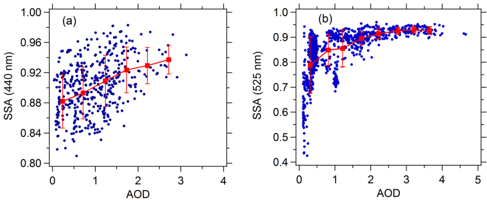
“A previous study indicated that SSA in Beijing ranged from 0.80 to 0.86 (Garland et al., 2009; T. T. Han et al., 2015, 2017; Tian et al., 2015).”
InfluentialSelf-citationRelationship between the NO 2 photolysis frequency and the solar global irradiance
Trebs, I., Bohn, B., Ammann, C., Rummel, U., Blumthaler, M., Königstedt, R., Meixner, F. X., Fan, S., & Andreae, M. O. (2009) · Atmospheric measurement techniques · doi:10.5194/amt-2-725-2009 · Cited by 100 · cited 2×
“…and photolysis frequencies from ground-based measurements of irradiance (Kylling et al., 2003; Kazadzis et al., 2000, 2004; Topaloglou et al., 2005; Trebs et al., 2009). σ(λ,T ) is the absorption cross section of the species that is absorbed in the wavelength range λ1-λ2. ϕ(λ,T ) is the quantum…”
BackgroundMethodFotiadi, A., HATZIANASTASSIOU, N., Drakakis, E., Matsoukas, C., Pavlakis, K. G., Hatzidimitriou, D., Gerasopoulos, E., Mihalopoulos, N., & Vardavas, I. M. (2006) · Atmospheric chemistry and physics · doi:10.5194/acp-6-5399-2006 · Cited by 100 · cited 1×
“The instrumentation, data acquisition, retrieval algorithms, and calibration procedure conform to the standards of the global AErosol RObotic NETwork (AERONET) and have been described in detail by Fotiadi et al. (2006).”
MethodLiu, X., Zhang, Y., Jung, J., Gu, J., Li, Y., Guo, S., Chang, S., Yue, D., Lin, P., Kim, Y. J., et al. (2009) · Journal of Geophysical Research Atmospheres · doi:10.1029/2008jd010805 · Cited by 94 · cited 1×
“As aerosol particles were dried by decreasing relative humidity (RH) to 40 % when SSA was measured, we used the measured hygroscopic factor (Liu et al., 2009) and measured RH to correct the SSA.”
MethodSelf-citationCan MODIS AOD be employed to derive PM2.5 in Beijing-Tianjin-Hebei over China?
Ma, X., Wang, J., Yu, F., Jia, H., & Hu, Y. (2016) · Atmospheric Research · doi:10.1016/j.atmosres.2016.06.018 · Cited by 93 · cited 2×
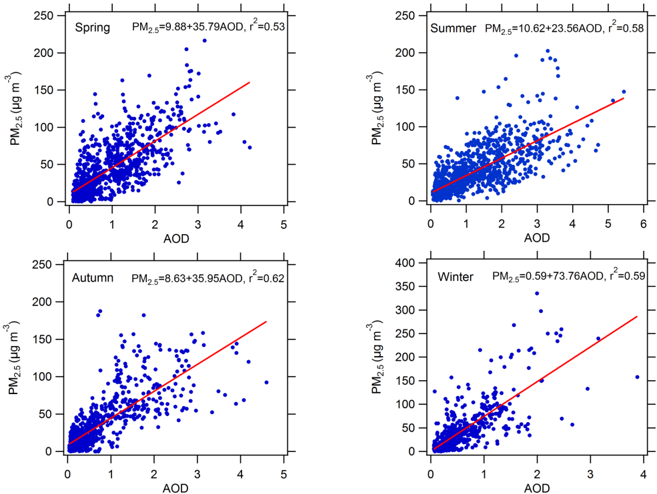
“5 in this study in summer and winter are equal to 42.2 and 119.2 µgm−3, respectively, close to those from Ma et al. (2016) (54.9 and 110.5 µgm−3) and Xin et al. (2016) (55.2 and 93.4 µgm−3) but significantly smaller than those from Zheng et al. (2017) (65–74 µgm−3 and 143–158 µgm−3).”
BackgroundInfluentialRole of secondary aerosols in haze formation in summer in the Megacity Beijing
Han, T., Liu, X., Zhang, Y., Qu, Y., Zeng, L., Hu, M., & Zhu, T. (2015) · Journal of Environmental Sciences · doi:10.1016/j.jes.2014.08.026 · Cited by 88 · cited 3×
“A previous study indicated that SSA in Beijing ranged from 0.80 to 0.86 (Garland et al., 2009; T. T. Han et al., 2015, 2017; Tian et al., 2015).”
BackgroundInfluentialSelf-citationBais, A. F., Kazantzidis, A., Kazadzis, S., Balis, D., Zerefos, C., & Meleti, C. (2004) · Atmospheric Environment · doi:10.1016/j.atmosenv.2004.09.080 · Cited by 88 · cited 1×
“Similar results in other regions have been obtained by Bais et al. (2005), Krotkov et al. (2005) and Kazadzis et al. (2012).”
ResultHan, T., Xu, W., Chen, C., Liu, X., Wang, Q., Li, J., Zhao, X., Du, W., Wang, Z., & Sun, Y. (2015) · Journal of Geophysical Research Atmospheres · doi:10.1002/2015jd023918 · Cited by 82
Shetter, R. E., Junkermann, W., Swartz, W. H., Frost, G. J., Crawford, J. H., Lefer, B. L., Barrick, J. D. W., Hall, S. R., Hofzumahaus, A., Bais, A. F., et al. (2003) · Journal of Geophysical Research Atmospheres · doi:10.1029/2002jd002932 · Cited by 78
Krotkov, N. A., Bhartia, P. K., Herman, J. R., Slusser, J. R., Scott, G. B., Labow, G. J., Vasilkov, A. P., Eck, T., Dubovik, О., & HOLBEN, B. N. (2005) · Optical Engineering · doi:10.1117/1.1886819 · Cited by 74
Temporal variations of black carbon during haze and non-haze days in Beijing
Liu, Q., Ma, T., Olson, M. R., Liu, Y., Zhang, T., Wu, Y., & Schauer, J. J. (2016) · Scientific Reports · doi:10.1038/srep33331 · Cited by 71 · cited 2×
“…the biomass burning and soot emission generated from heating, the fine-mode heavily absorbing aerosol percentage is higher in winter than in summer (Zheng et al., 2017; Liu et al., 2016; Zhang et al., 2013), and thus aerosols in winter have a stronger ability to reduce the photolysis frequencies.”
BackgroundSelf-citationCorr, C. A., Krotkov, N., Madronich, S., Slusser, J. R., Holben, B., Gao, W., Flynn, J., Lefer, B., & Kreidenweis, S. M. (2009) · Atmospheric Chemistry and Physics · doi:10.5194/acp-9-5813-2009 · Cited by 69 · cited 1×
“Krotkov et al. (2005) and Corr et al. (2009) pointed out that SSA in the UV can be lower than the visible.”
BackgroundThe observation‐based relationships between PM2.5 and AOD over China
Xin, J., Gong, C., Liu, Z., Cong, Z., Gao, W., Song, T., Pan, Y., Sun, Y., Ji, D., Wang, L., et al. (2016) · Journal of Geophysical Research Atmospheres · doi:10.1002/2015jd024655 · Cited by 69 · cited 1×
“5 in this study in summer and winter are equal to 42.2 and 119.2 µgm−3, respectively, close to those from Ma et al. (2016) (54.9 and 110.5 µgm−3) and Xin et al. (2016) (55.2 and 93.4 µgm−3) but significantly smaller than those from Zheng et al. (2017) (65–74 µgm−3 and 143–158 µgm−3).”
InfluentialEdwards, G. D., & Monks, P. S. (2003) · Journal of Geophysical Research Atmospheres · doi:10.1029/2002jd002844 · Cited by 68 · cited 1×
“The calculated photolysis frequencies had a time resolution of 10 s and an accuracy of ±10 % including uncertainties associated with the quartz receiver and stray-light effects (Edwards and Monks, 2003).”
BackgroundModeling of photolysis rates over Europe: impact on chemical gaseous species and aerosols
Real, E., & Sartelet, K. (2011) · Atmospheric chemistry and physics · doi:10.5194/acp-11-1711-2011 · Cited by 67 · cited 6×
“Published by Copernicus Publications on behalf of the European Geosciences Union.”
BackgroundMethodInfluentialLefer, B. L., Shetter, R. E., Hall, S. R., Crawford, J. H., & Olson, J. R. (2003) · Journal of Geophysical Research: Atmospheres · doi:10.1029/2002jd003171 · Cited by 64 · cited 1×
“…frequencies, but it does not necessarily reflect the true quantitative relationship in the atmosphere due to complicated environmental conditions, and thus the simulated results do not necessarily reproduce observed values well (Lefer et al., 2003; Shetter, 2003; Hofzumahaus et al., 2004).”
BackgroundImpact of clouds and aerosols on ozone production in Southeast Texas
Flynn, J., Lefer, B. L., Rappenglück, B., Leuchner, M., Perna, R., Dibb, J. E., Ziemba, L. D., Anderson, C., Stutz, J., Brune, W. H., et al. (2009) · Atmospheric Environment · doi:10.1016/j.atmosenv.2009.09.005 · Cited by 56 · cited 11×
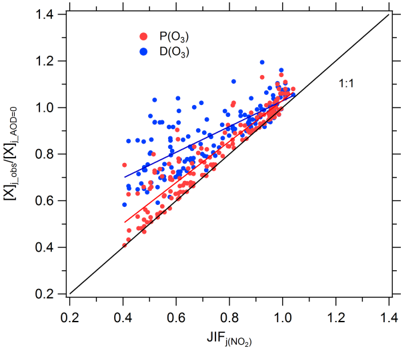
“The ratio of the observed photolysis frequencies to the photolysis frequencies at AOD equal to 0 is defined as JIF (Flynn et al., 2010).”
BackgroundMethodResultInfluentialHofzumahaus, A., Lefer, B. L., Monks, P. S., Hall, S. R., Kylling, A., Mayer, B., Shetter, R. E., Junkermann, W., Bais, A. F., Calvert, J. G., et al. (2004) · Journal of Geophysical Research Atmospheres · doi:10.1029/2003jd004333 · Cited by 52
Are Primary Quantum Yields of NO2 Photolysis at λ ≤ 398 nm Smaller than Unity?
Troe, J. H. (2000) · Zeitschrift für Physikalische Chemie · doi:10.1524/zpch.2000.214.5.573 · Cited by 51 · cited 1×
“For j (NO2), absorption cross sections by Merienne et al. (1995) and quantum yields by Troe (2000) were used.”
MethodImpacts of aerosol chemical compositions on optical properties in urban Beijing, China
Tian, P., Wang, G., Zhang, R., Wu, Y., & Peng, Y. (2014) · Particuology · doi:10.1016/j.partic.2014.03.014 · Cited by 49
Self-citationde Raga, G. B., Castro, T. G., & Baumgardner, D. G. (2001) · Atmospheric Environment · doi:10.1016/s1352-2310(00)00275-2 · Cited by 49 · cited 4×
“This reduction is comparable with the results of the study in Mexico City, where aerosols caused a 20 % reduction in the ozone concentrations (Castro et al., 2001).”
BackgroundInfluentialMailler, S., Menut, L., di Sarra, A. G., Becagli, S., Iorio, T. D., Bessagnet, B., Briant, R., Formenti, P., Doussin, J., Gómez-Amo, J. L., et al. (2016) · Atmospheric chemistry and physics · doi:10.5194/acp-16-1219-2016 · Cited by 49 · cited 1×
“For example, the simulated slope of j (O1D) vs. AOD by the Fast-JX algorithm within the CHIMERE model was significantly smaller than the observed slope, particularly for the high SZA values (Mailler et al., 2016).”
MethodActinic flux determination from measurements of irradiance
Kylling, A., Webb, A. R., Bais, A. F., Blumthaler, M., Schmitt, R., Thiel, S., Kazantzidis, A., Kift, R., Misslbeck, M., Schallhart, B., et al. (2003) · Journal of Geophysical Research Atmospheres · doi:10.1029/2002jd003236 · Cited by 48 · cited 1×
“…measurements, several methods have been developed to determine actinic flux and photolysis frequencies from ground-based measurements of irradiance (Kylling et al., 2003; Kazadzis et al., 2000, 2004; Topaloglou et al., 2005; Trebs et al., 2009). σ(λ,T ) is the absorption cross section of the…”
MethodHan, T., Xu, W., Li, J., Freedman, A., Zhao, J., Wang, Q., Chen, C., Zhang, Y., Wang, Z., Fu, P., et al. (2017) · Journal of Geophysical Research Atmospheres · doi:10.1002/2016jd025762 · Cited by 41 · cited 3×
“A previous study indicated that SSA in Beijing ranged from 0.80 to 0.86 (Garland et al., 2009; T. T. Han et al., 2015, 2017; Tian et al., 2015).”
BackgroundInfluentialLarge aerosol effects on ozone photolysis in the Mediterranean
Casasanta, G., di Sarra, A. G., Meloni, D., Monteleone, F., Pace, G., Piacentino, S., & Sferlazzo, D. M. (2011) · Atmospheric Environment · doi:10.1016/j.atmosenv.2011.04.065 · Cited by 37 · cited 5×
“The method can reflect the actual atmospheric environment conditions; it also considers less influential factors and thus is easy to apply (Casasanta et al., 2011; Gerasopoulos et al., 2012).”
BackgroundMethodResultInfluentialHan, T., Liu, X., Zhang, Y., Qu, Y., Gu, J., Ma, Q., Lu, K., Tian, H., Chen, J., Zeng, L., et al. (2014) · Aerosol and Air Quality Research · doi:10.4209/aaqr.2013.06.0203 · Cited by 34
Self-citationKazadzis, S., Bais, A. F., Balis, D., Zerefos, C., & Blumthaler, M. (2000) · Journal of Geophysical Research Atmospheres · doi:10.1029/1999jd900400 · Cited by 31 · cited 1×
“…methods have been developed to determine actinic flux and photolysis frequencies from ground-based measurements of irradiance (Kylling et al., 2003; Kazadzis et al., 2000, 2004; Topaloglou et al., 2005; Trebs et al., 2009). σ(λ,T ) is the absorption cross section of the species that is absorbed…”
MethodGerasopoulos, E., Kazadzis, S., Vrekoussis, M., Kouvarakis, G., Liakakou, E., Kouremeti, N., Giannadaki, D., Kanakidou, M., Bohn, B., & Mihalopoulos, N. (2012) · Journal of Geophysical Research Atmospheres · doi:10.1029/2012jd017622 · Cited by 31
Cantrell, C. A., Calvert, J. G., Bais, A. F., Shetter, R. E., Lefer, B. L., & Edwards, G. D. (2003) · Journal of Geophysical Research Atmospheres · doi:10.1029/2002jd002962 · Cited by 29
Péré, J. C., Bessagnet, B., Pont, V., Mallet, M., & Minvielle, F. (2015) · Atmospheric chemistry and physics · doi:10.5194/acp-15-10983-2015 · Cited by 29 · cited 5×
“Studies in Los Angeles (Jacobson, 1998), Mexico City (Castro et al., 2001; Raga et al., 2001; Li et al., 2011), São Paulo (de Miranda et al., 2005), Houston (Flynn et al., 2010), Europe (Real and Sartelet, 2011), and Russia (Péré et al., 2015) have found that aerosols reduce ozone concentration by 5 %–30 % by attenuat…”
BackgroundInfluentialNO 2 and HCHO photolysis frequencies from irradiance measurements in Thessaloniki, Greece
Topaloglou, C., Kazadzis, S., Bais, A. F., Blumthaler, M., Schallhart, B., & Balis, D. (2005) · Atmospheric chemistry and physics · doi:10.5194/acp-5-1645-2005 · Cited by 21 · cited 1×
“…to determine actinic flux and photolysis frequencies from ground-based measurements of irradiance (Kylling et al., 2003; Kazadzis et al., 2000, 2004; Topaloglou et al., 2005; Trebs et al., 2009). σ(λ,T ) is the absorption cross section of the species that is absorbed in the wavelength range λ1-λ2.…”
Backgroundde Miranda, R. M., Andrade, M. D. F., & Plana‐Fattori, A. (2005) · Atmospheric Research · doi:10.1016/j.atmosres.2004.12.004 · Cited by 15
Kazadzis, S., Topaloglou, C., Bais, A. F., Blumthaler, M., Balis, D., Kazantzidis, A., & Schallhart, B. (2004) · Atmospheric chemistry and physics · doi:10.5194/acp-4-2215-2004 · Cited by 15 · cited 1×
“…methods have been developed to determine actinic flux and photolysis frequencies from ground-based measurements of irradiance (Kylling et al., 2003; Kazadzis et al., 2000, 2004; Topaloglou et al., 2005; Trebs et al., 2009). σ(λ,T ) is the absorption cross section of the species that is absorbed…”
MethodThe Effect of Aerosol Absorption in Solar UV Radiation
Kazadzis, S., Amiridis, V., & Kouremeti, N. (2012) · Springer atmospheric sciences · doi:10.1007/978-3-642-29172-2_145 · Cited by 7 · cited 1×
“Similar results in other regions have been obtained by Bais et al. (2005), Krotkov et al. (2005) and Kazadzis et al. (2012).”
Result
Research works printed but not linked: 1
- Finlayson-Pitts, B. J. and Pitts, J. N.: Chemistry of the Upper and Lower Atmosphere, Academic Press, New York, 2000.
Cited by
Bais, A. F., Lucas, R. M., Bornman, J. F., Williamson, C. E., Sulzberger, B., Austin, A. T., Wilson, S. R., Andrady, A. L., Bernhard, G., McKenzie, R. L., et al. (2018) · Photochemical & Photobiological Sciences · doi:10.1039/c7pp90043k · Cited by 350
Archibald, A. T., O'Connor, F. M., Abraham, N. L., Archer-Nicholls, S., Chipperfield, M. P., Dalvi, M., Folberth, G. A., Dennison, F., Dhomse, S. S., Griffiths, P. T., et al. (2020) · Geoscientific Model Development · doi:10.5194/gmd-13-1223-2020 · Cited by 300
Wang, W., Parrish, D. D., Wang, S., Bao, F., Ni, R., Li, X., Yang, S., Wang, H., Cheng, Y., & Su, H. (2022) · Atmospheric Chemistry and Physics · doi:10.5194/acp-22-8935-2022 · Cited by 240
“This modelling approach has been used previously (Wang et al., 2019, 2020, 2021a).”
MethodSelf-citationNeale, R. E., Barnes, P. W., Robson, T. M., Neale, P. J., Williamson, C. E., Zepp, R. G., Wilson, S. R., Madronich, S., Andrady, A. L., Heikkilä, A. M., et al. (2021) · Photochemical & Photobiological Sciences · doi:10.1007/s43630-020-00001-x · Cited by 225
Ozone pollution mitigation strategy informed by long-term trends of atmospheric oxidation capacity
Wang, W., Li, X., Cheng, Y., Parrish, D. D., Ni, R., Tan, Z., Liu, Y., Lü, S., Wu, Y., Chen, S., et al. (2023) · Nature Geoscience · doi:10.1038/s41561-023-01334-9 · Cited by 151
Self-citation
Metadata
- Authors
- Wang, W., Li, X., Shao, M., Hu, M., Zeng, L., Wu, Y., & Tan, T.
- Affiliations
- Peking University (CN)
- Jinan University (CN)
- Corresponding author
- Li, Xin
- Wu, Yusheng
- Venue
- Atmospheric Chemistry and Physics
- Publisher
- Copernicus GmbH
- Published
- 2019-07-23
- Volume
- 19
- Issue
- 14
- Pages
- 9413-9429
- ISSN
- 1680-7316 (ISSN-L)
- 1680-7324
- OpenAlex
- W2987913470
- Cited by
- 99
- References
- 83
- Citations by year
- 2026: 10 · 2025: 12 · 2024: 11 · 2023: 8 · 2022: 21 · 2021: 23 · 2020: 12 · 2019: 1
- FWCI
- 5.65
- Type
- journal article
- Language
- en
- Open access
- gold
- doi.org
- Licence
- Locations
- Atmospheric chemistry and physics (publishedVersion, cc-by)
- DOAJ (DOAJ: Directory of Open Access Journals) (submittedVersion)
- Funders
- National Natural Science Foundation of China (91644222)
- Topics
- Physical Sciences › Earth and Planetary Sciences › Atmospheric Science › Atmospheric chemistry and aerosols
- Physical Sciences › Environmental Science › Global and Planetary Change › Atmospheric aerosols and clouds
- Physical Sciences › Earth and Planetary Sciences › Atmospheric Science › Atmospheric Ozone and Climate
- Keywords
- photolysis frequency, ozone production rate, aerosol optical depth, NO2 photolysis, solar zenith angle, particulate matter, volatile organic compounds, NOx, ozone precursors, photochemical box model, negative feedback loop, Beijing air pollution, aerosol extinction coefficient
About these checks
Registry, retraction, Cites and statistics results are computed, not judged, with one exception: a printed reference that no index lists is read once by a model before it counts as a citation error. Claims are extracted by a model and kept only when their quote appears verbatim in the text; each cited source is then checked, with a model’s help, for whether it says what the claim relies on. Those verdicts can be wrong — read the claim’s quote and the cited source before relying on one.
Statistics and arithmetic are recomputed, not judged.
Confidence bands are shown only for fields calibrated on our annotated test set. None is calibrated yet, so no band is shown.
What counts as a claim ›How we measure confidence ›How we check this ›
Are you an author, or do you see a problem with this page? Request a review
Data sources
Bibliographic data: Semantic Scholar, OpenAlex, Crossref.
Contains information from the Semantic Scholar Academic Graph Datasets, made available under the ODC Attribution License (ODC-BY 1.0).
Semantic Scholar’s data is described in: Kinney, R., et al. (2023). The Semantic Scholar Open Data Platform. arXiv:2301.10140.
