

The impact of traffic emissions on atmospheric ozone and OH: results from QUANTIFY
Open accessPublished version of a preprint
The DOI matches its Crossref record; 80 of the 81 references it cites were found in a registry or an index.
Abstract
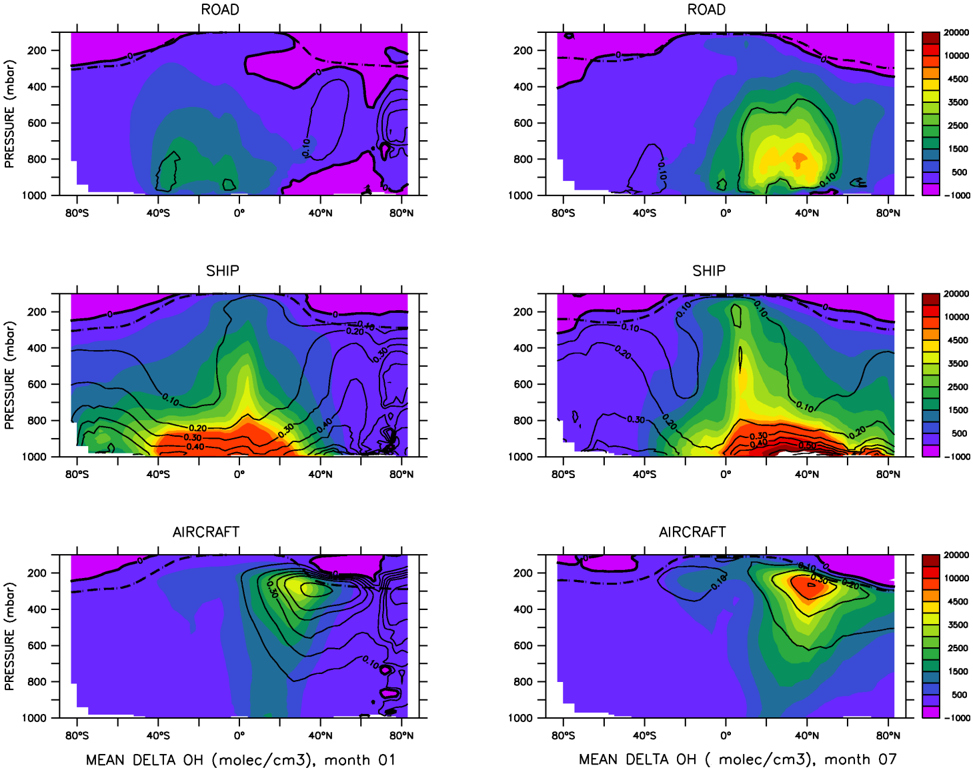
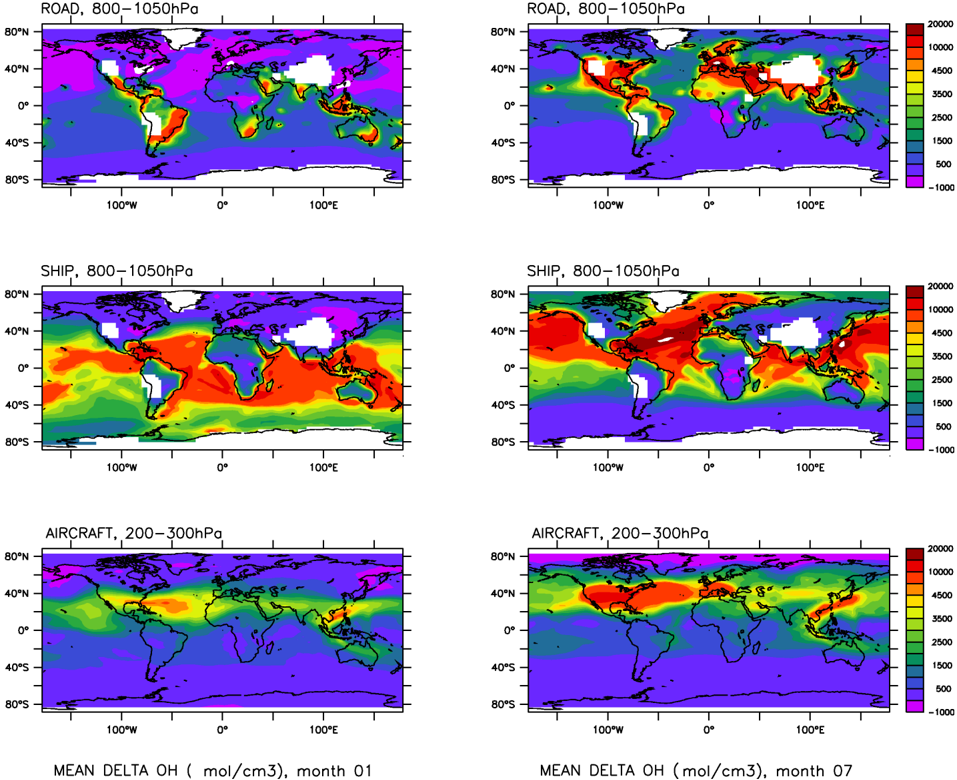
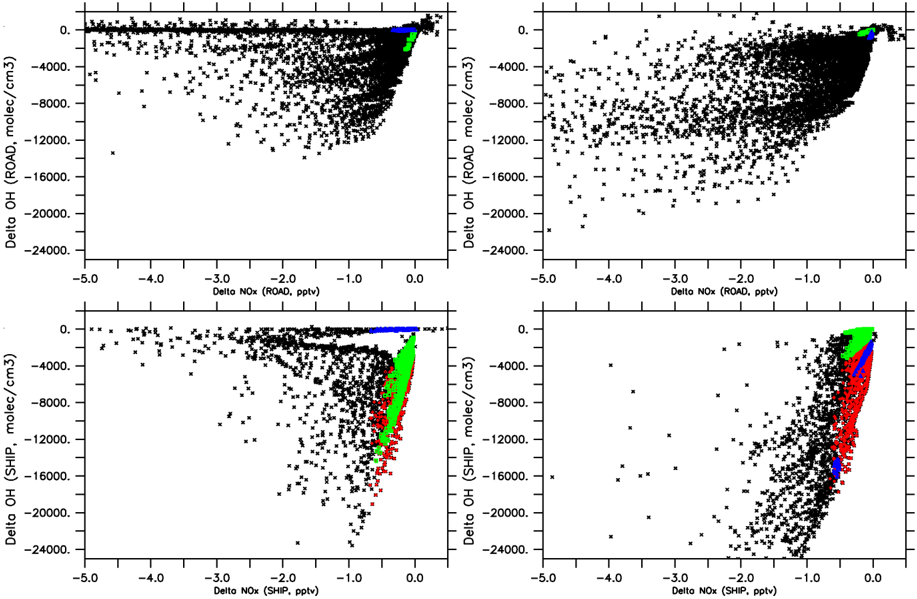
To estimate the impact of emissions by road, aircraft and ship traffic on ozone and OH in the present-day atmosphere six different atmospheric chemistry models have been used. Based on newly developed global emission inventories for road, ship and aircraft emission data sets each model performed sensitivity simulations reducing the emissions of each transport sector by 5%. The model results indicate that on global annual average lower tropospheric ozone responds most sensitive to ship emissions (50.6%±10.9% of the total traffic induced perturbation), followed by road (36.7%±9.3%) and aircraft exhausts (12.7%±2.9%), respectively. In the northern upper troposphere between 200–300 hPa at 30–60° N the maximum impact from road and ship are 93% and 73% of the maximum effect of aircraft, respectively. The latter is 0.185 ppbv for ozone (for the 5% case) or 3.69 ppbv when scaling to 100%. On the global average the impact of road even dominates in the UTLS-region. The sensitivity of ozone formation per NOx molecule emitted is highest for aircraft exhausts. The local maximum effect of the summed traffic emissions on the ozone column predicted by the models is 0.2 DU and occurs over the northern subtropical Atlantic extending to central Europe. Below 800 hPa both ozone and OH respond most sensitively to ship emissions in the marine lower troposphere over the Atlantic. Based on the 5% perturbation the effect on ozone can exceed 0.6% close to the marine surface (global zonal mean) which is 80% of the total traffic induced ozone perturbation. In the southern hemisphere ship emissions contribute relatively strongly to the total ozone perturbation by 60%–80% throughout the year. Methane lifetime changes against OH are affected strongest by ship emissions up to 0.21 (± 0.05)%, followed by road (0.08 (±0.01)%) and air traffic (0.05 (± 0.02)%). Based on the full scale ozone and methane perturbations positive radiative forcings were calculated for road emissions (7.3±6.2 mWm−2) and for aviation (2.9±2.3 mWm−2). Ship induced methane lifetime changes dominate over the ozone forcing and therefore lead to a net negative forcing (−25.5±13.2 mWm−2).
Overview
The claims and statistics of this paper haven’t been checked yet.
Free: it reads the open-access text and checks the first 5 claims that cite a source we can check. Create a free account to check every claim.
Integrity signals
Registry
Cites
Statistics
Figures
Verification
Claims the paper makes
The claims and statistics of this paper haven’t been checked yet.
Free: it reads the open-access text and checks the first 5 claims that cite a source we can check. Create a free account to check every claim.
Claims other papers make about this one
Each is checked against this paper’s own text: does it say what the citing paper says it does?
The source backs part of the claim, not all of it — or backs it for a different population, condition or comparison.
In the citing paper
“These TROPOS O3 magnitudes are at the upper limit of model ranges, as present-day aircraft O3 perturbations found in the literature vary from 3 to 11 Tg (O3) (e.g., Hoor et al., 2009; Holmes et al., 2011; Khodayari et al., 2014a).”
From The contribution of global aviation to anthropogenic climate forcing for 2000 to 2018 (2021) · cites this paper as Hoor et al., 2009
Experimental — accuracy not yet measuredThe cited source says what the claim attributes to it.
In the citing paper
“The short-term O3 RF varies from 6.2 to 45.1 mW m 2 (Tg (N) yr 1 ) 1 , where these values come from the NASA ModelE2 (Olsen et al., 2013) and p-TOMCAT (Hoor et al., 2009) models, respectively.”
From The contribution of global aviation to anthropogenic climate forcing for 2000 to 2018 (2021) · cites this paper as Hoor et al., 2009
Self-check
Percentages, sums and reported differences re-computed from the paper’s own numbers.
The self-check needs the paper’s full text.
Citations
Cites
Emission of trace gases and aerosols from biomass burning
Andreae, M. O., & Merlet, P. (2001) · Global Biogeochemical Cycles · doi:10.1029/2000gb001382 · Cited by 3,902 · cited 1×
“For biomass burning monthly means for the year 2000 were used based on GFED estimates with multi-year (1997– 2002) averaged activity data using Andreae and Merlet (2001) and Andreae (2004, personal communication) for NOx emission factors (BB-AVG-AM).”
A Comprehensive Mass Flux Scheme for Cumulus Parameterization in Large-Scale Models
Tiedtke, M. (1989) · Monthly Weather Review · doi:10.1175/1520-0493(1989)117<1779:acmfsf>2.0.co;2 · Cited by 3,648
Müller, G., Pannhorst, W., & Schiffner, U. (1995) · Schott Series on Glass and Glass Ceramics · doi:10.1007/978-3-662-03083-7_2 · Cited by 1,982
An Asian emission inventory of anthropogenic emission sources for the period 1980–2020
Ohara, T., Akimoto, H., Kurokawa, J., Horii, N., Yamaji, K., Yan, X., & Hayasaka, T. (2007) · Atmospheric Chemistry and Physics · doi:10.5194/acp-7-4419-2007 · Cited by 1,410 · cited 2×
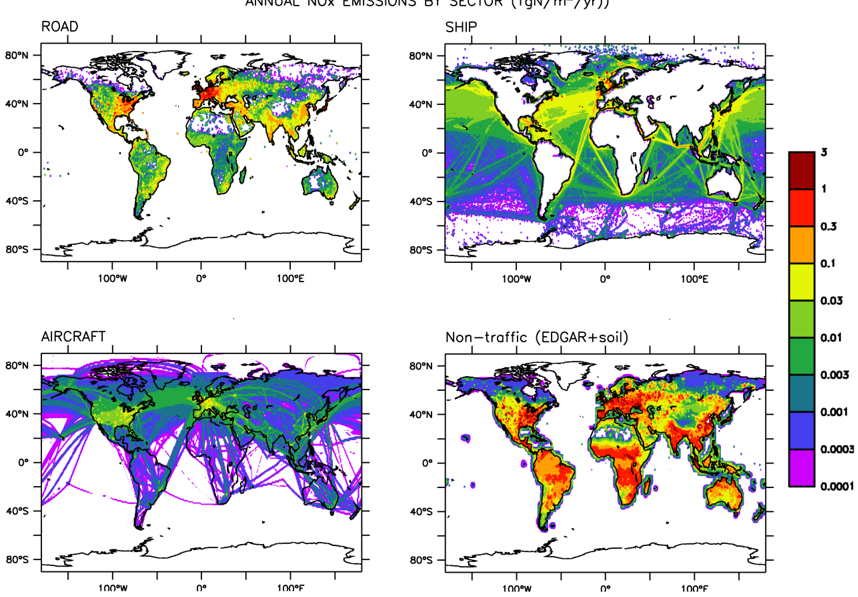
“Globally, road NOx emissions are dominated by the eastern US and western Europe as well as India and eastern China, the latter with an increase rate of 6%/year ( Ohara et al., 2007) only between 2000 and 2003.”
Multimodel ensemble simulations of present‐day and near‐future tropospheric ozone
Stevenson, D. S., Dentener, F. J., Schultz, M. G., Ellingsen, K., van Noije, T. P. C., Wild, O., Zeng, G., Amann, M., Atherton, C. S., Bell, N., et al. (2006) · Journal of Geophysical Research: Atmospheres · doi:10.1029/2005jd006338 · Cited by 1,198
Self-citationLocal Versus Nonlocal Boundary-Layer Diffusion in a Global Climate Model
Holtslag, A. A. M., & Boville, B. A. (1993) · Journal of Climate · doi:10.1175/1520-0442(1993)006<1825:lvnbld>2.0.co;2 · Cited by 1,109
A simple lightning parameterization for calculating global lightning distributions
Price, C., & Rind, D. (1992) · Journal of Geophysical Research: Atmospheres · doi:10.1029/92jd00719 · Cited by 850 · cited 3×
“The lightning source was determined interactively in LMDz-INCA with a modified Price and Rind(1992) parameterization, and its total was prescribed at≈ 2.”
InfluentialNumerical advection by conservation of second‐order moments
Prather, M. J. (1986) · Journal of Geophysical Research: Atmospheres · doi:10.1029/jd091id06p06671 · Cited by 804 · cited 2×
“The lightning source was determined interactively in LMDz-INCA with a modified Price and Rind (1992) parameterization, and its total was prescribed at ≈ 2.”
Self-citationCondensation and Cloud Parameterization Studies with a Mesoscale Numerical Weather Prediction Model
Sundqvist, H., Berge, E., & Kristjánsson, J. E. (1989) · Monthly Weather Review · doi:10.1175/1520-0493(1989)117<1641:cacpsw>2.0.co;2 · Cited by 800
The global lightning-induced nitrogen oxides source
Schumann, U., & Huntrieser, H. (2007) · Atmospheric Chemistry and Physics · doi:10.5194/acp-7-3823-2007 · Cited by 708 · cited 2×
“Lightning NOx was specified at 5 TgN/year, representing the current best estimate (Schumann and Huntrieser, 2007).”
Research works printed but not linked: 3
- Kahn Ribeiro, S., Kobayashi, S., Beuthe, M., Gasca, J., Greene, D., Lee, D., Muromachi, Y., Newton, P., Plotkin, S., Sperling, D., Wit, R., and Zhou, P.: Transport and its infrastructure, in: Cli- mate Change 2007: Mitigation. Contribution of Working Group III to the Fourth Assessment Report of the Intergovernmental Panel on Climate Change, IPCC, edited by Metz, B., Davidson, O., Bosch, P., Dave, R., and Meyer, L., Cambridge University Press, Cambridge, United Kingdom and New York, NY, USA, 2007.
- Lemke, P., Ren, J., Alley, R., Allison, I., Carrasco, J., Flato, G., Fujii, Y., Kaser, G., Mote, P., Thomas, R., and T., Z.: Obser- vations: Changes in Snow, Ice and Frozen Ground, in: Cli- mate Change 2007: The Physical Science Basis. Contribution of Working Group I to the Fourth Assessment Report of the Intergovernmental Panel on Climate Change, IPCC, edited by: Solomon, S., Qin, D., Manning, M., Chen, Z., Marquis, M., Av- eryt, K., Tignor, M., and Miller, H., Cambridge University Press, Cambridge, United Kingdom and New York, NY, USA, 2007.
- Schumann, U. (Ed.): Air pollution research report 68, Pollu- tion from aircraft emissions in the North Atlantic flight corri- dor (POLINAT 2), European Commission, L-2985 Luxembourg, ISBN 92-828-6197-X, 1998.
Cited by
The contribution of global aviation to anthropogenic climate forcing for 2000 to 2018
Lee, D. S., Fahey, D. W., Skowron, A., Allen, M. R., Burkhardt, U., Chen, Q., Doherty, S. J., Freeman, S., Forster, P. M., Fuglestvedt, J., et al. (2021) · Atmospheric Environment · doi:10.1016/j.atmosenv.2020.117834 · Cited by 1,957
Self-citationAtmospheric composition change – global and regional air quality
Monks, P. S., Granier, C., Fuzzi, S., Stohl, A., Williams, M. L., Akimoto, H., Amann, M., Baklanov, A., Baltensperger, U., Bey, I., et al. (2009) · Atmospheric Environment · doi:10.1016/j.atmosenv.2009.08.021 · Cited by 872
Self-citationTransport impacts on atmosphere and climate: Aviation
Lee, D. S., Pitari, G., Grewe, V., Gierens, K., Penner, J. E., Petzold, A., Prather, M. J., Schumann, U., Bais, A., & Berntsen, T. (2010) · Atmospheric Environment · doi:10.1016/j.atmosenv.2009.06.005 · Cited by 765
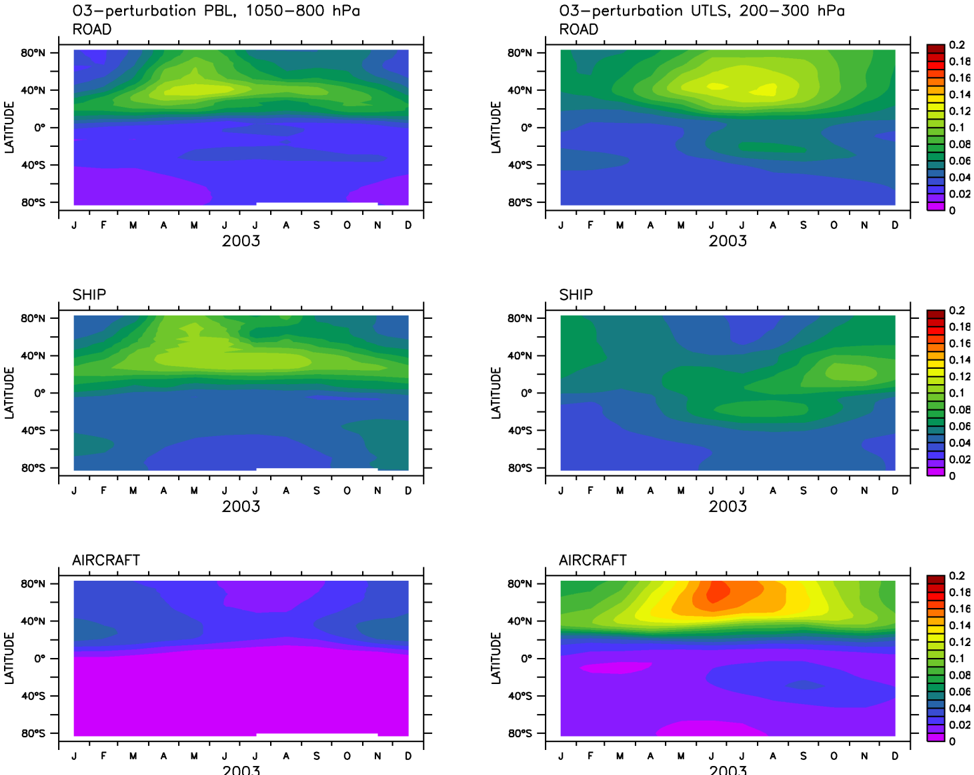
“Some models show a ‘double peak’ structure in the air traffic O3 perturbation, with maximum impacts in early summer (May) and autumn (October), whereas others only show one of those peaks (Hoor et al., 2009; Berntsen et al., 2003; Köhler et al., 2008).”
InfluentialSelf-citationGlobal air quality and climate
Fiore, A. M., Naik, V., Spracklen, D. V., Steiner, A., Unger, N., Prather, M., Bergmann, D., Cameron-Smith, P. J., Cionni, I., Collins, W. J., et al. (2012) · Chemical Society Reviews · doi:10.1039/c2cs35095e · Cited by 521
Self-citationTransport impacts on atmosphere and climate: Land transport
Uherek, E., Halenka, T., Borken-Kleefeld, J., Balkanski, Y., Berntsen, T., Borrego, C., Gauss, M., Hoor, P., Juda-Rezler, K., & Lelieveld, J. (2010) · Atmospheric Environment · doi:10.1016/j.atmosenv.2010.01.002 · Cited by 378
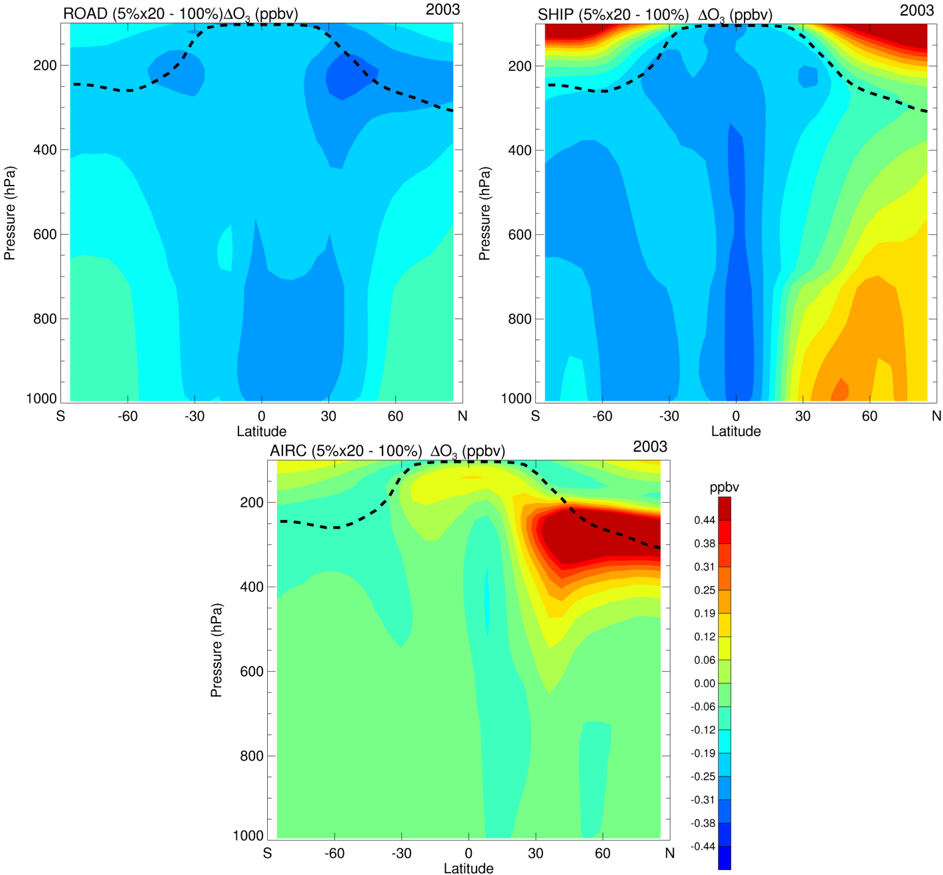
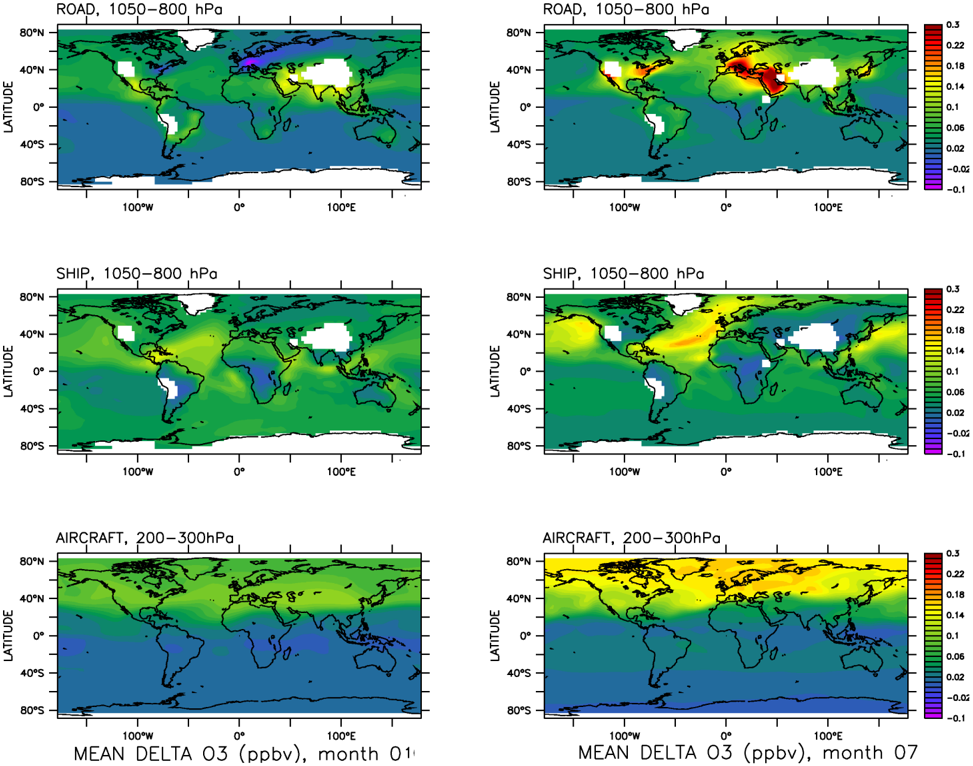
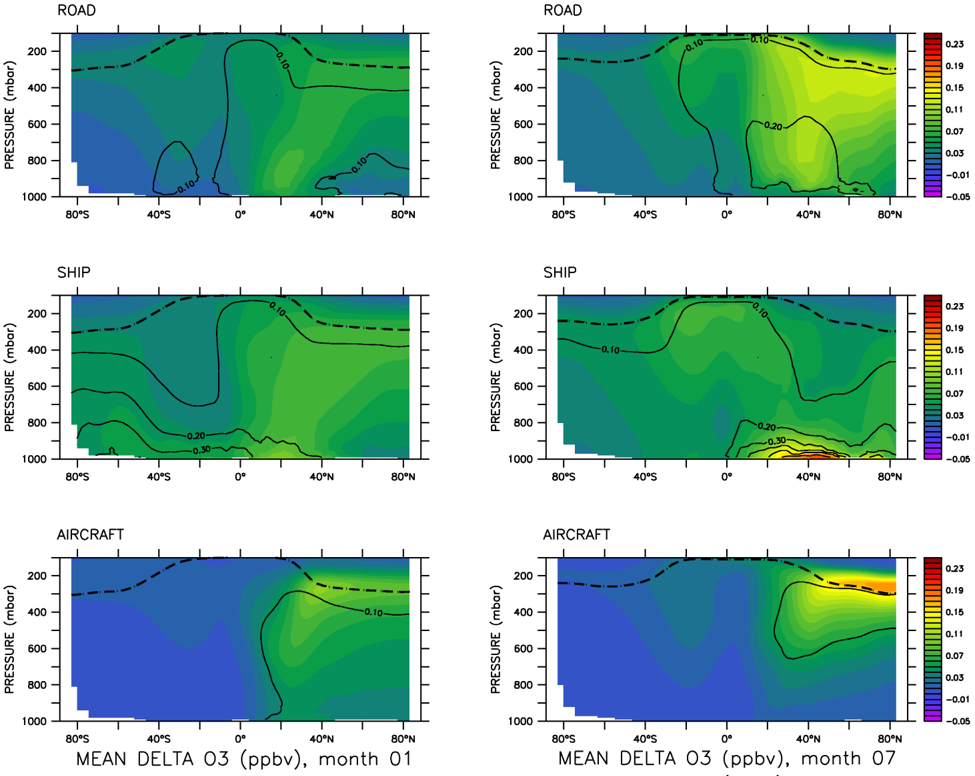
“Mean perturbations of ozone (ppbv) in the lower troposphere (surface e 800 hPa) during January (left) and July (right) applying a 5% emission reduction (Hoor et al., 2009).”
BackgroundMethodInfluentialSelf-citationAtmospheric composition change: Climate–Chemistry interactions
Isaksen, I. S. A., Granier, C., Myhre, G., Berntsen, T. K., Dalsøren, S. B., Gauss, M., Klimont, Z., Benestad, R., Bousquet, P., Collins, W., et al. (2009) · Atmospheric Environment · doi:10.1016/j.atmosenv.2009.08.003 · Cited by 278
“A large number of model/measurement comparisons have been performed, which clearly show that model performance and our understanding of processes have improved (Isaksen et al., 2005; Textor et al., 2006; Kinne et al., 2006; Schulz et al., 2006; Hoor et al., 2009).”
BackgroundInfluentialSelf-citationHolmes, C. D., Prather, M. J., Søvde, O. A., & Myhre, G. (2013) · Atmospheric chemistry and physics · doi:10.5194/acp-13-285-2013 · Cited by 232
Self-citationAssessing the environmental impacts of aircraft noise and emissions
Mahashabde, A., Wolfe, P., Ashok, A., Dorbian, C., He, Q., Fan, A., Lukachko, S., Mozdzanowska, A., Wollersheim, C., Barrett, S. R. H., et al. (2011) · Progress in Aerospace Sciences · doi:10.1016/j.paerosci.2010.04.003 · Cited by 169
Neu, J. L., & Prather, M. J. (2012) · Atmospheric chemistry and physics · doi:10.5194/acp-12-3289-2012 · Cited by 151
Self-citationPozzer, A., de Meij, A., Pringle, K. J., Tost, H., Doering, U. M., van Aardenne, J., & Lelieveld, J. (2012) · Atmospheric Chemistry and Physics · doi:10.5194/acp-12-961-2012 · Cited by 133
Self-citationMasiol, M., Agostinelli, C., Formenton, G., Tarabotti, E., & Pavoni, B. (2014) · The Science of The Total Environment · doi:10.1016/j.scitotenv.2014.06.122 · Cited by 142
Mitigating the Climate Impact from Aviation: Achievements and Results of the DLR WeCare Project
Grewe, V., Dahlmann, K., Flink, J., Frömming, C., Ghosh, R., Gierens, K., Heller, R., Hendricks, J., Jöckel, P., Kaufmann, S., et al. (2017) · Aerospace · doi:10.3390/aerospace4030034 · Cited by 106
Self-citationAn atmospheric chemist in search of the tropopause
Prather, M. J., Zhu, X., Tang, Q., Hsu, J., & Neu, J. L. (2011) · Journal of Geophysical Research · doi:10.1029/2010jd014939 · Cited by 123
Self-citationDahlmann, K., Grewe, V., Frömming, C., & Burkhardt, U. (2016) · Transportation Research Part D: Transport and Environment · doi:10.1016/j.trd.2016.03.006 · Cited by 106
Self-citationQuantifying the contributions of individual NOx sources to the trend in ozone radiative forcing
Dahlmann, K., Grewe, V., Ponater, M., & Matthes, S. (2011) · Atmospheric Environment · doi:10.1016/j.atmosenv.2011.02.071 · Cited by 134
“6 from Hoor et al. (2009) scaled to 100%.”
MethodInfluentialSelf-citationDessens, O., Köhler, M. O., Rogers, H. L., Jones, R. L., & Pyle, J. A. (2014) · Transport Policy · doi:10.1016/j.tranpol.2014.02.014 · Cited by 120
Self-citationMarginal climate and air quality costs of aviation emissions
Grobler, C., Wolfe, P. J., Dasadhikari, K., Dedoussi, I. C., Allroggen, F., Speth, R. L., Eastham, S. D., Agarwal, A., Staples, M. D., Sabnis, J. S., et al. (2019) · Environmental Research Letters · doi:10.1088/1748-9326/ab4942 · Cited by 123
Butler, T. M., Lupaşcu, A., & Nalam, A. (2020) · Atmospheric chemistry and physics · doi:10.5194/acp-20-10707-2020 · Cited by 121
Strong atmospheric chemistry feedback to climate warming from Arctic methane emissions
Isaksen, I. S. A., Gauss, M., Myhre, G., Anthony, K. W., & Ruppel, C. D. (2011) · Global Biogeochemical Cycles · doi:10.1029/2010gb003845 · Cited by 110
Self-citationSøvde, O. A., Matthes, S., Skowron, A., Iachetti, D., Lim, L., Owen, B., Hodnebrog, Ø., Di Genova, G., Pitari, G., Lee, D. S., et al. (2014) · Atmospheric Environment · doi:10.1016/j.atmosenv.2014.06.049 · Cited by 88
Self-citationThe chemical transport model Oslo CTM3
Søvde, O. A., Prather, M. J., Isaksen, I. S. A., Berntsen, T. K., Stordal, F., Zhu, X., Holmes, C. D., & Hsu, J. (2012) · Geoscientific Model Development · doi:10.5194/gmd-5-1441-2012 · Cited by 88
Self-citationButler, T., Lupascu, A., & Nalam, A. (2020) · doi:10.5194/acp-2020-436 · Cited by 101
Global temperature change from the transport sectors: Historical development and future scenarios
Skeie, R. B., Fuglestvedt, J. S., Berntsen, T. K., Lund, M. T., Myhre, G., & Rypdal, K. (2009) · Atmospheric Environment · doi:10.1016/j.atmosenv.2009.05.025 · Cited by 101
Self-citationRighi, M., Hendricks, J., & Sausen, R. (2013) · Atmospheric chemistry and physics · doi:10.5194/acp-13-9939-2013 · Cited by 96
Self-citationPopulation-weighted exposure to PM2.5 pollution in China: An integrated approach
Aunan, K., Ma, Q., Lund, M. T., & Wang, S. (2018) · Environment International · doi:10.1016/j.envint.2018.07.042 · Cited by 97
Grewe, V., Tsati, E., & Hoor, P. (2010) · Geoscientific Model Development · doi:10.5194/gmd-3-487-2010 · Cited by 85
Self-citationRadiative forcing due to changes in ozone and methane caused by the transport sector
Myhre, G., Shine, K. P., Rädel, G., Gauss, M., Isaksen, I. S. A., Tang, Q., Prather, M. J., Williams, J. E., van Velthoven, P., Dessens, O., et al. (2011) · Atmospheric Environment · doi:10.1016/j.atmosenv.2010.10.001 · Cited by 93
“The RF results are based on radiation calculations using the 100% perturbation in O3 that is derived by multiplying the ozone change resulting from the 5% perturbation in emissions by 20 (Grewe et al., 2010; Hoor et al., 2009).”
BackgroundMethodInfluentialSelf-citationA quasi chemistry-transport model mode for EMAC
Deckert, R., Jöckel, P., Grewe, V., Gottschaldt, K.-D., & Hoor, P. M. (2011) · Geoscientific model development · doi:10.5194/gmd-4-195-2011 · Cited by 89
Self-citationGrewe, V., Tsati, E., Mertens, M., Frömming, C., & Jöckel, P. (2017) · Geoscientific model development · doi:10.5194/gmd-10-2615-2017 · Cited by 88
Self-citationFrömming, C., Ponater, M., Dahlmann, K., Grewe, V., Lee, D. S., & Sausen, R. (2012) · Journal of Geophysical Research Atmospheres · doi:10.1029/2012jd018204 · Cited by 85
Self-citationKöhler, M. O., Rädel, G., Shine, K. P., Rogers, H. L., & Pyle, J. A. (2012) · Atmospheric Environment · doi:10.1016/j.atmosenv.2012.09.013 · Cited by 87
Self-citationWilliams, J. E., van Velthoven, P. F. J., & Brenninkmeijer, C. A. M. (2013) · Atmospheric Chemistry and Physics · doi:10.5194/acp-13-2857-2013 · Cited by 81
Terrenoire, E., Hauglustaine, D. A., Cohen, Y., Cozic, A., Valorso, R., Lefèvre, F., & Matthes, S. (2022) · Atmospheric chemistry and physics · doi:10.5194/acp-22-11987-2022 · Cited by 83
Self-citationInfluence of the North Atlantic Oscillation on air pollution transport
Christoudias, T., Pozzer, A., & Lelieveld, J. (2012) · Atmospheric chemistry and physics · doi:10.5194/acp-12-869-2012 · Cited by 81
Self-citationAttributing ozone and its precursors to land transport emissions in Europe and Germany
Mertens, M., Kerkweg, A., Grewe, V., Jöckel, P., & SAUSEN, R. (2020) · Atmospheric chemistry and physics · doi:10.5194/acp-20-7843-2020 · Cited by 79
Self-citationGlobal Climate and Human Health Effects of the Gasoline and Diesel Vehicle Fleets
Huang, Y., Unger, N., Harper, K., & Heyes, C. (2020) · GeoHealth · doi:10.1029/2019gh000240 · Cited by 78
Impacts of aviation fuel sulfur content on climate and human health
Kapadia, Z. Z., Spracklen, D. V., Arnold, S. R., Borman, D. J., Mann, G. W., Pringle, K. J., Monks, S. A., Reddington, C. L., Benduhn, F., Rap, A., et al. (2016) · Atmospheric chemistry and physics · doi:10.5194/acp-16-10521-2016 · Cited by 75
Uncertainties in climate assessment for the case of aviation NO
Holmes, C. D., Tang, Q., & Prather, M. J. (2011) · Proceedings of the National Academy of Sciences · doi:10.1073/pnas.1101458108 · Cited by 74
Self-citationSkill in forecasting extreme ozone pollution episodes with a global atmospheric chemistry model
Schnell, J. L., Holmes, C. D., Jangam, A., & Prather, M. J. (2014) · Atmospheric chemistry and physics · doi:10.5194/acp-14-7721-2014 · Cited by 74
Self-citationRevisiting the contribution of land transport and shipping emissions to tropospheric ozone
Mertens, M., Grewe, V., Rieger, V., & Jöckel, P. (2018) · Atmospheric chemistry and physics · doi:10.5194/acp-18-5567-2018 · Cited by 74
Self-citationThe climate impact of ship NO x emissions: an improved estimate accounting for plume chemistry
Holmes, C. D., Prather, M. J., & Vinken, G. C. M. (2014) · Atmospheric chemistry and physics · doi:10.5194/acp-14-6801-2014 · Cited by 70
Self-citationFrömming, C., Grewe, V., Brinkop, S., Jöckel, P., Haslerud, A. S., Rosanka, S., van Manen, J., & Matthes, S. (2021) · Atmospheric chemistry and physics · doi:10.5194/acp-21-9151-2021 · Cited by 72
Self-citationSpecific Climate Impact of Passenger and Freight Transport
Borken, J., Berntsen, T. K., & Fuglestvedt, J. S. (2010) · Environmental Science & Technology · doi:10.1021/es9039693 · Cited by 68
The contribution of aviation NO x emissions to climate change: are we ignoring methodological flaws?
Grewe, V., Matthes, S., & Dahlmann, K. (2019) · Environmental Research Letters · doi:10.1088/1748-9326/ab5dd7 · Cited by 67
Self-citationAtmospheric ozone and methane in a changing climate
Isaksen, I., Berntsen, T., Dalsøren, S., Eleftheratos, K., Orsolini, Y., Rognerud, B., Stordal, F., Søvde, O., Zerefos, C., & Holmes, C. (2014) · Atmosphere · doi:10.3390/atmos5030518 · Cited by 64
Self-citationEmission metrics for quantifying regional climate impacts of aviation
Lund, M. T., Aamaas, B., Berntsen, T., Bock, L., Burkhardt, U., Fuglestvedt, J. S., & Shine, K. P. (2017) · Earth System Dynamics · doi:10.5194/esd-8-547-2017 · Cited by 63
Self-citationEnvironmental impacts of shipping in 2030 with a particular focus on the Arctic region
Dalsøren, S. B., Samset, B. H., Myhre, G., Corbett, J. J., Minjares, R., Lack, D., & Fuglestvedt, J. S. (2013) · Atmospheric Chemistry and Physics · doi:10.5194/acp-13-1941-2013 · Cited by 50
Self-citationSkowron, A., Lee, D. S., & León, R. R. D. (2013) · Atmospheric Environment · doi:10.1016/j.atmosenv.2013.03.034 · Cited by 60
Estimating the climate and air quality benefits of aviation fuel and emissions reductions
Dorbian, C. S., Wolfe, P. J., & Waitz, I. A. (2011) · Atmospheric Environment · doi:10.1016/j.atmosenv.2011.02.025 · Cited by 59
Stratton, R. W., Wolfe, P. J., & Hileman, J. I. (2011) · Environmental Science & Technology · doi:10.1021/es2017522 · Cited by 51
Getting a Better Estimate of an Atmospheric Radical
Isaksen, I. S. A., & Dalsøren, S. B. (2011) · Science · doi:10.1126/science.1199773 · Cited by 56
Self-citationEconomic and environmental assessment of liquefied natural gas as a supplemental aircraft fuel
Withers, M. R., Malina, R., Gilmore, C. K., Gibbs, J. M., Trigg, C., Wolfe, P. J., Trivedi, P., & Barrett, S. R. H. (2014) · Progress in Aerospace Sciences · doi:10.1016/j.paerosci.2013.12.002 · Cited by 53
Satellite measurements of formaldehyde linked to shipping emissions
Marbach, T., Beirle, S., Platt, U., Hoor, P. M., Wittrock, F., Richter, A., Vrekoussis, M., Grzegorski, M., Burrows, J. P., & Wagner, T. (2009) · Atmospheric chemistry and physics · doi:10.5194/acp-9-8223-2009 · Cited by 52
Self-citationShip emitted NO 2 in the Indian Ocean: comparison of model results with satellite data
Franke, K., Richter, A., Bovensmann, H., Eyring, V., Jöckel, P., Hoor, P. M., & Burrows, J. P. (2009) · Atmospheric chemistry and physics · doi:10.5194/acp-9-7289-2009 · Cited by 51
Self-citationOlsen, S. C., Brasseur, G. P., Wuebbles, D. J., Barrett, S. R. H., Dang, H., Eastham, S. D., Jacobson, M. Z., Khodayari, A., Selkirk, H., Sokolov, A., et al. (2013) · Geophysical Research Letters · doi:10.1002/2013gl057660 · Cited by 50
“A recent review of uncertainties in aviation O 3 -CH 4 radiative forcing estimates reports a short-lived O 3 RF due to aviation of 27.3 ± 9.7 mW/m 2 and CH 4 RF of (cid:1) 16.1 ± 5.6 mW/m 2 scaled to a 1 Tg-N/yr emission [ Holmes et al ., 2011].”
InfluentialKoffi, B., Szopa, S., Cozic, A., Hauglustaine, D., & van Velthoven, P. (2010) · Atmospheric Chemistry and Physics · doi:10.5194/acp-10-11681-2010 · Cited by 44
Self-citationGlobal Climate Forcing by Criteria Air Pollutants
Unger, N. (2011) · Annual Review of Environment and Resources · doi:10.1146/annurev-environ-082310-100824 · Cited by 53
Global climate impact of civil aviation for standard and desulfurized jet fuel
Unger, N. (2011) · Geophysical Research Letters · doi:10.1029/2011gl049289 · Cited by 49
Global reactive gases forecasts and reanalysis in the MACC project
Stein, O., Flemming, J., Inness, A., Kaiser, J. W., & Schultz, M. G. (2012) · Journal of Integrative Environmental Sciences · doi:10.1080/1943815x.2012.696545 · Cited by 44
Quantitative evaluation of ozone and selected climate parameters in a set of EMAC simulations
Righi, M., Eyring, V., Gottschaldt, K.-D., Klinger, C., Frank, F., Jöckel, P., & Cionni, I. (2015) · Geoscientific model development · doi:10.5194/gmd-8-733-2015 · Cited by 45
Self-citationOlivié, D. J. L., Cariolle, D., Teyssèdre, H., Salas, D., Voldoire, A., Clark, H., Saint-Martin, D., Michou, M., Karcher, F., Balkanski, Y., et al. (2012) · Atmospheric Chemistry and Physics · doi:10.5194/acp-12-1449-2012 · Cited by 39
Self-citationDalsøren, S. B., Eide, M. S., Myhre, G., Endresen, Ø., Isaksen, I. S. A., & Fuglestvedt, J. S. (2010) · Environmental Science & Technology · doi:10.1021/es902628e · Cited by 35
Self-citationNiklaß, M., Grewe, V., Gollnick, V., & Dahlmann, K. (2021) · Climate Policy · doi:10.1080/14693062.2021.1950602 · Cited by 40
Self-citationAnger-Kraavi, A., Dessens, O., Xi, F., Barker, T., & Wu, R. (2015) · AMBIO · doi:10.1007/s13280-015-0700-6 · Cited by 39
Self-citationRieger, V., Mertens, M., & Grewe, V. (2018) · Geoscientific model development · doi:10.5194/gmd-11-2049-2018 · Cited by 41
Self-citationHodnebrog, Ø., Berntsen, T. K., Dessens, O., Gauss, M., Grewe, V., Isaksen, I. S. A., Koffi, B., Myhre, G., Olivié, D., Prather, M. J., et al. (2011) · Atmospheric chemistry and physics · doi:10.5194/acp-11-11293-2011 · Cited by 36
Self-citationQuantifying the climate impact of emissions from land-based transport in Germany
Hendricks, J., Righi, M., Dahlmann, K., Gottschaldt, K.-D., Grewe, V., Ponater, M., SAUSEN, R., Heinrichs, D., Winkler, C. G., Wolfermann, A., et al. (2017) · Transportation Research Part D Transport and Environment · doi:10.1016/j.trd.2017.06.003 · Cited by 37
Self-citationGlobalisation, transport and the environment
Braathens, N.-A. (2010) · Choice Reviews Online · doi:10.5860/choice.47-6975 · Cited by 35
Dai, J., & Wang, T. (2021) · Atmospheric chemistry and physics · doi:10.5194/acp-21-8747-2021 · Cited by 33
“On the open ocean, ship-generated NO x reacts with VOCs emitted from ships and from the background atmosphere and enhances O 3 formation (Corbett and Fischbeck, 1997, Lawrence and Crutzen, 1999, Aksoyoglu et al., 2016, Huszar et al., 2010, Hoor et al., 2009).”
BackgroundVillarroya, A., Persson, J., & Puig, J. (2014) · Environmental Impact Assessment Review · doi:10.1016/j.eiar.2013.12.003 · Cited by 35
Correlating tropospheric column ozone with tropopause folds: the Aura-OMI satellite data
Tang, Q., & Prather, M. J. (2010) · Atmospheric chemistry and physics · doi:10.5194/acp-10-9681-2010 · Cited by 33
Self-citationObserved and modelled record ozone decline over the Arctic during winter/spring 2011
Balis, D., Isaksen, I. S. A., Zerefos, C., Zyrichidou, I., Eleftheratos, K., Tourpali, K., Bojkov, R. D., Rognerud, B., Stordal, F., Søvde, O. A., et al. (2011) · Geophysical Research Letters · doi:10.1029/2011gl049259 · Cited by 32
Self-citationBarker, T., Anger-Kraavi, A., Dessens, O., Pollitt, H., Rogers, H. L., Scrieciu, Ş., Jones, R. L., & Pyle, J. A. (2010) · Environmental Science & Policy · doi:10.1016/j.envsci.2010.09.008 · Cited by 31
Self-citationSource attribution of near-surface ozone trends in the United States during 1995–2019
Li, P., Yang, Y., Wang, H., Li, S., Li, K., Wang, P., Liao, H., & Liao, H. (2023) · Atmospheric chemistry and physics · doi:10.5194/acp-23-5403-2023 · Cited by 32
Effects of decarbonising international shipping and aviation on climate mitigation and air pollution
Dessens, O., Anger-Kraavi, A., Barker, T., & Pyle, J. A. (2014) · Environmental Science & Policy · doi:10.1016/j.envsci.2014.07.007 · Cited by 31
Self-citationWilliams, J., Custer, T., Riede, H., Sander, R., Jöckel, P., Hoor, P. M., Pozzer, A., Wong-Zehnpfennig, S., Beygi, Z. H., Fischer, H., et al. (2010) · Environmental Chemistry · doi:10.1071/en09154 · Cited by 30
Self-citationImpact of coupled NOx/aerosol aircraft emissions on ozone photochemistry and radiative forcing
Pitari, G., Iachetti, D., Di Genova, G., De Luca, N., Søvde, O., Hodnebrog, Ø., Lee, D., & Lim, L. (2015) · Atmosphere · doi:10.3390/atmos6060751 · Cited by 27
Ge, Y., Solberg, S., Heal, M. R., Reimann, S., van Caspel, W. E., Hellack, B., Salameh, T., & Simpson, D. M. (2024) · Atmospheric chemistry and physics · doi:10.5194/acp-24-7699-2024 · Cited by 26
“…VOCs undergo a series of photochemical reactions that lead to the generation of ground-level ozone that has well-known adverse effects on air quality, human health, crops, and natural vegetation (Filleul et al., 2006; Hoor et al., 2009; Mills et al., 2018; Li et al., 2019; Ember-son, 2020 .”
BackgroundHuszár, P., Teyssèdre, H., Michou, M., Voldoire, A., Olivié, D., Saint‐Martin, D., Cariolle, D., Sénési, S., y Mélia, D. S., Alias, A., et al. (2013) · Atmospheric chemistry and physics · doi:10.5194/acp-13-10027-2013 · Cited by 26
Khodayari, A., Olsen, S. C., Wuebbles, D. J., & Phoenix, D. B. (2015) · Atmospheric Environment · doi:10.1016/j.atmosenv.2015.04.070 · Cited by 23
How Have Divergent Global Emission Trends Influenced Long‐Range Transported Ozone to North America?
Mathur, R., Kang, D., Napelenok, S. L., Xing, J., Hogrefe, C., Sarwar, G., Itahashi, S., & Henderson, B. H. (2022) · Journal of Geophysical Research Atmospheres · doi:10.1029/2022jd036926 · Cited by 23
Global sensitivity of aviation NO x effects to the HNO 3 -forming channel of the HO 2 + NO reaction
Gottschaldt, K., Voigt, C., Jöckel, P., Righi, M., Deckert, R., & Dietmüller, S. (2013) · Atmospheric chemistry and physics · doi:10.5194/acp-13-3003-2013 · Cited by 22
Self-citationFroidevaux, L., Kinnison, D. E., Gaubert, B., Schwartz, M., Livesey, N. J., Read, W. G., Bardeen, C., Ziemke, J. R., & Fuller, R. A. (2025) · Atmospheric chemistry and physics · doi:10.5194/acp-25-597-2025 · Cited by 22
Are contributions of emissions to ozone a matter of scale? – a study using MECO(n) (MESSy v2.50)
Mertens, M., Kerkweg, A., Grewe, V., Jöckel, P., & SAUSEN, R. (2020) · Geoscientific model development · doi:10.5194/gmd-13-363-2020 · Cited by 21
Self-citationEvaluation of aviation NOx-induced radiative forcings for 2005 and 2050
Khodayari, A., Olsen, S. C., & Wuebbles, D. J. (2014) · Atmospheric Environment · doi:10.1016/j.atmosenv.2014.03.044 · Cited by 16
Future impact of traffic emissions on atmospheric ozone and OH based on two scenarios
Hodnebrog, Ø., Berntsen, T. K., Dessens, O., Gauss, M., Grewe, V., Isaksen, I. S. A., Koffi, B., Myhre, G., Olivié, D., Prather, M. J., et al. (2012) · Atmospheric chemistry and physics · doi:10.5194/acp-12-12211-2012 · Cited by 20
Self-citationSong, C. H., Kim, H. S., von Glasow, R., Brimblecombe, P., Kim, J., Park, R. J., Woo, J., & Kim, Y. H. (2010) · Atmospheric chemistry and physics · doi:10.5194/acp-10-11969-2010 · Cited by 20
Khodayari, A., Tilmes, S., Olsen, S. C., Phoenix, D. B., Wuebbles, D. J., Lamarque, J., & Chen, C. (2014) · Atmospheric chemistry and physics · doi:10.5194/acp-14-9925-2014 · Cited by 20
Nalam, A., Lupaşcu, A., Ansari, T. U., & Butler, T. M. (2025) · Atmospheric chemistry and physics · doi:10.5194/acp-25-5287-2025 · Cited by 23
“6(a), Table 2) directly into the free troposphere, due to being emitted aloft (Hoor et al., 2009, Dahlmann et al., 2011).”
The impact of NOx emissions from lightning on the production of aviation-induced ozone
Khodayari, A., Vitt, F. M., Phoenix, D. B., & Wuebbles, D. J. (2018) · Atmospheric Environment · doi:10.1016/j.atmosenv.2018.05.057 · Cited by 19
Performance Assessment of an Integrated Environmental Control System of Civil Hypersonic Vehicles
Viola, N., Ferretto, D., Fusaro, R., & Scigliano, R. (2022) · Aerospace · doi:10.3390/aerospace9040201 · Cited by 19
Mertens, M., Brinkop, S., Graf, P., Grewe, V., Hendricks, J., Jöckel, P., Lanteri, A., Matthes, S., Rieger, V., Righi, M., et al. (2024) · Atmospheric chemistry and physics · doi:10.5194/acp-24-12079-2024 · Cited by 17
“This increase is caused by an increase in emissions due to the combination of increased mobility demand, a lack of public transport, and the failure of effective emission control.”
BackgroundMethodInfluentialSelf-citationTang, Q., & Prather, M. J. (2012) · Atmospheric chemistry and physics · doi:10.5194/acp-12-2357-2012 · Cited by 17
Self-citationNationwide shift in CO concentration levels in urban areas of Korea after 2000
Kim, K., & Shon, Z. (2011) · Journal of Hazardous Materials · doi:10.1016/j.jhazmat.2011.01.099 · Cited by 17
The impact of global aviation NOx emissions on tropospheric composition changes from 2005 to 2011
Wasiuk, D. K., Khan, M. A. H., Shallcross, D. E., & Lowenberg, M. (2016) · Atmospheric Research · doi:10.1016/j.atmosres.2016.03.012 · Cited by 17
Thor, R., Mertens, M., Matthes, S., Righi, M., Hendricks, J., Brinkop, S., Graf, P., Grewe, V., Jöckel, P., & Smith, S. J. (2023) · Geoscientific model development · doi:10.5194/gmd-16-1459-2023 · Cited by 19
“, 2005) for the European QUANTIFY project (Hoor et al., 2009), and is not affected by the regridding performed within CMIP6 (Feng et al.”
Self-citationImpact of Marine Shipping Emissions on Ozone Pollution During the Warm Seasons in China
Zheng, Y., Jiang, F., Feng, S., Liu, H., Wang, X., Tian, X., Ying, C., Jia, M., Shen, Y., Lyu, X., et al. (2024) · Journal of Geophysical Research Atmospheres · doi:10.1029/2024jd040864 · Cited by 14
“According to Hoor et al. (2009), shipping emissions have a significant impact on O 3 and OH.”
Pitari, G., Cionni, I., Di Genova, G., Søvde, O. A., & Lim, L. (2017) · Meteorologische Zeitschrift · doi:10.1127/metz/2016/0776 · Cited by 12
Boundary layer ozone pollution caused by future aircraft emissions
Hauglustaine, D. A., & Koffi, B. (2012) · Geophysical Research Letters · doi:10.1029/2012gl052008 · Cited by 12
Self-citationAircraft Emissions at Cruise and Plume Processes
Voigt, C., Jurkat, T., Schlager, H., Schäuble, D., Petzold, A., & Schumann, U. (2012) · Research topics in aerospace · doi:10.1007/978-3-642-30183-4_41 · Cited by 12
Metadata
- Authors
- Hoor, P., Borken-Kleefeld, J., Caro, D., Dessens, O., Endresen, O., Gauss, M., Grewe, V., Hauglustaine, D., Isaksen, I. S. A., Jöckel, P., Lelieveld, J., Myhre, G., Meijer, E., Olivie, D., Prather, M., Schnadt Poberaj, C., Shine, K. P., Staehelin, J., Tang, Q., van Aardenne, J., van Velthoven, P., & Sausen, R.
- Affiliations
- Max Planck Institute for Chemistry (DE)
- Laboratoire des Sciences du Climat et de l'Environnement (FR)
- University of Cambridge (GB)
- University of Oslo (NO)
- Deutsches Zentrum für Luft- und Raumfahrt e. V. (DLR) (DE)
- Royal Netherlands Meteorological Institute (NL)
- University of California, Irvine (US)
- University of Reading (GB)
- ETH Zurich (CH)
- ORCID
- Venue
- Atmospheric chemistry and physics
- Publisher
- Copernicus GmbH
- Published
- 2009-05-14
- Volume
- 9
- Issue
- 9
- Pages
- 3113-3136
- ISSN
- 1680-7316 (ISSN-L)
- 1680-7324
- OpenAlex
- W2160324942
- Cited by
- 160
- References
- 79
- Citations by year
- 2026: 8 · 2025: 7 · 2024: 5 · 2023: 4 · 2022: 11 · 2021: 9 · 2020: 6 · 2019: 2 · 2018: 5 · 2017: 6 · 2016: 3 · 2015: 5 · 2014: 16 · 2013: 10 · 2012: 18
- FWCI
- 12.97
- Type
- journal article
- Language
- en
- Open access
- gold
- doi.org
- Licence
- Locations
- Atmospheric chemistry and physics (publishedVersion, cc-by)
- Repository for Publications and Research Data (ETH Zurich) (publishedVersion, cc-by)
- elib (German Aerospace Center) (acceptedVersion)
- HAL (submittedVersion, cc-by)
- DOAJ (DOAJ: Directory of Open Access Journals) (submittedVersion, cc-by-sa)
- Max Planck Institute for Plasma Physics (submittedVersion)
- UCL Discovery (University College London) (submittedVersion)
- eScholarship (California Digital Library) (submittedVersion, cc-by)
- MPG.PuRe (Max Planck Society) (submittedVersion)
- ETH Zürich Research Collection (cc-by)
- Funders
- European Commission
- Max-Planck-Gesellschaft
- Topics
- Physical Sciences › Earth and Planetary Sciences › Atmospheric Science › Atmospheric chemistry and aerosols
- Physical Sciences › Earth and Planetary Sciences › Atmospheric Science › Atmospheric Ozone and Climate
- Physical Sciences › Environmental Science › Global and Planetary Change › Atmospheric and Environmental Gas Dynamics
- Keywords
- vehicle emissions, atmospheric ozone, hydroxyl radicals, ship emissions, aviation emissions, road traffic emissions, emission sensitivity, upper troposphere and lower stratosphere, methane lifetime, radiative forcing, emission inventory, marine boundary layer, Southern Hemisphere, atmospheric chemistry modeling
About these checks
Registry, retraction, Cites and statistics results are computed, not judged, with one exception: a printed reference that no index lists is read once by a model before it counts as a citation error. Claims are extracted by a model and kept only when their quote appears verbatim in the text; each cited source is then checked, with a model’s help, for whether it says what the claim relies on. Those verdicts can be wrong — read the claim’s quote and the cited source before relying on one.
Statistics and arithmetic are recomputed, not judged.
Confidence bands are shown only for fields calibrated on our annotated test set. None is calibrated yet, so no band is shown.
What counts as a claim ›How we measure confidence ›How we check this ›
Are you an author, or do you see a problem with this page? Request a review
Data sources
Bibliographic data: Semantic Scholar, OpenAlex, Crossref.
Contains information from the Semantic Scholar Academic Graph Datasets, made available under the ODC Attribution License (ODC-BY 1.0).
Semantic Scholar’s data is described in: Kinney, R., et al. (2023). The Semantic Scholar Open Data Platform. arXiv:2301.10140.
