

Willingness to Communicate and Second Language Speech Fluency: An Idiodynamic Investigation of Attractor States
Open accessThe DOI matches its Crossref record; 53 of the 54 references it cites were found in a registry or an index; none of the 85 sources its claims cite is checked for support yet.
Abstract
Willingness to communicate (WTC) has recently been researched as a dynamic variable, with some investigations viewing it as a complex dynamic system (CDS). One important property associated with CDS is the notion of attractor states, which are characterized by stable patterns of behavior. The present study employed an idiodynamic method to monitor per-second WTC changes with 20 participants during three-minute speaking tasks. Using idiodynamic graphs illustrating the WTC dynamics, patterns of stability were identified as the unit of analysis for WTC attractors. Temporal measures of the utterances that coincided with the WTC attractors were also examined. Results demonstrated that attractors were likely to emerge in both WTC and L2 fluency, and largely depended on two categories of content-related and linguistic-cognitive factors. Data analysis also indicates that WTC and L2 fluency exhibited parallel dynamics in most of the cases. The study’s findings yield pedagogical implications that are discussed at the end.
Overview
CoChat Summary
TL;DR
This idiodynamic study monitored per-second willingness to communicate (WTC) and L2 speech fluency in 20 Farsi-speaking ESL learners during three-minute speaking tasks. It found that WTC attractors emerged mainly from content-related and linguistic-cognitive factors, and that WTC and fluency showed parallel dynamics in most cases.
Key findings
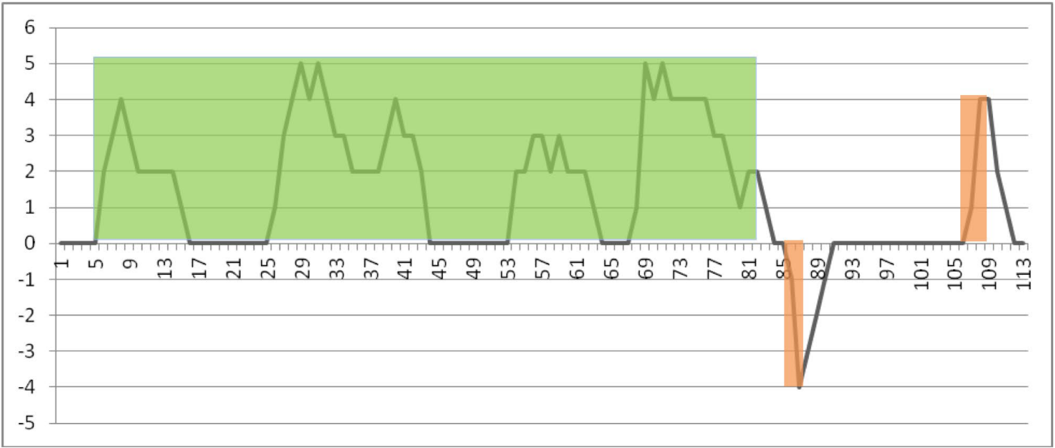
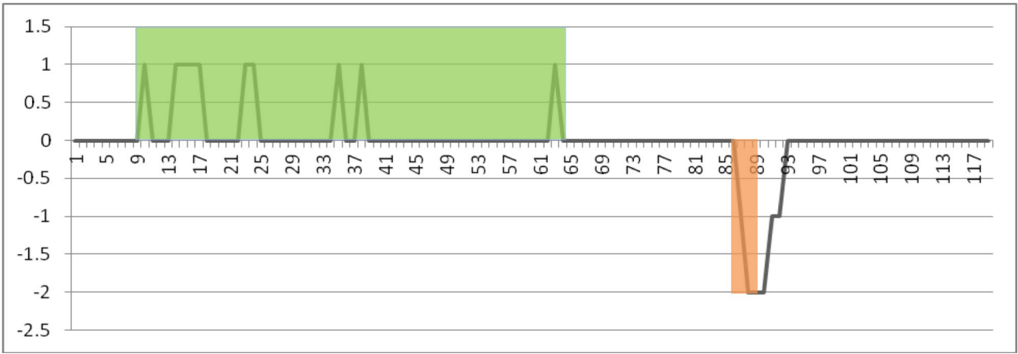
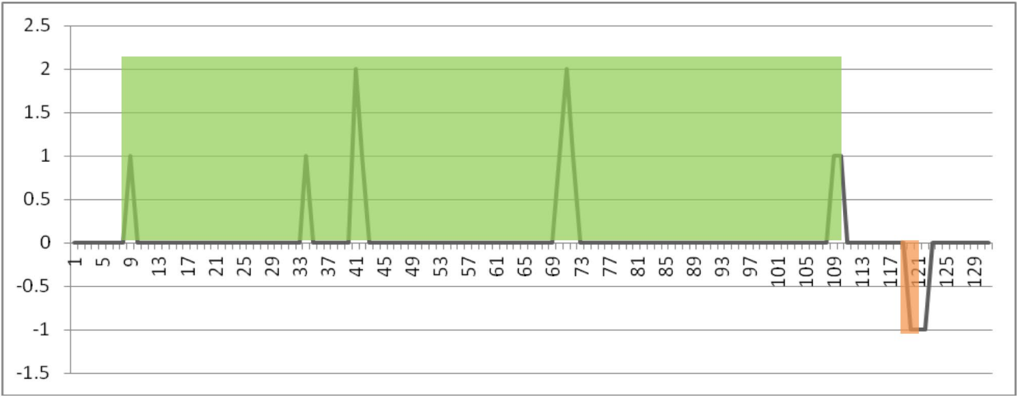
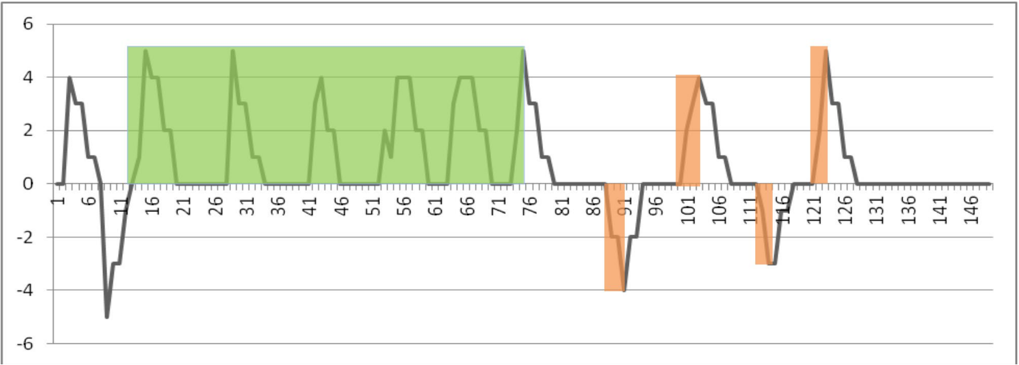
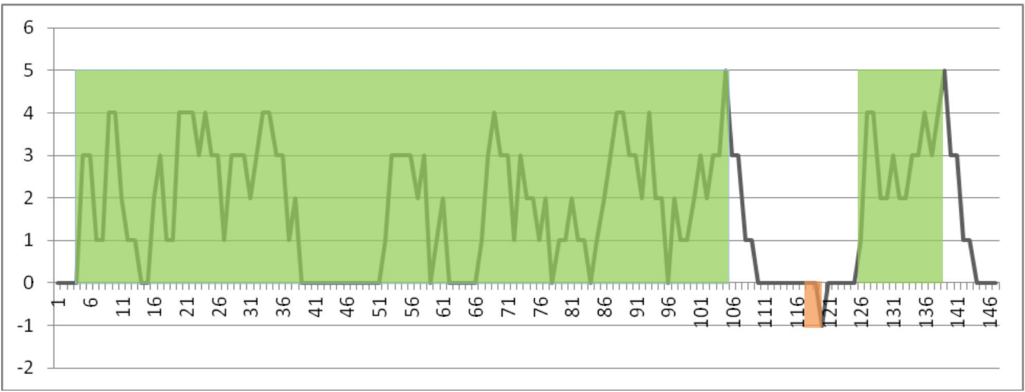
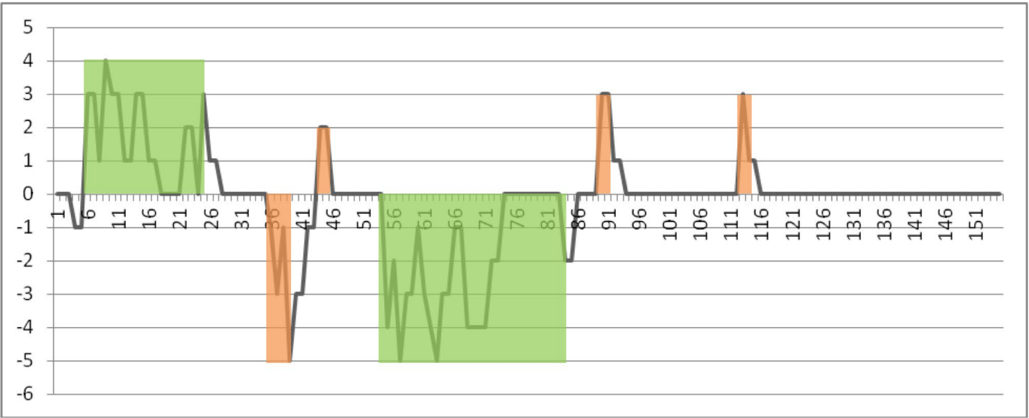
- Across 80 idiodynamic graphs, 18 graphs from 11 participants exhibited WTC attractors; most attractors involved WTC rising and remaining high for several seconds to over a minute, with very few low-WTC attractors observed.
- Seven factor categories contributed to WTC attractors or perturbations: (lack of) supporting ideas (25 total: 15 attractors, 10 perturbations), lexis-related factors (19: 9 attractors, 10 perturbations), personal experience/belief/interest/opinion (16: 15 attractors, 1 perturbation), topical knowledge or prior communication experiences (14: 11 attractors, 3 perturbations), organizational plan/preparedness (5: 5 attractors, 0 perturbations), performance-related factors (9: 4 attractors, 5 perturbations), and cognitive load in sentence construction (3: 2 attractors, 1 perturbation).
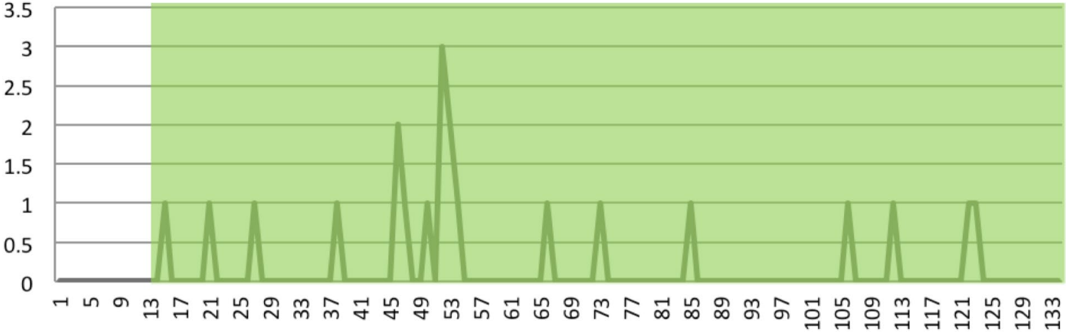
- Speech fluency tended to show the same dynamics as WTC in most cases: stable/high WTC mostly coincided with stable/fluent speech, while unstable/shifting WTC mostly coincided with unstable/dysfluent speech. Exceptions included Hero, Lili, William, and Sahra, where WTC and fluency did not align.
- The paper describes three patterns: a single attractor; an attractor followed by subsequent perturbation(s); and back-and-forth transitions between attractors and perturbations.
Methods
- Twenty participants were recruited through non-random purposive sampling; they were 25–35 years old, Farsi L1 speakers, had lived in Canada 6–12 months, were graduate students, and had IELTS scores of 6–7. Each attended four one-on-one sessions with three-minute, mainly monologic picture-description tasks while video-recorded.
- The idiodynamic method had participants view recordings immediately after each task and rate their WTC from -5 to +5; stimulated recall interviews were conducted in Farsi. Fluency was measured from audio using Praat: speech rate (SR), mean length of runs (MLR), silent pauses, and filled pauses; syllable counts were obtained via an online syllable counter.
- Attractors were defined as stable WTC patterns with no irregular changes lasting more than a few seconds. Of 80 bitmap graphs generated, 18 from 11 participants corresponded to attractors and were analyzed with co-occurring fluency. Stimulated recalls were transcribed, translated, coded in vivo in NVivo, and factors were quantified.
Limitations
- Stated: laboratory-based monologic tasks may limit the scope and ecological validity of findings; results are based on 18 of 80 graphs from 11 of 20 participants with specific demographics, so interpretations should be cautious and may exclude shorter attractors.
- Stated: participants had specific nationality, age, proficiency level, and similar length of exposure to L2 English, so findings are most applicable to similar populations; longer timescales (hours, weeks, months) are needed to better understand attractor formation.
- Evident: the study uses a small, non-random purposive sample and reports descriptive/qualitative patterns without inferential statistics, limiting generalizability beyond comparable learners and tasks.
Model-written summary. Check it against the paper before relying on it.
Integrity signals
Registry
Cites
Statistics
Figures
Verification
Claims the paper makes
0 Valid · 5 Not valid · 63 Not checked · 110 Own results and interpretations
None of the sources cited for this claim have been checked yet.
In the paper
“High WTC attractors emerged mainly because the participants were able to recall and/or formulate ideas for discussion, which is consistent with previous research (Kang, 2015;Mystkowska-Wiertelak & Pawlak, 2014;Pawlak & Mystkowska-Wiertelak, 2015;Wood, 2016).”
§ Willingness to Communicate and Second Language Speech Fluency: An Idiodynamic Investigation of Attractor States > Content-related Factors
What the sources say
- Not matchedcites Kang, 2015
An author–year citation the paper’s reference list doesn’t settle. We don’t search these by name.
- Not matchedcites Mystkowska-Wiertelak & Pawlak, 2014
An author–year citation the paper’s reference list doesn’t settle. We don’t search these by name.
- Not checked yetcites Pawlak & Mystkowska-Wiertelak, 2015 matched to “Investigating the dynamic nature of L2 willingness to communicate” (2015) source
plainstates a cause- Asserted: passes — The authors put it forward as true.
- Checkable: passes — It can be checked against evidence.
- Load-bearing: passes — The paper’s conclusions depend on it.
- Based: passes — The paper gives a reason why it holds.
- Rests on an assumption not shown here.
- Not matched
A result the paper reports from its own data — it cites no other source for it, so there is none to check. The quote shows it is in the paper.
In the paper
“A very similar scenario occurred in Lili's case as her WTC attractor was perturbed while her speech turned dysfluent slightly later (Lili 5).”
§ Willingness to Communicate and Second Language Speech Fluency: An Idiodynamic Investigation of Attractor States > Research Question 2
plainstates an associationSingle case- Asserted: passes — The authors put it forward as true.
- Checkable: passes — It can be checked against evidence.
- Load-bearing: passes — The paper’s conclusions depend on it.
- Based: passes — The paper gives a reason why it holds.
- Rests on an assumption not shown here.
A result the paper reports from its own data — it cites no other source for it, so there is none to check. The quote shows it is in the paper.
In the paper
“In the case of Majid, simultaneous content planning and sentence structuring challenges led to WTC perturbations that lasted for approximately 15 seconds (Majid 3).”
§ Willingness to Communicate and Second Language Speech Fluency: An Idiodynamic Investigation of Attractor States > Willingness to Communicate and L2 Fluency Attractors
plainstates a causeSingle case- Asserted: passes — The authors put it forward as true.
- Checkable: passes — It can be checked against evidence.
- Load-bearing: unclear — It is unclear whether the paper’s conclusions depend on it.
- Based: passes — The paper gives a reason why it holds.
- Rests on an assumption not shown here.
A result the paper reports from its own data — it cites no other source for it, so there is none to check. The quote shows it is in the paper.
In the paper
“The sixth category that triggered the high WTC attractors involved organizational factors, including participants' plans or preparedness for completing tasks (5).”
§ Willingness to Communicate and Second Language Speech Fluency: An Idiodynamic Investigation of Attractor States > Factors Leading to WTC Attractors or Perturbations
plainstates a cause- Asserted: passes — The authors put it forward as true.
- Checkable: passes — It can be checked against evidence.
- Load-bearing: unclear — It is unclear whether the paper’s conclusions depend on it.
- Based: passes — The paper gives a reason why it holds.
- Rests on an assumption not shown here.
A result the paper reports from its own data — it cites no other source for it, so there is none to check. The quote shows it is in the paper.
In the paper
“WTC attractors and perturbations were also observed due to participants' self-perceived performance (8).”
§ Willingness to Communicate and Second Language Speech Fluency: An Idiodynamic Investigation of Attractor States > Factors Leading to WTC Attractors or Perturbations
plainstates a cause- Asserted: passes — The authors put it forward as true.
- Checkable: passes — It can be checked against evidence.
- Load-bearing: unclear — It is unclear whether the paper’s conclusions depend on it.
- Based: passes — The paper gives a reason why it holds.
- Rests on an assumption not shown here.
76 more claims
Create a free account to see all 178 claims and to verify the 68 references still open.
- It may state two separate claims as one. 58
- Probably not a substantial claim. 55
Self-check
Percentages, sums and reported differences re-computed from the paper’s own numbers.
Each contradiction between two passages listed here was confirmed by an independent check.
Rated minor: it would not touch a result — a value no result rests on, a p-value that stays on the same side of the significance level, or a conflict that is clerical, resolved elsewhere in the paper, or outside its own findings.
In the paper
§ Willingness to Communicate and Second Language Speech Fluency: An Idiodynamic Investigation of Attractor States > WTC Bitmap Graphs
“Eighteen graphs from 11 of the participants exhibited dynamics that corresponded to attractors and were thus analyzed in connection with the fluency dynamics of the cooccurring speech samples.”
§ Willingness to Communicate and Second Language Speech Fluency: An Idiodynamic Investigation of Attractor States > CONCLUSION
“| 9 10 11 12 13 14 15 16 17 | Pattern 3:”
Rated minor: it would not touch a result — a value no result rests on, a p-value that stays on the same side of the significance level, or a conflict that is clerical, resolved elsewhere in the paper, or outside its own findings.
In the paper
§ Willingness to Communicate and Second Language Speech Fluency: An Idiodynamic Investigation of Attractor States > Factors Leading to WTC Attractors or Perturbations
“WTC attractors and perturbations were also observed due to participants' self-perceived performance (8).”
§ Willingness to Communicate and Second Language Speech Fluency: An Idiodynamic Investigation of Attractor States > CONCLUSION
“Performance-related (pronunciation, irrelevant speech, fluent speech, inaccuracies) Cognitive load (structuring sentences) | 9 4 2 | 10 5 1 | 19 9 3 |”
Citations
Cites
Praat: Doing Phonetics by Computer
(2011) · Ear & Hearing · doi:10.1097/aud.0b013e31821473f7 · Cited by 7,863
Research methods in anthropology: qualitative and quantitative approaches
(2002) · Choice Reviews Online · doi:10.5860/choice.39-4047 · Cited by 5,638
Praat : doing phonetics by computer [Computer program]
Boersma, P. (2011) · Medical Entomology and Zoology · Cited by 4,110
A Dynamic Systems Approach to the Development of Cognition and Action
Thelen, E., & Smith, L. B. (1994) · doi:10.7551/mitpress/2524.001.0001 · Cited by 3,470
A dynamic systems approach to the development of cognition and action
(1996) · Computers & Mathematics with Applications · doi:10.1016/s0898-1221(96)90021-8 · Cited by 3,453
Research Methods in Applied Linguistics
(2021) · Research methods in applied linguistics · doi:10.1075/rmal · Cited by 2,793
Arsdale, P. W. V. (1996) · Evaluation Practice · doi:10.1177/109821409601700112 · Cited by 2,539
MACINTYRE, P. D., CLÉMENT, R., DÖRNYEI, Z., & NOELS, K. A. (1998) · The Modern Language Journal · doi:10.1111/j.1540-4781.1998.tb05543.x · Cited by 2,171 · cited 2×
“While McCroskey and Baer (1985) assumed that L1 WTC was a “personality-based, trait-like predisposition” (p. 4), MacIntyre et al. (1998) conceptualized it “as a readiness to enter into discourse at a particular time with a specific person or persons, using a L2” (p. 547), implying that it is…”
A Dynamic Systems Theory approach to second language acquisition
DE BOT, K., LOWIE, W., & VERSPOOR, M. (2007) · Bilingualism: Language and Cognition · doi:10.1017/s1366728906002732 · Cited by 1,730
Research Methods in Applied Linguistics
Dörnyei, Z., & Griffee, D. T. (2010) · TESOL Journal · doi:10.5054/tj.2010.215611 · Cited by 1,581
Cognitive Bases of Second Language Fluency
Segalowitz, N. (2010) · doi:10.4324/9780203851357 · Cited by 881
Exploring measures and perceptions of fluency in the speech of second language learners
Kormos, J., & Dénes (2004) · System · doi:10.1016/j.system.2004.01.001 · Cited by 679 · cited 1×
“Fluency is commonly measured using temporal features of speech such as speech rate, mean length of runs, pause quantity, and location (Kormos & Dénes, 2004).”
Dynamic emergence of situational willingness to communicate in a second language
Kang, S.-J. (2005) · System · doi:10.1016/j.system.2004.10.004 · Cited by 631
Praat script to detect syllable nuclei and measure speech rate automatically
de Jong, N. H., & Wempe, T. (2009) · Behavior Research Methods · doi:10.3758/brm.41.2.385 · Cited by 596
Cao, Y., & Philp, J. (2006) · System · doi:10.1016/j.system.2006.05.002 · Cited by 509
Variability in Second Language Development From a Dynamic Systems Perspective
VERSPOOR, M., LOWIE, W., & VAN DIJK, M. (2008) · The Modern Language Journal · doi:10.1111/j.1540-4781.2008.00715.x · Cited by 465
Macintyre, P. D., & Legatto, J. J. (2011) · Applied Linguistics · doi:10.1093/applin/amq037 · Cited by 455 · cited 5×
“In pioneering the idiodynamic method, MacIntyre and Legatto (2011) had six participants complete eight consecutive speaking tasks on different topics, then self-rate their WTC changes moment-by-moment, and finally attend stimulated recall interviews (Gass & Mackey, 2000) to explain the changes.”
InfluentialIndividual Differences: Interplay of Learner Characteristics and Learning Environment
Dörnyei, Z. (2009) · Language Learning · doi:10.1111/j.1467-9922.2009.00542.x · Cited by 373
Research methodology on language development from a complex systems perspective
FREEMAN, D. L., & CAMERON, L. (2008) · The Modern Language Journal · doi:10.1111/j.1540-4781.2008.00714.x · Cited by 363
Cao, Y. (2011) · System · doi:10.1016/j.system.2011.10.016 · Cited by 326
THE RELATIONSHIP BETWEEN L1 FLUENCY AND L2 FLUENCY DEVELOPMENT
Derwing, T. M., Munro, M. J., Thomson, R. I., & Rossiter, M. J. (2009) · Studies in Second Language Acquisition · doi:10.1017/s0272263109990015 · Cited by 289 · cited 3×
“Given the state view (Derwing et al., 2009) and the CDS view (Segalowitz, 2010) of L2 fluency, as well as the gap in the literature, it is important to investigate and gain insight into the dynamics of attractors in L2 speech fluency.”
Waninge, F., Dörnyei, Z., & De Bot, K. (2014) · The Modern Language Journal · doi:10.1111/j.1540-4781.2014.12118.x · Cited by 275
MacIntyre, P. D., Dörnyei, Z., Clément, R., et al. (1998) · Modern Language Journal · doi:10.2307/330224 · Cited by 272
Schools of Thought in Organizational Learning
Bell, S. J., Whitwell, G. J., & Lukas, B. A. (2002) · Journal of the Academy of Marketing Science · doi:10.1177/03079459994335 · Cited by 235
Willingness to communicate: Antecedents & consequences
MacIntyre, P. D., Babin, P. A., & Clement, R. (1999) · Communication Quarterly · doi:10.1080/01463379909370135 · Cited by 192
Language learner self-concept: Complexity, continuity and change
Mercer, S. (2011) · System · doi:10.1016/j.system.2011.07.006 · Cited by 173
Researching Second Language Development from a Dynamic Systems Theory perspective
de Bot, K., & Larsen-Freeman, D. (2011) · Language Learning & Language Teaching · doi:10.1075/lllt.29.01deb · Cited by 172
Investigating the dynamic nature of L2 willingness to communicate
Pawlak, M., & Mystkowska-Wiertelak, A. (2015) · System · doi:10.1016/j.system.2015.02.001 · Cited by 160
(2010) · Bloomsbury Academic eBooks · doi:10.5040/9781474212069 · Cited by 158
The link between vocabulary knowledge and spoken L2 fluency
Hilton, H. (2008) · Language Learning Journal · doi:10.1080/09571730802389983 · Cited by 156
Investigating the nature of classroom willingness to communicate (WTC): A micro-perspective
Pawlak, M., Mystkowska-Wiertelak, A., & Bielak, J. (2016) · Language Teaching Research · doi:10.1177/1362168815609615 · Cited by 130
Piniel, K., & Csizér, K. (2014) · Channel View Publications eBooks · doi:10.21832/9781783092574-015 · Cited by 130
Second Language Acquisition Research
Pica, T. (2015) · Routledge eBooks · doi:10.4324/9780203836507.ch16 · Cited by 129
L2 fluency as influenced by content familiarity and planning: Performance, measurement, and pedagogy
Bui, G., & Huang, Z. (2016) · Language Teaching Research · doi:10.1177/1362168816656650 · Cited by 126
The Idiodynamic Method: A Closer Look at the Dynamics of Communication Traits
MacIntyre, P. D. (2012) · Communication Research Reports · doi:10.1080/08824096.2012.723274 · Cited by 122
The Dynamics of Foreign Language Enjoyment: An Ecological Momentary Assessment
Elahi Shirvan, M., Taherian, T., & Yazdanmehr, E. (2020) · Frontiers in Psychology · doi:10.3389/fpsyg.2020.01391 · Cited by 104
Expanding the theoretical base for the dynamics of willingness to communicate
MacIntyre, P. (2020) · Studies in Second Language Learning and Teaching · doi:10.14746/ssllt.2020.10.1.6 · Cited by 100
Hiver, P. V. (2014) · Channel View Publications eBooks · doi:10.2307/jj.26931945.7 · Cited by 99
The role of foreign language anxiety on L2 utterance fluency during a final exam
Castillejo, S. P. (2018) · Language Testing · doi:10.1177/0265532218777783 · Cited by 87
14. Motivation, Emotion and Cognition: Attractor States in the Classroom
Waninge, F. (2014) · Channel View Publications eBooks · doi:10.21832/9781783092574-016 · Cited by 67
12. Dynamics of the Self: A Multilevel Nested Systems Approach
Mercer, S. (2014) · Channel View Publications eBooks · doi:10.2307/jj.26931945.16 · Cited by 60
Willingness to communicate and second language speech fluency: An idiodynamic investigation
Wood, D. (2016) · System · doi:10.1016/j.system.2016.05.003 · Cited by 54
Cognitive Bases of Second Language Fluency
Coulson, D. G. (2011) · System · doi:10.1016/j.system.2011.01.003 · Cited by 36
Nematizadeh, S., & Wood, D. (2019) · The Canadian Modern Language Review · doi:10.3138/cmlr.2017-0146 · Cited by 30
Self-citationThe Dynamics of Human Experience: Fundamentals of Dynamical Social Psychology
Vallacher, R. R., & Nowak, A. K. (2008) · Cambridge University Press eBooks · doi:10.1017/cbo9781139058544.013 · Cited by 21
(2020) · East Asian Perspectives on Silence in English Language Education · doi:10.2307/jj.22730507.15 · Cited by 15
Dynamic systems in second language learning: Some general methodological reflections
VAN GEERT, P. (2007) · Bilingualism: Language and Cognition · doi:10.1017/s136672890600280x · Cited by 11
Willingness to Communicate and Second Language Speech Fluency: A Complex Dynamic Systems Perspective
Nematizadeh, S. (2019) · Carleton University's Institutional Repository (MacOdrum Library, Carleton University) · doi:10.22215/etd/2019-13680 · Cited by 9
Self-citationSecond Language Willingness to Communicate as a Complex Dynamic System
Nematizadeh, S., & Wood, D. (2021) · Second Language Learning and Teaching · doi:10.1007/978-3-030-67634-6_2 · Cited by 8
Self-citationSyed, H., Kuzborska, I., & Tarnopolsky, O. (2019) · Cogent Education · doi:10.1080/2331186x.2019.1606487 · Cited by 4
(2005)
(1985)
(2000) · Dialnet (Universidad de la Rioja)
12. Dynamics of the Self: A Multilevel Nested Systems Approach
Mercer, S. (2014) · Motivational Dynamics in Language Learning · doi:10.21832/9781783092574-014
Research works printed but not linked: 4
- Chan, H. Y. L. (2014). Investigating L2 motivation amongst EFL secondary school students in Hong Kong using dynamic systems theory. [Unpublished doctoral dissertation]. University of Nottingham.
- Elahi Shirvan, M., & Taherian, T. (2016). Dynamic emergent patterns of L2 willingness to communicate within the ecology of the classroom. Konin Language Studies, 4(4), 415-438.
- Saldaña, J. (2016). The coding manual for qualitative researchers (3rd ed.). SAGE.
- Wood. D. (2012). Willingness to communicate and L2 fluency: complexity and variety in a corpus of Japanese and Chinese ESL learner speech. Contact Magazine, 38(2), 23-39.
Cited by
Lee, J. S., Yeung, N. M., & Osburn, M. B. (2022) · Journal of Multilingual and Multicultural Development · doi:10.1080/01434632.2022.2112587 · Cited by 98
Lee, J. S., & Taylor, T. (2022) · Journal of Multilingual and Multicultural Development · doi:10.1080/01434632.2022.2079650 · Cited by 95
Jin, S., & Lee, H. (2022) · Journal of Language and Social Psychology · doi:10.1177/0261927x221092098 · Cited by 71
Huang, H., & Li, M. (2024) · Language learning & technology · doi:10.64152/10125/73593 · Cited by 49
Liu, L., Guan, W. J., Qiu, Y., & Lee, J. S. (2024) · System · doi:10.1016/j.system.2024.103319 · Cited by 27
Metadata
- Authors
- Nematizadeh, S.
- Affiliations
- University of Ottawa (CA)
- Corresponding author
- Nematizadeh, Shahin
- ORCID
- Nematizadeh, Shahin
- Venue
- Journal for the Psychology of Language Learning
- Published
- 2021-07-15
- Volume
- 3
- Issue
- 1
- Pages
- 26
- ISSN
- 2642-7001 (ISSN-L)
- OpenAlex
- W3186112551
- Cited by
- 27
- References
- 52
- Citations by year
- 2026: 9 · 2025: 2 · 2024: 6 · 2023: 5 · 2022: 5
- FWCI
- 8.22
- Type
- journal article
- Language
- en
- Open access
- diamond
- doi.org
- Licence
- cc-by-sa
- Locations
- Journal for the Psychology of Language Learning (publishedVersion, cc-by-sa)
- Topics
- Social Sciences › Arts and Humanities › Language and Linguistics › EFL/ESL Teaching and Learning
- Social Sciences › Psychology › Social Psychology › Communication in Education and Healthcare
- Social Sciences › Psychology › Developmental and Educational Psychology › Second Language Acquisition and Learning
- Keywords
- willingness to communicate, attractor states, complex dynamical systems, speaking tasks, parallel dynamics
About these checks
Registry, retraction, Cites and statistics results are computed, not judged, with one exception: a printed reference that no index lists is read once by a model before it counts as a citation error. Claims are extracted by a model and kept only when their quote appears verbatim in the text; each cited source is then checked, with a model’s help, for whether it says what the claim relies on. Those verdicts can be wrong — read the claim’s quote and the cited source before relying on one.
A language model drew the claims from the paper on 2026-11-24, under version 3 of the claim definition (model deepseek-v4.1-flash, prompt extract-v3).
A second model labelled each claim on 2026-11-24 (model jev-1.13-20260917, definition revision gold-guideline-v0.2).
Statistics and arithmetic are recomputed, not judged.
Confidence bands are shown only for fields calibrated on our annotated test set. None is calibrated yet, so no band is shown.
What counts as a claim ›How we measure confidence ›How we check this ›
Are you an author, or do you see a problem with this page? Request a review
Data sources
Bibliographic data: Semantic Scholar, OpenAlex, Crossref.
Contains information from the Semantic Scholar Academic Graph Datasets, made available under the ODC Attribution License (ODC-BY 1.0).
Semantic Scholar’s data is described in: Kinney, R., et al. (2023). The Semantic Scholar Open Data Platform. arXiv:2301.10140.
