

The DOI matches its Crossref record; 4 of the 4 references it cites were found in a registry or an index.
Enhancing Social Engagement among Online Learners' Using AI-Driven Tools: National Open University of Nigeria Leaners' Perspective
Abstract
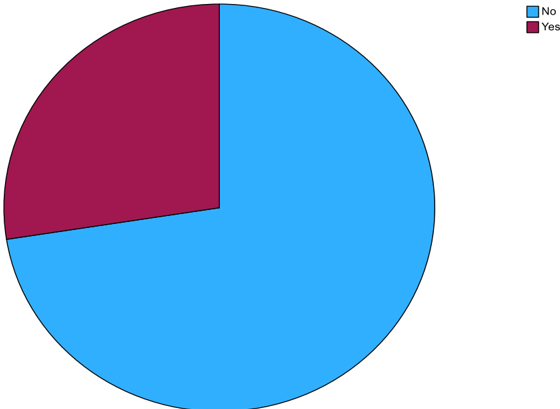
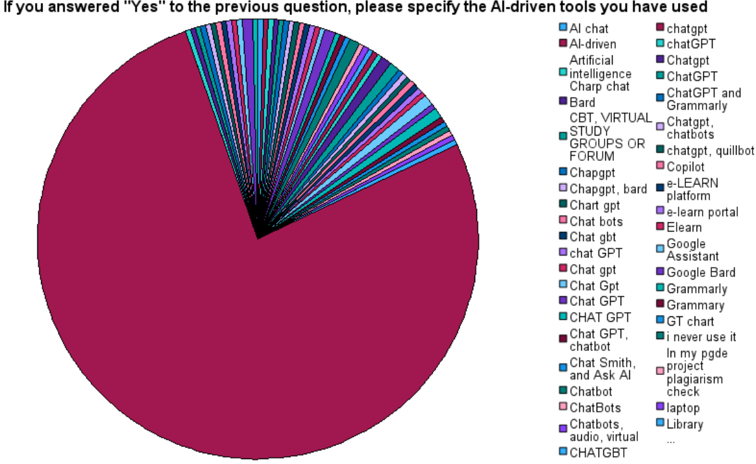
The need for online education has increased significantly. People now prefer to work to fulfill the necessities of life and pursue education to advance their skills because of the rising difficulty. This quest increases the demand for distance education thereby raising questions about how distance learning institutions can effectively assist their learners. Employment of Artificial Intelligence (AI) tools will not only provide solutions but also improve and render effective service and support to learners. AI-driven tools such as personalized or adaptive learning and chatbots for learner support have significantly helped to improve efficiency in virtual environments. This research aims to investigate how National Open University of Nigeria (NOUN) students view the contribution of AI tools in enhancing social interaction in their virtual learning environment. The study seeks to determine the requirements, inclinations, and challenges related to social interaction in the online learning space and explore how AI-powered solutions might effectively address these challenges to create a more dynamic and engaging learning environment. A survey was conducted to ascertain the level of awareness among the learners on the use of these tools, the challenges related to social interaction in online space and explore the ways AI-powered tools can effectively address issues in the learning environment to create a more dynamic and engaging learning environment. This study has identified that a greater number of learners in NOUN have little or no knowledge of the availability of these tools as well as how they can effectively use it. The level of awareness of the learners on the use of these tools is low. The study found 27.5% awareness and usage of AI tools provided by the institution. Several platforms were identified by respondents; however, ChatGPT was the most widely used AI platform. The study also discusses the importance of AI tools in enhancing collaboration and social engagement among learners. It identifies the challenges in integrating AI in Education and provides possible solutions to the challenges.
Overview
The claims and statistics of this paper haven’t been checked yet.
Run the check — free, no account needed. It reads the open-access text and checks the sources it cites.
Integrity signals
Registry
Cites
Statistics
Figures
Verification
Claims the paper makes
The claims and statistics of this paper haven’t been checked yet.
Run the check — free, no account needed. It reads the open-access text and checks the sources it cites.
Claims other papers make about this one
Each is checked against this paper’s own text: does it say what the citing paper says it does?
In the citing paper
“Despite these concerns, scholars have shown that when properly implemented, AI tools can enhance student engagement (Ezeanya et al., 2024), support students' writing (Mohamed et al., 2024), and provide personalized feedback (Xu et al., 2021).”
From Cheating in the second year of generative AI chatbots: a follow-up study on high school student cheating behaviors (2026) · cites this paper as Ezeanya et al., 2024
Self-check
Percentages, sums and reported differences re-computed from the paper’s own numbers.
The self-check needs the paper’s full text.
Citations
Cites
Technology and the future of language teaching
Kessler, G. (2018) · Foreign Language Annals · doi:10.1111/flan.12318 · Cited by 529
Fabriz, S., Mendzheritskaya, J., & Stehle, S. (2021) · Frontiers in Psychology · doi:10.3389/fpsyg.2021.733554 · Cited by 453
Guo, L., Wang, D., Gu, F., Li, Y., Wang, Y., & Zhou, R. (2021) · Asia Pacific Education Review · doi:10.1007/s12564-021-09697-7 · Cited by 124
The Human Factor: The Promise & Limits of Online Education
Baum, S., & McPherson, M. (2019) · Daedalus · doi:10.1162/daed_a_01769 · Cited by 82
Research works printed but not linked: 27
- Ali, W. (2020). Online and remote learning in higher education institutes: A necessity in light of COVID-19 pandemic. Higher Education Studies, 10(3), 16–25. · DOI · Paper page
- Bello, L. K. (2021). Exploring the Capabilities of Online Facilitation to bridge the Instructional Gaps in Open and Distance Learning Delivery in Nigeria. Journal of Education and Practice, 12(3), 174–184.
- Alam, A., Mohanty, A. (2023). Facial Analytics or Virtual Avatars: Competencies and Design Considerations for Student-Teacher Interaction in AI-Powered Online Education for Effective Classroom Engagement. In: Tomar, R.S., et al. Communication, Networks and Computing. CNC 2022. Communications in Computer and Information Science, (1894). Springer, Cham. https://doi.org/10.1007/978-3-031-43145-6_21 · DOI
- Aggarwal, D. (2023). Integration of innovative technological developments and AI with education for an adaptive learning pedagogy. China Petroleum Processing and Petrochemical Technology, 23(2), 709-714.
- Raffaghelli, J. E., Foschi, L. C., Crudele, F., Doria, B., Grion, V., & Cecchinato, G. (2023). The ENCORE Approach. Pedagogy of an AI-driven system to integrate OER in Higher Education & VET. In ENCORE project results. https://hdl.handle.net/11577/3502320
- George, B., & Wooden, O. (2023). Managing the Strategic Transformation of Higher Education through Artificial Intelligence. In Administrative Sciences 13(9). https://doi.org/10.3390/admsci13090196 · DOI
- Kopus, T. L., Mikhalat, E. S., Belozerova, E. Y., & Meshcheryakova, O. V. (2021). Instructor presence in online teaching: challenges and opportunities. SHS Web of Conferences, 127(3002). · DOI
- Ezeanya, C. U., Onyeji, E. M. & Ejimofor, I. A. (2023), Enhanced Student Retention in Open and Distance Education through Effective Academic Performance Model using Naive Bayes and K-Nearest Neighbour Machine Learning Algorithm. Journal of Applied Sciences, Information and Computing. 4(2), https://doi.org/10.59568/JASIC-2023-4-2-04 · DOI
- Kaufmann, R., & Vallade, J. I. (2022). Maximizing the student experience: moving forward with online learning. Communication Education, 71(2), 152–154. · DOI
- Becker, T. B., Fenton, J. I., Nikolai, M., Comstock, S. S., Swada, J. G., Weatherspoon, L. J., & Tucker, R. M. (2022). The impact of COVID-19 on student learning during the transition from remote to in-person learning: using mind mapping to identify and address faculty concerns. Advances in Physiology Education, 46(4), 742–751. · DOI
- Gillett-Swan, J. (2017). The challenges of online learning: Supporting and engaging the isolated learner. Journal of Learning Design, 10(1), 20–30. · DOI
- Clark, C. E. J., & Post, G. (2021). Preparation and synchronous participation improve student performance in a blended learning experience. Australasian Journal of Educational Technology, 37(3), 187–199. · DOI
- Srinivasa, K. G., Kurni, M., & Saritha, K. (2022). Harnessing the Power of AI to Education. In Learning, Teaching, and Assessment Methods for Contemporary Learners: Pedagogy for the Digital Generation. 311–342. Springer. · DOI
- Brown, C., Czerniewicz, L., & Noakes, T. (2019). Online content creation: Looking at students’ social media practices through a connected learning lens. In Social Media and Education. 140-159. Routledge. · DOI
- Amelia, R., & Istianah, T. N. (2021). Teaching strategies: How do teachers in remote area survive during remote learning? ELT Forum: Journal of English Language Teaching, 10(2), 146–153. · DOI
- Khosravi, H., Shum, S. B., Chen, G., Conati, C., Tsai, Y.-S., Kay, J., Knight, S., Martinez-Maldonado, R., Sadiq, S., & Gašević, D. (2022). Explainable artificial intelligence in education. Computers and Education: Artificial Intelligence, 3, 100074. · DOI · Paper page
- Khan, R. A., Atta, K., Sajjad, M., & Jawaid, M. (2022). Twelve tips to enhance student engagement in synchronous online teaching and learning. Medical Teacher, 44(6), 601–606. · DOI
- Sundaresan, S., & Zhang, Z. (2022). AI-enabled knowledge sharing and learning: redesigning roles and processes. International Journal of Organizational Analysis, 30(4), 983–999. · DOI
- Gehred, A. P. (2020). Canva. Journal of the Medical Library Association, 108(2). https://doi.org/10.5195/jmla.2020.940 · DOI
- Ogbaga, I. N., Nweke, H. F., & Ndunagu, J. N. (2023). Deploying persuasive technology-based model in the prevention and control of malaria in Nigeria to reduce incidence of deaths. African Scientific Reports, (2)3, 130. · DOI
- Baha, T.A., Hajji, M.E., Es-saady, Y., & Fadili, H. (2023). The impact of educational chatbot on student learning experience. Educ. Inf. Technol., 29, 10153-10176. https://doi.org/10.1007/s10639-023-12166-w · DOI · Paper page
- Hoti, A., Zenuni, X., Hamiti, M., & Ajdari, J. (2023). Student Performance Prediction Using AI and ML: State of the Art. 2023 12th Mediterranean Conference on Embedded Computing (MECO), 1-6. https://doi.org/10.1109/MECO58584.2023.10154933 · DOI
- Rerhaye, L., Altun, D., Krauss, C., & Müller, C. (2021). Evaluation methods for an AI-supported learning management system: ok and qualifying added values for teaching and learning. International Conference on Human-Computer Interaction, 394–411. · DOI
- Teng, Y., Zhang, J., & Sun, T. (2023). Data‐driven decision‐making model based on artificial intelligence in higher education system of colleges and universities. Expert Systems, 40(4), e12820. · DOI
- James, T., Toth, G., Tomlins, M., Kumar, B., & Bond, K. (2021). Digital disruption in the COVID-19 Era: The impact on learning and students’ ability to cope with study in an unknown world. Student Success, 12(3), 84–95. · DOI
- Thacker, I., Seyranian, V., Madva, A., Duong, N. T., & Beardsley, P. (2022). Social connectedness in physical isolation: Online teaching practices that support under-represented undergraduate students’ feelings of belonging and engagement in STEM. Education Sciences, 12(2), 61 · DOI
- Ferri, F., Grifoni, P., & Guzzo, T. (2020). Online learning and emergency remote teaching: Opportunities and challenges in emergency situations. Societies, 10(4), 86. · DOI
Cited by
Sorted by citations
Artificial intelligence in higher education: a PRISMA 2020 review
Jaboob, M., Al-Ansi, A. M., & Riyadh, H. A. (2026) · International Journal of Educational Management · doi:10.1108/ijem-09-2024-0560 · Cited by 10
Chen, R., Lee, V. R., Kuo, A. C., Pope, D. C., & Miles, S. (2026) · Educational technology research and development · doi:10.1007/s11423-026-10587-1 · Cited by 8
Metadata
- Authors
- Ezeanya, C. U., Ukaigwe, J. A., Ogbaga, I. N., & Kwanashie, A.
- Venue
- ABUAD Journal of Engineering Research and Development (AJERD)
- Publisher
- Afe Babalola University Ado-Ekiti
- Published
- 2024-07-16
- Volume
- 7
- Issue
- 2
- Pages
- 78-85
- ISSN
- 2645-2685
- 2756-6811
- Cited by
- 6
- References
- 4
About these checks
Registry, retraction, Cites and statistics results are computed, not judged, with one exception: a printed reference that no index lists is read once by a model before it counts as a citation error. Claims are extracted by a model and kept only when their quote appears verbatim in the text; each cited source is then checked, with a model’s help, for whether it says what the claim relies on. Those verdicts can be wrong — read the claim’s quote and the cited source before relying on one.
Statistics and arithmetic are recomputed, not judged.
Confidence bands are shown only for fields calibrated on our annotated test set. None is calibrated yet, so no band is shown.
What counts as a claim ›How we measure confidence ›How we check this ›
Are you an author, or do you see a problem with this page? Request a review
How to cite
Cite CoChat for the checks on this page, and the paper for its own findings.
- This page
- CoChat. (2026). Citation check: Enhancing Social Engagement among Online Learners' Using AI-Driven Tools: National Open University of Nigeria Leaners' Perspective. https://app.cochat.ai/papers/10.53982/ajerd.2024.0702.08-j
- The paper
- Ezeanya, C. U., Ukaigwe, J. A., Ogbaga, I. N., & Kwanashie, A. (2024). Enhancing Social Engagement among Online Learners' Using AI-Driven Tools: National Open University of Nigeria Leaners' Perspective. ABUAD Journal of Engineering Research and Development (AJERD). https://doi.org/10.53982/ajerd.2024.0702.08-j
