

The DOI matches its Crossref record; 1 of the 1 references it cites were found in a registry or an index.
Critical Challenges in Enterprise Resource Planning (ERP) Implementation
Open accessAbstract
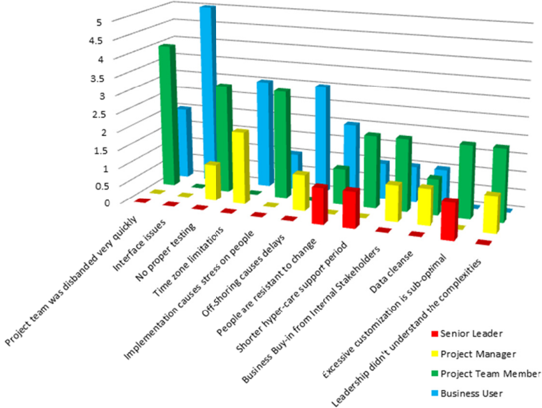
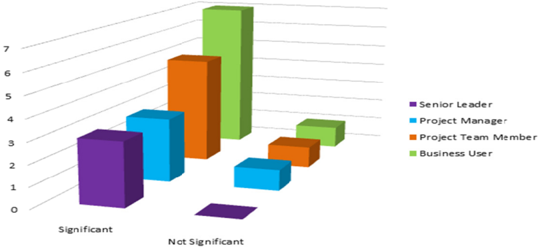
This research paper explores critical challenges in Enterprise Resource Planning (ERP) implementation based on insights from an exploratory qualitative single case study in the Canadian Oil and Gas Industry. The study was conducted in a Canadian case organization using twenty interviews from members of four project role groups of senior leaders, project managers, project team members, and business users. The study further collected and reviewed project documents from the ERP implementation for triangulation. The research evoked a comprehensive list of sixty critical challenges and out of which, the top twelve challenges discussed in detail were drawn from the responses of participants from all four project role groups. The study findings indicated that critical challenges were significant during ERP implementation. This research is one of first case studies in the Canadian oil and gas industry that focuses on critical challenges in ERP implementation projects.
Overview
The claims and statistics of this paper haven’t been checked yet.
Run the check — free, no account needed. It reads the open-access text and checks the sources it cites.
Integrity signals
Registry
Cites
Statistics
Figures
Verification
Claims the paper makes
The claims and statistics of this paper haven’t been checked yet.
Run the check — free, no account needed. It reads the open-access text and checks the sources it cites.
Claims other papers make about this one
Each is checked against this paper’s own text: does it say what the citing paper says it does?
The cited source says what the claim attributes to it.
In the citing paper
“Many cases of failure in implementing ERP systems have occurred.”
From Measuring The Acceptance Level of User Interface Design of ERP System at PT Allure Alluminio Using Technology Acceptance Model (TAM) Method (2024) · cites this paper as Menon et al., 2019
In the citing paper
“Several factors contributing to these failures include implementation team instability, interface issues, inadequate testing, tight time constraints, pressure, use of foreign labor, resistance to change, short maintenance periods, inadequate data processing, excessive customization, and lack of leadership understanding of its complexity (Menon et al., 2019).”
From Measuring The Acceptance Level of User Interface Design of ERP System at PT Allure Alluminio Using Technology Acceptance Model (TAM) Method (2024) · cites this paper as Menon et al., 2019
In the citing paper
“Acceptance measurement is crucial, especially in addressing UI design issues in the implementation of ERP systems (Menon et al., 2019).”
From Measuring The Acceptance Level of User Interface Design of ERP System at PT Allure Alluminio Using Technology Acceptance Model (TAM) Method (2024) · cites this paper as Menon et al., 2019
Self-check
Percentages, sums and reported differences re-computed from the paper’s own numbers.
The self-check needs the paper’s full text.
Citations
Cites
Does Sample Size Matter in Qualitative Research?: A Review of Qualitative Interviews in is Research
Marshall, B., Cardon, P., Poddar, A., & Fontenot, R. (2013) · Journal of Computer Information Systems · doi:10.1080/08874417.2013.11645667 · Cited by 1,636
Research works printed but not linked: 44
- Henning, P., & Chen, W. C. (2012). Systems thinking: Common ground or untapped territory? Systems Research and Behavioral Science, 29(5), 470-483.
- Davenport, T. H. (1998). Putting the enterprise into the enterprise system. Harvard Business Review, 76(4), 121-131.
- Denzin, N. (2012). Triangulation 2.0. Journal of Mixed Methods Research, 6(2), 80-88. https://doi.org/10.1177/1558689812437186 · DOI · Paper page
- Denzin, N. K., & Lincoln, Y. S. (2008). Strategies of qualitative inquiry (3rd ed.). Thousand Oaks, CA: Sage.
- Doom, C., Milis, K., Poelmans, S., & Bloemen, E. (2010). Critical success factors for ERP implementations in Belgian SMEs. Journal of Enterprise Information Management, 23(3), 378-406. https://doi.org/10.1108/17410391011036120 · DOI
- Ehie, I. C., & Madsen, M. (2005). Identifying critical issues in enterprise resource planning (ERP) implementation. Computers in Industry, 56(6), 545-557. https://doi.org/10.1016/j.compind.2005.02.006 · DOI
- Erkan, T. E., & Rouyendegh, B. D. (2012). ERP business productivity evaluation by using multi-criteria decision making among end users in Turkish manufacturing Industry. 2nd World conference on Information Technology (WCIT-2011) AWER Procedia, 1, 245-249.
- Esteves, J, M., & Pastor J. A. (2001). Analysis of critical success factors relevance along SAP implementation phases. Proceedings of Seventh Americas Conference on Information Systems, USA. Retrieved from http://aisel.aisnet.org/cgi/viewcontent.cgi?article=1636&context=amcis2001
- Finney, S., & Corbett, M. (2007). ERP implementation: A compilation and analysis of critical success factors. Business Process Management Journal, 13(3), 329 -347. https://doi.org/10.1108/14637150710752272 · DOI
- Gerring, J. (2007). Case study research: Principles and practices (1st ed.). Cambridge, UK: Cambridge University.
- Hewlett, A. K. (2005). Constructive thinking from theory to practice: An exploratory study (Doctoral dissertation). Retrieved from ProQuest Dissertations and Theses database. (UMI No. NR08783)
- Holland, P.C., & Light, B. (1999). A critical success factors model for ERP implementation. IEEE Software, 3(16), 30-36. https://doi.org/10.1109/52.765784 · DOI
- Howe, K. (2012). Mixed methods, triangulation, and causal explanation. Journal of Mixed Methods Research, 6, 89-96. https://doi.org/10.1177/1558689812437187 · DOI
- Jayaraman, V., & Bhatti, T. (2008). The critical success factors for the acquisition and implementation of ERP systems. Paper presented at the International DSI / Asia and Pacific DSI 2007, Bangkok, Thailand. Retrieved from http://iceb.nccu.edu.tw/proceedings/APDSI/2007/papers/Final_27.pdf
- Jonsen, K., & Jehn, K. A. (2009). Using triangulation to validate themes in qualitative studies. Qualitative Research in Organizations and Management: An International Journal, 4, 123-150. https://doi.org/10.1108/17465640910978391 · DOI
- Kemp, M., & Low, G. (2008). ERP innovation implementation model incorporating change management. Business Process Management Journal, 14, 228-242. https://doi.org/10.1108/14637150810864952 · DOI
- Laukkanen, S., Sarpola, S., & Hallikainen, P. (2007). Enterprise size matters: Objectives and constraints of ERP adoption. Journal of Enterprise Information Management, 20, 319-334. https://doi.org/10.1108/17410390710740763 · DOI
- Loo, R. (2003). A multi-level causal model for best practices in project management. Benchmarking: An International Journal, 10, 29-36. https://doi.org/10.1108/14635770310457520 · DOI
- Malek, R., & Yazdanifard, R. (2012). Overview of change management and its implementation. Business, Economics, Financial Sciences, and Management, 149-153. https://doi.org/10.1007/978-3-642-27966-9_21 · DOI
- Mishra, A., & Mishra, D. (2011). ERP System implementation: Evidence from the oil and gas sector. Acta Polytechnica Hungarica, 8(4), 416-428.
- Momoh, A., Roy, R., & Shehab, E. (2010). Challenges in enterprise resource planning implementation: State-of- the-art. Business Process Management Journal, 4, 537-565. https://doi.org/10.1108/14637151011065919 · DOI
- Motwani, J., Subramanian, R., & Gopalakrishna, P. (2005). Critical factors for successful ERP implementation: Exploratory findings from four case studies. Computers in Industry, 56, 529-544. https://doi.org/10.1016/j.compind.2005.02.005 · DOI
- Nah, F. F., Lau, J. L., & Kuang, J. (2001). Critical factors for successful implementation of enterprise systems. Business Process Management Journal, 7, 285-296. https://doi.org/10.1108/14637150110392782 · DOI
- Nickson, A. (2014). A qualitative case study exploring the nature of new managerialism in UK higher education and its impact on individual academics' experience of doing research. Journal of Research Administration, 45(1), 47-80.
- O'Leary, D. E. (2000). Enterprise resource planning systems: Systems, life cycle, electronic commerce, and risk. Cambridge, UK: Cambridge University.
- Parr, A., & Shanks, G. (2000). A model of ERP project implementation. Journal of information technology, 15(4), 289-303.
- Peci, M., & Važan, P. (2014). The biggest critical failure factors in ERP implementation. Applied Mechanics and Materials, 1476-1480. https://doi.org/10.4028/www.scientific.net/amm.519-520.1476 · DOI
- Poti, S., Bhattacharyya, S., & Kamalanabhan, T. (2010). Change processes and its impact on individuals: Perception of ERP users in India. International Journal of Information Systems and Change Management IJISCM, 4(4), 275. https://doi.org/10.1504/ijiscm.2010.036913 · DOI
- Rashid, M. A., Hossain, L., & Patrick, J. D. (2002). The evolution of ERP systems. Enterprise Resource Planning: Global Opportunities and Challenges, 1-16. doi:10.4018/978-1-931777-06-3. · DOI
- Rockart, J. F. (1979). Chief executives define their own needs. Harvard Business Review, 81-93.
- ijbm.ccsenet.org International Journal of Business and Management Vol. 14, No. 7; 2019
- Sar, A., & Garg, P. (2012). Analysis of critical failure factors in ERP implementation: An Indian experience. IJBIS International Journal of Business Information Systems, 11, 360. https://doi.org/10.1504/ijbis.2012.049571 · DOI
- Shaul, L., & Tauber, D. (2013). Critical success factors in enterprise resource planning systems. ACM Computing Surveys, 45(4), 1-39. https://doi.org/10.1145/2501654.2501669 · DOI
- Smith, A., Meade, M., Wolf, D., & Song, J. (2013). The CSFs, quality governance, BPR performance and gaining competitive advantage. International Journal of Business and Management, 8(24). https://doi.org/10.5539/ijbm.v8n24p48 · DOI
- Somers, T.M., & Nelson, K. (2001). The impact of critical success factors across the stages of enterprise resource and planning implementations. Proceedings of the 34th Hawaii International Conference on System Sciences, USA, 105, 1-10. https://doi.org/10.1109/HICSS.2001.927129 · DOI
- Stanciu, V., & Tinca, A. (2013). ERP solutions between success and failure. Accounting & Management Information Systems, 12(4), 626-649.
- Sumner, M. (2000). Risk factors in enterprise-wide/ERP projects. Journal of Information Technology, 15(4), 317-327. https://doi.org/10.1080/02683960010009079 · DOI · Paper page
- Tambovcevs, A., & Merkuryev, Y. (2009). Analysis of ERP systems implementation in the construction enterprises. Scientific Journal of Riga Technical University. Computer Sciences, 39. https://doi.org/10.2478/v10143-010-0002-1 · DOI
- Tarn, J.M., Yen, D.C., & Beaumont, M. (2002). Exploring the rationales for ERP and SCM integration. Industrial Management & Data Systems, 102(1), 26-34.
- Themistocleus, M., Irani, Z., O'Keefe, R.M. and Paul, R. (2001). ERP problems and application integration issues: An empirical survey. IEEE Proceedings of the 34th Hawaii International Conference on System Sciences, USA.
- Woo, H.S. (2007). Critical success factors for implementing ERP: The case of a Chinese electronics manufacturer. Journal of Manufacturing Technology Management, 18(4), 431-42.
- Yen, H. R., Sheu, C. (2004) Aligning ERP implementation with competitive priorities of manufacturing firms: An exploratory study. International Journal of Production Economics, 92, 207-220.
- Yin, R. K. (2009). Case study research: Design and methods (4th ed.). Thousand Oaks, CA: Sage.
- Yin, R. K. (2014). Case study research: Design and methods (5th ed.). Los Angeles, CA: Sage. ijbm.ccsenet.org International Journal of Business and Management Vol. 14, No. 7; 2019
Cited by
Sorted by citations
Mutoriq, A., & Purwinarko, A. (2024) · Journal of Advances in Information Systems and Technology · doi:10.15294/jaist.v5i2.71096 · Cited by 3
“Acceptance measurement is crucial, especially in addressing UI design issues in the implementation of ERP systems (Menon et al., 2019).”
BackgroundInfluential
Metadata
- Authors
- Menon, S. A., Muchnick, M., Butler, C., & Pizur, T.
- Affiliations
- Capella University (US)
- Corresponding author
- Menon, Sreekumar A.
- Venue
- International Journal of Business and Management
- Published
- 2019-06-08
- Volume
- 14
- Issue
- 7
- Pages
- 54
- ISSN
- 1833-3850 (ISSN-L)
- 1833-8119
- OpenAlex
- W2948199369
- Cited by
- 53
- References
- 1
- Citations by year
- 2026: 3 · 2025: 6 · 2024: 8 · 2023: 6 · 2022: 11 · 2021: 10 · 2020: 7 · 2019: 2
- FWCI
- 9.53
- Type
- journal article
- Language
- en
- Open access
- diamond
- doi.org
- Locations
- International Journal of Business and Management (publishedVersion, cc-by)
- RePEc: Research Papers in Economics (submittedVersion, cc-by)
- SSRN Electronic Journal (submittedVersion)
- Topics
- Social Sciences › Business, Management and Accounting › Management Information Systems › ERP Systems Implementation and Impact
- Social Sciences › Business, Management and Accounting › Strategy and Management › Corporate Governance and Management
- Social Sciences › Business, Management and Accounting › Management Information Systems › Information Technology Governance and Strategy
- Keywords
- enterprise resource planning, ERP implementation, implementation barriers, oil and gas industry, stakeholder perspectives, project management
About these checks
Registry, retraction, Cites and statistics results are computed, not judged, with one exception: a printed reference that no index lists is read once by a model before it counts as a citation error. Claims are extracted by a model and kept only when their quote appears verbatim in the text; each cited source is then checked, with a model’s help, for whether it says what the claim relies on. Those verdicts can be wrong — read the claim’s quote and the cited source before relying on one.
Statistics and arithmetic are recomputed, not judged.
Confidence bands are shown only for fields calibrated on our annotated test set. None is calibrated yet, so no band is shown.
What counts as a claim ›How we measure confidence ›How we check this ›
Are you an author, or do you see a problem with this page? Request a review
