

Assessing the Sustainability of Small Farmer Natural Resource Management Systems. A Critical Analysis of the MESMIS Program (1995-2010)
Open accessThe DOI matches its Crossref record; 69 of the 74 references it cites were found in a registry or an index; 5 of the 40 sources its claims cite were checked for support.
Abstract
Astier, M., L. García-Barrios, Y. Galván-Miyoshi, C. E. González-Esquivel, and O. R. Masera. 2012. Assessing the sustainability of small farmer natural resource management systems. A critical analysis of the MESMIS program (1995-2010). Ecology and Society 17(3): 25. https://doi.org/10.5751/ES-04910-170325
Overview
CoChat Summary
TL;DR
This paper is a critical review of the MESMIS program, a 15-year sustainability assessment effort for small-farmer natural resource management systems (NRMS), with reported impact in 60 case studies and 20 undergraduate and graduate programs mainly in Ibero-America. It argues that MESMIS has been useful for participatory, interdisciplinary sustainability assessment, but that stronger treatment of dynamics, trade-offs, longitudinal evaluation, and stakeholder participation is still needed.
Key findings
- The MESMIS experience spans more than 60 case studies in Latin America, Spain, Portugal, and the United States, and the authors note 20 undergraduate and graduate programs mainly in Ibero-America.
- From a reviewed sample of 25 case studies, the authors report that 13 were in Mexico, 8 in Central and South America, 3 in Spain and Portugal, and 1 in the USA.
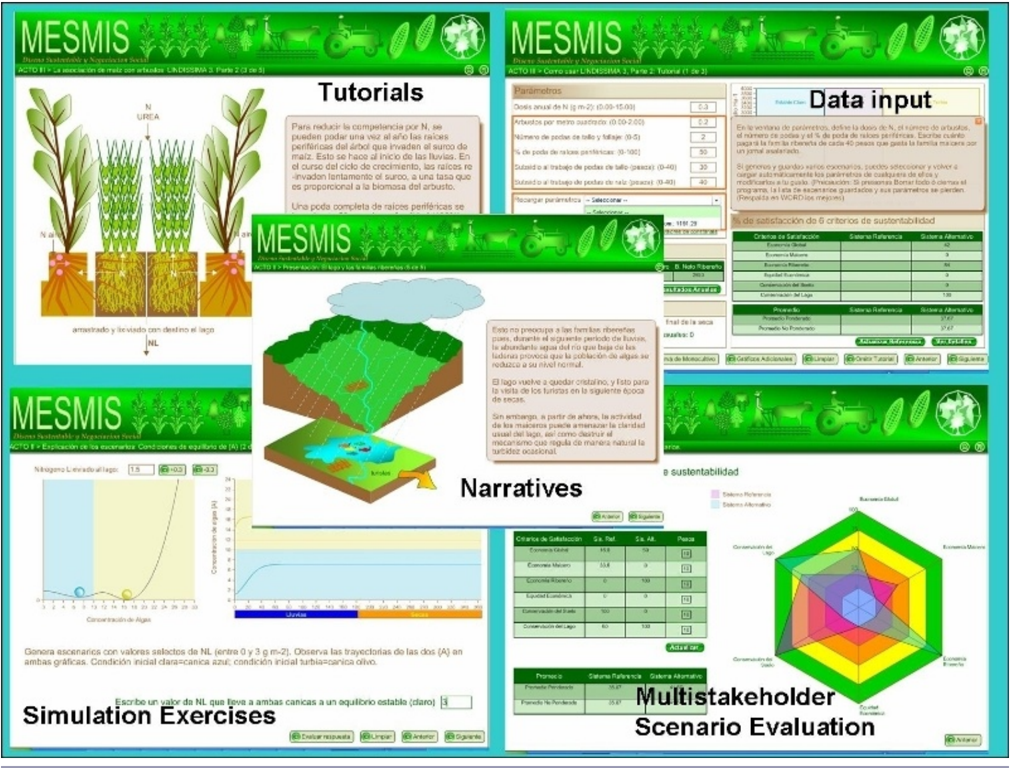
- In those case studies, the framework was able to: characterize NRMS and subsystems; link systemic attributes to sustainability indicators; integrate indicators with multicriteria tools; propose multiscale assessment; develop multimedia learning tools; and promote participatory processes.
- The paper identifies major gaps across the reviewed cases: difficulty deriving stability/resilience indicators, insufficient attention to trade-offs, partial stakeholder involvement, few longitudinal evaluations, and lack of tools for long-term participatory evaluation without external funding.
Methods
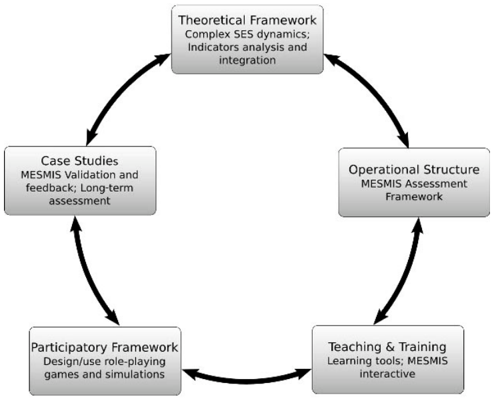
- This is a critical analysis / program review, not an empirical experiment; it synthesizes the MESMIS program’s 15 years of experience and discusses its components: theoretical framework, operational structure, case studies, teaching/training, and participatory processes.
- The authors draw on a sample of 25 case studies selected from the 60 documented by their group, chosen based on the quality and quantity of available data.
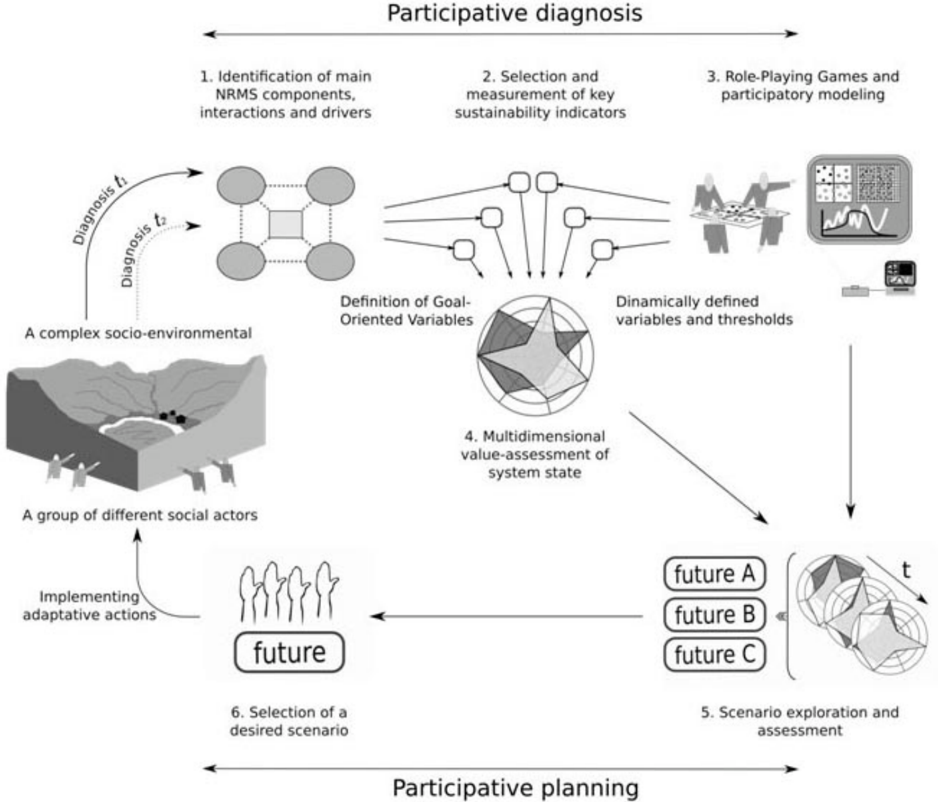
- The analysis is largely descriptive and comparative, using the case studies to examine how MESMIS was applied and to motivate an improved iterative evaluation cycle.
Limitations
- The paper explicitly states that many case studies struggled to incorporate dynamic concepts, and that there was lack of quantitative and qualitative analysis of system dynamical behaviors.
- The paper also states that there was insufficient consideration of trade-offs, partial involvement of rural producers and other actors, lack of longitudinal evaluations, and lack of scientific approaches/tools for long-term participatory evaluation without funding.
- Evident from the text: the review is based on a non-random sample of 25 cases selected for data availability, so its conclusions are not a complete statistical assessment of all MESMIS applications.
Model-written summary. Check it against the paper before relying on it.
Integrity signals
Registry
Cites
Statistics
Figures
Verification
Claims the paper makes
1 Valid · 8 Not valid · 23 Not checked · 44 Own results and interpretations
The cited sources that could be checked couldn’t confirm or dispute this claim.
In the paper
“In most cases, the alternative NRMS is based on agroecological principles, such as crop diversification, soil conservation, and external input reduction (Astier et al. 2011).”
What the sources say
- Could not verifycites Astier et al. 2011 matched to “Sustainability indicators, alternative strategies and trade-offs in peasant agroecosystems: analysing 15 case studies from Latin America” (2011) sourceExperimental — accuracy not yet measured
The retrieved passages consist of bibliographic material and an Abstract, but no passage from the paper’s main text addresses whether most alternative NRMS cases used the three stated principles. Searches for “alternative NRMS,” “agroecological principles,” “soil conservation,” and “external input use” did not retrieve a decisive main-text passage. (LLM, conf=0.65)
plain- Asserted: passes — The authors put it forward as true.
- Checkable: passes — It can be checked against evidence.
- Load-bearing: unclear — It is unclear whether the paper’s conclusions depend on it.
- Based: passes — The paper gives a reason why it holds.
- Could not verify
The cited sources that could be checked couldn’t confirm or dispute this claim.
In the paper
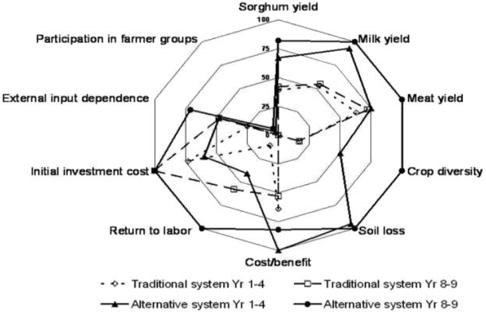
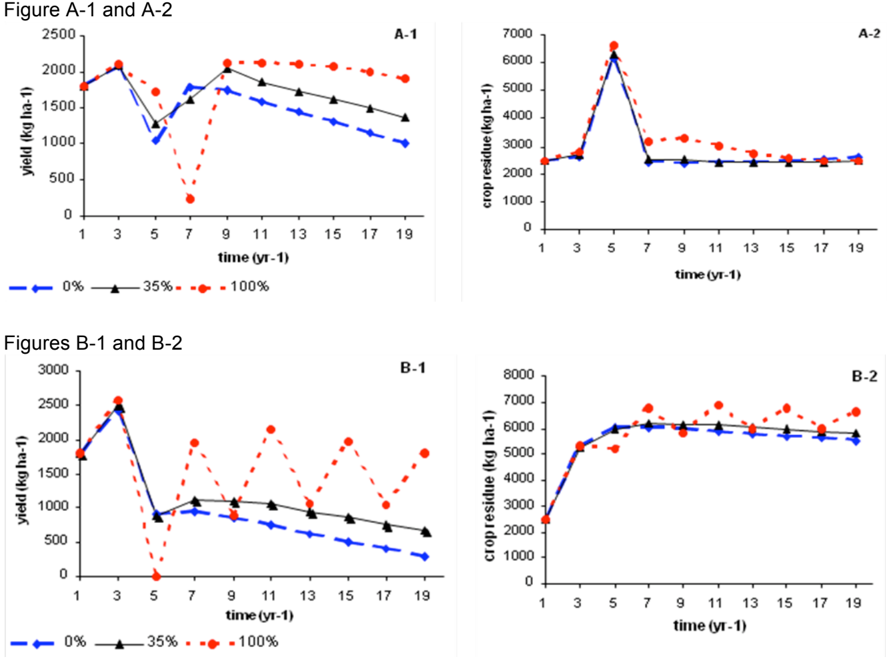
“One of the few exceptions was the work of Martínez (2005) in Sinaloa, Mexico, where an alternative crop-forestry-grazing system, based on tropical legumes and semifeedlot silage, was compared against a conventional system over a nine-year period (Fig. 4; Martínez 2005, Astier et al. 2011).”
What the sources say
- Not matchedcites Martínez 2005
We don’t have this paper’s reference list.
- Could not verifycites Astier et al. 2011 matched to “Sustainability indicators, alternative strategies and trade-offs in peasant agroecosystems: analysing 15 case studies from Latin America” (2011) sourceExperimental — accuracy not yet measured
Split into 2 atoms — 0 confirmed, 0 partially supported, 0 disputed, 0 misattributed, 2 unverifiable. Expand the claim to see per-atom verdicts.
plainSingle case- Asserted: passes — The authors put it forward as true.
- Checkable: passes — It can be checked against evidence.
- Load-bearing: unclear — It is unclear whether the paper’s conclusions depend on it.
- Based: passes — The paper gives a reason why it holds.
- Not matched
A result the paper reports from its own data — it cites no other source for it, so there is none to check. The quote shows it is in the paper.
In the paper
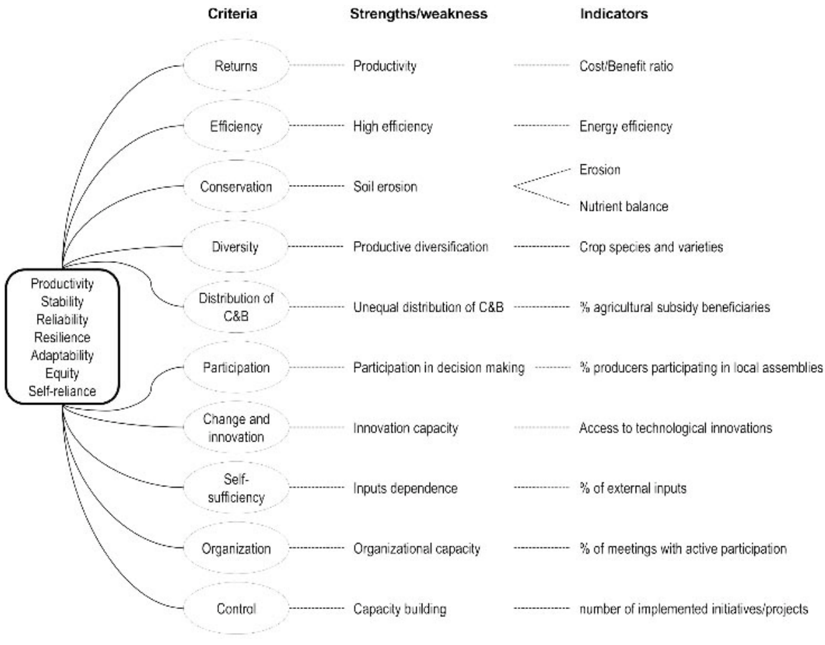
“(b) link attributes, i.e., general systemic properties, with sustainability indicators to assess critical socioeconomic and environmental aspects of the NRMS;”
plainstates an association- Asserted: passes — The authors put it forward as true.
- Checkable: passes — It can be checked against evidence.
- Load-bearing: passes — The paper’s conclusions depend on it.
- Based: passes — The paper gives a reason why it holds.
A result the paper states — it cites no source for it, so there is none to check. The quote shows it is in the paper.
In the paper
“(d) propose an initial multiscale assessment to articulate processes and actors at different spatial scales;”
plainstates a cause- Asserted: passes — The authors put it forward as true.
- Checkable: passes — It can be checked against evidence.
- Load-bearing: passes — The paper’s conclusions depend on it.
- Based: passes — The paper gives a reason why it holds.
A result the paper states — it cites no source for it, so there is none to check. The quote shows it is in the paper.
In the paper
“(e) develop multimedia learning tools, i.e., Interactive-MESMIS, to help users understand dynamic concepts, trade-offs, and counter-intuitive behavior;”
plainstates a cause- Asserted: passes — The authors put it forward as true.
- Checkable: passes — It can be checked against evidence.
- Load-bearing: passes — The paper’s conclusions depend on it.
- Based: passes — The paper gives a reason why it holds.
23 more claims
Create a free account to see all 76 claims and to verify the 2 references still open.
- Probably not a substantial claim. 41
- It may state two separate claims as one. 15
- The quote only partly states this claim. 2
Citations
Cites
A General Framework for Analyzing Sustainability of Social-Ecological Systems
Ostrom, E. (2009) · Science · doi:10.1126/science.1172133 · Cited by 8,656
Understanding the complexity of economic, ecological and social systems
Holling, C. S. (2001) · Ecosystems · doi:10.1007/s10021-001-0101-5 · Cited by 4,087
(2002) · Cited by 3,806
Panarchy: Understanding Transformations in Human and Natural Systems
Price, M. F. (2003) · Biological Conservation · doi:10.1016/s0006-3207(03)00041-7 · Cited by 3,293
An overview of APSIM, a model designed for farming systems simulation
Keating, B. A., Carberry, P. S., Hammer, G. L., Probert, M. E., Robertson, M. J., Holzworth, D., Huth, N. I., Hargreaves, J. N. G., Meinke, H., Hochman, Z., et al. (2003) · European Journal of Agronomy · doi:10.1016/s1161-0301(02)00108-9 · Cited by 2,878
Navigating Social-Ecological Systems: Building Resilience for Complexity and Change
Berkes, F., Colding, J., & Folke, C. (2008) · Cited by 2,793
Walker, B., Carpenter, S. R., Anderies, J. M., Abel, N., Cumming, G., Janssen, M. A., Lebel, L., Norberg, J., Peterson, G. D., & Pritchard, R. (2002) · Conservation Ecology · doi:10.5751/es-00356-060114 · Cited by 1,567
Working Together: Collective Action, the Commons, and Multiple Methods in Practice
Poteete, A. R., Janssen, M. A., & Ostrom, E. (2010) · doi:10.1515/9781400835157 · Cited by 1,403
Critical Transitions in Nature and Society
Scheffer, M. (2009) · doi:10.1515/9781400833276 · Cited by 1,394
Learning in and about complex systems
Sterman, J. D. (1994) · System Dynamics Review · doi:10.1002/sdr.4260100214 · Cited by 1,279 · cited 2×
“…Duration Short-term assessments Long-term assessments Archetypical examples FESLM (Smyth and Dumanski 1993) CIFOR framework (Prabhu et al. 1999) Stockle et al. (1994) framework AMESH (Waltner-Toews and Kay 2005) Resilience analysis (Walker et al. 2002) Ostrom (2009) framework can then be used…”
MethodNavigating Social-Ecological Systems: Building Resilience for Complexity and Change
(2001) · Cambridge University Press eBooks · doi:10.1017/cbo9780511541957 · Cited by 1,059
The globalization of socio-ecological systems: An agenda for scientific research
Young, O. R., Berkhout, F., Gallopin, G. C., Janssen, M. A., Ostrom, E., & van der Leeuw, S. (2006) · Global Environmental Change · doi:10.1016/j.gloenvcha.2006.03.004 · Cited by 871
(2010) · Cited by 860
Resilience and Adaptive Cycles
Holling, C. S., & Gunderson, L. (2012) · Princeton University Press eBooks · doi:10.2307/jj.41003716.8 · Cited by 836
Critical transitions in nature and society
(2009) · Choice Reviews Online · doi:10.5860/choice.47-1380 · Cited by 759
Lynam, T., de Jong, W., Sheil, D., Kusumanto, T., & Evans, K. (2007) · Ecology and Society · doi:10.5751/es-01987-120105 · Cited by 738
The agroecological matrix as alternative to the land-sparing/agriculture intensification model
Perfecto, I., & Vandermeer, J. (2010) · Proceedings of the National Academy of Sciences · doi:10.1073/pnas.0905455107 · Cited by 732
The hidden connections : A science for sustainable living
Capra, F. (2004) · Anchor Books · Cited by 548
A guide to community sustainability indicators
Valentin, A., & Spangenberg, J. H. (2000) · Environmental Impact Assessment Review · doi:10.1016/s0195-9255(00)00049-4 · Cited by 477
Strengths and weaknesses of common sustainability indices for multidimensional systems
Mayer, A. L. (2008) · Environment International · doi:10.1016/j.envint.2007.09.004 · Cited by 459
Evaluating the sustainability of complex socio-environmental systems. The MESMIS framework
López-Ridaura, S. (2002) · Ecological Indicators · doi:10.1016/s1470-160x(02)00043-2 · Cited by 442
Globalization and Land-Use Transitions in Latin America
Grau, H. R., & Aide, M. (2008) · Ecology and Society · doi:10.5751/es-02559-130216 · Cited by 435
Bouwen, R., & Taillieu, T. (2004) · Journal of Community & Applied Social Psychology · doi:10.1002/casp.777 · Cited by 415
Lab Experiments for the Study of Social-Ecological Systems
Janssen, M. A., Holahan, R., Lee, A., & Ostrom, E. (2010) · Science · doi:10.1126/science.1183532 · Cited by 347
Bowen, S., & Zapata, A. V. (2009) · Journal of Rural Studies · doi:10.1016/j.jrurstud.2008.07.003 · Cited by 327
PICABUE: a methodological framework for the development of indicators of sustainable development
Mitchell, G., May, A., & McDonald, A. (1995) · International Journal of Sustainable Development & World Ecology · doi:10.1080/13504509509469893 · Cited by 324
Reconciling biodiversity conservation and food security: scientific challenges for a new agriculture
Brussaard, L., Caron, P., Campbell, B., Lipper, L., Mainka, S., Rabbinge, R., Babin, D., & Pulleman, M. (2010) · Current Opinion in Environmental Sustainability · doi:10.1016/j.cosust.2010.03.007 · Cited by 311
Sustainability: A Systems Approach
Clayton, A., & Radcliffe, N. J. (1996) · Medical Entomology and Zoology · Cited by 303
Sustainability indicators : a report on the project on indicators of sustainable development
Moldan, B., & Billharz, S. S. (1997) · Medical Entomology and Zoology · Cited by 284
FELSM: An international framework for evaluating sustainable land management
Smyth, A., & Dumasky, J. (1993) · Cited by 219
Interdisciplinariedad y sistemas complejos
García, R. (1994) · Americanae (AECID Library) · Cited by 198
Multi-agent systems and role games: collective learning processes for ecosystem management
Bousquet, F., Barreteau, O., d'Aquino, P., Etienne, M., Boissau, S., & Aubert, S. (2002) · Complexity and Ecosystem Management · doi:10.4337/9781781957240.00021 · Cited by 197
Biodiversity and agricultural sustainagility: from assessment to adaptive management
Jackson, L., van Noordwijk, M., Bengtsson, J., Foster, W. A., Lipper, L., Pulleman, M., Said, M. Y., Snaddon, J. L., & Vodouhè, R. (2010) · Current Opinion in Environmental Sustainability · doi:10.1016/j.cosust.2010.02.007 · Cited by 193
Integrated and Holistic Perspectives on Learning, Instruction and Technology
Spector, J. M., & Anderson, T. M. (2000) · Springer eBooks · doi:10.1007/0-306-47584-7 · Cited by 170
Agent-based social simulation: dealing with complexity
Gilbert, N. (2005) · University of Surrey Open Research repository · Cited by 158
Barreteau, O. (2003) · Journal of Artificial Societies and Social Simulation · Cited by 148
García-Barrios, L., Galván-Miyoshi, Y. M., Valsieso-Pérez, I. A., Masera, O. R., Bocco, G., & Vandermeer, J. (2009) · BioScience · doi:10.1525/bio.2009.59.10.8 · Cited by 143
Self-citationSustentabilidad y manejo de recursos naturalesel marco de evaluación MESMIS
Masera, O. A. (1999) · Cited by 140
Self-citationGurung, T. R., Bousquet, F., & Trébuil, G. (2006) · Ecology and Society · doi:10.5751/es-01929-110236 · Cited by 134
Waltner-Toews, D., & Kay, J. (2005) · Ecology and Society · doi:10.5751/es-01214-100138 · Cited by 128
Garp3 — Workbench for qualitative modelling and simulation
Bredeweg, B., Linnebank, F. E., Bouwer, A. J., & Liem, J. (2009) · Ecological Informatics · doi:10.1016/j.ecoinf.2009.09.009 · Cited by 120
Speelman, E. N., López-Ridaura, S., Colomer, N. A., Astier, M., & Masera, O. R. (2007) · International Journal of Sustainable Development & World Ecology · doi:10.1080/13504500709469735 · Cited by 112
Self-citationMulti-agent simulation for the targeting of development policies in less-favored areas
Berger, T., Schreinemachers, P., & Woelcke, J. (2006) · Agricultural Systems · doi:10.1016/j.agsy.2005.06.002 · Cited by 108
SUSTAINABILITY IN AGRICULTURAL DEVELOPMENT: TRADE-OFFS WITH PRODUCTIVITY, STABILITY AND EQUITABILITY
Conway, G. (1994) · Cited by 105
Companion modelling: a participatory approach to support sustainable development.
Étienne, M. (2010) · doi:10.1007/978-94-017-8557-0 · Cited by 99
Astier, M., Speelman, E. N., López-Ridaura, S., Masera, O. R., & Gonzalez-Esquivel, C. E. (2011) · International Journal of Agricultural Sustainability · doi:10.1080/14735903.2011.583481 · Cited by 86
Self-citationAbbona, E. A., Sarandón, S. J., Marasas, M. E., & Astier, M. (2006) · Agriculture Ecosystems & Environment · doi:10.1016/j.agee.2006.08.001 · Cited by 83
Self-citationNature’s matrix: linking agriculture, conservation and food sovereignty
Prasad, A. (2010) · Landscape Ecology · doi:10.1007/s10980-010-9558-y · Cited by 81
Gaspar, P., Díaz, F. J. M., Escribano, M., & Pulido, F. J. A. (2009) · Rangeland Ecology & Management · doi:10.2111/07-135.1 · Cited by 81
A framework for evaluating the sustainability of agricultural production systems
Stöckle, C. O., Papendick, R. I., Saxton, K. E., Campbell, G. S., & van Evert, F. K. (1994) · Renewable Agriculture and Food Systems · doi:10.1017/s0889189300005555 · Cited by 80
Role-playing games, models and negotiation processes
(2003) · HAL · Cited by 77
Sturtevant, B. R., Fall, A., Kneeshaw, D., et al. (2007) · Ecology and Society · doi:10.5751/es-02102-120207 · Cited by 73
Sustainability: A systems approach
Smith, P. (1997) · Applied Geography · doi:10.1016/s0143-6228(97)87224-4 · Cited by 66
García‐Barrios, L., Speelman, E. N., & Pimm, M. S. (2007) · Ecological Modelling · doi:10.1016/j.ecolmodel.2007.07.009 · Cited by 58
Self-citationQualitative models about stream ecosystem recovery: Exploratory studies
Salles, P., Bredeweg, B., & Araújo, S. C. D. S. (2005) · Ecological Modelling · doi:10.1016/j.ecolmodel.2005.10.018 · Cited by 47
Prabhu, R., Colfer, C. J. P., & Dudley, R. G. (1999) · Center for International Forestry Research (CIFOR) eBooks · doi:10.17528/cifor/000762 · Cited by 44
Science for Place-based Socioecological Management: Lessons from the Maya Forest (Chiapas and Petén)
Manuel-Navarrete, D., Slocombe, S., & Mitchell, B. (2006) · Ecology and Society · doi:10.5751/es-01608-110108 · Cited by 38
(2005) · Agritrop (Cirad) · Cited by 31
Social dilemmas and individual/group coordination strategies in a complex rural land-use game
García‐Barrios, L., García-Barrios, R., Waterman, A., & Cruz-Morales, J. (2011) · International Journal of the Commons · doi:10.18352/ijc.289 · Cited by 31
Self-citationSpeelman, E. N., & García‐Barrios, L. (2010) · Ecological Modelling · doi:10.1016/j.ecolmodel.2009.12.007 · Cited by 19
Self-citationA methodology for evaluating the sustainability of inland wetland systems
Moctezuma-Malagón, A., González-Esquivel, C. E., de la Lanza-Espino, G., & Islas, C. G. (2008) · Aquaculture International · doi:10.1007/s10499-007-9163-5 · Cited by 12
Self-citationBarrios, L. G., & García-Barrios, J. (1992) · Estudios Sociológicos de El Colegio de México · doi:10.24201/es.1992v10n29.950 · Cited by 12
Wilkie, J. R. (1966) · Hispanic American Historical Review · doi:10.1215/00182168-46.1.112 · Cited by 12
Ocampo-Fletes, I. (2004) · Dialnet (Universidad de la Rioja) · Cited by 8
Cedillo, J. G. G., Gómez, L. I. A., González-Esquivel, C. E., et al. (2012) · Americanae (AECID Library) · Cited by 6
Self-citationRepères méthodologiques pour la mise en œuvre d'une démarche de modélisation d'accompagnement
(2009) · HAL · Cited by 2
Stages for the More Sustainable Farm
Marta‐Costa, A., Poeta, A., Marta-Costa, A. A., et al. (2008) · 2008 International Congress, August 26-29, 2008, Ghent, Belgium · doi:10.22004/ag.econ.44252 · Cited by 1
Stages for the More Sustainable FarmPreprint
Marta‐Costa, A., & Poeta, A. (2008) · RePEc: Research Papers in Economics · Cited by 1
Cited by
Agroecology and the design of climate change-resilient farming systems
Altieri, M. A., Nicholls, C. I., Henao, A., & Lana, M. A. (2015) · Agronomy for Sustainable Development · doi:10.1007/s13593-015-0285-2 · Cited by 1,472
“9) Many of the 60 case studies of sustainability assessments conducted in Latin America using the MESMIS framework have confirmed this (Astier et al. 2012).”
BackgroundA Systematic Review of the Measurement of Sustainable Diets
Jones, A. D., Hoey, L., Blesh, J., Miller, L., Green, A., & Shapiro, L. F. (2016) · Advances in Nutrition · doi:10.3945/an.115.011015 · Cited by 299
Gaming for smallholder participation in the design of more sustainable agricultural landscapes
Speelman, E. N., García‐Barrios, L., Groot, J. C. J., & Tittonell, P. A. (2013) · Agricultural Systems · doi:10.1016/j.agsy.2013.09.002 · Cited by 151
Self-citationMethods to assess farming sustainability in developing countries. A review
Schindler, J., Graef, F., & König, H. J. (2015) · Agronomy for Sustainable Development · doi:10.1007/s13593-015-0305-2 · Cited by 113
Soto, R. L., Martínez‐Mena, M., Padilla, M. C., & de Vente, J. (2020) · Agriculture Ecosystems & Environment · doi:10.1016/j.agee.2020.107191 · Cited by 115
Metadata
- Authors
- Astier, M., García-Barrios, L., Galván-Miyoshi, Y., González-Esquivel, C. E., & Masera, O. R.
- Affiliations
- Centro de Investigaciones en Geografía Ambiental (MX)
- El Colegio de la Frontera Sur (MX)
- Michigan State University (US)
- Universidad Nacional Autónoma de México (MX)
- Venue
- Ecology and Society
- Publisher
- Resilience Alliance, Inc.
- Published
- 2012
- Volume
- 17
- Issue
- 3
- ISSN
- 1708-3087 (ISSN-L)
- OpenAlex
- W2096604110
- Cited by
- 137
- References
- 74
- Citations by year
- 2026: 8 · 2025: 8 · 2024: 3 · 2023: 10 · 2022: 9 · 2021: 12 · 2020: 20 · 2019: 6 · 2018: 16 · 2017: 11 · 2016: 10 · 2015: 12 · 2014: 6 · 2013: 5 · 2012: 1
- FWCI
- 6.12
- Type
- journal article
- Language
- en
- Open access
- gold
- doi.org
- Licence
- cc-by
- Locations
- Ecology and Society (publishedVersion, cc-by)
- DOAJ (DOAJ: Directory of Open Access Journals) (submittedVersion, cc-by-sa)
- Digital Library Of The Commons Repository (Indiana University) (submittedVersion)
- Funders
- Consejo Nacional de Ciencia y Tecnología
- Topics
- Life Sciences › Agricultural and Biological Sciences › Agronomy and Crop Science › Sustainable Agricultural Systems Analysis
- Physical Sciences › Environmental Science › Global and Planetary Change › Conservation, Biodiversity, and Resource Management
- Social Sciences › Economics, Econometrics and Finance › Economics and Econometrics › Socioeconomics of Resources and Conservation
- Keywords
- smallholder farmers, natural resource management, sustainability assessment, agricultural extension, program evaluation, sustainable agriculture, Mexico
About these checks
Registry, retraction, Cites and statistics results are computed, not judged, with one exception: a printed reference that no index lists is read once by a model before it counts as a citation error. Claims are extracted by a model and kept only when their quote appears verbatim in the text; each cited source is then checked, with a model’s help, for whether it says what the claim relies on. Those verdicts can be wrong — read the claim’s quote and the cited source before relying on one.
The claim verdicts this report counts are experimental: their accuracy is not yet measured.
A language model drew the claims from the paper on 2026-10-10, under version 3 of the claim definition (model deepseek-v4.1-flash, prompt extract-v3).
A second model labelled each claim on 2026-10-10 (model jev-1.13-20260917, definition revision gold-guideline-v0.2).
Cited sources are checked with a language model’s help (gpt-6-sol).
Statistics and arithmetic are recomputed, not judged.
Confidence bands are shown only for fields calibrated on our annotated test set. None is calibrated yet, so no band is shown.
What counts as a claim ›How we measure confidence ›How we check this ›
Are you an author, or do you see a problem with this page? Request a review
Data sources
Bibliographic data: Semantic Scholar, OpenAlex, Crossref.
Contains information from the Semantic Scholar Academic Graph Datasets, made available under the ODC Attribution License (ODC-BY 1.0).
Semantic Scholar’s data is described in: Kinney, R., et al. (2023). The Semantic Scholar Open Data Platform. arXiv:2301.10140.
