

The DOI matches its Crossref record; 91 of the 91 references it cites were found in a registry or an index.
Female mice ultrasonically interact with males during courtship displays
Open accessAbstract
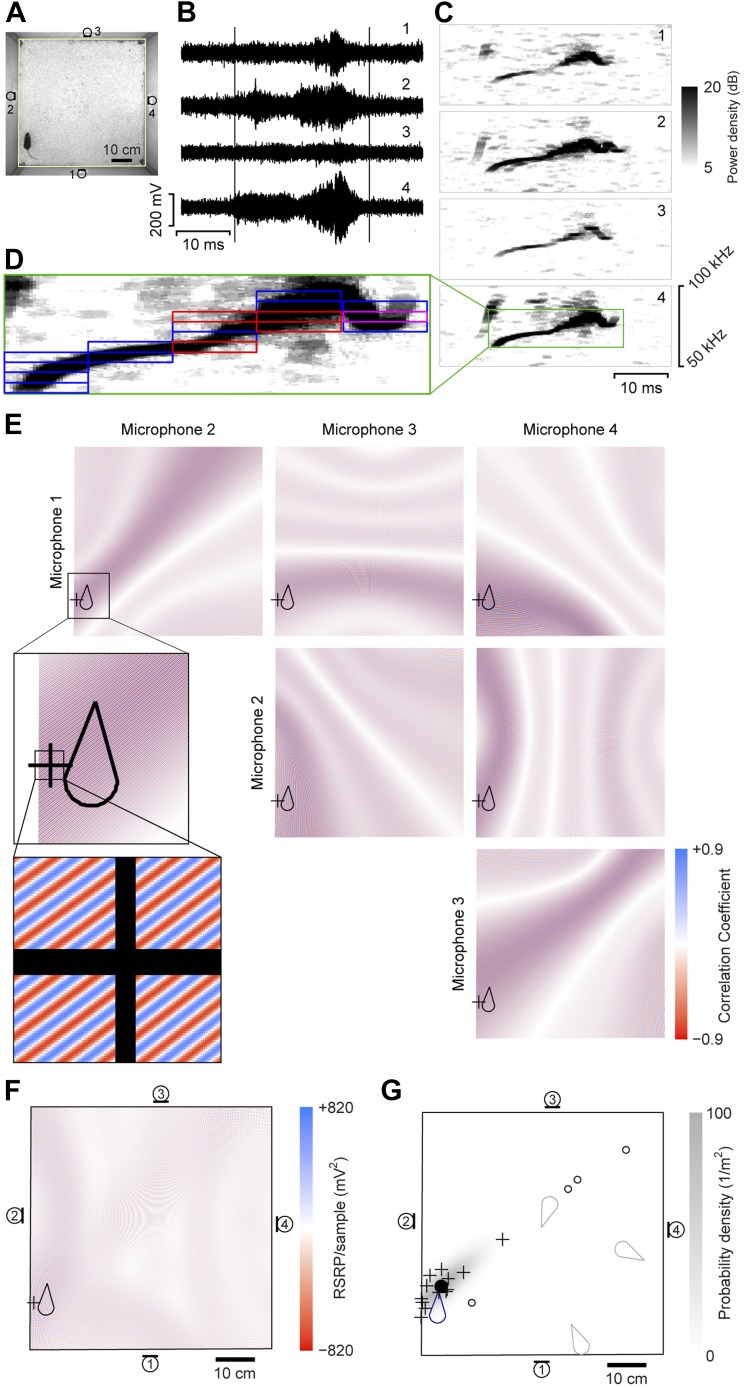
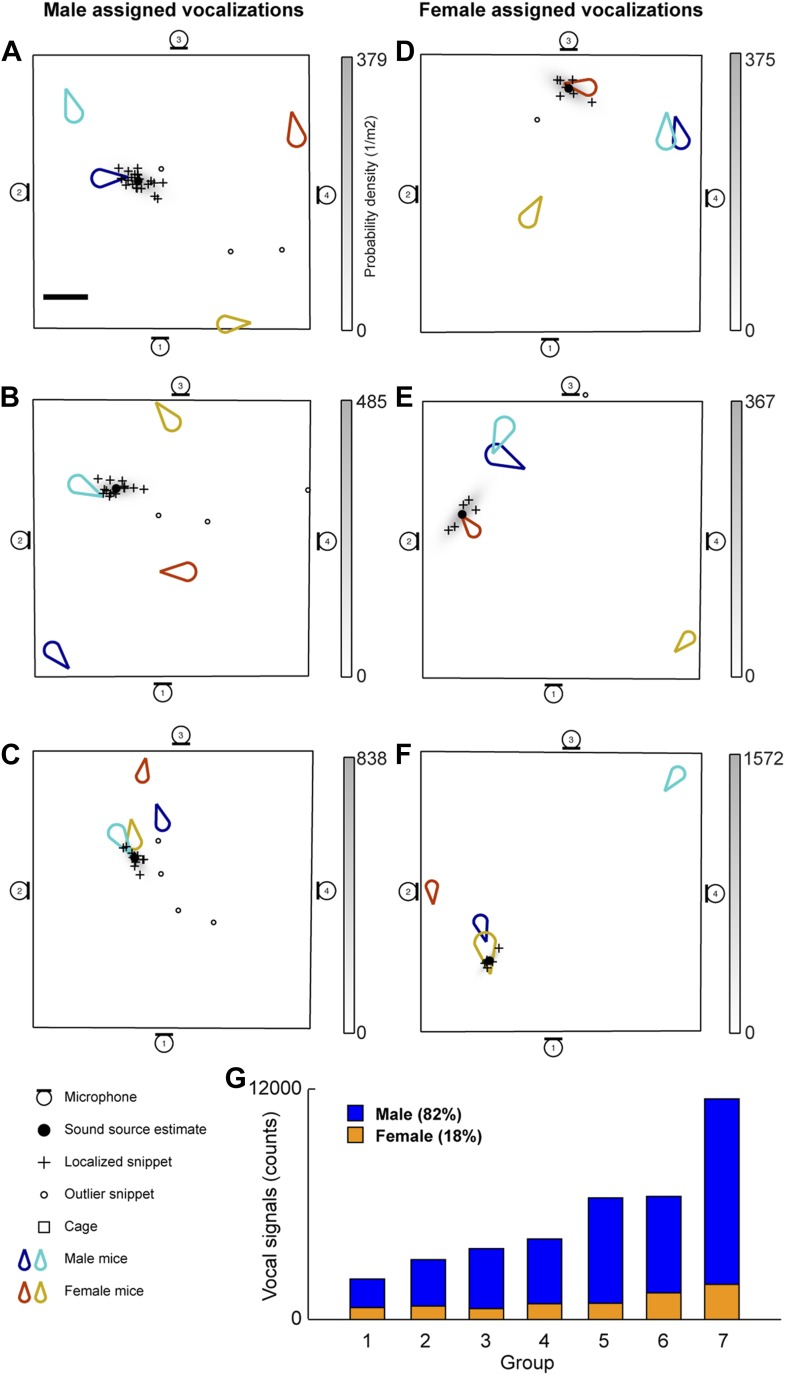
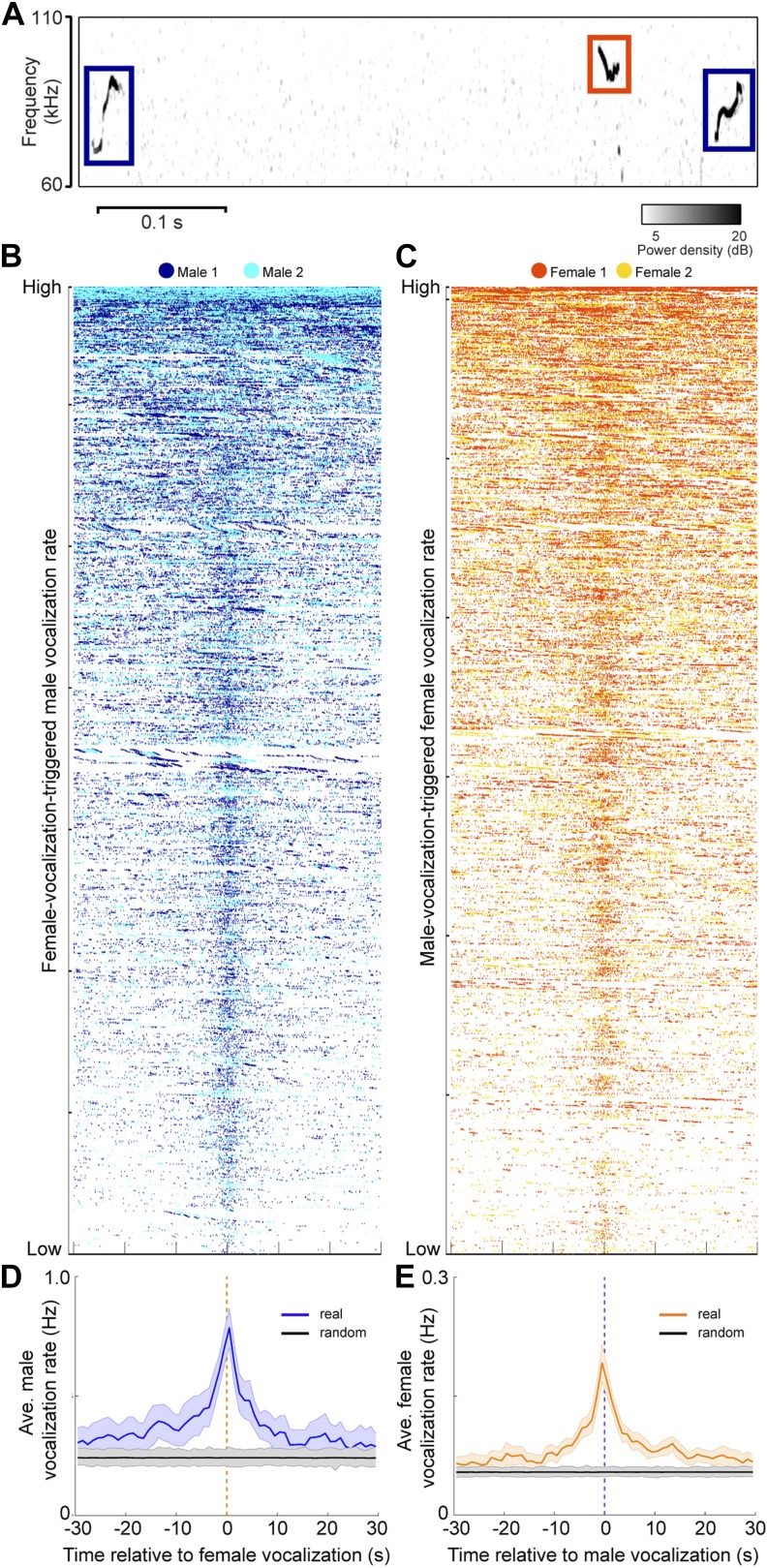
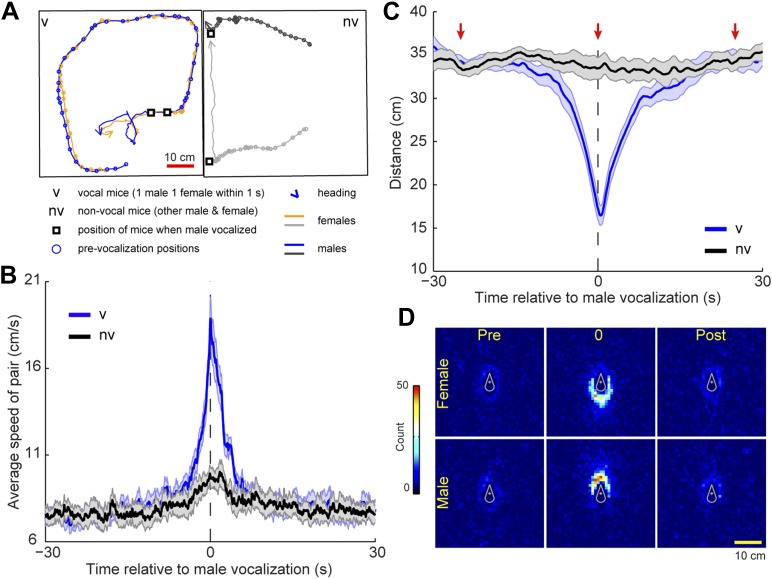
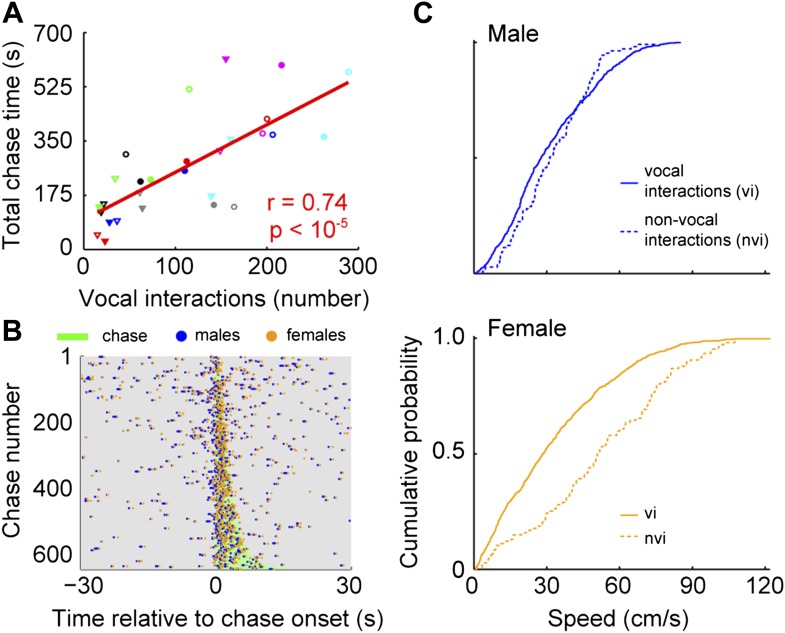
During courtship males attract females with elaborate behaviors. In mice, these displays include ultrasonic vocalizations. Ultrasonic courtship vocalizations were previously attributed to the courting male, despite evidence that both sexes produce virtually indistinguishable vocalizations. Because of this similarity, and the difficulty of assigning vocalizations to individuals, the vocal contribution of each individual during courtship is unknown. To address this question, we developed a microphone array system to localize vocalizations from socially interacting, individual adult mice. With this system, we show that female mice vocally interact with males during courtship. Males and females jointly increased their vocalization rates during chases. Furthermore, a female's participation in these vocal interactions may function as a signal that indicates a state of increased receptivity. Our results reveal a novel form of vocal communication during mouse courtship, and lay the groundwork for a mechanistic dissection of communication during social behavior.
Overview
The claims and statistics of this paper haven’t been checked yet.
Run the check — free, no account needed. It reads the open-access text and checks the sources it cites.
Integrity signals
Registry
Cites
Statistics
Figures
Verification
Claims the paper makes
The claims and statistics of this paper haven’t been checked yet.
Run the check — free, no account needed. It reads the open-access text and checks the sources it cites.
Claims other papers make about this one
Each is checked against this paper’s own text: does it say what the citing paper says it does?
The source backs part of the claim, not all of it — or backs it for a different population, condition or comparison.
In the citing paper
“Similarly, male mice alter behavior in response to female USVs, and these calls contain information about the female’s reproductive receptivity [92,93].”
From The Neurobiology of Love and Pair Bonding from Human and Animal Perspectives (2023) · cites this paper as [92]
Experimental — accuracy not yet measured
Self-check
Percentages, sums and reported differences re-computed from the paper’s own numbers.
The self-check needs the paper’s full text.
Citations
Cites
Principles of animal communication
(2012) · Choice Reviews Online · doi:10.5860/choice.49-5059 · Cited by 2,544
Sexual attractivity, proceptivity, and receptivity in female mammals
Beach, F. A. (1976) · Hormones and Behavior · doi:10.1016/0018-506x(76)90008-8 · Cited by 1,148 · cited 1×
“This is akin to other species; receptive females slow down permitting the courting male to approach and mate (McGill, 1962; Beach, 1976; Hall, 1994; Kowalski et al., 2004; Szykman et al., 2007).”
BackgroundSpectral Analysis for Physical Applications: Multitaper and Conventional Univariate Techniques.
DSS, Percival, D. B., & Walden, A. T. (1997) · Journal of the American Statistical Association · doi:10.2307/2965609 · Cited by 975
The adaptive value of sociality in mammalian groups
Silk, J. B. (2007) · Philosophical Transactions of the Royal Society B Biological Sciences · doi:10.1098/rstb.2006.1994 · Cited by 842 · cited 1×
“DOI: 10.7554/eLife.06203 1 of 24 between males (Silk, 2007).”
InfluentialPrinciples of Animal Communication
Howard, R. W. (1999) · American Entomologist · doi:10.1093/ae/45.2.126 · Cited by 736
Holy, T. E., & Guo, Z. (2005) · PLoS Biology · doi:10.1371/journal.pbio.0030386 · Cited by 673 · cited 2×
“Second, although mice appear to produce characteristic vocal patterns or songs (Holy and Guo, 2005; Sugimoto et al., 2011; Hoffmann et al., 2012), individual ultrasonic vocalizations are similar across animals, both within and between sexes (Hammerschmidt et al., 2012a).”
BackgroundHall, J. C. (1994) · Science · doi:10.1126/science.8209251 · Cited by 668 · cited 1×
“This is akin to other species; receptive females slow down permitting the courting male to approach and mate (McGill, 1962; Beach, 1976; Hall, 1994; Kowalski et al., 2004; Szykman et al., 2007).”
BackgroundBlumstein, D. T., Mennill, D. J., Clemins, P. J., Girod, L., Yao, K., Patricelli, G. L., Deppe, J. L., Krakauer, A. H., Clark, C. W., Cortopassi, K. A., et al. (2011) · Journal of Applied Ecology · doi:10.1111/j.1365-2664.2011.01993.x · Cited by 657 · cited 2×
“Other systems capitalized on the power of an array to determine the number of animals hidden in dense terrain (Celis-Murillo et al., 2009; Blumstein et al., 2011) or map the boundaries of an animal’s territory (Kirschel et al.”
BackgroundJAABA: Interactive machine learning for automatic annotation of animal behavior
Kabra, M., Robie, A. A., Rivera-Alba, M., Branson, S., & Branson, K. (2013) · Nature Methods · doi:10.1038/nmeth.2281 · Cited by 644 · cited 2×
“An automated classifier (Janelia Automatic Animal Behavior Annotator; JAABA; Kabra et al. (2013), http://jaaba.sourceforge.net) was used for identifying events when a female mouse was being followed.”
Method(2007) · PubMed · Cited by 597
Cited by
Sorted by citations
Neural circuit mechanisms of social behavior
Chen, P., & Hong, W. (2018) · Neuron · doi:10.1016/j.neuron.2018.02.026 · Cited by 527
“…of male courtship songs in mice are correlated with mate choice (Asaba et al., 2014); adult females are known to vocalize in the presence of novel conspecifics and vocally interact with males during courtship and parenting (Hammerschmidt et al., 2012; Liu et al., 2013; Neunuebel et al., 2015).”
Computational Analysis of Behavior
Egnor, S. E. R., & Branson, K. M. (2016) · Annual Review of Neuroscience · doi:10.1146/annurev-neuro-070815-013845 · Cited by 200
“Biologists have deployed a wide array of sensors to capture animal behavior, including infrared sensors (Friedman et al. 1997), microphone arrays (Neunuebel et al. 2015), laser Doppler vibrometry (Elias et al. 2003),…”
BackgroundA Specialized Neural Circuit Gates Social Vocalizations in the Mouse
Tschida, K., Michael, V., Takatoh, J., Han, B.-X., Zhao, S., Sakurai, K., MOONEY, R. D., & Wang, F. (2019) · Neuron · doi:10.1016/j.neuron.2019.05.025 · Cited by 188
Measuring behavior across scales
Berman, G. J. (2018) · BMC Biology · doi:10.1186/s12915-018-0494-7 · Cited by 194
“…dynamics to, for example, audio dynamics through asking what behavioral features predict the performance of a particular song or song type using methods such as general linear models (GLMs) [88–90], and improvements in automated methods have increased the throughput of audio data analysis [91–94].”
MethodAn insular view of the social decision-making network
Rogers-Carter, M. M., & Christianson, J. P. (2019) · Neuroscience & Biobehavioral Reviews · doi:10.1016/j.neubiorev.2019.06.005 · Cited by 121
Metadata
- Authors
- Neunuebel, J. P., Taylor, A. L., Arthur, B. J., & Egnor, S. R.
- Affiliations
- Howard Hughes Medical Institute (US)
- Janelia Research Campus, Howard Hughes Medical Institute, Ashburn, United States
- Corresponding author
- Neunuebel, Joshua P
- Venue
- eLife
- Publisher
- eLife Sciences Publications, Ltd
- Published
- 2015-05-28
- Volume
- 4
- ISSN
- 2050-084X (ISSN-L)
- PMC
- PMC4447045
- OpenAlex
- W2161992654
- Cited by
- 224
- References
- 91
- Citations by year
- 2026: 15 · 2025: 20 · 2024: 24 · 2023: 23 · 2022: 22 · 2021: 22 · 2020: 18 · 2019: 13 · 2018: 24 · 2017: 18 · 2016: 22 · 2015: 3
- FWCI
- 19.33
- Type
- journal article
- Language
- en
- Open access
- gold
- doi.org
- Licence
- Locations
- eLife (publishedVersion, cc-by)
- Europe PMC (PubMed Central) (publishedVersion, cc-by)
- PubMed Central (publishedVersion, cc-by)
- PubMed (publishedVersion)
- DOAJ (DOAJ: Directory of Open Access Journals) (submittedVersion, cc-by-sa)
- Funders
- Howard Hughes Medical Institute (HHMI) (Janelia Research Campus)
- Topics
- Life Sciences › Agricultural and Biological Sciences › Ecology, Evolution, Behavior and Systematics › Animal Vocal Communication and Behavior
- Life Sciences › Agricultural and Biological Sciences › Ecology, Evolution, Behavior and Systematics › Animal Behavior and Reproduction
- Life Sciences › Neuroscience › Endocrine and Autonomic Systems › Neuroendocrine regulation and behavior
- Keywords
- courtship vocalizations, ultrasonic vocalizations, microphone array, vocal communication, chase, social behavior
- MeSH terms
- Animals, Courtship, Female, Male, Mice, Inbred C57BL, Sex Factors, Social Behavior, Ultrasonics, Vocalization, Animal, Mice
About these checks
Registry, retraction, Cites and statistics results are computed, not judged, with one exception: a printed reference that no index lists is read once by a model before it counts as a citation error. Claims are extracted by a model and kept only when their quote appears verbatim in the text; each cited source is then checked, with a model’s help, for whether it says what the claim relies on. Those verdicts can be wrong — read the claim’s quote and the cited source before relying on one.
Statistics and arithmetic are recomputed, not judged.
Confidence bands are shown only for fields calibrated on our annotated test set. None is calibrated yet, so no band is shown.
What counts as a claim ›How we measure confidence ›How we check this ›
Are you an author, or do you see a problem with this page? Request a review
