

The DOI matches its Crossref record; 1 of the 1 references it cites were found in a registry or an index.
Conduction pathway for potassium through the Escherichia coli pump KdpFABC
Open accessPublished version of a preprint
Abstract
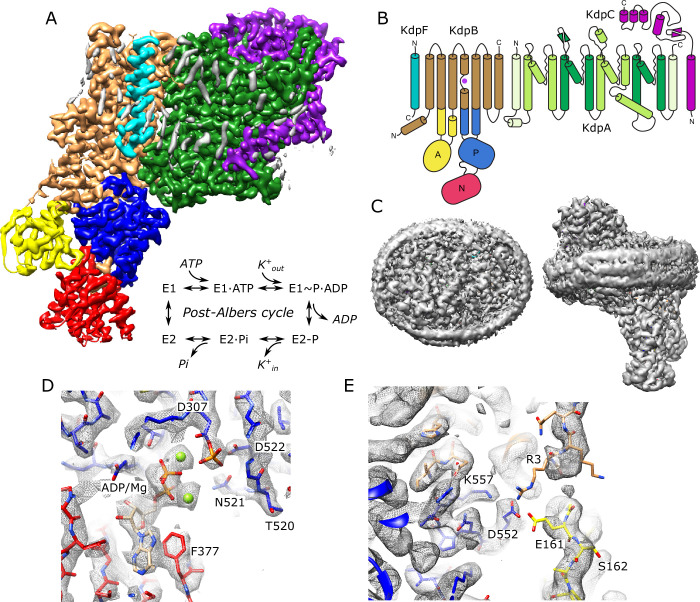
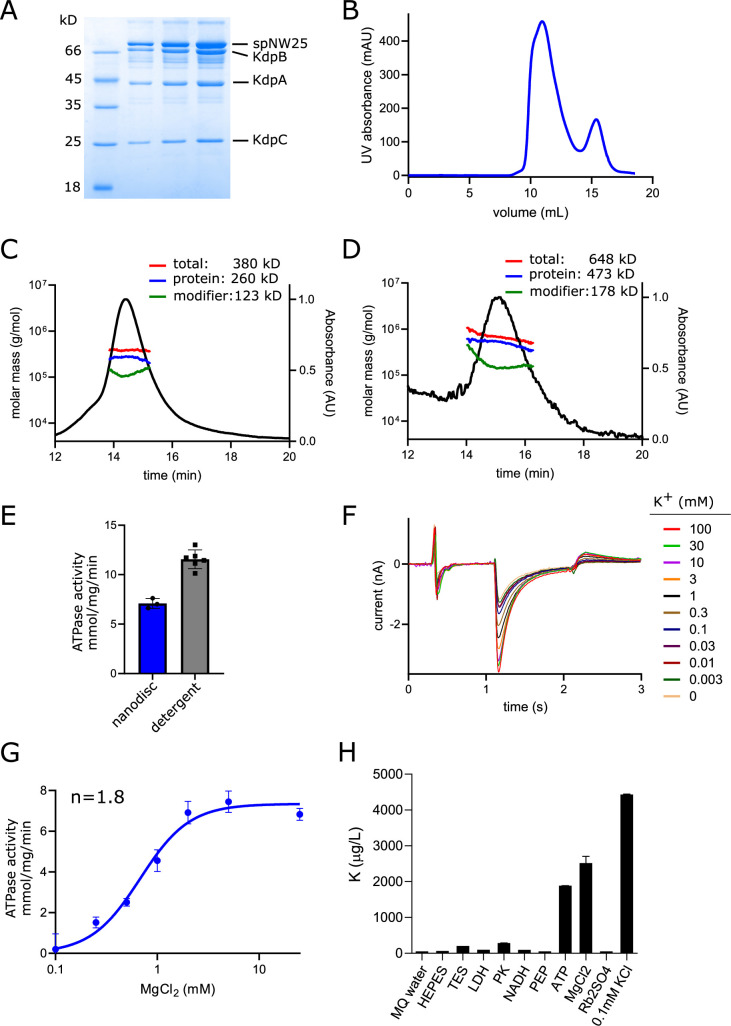
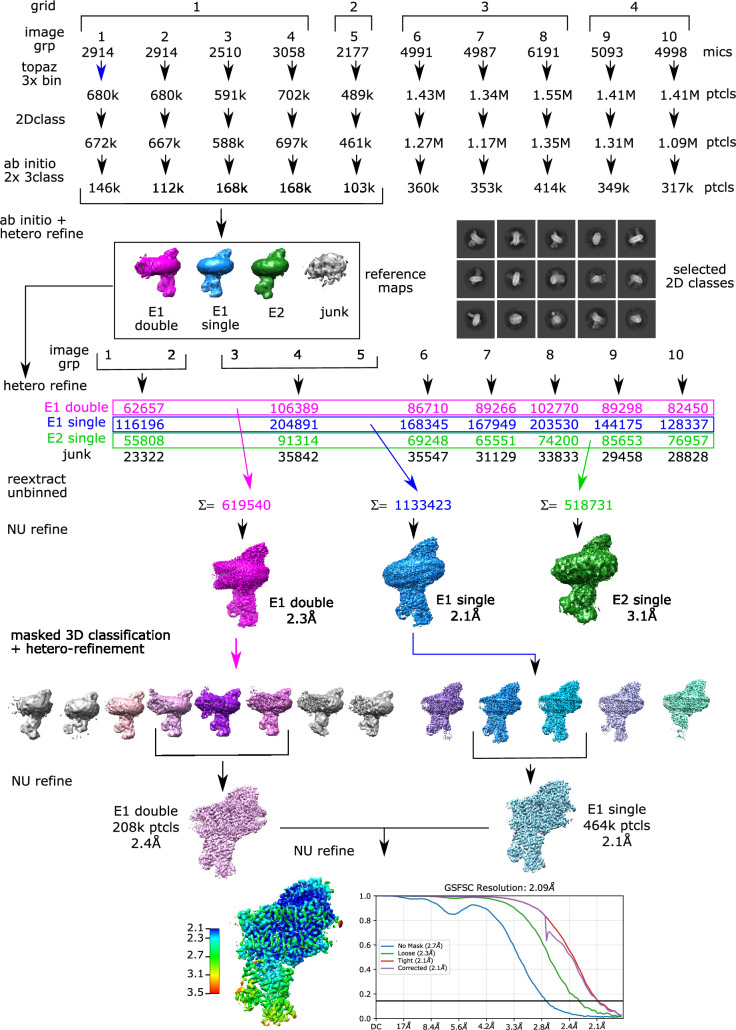
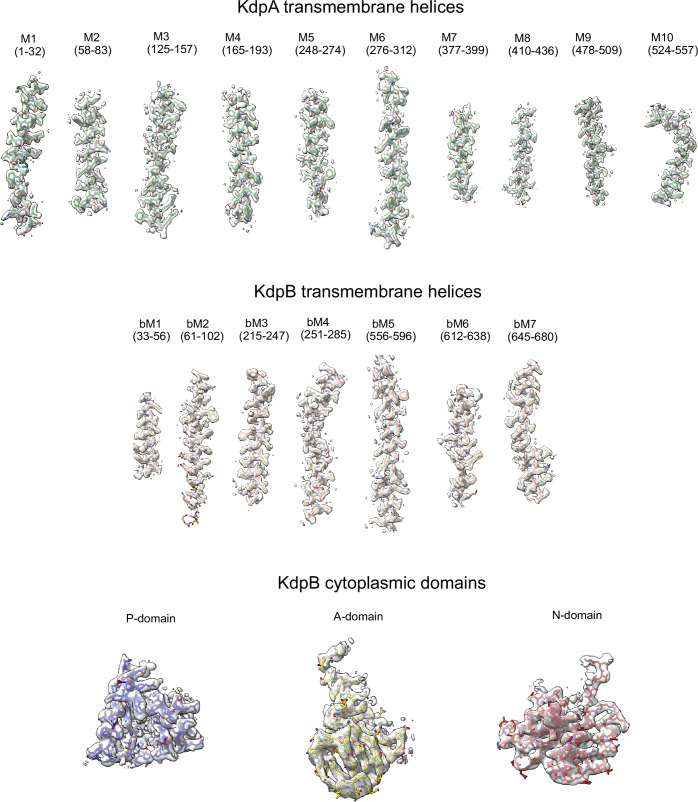
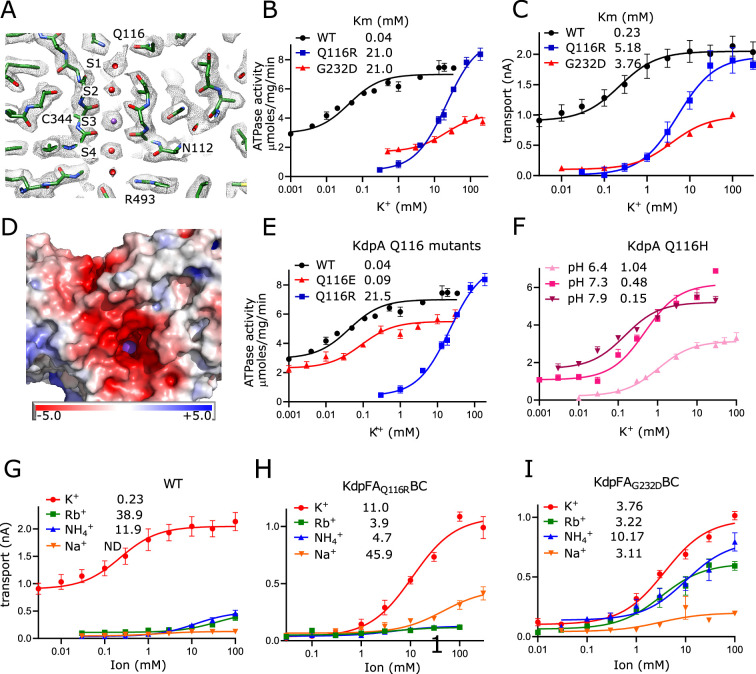
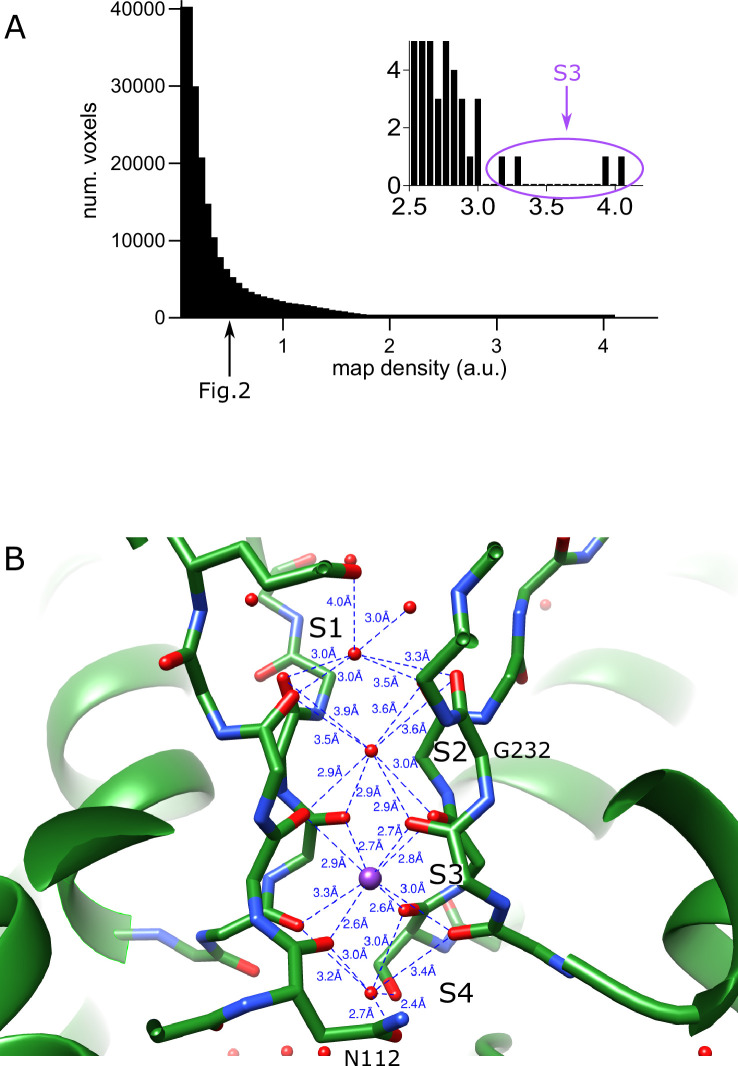
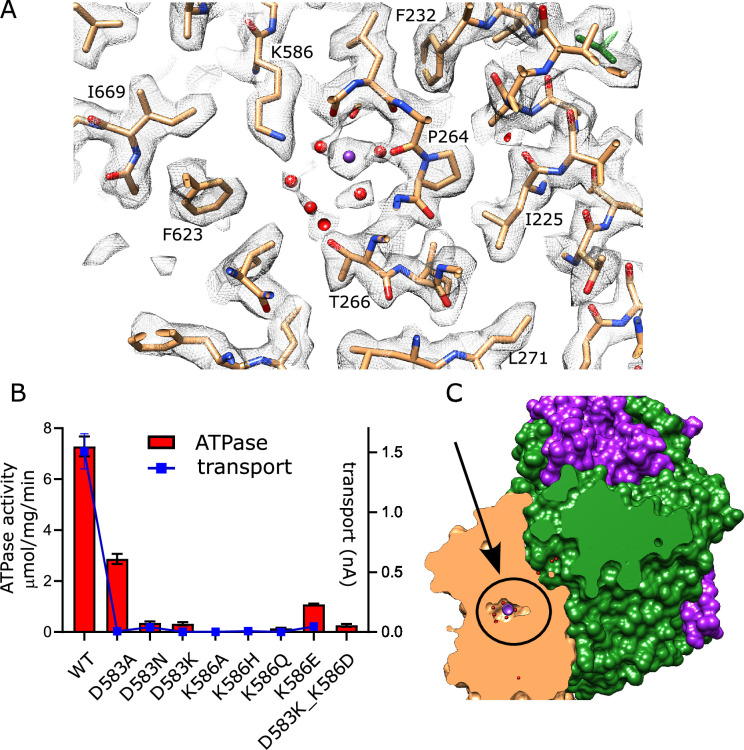
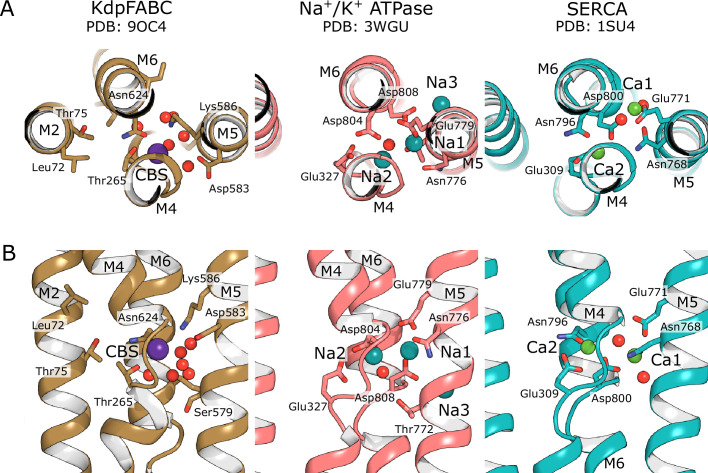
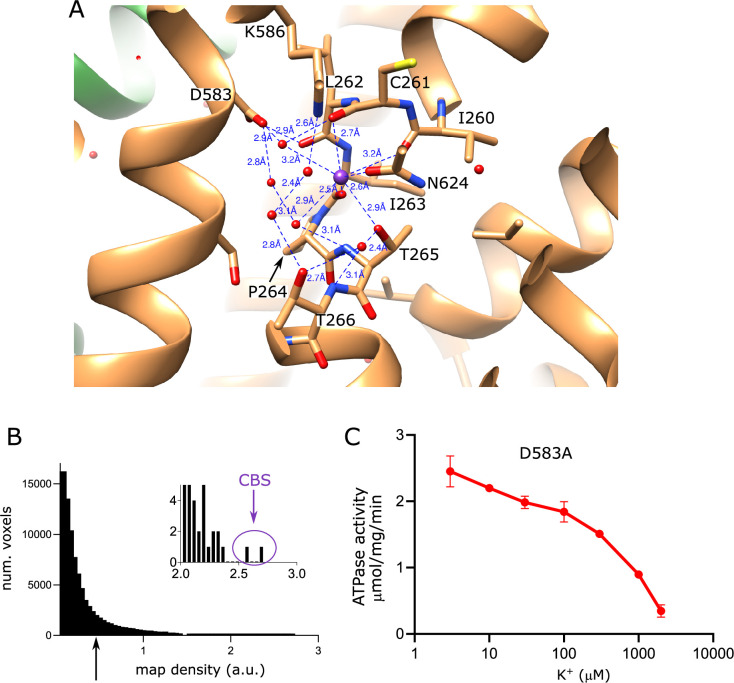
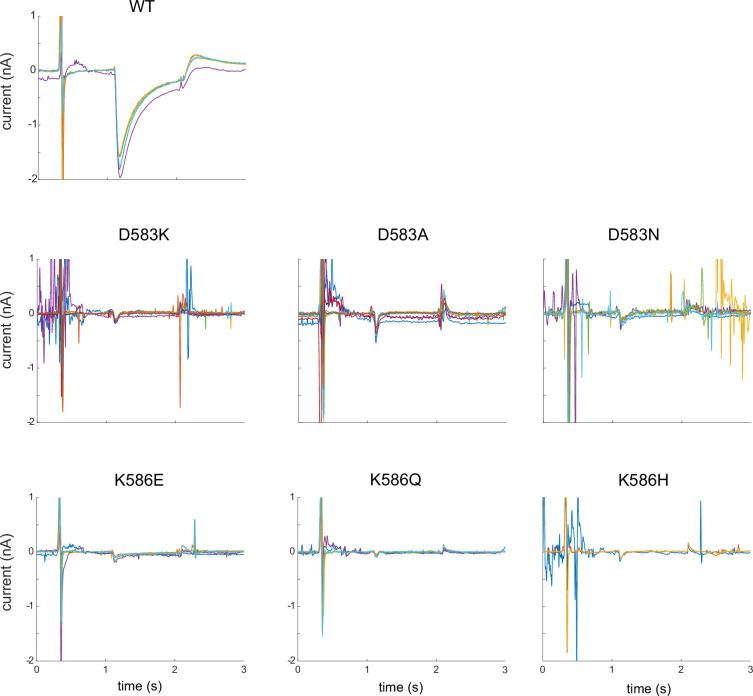
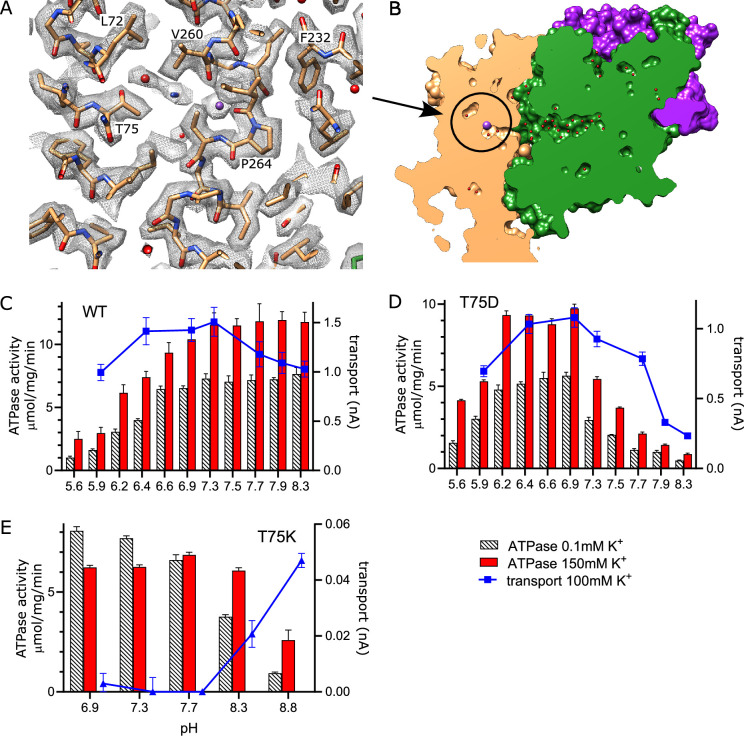
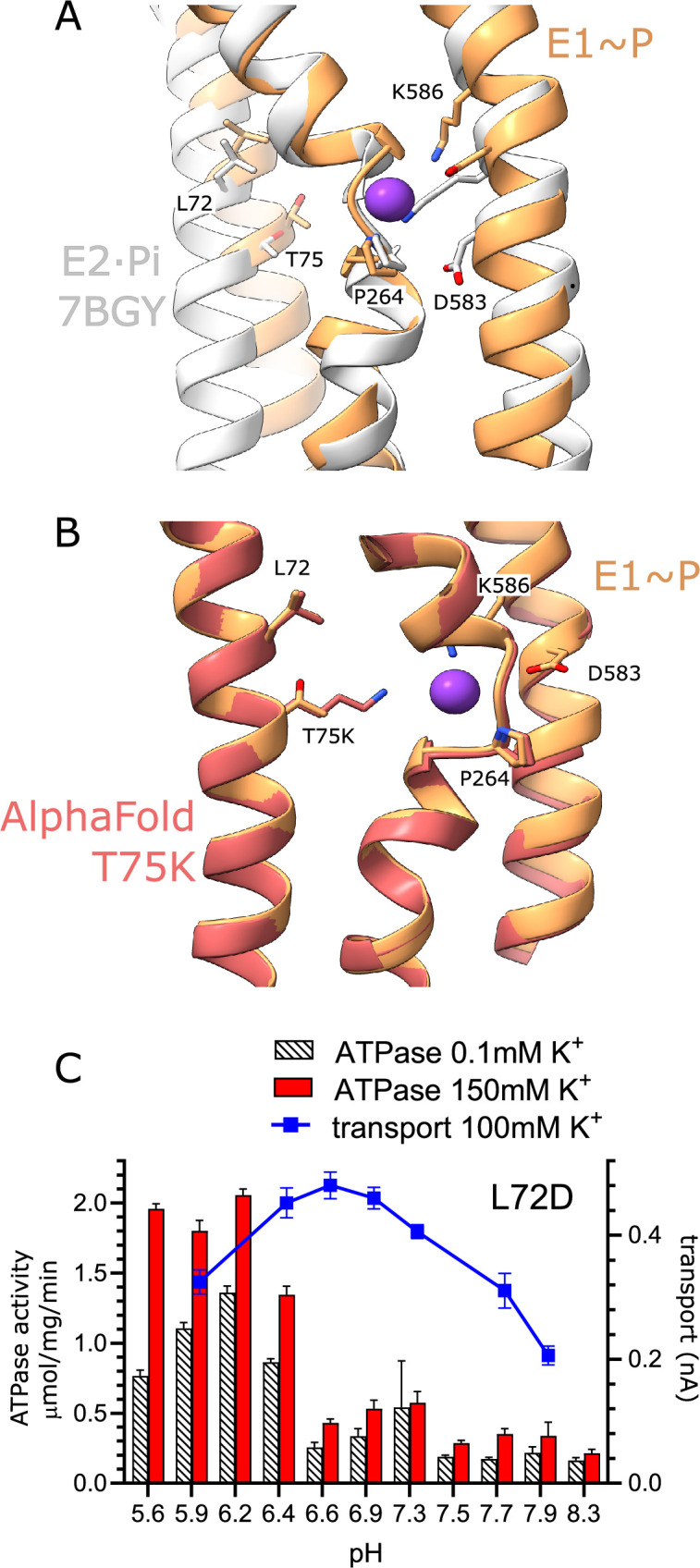
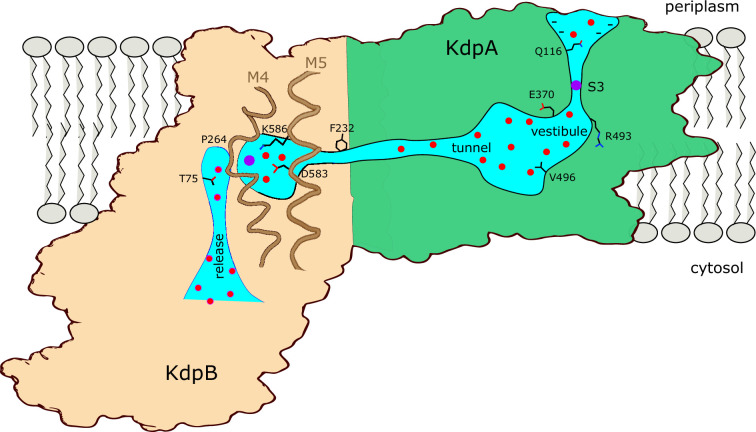
Under osmotic stress, bacteria express a heterotetrameric protein complex, KdpFABC, which functions as an ATP-dependent K + pump to maintain intracellular potassium levels. The subunit KdpA belongs to the superfamily of K + transporters and adopts pseudo fourfold symmetry with a membrane-embedded selectivity filter as seen in K + channels. KdpB belongs to the superfamily of P-type ATPases with a conserved binding site for ions within the membrane domain and three cytoplasmic domains that orchestrate ATP hydrolysis via an aspartyl phosphate intermediate. Previous work hypothesized that K + moves parallel to the membrane plane through a 40 Å long tunnel that connects the selectivity filter of KdpA with a canonical binding site in KdpB. In the current work, we have reconstituted KdpFABC into lipid nanodiscs and used cryo-EM to image the wild-type pump under turnover conditions. We present a 2.1 Å structure of the E1~P·ADP conformation, which reveals new features of the conduction pathway. This map shows strong densities within the selectivity filter and at the canonical binding site, consistent with K + bound at each of these sites in this conformation. Many water molecules occupy a vestibule and the proximal end of the tunnel, which becomes markedly hydrophobic and dewetted at the subunit interface. We go on to use ATPase and ion transport assays to assess effects of numerous mutations along this proposed conduction pathway. The results confirm that K + ions pass through the tunnel and support the existence of a low-affinity site in KdpB for releasing these ions to the cytoplasm. Taken together, these data shed new light on the unique partnership between a transmembrane channel and an ATP-driven pump in maintaining the large electrochemical K + gradient essential for bacterial survival.
Overview
The claims and statistics of this paper haven’t been checked yet.
Run the check — free, no account needed. It reads the open-access text and checks the sources it cites.
Integrity signals
Registry
Cites
Statistics
Figures
Verification
Claims the paper makes
The claims and statistics of this paper haven’t been checked yet.
Run the check — free, no account needed. It reads the open-access text and checks the sources it cites.
Self-check
Percentages, sums and reported differences re-computed from the paper’s own numbers.
The self-check needs the paper’s full text.
Citations
Cites
Highly accurate protein structure prediction with AlphaFold
Jumper, J., Evans, R., Pritzel, A., Green, T., Figurnov, M., Ronneberger, O., Tunyasuvunakool, K., Bates, R., Žídek, A., Potapenko, A., et al. (2021) · Nature · doi:10.1038/s41586-021-03819-2 · Cited by 43,764
Research works printed but not linked: 66
- Adams, 2010, PHENIX: a comprehensive Python-based system for macromolecular structure solution, Acta Crystallographica. Section D, Biological Crystallography, 66, 213, 10.1107/S0907444909052925 · DOI · Paper page
- Albers, 1967, Biochemical aspects of active transport, Annual Review of Biochemistry, 36, 727, 10.1146/annurev.bi.36.070167.003455 · DOI
- Bazzone, 2022, SSM-based electrophysiology, a label-free real-time method reveals sugar binding & transport events in SGLT1, Biosensors & Bioelectronics, 197, 10.1016/j.bios.2021.113763 · DOI
- Bazzone, 2023, Functional characterization of SGLT1 using SSM-based electrophysiology: Kinetics of sugar binding and translocation, Frontiers in Physiology, 14, 10.3389/fphys.2023.1058583 · DOI
- Bepler, 2019, Positive-unlabeled convolutional neural networks for particle picking in cryo-electron micrographs, Nature Methods, 16, 1153, 10.1038/s41592-019-0575-8 · DOI
- Bitter, 2022, Structure of the Wilson disease copper transporter ATP7B, Science Advances, 8, 10.1126/sciadv.abl5508 · DOI
- Bramkamp, 2005, Single amino acid substitution in the putative transmembrane helix V in KdpB of the KdpFABC complex of Escherichia coli uncouples ATPase activity and ion transport, Biochemistry, 44, 8260, 10.1021/bi050135n · DOI
- Buurman, 1995, Genetic evidence for two sequentially occupied K+ binding sites in the Kdp transport ATPase, The Journal of Biological Chemistry, 270, 6678, 10.1074/jbc.270.12.6678 · DOI
- Calì, 2017, Regulation of cell calcium and role of plasma membrane calcium ATPases, International Review of Cell and Molecular Biology, 332, 259, 10.1016/bs.ircmb.2017.01.002 · DOI
- Diskowski, 2015, Functional diversity of the superfamily of K+ transporters to meet various requirements, Biological Chemistry, 396, 1003, 10.1515/hsz-2015-0123 · DOI
- Dorus, 2001, Substrate-binding clusters of the K+-transporting Kdp ATPase of Escherichia coli investigated by amber suppression scanning mutagenesis, The Journal of Biological Chemistry, 276, 9590, 10.1074/jbc.M009365200 · DOI
- Doyle, 1998, The structure of the potassium channel: molecular basis of K+ conduction and selectivity, Science, 280, 69, 10.1126/science.280.5360.69 · DOI
- Durell, 2000, Does the KdpA subunit from the high affinity K+-translocating P-type KDP-ATPase have a structure similar to that of K+ channels?, Biophysical Journal, 78, 188, 10.1016/S0006-3495(00)76584-2 · DOI
- Dyla, 2020, Structure and mechanism of P-type ATPase ion pumps, Annual Review of Biochemistry, 89, 583, 10.1146/annurev-biochem-010611-112801 · DOI
- Emsley, 2010, Features and development of Coot, Acta Crystallogr Sect - Biol Crystallogr, 66, 486, 10.1107/S0907444910007493 · DOI · Paper page
- Epstein, 1970, Potassium-dependant mutants of Escherichia coli K-12, Journal of Bacteriology, 101, 836, 10.1128/jb.101.3.836-843.1970 · DOI
- Epstein, 1978, A K+ transport ATPase in Escherichia coli, The Journal of Biological Chemistry, 253, 6666, 10.1016/S0021-9258(17)37969-3 · DOI
- Gassel, 1999, The KdpF subunit is part of the K(+)-translocating Kdp complex of Escherichia coli and is responsible for stabilization of the complex in vitro, The Journal of Biological Chemistry, 274, 37901, 10.1074/jbc.274.53.37901 · DOI
- Gayen, 2016, Protonation of a glutamate residue modulates the dynamics of the drug transporter EmrE, Nature Chemical Biology, 12, 141, 10.1038/nchembio.1999 · DOI
- Henderson, 2020, Alternative proton-binding site and long-distance coupling in Escherichia coli sodium–proton antiporter NhaA, PNAS, 117, 25517, 10.1073/pnas.2005467117 · DOI
- Hesse, 1984, Sequence homology between two membrane transport ATPases, the Kdp-ATPase of Escherichia coli and the Ca2+-ATPase of sarcoplasmic reticulum, PNAS, 81, 4746, 10.1073/pnas.81.15.4746 · DOI
- Huang, 2017, Crystal structure of the potassium-importing KdpFABC membrane complex, Nature, 546, 681, 10.1038/nature22970 · DOI
- Hussein, 2024, Numerical model for electrogenic transport by the ATP-dependent potassium pump KdpFABC, Biophysical Reports, 4, 10.1016/j.bpr.2024.100169 · DOI
- Isom, 2010, Charges in the hydrophobic interior of proteins, PNAS, 107, 16096, 10.1073/pnas.1004213107 · DOI
- Jurcik, 2018, CAVER Analyst 2.0: analysis and visualization of channels and tunnels in protein structures and molecular dynamics trajectories, Bioinformatics, 34, 3586, 10.1093/bioinformatics/bty386 · DOI
- Kanai, 2013, Crystal structure of a Na+-bound Na+,K+-ATPase preceding the E1P state, Nature, 502, 201, 10.1038/nature12578 · DOI
- Kühlbrandt, 2004, Biology, structure and mechanism of P-type ATPases, Nature Reviews. Molecular Cell Biology, 5, 282, 10.1038/nrm1354 · DOI
- Laimins, 1978, Identification of the structural proteins of an ATP-driven potassium transport system in Escherichia coli, PNAS, 75, 3216, 10.1073/pnas.75.7.3216 · DOI
- Lev, 2023, Involvement of the alpha-subunit N-terminus in the mechanism of the Na+,K+-ATPase, Biochimica et Biophysica Acta - Molecular Cell Research, 1870, 10.1016/j.bbamcr.2023.119539 · DOI
- Li, 2005, Very fast empirical prediction and rationalization of protein pK a values, Proteins, 61, 704, 10.1002/prot.20660 · DOI
- Liu, 2013, Equilibrium selectivity alone does not create K+-selective ion conduction in K+ channels, Nature Communications, 4, 10.1038/ncomms3746 · DOI
- Madapally, 2025, On the Mechanism of K + Transport through the Inter-Subunit Tunnel of KdpFABC, 10.1101/2025.03.04.641403 · DOI
- Meng, 2023, UCSF ChimeraX: Tools for structure building and analysis, Protein Science, 32, 10.1002/pro.4792 · DOI
- Miller, 2000, An overview of the potassium channel family, Genome Biology, 1, 10.1186/gb-2000-1-4-reviews0004 · DOI
- Morais-Cabral, 2001, Energetic optimization of ion conduction rate by the K+ selectivity filter, Nature, 414, 37, 10.1038/35102000 · DOI · Paper page
- Morrison, 2015, Asymmetric protonation of EmrE, The Journal of General Physiology, 146, 445, 10.1085/jgp.201511404 · DOI
- Naranjo, 2016, Pore size matters for potassium channel conductance, The Journal of General Physiology, 148, 277, 10.1085/jgp.201611625 · DOI
- Panahi, 2015, Membrane environment modulates the pKa values of transmembrane helices, The Journal of Physical Chemistry. B, 119, 4601, 10.1021/acs.jpcb.5b00289 · DOI
- Pedersen, 2007, Crystal structure of the plasma membrane proton pump, Nature, 450, 1111, 10.1038/nature06417 · DOI
- Pedersen, 2019, The KdpFABC complex - K+ transport against all odds, Molecular Membrane Biology, 35, 21, 10.1080/09687688.2019.1638977 · DOI
- Pettersen, 2004, UCSF Chimera--a visualization system for exploratory research and analysis, Journal of Computational Chemistry, 25, 1605, 10.1002/jcc.20084 · DOI
- Post, 1969, Flexibility of an active center in sodium-plus-potassium adenosine triphosphatase, The Journal of General Physiology, 54, 306, 10.1085/jgp.54.1.306 · DOI
- Prabhananda, 1991, Nigericin-mediated H+, K+ and Na+ transports across vesicular membrane: T-jump studies, Biochimica et Biophysica Acta, 1070, 481, 10.1016/0005-2736(91)90090-u · DOI
- Punjani, 2017, cryoSPARC: algorithms for rapid unsupervised cryo-EM structure determination, Nature Methods, 14, 290, 10.1038/nmeth.4169 · DOI · Paper page
- Puppe, 1992, The phosphorylation site of the Kdp-ATPase of Escherichia coli: site-directed mutagenesis of the aspartic acid residues 300 and 307 of the KdpB subunit, Molecular Microbiology, 6, 3511, 10.1111/j.1365-2958.1992.tb01786.x · DOI
- Rabieh, 2020, MH-ICP-MS analysis of the freshwater and saltwater environmental resources of upolu island, samoa, Molecules, 25, 10.3390/molecules25214871 · DOI
- Rhoads, 1976, Cation transport in Escherichia coli. VIII: potassium transport mutants, The Journal of General Physiology, 67, 325, 10.1085/jgp.67.3.325 · DOI
- Scheres, 2012, RELION: Implementation of a Bayesian approach to cryo-EM structure determination, Journal of Structural Biology, 180, 519, 10.1016/j.jsb.2012.09.006 · DOI · Paper page
- Schrader, 2000, Replacement of glycine 232 by aspartic acid in the KdpA subunit broadens the ion specificity of the K(+)-translocating KdpFABC complex, Biophysical Journal, 79, 802, 10.1016/S0006-3495(00)76337-5 · DOI
- Silberberg, 2021, Deciphering ion transport and ATPase coupling in the intersubunit tunnel of KdpFABC, Nature Communications, 12, 10.1038/s41467-021-25242-x · DOI
- Silberberg, 2022, Inhibited KdpFABC transitions into an E1 off-cycle state, eLife, 11, 10.7554/eLife.80988 · DOI
- Silberberg, 2024, KdpD is a tandem serine histidine kinase that controls K+ pump KdpFABC transcriptionally and post-translationally, Nature Communications, 15, 10.1038/s41467-024-47526-8 · DOI
- Stock, 2018, Cryo-EM structures of KdpFABC suggest a K+ transport mechanism via two inter-subunit half-channels, Nature Communications, 9, 10.1038/s41467-018-07319-2 · DOI
- Stumpe, 1996, K+ circulation across the procaryotic cell membrane: k+-uptake systems in: konings WN, 473, 10.1016/S1383-8121(96)80062-5 · DOI
- Sweet, 2020, Serine phosphorylation regulates the P-type potassium pump KdpFABC, eLife, 9, 10.7554/eLife.55480 · DOI
- Sweet, 2021, Structural basis for potassium transport in prokaryotes by KdpFABC, PNAS, 118, 10.1073/pnas.2105195118 · DOI
- Tadini-Buoninsegni, 2006, Pre-steady state electrogenic events of Ca2+/H+ exchange and transport by the Ca2+-ATPase, The Journal of Biological Chemistry, 281, 37720, 10.1074/jbc.M606040200 · DOI
- Timcenko, 2019, Structure and autoregulation of a P4-ATPase lipid flippase, Nature, 571, 366, 10.1038/s41586-019-1344-7 · DOI
- Toyoshima, 2000, Crystal structure of the calcium pump of sarcoplasmic reticulum at 2.6 A resolution, Nature, 405, 647, 10.1038/35015017 · DOI
- van der Laan, 2002, Characterization of amino acid substitutions in KdpA, the K+-binding and -translocating subunit of the KdpFABC complex of Escherichia coli, Journal of Bacteriology, 184, 5491, 10.1128/JB.184.19.5491-5494.2002 · DOI
- Walderhaug, 1992, KdpD and KdpE, proteins that control expression of the kdpABC operon, are members of the two-component sensor-effector class of regulators, Journal of Bacteriology, 174, 2152, 10.1128/jb.174.7.2152-2159.1992 · DOI
- Wang, 2014, Structure and mechanism of Zn2+-transporting P-type ATPases, Nature, 514, 518, 10.1038/nature13618 · DOI
- Warren, 1974, Reversible lipid titrations of the activity of pure adenosine triphosphatase-lipid complexes, Biochemistry, 13, 5501, 10.1021/bi00724a008 · DOI
- Zhang, 2021, One-step construction of circularized nanodiscs using SpyCatcher-SpyTag, Nature Communications, 12, 10.1038/s41467-021-25737-7 · DOI
- Zhao, 2021, Structure and activation mechanism of the hexameric plasma membrane H+-ATPase, Nature Communications, 12, 10.1038/s41467-021-26782-y · DOI
- Hussein AK, Zhang X, Pedersen BP, Stokes DL. 2025. High-resolution cryo-EM structure of KdpFABC in the E1P-ADP state in lipid nanodisc. Worldwide Protein Data Bank. · DOI
Metadata
- Authors
- Hussein, A., Zhang, X., Pedersen, B. P., & Stokes, D. L.
- Affiliations
- NYU Langone Health (US)
- Aarhus University (DK)
- Corresponding author
- Stokes, David L
- Venue
- eLife
- Publisher
- eLife Sciences Publications, Ltd
- Published
- 2025-11-19
- Volume
- 14
- ISSN
- 2050-084X (ISSN-L)
- PMC
- PMC12629597
- OpenAlex
- W4410106811
- Cited by
- 2
- References
- 1
- Citations by year
- 2026: 2
- Type
- posted content
- Language
- en
- Open access
- gold
- doi.org
- Licence
- Locations
- eLife (publishedVersion, cc-by)
- bioRxiv (Cold Spring Harbor Laboratory) (acceptedVersion, cc-by)
- Europe PMC (PubMed Central) (publishedVersion, cc-by)
- PubMed (publishedVersion)
- PubMed Central (publishedVersion, cc-by)
- DOAJ (DOAJ: Directory of Open Access Journals) (submittedVersion, cc-by-sa)
- Funders
- National Institute of General Medical Sciences (R35GM144109, R24GM154185)
- Novo Nordisk Fonden (NNF24OC0088380)
- European Research Council (101000936)
- National Cancer Institute (P30CA016087)
- National Institute of Neurological Disorders and Stroke (R01NS108151)
- Topics
- Life Sciences › Biochemistry, Genetics and Molecular Biology › Molecular Biology › ATP Synthase and ATPases Research
- Life Sciences › Biochemistry, Genetics and Molecular Biology › Molecular Biology › Ion channel regulation and function
- Life Sciences › Biochemistry, Genetics and Molecular Biology › Molecular Biology › Ion Transport and Channel Regulation
- Keywords
- potassium pump, Escherichia coli, osmotic stress, P-type ATPase, lipid nanodiscs, cryo-EM structure, selectivity filter, ion binding sites
About these checks
Registry, retraction, Cites and statistics results are computed, not judged, with one exception: a printed reference that no index lists is read once by a model before it counts as a citation error. Claims are extracted by a model and kept only when their quote appears verbatim in the text; each cited source is then checked, with a model’s help, for whether it says what the claim relies on. Those verdicts can be wrong — read the claim’s quote and the cited source before relying on one.
Statistics and arithmetic are recomputed, not judged.
Confidence bands are shown only for fields calibrated on our annotated test set. None is calibrated yet, so no band is shown.
What counts as a claim ›How we measure confidence ›How we check this ›
Are you an author, or do you see a problem with this page? Request a review
How to cite
Cite CoChat for the checks on this page, and the paper for its own findings.
- This page
- CoChat. (2026). Citation check: Conduction pathway for potassium through the Escherichia coli pump KdpFABC. https://app.cochat.ai/papers/10.7554/elife.107397
- The paper
- Hussein, A., Zhang, X., Pedersen, B. P., & Stokes, D. L. (2025). Conduction pathway for potassium through the Escherichia coli pump KdpFABC. eLife. https://doi.org/10.7554/elife.107397
