

The DOI matches its Crossref record; 74 of the 74 references it cites were found in a registry or an index.
Synaptic transmission and plasticity require AMPA receptor anchoring via its N-terminal domain
Open accessAbstract
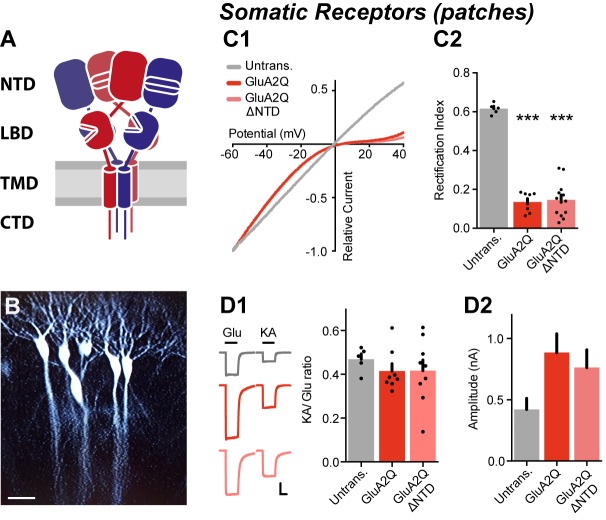
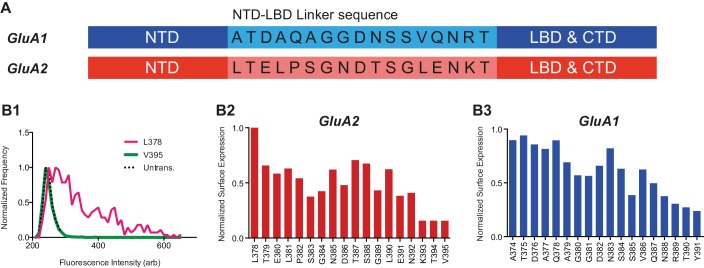
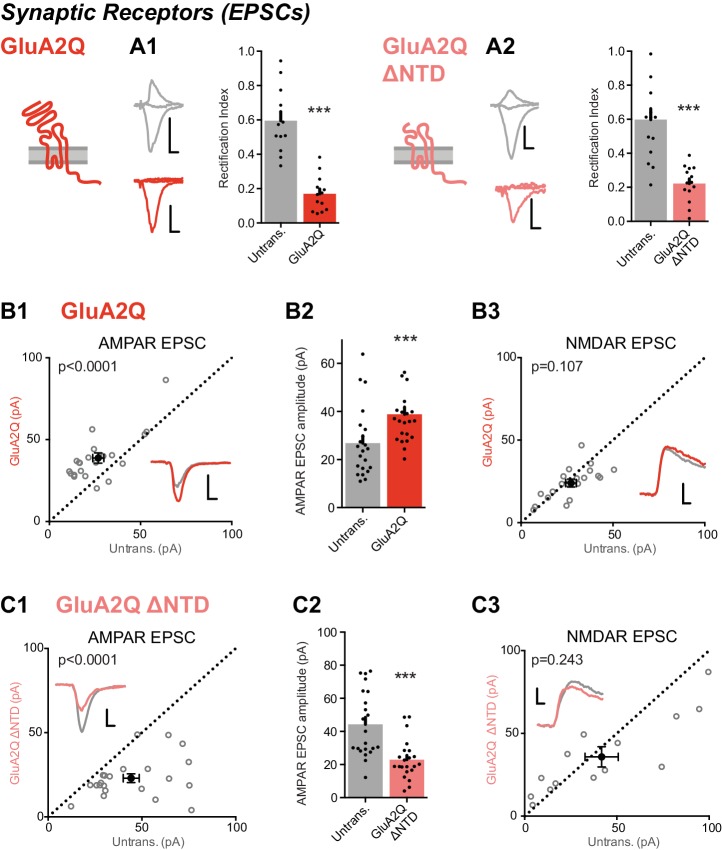
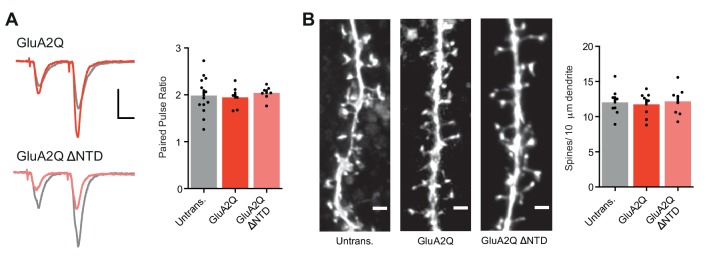
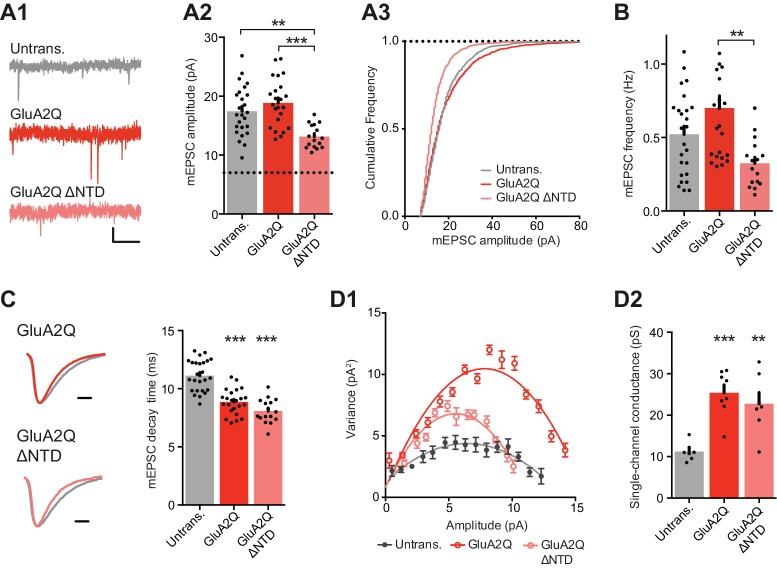
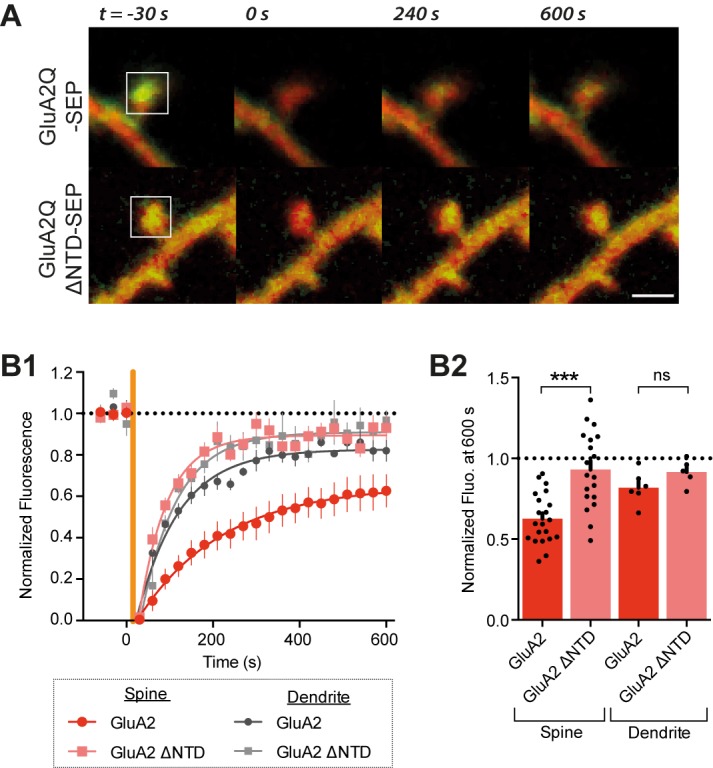
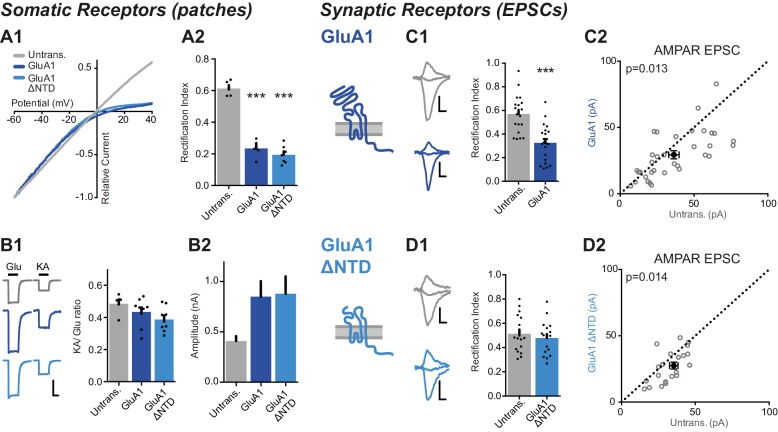
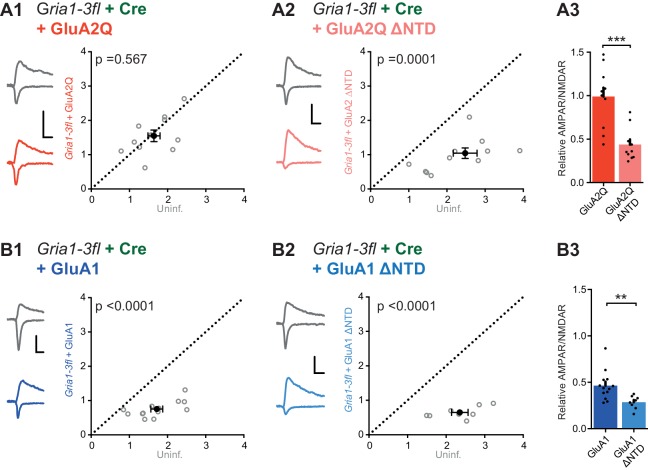
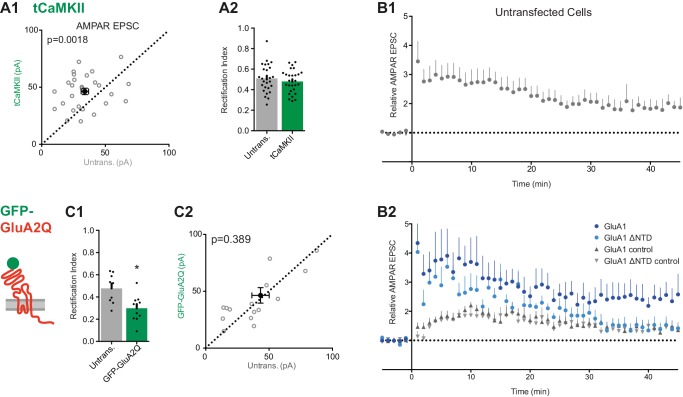
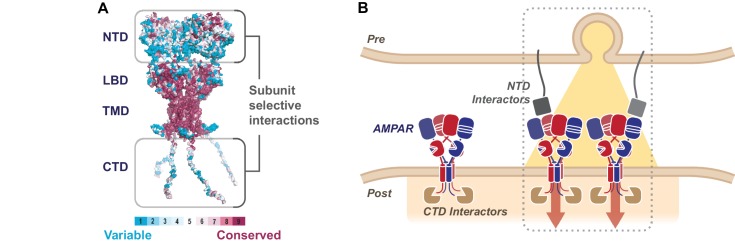
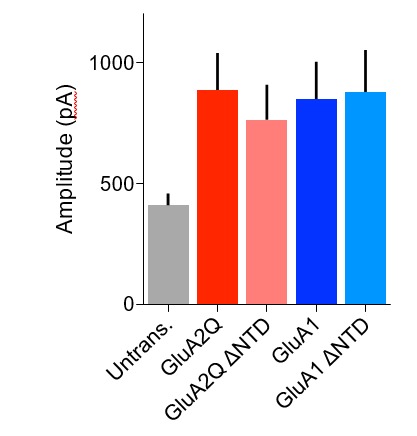
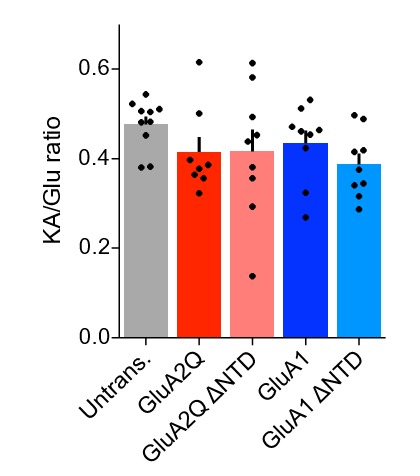
AMPA-type glutamate receptors (AMPARs) mediate fast excitatory neurotransmission and are selectively recruited during activity-dependent plasticity to increase synaptic strength. A prerequisite for faithful signal transmission is the positioning and clustering of AMPARs at postsynaptic sites. The mechanisms underlying this positioning have largely been ascribed to the receptor cytoplasmic C-termini and to AMPAR-associated auxiliary subunits, both interacting with the postsynaptic scaffold. Here, using mouse organotypic hippocampal slices, we show that the extracellular AMPAR N-terminal domain (NTD), which projects midway into the synaptic cleft, plays a fundamental role in this process. This highly sequence-diverse domain mediates synaptic anchoring in a subunit-selective manner. Receptors lacking the NTD exhibit increased mobility in synapses, depress synaptic transmission and are unable to sustain long-term potentiation (LTP). Thus, synaptic transmission and the expression of LTP are dependent upon an AMPAR anchoring mechanism that is driven by the NTD.
Overview
The claims and statistics of this paper haven’t been checked yet.
Run the check — free, no account needed. It reads the open-access text and checks the sources it cites.
Integrity signals
Registry
Cites
Statistics
Figures
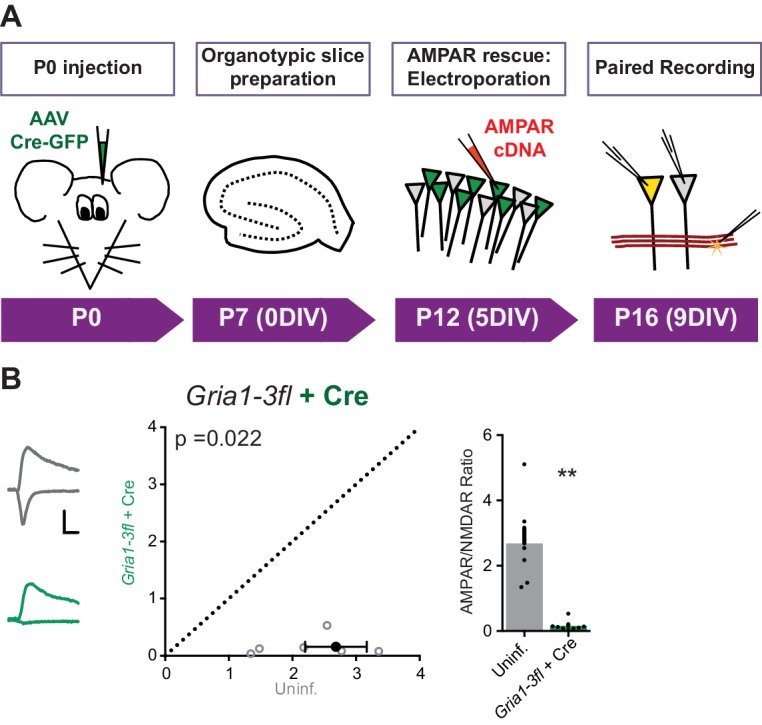
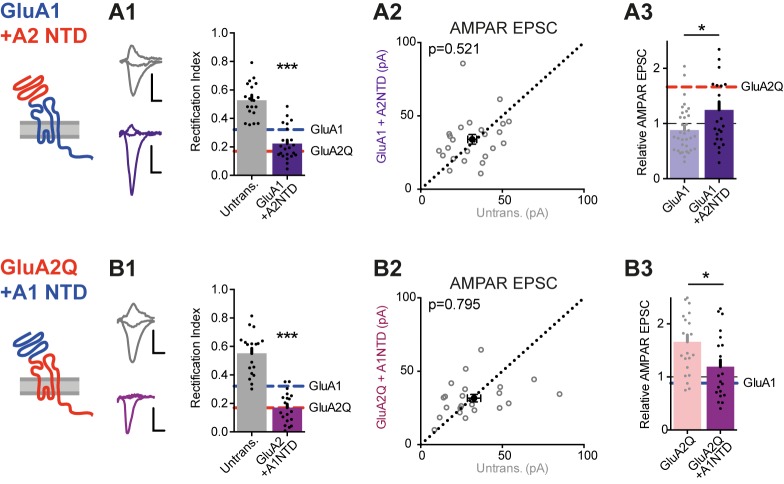
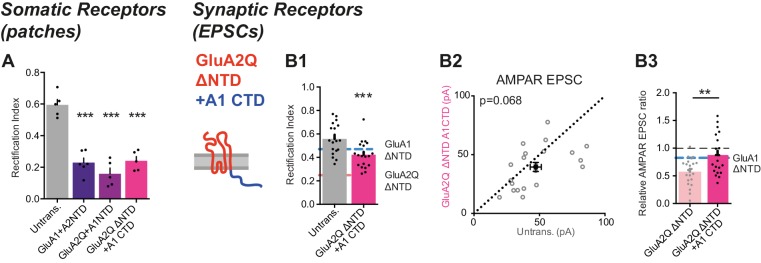
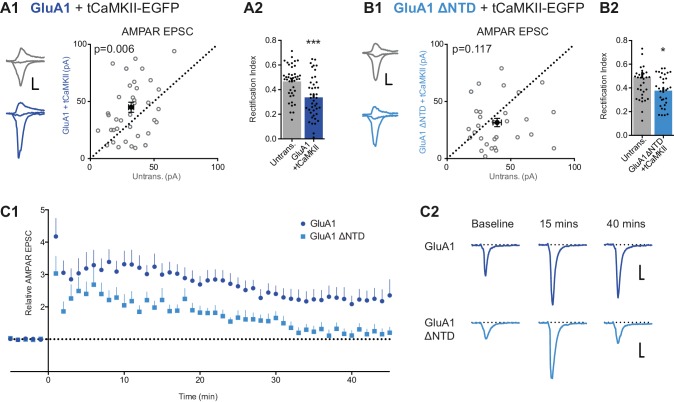
Verification
Claims the paper makes
The claims and statistics of this paper haven’t been checked yet.
Run the check — free, no account needed. It reads the open-access text and checks the sources it cites.
Claims other papers make about this one
Each is checked against this paper’s own text: does it say what the citing paper says it does?
The source backs part of the claim, not all of it — or backs it for a different population, condition or comparison.
In the citing paper
“Data show that the amino terminal domain is not necessary for the formation of functional ion channels, or delivery onto the cell surface, but is required for targeting and retention of GluA1 at synapses during LTP (Watson et al., 2017, Diaz-Alonso et al., 2017).”
From The AMPA Receptor Code of Synaptic Plasticity (2018) · cites this paper as Watson et al., 2017
Experimental — accuracy not yet measuredThe cited source says what the claim attributes to it.
In the citing paper
“Third, most of these studies have tagged GluA1 on the NH2 terminus. This tagging severely impacts the trafficking of the GluA1-containing receptor (343, 344).”
From Synaptic memory and CaMKII (2023) · cites this paper as [343]
Self-check
Percentages, sums and reported differences re-computed from the paper’s own numbers.
The self-check needs the paper’s full text.
Citations
Cites
NIH Image to ImageJ: 25 years of image analysis
Schneider, C. A., Rasband, W. S., & Eliceiri, K. W. (2012) · Nature Methods · doi:10.1038/nmeth.2089 · Cited by 64,638
Glutamate Receptor Ion Channels: Structure, Regulation, and Function
Traynelis, S. F., Wollmuth, L. P., McBain, C. J., Menniti, F. S., Vance, K. M., Ogden, K. K., Hansen, K. B., Yuan, H., Myers, S. J., & Dingledine, R. (2010) · Pharmacological Reviews · doi:10.1124/pr.109.002451 · Cited by 3,568
Ashkenazy, H., Abadi, S., Martz, E., Chay, O., Mayrose, I., Pupko, T., & Ben-Tal, N. (2016) · Nucleic Acids Research · doi:10.1093/nar/gkw408 · Cited by 3,163
A simple method for organotypic cultures of nervous tissue
Stoppini, L., Buchs, P., & Muller, D. (1991) · Journal of Neuroscience Methods · doi:10.1016/0165-0270(91)90128-m · Cited by 3,096
Hayashi, Y., Shi, S.-H., Esteban, J. A., Piccini, A., Poncer, J.-C., & Malinow, R. (2000) · Science · doi:10.1126/science.287.5461.2262 · Cited by 1,524
Liao, D., Hessler, N. A., & Malinow, R. (1995) · Nature · doi:10.1038/375400a0 · Cited by 1,365
Evidence for silent synapses: Implications for the expression of LTP
Isaac, J. T. R., Nicoll, R. A., & Malenka, R. C. (1995) · Neuron · doi:10.1016/0896-6273(95)90046-2 · Cited by 1,233
Shi, S.-H., Hayashi, Y., Esteban, J. A., & Malinow, R. (2001) · Cell · doi:10.1016/s0092-8674(01)00321-x · Cited by 1,094
Synaptic AMPA receptor plasticity and behavior
Kessels, H. W., & Malinow, R. (2009) · Neuron · doi:10.1016/j.neuron.2009.01.015 · Cited by 993
The cell biology of synaptic plasticity: AMPA receptor trafficking
Shepherd, J. D., & Huganir, R. L. (2007) · Annual Review of Cell and Developmental Biology · doi:10.1146/annurev.cellbio.23.090506.123516 · Cited by 978
Cited by
Sorted by citations
The AMPA Receptor Code of Synaptic Plasticity
Diering, G. H., & Huganir, R. L. (2018) · Neuron · doi:10.1016/j.neuron.2018.10.018 · Cited by 844
Structure, Function, and Pharmacology of Glutamate Receptor Ion Channels
Hansen, K. B., Wollmuth, L. P., Bowie, D., Furukawa, H., Menniti, F. S., Sobolevsky, A. I., Swanson, G. T., Swanger, S. A., Greger, I. H., Nakagawa, T., et al. (2021) · Pharmacological Reviews · doi:10.1124/pharmrev.120.000131 · Cited by 686
Self-citationStructural and Functional Architecture of AMPA-Type Glutamate Receptors and Their Auxiliary Proteins
Greger, I. H., Watson, J. F., & Cull-Candy, S. G. (2017) · Neuron · doi:10.1016/j.neuron.2017.04.009 · Cited by 392
Self-citationTranscellular Nanoalignment of Synaptic Function
Biederer, T., Kaeser, P. S., & Blanpied, T. A. (2017) · Neuron · doi:10.1016/j.neuron.2017.10.006 · Cited by 352
Channel opening and gating mechanism in AMPA-subtype glutamate receptors
Twomey, E. C., Yelshanskaya, M. V., Grassucci, R. A., Frank, J., & Sobolevsky, A. I. (2017) · Nature · doi:10.1038/nature23479 · Cited by 233
Metadata
- Authors
- Watson, J. F., Ho, H., & Greger, I. H.
- Affiliations
- MRC Laboratory of Molecular Biology (GB)
- Corresponding author
- Greger, Ingo H
- Venue
- eLife
- Publisher
- eLife Sciences Publications, Ltd
- Published
- 2017-03-14
- Volume
- 6
- ISSN
- 2050-084X (ISSN-L)
- PMC
- PMC5370185
- OpenAlex
- W2600278343
- Cited by
- 117
- References
- 74
- Citations by year
- 2026: 11 · 2025: 11 · 2024: 14 · 2023: 14 · 2022: 11 · 2021: 11 · 2020: 15 · 2019: 8 · 2018: 13 · 2017: 9
- FWCI
- 5.97
- Type
- journal article
- Language
- en
- Open access
- gold
- doi.org
- Licence
- Locations
- eLife (publishedVersion, cc-by)
- PubMed Central (publishedVersion, cc-by)
- PubMed (publishedVersion)
- DOAJ (DOAJ: Directory of Open Access Journals) (submittedVersion)
- Funders
- Medical Research Council (MC_U105174197)
- Biotechnology and Biological Sciences Research Council (BB/N002113/1)
- Topics
- Life Sciences › Neuroscience › Cellular and Molecular Neuroscience › Neuroscience and Neuropharmacology Research
- Life Sciences › Biochemistry, Genetics and Molecular Biology › Molecular Biology › Nicotinic Acetylcholine Receptors Study
- Life Sciences › Biochemistry, Genetics and Molecular Biology › Biochemistry › Amino Acid Enzymes and Metabolism
- Keywords
- AMPA receptors, synaptic transmission, long-term potentiation, synaptic plasticity, receptor mobility, postsynaptic scaffolds, hippocampus
- MeSH terms
- Animals, Hippocampus, Synaptic Transmission, Receptors, AMPA, Mice
About these checks
Registry, retraction, Cites and statistics results are computed, not judged, with one exception: a printed reference that no index lists is read once by a model before it counts as a citation error. Claims are extracted by a model and kept only when their quote appears verbatim in the text; each cited source is then checked, with a model’s help, for whether it says what the claim relies on. Those verdicts can be wrong — read the claim’s quote and the cited source before relying on one.
Statistics and arithmetic are recomputed, not judged.
Confidence bands are shown only for fields calibrated on our annotated test set. None is calibrated yet, so no band is shown.
What counts as a claim ›How we measure confidence ›How we check this ›
Are you an author, or do you see a problem with this page? Request a review
