

The DOI matches its Crossref record; 44 of the 45 references it cites were found in a registry or an index.
Adjusting for age improves identification of gut microbiome alterations in multiple diseases
Open accessAbstract
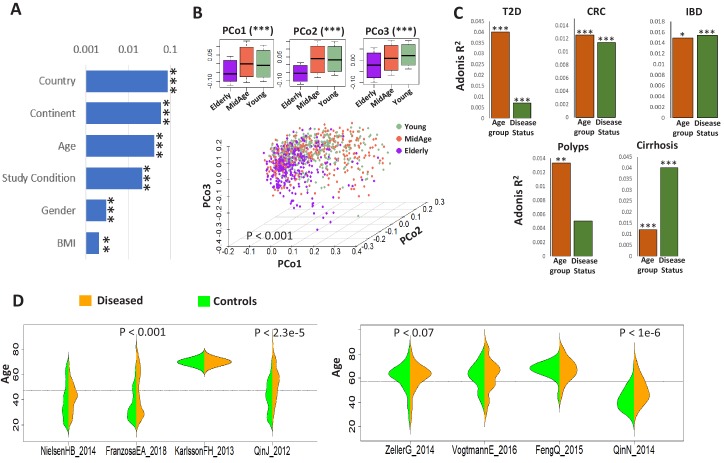
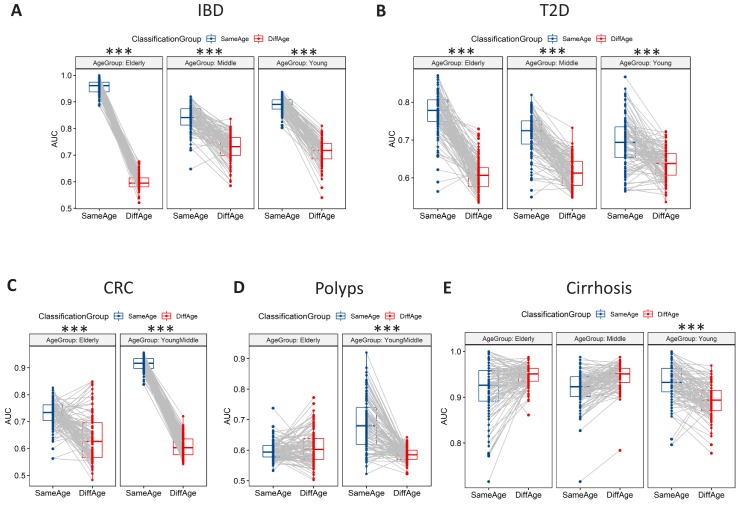
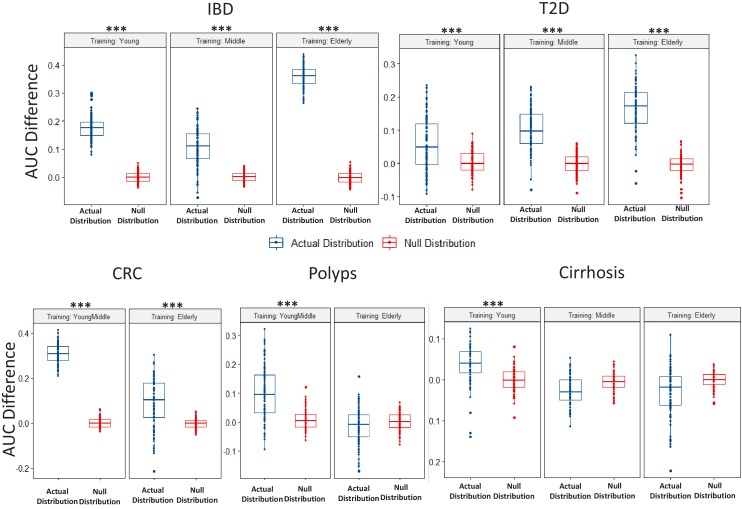
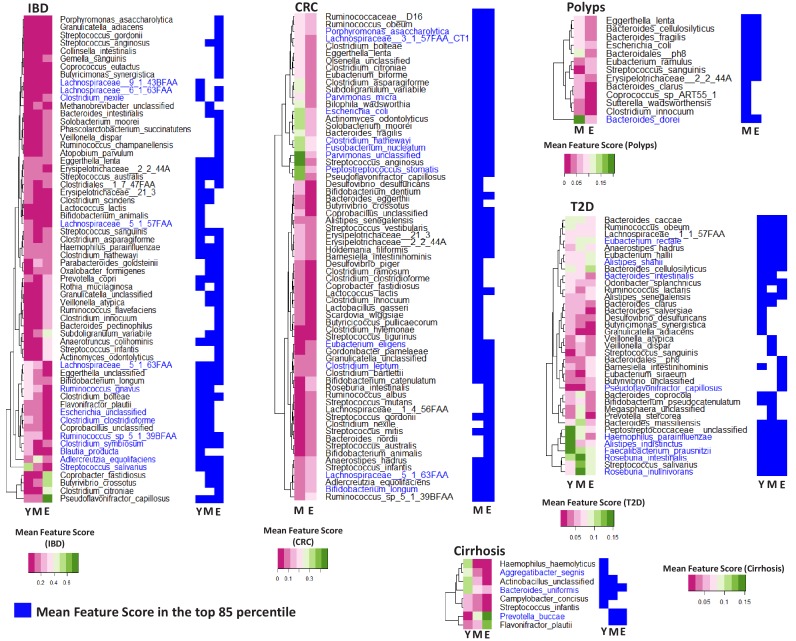
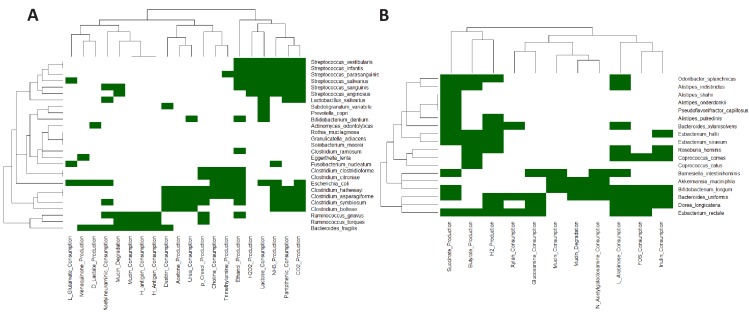
Interaction between disease-microbiome associations and ageing has not been explored in detail. Here, using age/region-matched sub-sets, we analysed the gut microbiome differences across five major diseases in a multi-cohort dataset constituting more than 2500 individuals from 20 to 89 years old. We show that disease-microbiome associations display specific age-centric trends. Ageing-associated microbiome alterations towards a disease-like configuration occur in colorectal cancer patients, thereby masking disease signatures. We identified a microbiome disease response shared across multiple diseases in elderly subjects that is distinct from that in young/middle-aged individuals, but also a novel set of taxa consistently gained in disease across all age groups. A subset of these taxa was associated with increased frailty in subjects from the ELDERMET cohort. The relevant taxa differentially encode specific functions that are known to have disease associations.
Overview
The claims and statistics of this paper haven’t been checked yet.
Run the check — free, no account needed. It reads the open-access text and checks the sources it cites.
Integrity signals
Registry
Cites
Statistics
Figures
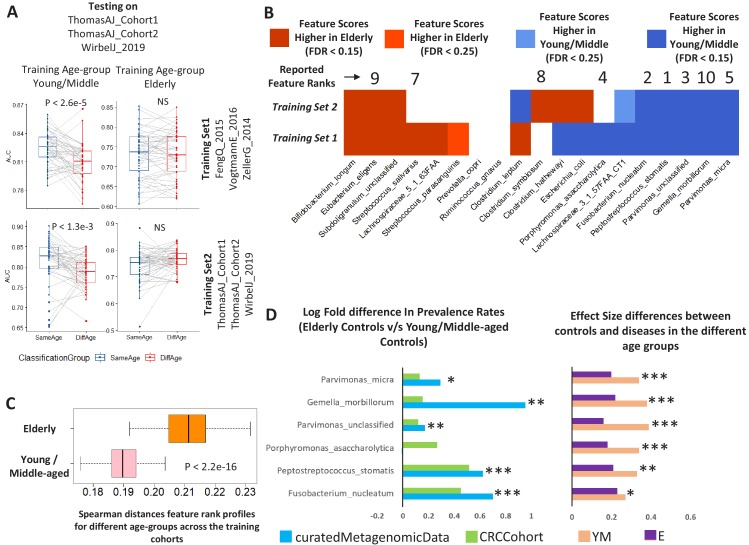
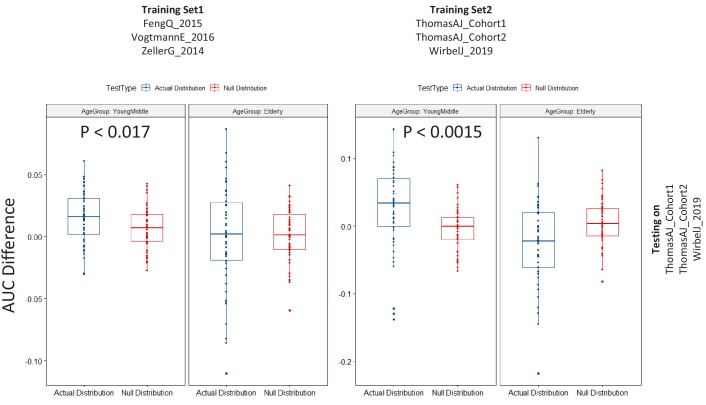
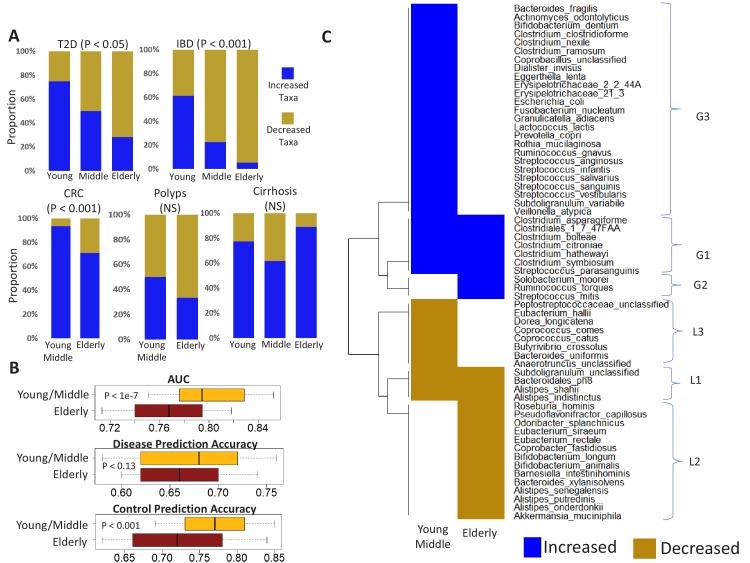
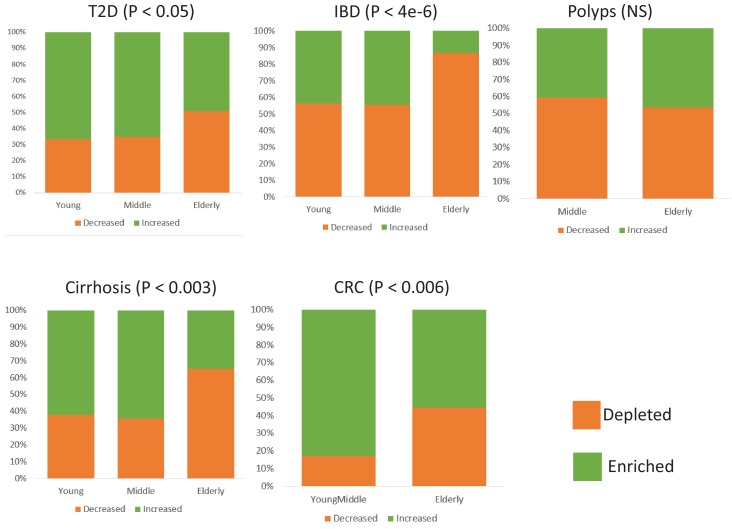
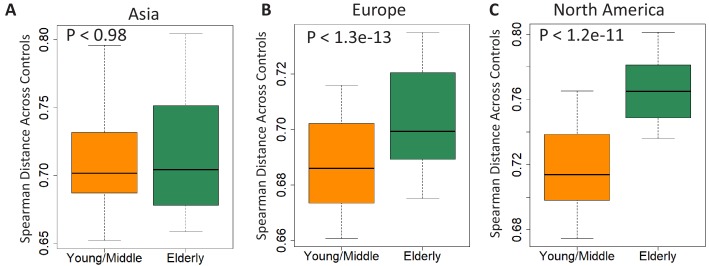
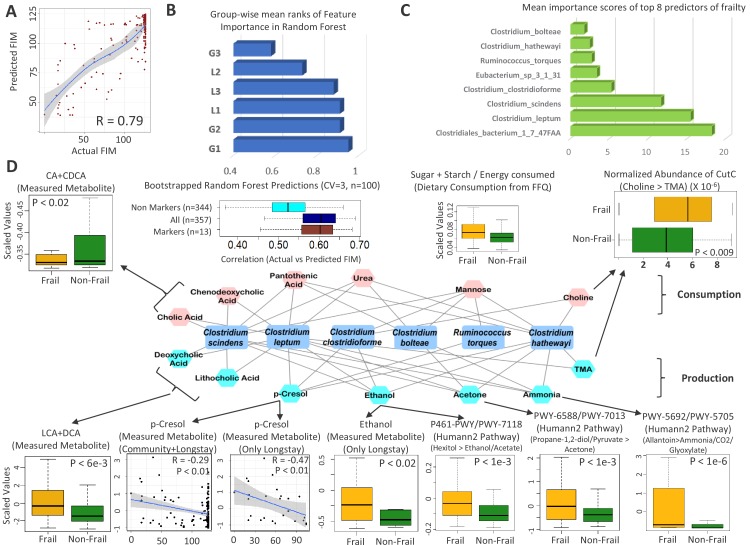
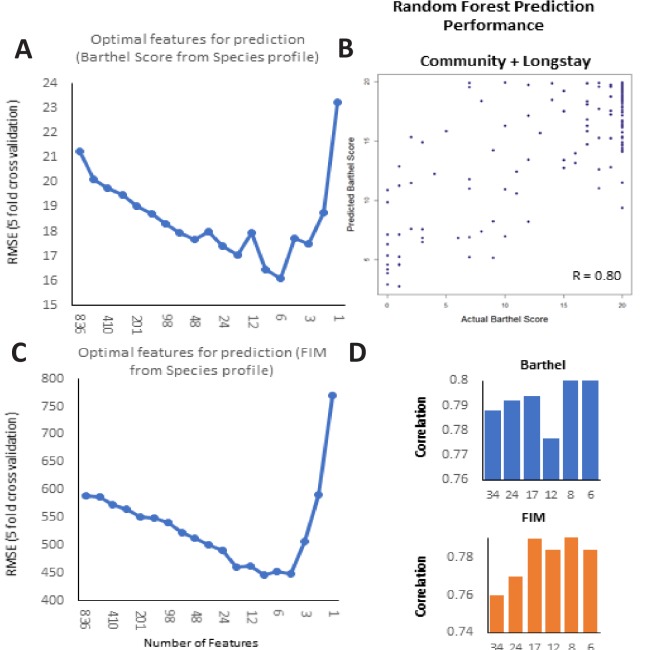
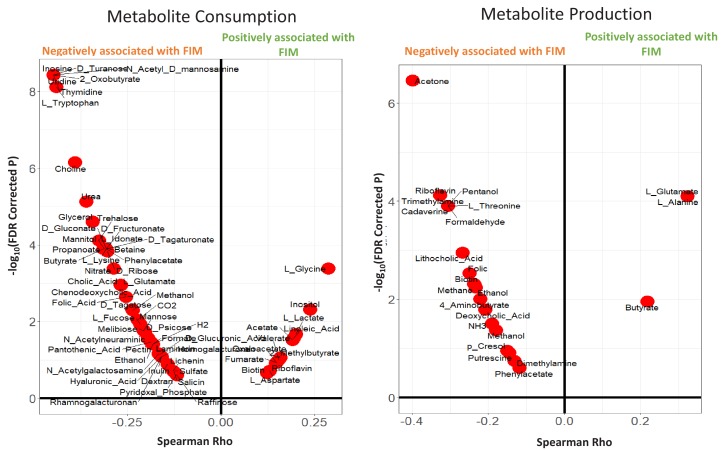
Verification
Claims the paper makes
The claims and statistics of this paper haven’t been checked yet.
Run the check — free, no account needed. It reads the open-access text and checks the sources it cites.
Claims other papers make about this one
Each is checked against this paper’s own text: does it say what the citing paper says it does?
In the citing paper
“Members of the Bifidobacteriaceae, Akkermansiaceae, and Eubacteriaceae families that are associated with beneficial effects on intestinal and extra-intestinal health in both mice and humans”
From Fecal microbiota transfer between young and aged mice reverses hallmarks of the aging gut, eye, and brain (2022) · cites this paper as [43]
In the citing paper
“However, some species are currently thought to modulate cholesterol and bile acid metabolism and are considered potential therapeutics [43].”
From Fecal microbiota transfer between young and aged mice reverses hallmarks of the aging gut, eye, and brain (2022) · cites this paper as [43]
In the citing paper
“Age was also added to the feature-set, as this covariate has been shown to improve microbiome predictions in CRC (Ghosh et al., 2020).”
From Integrating taxonomic, functional, and strain-level profiling of diverse microbial communities with bioBakery 3 (2021) · cites this paper as Ghosh et al., 2020
In the citing paper
“The Enterocloster genus (E. aldensis, E. asparagiformis, and E. bolteae) represents a vancomycin-sensitive clade of immunosuppressive bacteria, dominant in the intestinal microbiota of people and patients suffering from aging and chronic inflammatory disorders including cancer.39”
From Custom scoring based on ecological topology of gut microbiota associated with cancer immunotherapy outcome (2024) · cites this paper as [47]
Self-check
Percentages, sums and reported differences re-computed from the paper’s own numbers.
The self-check needs the paper’s full text.
Citations
Cites
A metagenome-wide association study of gut microbiota in type 2 diabetes
Qin, J., Li, Y., Cai, Z., Li, S., Zhu, J., Zhang, F., Liang, S., Zhang, W., Guan, Y., Shen, D., et al. (2012) · Nature · doi:10.1038/nature11450 · Cited by 6,762 · cited 4×
“not CRC), we compiled a list of known disease-associated markers from each of the original studies (Feng et al., 2015; Franzosa et al., 2019; Karlsson et al., 2013; Qin et al., 2012; Qin et al., 2014).”
BackgroundMethodResultInfluentialGut microbiota composition correlates with diet and health in the elderly
Claesson, M. J., Jeffery, I. B., Conde, S., Power, S. E., O’Connor, E. M., Cusack, S., Harris, H. M. B., Coakley, M., Lakshminarayanan, B., O’Sullivan, O., et al. (2012) · Nature · doi:10.1038/nature11319 · Cited by 3,314 · cited 2×
“We observed that this association analysis of metabolite profiles reflects frailty-associated changes with respect to bioavailability of specific compounds, many of which have been previously shown to have corresponding associations with health, thereby validating our findings (Claesson et al., 2012).”
ResultSelf-citationGut metagenome in European women with normal, impaired and diabetic glucose control
Karlsson, F. H., Tremaroli, V., Nookaew, I., Bergström, G., Behre, C. J., Fagerberg, B., Nielsen, J., & Bäckhed, F. (2013) · Nature · doi:10.1038/nature12198 · Cited by 3,115 · cited 3×
“not CRC), we compiled a list of known disease-associated markers from each of the original studies (Feng et al., 2015; Franzosa et al., 2019; Karlsson et al., 2013; Qin et al., 2012; Qin et al., 2014).”
MethodResultPopulation-level analysis of gut microbiome variation
Falony, G., Joossens, M., Vieira-Silva, S., Wang, J., Darzi, Y., Faust, K., Kurilshikov, A., Bonder, M. J., Valles-Colomer, M., Vandeputte, D., et al. (2016) · Science · doi:10.1126/science.aad3503 · Cited by 2,400 · cited 1×
“region/ethnicity-specific variations, multiple studies have also shown age to be a strong covariate of microbiome composition (Falony et al., 2016).”
BackgroundReduced diversity of faecal microbiota in Crohn’s disease revealed by a metagenomic approach
Manichanh, C., Rigottier-Gois, L., Bonnaud, E., Gloux, K., Pelletier, E., Frangeul, L., Nalin, R., Jarrin, C., Chardon, P., Marteau, P., et al. (2006) · Gut · doi:10.1136/gut.2005.073817 · Cited by 2,277 · cited 1×
“These species were previously implicated in Clostridium difficile resistance and IBD, respectively (Buffie et al., 2015; Manichanh et al., 2006).”
BackgroundMetaPhlAn2 for enhanced metagenomic taxonomic profiling
Truong, D. T., Franzosa, E. A., Tickle, T. L., Scholz, M., Weingart, G., Pasolli, E., Tett, A., Huttenhower, C., & Segata, N. (2015) · Nature Methods · doi:10.1038/nmeth.3589 · Cited by 2,185 · cited 1×
“A further advantage of the curatedMetagenomicData is that these microbiome profiles were created using uniform bioinformatic analysis of the sequenced reads (using metaphlan2 and humann2) (Franzosa et al., 2018; Truong et al., 2015).”
MethodAlterations of the human gut microbiome in liver cirrhosis
Qin, N., Yang, F., Li, A., Prifti, E., Chen, Y., Shao, L., Guo, J., Le Chatelier, E., Yao, J., Wu, L., et al. (2014) · Nature · doi:10.1038/nature13568 · Cited by 2,177 · cited 2×
“not CRC), we compiled a list of known disease-associated markers from each of the original studies (Feng et al., 2015; Franzosa et al., 2019; Karlsson et al., 2013; Qin et al., 2012; Qin et al., 2014).”
MethodResultDisentangling type 2 diabetes and metformin treatment signatures in the human gut microbiota
MetaHIT consortium, Forslund, K., Hildebrand, F., Nielsen, T., Falony, G., Le Chatelier, E., Sunagawa, S., Prifti, E., Vieira-Silva, S., Gudmundsdottir, V., et al. (2015) · Nature · doi:10.1038/nature15766 · Cited by 2,116 · cited 4×
“Another recent study investigating the effect of metformin on the gut microbiome of two of the T2D cohorts analysed in the current study identified Lactobacillus salivarius to be affected by metformin, accompanied by an increase in Escherichia (Forslund et al., 2015).”
InfluentialGut microbiome structure and metabolic activity in inflammatory bowel disease
Franzosa, E. A., Sirota-Madi, A., Avila-Pacheco, J., Fornelos, N., Haiser, H. J., Reinker, S., Vatanen, T., Hall, A. B., Mallick, H., McIver, L. J., et al. (2018) · Nature Microbiology · doi:10.1038/s41564-018-0306-4 · Cited by 1,995 · cited 4×
“not CRC), we compiled a list of known disease-associated markers from each of the original studies (Feng et al., 2015; Franzosa et al., 2019; Karlsson et al., 2013; Qin et al., 2012; Qin et al., 2014).”
MethodResultInfluentialPrecision microbiome reconstitution restores bile acid mediated resistance to Clostridium difficile
Buffie, C. G., Bucci, V., Stein, R. R., McKenney, P. T., Ling, L., Gobourne, A., No, D., Liu, H., Kinnebrew, M., Viale, A., et al. (2015) · Nature · doi:10.1038/nature13828 · Cited by 1,872
Cited by
Sorted by citations
Items 201–234 of 234
Ang, Q. Y., Alba, D., Upadhyay, V., Bisanz, J. E., Cai, J., Lee, H. L., Barajas, E., Wei, G., Noecker, C. A., Patterson, A. D., et al. (2020) · bioRxiv (Cold Spring Harbor Laboratory) · doi:10.1101/2020.10.23.352807 · Cited by 1
“Consistent with prior studies 464 [83], PERMANOVA analysis of our full 16S-seq dataset revealed that diabetes [84], age [85], 465 metformin use [86], and statin intake [87] to be significantly associated with variance in the PhILR 466 Euclidean distances (Fig.”
Behavioral tips to strengthen your immune system against viruses
Tarcea, M., Şipoş, R. S., Martin-Hadmaș, R. M., Roşescu, R., & Fănică, A. (2020) · Medic ro · doi:10.26416/med.133.1.2020.2993
SPECIAL FOCUS: Early-onset colorectal cancer
Berger, F. G. (2020) · Colorectal Cancer · doi:10.2217/crc-2020-0030
Diet and Microbiota in the Elderly
Alvarado-Jasso, G. M., Arboleya, S., González, S., Reyes‐Gavilán, C. G. D. L., Salazar, N., & Gueimonde, M. (2021) · Elsevier eBooks · doi:10.1016/b978-0-12-819265-8.00088-7
Sadoughi, B. (2023) · eDiss (Georg-August-Universität Göttingen) · doi:10.53846/goediss-10248
Ghorbani, M., Ferreira, D., & Maioli, S. (2023) · Figshare · doi:10.6084/m9.figshare.24012951
An optimised approach to evaluate variability in gut health markers in healthy adultsPreprint
Krüger, K., Myeonghyun, Y., van der Wielen, N., Kok, D. E. G., Hooiveld, G. J. E. J., Keshtkar, S., Bruin, M. D.-D., Balvers, M. G. J., Grootte-Bromhaar, M., Mudde, K., et al. (2024) · bioRxiv (Cold Spring Harbor Laboratory) · doi:10.1101/2024.07.25.604267
Gut Microbiota-Brain Axis in Healthy Ageing
Verma, S., Goswami, S., Palanimuthu, D., & Ghosh, T. S. (2024) · Healthy ageing and longevity · doi:10.1007/978-3-031-68513-2_8 · Cited by 1
Self-citationMicrobiome and Circadian Rhythms: Implications for Sleep, Aging, and Therapeutic Strategies
Najumuddin, Ullah, I., Taqveem, A., & Khurshid, M. (2024) · Springer eBooks · doi:10.1007/978-981-97-3790-1_10
Multifactorial microbial networks shape aging and neurodegeneration
Kara, N. Z., Savaliya, J. H., & Blacher, E. (2024) · Elsevier eBooks · doi:10.1016/b978-0-443-18979-1.00002-2
Identifying the non-Bifidobacterial hallmarks of a Bifidobacterium-receptive gut microbiomePreprint
Goswami, S., Ansari, A., Saraf, C., O’Toole, P. W., Shanahan, F., Ahuja, V., & Ghosh, T. S. (2025) · bioRxiv (Cold Spring Harbor Laboratory) · doi:10.1101/2025.09.09.675069
“Across the 32 combinations involving Bifidobacterial Ruminococcus gnavus and Bacteroides fragilis , that have been positively associated with frailty, inflammation and multiple diseases across studies 21,23 ( Figure 4 ).”
Self-citationGhorbani, M., Ferreira, D., & Maioli, S. (2023) · Figshare · doi:10.6084/m9.figshare.24012954
Dendritic Cell Therapy to Improve Cancer Outcomes. Recent Insights: A Narrative Review
Sadat-Ali, M., Al-Turki, H. A., Mohiuddin, M. G., & Bathula, S. (2026) · Journal of Cancer Therapy · doi:10.4236/jct.2026.171008
Anand, S., Shete, O., Srivastava, A., Verma, A., Goswami, S., Aggarwal, S., Luthra, K., & Ghosh, T. S. (2026) · Kidney International Reports · doi:10.1016/j.ekir.2026.103799
“…urinary microbiome were inferred from their corresponding species-level taxonomic compositions using methodologies described in previous studies, 22,29 using maps between microbes’ metabolic functionalities derived from experimentally validated metabolic-functional profiles (i.e., the production…”
Self-citationBrain-Derived Neurotrophic Factor (BDNF) Regulation by Gut Microbiota for Anti-Aging
Hwang, E., & Park, J.-Y. (2025) · Current Topic in Lactic Acid Bacteria and Probiotics · doi:10.35732/ctlabp.2025.11.2.74
Donor Age and Oligosaccharide Structure Jointly Shape the Gut Microbiome FunctionPreprint
Zhang, A., Wu, Q., Qin, H., Mayne, J., Ning, Z., da Rosa, C. E., & Figeys, D. (2026) · bioRxiv (Cold Spring Harbor Laboratory) · doi:10.64898/2026.06.07.730712
“Age is a major determinant of gut microbiome composition and function, and is linked to differences in community stability and recovery after perturbation 8-10 .”
Microbiota del eje intestino-pulmón en el paciente con sepsis: una revisión narrativa
Marín, C. V., Vanegas, J. M., & Saldarriaga, F. J. M. (2026) · Acta Colombiana de Cuidado Intensivo · doi:10.1016/j.acci.2026.100637
Raval, N. P., Roy, D., Ansari, A., Goswami, S., Regonda, V., Shete, O., Adhikary, K., Verma, S., & Ghosh, T. S. (2026) · FEBS Letters · doi:10.1002/1873-3468.70391
Self-citationZhao, X., McCarter, S. J., Gupta, V. K., Grant, K. M., Louis, E. K. S., Kantarci, K., Savica, R., Hill, M., Vuong, H. E., Staley, C. M., et al. (2026) · Frontiers in Microbiomes · doi:10.3389/frmbi.2026.1834726
“Age and BMI were included as covariates given their well-documented in fl uence on gut microbiome composition (Turnbaugh and Gordon, 2009; Ghosh et al., 2020).”
Zeng, C., Chen, J., Yong, X. N., & Xie, Y. (2026) · International Journal of Molecular Sciences · doi:10.3390/ijms27157020
“Because microbial differences across age strata may overlap with those observed between disease groups, cross-disease comparisons were performed within predefined age-matched strata to reduce the influence of age-related ecological variation [4].”
Goswami, S., Arora, N., Ansari, A., Pramanik, D., Singh, P., Palanimuthu, D., & Ghosh, T. S. (2026) · bioRxiv (Cold Spring Harbor Laboratory) · doi:10.64898/2026.08.11.744126
Self-citationKuang, X., & Zheng, X. (2026) · International Journal of Molecular Sciences · doi:10.3390/ijms27167291
“However, this balance is highly sensitive to perturbations from diverse intrinsic and extrinsic factors such as genetics, diet, and physical activity, which can collectively precipitate a transition toward microbial dysbiosis [20].”
Xie, T., Zhou, J., & Wang, Y. (2026) · Frontiers in Cellular and Infection Microbiology · doi:10.3389/fcimb.2026.1828471
The impact of aging on the gut‐liver axis in health and disease
Gałat, K., Rzepka, N., & Kolodziejczyk, A. A. (2026) · FEBS Letters · doi:10.1002/1873-3468.70445
Understanding extracellular vesicles in antiaging
Ahmad, P., Estrin, N. E., Sculean, A., & Miron, R. J. (2026) · Periodontology 2000 · doi:10.1111/prd.70070
Bacterial Peptidoglycan Extends Lifespan by Activating Lysosomal Activity through V-ATPase BindingPreprint
Fu, H., Tie, J., Zhou, Y., Wang, X., Shan, Z., & Qi, B. (2026) · bioRxiv (Cold Spring Harbor Laboratory) · doi:10.64898/2026.08.28.747948
Yu, M., Wu, Y., Wang, A., Wang, M., Chen, Y., Ren, H., Zhang, Y., Liu, Y., Wang, S., & Fan, X. (2026) · Frontiers in Immunology · doi:10.3389/fimmu.2026.1874465
Microbiome and Diseases: Infection
Gerner, R. R., Almási, É. D. H., & Stecher, B. (2026) · Springer eBooks · doi:10.1007/978-3-032-26410-7_14
Nuță, C. R., Băjenaru, L., Sovarel, A. M. M., & Băjenaru, O. L. (2026) · Applied Biosciences · doi:10.3390/applbiosci5040089
“Population-scale studies show strong effects of diet, environment, cohabitation, medication, and other exposures [59–61], and explicit age adjustment can materially change disease-associated signals [62].”
Gut microbiota and epigenetic mechanisms in brain physiology and disorders
Moloney, G. M., CLARKE, G., & Cryan, J. F. (2026) · Handbook of clinical neurology · doi:10.1016/b978-0-443-19043-8.00019-0
Li, J., Zhang, F., Guo, Y., & Zhong, R. (2026) · Ageing and Neurodegenerative Diseases · doi:10.20517/and.2026.14
Metadata
- Authors
- Ghosh, T. S., Das, M., Jeffery, I. B., & O'Toole, P. W.
- Affiliations
- University College Cork (IE)
- APC Microbiome Ireland, University College Cork, Cork, Ireland
- Venue
- eLife
- Publisher
- eLife Sciences Publications, Ltd
- Published
- 2020-03-11
- Volume
- 9
- ISSN
- 2050-084X (ISSN-L)
- PMC
- PMC7065848
- OpenAlex
- W3011436618
- Cited by
- 233
- References
- 45
- Citations by year
- 2026: 30 · 2025: 29 · 2024: 56 · 2023: 38 · 2022: 37 · 2021: 23 · 2020: 20
- FWCI
- 9.65
- Type
- journal article
- Language
- en
- Open access
- gold
- doi.org
- Licence
- Locations
- eLife (publishedVersion, cc-by)
- Europe PMC (PubMed Central) (publishedVersion, cc-by)
- PubMed Central (publishedVersion, cc-by)
- PubMed (publishedVersion)
- DOAJ (DOAJ: Directory of Open Access Journals) (submittedVersion, cc-by-sa)
- Lenus, The Irish Health Repository (Dr Steevens Hospital Library) (submittedVersion)
- Funders
- Science Foundation Ireland (APC/SFI/12/RC/2273, 13/SIRG/2128)
- Topics
- Life Sciences › Biochemistry, Genetics and Molecular Biology › Molecular Biology › Gut microbiota and health
- Health Sciences › Dentistry › Periodontics › Oral microbiology and periodontitis research
- Health Sciences › Medicine › Gastroenterology › Gastrointestinal motility and disorders
- Keywords
- gut microbiota, aging, age adjustment, colorectal cancer, frailty, multi-cohort analysis
- MeSH terms
- Gastrointestinal Microbiome, Adult, Age Factors, Aged, Aged, 80 and over, Data Interpretation, Statistical, Disease Susceptibility, Female, Humans, Male, Middle Aged, Reproducibility of Results, Computational Biology, Metagenome, Young Adult, Metagenomics, Microbiota, Dysbiosis
About these checks
Registry, retraction, Cites and statistics results are computed, not judged, with one exception: a printed reference that no index lists is read once by a model before it counts as a citation error. Claims are extracted by a model and kept only when their quote appears verbatim in the text; each cited source is then checked, with a model’s help, for whether it says what the claim relies on. Those verdicts can be wrong — read the claim’s quote and the cited source before relying on one.
Statistics and arithmetic are recomputed, not judged.
Confidence bands are shown only for fields calibrated on our annotated test set. None is calibrated yet, so no band is shown.
What counts as a claim ›How we measure confidence ›How we check this ›
Are you an author, or do you see a problem with this page? Request a review
