

The DOI matches its Crossref record; 146 of the 149 references it cites were found in a registry or an index.
Transmission of West Nile and five other temperate mosquito-borne viruses peaks at temperatures between 23°C and 26°C
Open accessAbstract
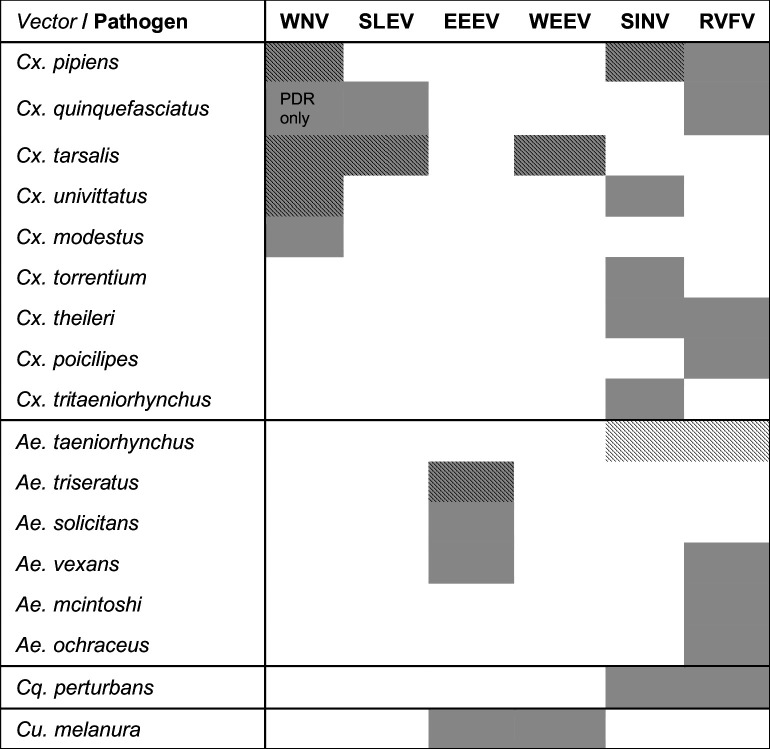
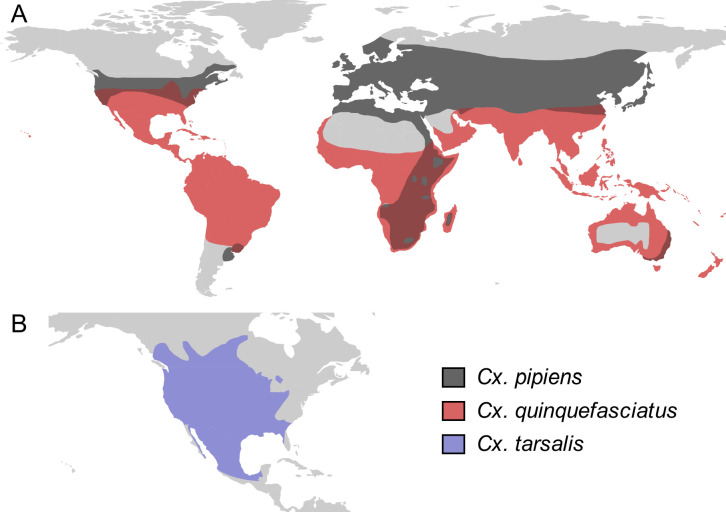
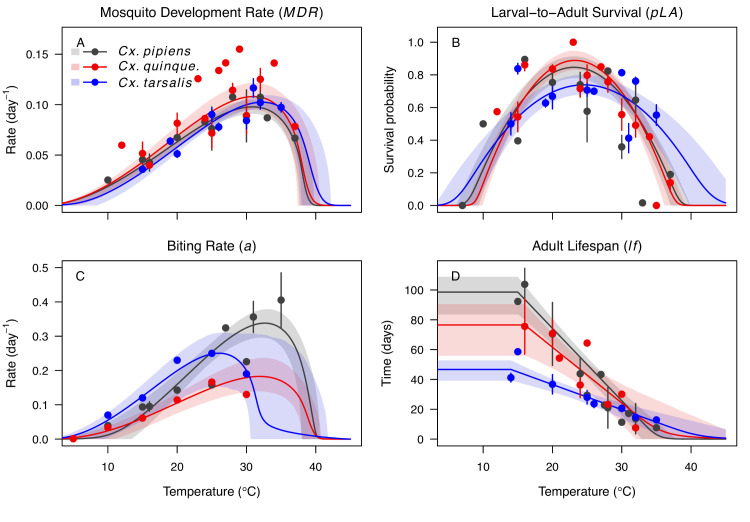
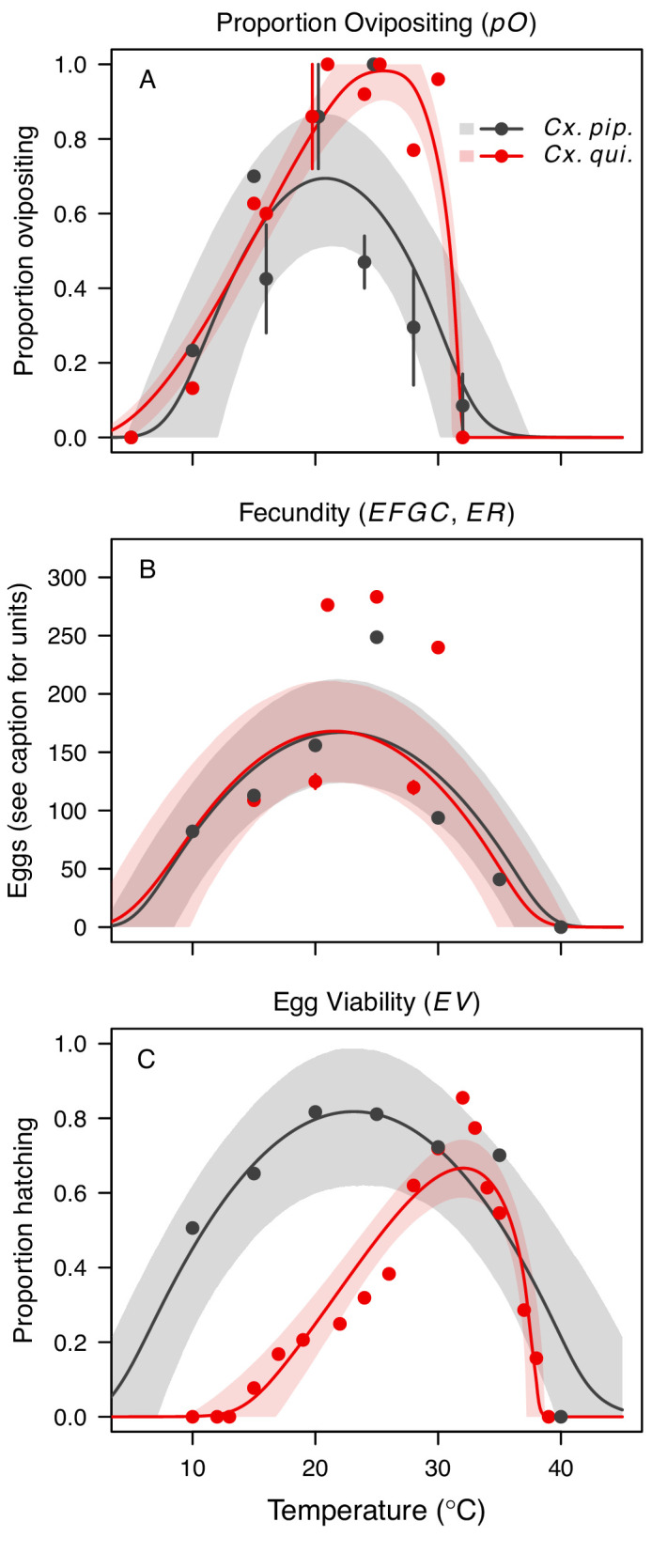
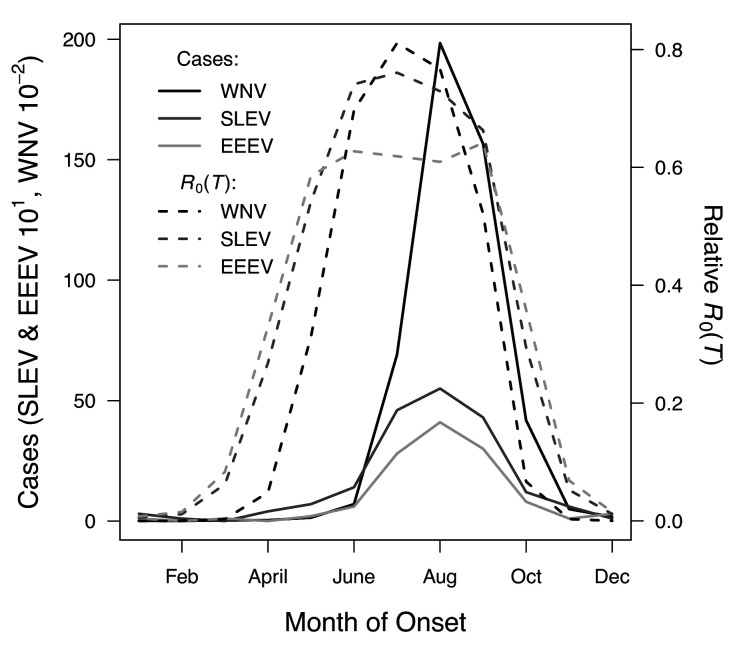
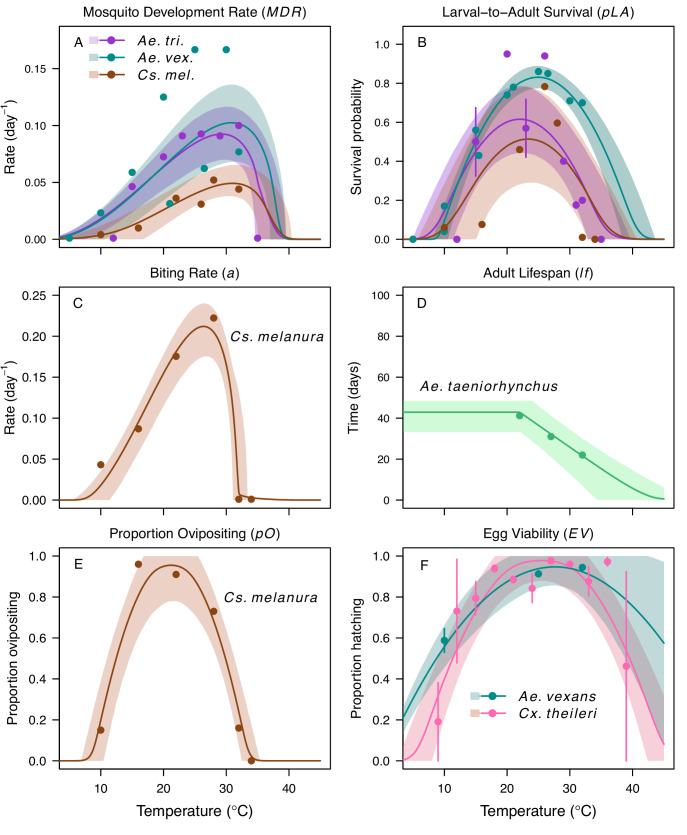
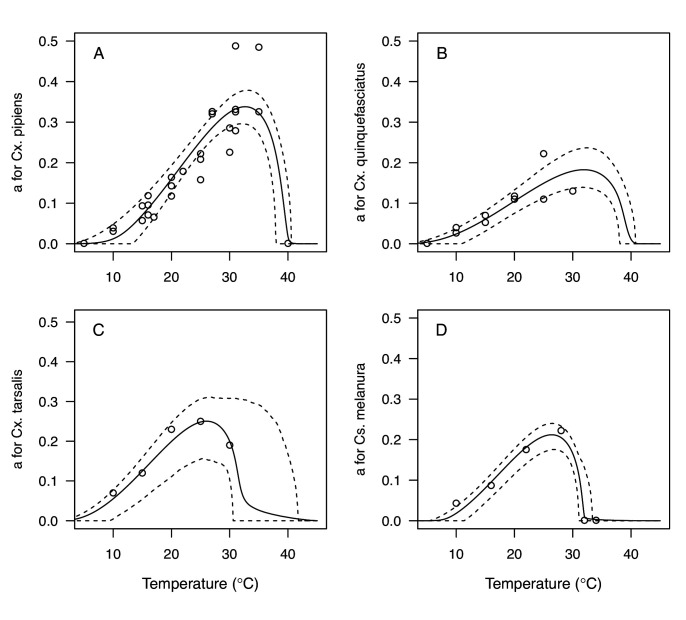
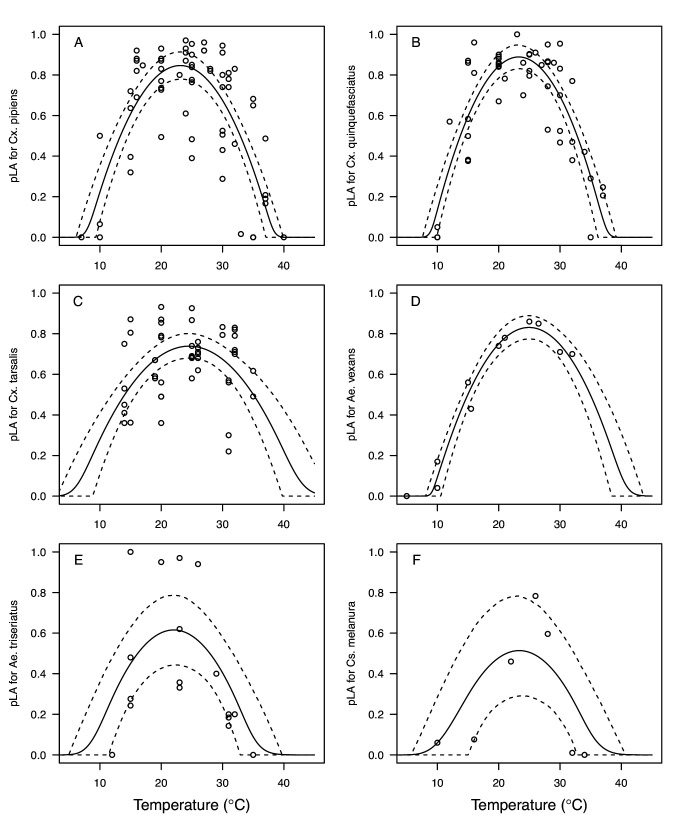
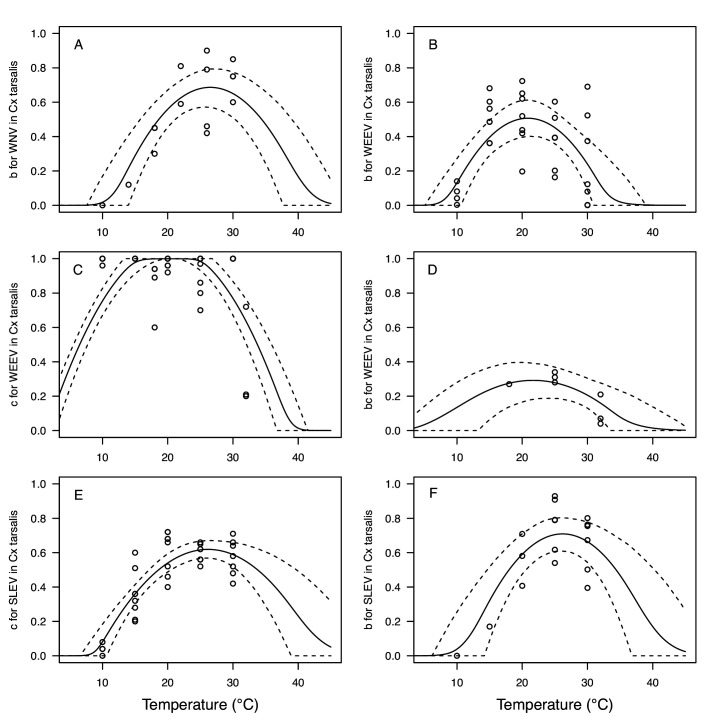
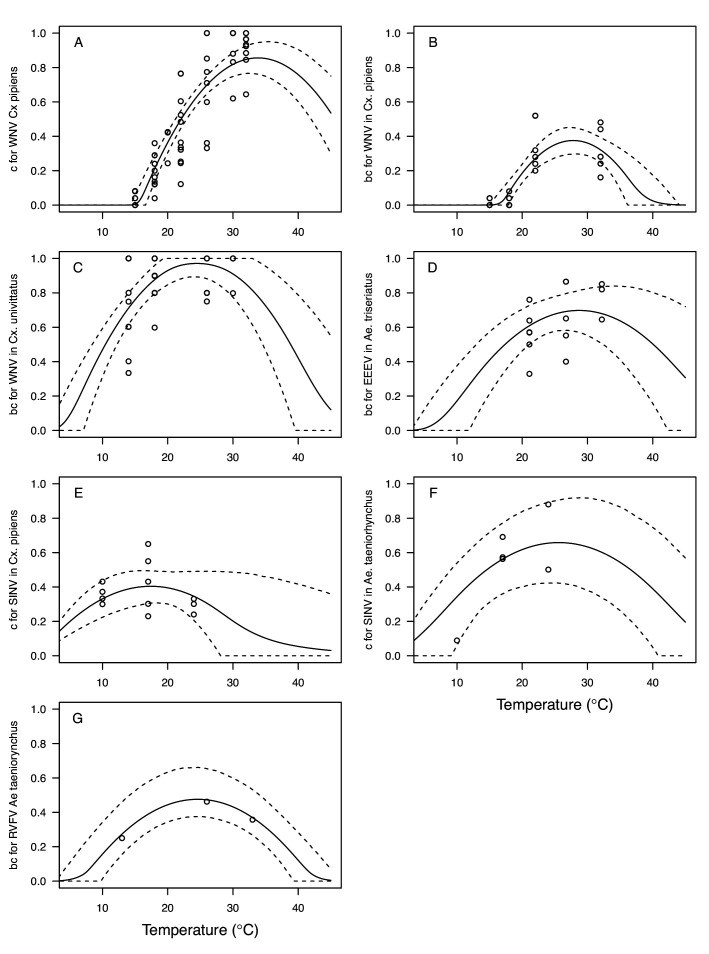
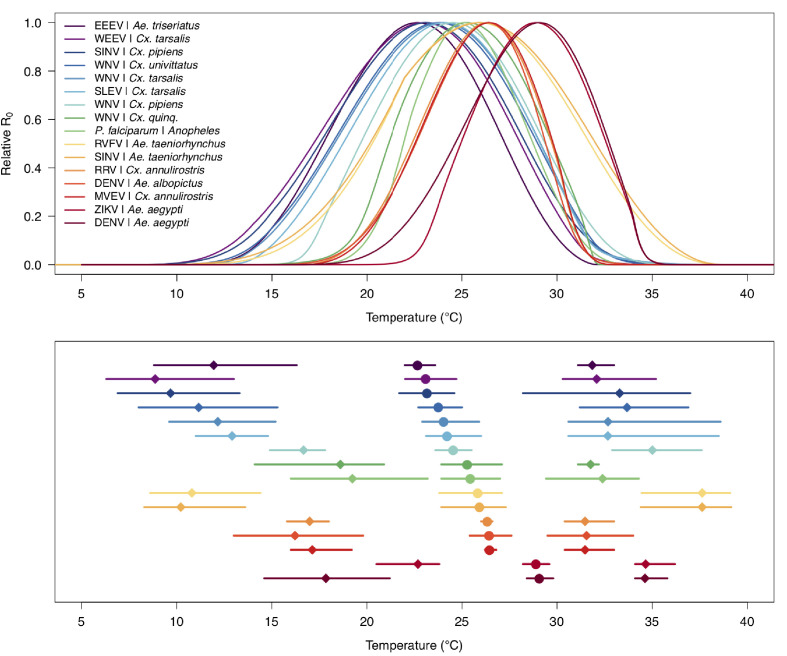
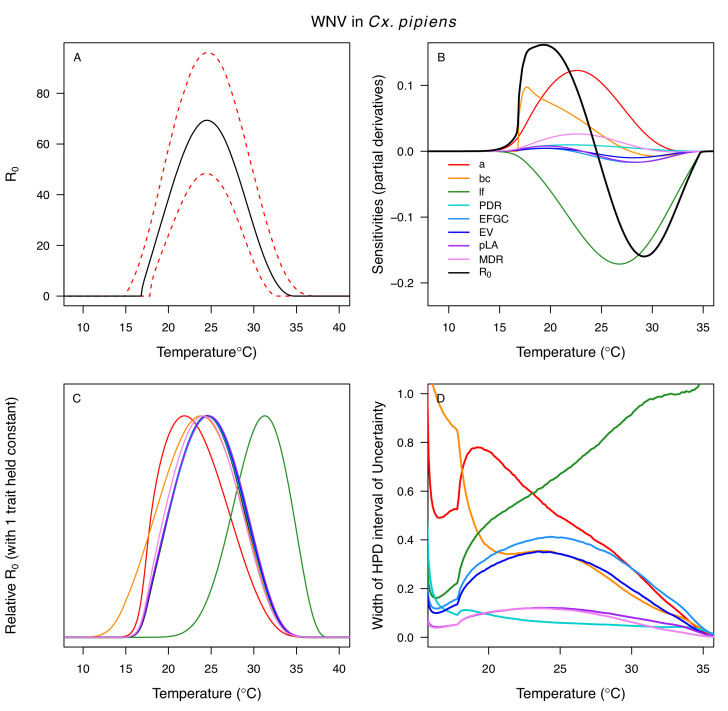
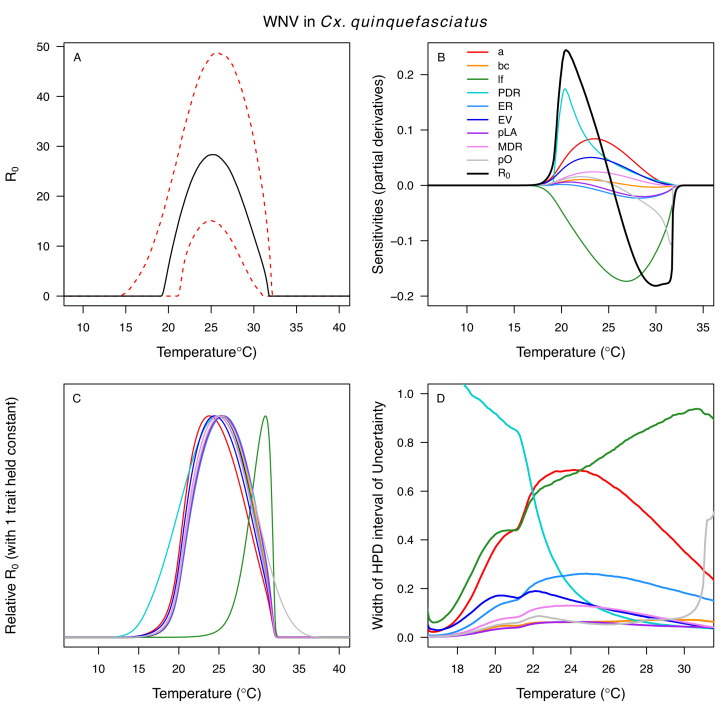
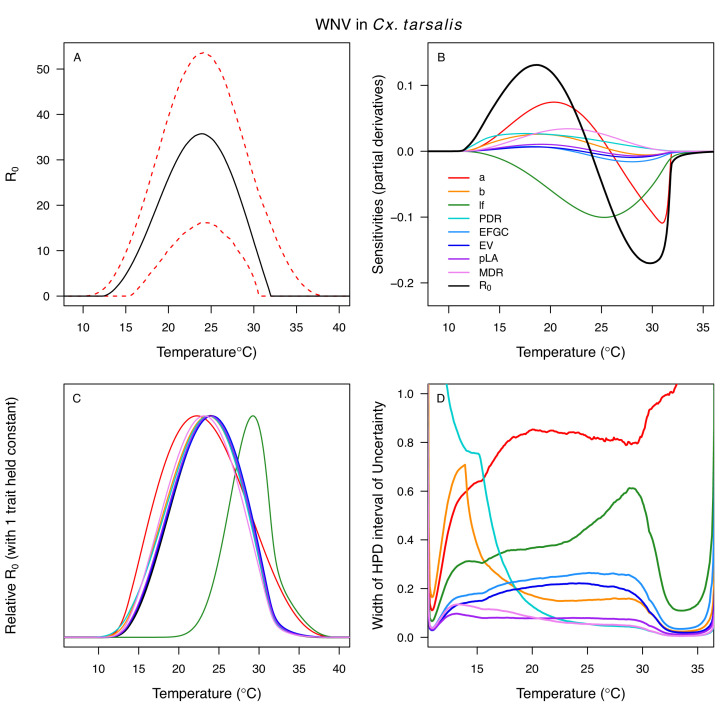
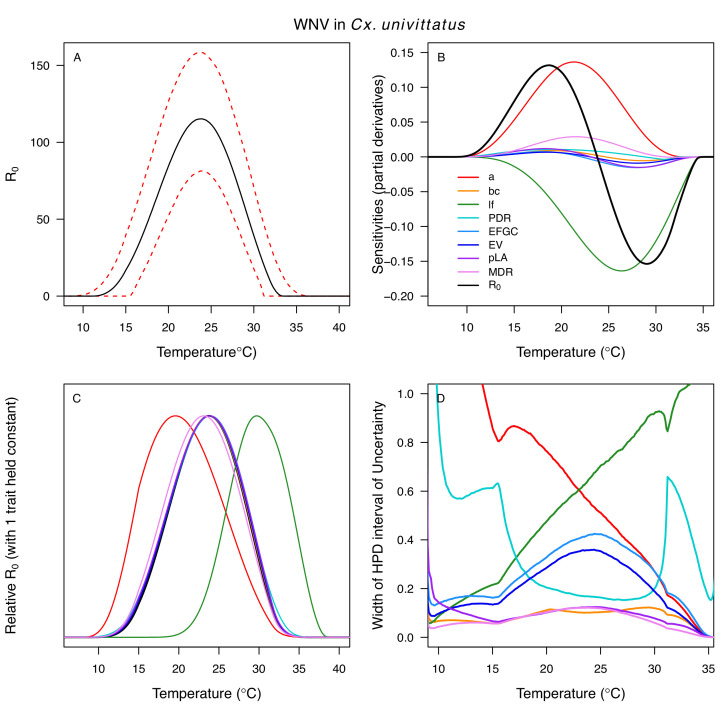
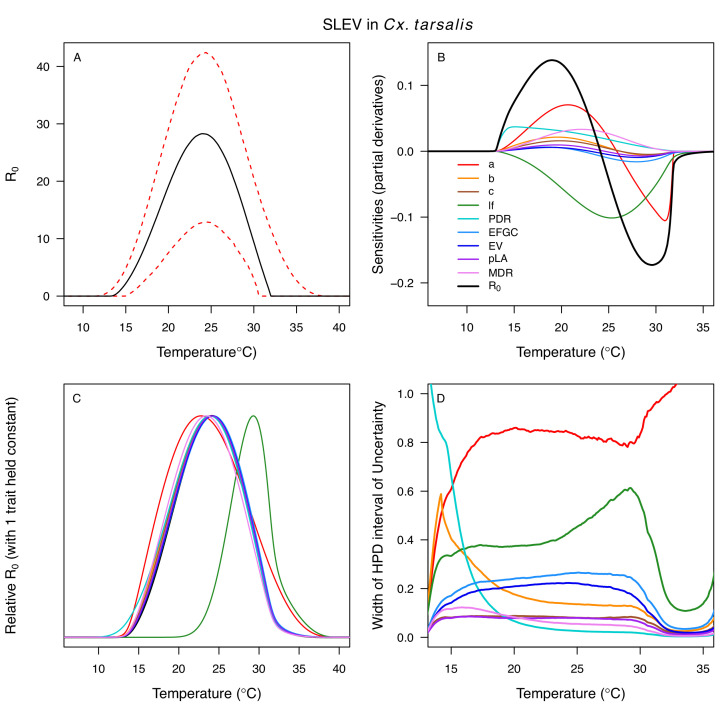
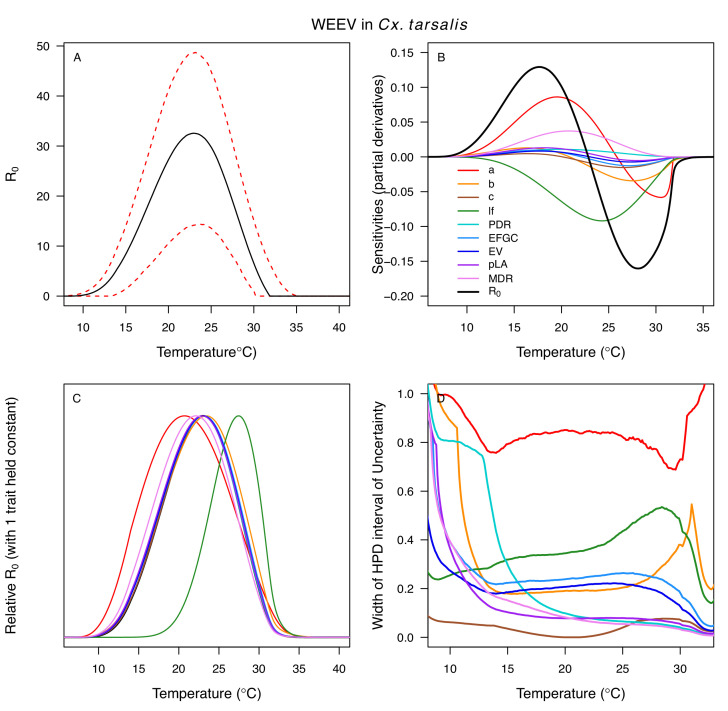
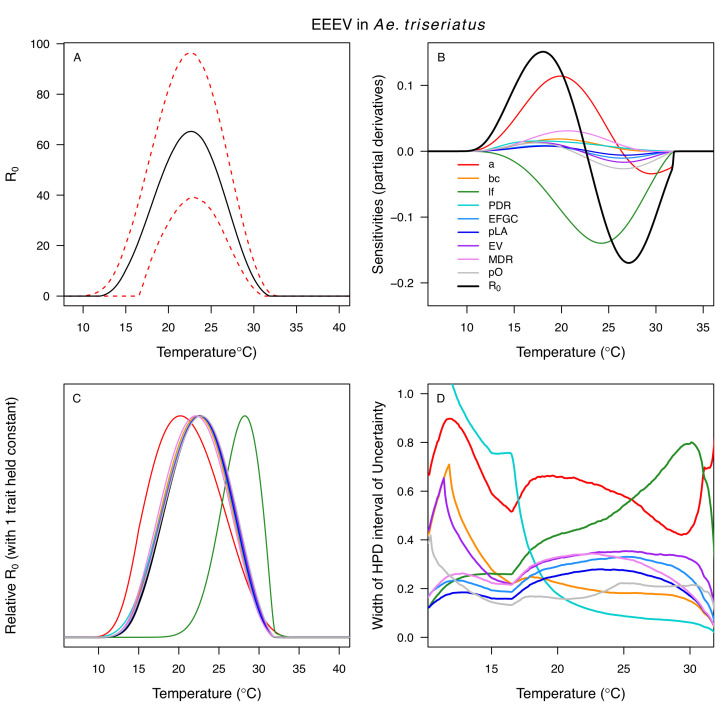
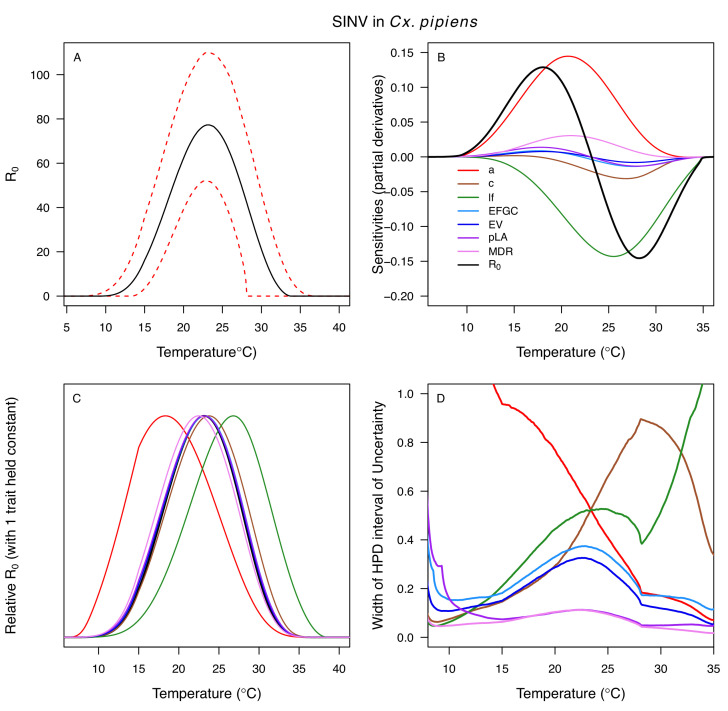
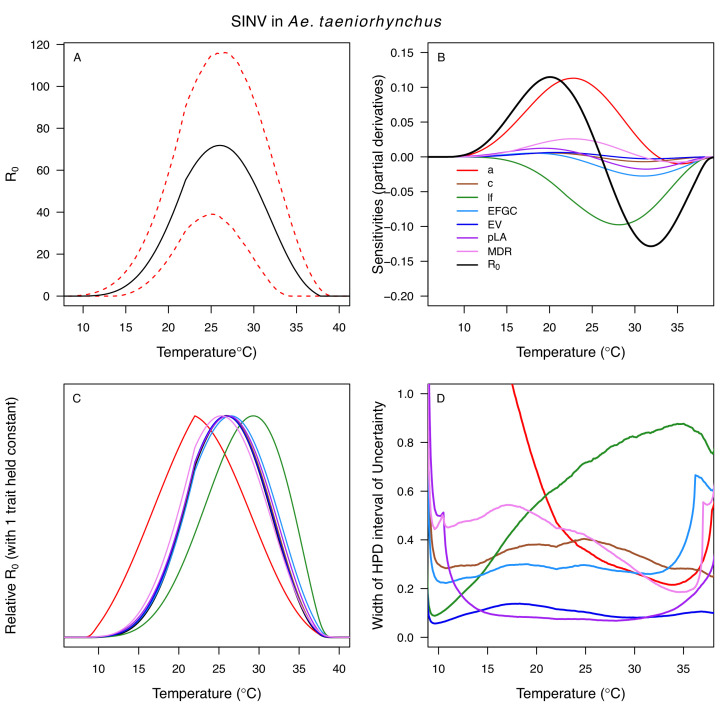
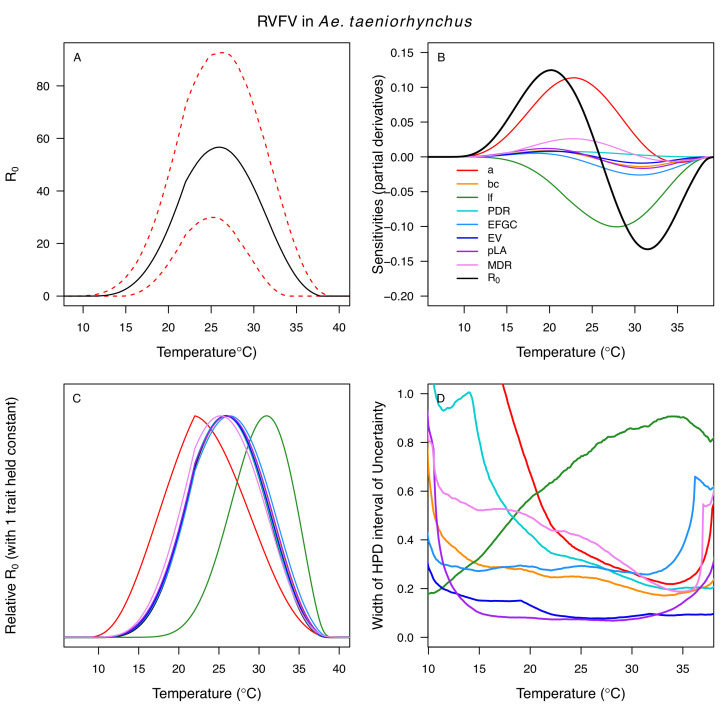
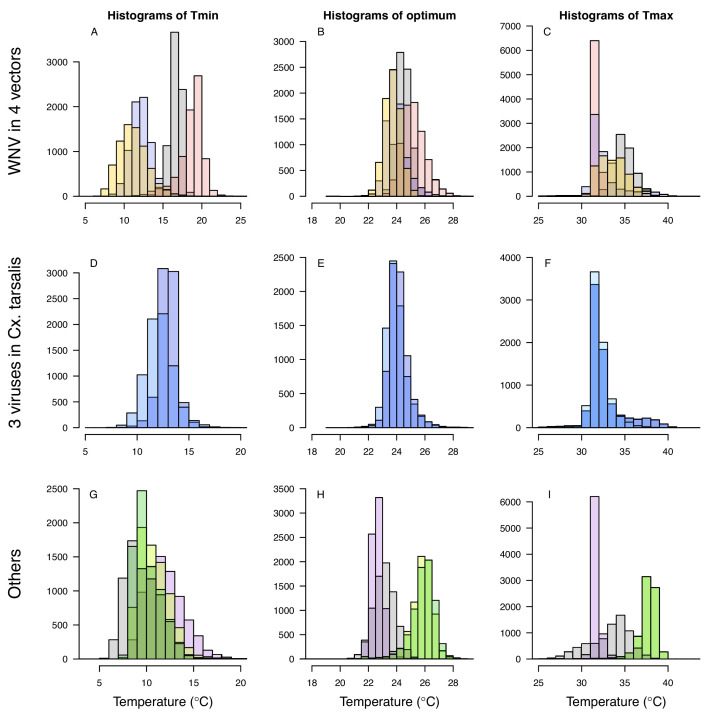
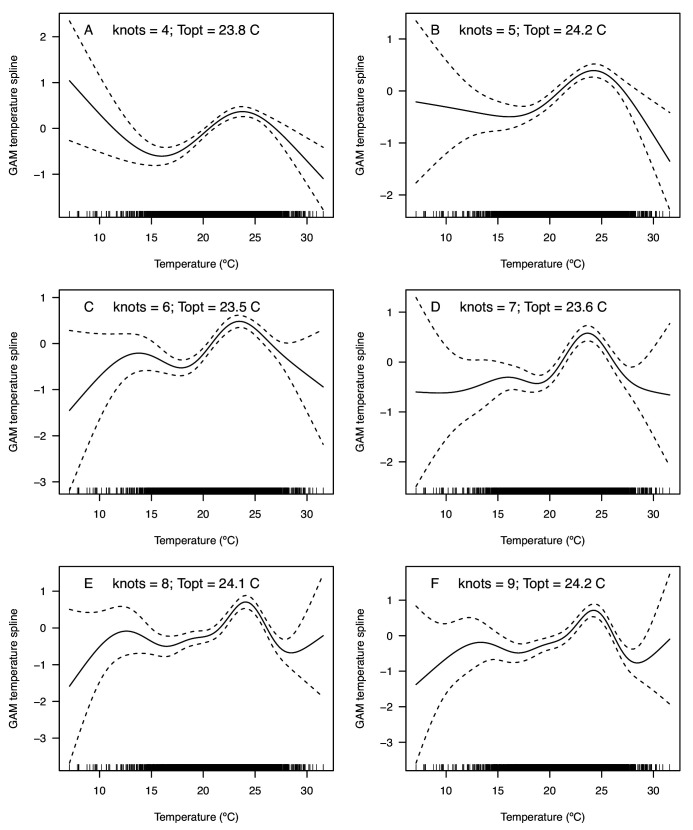
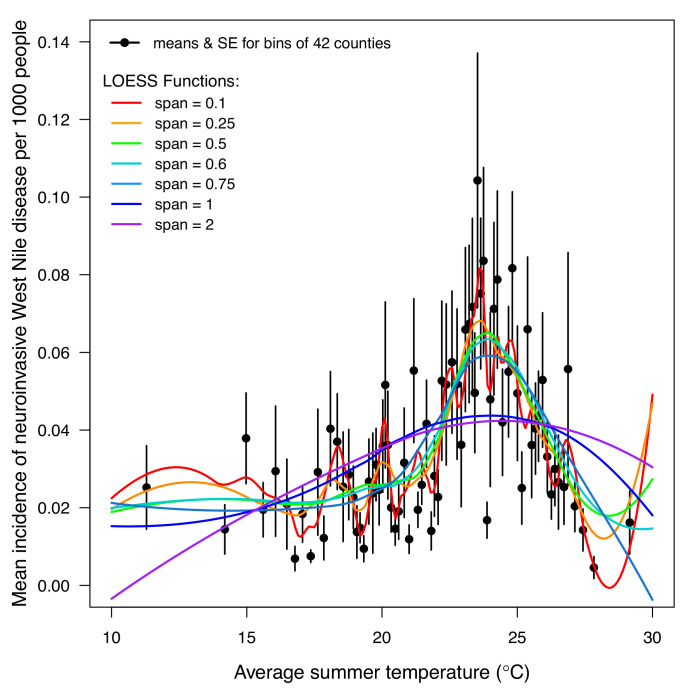
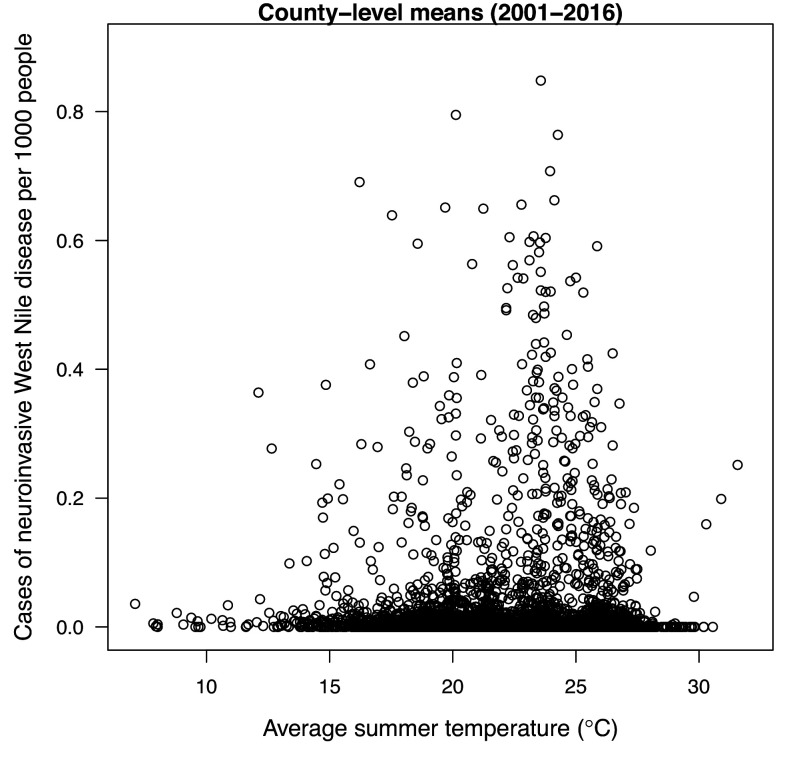
The temperature-dependence of many important mosquito-borne diseases has never been quantified. These relationships are critical for understanding current distributions and predicting future shifts from climate change. We used trait-based models to characterize temperature-dependent transmission of 10 vector–pathogen pairs of mosquitoes ( Culex pipiens , Cx. quinquefascsiatus , Cx. tarsalis , and others) and viruses (West Nile, Eastern and Western Equine Encephalitis, St. Louis Encephalitis, Sindbis, and Rift Valley Fever viruses), most with substantial transmission in temperate regions. Transmission is optimized at intermediate temperatures (23–26°C) and often has wider thermal breadths (due to cooler lower thermal limits) compared to pathogens with predominately tropical distributions (in previous studies). The incidence of human West Nile virus cases across US counties responded unimodally to average summer temperature and peaked at 24°C, matching model-predicted optima (24–25°C). Climate warming will likely shift transmission of these diseases, increasing it in cooler locations while decreasing it in warmer locations.
Overview
The claims and statistics of this paper haven’t been checked yet.
Run the check — free, no account needed. It reads the open-access text and checks the sources it cites.
Integrity signals
Registry
Cites
Statistics
Figures
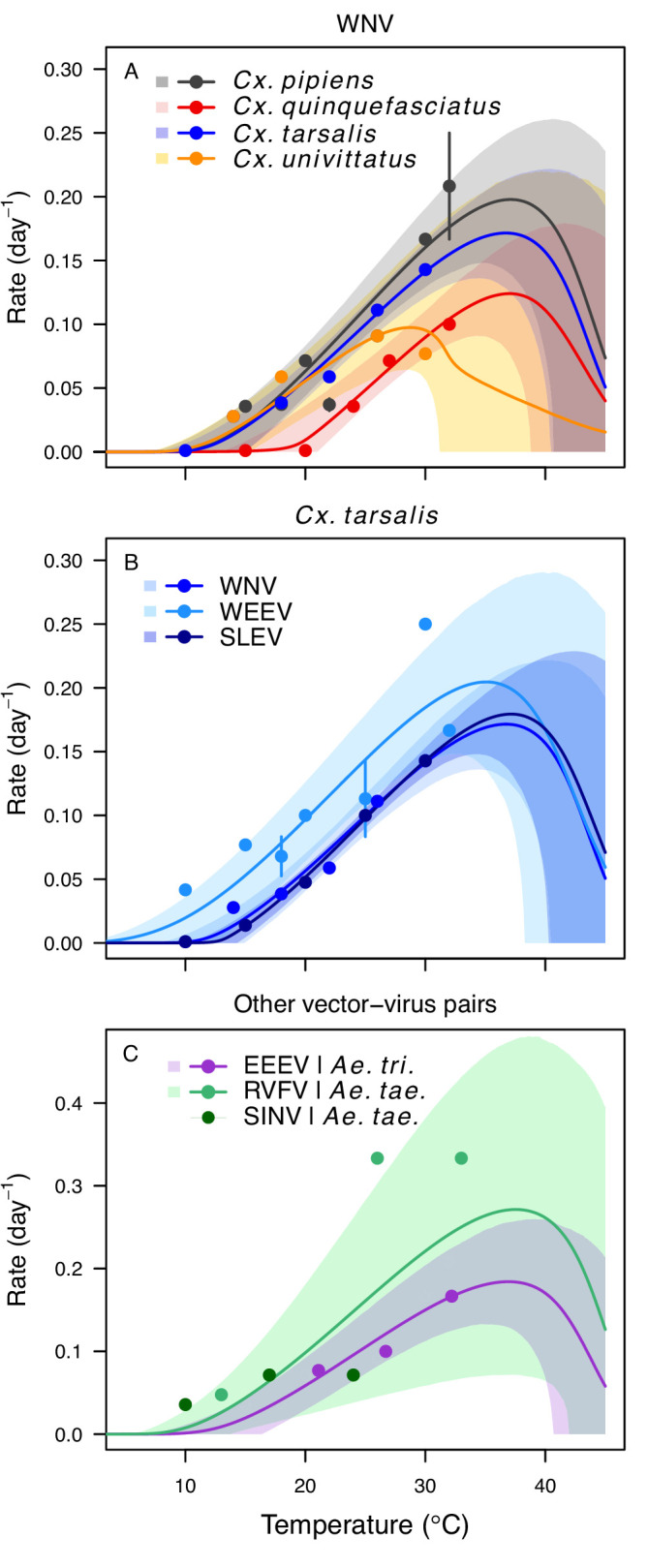
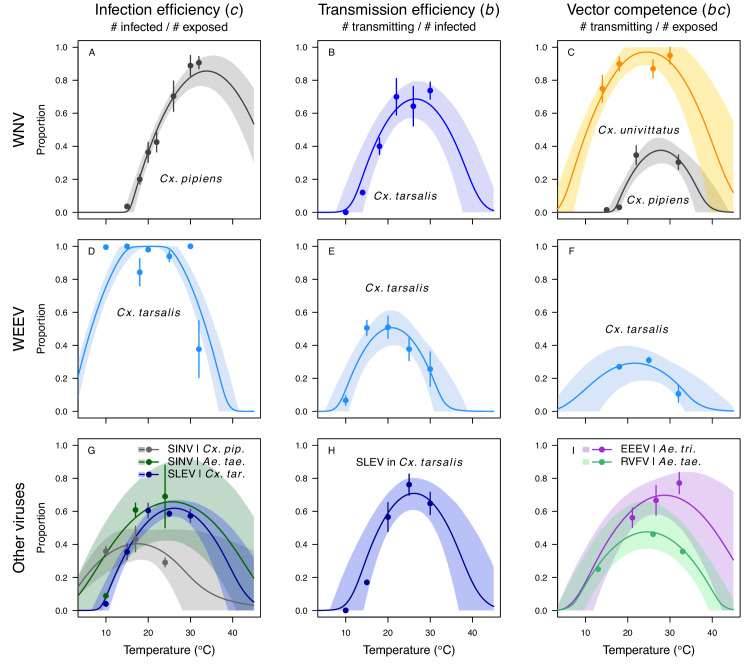
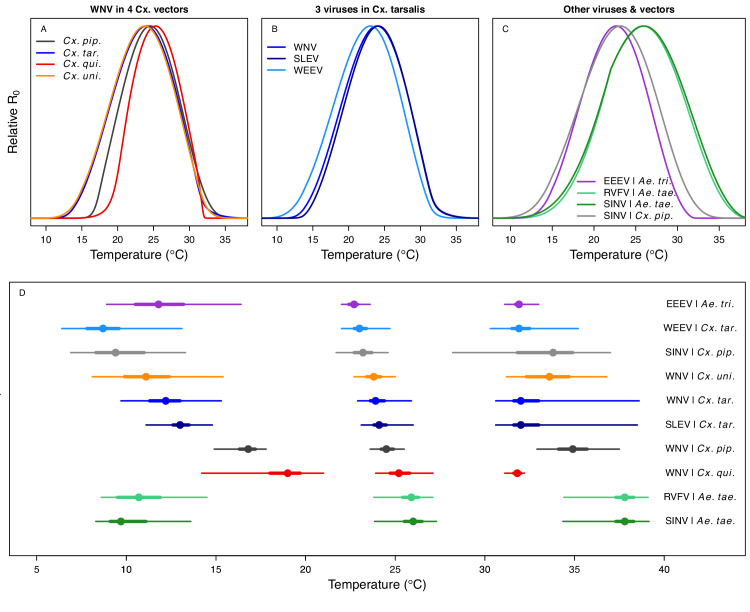
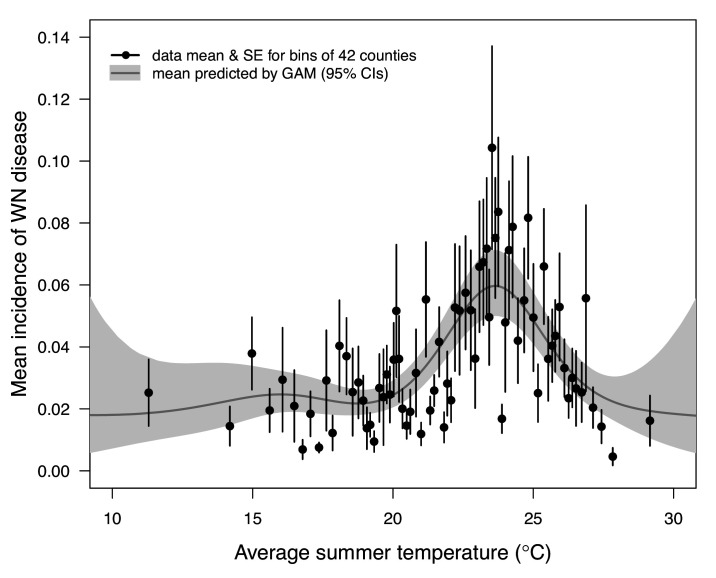
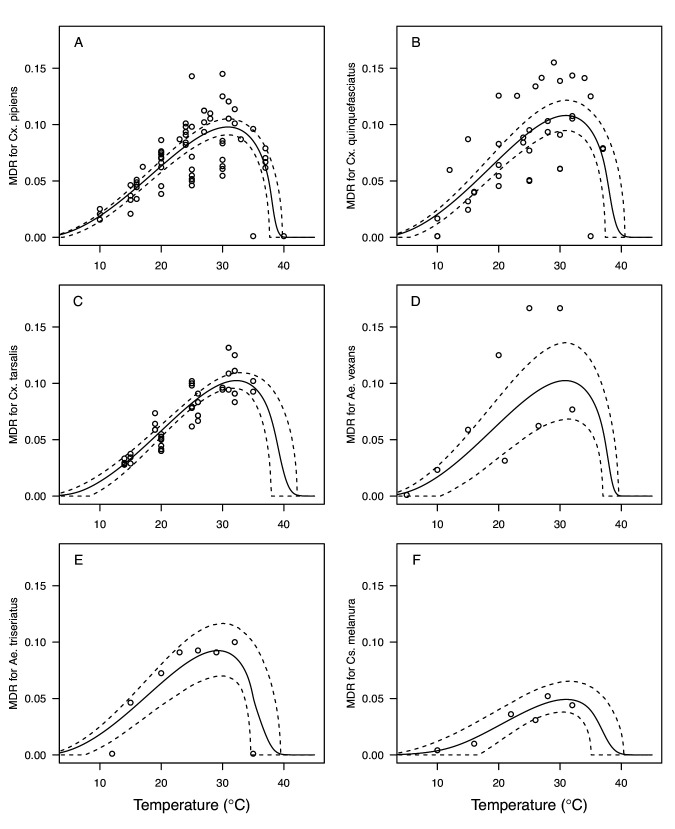
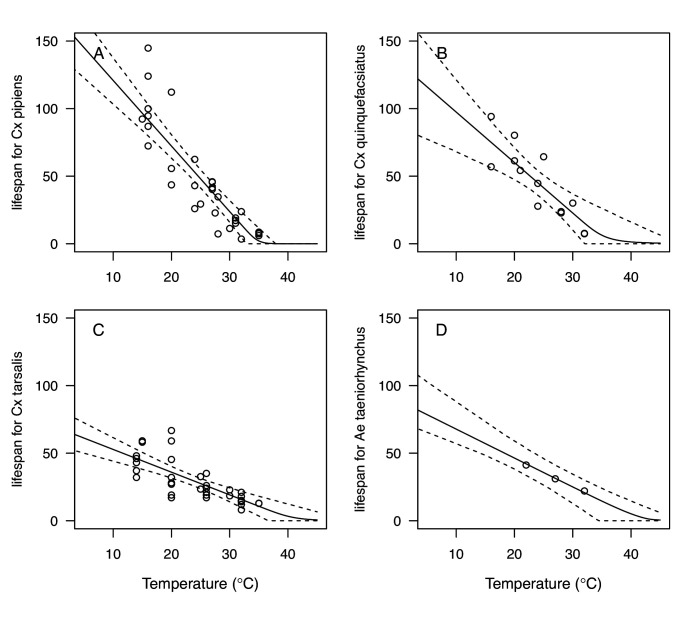
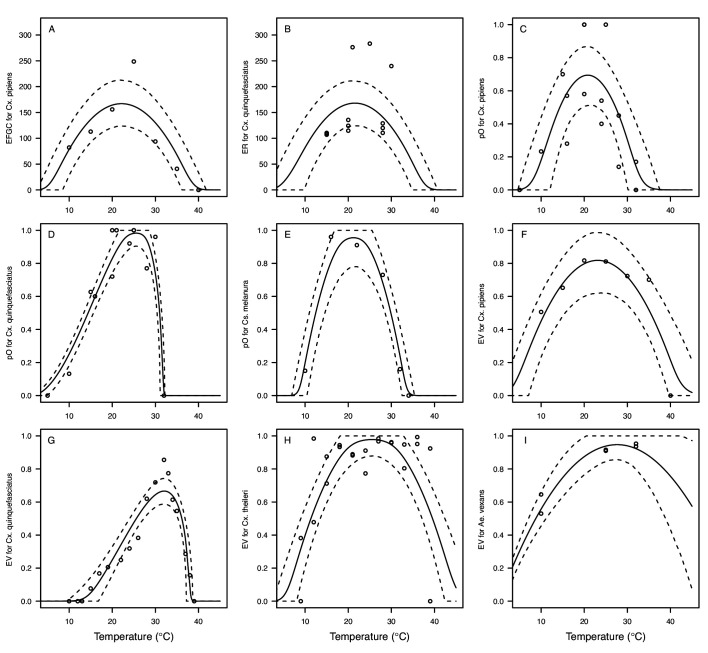
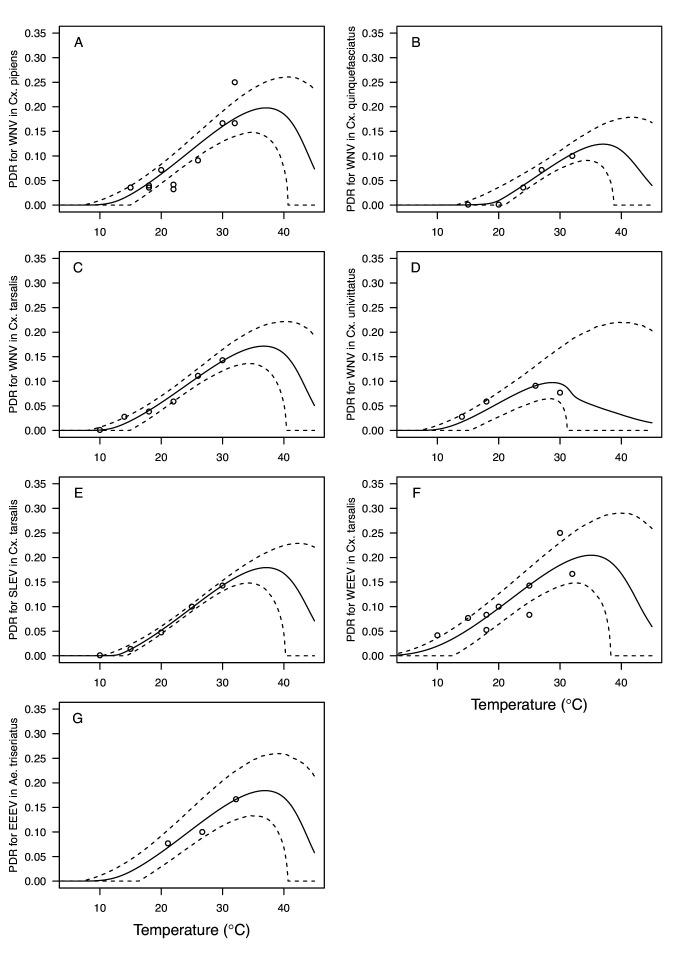
Verification
Claims the paper makes
The claims and statistics of this paper haven’t been checked yet.
Run the check — free, no account needed. It reads the open-access text and checks the sources it cites.
Claims other papers make about this one
Each is checked against this paper’s own text: does it say what the citing paper says it does?
The check wasn’t confident either way, so it gives no verdict — never disputed.
In the citing paper
“Extreme heat can affect human mental health outcomes across a continuum of severity, from subclinical to life-altering.102,142–147”
From The 2024 report of the Lancet Countdown on health and climate change: facing record-breaking threats from delayed action (2024) · cites this paper as [145]
Experimental — accuracy not yet measured
Self-check
Percentages, sums and reported differences re-computed from the paper’s own numbers.
The self-check needs the paper’s full text.
Citations
Cites
Modern Applied Statistics with S
Venables, W. N., & Ripley, B. D. (2002) · Statisctics and computing/Statistics and computing · doi:10.1007/978-0-387-21706-2 · Cited by 25,941
Updated high‐resolution grids of monthly climatic observations – the CRU TS3 .10 Dataset
Harris, I. C., Jones, P. D., Osborn, T. J., & Lister, D. (2013) · International Journal of Climatology · doi:10.1002/joc.3711 · Cited by 6,326
THE INTERGOVERNMENTAL PANEL ON CLIMATE CHANGE
Shine, K. P. (1990) · Weather · doi:10.1002/j.1477-8696.1990.tb05660.x · Cited by 5,458
Wood, S. N. (2006) · doi:10.1201/9781420010404 · Cited by 4,953
JAGS: A program for analysis of Bayesian graphical models using Gibbs sampling
Plummer, M. (2003) · Cited by 4,720
Impacts of climate warming on terrestrial ectotherms across latitude
Deutsch, C. A., Tewksbury, J. J., Huey, R. B., Sheldon, K. S., Ghalambor, C. K., Haak, D. C., & Martin, P. R. (2008) · Proceedings of the National Academy of Sciences · doi:10.1073/pnas.0709472105 · Cited by 3,840
The construction of next-generation matrices for compartmental epidemic models
Diekmann, O., Heesterbeek, H., & Roberts, M. C. (2009) · Journal of The Royal Society Interface · doi:10.1098/rsif.2009.0386 · Cited by 2,192
THE WORLD METEOROLOGICAL ORGANIZATION
Ashford, O. M. (1966) · Weather · doi:10.1002/j.1477-8696.1966.tb02810.x · Cited by 2,082
Markov Chain Monte Carlo in Practice
Gasparini, M., Gilks, W. R., Richardson, S. T., & Spiegelhalter, D. J. (1997) · Technometrics · doi:10.2307/1271145 · Cited by 1,881
Global analysis of thermal tolerance and latitude in ectotherms
Sunday, J. M., Bates, A. E., & Dulvy, N. K. (2011) · Proceedings of the Royal Society B: Biological Sciences · doi:10.1098/rspb.2010.1295 · Cited by 1,300
Research works printed but not linked: 11
- Bates S. 2019. CNN Sans. Rare Eastern Equine Encephalitis Has Killed 9 People in the U.S. in 2019.
- Centers for Disease Control and Prevention. 2018a. Centers for Disease Control and Prevention. St. Louis Encephalitis: Statistics and Maps.
- Centers for Disease Control and Prevention. 2018b. American Society for Microbiology. Eastern Equine Encephalitis: Epidemiology& Geographic Distribution.
- Centers for Disease Control and Prevention. 2018c. Centers for Disease Control and Prevention. West Nile Virus: Final Cumulative Maps &Data for 1999-2017.
- European Centre for Disease Prevention and Control. 2018. European Centre for Disease Prevention and Control. Surveillance and Disease Data for West Nile Fever.
- Government of Canada. 2018. Government of Canada. Surveillance of West Nile Virus.
- Hijmans RJ. 2020. raster: Geographic data analysis and modeling. R Package. 2.2.31. https://rdrr.io/cran/raster/.
- Kiarie-Makara, 2015, Effects of temperature on the growth and development of culex pipiens Complex Mosquitoes (Diptera: Culicidae), Journal of Pharmacy and Biological Sciences, 10, 1, 10.9790/3008-10620110 · DOI
- Shocket, 2020, Environmental Drivers of Vector-Borne Disease Population Biology of Vector-Borne Diseases
- Su Y-S, Yajima M. 2009. R2jags: A Package for Running Jags From R. 0.6-1. https://rdrr.io/cran/R2jags/.
- World Meteorological Organization. 2009. World Meteorological Organization. Handbook on CLIMAT and CLIMAT TEMP Reporting, 2009 Edition.
Cited by
Sorted by citations
Romanello, M., Napoli, C. D., Green, C., Kennard, H., Lampard, P., Scamman, D., Walawender, M., Ali, Z., Ameli, N., Ayeb-Karlsson, S., et al. (2023) · The Lancet · doi:10.1016/s0140-6736(23)01859-7 · Cited by 1,275
Romanello, M., Walawender, M., Hsu, S.-C., Moskeland, A., Palmeiro-Silva, Y., Scamman, D., Ali, Z., Ameli, N., Angelova, D., Ayeb-Karlsson, S., et al. (2024) · The Lancet · doi:10.1016/s0140-6736(24)01822-1 · Cited by 897
Effects of climate change and human activities on vector-borne diseases
de Souza, W. M., & Weaver, S. C. (2024) · Nature Reviews Microbiology · doi:10.1038/s41579-024-01026-0 · Cited by 444
Climate Change and Vectorborne Diseases
Thomson, M. C., & Stanberry, L. R. (2022) · New England Journal of Medicine · doi:10.1056/nejmra2200092 · Cited by 282
Humidity – The overlooked variable in the thermal biology of mosquito‐borne disease
Brown, J. J., Pascual, M., Wimberly, M. C., Johnson, L. R., & Murdock, C. C. (2023) · Ecology Letters · doi:10.1111/ele.14228 · Cited by 192
Self-citation
Metadata
- Authors
- Shocket, M. S., Verwillow, A. B., Numazu, M. G., Slamani, H., Cohen, J. M., El Moustaid, F., Rohr, J., Johnson, L. R., & Mordecai, E. A.
- Affiliations
- University of California, Los Angeles (US)
- Stanford University (US)
- Virginia Tech (US)
- University of Wisconsin–Madison (US)
- Department of Biological Sciences, Virginia Polytechnic Institute and State University (Virginia Tech), Blacksburg, United States
- University of Notre Dame (US)
- Corresponding author
- Shocket, Marta S
- Venue
- eLife
- Publisher
- eLife Sciences Publications, Ltd
- Published
- 2020-09-15
- Volume
- 9
- ISSN
- 2050-084X (ISSN-L)
- PMC
- PMC7492091
- OpenAlex
- W3084581047
- Cited by
- 192
- References
- 149
- Citations by year
- 2026: 42 · 2025: 36 · 2024: 34 · 2023: 29 · 2022: 26 · 2021: 22 · 2020: 3
- FWCI
- 15.00
- Type
- journal article
- Language
- en
- Open access
- gold
- doi.org
- Licence
- Locations
- eLife (publishedVersion, cc-by)
- PubMed Central (publishedVersion, cc-by)
- PubMed (publishedVersion)
- Digital Commons - University of South Florida (University of South Florida) (submittedVersion, cc-by)
- DOAJ (DOAJ: Directory of Open Access Journals) (submittedVersion, cc-by-sa)
- Lancaster EPrints (Lancaster University) (submittedVersion)
- Figshare (submittedVersion, cc-by)
- VTechWorks (Virginia Tech) (submittedVersion, cc-by)
- Funders
- National Science Foundation (DEB-1518681, DMS-1750113)
- National Institutes of Health (NIGMS R35 MIRA: 1R35GM133439-01)
- Topics
- Health Sciences › Medicine › Public Health, Environmental and Occupational Health › Mosquito-borne diseases and control
- Physical Sciences › Environmental Science › Health, Toxicology and Mutagenesis › Climate Change and Health Impacts
- Life Sciences › Immunology and Microbiology › Parasitology › Vector-borne infectious diseases
- Keywords
- West Nile virus, mosquito-borne viruses, temperature-dependent transmission, thermal optimum, thermal breadth, Culex pipiens, Culex tarsalis, eastern equine encephalitis virus, western equine encephalitis virus, St. Louis encephalitis virus, Sindbis virus, Rift Valley fever virus, climate change, vector-pathogen interactions, summer temperature
- MeSH terms
- Mosquito Vectors, Animals, Arbovirus Infections, Arboviruses, Culex, Models, Biological, Temperature, United States, West Nile Fever, West Nile virus
About these checks
Registry, retraction, Cites and statistics results are computed, not judged, with one exception: a printed reference that no index lists is read once by a model before it counts as a citation error. Claims are extracted by a model and kept only when their quote appears verbatim in the text; each cited source is then checked, with a model’s help, for whether it says what the claim relies on. Those verdicts can be wrong — read the claim’s quote and the cited source before relying on one.
Statistics and arithmetic are recomputed, not judged.
Confidence bands are shown only for fields calibrated on our annotated test set. None is calibrated yet, so no band is shown.
What counts as a claim ›How we measure confidence ›How we check this ›
Are you an author, or do you see a problem with this page? Request a review
