

The DOI matches its Crossref record; 4 of the 4 references it cites were found in a registry or an index.
OES-Fed: a federated learning framework in vehicular network based on noise data filtering
Open accessAbstract
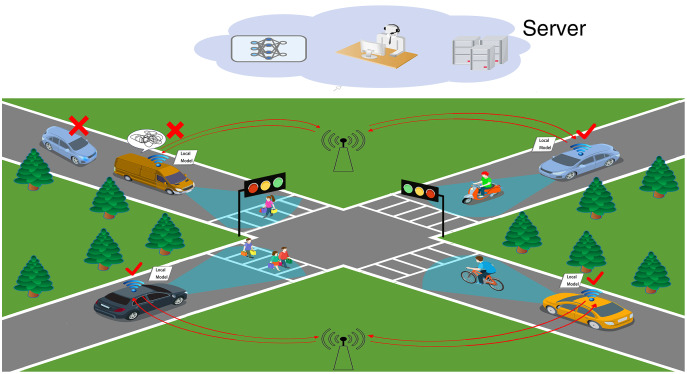
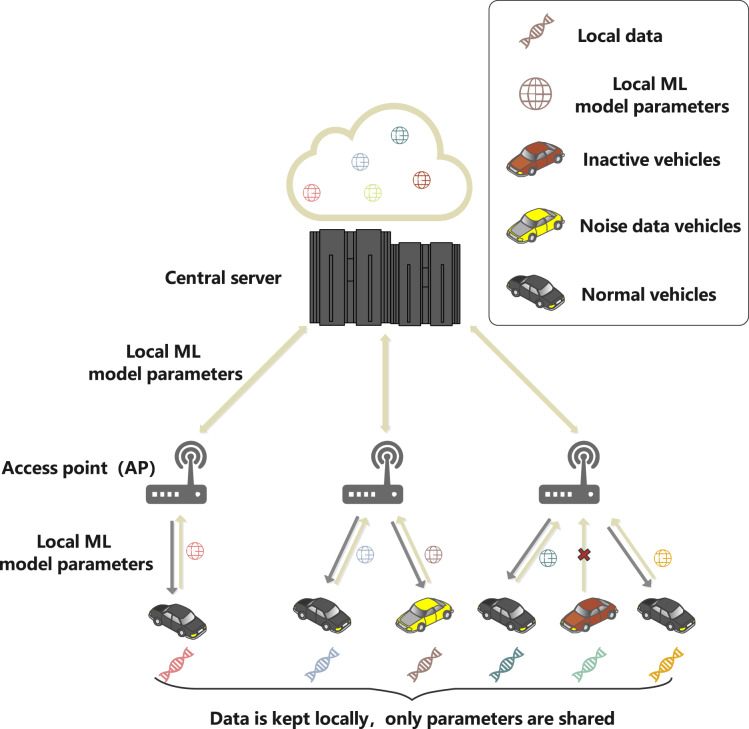
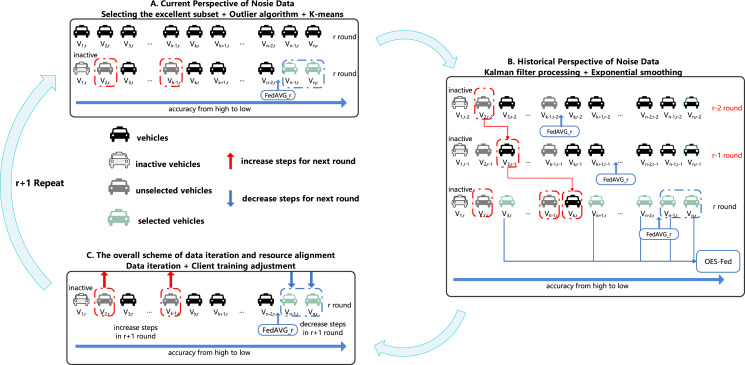
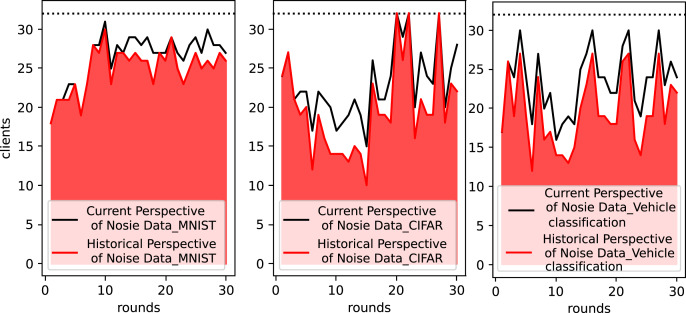
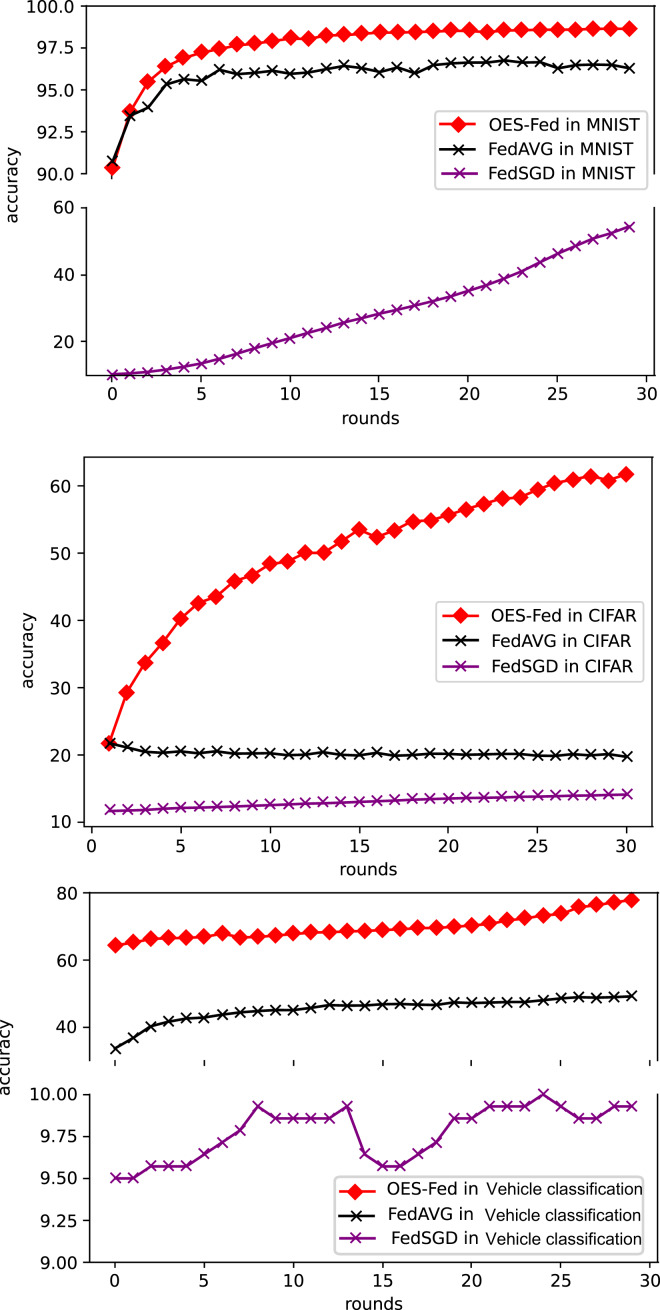
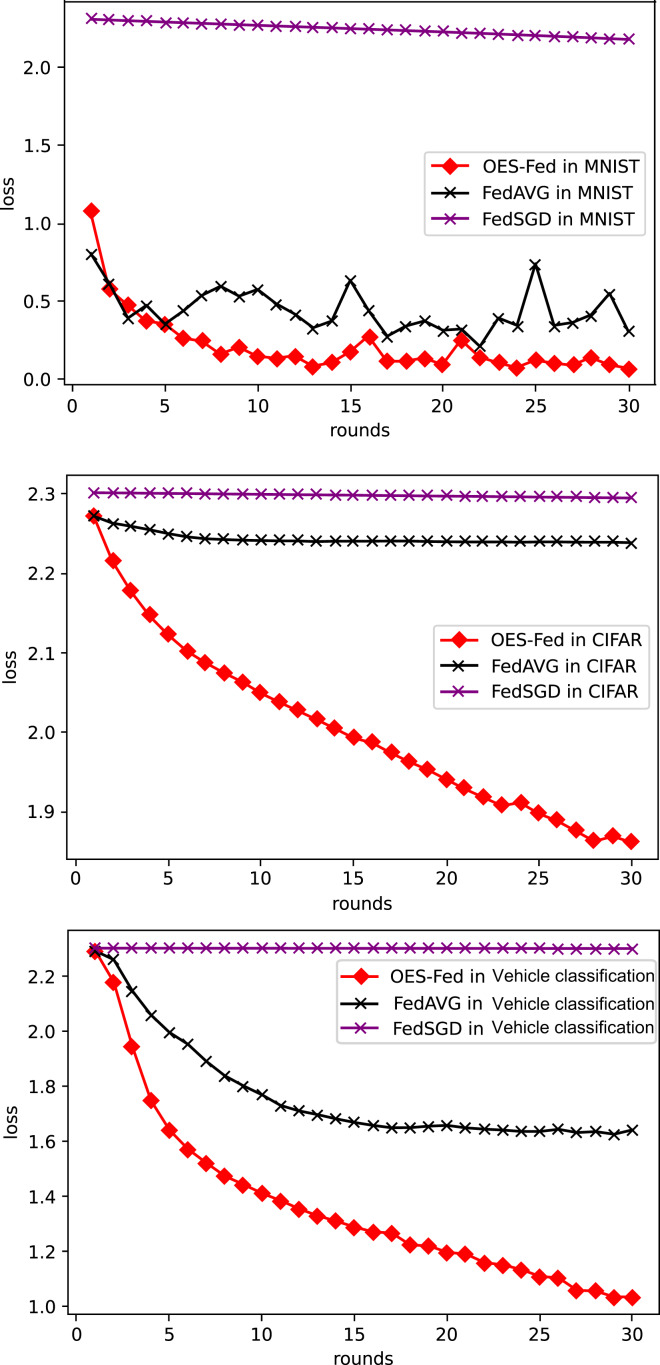
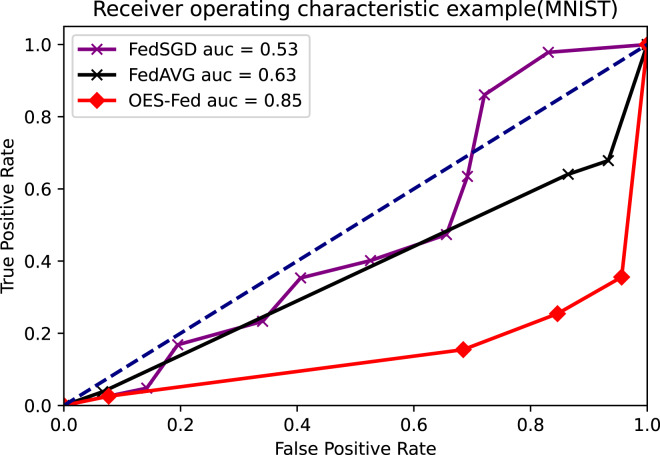
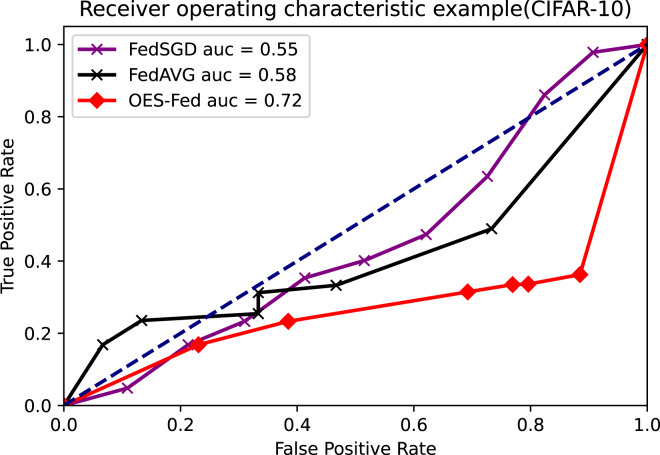
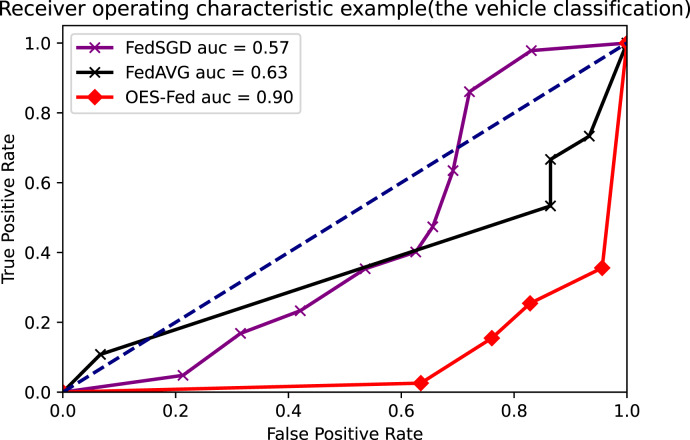
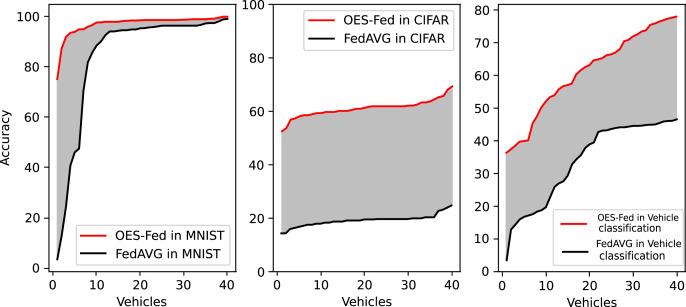
The Internet of Vehicles (IoV) is an interactive network providing intelligent traffic management, intelligent dynamic information service, and intelligent vehicle control to running vehicles. One of the main problems in the IoV is the reluctance of vehicles to share local data resulting in the cloud server not being able to acquire a sufficient amount of data to build accurate machine learning (ML) models. In addition, communication efficiency and ML model accuracy in the IoV are affected by noise data caused by violent shaking and obscuration of in-vehicle cameras. Therefore we propose a new Outlier Detection and Exponential Smoothing federated learning (OES-Fed) framework to overcome these problems. More specifically, we filter the noise data of the local ML model in the IoV from the current perspective and historical perspective. The noise data filtering is implemented by combining data outlier, K-means, Kalman filter and exponential smoothing algorithms. The experimental results of the three datasets show that the OES-Fed framework proposed in this article achieved higher accuracy, lower loss, and better area under the curve (AUC). The OES-Fed framework we propose can better filter noise data, providing an important domain reference for starting field of federated learning in the IoV.
Overview
The claims and statistics of this paper haven’t been checked yet.
Run the check — free, no account needed. It reads the open-access text and checks the sources it cites.
Integrity signals
Registry
Cites
Statistics
Figures
Verification
Claims the paper makes
The claims and statistics of this paper haven’t been checked yet.
Run the check — free, no account needed. It reads the open-access text and checks the sources it cites.
Claims other papers make about this one
Each is checked against this paper’s own text: does it say what the citing paper says it does?
The source backs part of the claim, not all of it — or backs it for a different population, condition or comparison.
In the citing paper
“For anomaly detection within these system, study in [72] proposed OES-Fed that identify and mitigate abnormal data inputs without transferring vehicle-specific data.”
From Privacy-preserving Machine Learning in Internet of Vehicle Applications: Fundamentals, Recent Advances, and Future Direction (2025) · cites this paper as [72]
Experimental — accuracy not yet measured
Self-check
Percentages, sums and reported differences re-computed from the paper’s own numbers.
The self-check needs the paper’s full text.
Citations
Cites
Federated Learning for Vehicular Internet of Things: Recent Advances and Open Issues
Du, Z., Wu, C., Yoshinaga, T., Yau, K.-L. A., Ji, Y., & Li, J. (2020) · IEEE Open Journal of the Computer Society · doi:10.1109/ojcs.2020.2992630 · Cited by 393
MTD-Net: Learning to Detect Deepfakes Images by Multi-Scale Texture Difference
Yang, J., Li, A., Xiao, S., Lu, W., & Gao, X. (2021) · IEEE Transactions on Information Forensics and Security · doi:10.1109/tifs.2021.3102487 · Cited by 184
Federated Machine Learning for Intelligent IoT via Reconfigurable Intelligent Surface
Yang, K., Shi, Y., Zhou, Y., Yang, Z., Fu, L., & Chen, W. (2020) · IEEE Network · doi:10.1109/mnet.011.2000045 · Cited by 184
Entropy-based redundancy analysis and information screening
Li, Y., Yang, J., & Wen, J. (2023) · Digital Communications and Networks · doi:10.1016/j.dcan.2021.12.001 · Cited by 77
Research works printed but not linked: 34
- Ahmed, 2020, Active learning based federated learning for waste and natural disaster image classification, IEEE Access, 8, 10.1109/ACCESS.2020.3038676 · DOI
- Bao, 2021, Edge computing-based joint client selection and networking scheme for federated learning in vehicular IoT, China Communications, 18, 39, 10.23919/JCC.2021.06.004 · DOI · Paper page
- Baumer, 2018, Lessons from between the white lines for isolated data scientists, The American Statistician, 72, 66, 10.1080/00031305.2017.1375985 · DOI
- Burlet, 2017, Isolated guitar transcription using a deep belief network, PeerJ Computer Science, 3, e109, 10.7717/peerj-cs.109 · DOI
- Chithaluru, 2021a, Energy-efficient blockchain implementation for cognitive wireless communication networks (CWCNs), Energy Reports, 7, 8277, 10.1016/j.egyr.2021.07.136 · DOI
- Chithaluru, 2021b, An energy-efficient routing scheduling based on fuzzy ranking scheme for internet of things, IEEE Internet of Things Journal, 9, 7251, 10.1109/JIOT.2021.3098430 · DOI
- Chithaluru, 2021, ARIOR: adaptive ranking based improved opportunistic routing in wireless sensor networks, Wireless Personal Communications, 116, 153, 10.1007/s11277-020-07709-0 · DOI
- Ghane, 2020, Preserving privacy in the internet of connected vehicles, IEEE Transactions on Intelligent Transportation Systems, 22, 5018, 10.1109/TITS.2020.2964410 · DOI · Paper page
- Goh, 2020, Outlier percentage estimation for shape‐ and parameter‐independent outlier detection, IET Image Processing, 14, 3414, 10.1049/iet-ipr.2020.0334 · DOI
- Goudarzi, 2021, An efficient filter with low memory usage for multimedia data of industrial internet of things, PeerJ Computer Science, 7, e589, 10.7717/peerj-cs.589 · DOI
- Gunagwera, 2022, A longitudinal inter-vehicle distance controller application for autonomous vehicle platoons, PeerJ Computer Science, 8, e990, 10.7717/peerj-cs.990 · DOI
- Husnoo, 2021, Do not get fooled: defense against the one-pixel attack to protect IoT-enabled deep learning systems, Ad Hoc Networks, 122, 102627, 10.1016/j.adhoc.2021.102627 · DOI
- Lakhan, 2021, Federated learning enables intelligent reflecting surface in fog-cloud enabled cellular network, PeerJ Computer Science, 7, e758, 10.7717/peerj-cs.758 · DOI
- Manias, 2021, Making a case for federated learning in the internet of vehicles and intelligent transportation systems, IEEE Network, 35, 88, 10.1109/MNET.011.2000552 · DOI
- Novikova, 2022, Analysis of privacy-enhancing technologies in open-source federated learning frameworks for driver activity recognition, Sensors, 22, 2983, 10.3390/s22082983 · DOI · Paper page
- Pokhrel, 2020a, Federated learning with blockchain for autonomous vehicles: analysis and design challenges, IEEE Transactions on Communications, 68, 4734, 10.1109/TCOMM.2020.2990686 · DOI · Paper page
- Pokhrel, 2020b, Improving TCP performance over WiFi for internet of vehicles: a federated learning approach, IEEE Transactions on Vehicular Technology, 69, 6798, 10.1109/TVT.2020.2984369 · DOI
- Posner, 2021, Federated learning in vehicular networks: opportunities and solutions, IEEE Network, 35, 152, 10.1109/MNET.011.2000430 · DOI
- Poudyal, 2021, Multiarea inertia estimation using convolutional neural networks and federated learning, IEEE Systems Journal, 99, 1, 10.1109/JSYST.2021.3134599 · DOI
- Rahajoe, 2019, Forecasting feature selection based on single exponential smoothing using wrapper method, International Journal of Advanced Computer Science and Applications, 10, 139, 10.14569/issn.2156-5570 · DOI
- Raza, 2021, A vehicle to vehicle relay-based task offloading scheme in vehicular communication networks, PeerJ Computer Science, 7, e486, 10.7717/peerj-cs.486 · DOI
- Reunanen, 2020, Automatic optimization of outlier detection ensembles using a limited number of outlier examples, International Journal of Data Science and Analytics, 10, 377, 10.1007/s41060-020-00222-4 · DOI
- Singh, 2022, Hybrid genetic firefly algorithm-based routing protocol for VANETs, IEEE Access, 10, 9142, 10.1109/ACCESS.2022.3142811 · DOI
- Tehseen, 2021, A framework for the prediction of earthquake using federated learning, PeerJ Computer Science, 7, e540, 10.7717/peerj-cs.540 · DOI
- Toet, 2016, Alternating guided image filtering, PeerJ Computer Science, 2, e72, 10.7717/peerj-cs.72 · DOI
- Wang, 2020, Simulation of vehicle network communication security based on random geometry and data mining, IEEE Access, 8, 69389, 10.1109/ACCESS.2020.2986338 · DOI
- Wang, 2021, Rapid global path planning algorithm for unmanned surface vehicles in large-scale and multi-island marine environments, PeerJ Computer Science, 7, e612, 10.7717/peerj-cs.612 · DOI
- Wang, 2020, An intrusion detection method based on federated learning and convolutional neural network, Netinfo Security, 20, 47, 10.3969/j.issn.1671-1122.2020.04.006 · DOI
- Xu, 2022, Outlier detection algorithm based on k-nearest neighbors-local outlier factor, Journal of Algorithms & Computational Technology, 16, 17483026221078111, 10.1177/17483026221078111 · DOI
- Yang, 2021b, MSTA-Net: forgery detection by generating manipulation trace based on multi-scale self-texture attention, IEEE Transactions on Circuits and Systems for Video Technology, 32, 4854, 10.1109/TCSVT.2021.3133859 · DOI
- Yang, 2022, Differentially private federated learning via reconfigurable intelligent surface, ArXiv preprint, 10.48550/arXiv.2203.17028 · DOI
- Ye, 2020, Federated learning in vehicular edge computing: a selective model aggregation approach, IEEE Access, 8, 23920, 10.1109/ACCESS.2020.2968399 · DOI
- Zhang, 2018, The model research on location fusion algorithm with big data selection and accuracy correction, 10.12783/dtcse/wicom2018/26274 · DOI
- Zhao, 2020, Local differential privacy-based federated learning for internet of things, IEEE Internet of Things Journal, 8, 8836, 10.1109/JIOT.2020.3037194 · DOI · Paper page
Cited by
Islam, N., & Zulkernine, M. (2025) · arXiv · doi:10.48550/arxiv.2503.01089 · Cited by 9
Metadata
- Authors
- Lei, Y., Wang, S. L., Su, C., & Ng, T. F.
- Affiliations
- Faculty of Art, Computing and Creative Industry, Universiti Pendidikan Sultan Idris, Tanjong Malim, Perak, Malaysia
- Sultan Idris Education University (MY)
- Guangxi Vocational & Technical Institute of Industry (CN)
- Universiti Sains Malaysia (MY)
- Corresponding author
- Wang, Shir Li
- Su, Caiyu
- Venue
- PeerJ Computer Science
- Publisher
- PeerJ
- Published
- 2022-09-20
- Volume
- 8
- Pages
- e1101
- ISSN
- 2376-5992 (ISSN-L)
- PMC
- PMC9575870
- OpenAlex
- W4296391926
- Cited by
- 25
- References
- 4
- Citations by year
- 2025: 6 · 2024: 8 · 2023: 10 · 2022: 1
- FWCI
- 2.06
- Type
- journal article
- Language
- en
- Open access
- gold
- doi.org
- Locations
- PeerJ Computer Science (publishedVersion, cc-by)
- PubMed Central (publishedVersion, cc-by)
- PubMed (publishedVersion)
- DOAJ (DOAJ: Directory of Open Access Journals) (submittedVersion, cc-by-sa)
- Funders
- The Higher Education Dept. of the Ministry of Education of P. R. China
- Industry and University Cooperation Collaborative Education Project (202002118061)
- Guangxi Colleges in 2022 (2022KY1296)
- Topics
- Physical Sciences › Computer Science › Artificial Intelligence › Privacy-Preserving Technologies in Data
- Physical Sciences › Engineering › Electrical and Electronic Engineering › Vehicular Ad Hoc Networks (VANETs)
- Physical Sciences › Engineering › Automotive Engineering › Autonomous Vehicle Technology and Safety
- Keywords
- federated learning, vehicular networks, Internet of Vehicles, outlier detection, exponential smoothing, Kalman filter, K-means clustering, privacy-preserving machine learning
About these checks
Registry, retraction, Cites and statistics results are computed, not judged, with one exception: a printed reference that no index lists is read once by a model before it counts as a citation error. Claims are extracted by a model and kept only when their quote appears verbatim in the text; each cited source is then checked, with a model’s help, for whether it says what the claim relies on. Those verdicts can be wrong — read the claim’s quote and the cited source before relying on one.
Statistics and arithmetic are recomputed, not judged.
Confidence bands are shown only for fields calibrated on our annotated test set. None is calibrated yet, so no band is shown.
What counts as a claim ›How we measure confidence ›How we check this ›
Are you an author, or do you see a problem with this page? Request a review
How to cite
Cite CoChat for the checks on this page, and the paper for its own findings.
- This page
- CoChat. (2026). Citation check: OES-Fed: a federated learning framework in vehicular network based on noise data filtering. https://app.cochat.ai/papers/10.7717/peerj-cs.1101
- The paper
- Lei, Y., Wang, S. L., Su, C., & Ng, T. F. (2022). OES-Fed: a federated learning framework in vehicular network based on noise data filtering. PeerJ Computer Science. https://doi.org/10.7717/peerj-cs.1101
