

The DOI matches its Crossref record; 40 of the 41 references it cites were found in a registry or an index.
Association of Racial/Ethnic and Gender Concordance Between Patients and Physicians With Patient Experience Ratings
Open accessAbstract
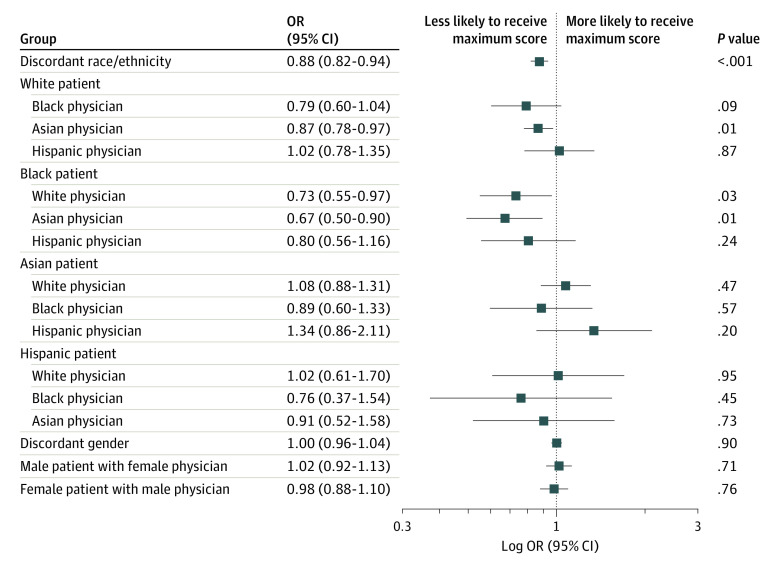
Importance: The Press Ganey Outpatient Medical Practice Survey is used to measure the patient experience. An understanding of the patient- and physician-related determinants of the patient experience may help identify opportunities to improve health care delivery and physician ratings. Objective: To evaluate the associations between the patient experience as measured by scores on the Press Ganey survey and patient-physician racial/ethnic and gender concordance. Design, Setting, and Participants: A cross-sectional analysis of Press Ganey surveys returned for outpatient visits within the University of Pennsylvania Health System between 2014 and 2017 was performed. Participants included adult patient and physician dyads for whom surveys were returned. Data analysis was performed from January to June 2019. Exposures: Patient-physician racial/ethnic and gender concordance. Main Outcomes and Measures: The primary outcome was receipt of the maximum score for the "likelihood of your recommending this care provider to others" question in the Care Provider domain of the Press Ganey survey. Secondary outcomes included each of the remaining 9 questions in the Care Provider domain. Generalized estimating equations clustering on physicians with exchangeable intracluster correlations and cluster-robust standard errors were used to investigate associations between the outcomes and patient-physician racial/ethnic and gender concordance. Results: In total, 117 589 surveys were evaluated, corresponding to 92 238 unique patients (mean [SD] age, 57.7 [15.6] years; 37 002 men [40.1%]; 75 307 White patients [81.6%]) and 747 unique physicians (mean [SD] age 45.5 [10.6] years; 472 men [63.2%]; 533 White physicians [71.4%]). Compared with racially/ethnically concordant patient-physician dyads, discordance was associated with a lower likelihood of physicians receiving the maximum score (adjusted odds ratio [OR], 0.88; 95% CI, 0.82-0.94; P < .001). Black (adjusted OR, 0.73; 95% CI, 0.68-0.78; P < .001) and Asian (adjusted OR, 0.55; 95% CI, 0.50-0.60; P < .001) patient race were both associated with lower patient experience ratings. Patient-physician gender concordance was not associated with Press Ganey scores (adjusted OR, 1.00; 95% CI, 0.96-1.04; P = .90). Conclusions and Relevance: In this study, higher Press Ganey survey scores were associated with racial/ethnic concordance between patients and their physicians. Efforts to improve physician workforce diversity are imperative. Delivery of health care in a culturally mindful manner between racially/ethnically discordant patient-physician dyads is also essential. Furthermore, Press Ganey scores may differ by a physician's patient demographic mix; thus, care must be taken when publicly reporting or using Press Ganey scores to evaluate physicians on an individual level.
Overview
The claims and statistics of this paper haven’t been checked yet.
Run the check — free, no account needed. It reads the open-access text and checks the sources it cites.
Integrity signals
Registry
Cites
Statistics
Figures
Verification
Claims the paper makes
The claims and statistics of this paper haven’t been checked yet.
Run the check — free, no account needed. It reads the open-access text and checks the sources it cites.
Claims other papers make about this one
Each is checked against this paper’s own text: does it say what the citing paper says it does?
The cited source says what the claim attributes to it.
In the citing paper
“Findings from these studies are varied: some suggest that patient-clinician racial/ethnic or gender concordance offers benefits [7-11], while others do not [12-14]. Moreover, a recent systematic review studying the association between racial, gender, and multifactorial concordance reported inconclusive results on patient outcomes, advocating for further research [15].”
Self-check
Percentages, sums and reported differences re-computed from the paper’s own numbers.
The self-check needs the paper’s full text.
Citations
Cites
(1990) · Choice Reviews Online · doi:10.5860/choice.27-3338 · Cited by 35,305
von Elm, E., Altman, D. G., Egger, M., Pocock, S. J., Gøtzsche, P. C., Vandenbroucke, J. P., & Initiative, F. T. S. (2007) · PLoS Medicine · doi:10.1371/journal.pmed.0040296 · Cited by 23,020
von Elm, E., Altman, D. G., Egger, M., Pocock, S. J., Gøtzsche, P. C., & Vandenbroucke, J. P. (2007) · The Lancet · doi:10.1016/s0140-6736(07)61602-x · Cited by 21,320
Hosmer, D. W., & Lemeshow, S. (2000) · doi:10.1002/0471722146 · Cited by 20,302
Race, Gender, and Partnership in the Patient-Physician Relationship
Cooper, L. A. (1999) · JAMA · doi:10.1001/jama.282.6.583 · Cited by 2,161
Physician Gender Effects in Medical Communication
ROTER, D. L., Hall, J. A., & Aoki, Y. (2002) · JAMA · doi:10.1001/jama.288.6.756 · Cited by 1,434
Patient-Centered Communication, Ratings of Care, and Concordance of Patient and Physician Race
Cooper, L. A., Roter, D. L., Johnson, R. L., Ford, D. E., Steinwachs, D. M., & Powe, N. R. (2003) · Annals of Internal Medicine · doi:10.7326/0003-4819-139-11-200312020-00009 · Cited by 1,371
Patient-Physician Racial Concordance and the Perceived Quality and Use of Health Care
Saha, S., Komaromy, M., Koepsell, T. D., & Bindman, A. B. (1999) · Archives of Internal Medicine · doi:10.1001/archinte.159.9.997 · Cited by 1,125
Shen, M. J., Peterson, E. B., Costas-Muñíz, R., Hunter-Hernández, M., Jewell, S., Matsoukas, K., & Bylund, C. L. (2017) · Journal of Racial and Ethnic Health Disparities · doi:10.1007/s40615-017-0350-4 · Cited by 1,052
Cooper, L. A., Roter, D. L., Carson, K. A., Beach, M. C., Sabin, J. A., Greenwald, A. G., & Inui, T. S. (2012) · American Journal of Public Health · doi:10.2105/ajph.2011.300558 · Cited by 815
Research works printed but not linked: 1
- Press Ganey. Guide to interpreting: part 2—statistics. Published 2014. Accessed August 10, 2020. https://helpandtraining.pressganey.com/lib-docs/default-source/ip-training-resources/guide-to-interpreting---part-2.pdf?sfvrsn=2
Cited by
Sorted by citations
Items 601–698 of 698
Patient-driven? The influence of patient satisfaction scores on clinical decision-making
Rothfus, S. L., & Mabry, J. L. (2025) · The Nurse Practitioner · doi:10.1097/01.npr.0000000000000345
Optimizing Healthcare Through Alignment and Nurturing Across Cultures (Ohana)Preprint
Pistacchio, C., Napolitano, D., Figura, M., Amato, S., Cascio, A. L., Ribaudi, E., Giannetta, N., Carrodano, S., Arcadi, P., & Stievano, A. (2025) · SSRN Electronic Journal · doi:10.2139/ssrn.5371109
Diversity, Equity, and Inclusion in Point-of-Care Ultrasound
Dessie, A. S., & Jones, J. (2025) · Springer eBooks · doi:10.1007/978-3-031-85308-1_26
Ebong, I. M., Eads, P., & Charles, G. (2025) · Epilepsy Research · doi:10.1016/j.eplepsyres.2025.107637
“…question ‘likelihood of your recommending this care provider to others’ in the Care Provider domain of the survey than those in discordant pairs (Takeshita et al., 2020). p r o o While offering speaker series/learning series, particularly around authorization access and issues that…”
Implications of Quality Measurement in Workforce Development
Chen, C. (2025) · Wiley eBooks · doi:10.1002/9781394219421.ch14
Birthing Cultural Humility: A Transformation of Reproductive Justice in the Military Health System
Wyatt, B., Drumm, C. M., Konopasky, A., Haischer‐Rollo, G., Lutgendorf, M. A., & Vereen, R. J. (2025) · Birth · doi:10.1111/birt.70010
Karvonen, K. L., Williams-Burt, H., Agyekum, A., Asiodu, I. V., Feldman, N., Harris, C., Martinez, J., Williams, J. L., Noroña-Zhou, A. N., Woods, C., et al. (2025) · Health Equity · doi:10.1177/24731242251374842
Informed Consent in Shoulder and Elbow Surgery
Sadh, P., Almeda-Lopez, A., Hershfeld, B. E., Monessa, D., Klein, B. J., Cohn, R. M., & Bitterman, A. D. (2025) · Cureus · doi:10.7759/cureus.92584
“A study comparing shoulder surgery with other orthopaedic operations found that patients' general health and employment status had a substantial effect on postoperative satisfaction [23].”
Characteristics of family medicine physician associates/assistants in the United States
Grubb, B., Griffith, C. F., Bruza‐Augatis, M., Puckett, K. K., & Kozikowski, A. (2025) · BMC Health Services Research · doi:10.1186/s12913-025-13355-8
“As the Hispanic/Latino(a/x) population continues to grow in the U.S., having a health-care workforce that reflects the diversity of the population is essential, as patient satisfaction and treatment adherence tend to improve when there is racial concordance between patients and providers [33].”
Wannaphut, C., Tanariyakul, M., Yoshikawa, G. T., Hernandez, B. Y., Villanueva, N. A., & Acoba, J. D. (2025) · Cancer Epidemiology · doi:10.1016/j.canep.2025.102904
When Does a Team Start the Discussion on Inclusion and Diversity in Early-phase Clinical Trials?
Mathias, S., & Barnes, M. (2025) · Clinical Therapeutics · doi:10.1016/j.clinthera.2025.09.013
Wu, A., Giannitrapani, K. F., Colón, G. D. R., & Lorenz, K. (2025) · BMC Palliative Care · doi:10.1186/s12904-025-01917-w
“While it is known that racial concordance between patients and their providers influences health-care received, including patient satisfaction and communication, there continue to be many opportunities to improve engagement with patients and families in cultur-ally-discordant contexts [3, 4, 5].”
Slavery, Segregation, and Health
Wasserman, J. A. (2025) · The Wiley Blackwell Encyclopedia of Health, Illness, Behavior, and Society · doi:10.1002/9781118410868.wbehibs0735
Peugh, E. E., Hull, S. C., & Jamal, L. (2025) · Journal of Genetic Counseling · doi:10.1002/jgc4.70124
“There is evidence that patient–physician dyads that are ethnicity-concordant are more likely to result in highly rated patient experiences (Takeshita et al., 2020 ) and that patients from minority groups are generally uncomfortable being asked about their race or ethnicity in healthcare settings…”
A Cross-sectional Examination of Burnout in Physicians and Nurse Practitioners in Hawaii
Azama, K. A., & Lim, E. (2025) · Journal of Occupational and Environmental Medicine · doi:10.1097/jom.0000000000003607
Building a More Inclusive Urology Workforce: Lessons from Successful Initiatives
Chan, S. J., Harris, C., & Badalato, G. M. (2025) · Journal of Healthcare Leadership · doi:10.2147/jhl.s478856
The influence of emergency physician gender on patient experience surveys
Jarman, A. F., Assatormasihkhah, S., Leece, R., Taylor, S. L., Akinjobi, Z., & Mumma, B. E. (2025) · The American Journal of Emergency Medicine · doi:10.1016/j.ajem.2025.11.028
Holistic admissions from a quality improvement perspective: a literature review
Loken, A., & Aldridge, M. D. (2025) · Teaching and learning in nursing · doi:10.1016/j.teln.2025.10.024
Duerr, E., Ramapriyan, R., Mensah, E. O., Hughes, J. G., Mitchell, T., Blanch, M. F., Headley, L., Owolo, E. S., Coumans, J.-V. C. E., Carter, B. S., et al. (2025) · Neurosurgical Review · doi:10.1007/s10143-025-03974-4
Multi-Center Evaluation of Education Outcomes of Graduates from Accredited HBCU Surgery Programs
Bowers, C. P., Otieno, M., Miller-Hammond, K., Anderson, D. G., Burrows, J., Henry, B. W., Fletcher, D., Johnson, S. M., Nembhard, C. E., & Tee, M. C. (2025) · Journal of surgical education · doi:10.1016/j.jsurg.2025.103798
Patient Preferences When Selecting Their Total Joint Arthroplasty Surgeon
Laverdiere, J. M., Lonati, D., Vaidya, S., Panza, G. A., Chen, A. F., Morcos, M. M., Fillingham, Y. A., Leipman, J. H., Hartzler, M. A., & Bernstein, J. A. (2025) · JBJS Open Access · doi:10.2106/jbjs.oa.25.00279
Black Women's Perceptions of Race‐Concordant Midwifery Care and Home Birth: Liberation in Labor
Navarro, K. (2025) · Journal of Midwifery & Women s Health · doi:10.1111/jmwh.70068
Wing, J. J., Meier, H. C. S., Rajczyk, J. I., Barboza-Salerno, G., Powell, J. R., & Boden-Albala, B. M. (2025) · Journal of Stroke and Cerebrovascular Diseases · doi:10.1016/j.jstrokecerebrovasdis.2025.108533
Glover, A., Holman, C., & Boise, P. (2024) · Figshare · doi:10.6084/m9.figshare.25591499
Glover, A., Holman, C., & Boise, P. (2024) · Figshare · doi:10.6084/m9.figshare.25591354
Additional file 1 of Association of applicant demographic factors with medical school acceptance
Perez, M. A., Williams, C., Henderson, K., McGregor, R., Vapiwala, N., Shea, J. A., & Dine, C. J. (2024) · Figshare · doi:10.6084/m9.figshare.26653990
Moreno, R., Buckelew, S. M., Accurso, E. C., & Raymond‐Flesch, M. (2024) · Figshare · doi:10.6084/m9.figshare.26563881
Reekes, T. H., Thomas-Dean, F., Glassy, N., Arnold, C. L., Pryor, E., & Disbrow, E. A. (2025) · Health Equity · doi:10.1177/24731242251382351
“42 48 This conjecture is supported by our fi ndings showing that 37.5% of participating patients were not formally diagnosed with dementia, consistent with health access barriers.”
InfluentialCulturally informed developmental pediatric care: A qualitative study
McLeod, S., Huie, M., & Francois, K. (2025) · Paediatrics & Child Health · doi:10.1093/pch/pxaf112
Khan, A. F., Rau, A., Dang, A., Charpentier, A.-M., Croke, J. M., & Alfieri, J. (2025) · Journal of Cancer Education · doi:10.1007/s13187-025-02814-9
Workforce Development in the Health Professions
Grandis, J. R., & Gurrola, J. G. (2026) · IAMSE manuals · doi:10.1007/978-3-032-05110-3_8
Lee, T.-H. “., Duong, N. K., Simonetto, D. A., Quezada, S. M., Spencer, D. D., Nephew, L. D., Paul, S., & Newman, K. L. (2026) · Gastroenterology · doi:10.1053/j.gastro.2025.12.001
Lee, T.-H. “., Duong, N. K., Simonetto, D. A., Quezada, S. M., Spencer, D. D., Nephew, L. D., Paul, S., & Newman, K. L. (2026) · Clinical Gastroenterology and Hepatology · doi:10.1016/j.cgh.2025.10.010
Gu, K., Cheng, J. S.-C., Bejarano, O., Gelsomin, E. D., Malone, A., Faulkner, K. C., & Thorndike, A. N. (2026) · Contemporary Clinical Trials · doi:10.1016/j.cct.2026.108244
Salhi, B. A., Ellen, S. B., Giordano, C., ADAMAN, J. E., Gottlieb, D. T., & Baranwal, S. (2025) · Academic Medicine · doi:10.1093/acamed/wvaf087
Ball, C., Mawson, R. L., Reynolds, J., Millington, L., & Webster, B. (2026) · Healthcare · doi:10.3390/healthcare14030387
“Traditional models often rely on a utilisation-based approach—measuring access by counting service use or attendance—which can overlook the many barriers, refusals, and informal attempts that occur before or instead of formal engagement [38,39].”
Bernstein, E., Gaetano, A. J., Chen, A., Mircoff, S. E., Garbis, N. G., & Salazar, D. H. (2026) · Journal of Orthopaedic Reports · doi:10.1016/j.jorep.2026.100907
Majeed, M., Shamoun, V., Valiquette, C. R., Dengler, J., & Snell, L. (2026) · Plastic Surgery · doi:10.1177/22925503261424892
“7,8 11 This gap is even more pronounced within surgical subspecialties.”
A path forward: women in gastroenterology
Hosseini‐Carroll, P., Bilal, M., Clay, S. W., Gómez, V., & Christie, J. A. (2026) · Gastrointestinal Endoscopy · doi:10.1016/j.gie.2025.12.249
A path forward: underrepresented in medicine—gastroenterology
Hosseini‐Carroll, P., Clay, S. W., Bilal, M., Gómez, V., & Christie, J. A. (2026) · Gastrointestinal Endoscopy · doi:10.1016/j.gie.2025.12.250
Workforce Diversity and Wait Times to Enter Opioid Treatment
Guerrero, E. G., Khachikian, T., Kong, Y., Pang, B., & Howard, D. L. (2026) · American Journal of Health Research · doi:10.11648/j.ajhr.20261402.13
Workforce Contributions to Advancing Oral Health Equity: Howard University’s Orthodontic Program
Ramanand, R., Marshall, K. L., Lan, M., Mustamand, M., Vu, B. T., Zainali, L., Siewe, M. S., Jackson, A. D., Mustapha, I. Z., & Gu, X. (2026) · Dentistry Journal · doi:10.3390/dj14030144
Roche, C. I., Griffith, M. M., Miller, C., Gerhardt, C. A., Pai, A. L. H., Crerand, C. E., & Nahata, L. (2026) · Journal of Clinical Psychology in Medical Settings · doi:10.1007/s10880-026-10143-2
Albrecht, J. M., Lyon, J., Birdsall, M., Broadbent, E., Ufkes, N. A., Zone, S. E., Bowen, A. R., Hull, C., Madigan, L. M., Snyder, A. M., et al. (2026) · doi:10.2196/preprints.94872
Echevarria, E., Branche, T. N., Miller, E. R., Novod, K., & Walker, V. P. (2026) · Journal of Perinatology · doi:10.1038/s41372-025-02493-w
“Potential drivers for racial concordance improving patient outcomes may include increased satisfaction with care [114, 115], enhanced trust [116], favorable perception of shared experience/understanding[117], and better adherence to treat-ment recommendations [118].”
Optimizing healthcare through alignment and nurturing across cultures (OHANA)
Pistacchio, C., Napolitano, D., Figura, M., Amato, S., Cascio, A. L., Ribaudi, E., Giannetta, N., Carrodano, S., Arcadi, P., & Stievano, A. (2026) · MethodsX · doi:10.1016/j.mex.2026.103870
“In this context, cultural concordance refers to the alignment between patients and healthcare professionals who share relevant cultural or linguistic characteristics, such as language, ethnicity, or cultural background [12].”
Khan, M. J., Magan, T., Shaheen, A. R., Kuwera, E., Woreta, F. A., & Kraus, C. L. (2026) · Journal of American Association for Pediatric Ophthalmology and Strabismus · doi:10.1016/j.jaapos.2026.104801
Variables Influencing Willingness to Consent to Low-Risk Study
Mullins, C. S., & Thom, C. D. (2026) · Journal of Empirical Research on Human Research Ethics · doi:10.1177/15562646261434107
“…minority patients prefer clinicians of shared race, ethnicity, and language (Cooper-Patrick et al., 1999; Gray & Stoddard, 1997; Ngo-Metzger et al., 2007; Saha et al., 2000; Takeshita et al., 2020), as they may feel more trustful of and comfortable with a racially/ethnically concordant provider.”
Striving for LGBTQI+ Health Equity in Arthroplasty
Ross, L. A., Bellamy, J. L., & Scott, C. (2026) · Arthroplasty Today · doi:10.1016/j.artd.2025.101916
Shires, C. B., Powell, T. L., Tejani, N., Boughter, J. D., Hall, A. T., & Dewan, K. (2026) · American Journal of Otolaryngology · doi:10.1016/j.amjoto.2026.104814
Promoting Diversity, Equity, and Inclusion
Bailey, B., Padilla, A., Ozdoba, A. R., Wright, T., & Adams, A. L. (2026) · Springer eBooks · doi:10.1007/978-3-032-14062-3_7
Pezzullo, C., Wang, L., Cordero, M., Guerrero, R., Mejia, E. E., & Burns, L. E. (2026) · Journal of Dental Education · doi:10.1002/jdd.70243
Rana, D., Shah, H. H., Khan, A., Chawla, S., Khan, R., Fahim, B., Asghar, S. A., Mitra, S., Seher, M., Kutikuppala, L. V. S., et al. (2026) · Journal of Racial and Ethnic Health Disparities · doi:10.1007/s40615-026-03004-z
Young, A. M. P., Stetson, B. T., Lancki, N., Bak, M., Heidenreich, K., Patterson, L., & Madden, N. (2026) · Pregnancy · doi:10.1002/pmf2.70314
Seeburruth, D., Akuffo‐Addo, E., Aluko, E., Garuba, E., Olajide, E., Osei, A., Tran, J. V. H., Lafrance, V., Saroufim, L., Miller-Monthrope, Y., et al. (2026) · Journal of Cutaneous Medicine and Surgery · doi:10.1177/12034754261458395
Nassar, J. E., Ammar, L., Knebel, A., Farias, M. J., Sahhar, M., Gonzalez, G. A., Hurley, C. B., Diebo, B. G., & Daniels, A. H. (2026) · The Spine Journal · doi:10.1016/j.spinee.2026.06.008
Heath, C. R., Dosono, B., Shi, V. Y., Suong, J., Begolka, W. S., Bacci, E. D., Constantine, M. L., Correll, J. R., Mitchell, B., Atwater, A. R., et al. (2026) · Advances in Therapy · doi:10.1007/s12325-026-03634-z
“Previous research has shown that patient–physician concordance [32, 33] as well as specialized knowledge of skin and hair types [34] can improve Black/African American patient perceptions and use of healthcare.”
Schroeder, A. N., Bean, A., Tuakli‐Wosornu, Y. A., Asplund, C. A., Booker, L. N., Brown, R., Krueger, A., & Day, C. (2026) · Clinical Journal of Sport Medicine · doi:10.1097/jsm.0000000000001489
Sex, Racial, and Ethnic Diversity of US Musculoskeletal Oncology Fellows, a 10-year Analysis
Torres, R. B., Jain, C. L., Valdivia, L. M., Stern, B. Z., & Hayden, B. L. (2026) · JAAOS Global Research and Reviews · doi:10.5435/jaaosglobal-d-25-00100
Shin, H. D., Ronquillo, C., Lee, J., Lokmic‐Tomkins, Z., Reid, L., You, S. B., Davies, S., Block, L. J., Özbay, İ., Lukitasari, M., et al. (2026) · International Journal of Medical Informatics · doi:10.1016/j.ijmedinf.2026.106582
Albrecht, J. M., Lyon, J. G., Birdsall, M., Broadbent, E., Ufkes, N. A., Zone, S. E., Bowen, A. R., Hull, C., Madigan, L. M., Snyder, A. M., et al. (2026) · JMIR Dermatology · doi:10.2196/94872
Longitudinal sex representation in US dental schools from 2011 through 2025
Sangalli, L., Patel, S., Souza, G. M. D., & Kapos, F. P. (2026) · The Journal of the American Dental Association · doi:10.1016/j.adaj.2026.04.008
Strategies to retain and advance diverse surgical trainees: a narrative review
Nataliansyah, M. M., Lawson, G. E., Madramootoo, S., & Clarke, C. N. (2026) · Global Surgical Education - Journal of the Association for Surgical Education · doi:10.1007/s44186-026-00554-y
“However, this progress has not translated similarly into the surgical workforce, where only 29.1% of practicing surgeons were female in 2021, compared to 38.4% in non-surgical specialties [5 ].”
InfluentialGao, Y., & Cham, T. (2026) · Quality Management in Health Care · doi:10.1097/qmh.0000000000000559
Barbosa, V., Bhutani, T., Callender, V. D., Bacci, E. D., Pierce, E. J., Mitchell, B., Correll, J. R., & Huang, N. (2026) · Dermatology and Therapy · doi:10.1007/s13555-026-01851-6
Barriers to Accessing Intimate Partner Violence Resources Among Latina Immigrants: A Scoping Review
Buturla, T., Almodovar, S., & Frasso, R. (2026) · Trauma Violence & Abuse · doi:10.1177/15248380261462994
Sun, J., Dong, Y., Boliboun, J., Koo, K., Cui, M. X., Rizzo, V. M., & Rowe, J. M. (2026) · Innovation in Aging · doi:10.1093/geroni/igag083
“Prior studies suggested that racial concordance increases the willingness of racial-ethnic minority populations to voice concerns, seek advice, and participate in shared decision making (Takeshita et al., 2020).”
Fulfilling the dreams of our ancestors: Building the Native American Surgical Society
Kandi, L. A., Shahbandeh, J. C., Bongiovanni, T., Jensen, V., Denipah, N., & Alvord, L. A. (2026) · The American Journal of Surgery · doi:10.1016/j.amjsurg.2026.117147
Disparities in Hospital Length of Stay and Morbidity in Acute Care Pediatric Cardiology Patients
Hills, B. K., Gal, D. B., Plummer, S., Figueroa, M. I., Krishnan, A. N., Pater, C. M., Sawyer-Gray, A. M., Patel, S. S., Schiller, A. J., Beck, A. F., et al. (2026) · Hospital Pediatrics · doi:10.1542/hpeds.2025-008910
USER PERSPECTIVES ON EQUITABLE DIGITAL-FIRST PRIMARY CARE IN LAGOS, NIGERIA: A QUALITATIVE STUDYPreprint
Ogwa, O. A., Truog, S., Adediran, O., Reynolds, K., Powelson, J., Ekwem, N., Jegede, L., Zamba, E., Igbokwe, U., Ewa-Henshaw, K., et al. (2026) · doi:10.12688/verixiv.3609.1
Working with Placebo and Nocebo Effects
Neustadter, E. S., Shapiro-Thompson, R., & Fineberg, S. K. (2026) · Cambridge University Press eBooks · doi:10.1017/9781108689229.017
Cahill, J. D., & Gallagher, K. (2026) · Cambridge University Press eBooks · doi:10.1017/9781108689229.010
Sediqi, S., Tran, Q., Hawa, S., Noble, E., Chaichian, Y., Falasinnu, T., Linos, E., Simard, J. F., & Howren, A. M. (2026) · Journal of General Internal Medicine · doi:10.1007/s11606-026-10670-6
Bencheikh, N., Barakat, O., Khayamian, A., Bridi, L., Makarem, N., & Al‐Rousan, T. (2026) · Journal of Immigrant and Minority Health · doi:10.1007/s10903-026-01992-y
Şahin, M. K., Caferoğlu, E. C., Çalışıcı, M. B., & Timuroğlu, A. (2026) · Ahi Evran Medical Journal · doi:10.46332/aemj.1868984
Bhattacharya, D. (2026) · Oxford University Press eBooks · doi:10.1093/9780190070069.003.0010
Bhattacharya, D. (2026) · Oxford University Press eBooks · doi:10.1093/9780190070069.002.0004
Bhattacharya, D. (2026) · Oxford University Press eBooks · doi:10.1093/9780190070069.003.0008
Purposeful Population Health Policy
Bhattacharya, D. (2026) · doi:10.1093/9780190070069.001.0001
Bhattacharya, D. (2026) · Oxford University Press eBooks · doi:10.1093/9780190070069.003.0006
Bhattacharya, D. (2026) · Oxford University Press eBooks · doi:10.1093/9780190070069.003.0011
Bhattacharya, D. (2026) · Oxford University Press eBooks · doi:10.1093/9780190070069.003.0004
Reframing Population Health Policy
Bhattacharya, D. (2026) · Oxford University Press eBooks · doi:10.1093/9780190070069.003.0001
Bhattacharya, D. (2026) · Oxford University Press eBooks · doi:10.1093/9780190070069.003.0012
Bhattacharya, D. (2026) · Oxford University Press eBooks · doi:10.1093/9780190070069.003.0007
Cross-Functional Collaboration
Bhattacharya, D. (2026) · Oxford University Press eBooks · doi:10.1093/9780190070069.003.0003
Bhattacharya, D. (2026) · Oxford University Press eBooks · doi:10.1093/9780190070069.003.0005
Population Health and Health Equity
Bhattacharya, D. (2026) · Oxford University Press eBooks · doi:10.1093/9780190070069.003.0002
Bhattacharya, D. (2026) · Oxford University Press eBooks · doi:10.1093/9780190070069.002.0005
Bhattacharya, D. (2026) · Oxford University Press eBooks · doi:10.1093/9780190070069.003.0009
Bhattacharya, D. (2026) · Oxford University Press eBooks · doi:10.1093/9780190070069.002.0006
Iwuala, R., Ramirez, J. P., Swanson, J., Reynolds, L. F., & Faris, S. F. (2026) · Journal of surgical education · doi:10.1016/j.jsurg.2026.104194
American Indian And Alaska Native Underrepresentation In US Health Professions
Stern, N. G., Martinez, M. P., Dobkin, F., & Salsberg, E. S. (2026) · Health Affairs · doi:10.1377/hlthaff.2026.00197
Davenport, D., Campbell, S., Varkey, S., Hunt, J., Schaaf, E. V., Nichols, K. R., Baker, C., Oni, K., & Pincavage, A. T. (2026) · MedEdPublish · doi:10.12688/mep.21795.1
Graham, A. I., Hubbard, K., & Boland, J. W. (2026) · BMJ Open · doi:10.1136/bmjopen-2026-123003
Lee, T.-H., Kyalwazi, B., Chai, W., Rich, N., Singal, A. G., Kanwal, F., Kramer, J., Campos, J., Liu, Y., Quirk, L., et al. (2026) · Gastroenterology · doi:10.1053/j.gastro.2026.09.004
Lee, T.-H., Kyalwazi, B., Chai, W., Rich, N., Singal, A. G., Kanwal, F., Kramer, J., Campos, J., Liu, Y., Quirk, L., et al. (2026) · Clinical Gastroenterology and Hepatology · doi:10.1016/j.cgh.2026.08.001
Golden, B. P., Sheth, M. A., Dalal, S., Harrison, J. D., Hegde, A. A., Johl, K., Litkowski, P., Nayak, S., Porrovecchio, A., Shi, L. Z., et al. (2026) · Journal of Hospital Medicine · doi:10.1002/jhm.70525
“38,39 Furthermore, we did not collect demographic characteristics for all focus group participants and therefore could not assess differences between survey respondents and non-respondents.”
Metadata
- Authors
- Takeshita, J., Wang, S., Loren, A. W., Mitra, N., Shults, J., Shin, D. B., & Sawinski, D. L.
- Affiliations
- University of Pennsylvania (US)
- Department of Biostatistics, Epidemiology and Informatics, Perelman School of Medicine at the University of Pennsylvania, Philadelphia
- Corresponding author
- Takeshita, Junko
- Venue
- JAMA Network Open
- Publisher
- American Medical Association (AMA)
- Published
- 2020-11-09
- Volume
- 3
- Issue
- 11
- Pages
- e2024583
- ISSN
- 2574-3805 (ISSN-L)
- PMC
- PMC7653497
- OpenAlex
- W3099608639
- Cited by
- 697
- References
- 41
- Citations by year
- 2026: 81 · 2025: 152 · 2024: 159 · 2023: 140 · 2022: 111 · 2021: 51 · 2020: 1
- FWCI
- 79.10
- Type
- journal article
- Language
- en
- Open access
- gold
- doi.org
- Licence
- cc-by
- Locations
- JAMA Network Open (publishedVersion, cc-by)
- PubMed Central (publishedVersion, cc-by)
- PubMed (publishedVersion)
- Funders
- Eli Lilly and Company
- Pfizer
- University of Pennsylvania
- National Institutes of Health
- National Institute of Arthritis and Musculoskeletal and Skin Diseases (K23AR068433)
- Topics
- Health Sciences › Health Professions › General Health Professions › Patient Satisfaction in Healthcare
- Social Sciences › Gender Studies › Diversity and Career in Medicine
- Health Sciences › Health Professions › General Health Professions › Patient-Provider Communication in Healthcare
- Keywords
- gender concordance, physician-patient relationship, patient experience, racial disparities, Black patients, Asian patients, physician gender, outpatient care, patient satisfaction, health care delivery improvement, Philadelphia
- MeSH terms
- Adult, Aged, Cross-Sectional Studies, Delivery of Health Care, Ethnicity, Female, Gender Identity, Humans, Male, Middle Aged, Pennsylvania, Physician-Patient Relations, Physicians, Quality of Health Care, Surveys and Questionnaires, Universities, Patient Satisfaction, Patient Outcome Assessment
About these checks
Registry, retraction, Cites and statistics results are computed, not judged, with one exception: a printed reference that no index lists is read once by a model before it counts as a citation error. Claims are extracted by a model and kept only when their quote appears verbatim in the text; each cited source is then checked, with a model’s help, for whether it says what the claim relies on. Those verdicts can be wrong — read the claim’s quote and the cited source before relying on one.
Statistics and arithmetic are recomputed, not judged.
Confidence bands are shown only for fields calibrated on our annotated test set. None is calibrated yet, so no band is shown.
What counts as a claim ›How we measure confidence ›How we check this ›
Are you an author, or do you see a problem with this page? Request a review
